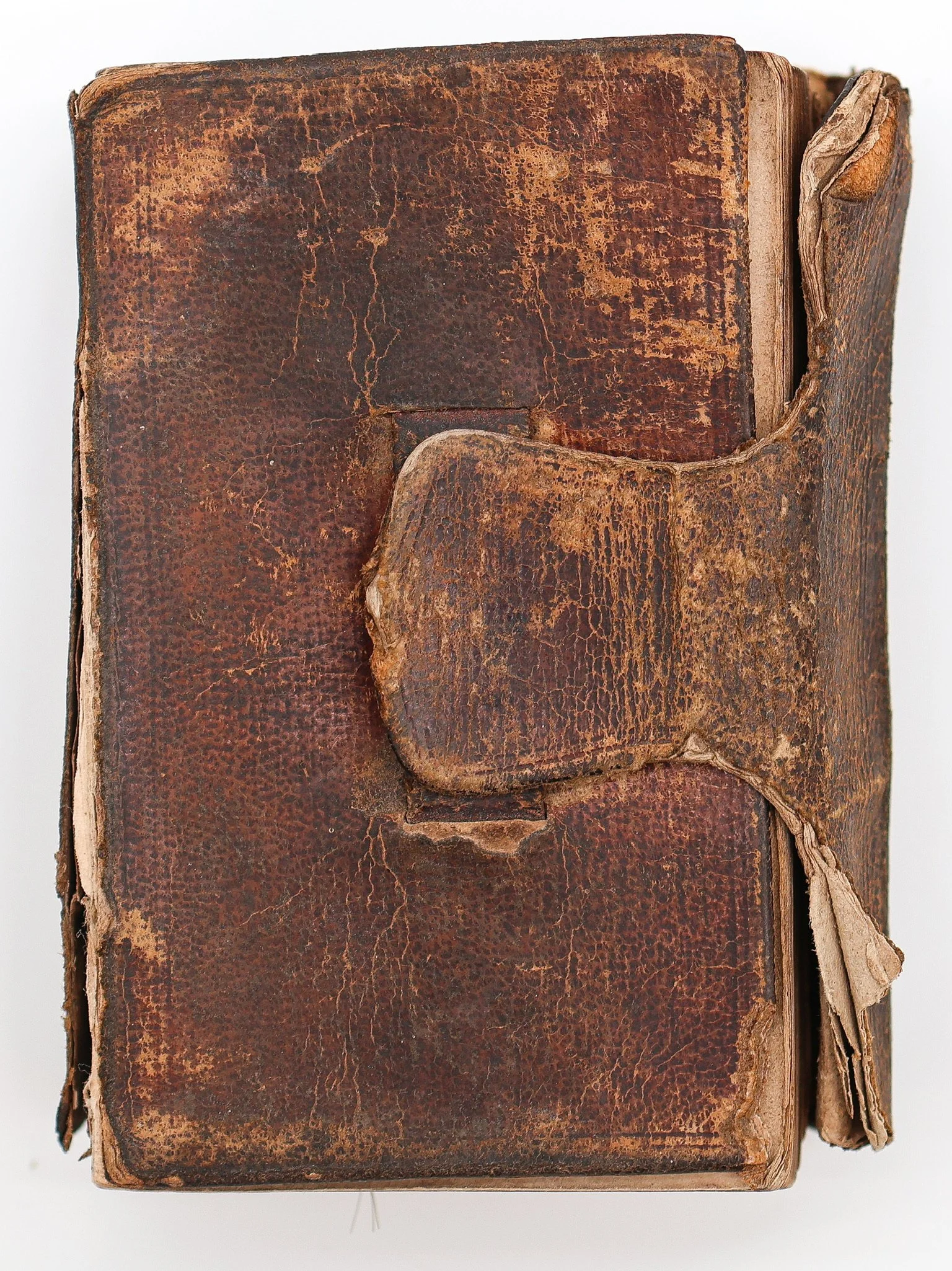
Civil War Confederate Soldier’s Bible — William C. Nesbit, 17th South Carolina Infantry
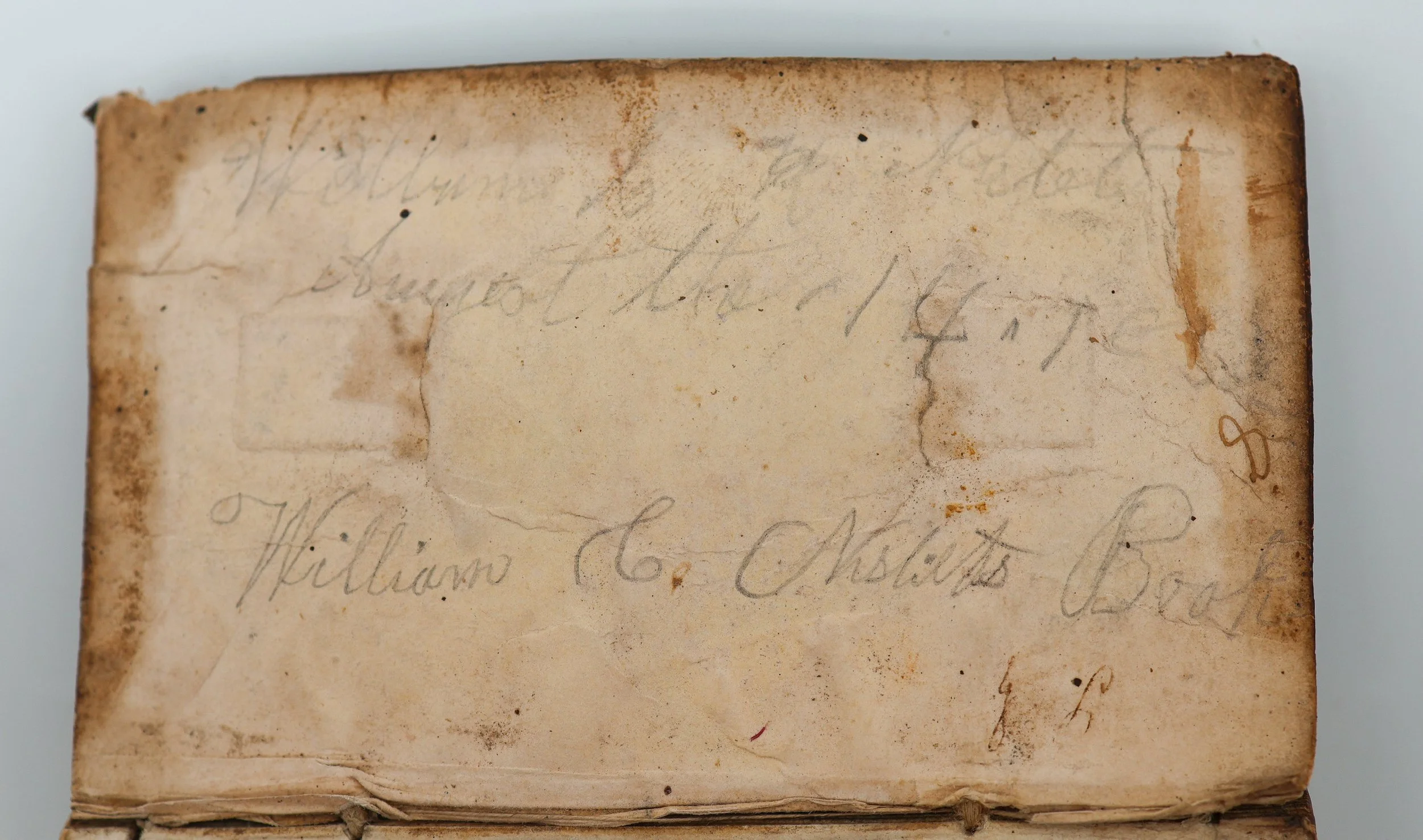
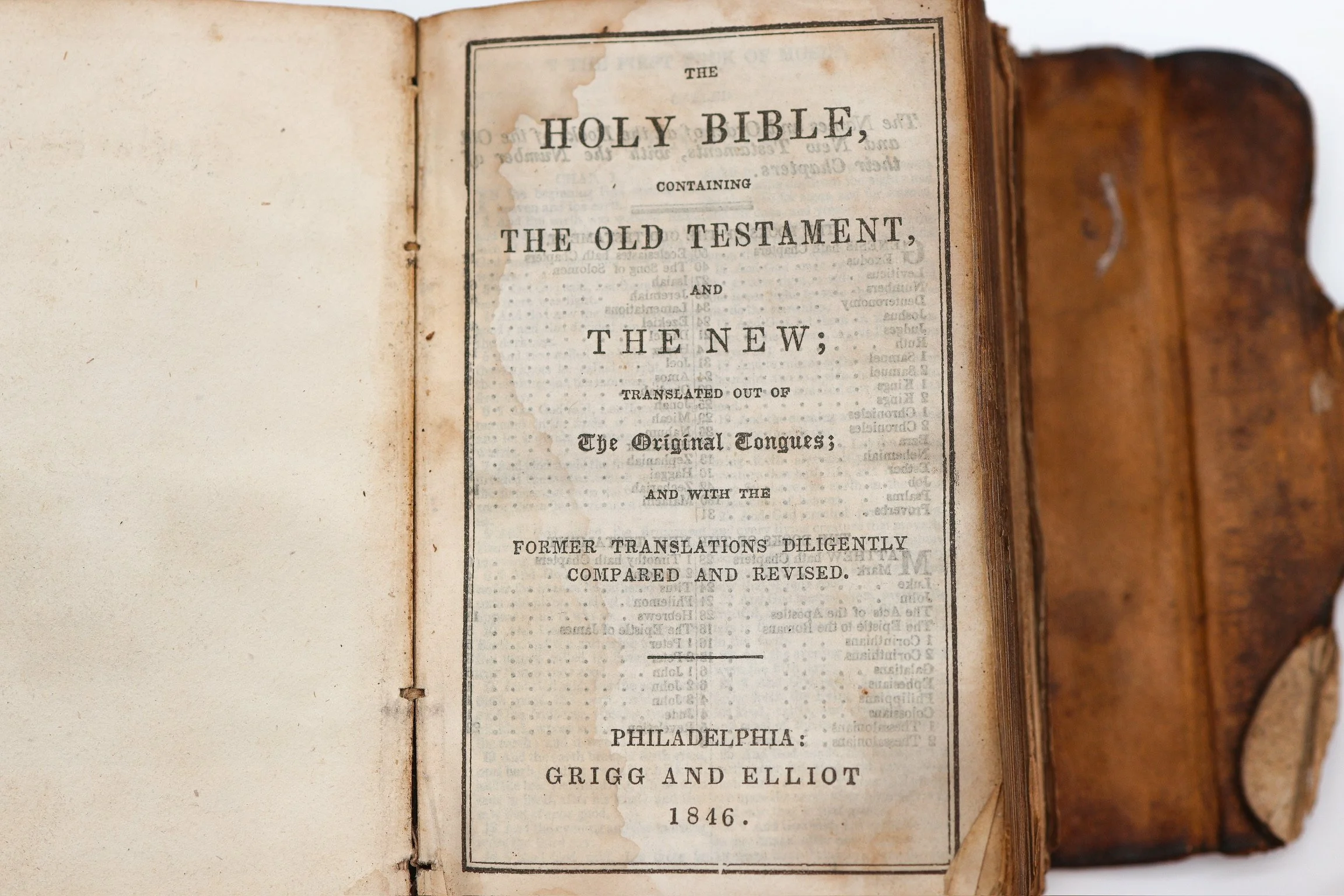
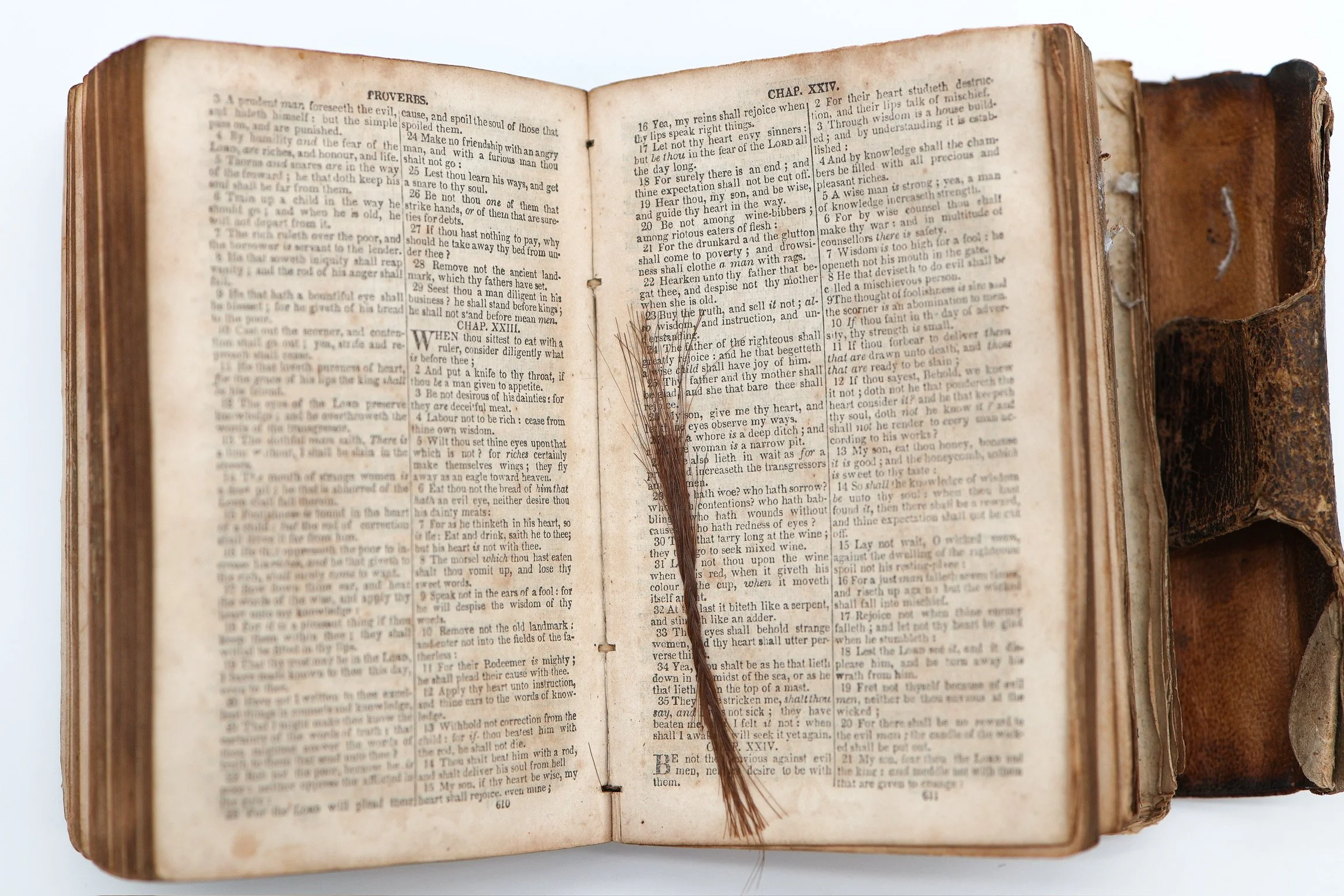
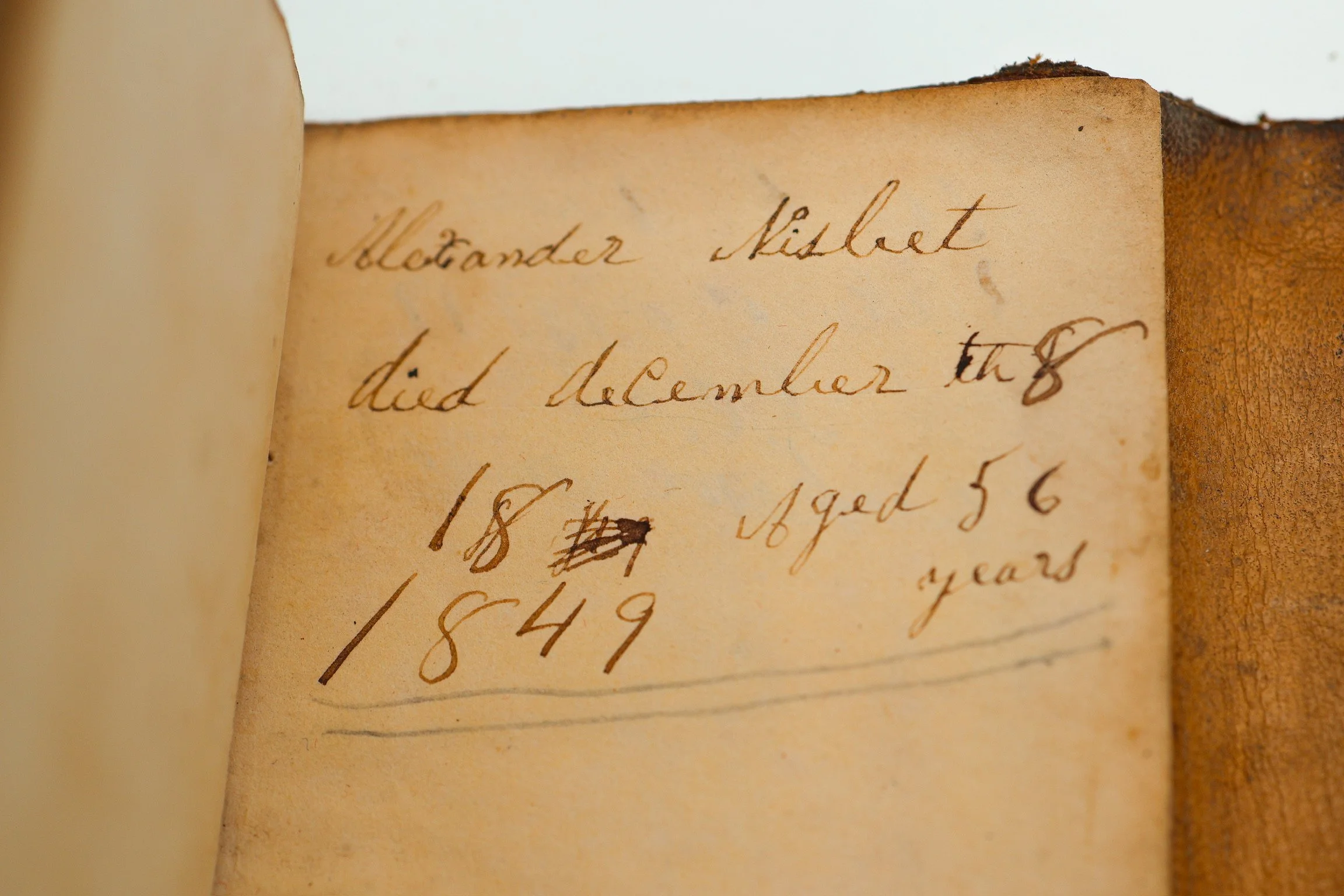
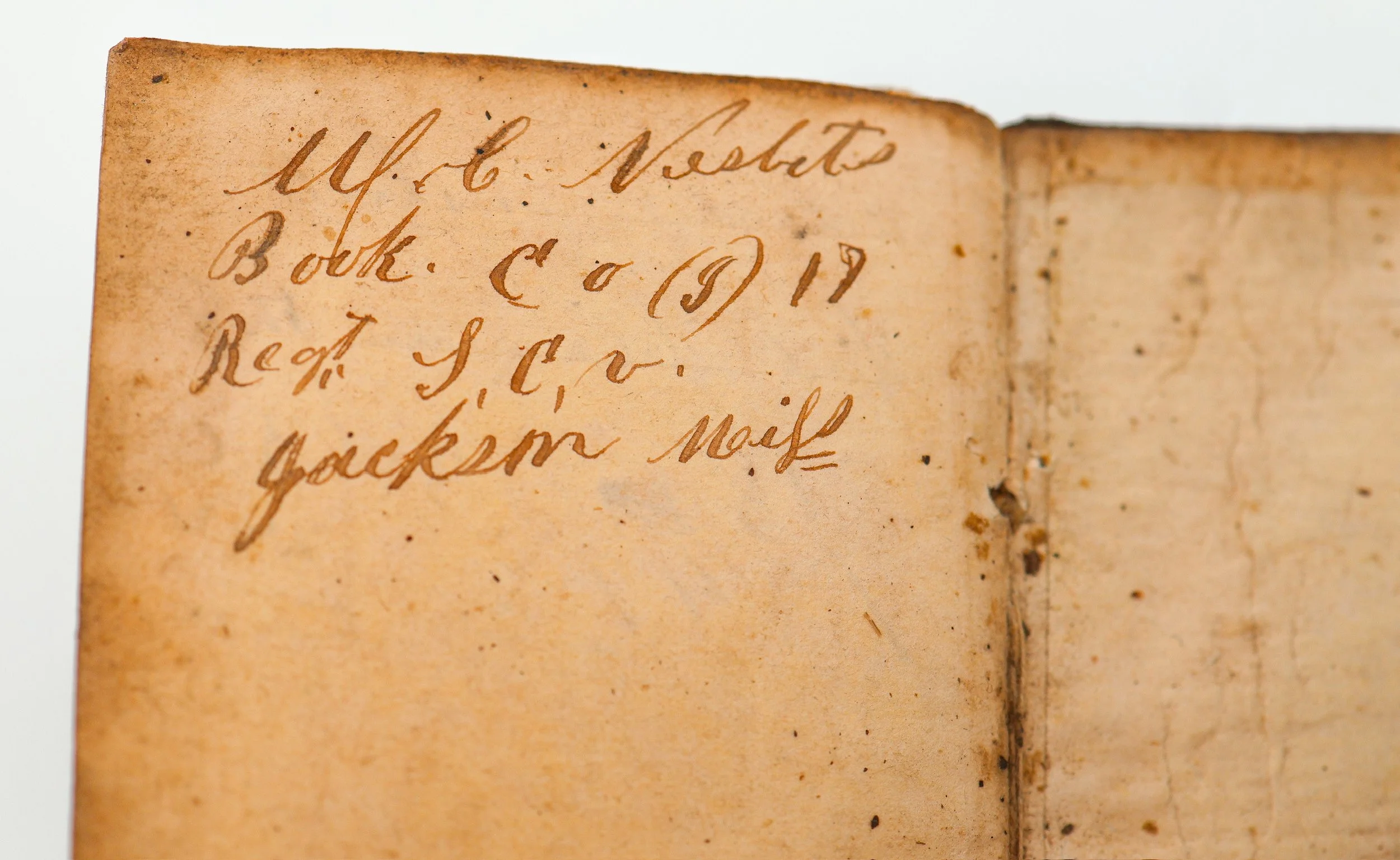
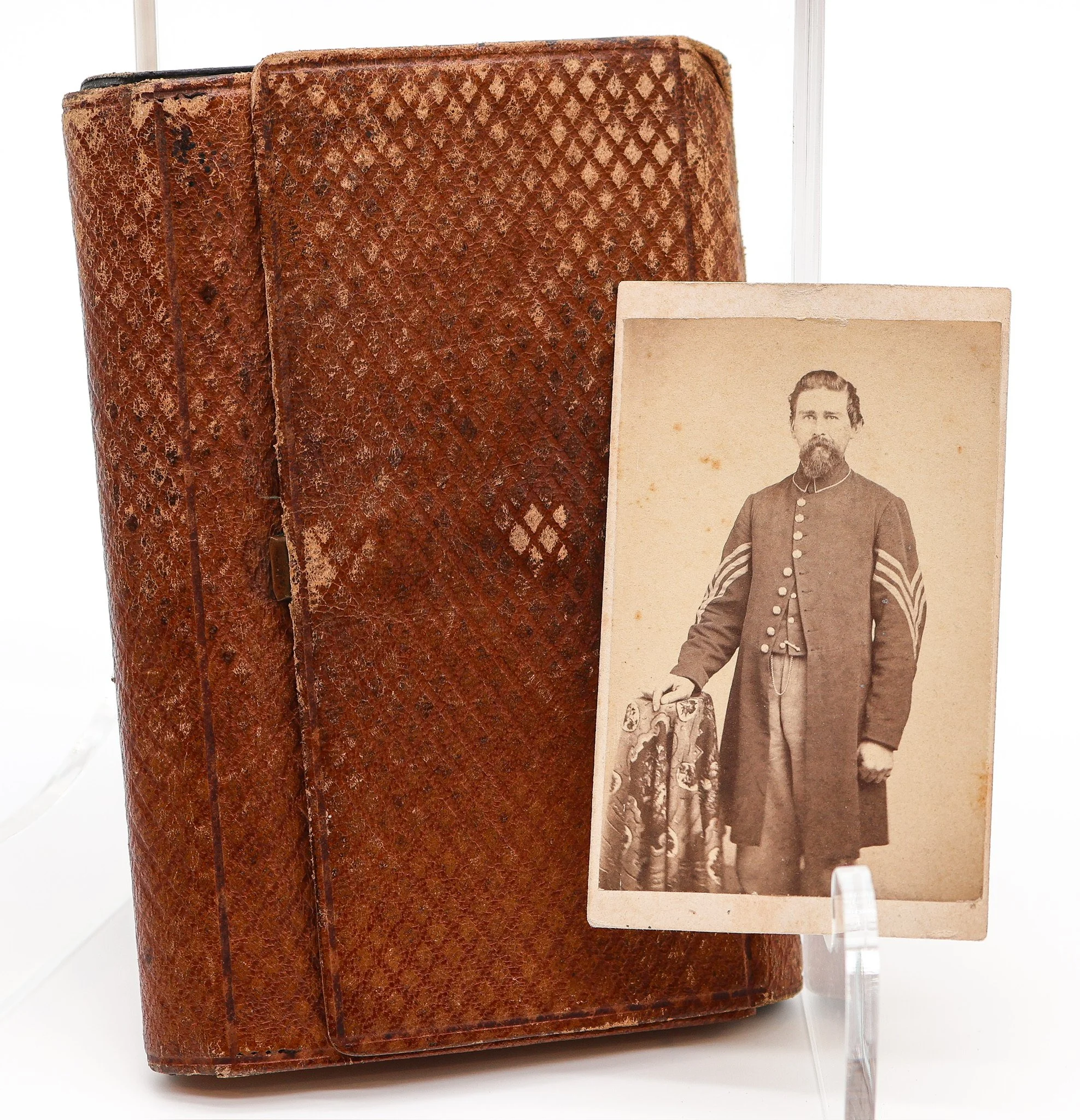
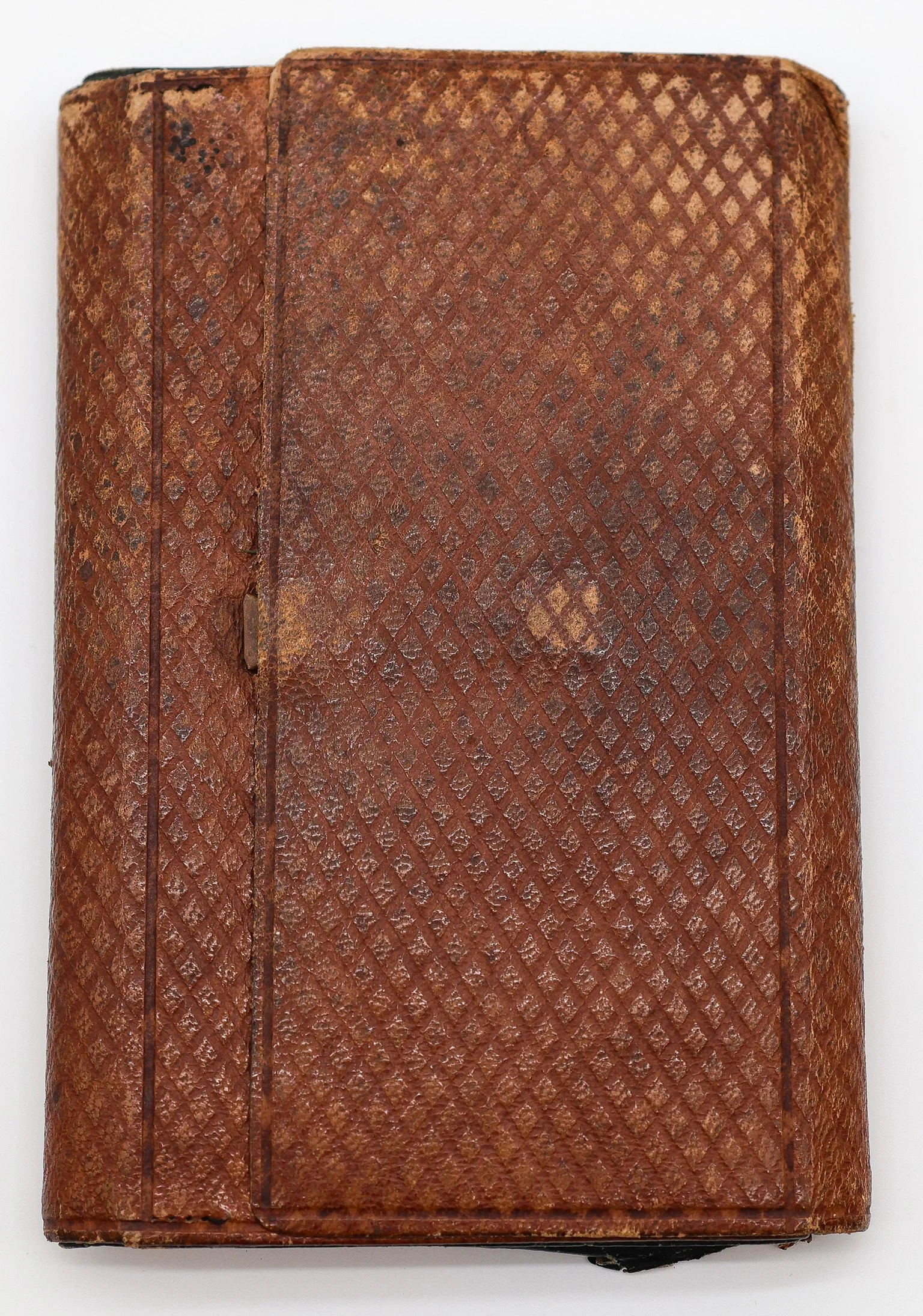
Pocket Bible carried by William C. Nesbit, a private in Company I, 17th South Carolina Infantry. Nesbit enlisted and mustered into service on December 1, 1861. The Bible is period-correct and exhibits significant field wear consistent with wartime use.
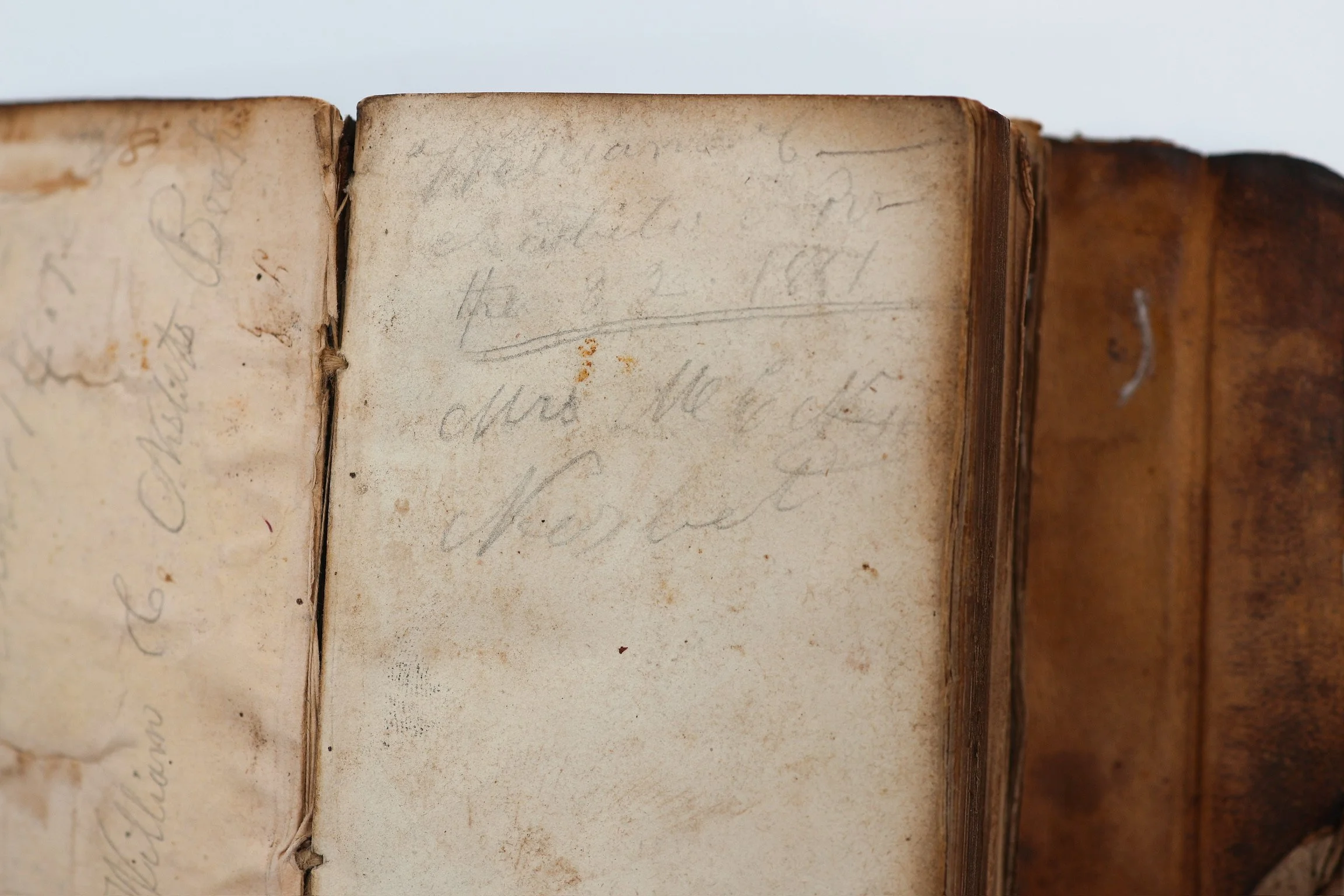
The Bible is inscribed with Nesbit’s name, unit designation, and the notation “Jackson, Miss.” The reason for the Jackson, Mississippi inscription is unknown, and no documentation confirms Nesbit’s presence there during his service.
A lock of hair was preserved inside the Bible, a common 19th-century personal keepsake, likely placed there during the war.
-
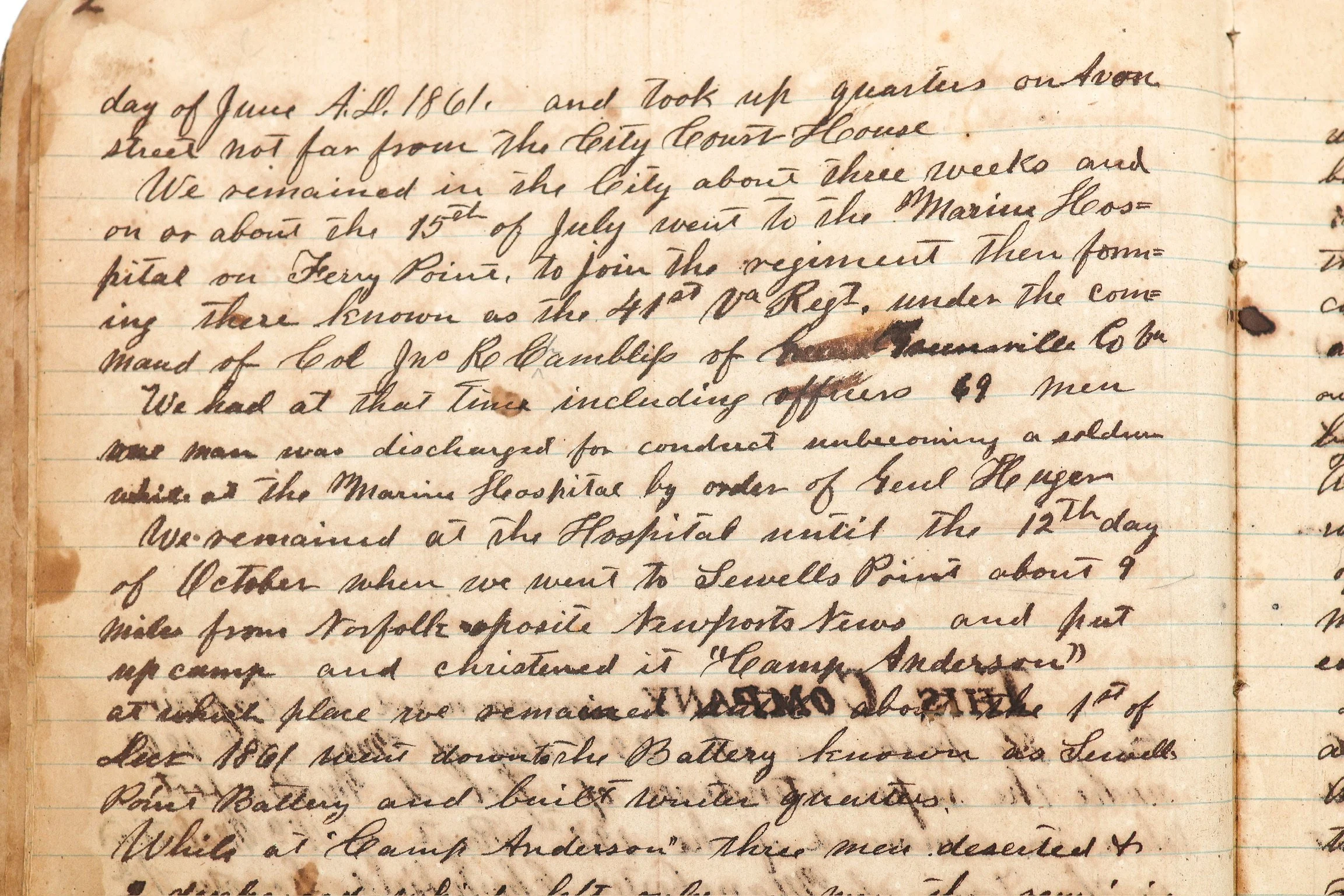
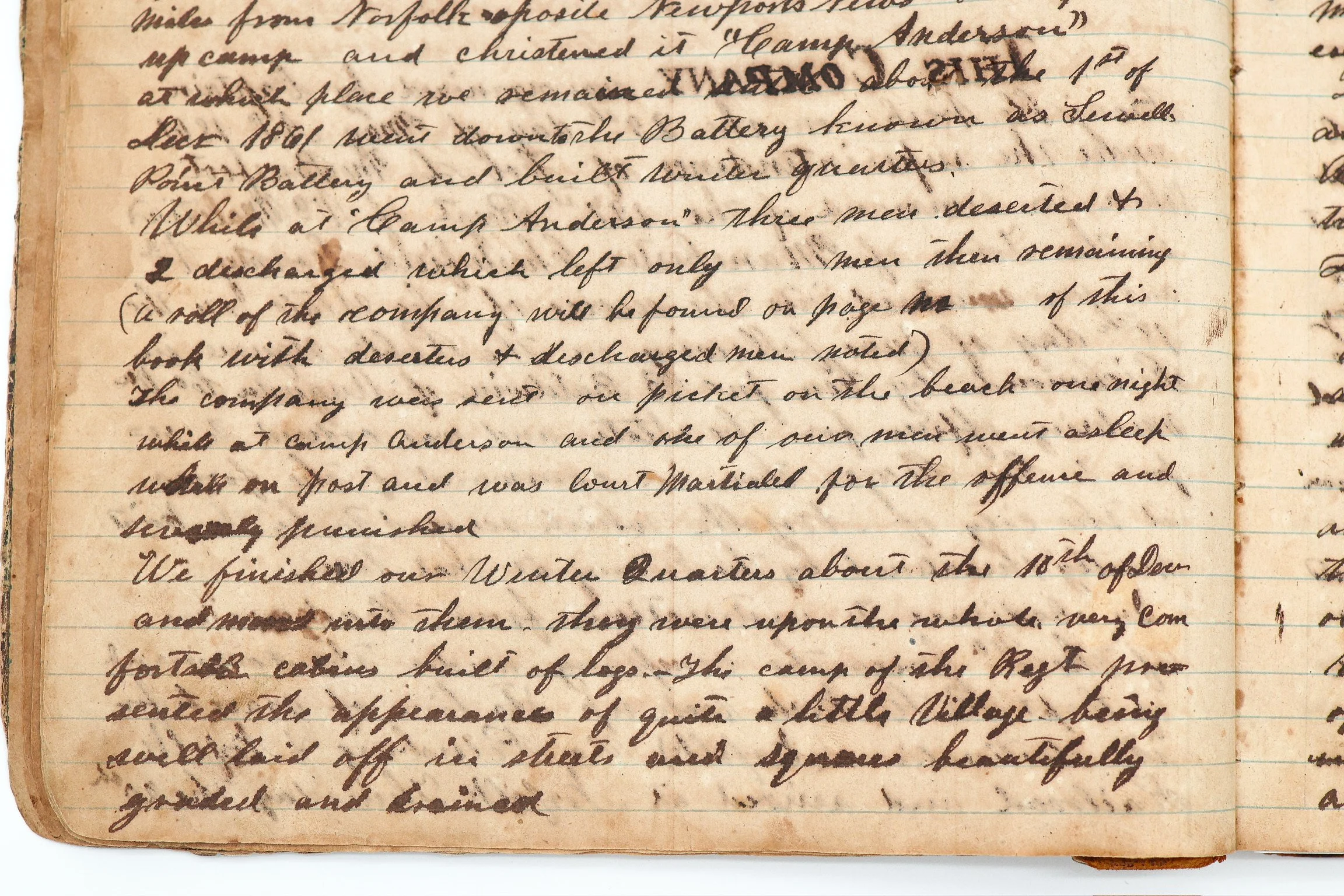
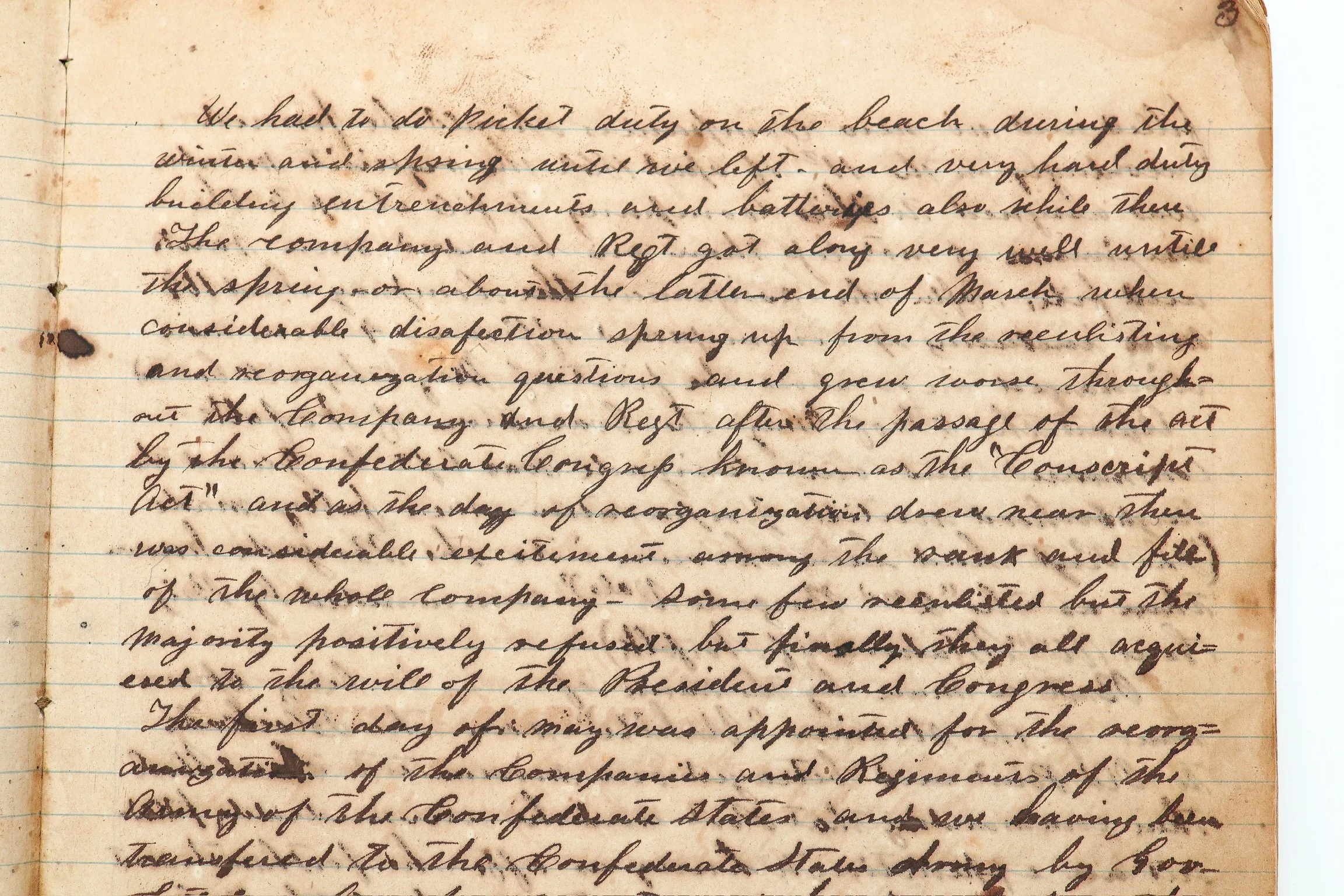
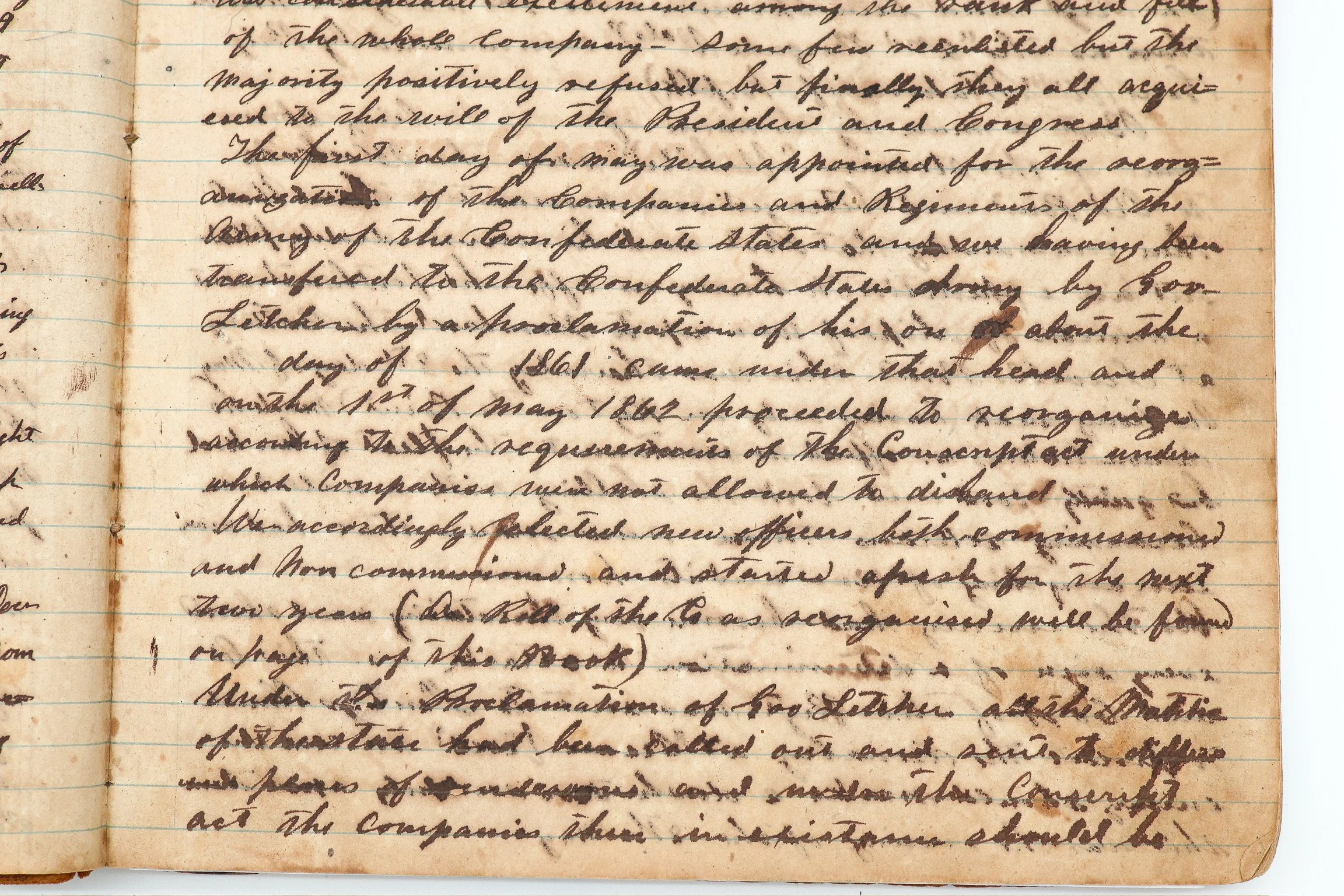
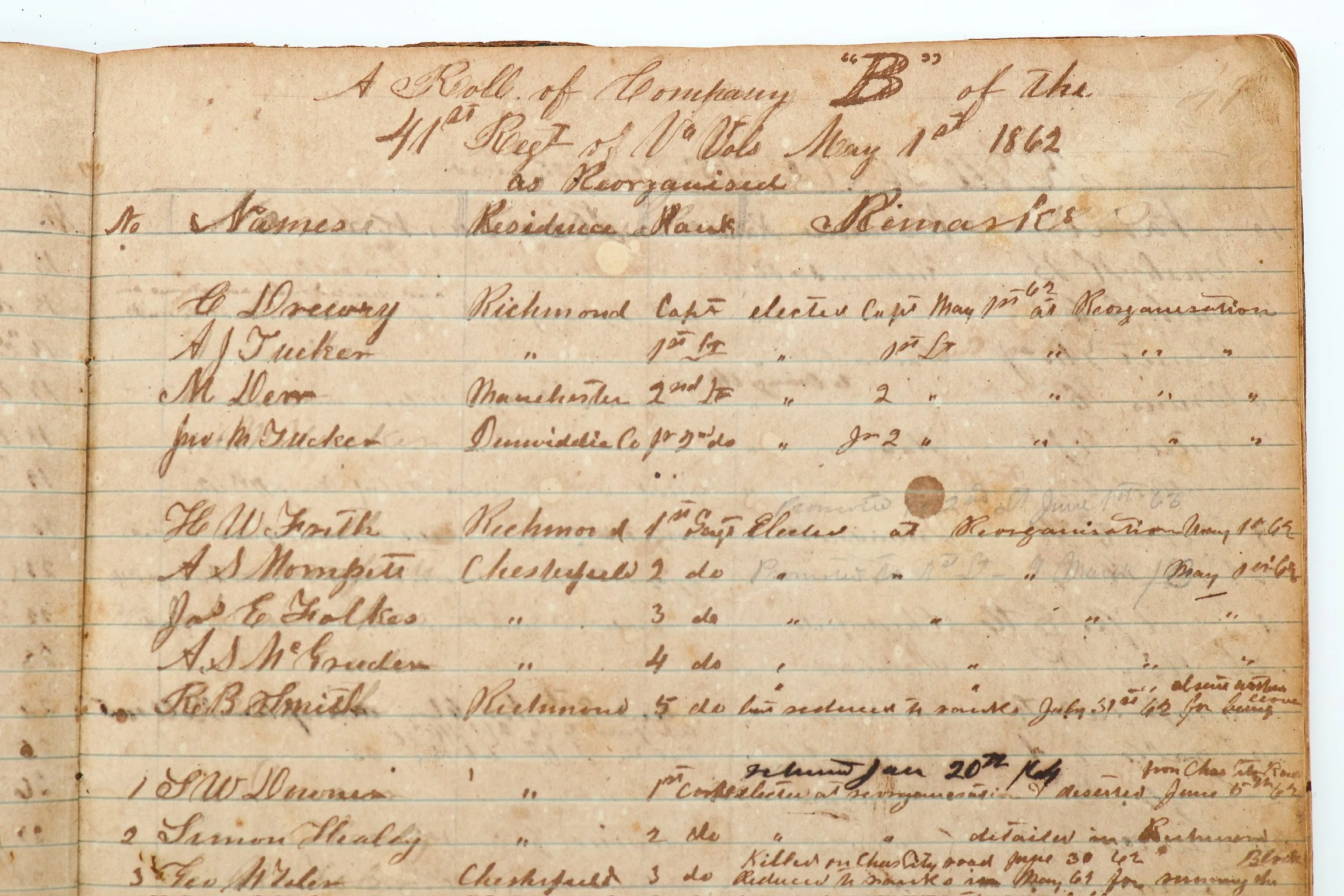
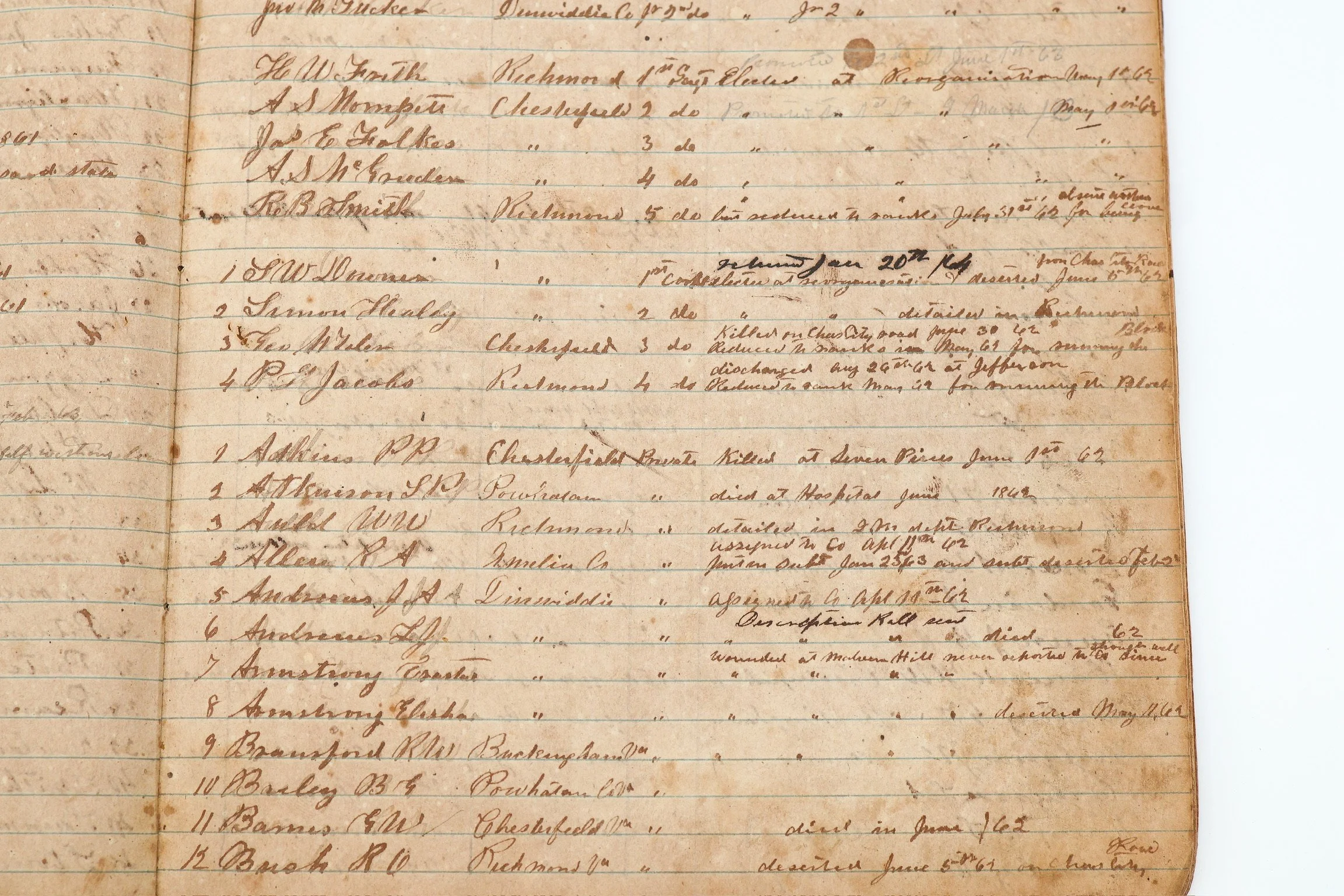
Algernon S. Morrisette was born in 1839 and enlisted on June 18, 1861, at Norfolk County, Virginia. He served continuously with Company B, 41st Virginia Infantry, rising from private to corporal, sergeant, and ultimately first lieutenant. He was hospitalized in Richmond on August 7, 1864, suffering from diarrhea and fever, placed on sick furlough, and died of disease on August 14, 1864.
The 41st Virginia Infantry was organized in 1861 and served primarily with the Army of Northern Virginia. The regiment fought in numerous major engagements, including the Seven Days Battles, Second Manassas, Fredericksburg, Chancellorsville, Gettysburg, the Overland Campaign, and the siege of Petersburg.
41st Virginia Infantry Sword & Company B Book Grouping
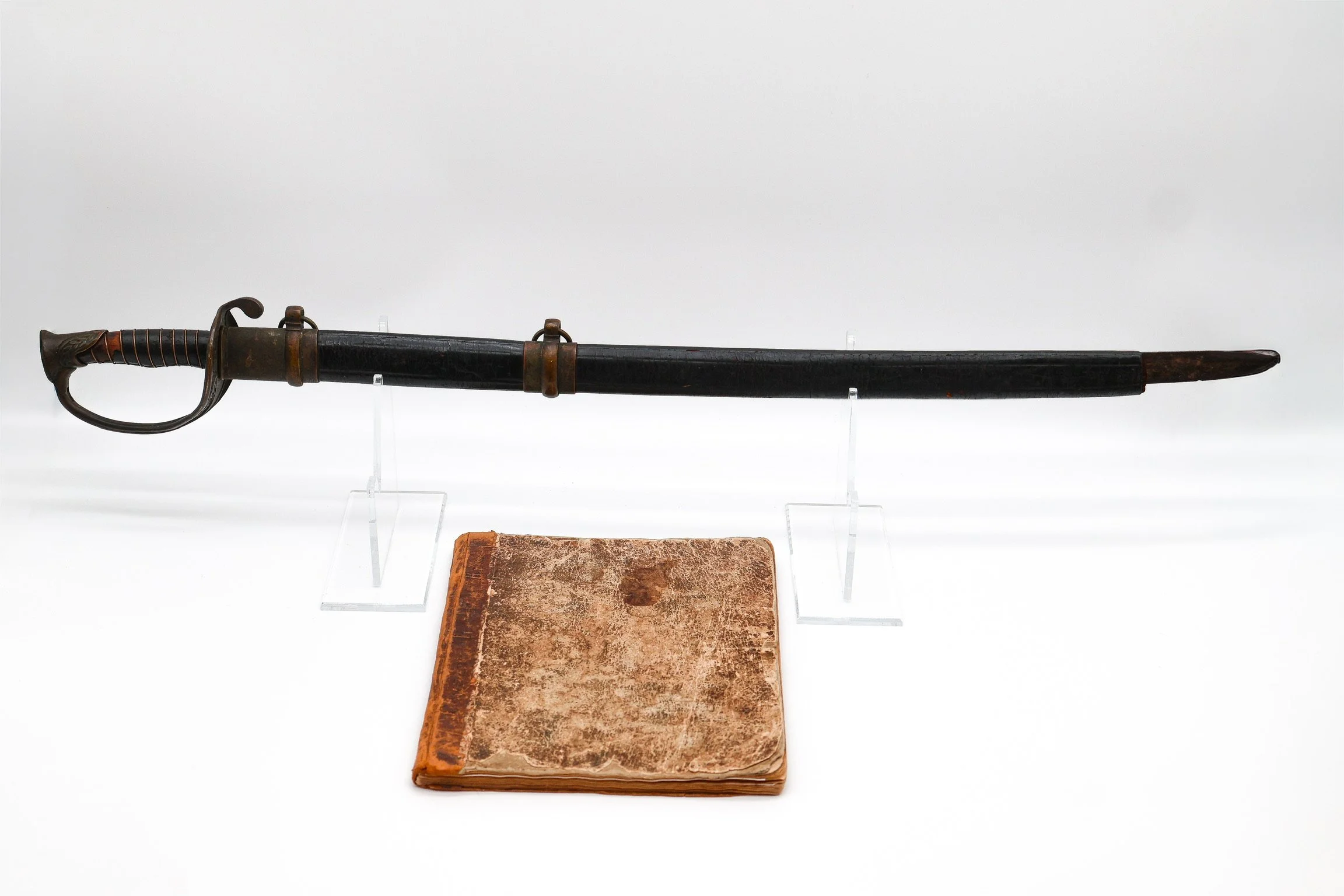
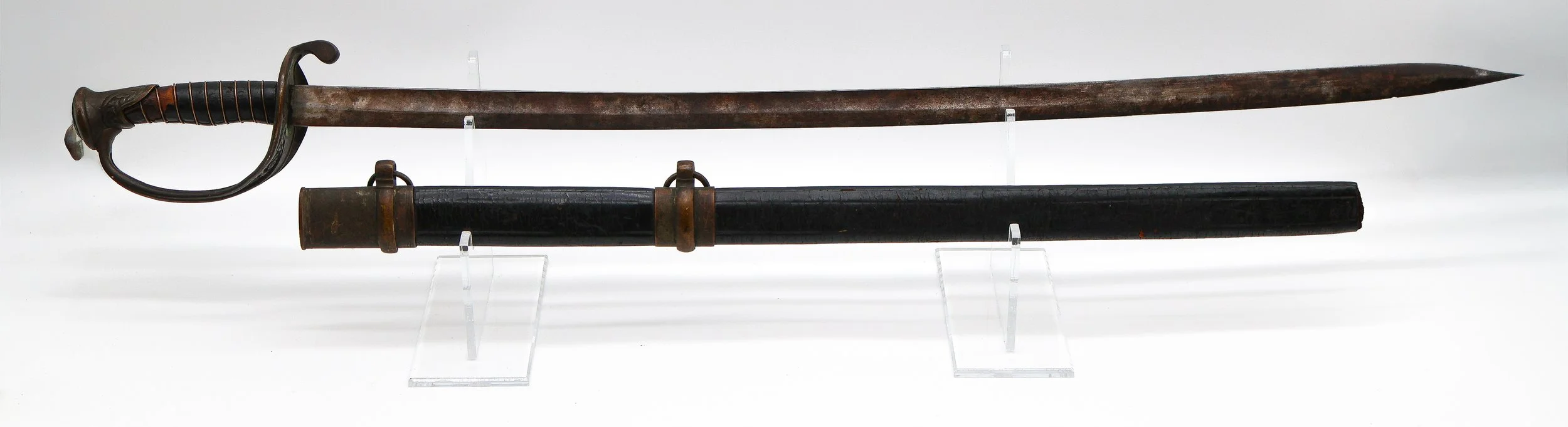
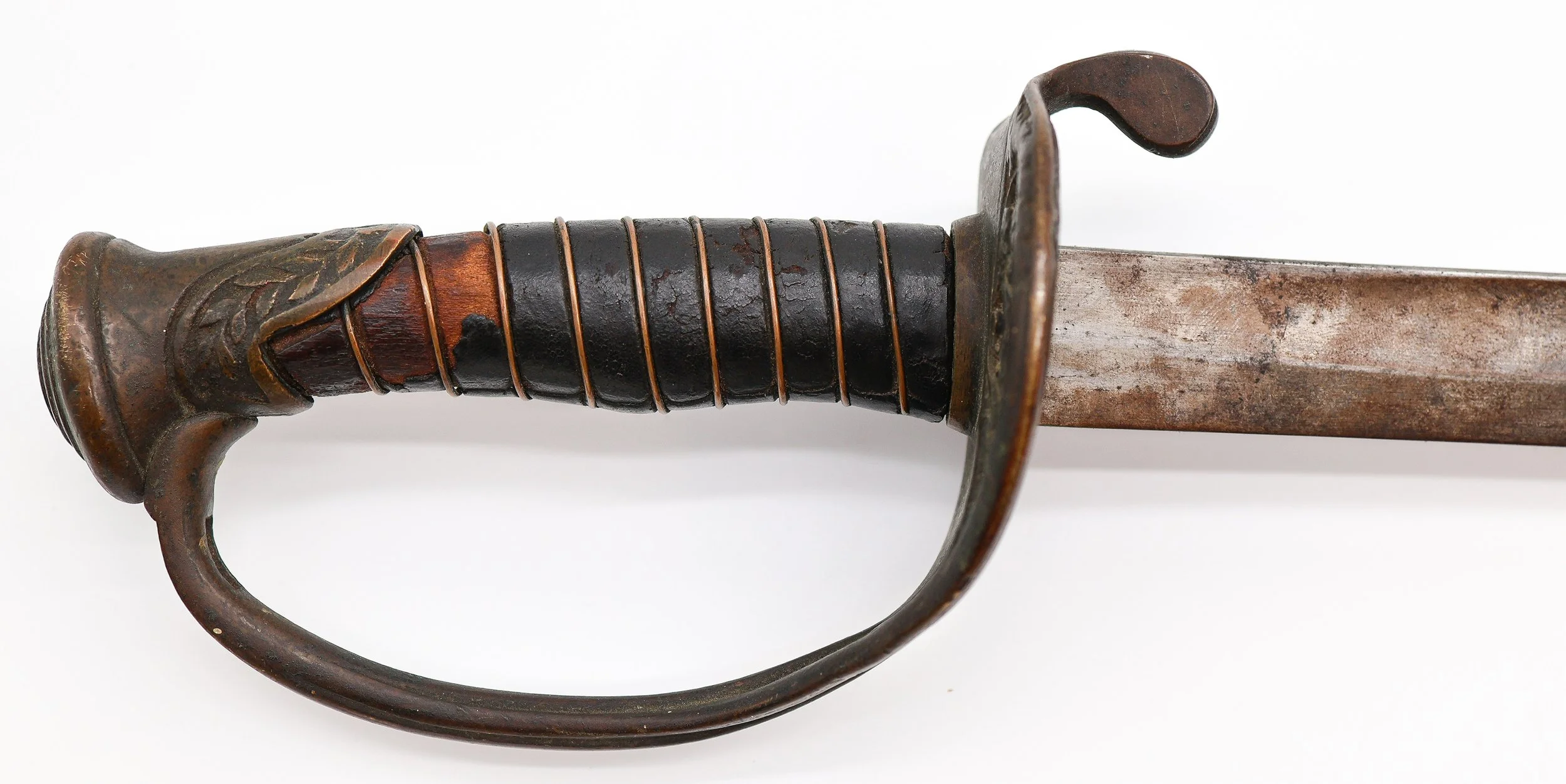
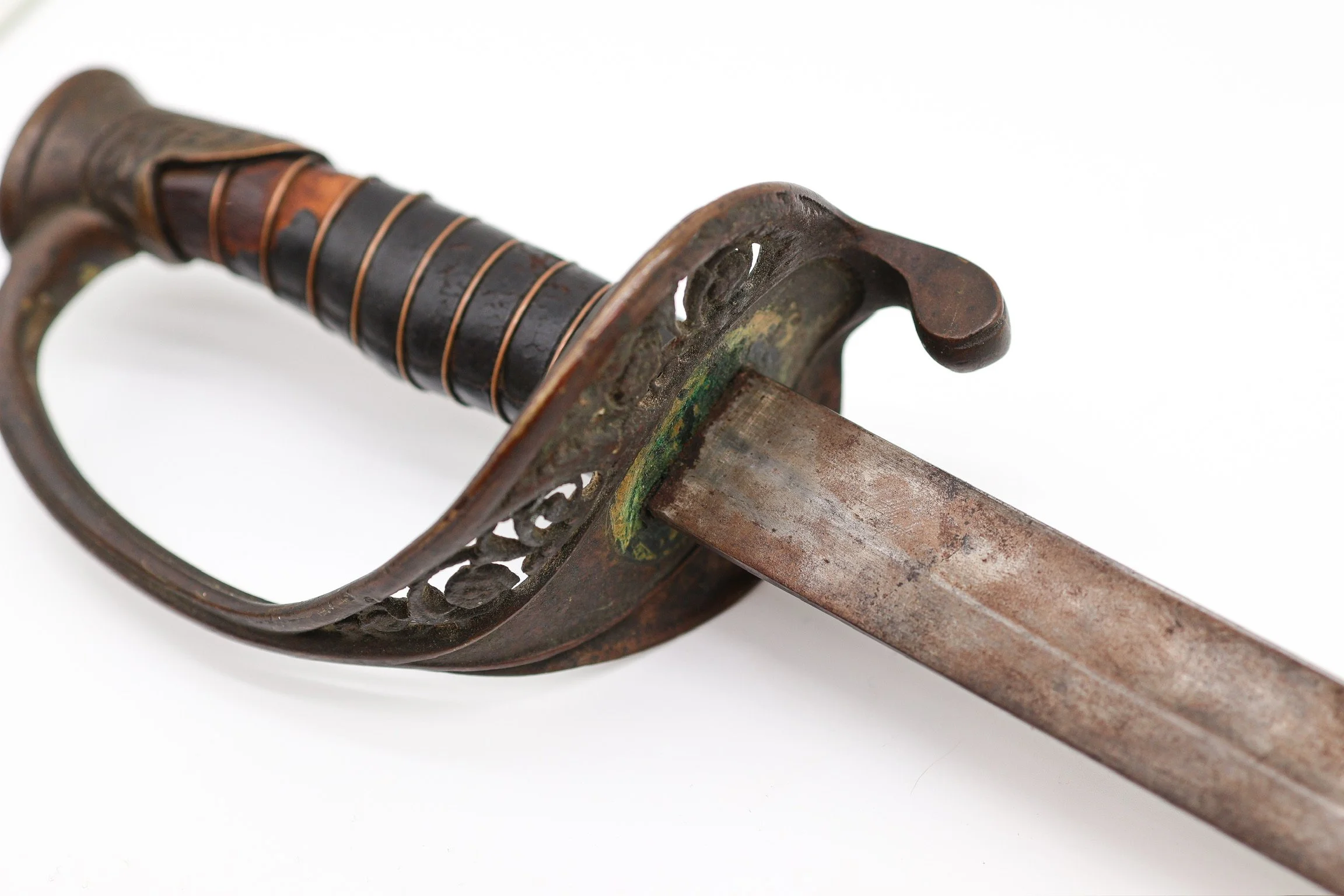
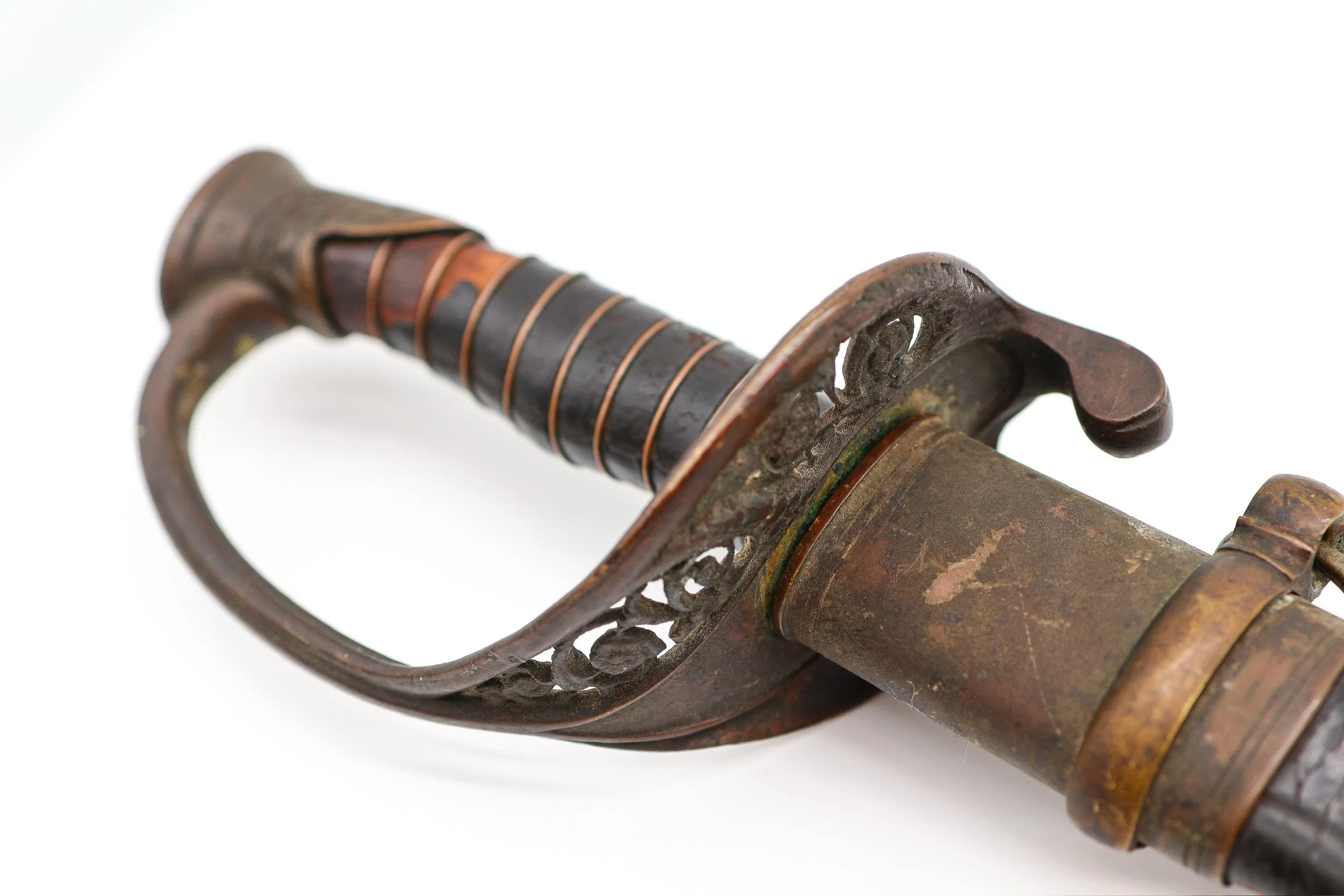
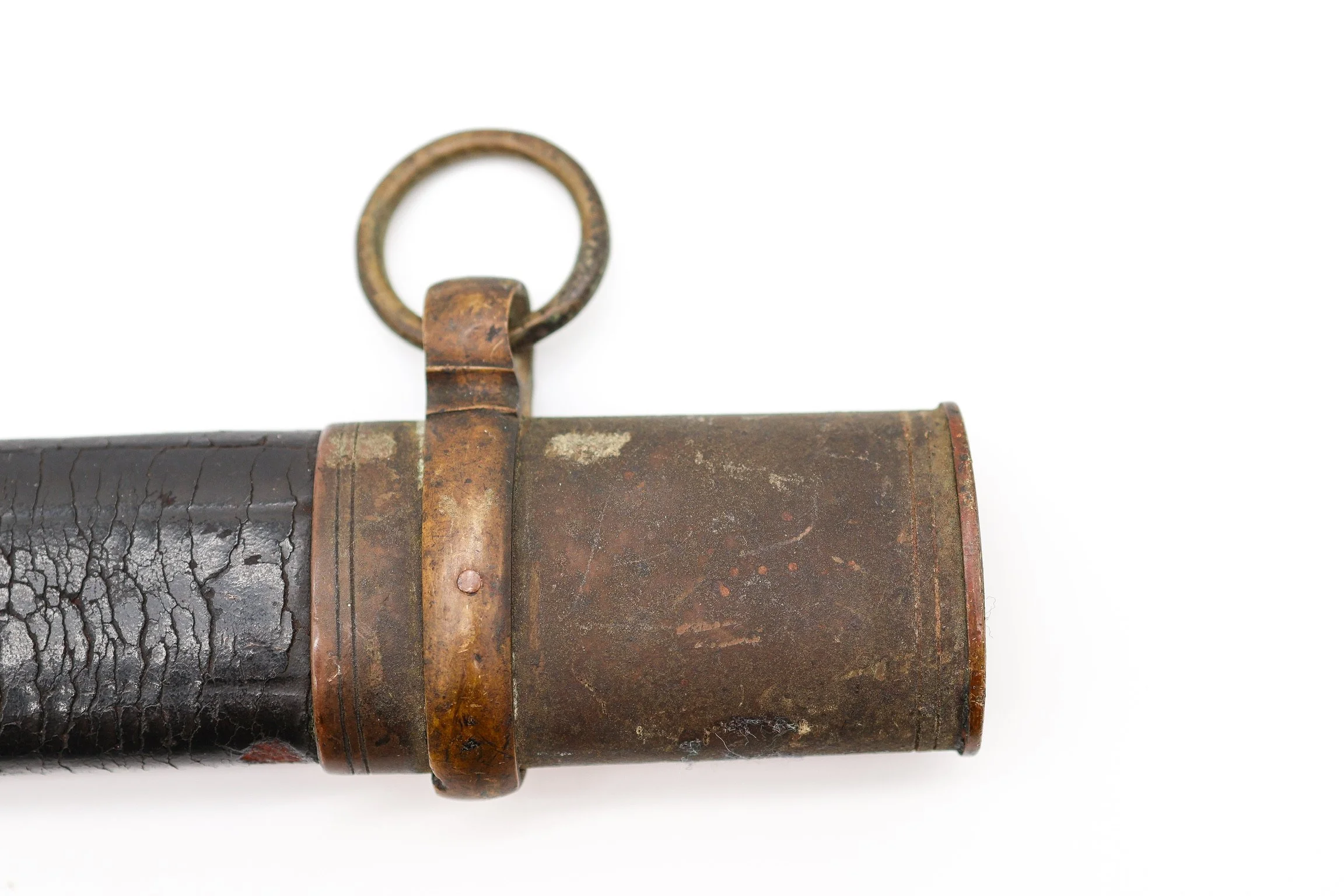
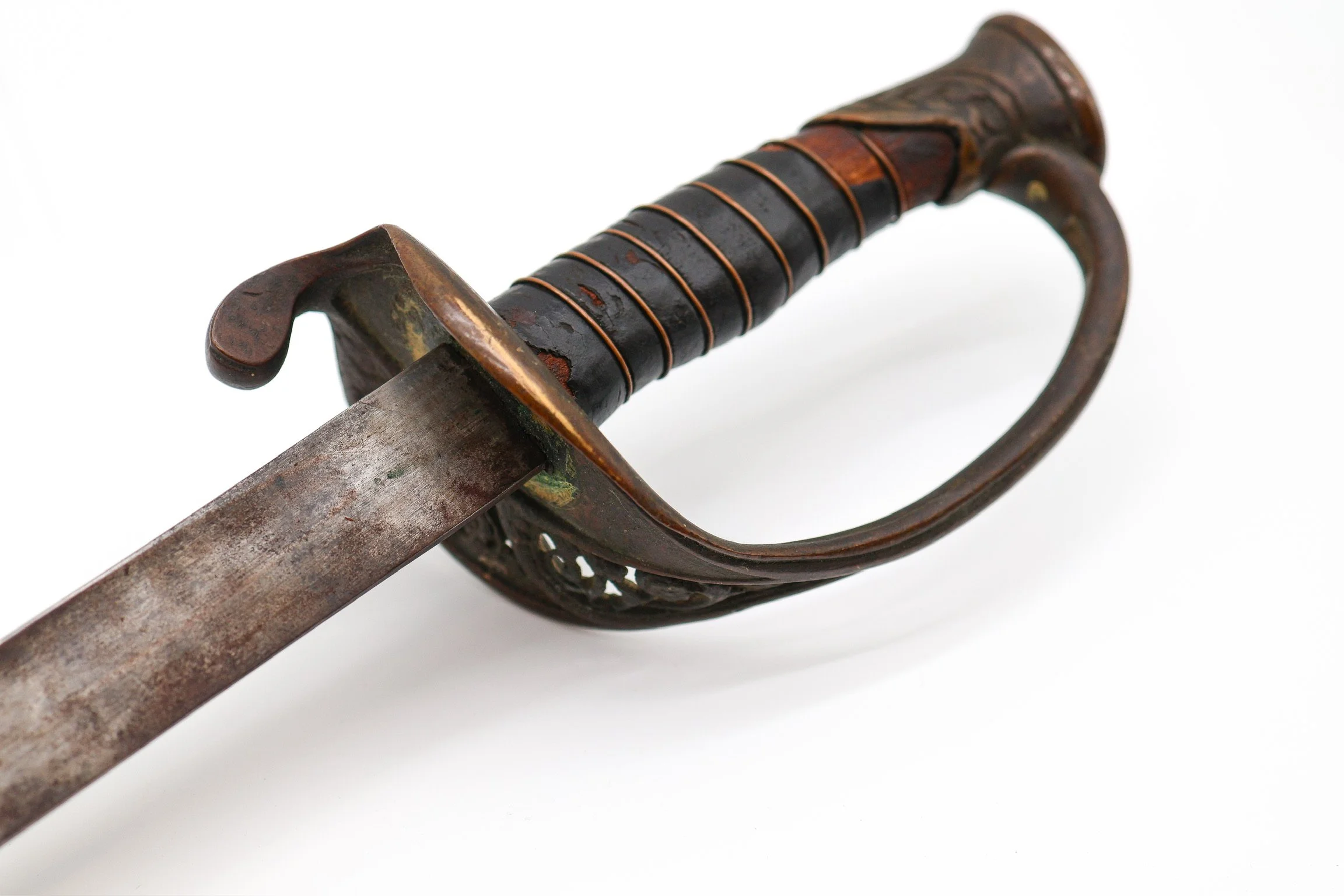
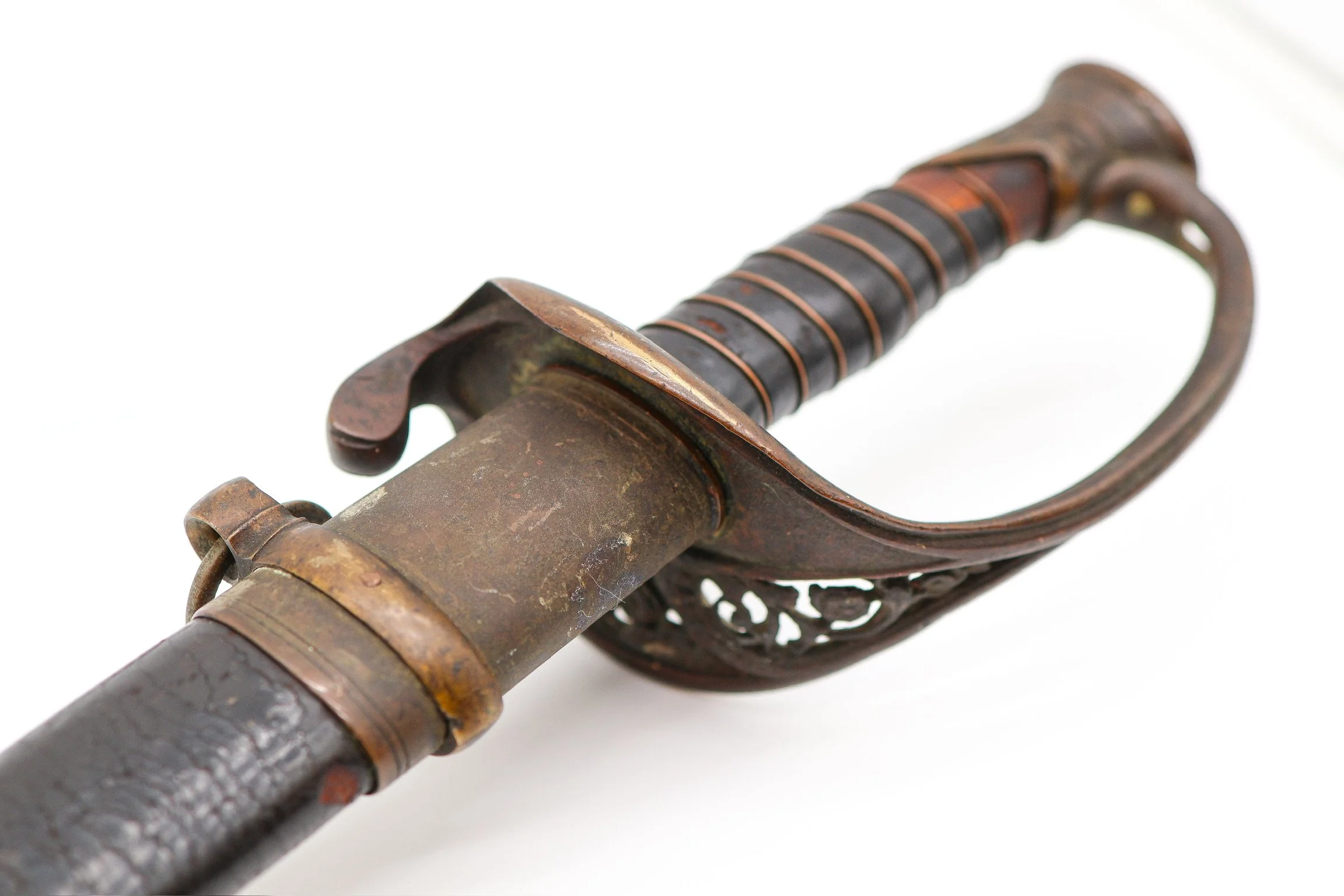
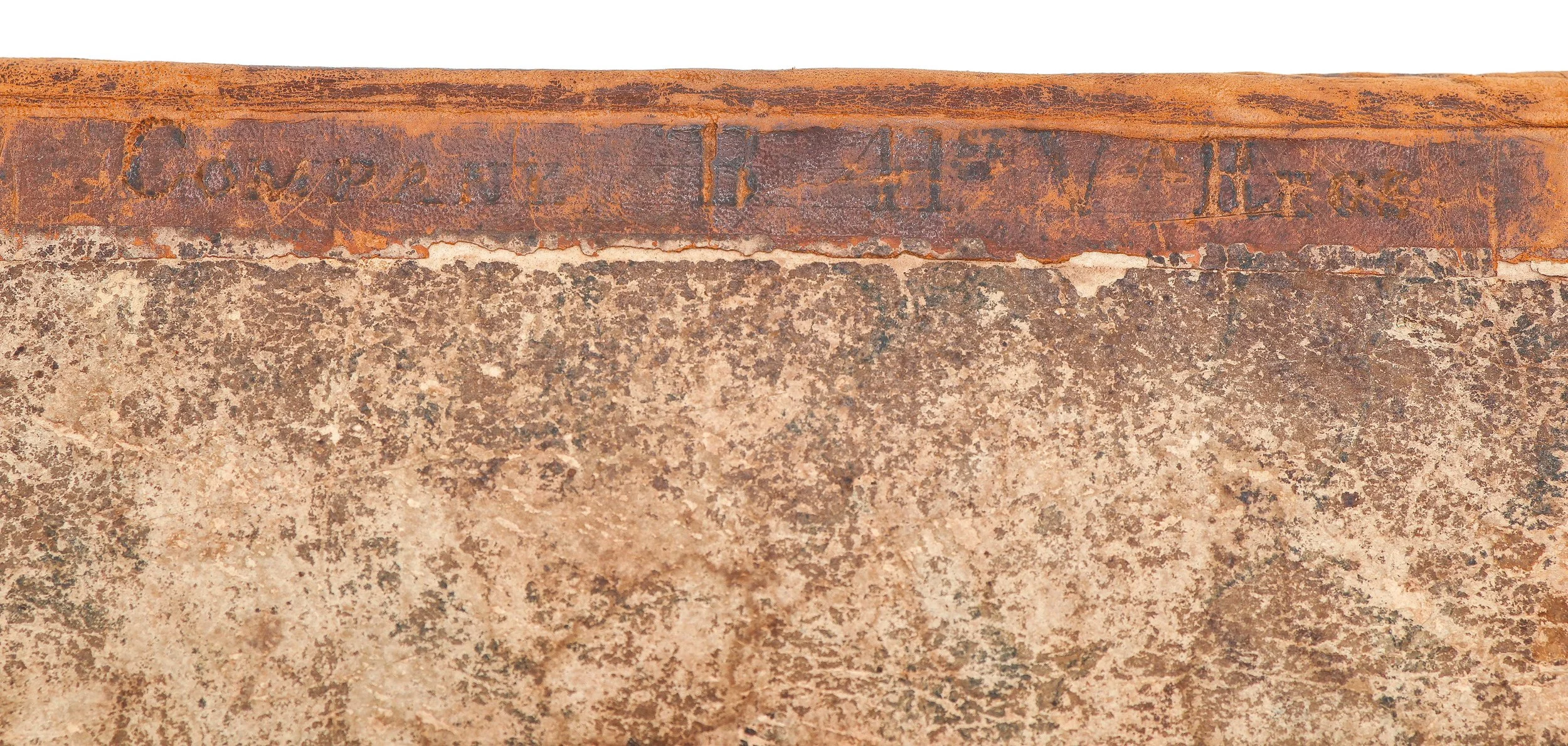
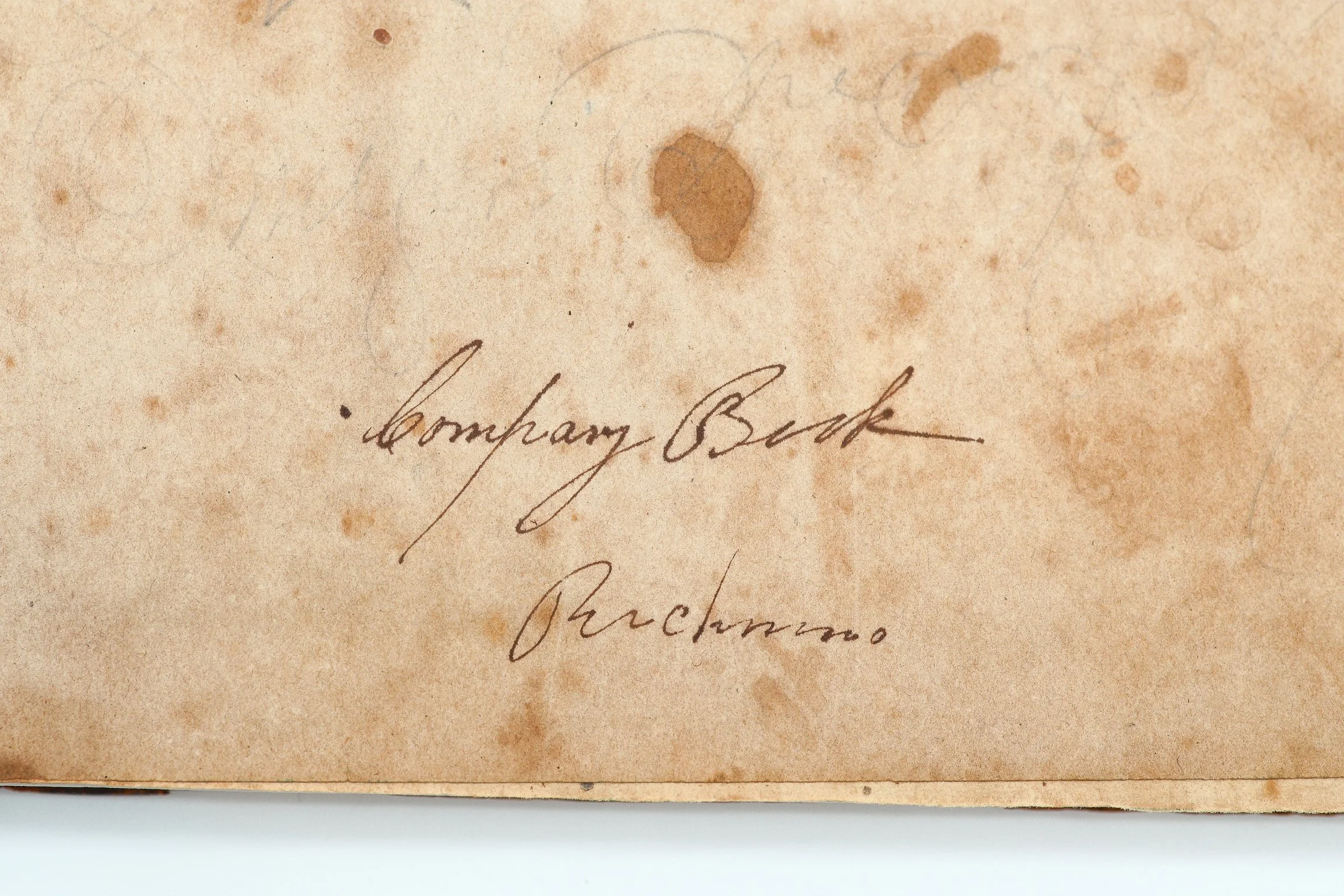
This Confederate grouping consists of a Richmond-made sword by Boyle, Gamble & McFee and an original Company B book from the 41st Virginia Infantry. Both items are directly associated and descended through the family.
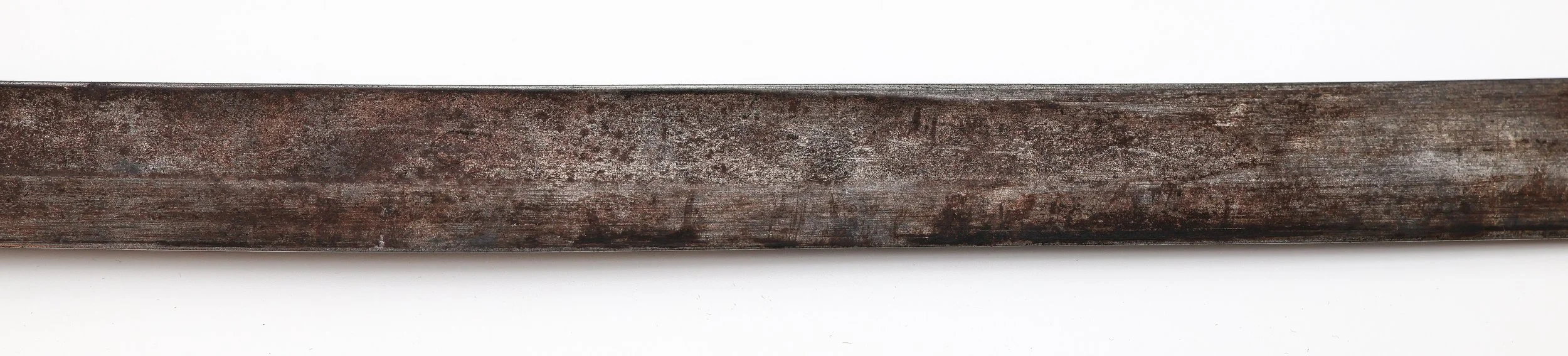
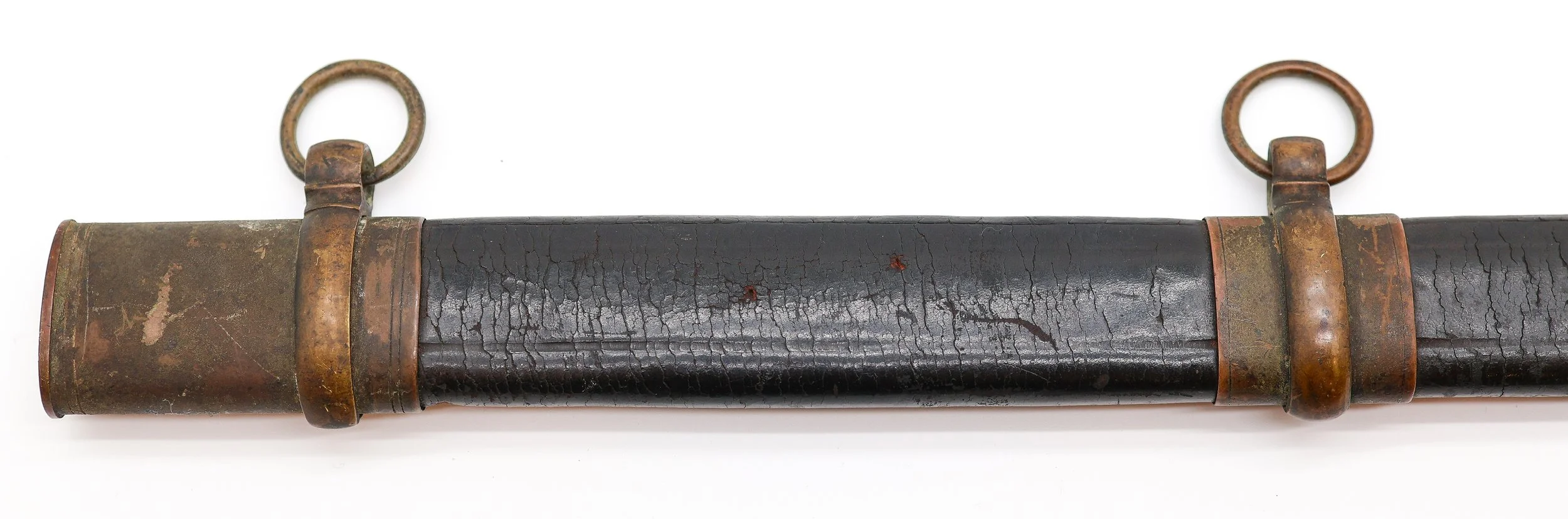
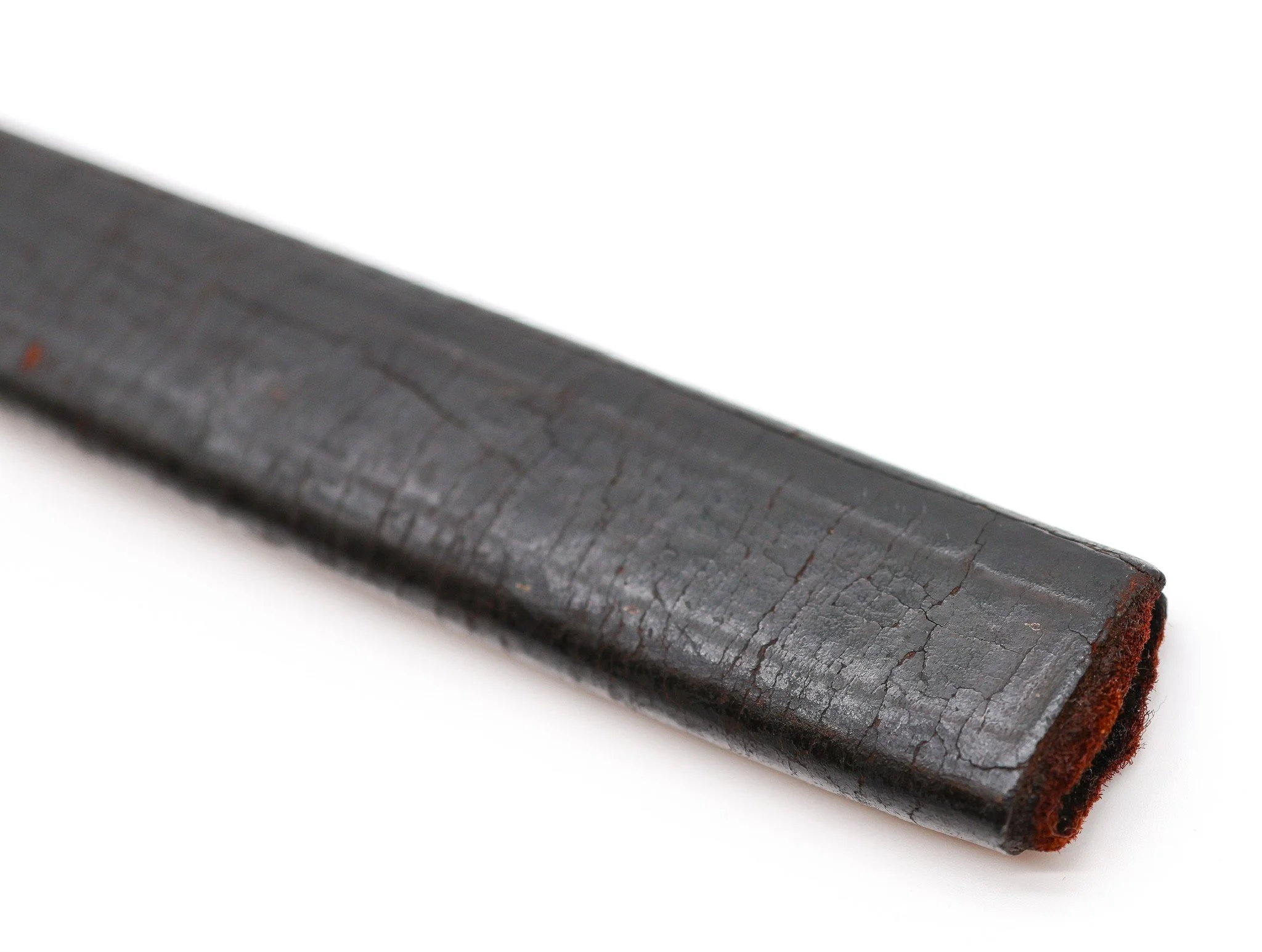
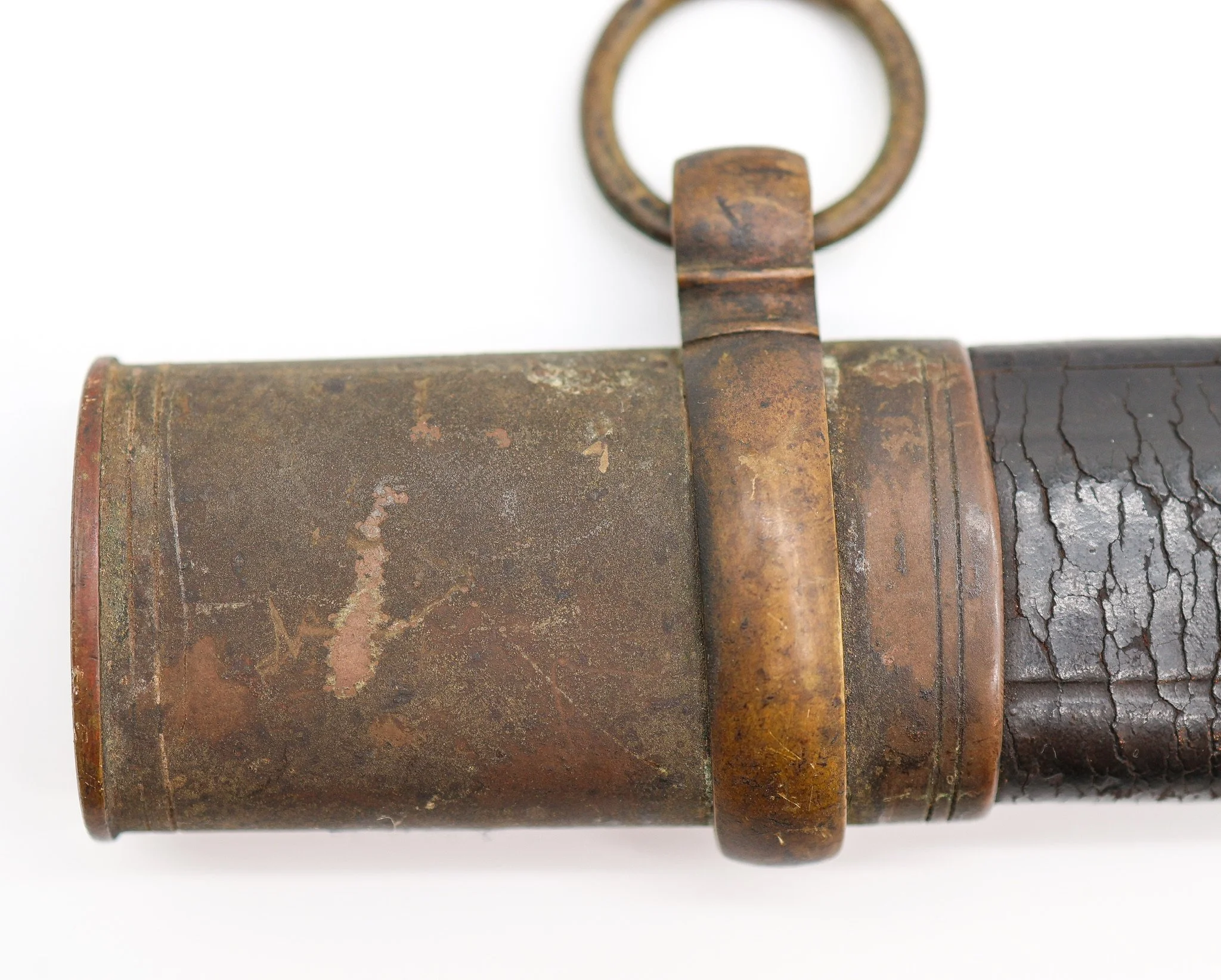
The sword was carried by Algernon S. Morrisette of Company B, 41st Virginia Infantry. Morrisette was promoted to 1st Lieutenant on March 1, 1863, and would have carried this sword during the Gettysburg Campaign in July 1863. The leather scabbard exhibits heavy field wear and loss at the tip, consistent with extended wartime service.
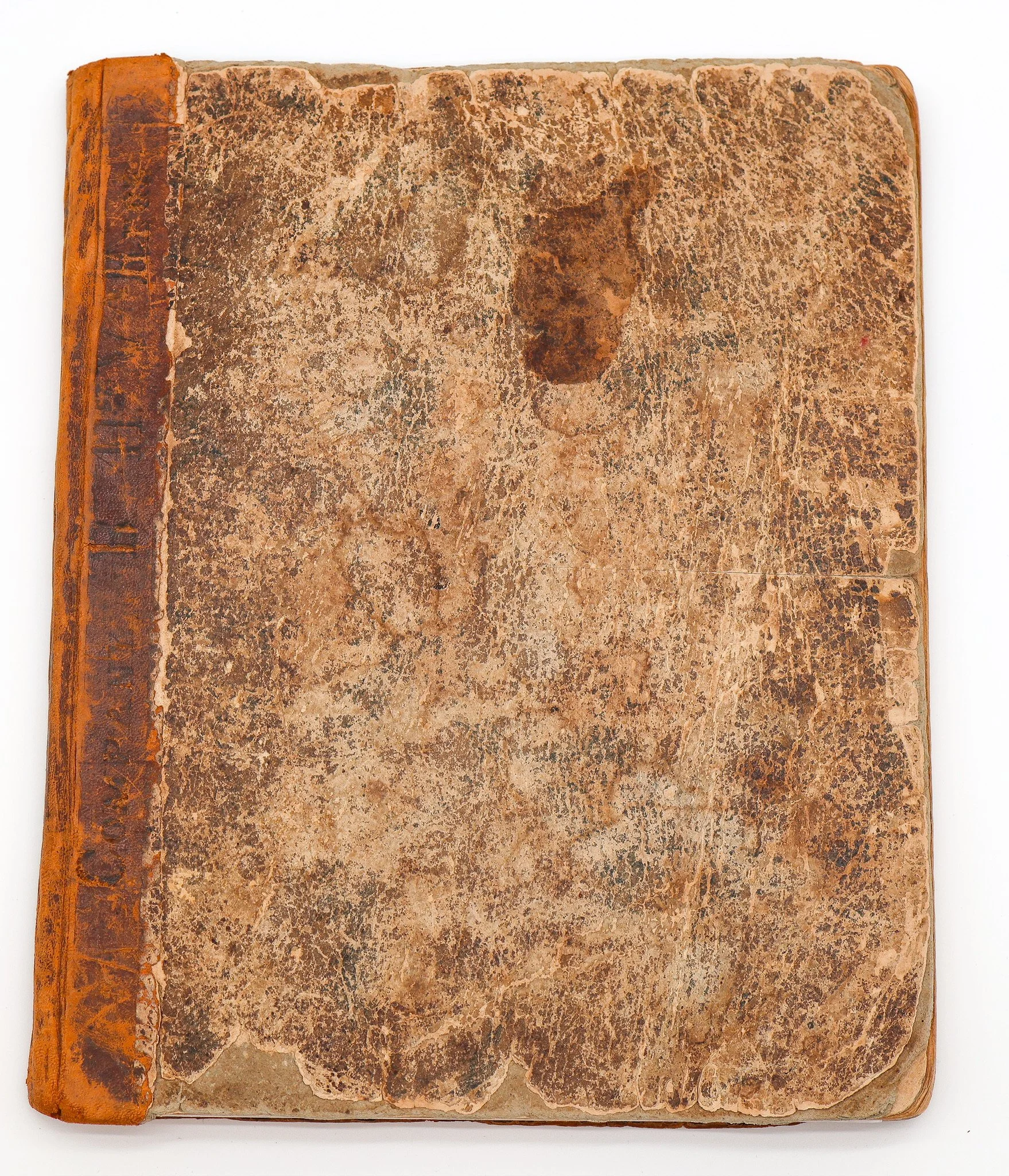
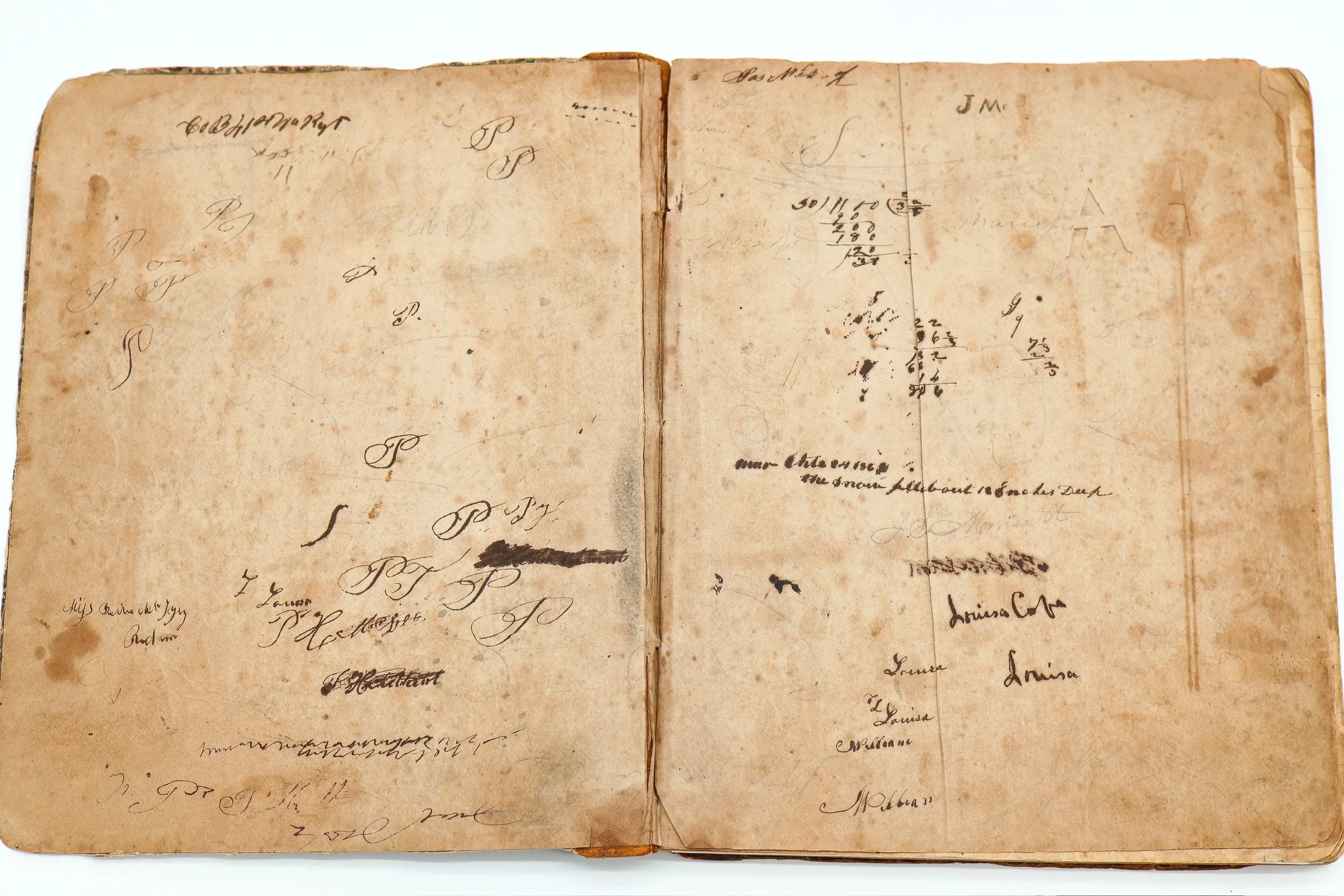
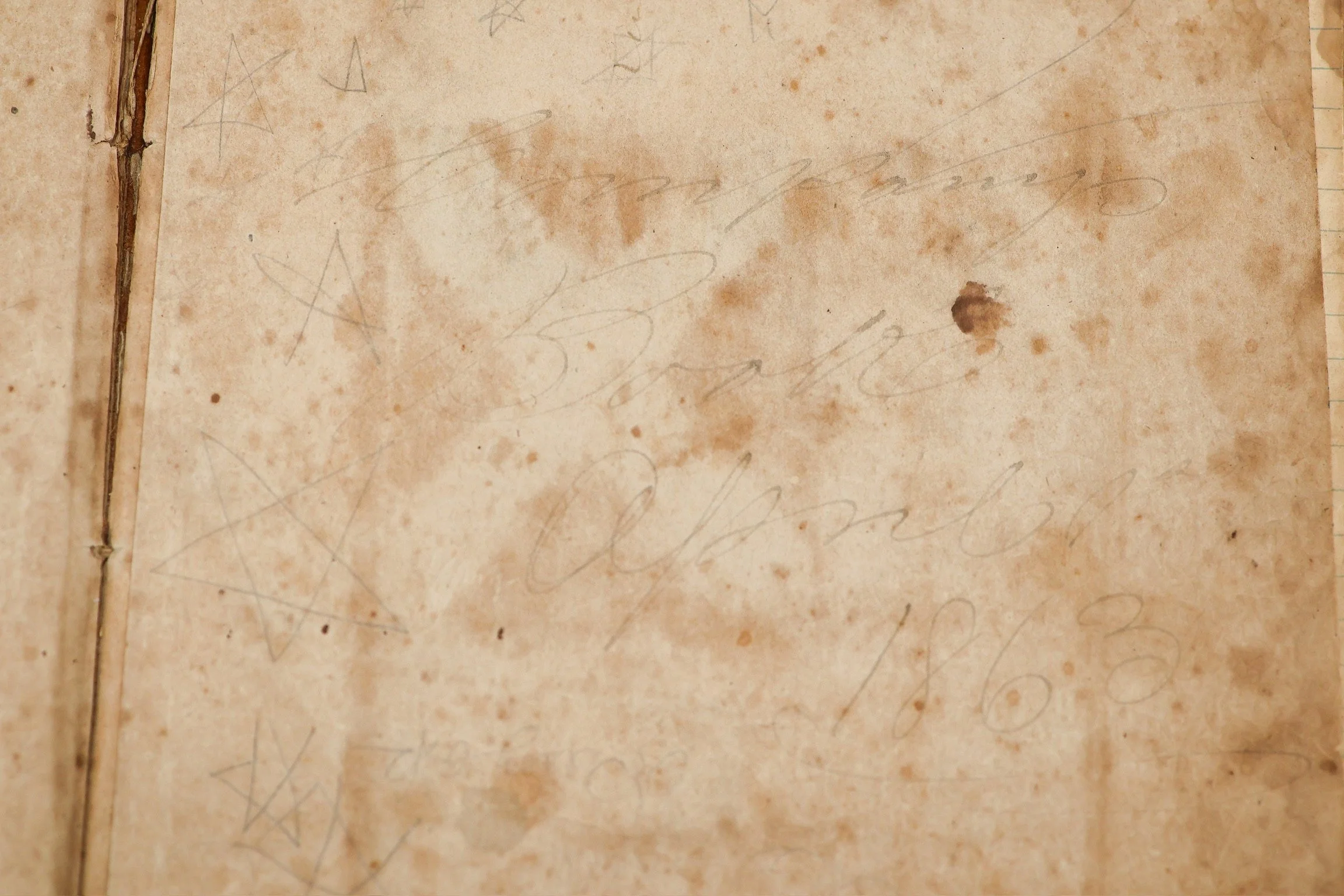
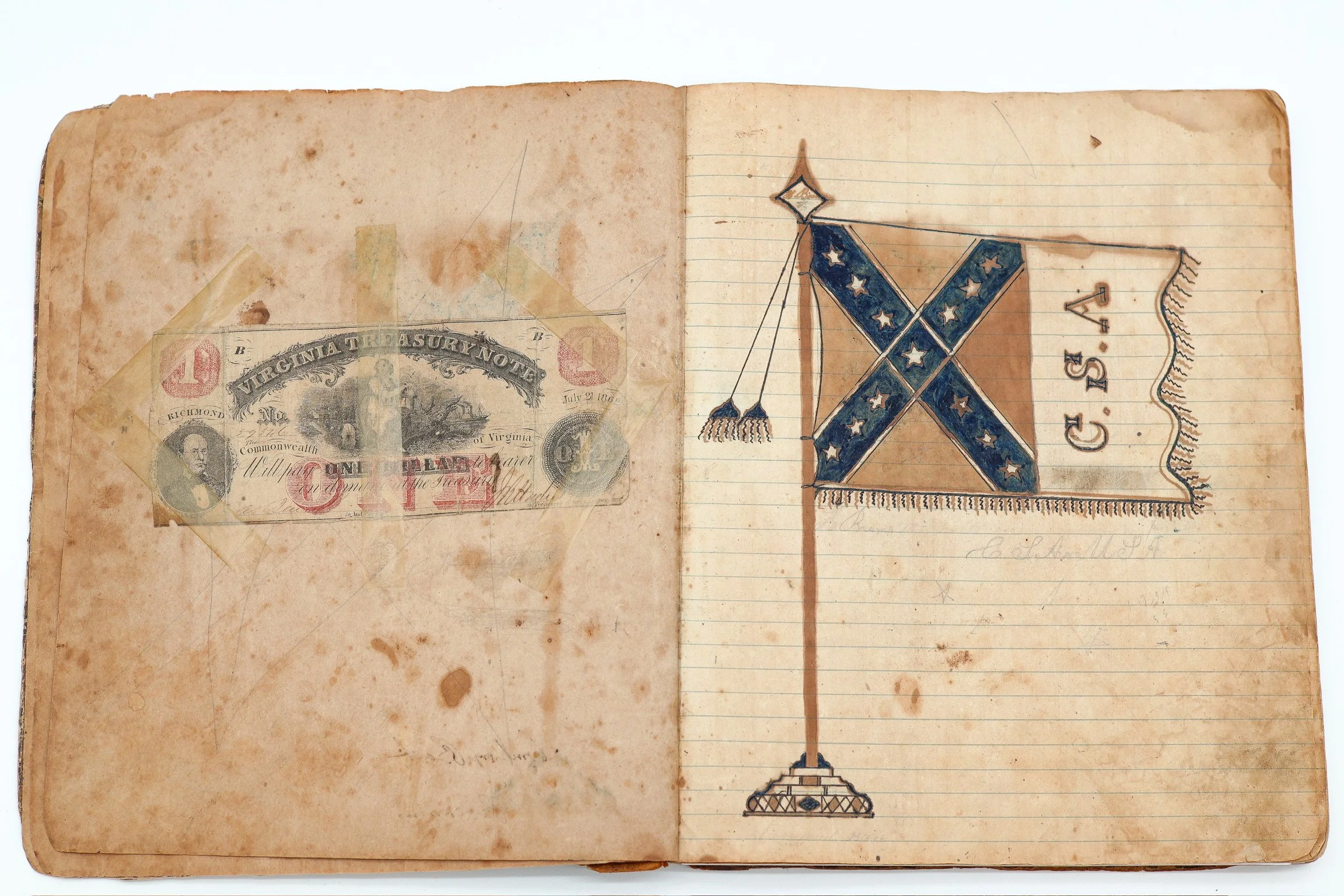
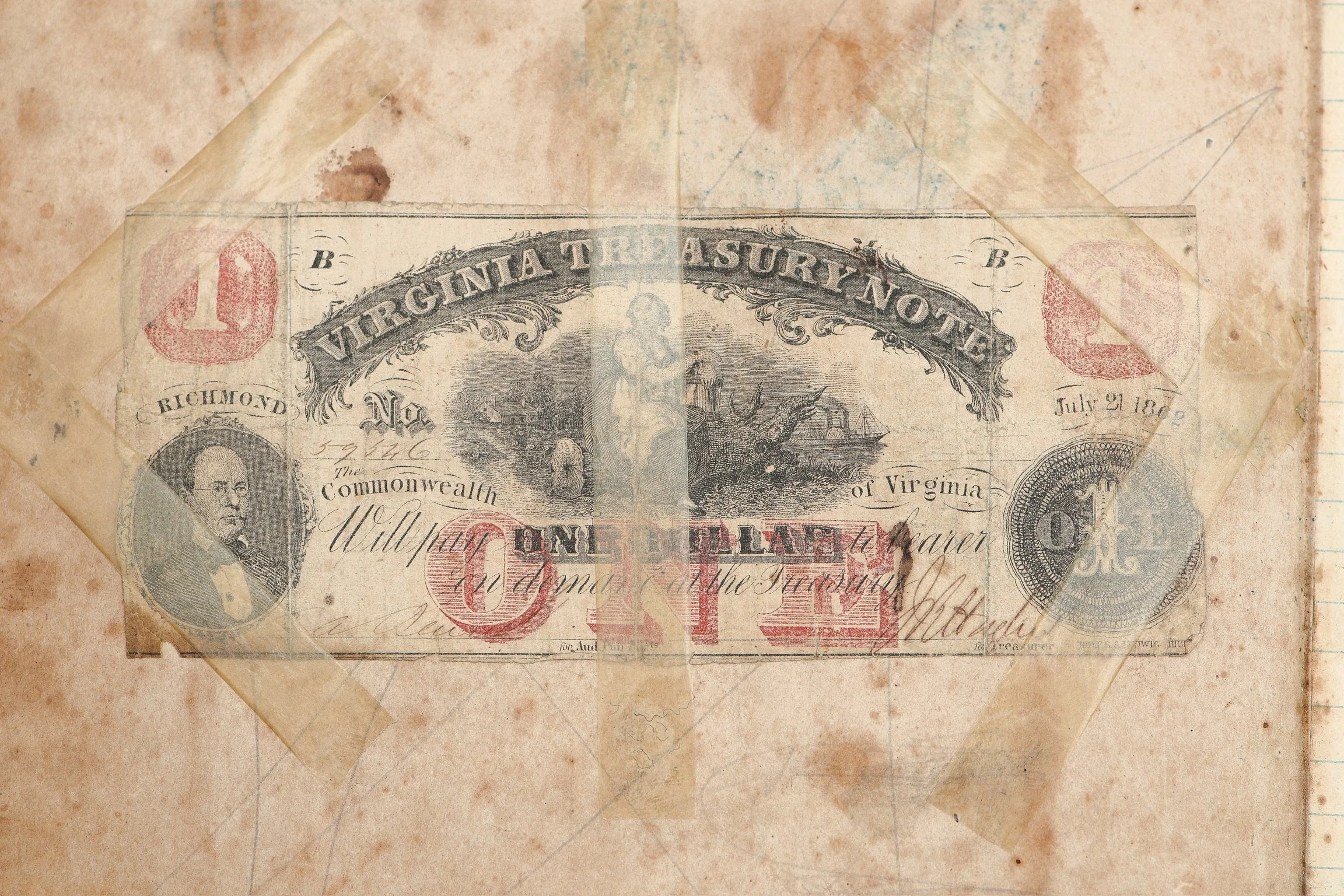
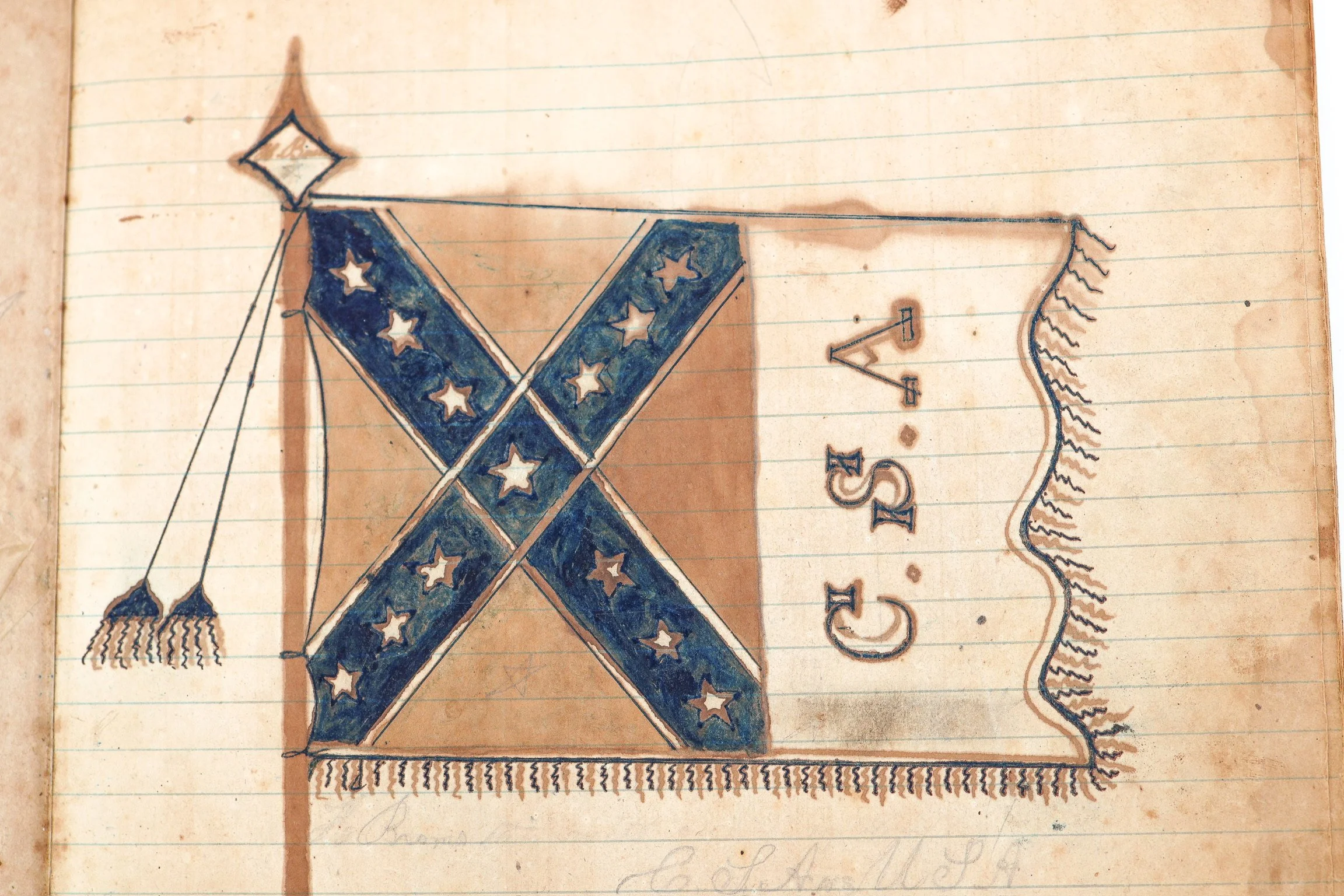
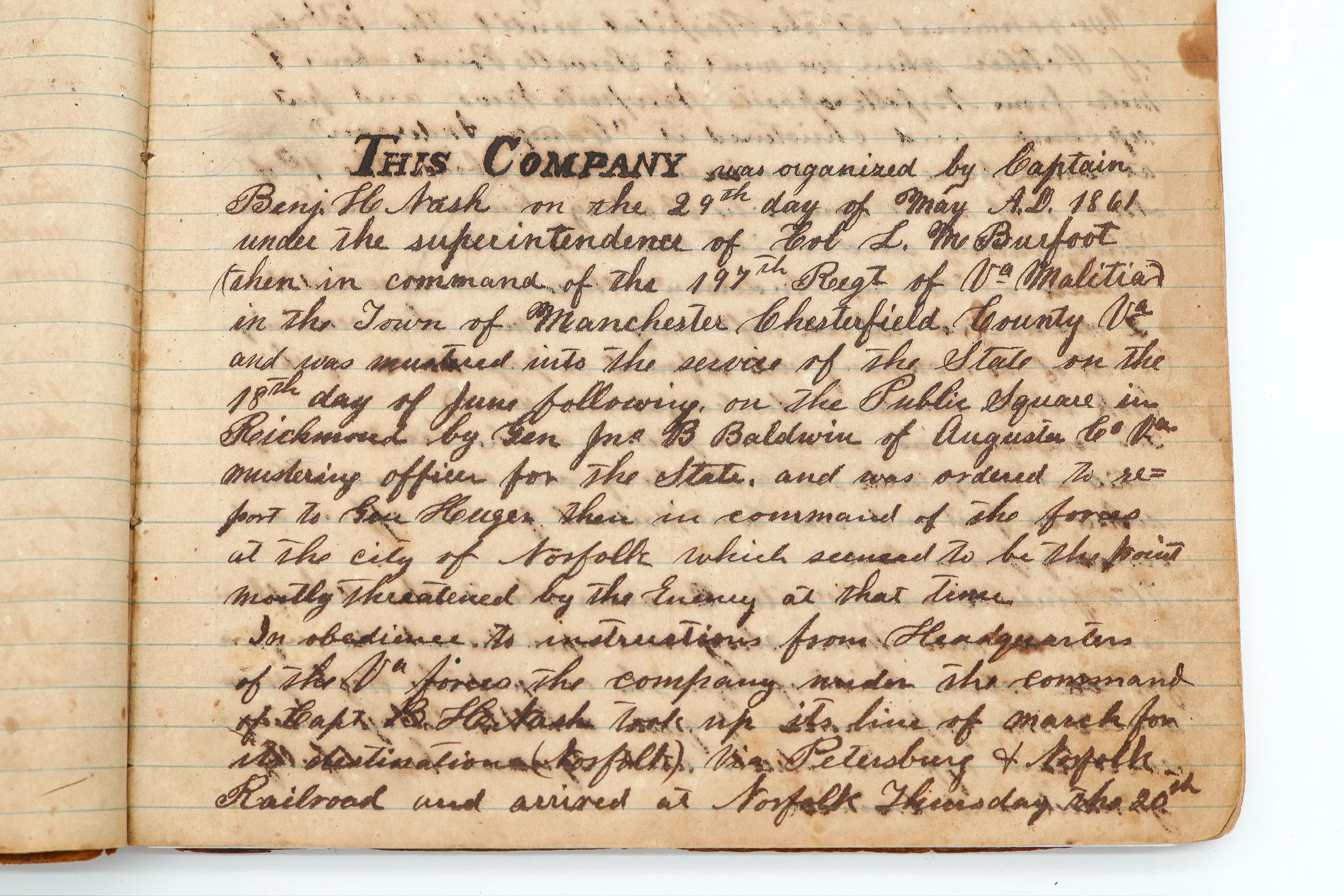
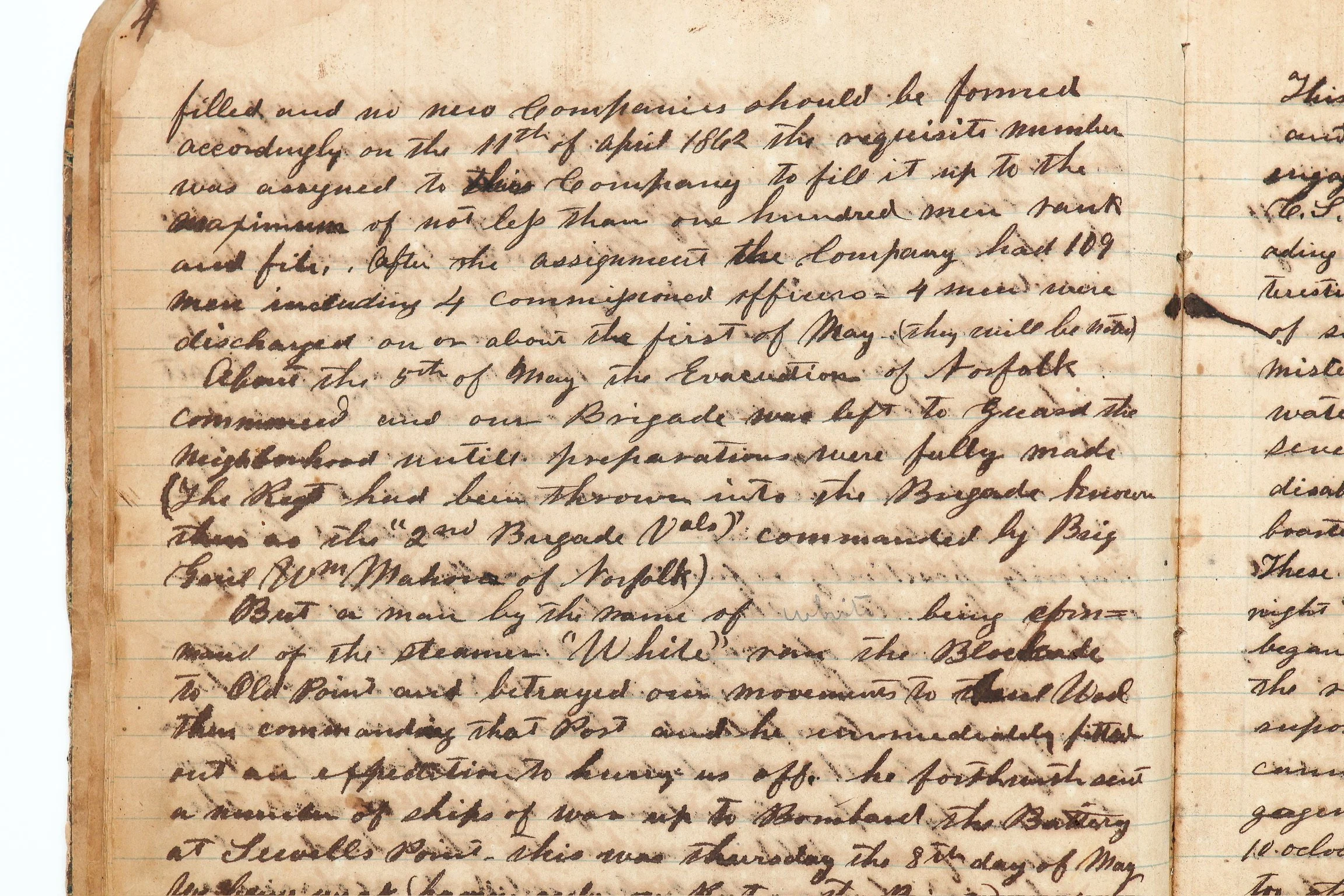
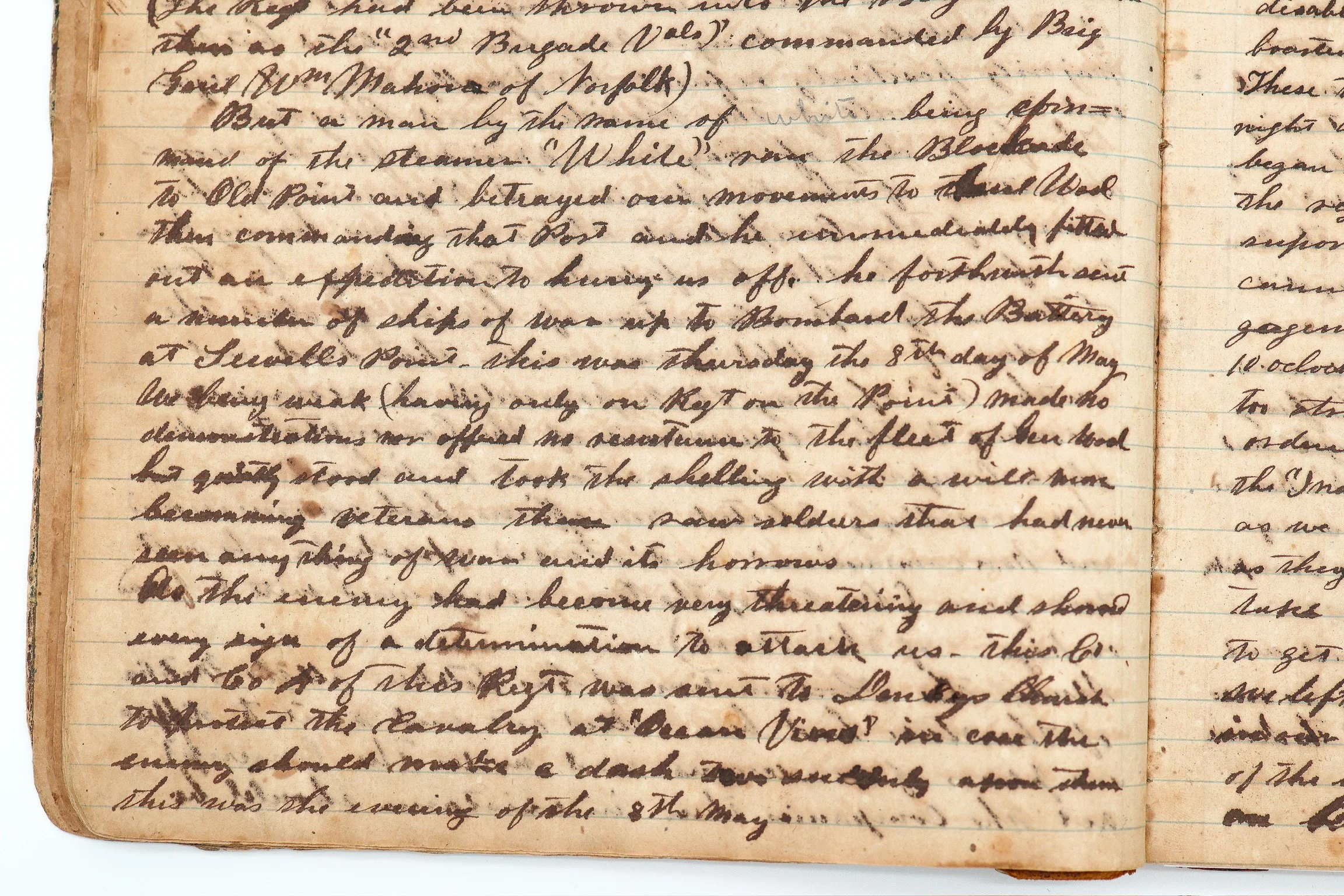
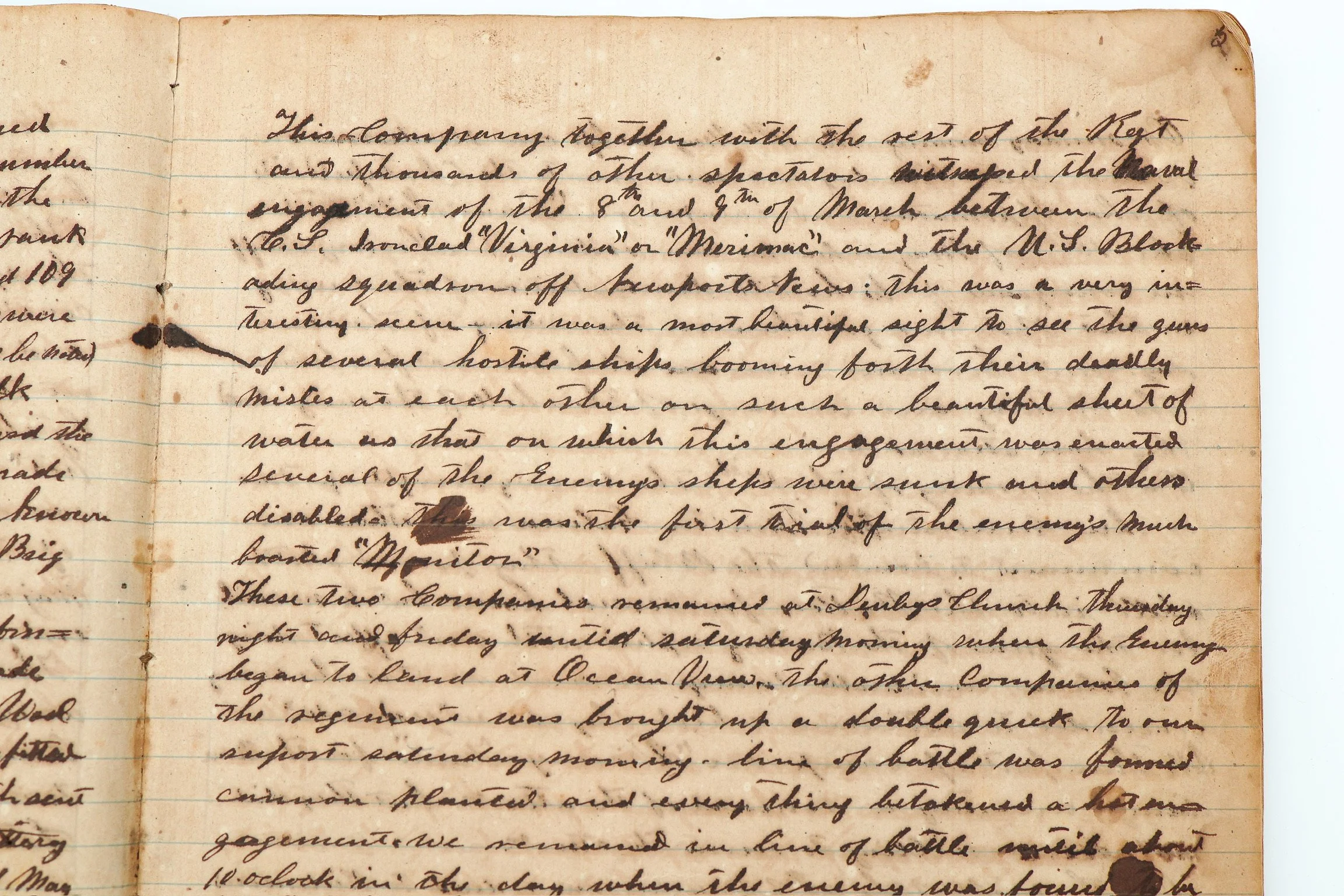
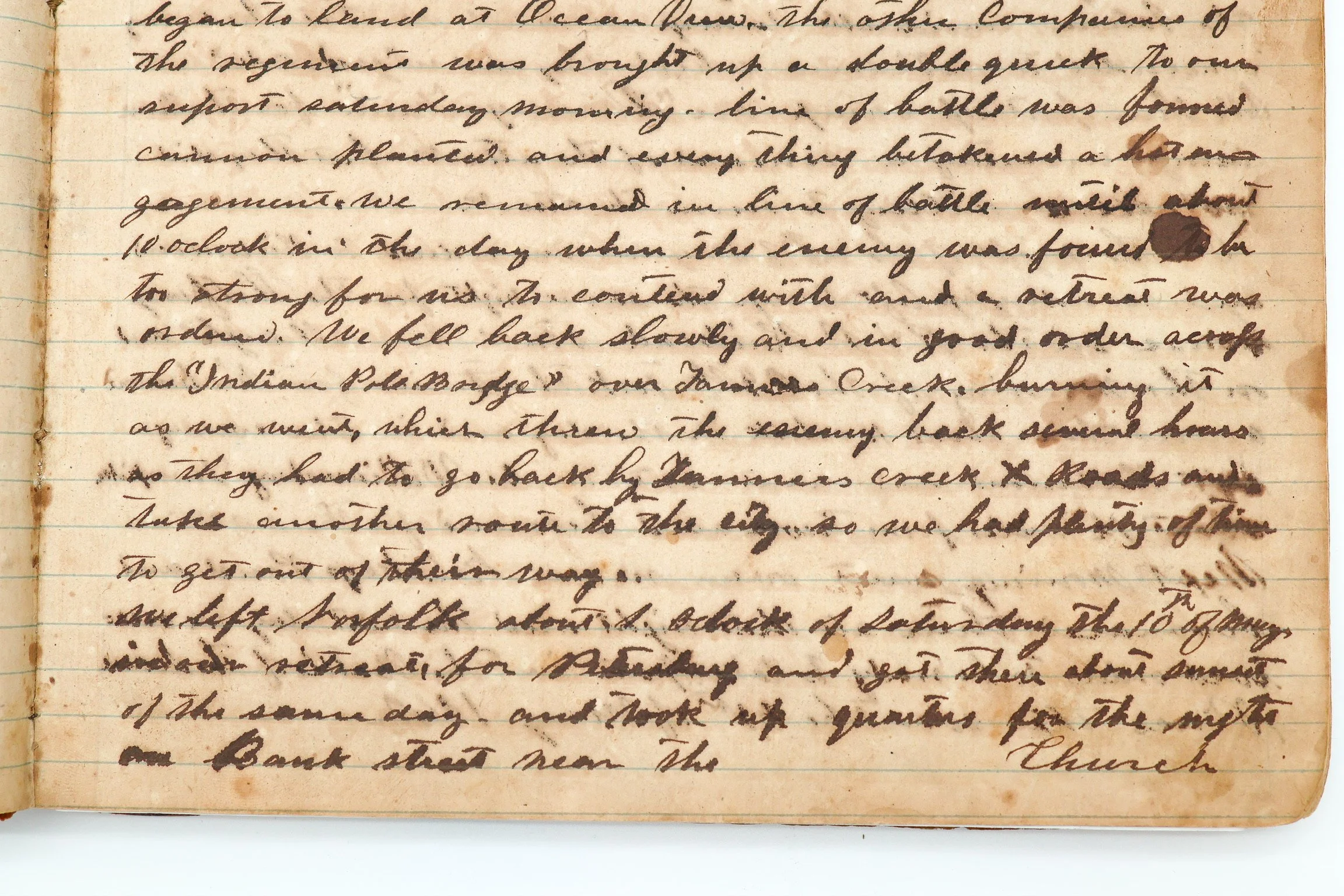
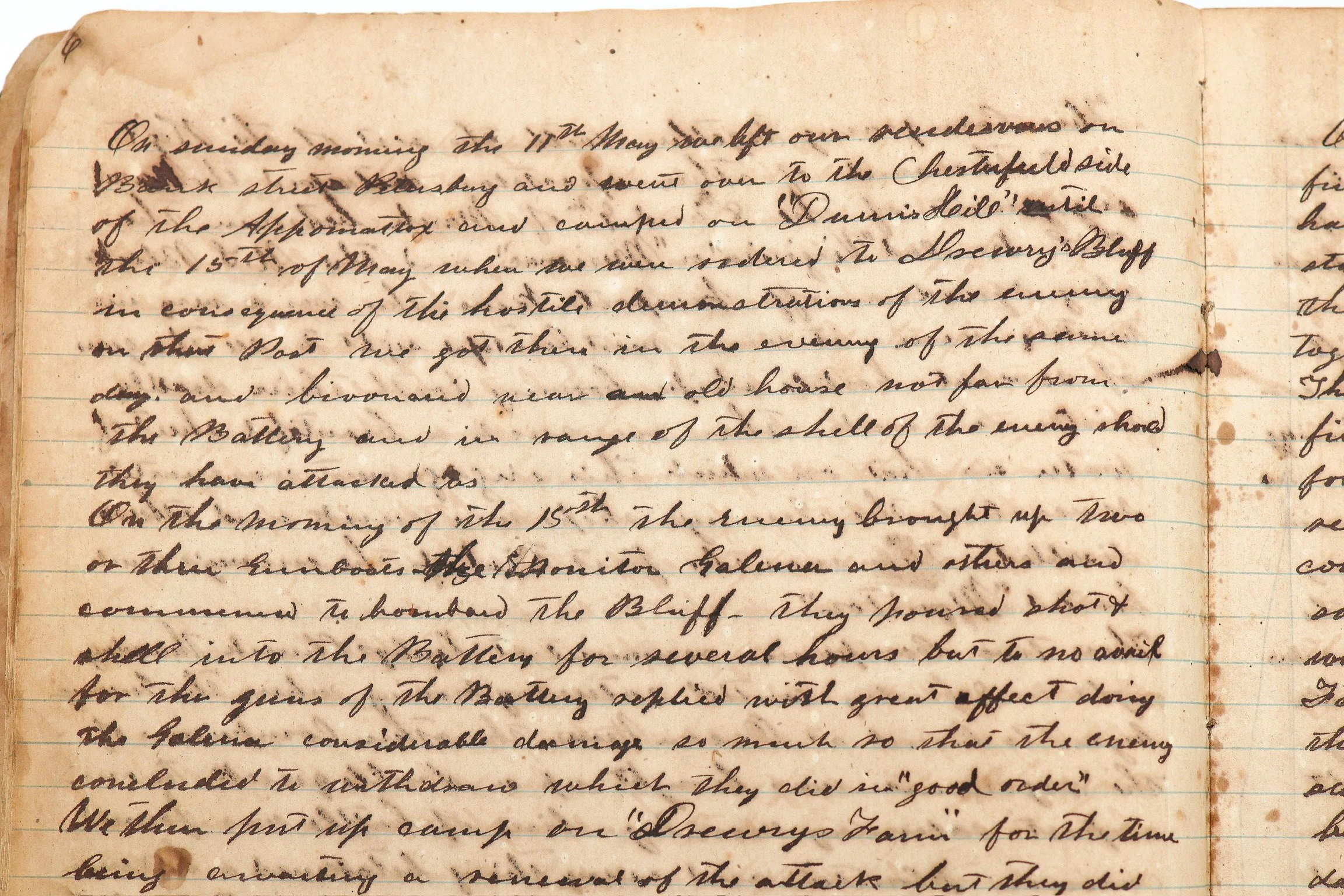
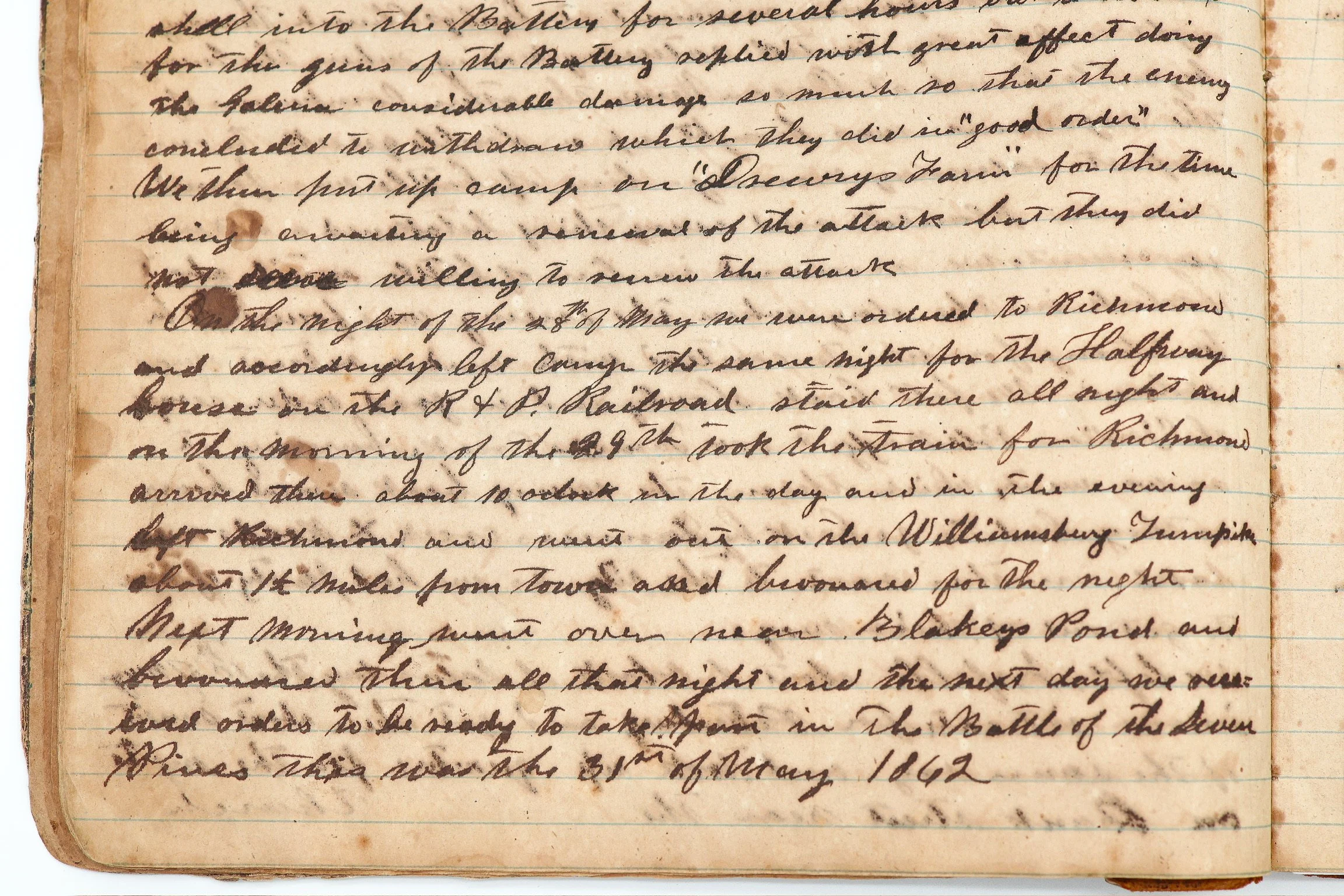
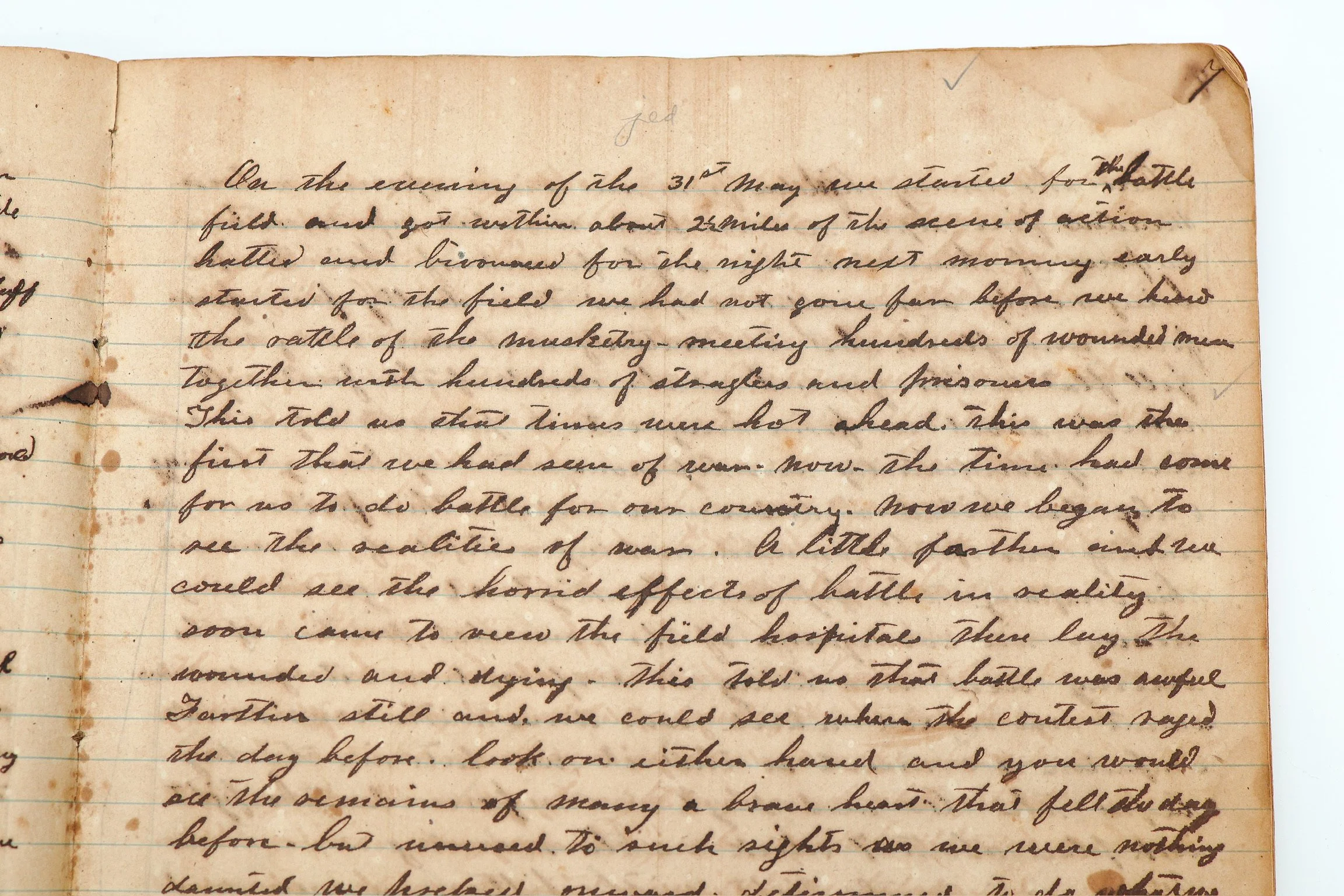
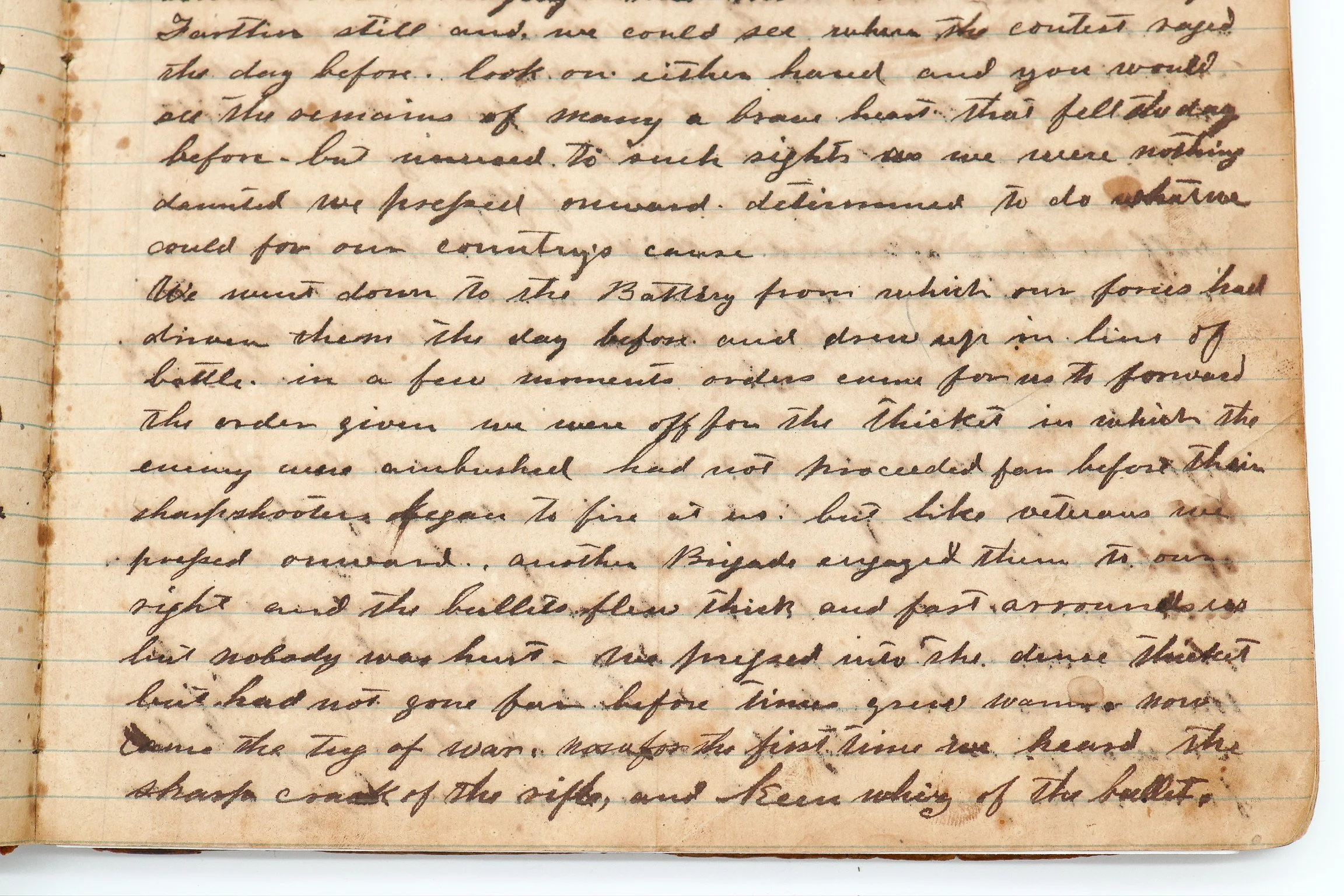
The accompanying Company B book was also brought home by Morrisette. The volume contains handwritten diary-style entries and period drawings documenting the activities of Company B, including camp life, movements, discipline, and combat. The writing includes firsthand descriptions of campaigning and references to major engagements, including Gettysburg.
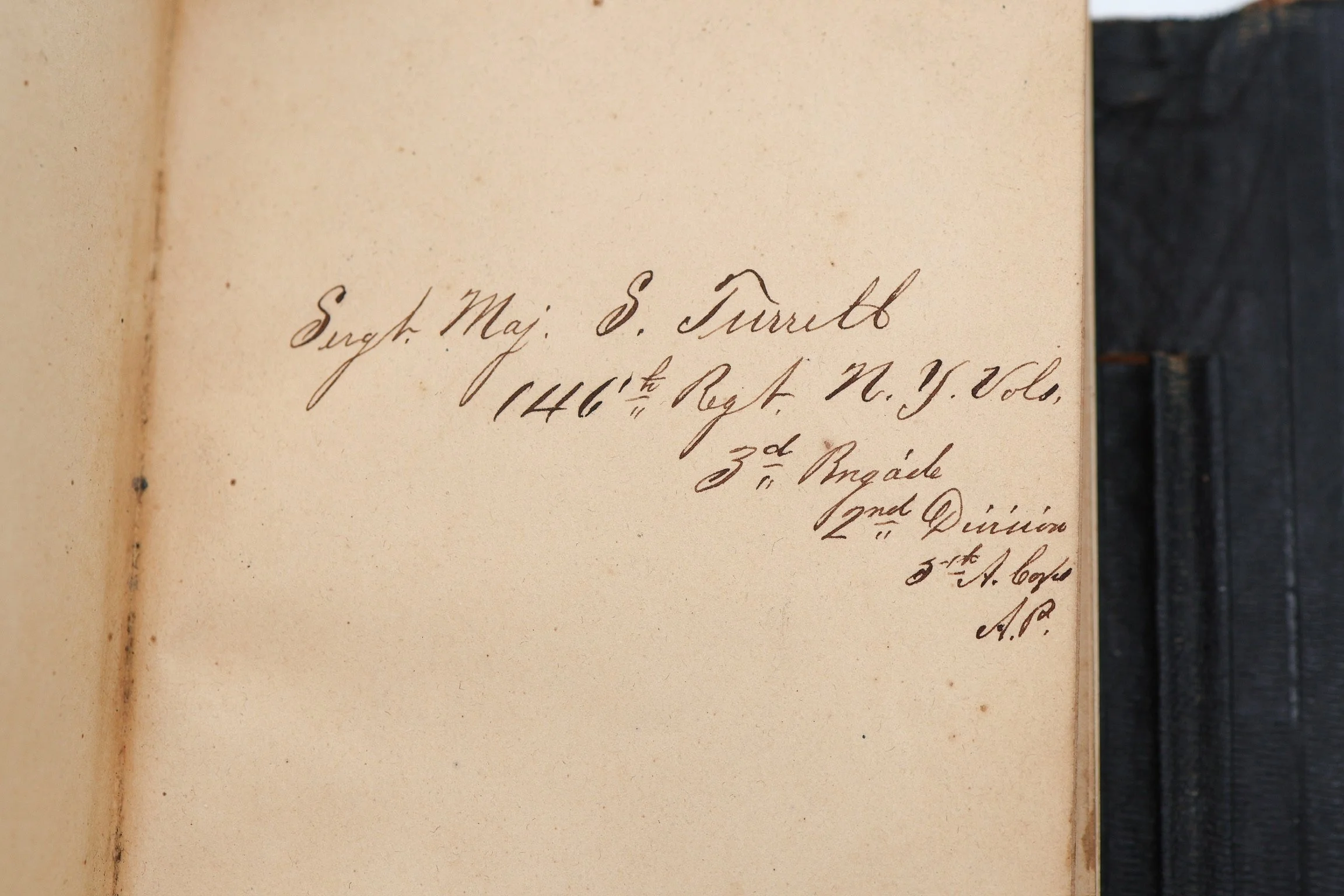
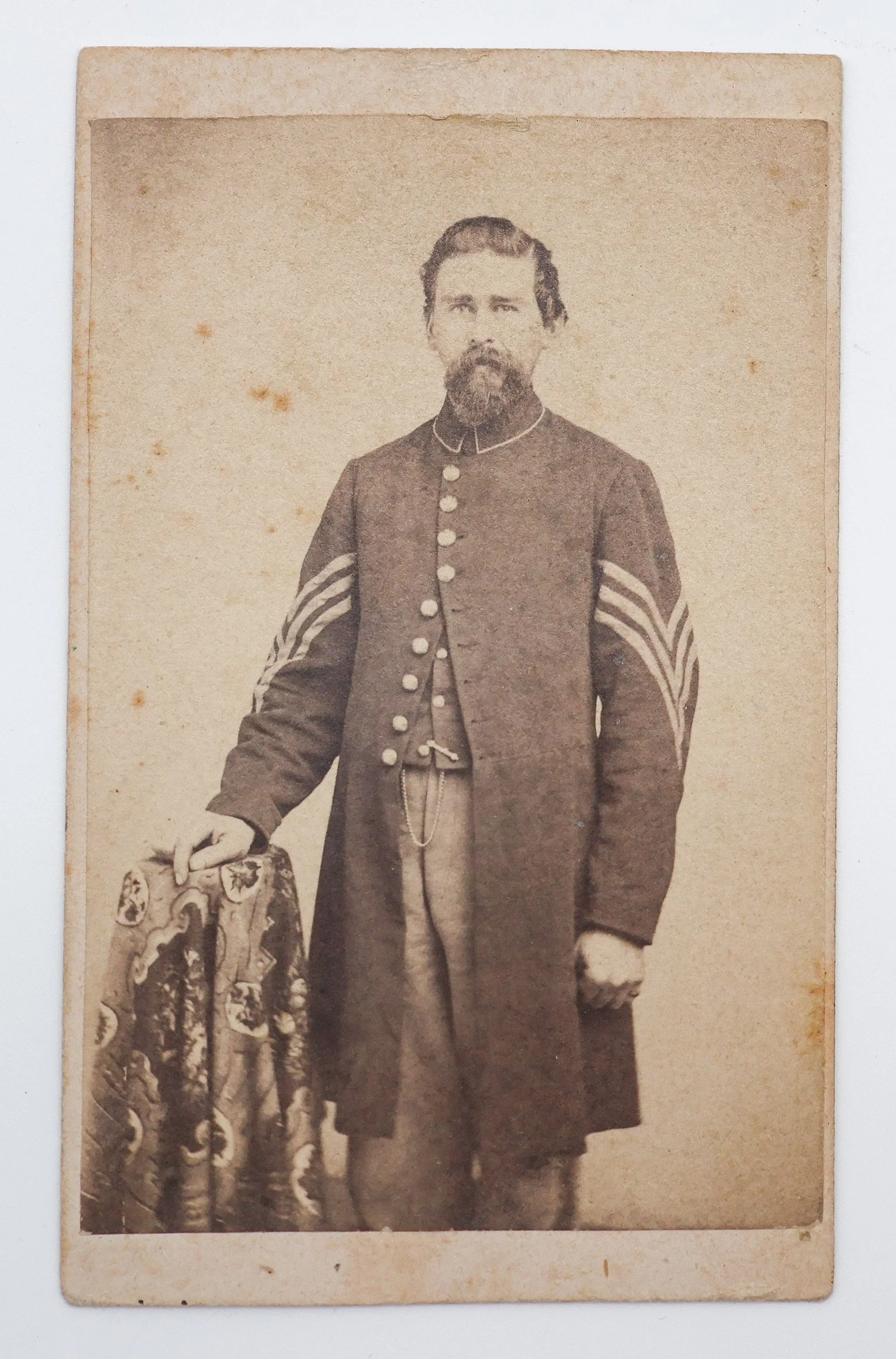
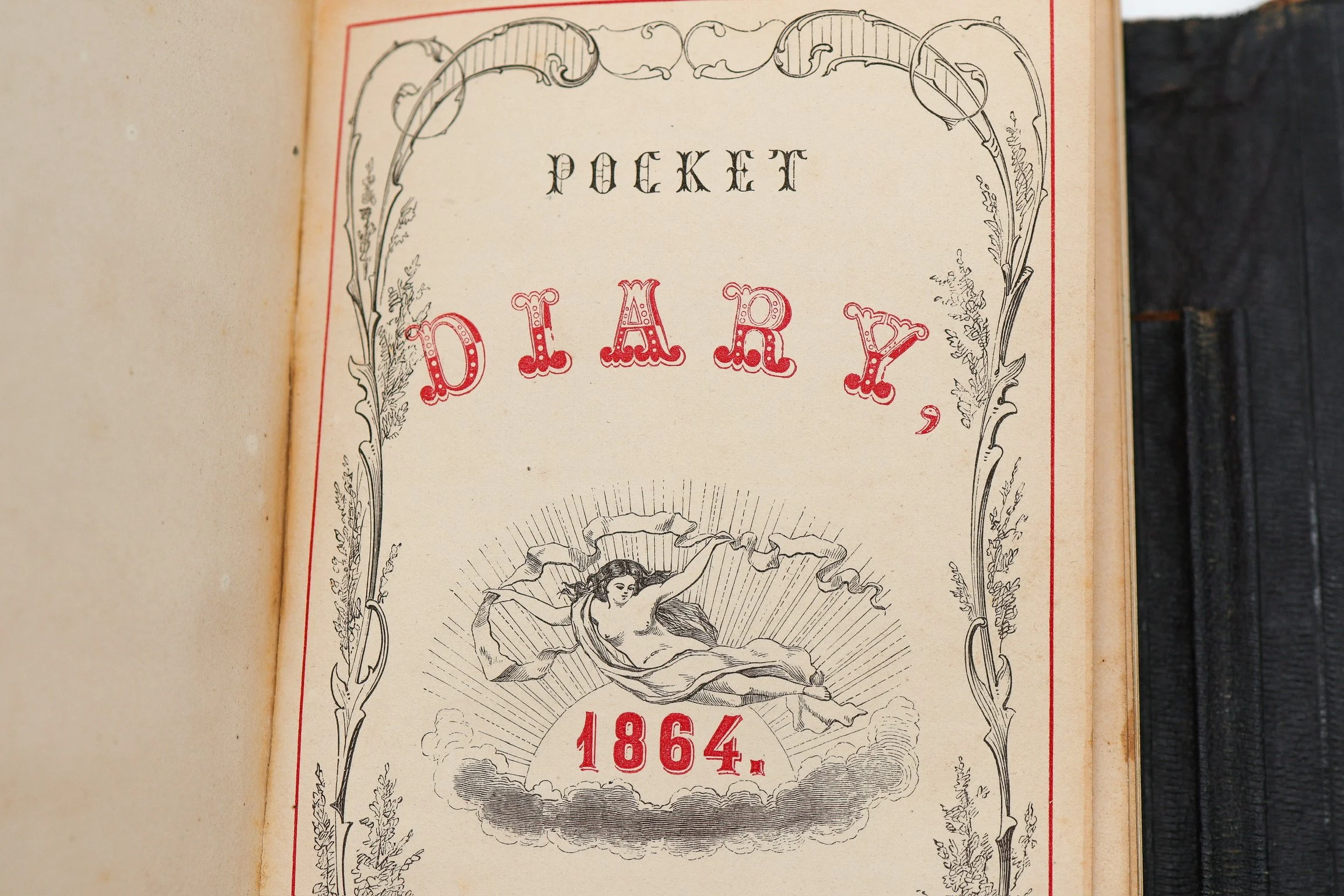
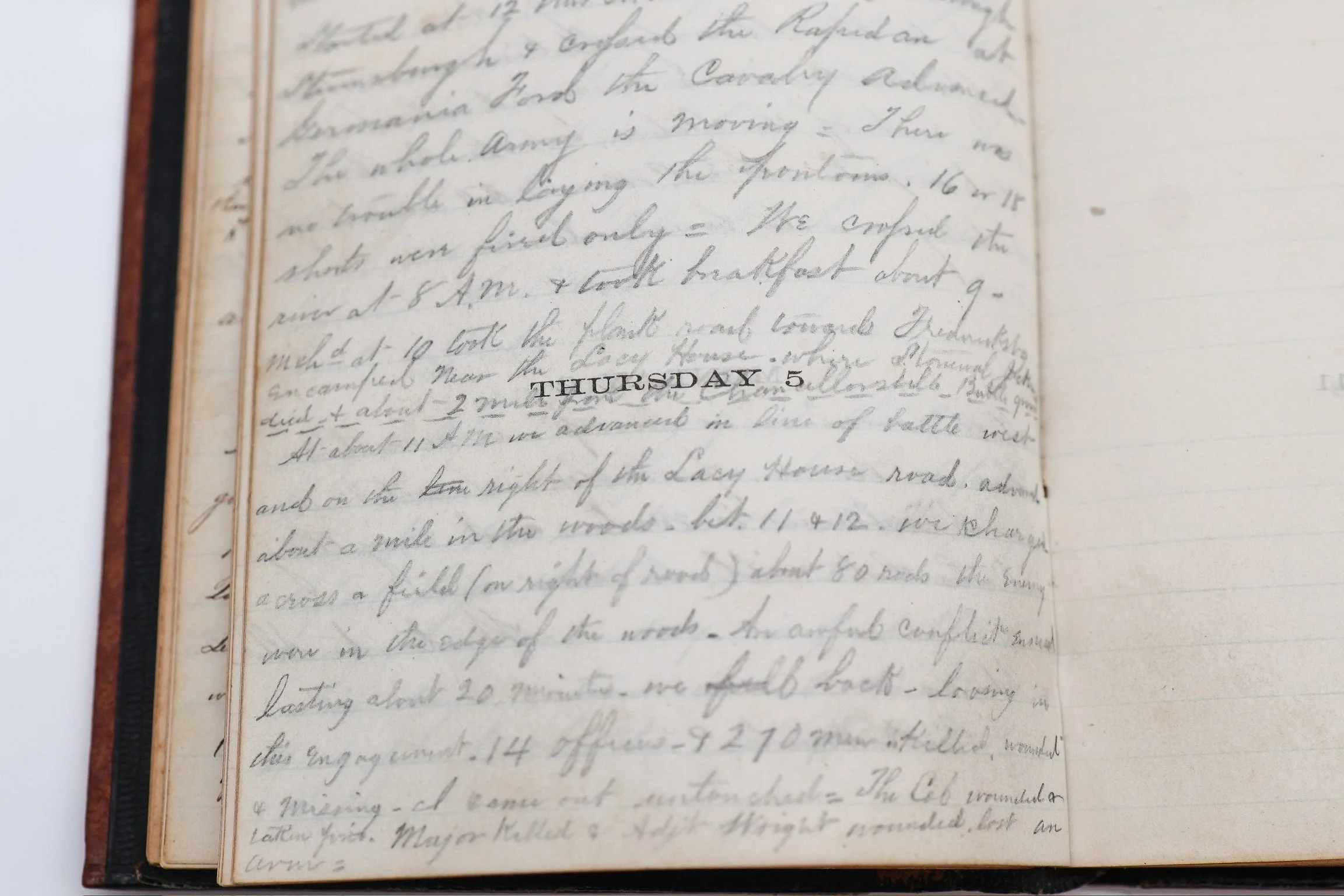
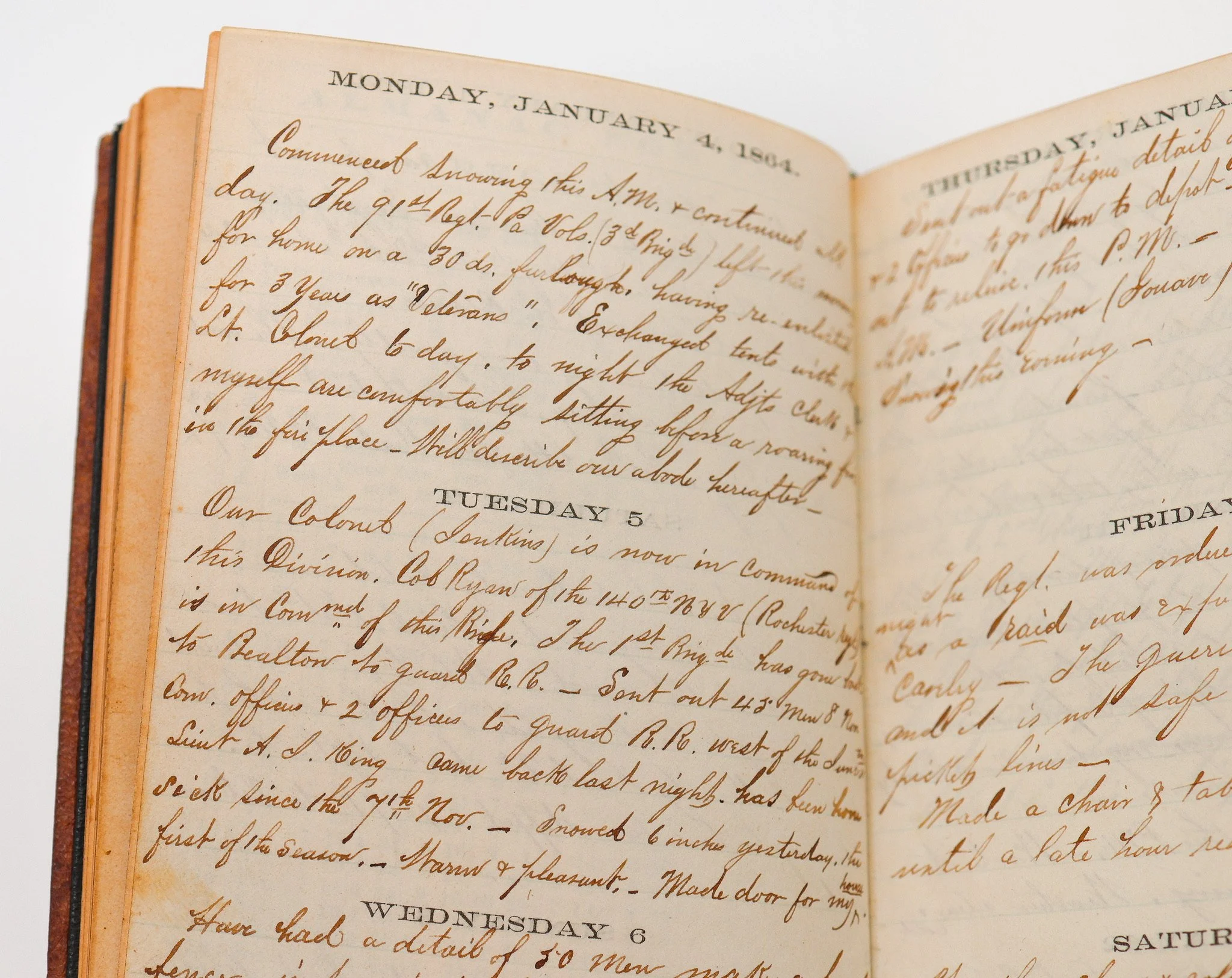
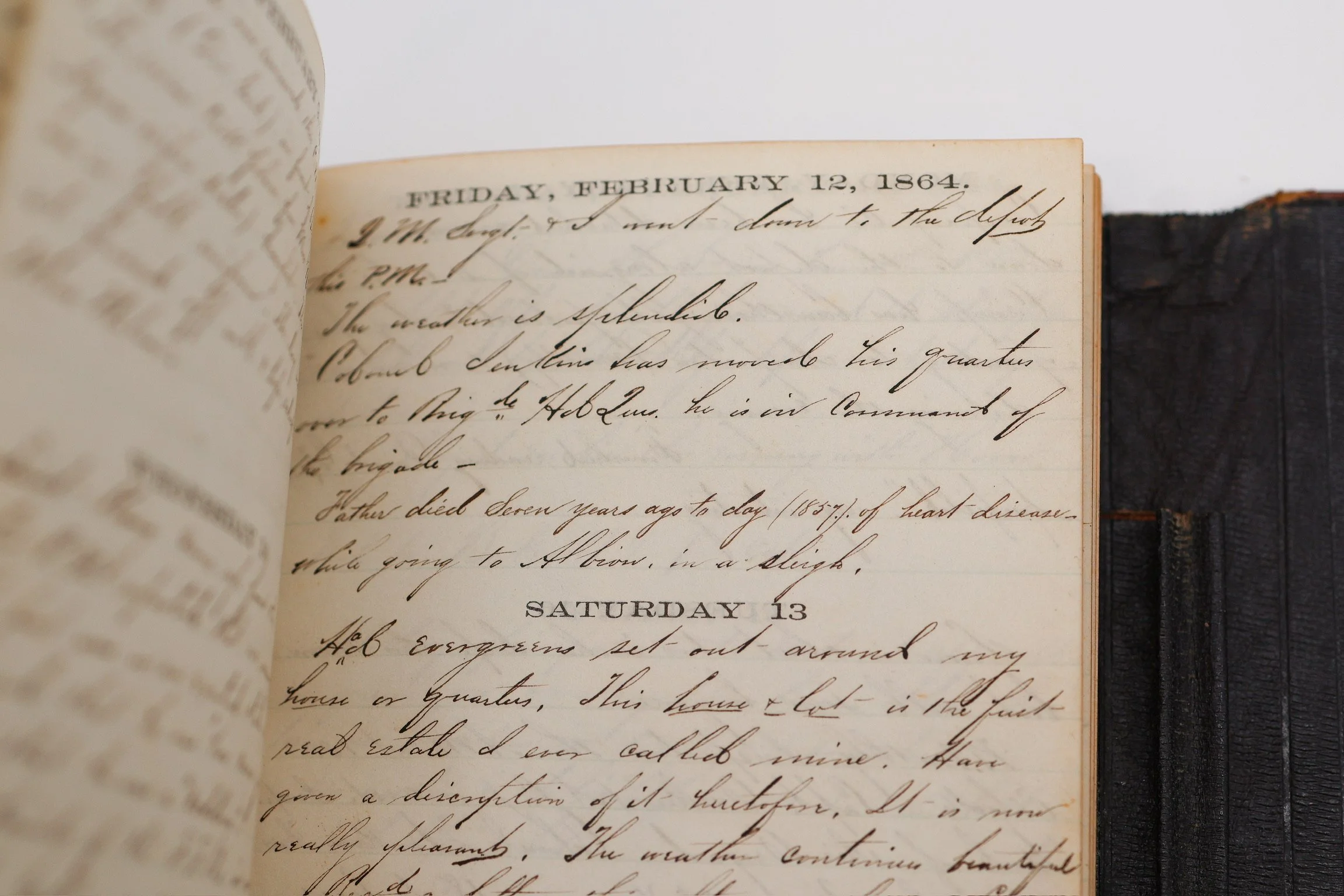
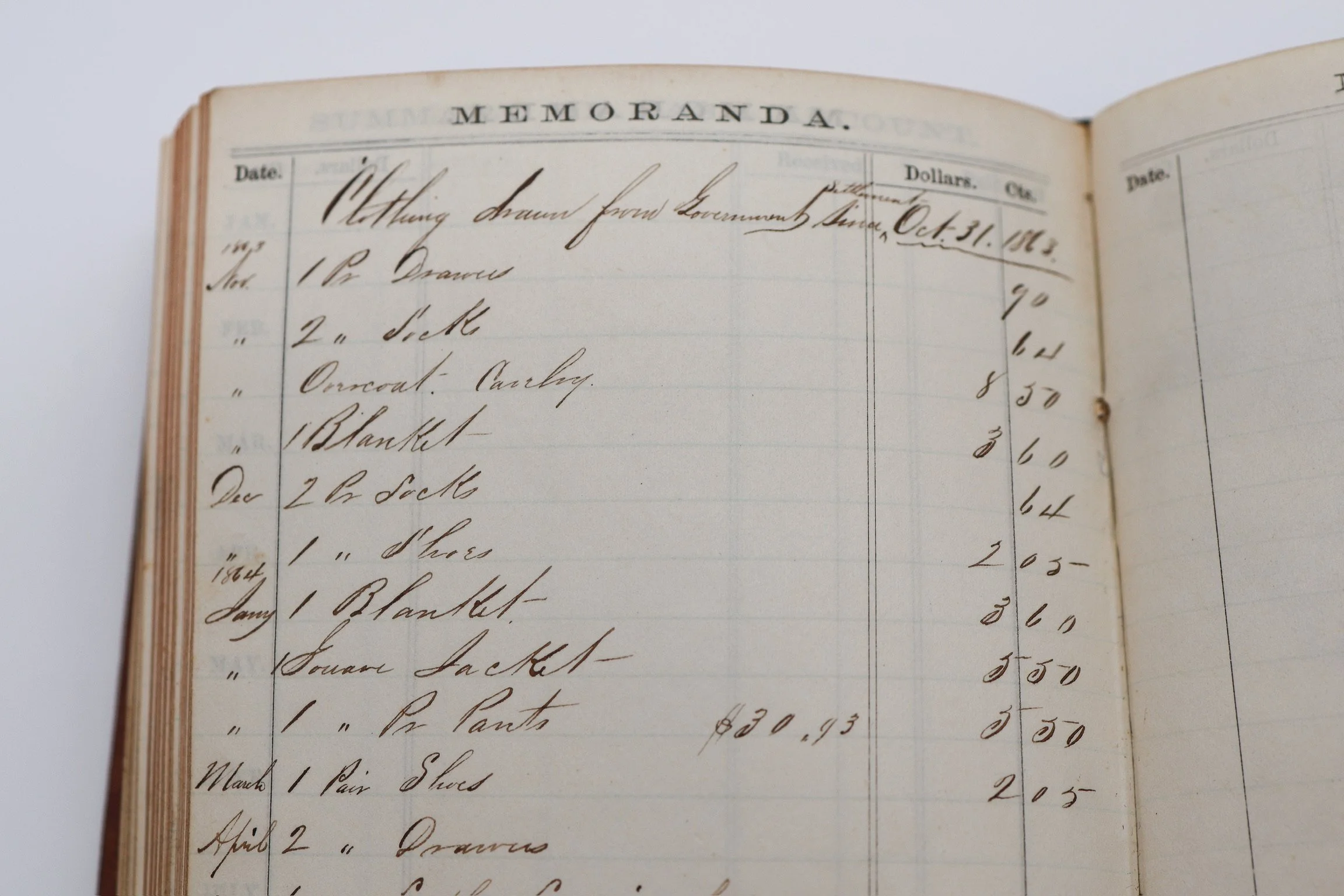
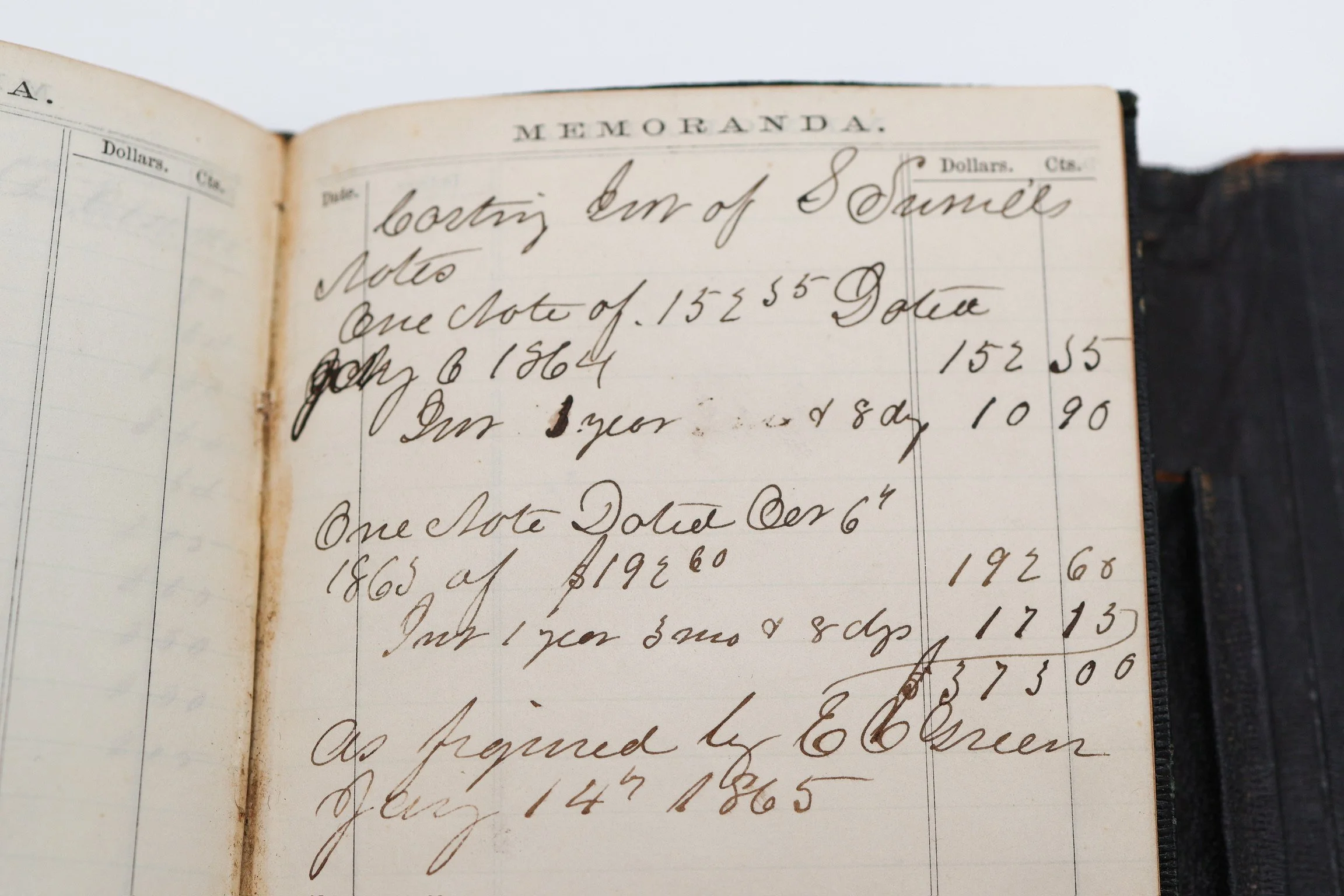
Civil War Diary of Sgt. Major Stimpson Turrell — KIA —146th New York Volunteer Infantry (Girard’s Tigers)
This diary belonged to Sgt. Major Stimpson Turrell of the 146th New York Volunteer Infantry, known as Girard’s Tigers. Turrell enlisted on September 30, 1862, at Paris, New York, at the age of 27, and mustered into Company K on October 10, 1862, as a private. He was promoted to corporal and then to sergeant on January 31, 1863, and advanced to sergeant major on June 25, 1863. On that same date, he transferred from Company K to the regiment’s Field & Staff.
Turrell was wounded on May 8, 1864, at Spotsylvania Court House, Virginia, during the Overland Campaign. He later died of those wounds on May 20, 1864, at Alexandria, Virginia.
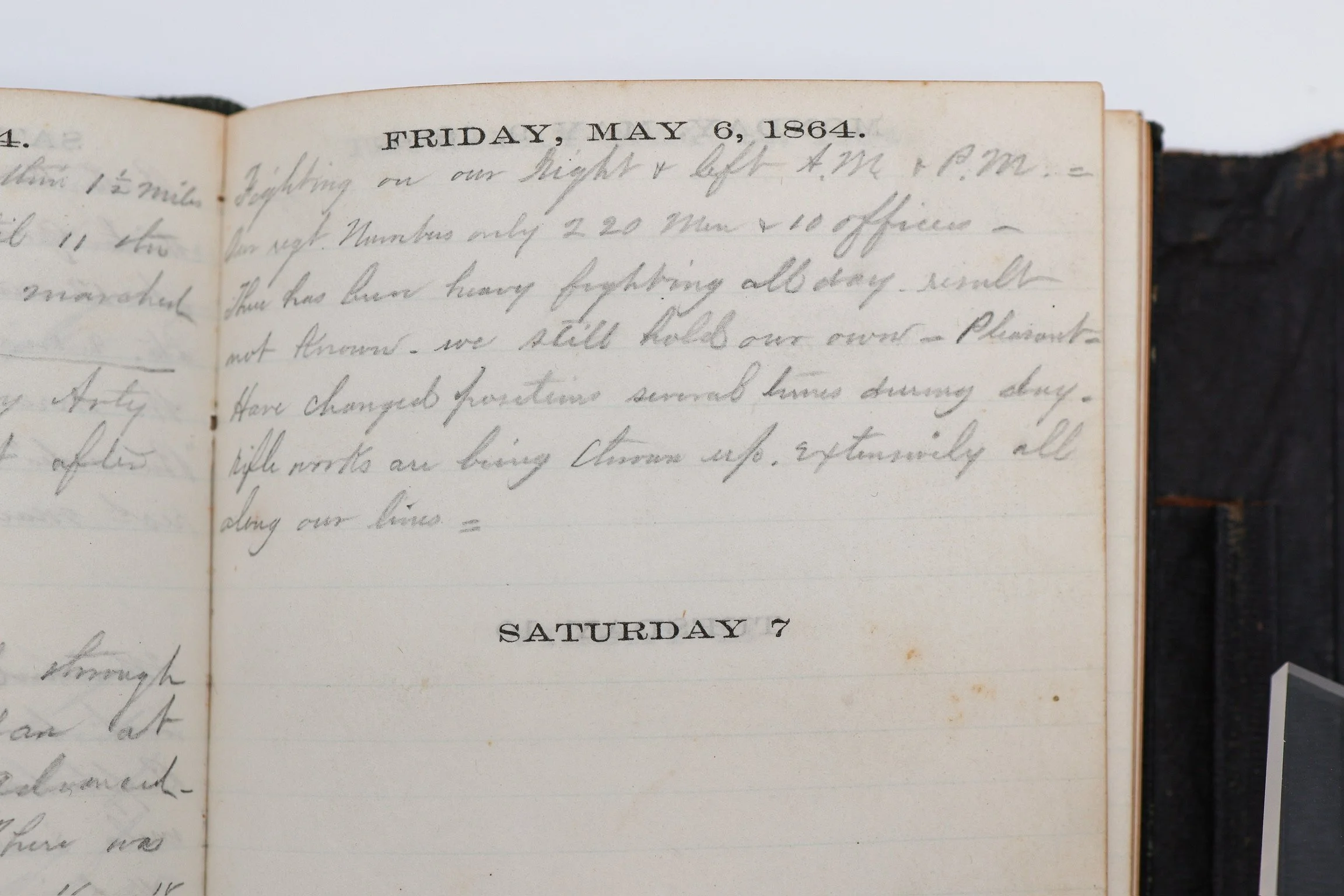
The diary is written in exceptionally fine and legible handwriting and records Turrell’s daily activities and observations throughout his service. Its final entry is dated Friday, May 6, 1864—just days before he was wounded. No further entries appear after that date, lending the diary particular poignancy as a firsthand account that ends immediately before his mortal injury.
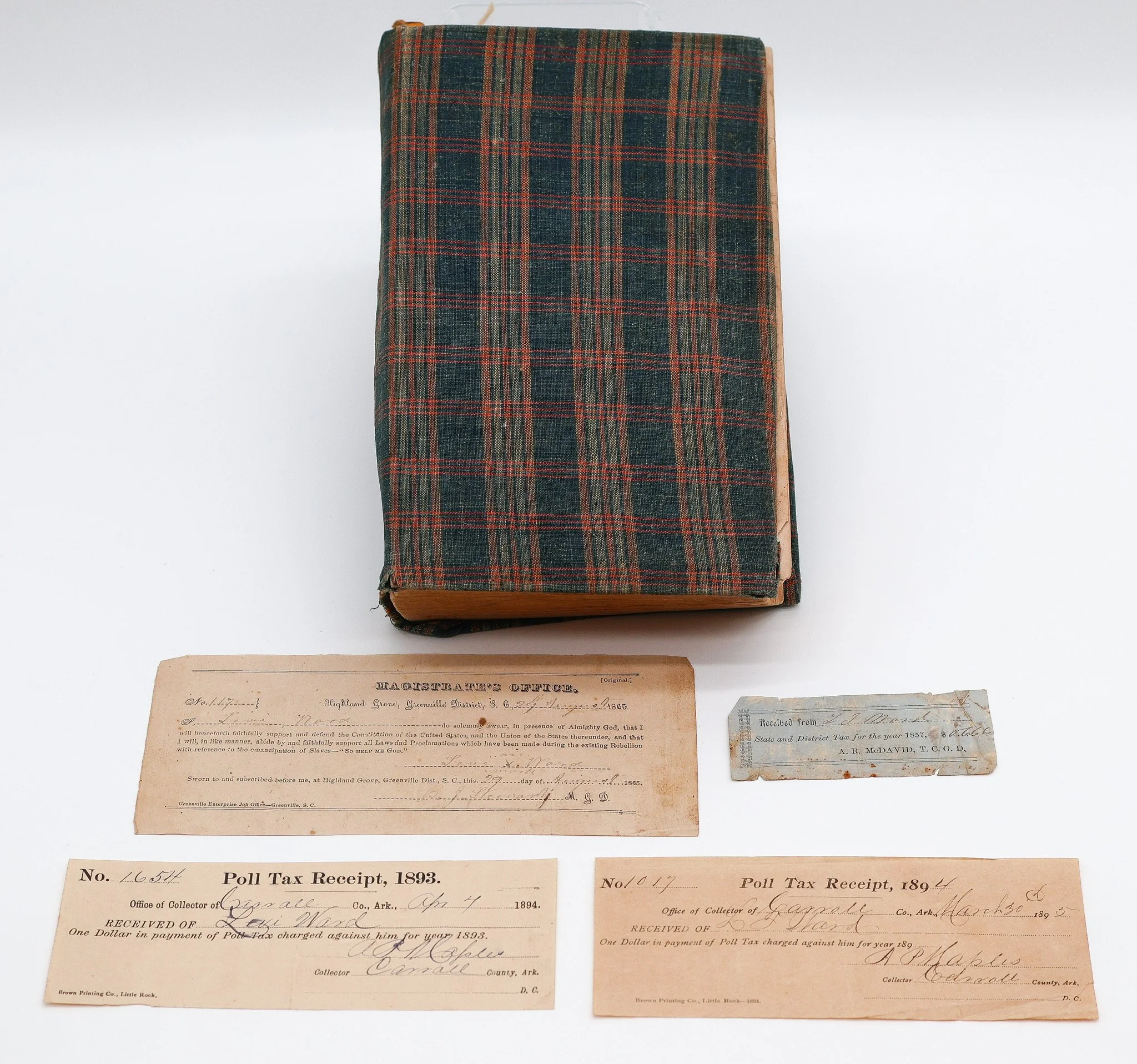
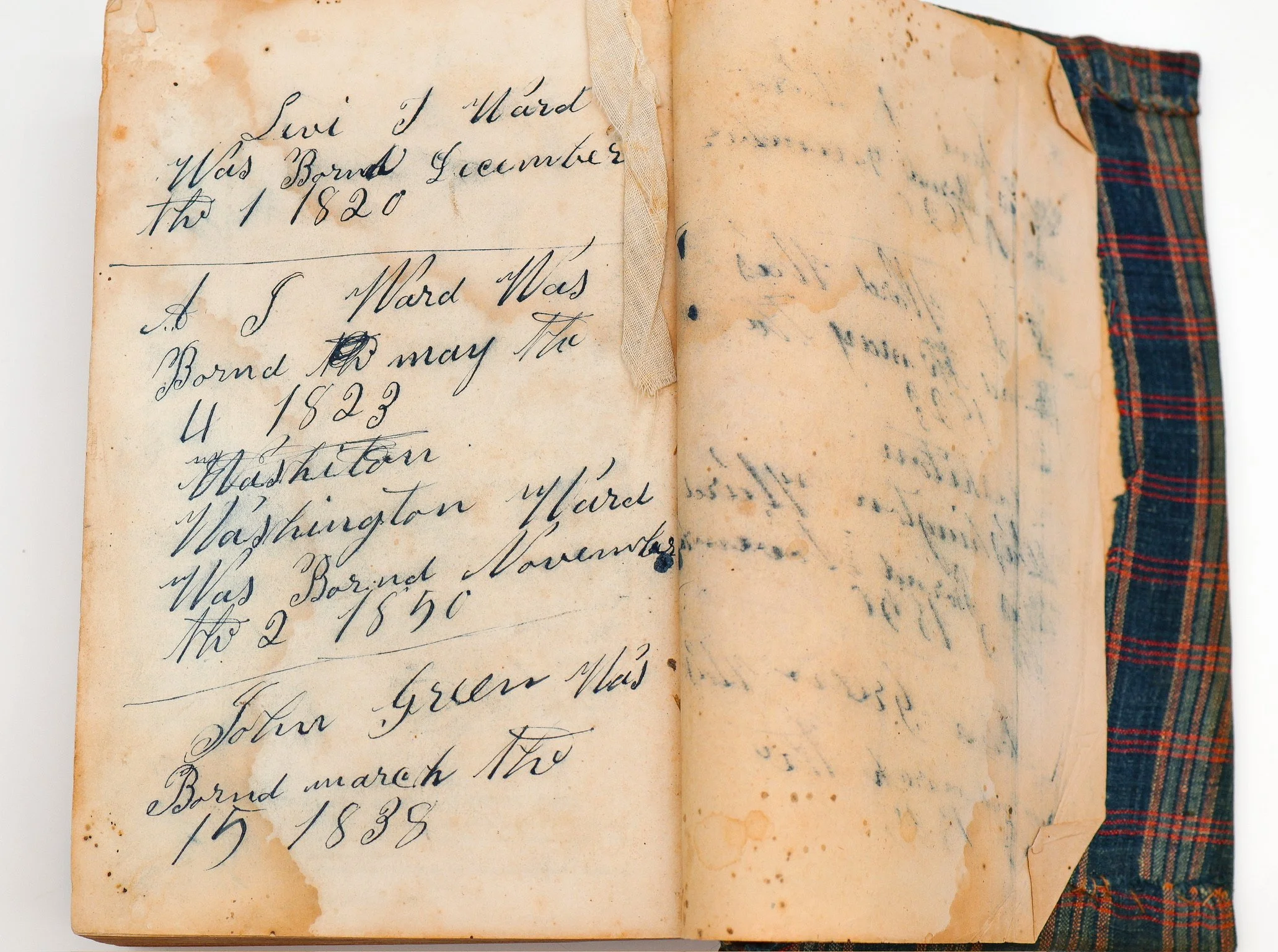
Civil War Oath of Allegiance and Family Bible Grouping — Levi Ward, South Carolina
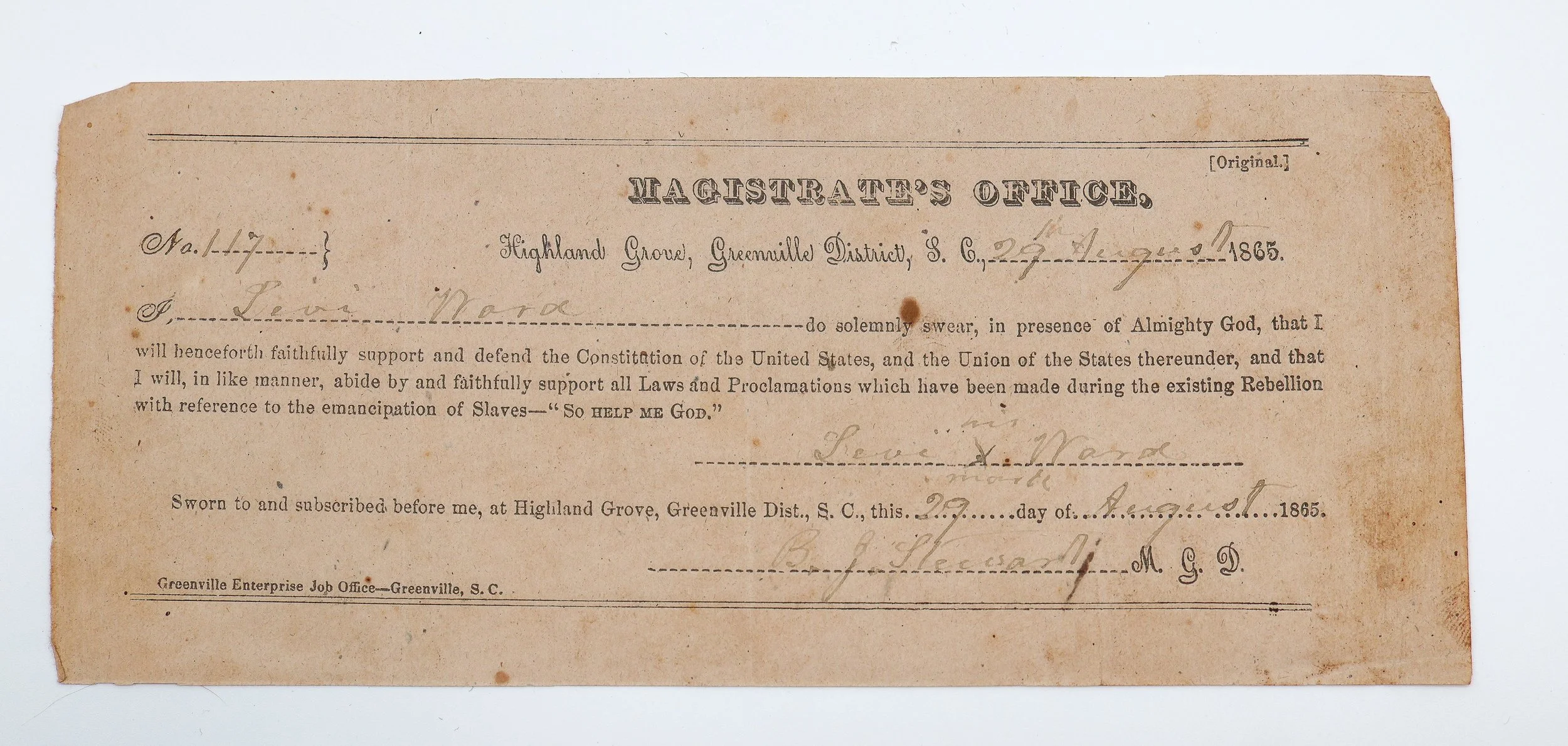
This Civil War grouping is centered on the postwar oath of allegiance sworn by Levi Ward of Greenville, South Carolina, formally renouncing the Confederacy and pledging loyalty to the United States. The oath document, signed in 1865 at Highland Grove in the Greenville District, reflects one of the most consequential moments faced by former Confederate soldiers at the war’s end, when reintegration into the Union required an explicit rejection of the rebellion and an affirmation of federal authority, including adherence to emancipation proclamations.
Levi Ward enlisted on August 1, 1863, as a private and mustered into Company H, 1st South Carolina State Troops Infantry. Units designated as “State Troops” in South Carolina were part of the Confederacy’s late-war manpower efforts and often served in local defense roles as the Confederacy’s situation deteriorated.
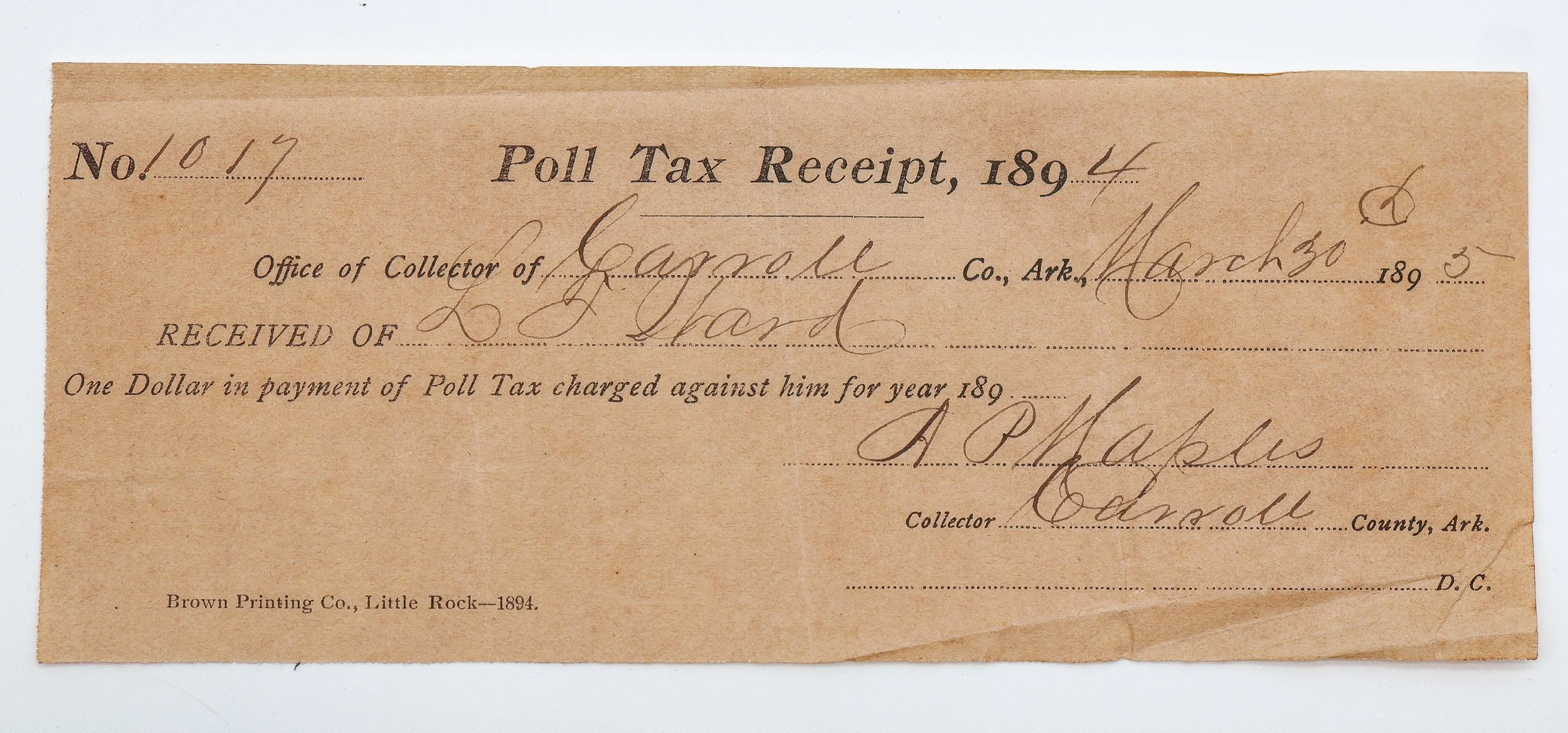
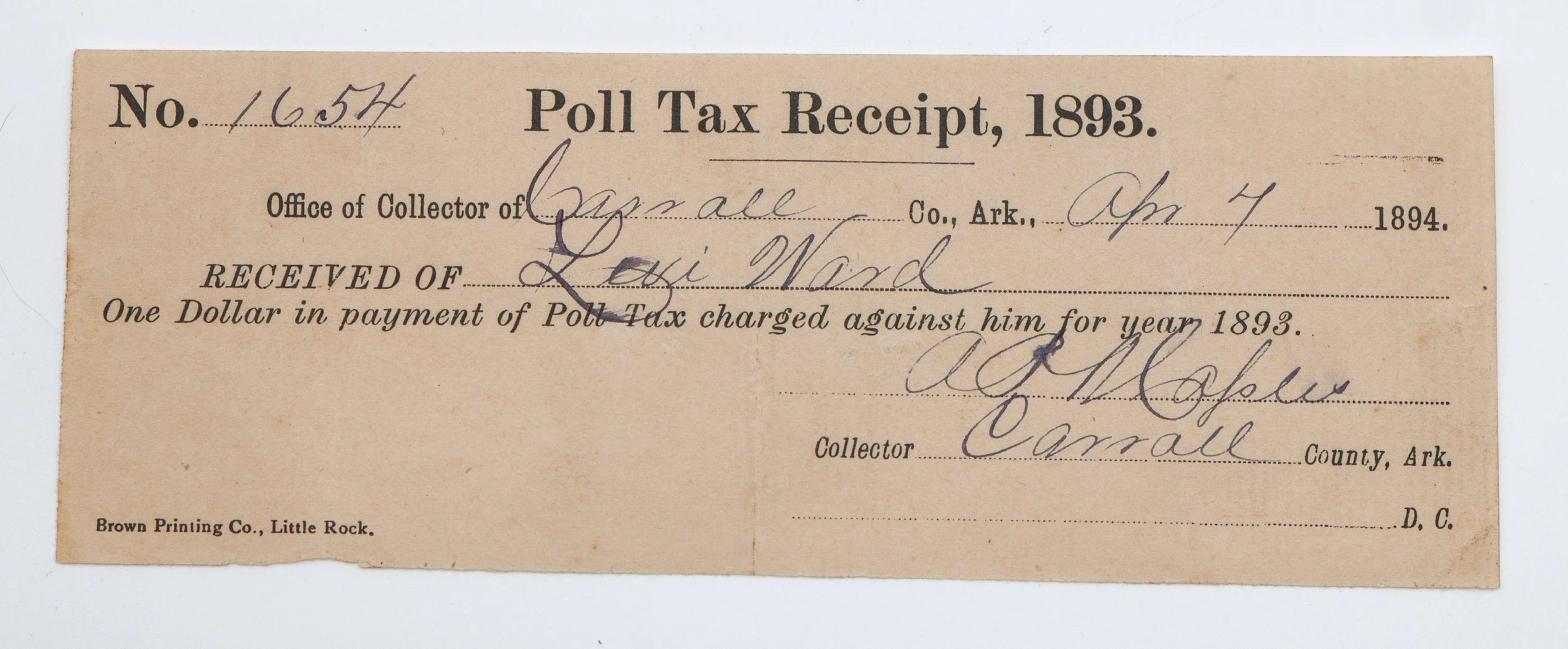
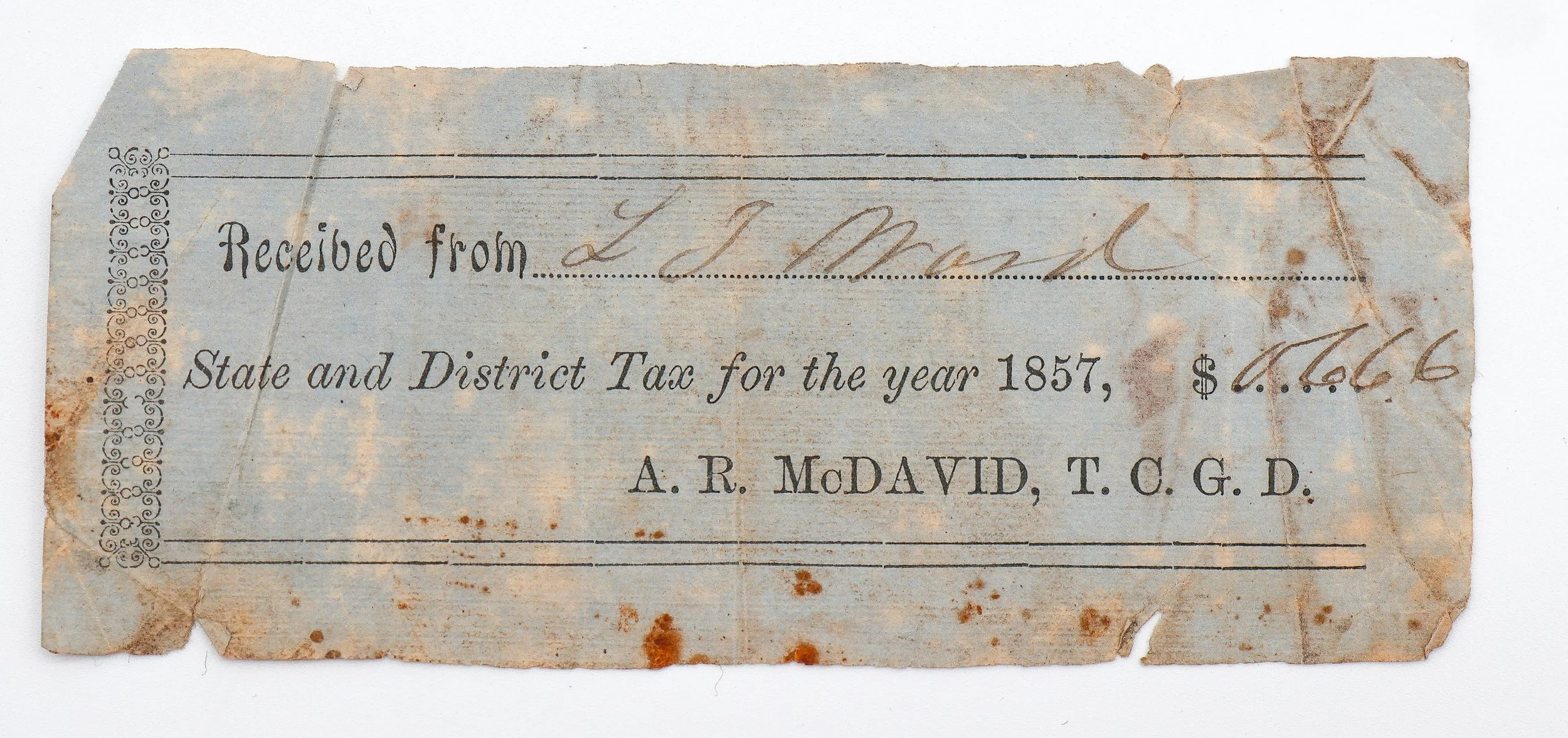
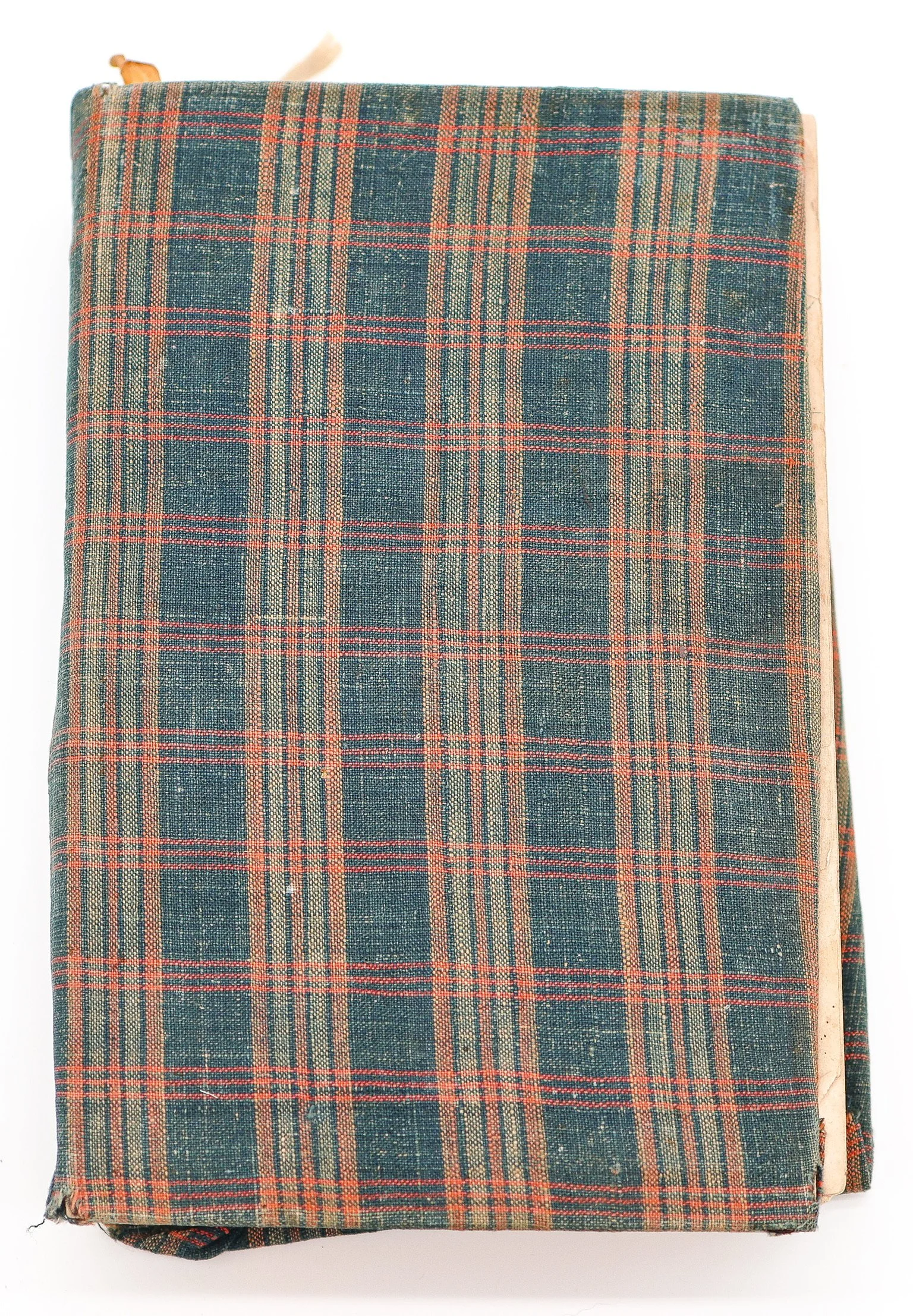
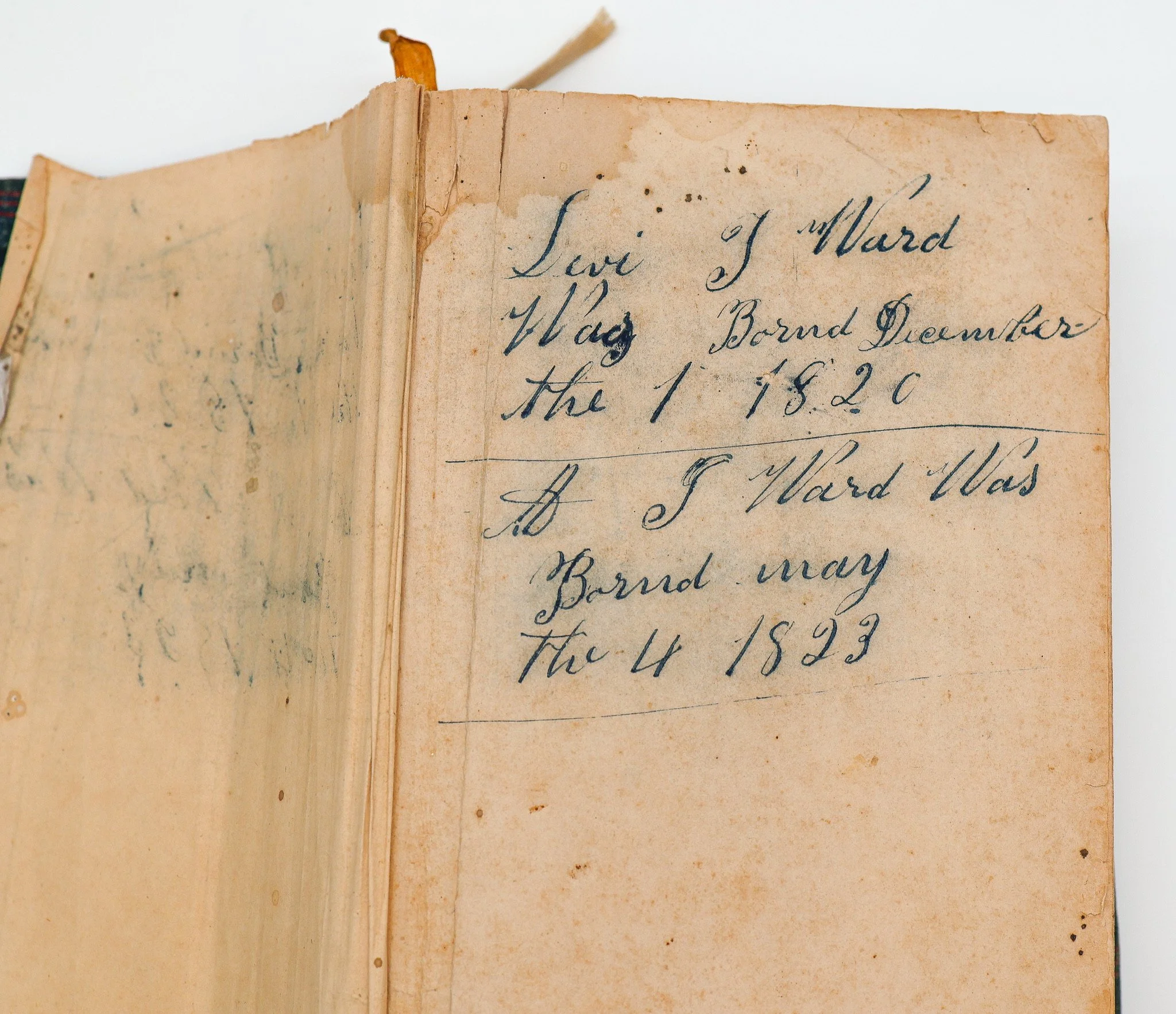
Included in the grouping is Ward’s family Bible, containing handwritten genealogical entries documenting births within the Ward family, including Levi Ward himself. Accompanying documents include period tax receipts and local records that trace Ward’s postwar civilian life.

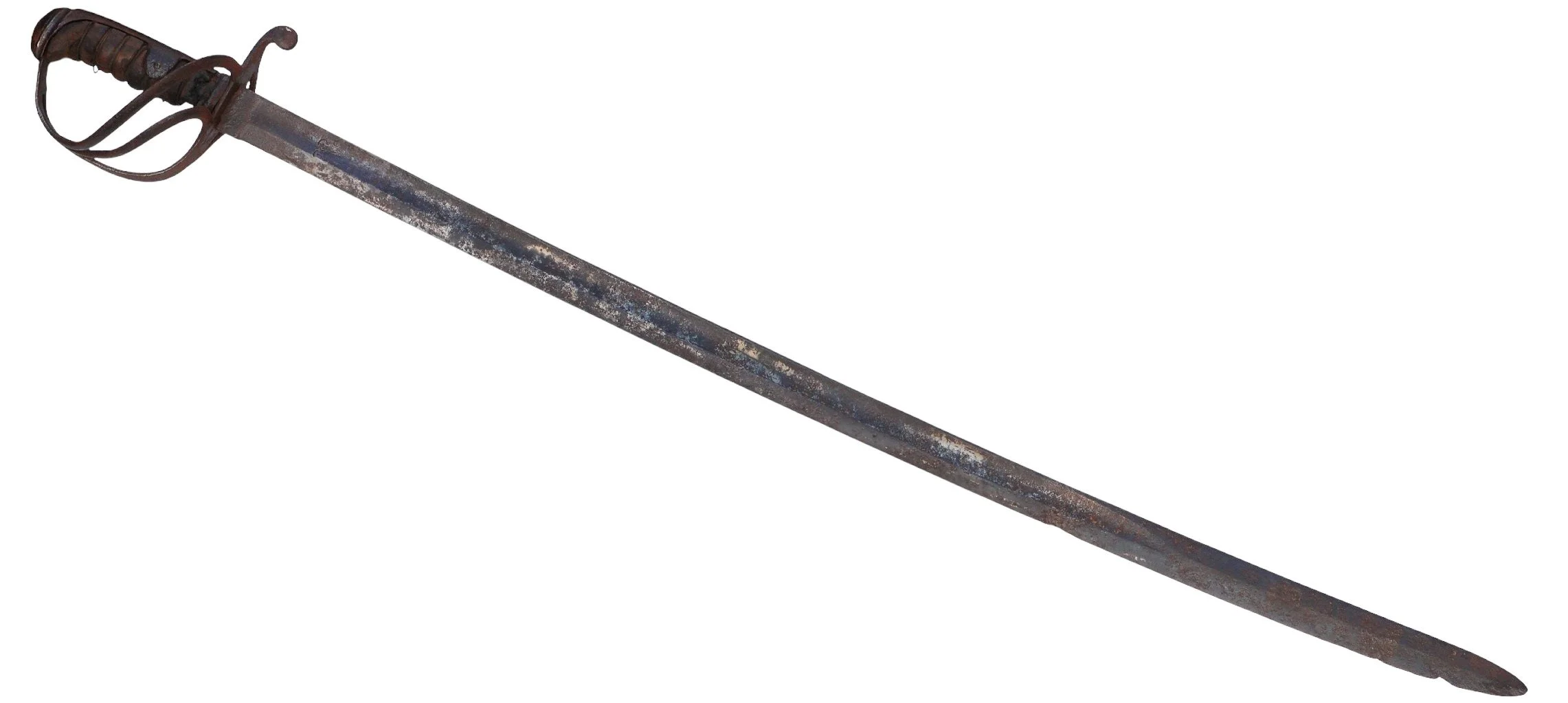
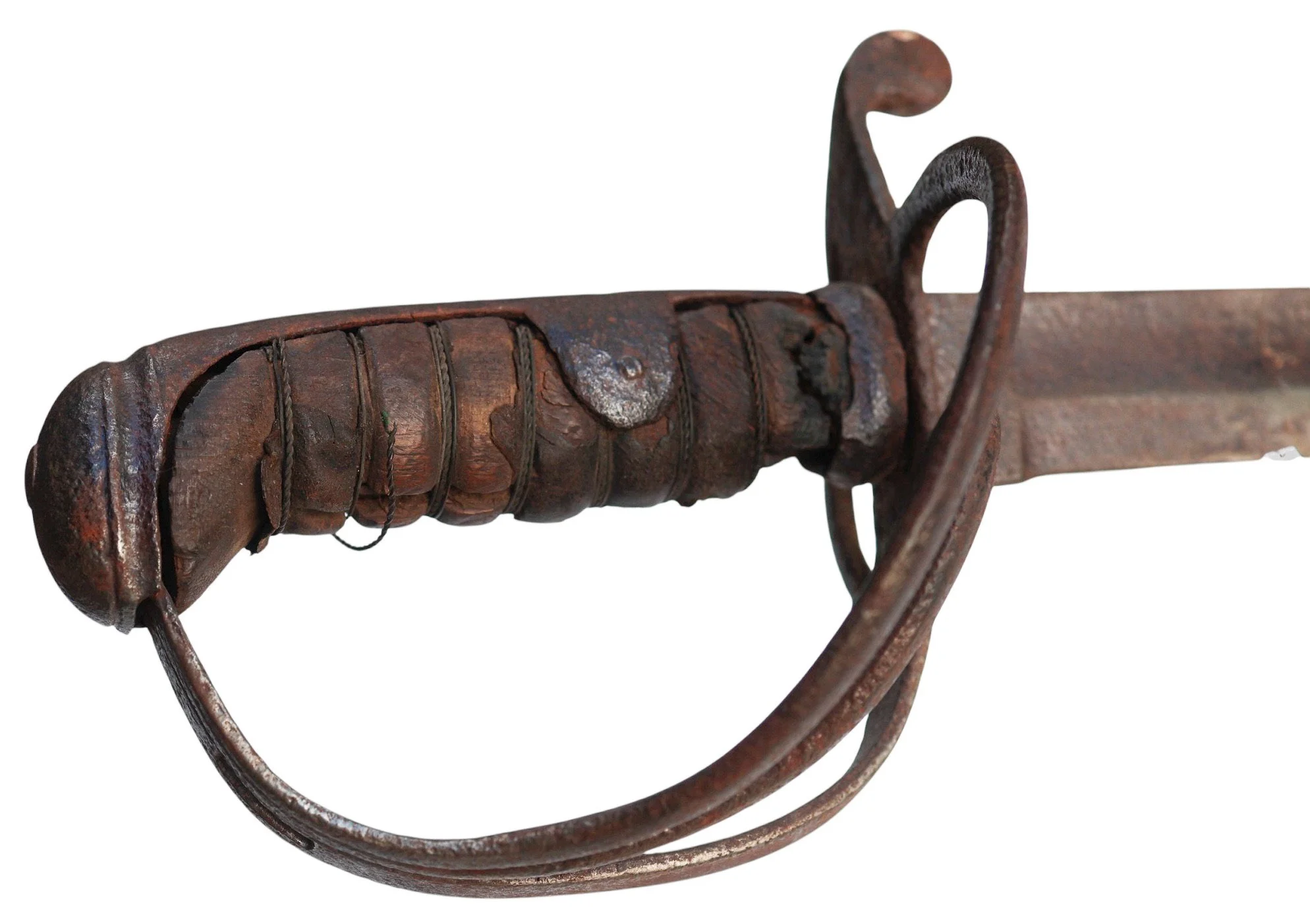
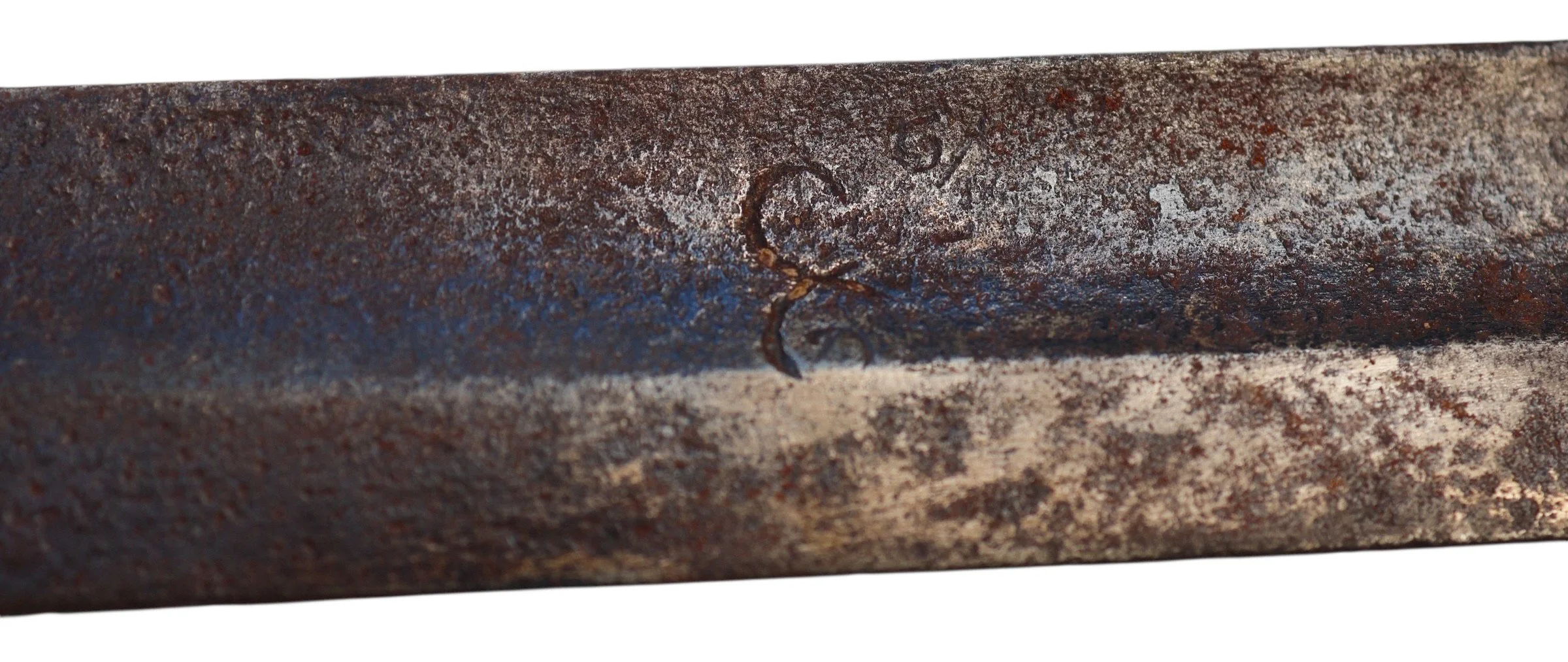
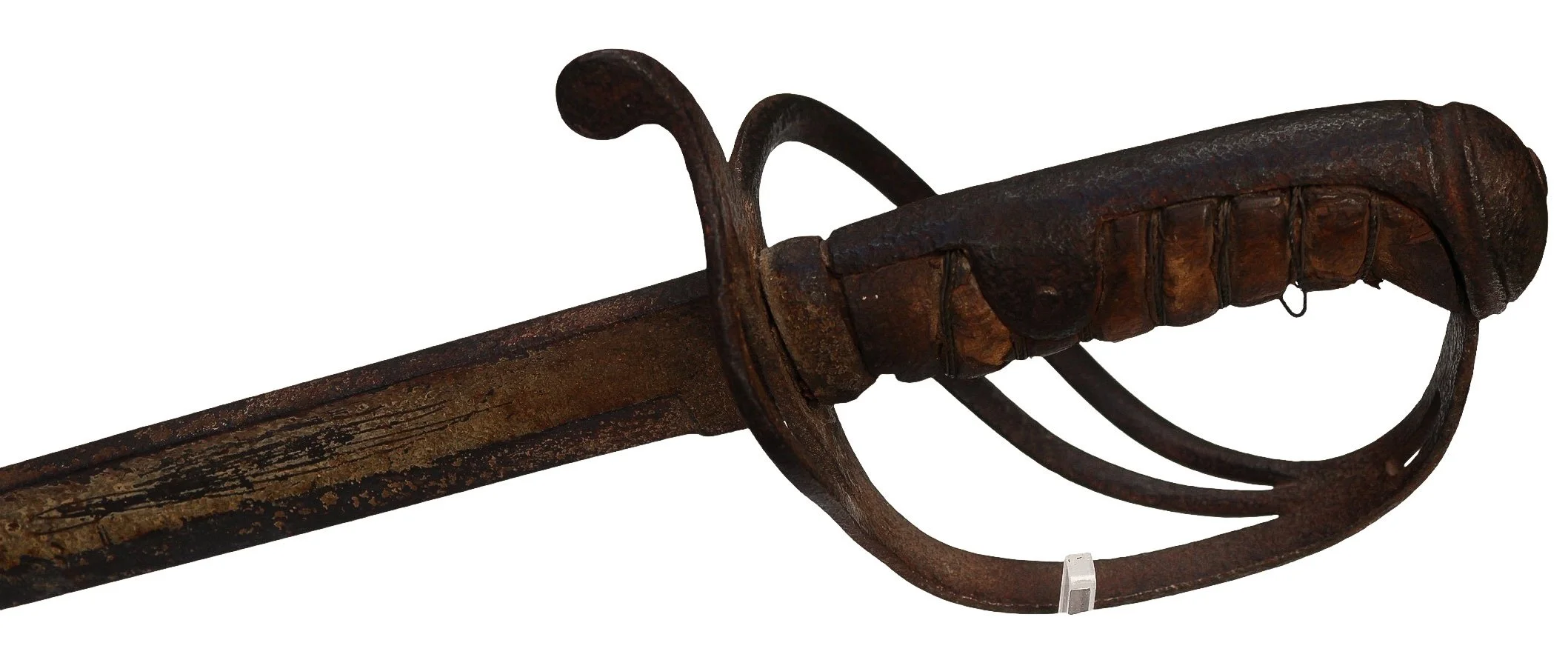
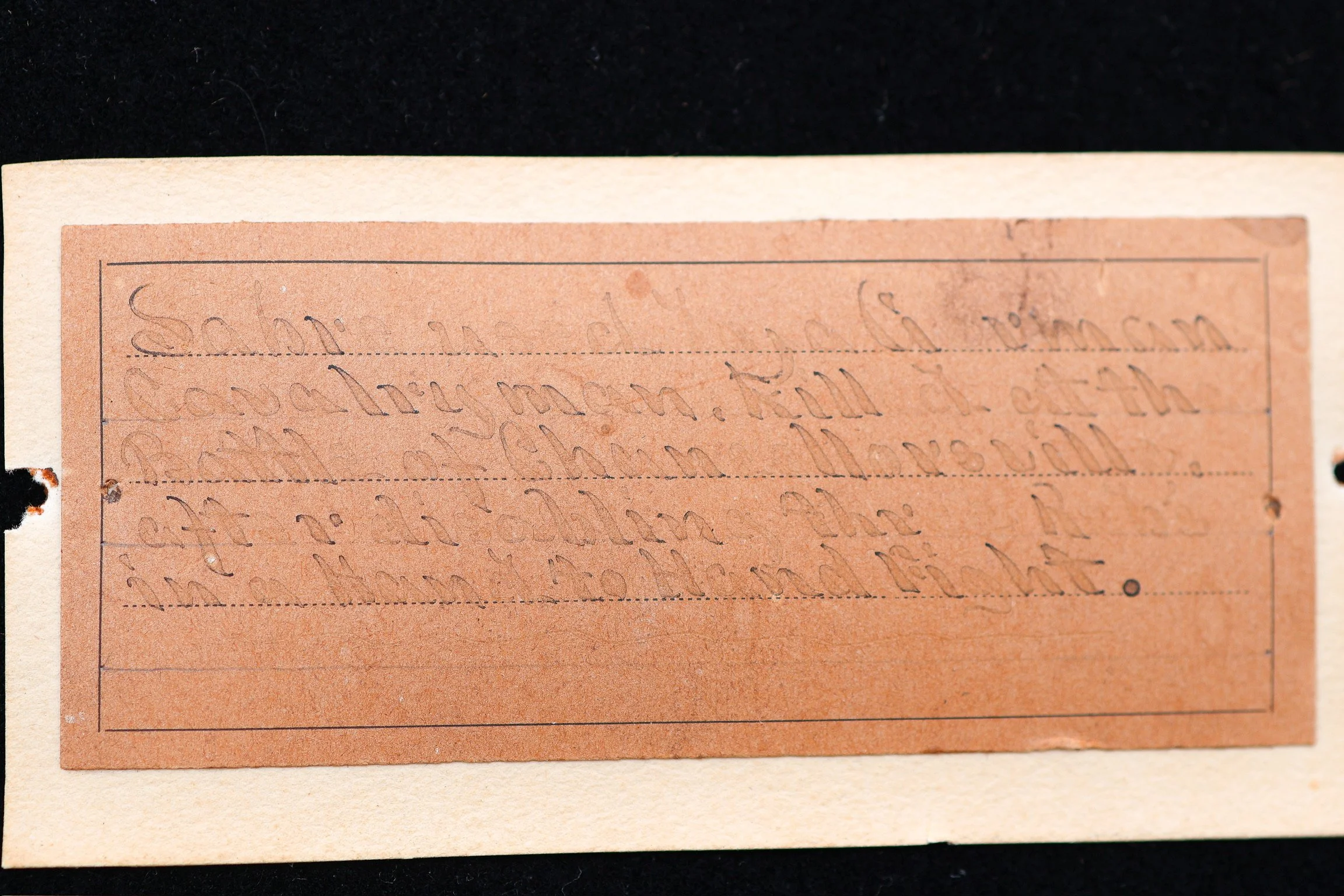
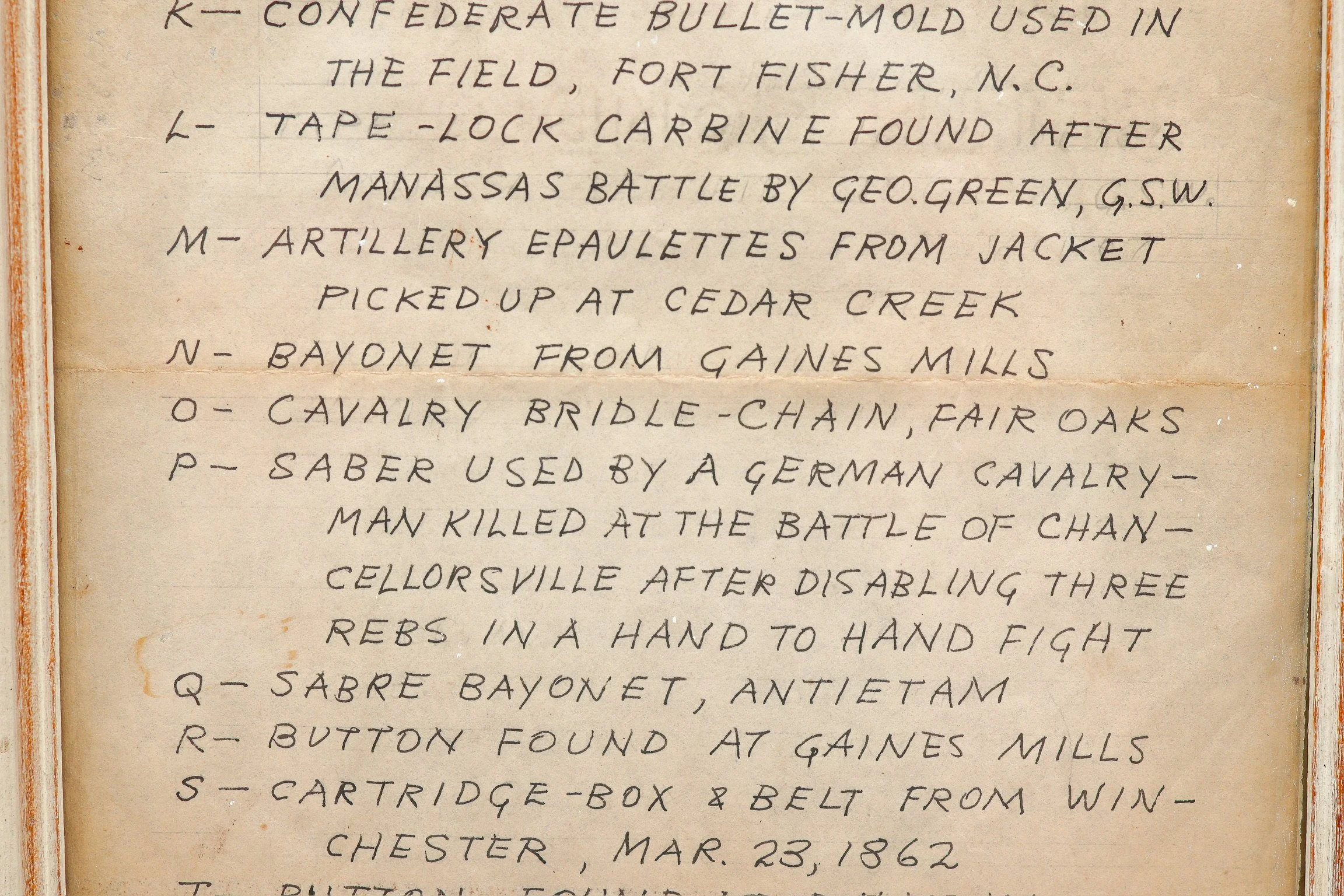
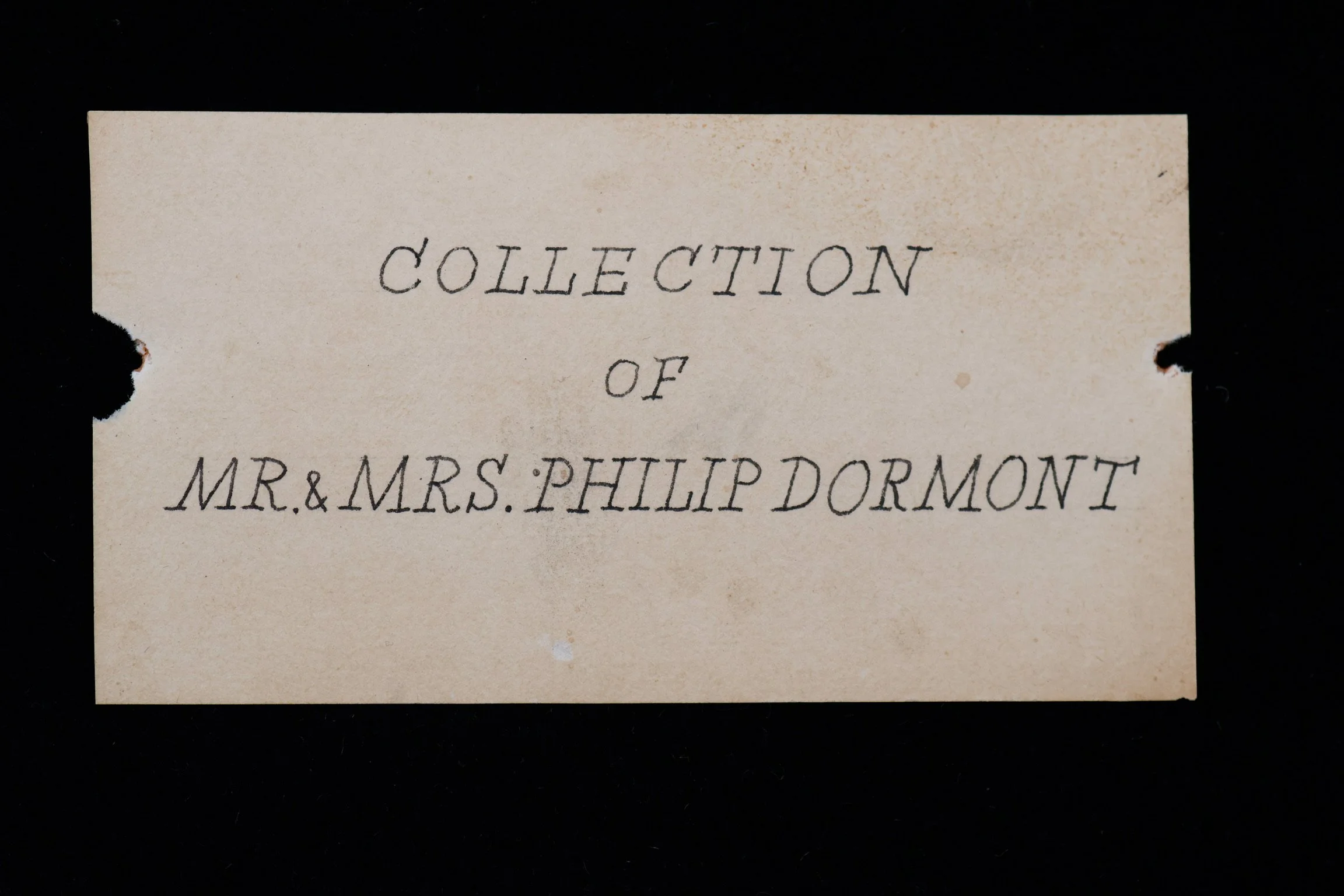
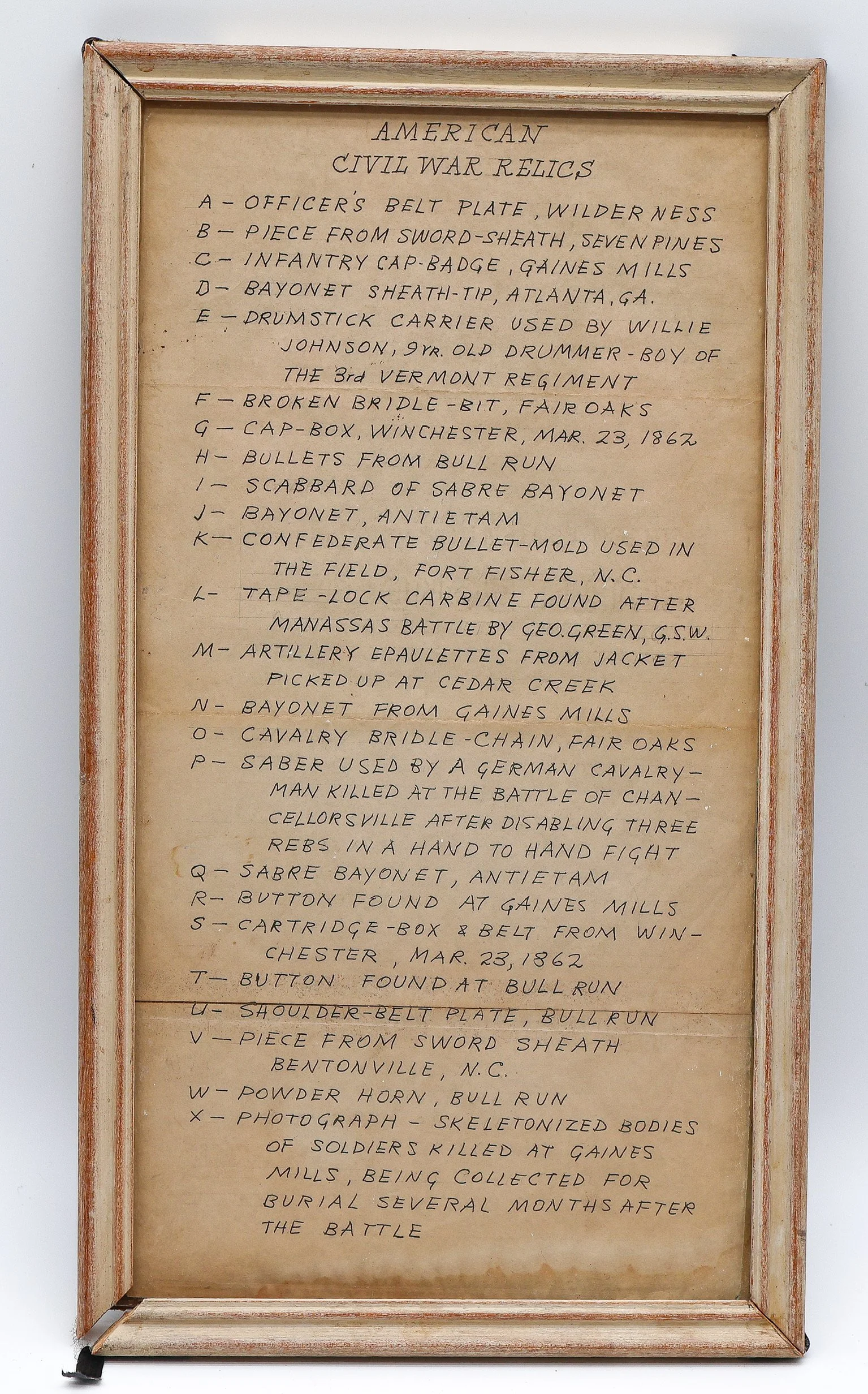
This Civil War sword was recovered following the Battle of Chancellorsville (May 1863), one of the most significant engagements of the war. The sword was formerly part of a large Civil War relic display board assembled in the mid-20th century and exhibited nationally as part of a traveling collection curated by Phillip Dormont.
An original period ink tag accompanying the sword states that it was used by a German cavalryman who was killed at Chancellorsville after disabling multiple Confederate soldiers in hand-to-hand combat. While the specific identity of the soldier is not known, the tag itself is original and represents early provenance associated with the artifact.
The sword was acquired from Brendan Synnamon of The Union Drummer Boy in Gettysburg, Pennsylvania, who had previously owned the original relic board before dispersing its components.
Civil War Sword from the Battle of Chancellorsville
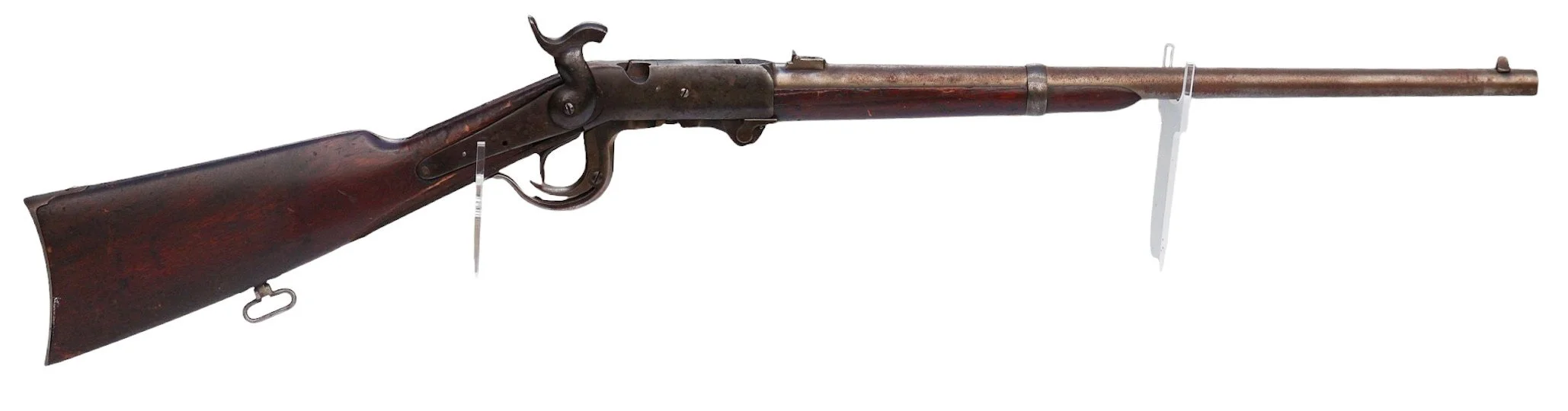
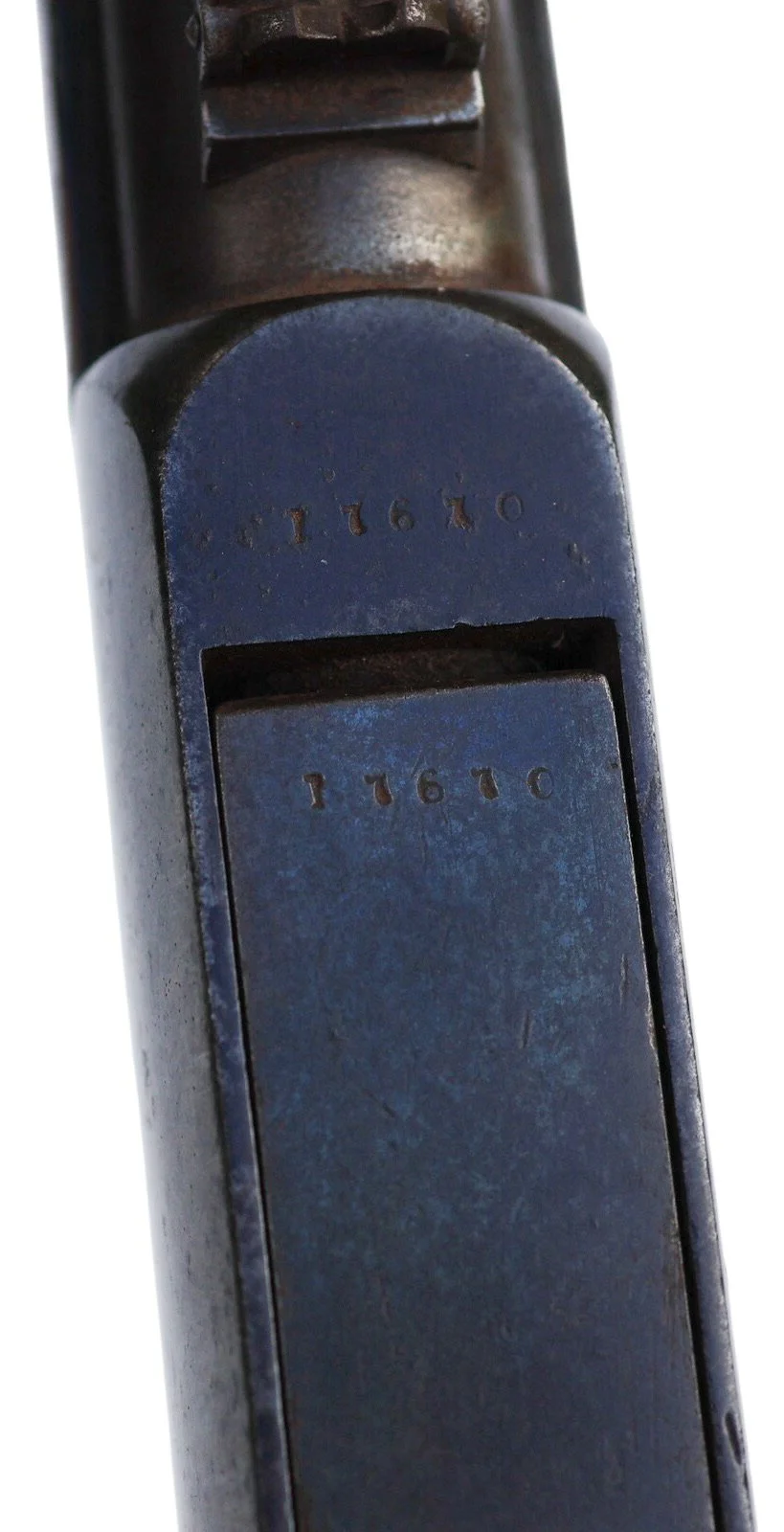
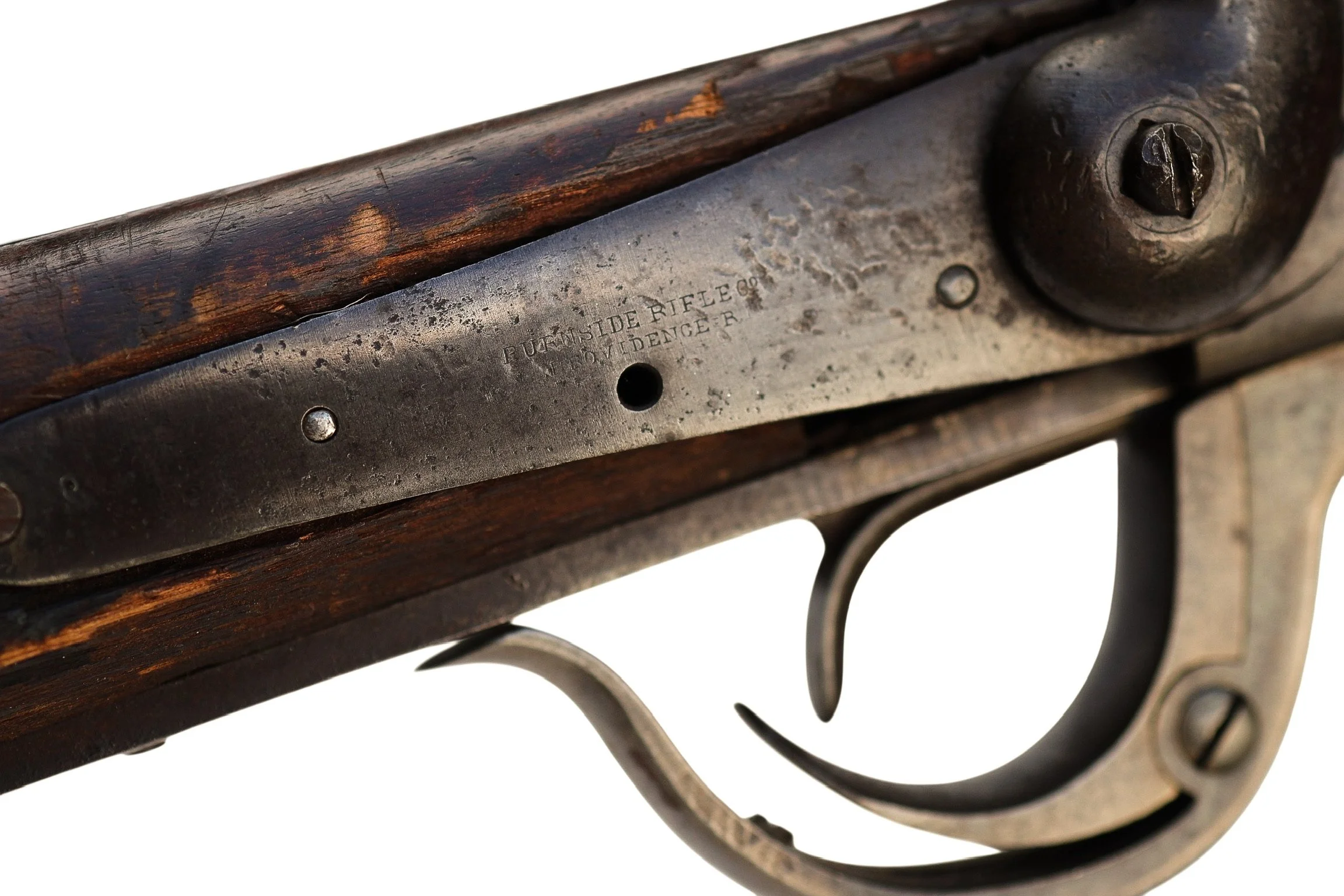
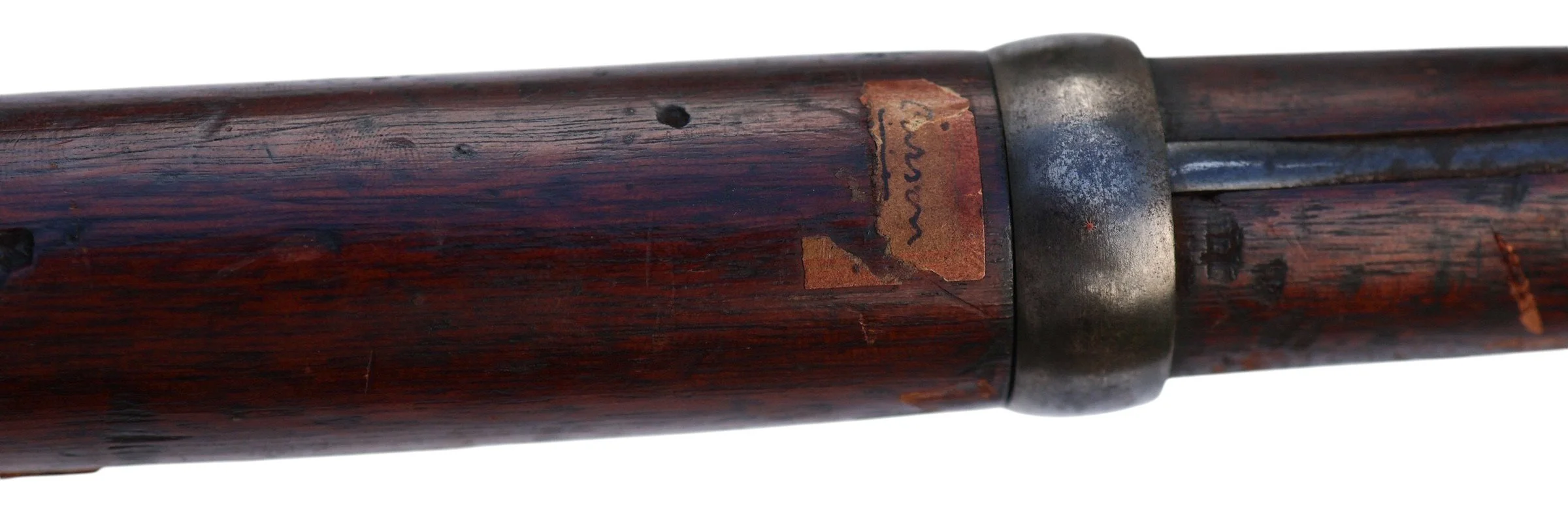
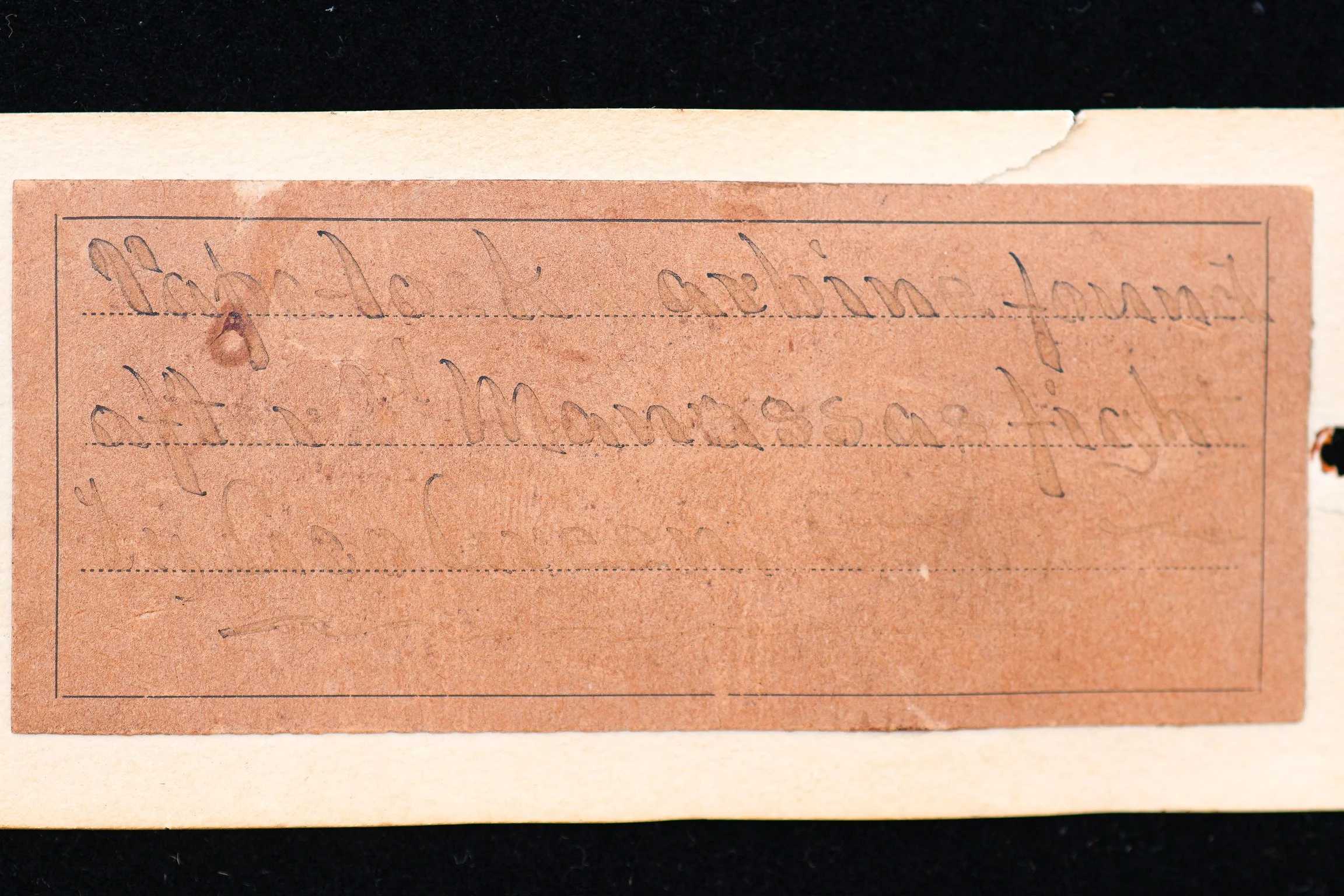
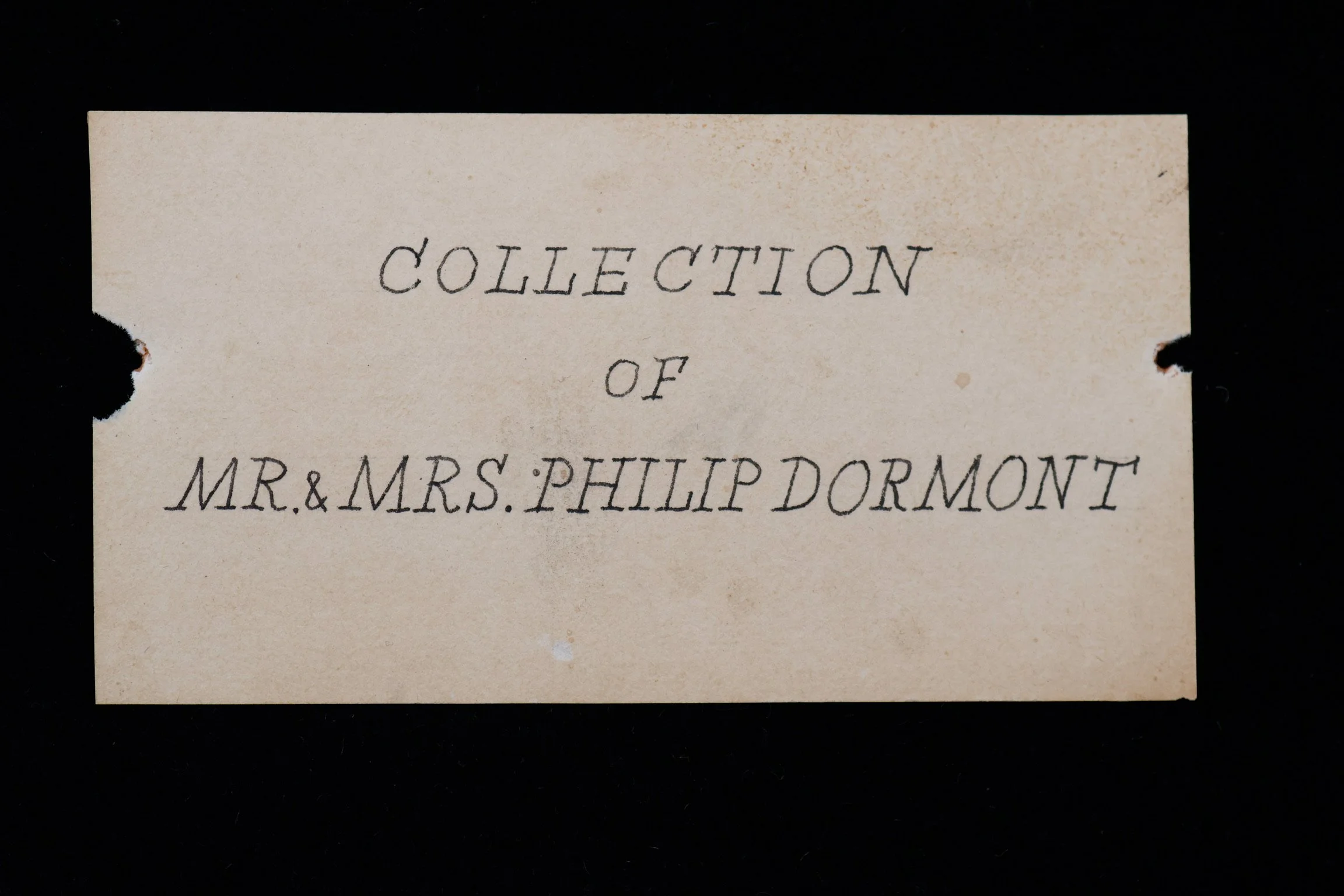
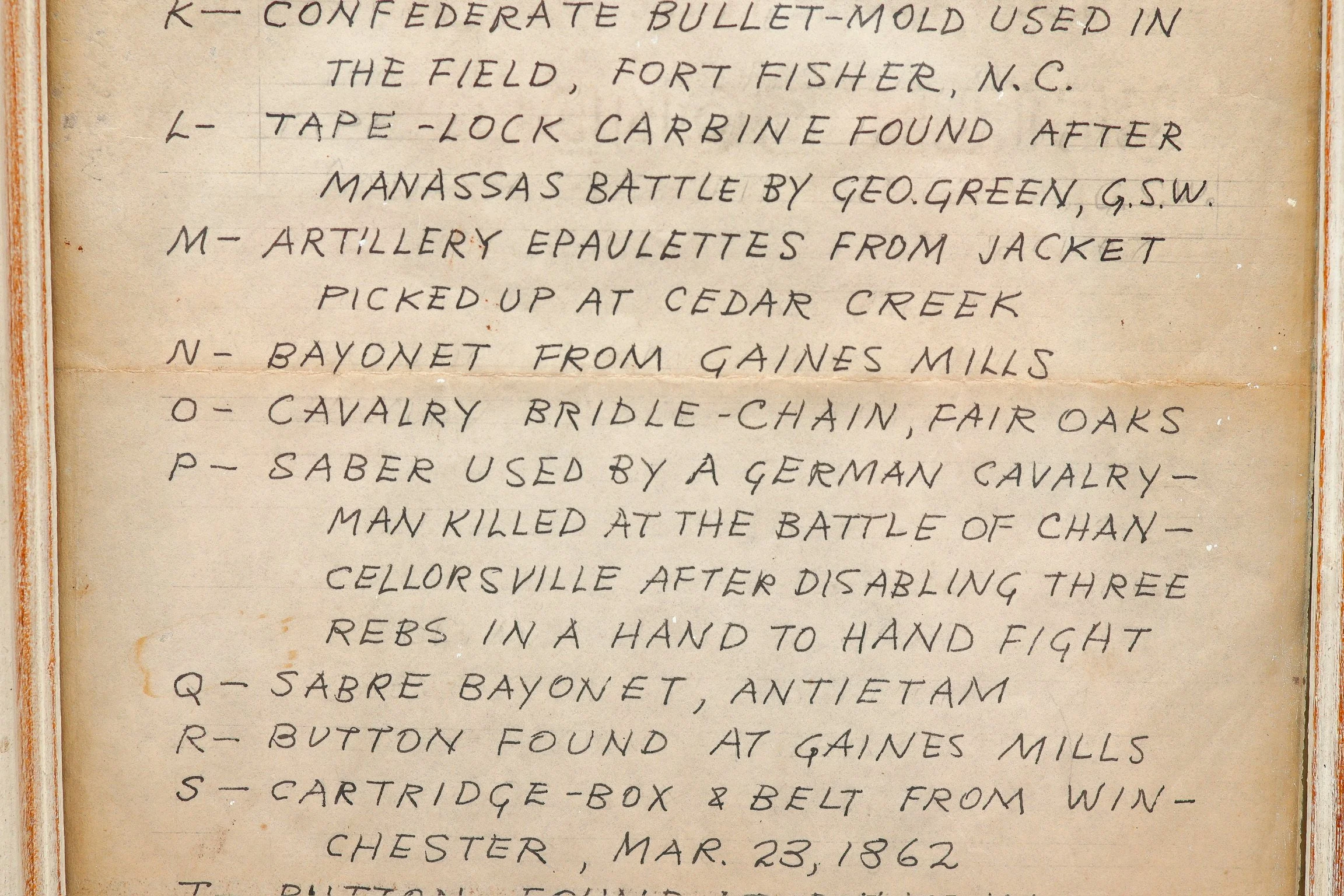
This Civil War carbine was recovered from the Manassas battlefield and retains an original period identification tag noting its location of recovery. The carbine was formerly mounted on a large relic display board assembled in the mid-20th century and associated with the collection of Philip Dormont.
The firearm shows heavy wear consistent with battlefield recovery and long-term relic condition. Its original handwritten tag and documented inclusion on the historic display board provide direct attribution to the Manassas battlefield and establish early provenance.
Civil War Relic Carbine — Manassas Battlefield