Colt Model 1921 Thompson Captured at Gestapo Headquarters in Metz — Lt. Col. Wilfrid H. Haughey Jr.
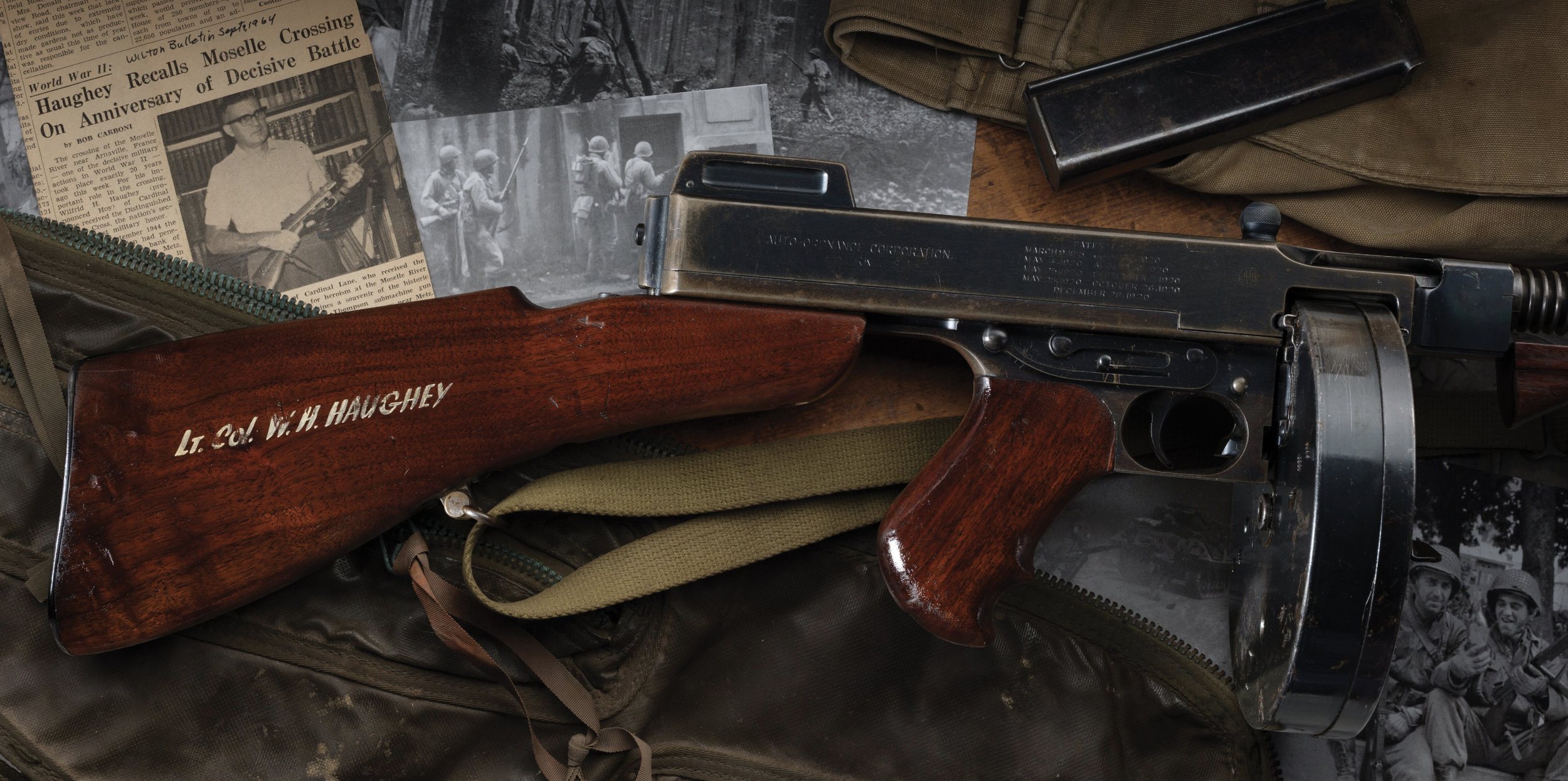
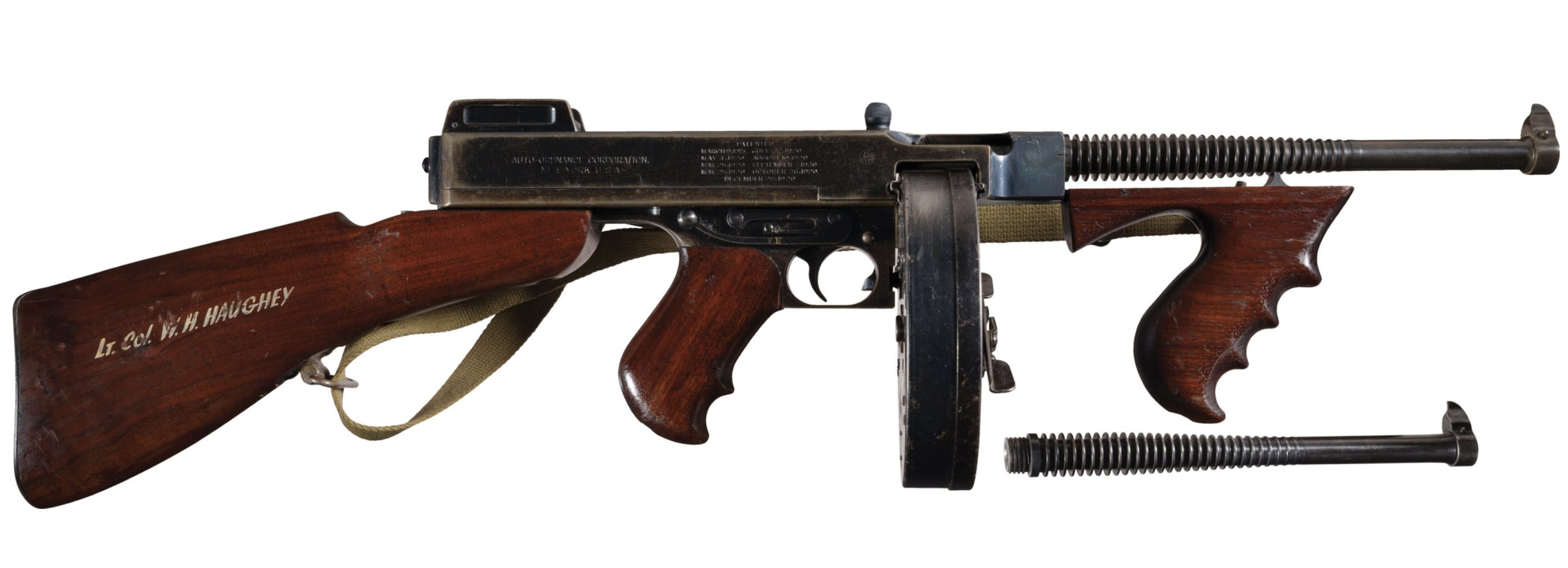
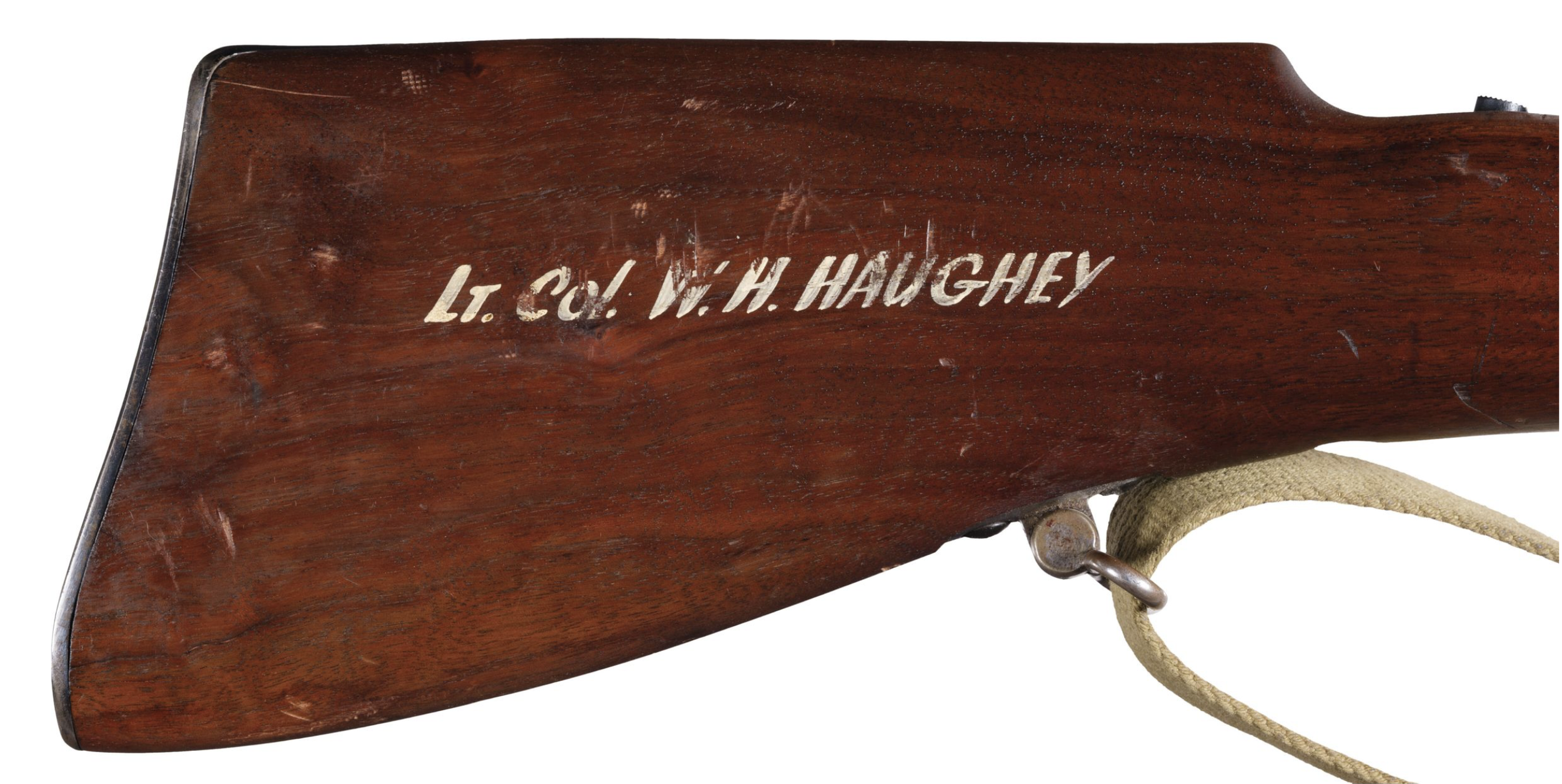
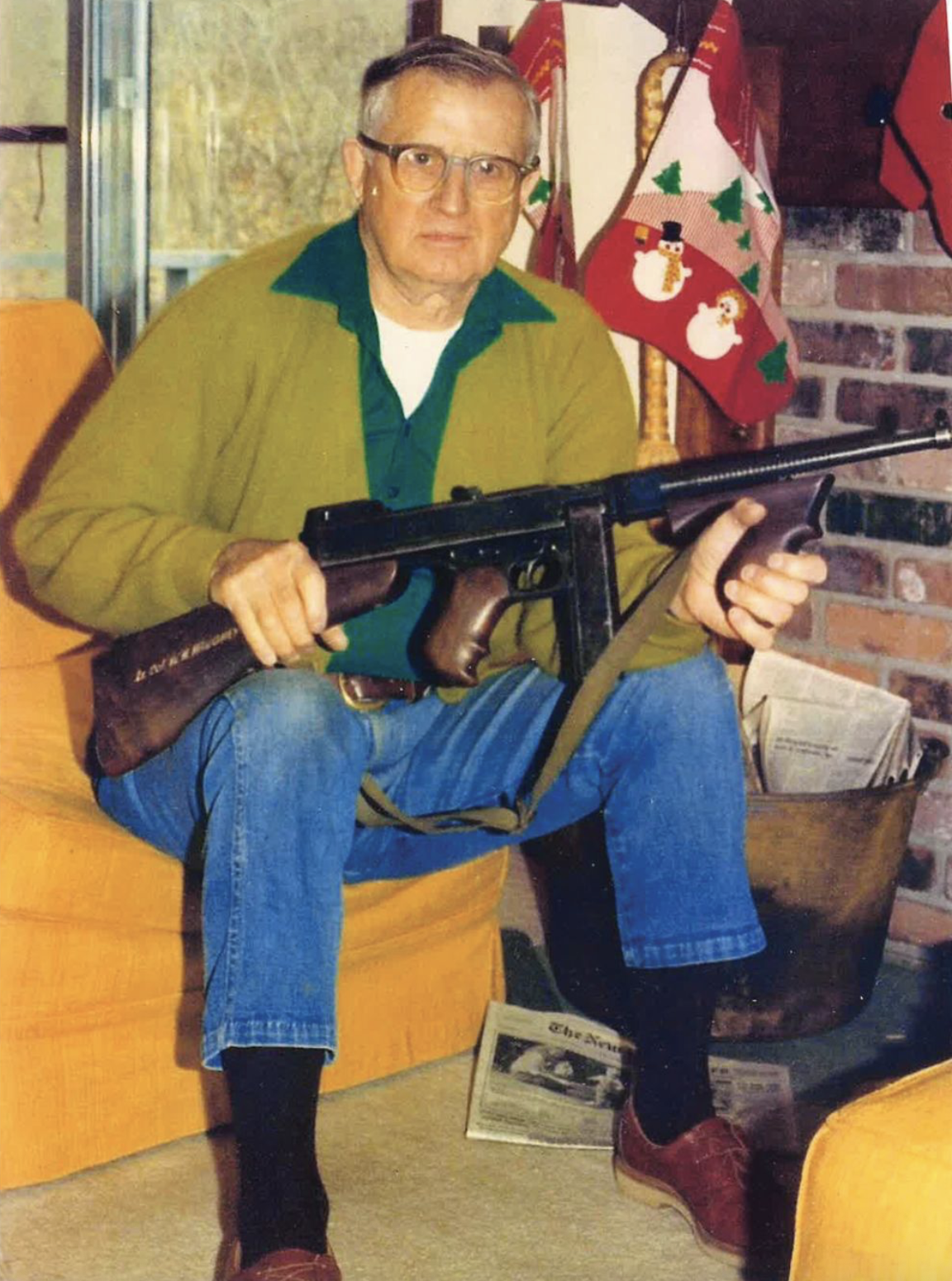
This Colt Model 1921 Thompson submachine gun, serial number 8737, is identified to Lieutenant Colonel Wilfrid H. Haughey Jr., a Distinguished Service Cross recipient who served with the 10th Infantry Regiment, 5th Infantry Division during World War II. “Lt. Col. W.H. Haughey” is painted in white letters on the right side of the buttstock.
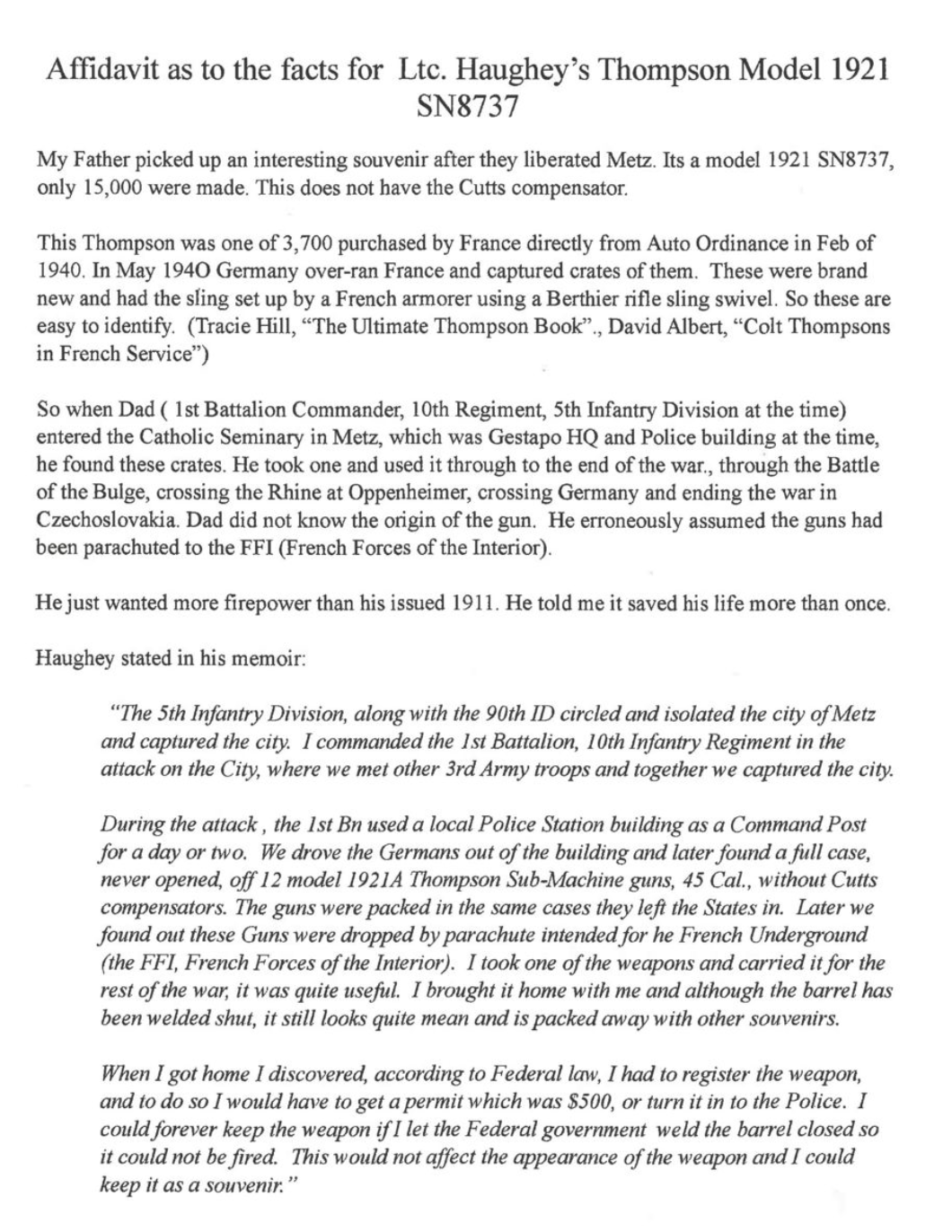
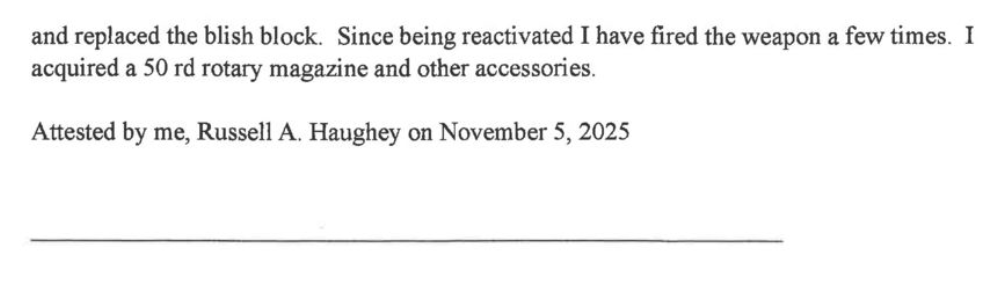
In a November 15, 1945 letter to the Bureau of Internal Revenue in Detroit, Haughey documented the history of the Thompson. He stated that the gun was captured in a Gestapo headquarters in Metz, France. According to Haughey, the Thompson had originally been part of a shipment parachuted by the Allies to the French F.F.I. underground, but the case of weapons fell into German hands and was found by Haughey’s men before it had been unboxed.
Haughey carried the Thompson from Metz through the remainder of the war in Europe. In the same letter, he wrote that he carried it through Germany and the Siegfried Line, Luxembourg during the Battle of the Bulge, and the Ruhr Pocket. He also stated that having the Thompson in his possession saved his life on two different occasions.
-
Wilfrid H. Haughey Jr. was born on August 13, 1910. During the war, he commanded elements of the 10th Infantry Regiment, 5th Infantry Division. He received the Distinguished Service Cross for extraordinary heroism during the Moselle River crossing near Arnaville, France, from September 10–20, 1944. His citation describes him leading assault elements across the river under heavy enemy resistance, directing operations from front-line positions, and helping repel repeated German counterattacks after reaching the far shore.
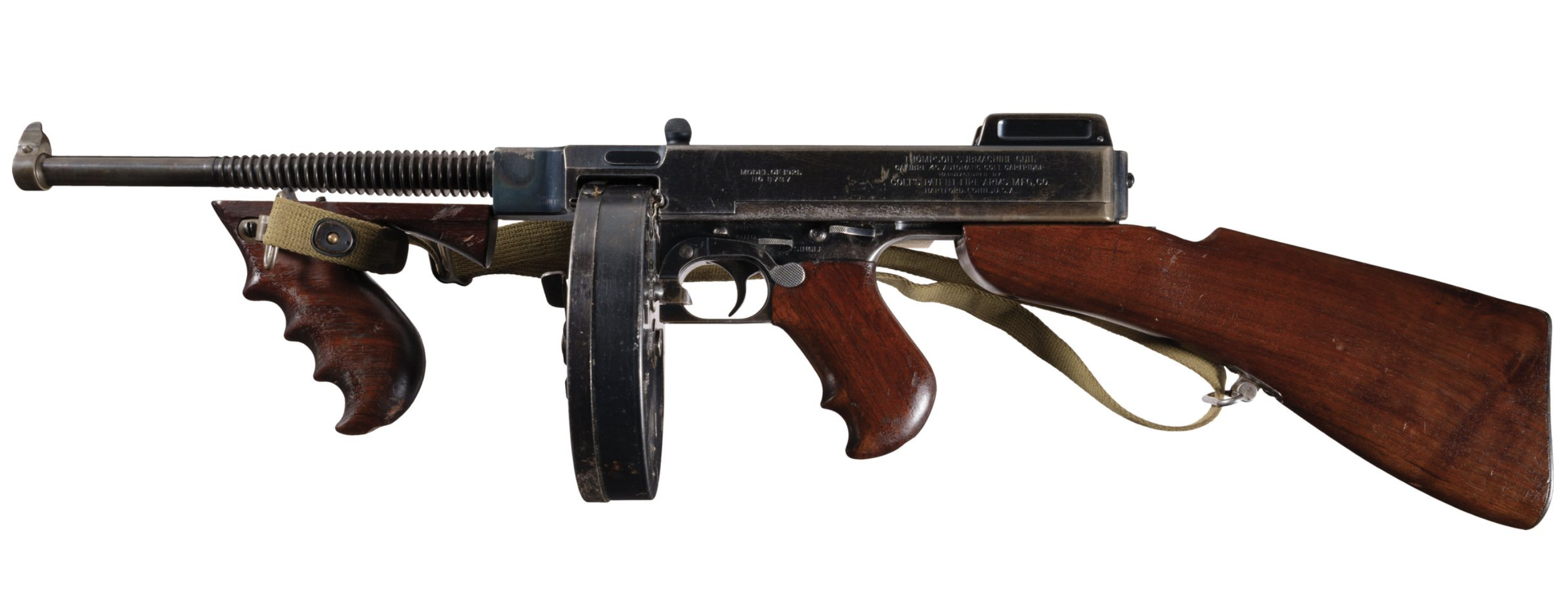
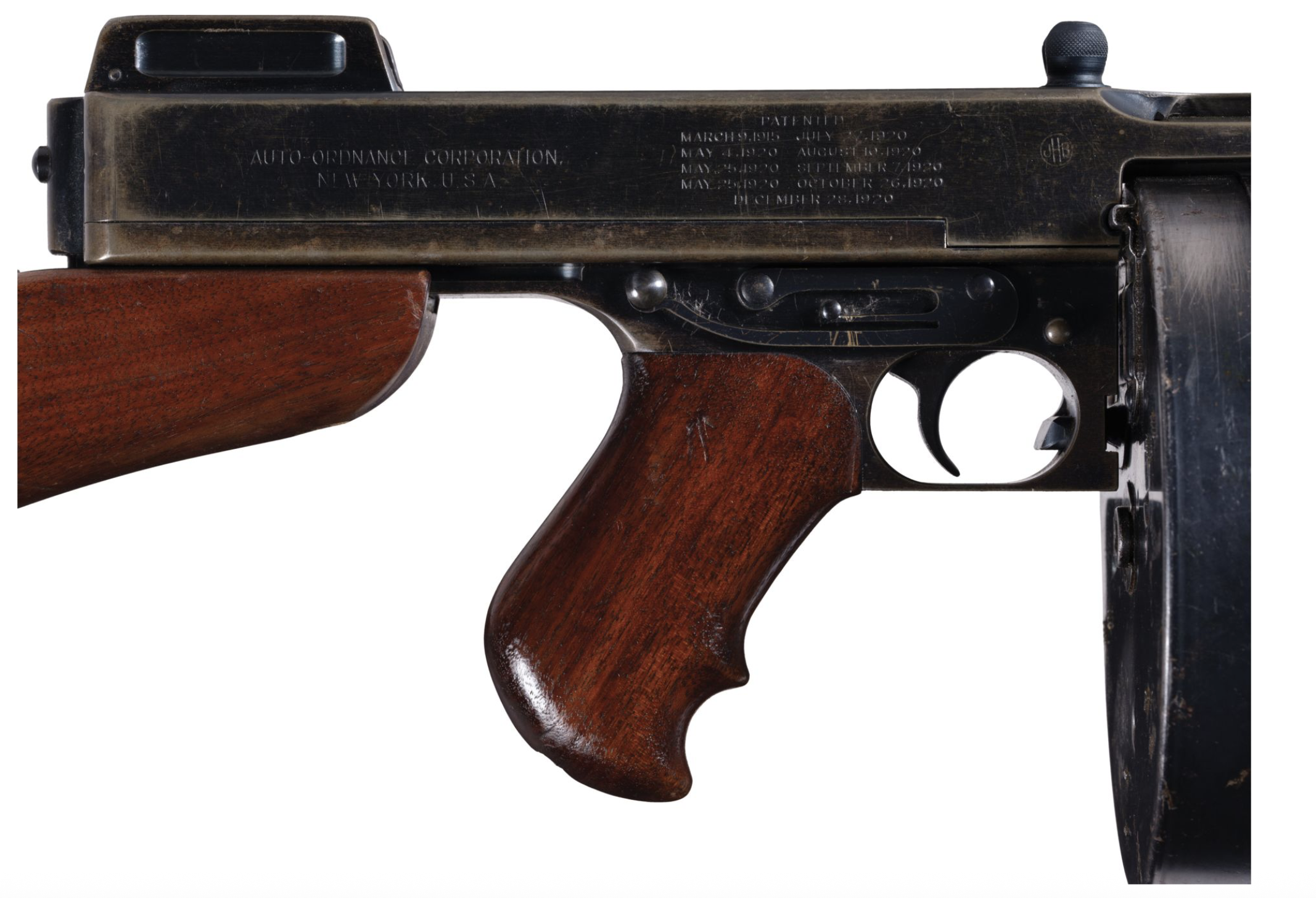
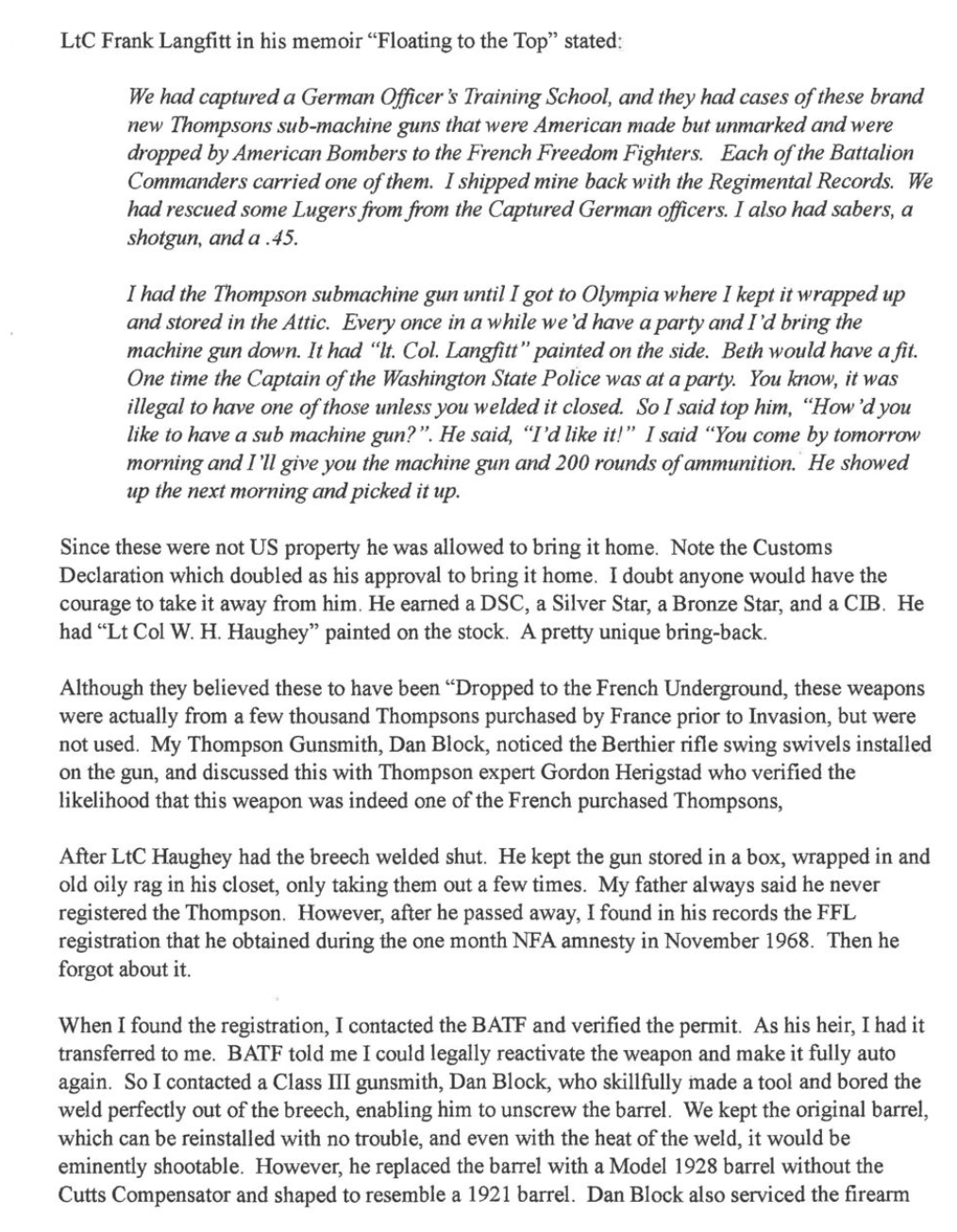
The Thompson is also documented in Gordon Herigstad’s Colt Thompson Submachine Gun Serial Numbers and Histories, which lists this specific gun by serial number as a Model 1921A owned by Haughey’s son and confirms it as a World War II bring-back. The gun appears to have been part of the group of Thompsons purchased by France from Auto-Ordnance in February 1940. Its French connection is supported by the Berthier rifle-style sling swivel installed in the manner associated with French armorers. After Germany overran France in 1940, crates of these Thompsons were captured by German forces, with this example later recovered from the Gestapo in Metz.
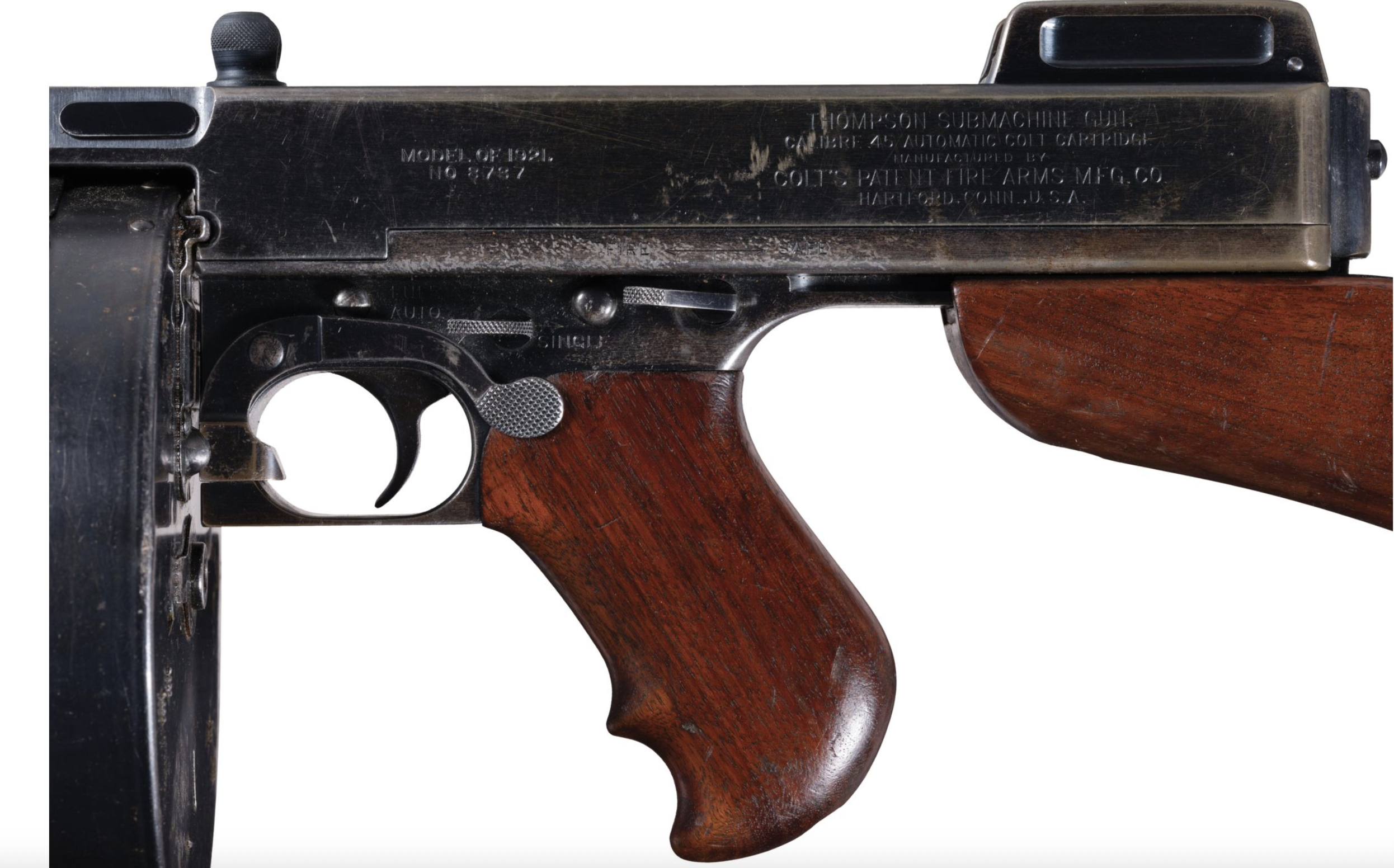
The Thompson retains matching serial number 8737 on the upper receiver and trigger housing. It has Model 1921 markings, the Thompson bullet logo, knurled controls, 1921-style internals, pistol grips, and a quick-detach buttstock with anchor stamp. The gun is accompanied by registration and importation paperwork, photographs and research related to Haughey, a Seymour Products Co. Type “L” 50-round drum, tan canvas sling, extra Model 1921 parts, four additional 20-round Seymour magazines, a period magazine pouch, and related historical reference material.
The Artifacts of Valor collection acquired this Thompson from Haughey’s son in 2026.
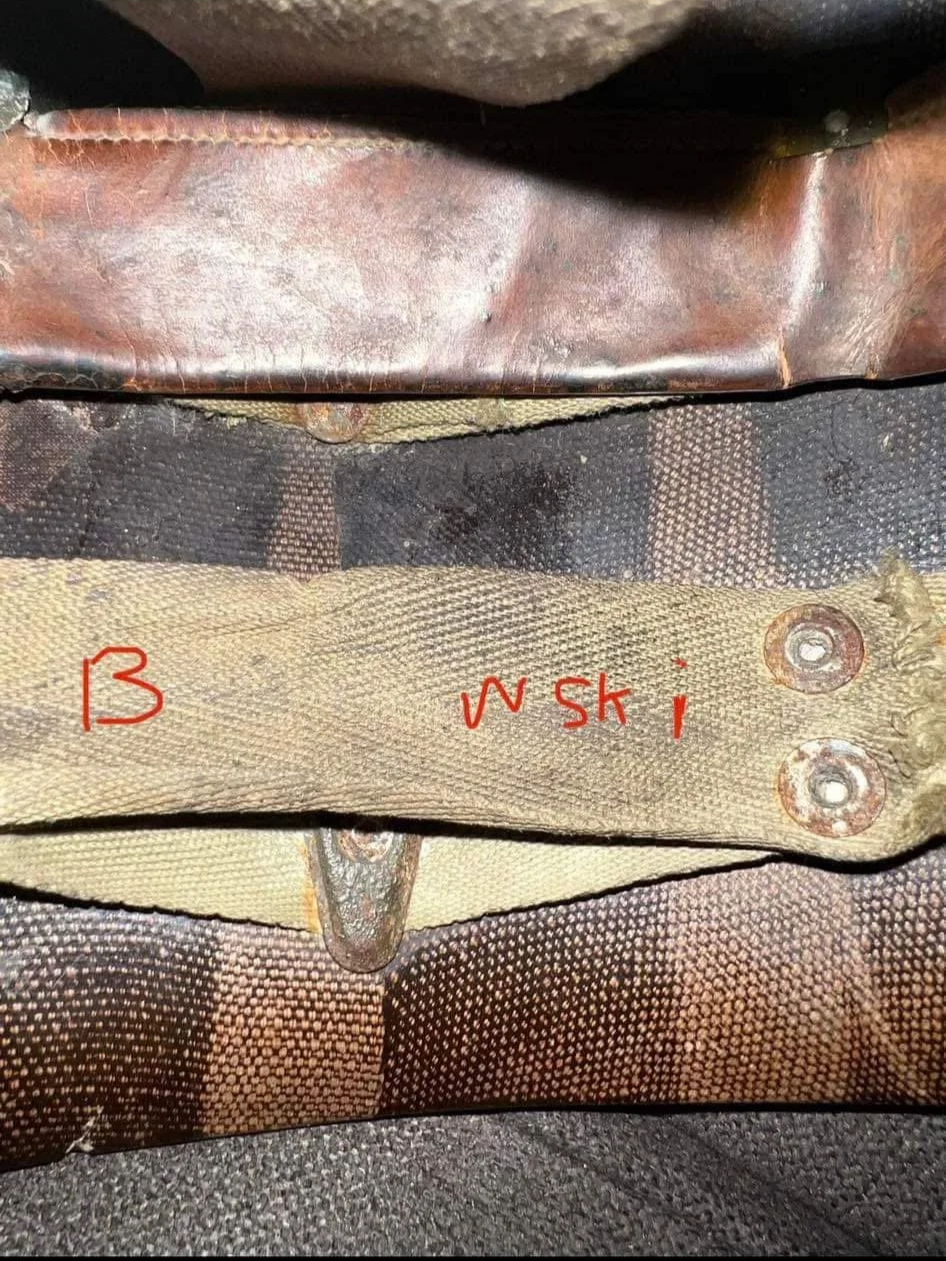
Helmet of Cpl. Joseph A. Brozowski: Murdered in the Malmedy Massacre
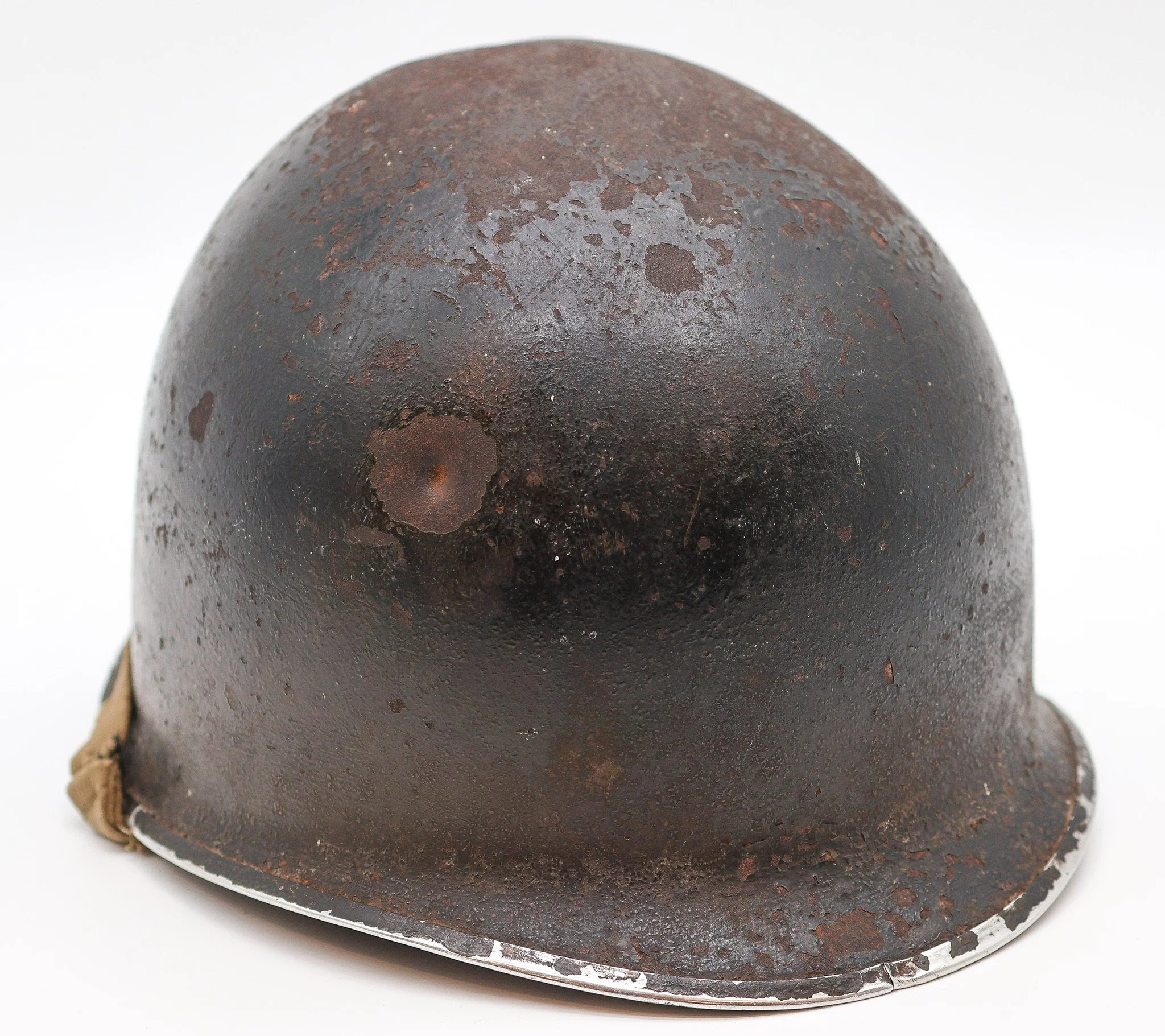
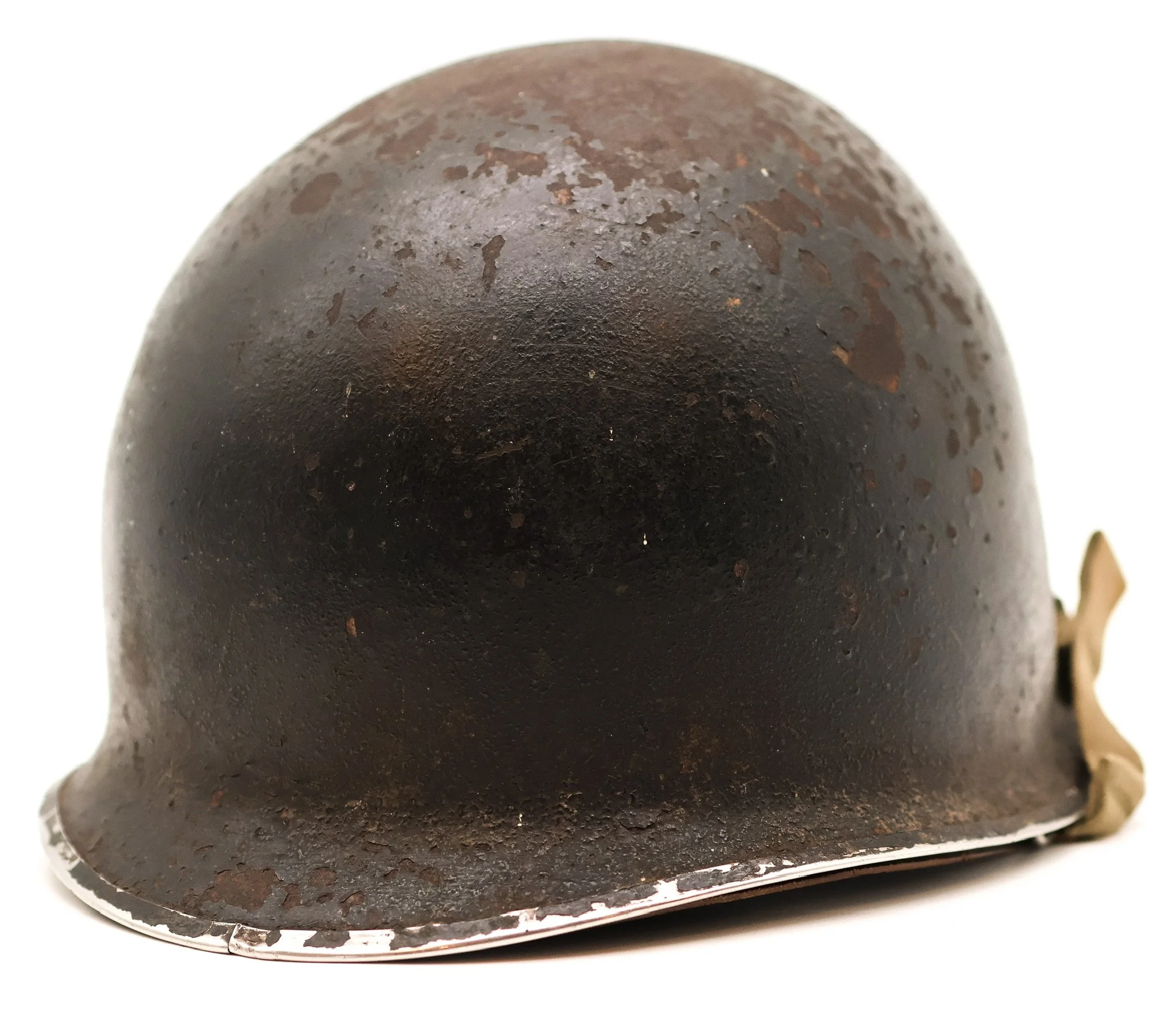
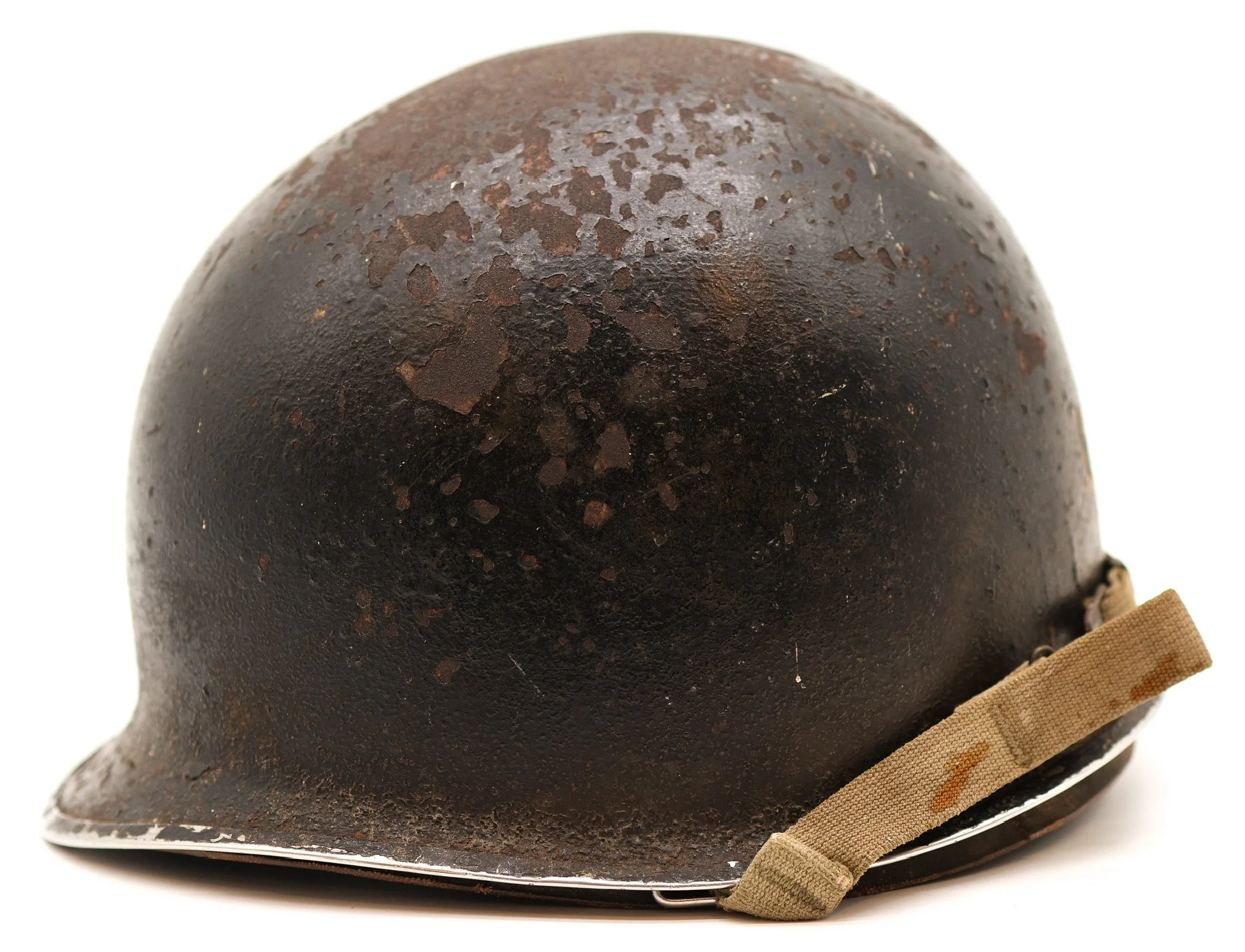
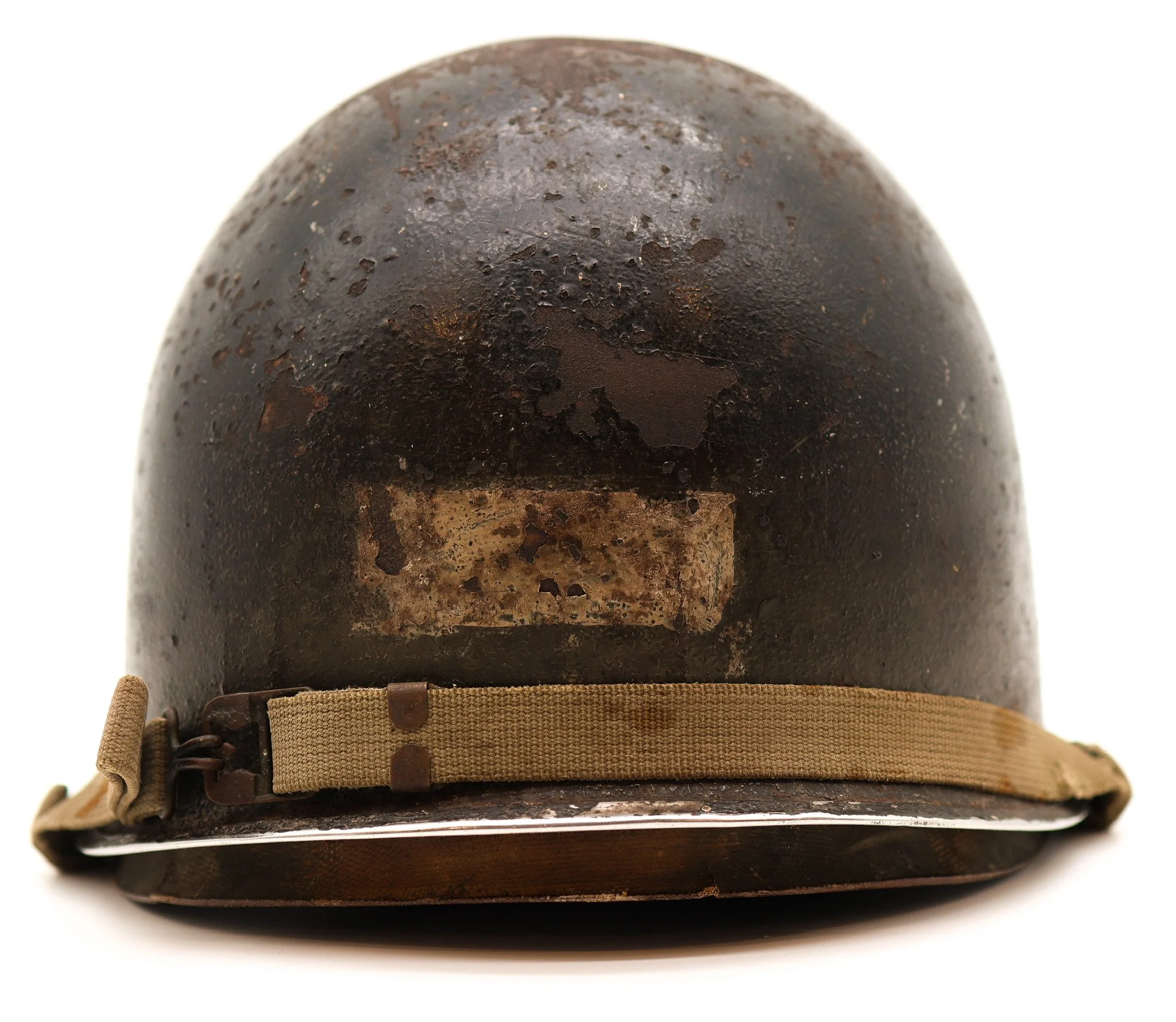
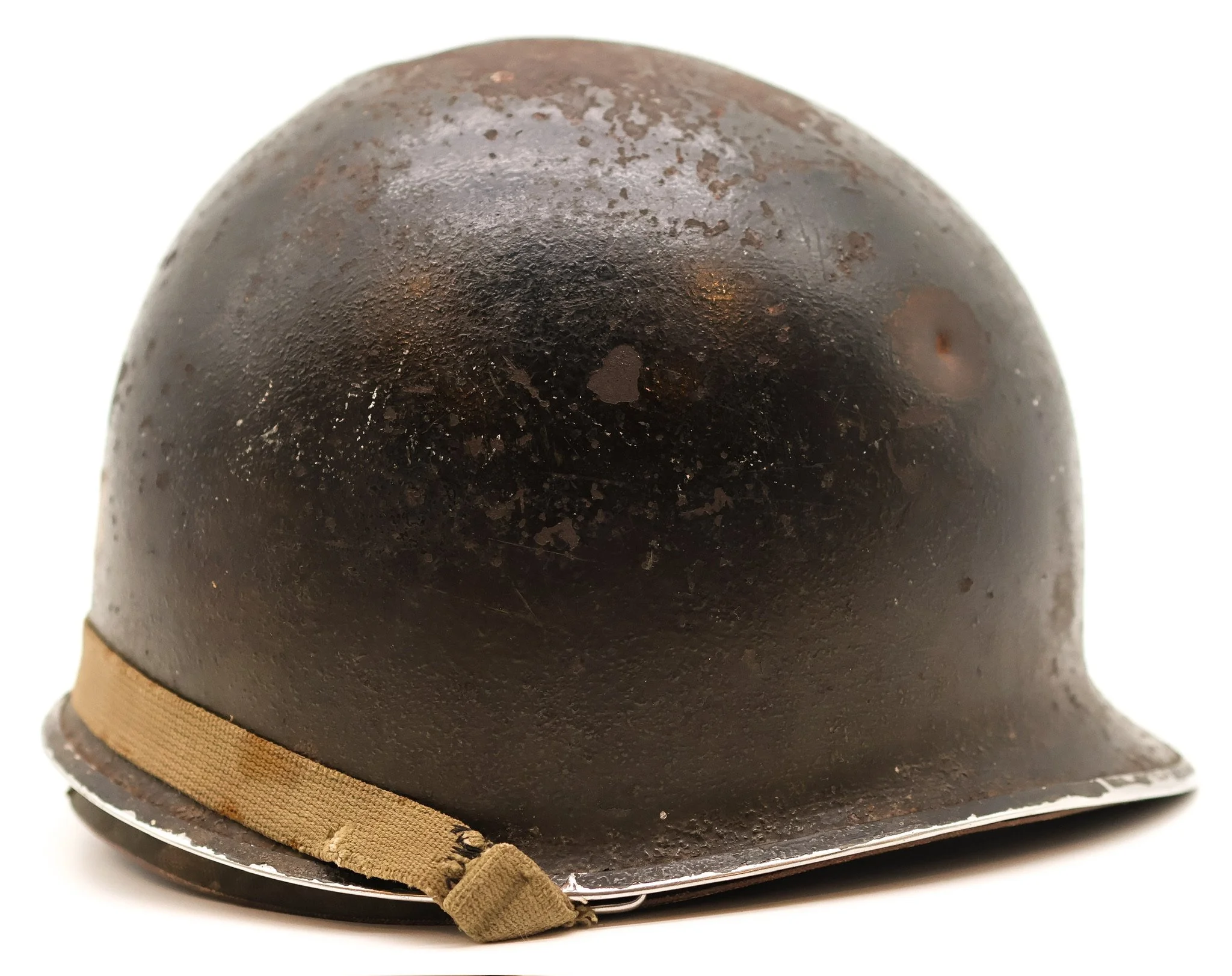
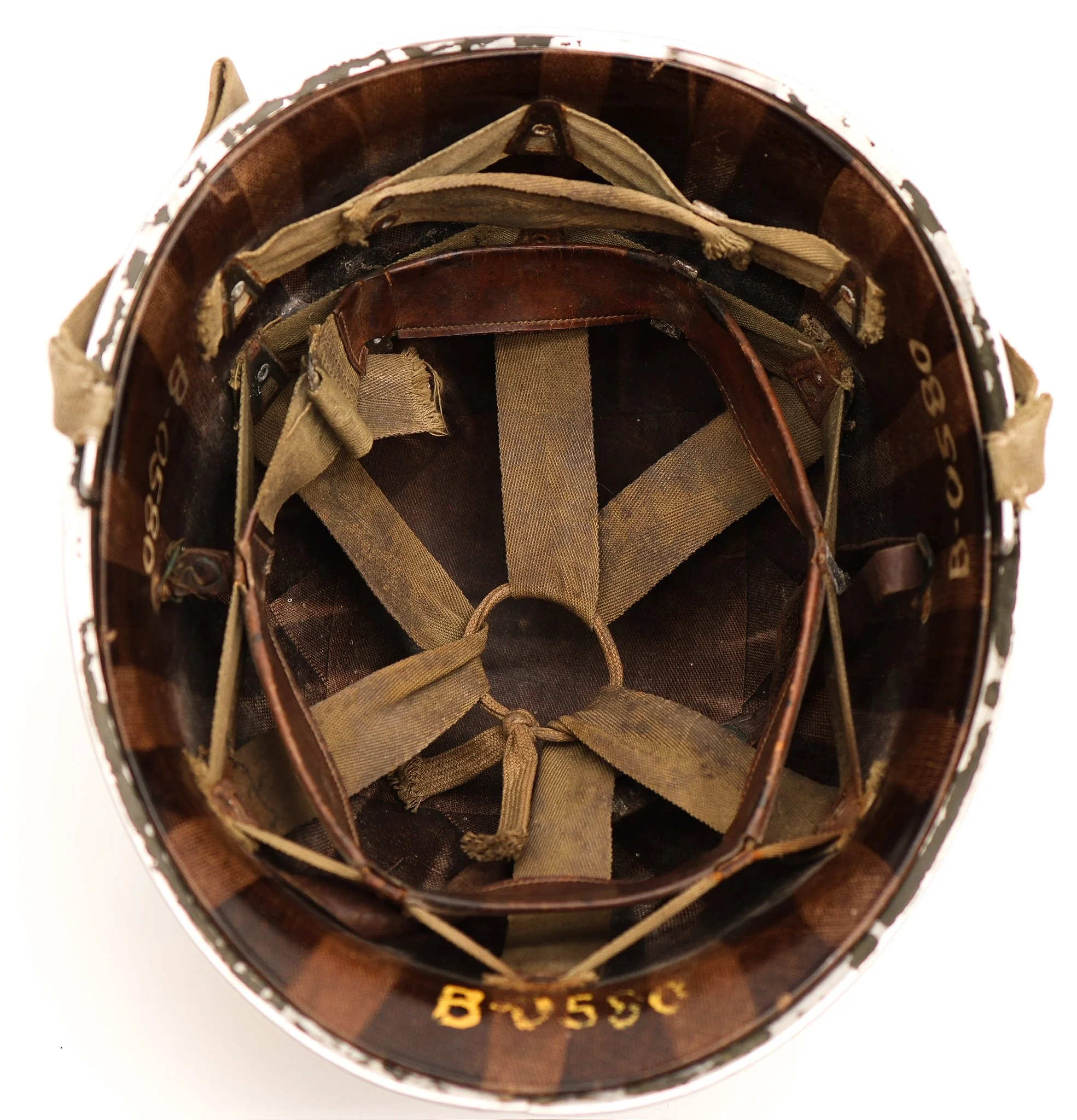
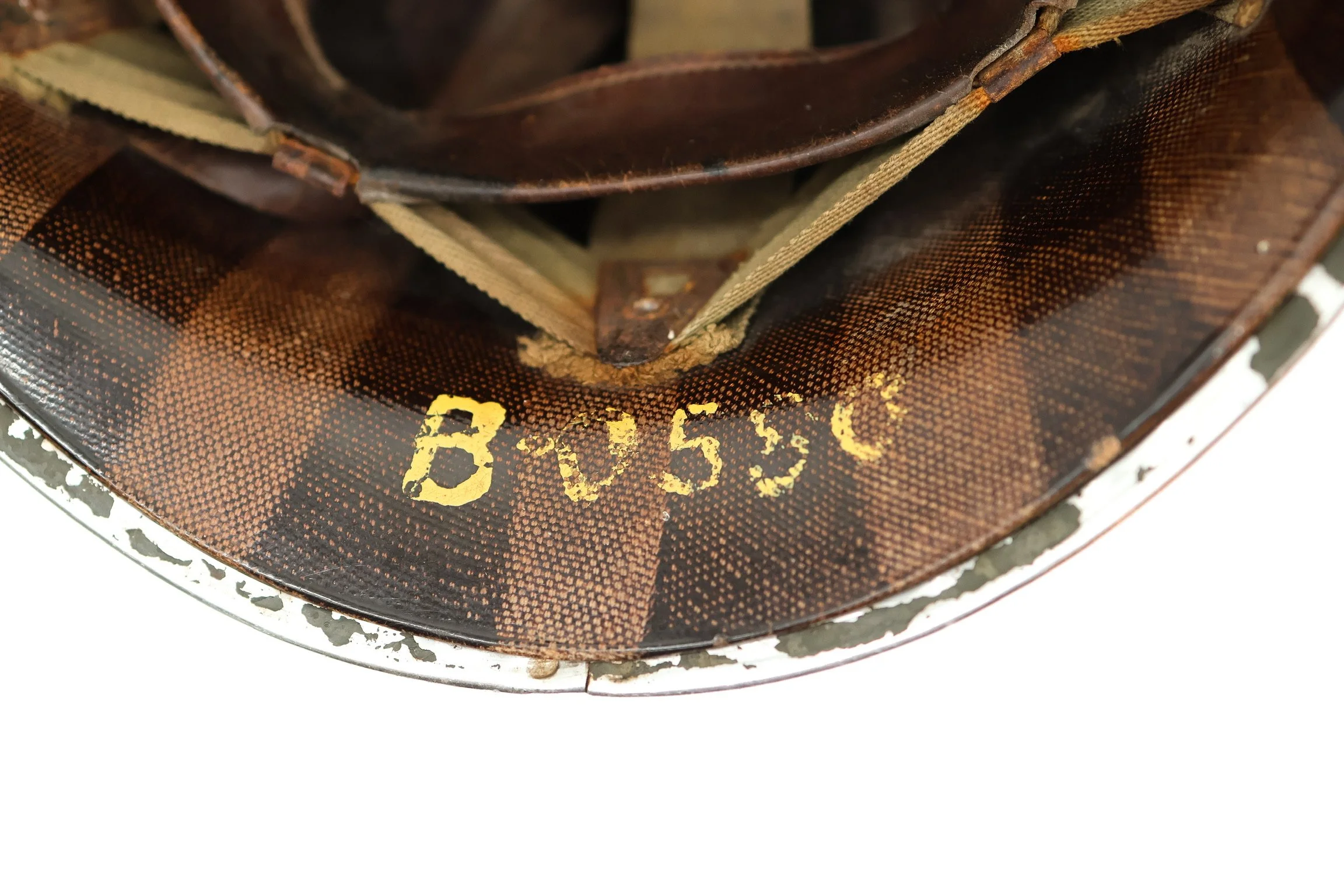
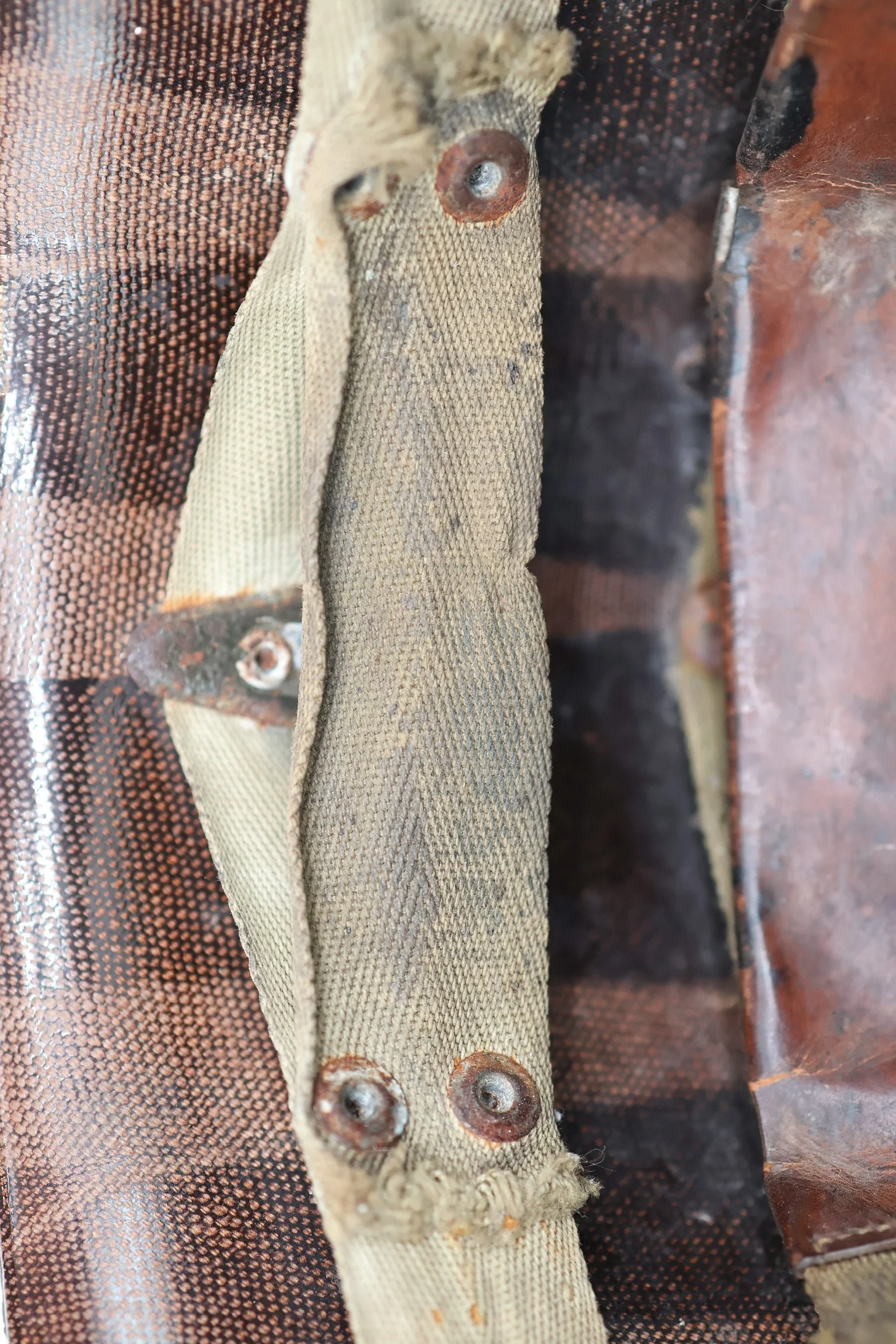
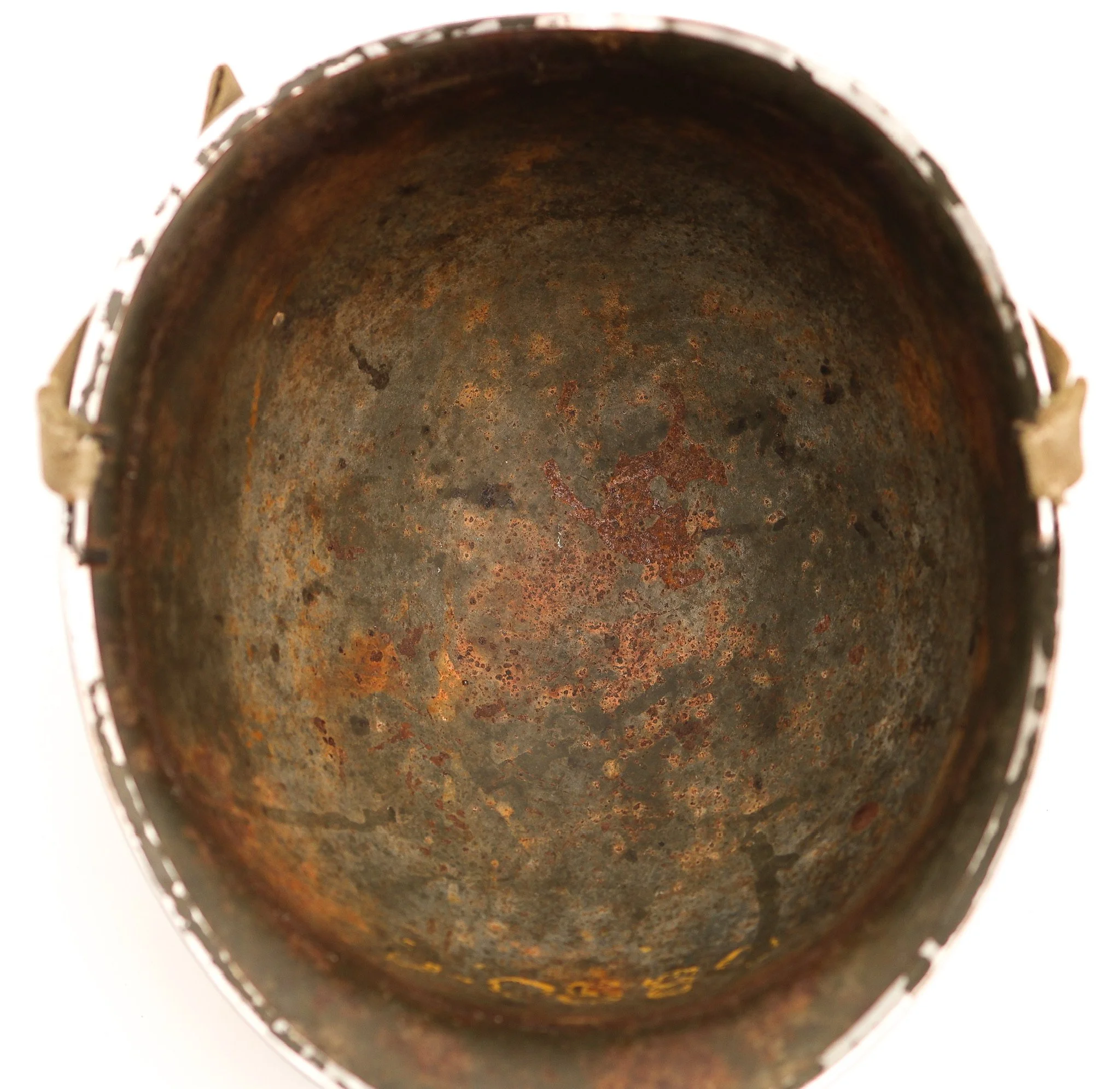
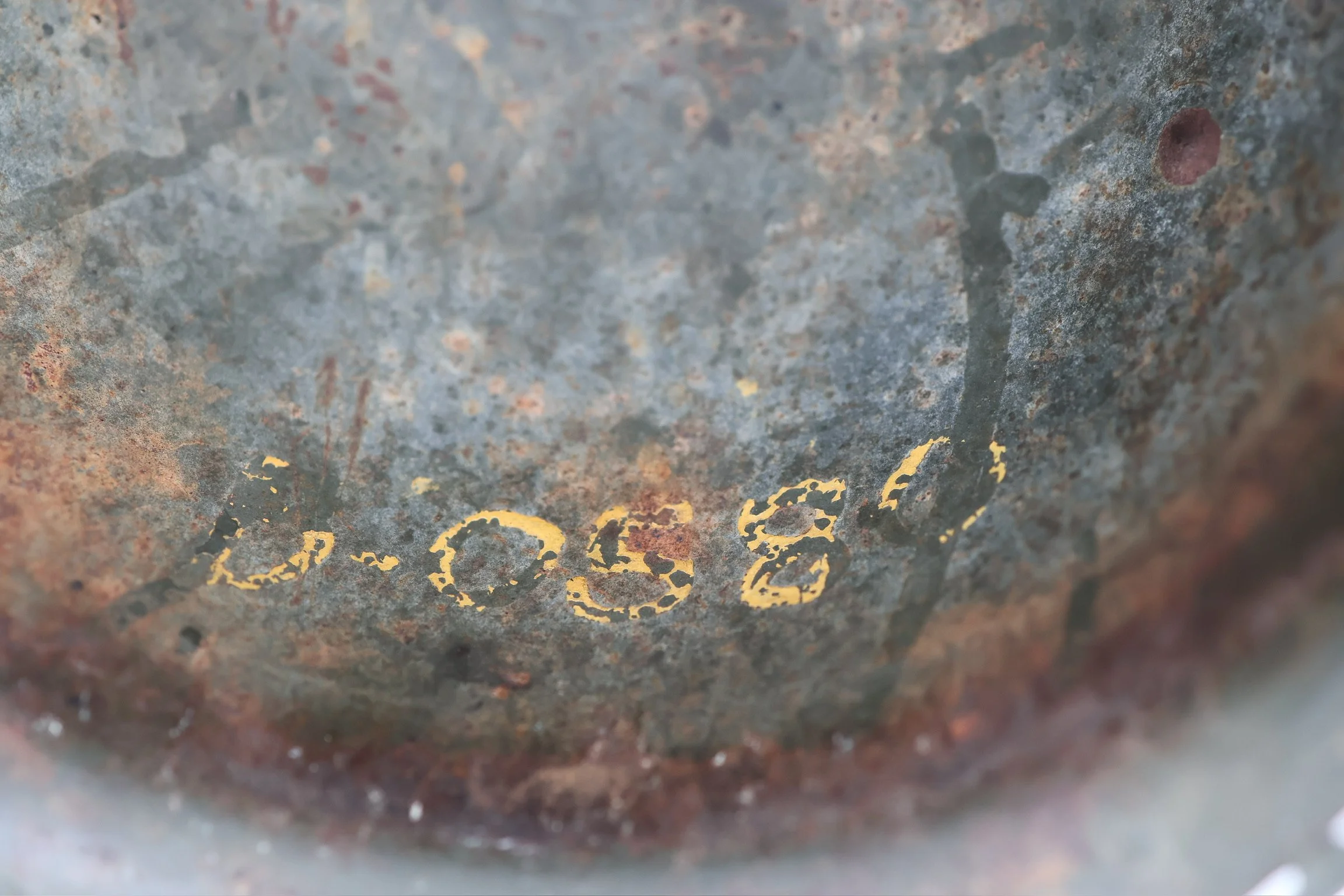
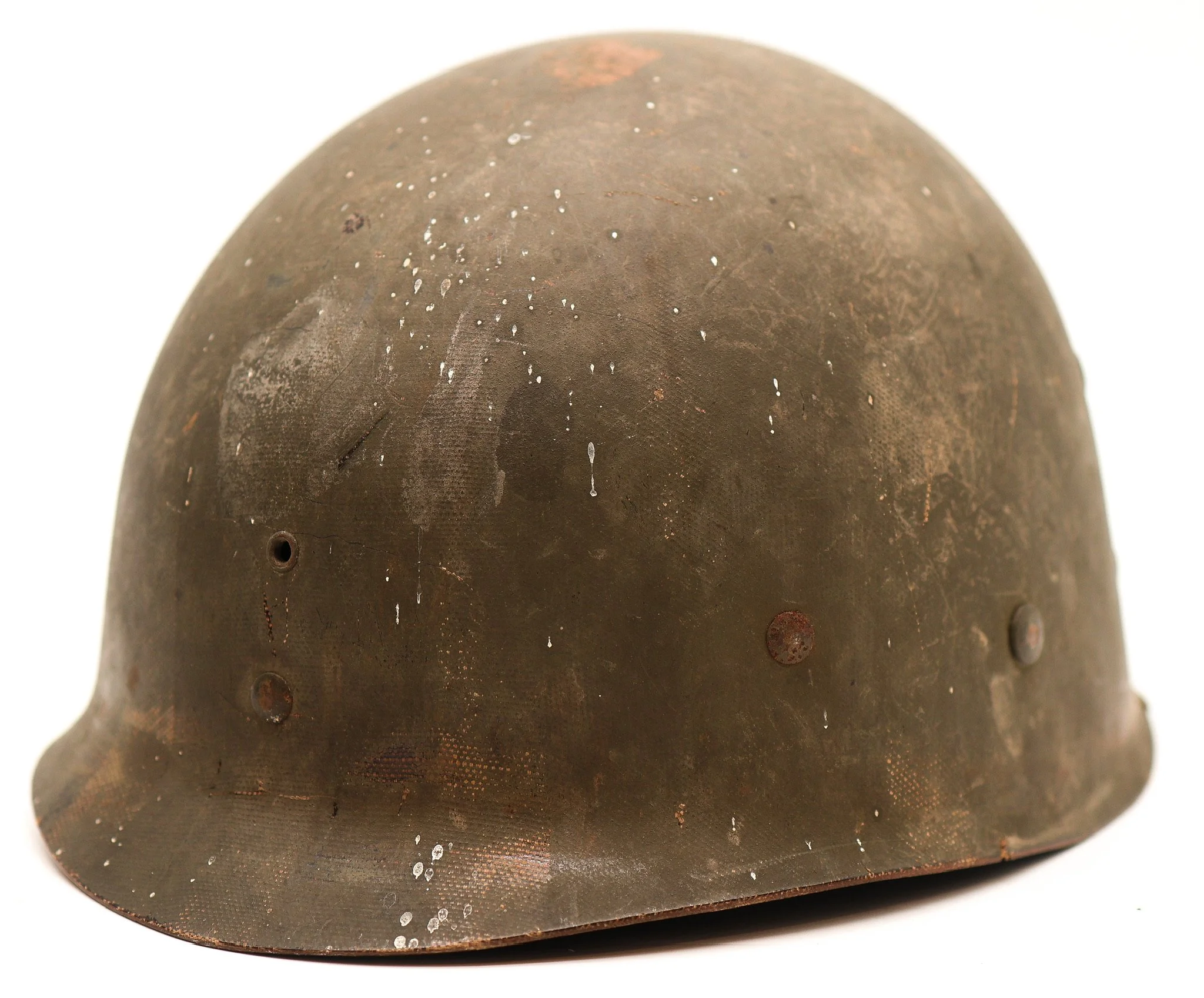
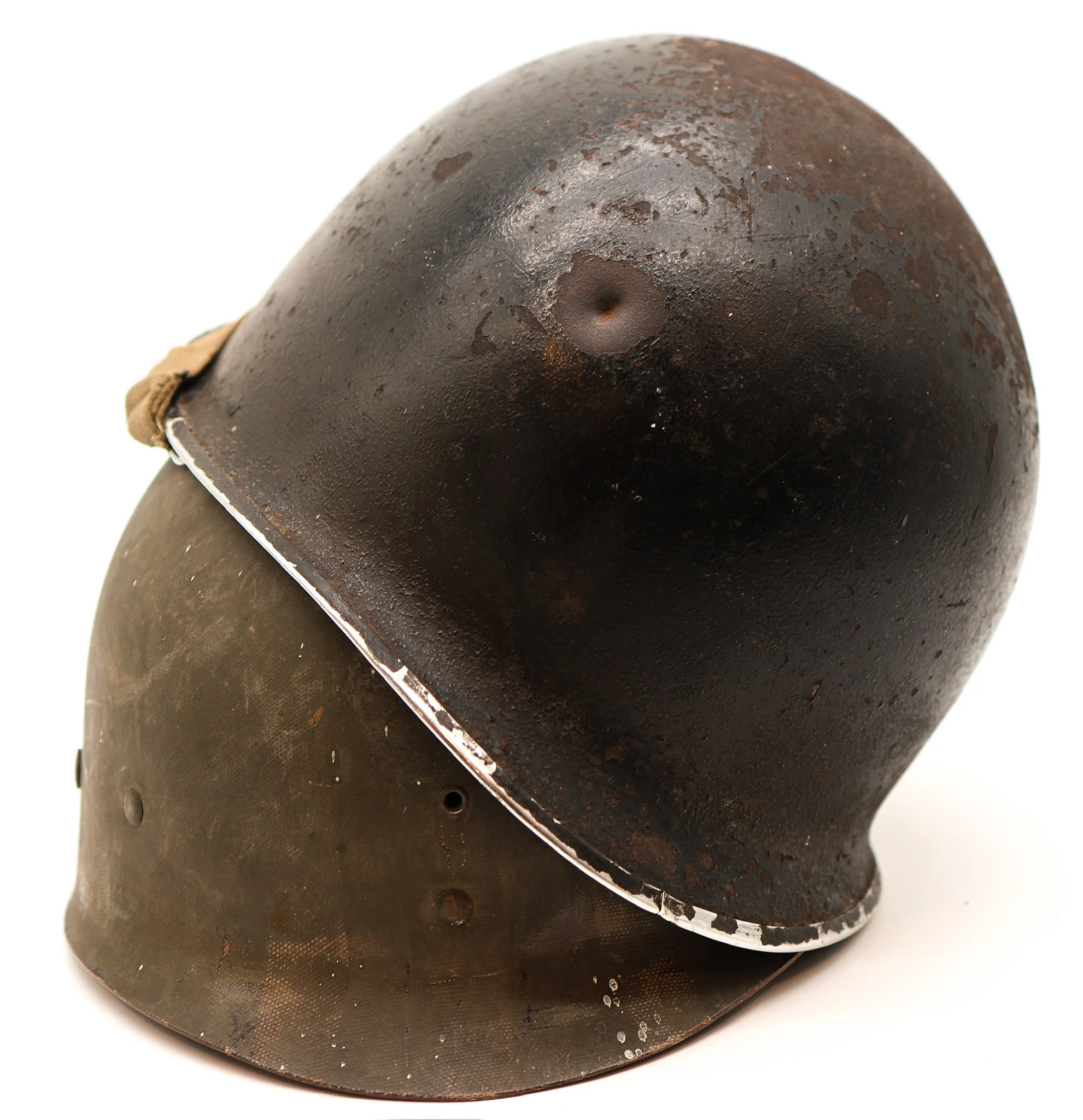
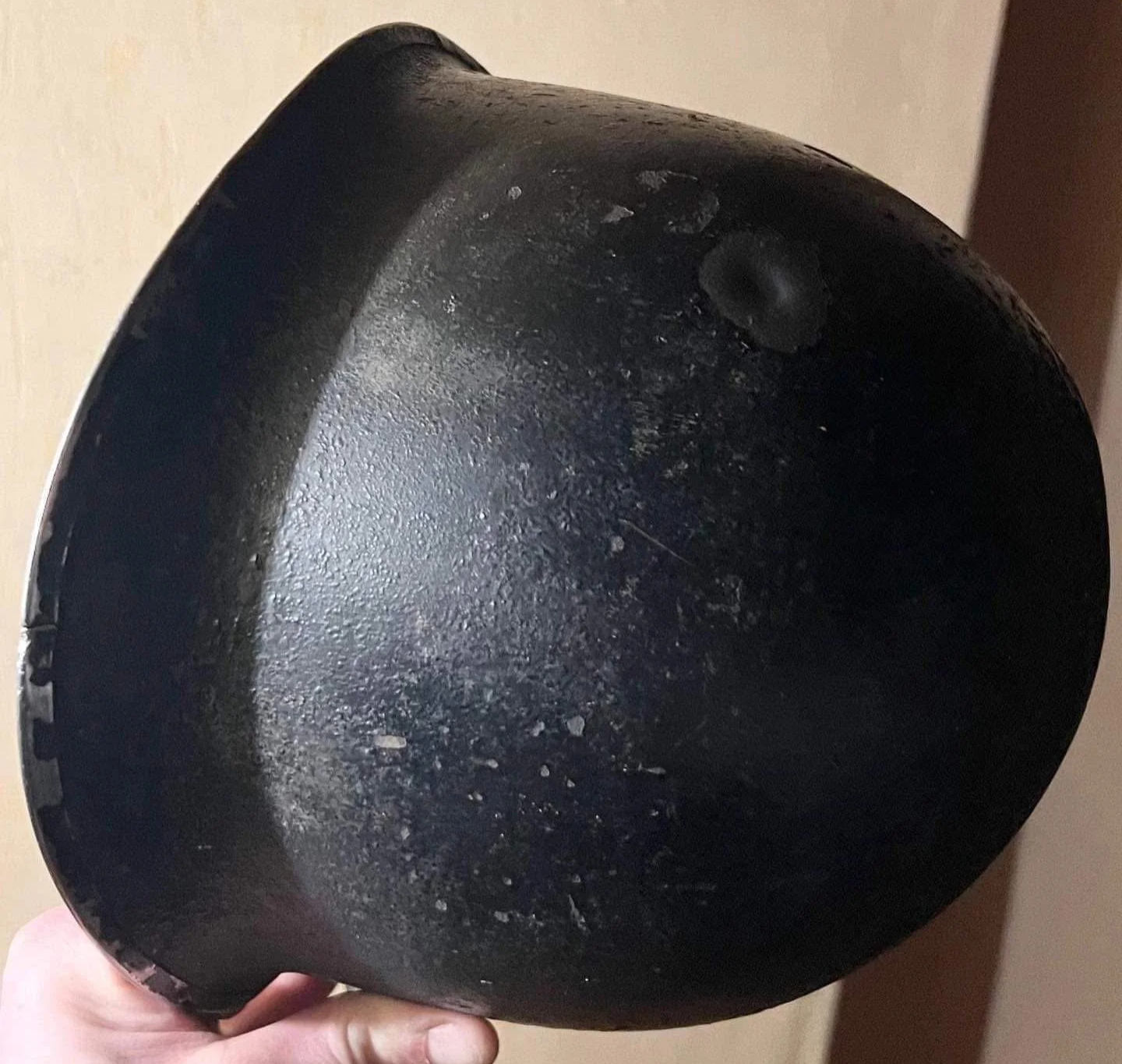
This U.S. M1 helmet was worn by Joseph A. Brozowski, a corporal in the 285th Field Artillery Observation Battalion, and was recovered from the site of the Malmedy Massacre near the Baugnez crossroads, southeast of Malmedy.
On December 17, 1944, during the German Ardennes Offensive (Battle of the Bulge), elements of the 285th Field Artillery Observation Battalion were captured by SS forces from Kampfgruppe Peiper. After surrendering, more than 120 American prisoners of war were assembled in a field and systematically machine-gunned. Approximately 84 Americans were killed in what became known as the Malmedy Massacre.
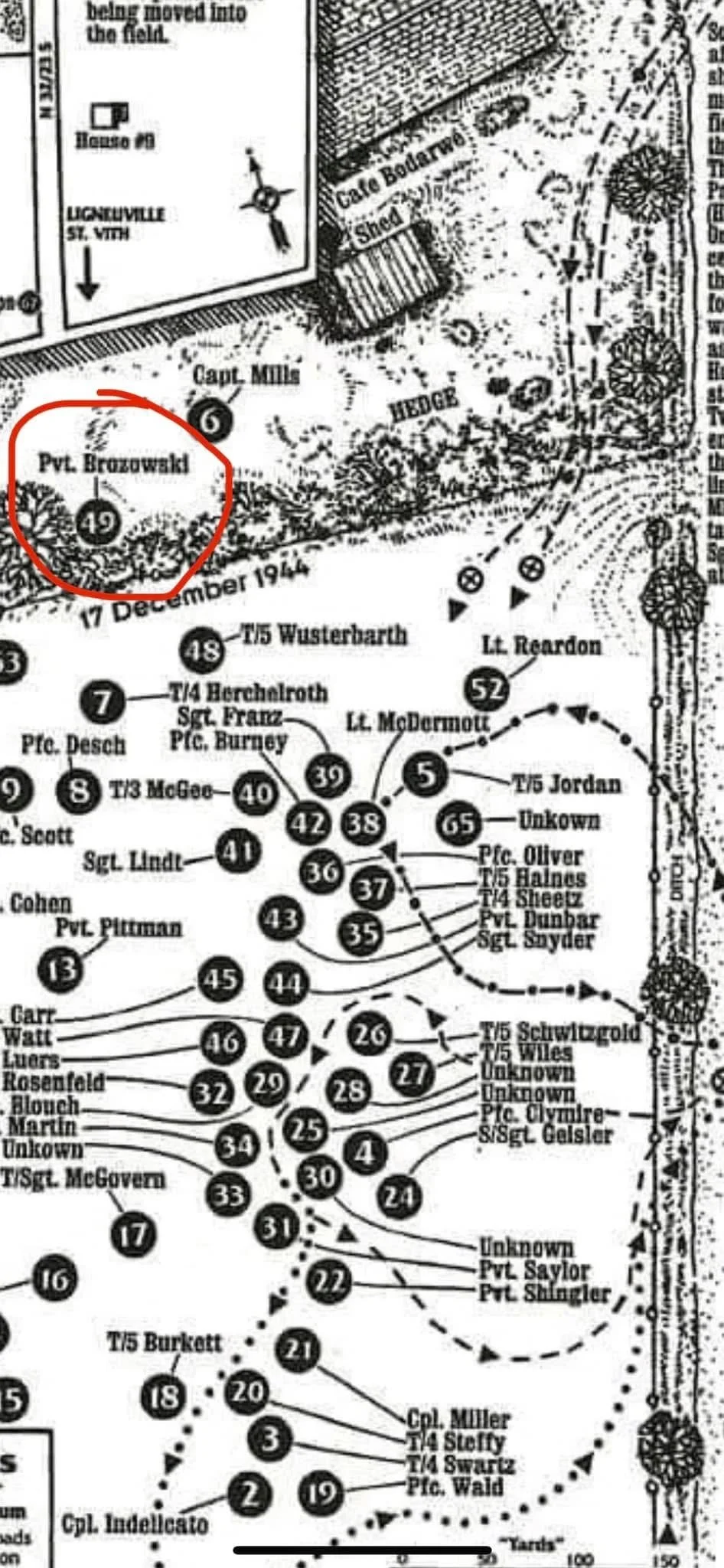
Cpl. Brozowski was among those murdered. His remains were identified as body tag #49 and were found at the northern edge of the massacre field near the hedgerow. An autopsy conducted on January 22, 1945, by Major Giacento Morrone at the 44th Evacuation Hospital documented multiple gunshot wounds to the leg, right arm, and face, indicating repeated close-range fire.
-
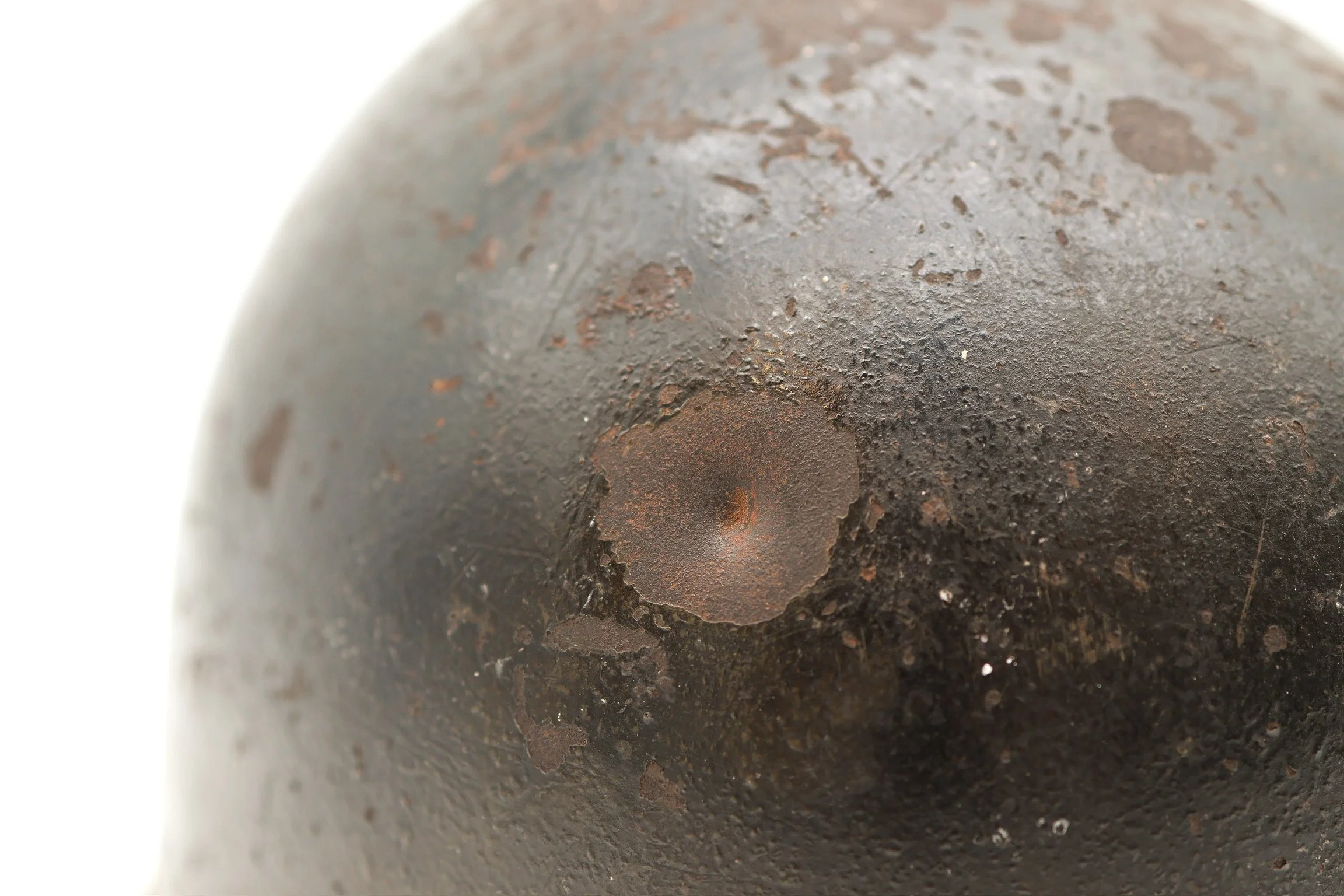
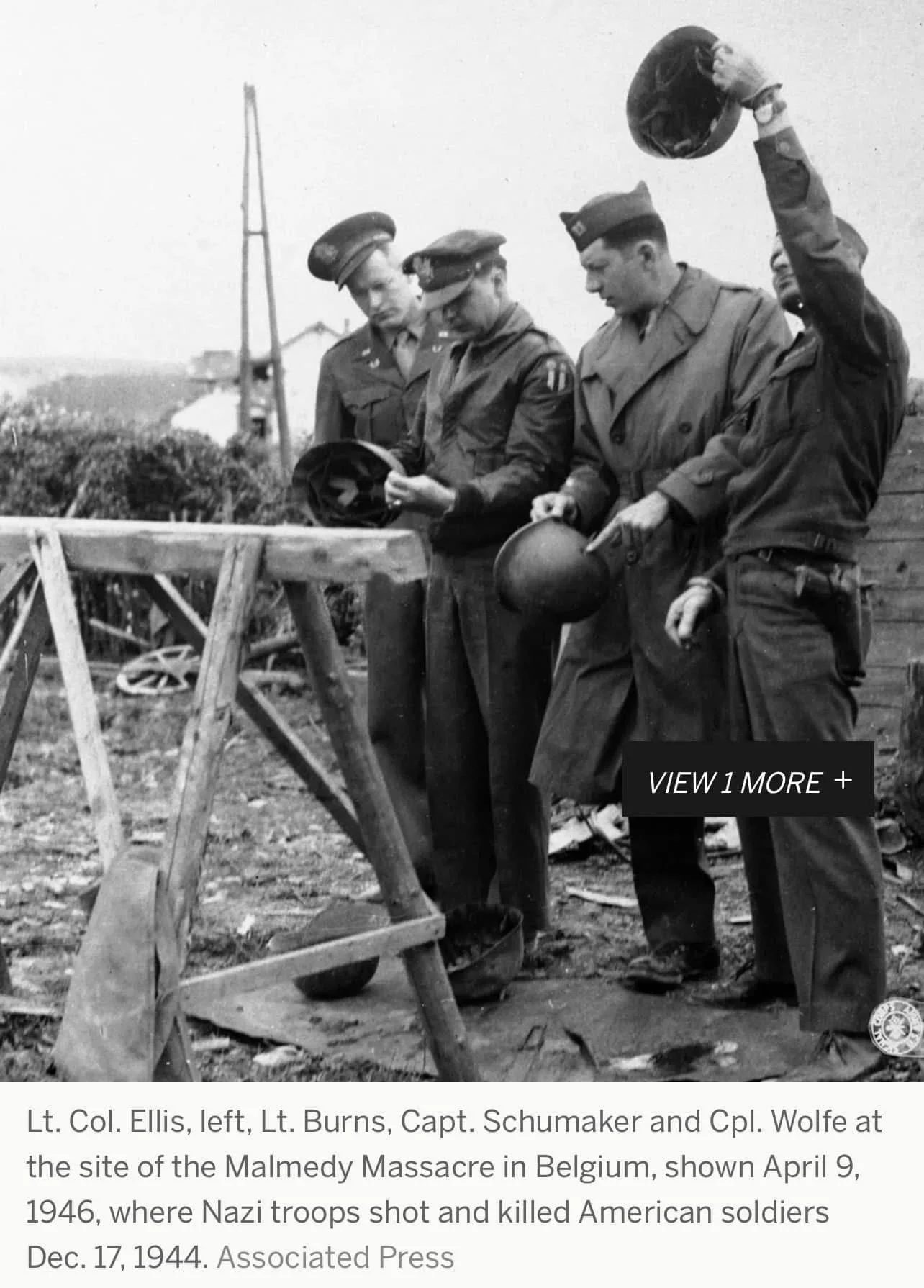
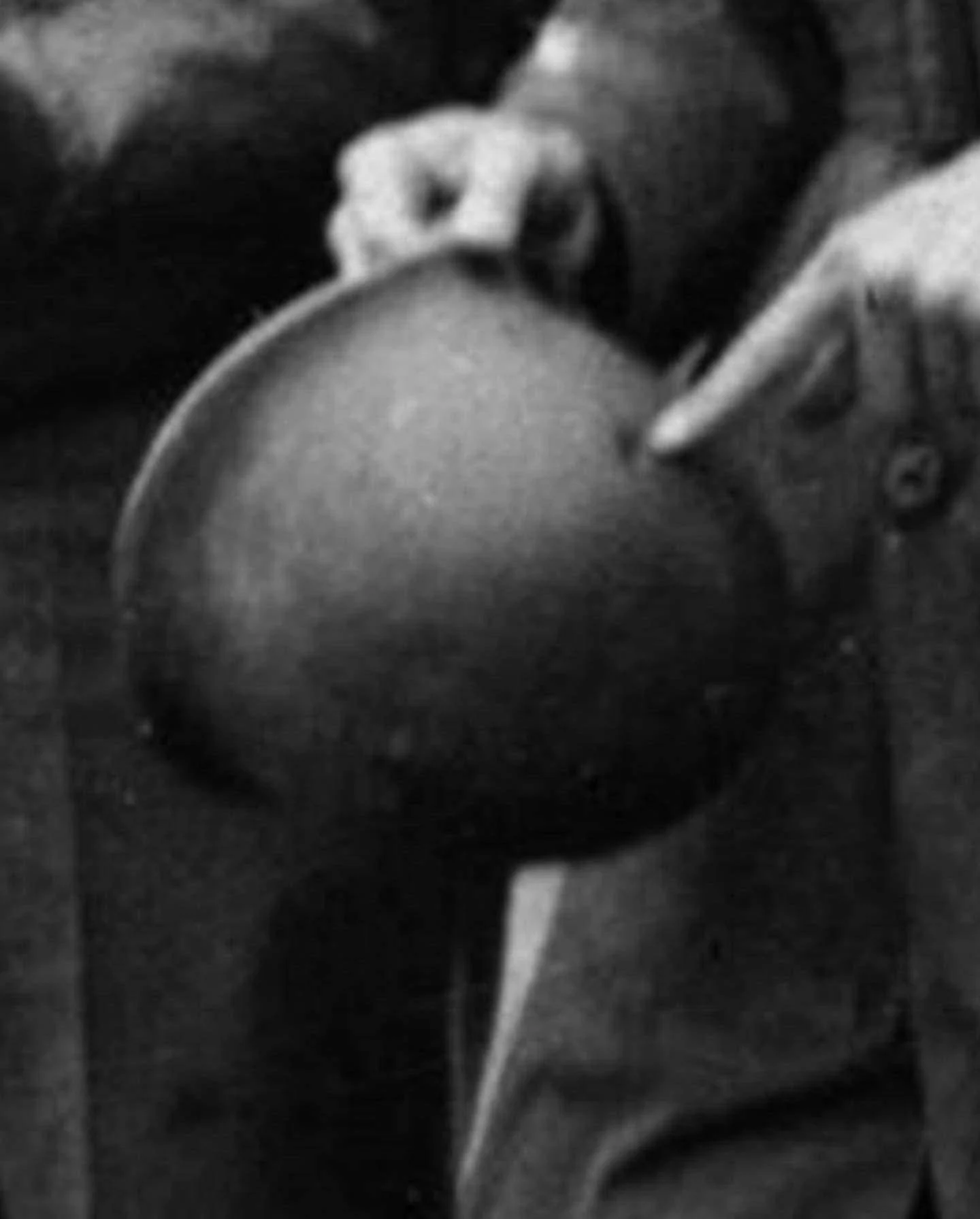
This helmet was recovered from the massacre site and appears in U.S. Army press photographs taken in 1946 during the official war crimes investigation. One photograph shows a soldier holding the helmet at the site; a clearly visible bullet strike on the helmet in that image aligns precisely with the impact damage present on the helmet today. This provides rare photographic confirmation of the helmet’s presence at the massacre site shortly after the war and constitutes extraordinary provenance.
Cpl. Brozowski is specifically referenced in Fatal Crossroads, a detailed study of the Malmedy Massacre. Survivor Kenny Kingston recalled witnessing Brozowski’s final moments:
“Cpl. Joseph Brozowski — he must have been hit by machine gun fire — I seen him [sic] get up on his knees, moaning and hollering. These fellows came into the field and emptied five rounds [into him].”
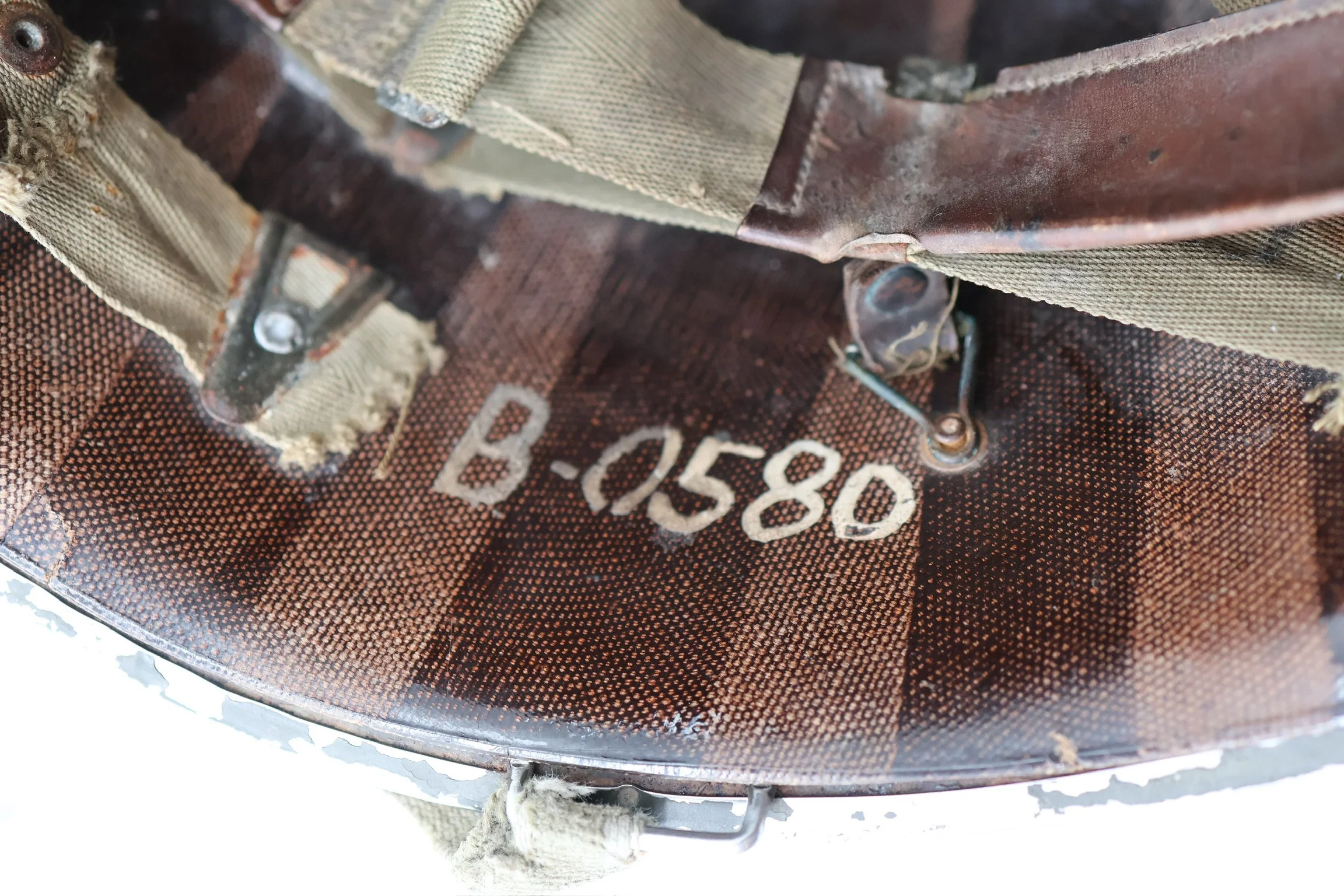
After the war, the helmet remained stored in a private residence near Malmedy until its rediscovery decades later. Its identification is confirmed by the laundry number and faint writing of “Brozowski” on the liner headband.
Cpl. Joseph A. Brozowski was born in 1919 in Wilkes-Barre, Pennsylvania. He enlisted in 1943 and was killed in action on December 17, 1944. He is buried at the Henri-Chapelle American Cemetery.
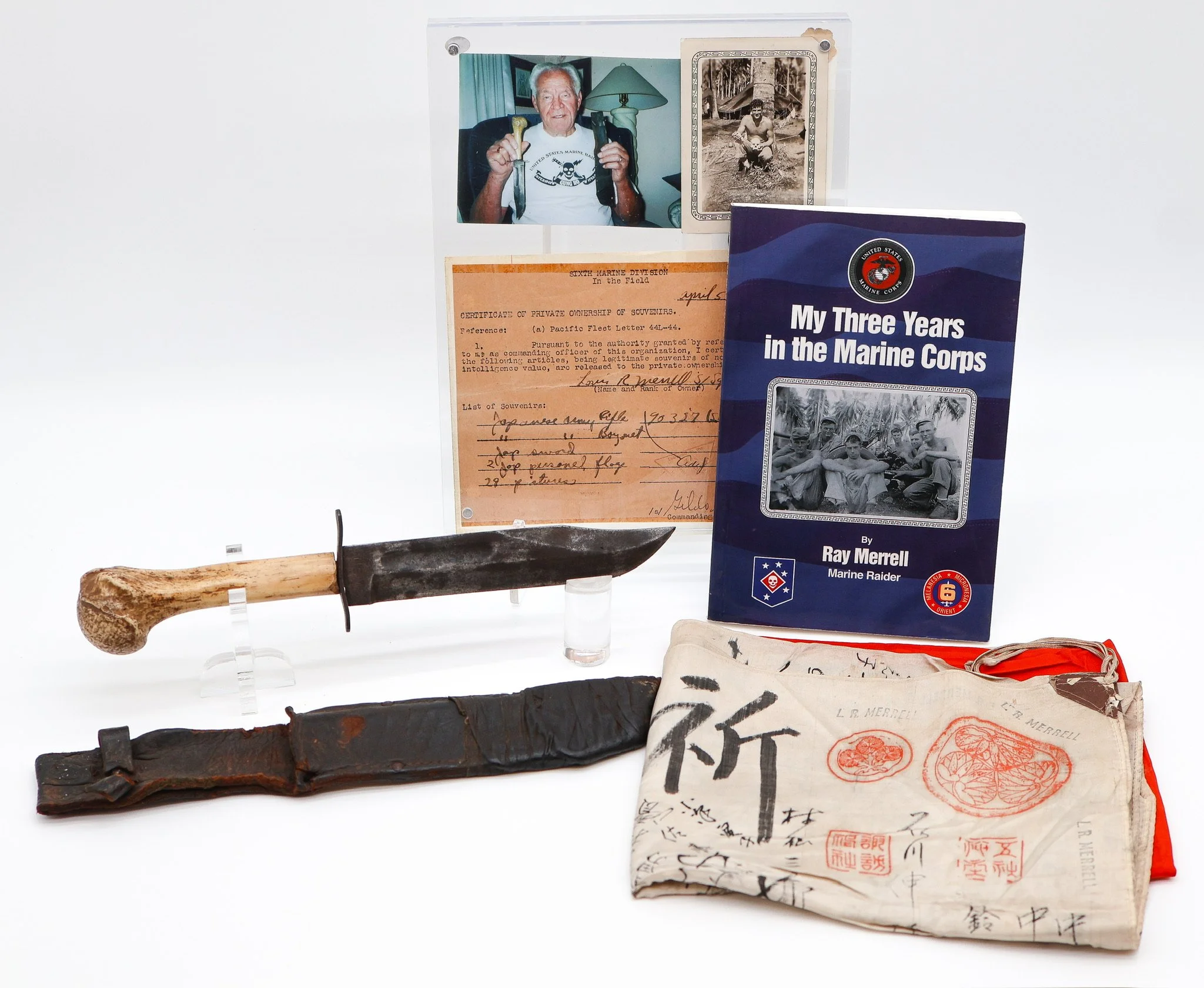
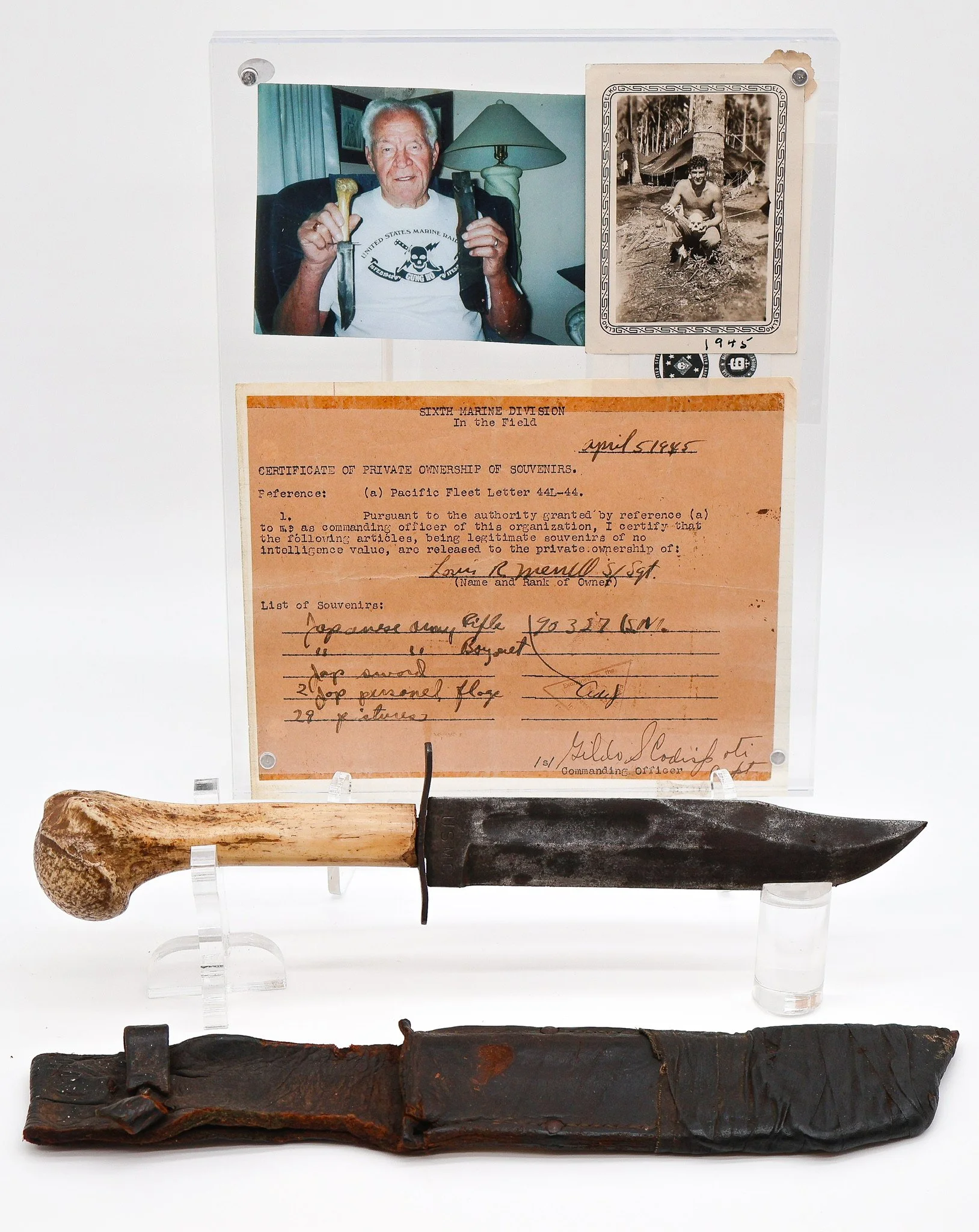
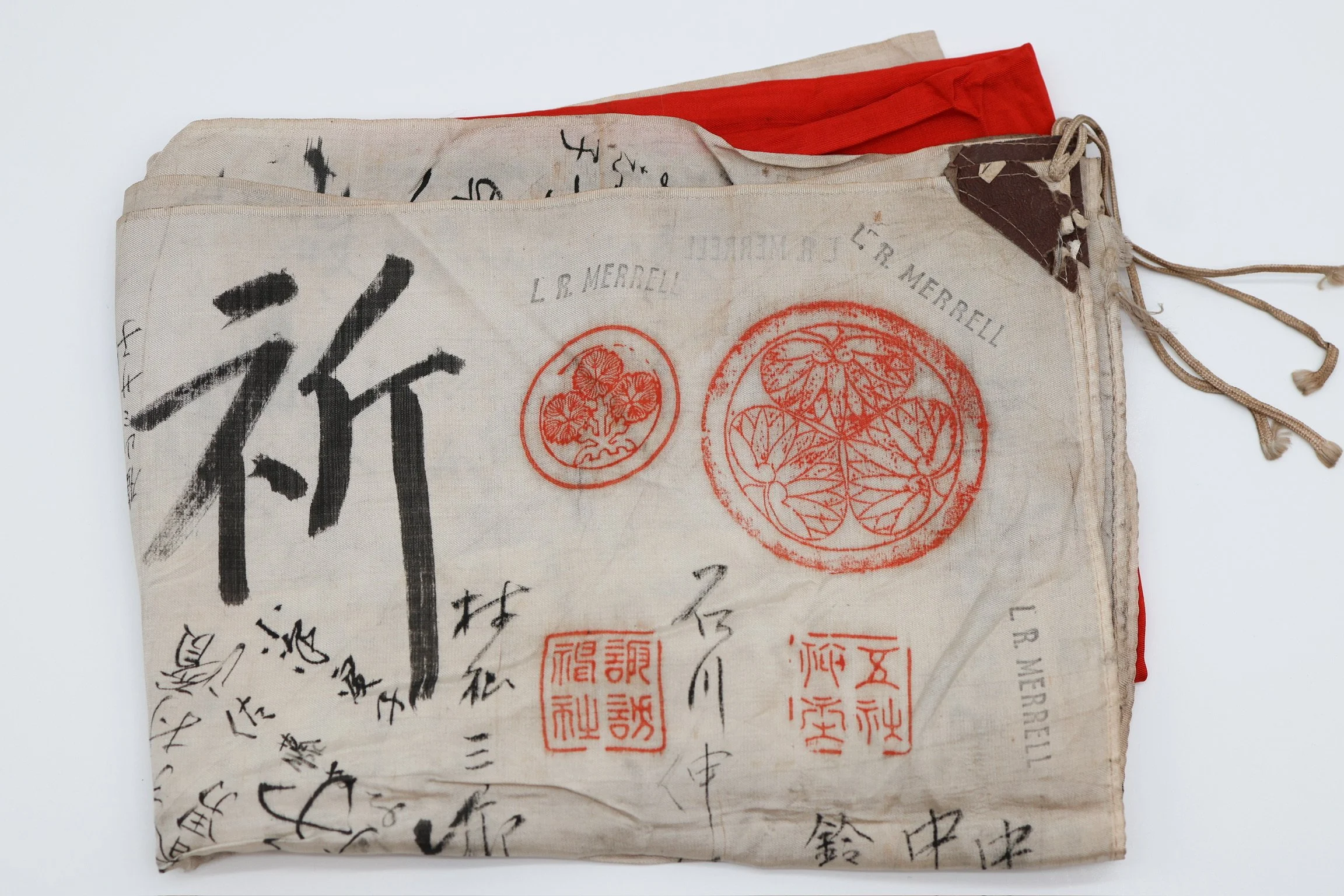
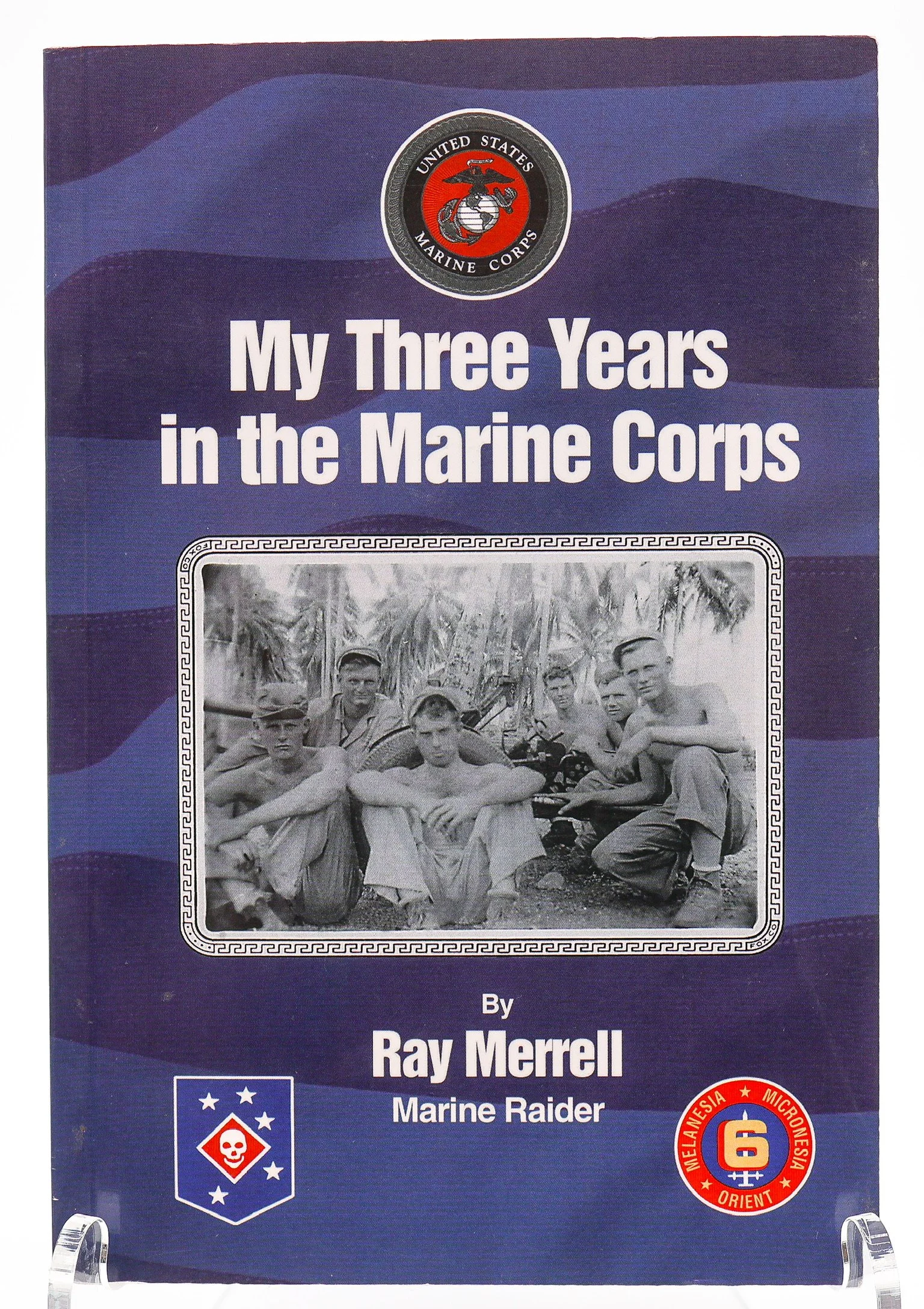
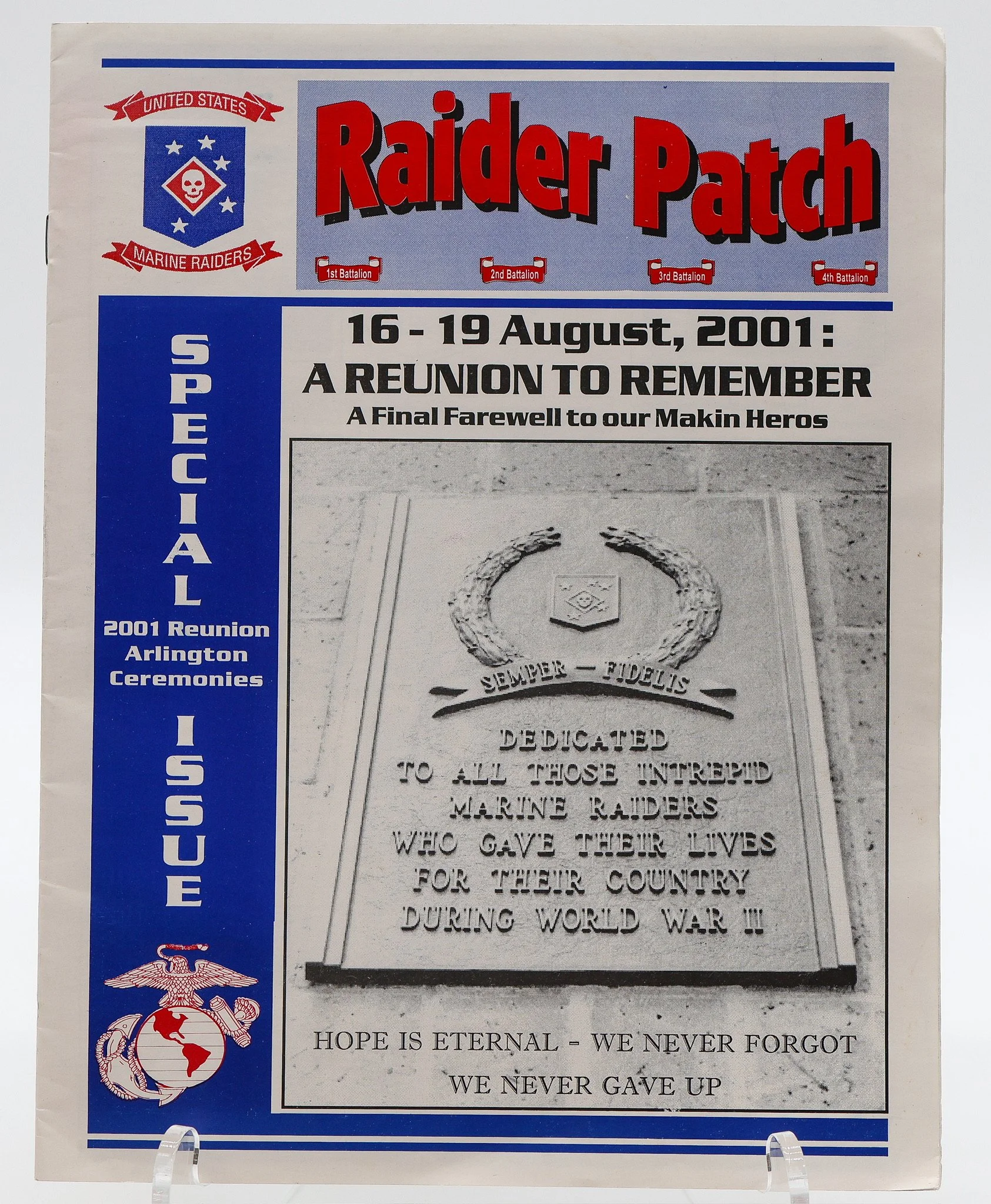
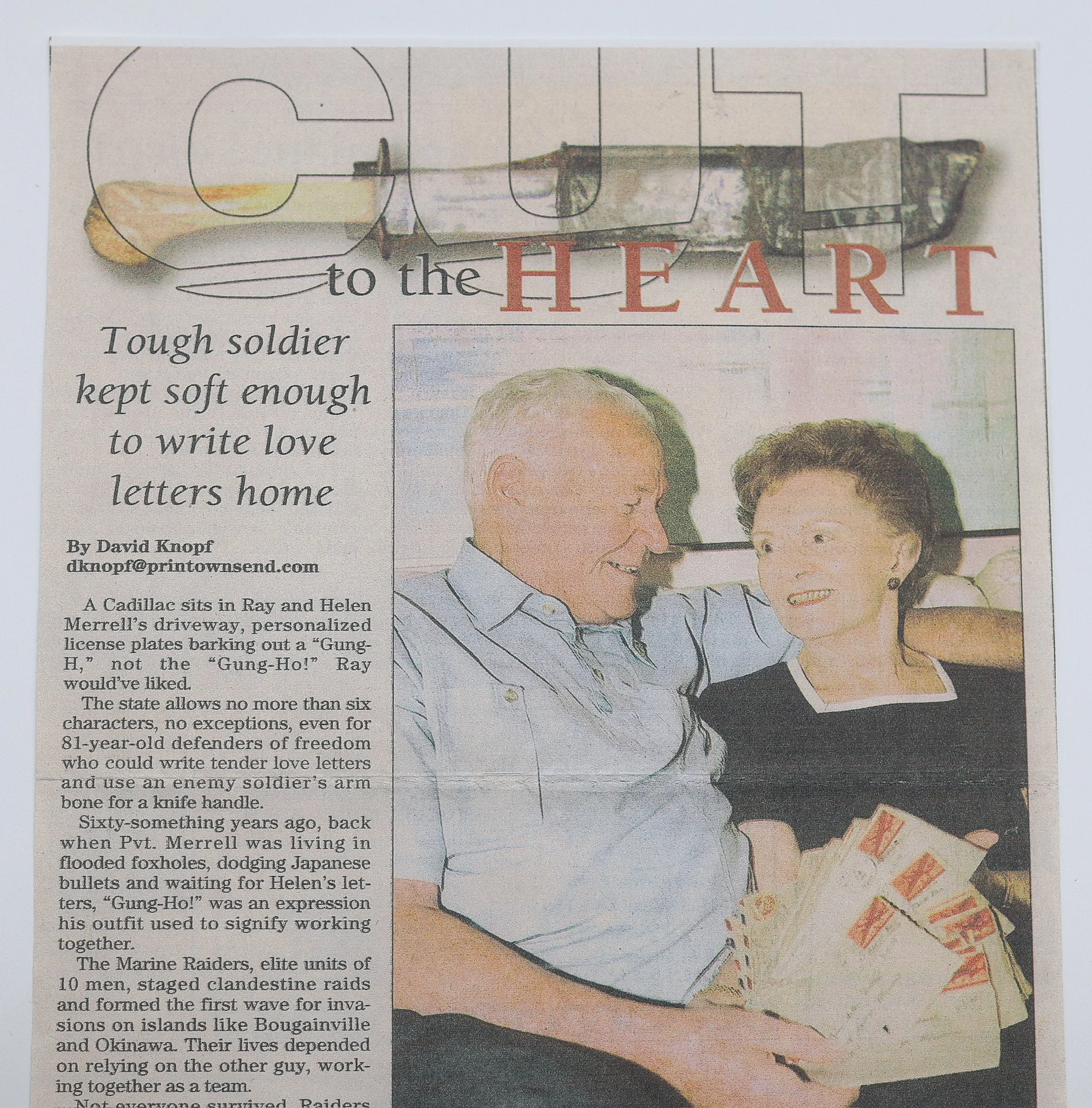
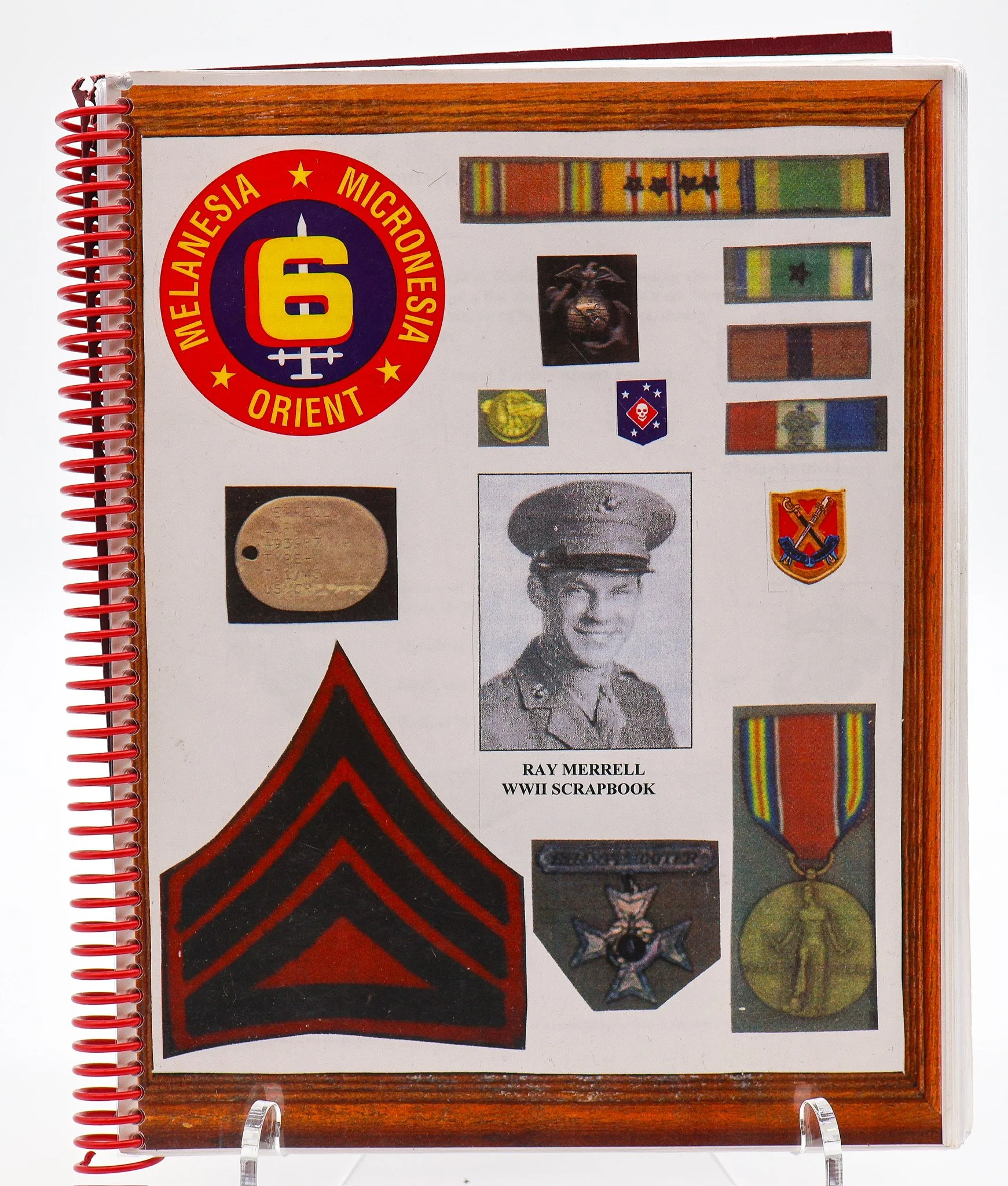
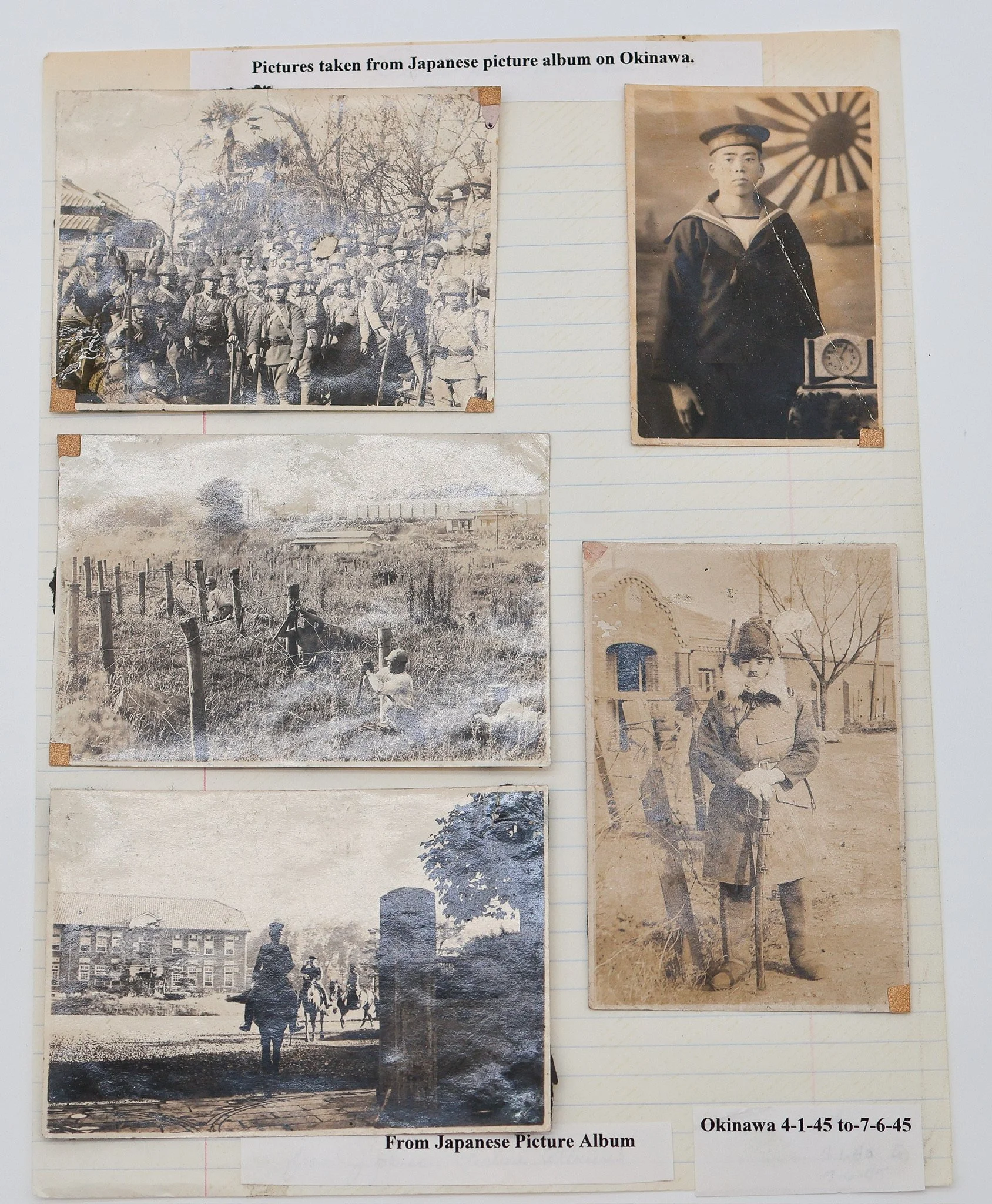
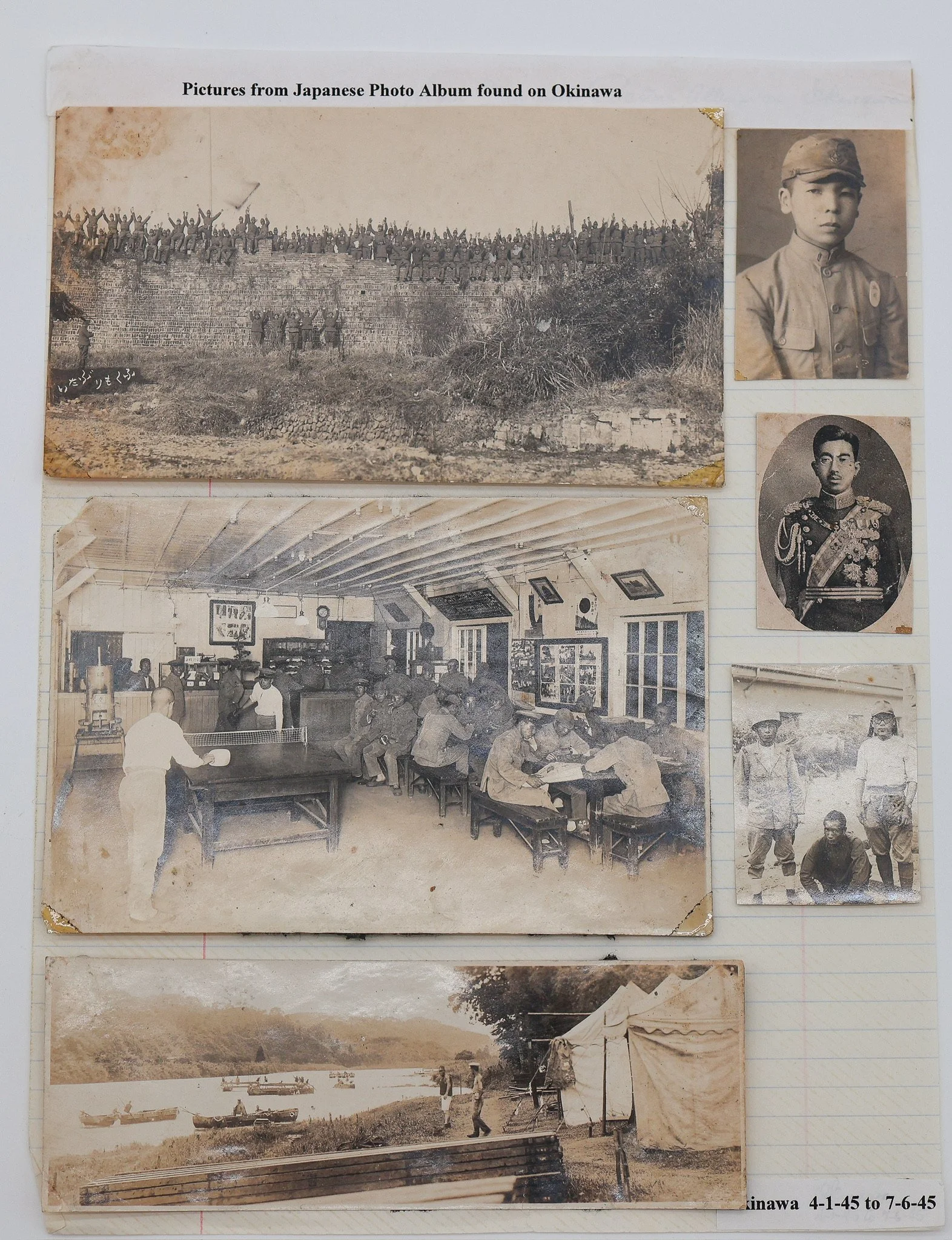
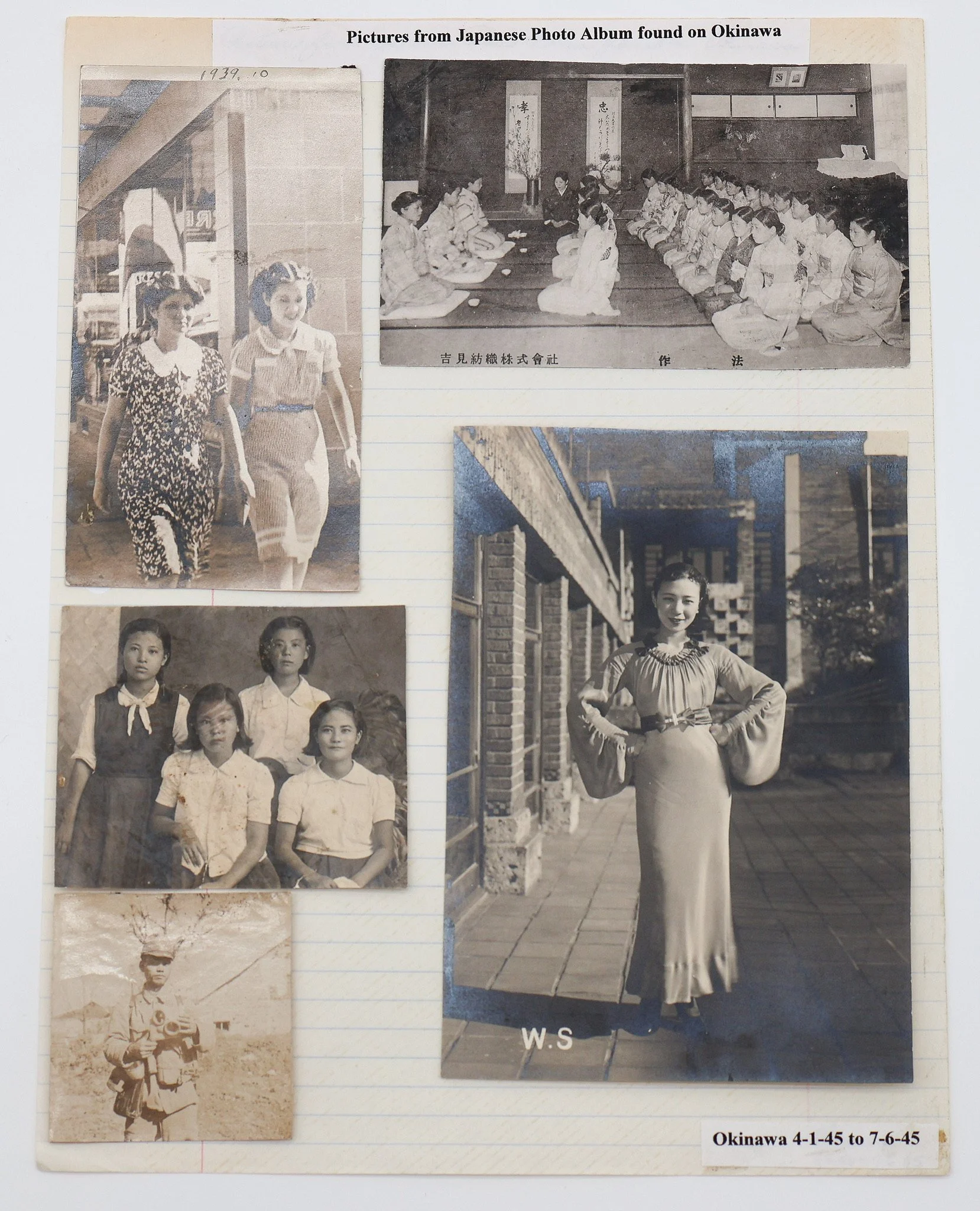
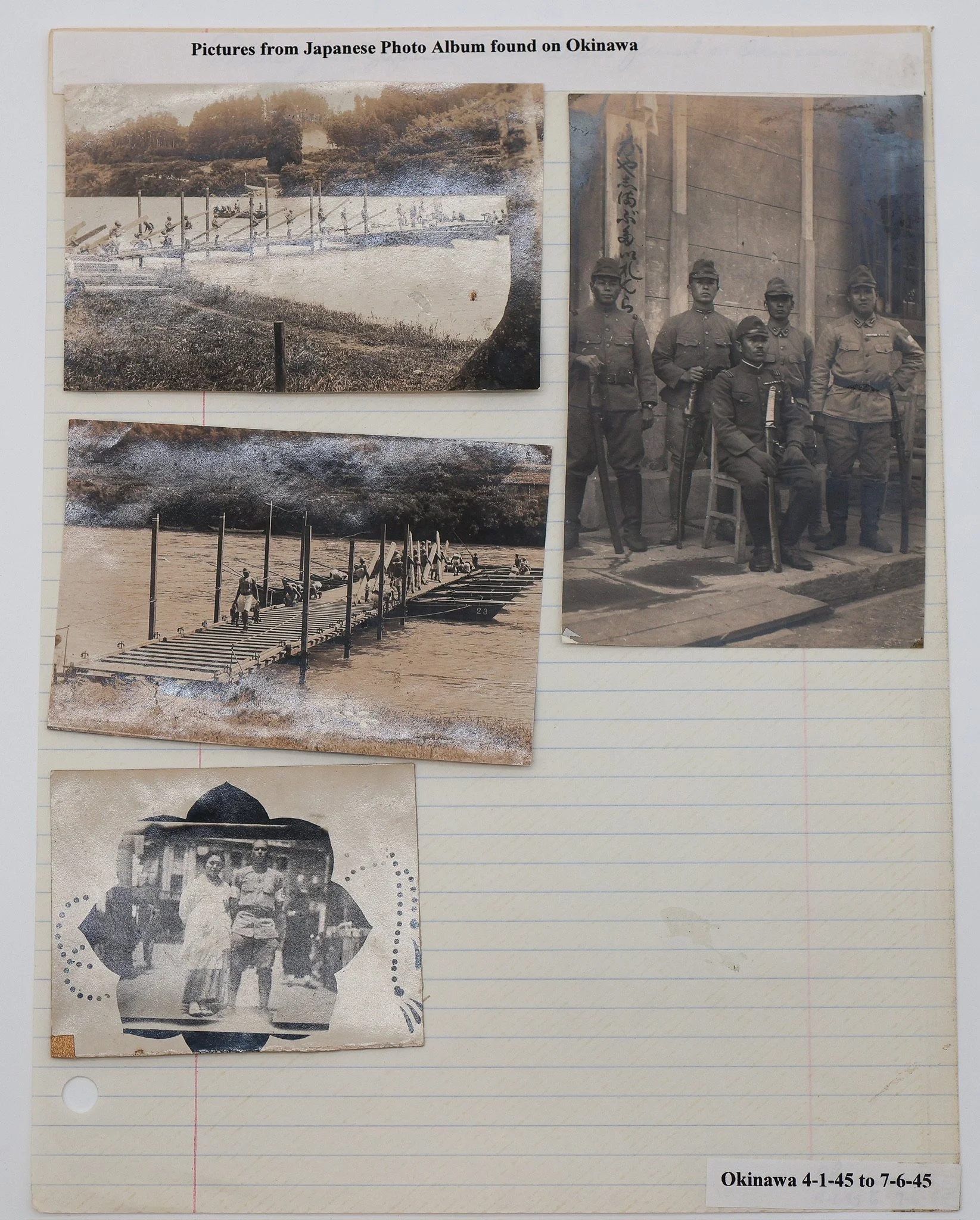
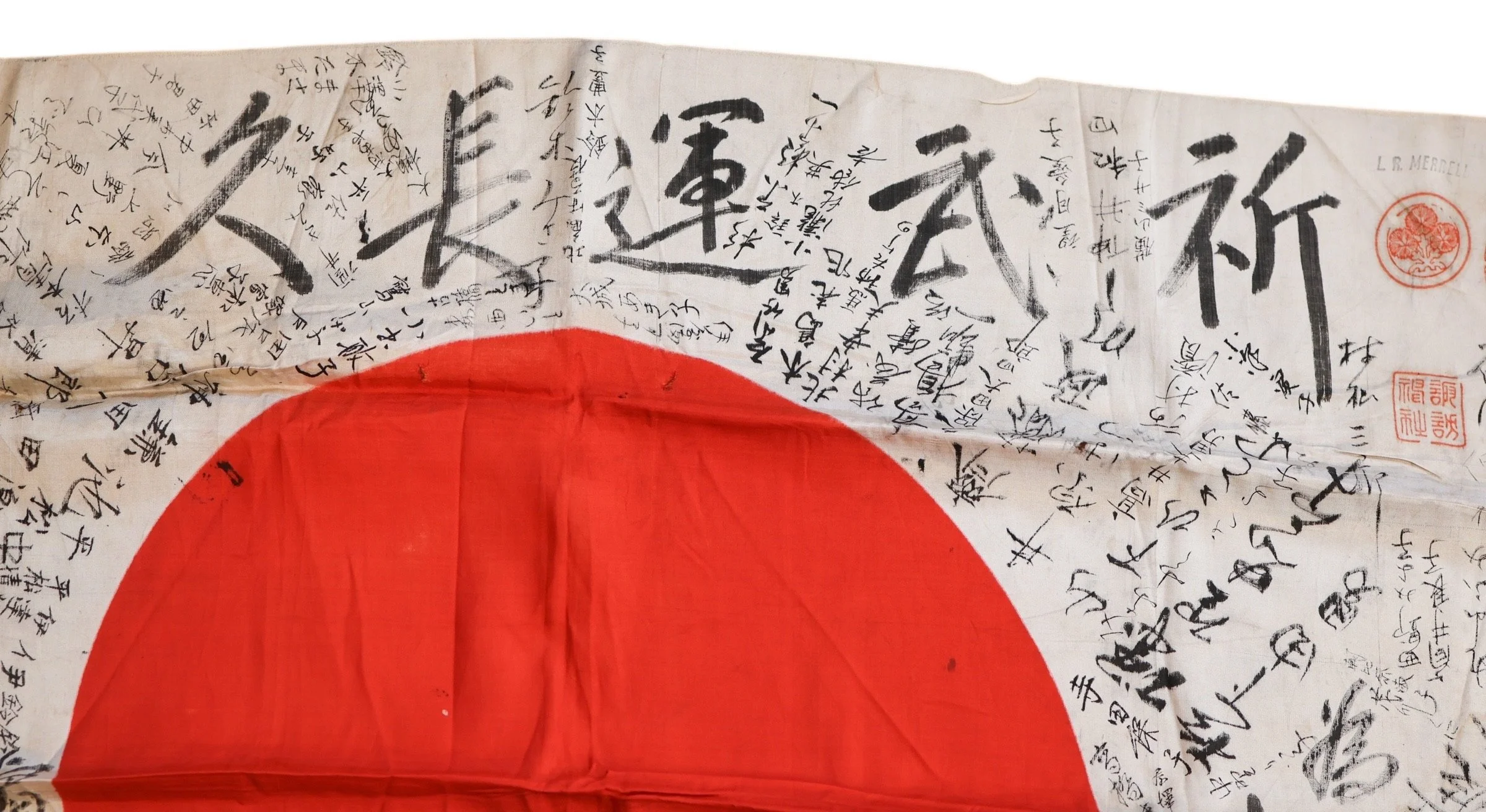
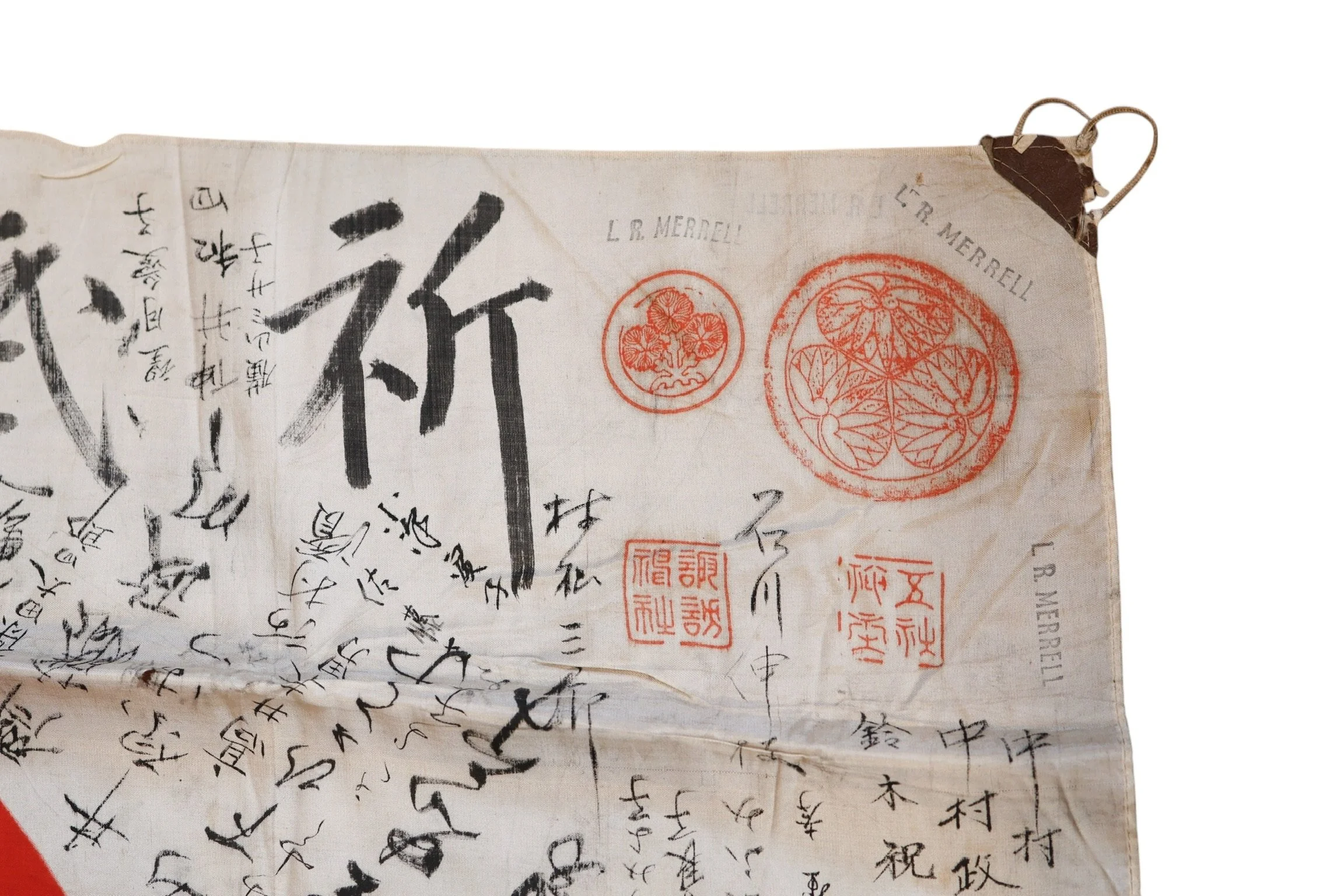
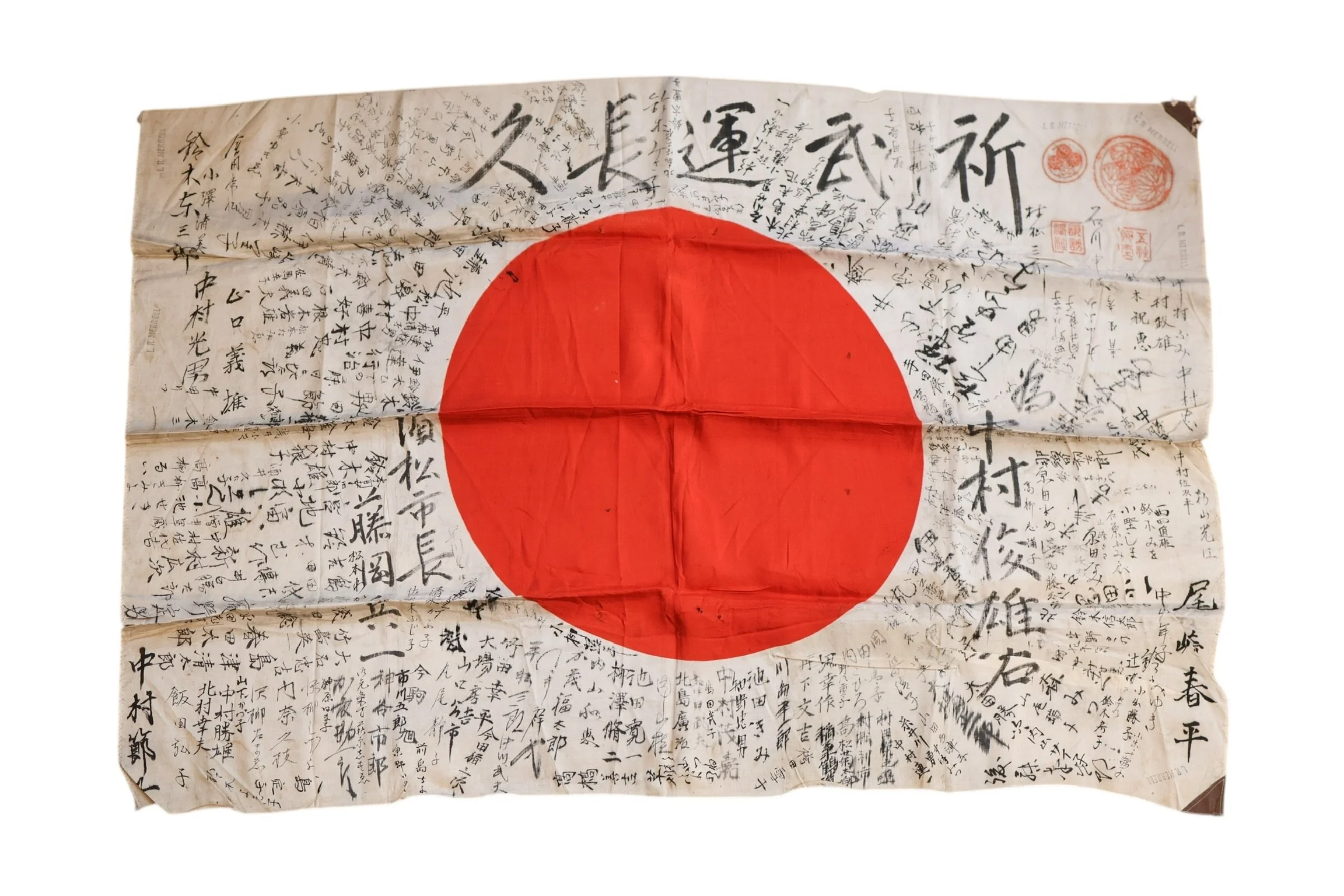
WWII Marine Raider Grouping — Ray Merrill
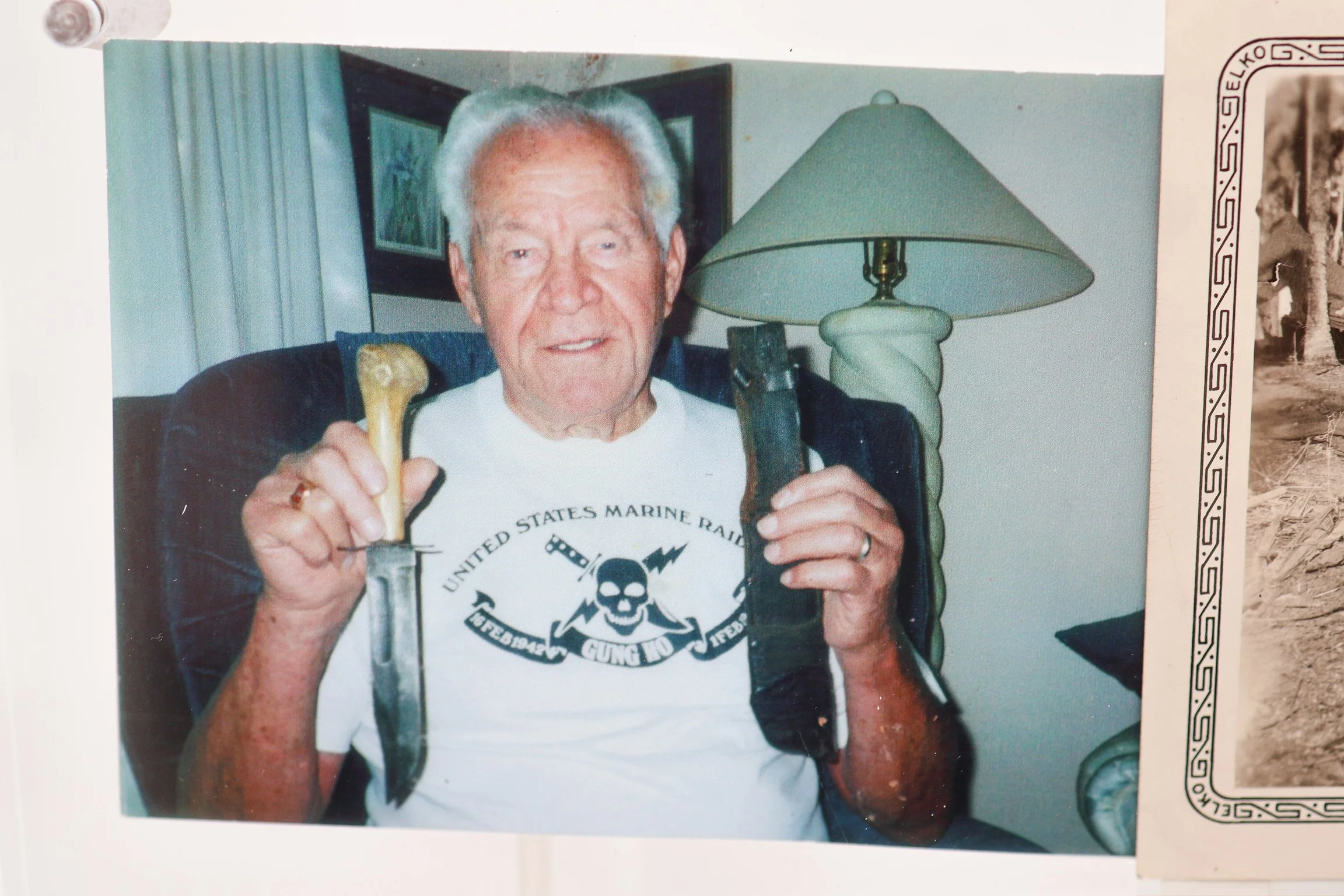
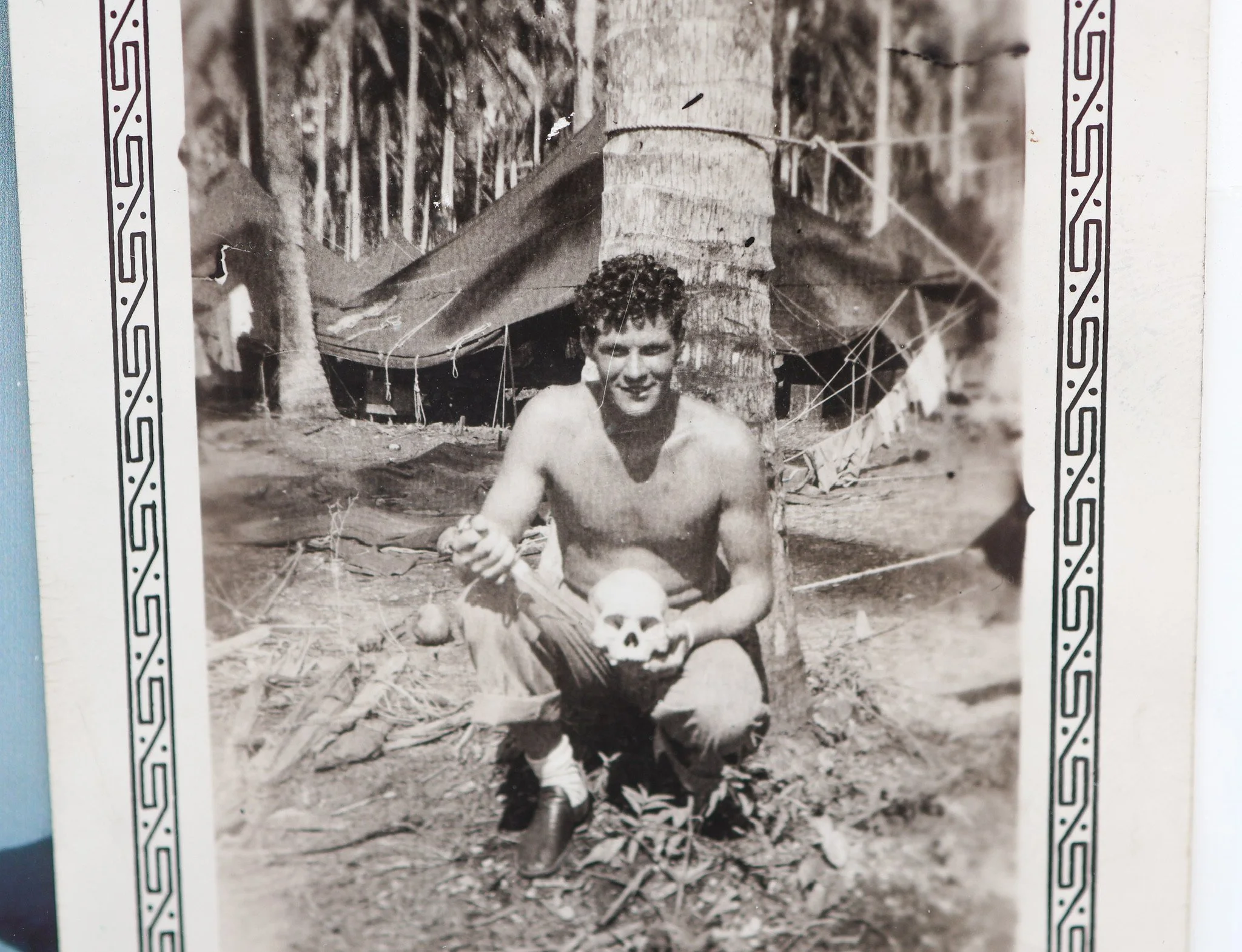
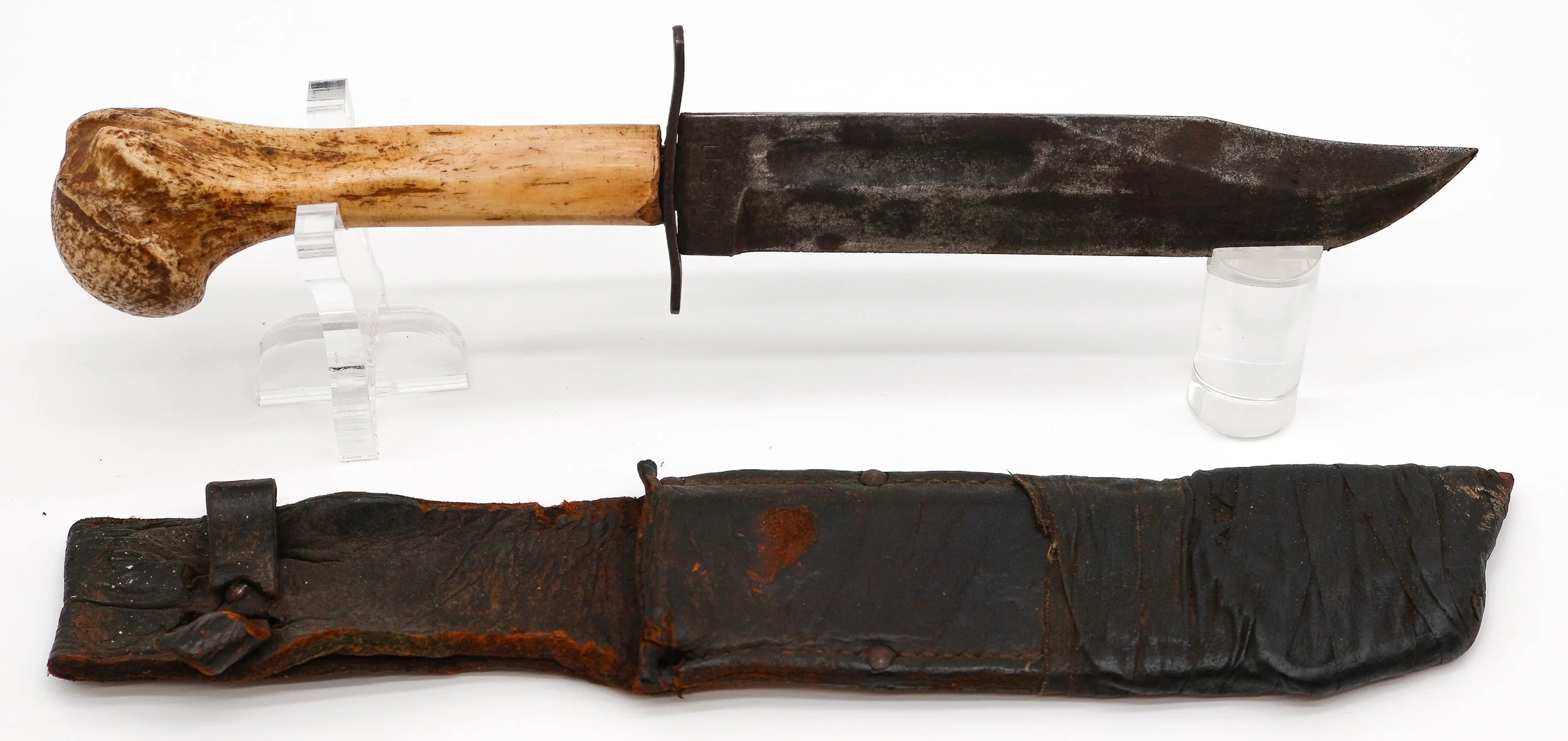
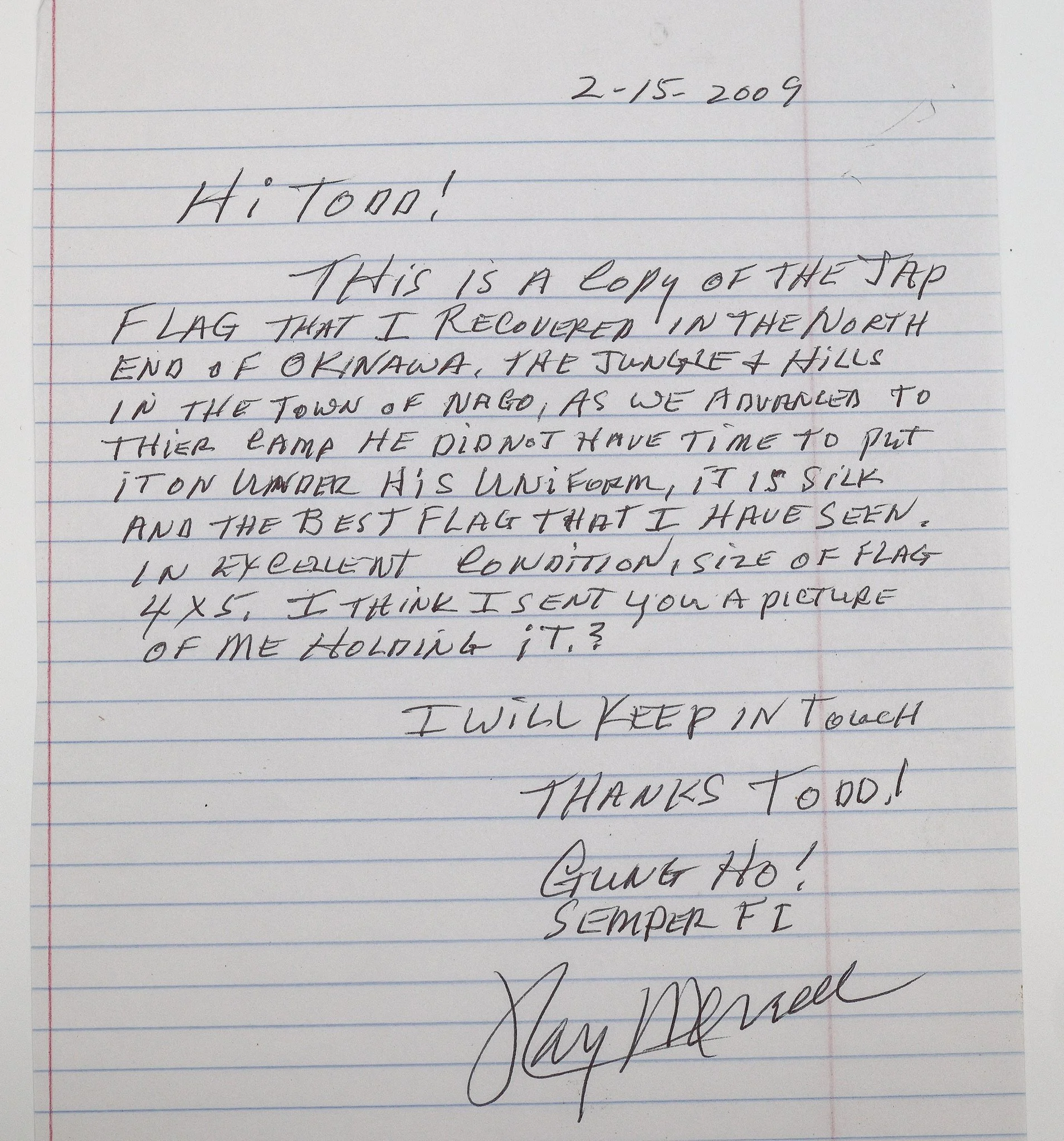
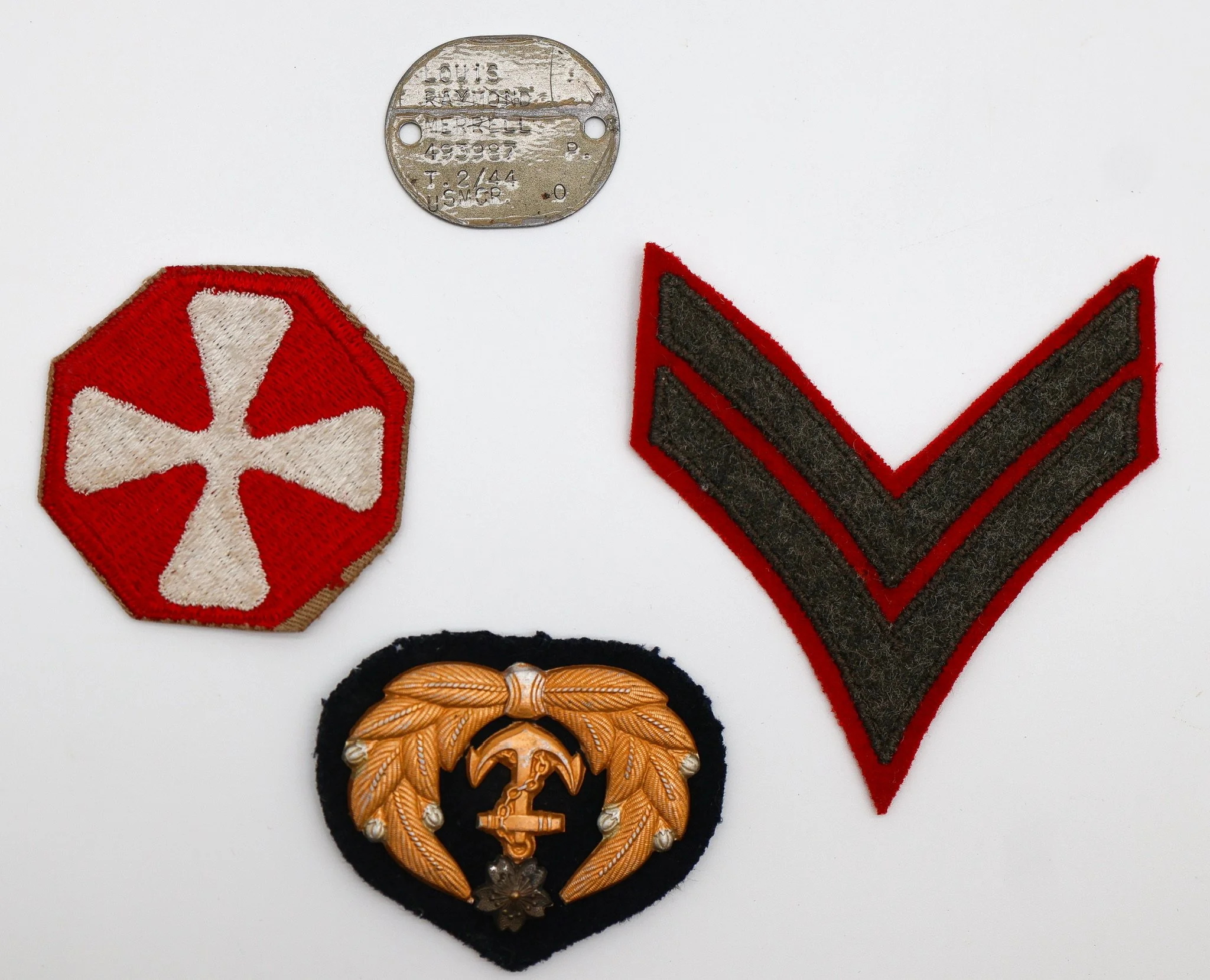
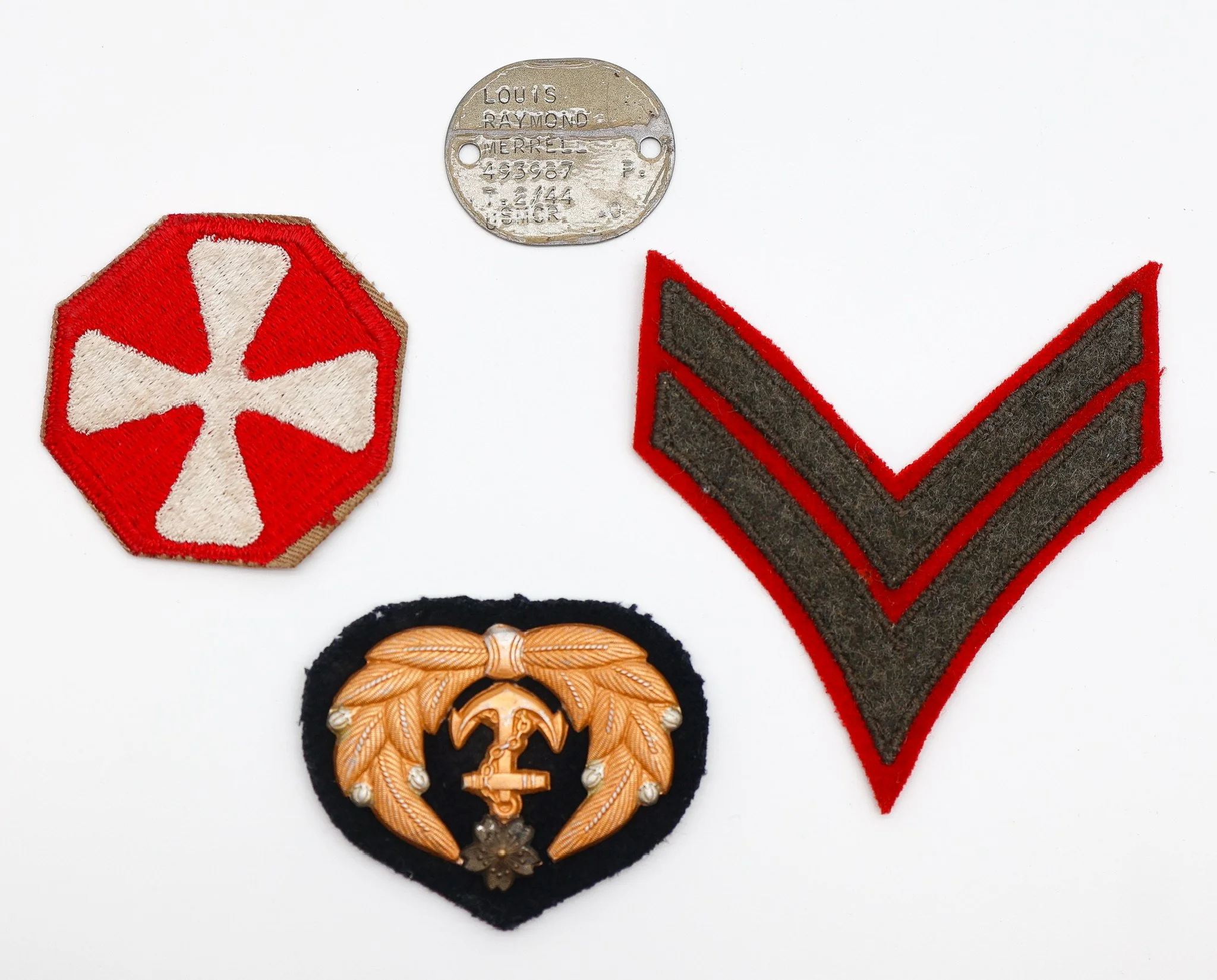
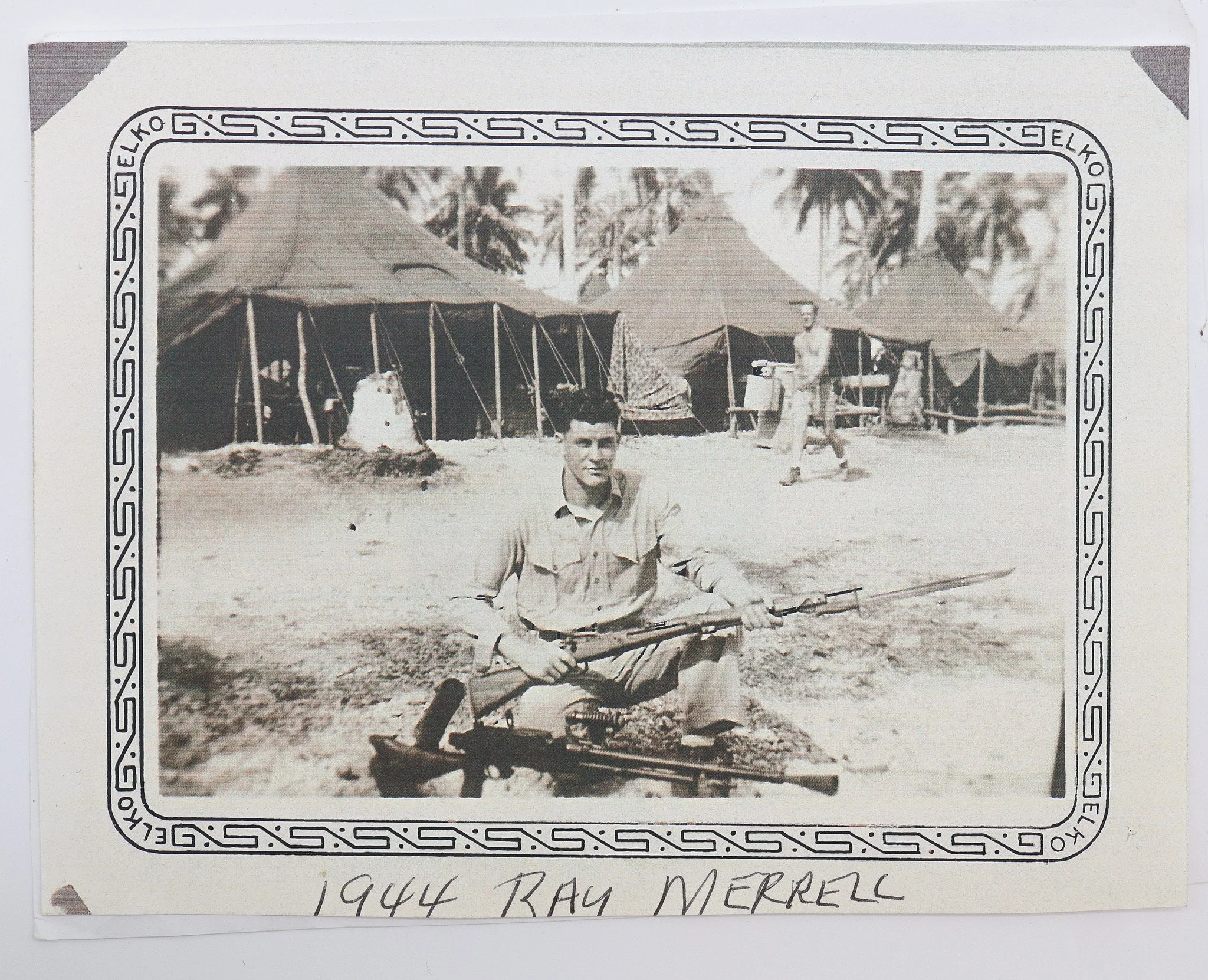
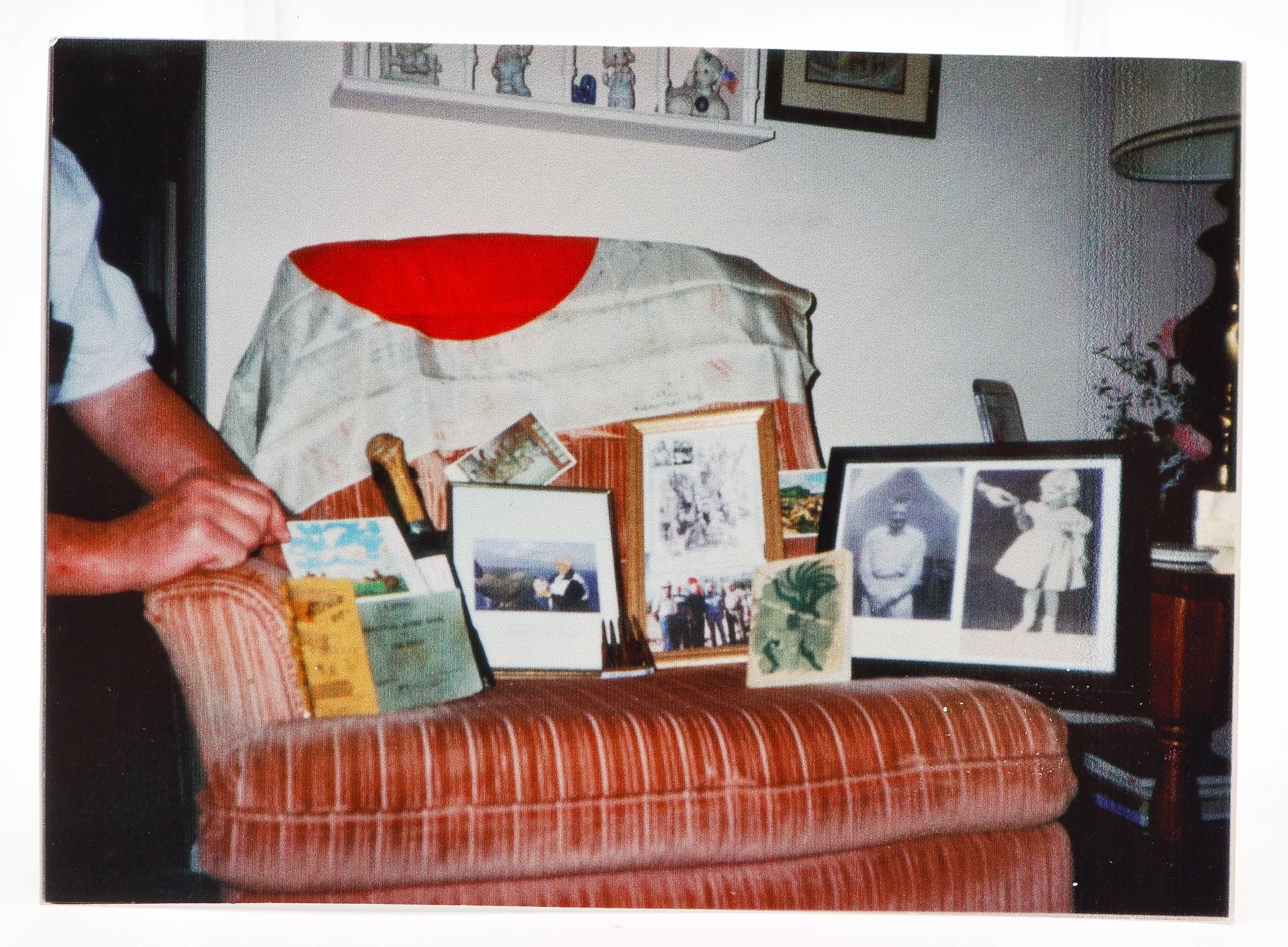
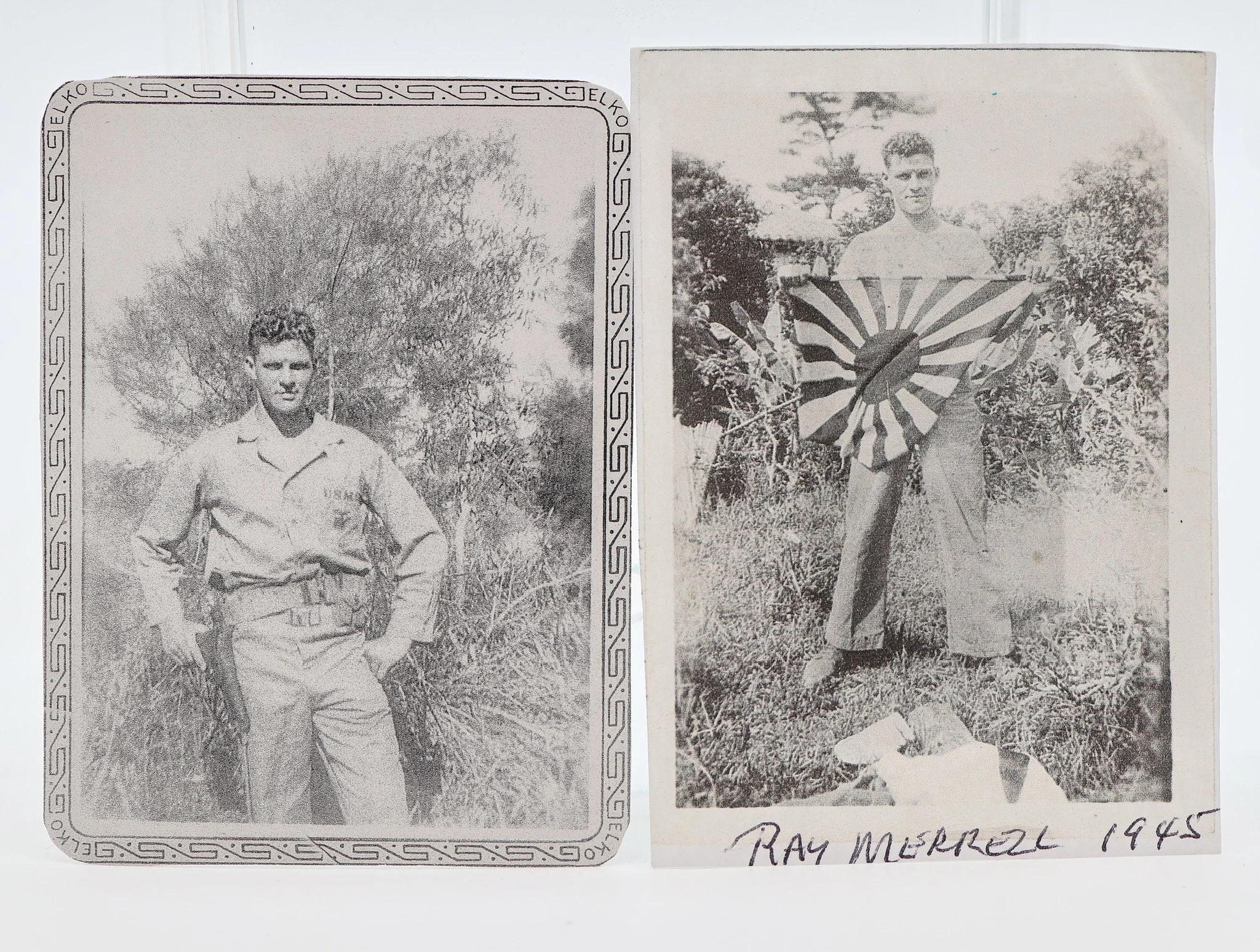
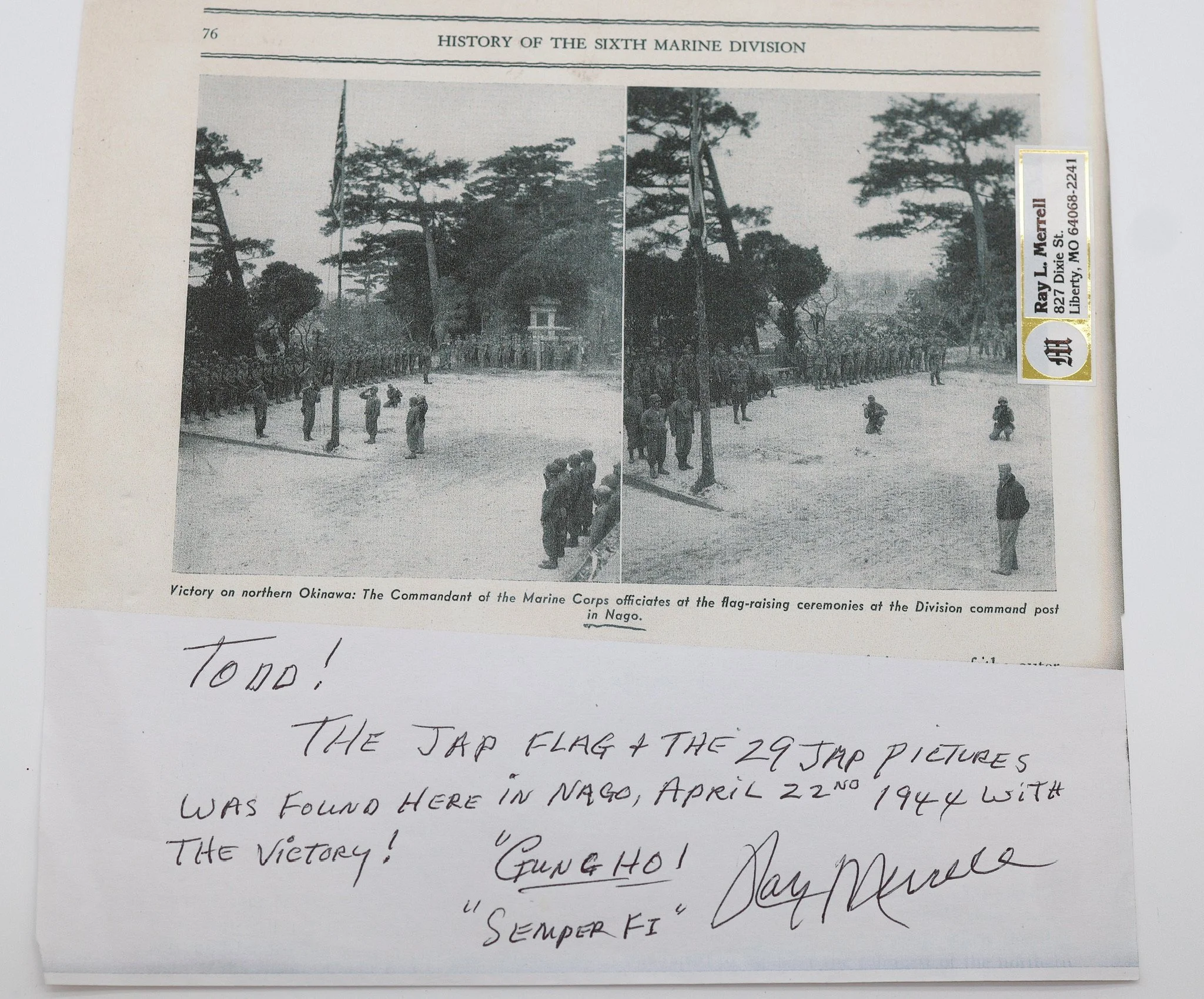
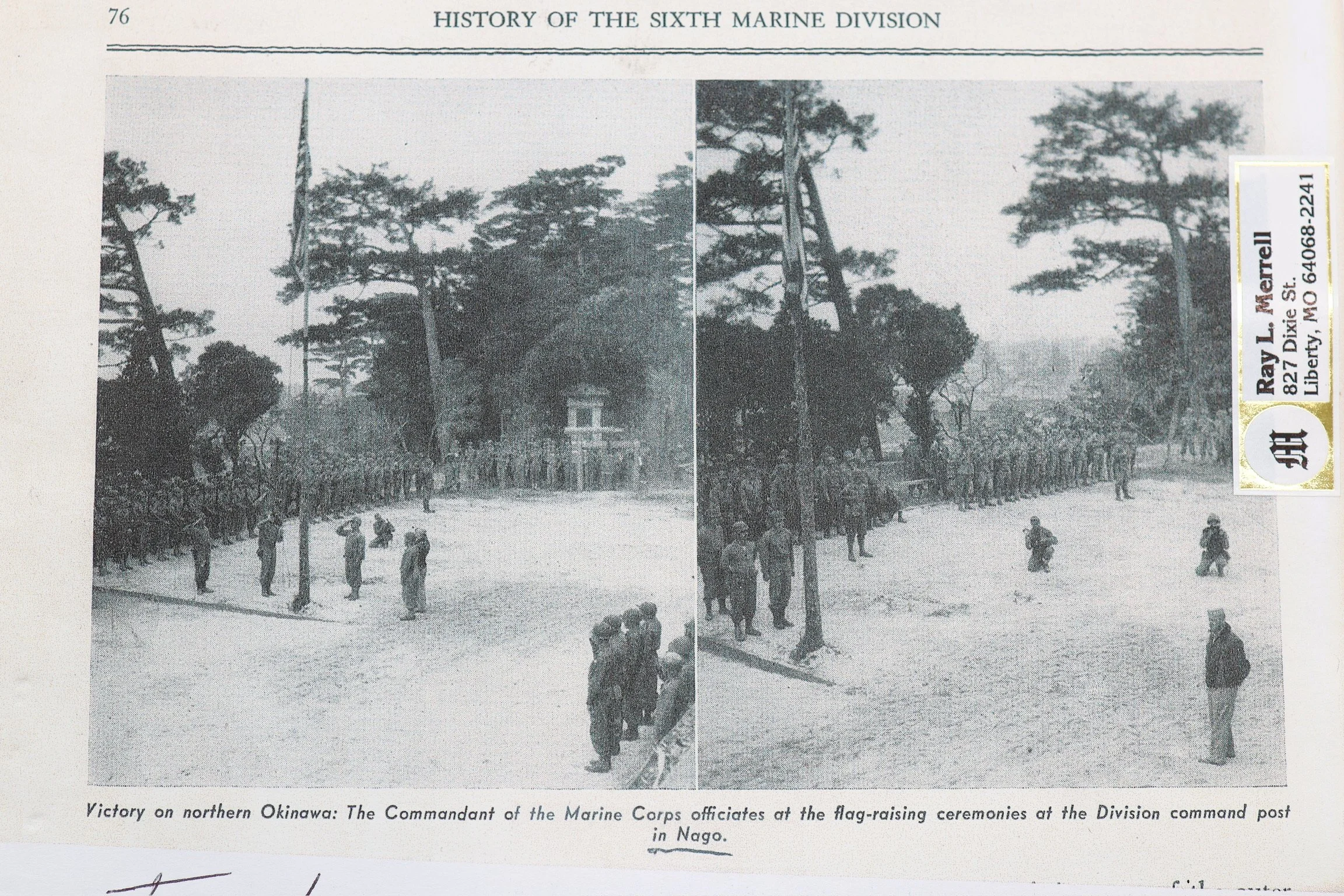
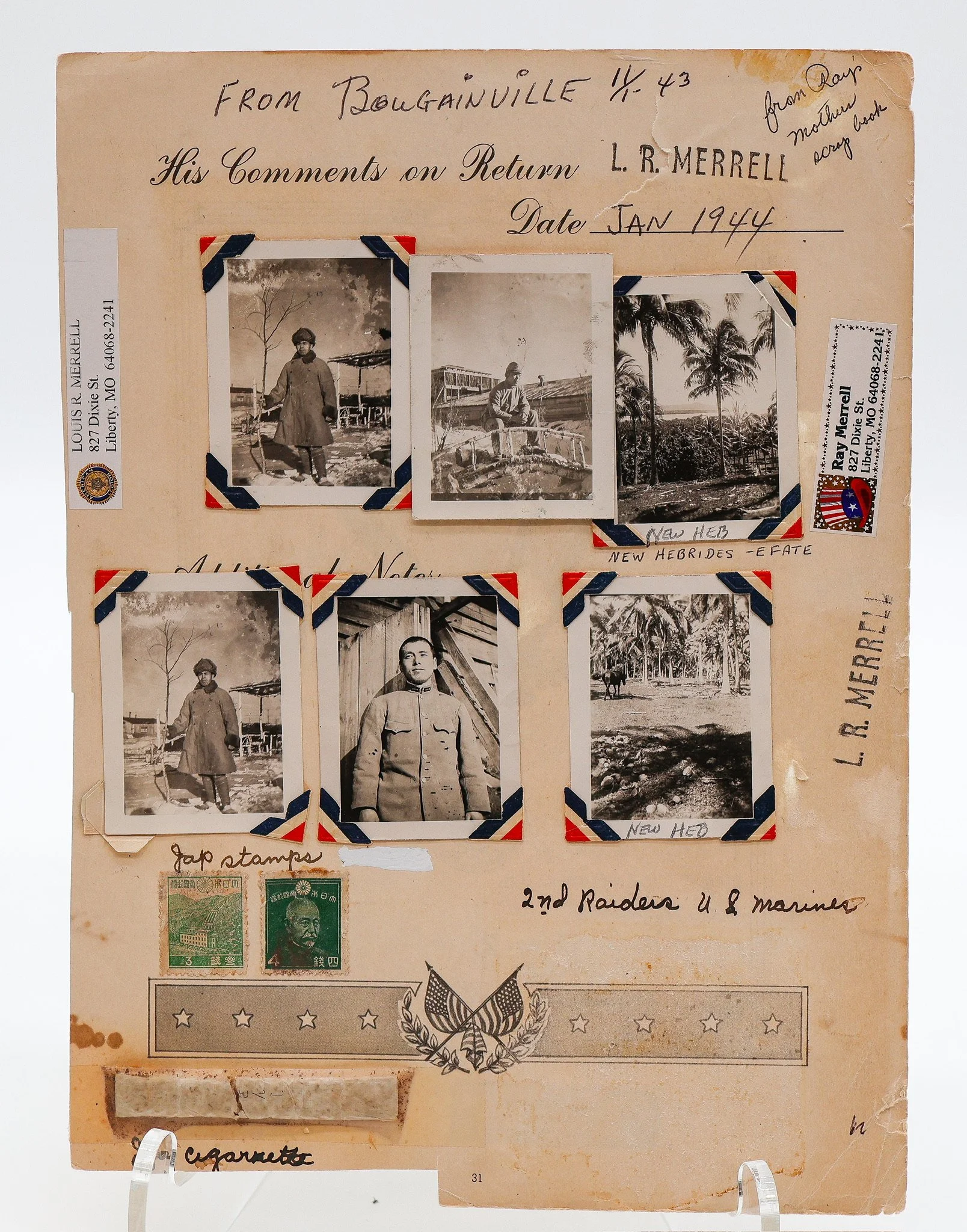
This grouping documents the World War II service of Ray Merrill, a Marine Raider who served with the 2nd Raider Battalion, Company H in the Pacific Theater. Born in Marshall, Missouri, Merrill enlisted in the U.S. Marine Corps in 1942 and participated in combat operations including Bougainville, Emirau, Guam, Okinawa, and the postwar occupation of Japan.
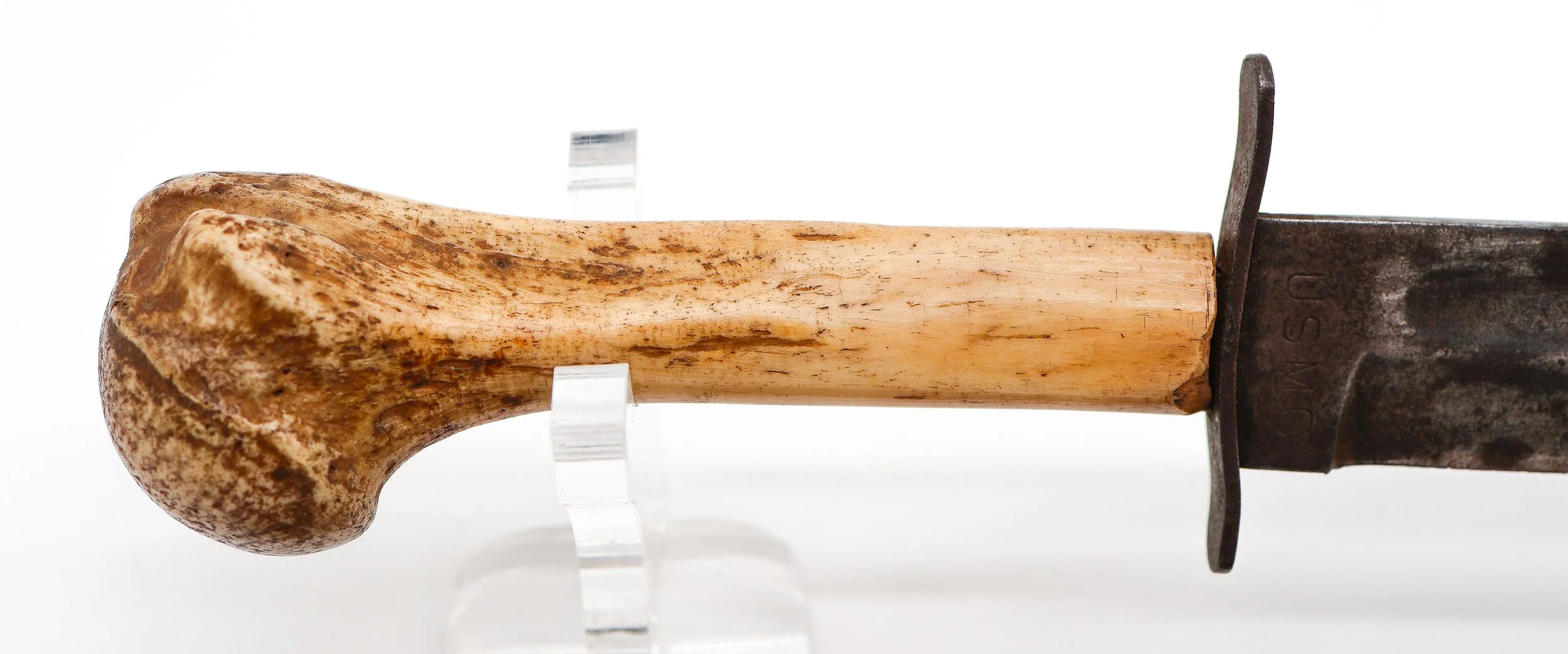
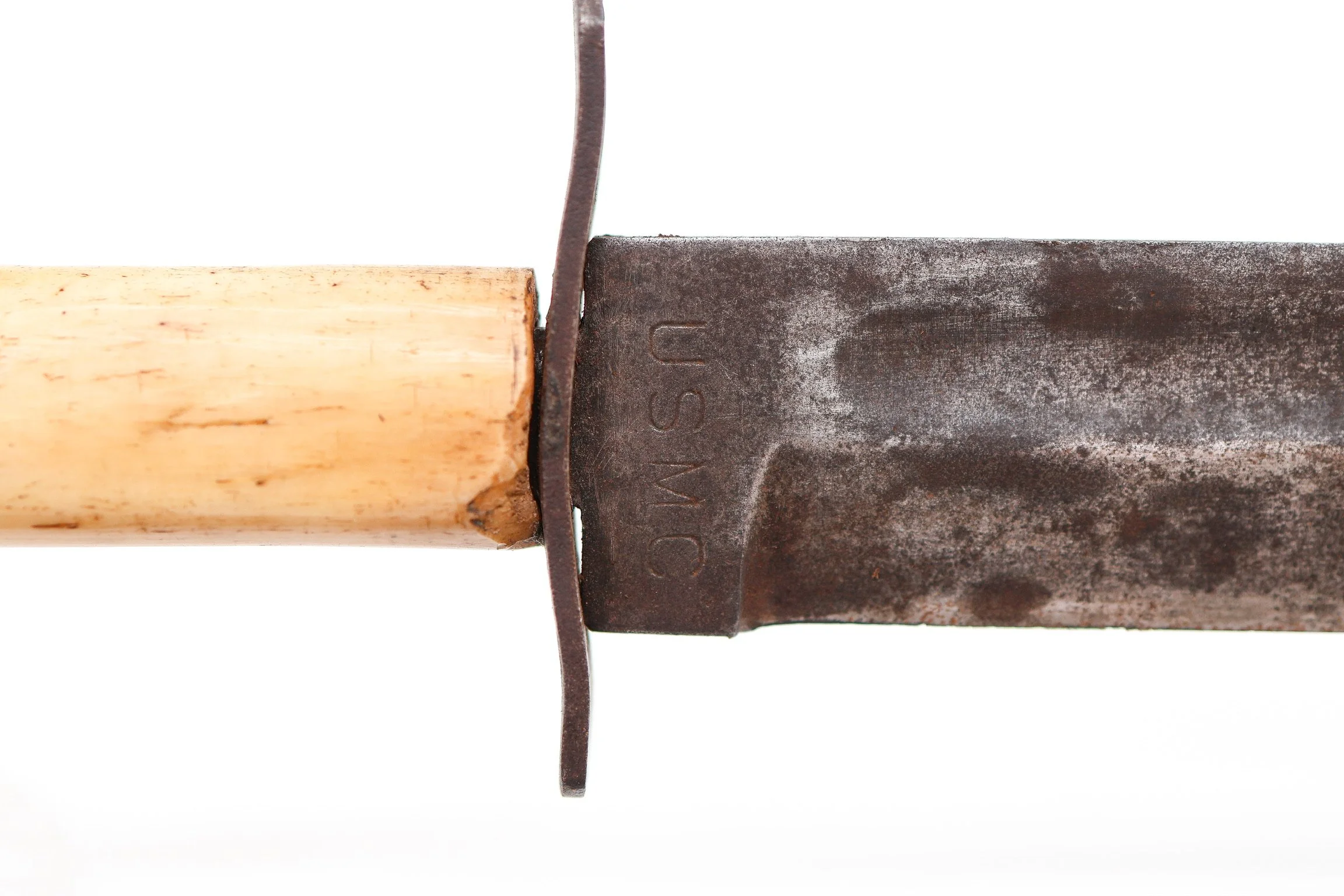
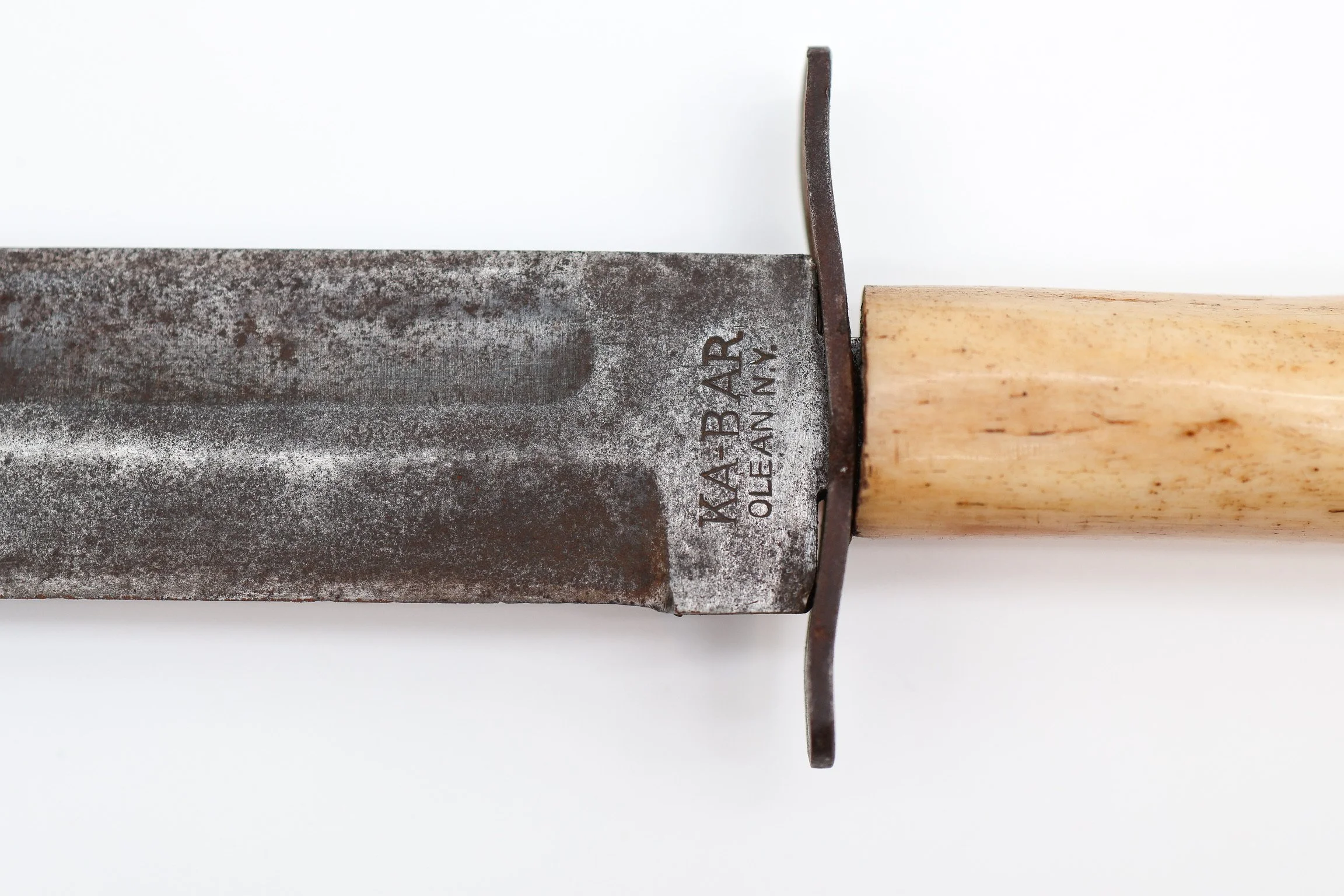
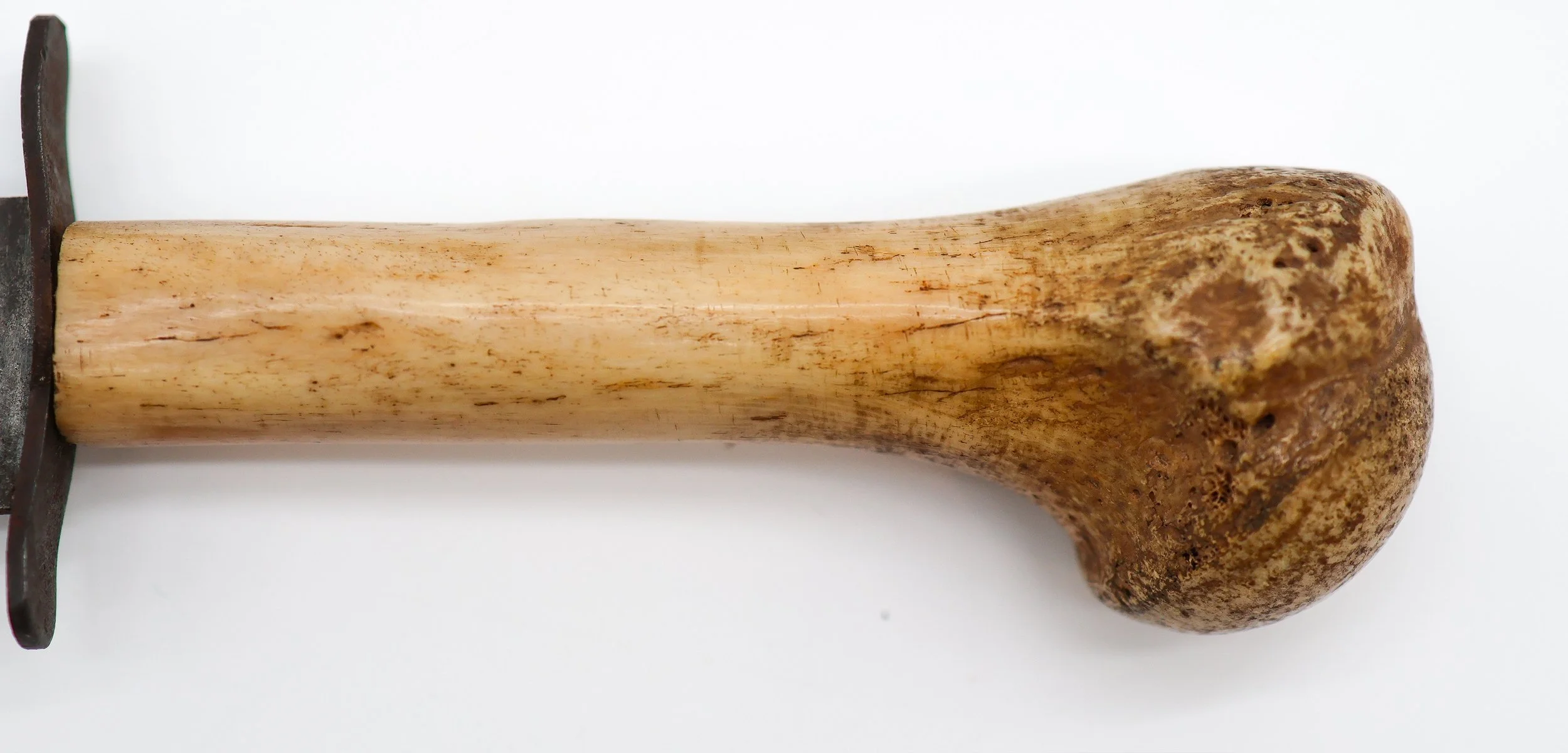
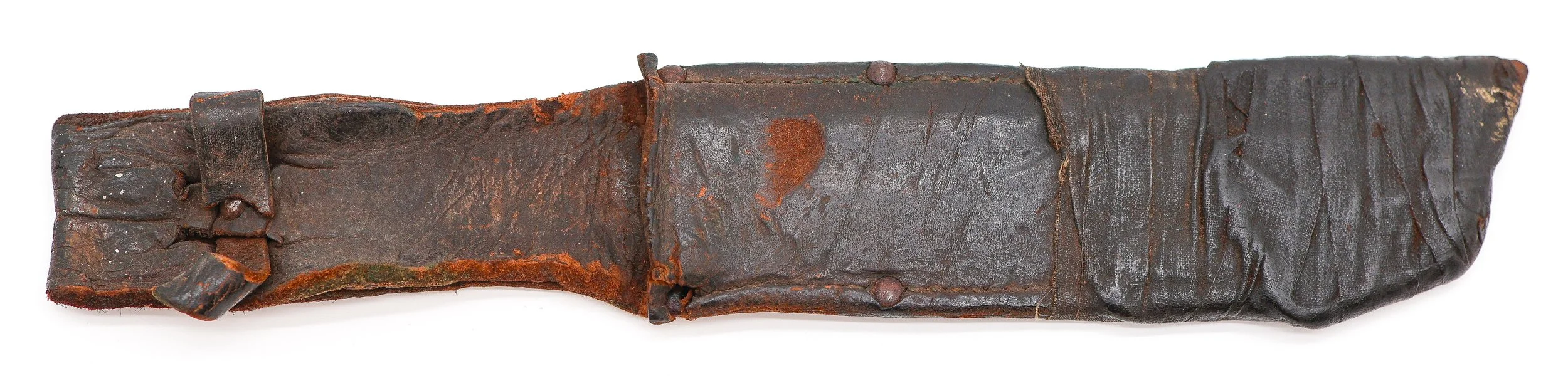
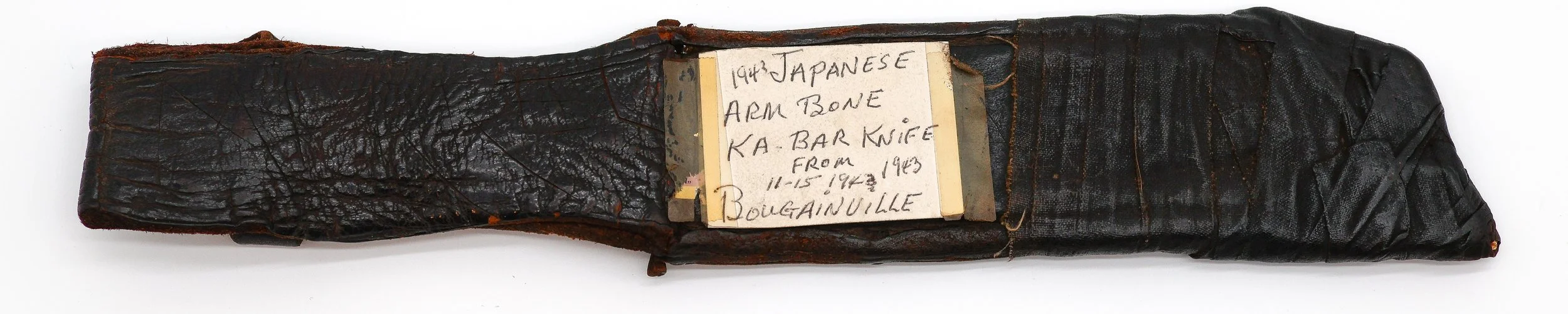
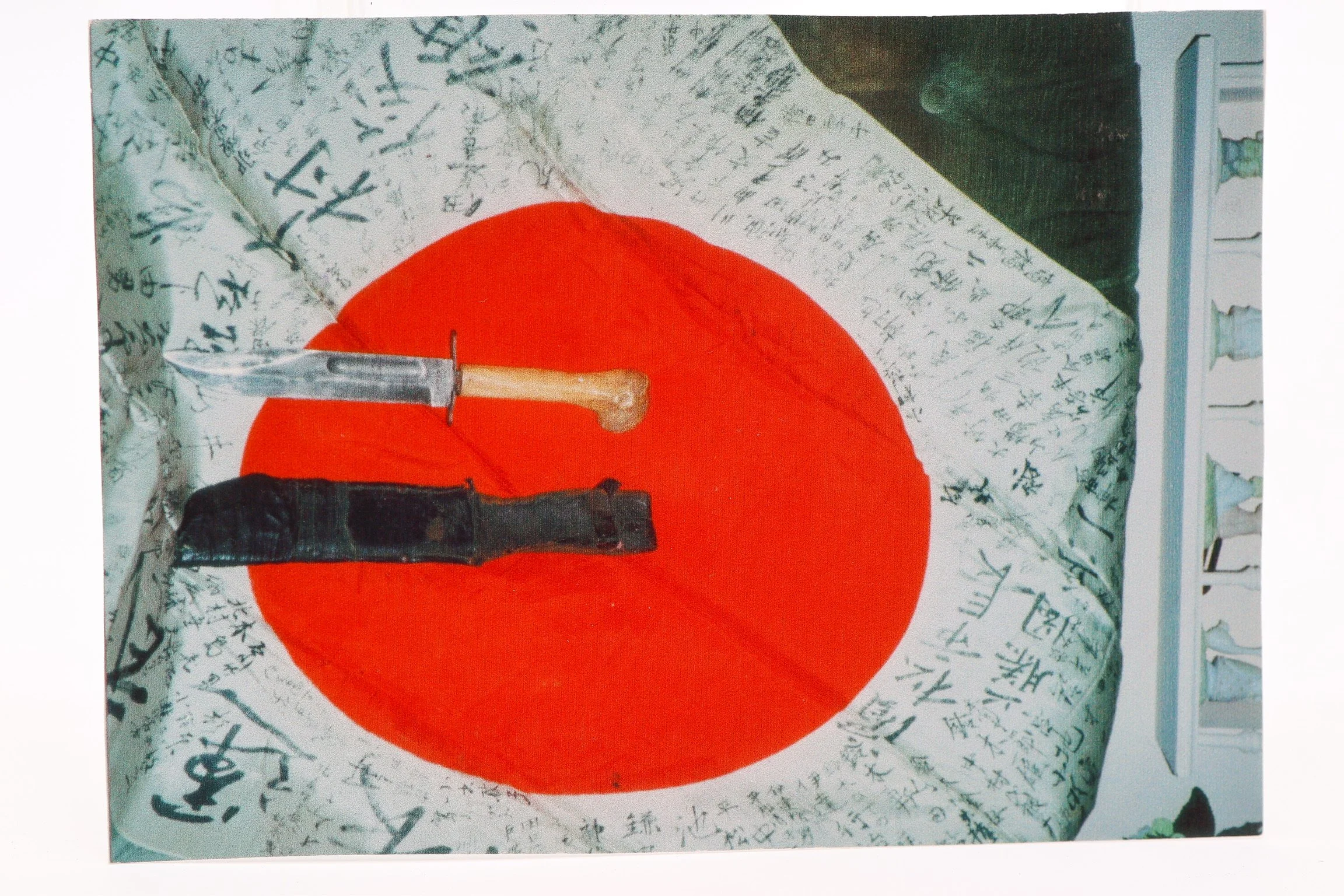
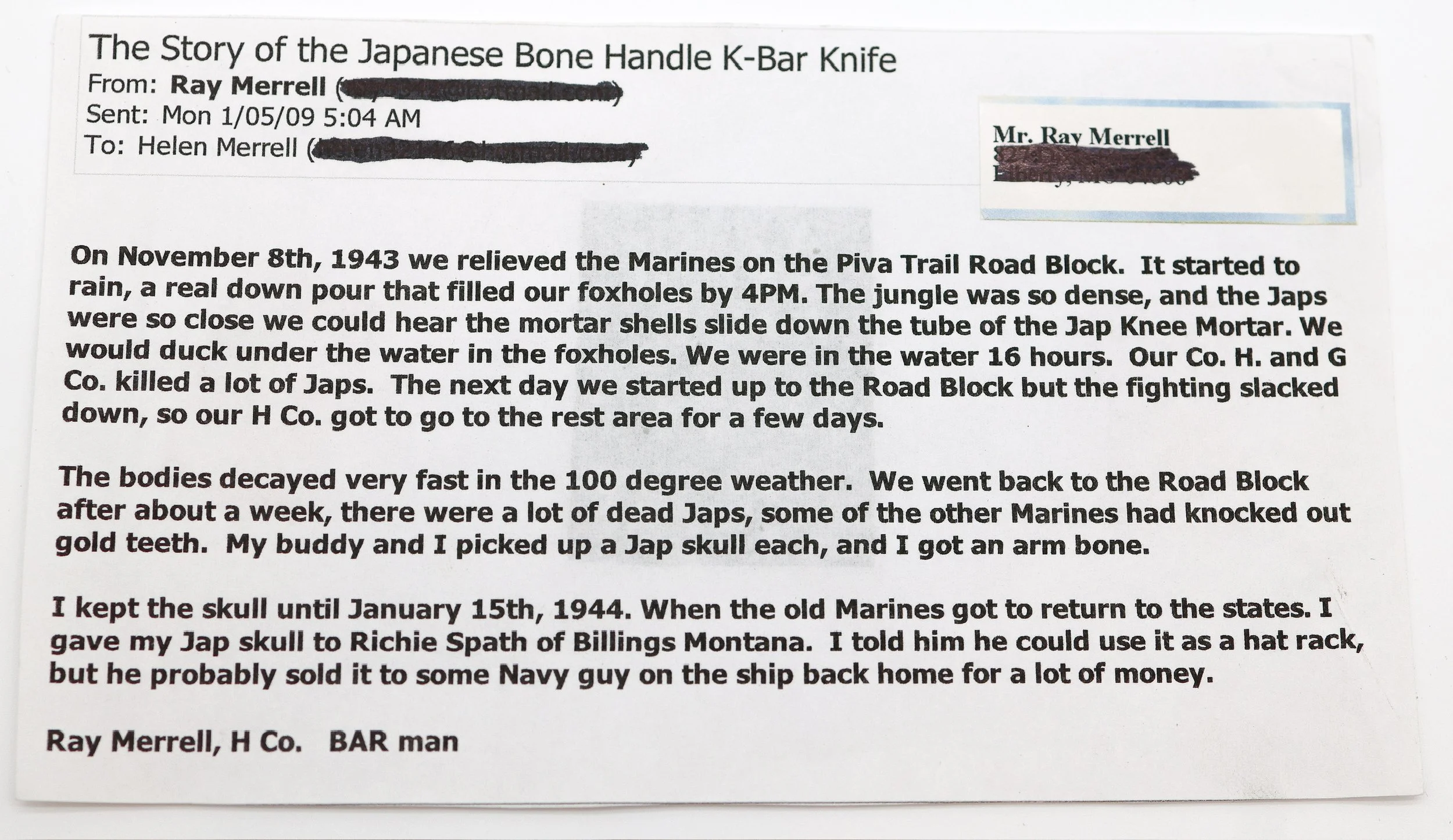
One of the most striking artifacts from Merrill’s service is a Ka-Bar knife fitted with a handle fashioned from the arm bone of a deceased Japanese soldier. Merrill stated that the knife was made on Bougainville in November 1943, during sustained fighting along the Piva Trail roadblock, where his unit faced constant engagement under extreme jungle conditions. Torrential rain, oppressive heat, and limited resupply defined daily life, and the remains of fallen soldiers often decomposed rapidly in the tropical environment. He carried this knife for the remainder of the war.
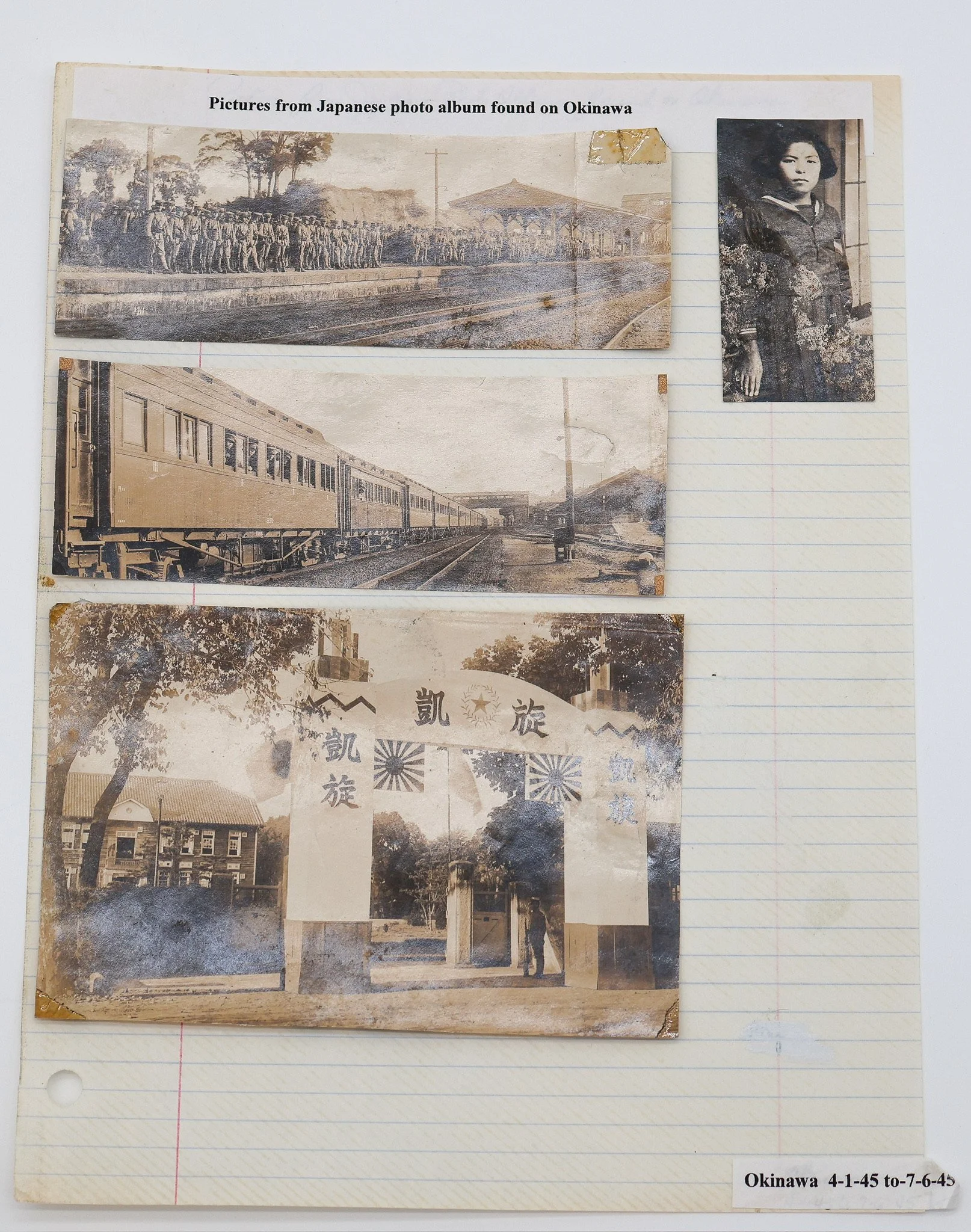
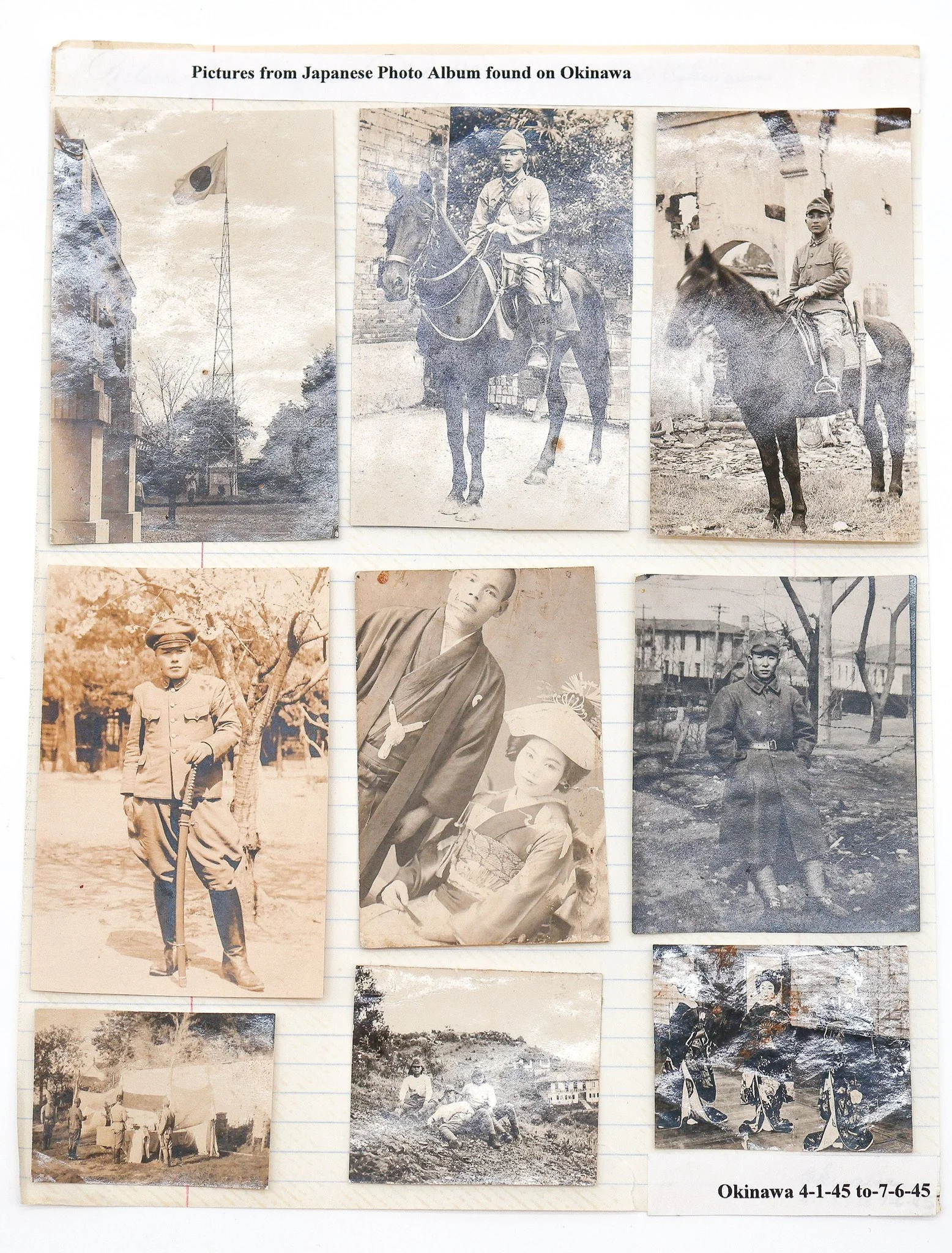
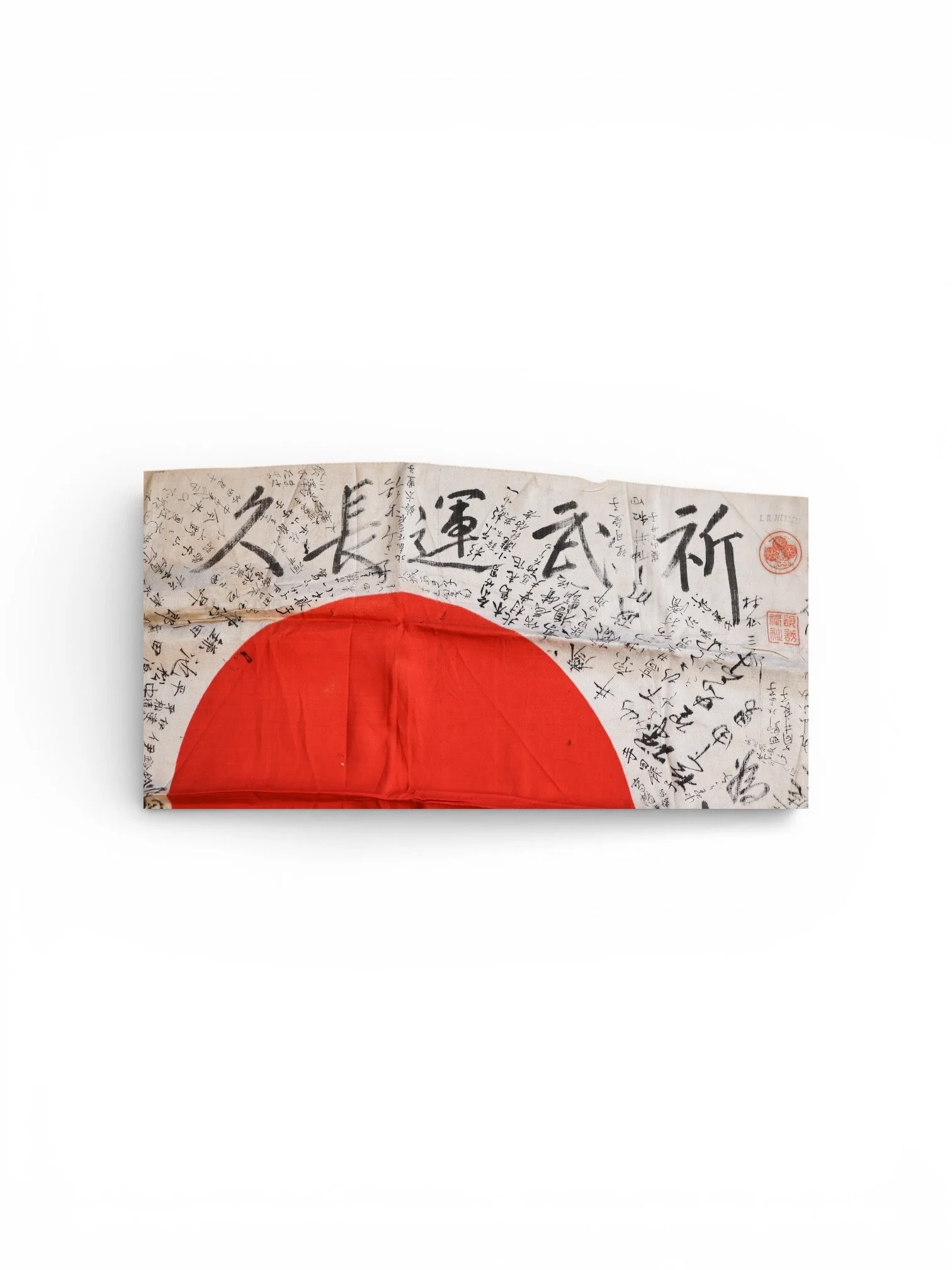
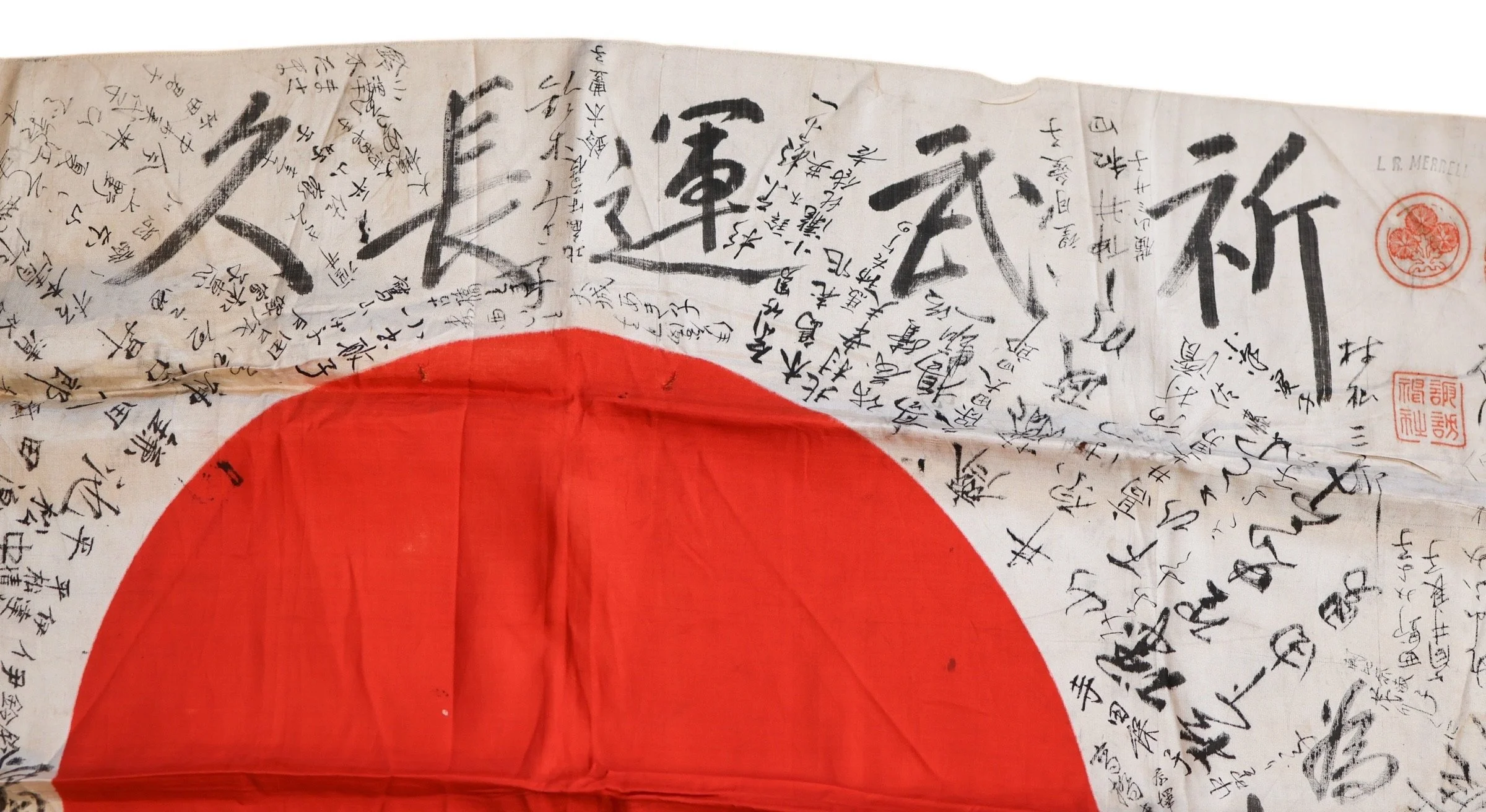
The grouping also includes a Japanese flag bearing ceremonial stamps and a photograph album, both recovered from a cave on Okinawa during combat operations.
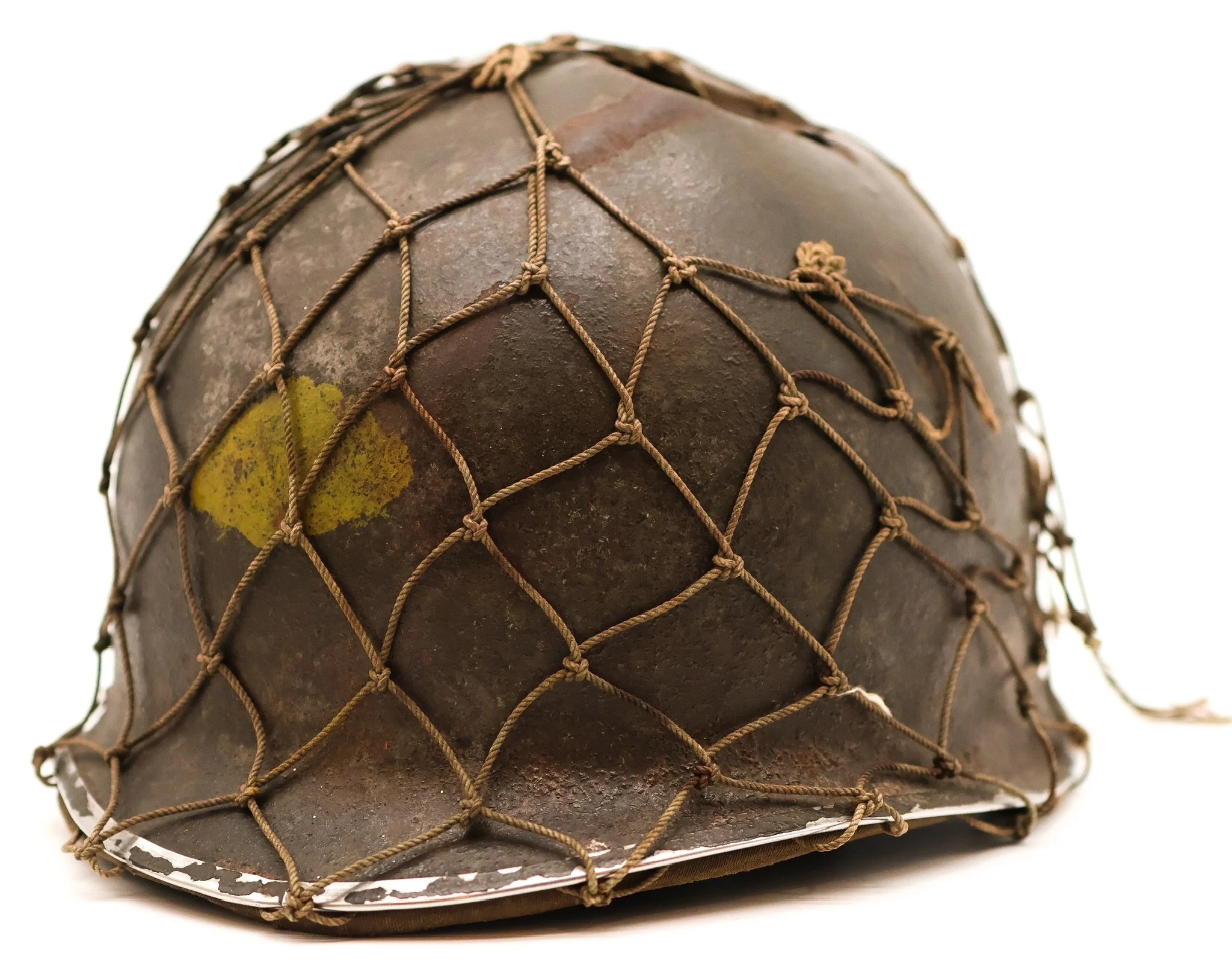
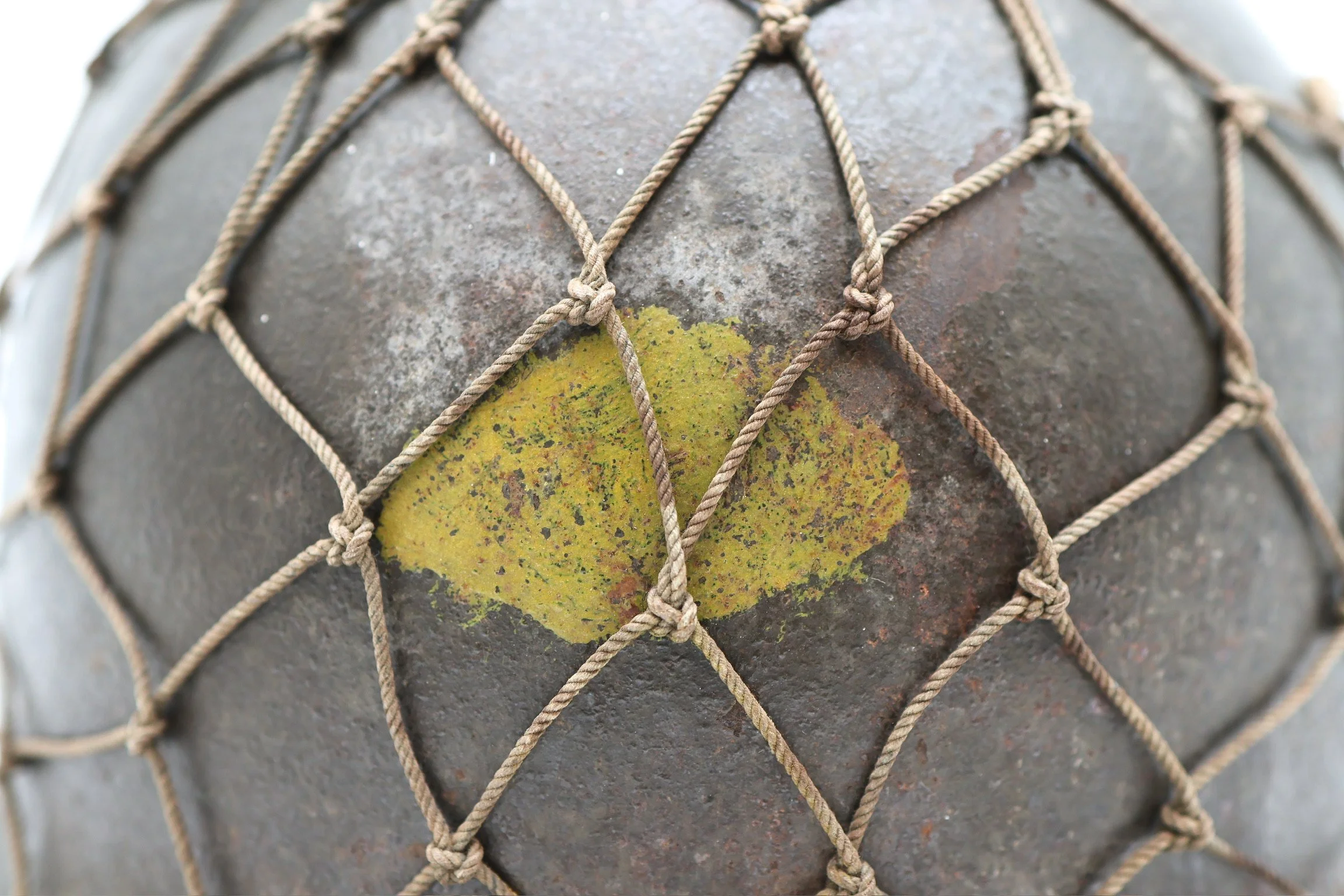
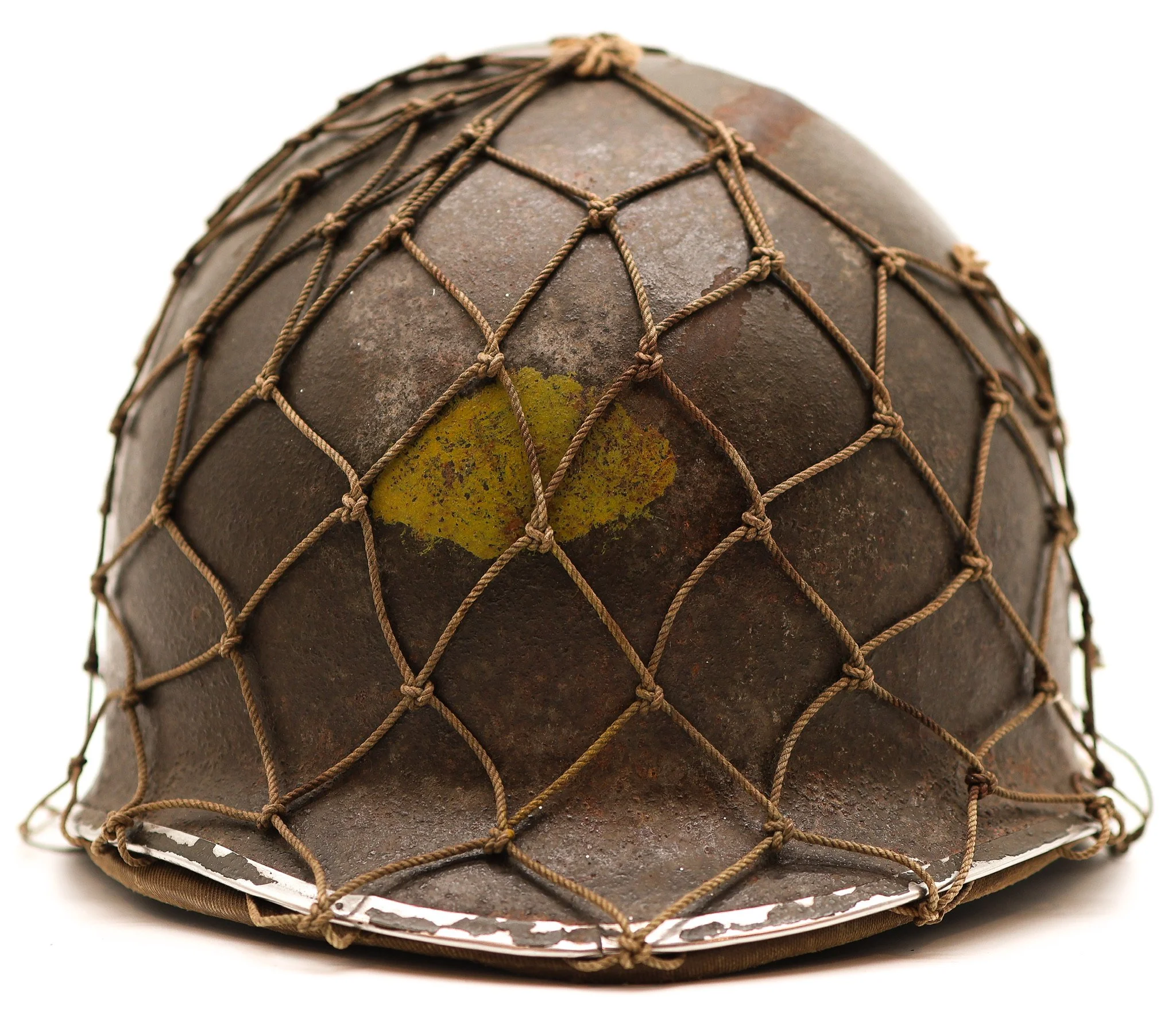
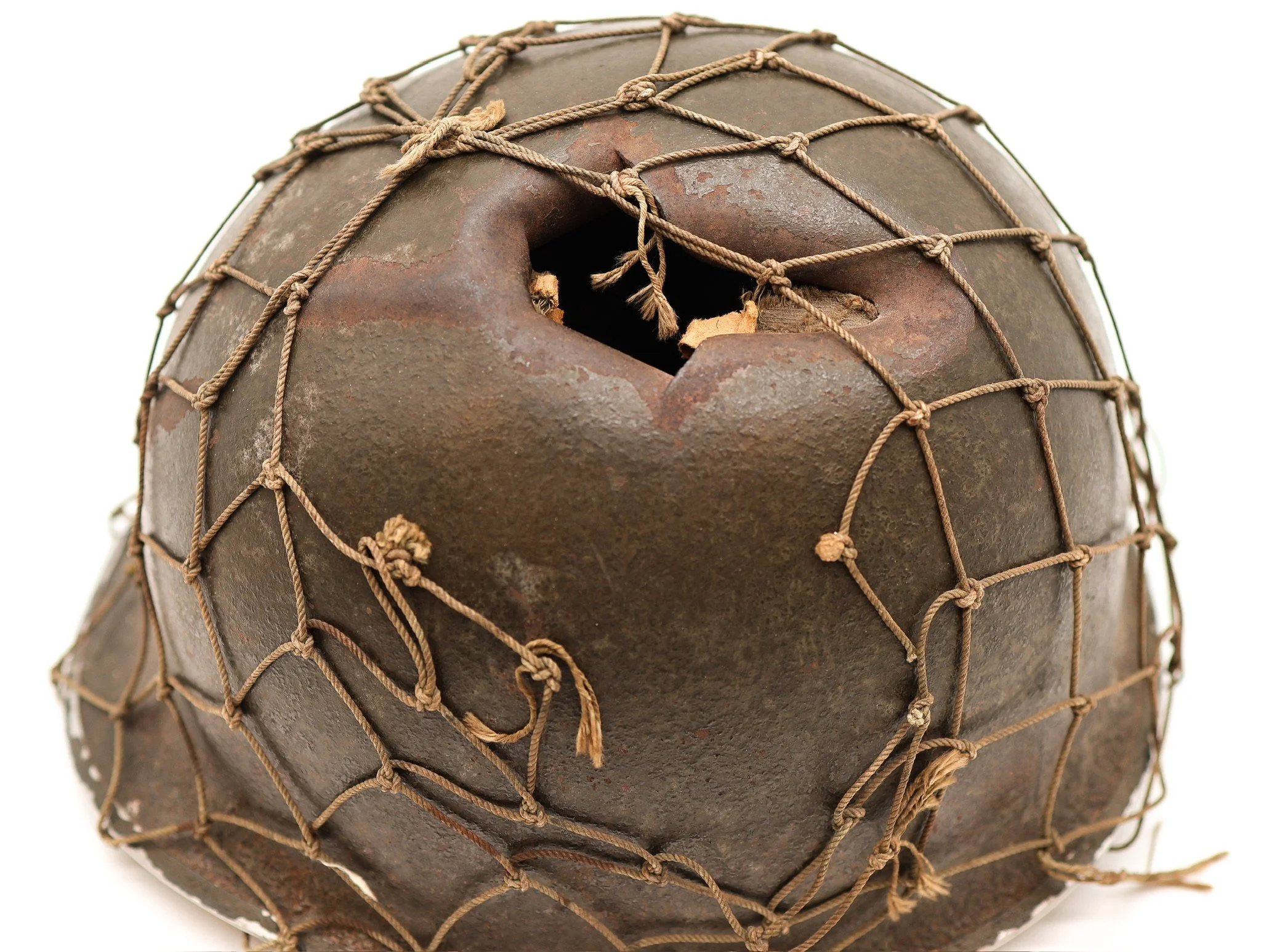
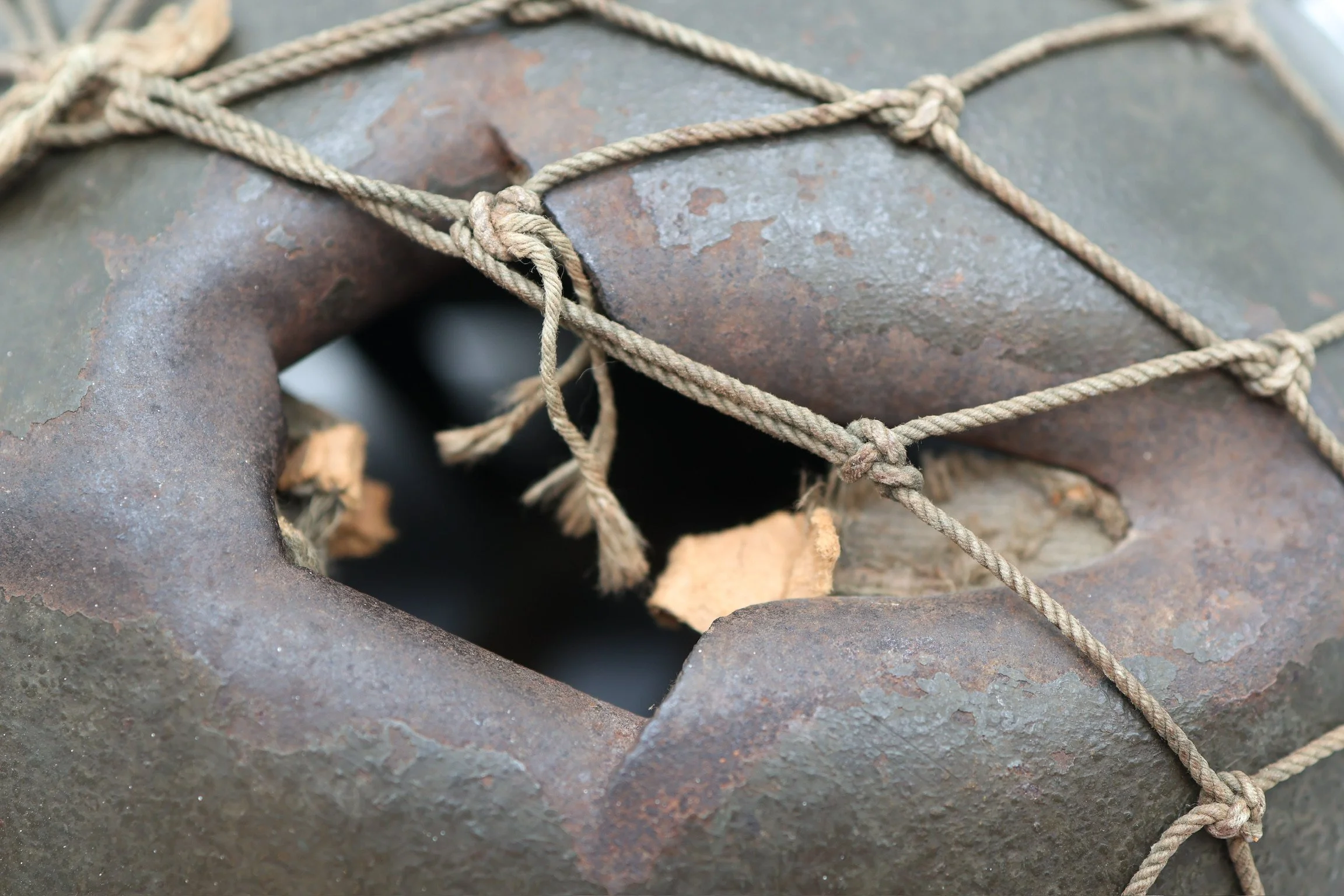
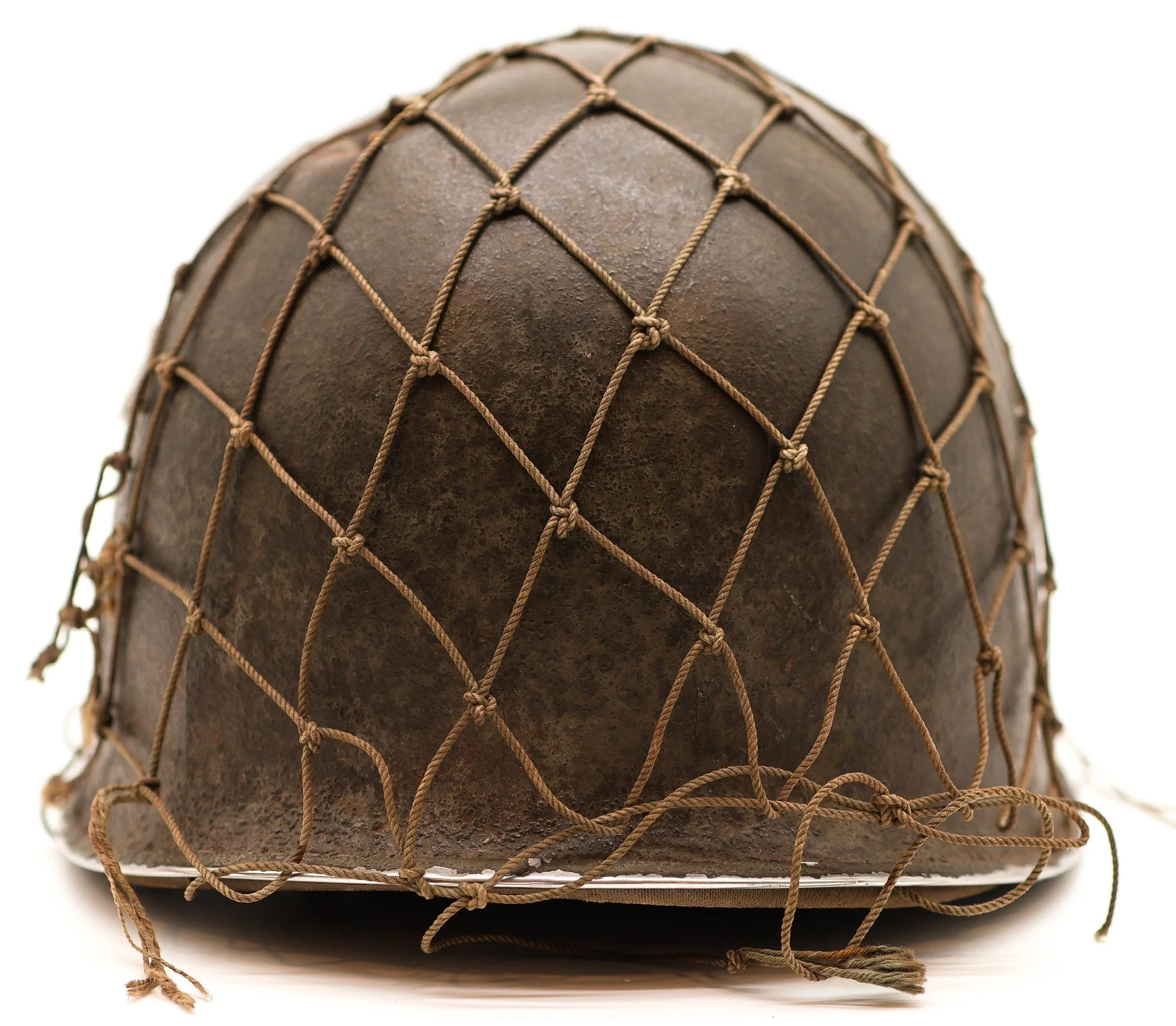
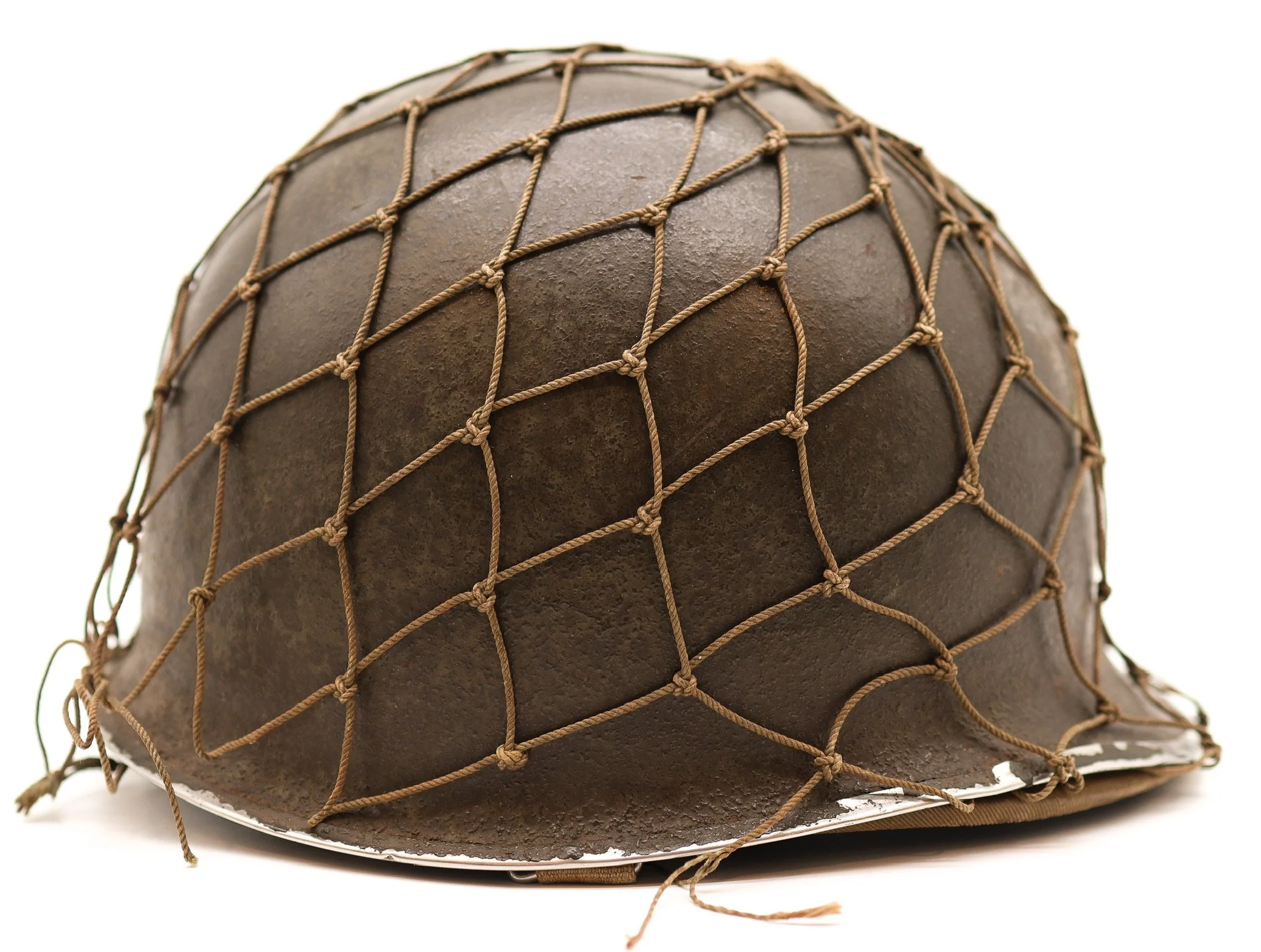
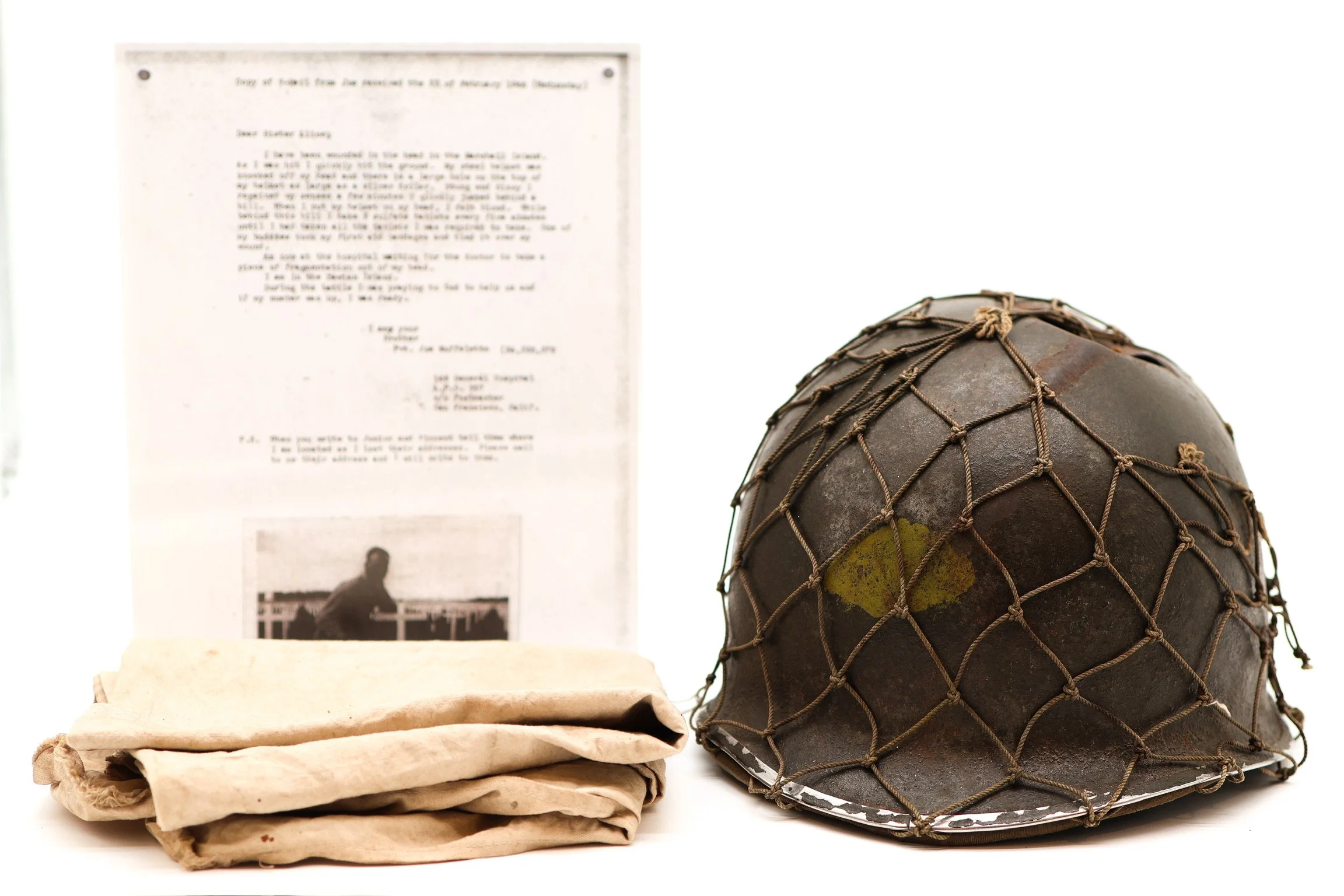
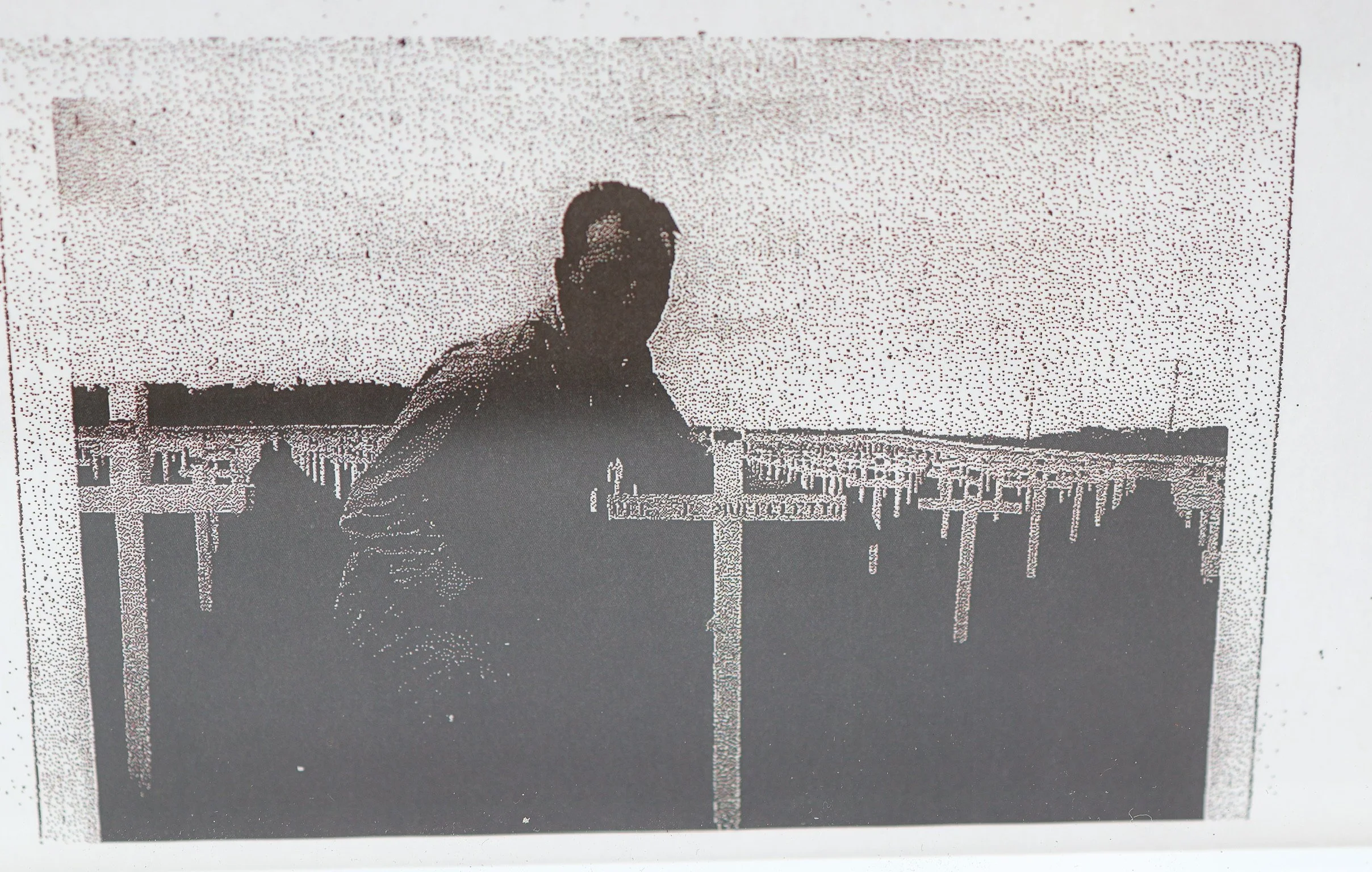
U.S. WWII M1 Helmet of Pvt. Joe Muffeletto, 7th Infantry Division (KIA on Okinawa)
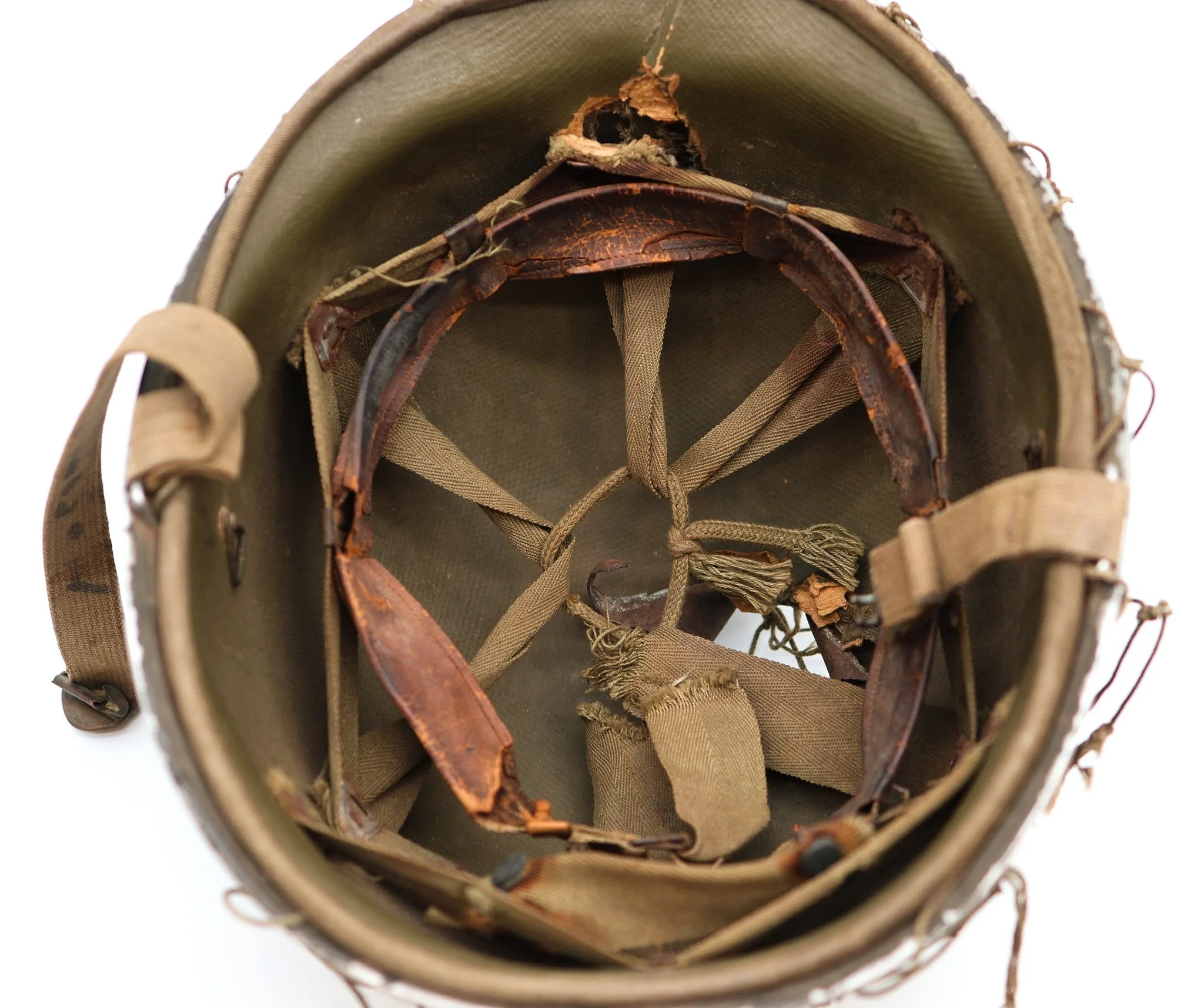
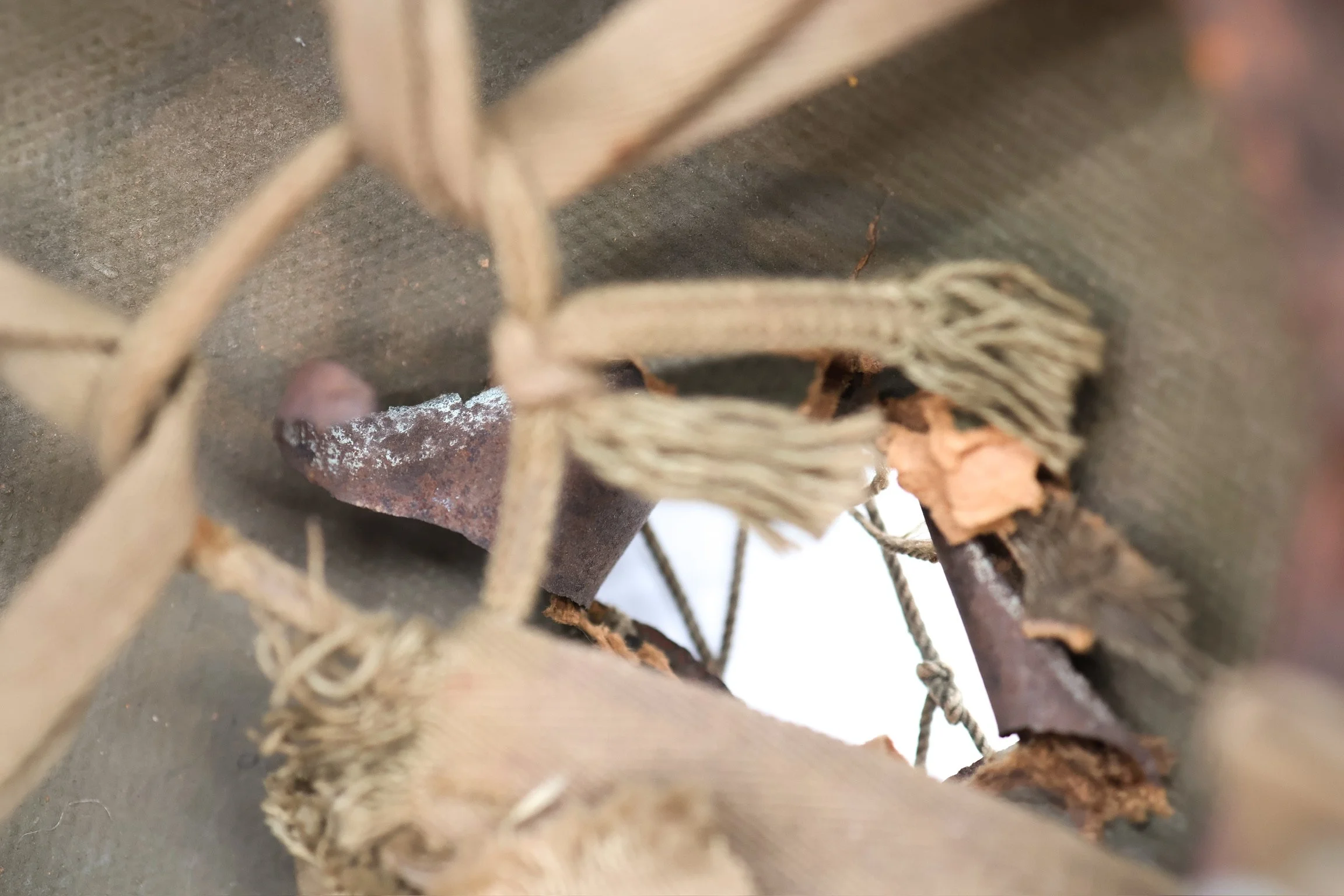
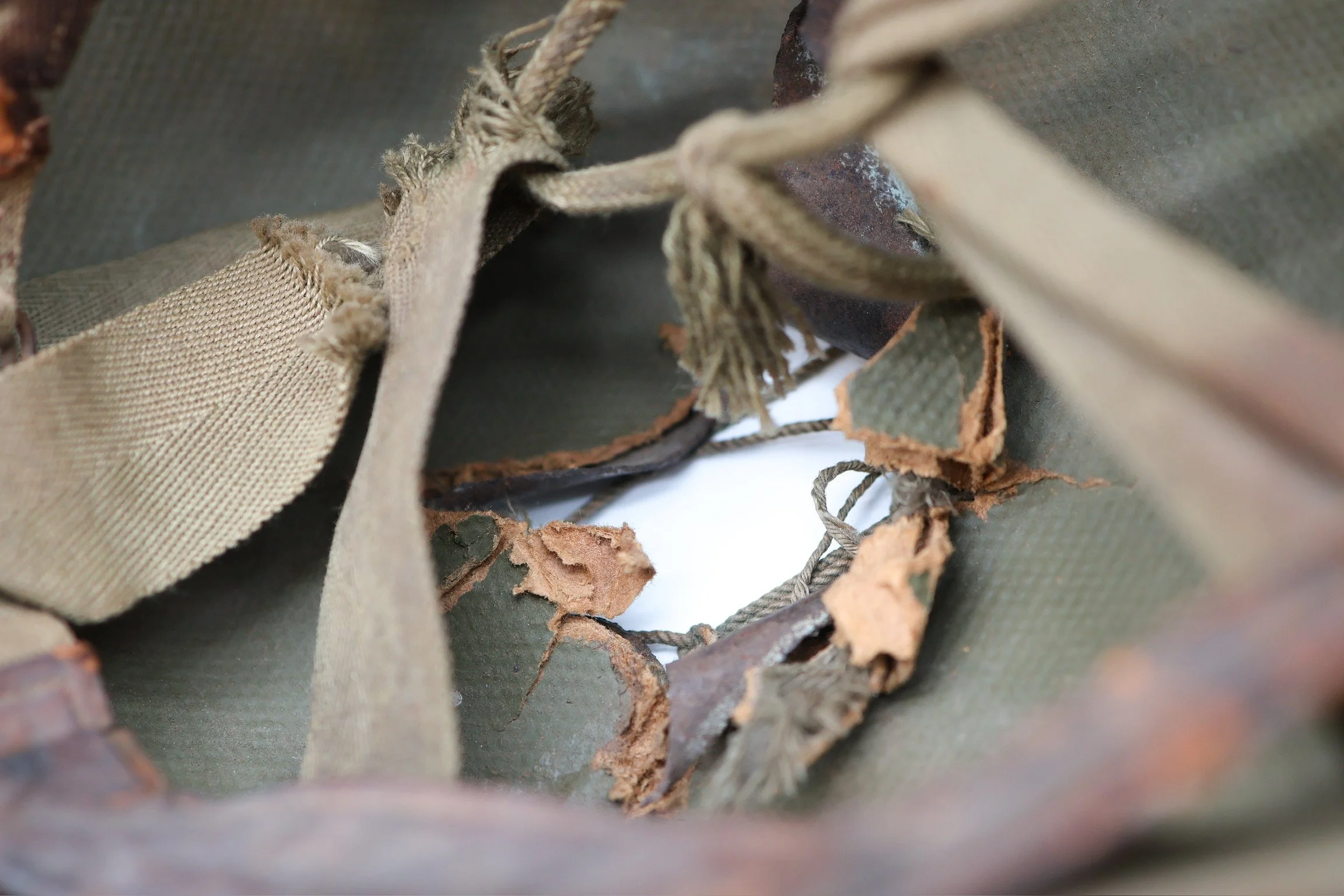
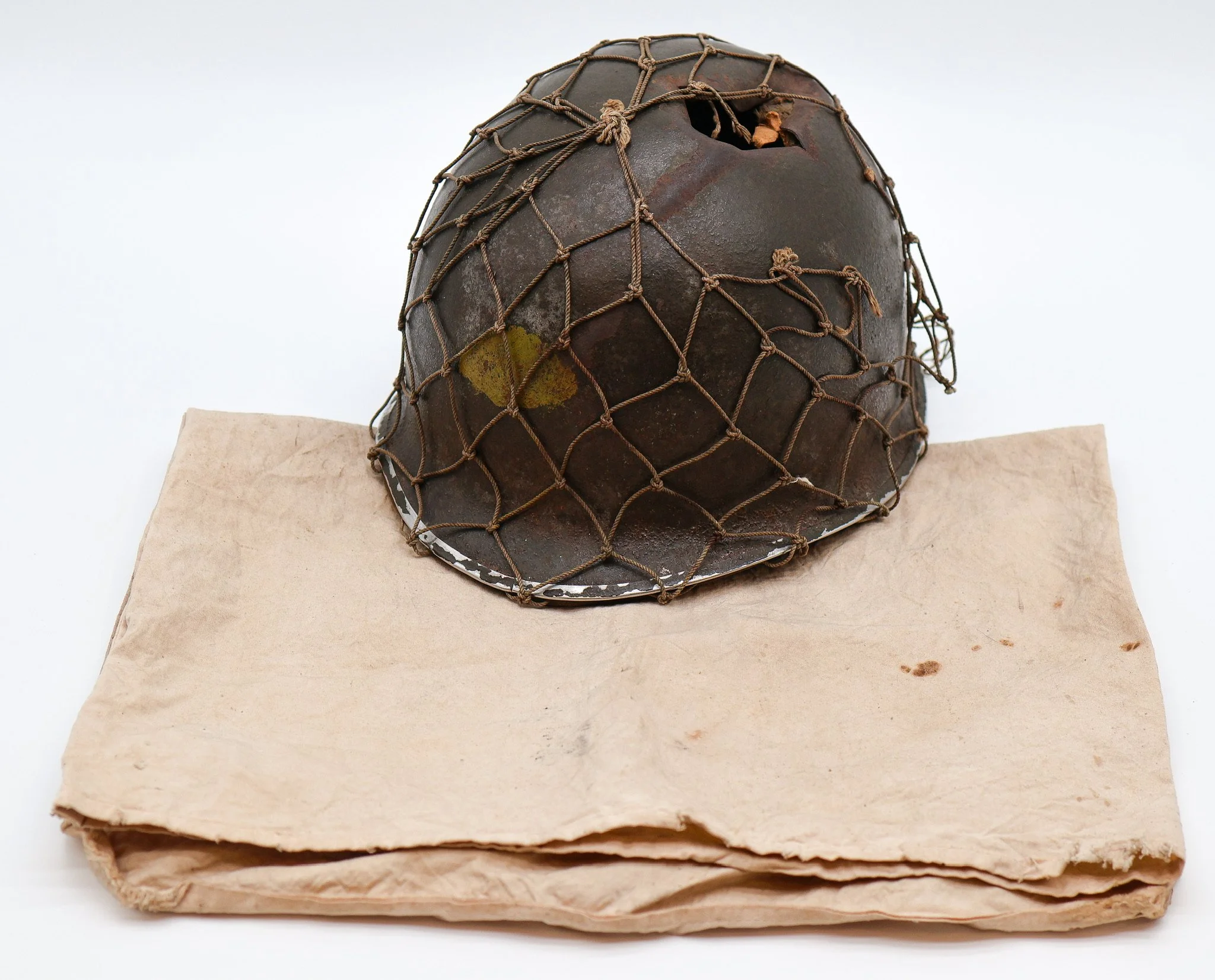
This M1 helmet was worn in combat by Private Joe Muffeletto, Company G, 184th Infantry Regiment, 7th Infantry Division, during the Kwajalein operation in the Marshall Islands. The helmet sustained direct battle damage when Muffeletto was wounded in action by shrapnel to the head while wearing it.
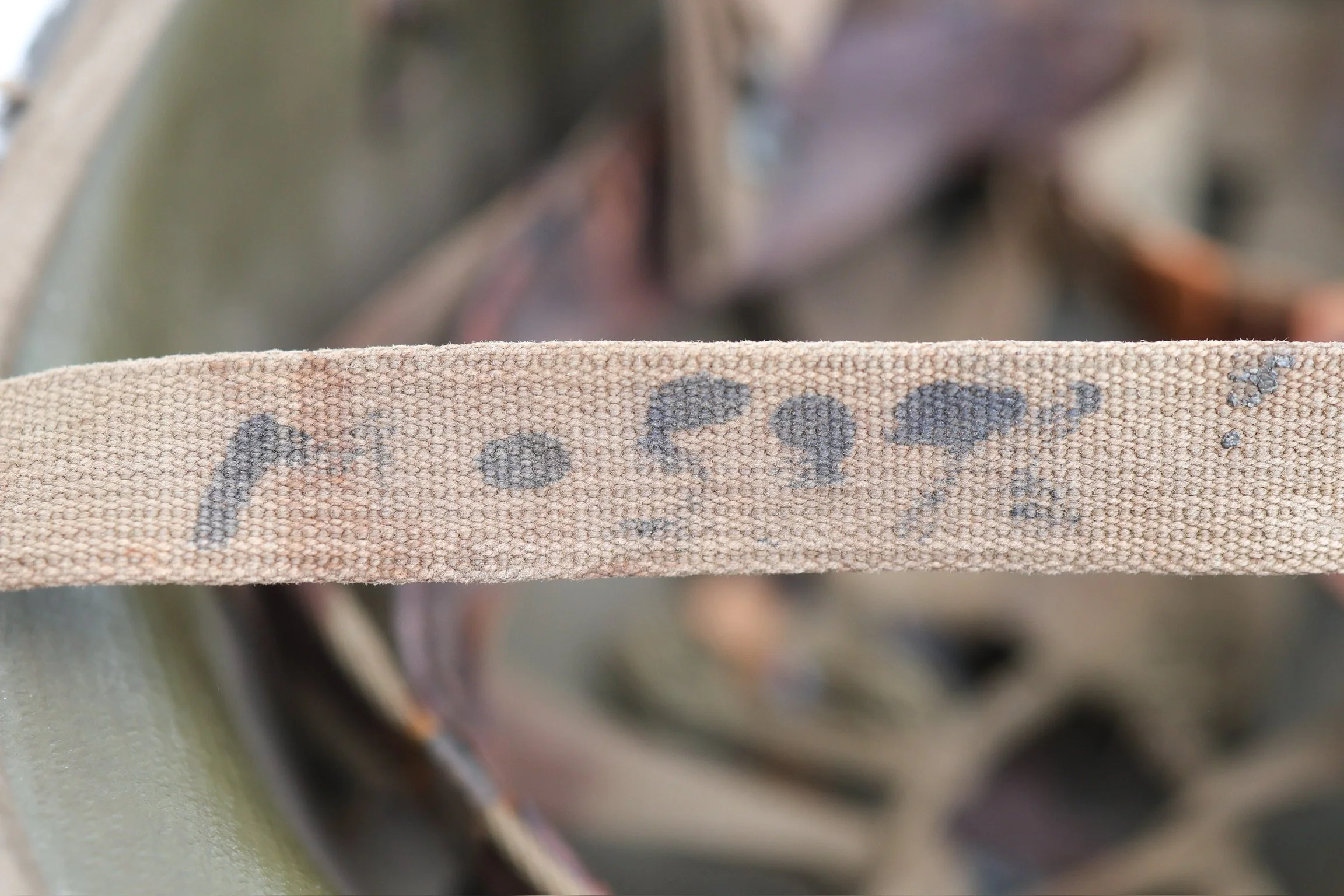
The impact was severe enough that the steel shell and liner became permanently fused together. The helmet and liner cannot be separated and have not been apart since the moment of damage. The helmet retains its wartime tactical marking and a captured Japanese helmet net applied in the field. Muffeletto’s laundry number is written on the chinstrap.
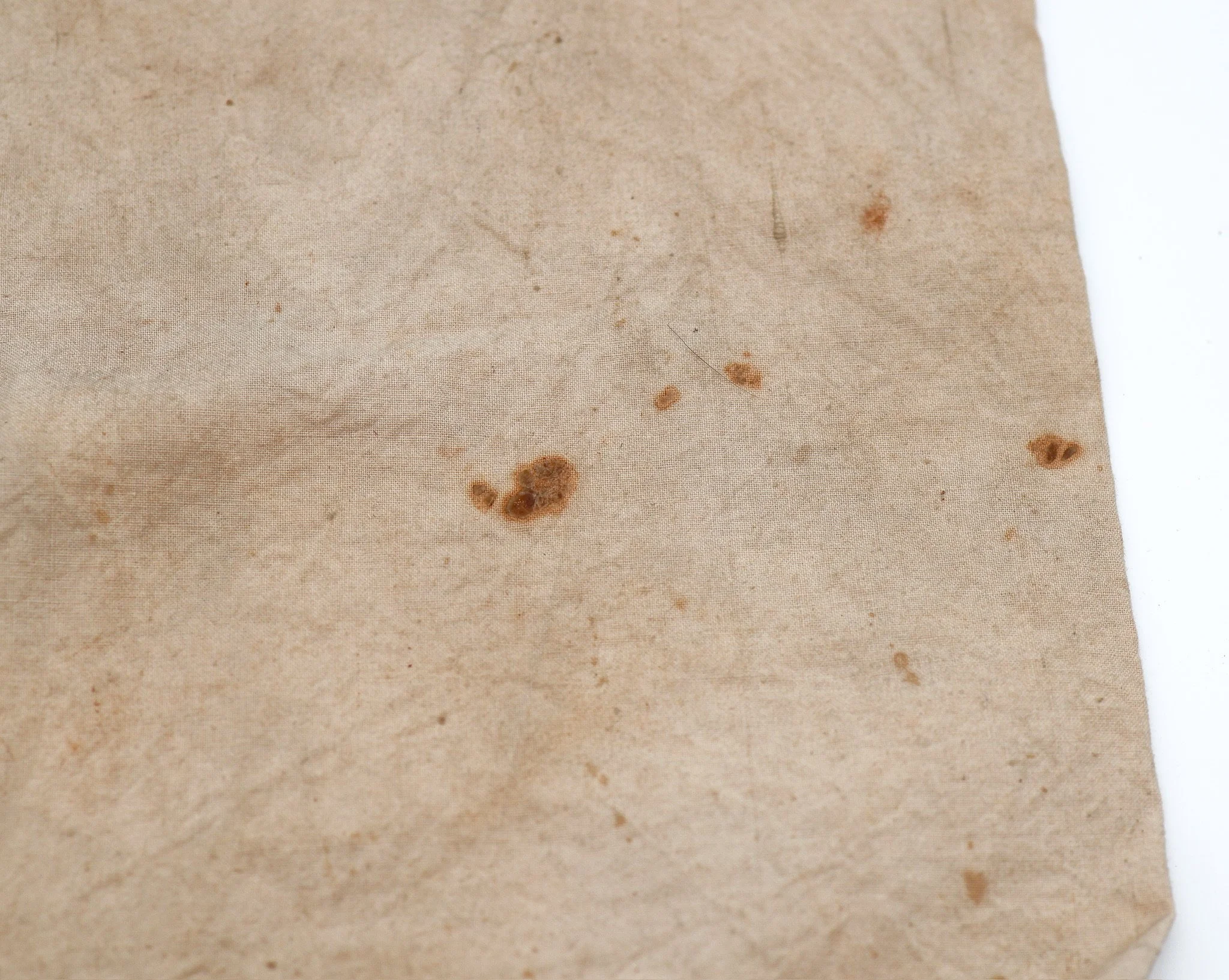
Following his wounding at Kwajalein, Muffeletto was hospitalized and underwent surgical removal of metal fragments from his head. He sent this helmet home from the hospital inside its original pillowcase, which remains with the helmet today and shows visible blood staining.
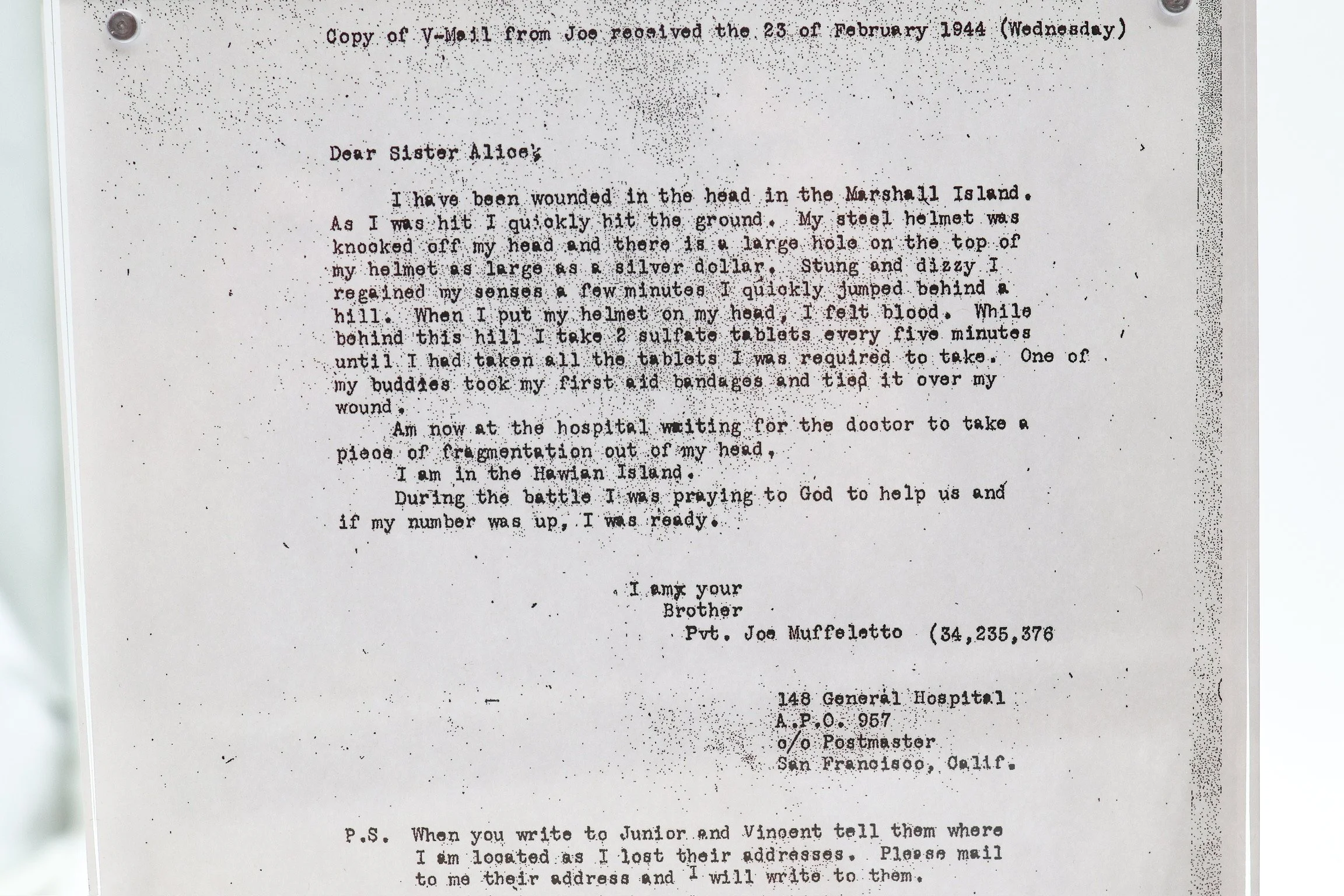
While hospitalized, Muffeletto wrote a letter to his sister describing the moment he was hit, the helmet being knocked from his head, and the circumstances of his wound. The helmet, pillow case, and additional documentation were sold by the family years ago.
After recovering from his wounds, Muffeletto returned to duty. He was later killed in action on Okinawa on April 8, 1945, after being struck by artillery shell fragments to the chest. Born May 24, 1910, he was 34 years old at the time of his death.
-
Letter Transcript (verbatim)
Dear Sister Alice,
I have been wounded in the head in the Marshall Island.
As I was hit I quickly hit the ground. My steel helmet was knocked off my head and there is a large hole on the top of my helmet as large as a silver dollar. Stung and dizzy I regained my senses a few minutes. I quickly jumped behind a hill.When I put my helmet on my head, I felt blood. While behind this hill I take 2 sulfate tablets every five minutes until I had taken all the tablets I was required to take. One of my buddies took my first aid bandages and tied it over my wound.
Am now at the hospital writing for the doctor to take a piece of fragmentation out of my head.
I am in the Hawaiian Island.
During the battle I was praying to God to help us and if my number was up, I was ready.
I am your
Brother
Pvt. Joe Muffeletto
(34,235,376)
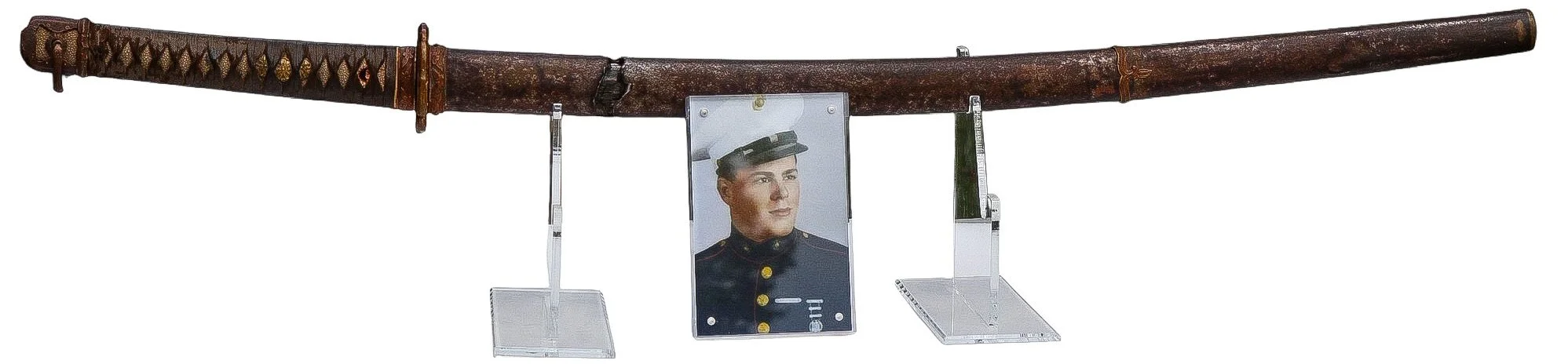
This Japanese samurai sword was captured on Iwo Jima during the February–March 1945 fighting by Corporal Charles G. Beidleman, E Company, 2nd Battalion, 28th Marine Regiment, 5th Marine Division.
The blade bears a visible bullet strike that pierced the steel. Corporal Beidleman, who was wounded in the hip during the campaign, later described recovering the sword from a deceased Japanese soldier following one of the banzai charges launched against Marine positions.
Despite the damage to the blade, the sword remains intact overall, while the scabbard exhibits the majority of the damage.
This sword was acquired directly from Corporal Beidleman prior to his death by Brendan Synnamon of The Union Drummer Boy. Beidleman lived in Pennsylvania near Synnamon and sold the sword to him in person at his shop. The Artifacts of Valor collection later acquired the sword from Synnamon.
The 28th Marine Regiment played a central role in the Battle of Iwo Jima, including the capture of Mount Suribachi.


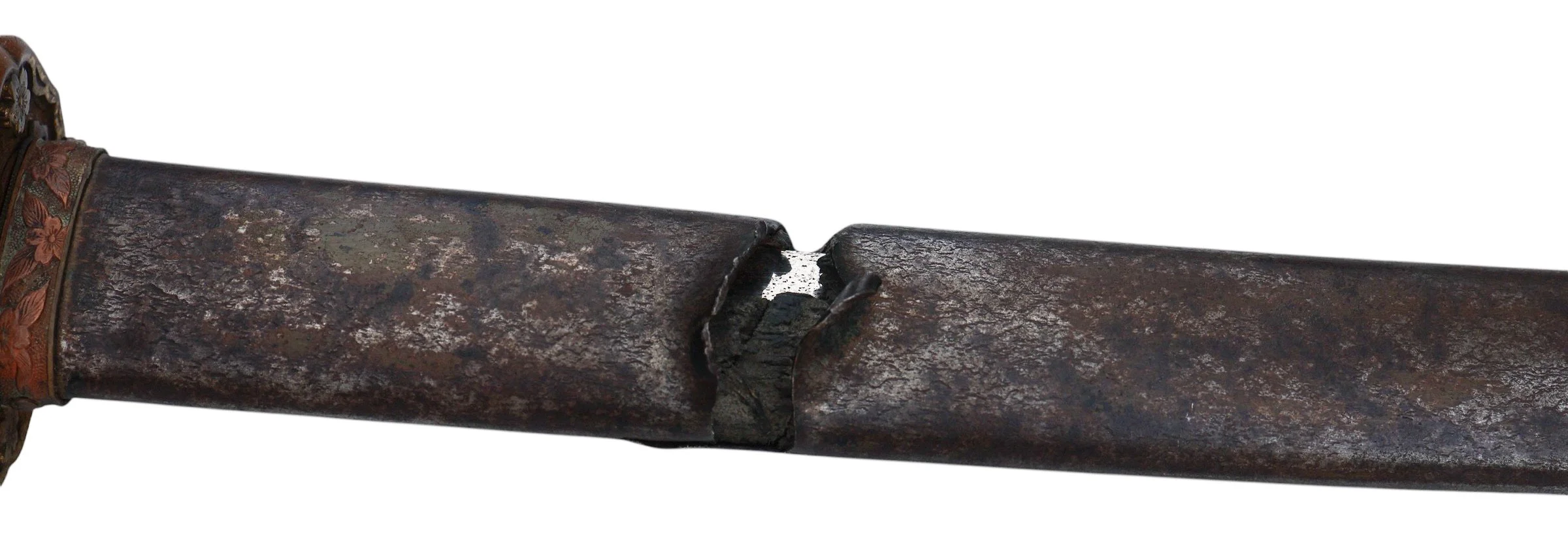
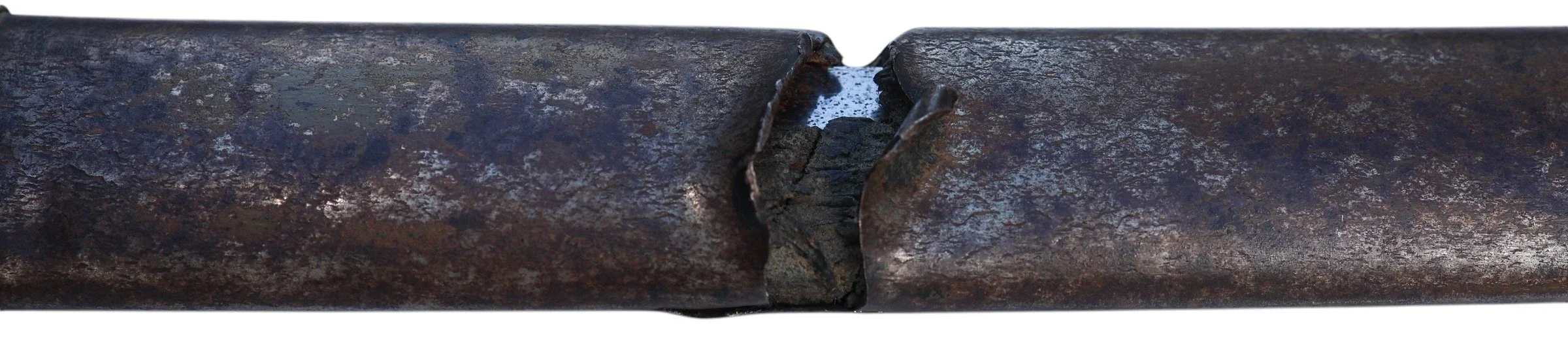
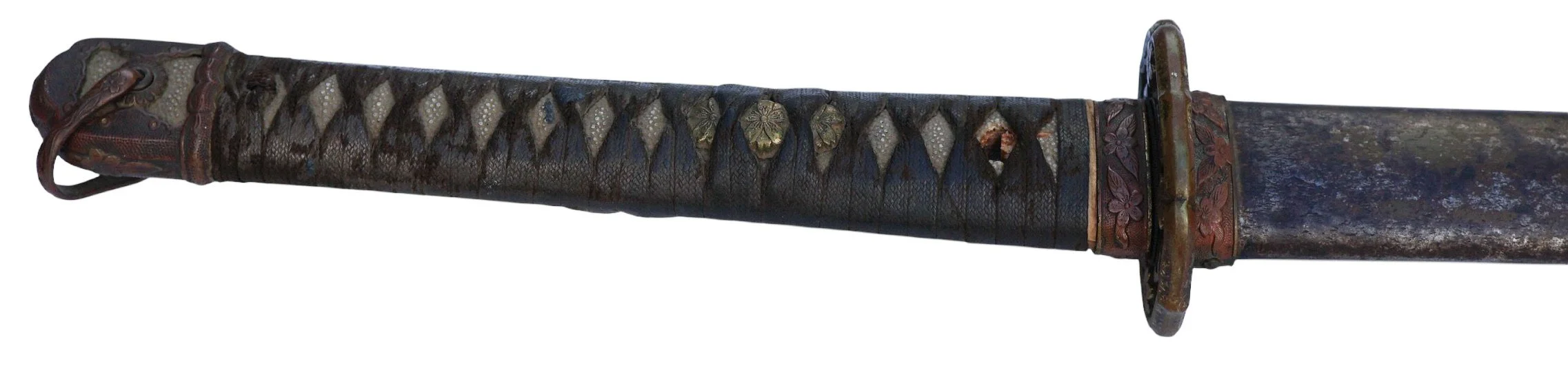
Japanese Samurai Sword — Bullet-Struck, Battle of Iwo Jima
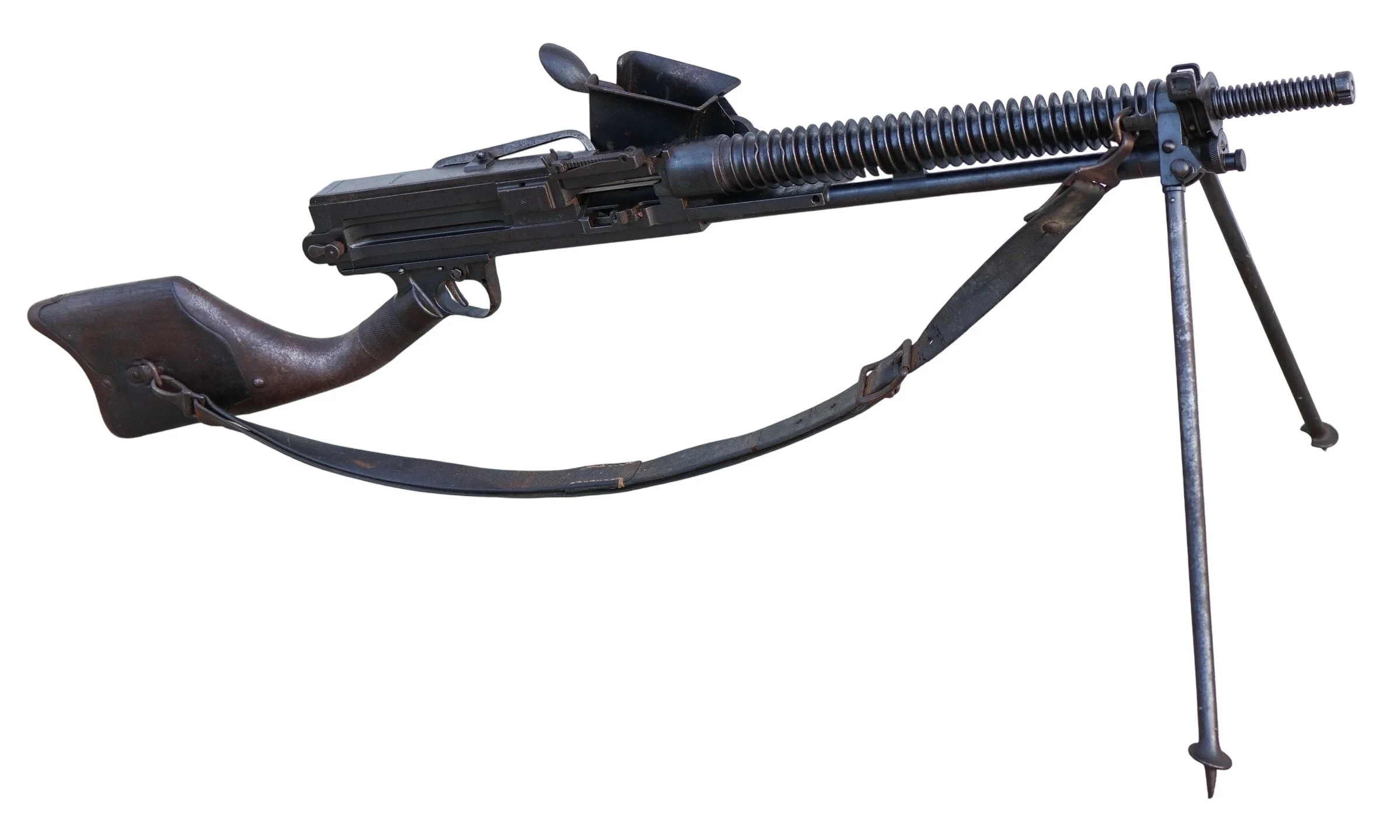
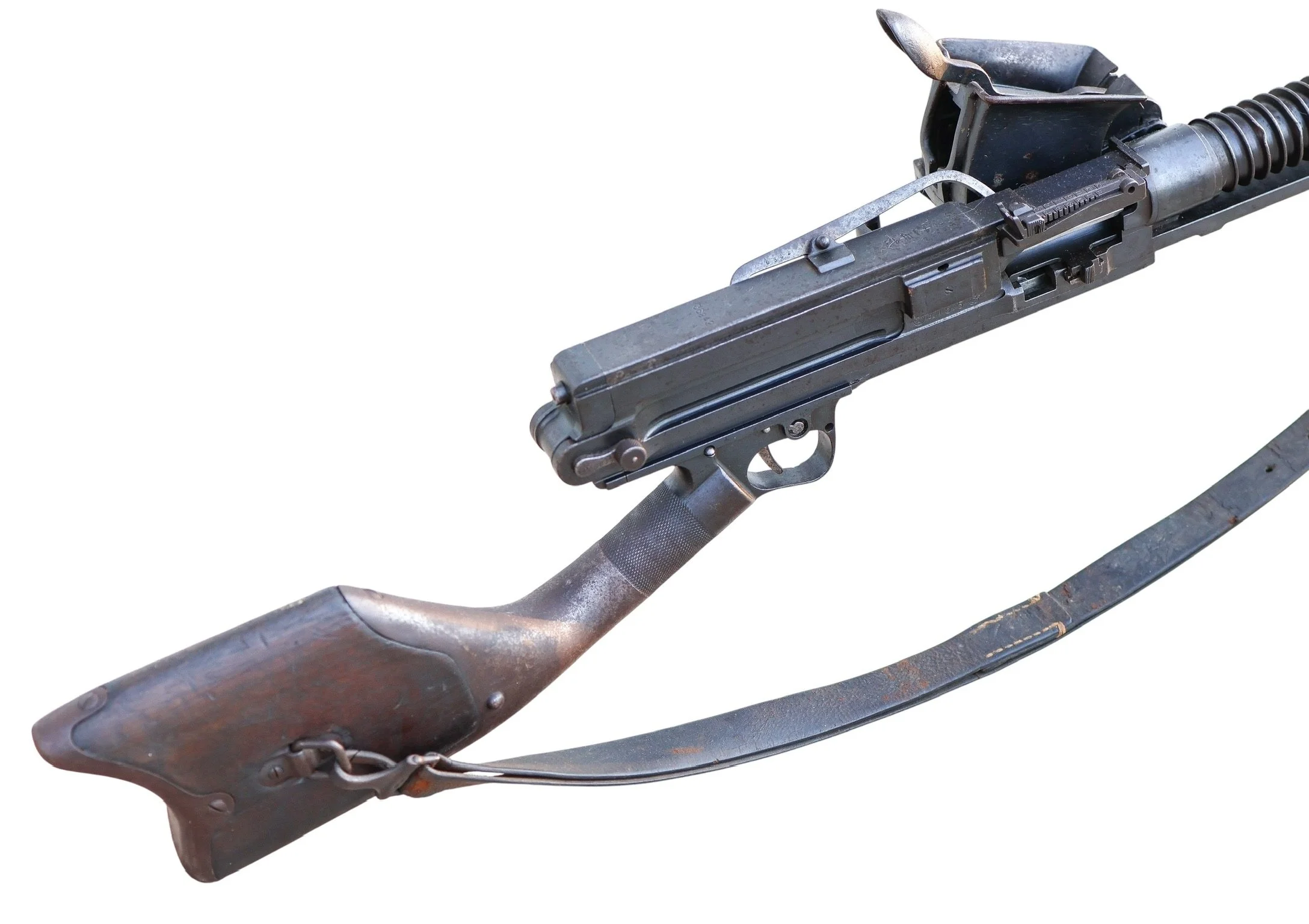
Japanese Type 11 Light Machine Gun Captured in Burma
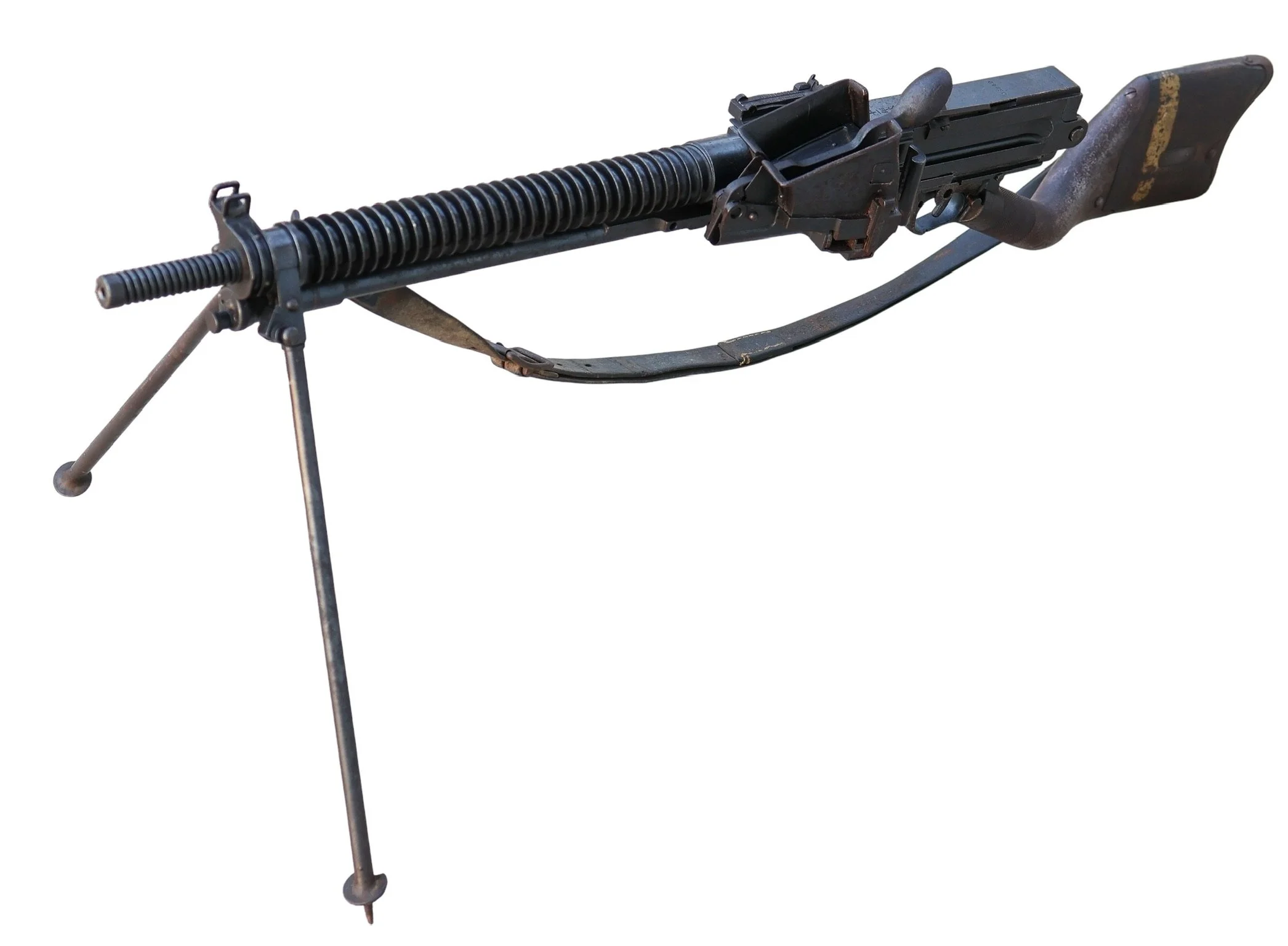
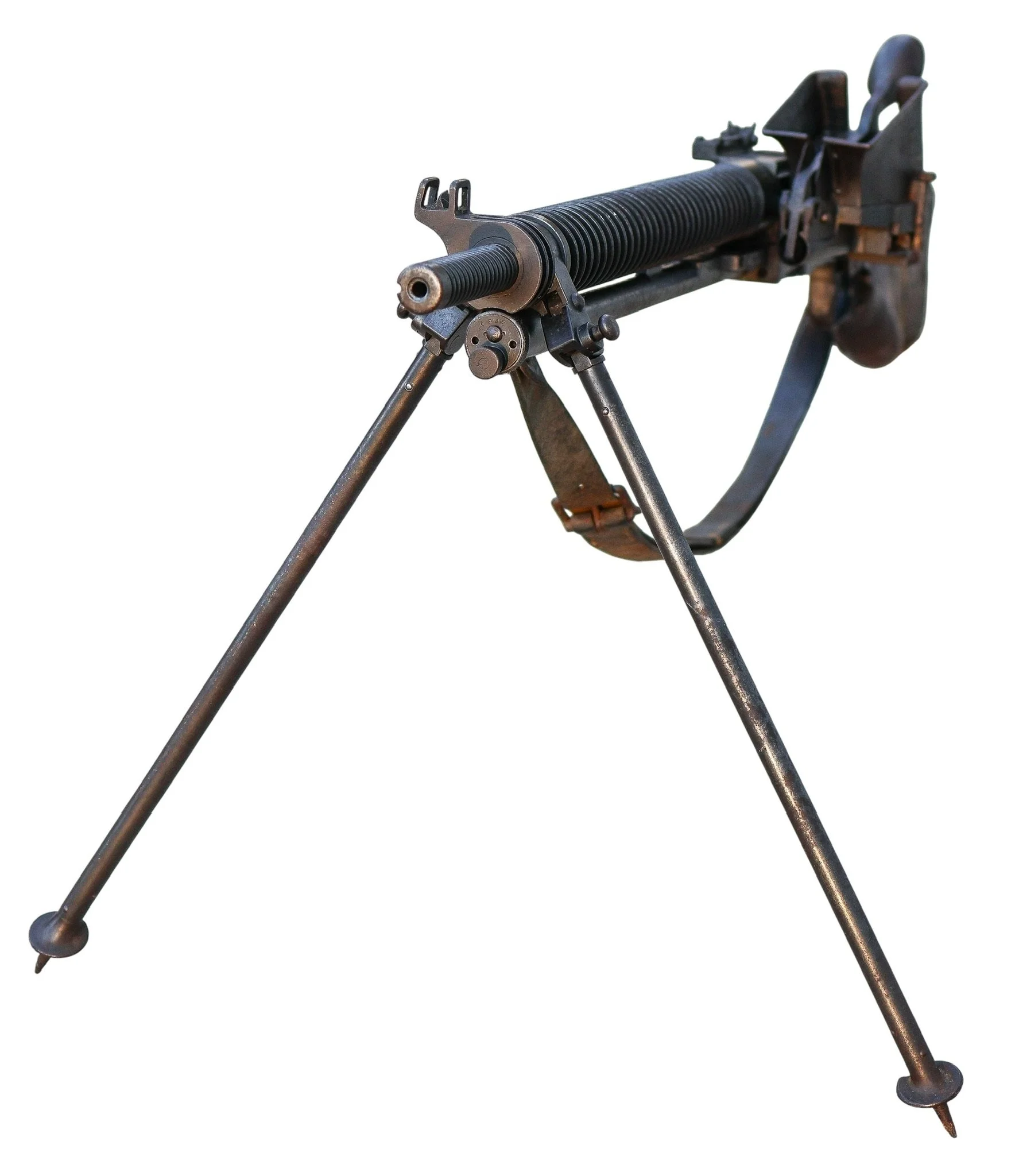
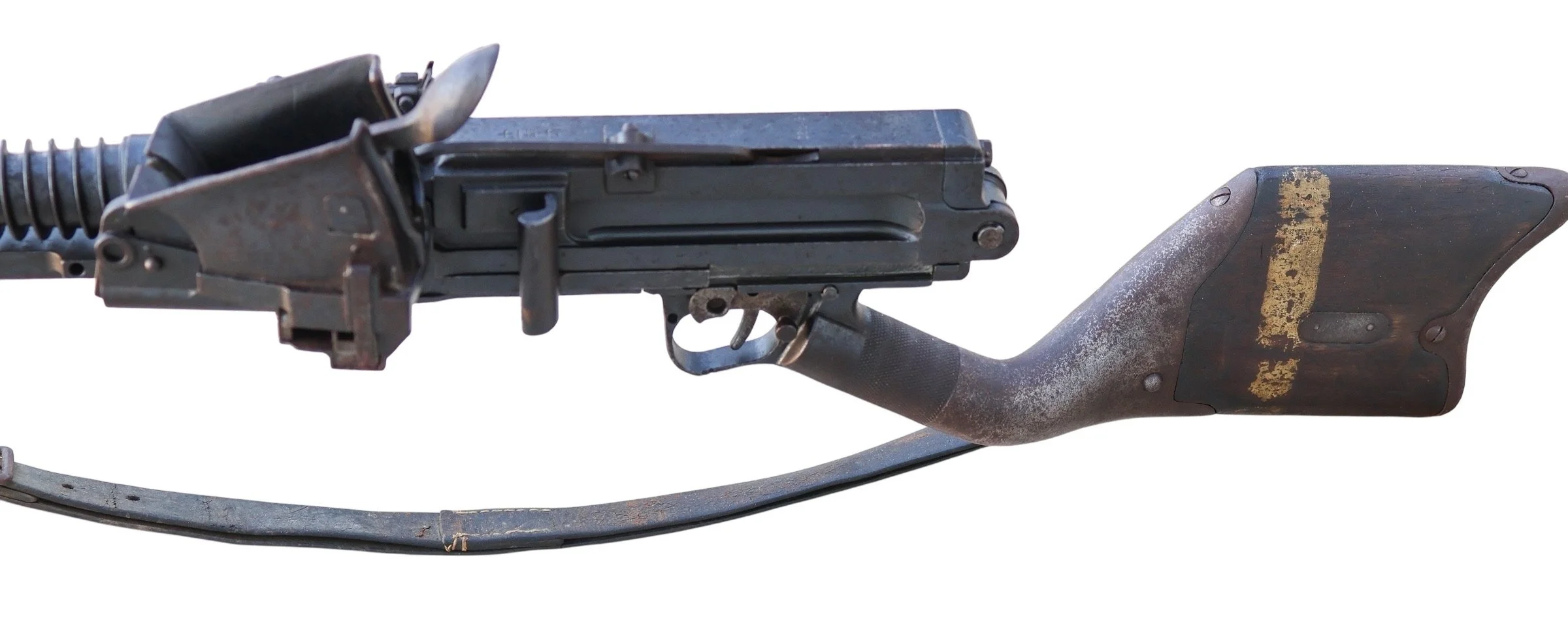
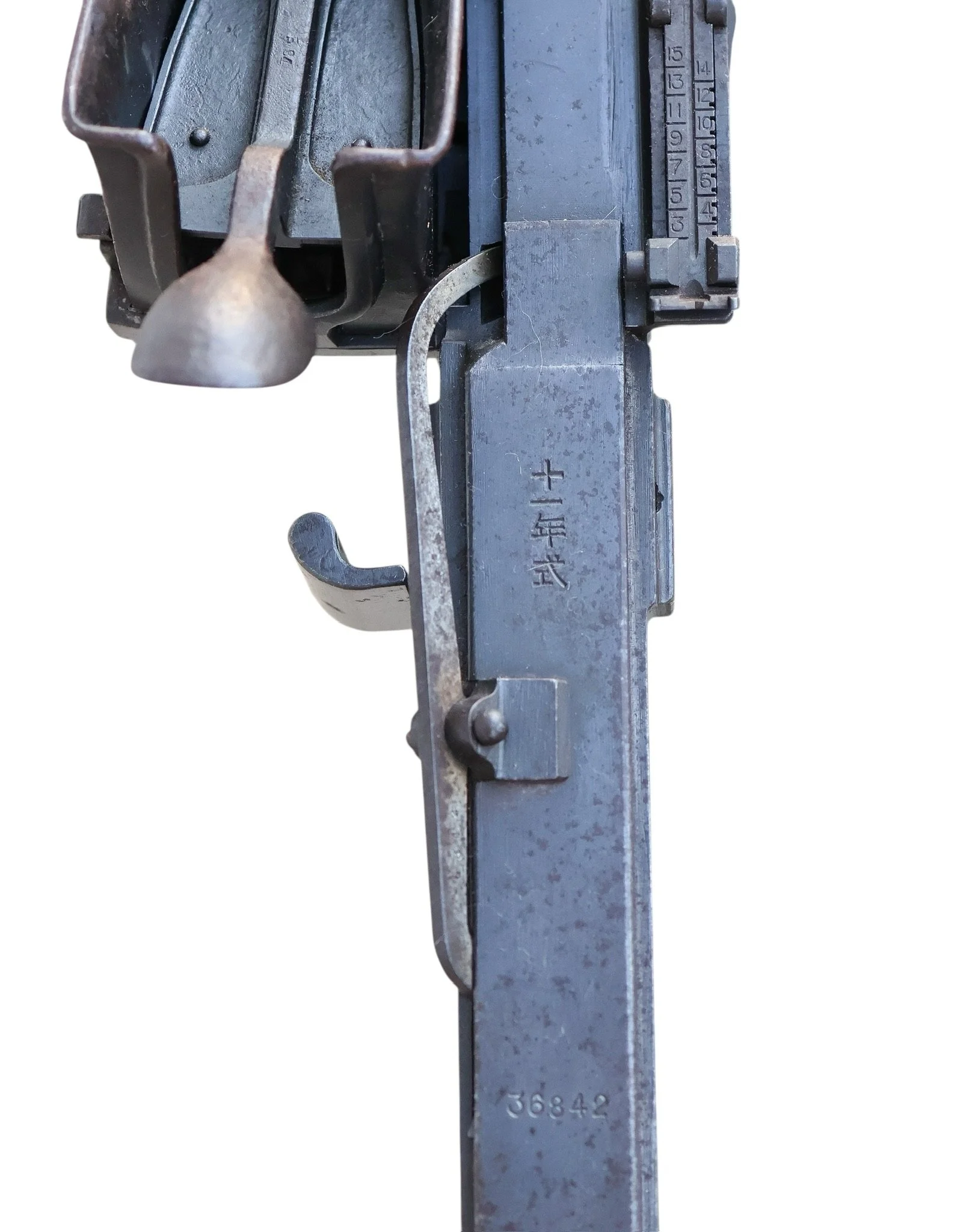
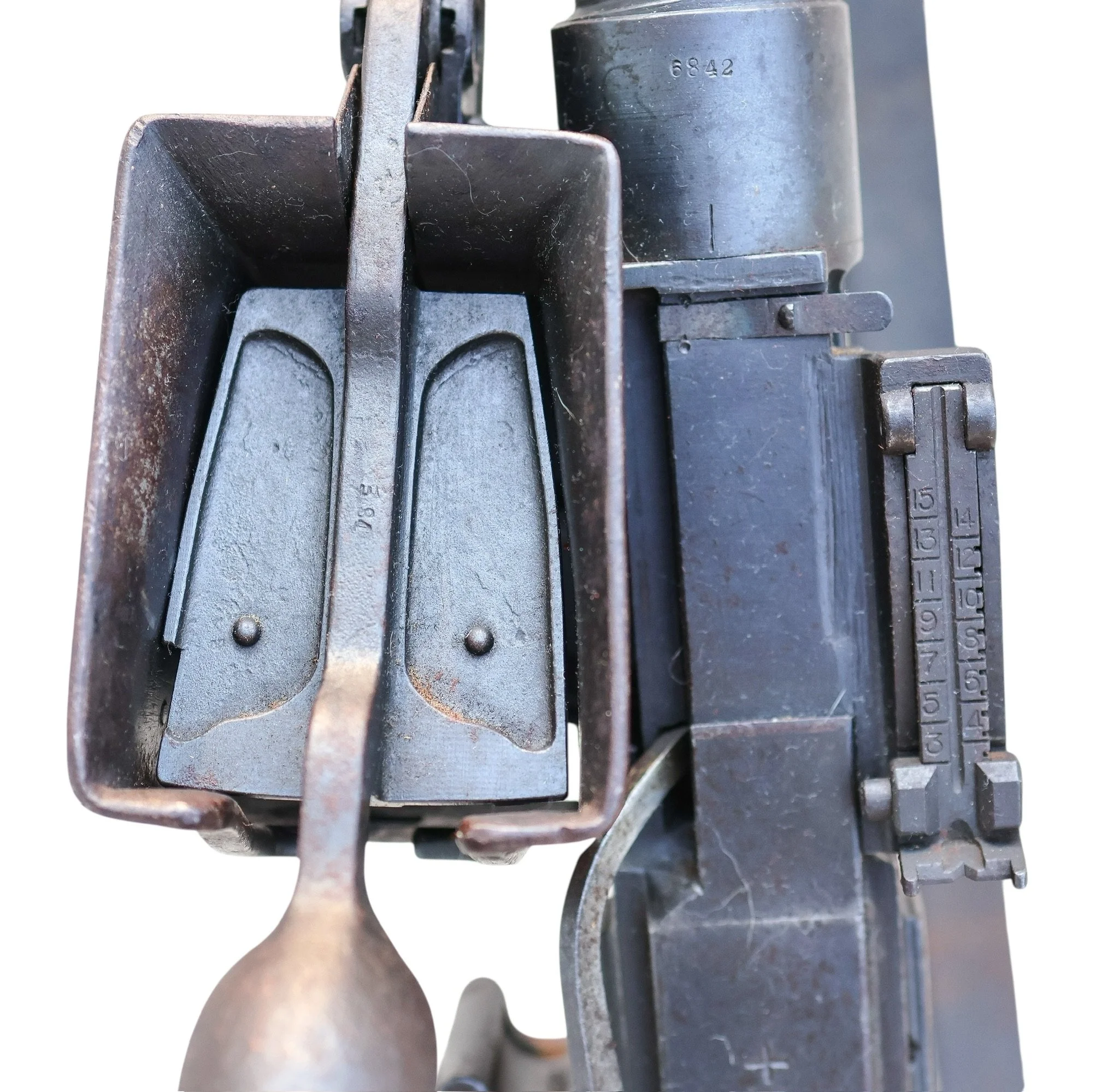
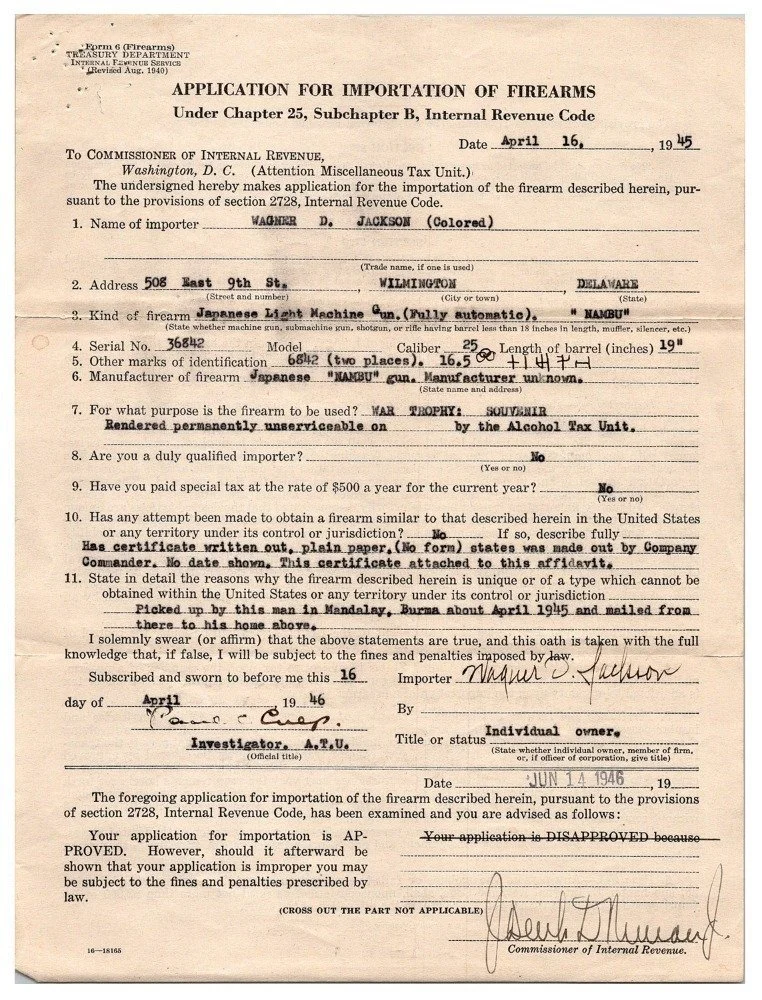
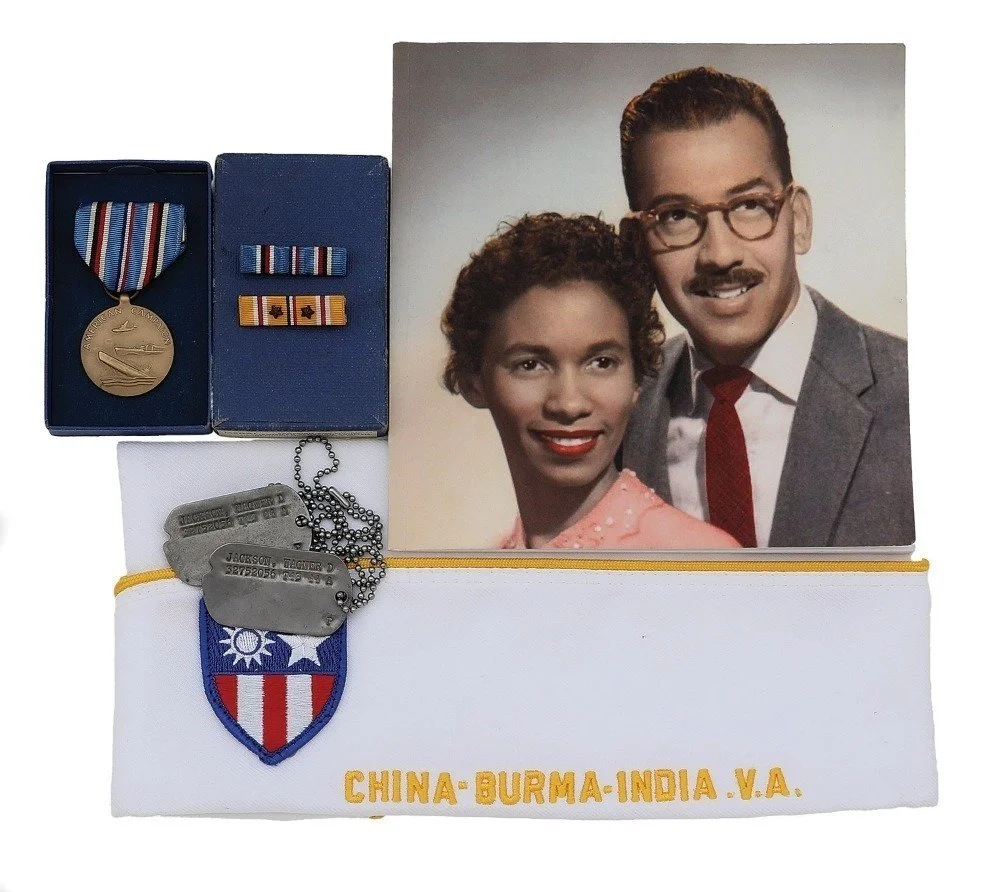
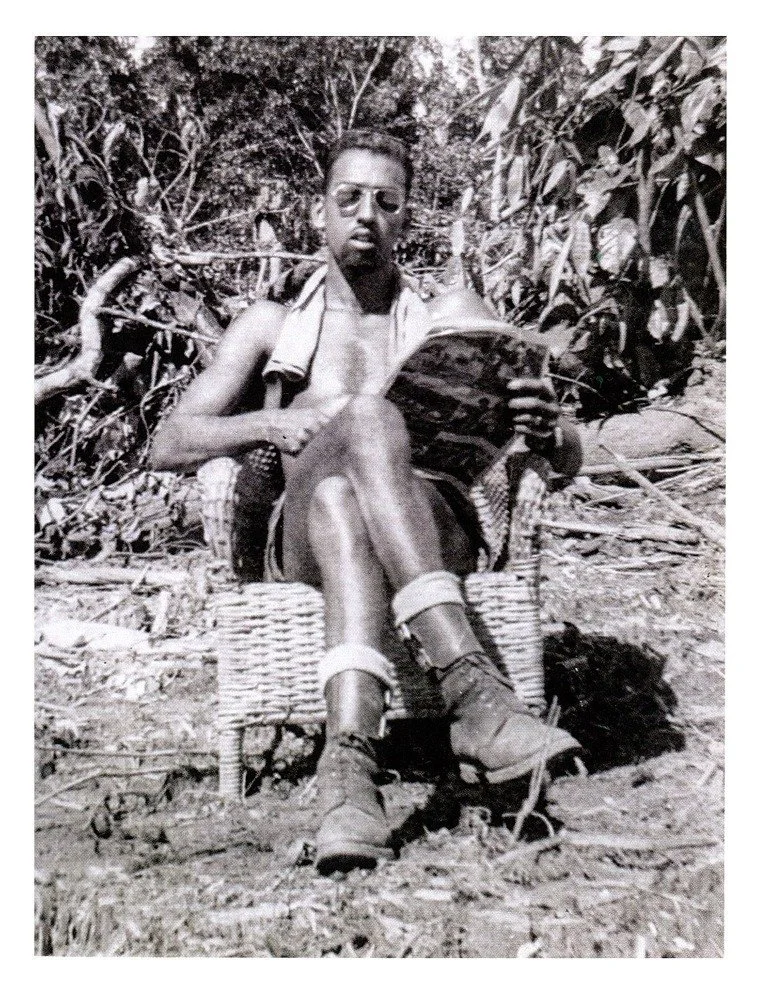
This Japanese Type 11 light machine gun was captured in Burma during World War II and brought back to the United States by Wagner Dupont Jackson, who served as a medic in the U.S. Army in the China–Burma–India Theater. The gun was manufactured in May 1941 and is serial number 36842, chambered in 6.5mm Arisaka. It was rendered unserviceable by the U.S. Alcohol Tax Unit in 1946 and is currently registered as a DEWAT on an ATF Form 5.
The machine gun retains approximately 70–75 percent of its original blued finish, with areas of oxidation, patina, and handling wear consistent with wartime use and long-term storage. The hardwood stock remains in very good condition, showing age-related darkening and scattered dings. Several components are missing, including the hopper cover spring, barrel–receiver connecting pin, and cartridge oiler mechanism, and the operating rod is mismatched, while the remaining visible serialized parts appear to match. A rare original leather sling accompanies the gun.
-
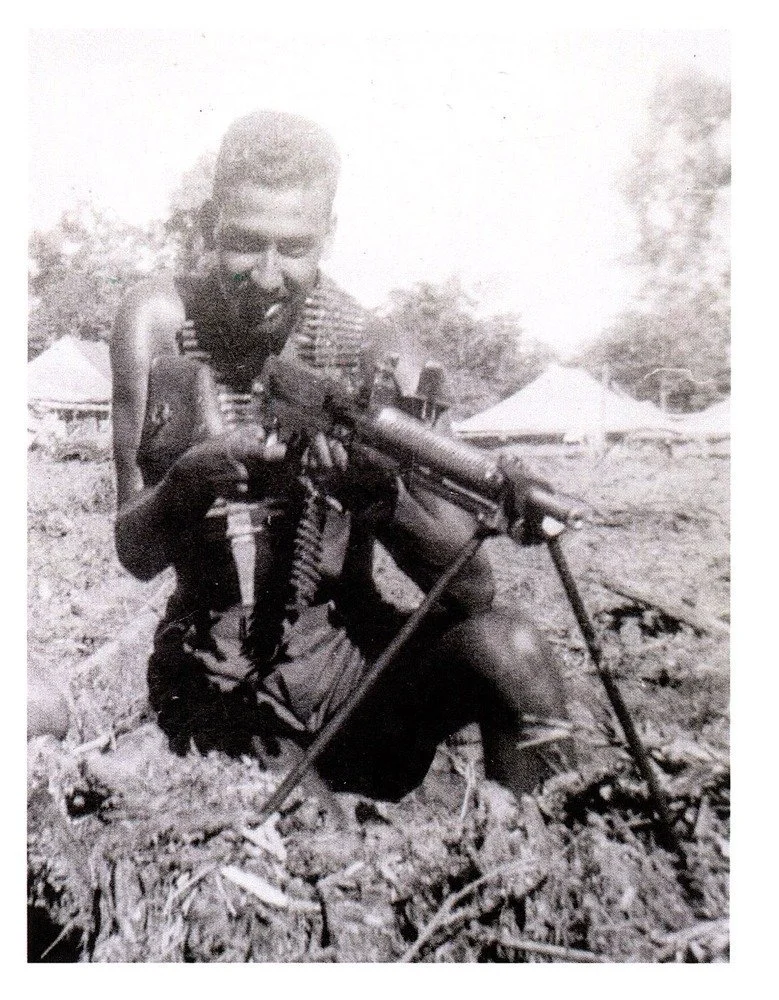
The grouping includes original U.S. Treasury Department documentation, including an Application for Importation of Firearms (Form 6) dated April 16, 1945, listing the machine gun by serial number and noting it was picked up in Mandalay, Burma, around April 1945 and mailed home as a war trophy. The paperwork further records that the weapon had been made unserviceable. While the original capture certificate referenced in the documents has been lost, period photographs provided by the family include an image of Jackson posing in the field with this same Type 11 machine gun.
Wagner Dupont Jackson was born in 1923 in Wilmington, Delaware, and served in the Pacific as a combat medic. After the war, he became a prominent civil rights leader, serving as president of the NAACP chapter in Wilmington and contributing to efforts that culminated in the Supreme Court decision Brown v. Board of Education. He later worked for the U.S. Department of Housing and Urban Development, retiring in 1992. Jackson passed away in 2003.
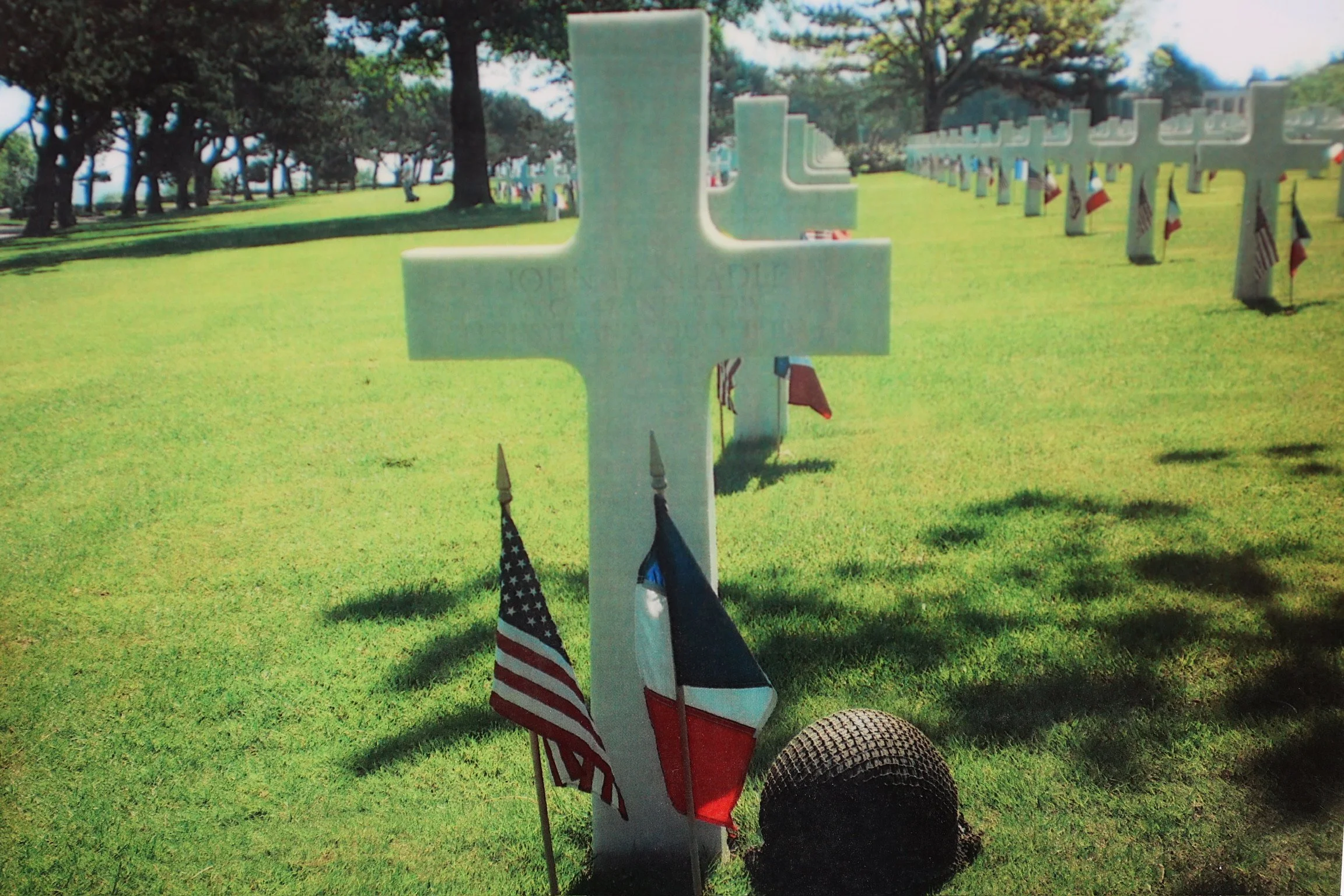
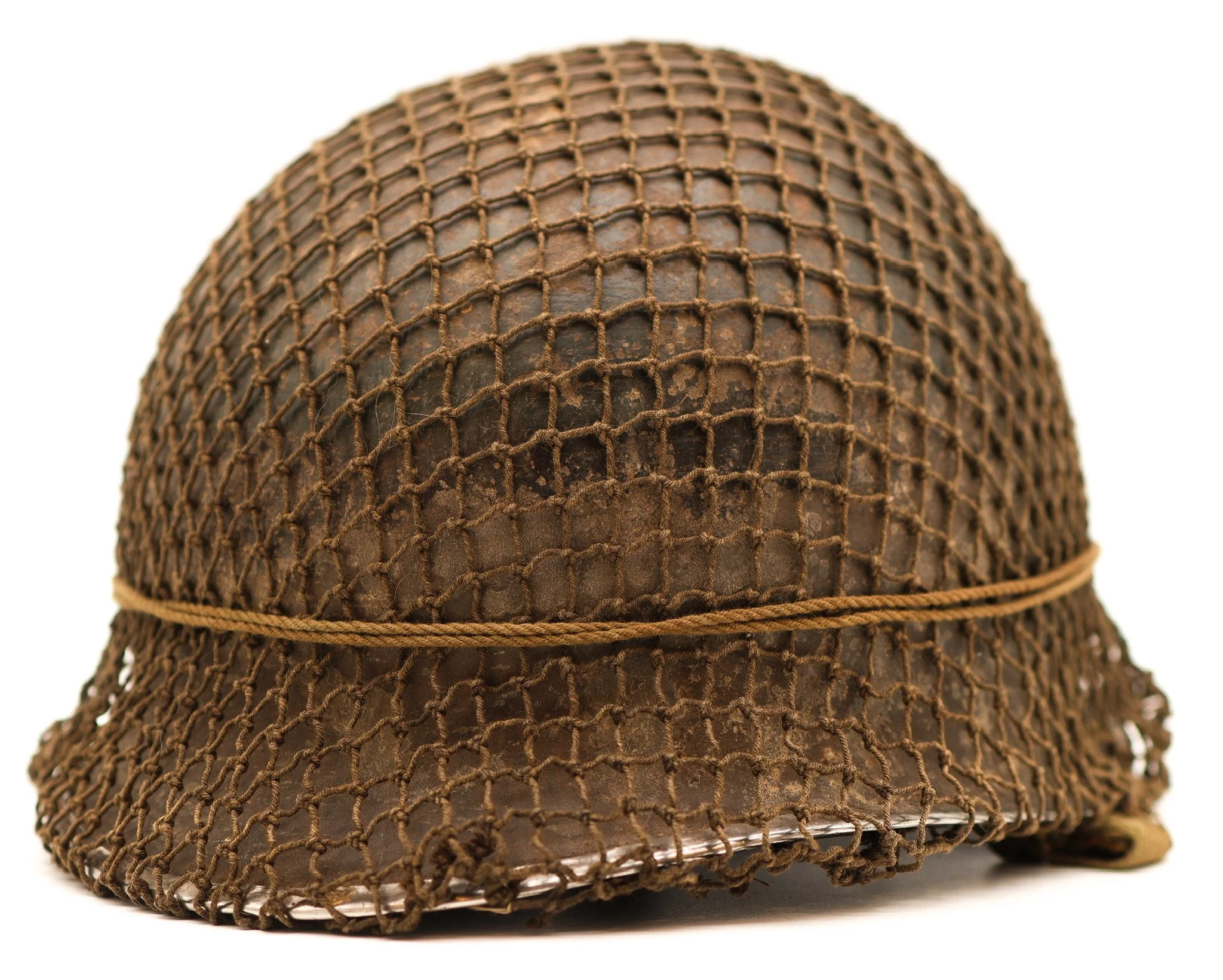
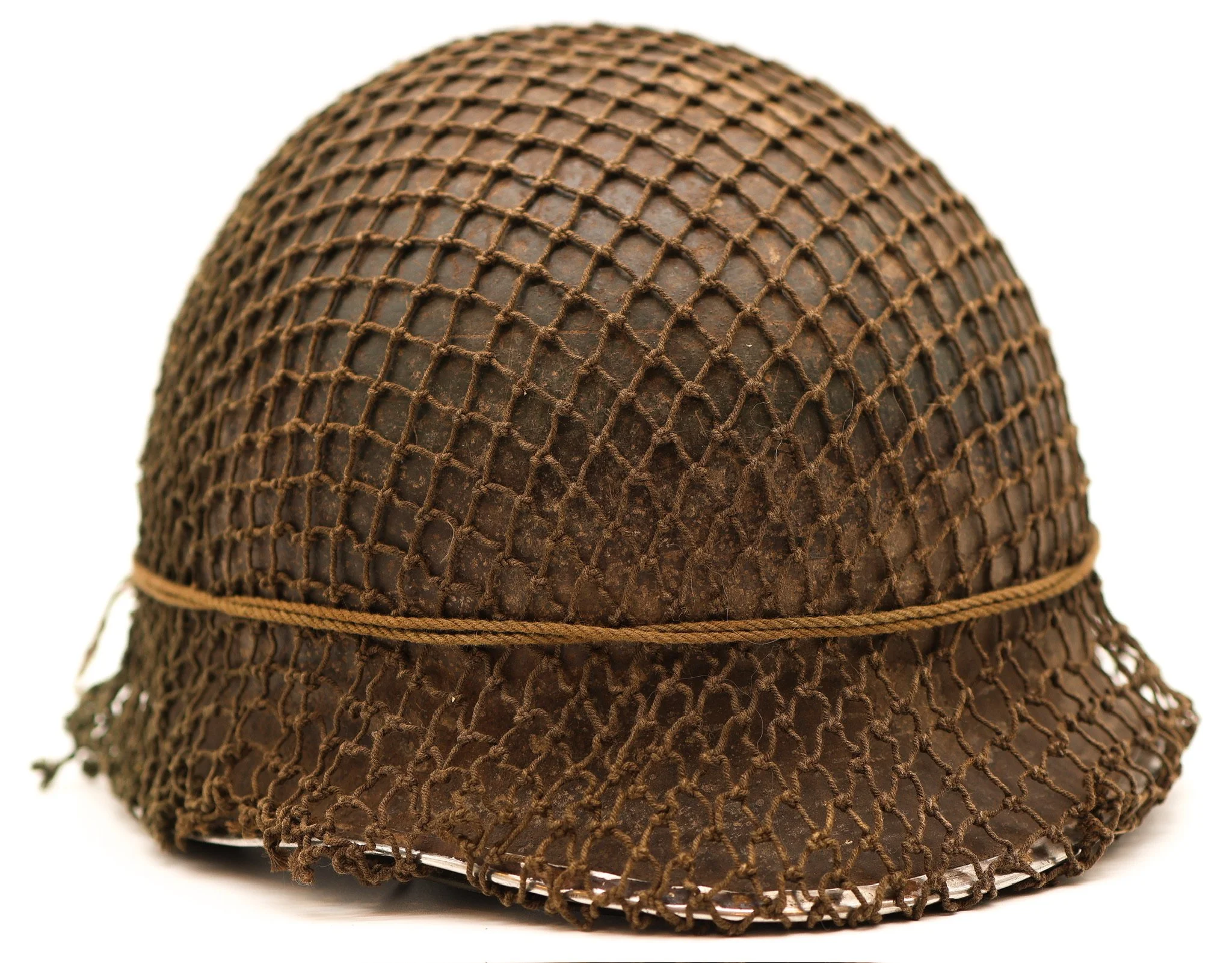
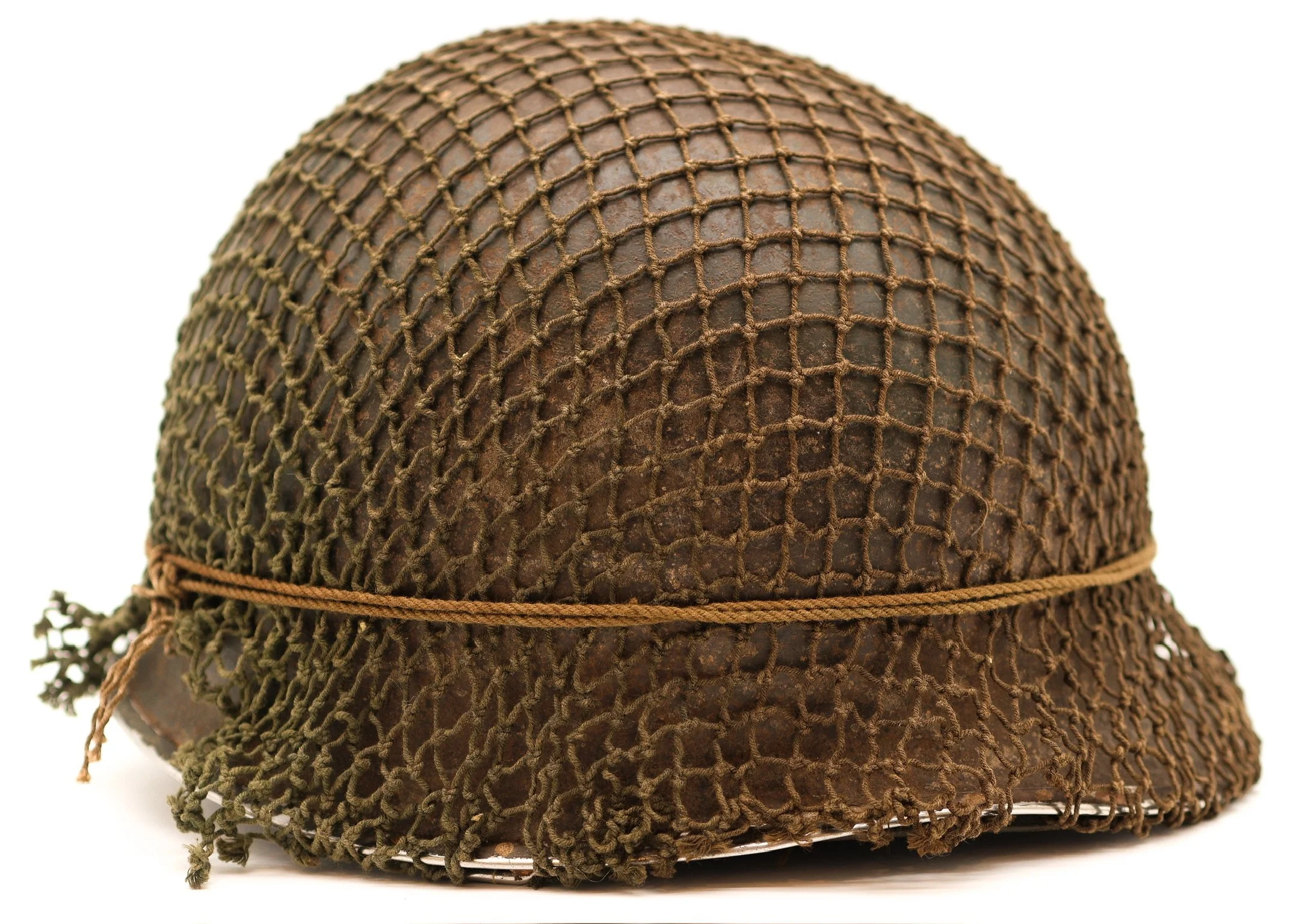
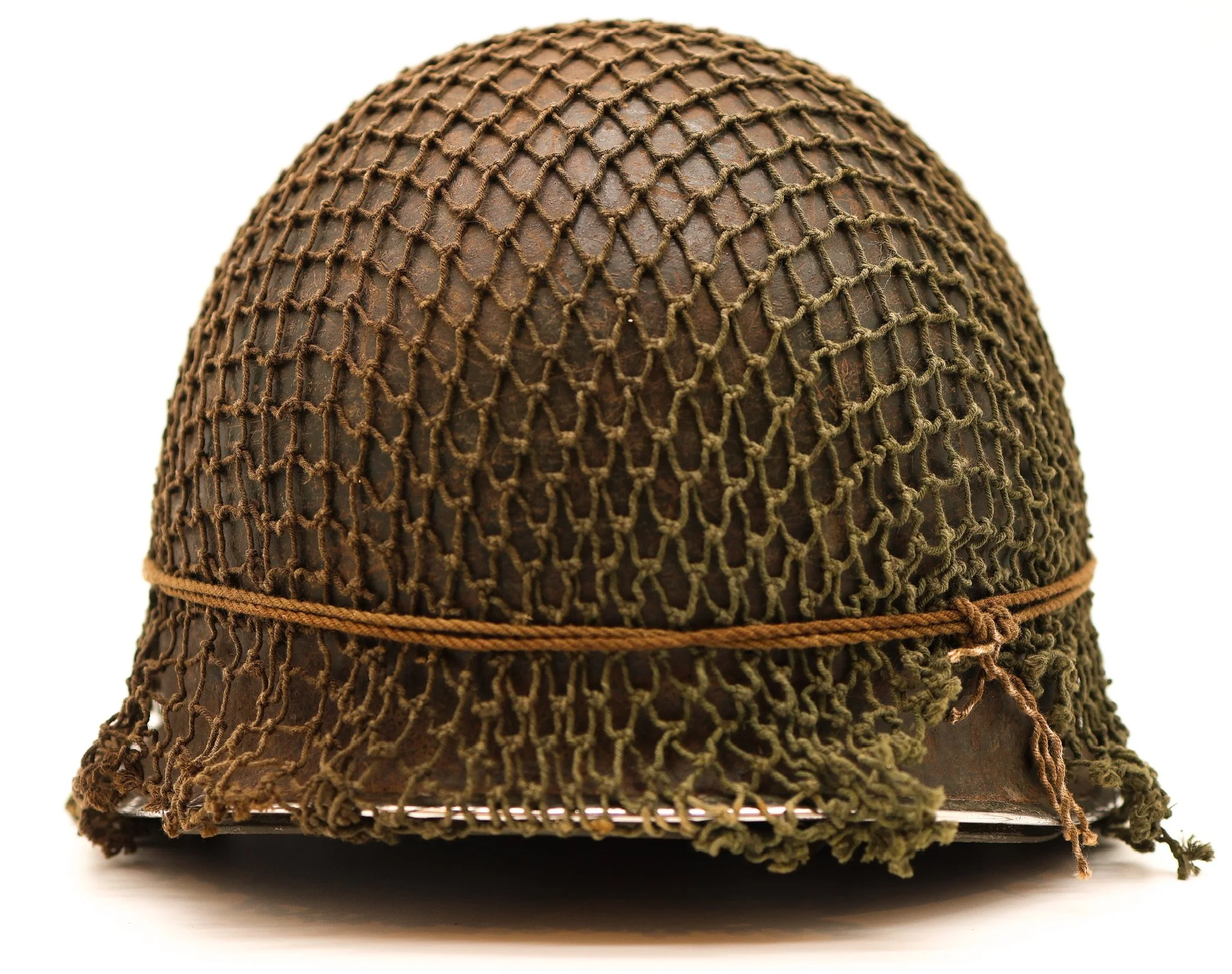
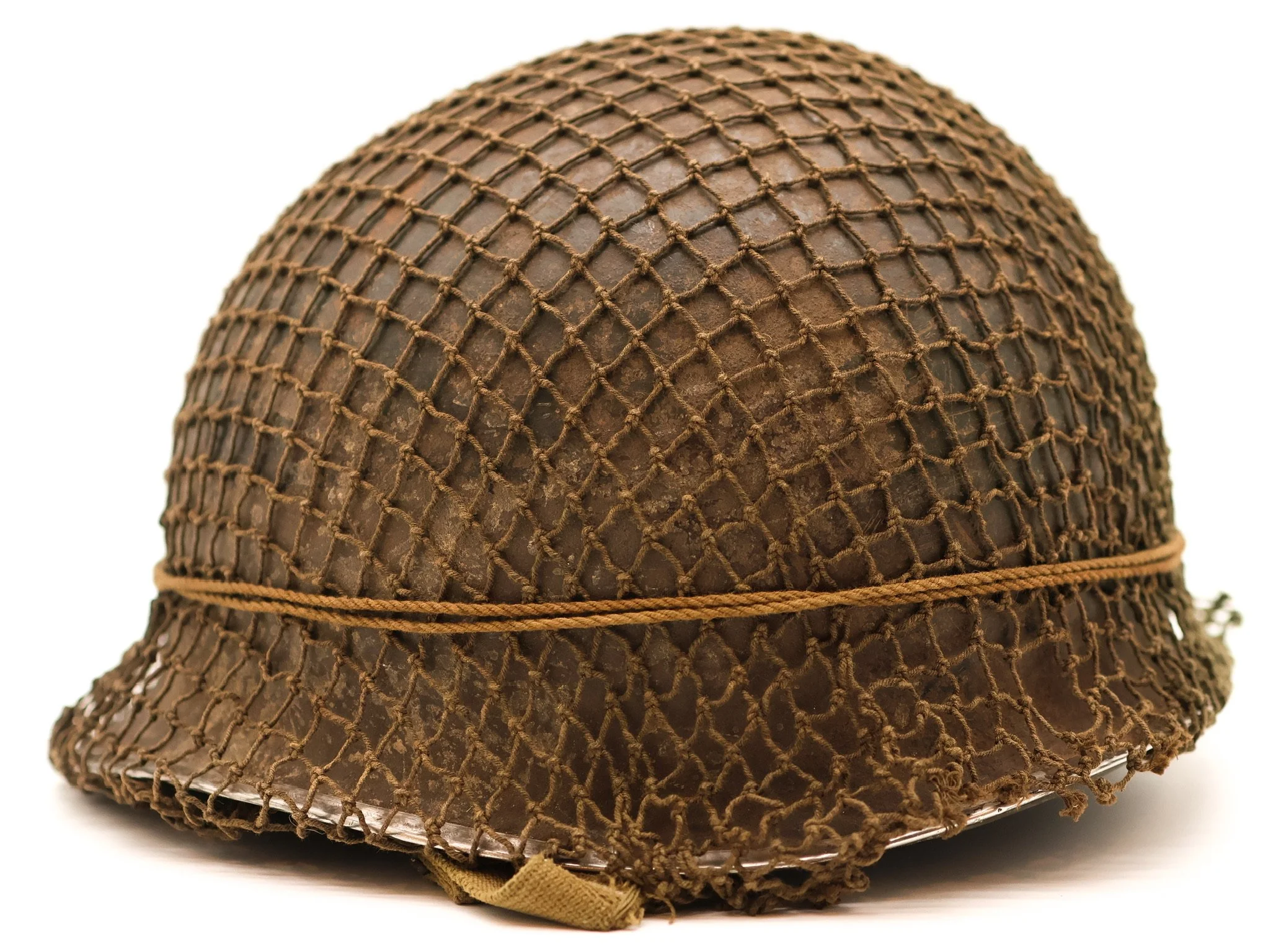
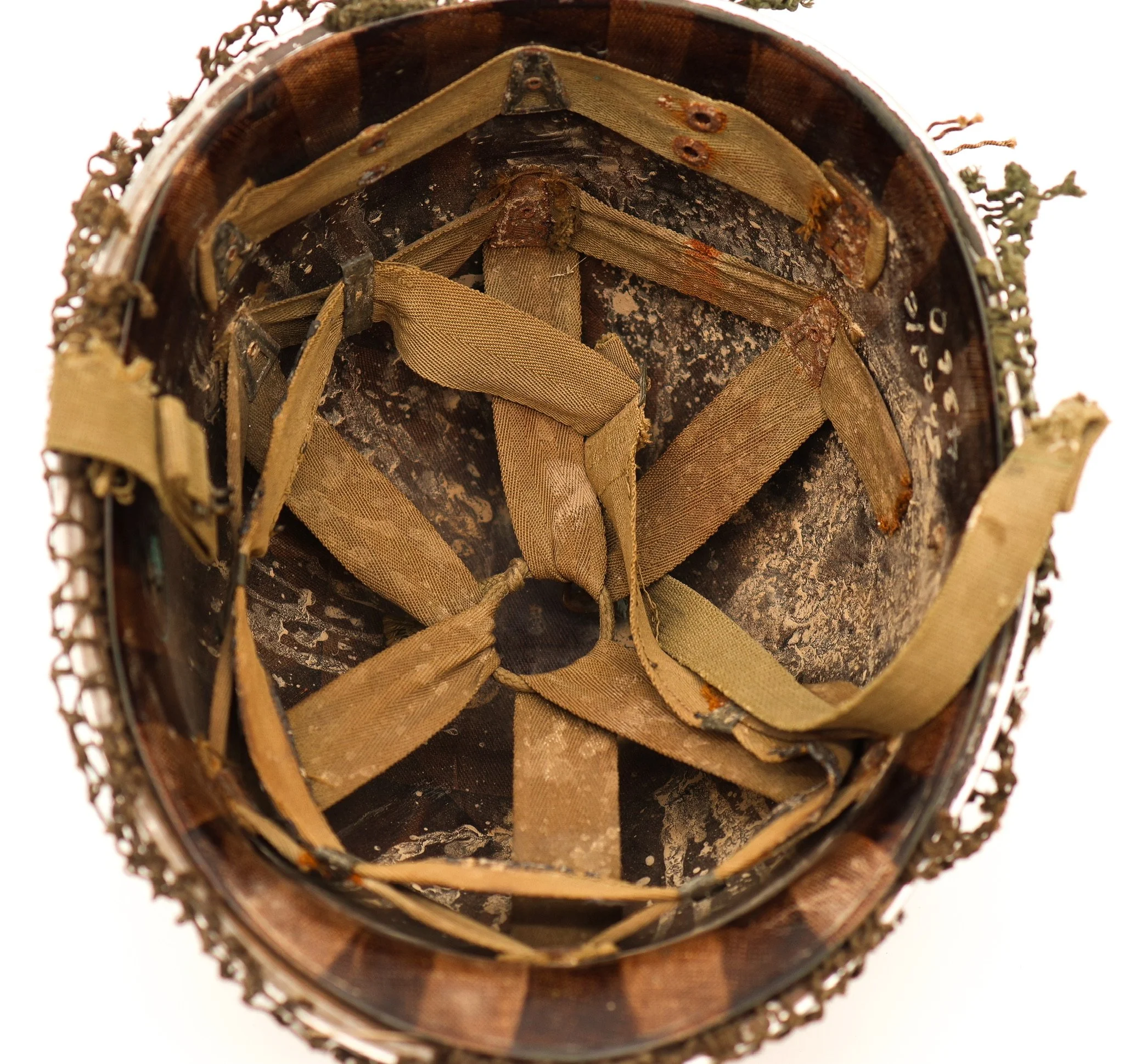
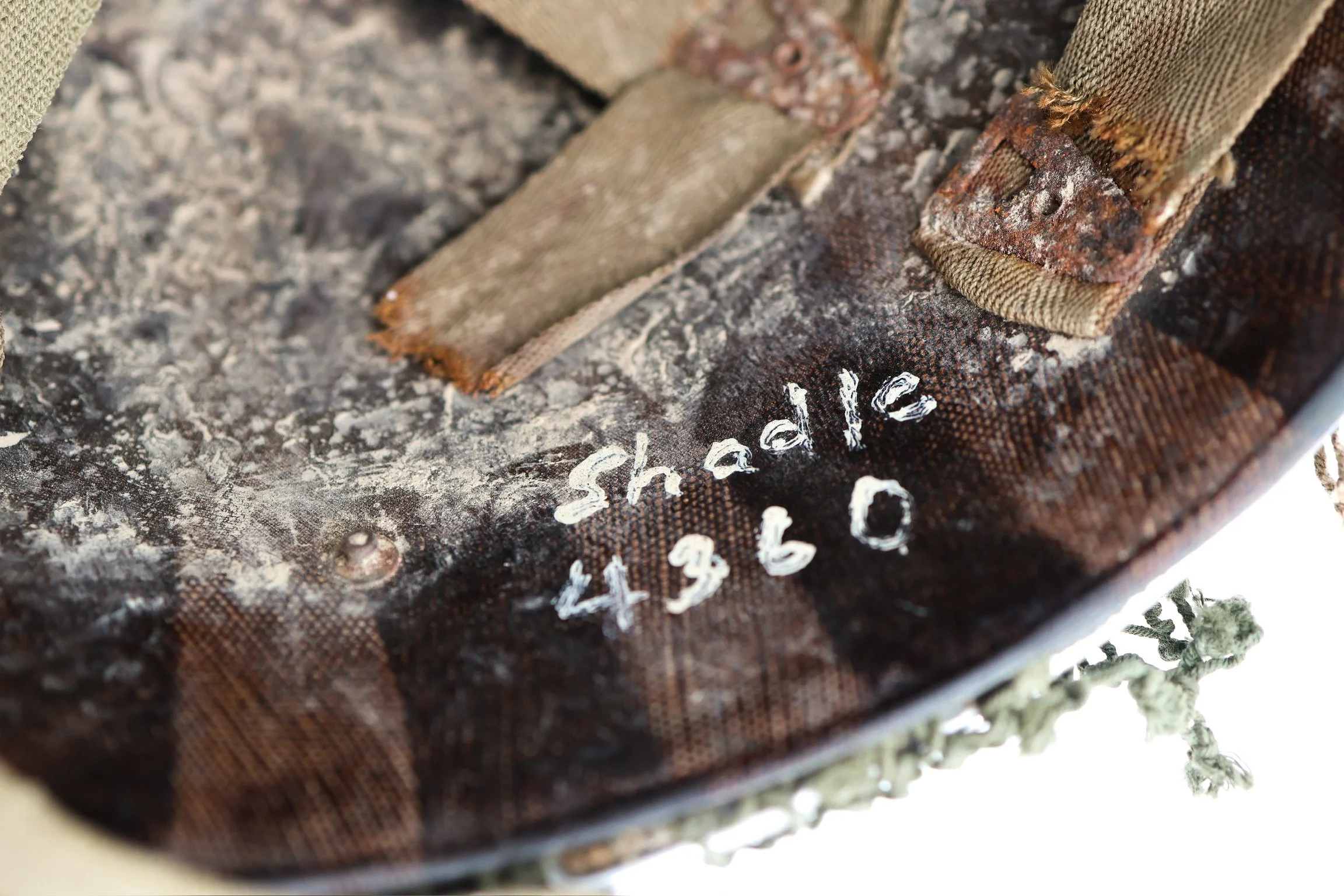
Helmet of PFC John H. Shadle, 9th Infantry Division (KIA in Normandy)
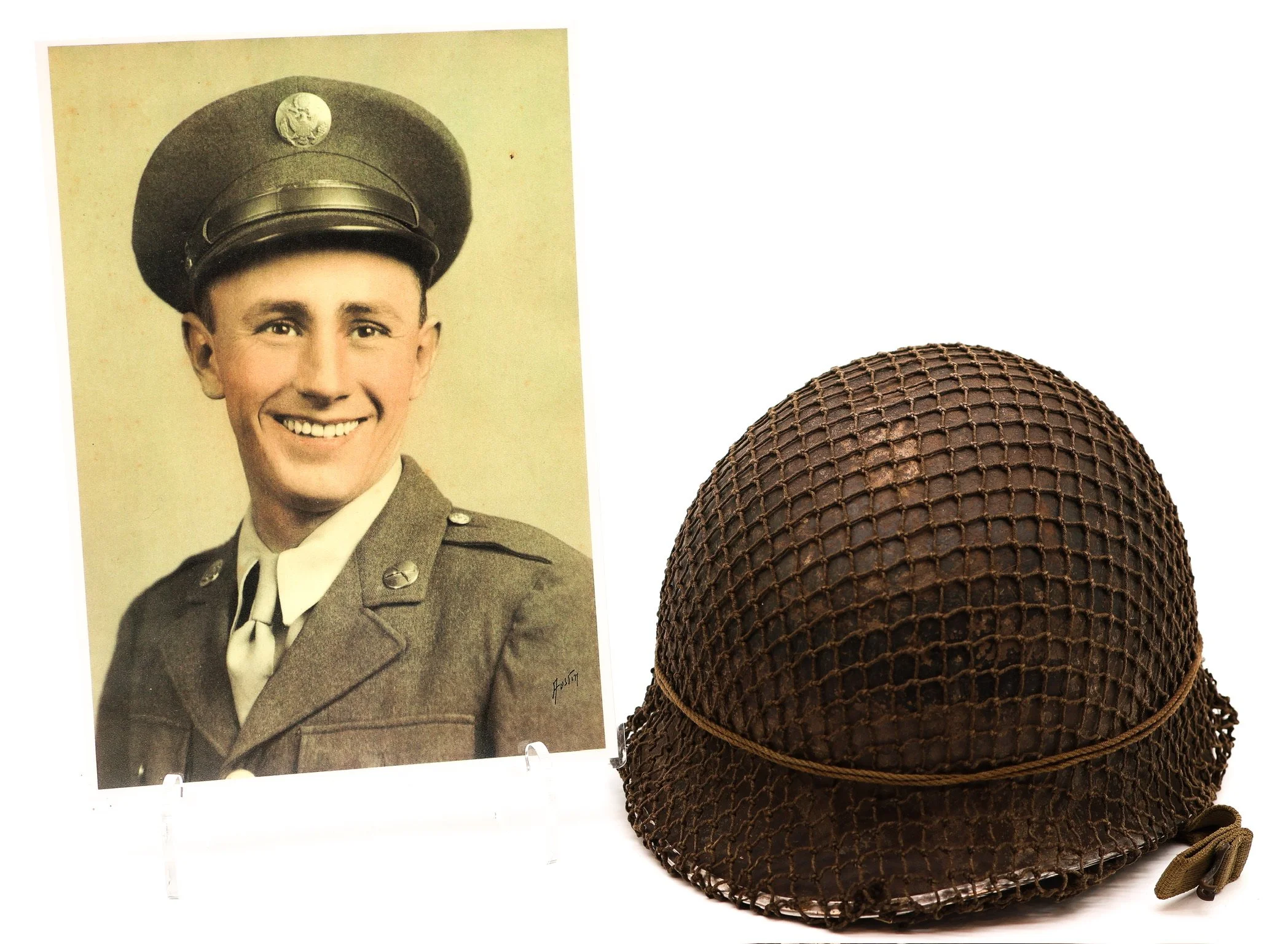
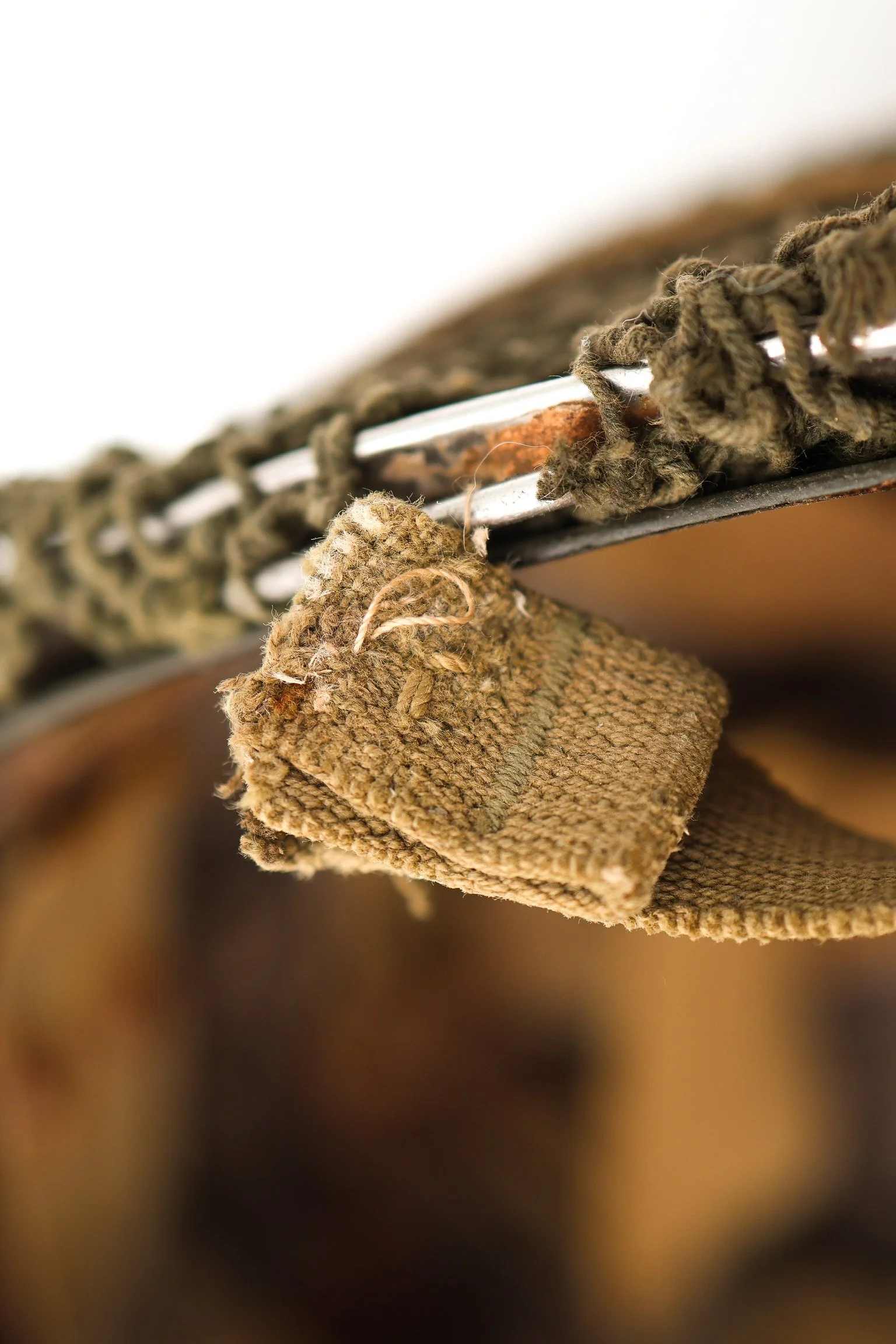
This M1 helmet belonged to Private First Class John H. Shadle (ASN 33234360), a young infantryman whose combat service ended just weeks after he landed in France. The helmet remains with its period net and is identified to Shadle who wrote his last name and laundry number in the liner.
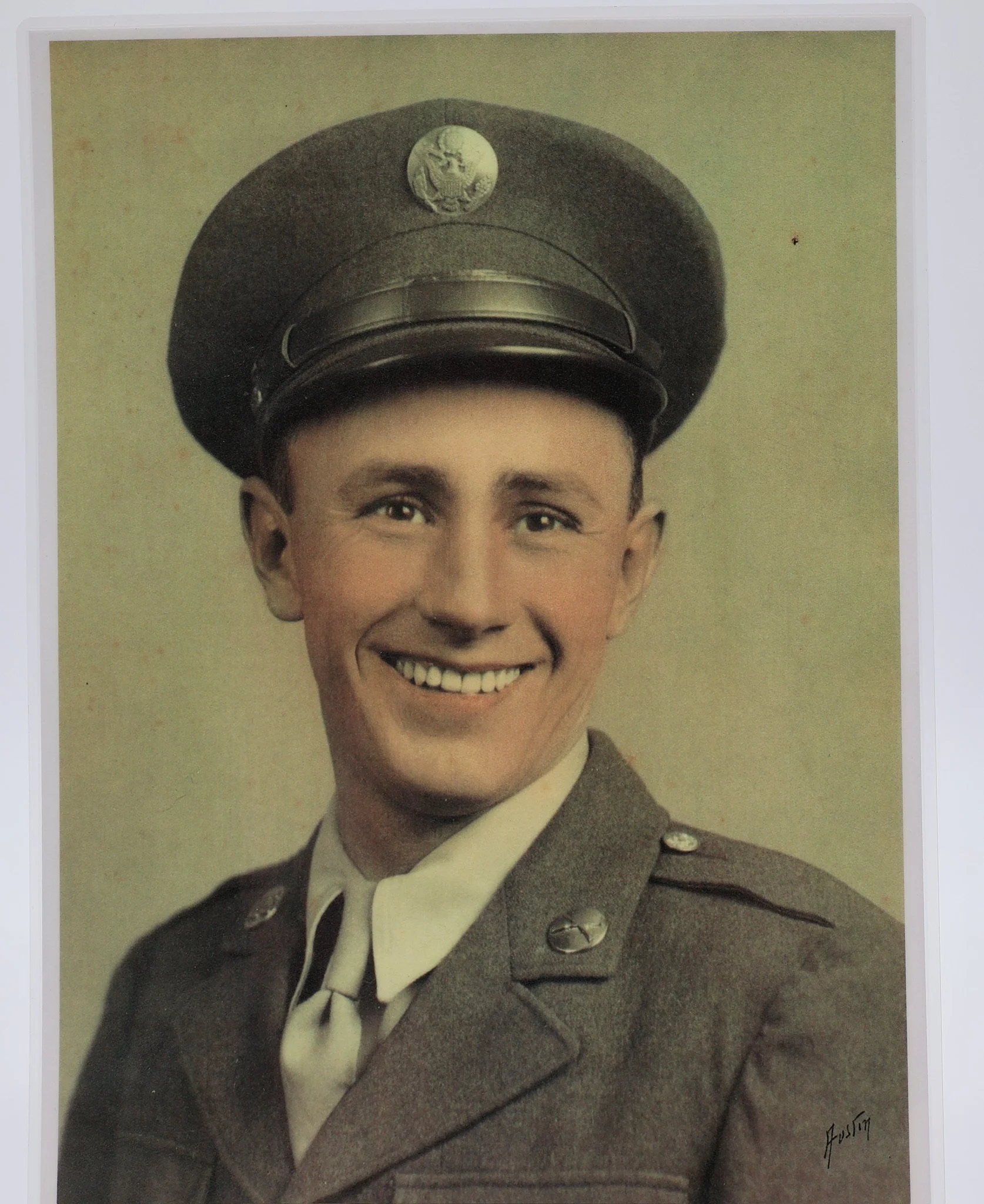
Shadle was originally from the Harrisburg, Pennsylvania area and enlisted on June 23, 1942. Contemporary reporting noted that he tried repeatedly to enlist but was initially turned away due to poor vision—only later being accepted into the Army. Once in uniform, he trained at Camp Wheeler, Georgia, where he qualified as a sharpshooter and earned multiple marksmanship awards. His early wartime service took him through the Mediterranean campaigns, including the invasions of North Africa, Tunisia, and Sicily, before his unit shifted to England in late 1943 to prepare for the cross-Channel assault.
On June 11, 1944, Pfc. Shadle landed in Normandy with the 47th Infantry Regiment (9th Infantry Division) at Sainte-Marie-du-Mont. Within one month—on July 11, 1944—he was killed in action by artillery shrapnel near the village area of Mesnil-Véneron during a violent German counterattack associated with the Panzer Lehr Division. He was only 20 years old at the time of his death.
Official records list Shadle as killed in action on July 11, 1944, and he was awarded the Purple Heart. He is buried in France at the Normandy American Cemetery at Colleville-sur-Mer (Plot H, Row 20, Grave 37).
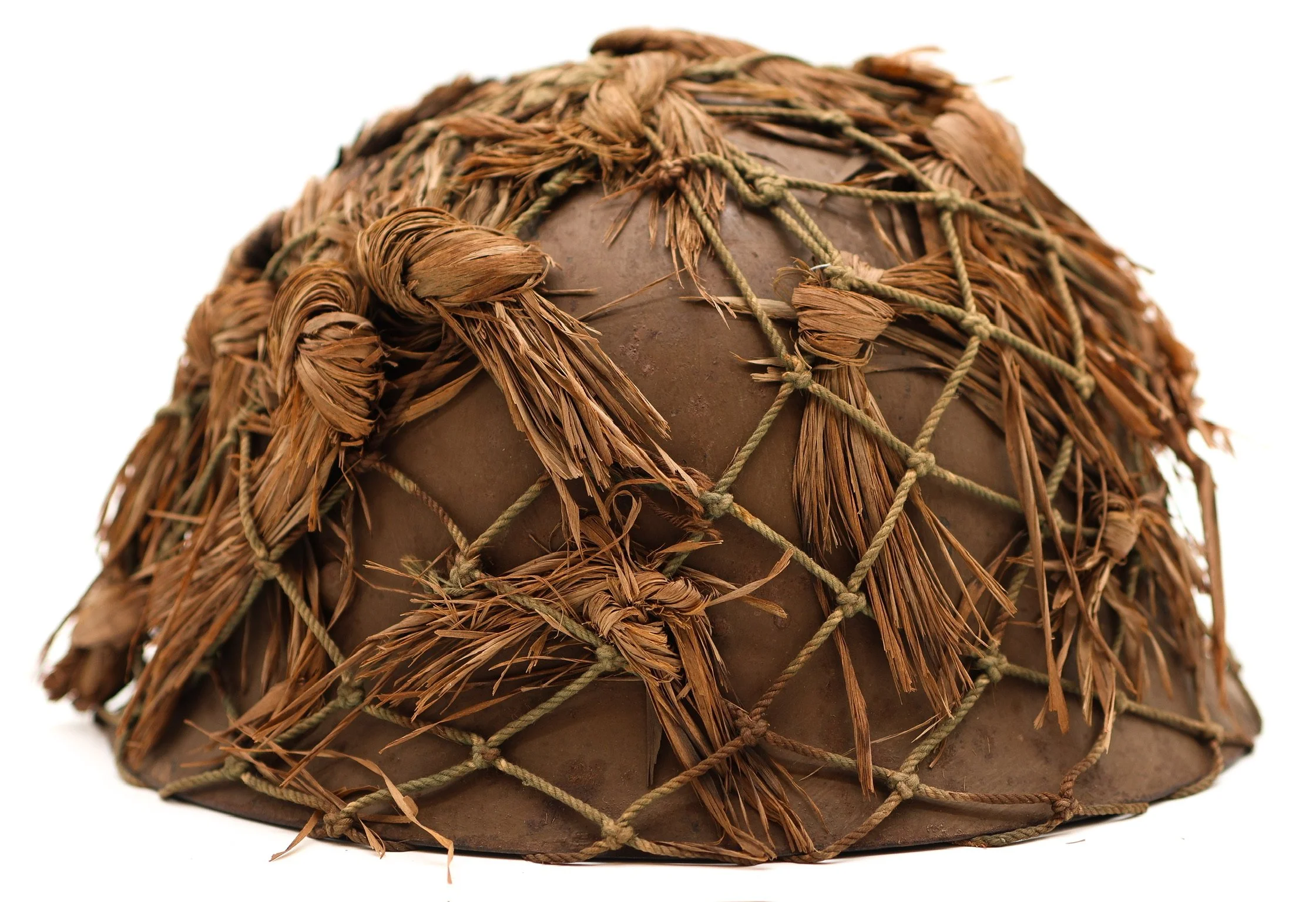
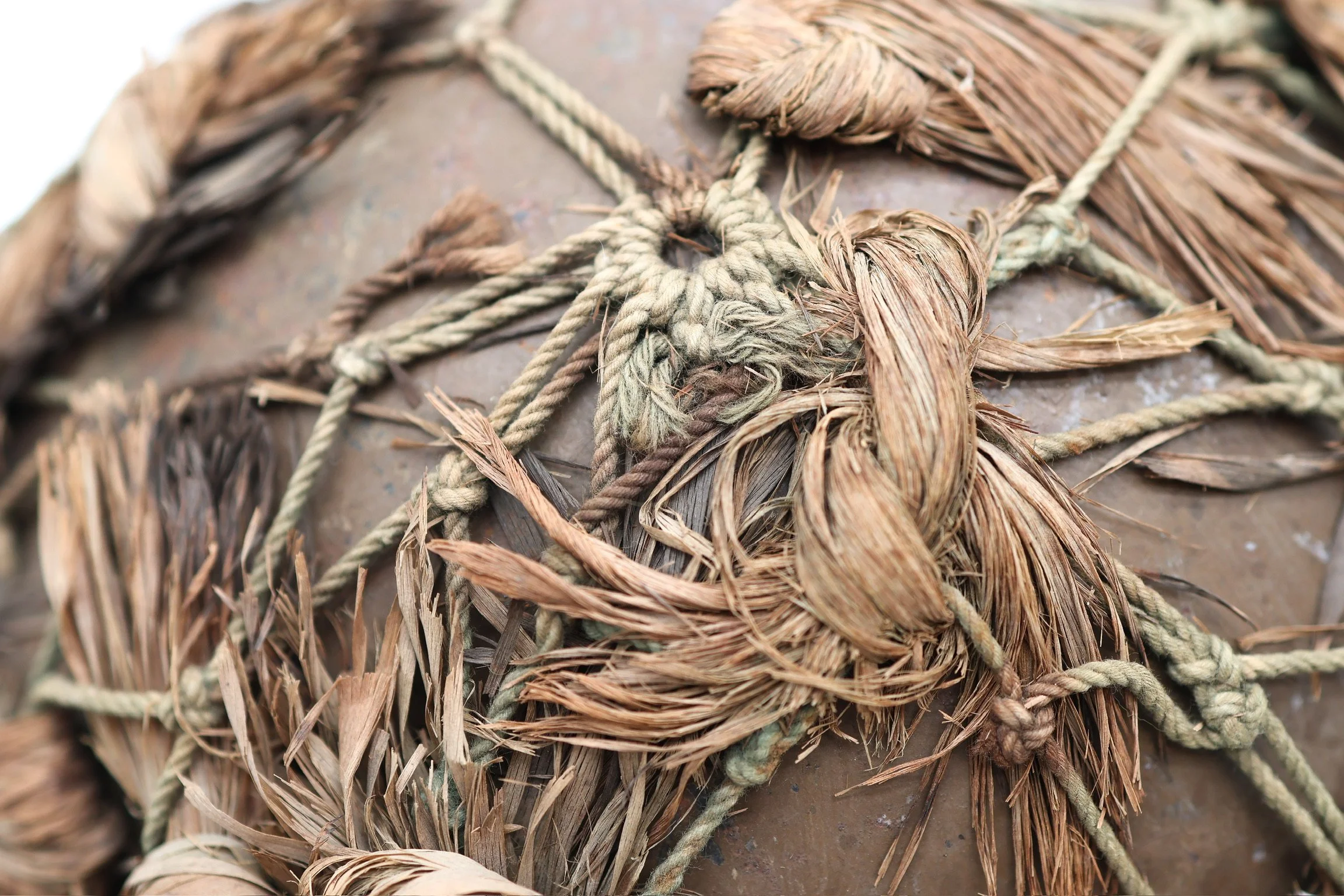
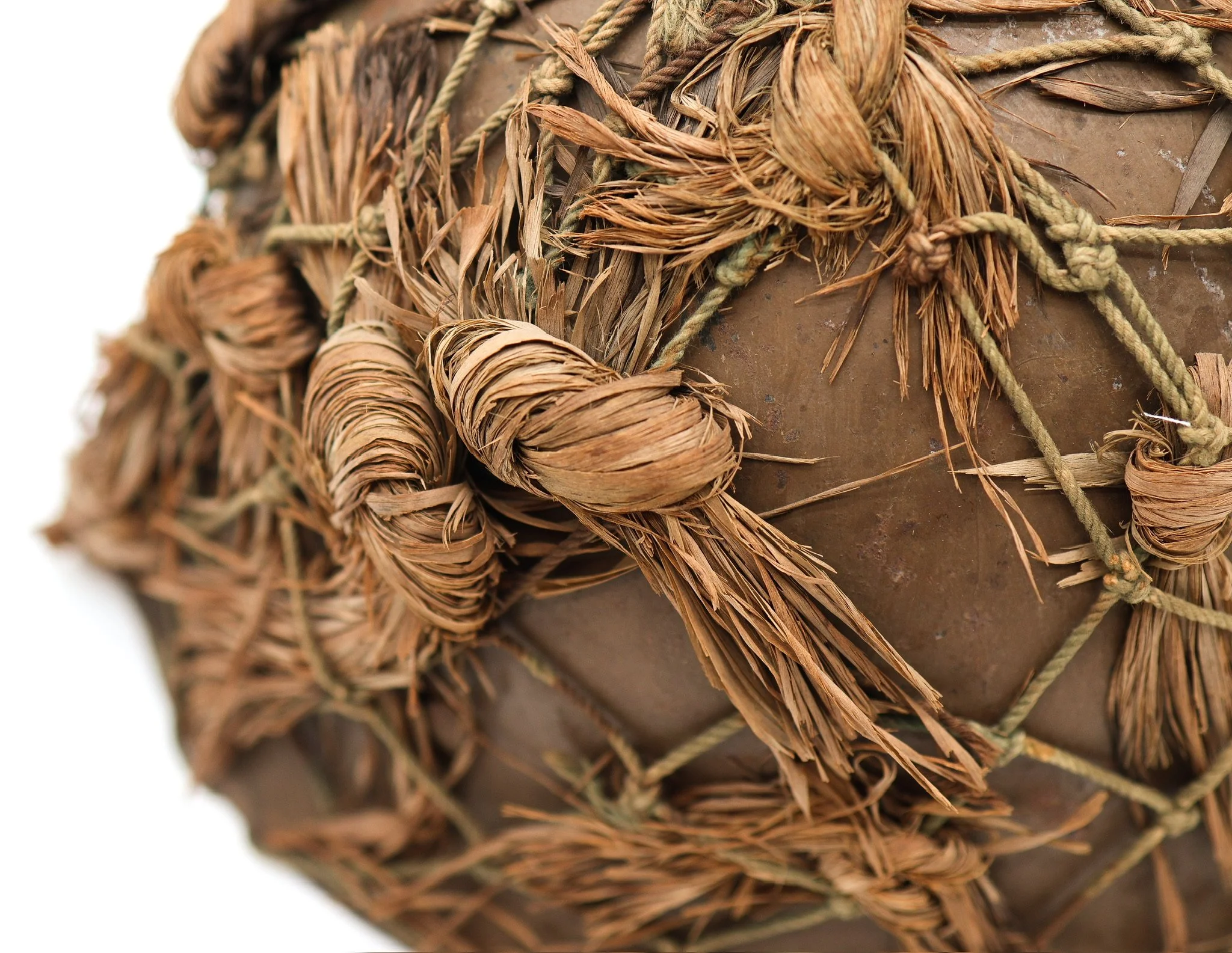
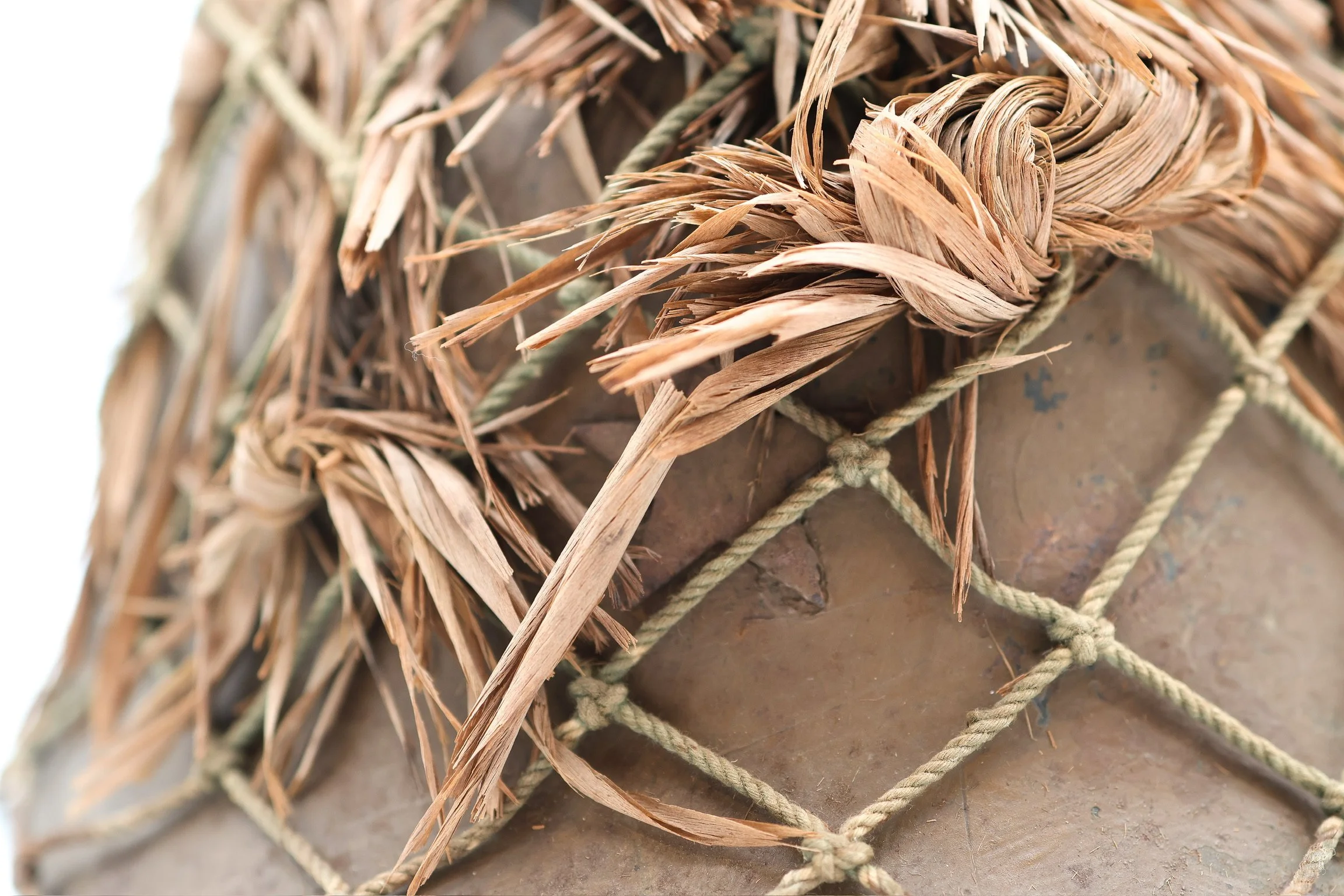
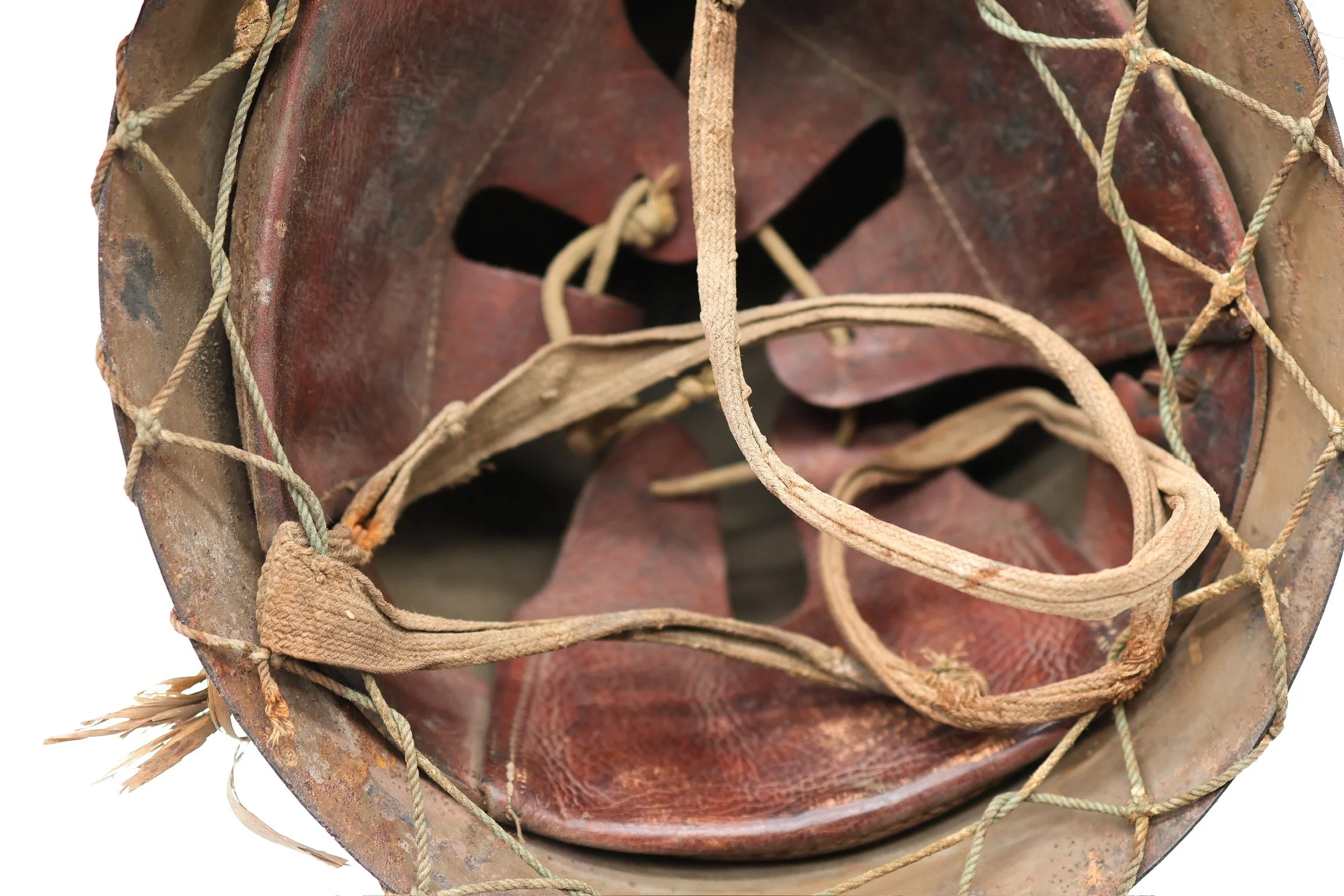
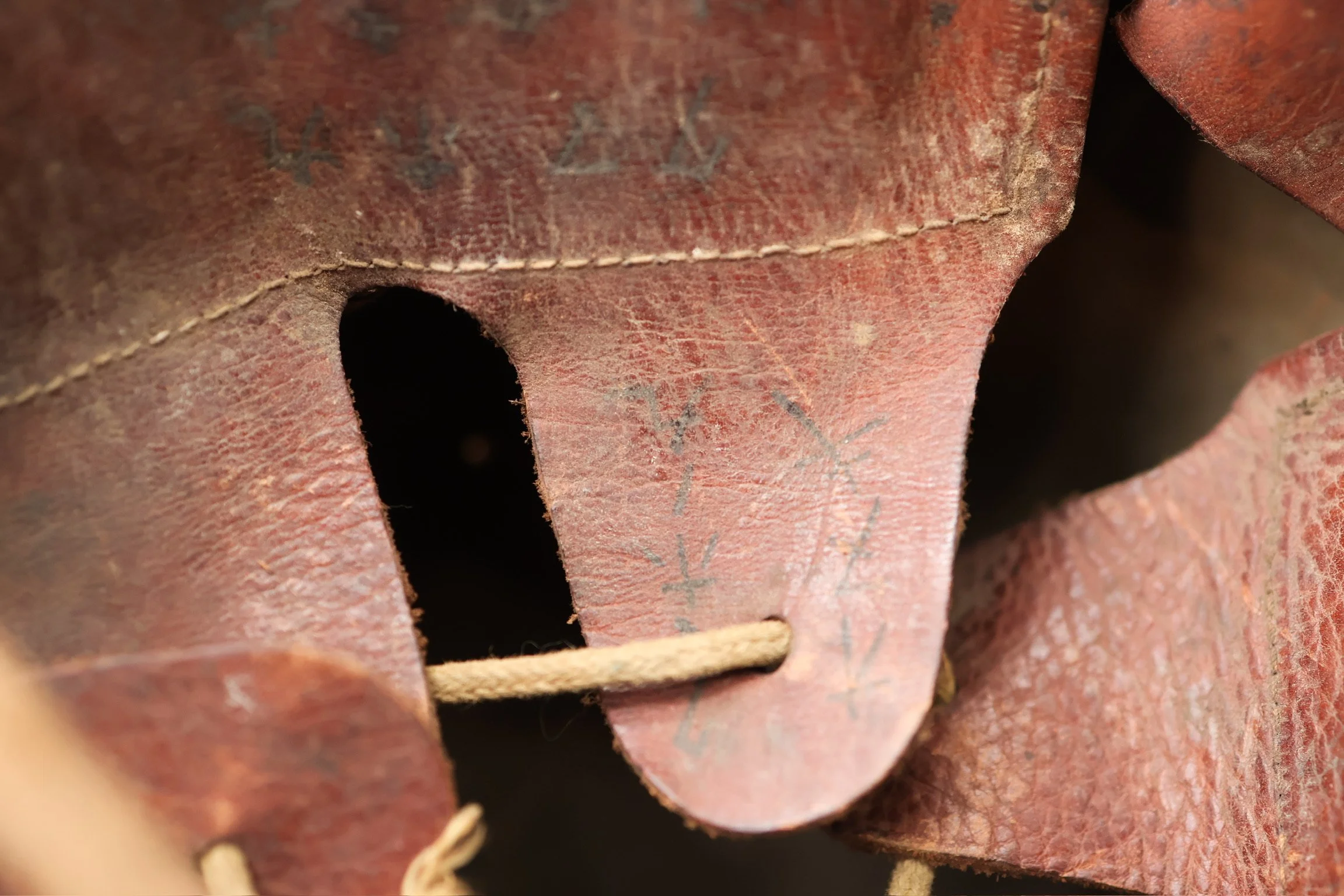
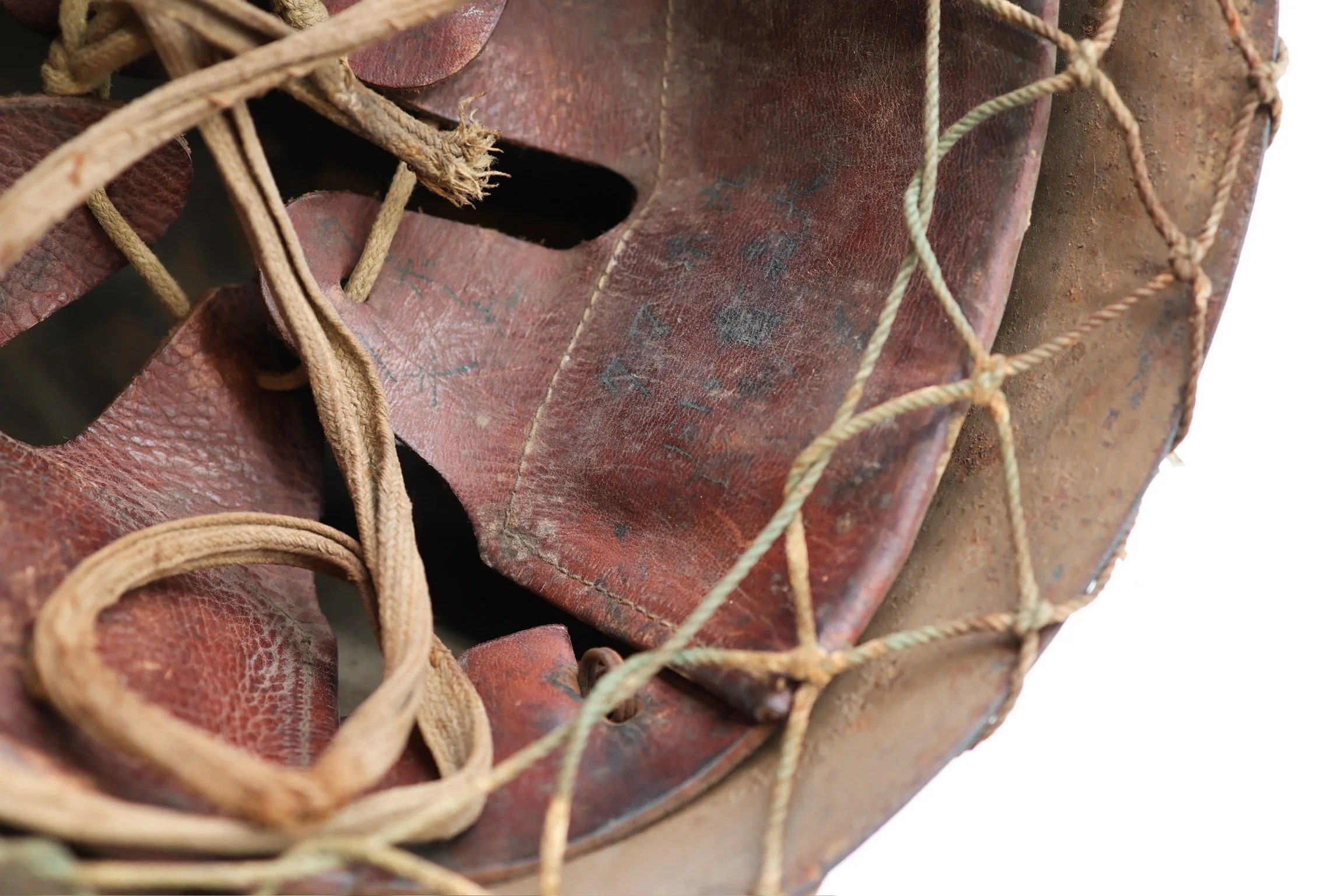
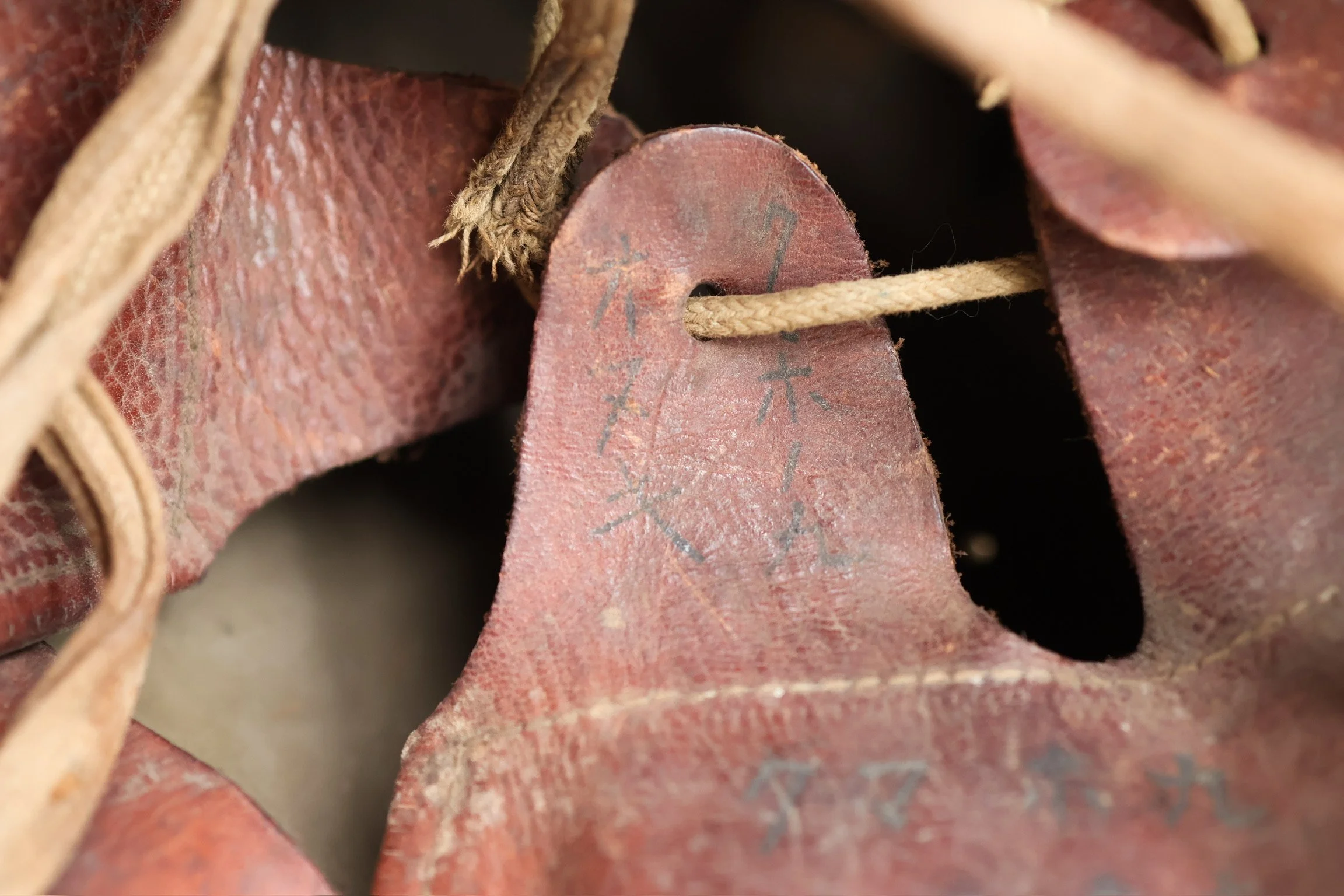
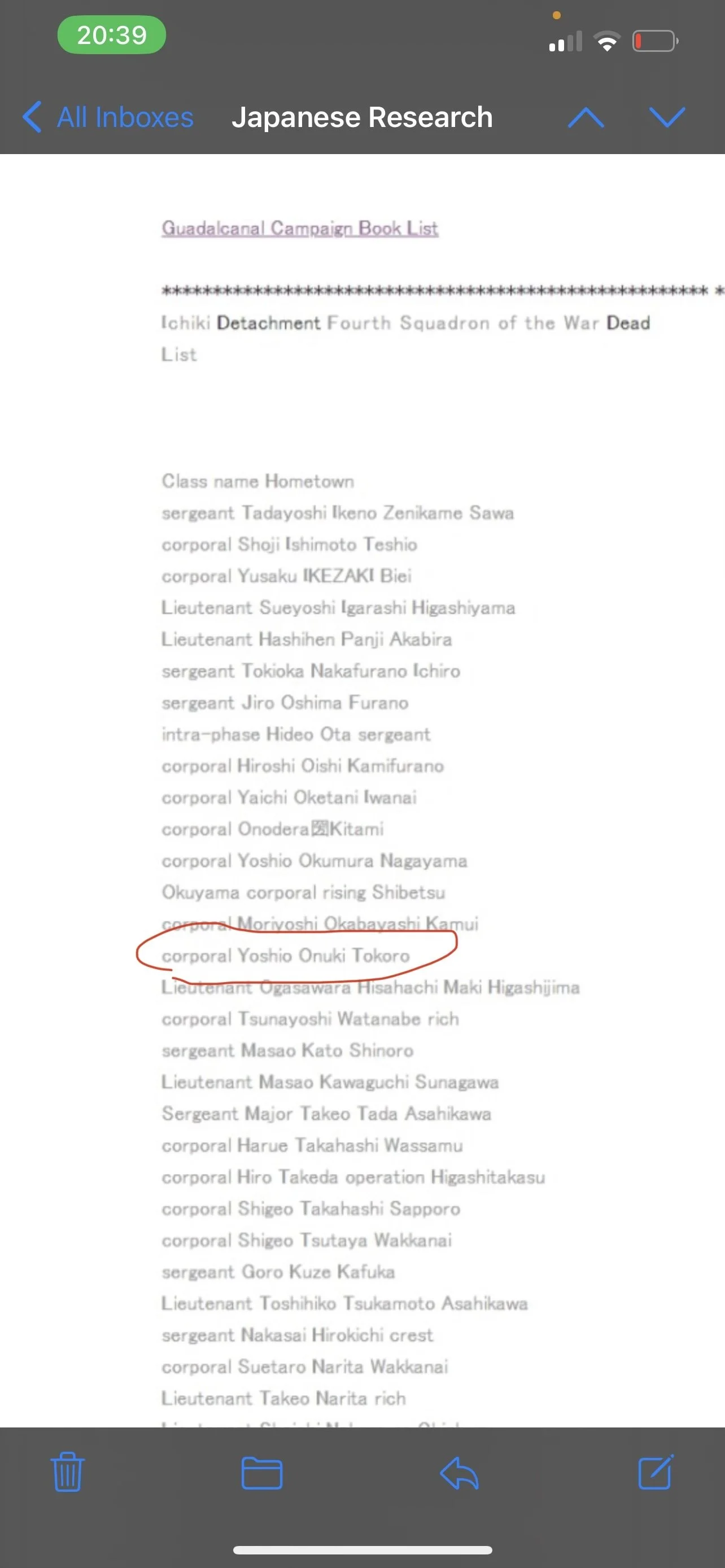
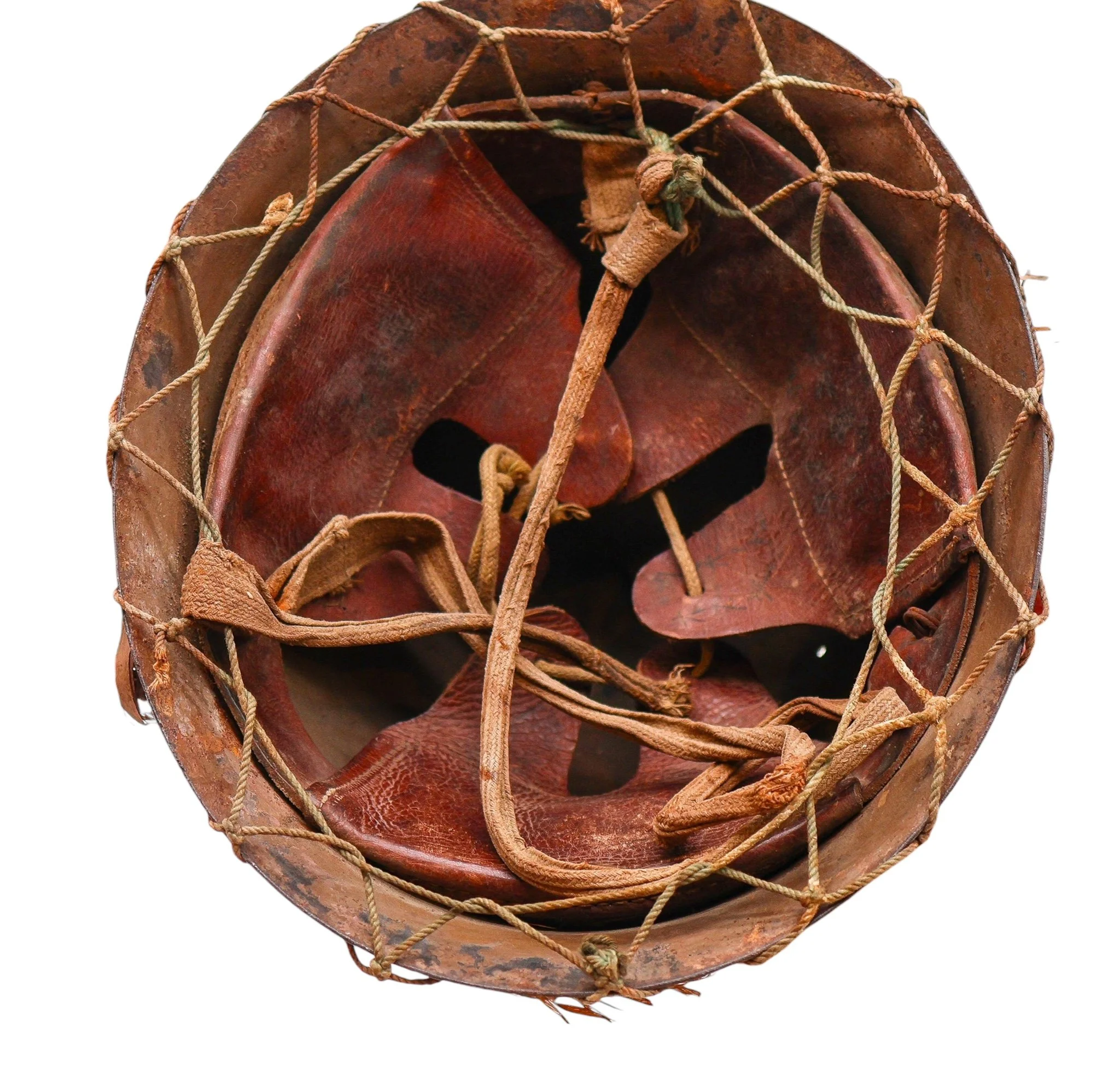
Japanese Type 90 Helmet from the Ichiki Detachment, Guadalcanal, 1942
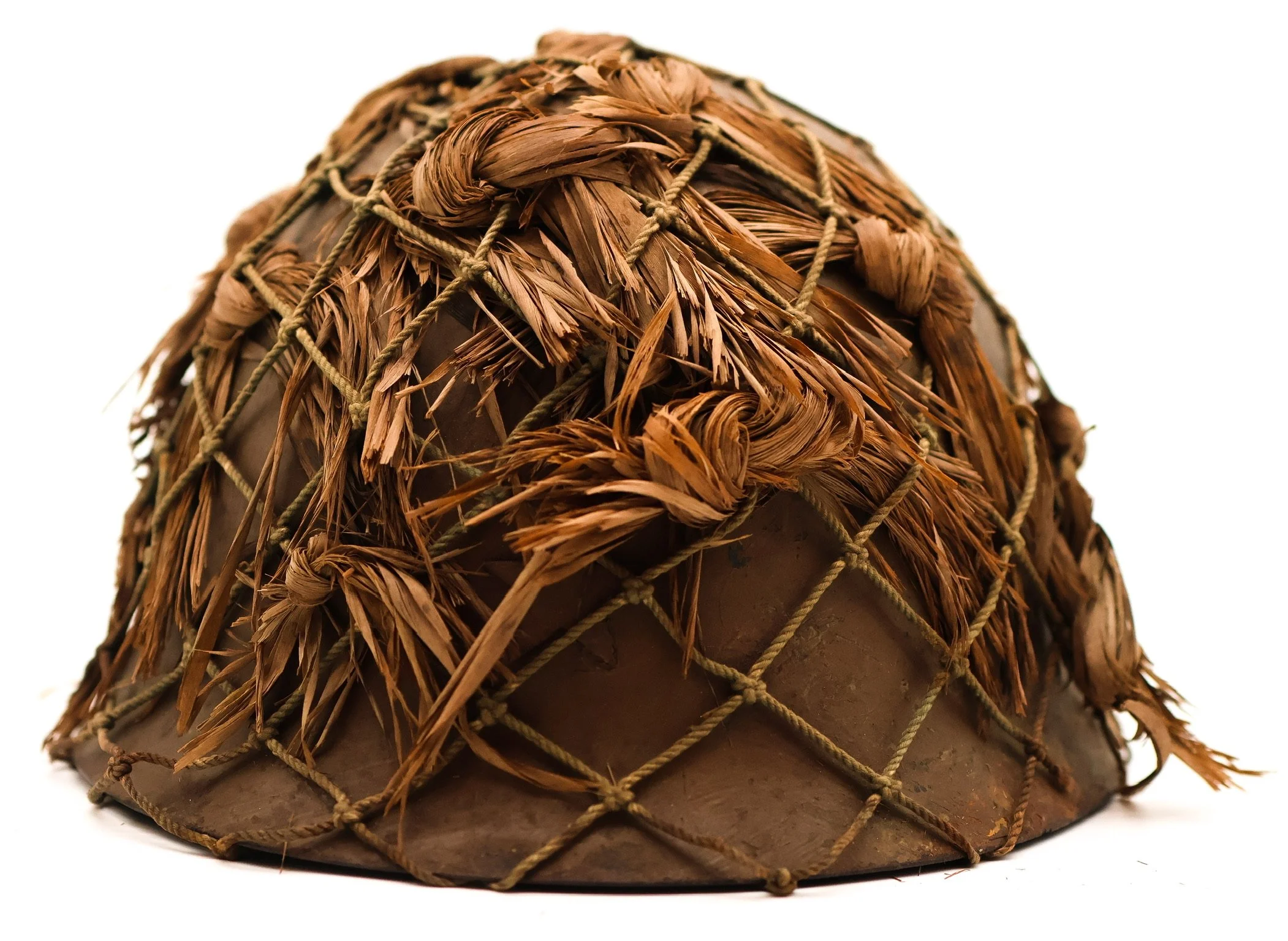
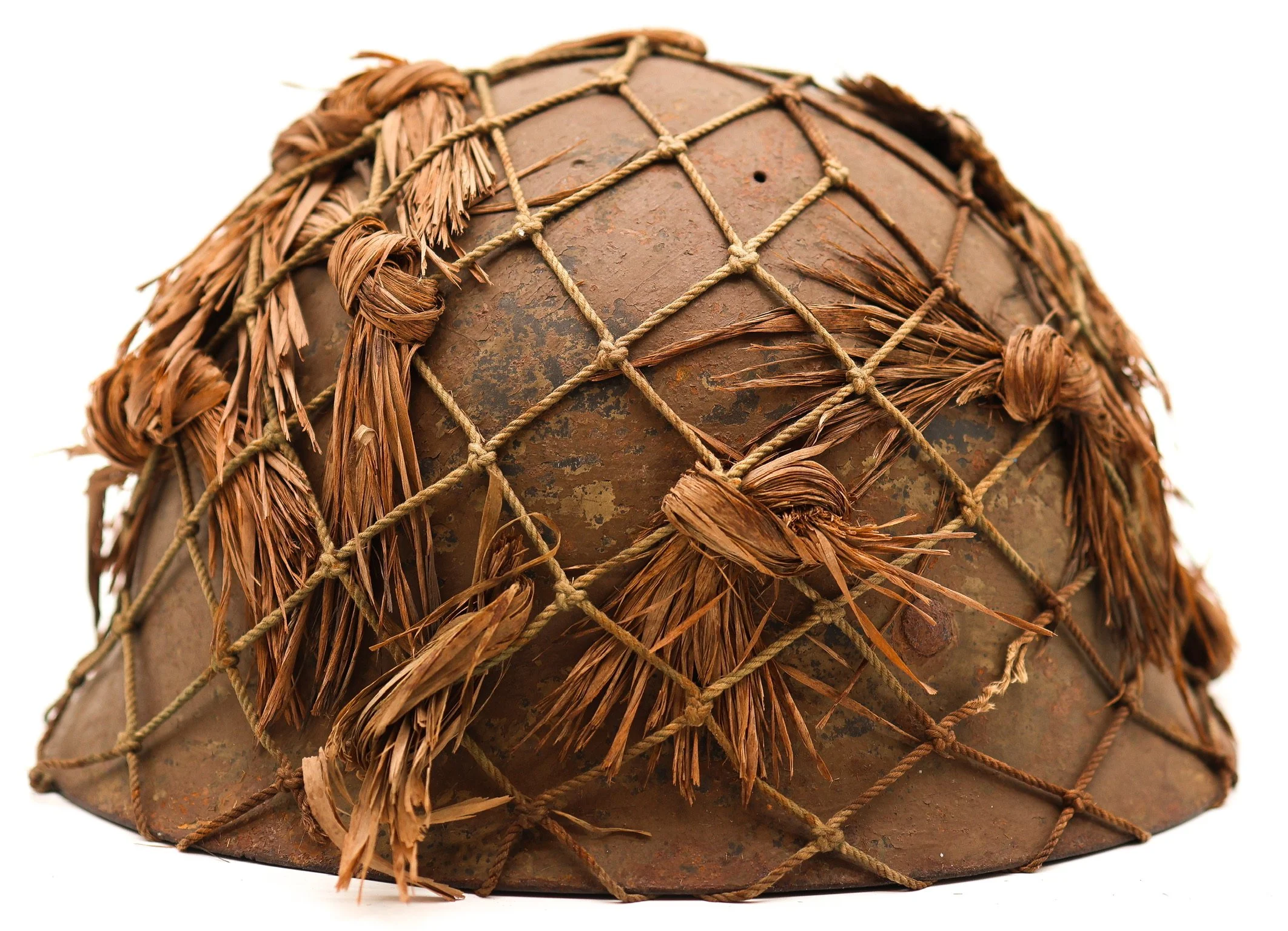
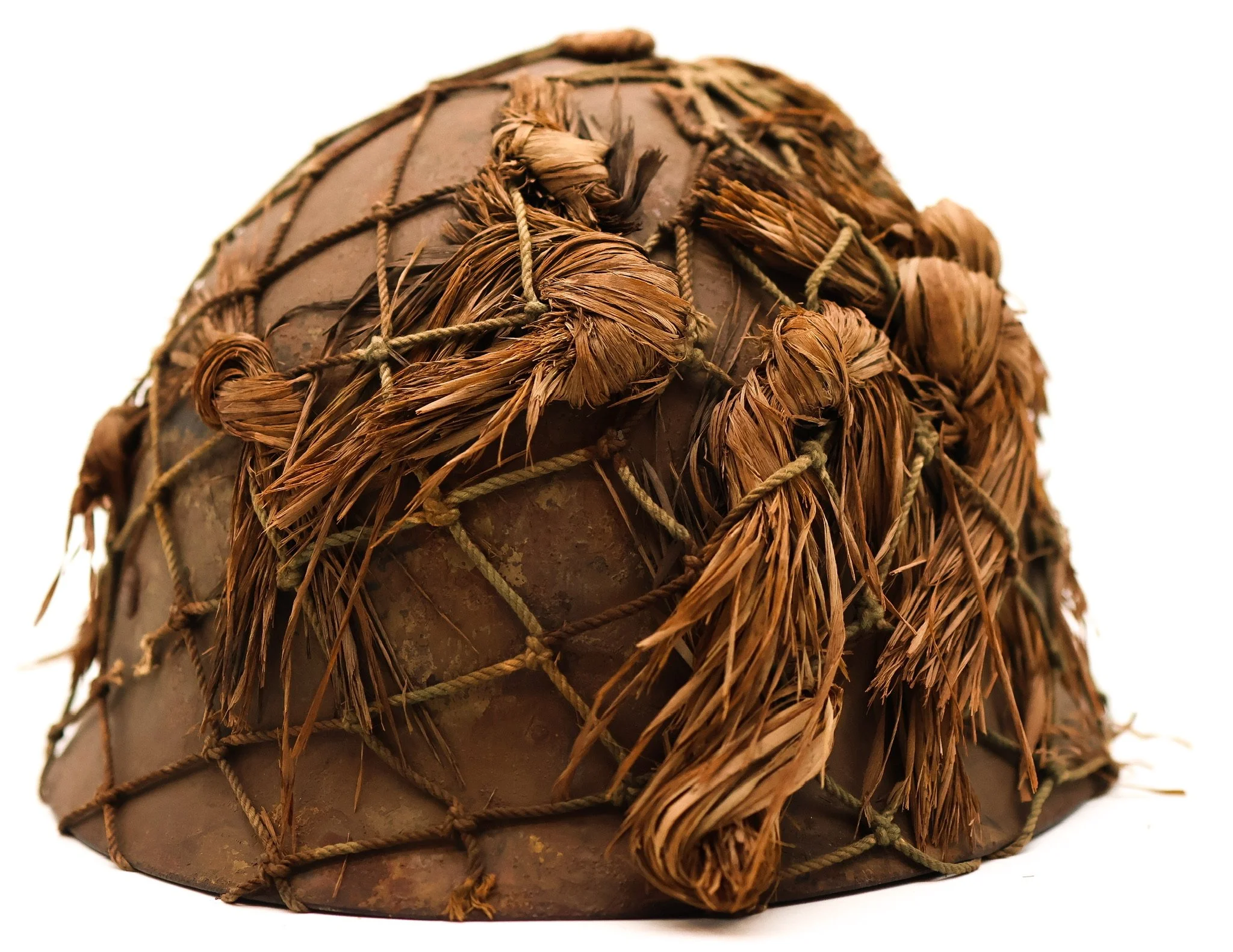
This Japanese Type 90 steel helmet was taken from Onuki Yoshio, a soldier killed during the Battle of Alligator Creek, also known as the Battle of the Tenaru River, during the Guadalcanal campaign in August 1942. The soldier was a member of the Ichiki Detachment, the first Japanese ground force committed to the fighting on Guadalcanal.
The helmet retains original Guadalcanal foliage still attached to the exterior. Remarkably, the foliage has remained intact since the time of recovery and has not been removed or disturbed. The interior liner bears detailed hand-written kanji identifying the soldier as Corporal Onuki Yoshio, from Tokoro, Hokkaido, with markings consistent with the Ichiki Detachment.
Photographing the kanji is challenging, as the foliage has been intentionally left undisturbed to avoid damage, limiting access and visibility to portions of the liner.
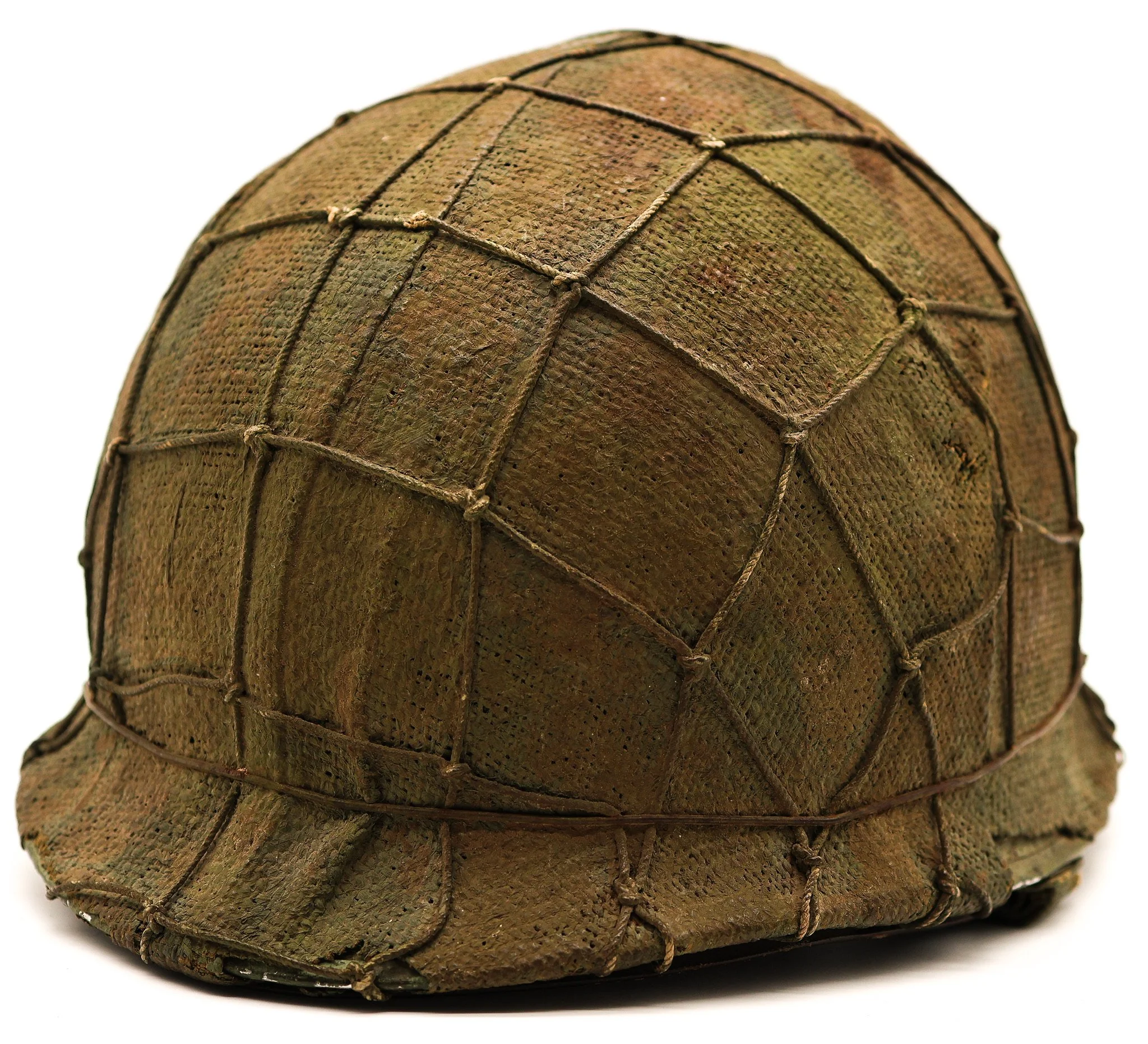
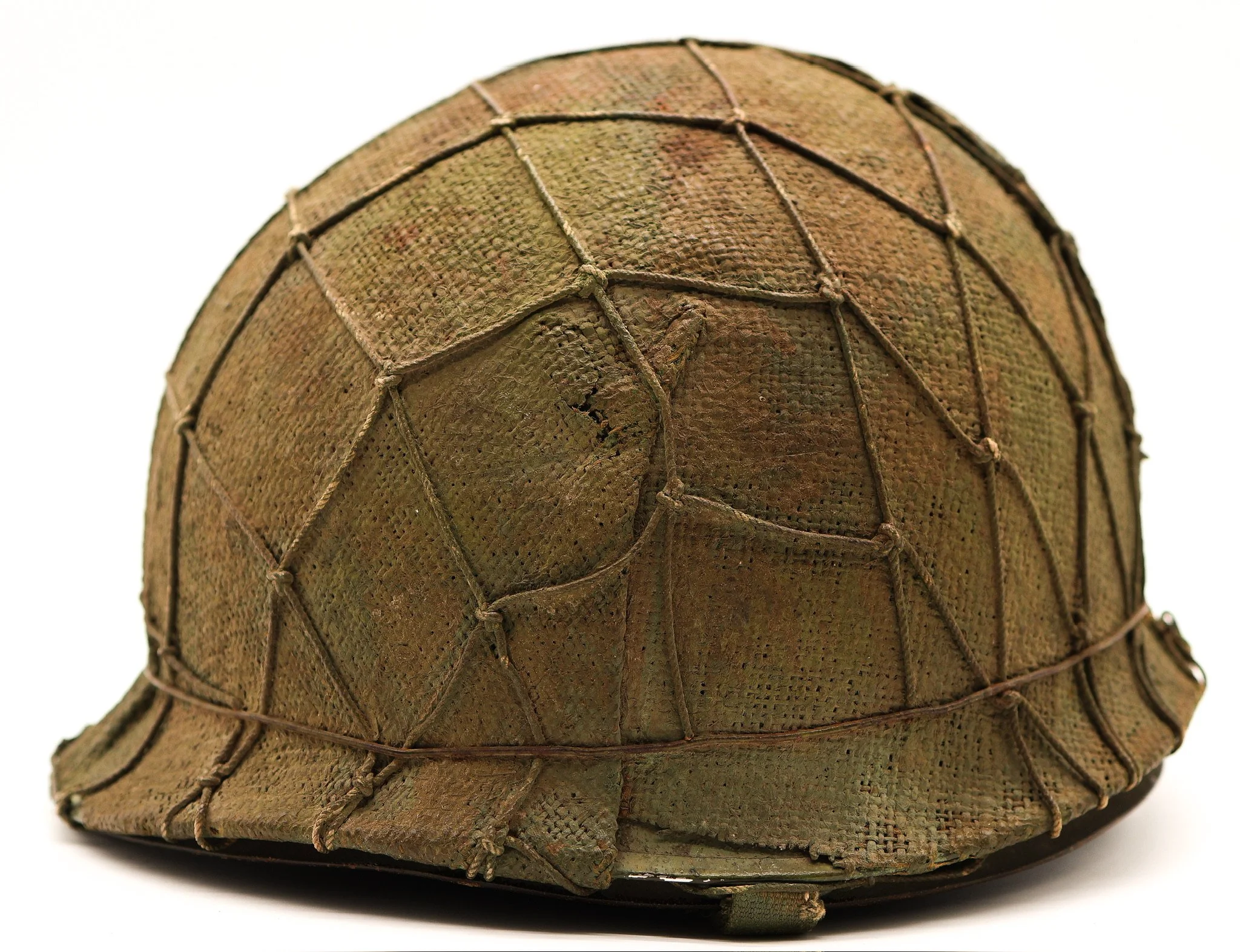
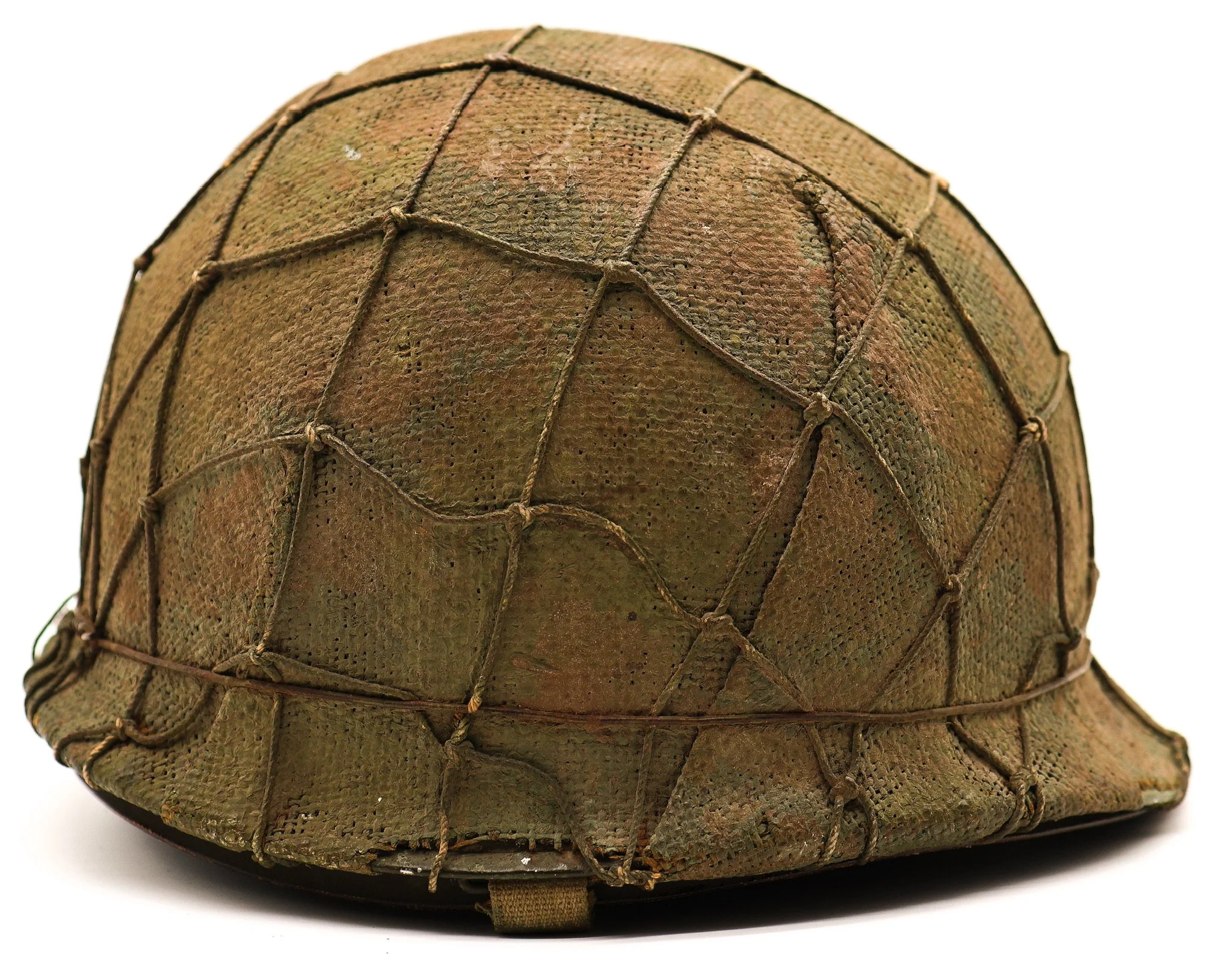
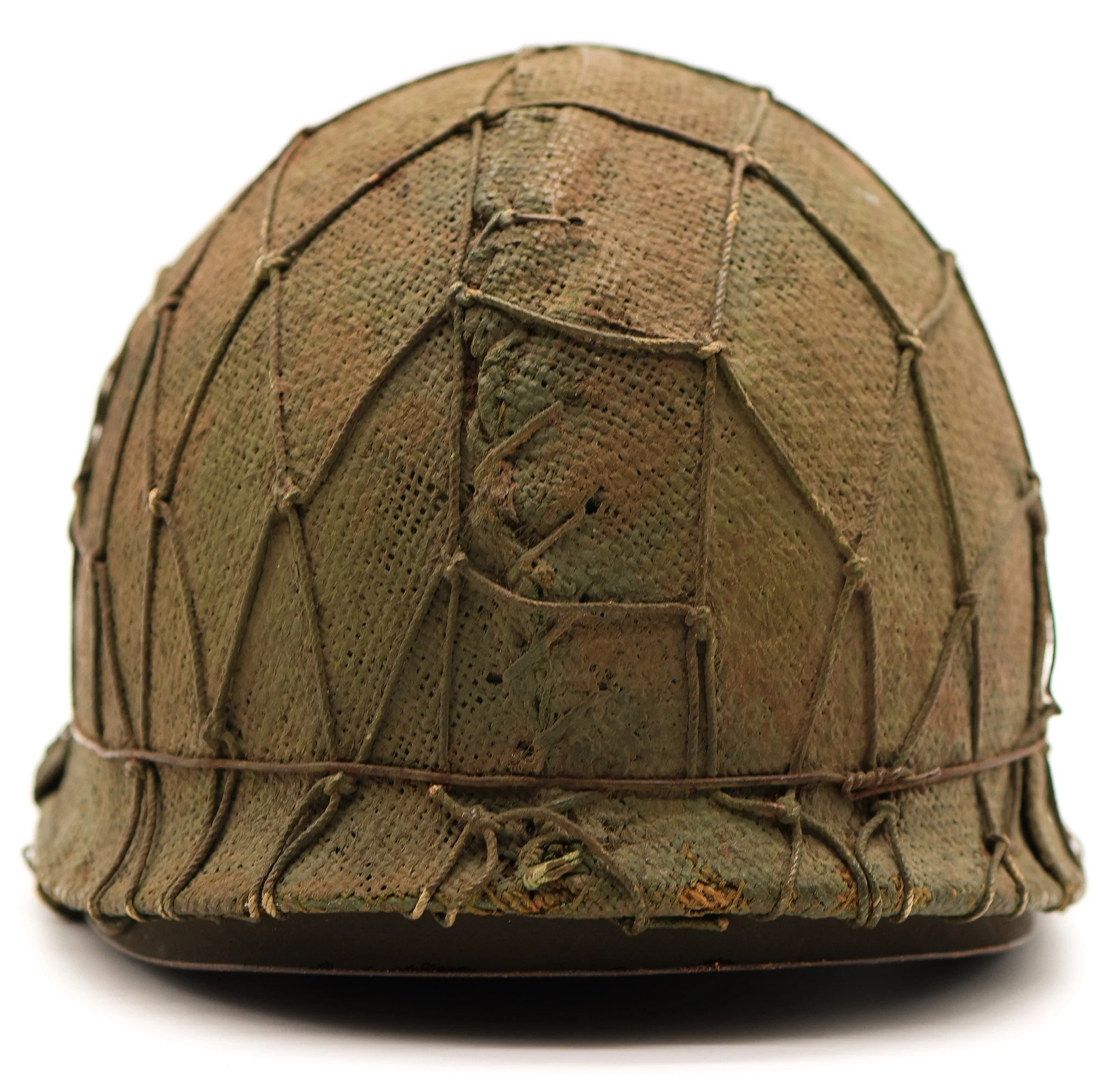
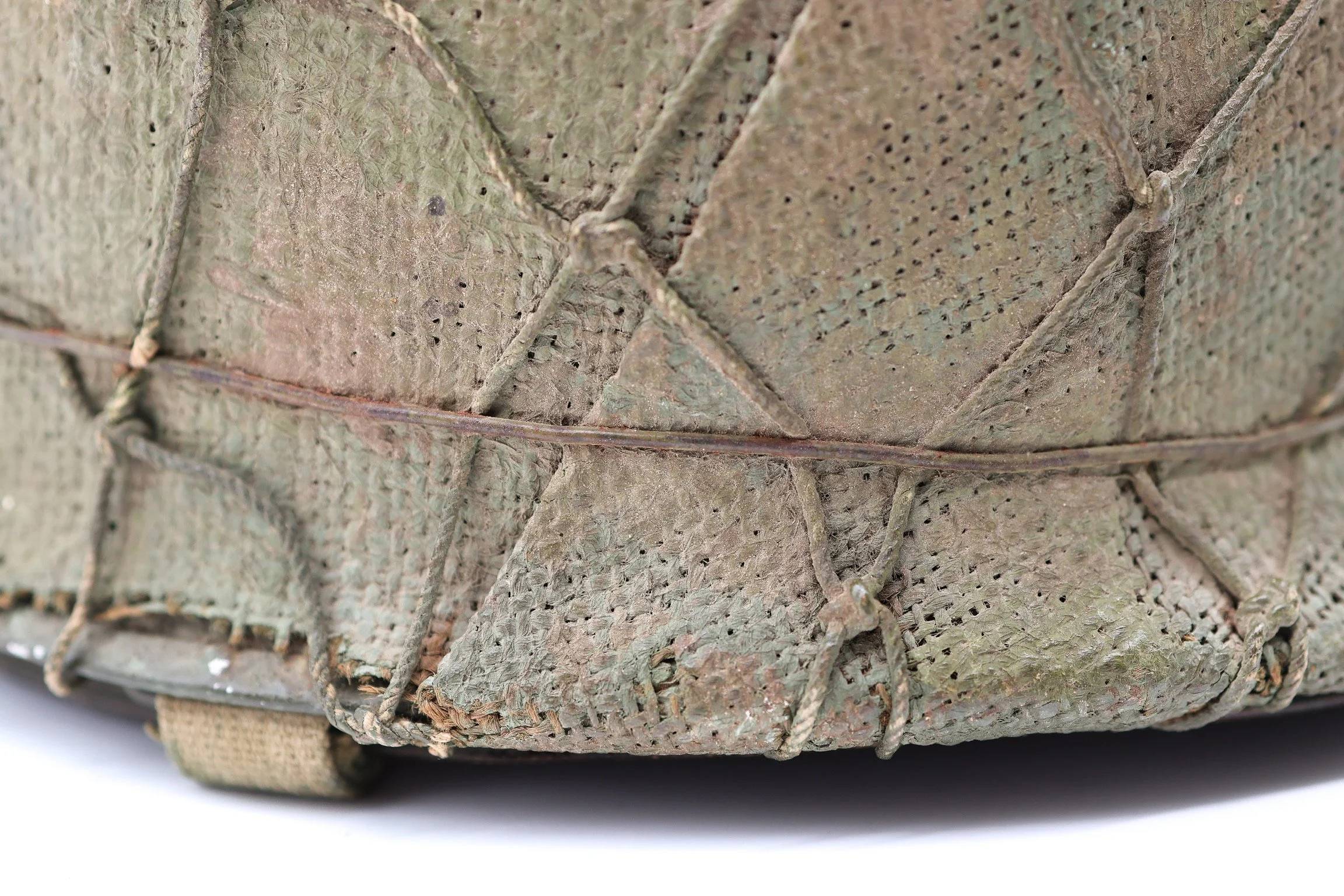
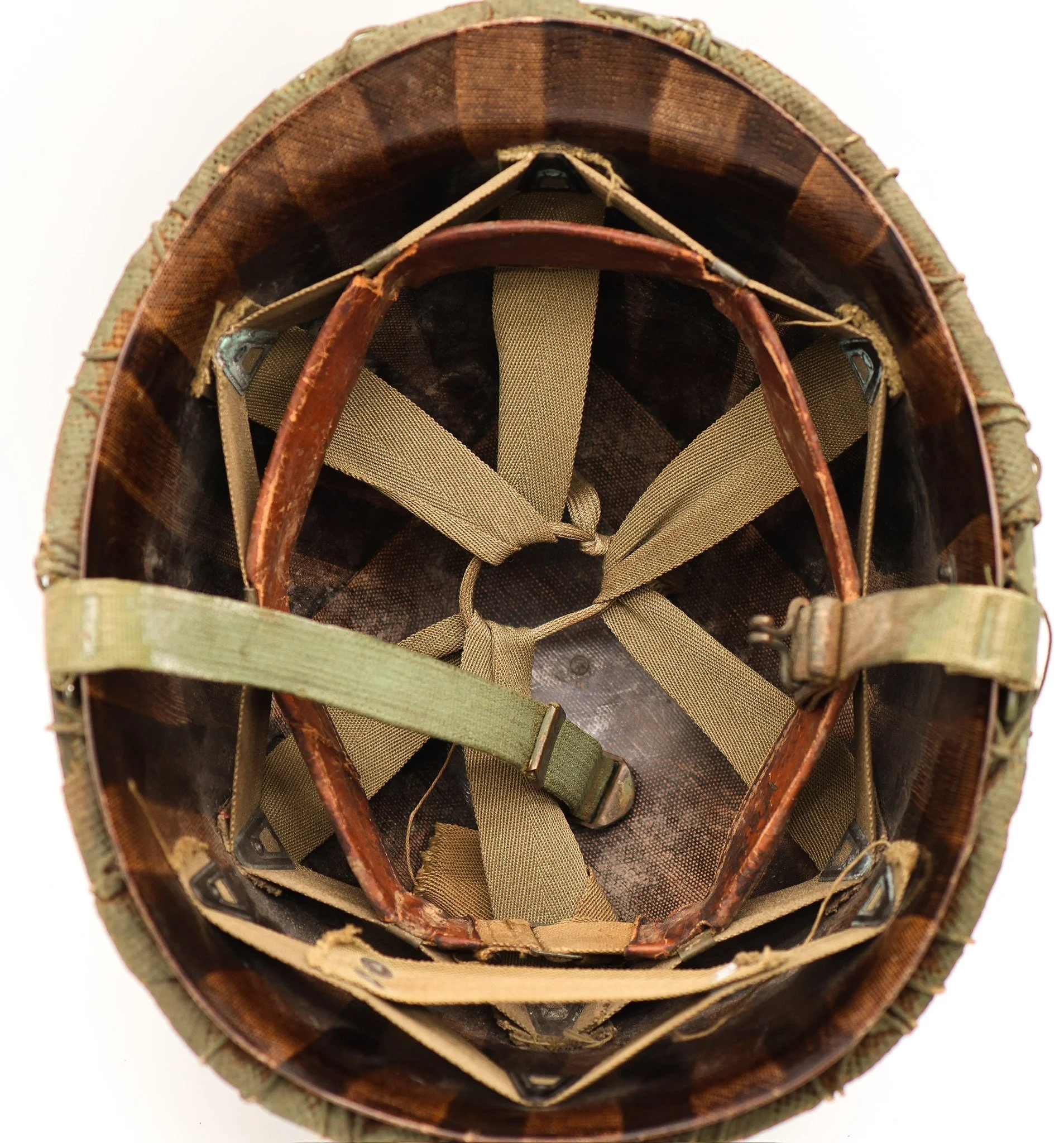
Marine Raider Camouflaged Helmet Identified to PFC Elmer A. Mapes, 2nd Raider Battalion
This U.S. M1 helmet and low-pressure liner are identified to PFC Elmer Arthur Mapes, USMCR, service number 479841. Mapes was born on September 26, 1922, in Muscatine, Iowa, and enlisted in the Marine Corps Reserve on November 9, 1942. His service records place him with the 2nd Marine Raider Battalion, 2nd Marine Raider Regiment, during the Bougainville campaign. After his Raider service, Mapes transferred into 2nd Battalion, 4th Marines, later part of the 6th Marine Division.
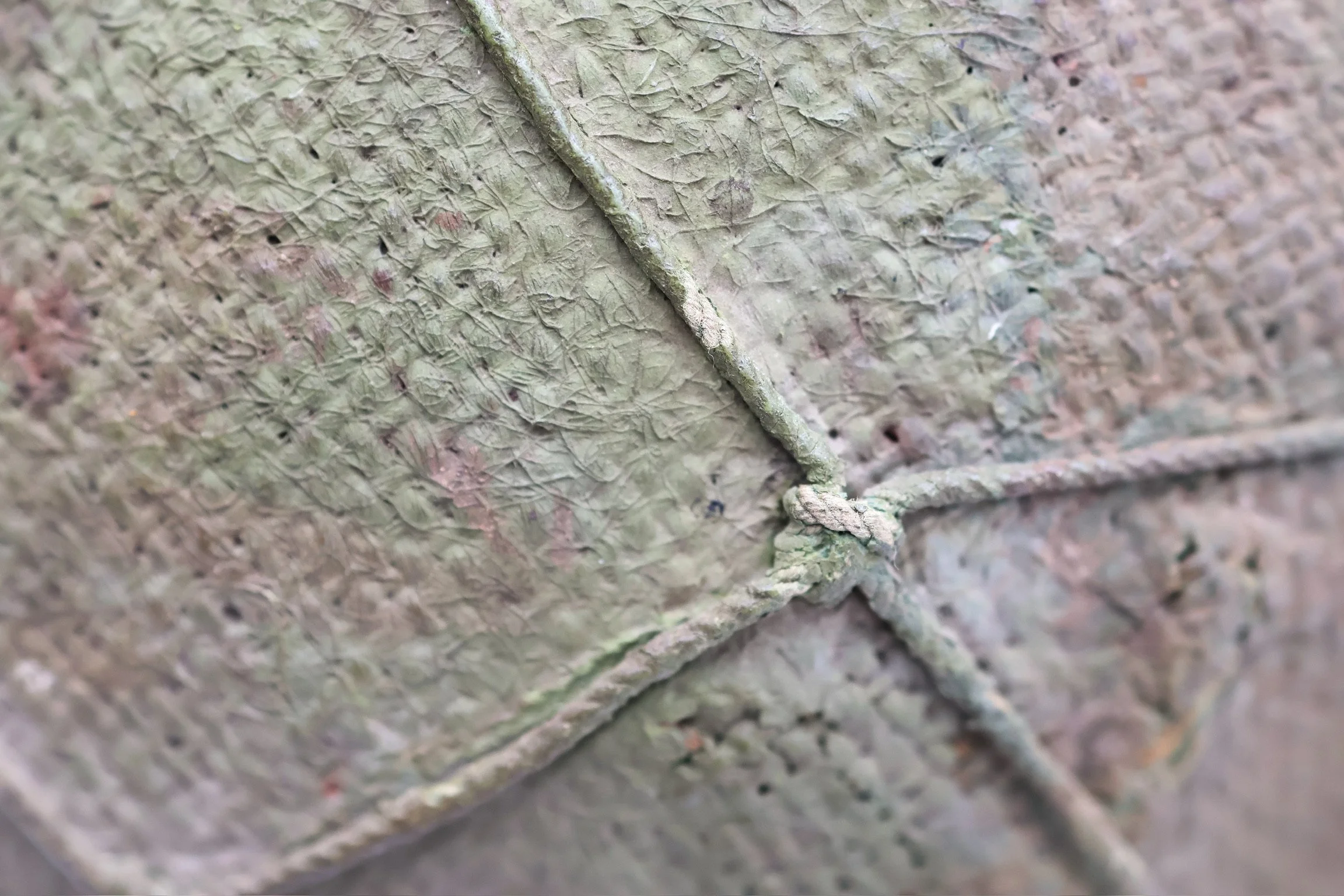
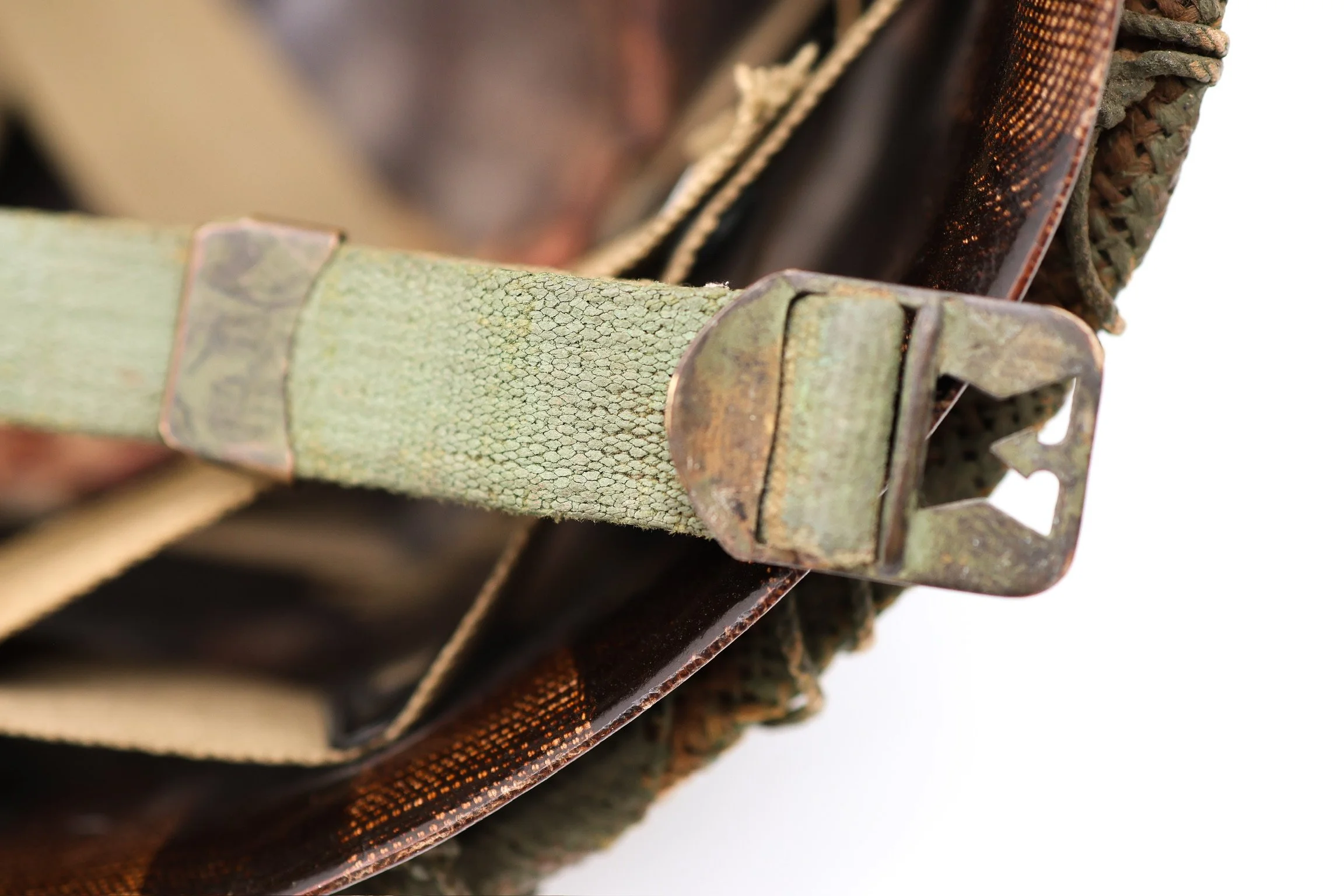
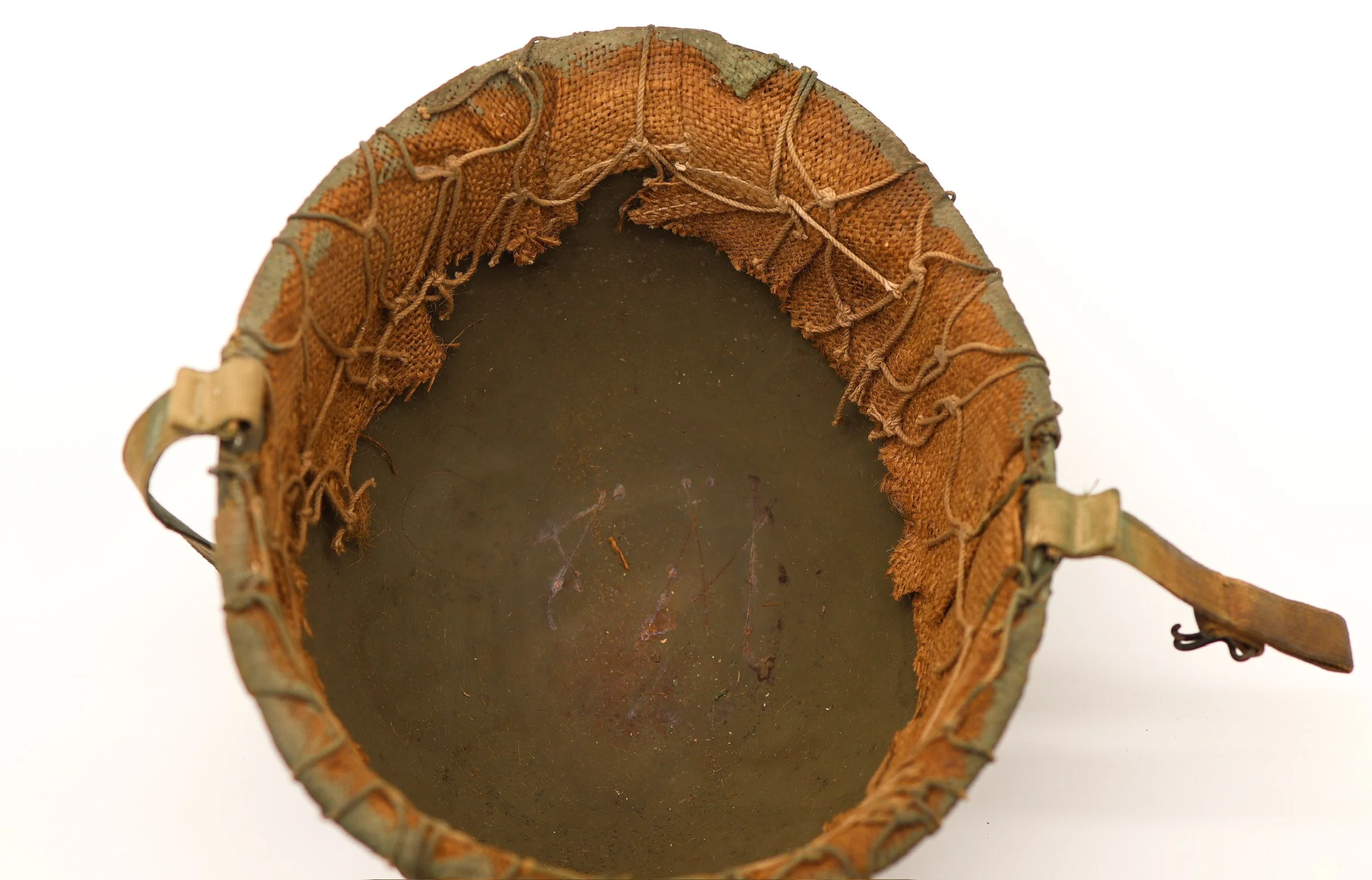
The helmet retains a rare field-applied Raider-style camouflage associated with Bougainville. Burlap was fitted over the shell, painted in heavy green and brown tones, and secured with a two-inch net and wire band around the helmet. The paint is also present on the chinstraps, and the burlap has hardened to the shell over time.
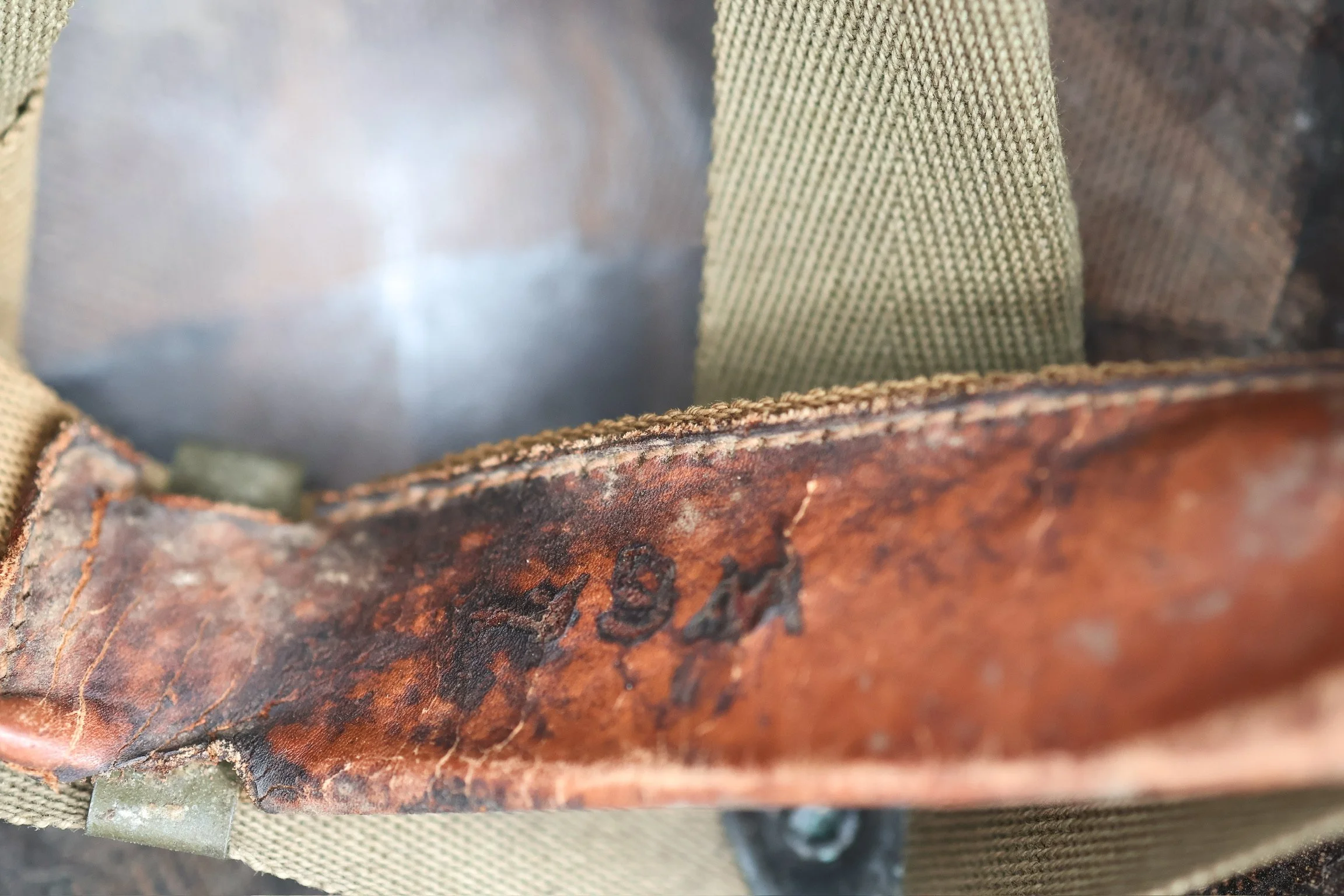
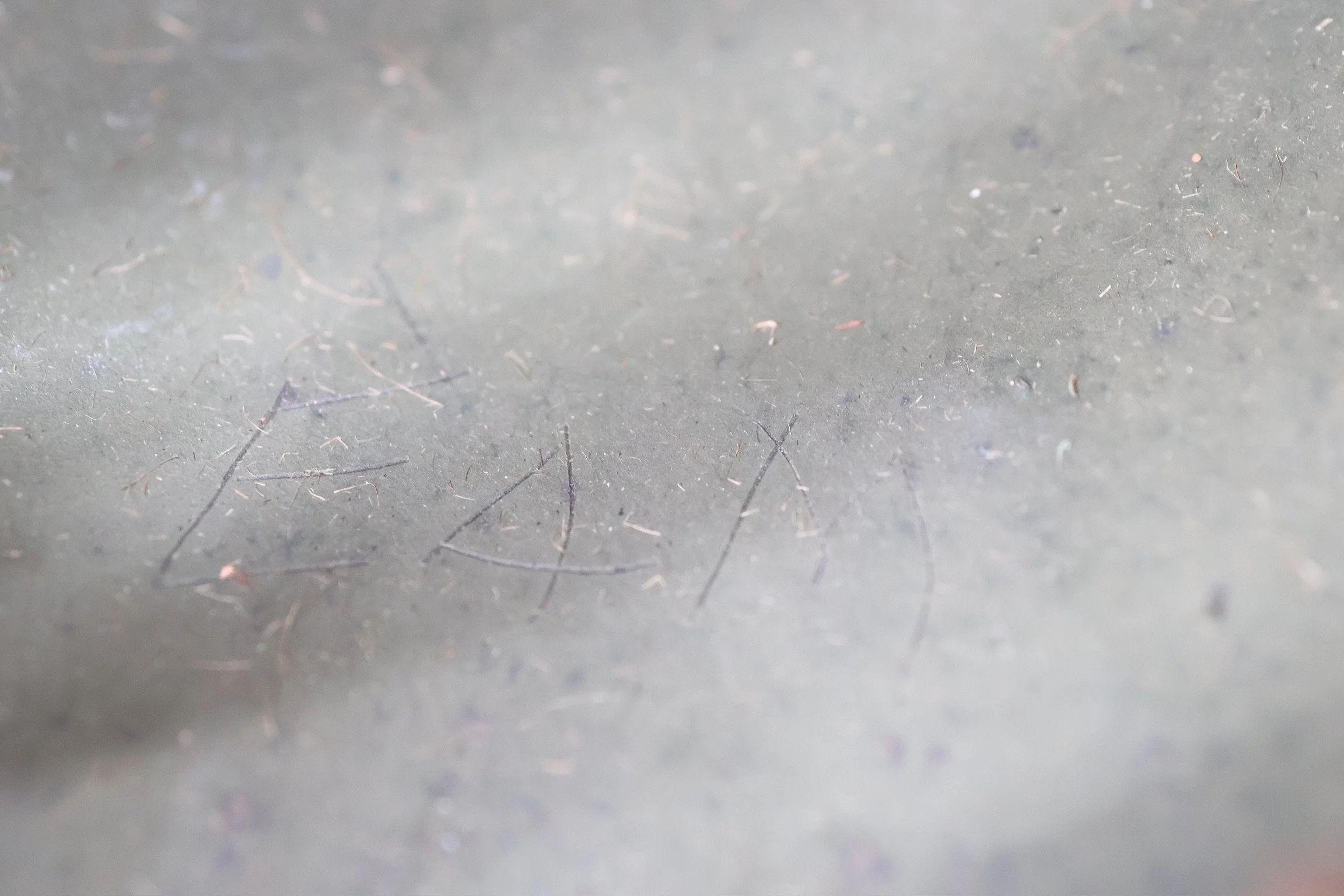
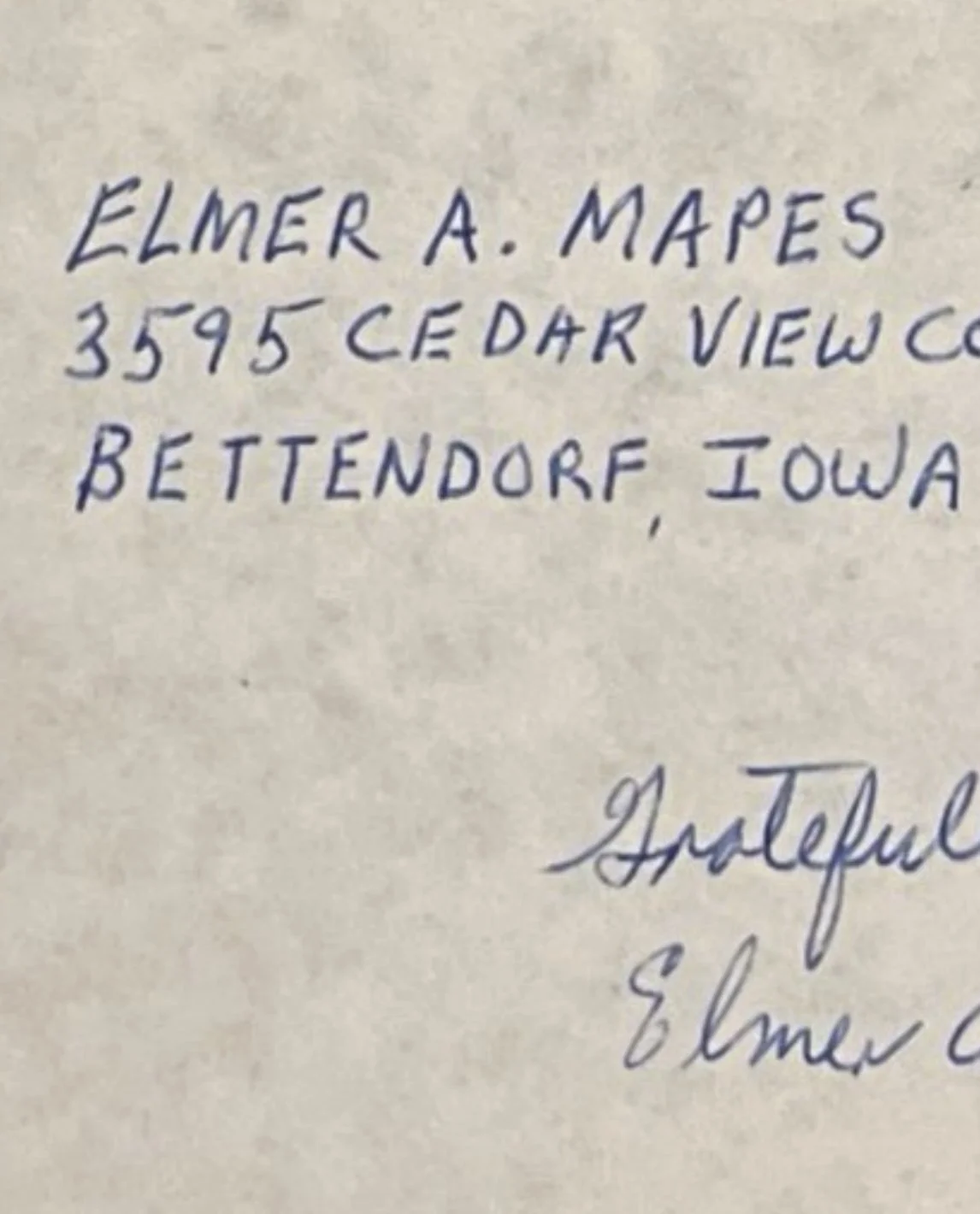
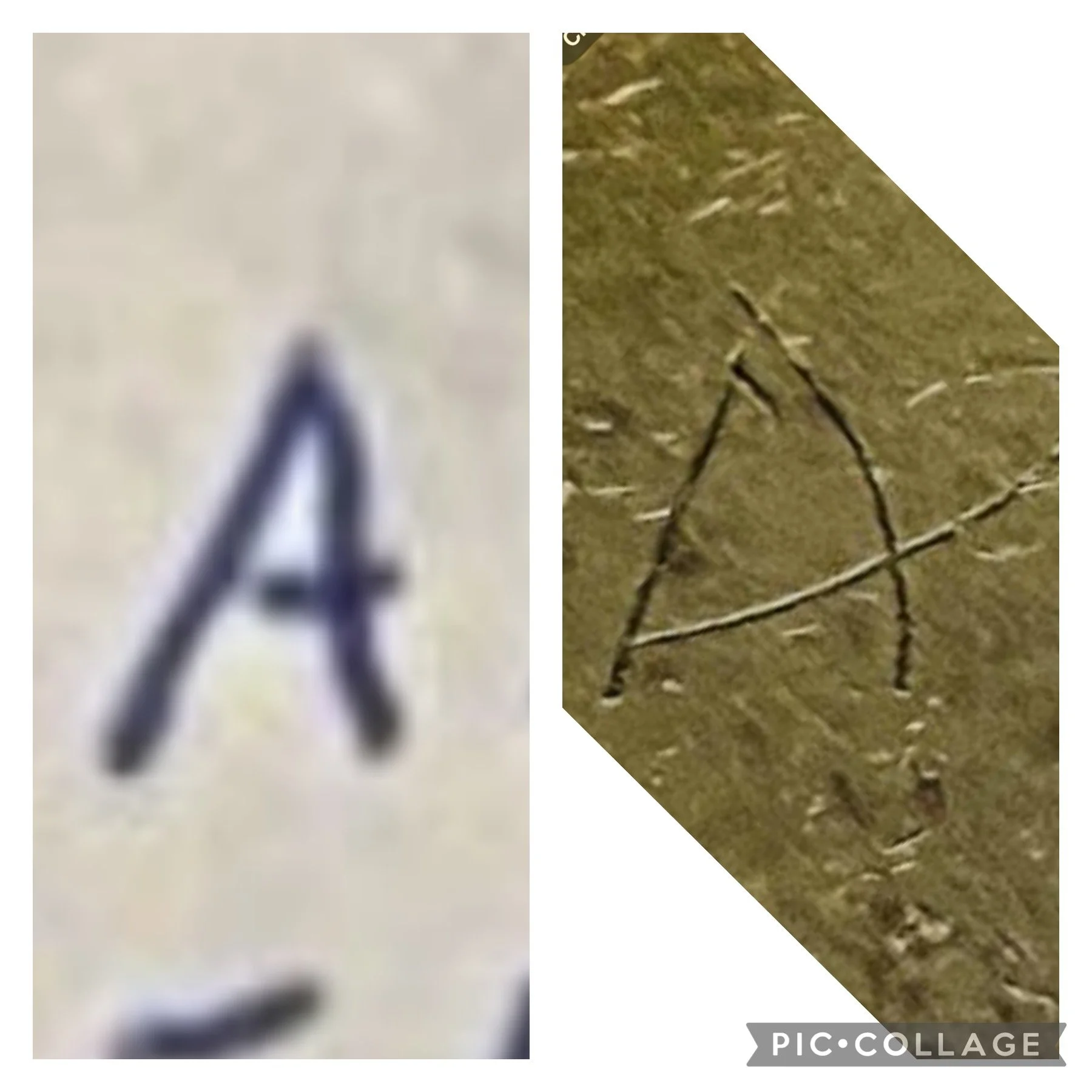
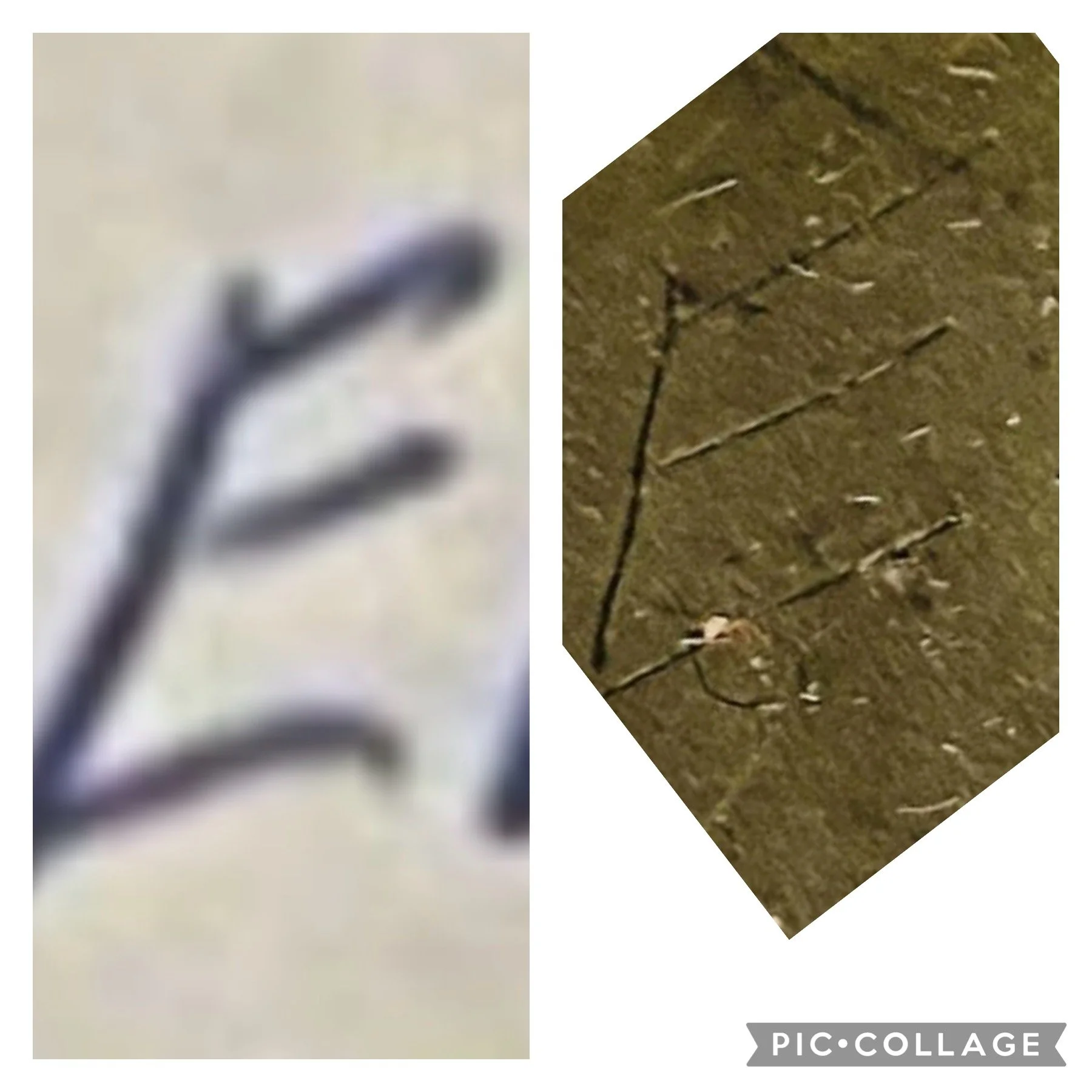
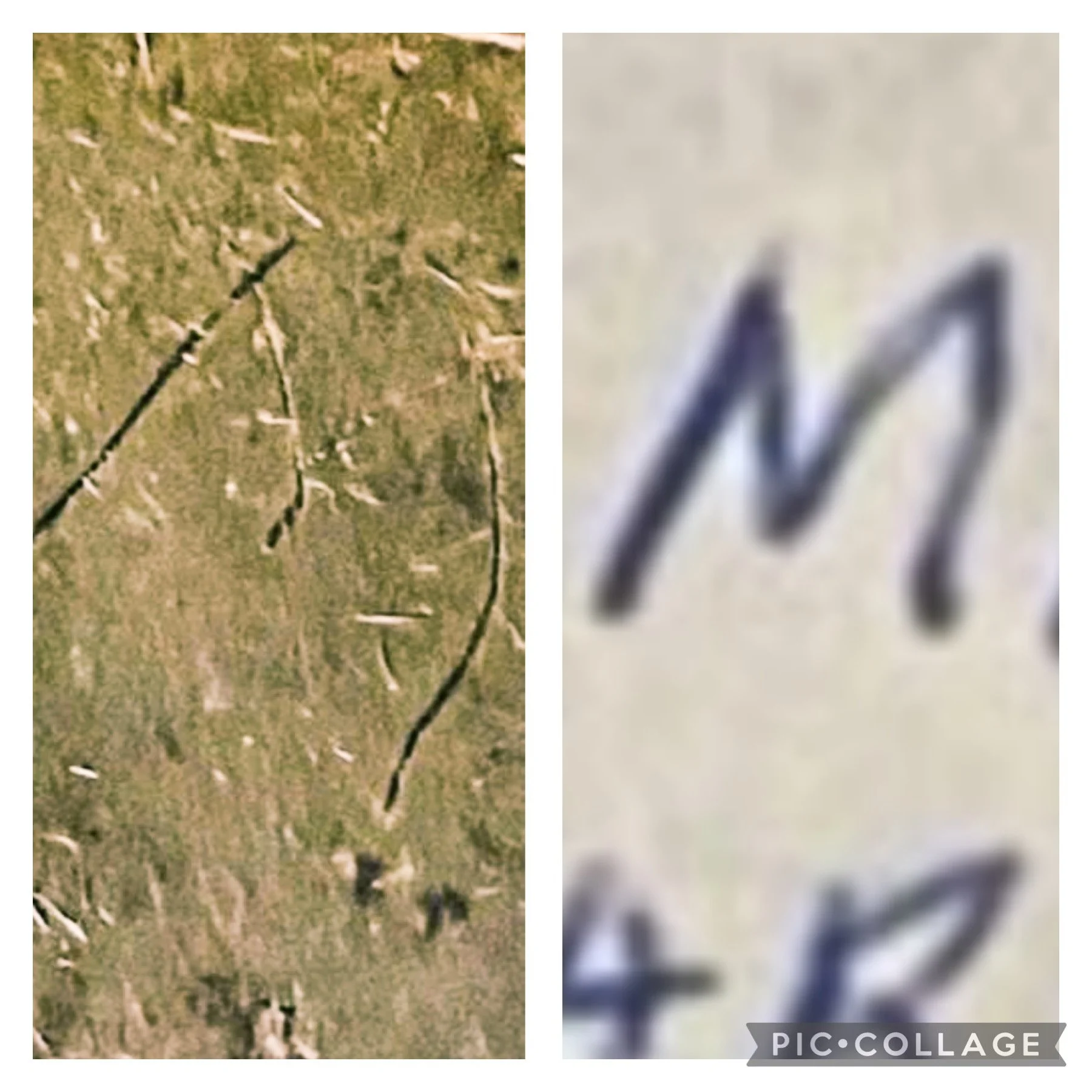
The identification is based on “E.A.M.” scratched inside the helmet shell and also marked in the liner. Research of Marine Raider rosters narrowed those initials to two possible Marines. The other E.A.M. served with the Raiders on Guadalcanal, while Mapes’s record places him with the 2nd Raider Battalion on Bougainville, matching the campaign and style of camouflage. The initials scratched into the helmet were also compared with Mapes’s handwritten name and address in his service records, with the formation of the E, A, and M closely matching the way he wrote those same letters.
The survival of the helmet makes sense in the context of Mapes’s service. After Bougainville, he left the Raiders and continued with 2nd Battalion, 4th Marines. This Bougainville-style burlap, net, and wire camouflage would not have been standard for his later service, making it likely that Mapes either retained the helmet as a personal item or sent it home after transferring out of the Raiders. He would have been issued or used a different helmet for his later campaigns.
Mapes later served with 2nd Battalion, 4th Marines during the Guam and Okinawa campaigns. His records show participation in the seizure and occupation of Guam from July 21 to August 27, 1944, and Okinawa from April 1 to July 6, 1945. He was discharged on December 10, 1945. His award records list the World War II Victory Medal, Asiatic-Pacific Campaign Medal with four bronze stars, Navy Occupation Service Medal with Asia clasp, Marine Corps Good Conduct Medal, Presidential Unit Citation Ribbon, Navy Unit Commendation Ribbon, and Marine Corps Sharpshooter Rifle Badge.