Japanese WWII Yosegaki Hinomaru Flag Captured on Iwo Jima
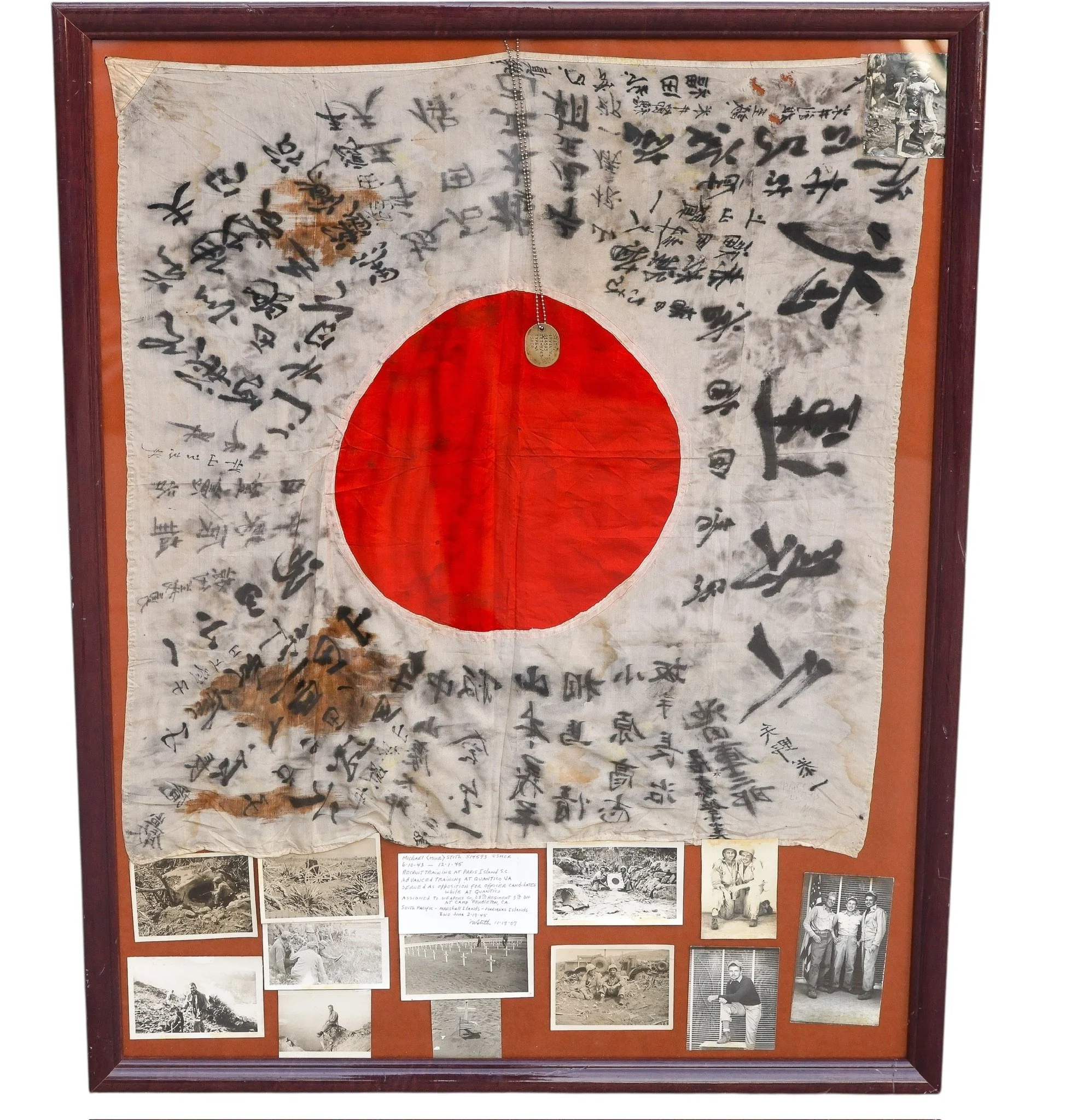
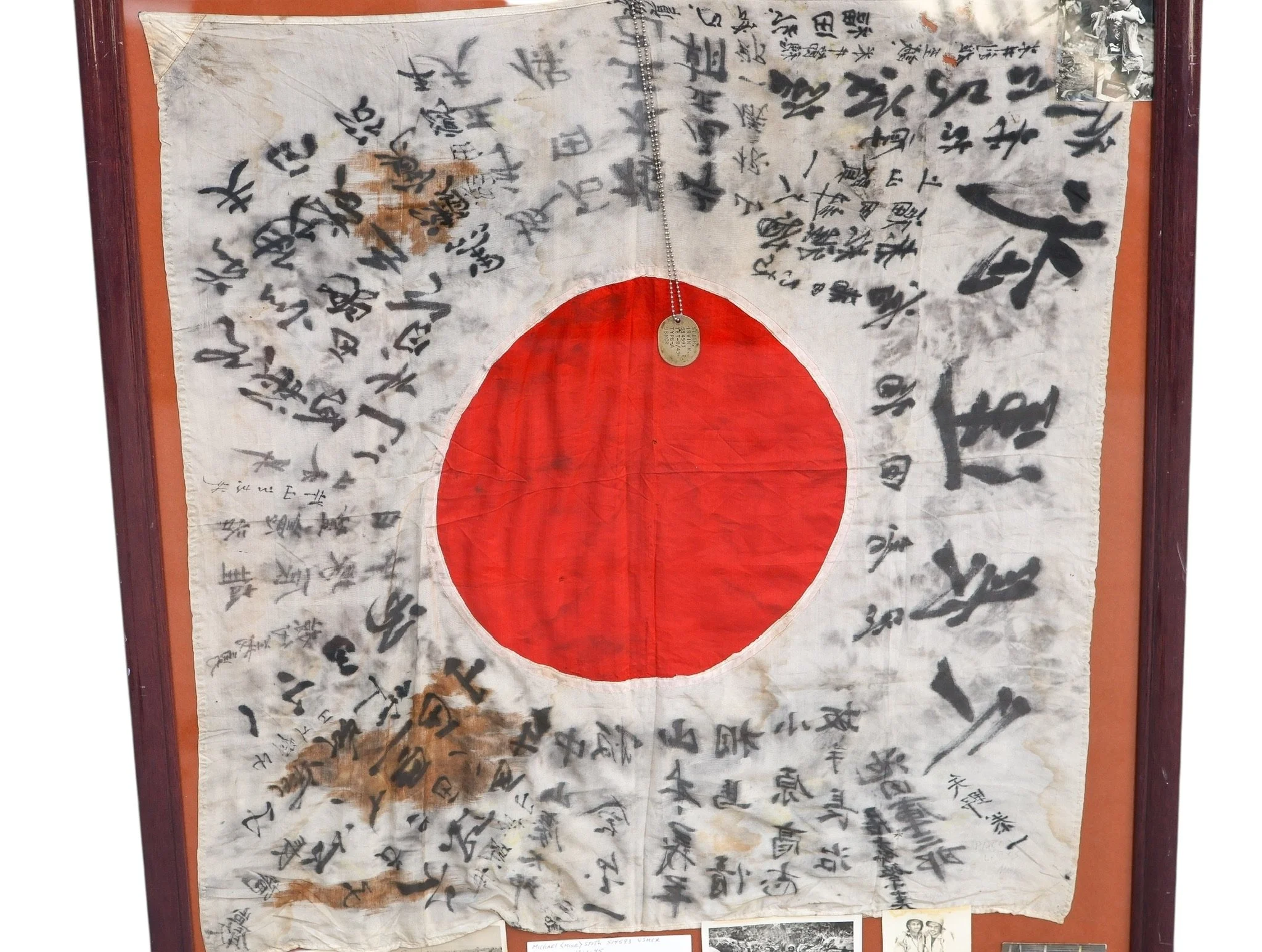
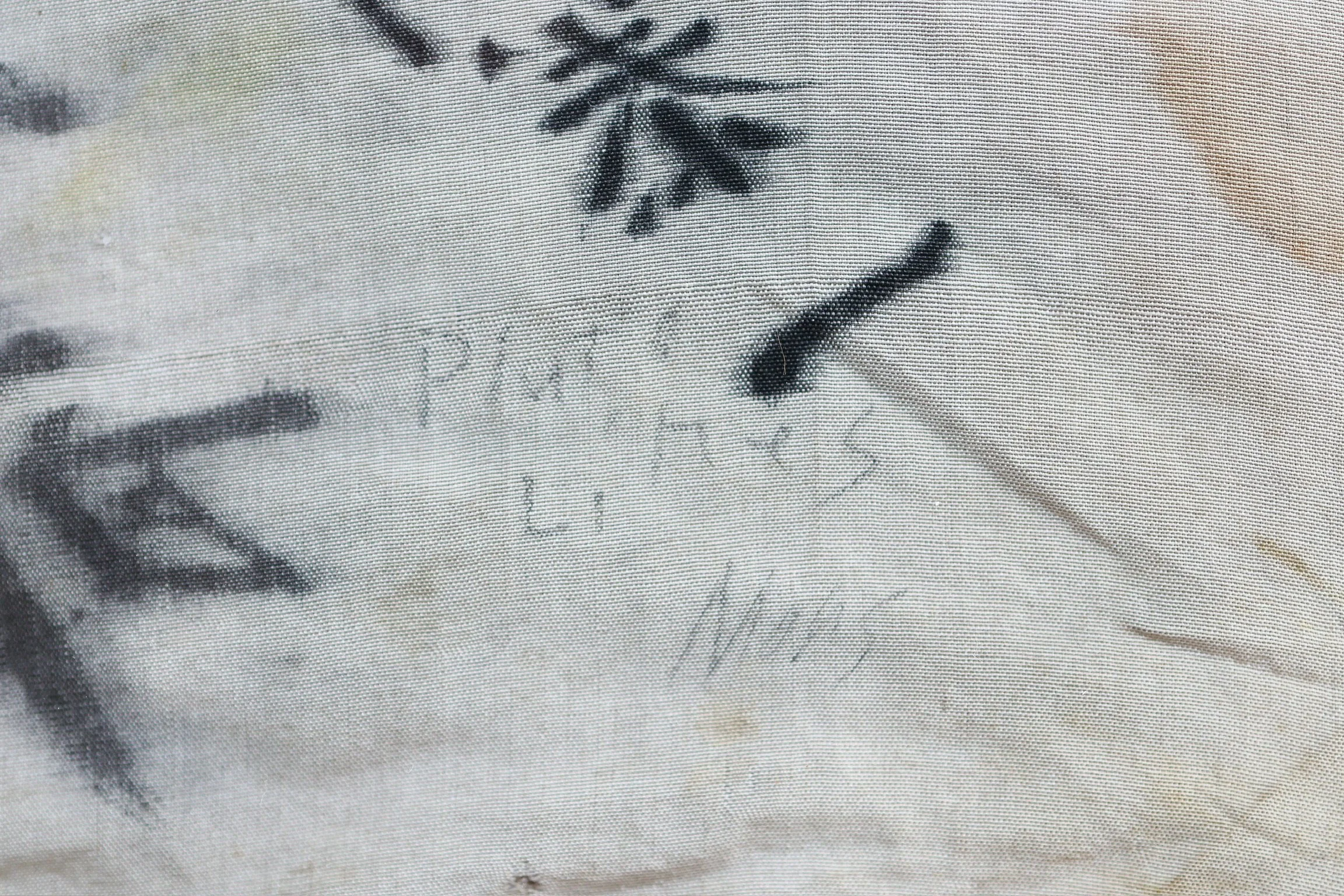
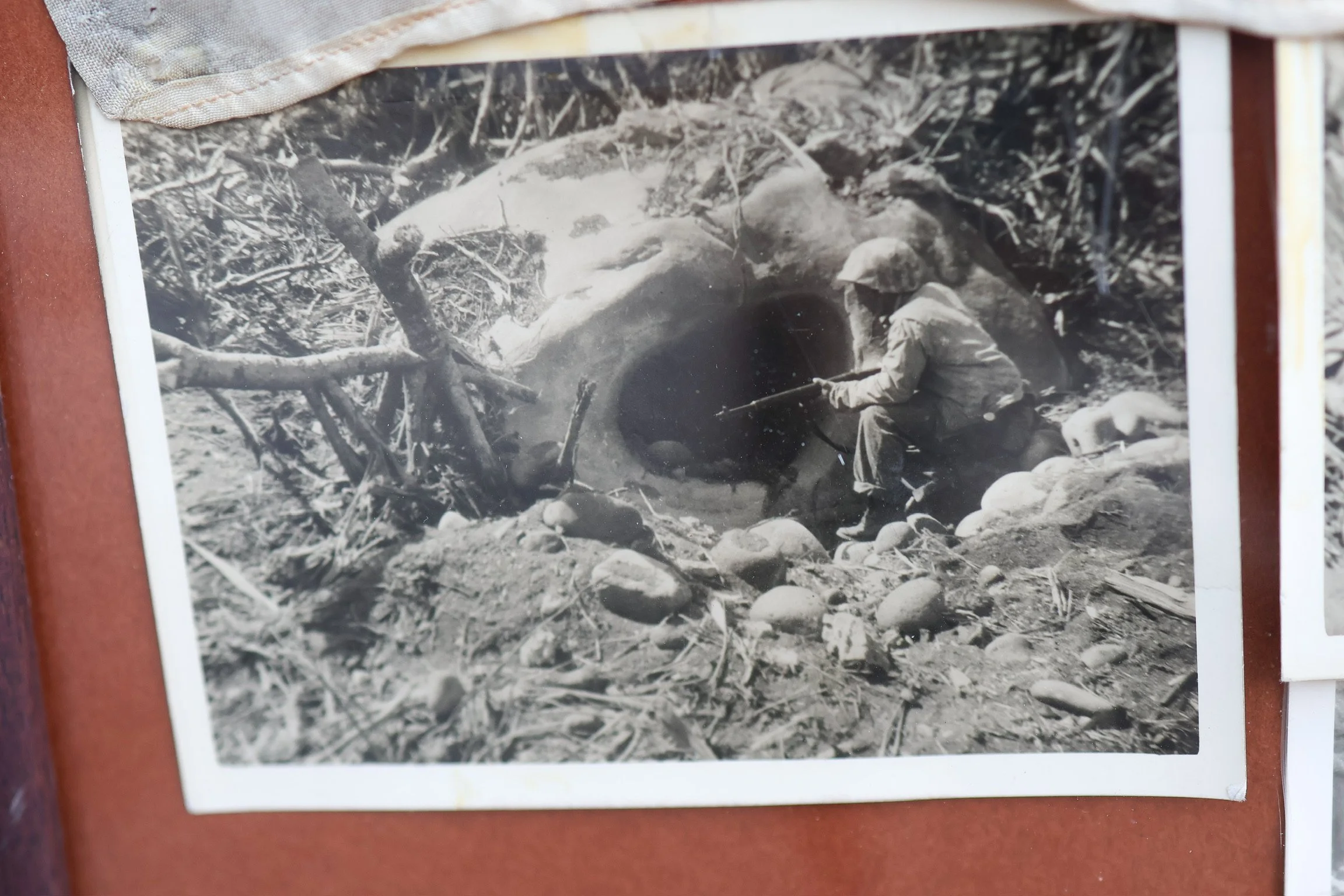
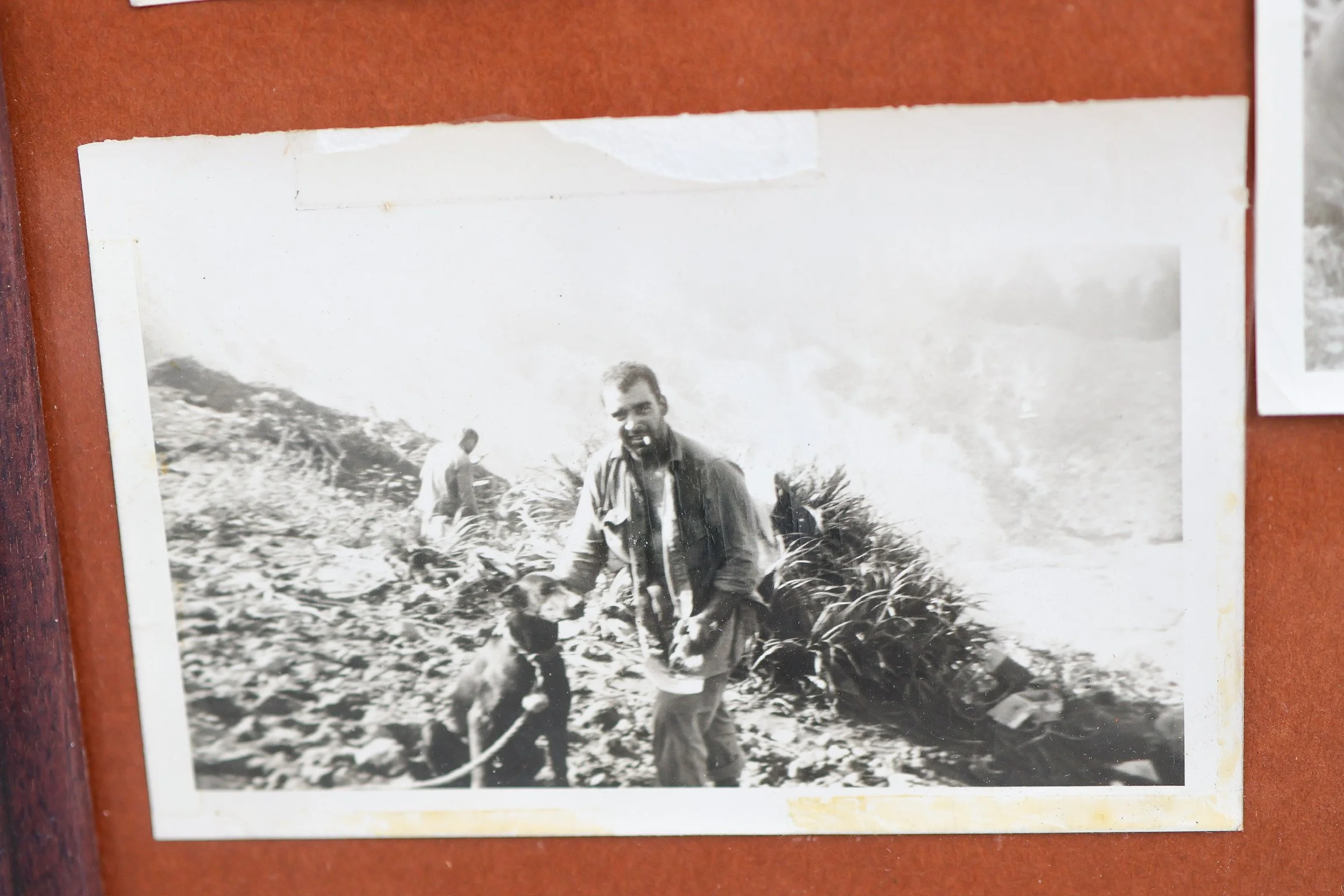
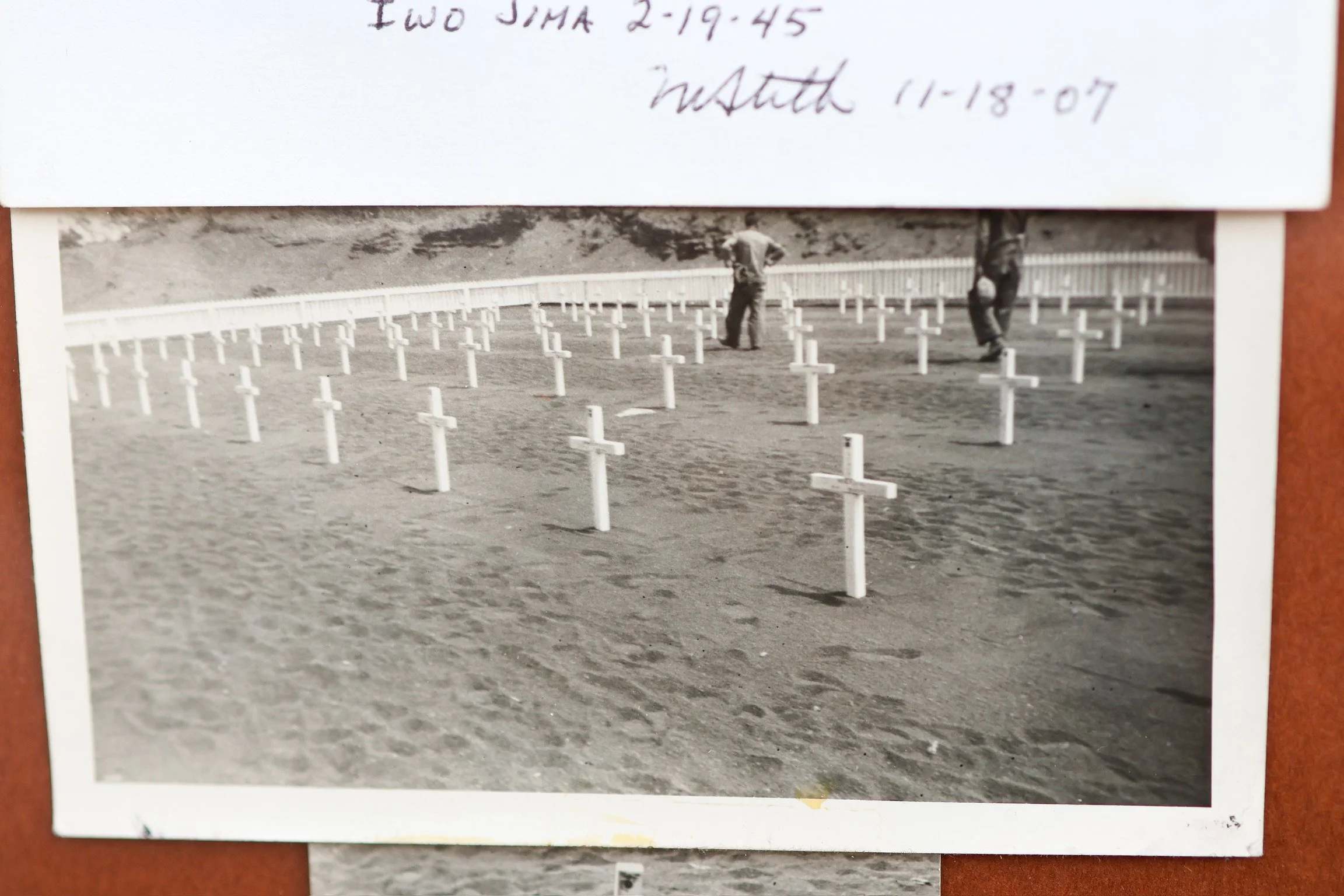
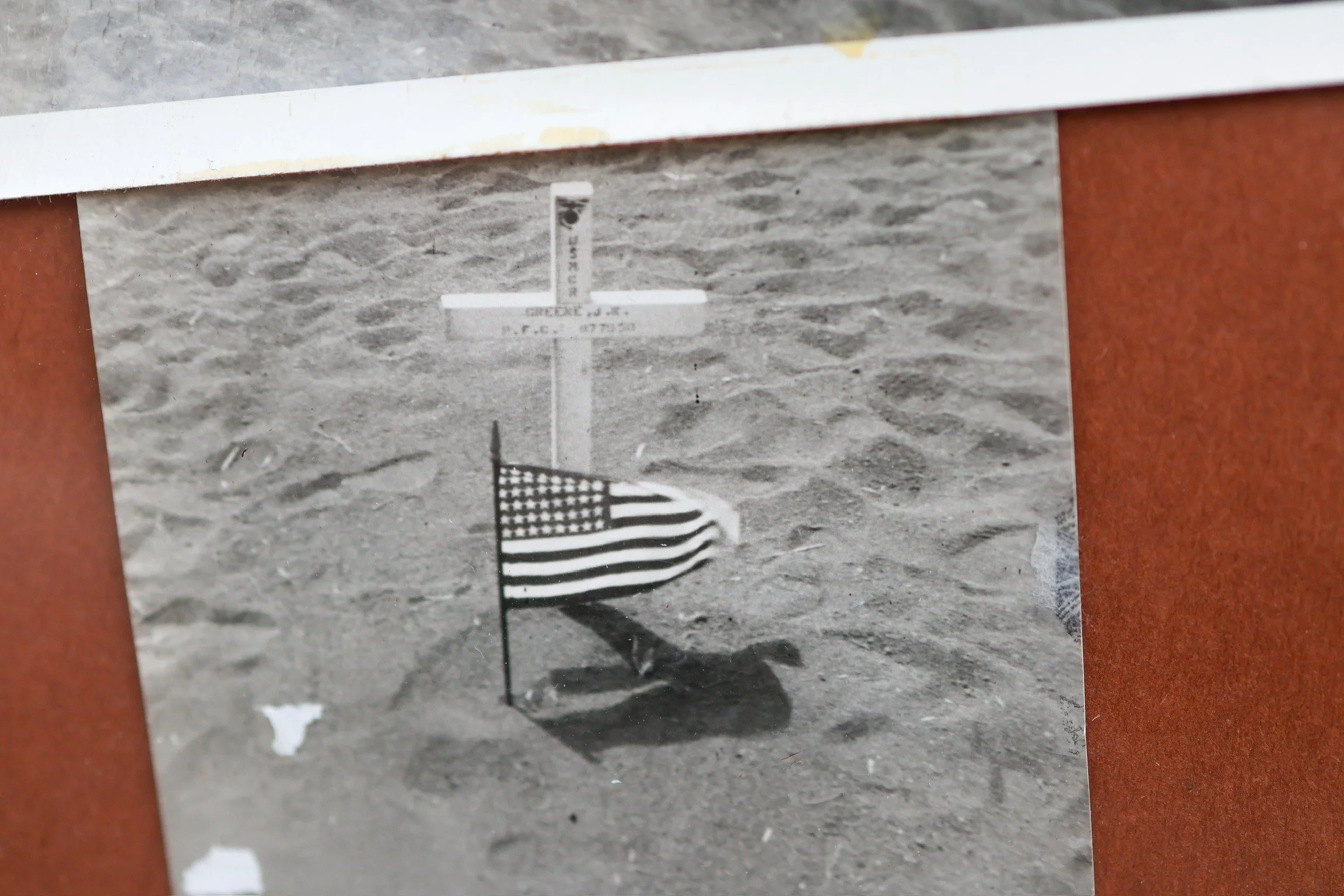
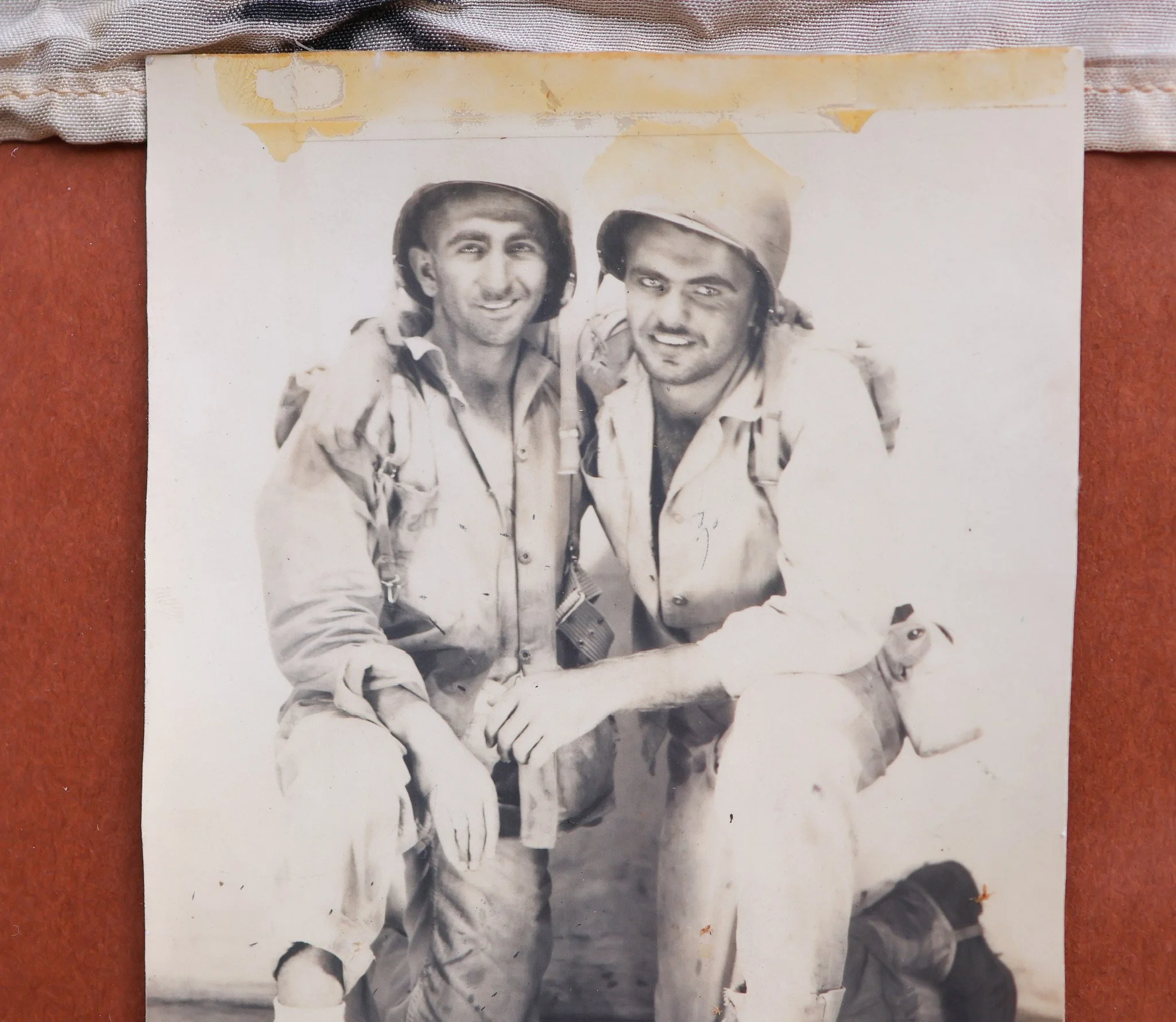
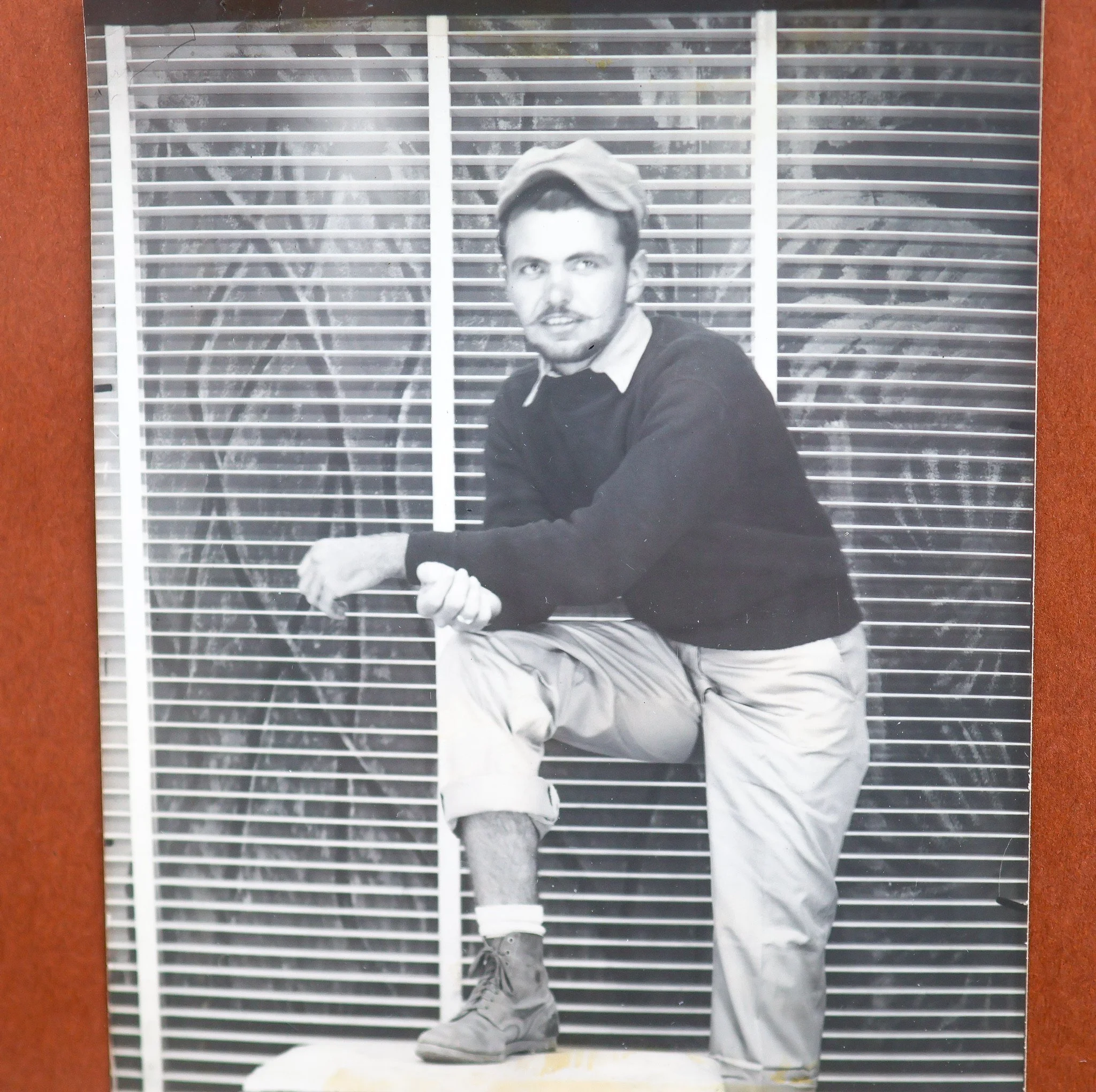
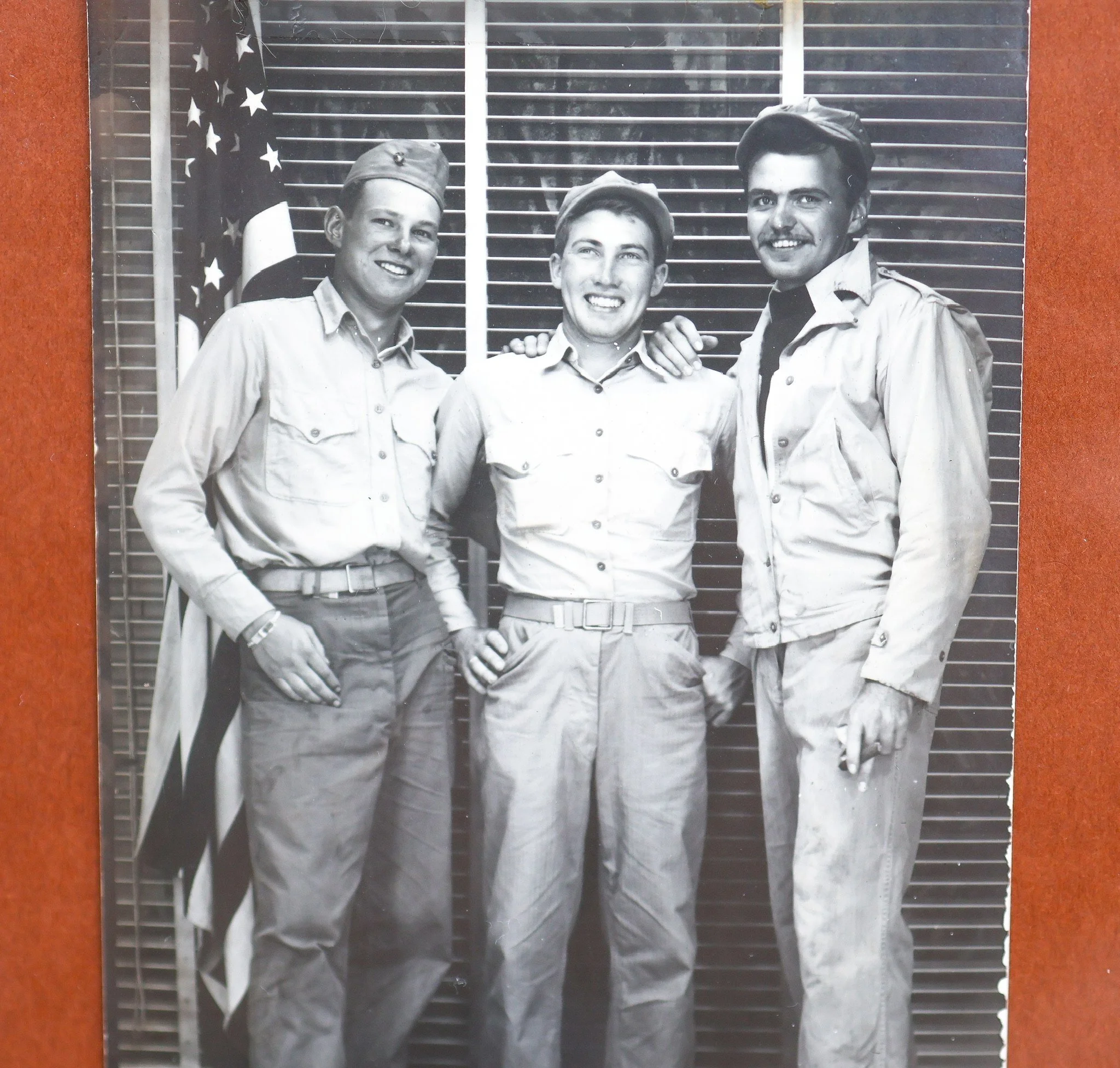
This Japanese yosegaki hinomaru flag was captured on Iwo Jima by Irvin Michael Stith (known as Mike), service number 514593. Stith served with Weapons Company, 28th Regiment, 5th Marine Division during the Battle of Iwo Jima.
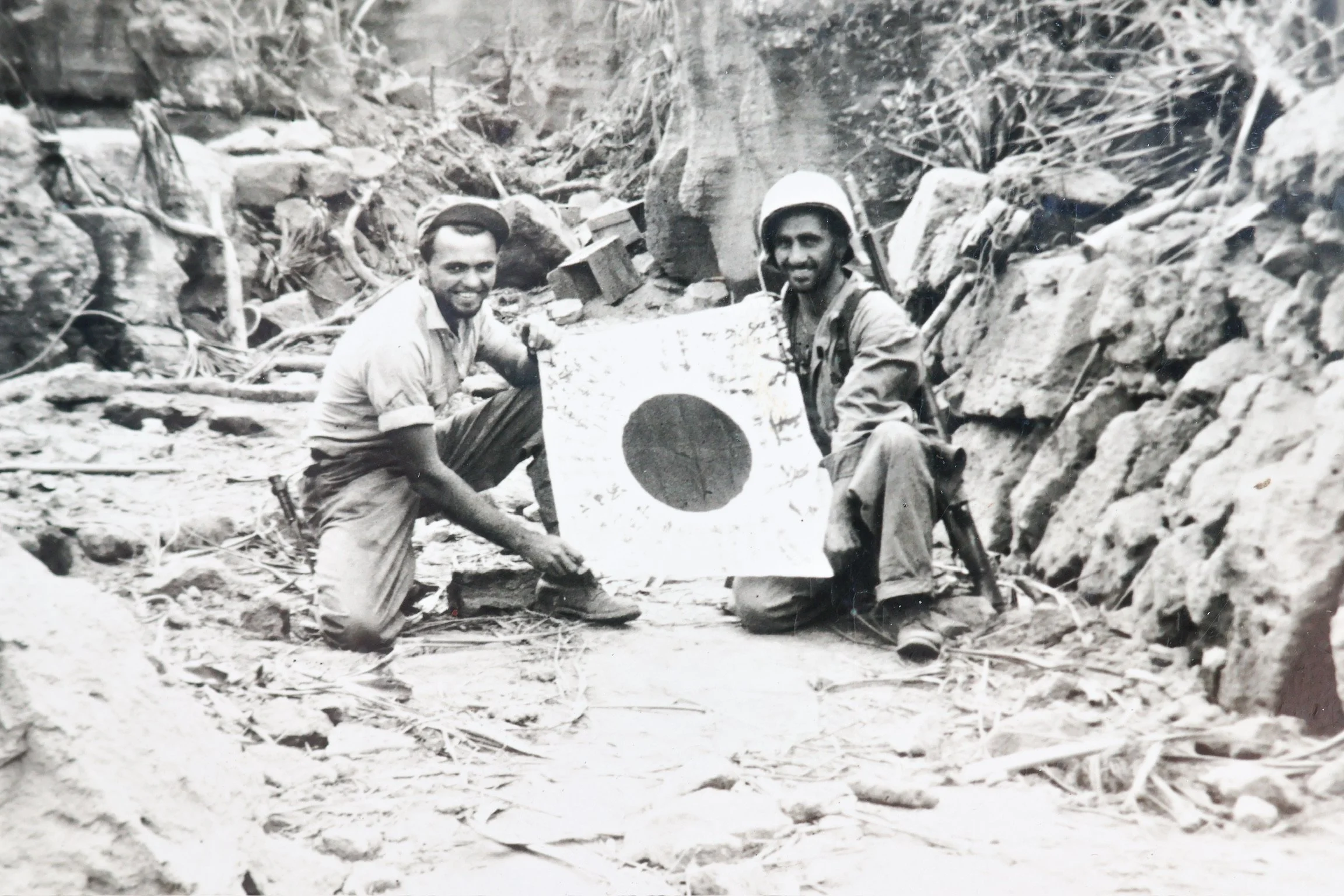
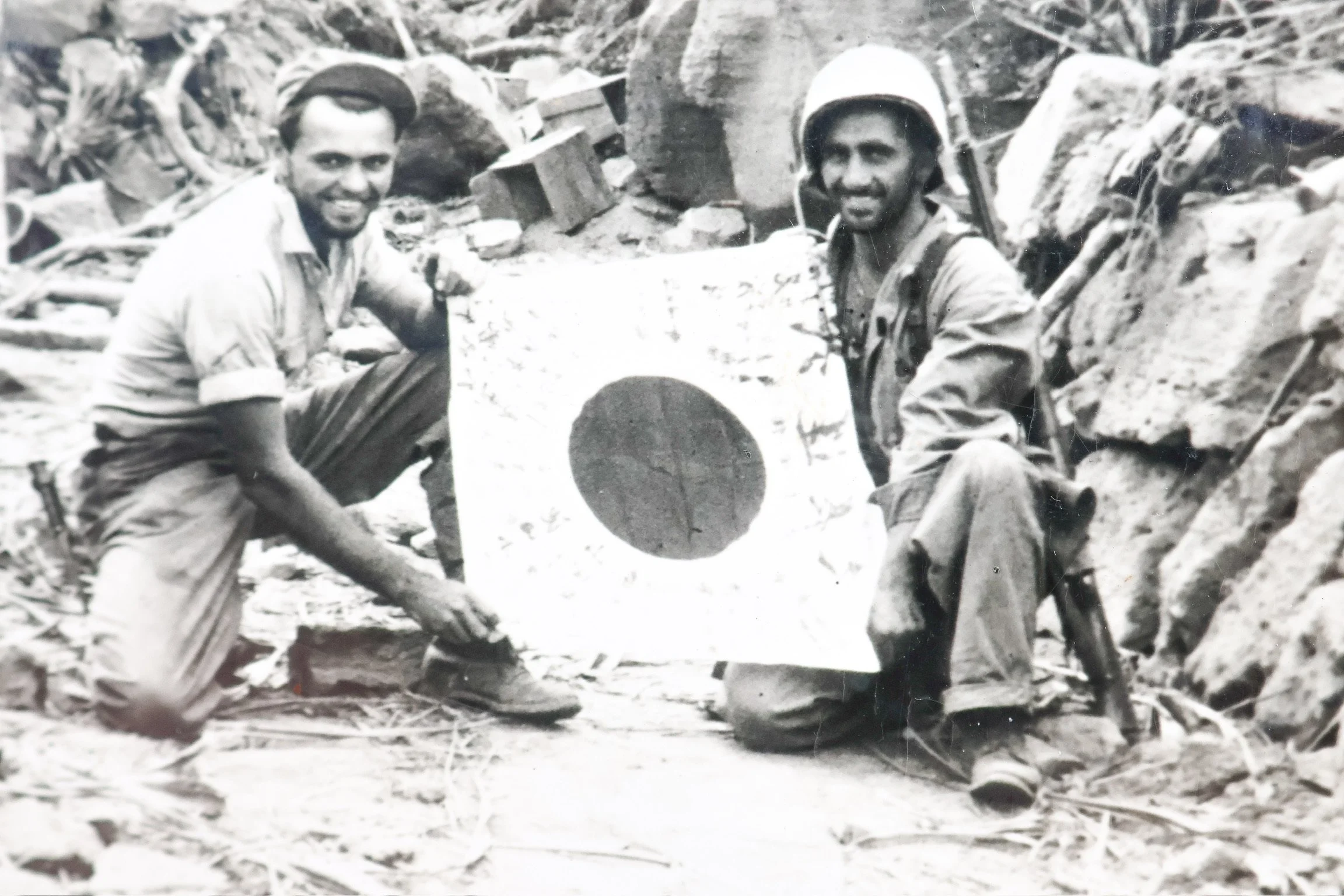
The flag was taken directly from a deceased Japanese soldier on Iwo Jima. Included with the grouping are period photographs showing Stith on Iwo Jima, including a photograph of him holding this exact flag alongside another Marine shortly after its capture. The kanji inscriptions on the flag match those visible in the wartime photograph.
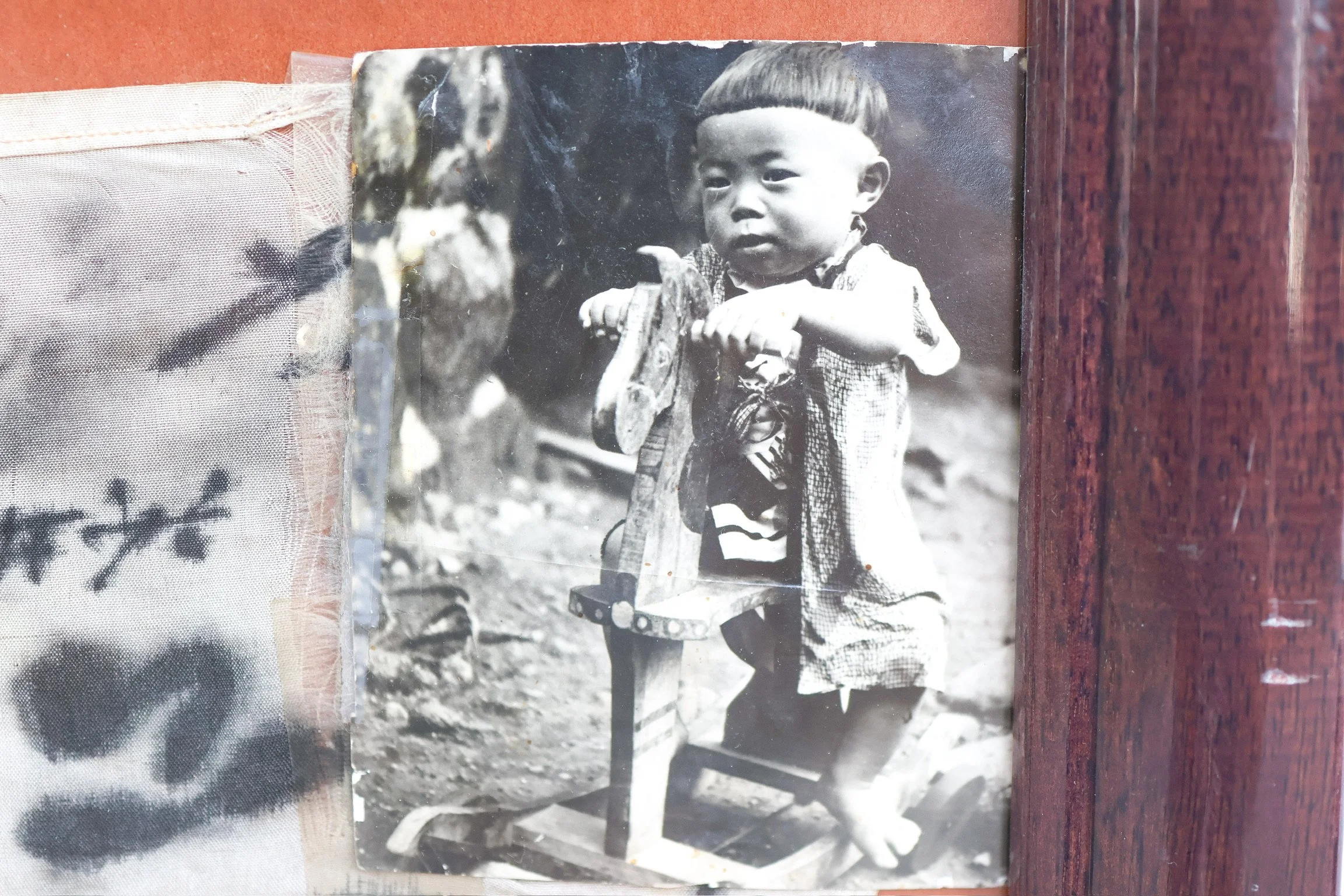
Also included is a period photograph of a Japanese boy on a rocking horse. This photograph was taken from the same Japanese soldier from whom the flag was recovered.
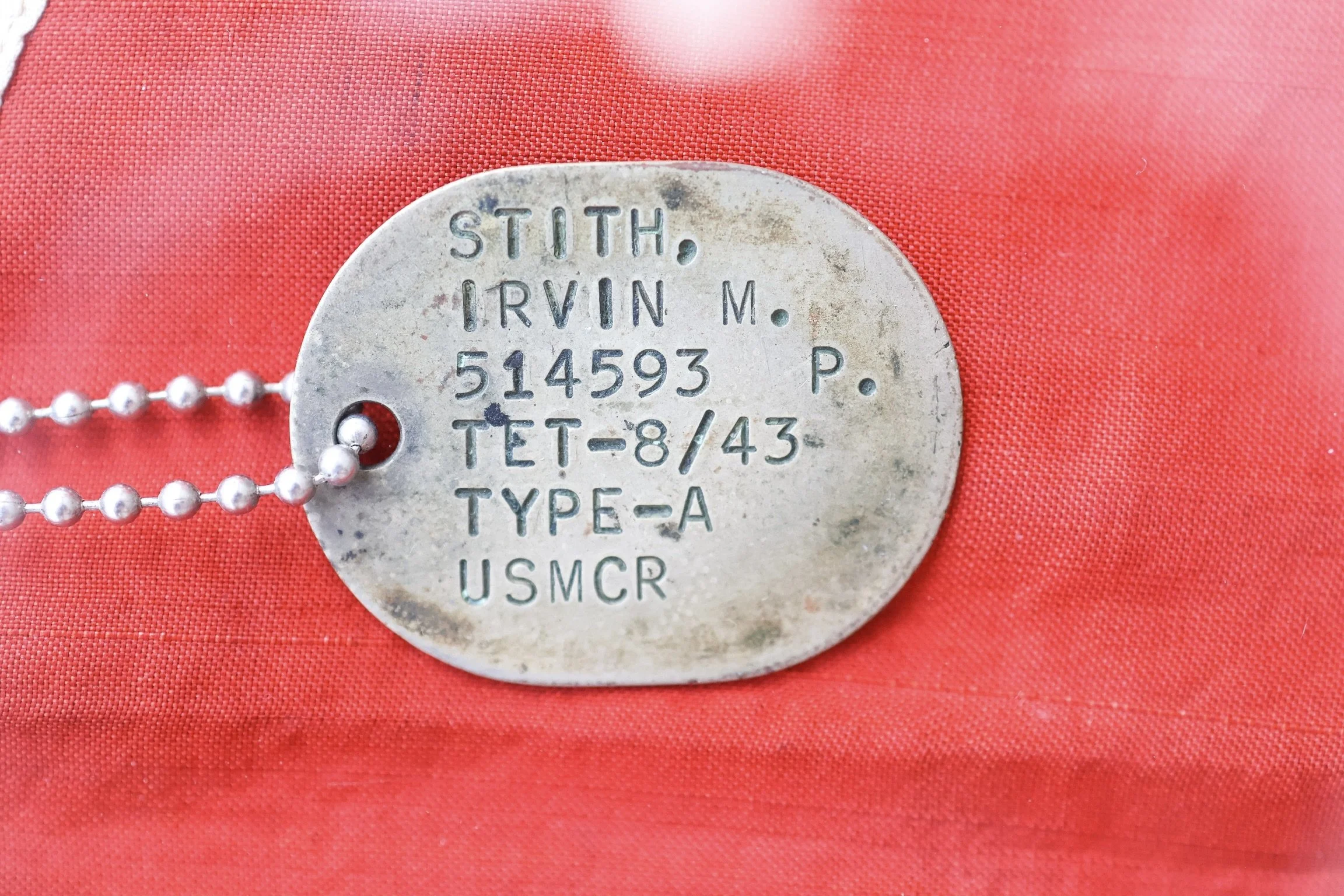
The grouping further includes Smith’s Marine Corps identification tag, stamped:
STITH, IRVIN M., 514593, P., TET-8/43, TYPE-A, USMCR,
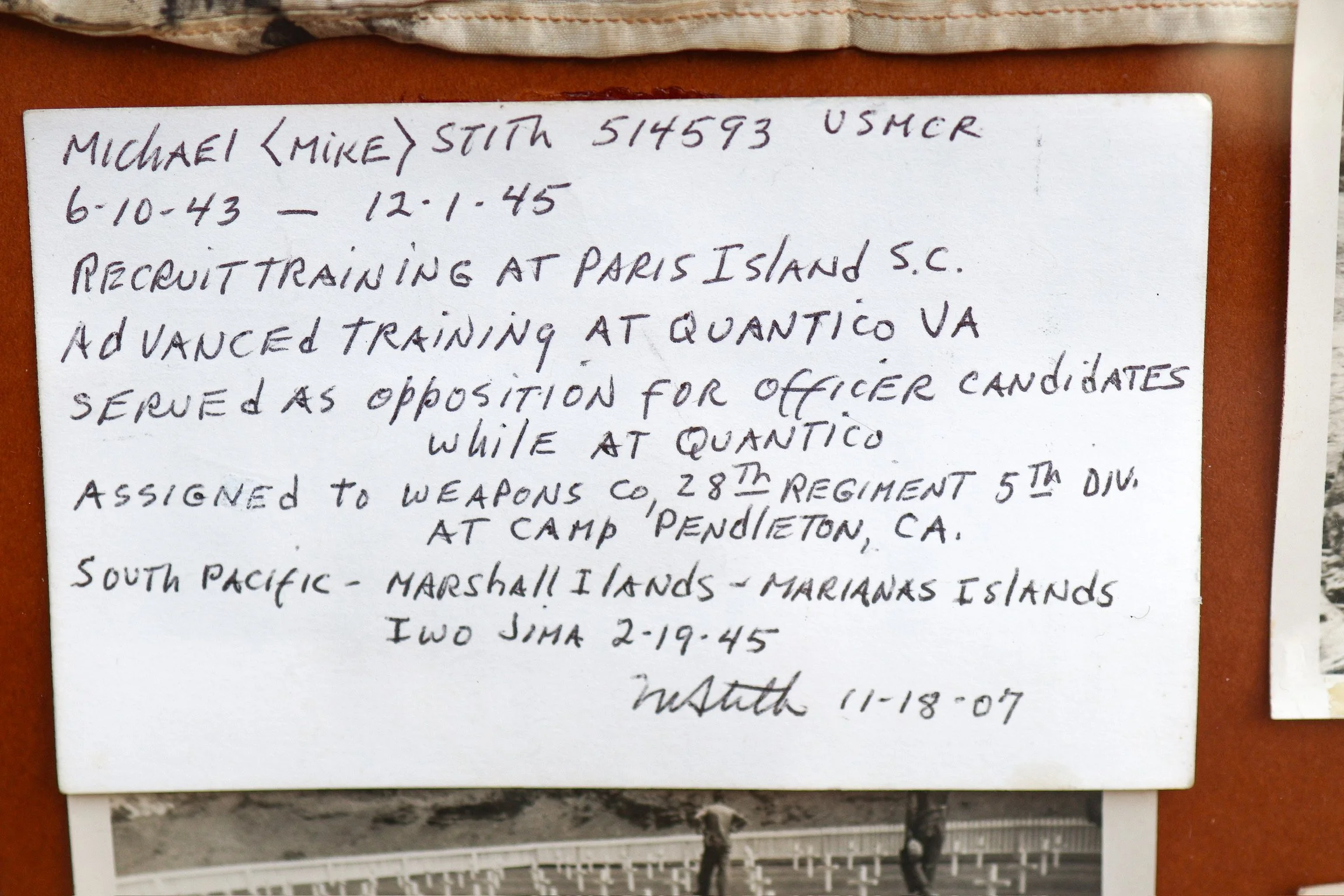
along with a handwritten service summary detailing his enlistment, training, unit assignment, and participation in the Iwo Jima landing on February 19, 1945.
This grouping was purchased directly from Irvin Michael Stith in 2007.
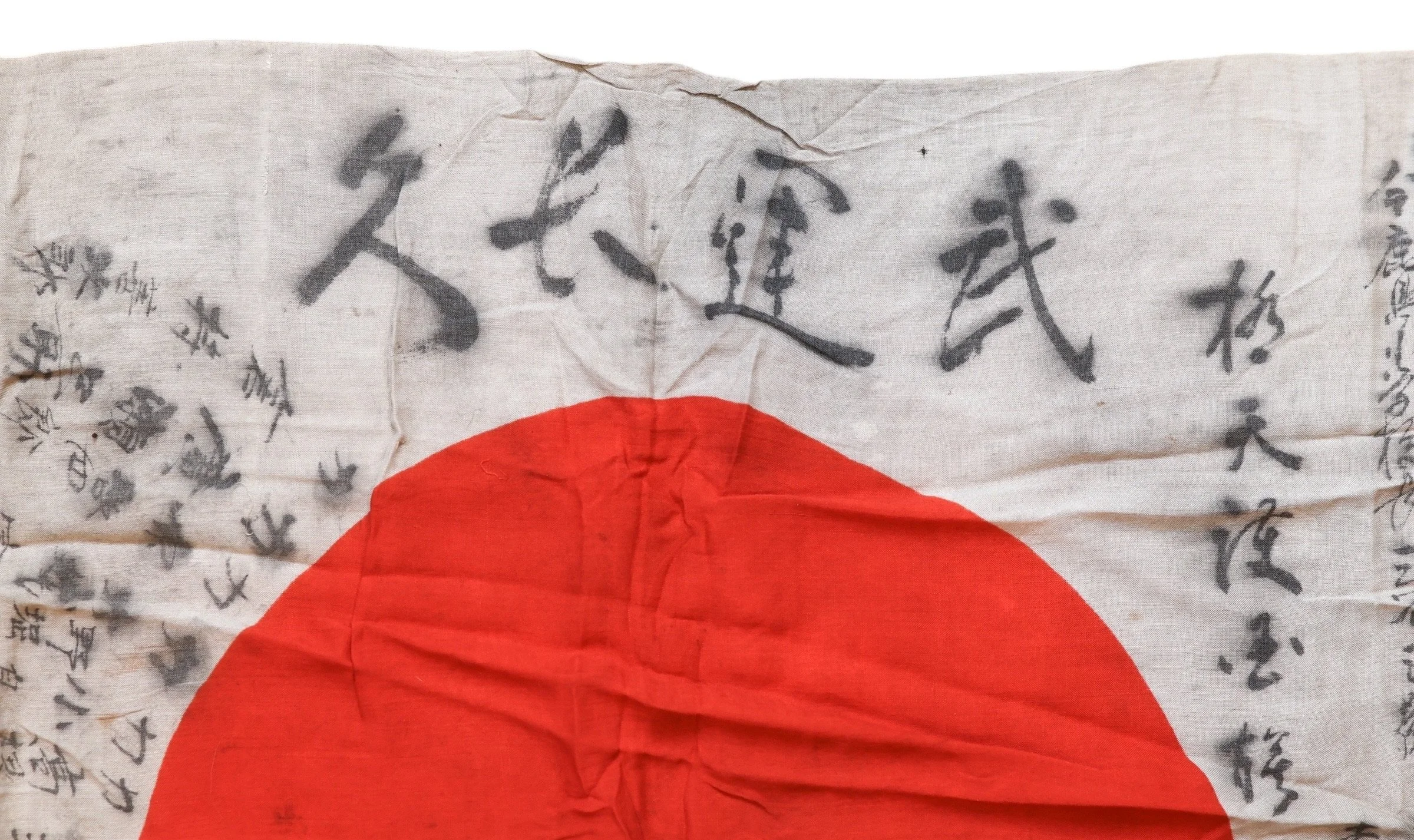
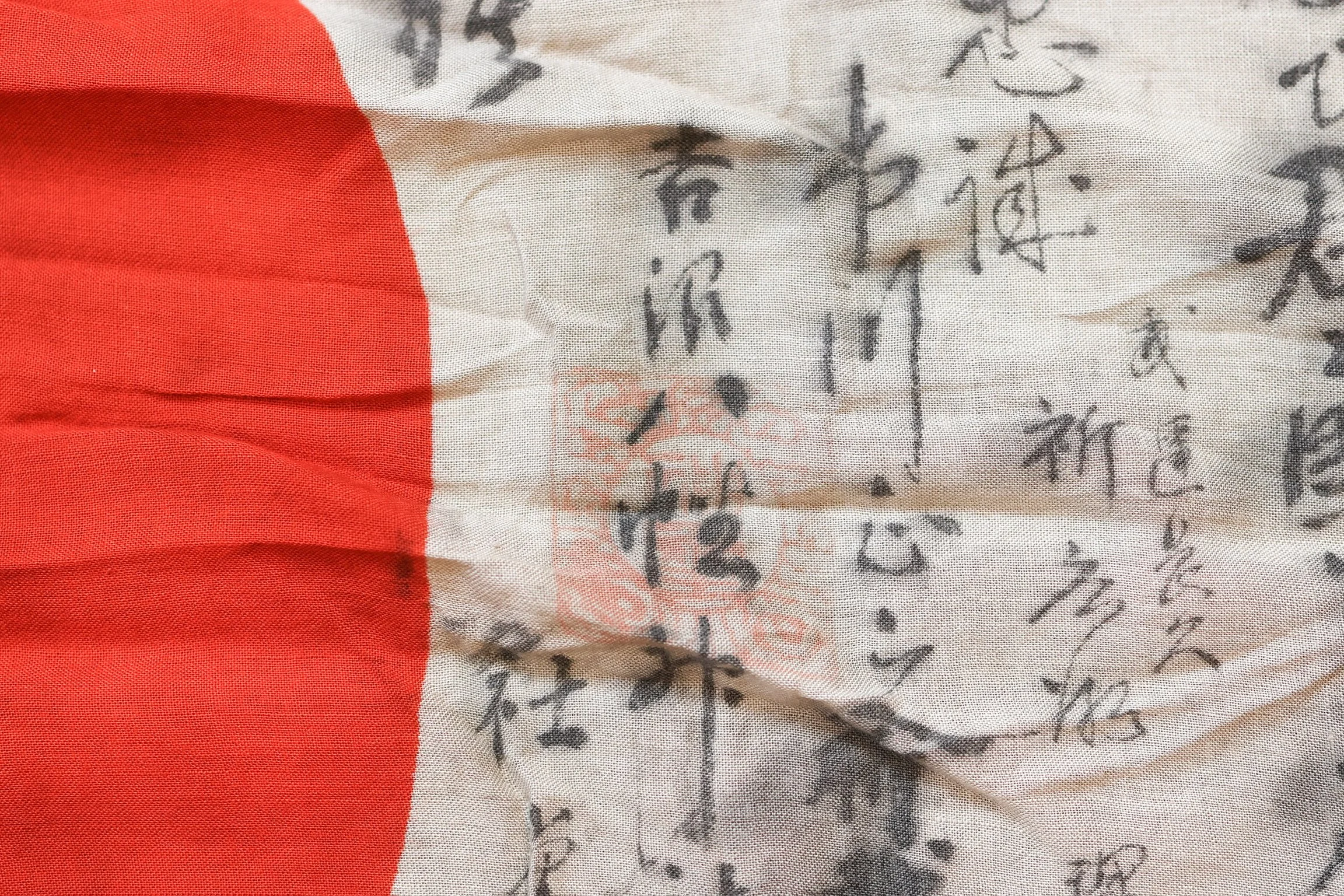
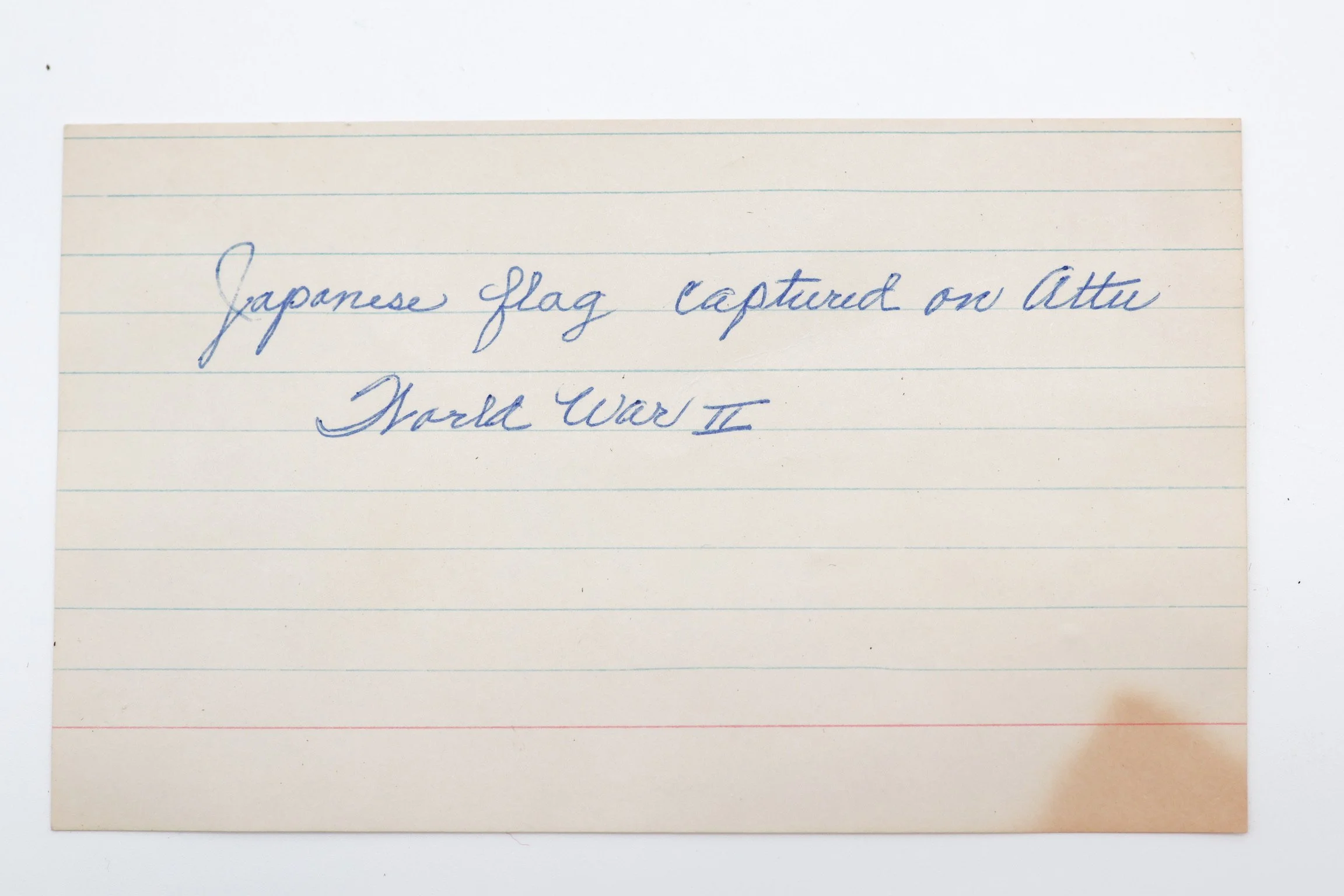
Japanese WWII Yosegaki Hinomaru Flag Captured on Attu
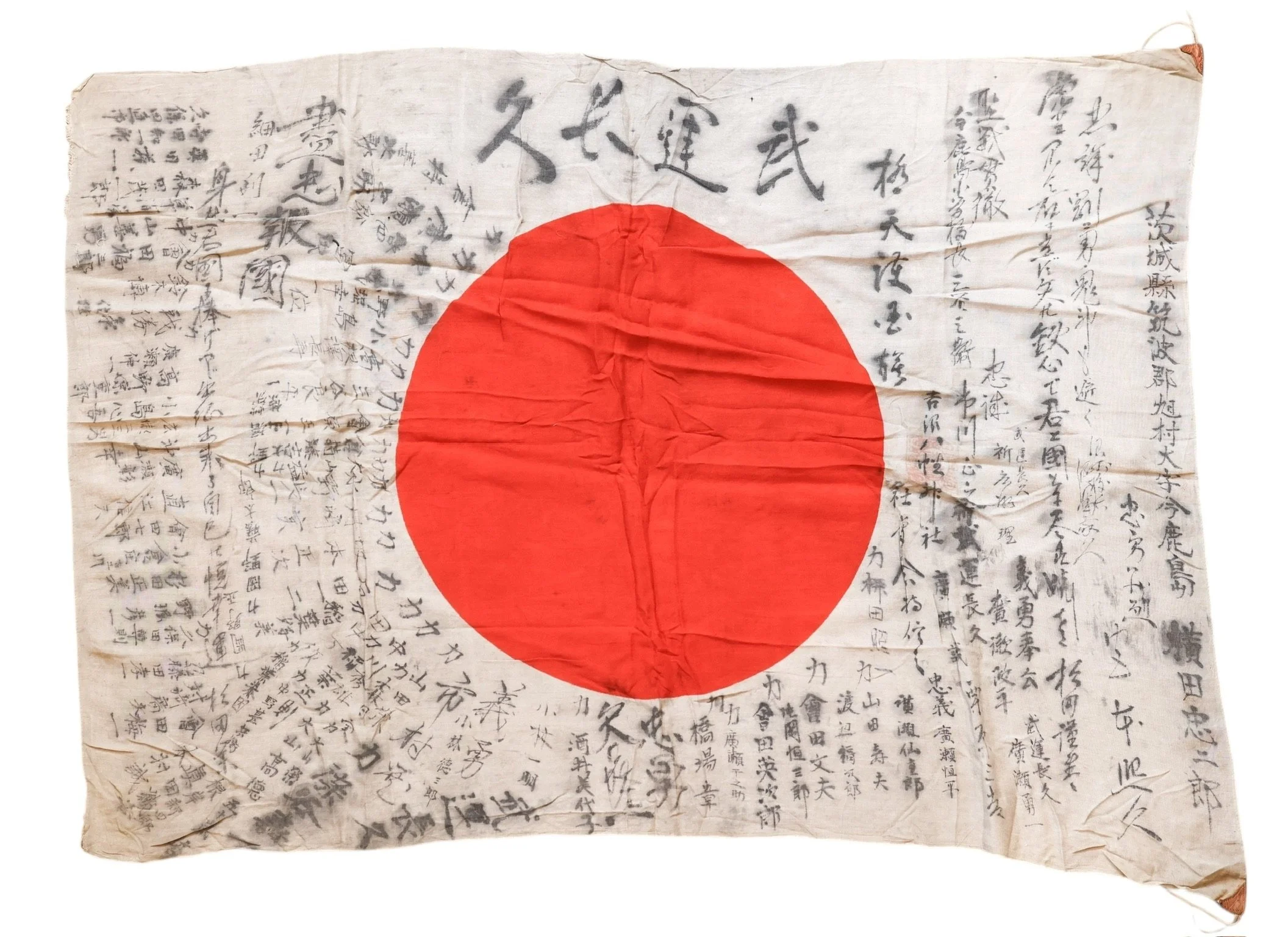
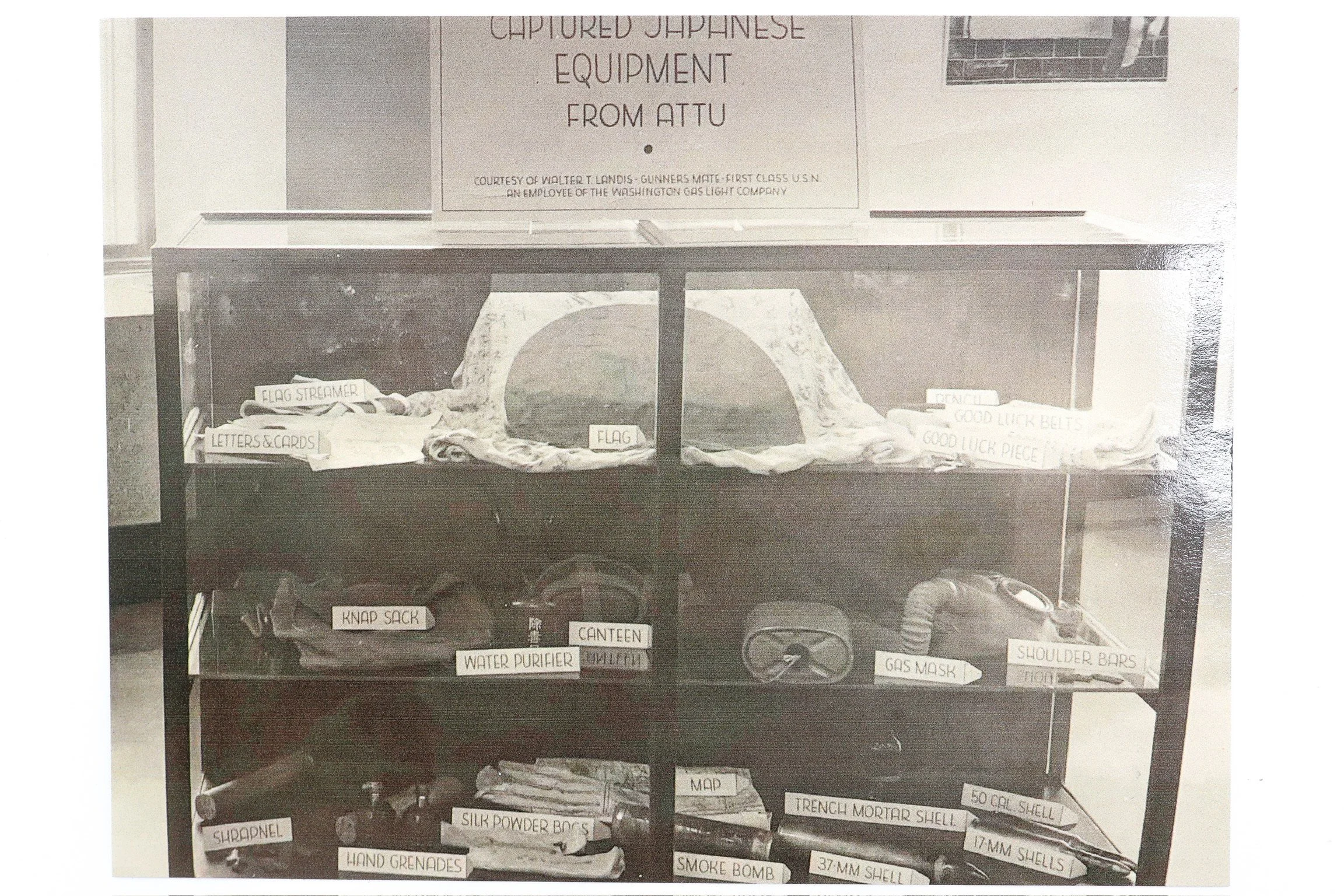
This Japanese yosegaki hinomaru flag was captured during the Battle of Attu in May 1943 by Chief Gunner’s Mate Walter Thompson Landis, USN, who served with the 23rd Naval Construction Battalion (Seabees).
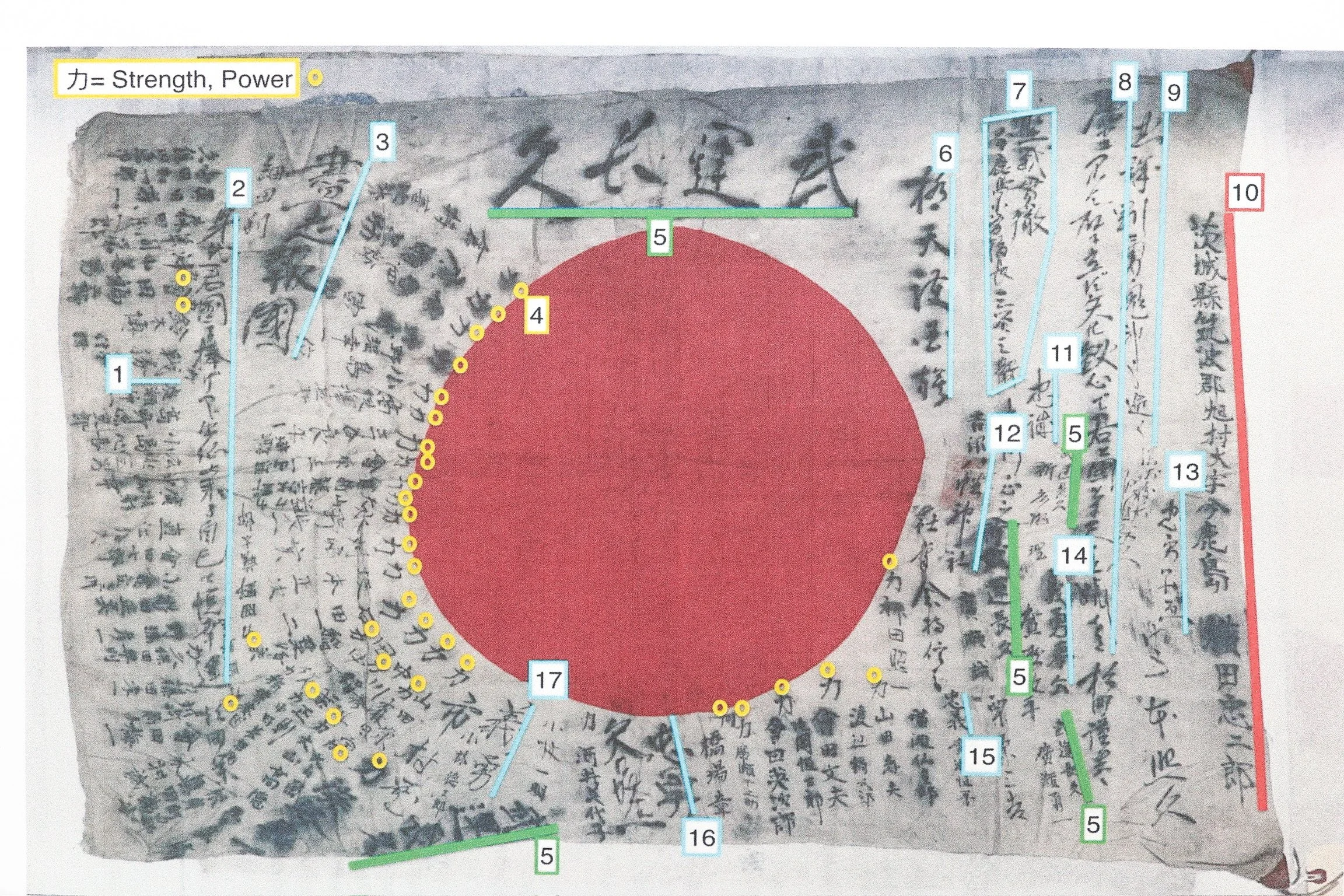
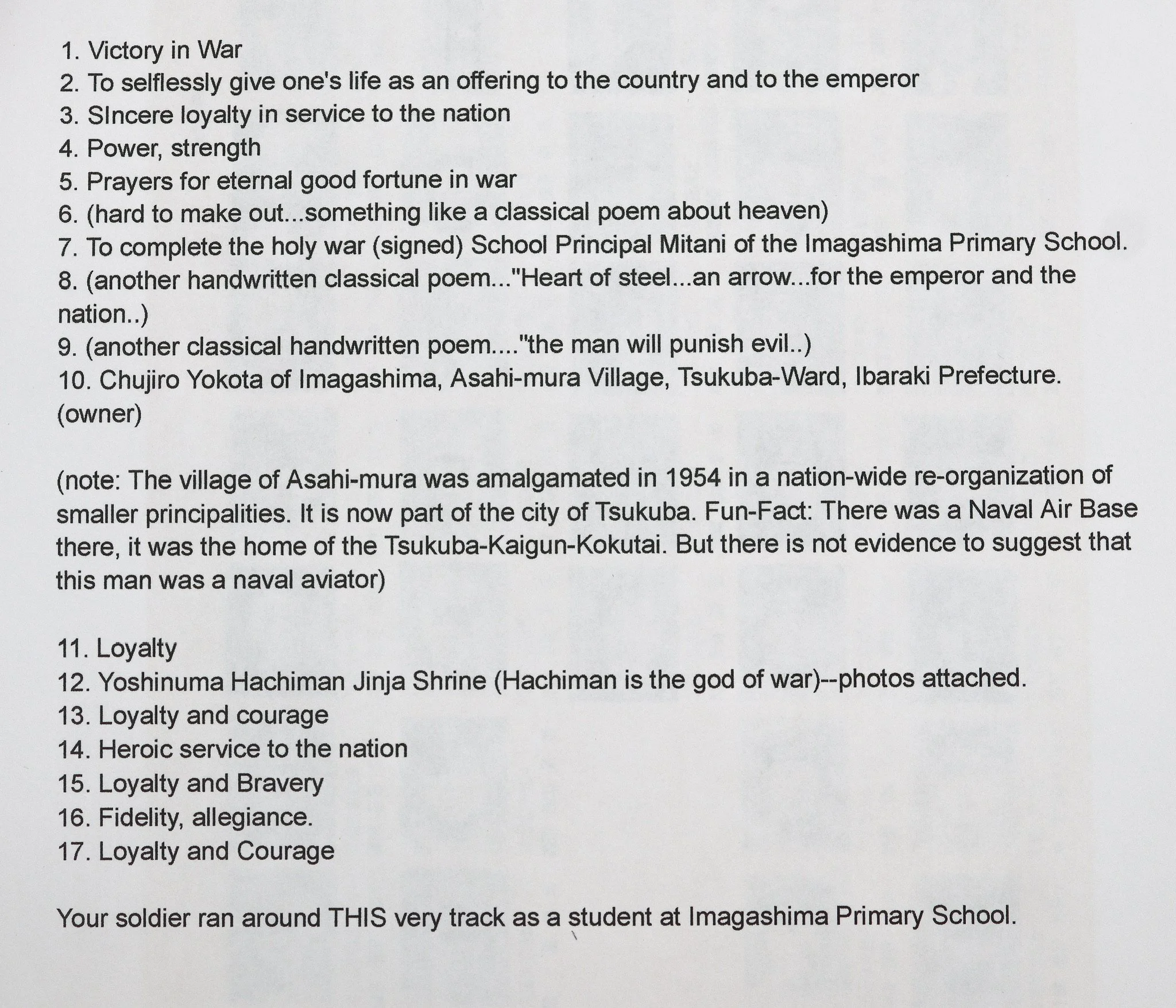
Japanese flags captured on Attu are uncommon due to the limited scale, isolation, and short duration of the Aleutian Islands campaign. This example bears traditional yosegaki inscriptions consisting of good-luck messages, patriotic phrases, and classical expressions written prior to the soldier’s departure for war.
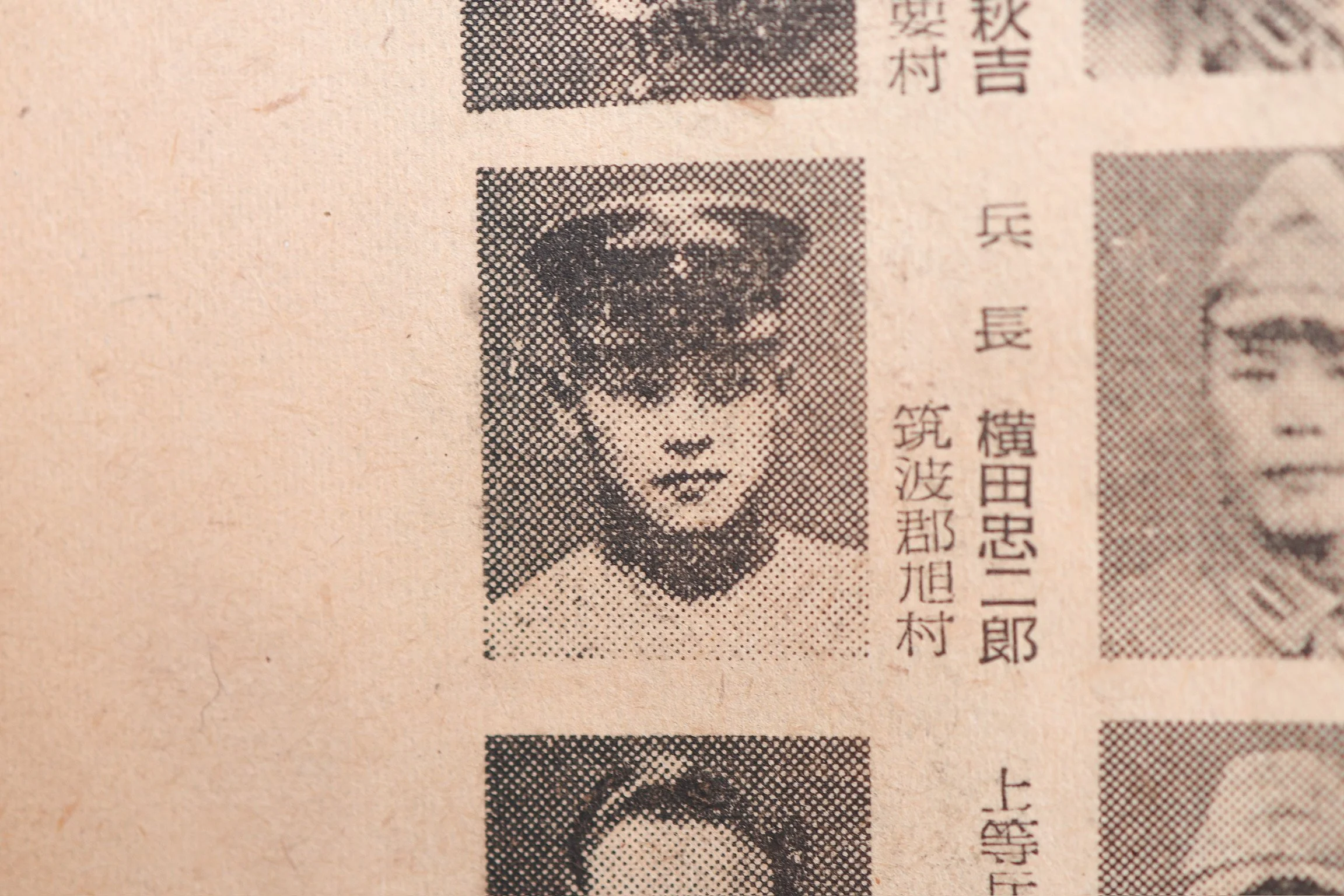
Translation of the writing identifies the original owner as Chujiro Yokota, from Imagiashima, Asahi-mura Village, Tsukuba Ward, Ibaraki Prefecture.
A postwar photograph confirms this exact flag displayed among Landis’s Attu bring-backs. In addition, a photograph of Yokota appears in a Japanese remembrance publication, printed in Japan to document and honor soldiers who died in the Aleutian campaign, providing rare visual documentation of the individual associated with this flag.
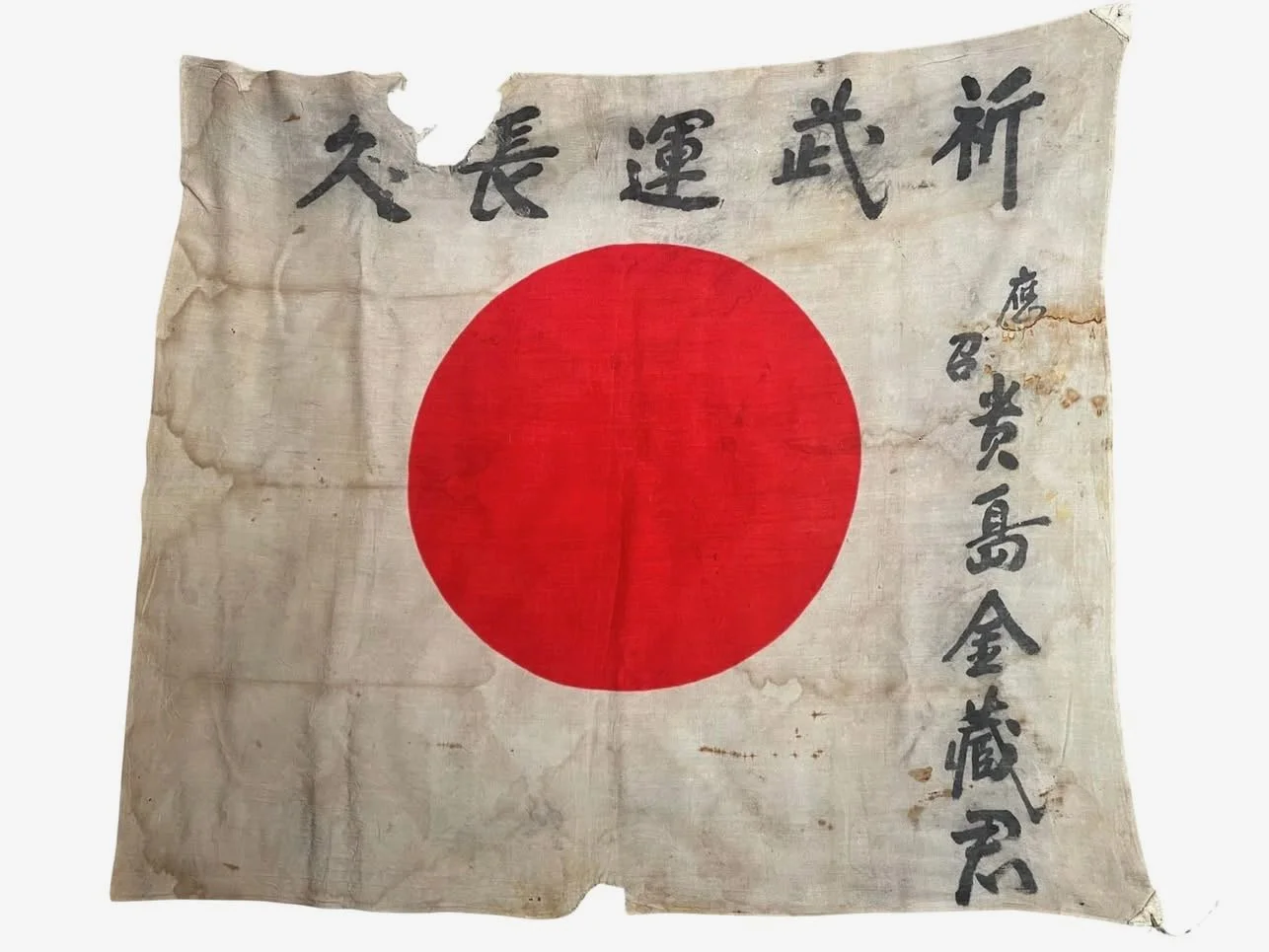
Japanese Yosegaki Hinomaru Flag Bougainville Capture
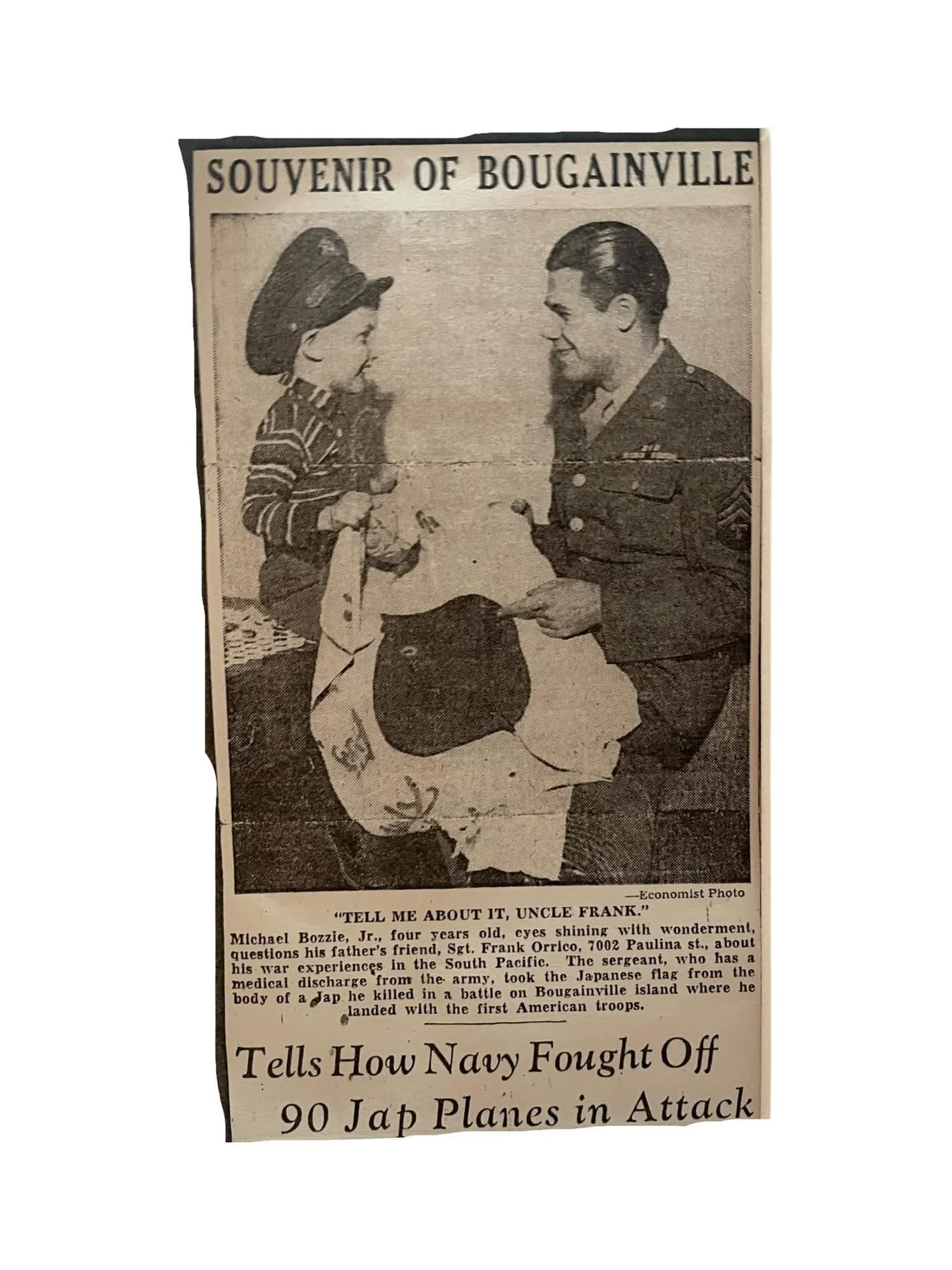
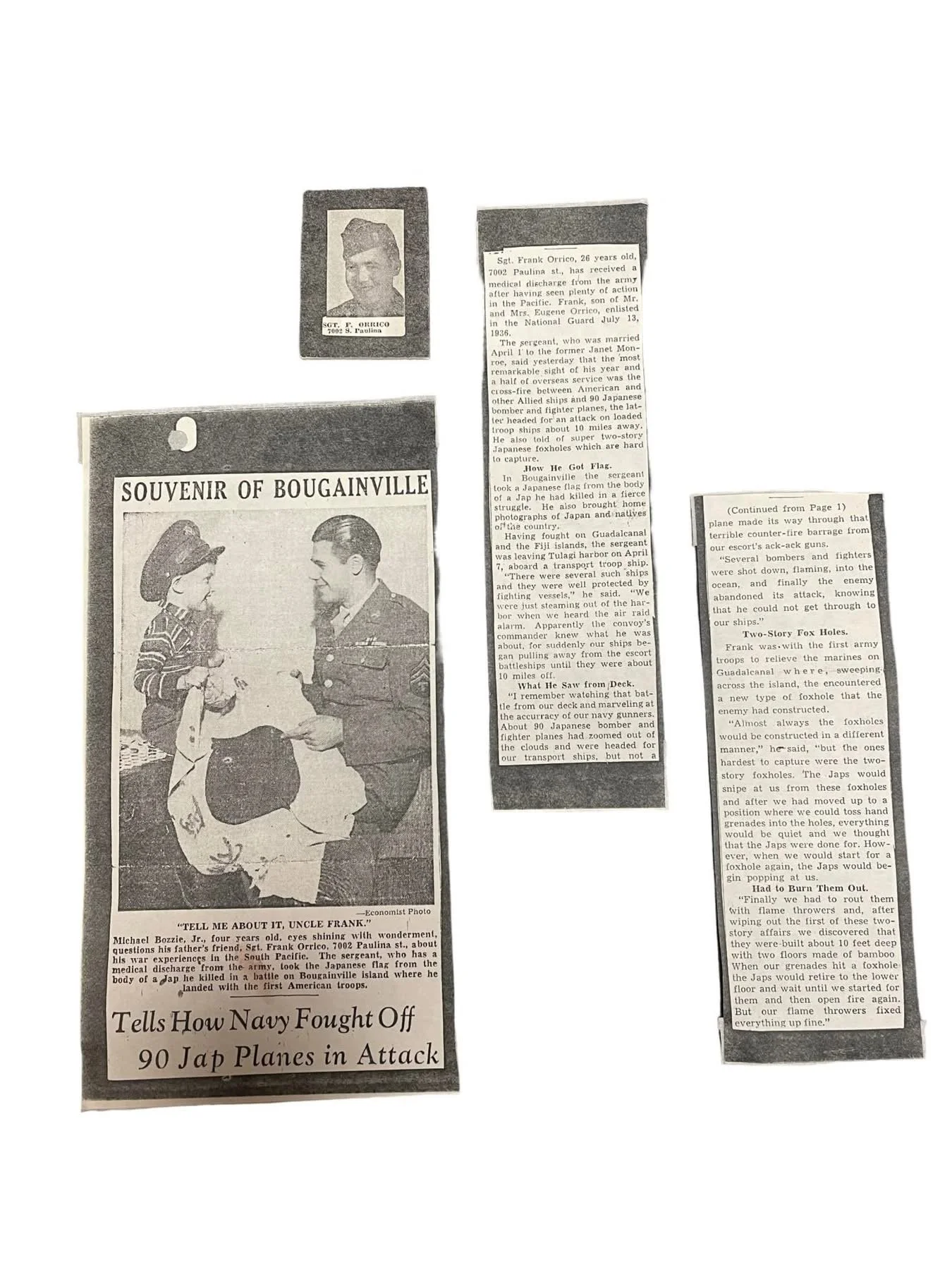
This Japanese Yosegaki Hinomaru flag was brought back from Bougainville by Sgt. Frank Orrico during World War II. Period newspaper coverage identifies the flag as a “Souvenir of Bougainville” and states that Orrico took it from the body of a Japanese soldier killed during fighting on the island.
The same newspaper article includes a photograph of Orrico holding this exact flag while describing his experiences to a young boy. The article notes that Orrico landed with the first American troops on Bougainville and had also seen earlier service on Guadalcanal.
The flag’s inscription translates as “Prayers for eternal good fortune in war.” It is named to Kanezo Yoneshima, with an additional notation translated as “recalled to active duty.”
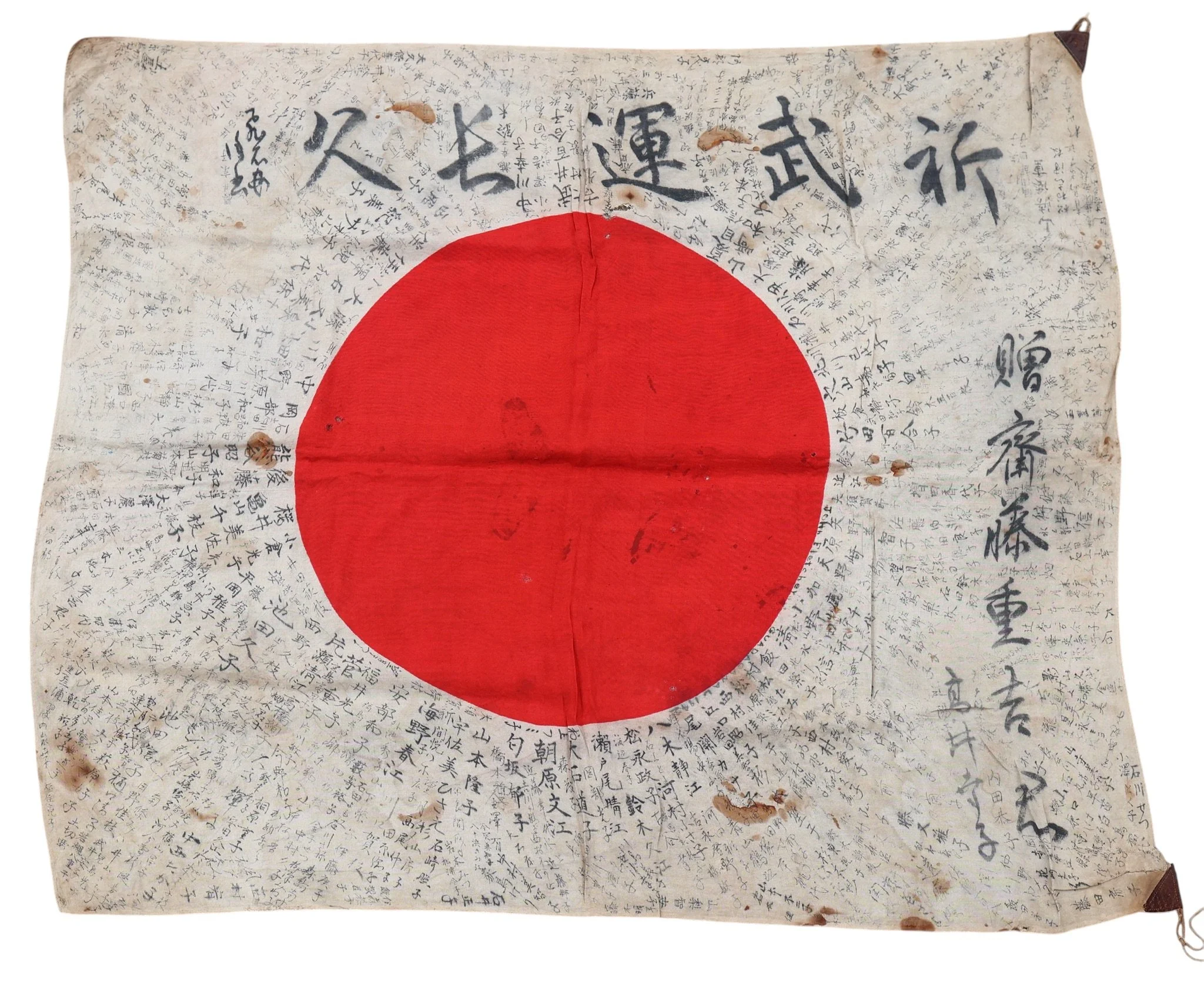
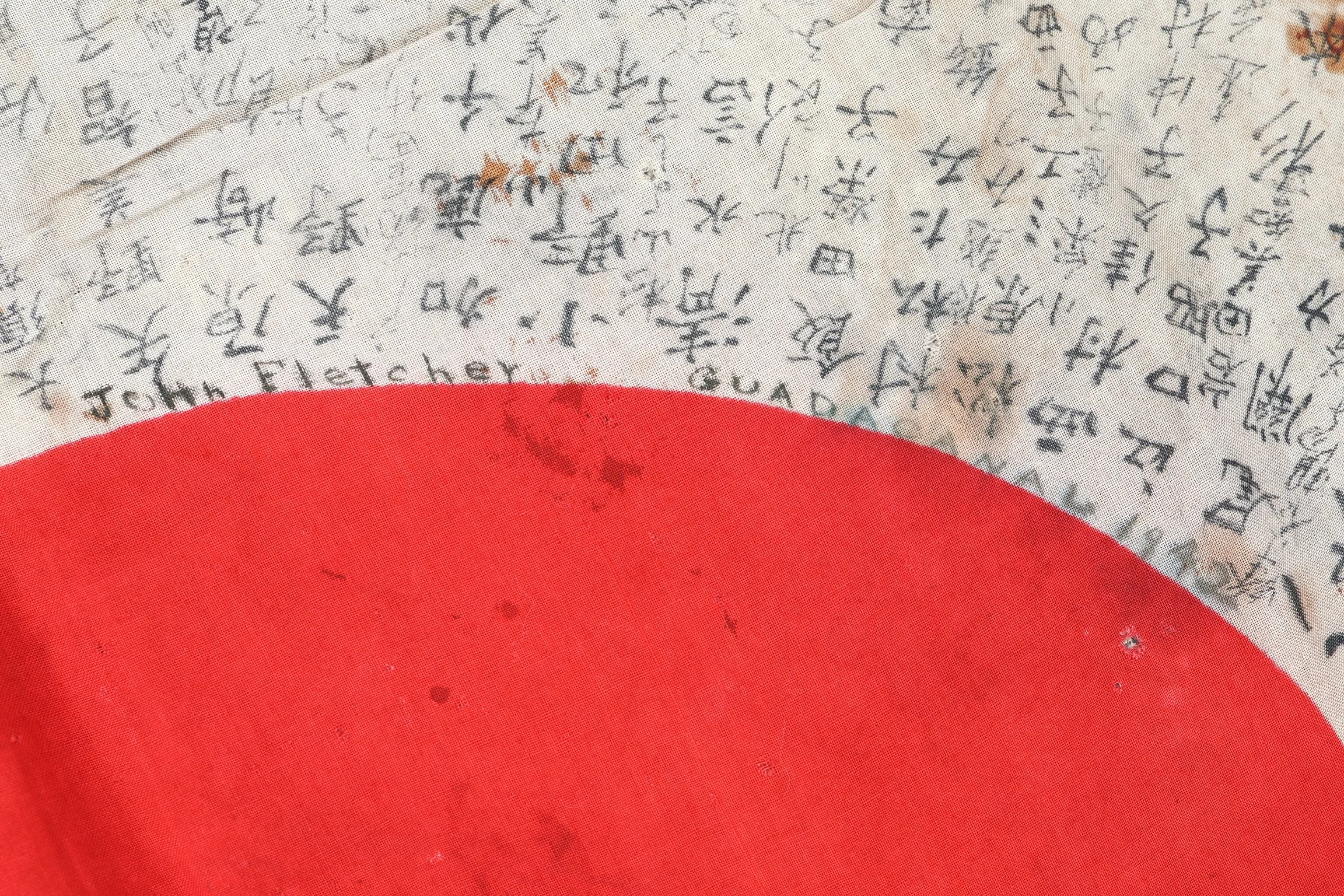
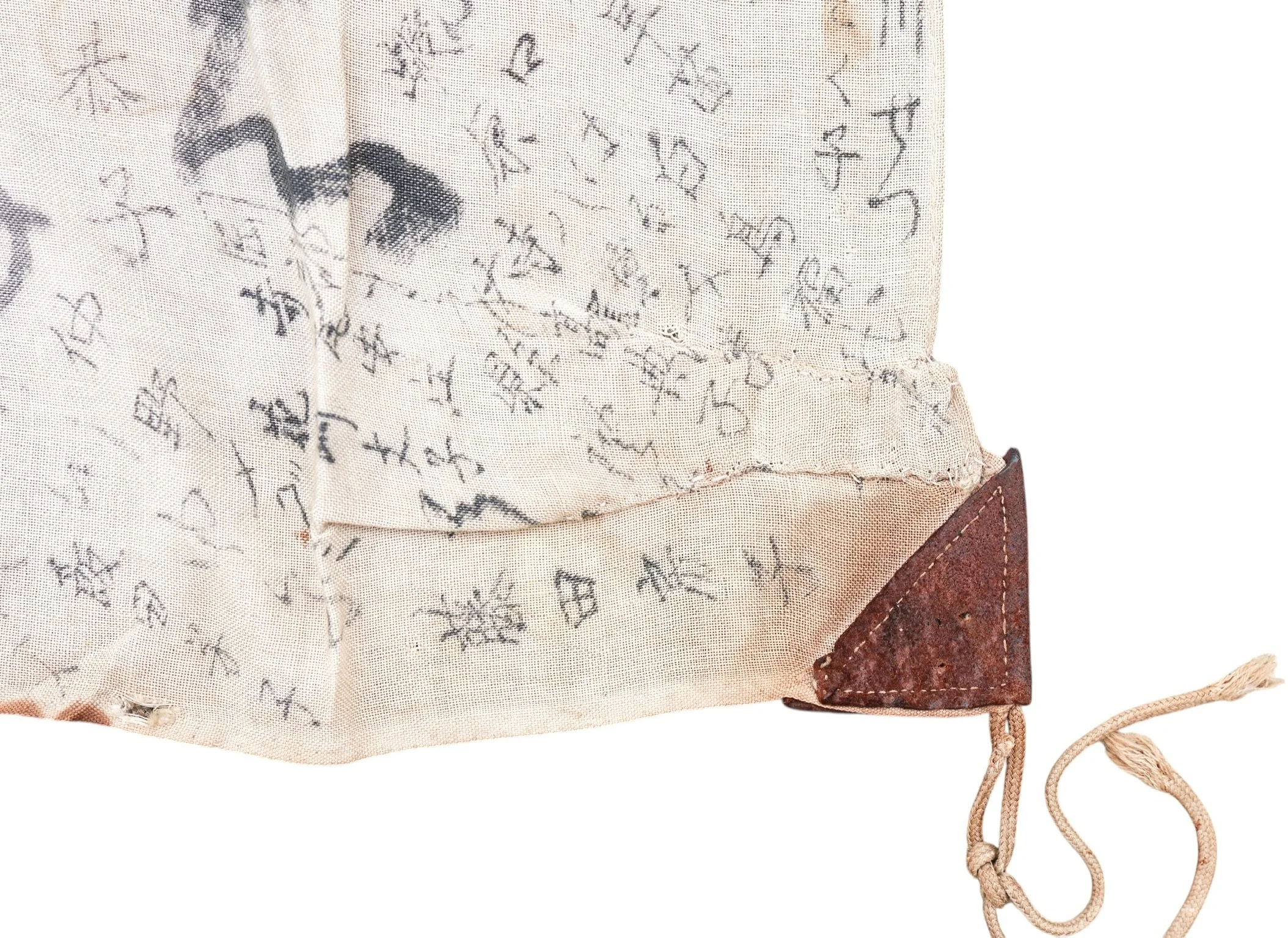
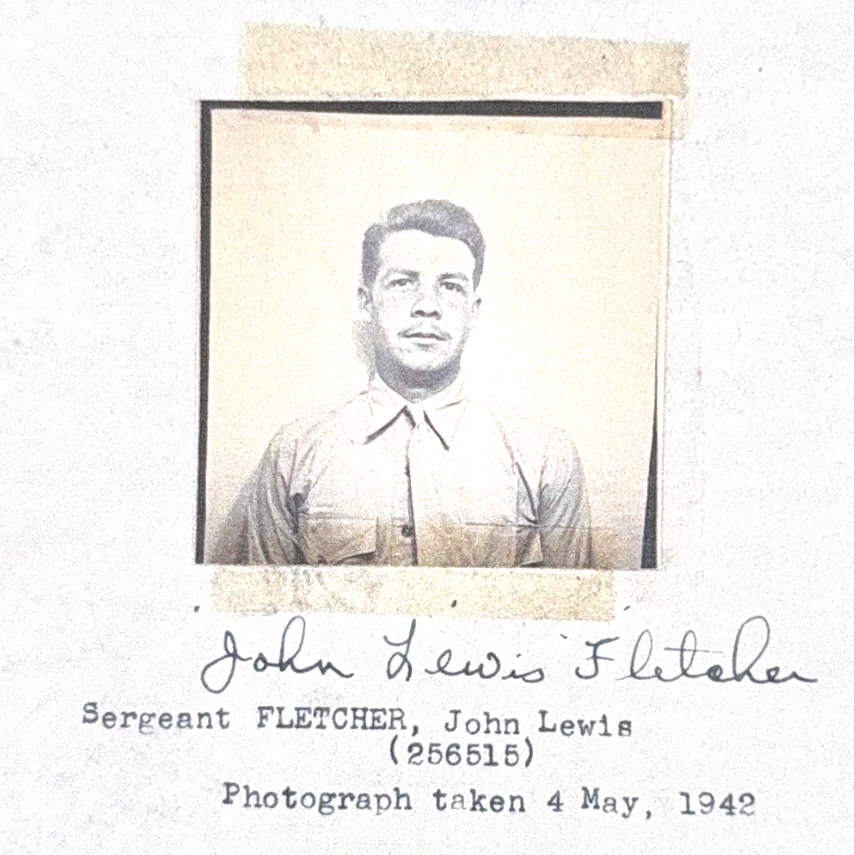
This heavily signed Japanese Yosegaki Hinomaru flag was captured on Guadalcanal and brought home by Sgt. John Lewis Fletcher of the 1st Marine Division. Fletcher’s name and “Guadalcanal 1942” are written on the flag.
John Lewis Fletcher was born on August 31, 1918, in Anderson, South Carolina, and enlisted in the U.S. Marine Corps on January 11, 1941. His service records place him with I Company, 3rd Battalion, 1st Marines, 1st Marine Division. He landed with the 1st Marine Division on Guadalcanal on August 7, 1942, during the opening phase of the first major Allied offensive in the Pacific.
The flag was reportedly acquired at a military show in Texas in the late 1980s from a family member of the veteran. According to that account, the family member stated that Fletcher had taken the flag the morning after a major battle on Guadalcanal. The Japanese name translated from the flag is Saitō Jukichi.
The flag may have been captured after the Battle of Alligator Creek, though no known deceased member of the Ichiki Detachment appears to match the translated name. Based on the available information and Fletcher’s service with the 3rd Battalion, 1st Marines, the Battle of the Matanikau appears to be the more likely capture context.
Fletcher’s service file includes 1st Marine Division documentation referencing the actions of 3rd Battalion, 1st Marines during the Guadalcanal campaign, including combat around the Matanikau River in October 1942. His records also show that he later contracted malaria after the campaign and was hospitalized in Melbourne, Australia, before being returned to the United States.
Japanese Yosegaki Hinomaru Flag Guadalcanal Capture of Sgt. John Lewis Fletcher, 1st Marine Division
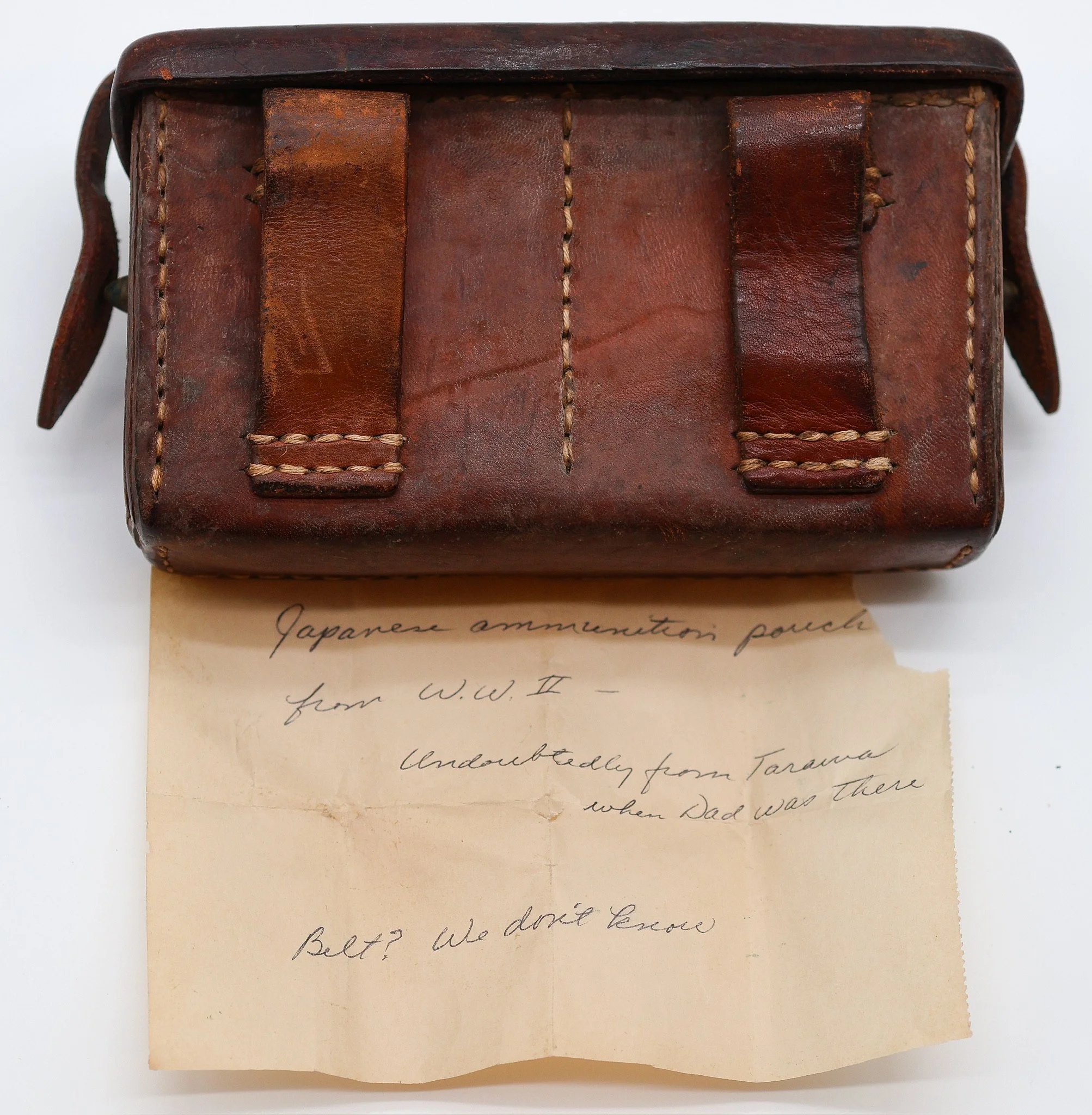
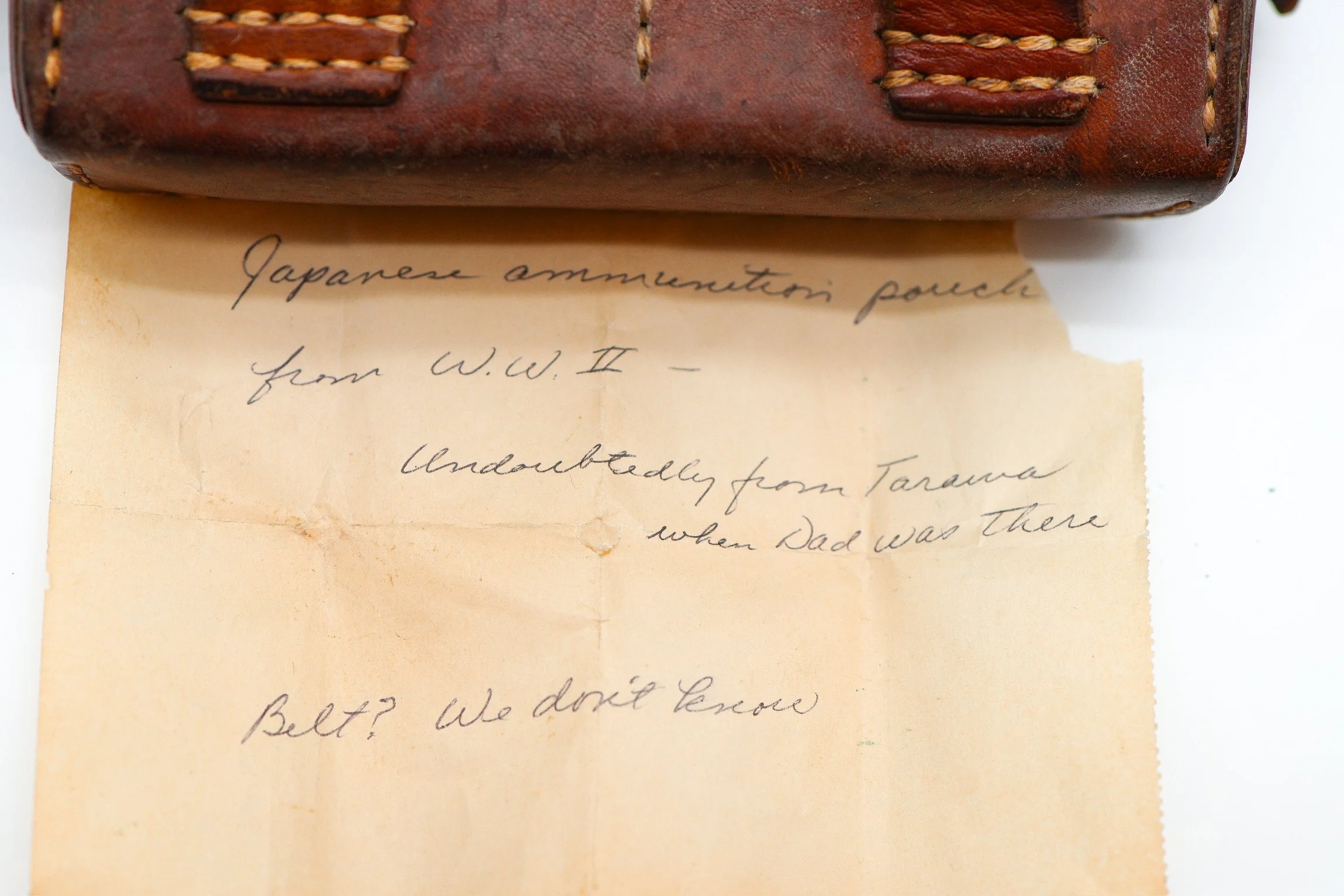
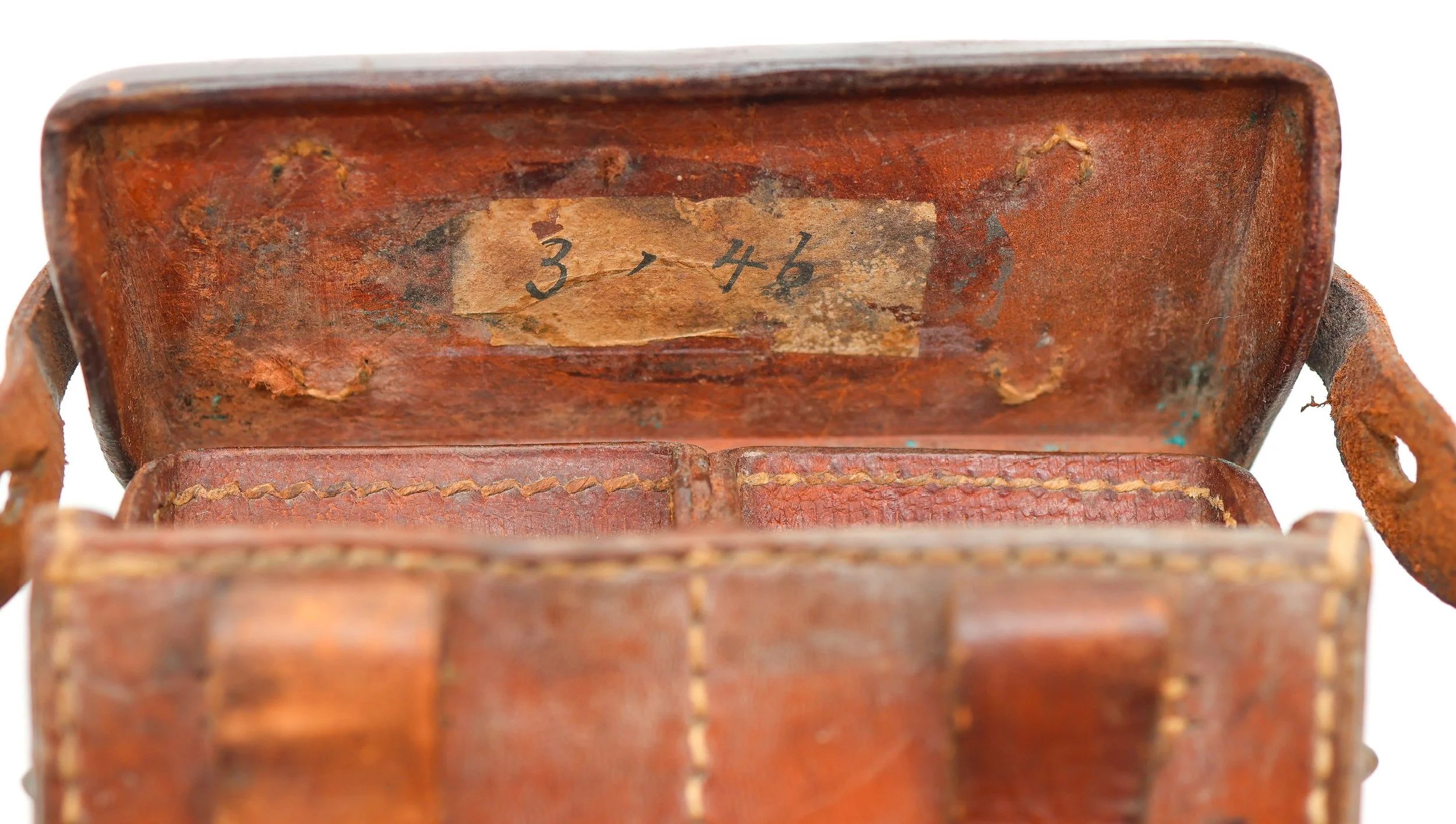
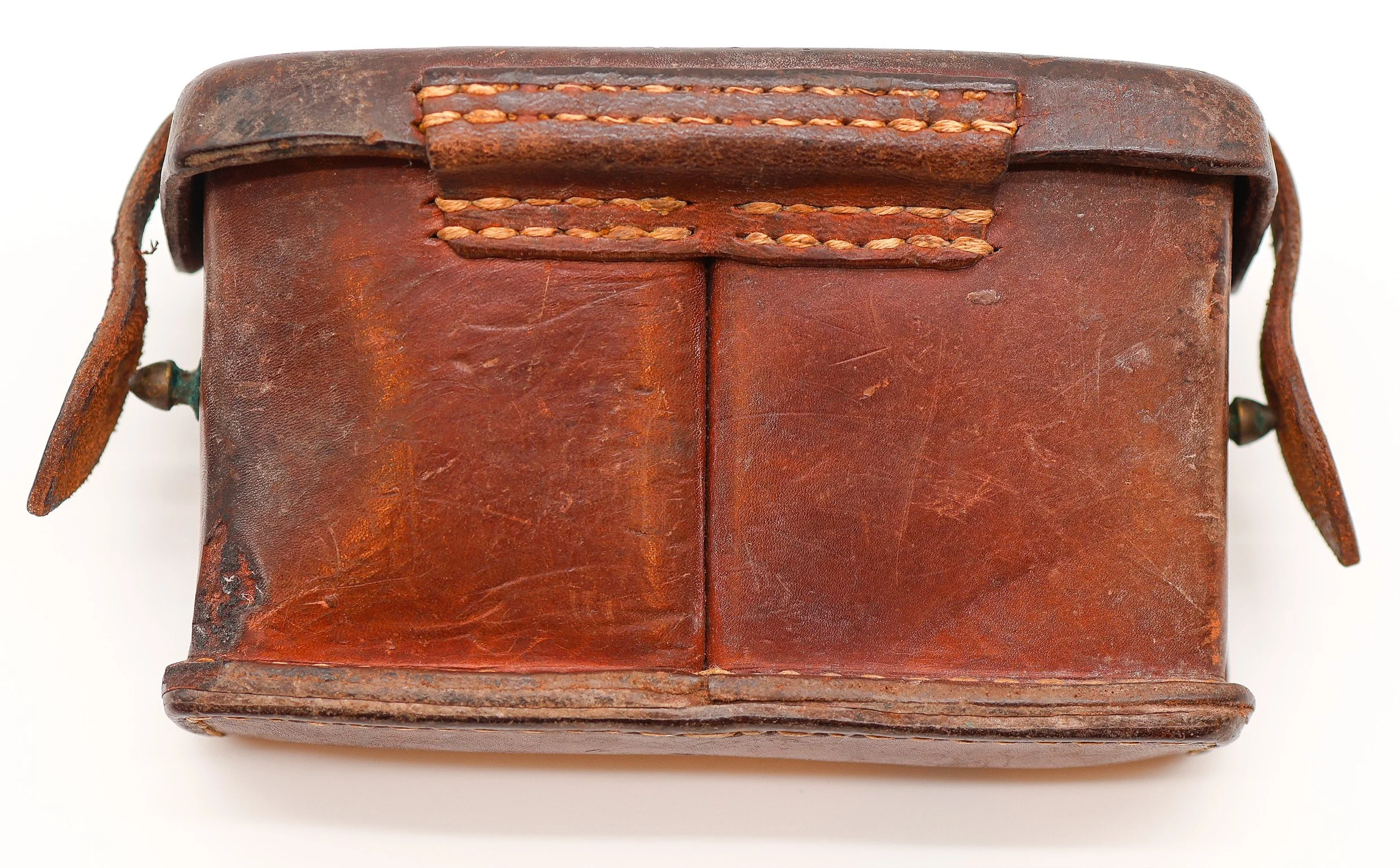
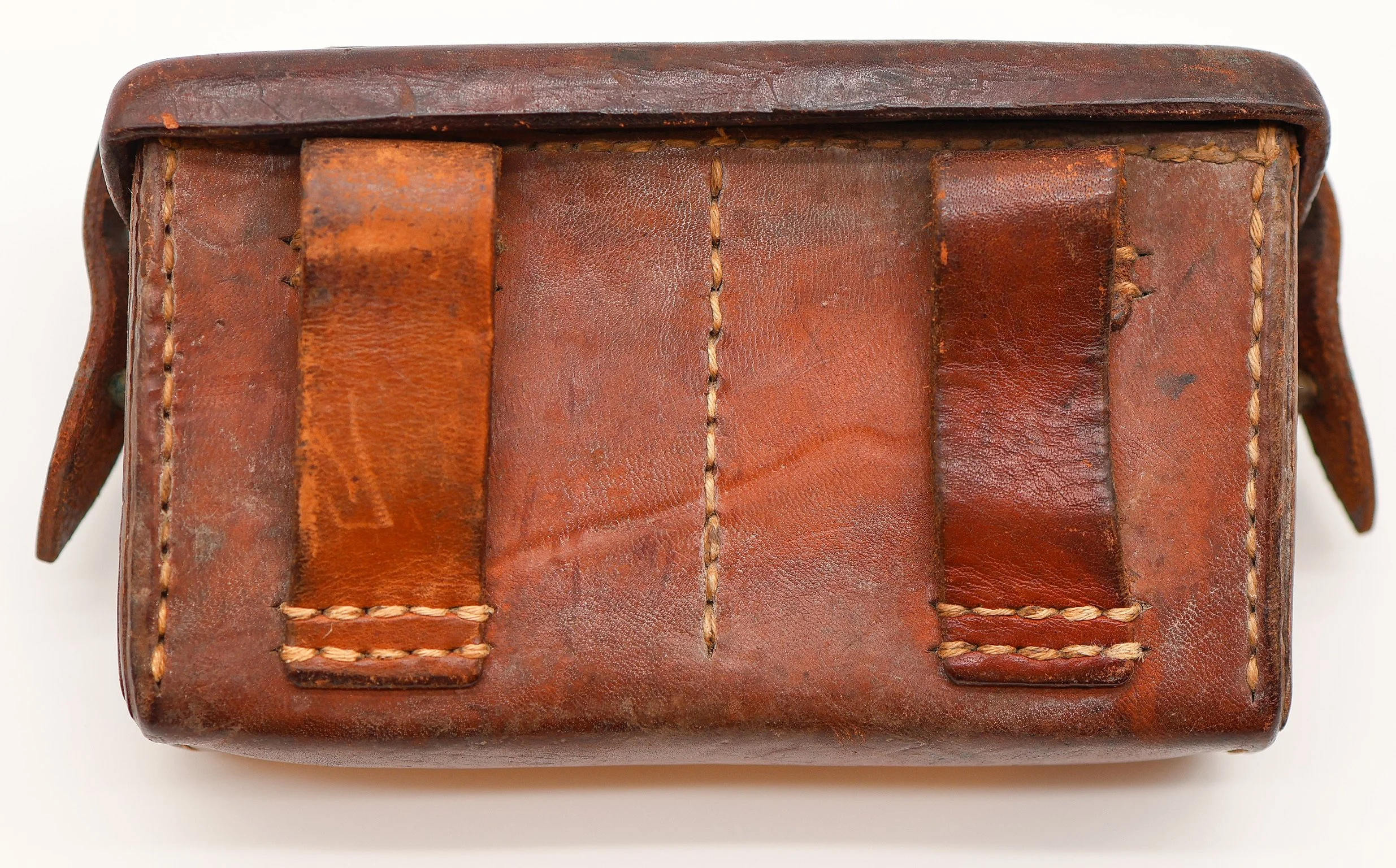
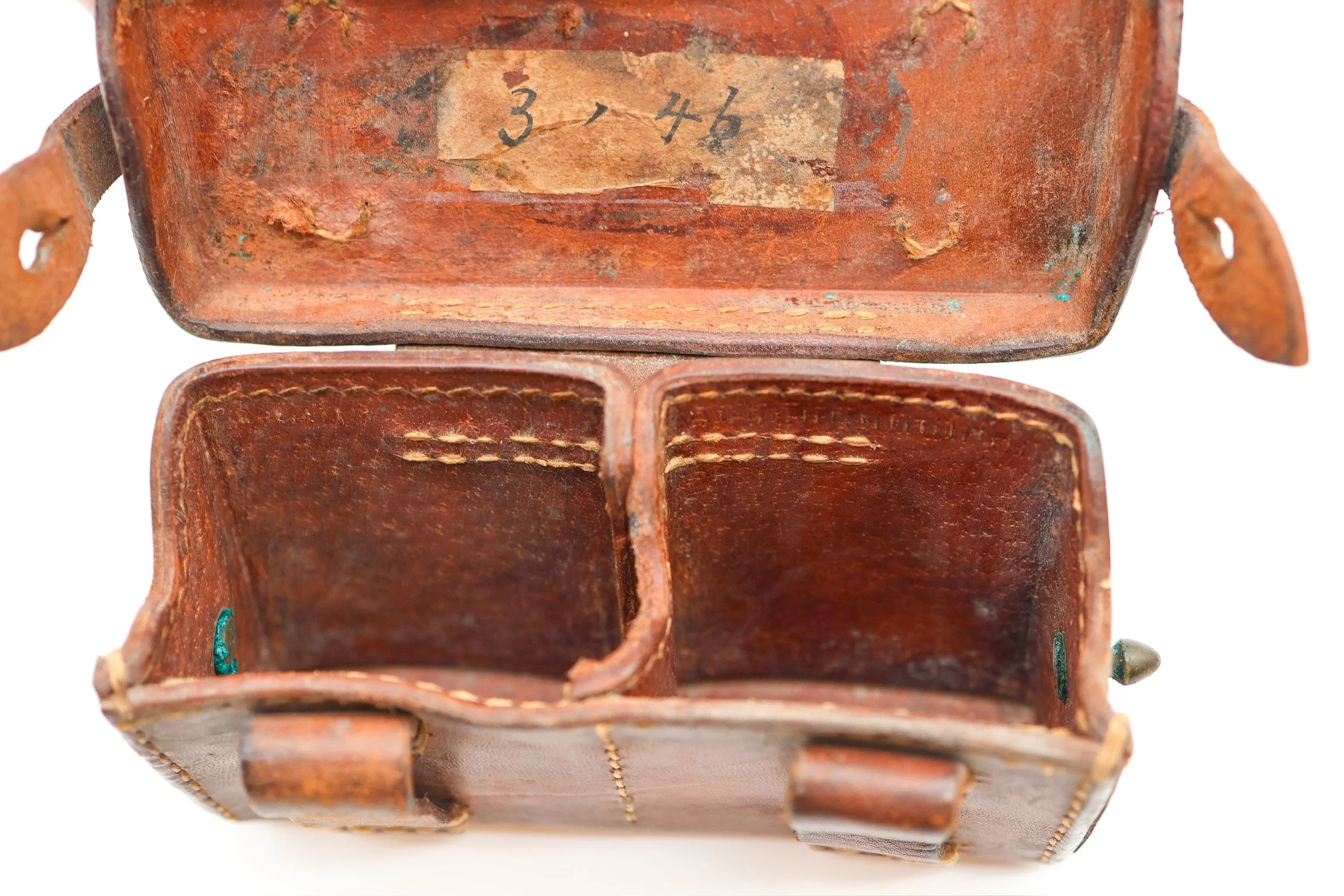
Japanese WWII Ammunition Pouch Recovered from the Battle of Tarawa
This Japanese World War II ammunition pouch was recovered from the Battle of Tarawa on Betio Island in November 1943. The pouch is a standard-issue Japanese Army example, constructed with leather ammunition compartments and retaining clear evidence of field use. Wear to the leather and stitching is consistent with combat conditions in the Central Pacific.
The pouch was brought back to the United States by a U.S. Marine veteran who participated in the fighting on Tarawa. It is accompanied by a handwritten note from the veteran’s child, documenting that the pouch was recovered during the battle.
This Japanese samurai sword was captured on Iwo Jima during the February–March 1945 fighting by Corporal Charles G. Beidleman, E Company, 2nd Battalion, 28th Marine Regiment, 5th Marine Division.
The blade bears a visible bullet strike that pierced the steel. Corporal Beidleman, who was wounded in the hip during the campaign, later described recovering the sword from a deceased Japanese soldier following one of the banzai charges launched against Marine positions.
Despite the damage to the blade, the sword remains intact overall, while the scabbard exhibits the majority of the damage.
This sword was acquired directly from Corporal Beidleman prior to his death by Brendan Synnamon of The Union Drummer Boy. Beidleman lived in Pennsylvania near Synnamon and sold the sword to him in person at his shop. The Artifacts of Valor collection later acquired the sword from Synnamon.
The 28th Marine Regiment played a central role in the Battle of Iwo Jima, including the capture of Mount Suribachi.

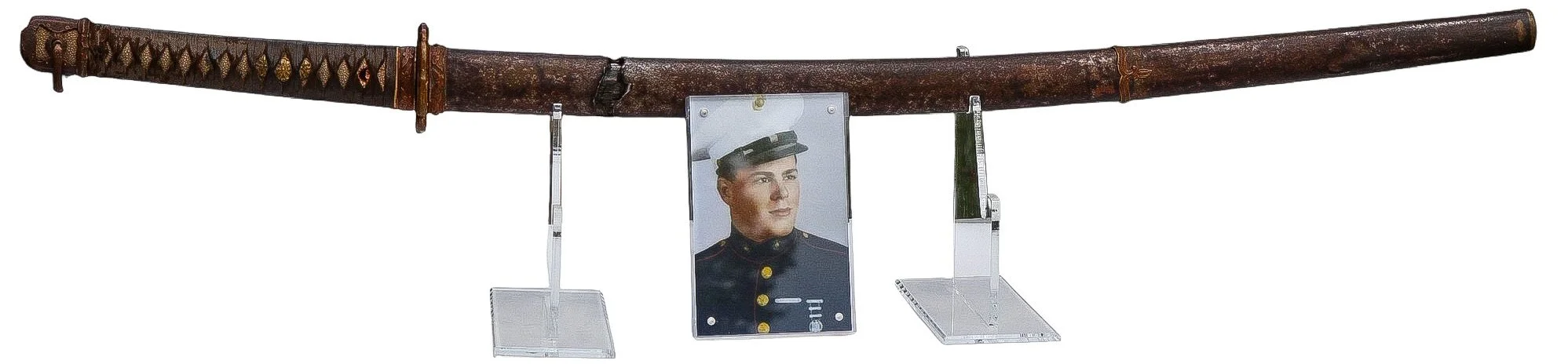

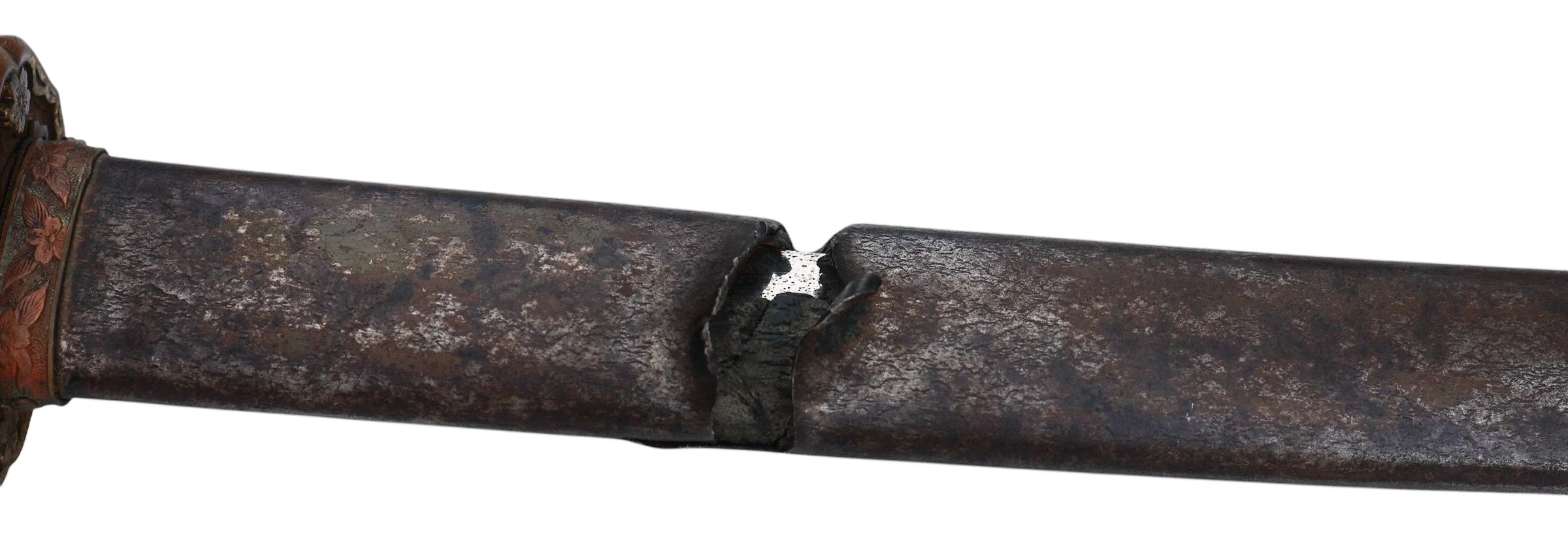
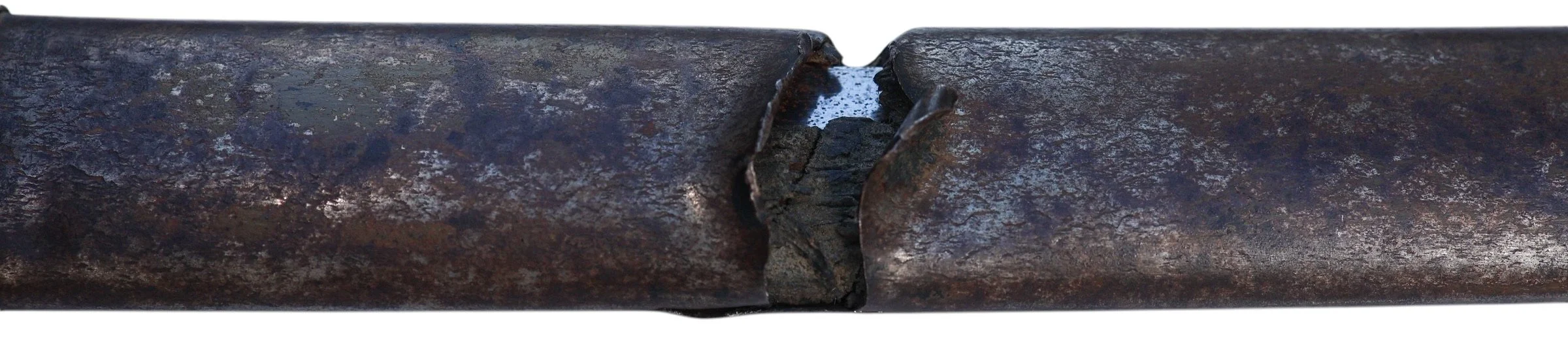
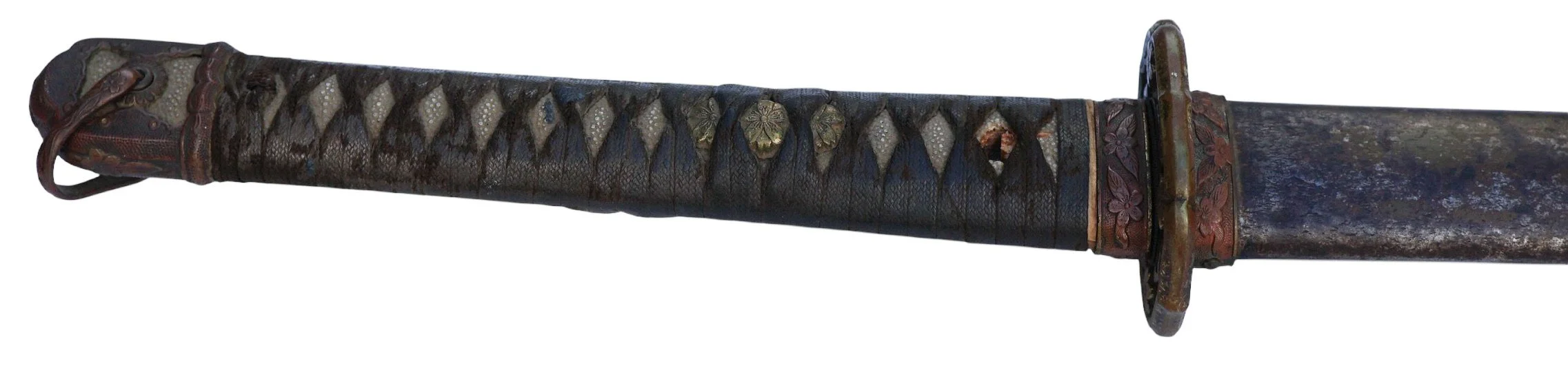
Bullet-Struck Japanese Samurai Sword Captured on Iwo Jima


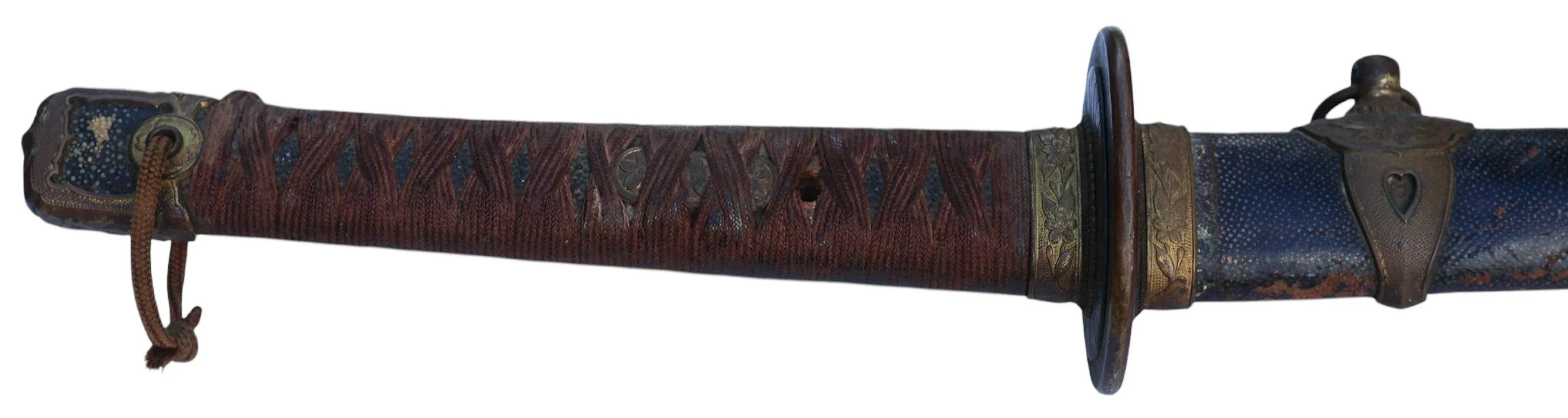
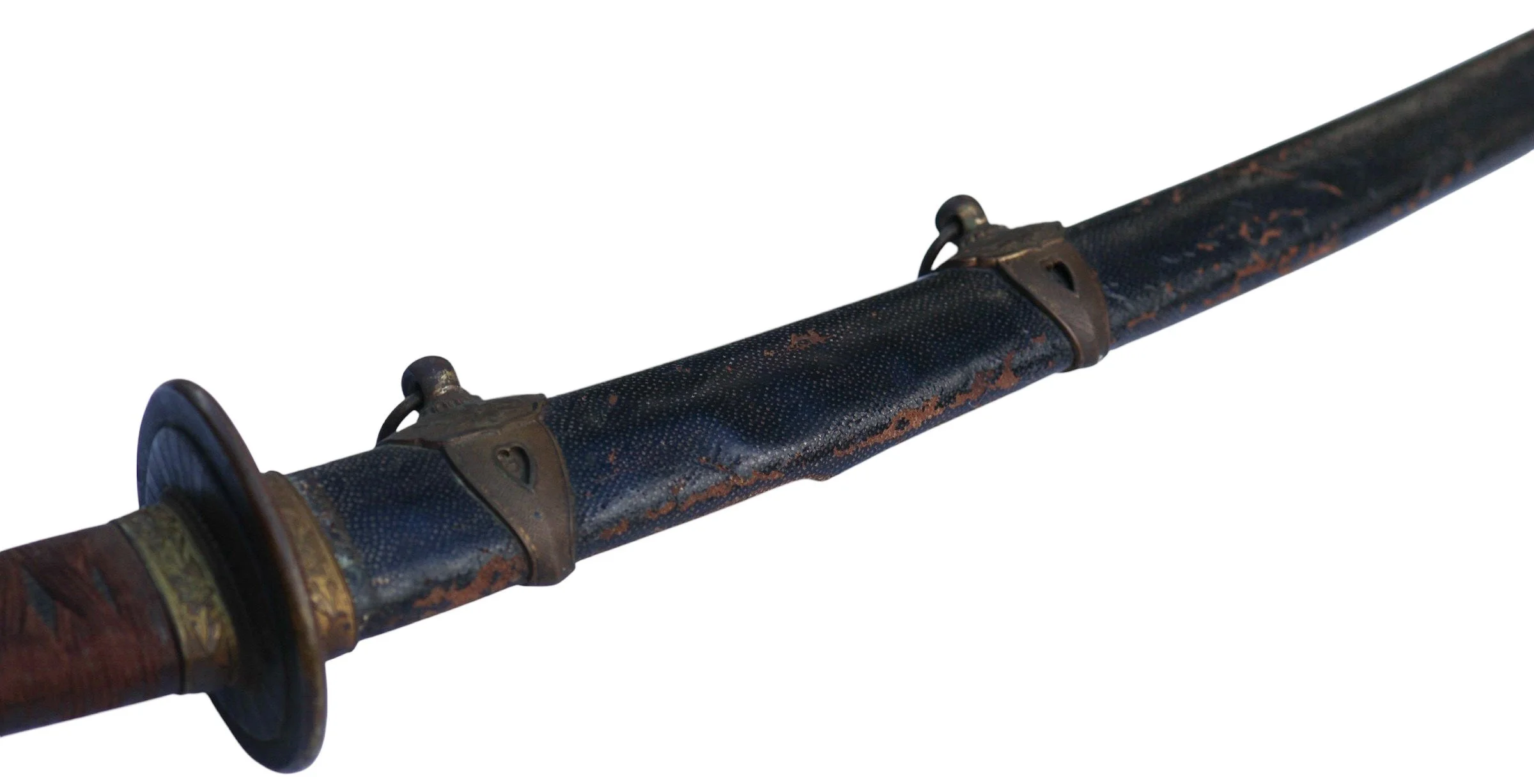
This Japanese naval officer’s sword was surrendered aboard the battleship Nagato on August 30, 1945, following Japan’s formal capitulation. The sword was received by U.S. Marine Corps Lieutenant Harry Savage, a member of Task Force 31, Tokyo Bay Occupation Force. This sword was acquired from Lt. Savage’s family.
The blade is attributed to the Echizen Seki school (circa 1661–1673) and is mounted in naval guntō fittings. The sword retains a brown tape-wrapped shagreen grip, brass tsuba, gold-washed habaki, and a shagreen-wrapped wooden scabbard with naval mounts. Shinsa paperwork accompanies the sword, confirming attribution and construction details.
Lieutenant Savage participated in the initial landing at Tokyo Bay and was part of the boarding party that accepted the surrender of Nagato, the last Axis battleship still afloat at the time of surrender. The sword remained with Savage and later passed through family descent.
The blade shows light scattered staining and a small nick, consistent with age and service use. Overall condition is good, with intact fittings and original mounts.
Japanese Naval Officer’s Sword — Captured from Battleship Nagato
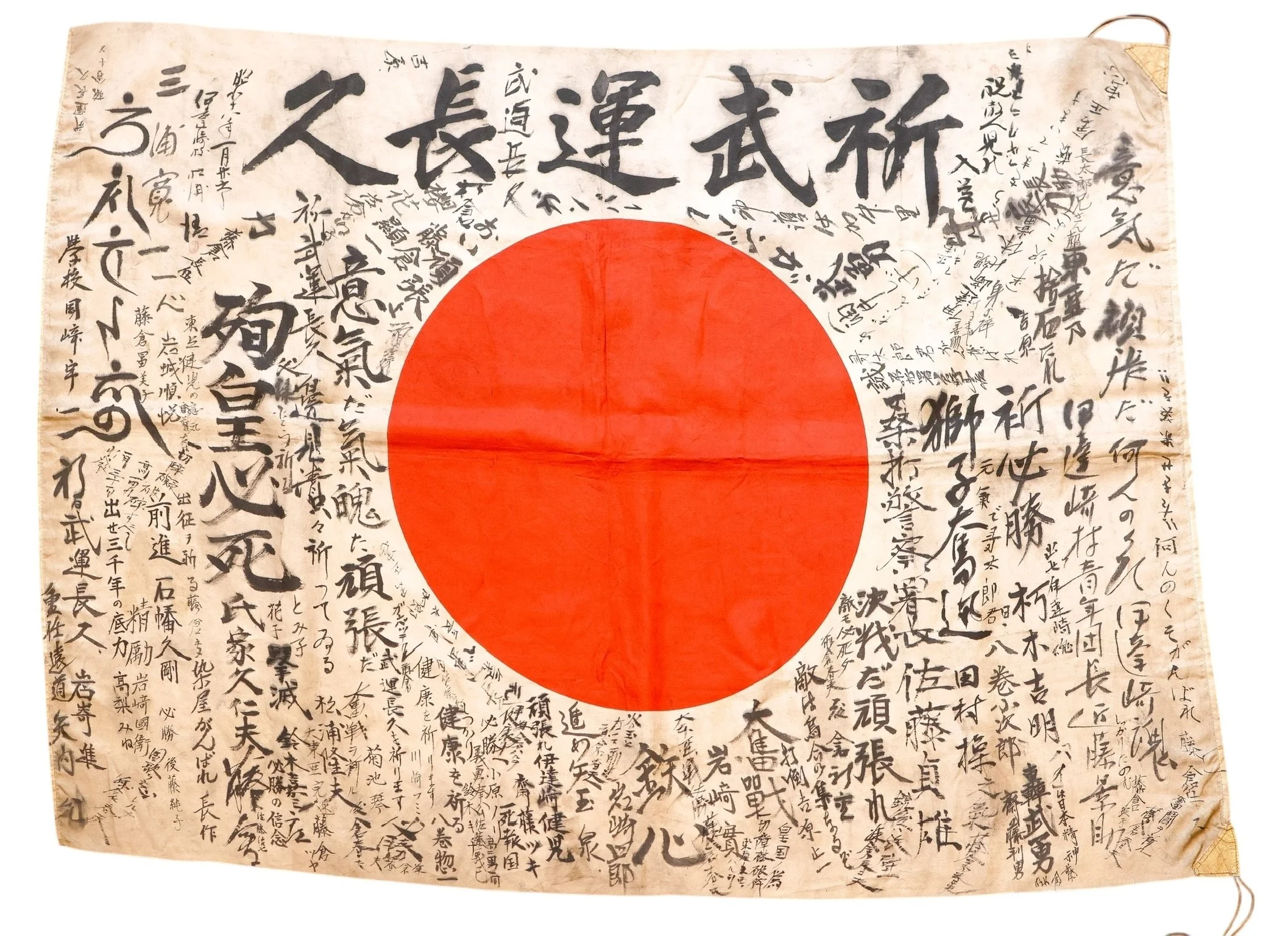
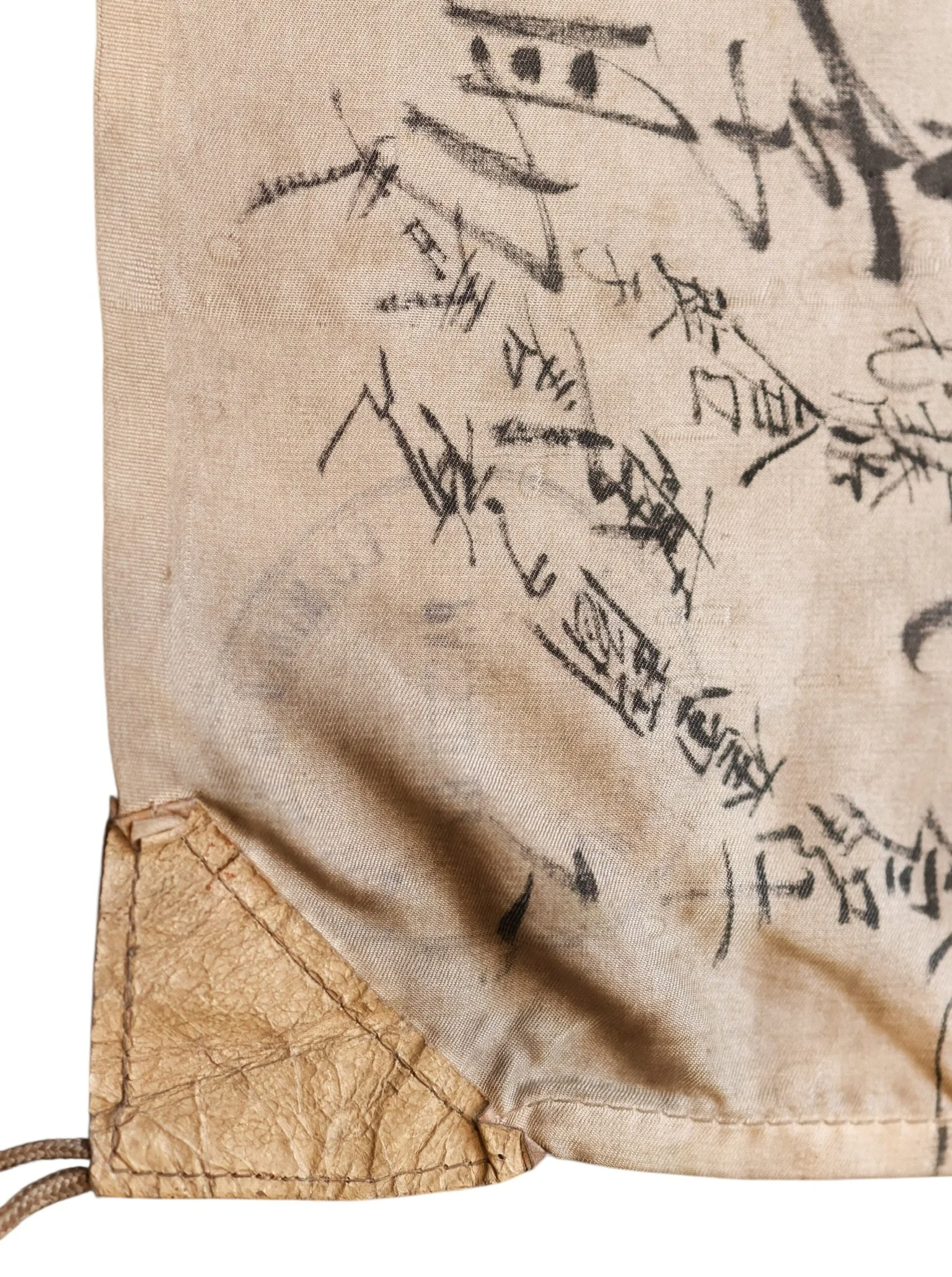
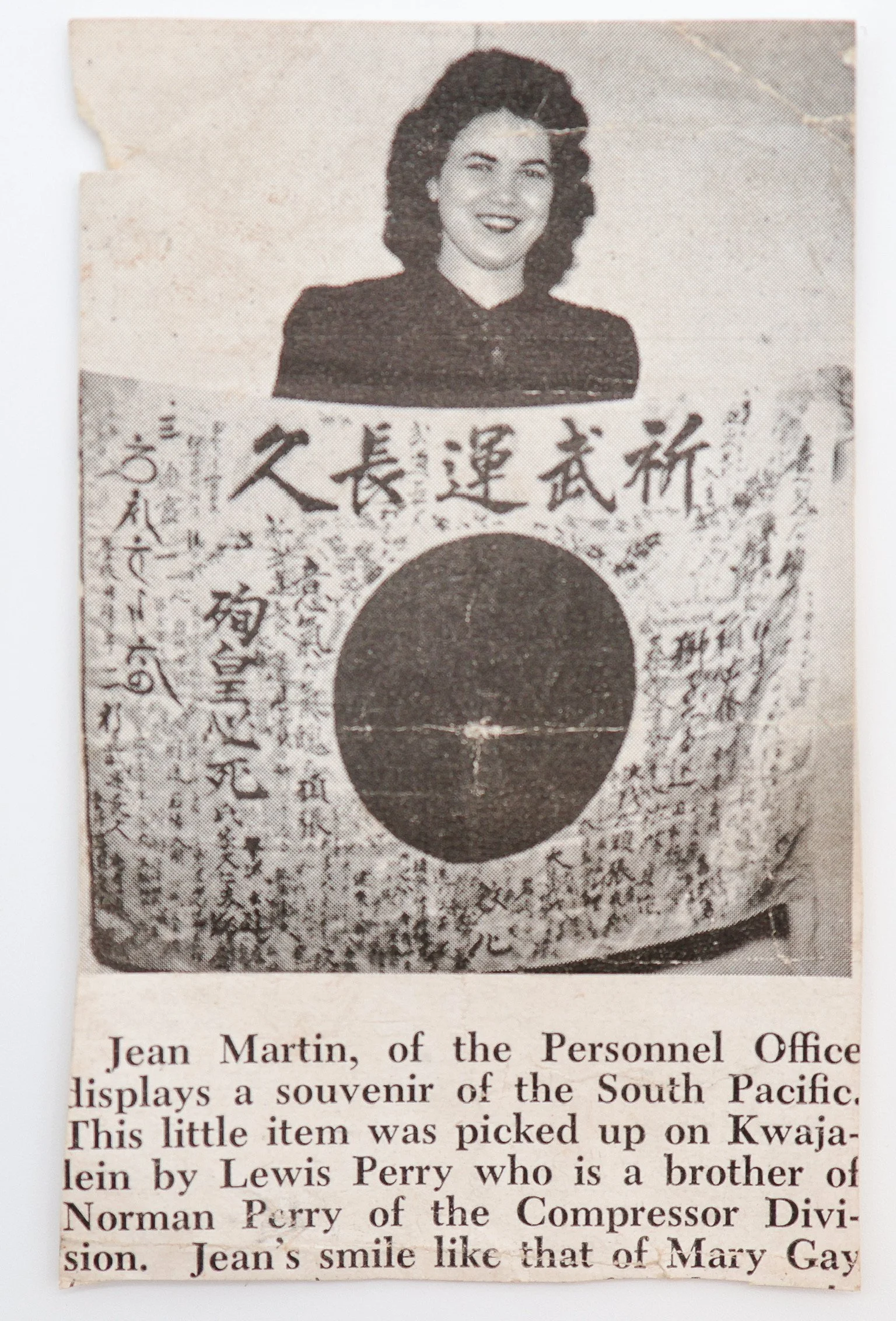
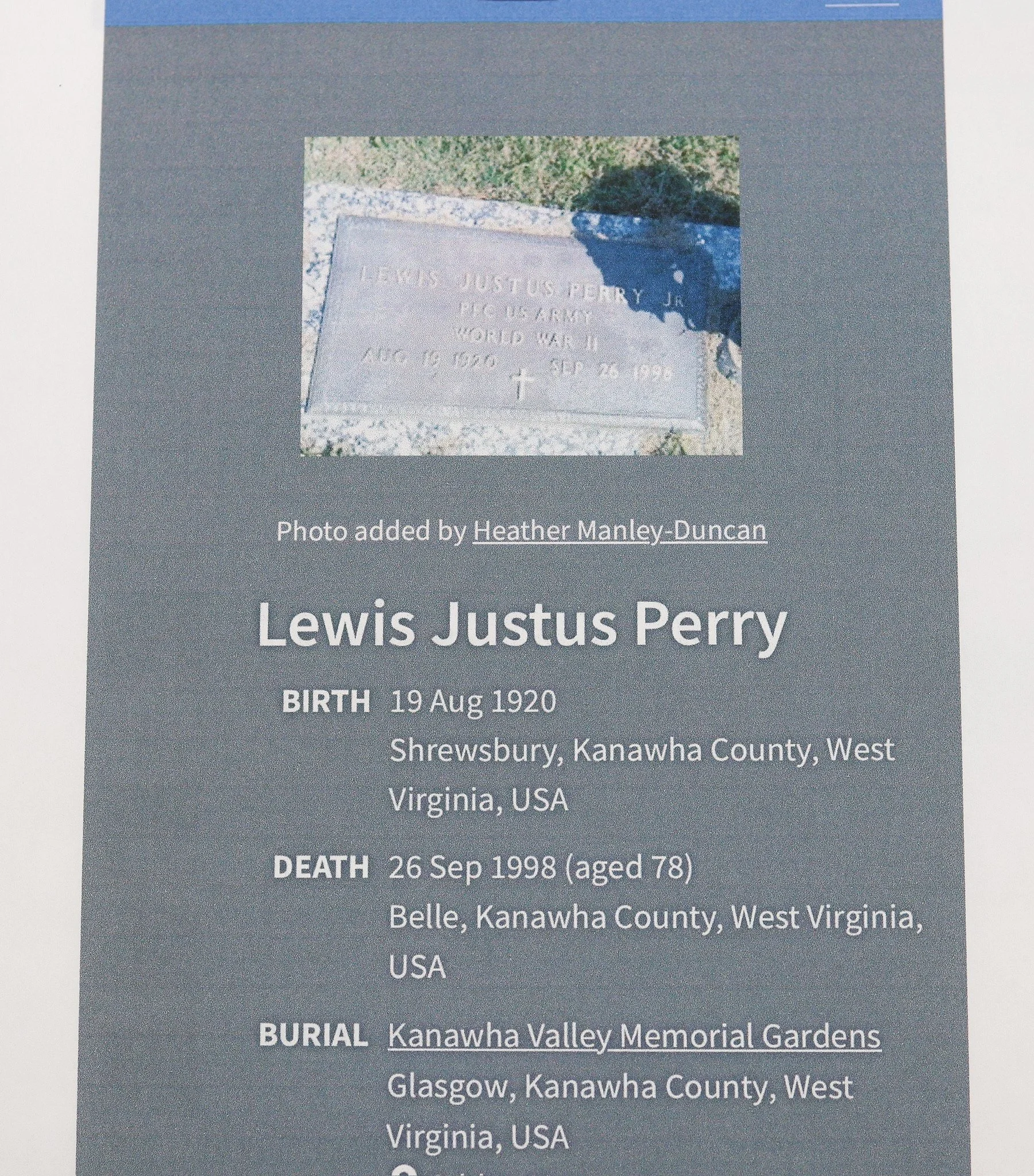
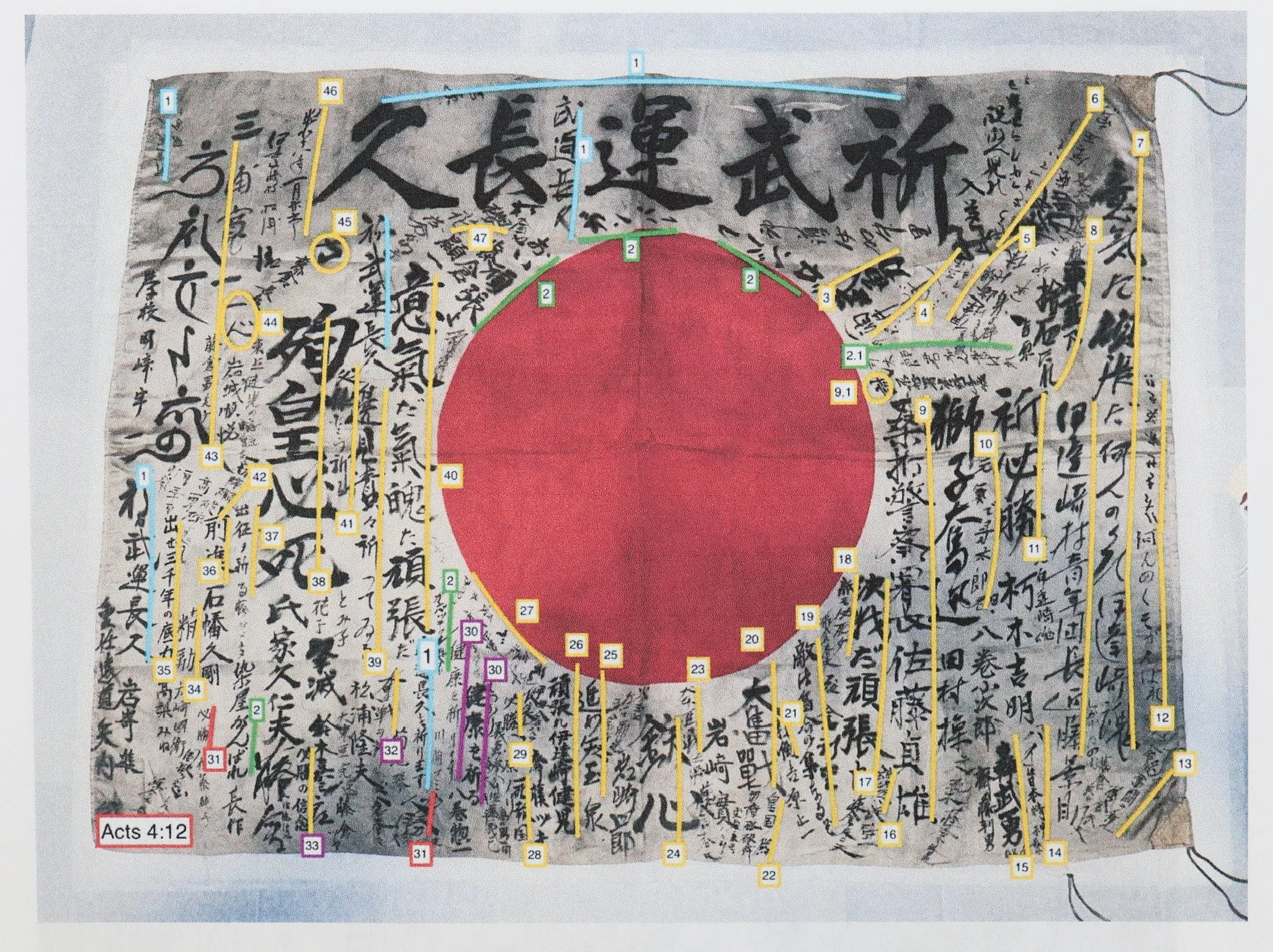
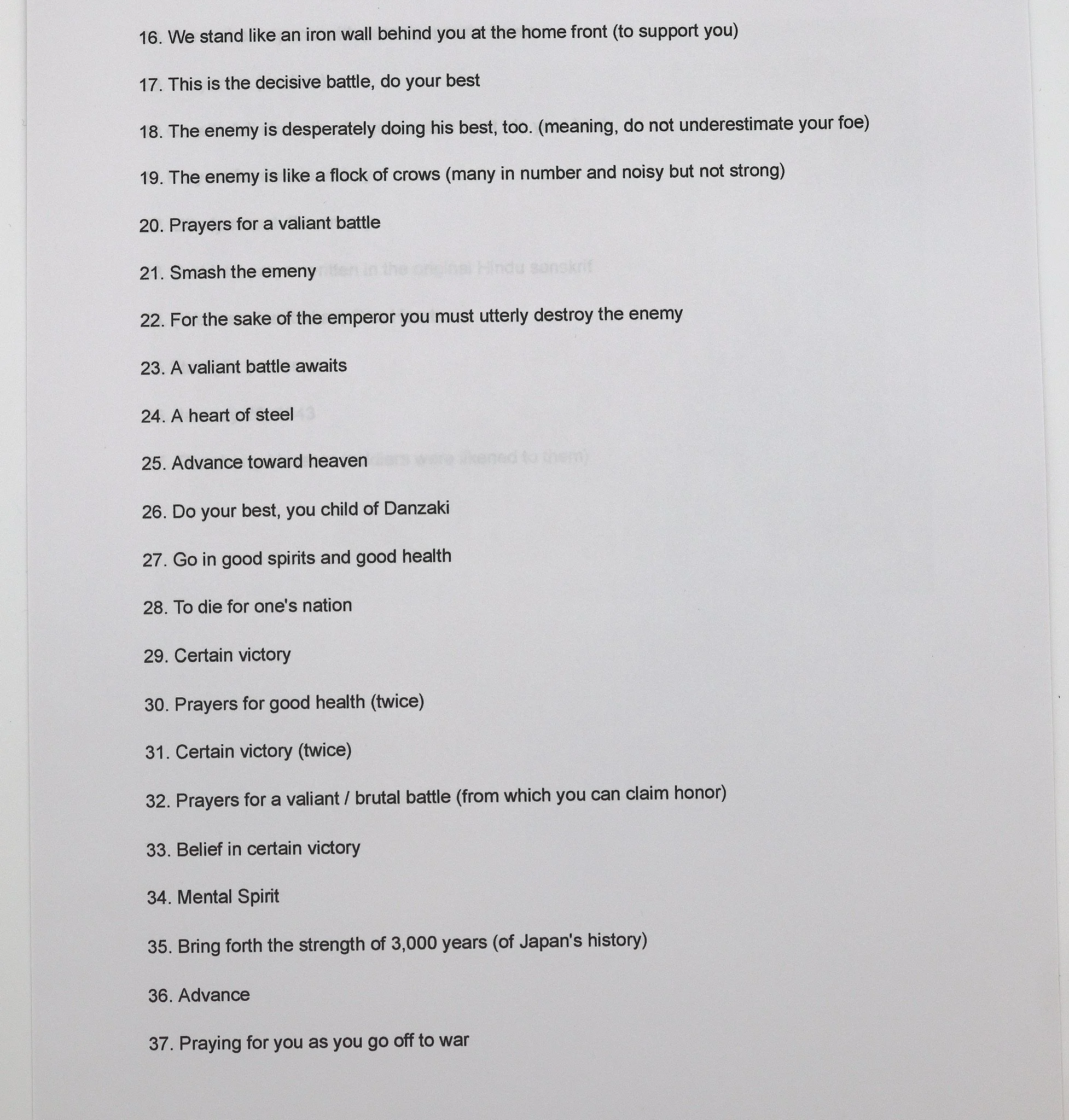
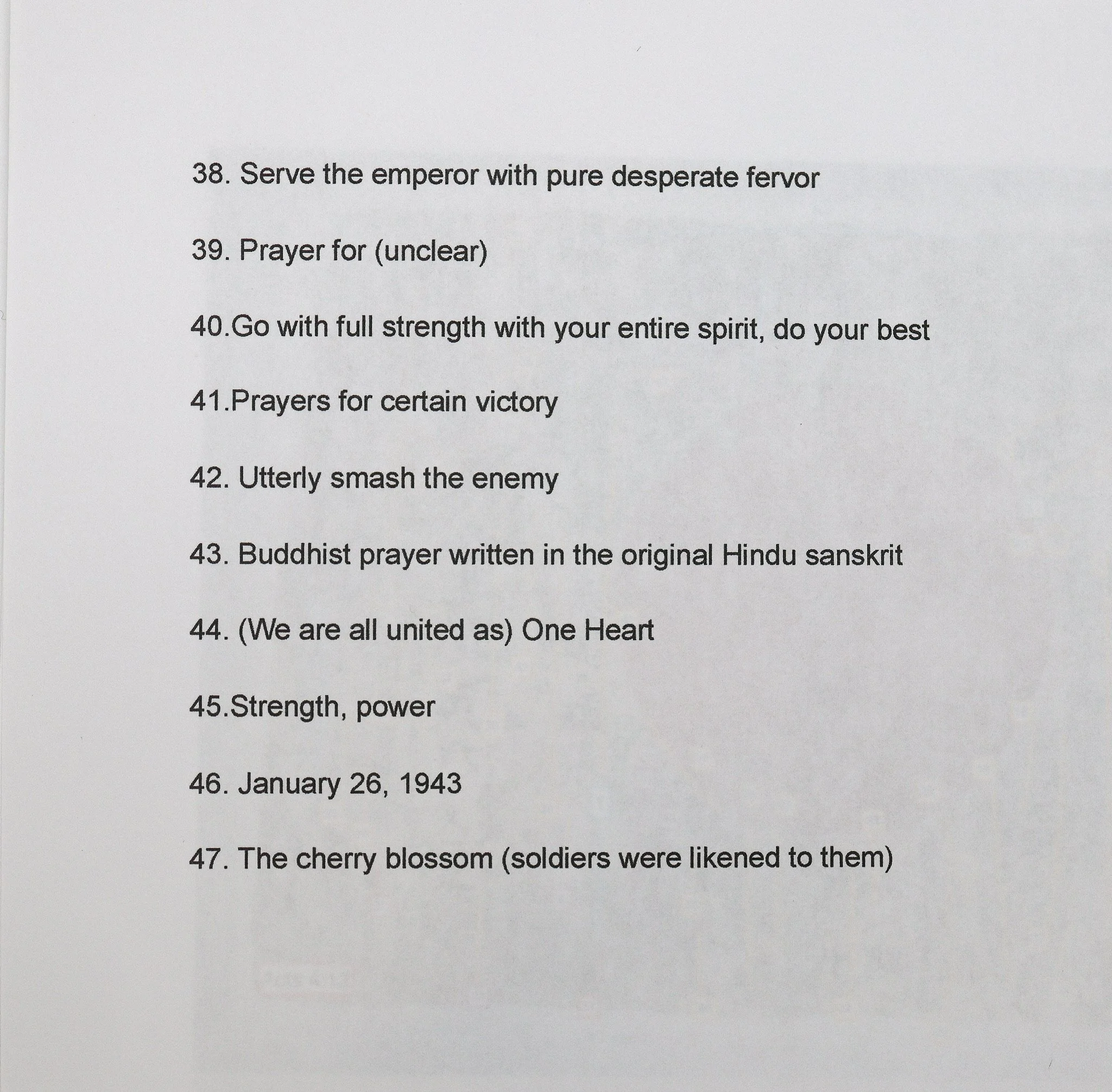
This Japanese yosegaki hinomaru flag was captured on Kwajalein Atoll during World War II by Lewis Justus Perry, U.S. Army, who served as a Private First Class.
The grouping includes a period newspaper article depicting a woman holding this exact flag. The article states the flag was taken from Kwajalein by Lewis Perry and identifies both Lewis and his brother, Norman Perry.
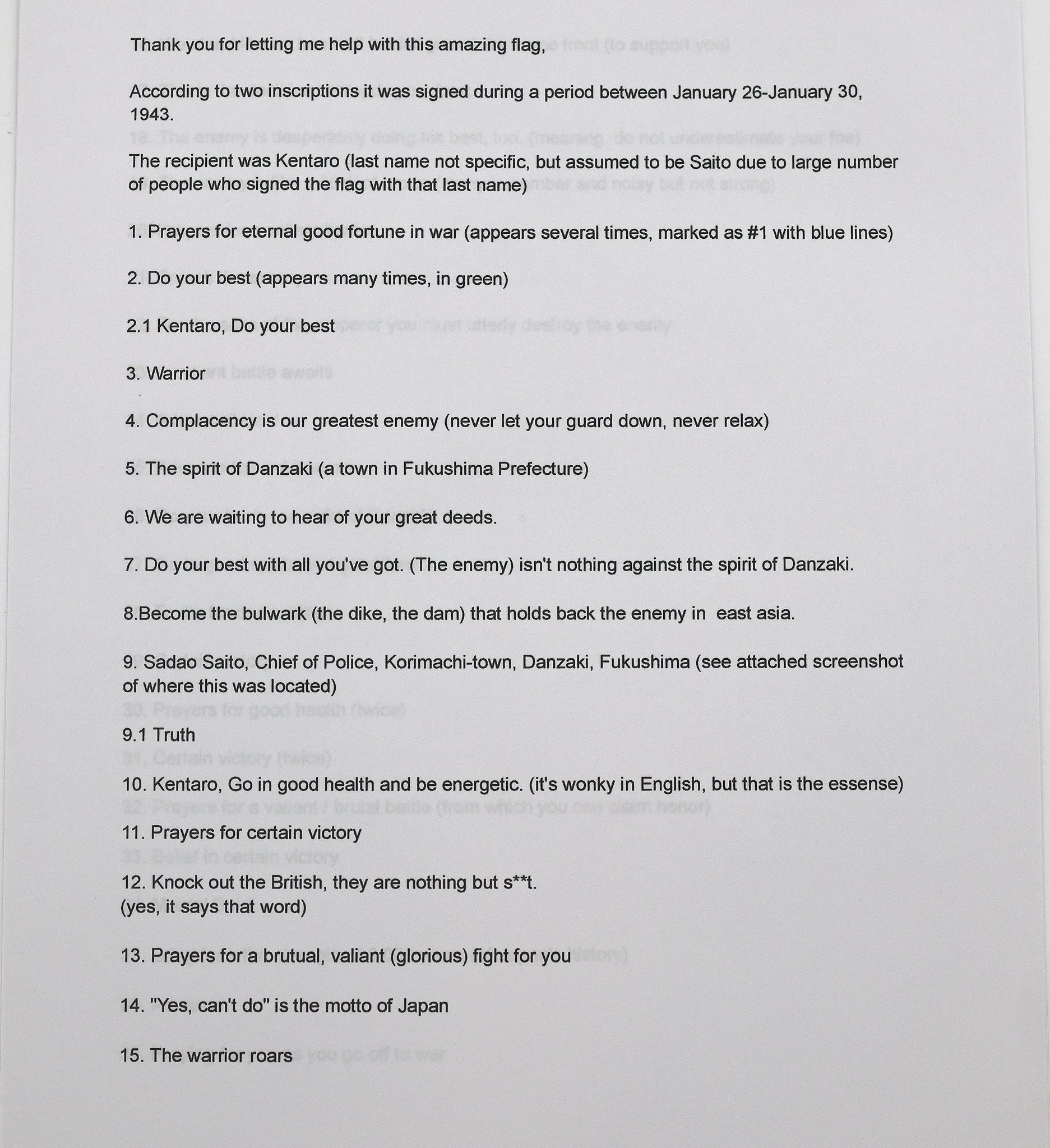
The flag bears traditional yosegaki inscriptions consisting of good-luck messages and patriotic phrases written prior to the soldier’s departure. Translation of the writing dates portions of the inscriptions to late January 1943.
Perry lived his entire life in Kanawha County, West Virginia, where the flag remained after the war.
Japanese WWII Yosegaki Hinomaru Flag Captured on Kwajalein Atoll
Japanese Flag Captured in the Philippines
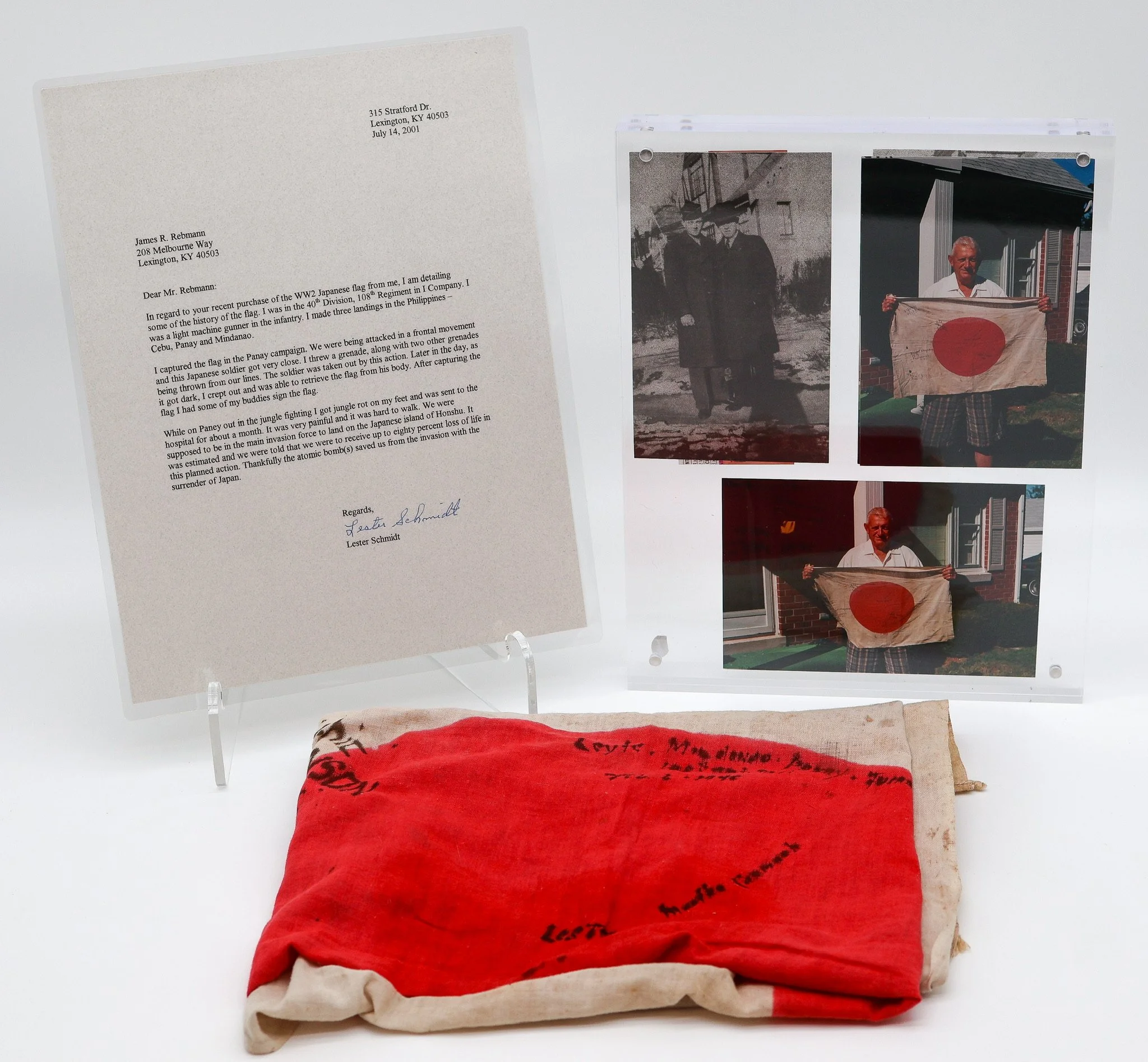
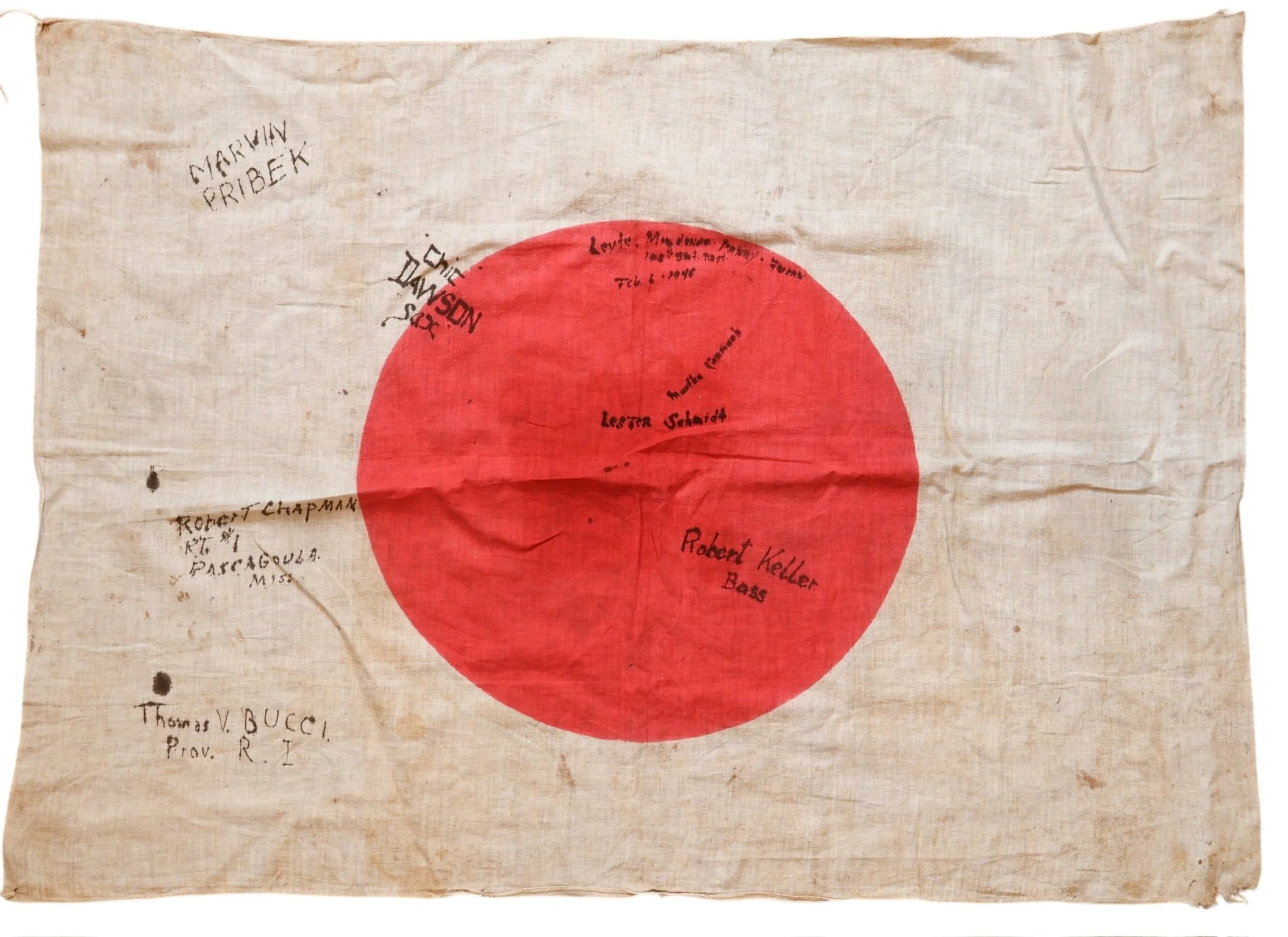
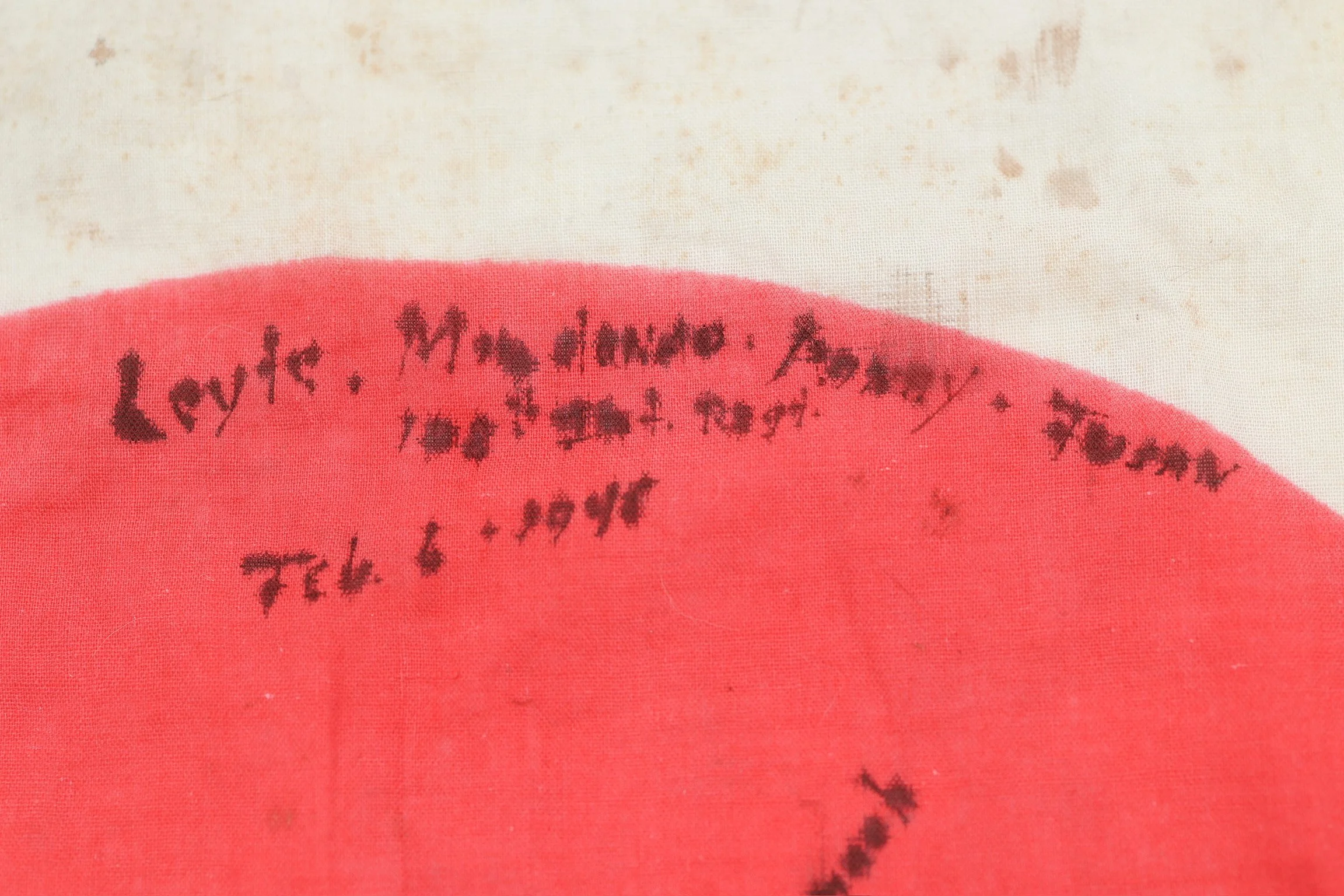
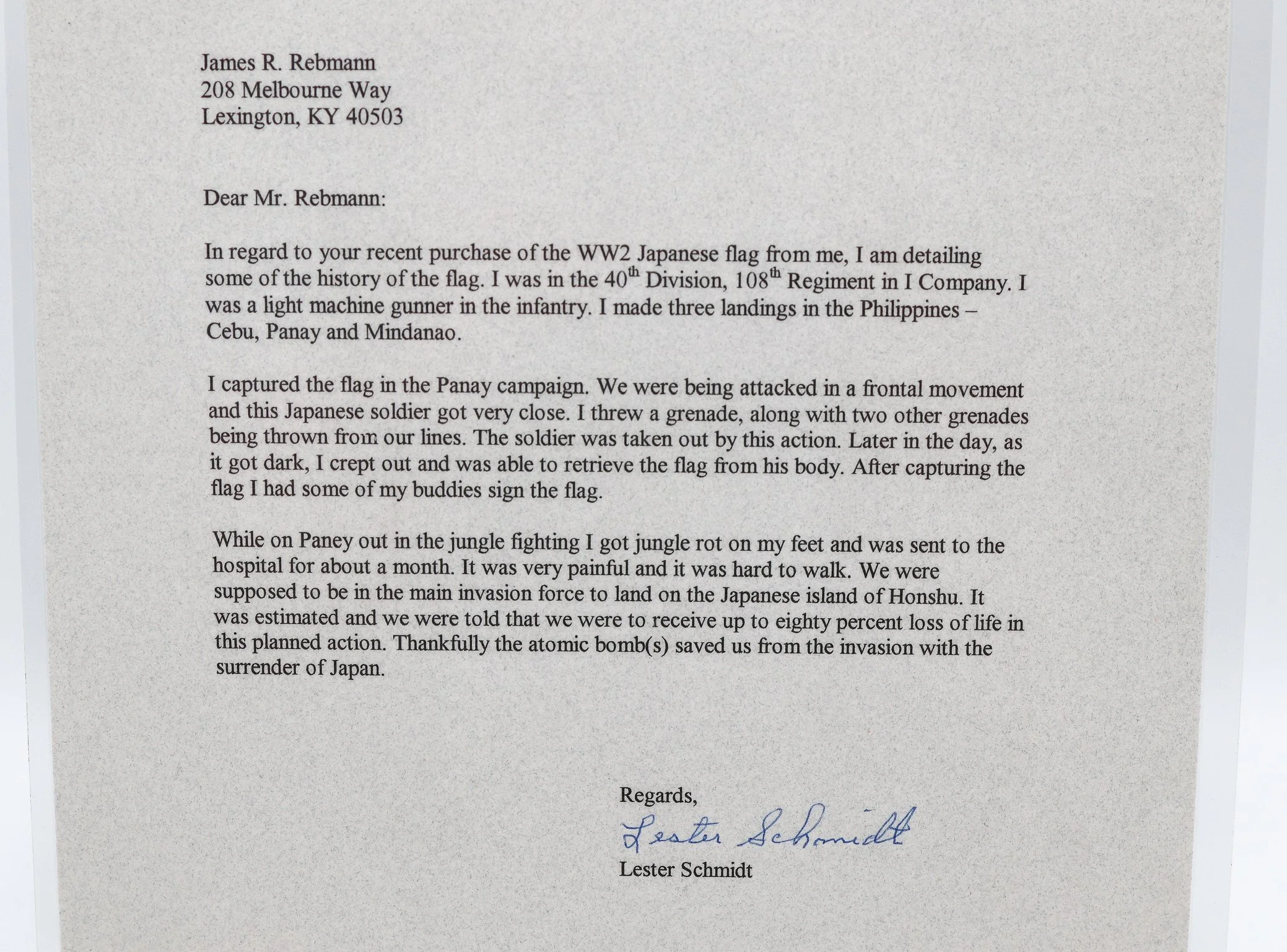
This Japanese World War II flag was captured by Lester Schmidt, a light machine gunner with I Company, 108th Infantry Regiment, 40th Infantry Division, during the Panay Campaign in the Philippines in 1944.
According to Schmidt’s account, his unit came under a frontal Japanese assault during combat operations on Panay Island. During the engagement, a Japanese soldier advanced to close range and was killed by grenades thrown by Schmidt and members of his unit. Later that evening, Schmidt recovered the flag from the fallen soldier, retaining it as a war souvenir.
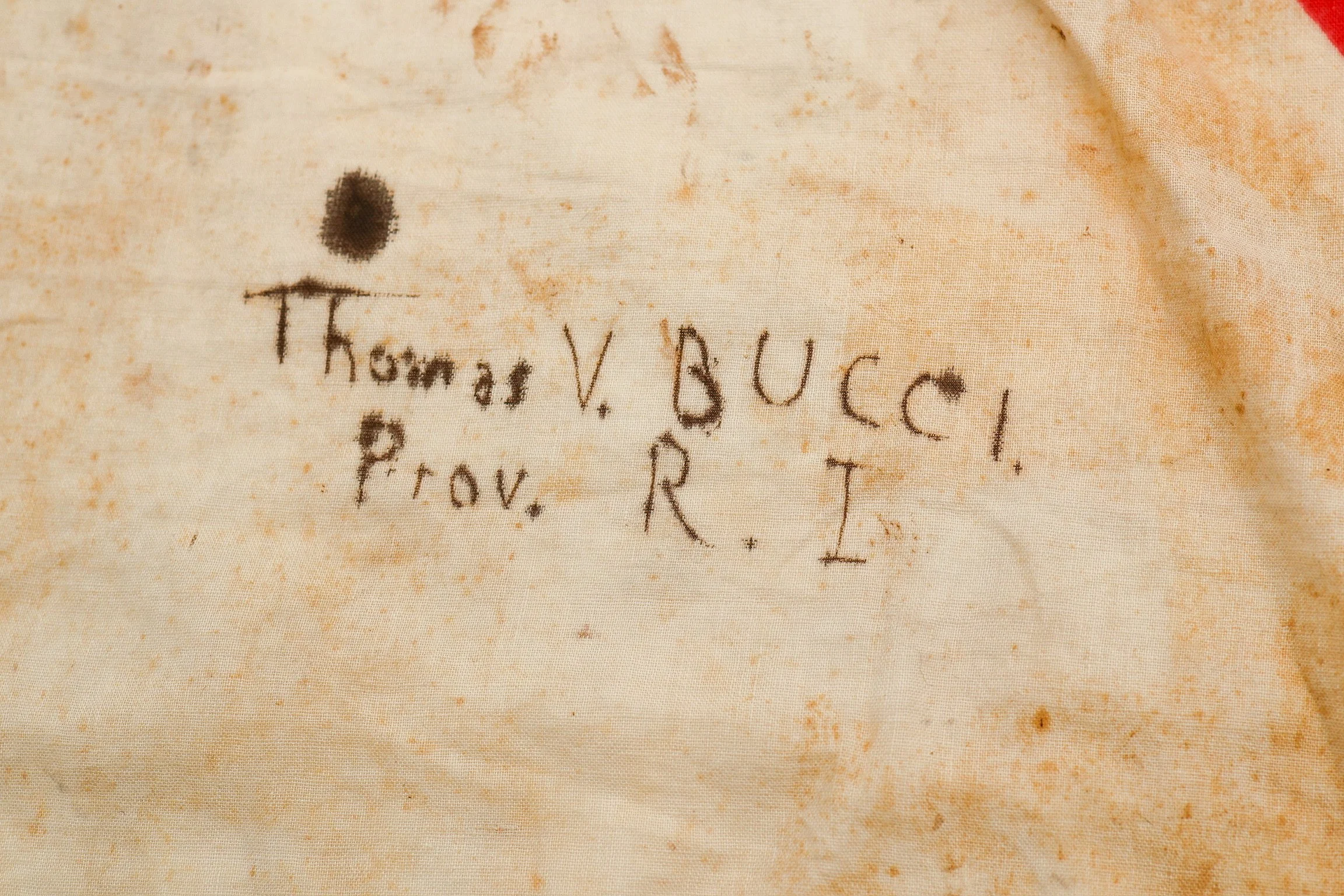
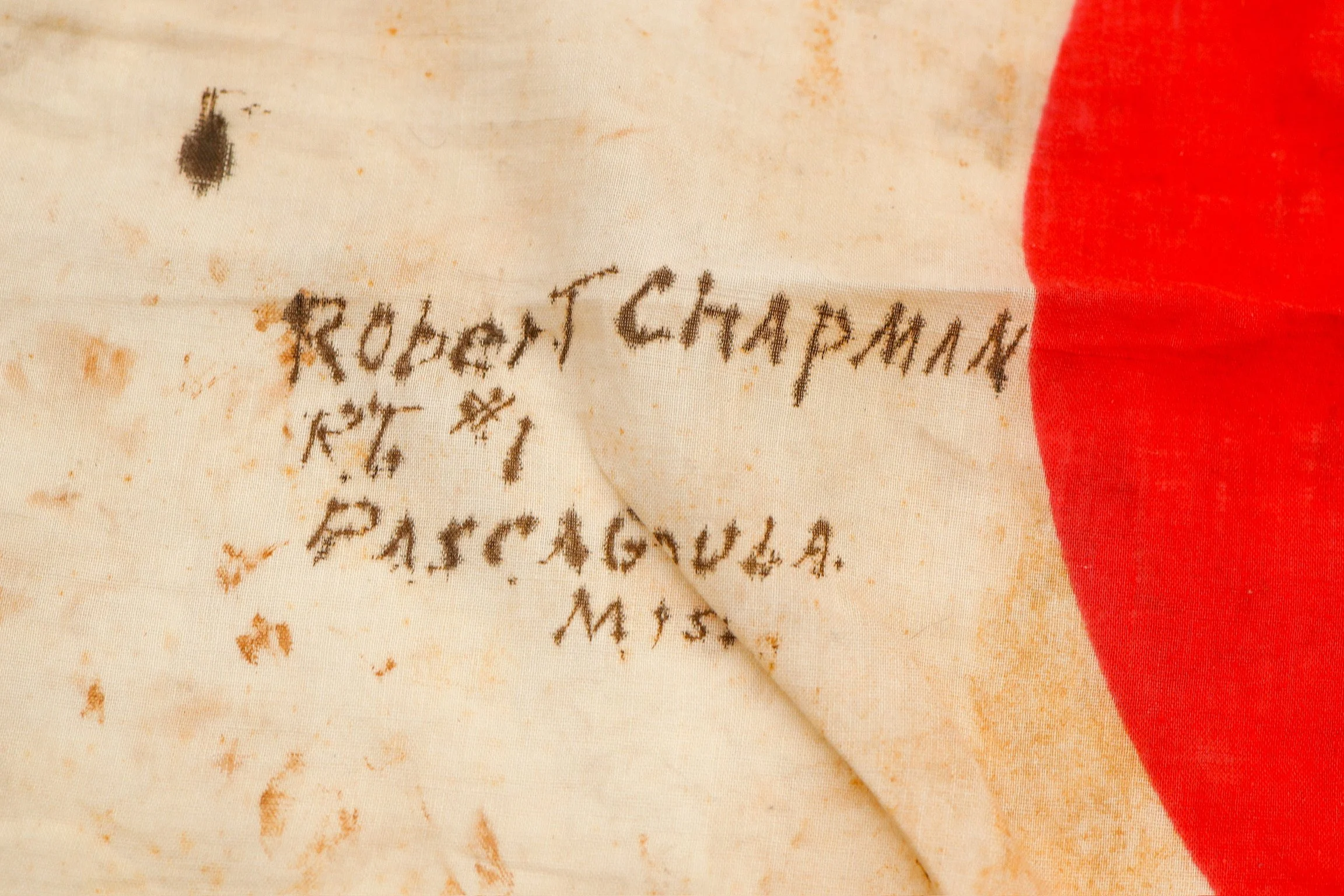
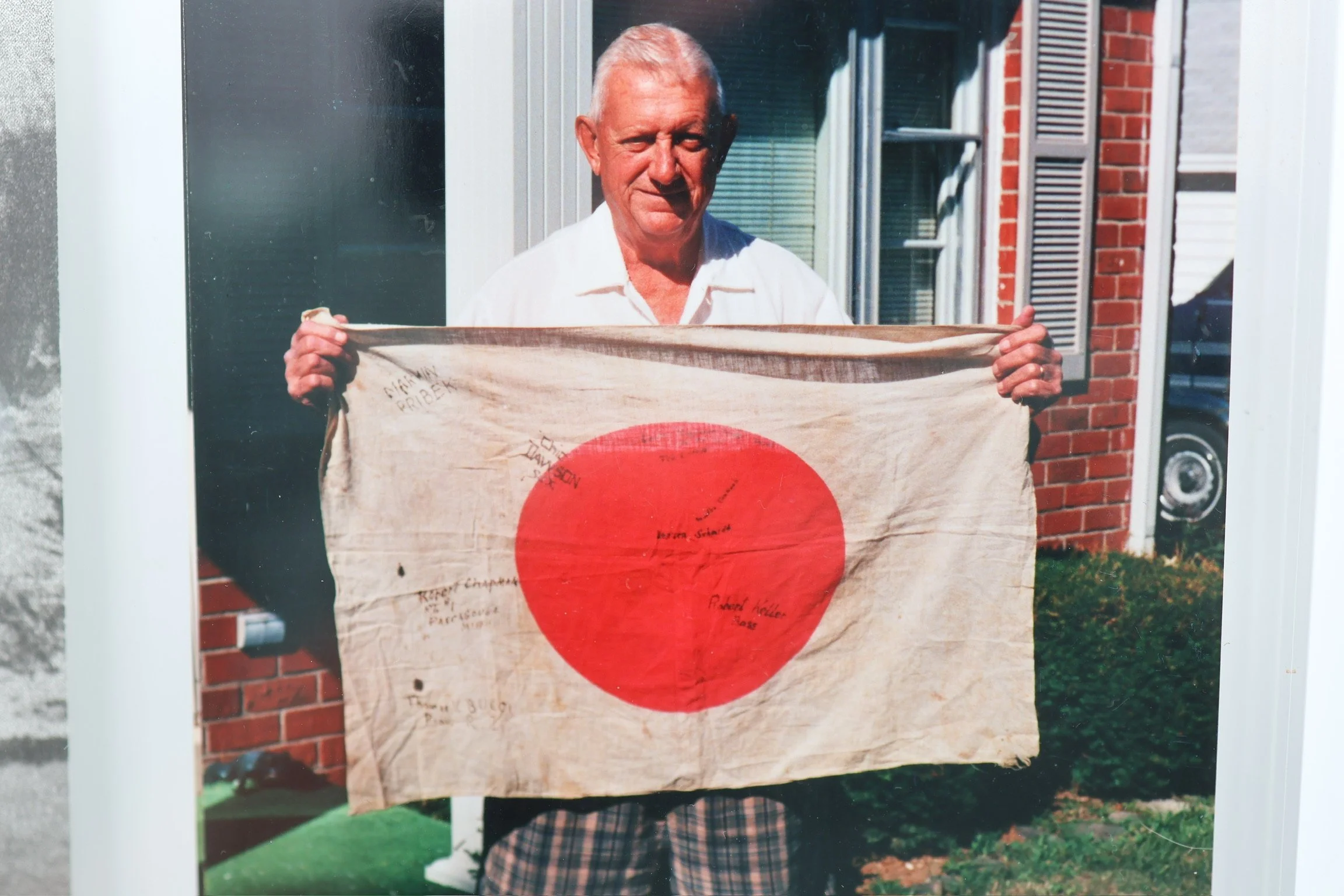
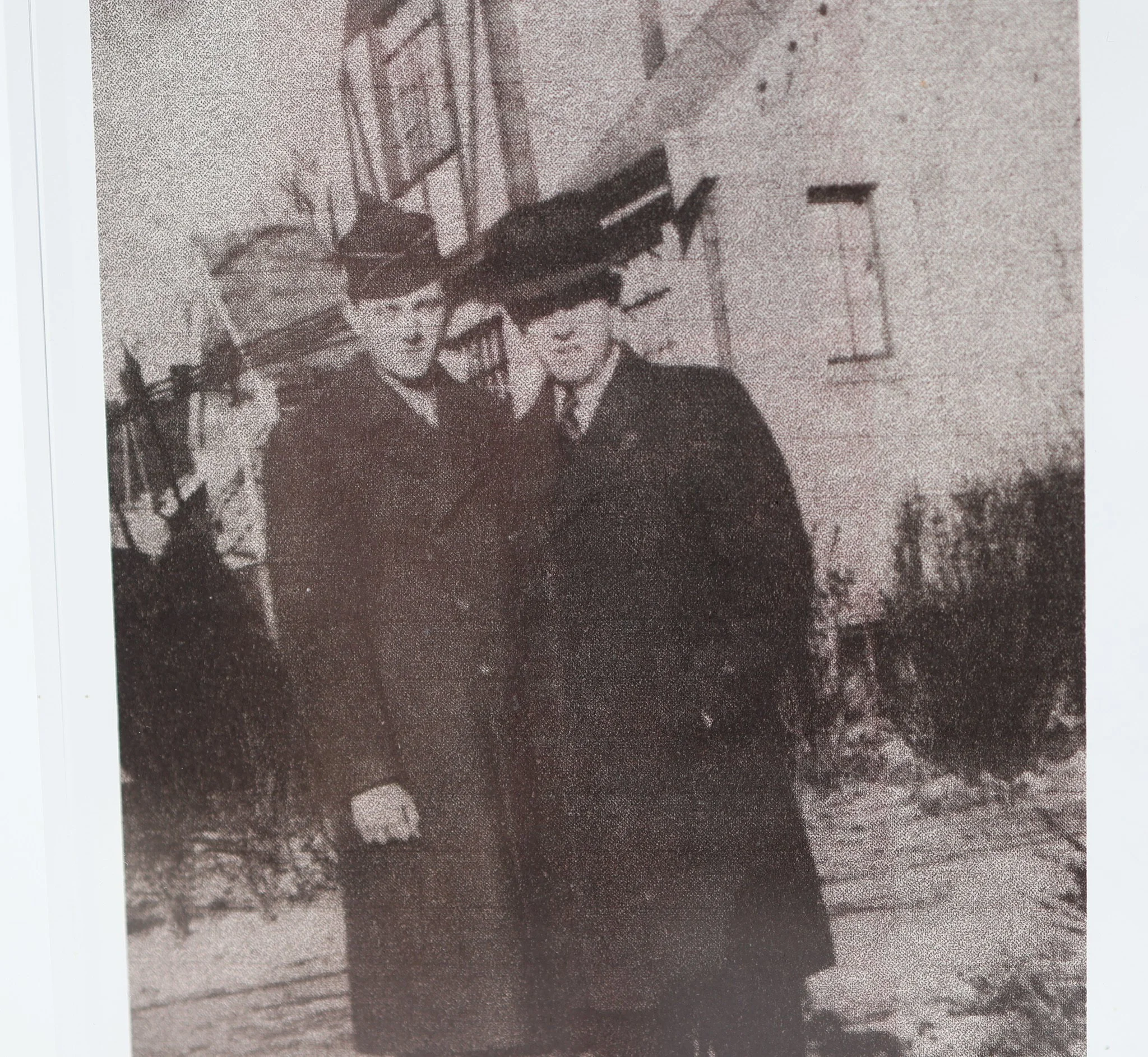
After the capture, Schmidt had several members of his unit sign the flag. A later photograph shows Schmidt in old age holding this same flag.
Schmidt also documented the conditions of the Panay campaign, including his hospitalization for jungle rot. The flag remains accompanied by the photograph of Schmidt holding it later in life.
Japanese WWII Yosegaki Hinomaru Flag Captured in the Philippines
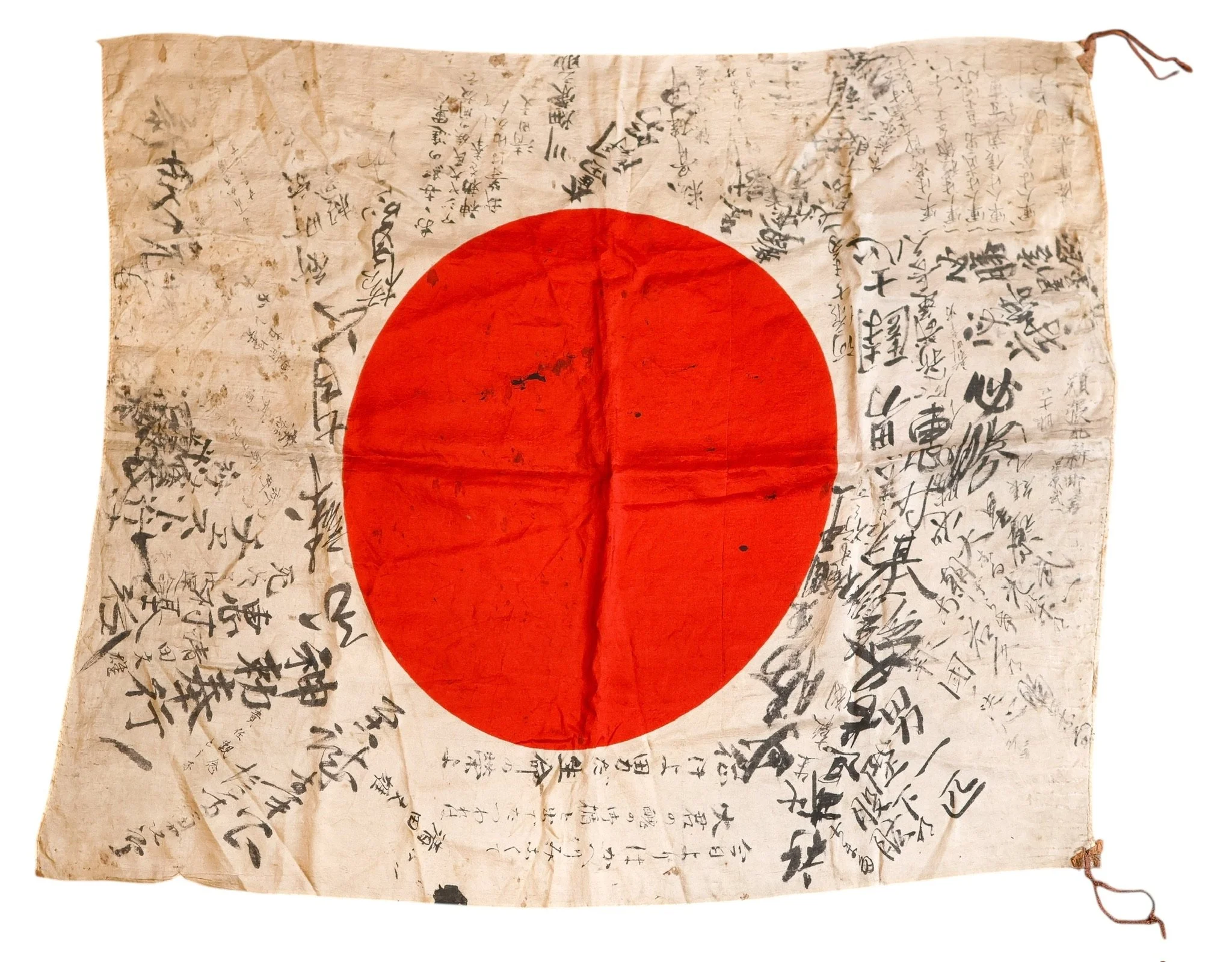
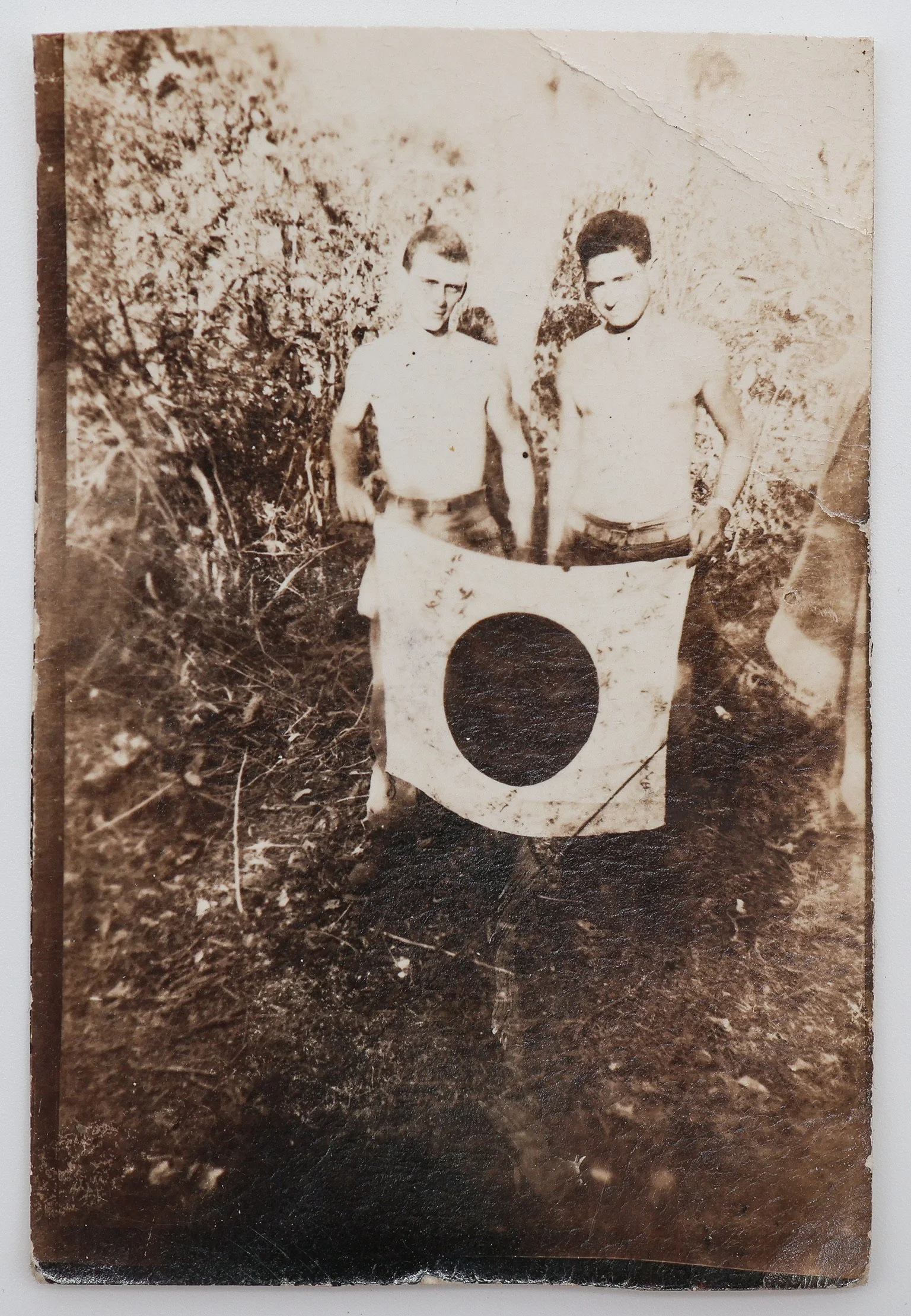
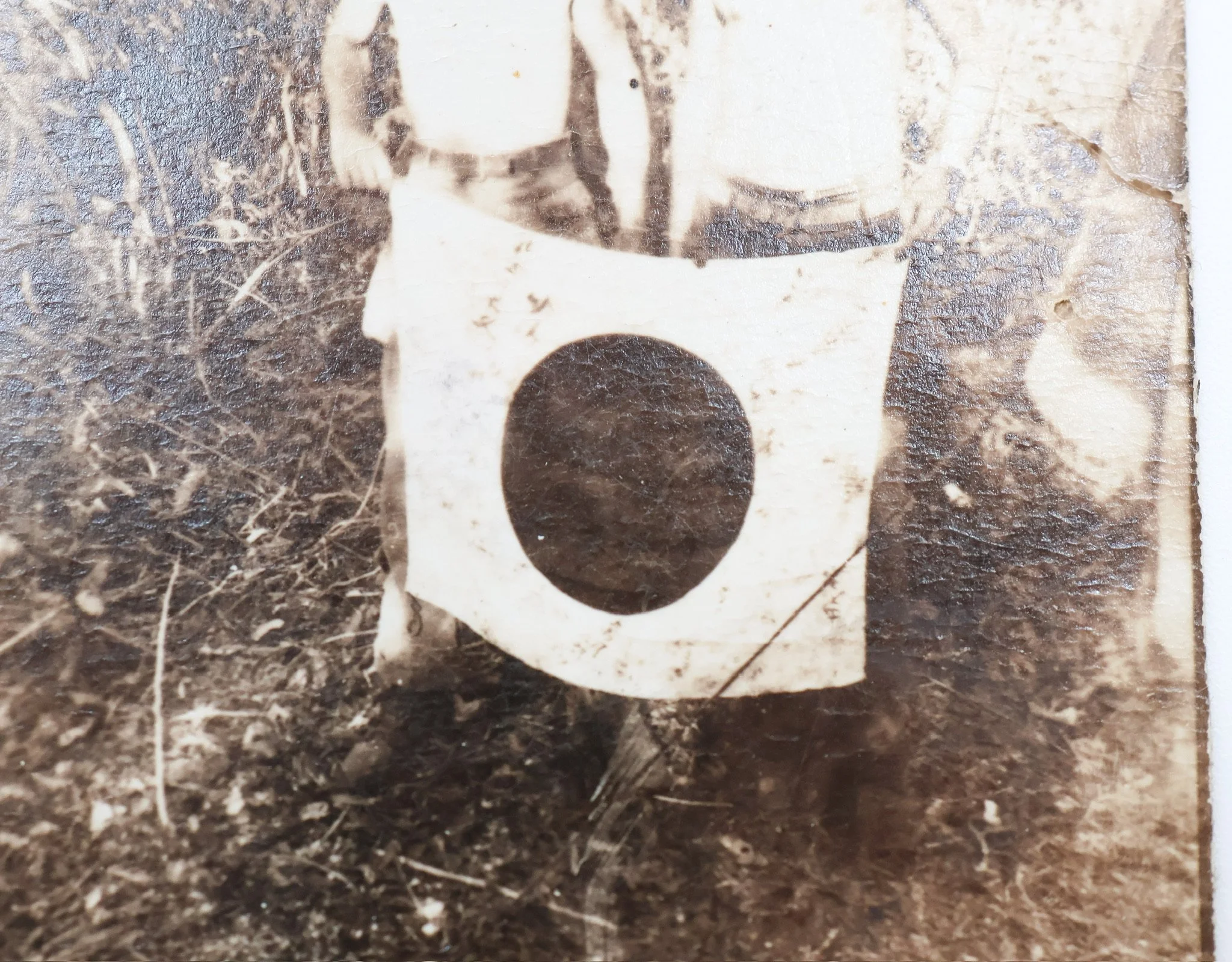
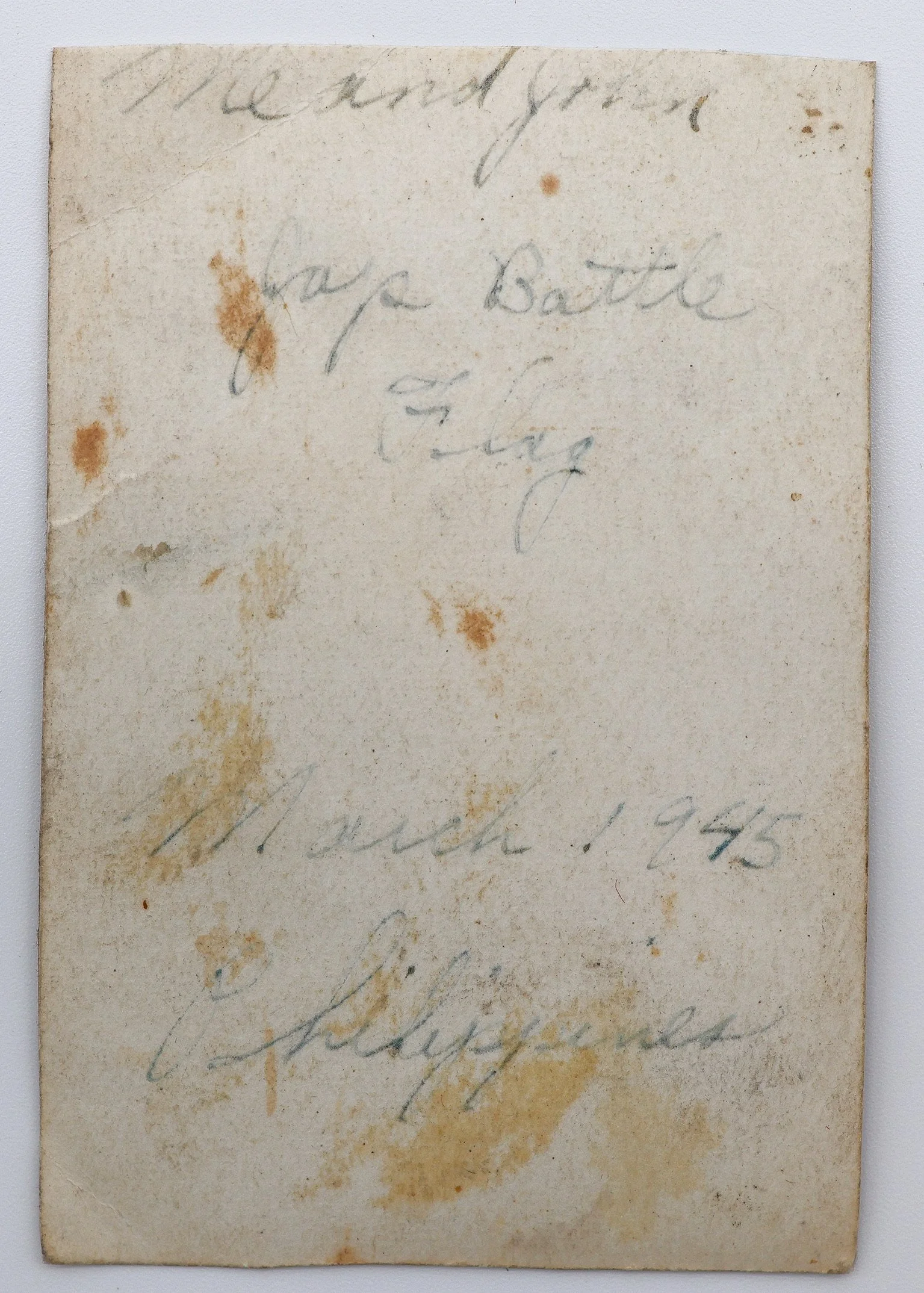
This Japanese WWII yosegaki hinomaru flag was captured in the Philippines in March 1945. The flag is accompanied by an original wartime photograph showing two U.S. soldiers holding the same flag. Handwritten text on the reverse of the photograph reads: “Me and John, Jap Battle Flag, March 1945, Philippines.”
The soldiers are not identified by full name. The flag and photograph remained together and were acquired from a Maine estate. The kanji inscriptions on the flag match those visible in the photograph, confirming the flag shown is the same example.
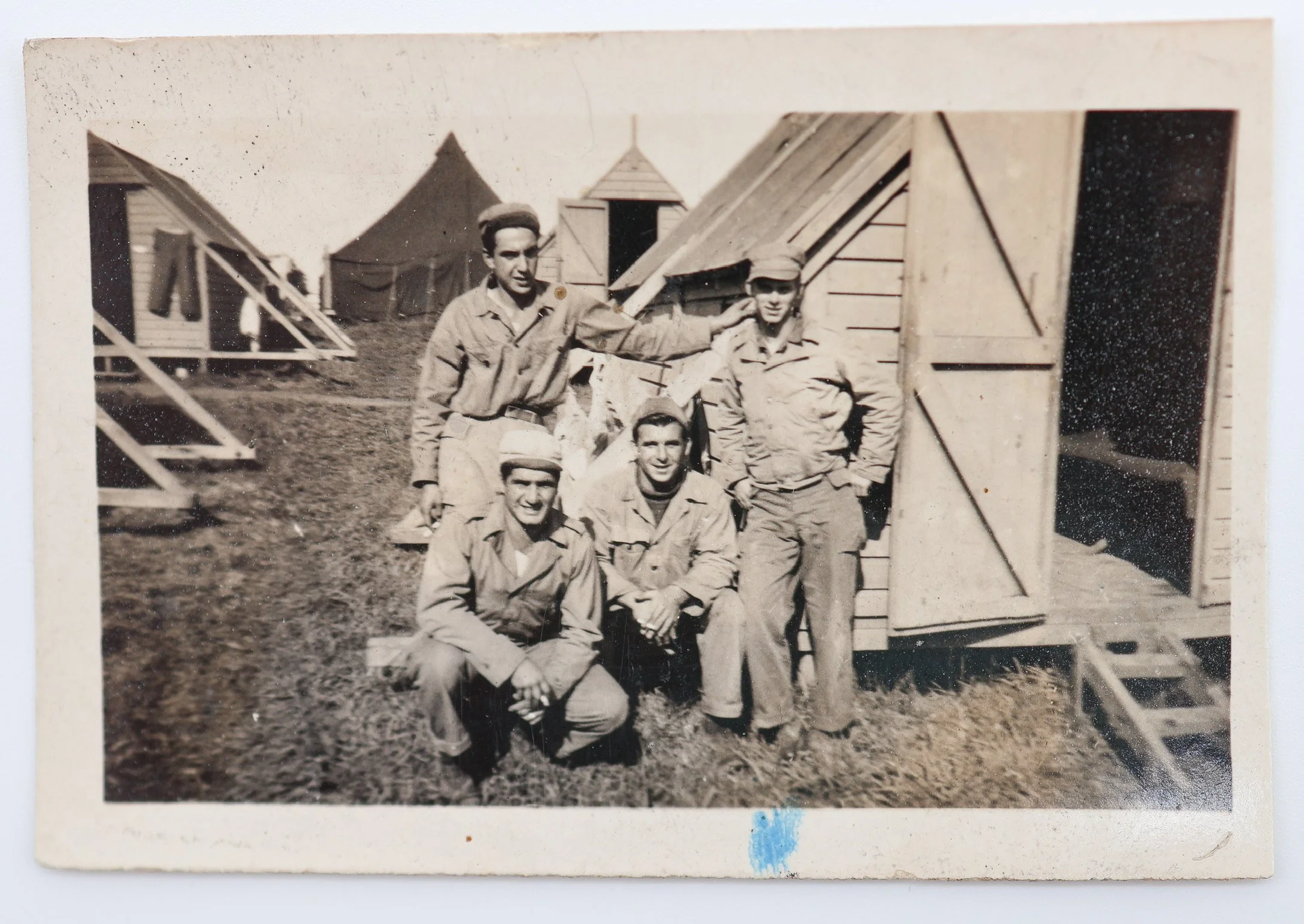
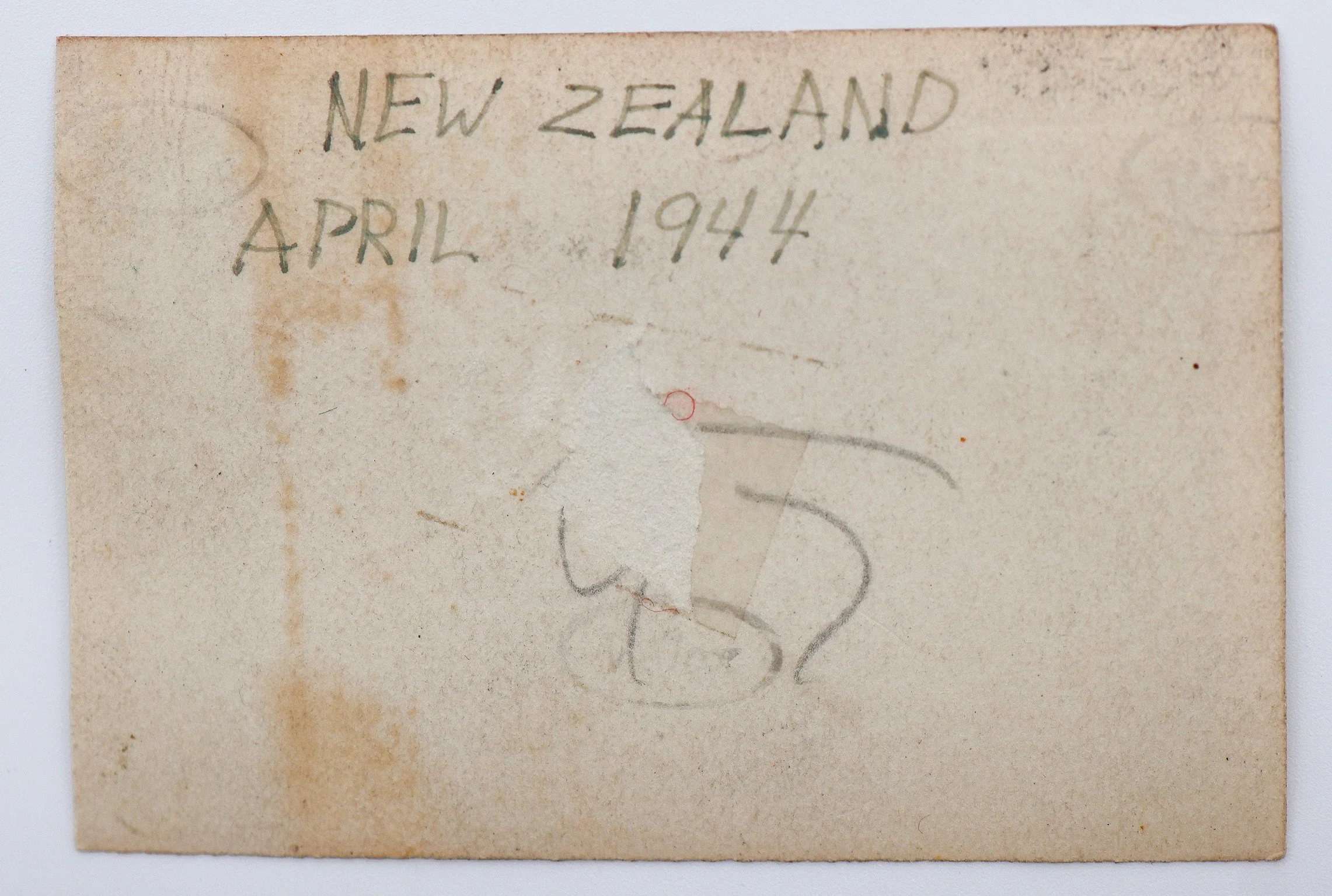
Also included is a second period photograph showing four soldiers. The reverse of that photograph is annotated “New Zealand, April 1944.”