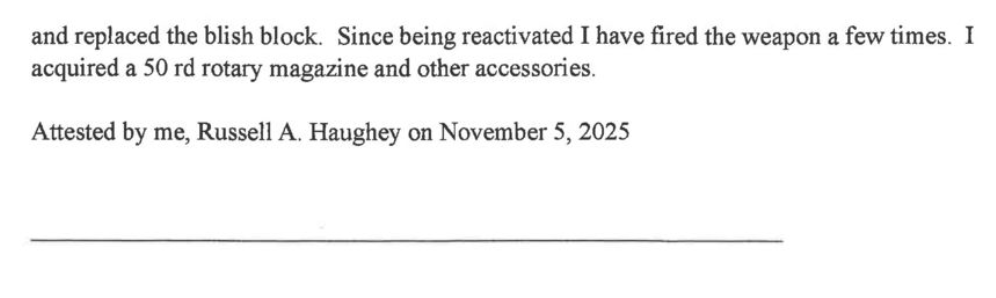
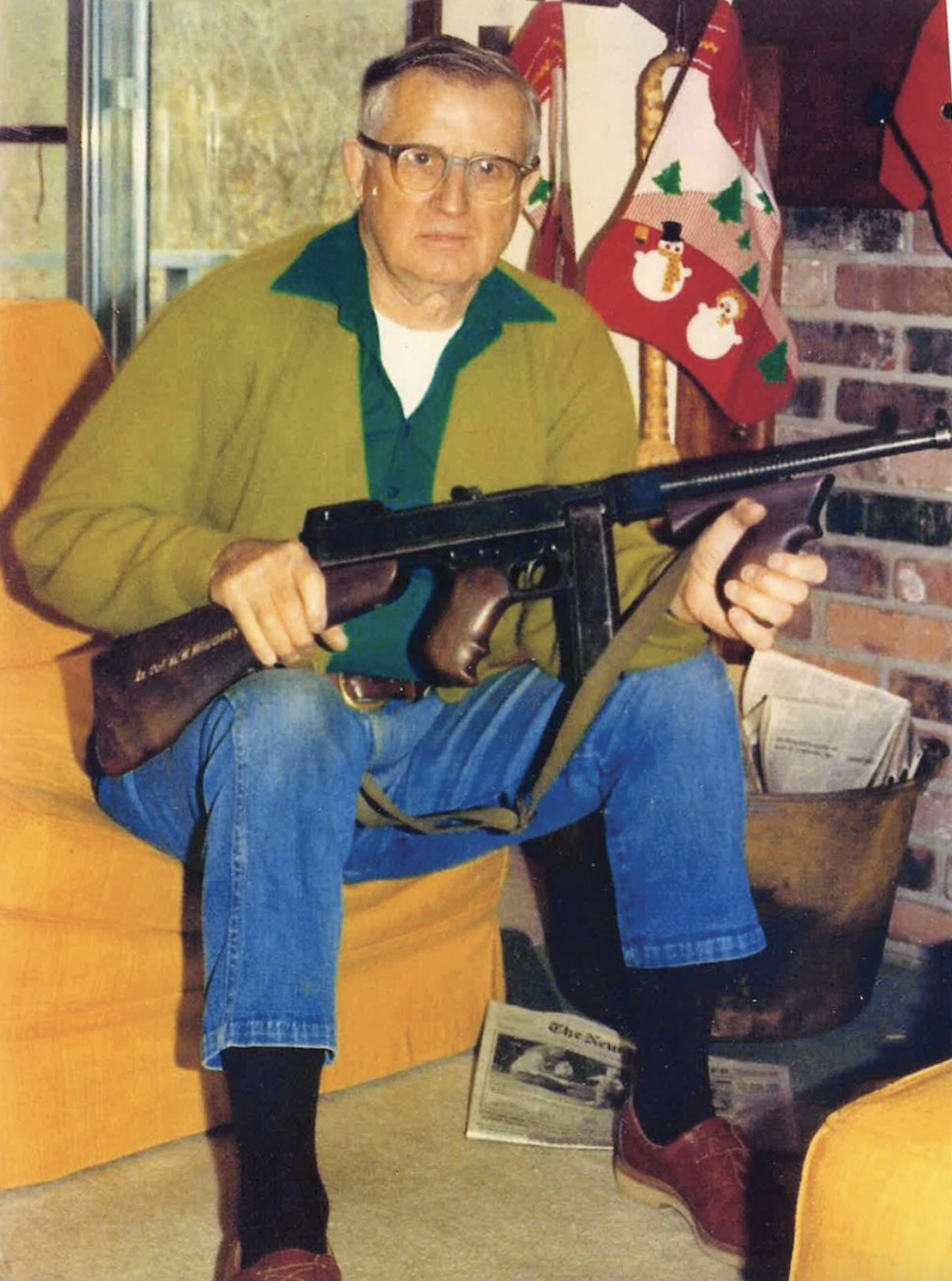
Colt Model 1921 Thompson Captured at Gestapo Headquarters in Metz — Lt. Col. Wilfrid H. Haughey Jr.
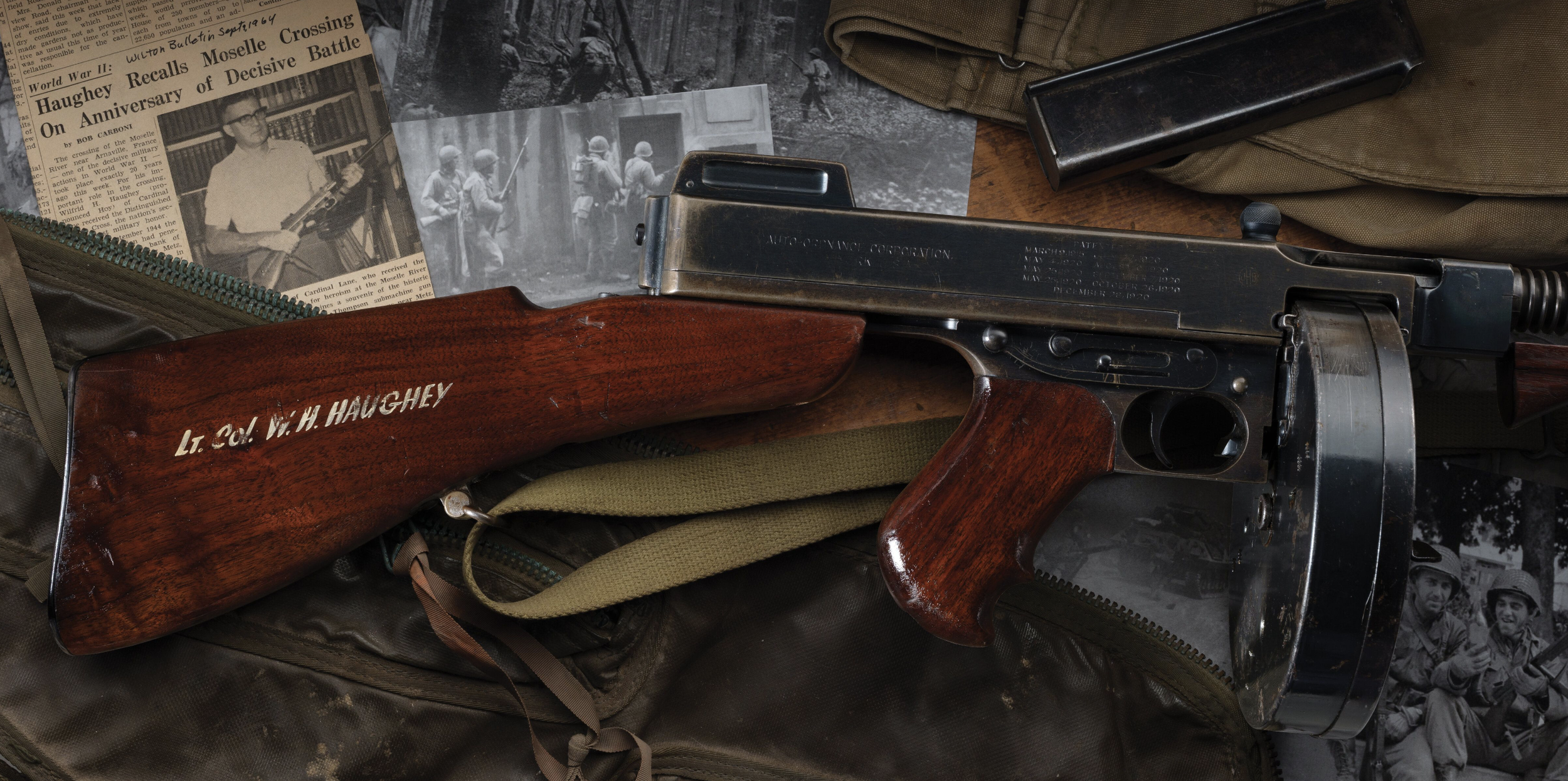
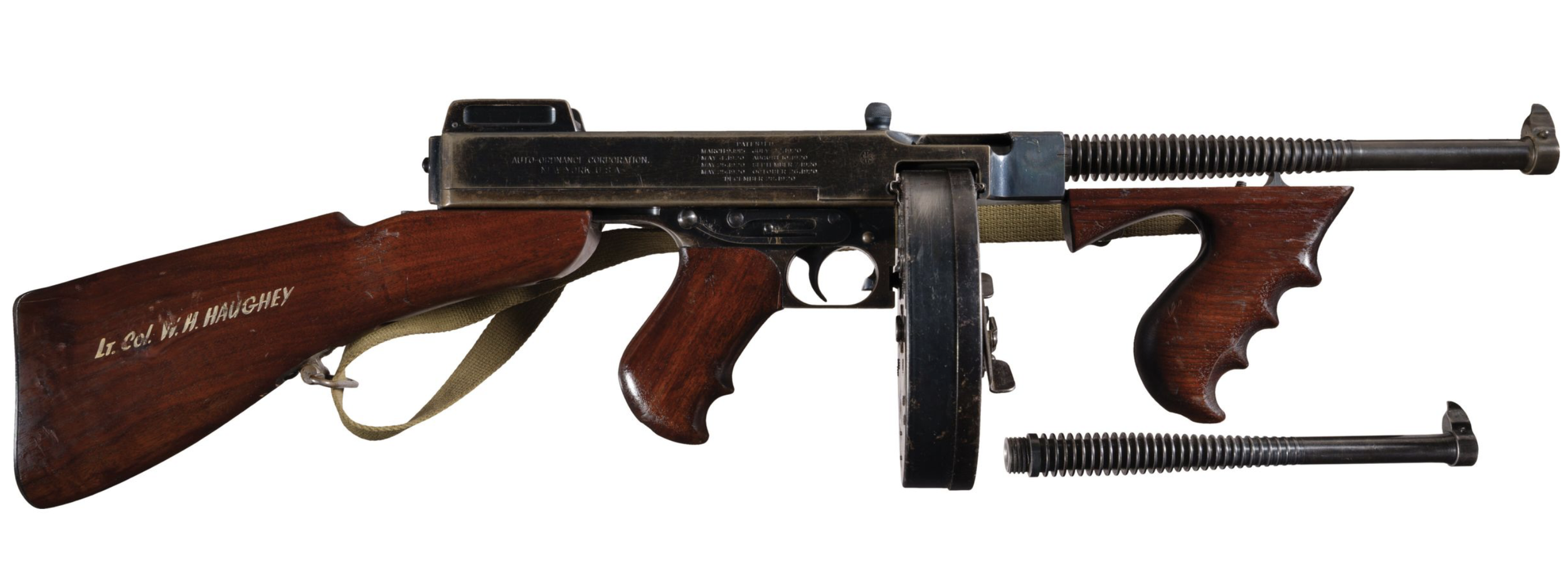
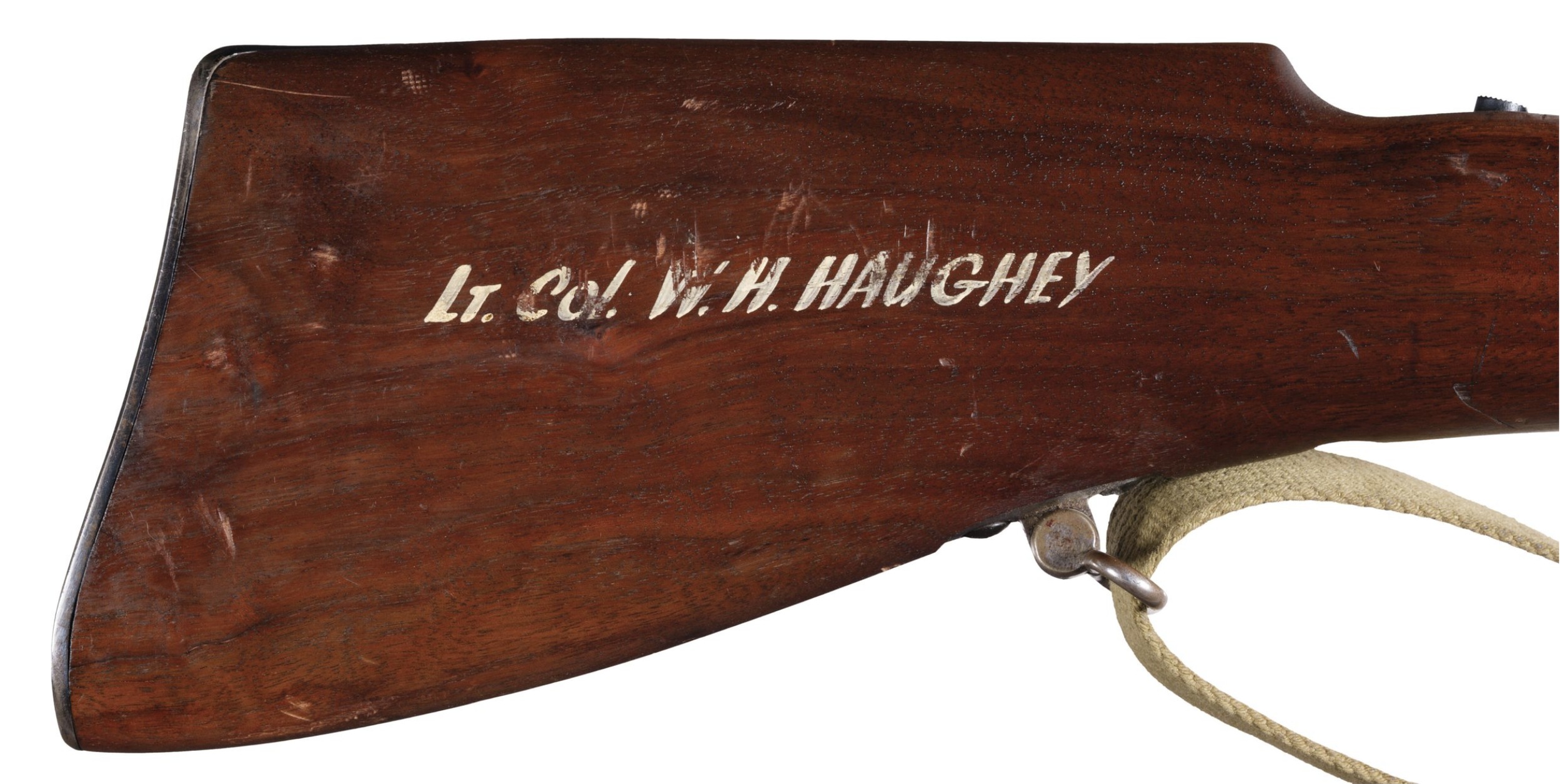
This Colt Model 1921 Thompson submachine gun, serial number 8737, is identified to Lieutenant Colonel Wilfrid H. Haughey Jr., a Distinguished Service Cross recipient who served with the 10th Infantry Regiment, 5th Infantry Division during World War II. “Lt. Col. W.H. Haughey” is painted in white letters on the right side of the buttstock.
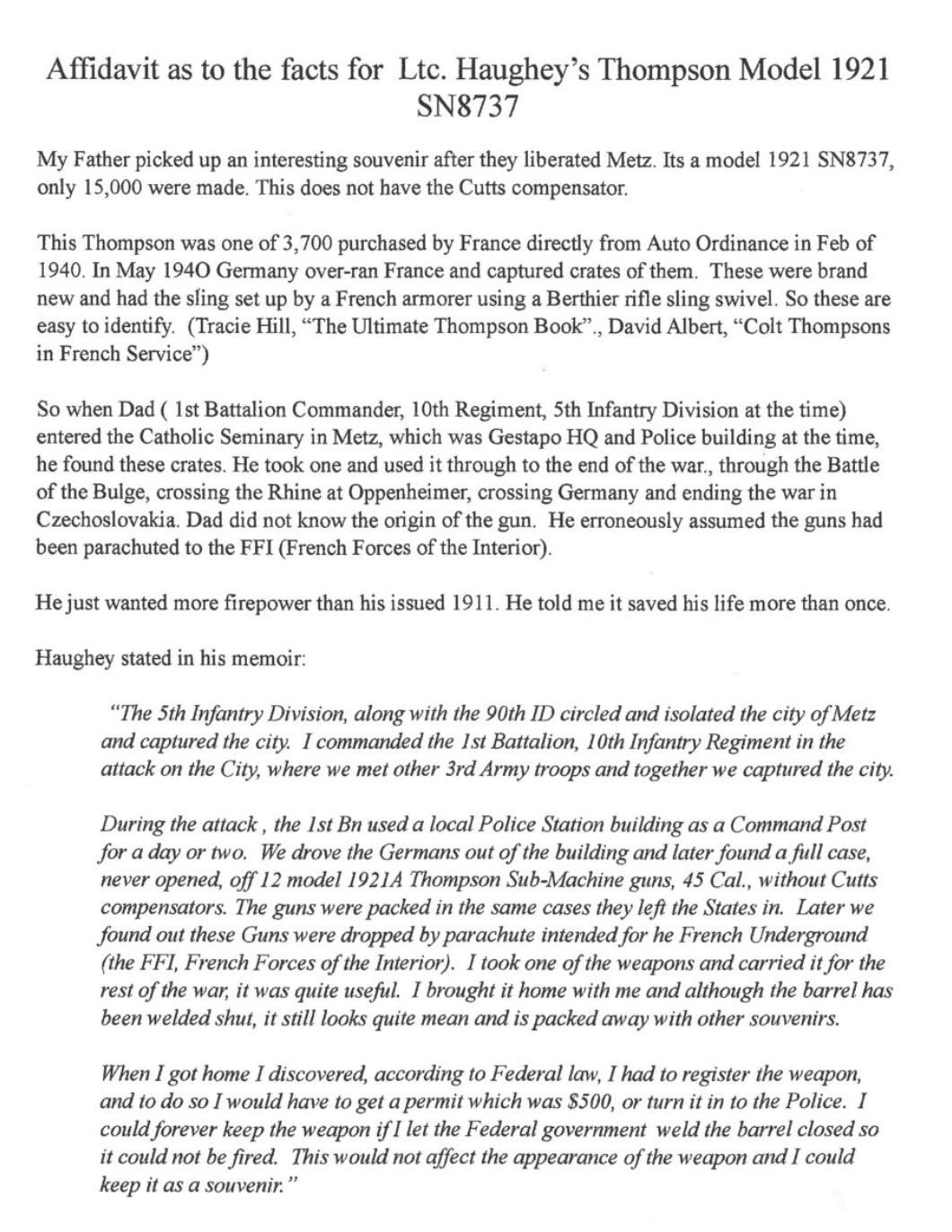
In a November 15, 1945 letter to the Bureau of Internal Revenue in Detroit, Haughey documented the history of the Thompson. He stated that the gun was captured in a Gestapo headquarters in Metz, France. According to Haughey, the Thompson had originally been part of a shipment parachuted by the Allies to the French F.F.I. underground, but the case of weapons fell into German hands and was found by Haughey’s men before it had been unboxed.
Haughey carried the Thompson from Metz through the remainder of the war in Europe. In the same letter, he wrote that he carried it through Germany and the Siegfried Line, Luxembourg during the Battle of the Bulge, and the Ruhr Pocket. He also stated that having the Thompson in his possession saved his life on two different occasions.
-
Wilfrid H. Haughey Jr. was born on August 13, 1910. During the war, he commanded elements of the 10th Infantry Regiment, 5th Infantry Division. He received the Distinguished Service Cross for extraordinary heroism during the Moselle River crossing near Arnaville, France, from September 10–20, 1944. His citation describes him leading assault elements across the river under heavy enemy resistance, directing operations from front-line positions, and helping repel repeated German counterattacks after reaching the far shore.
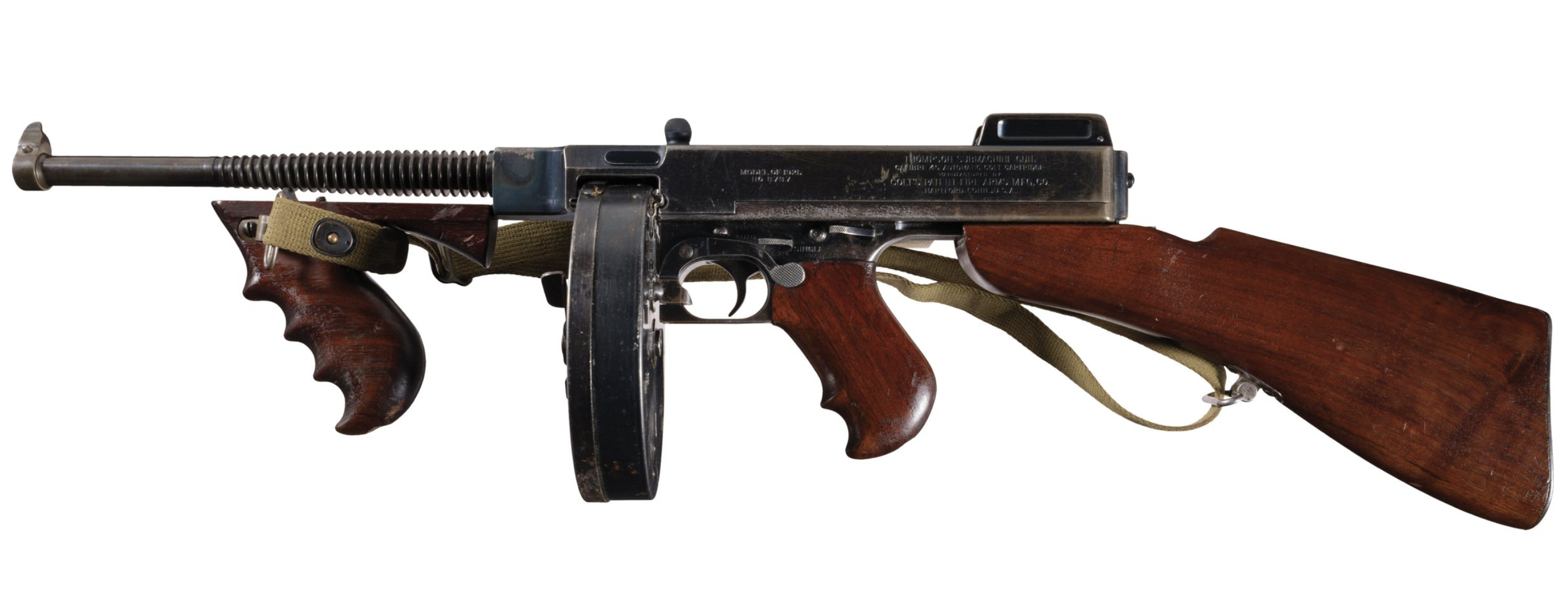
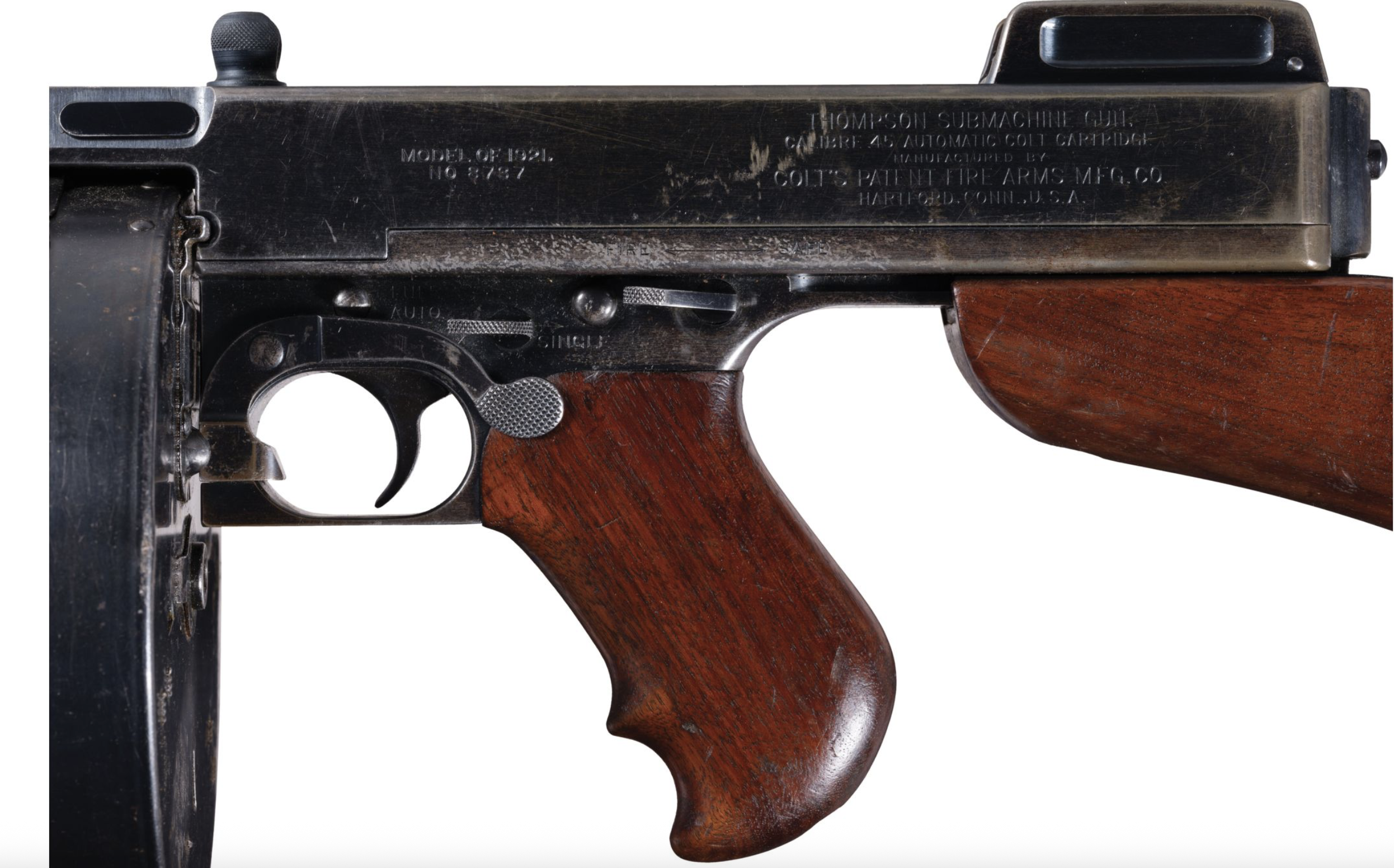
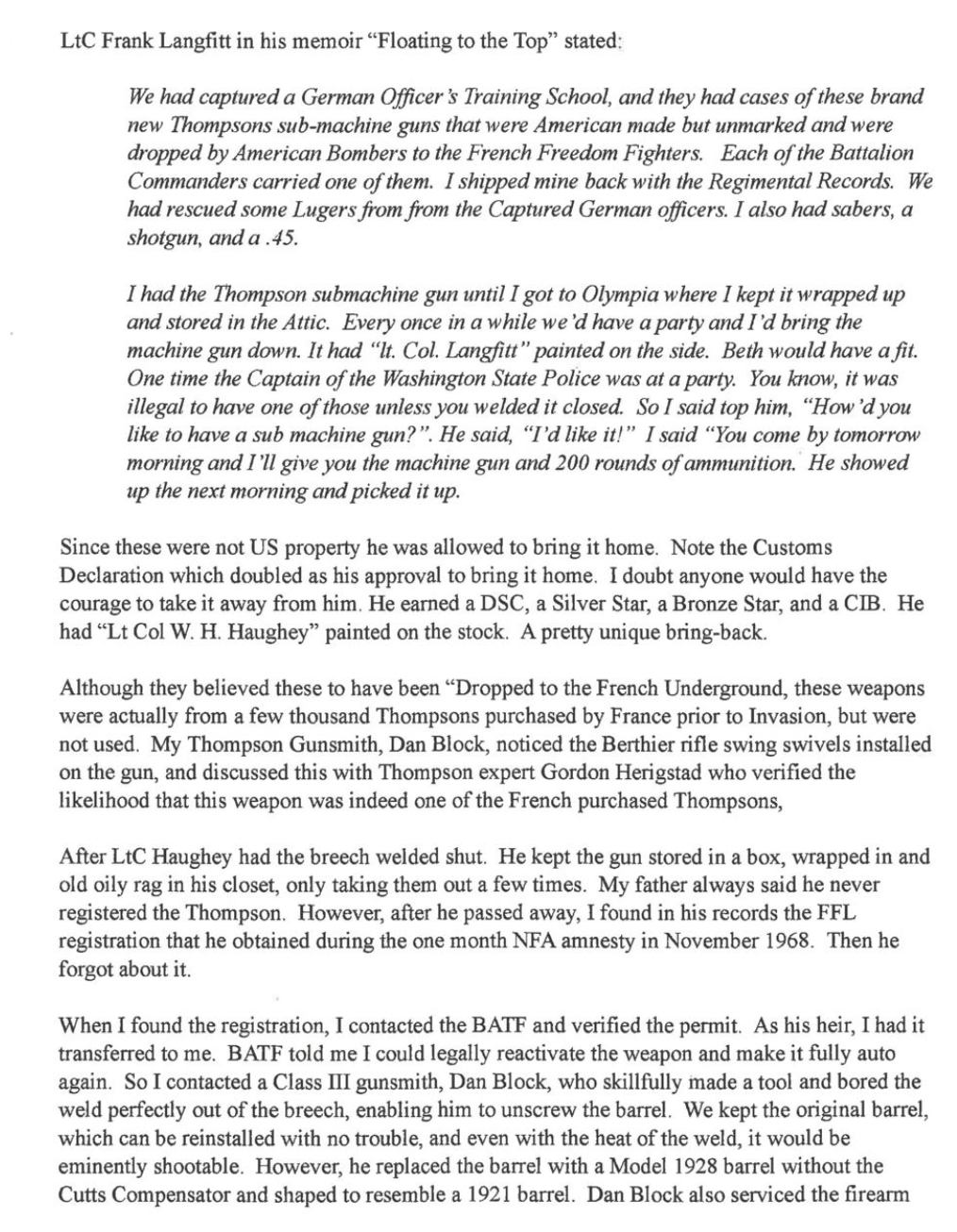
The Thompson is also documented in Gordon Herigstad’s Colt Thompson Submachine Gun Serial Numbers and Histories, which lists this specific gun by serial number as a Model 1921A owned by Haughey’s son and confirms it as a World War II bring-back. The gun appears to have been part of the group of Thompsons purchased by France from Auto-Ordnance in February 1940. Its French connection is supported by the Berthier rifle-style sling swivel installed in the manner associated with French armorers. After Germany overran France in 1940, crates of these Thompsons were captured by German forces, with this example later recovered from the Gestapo in Metz.
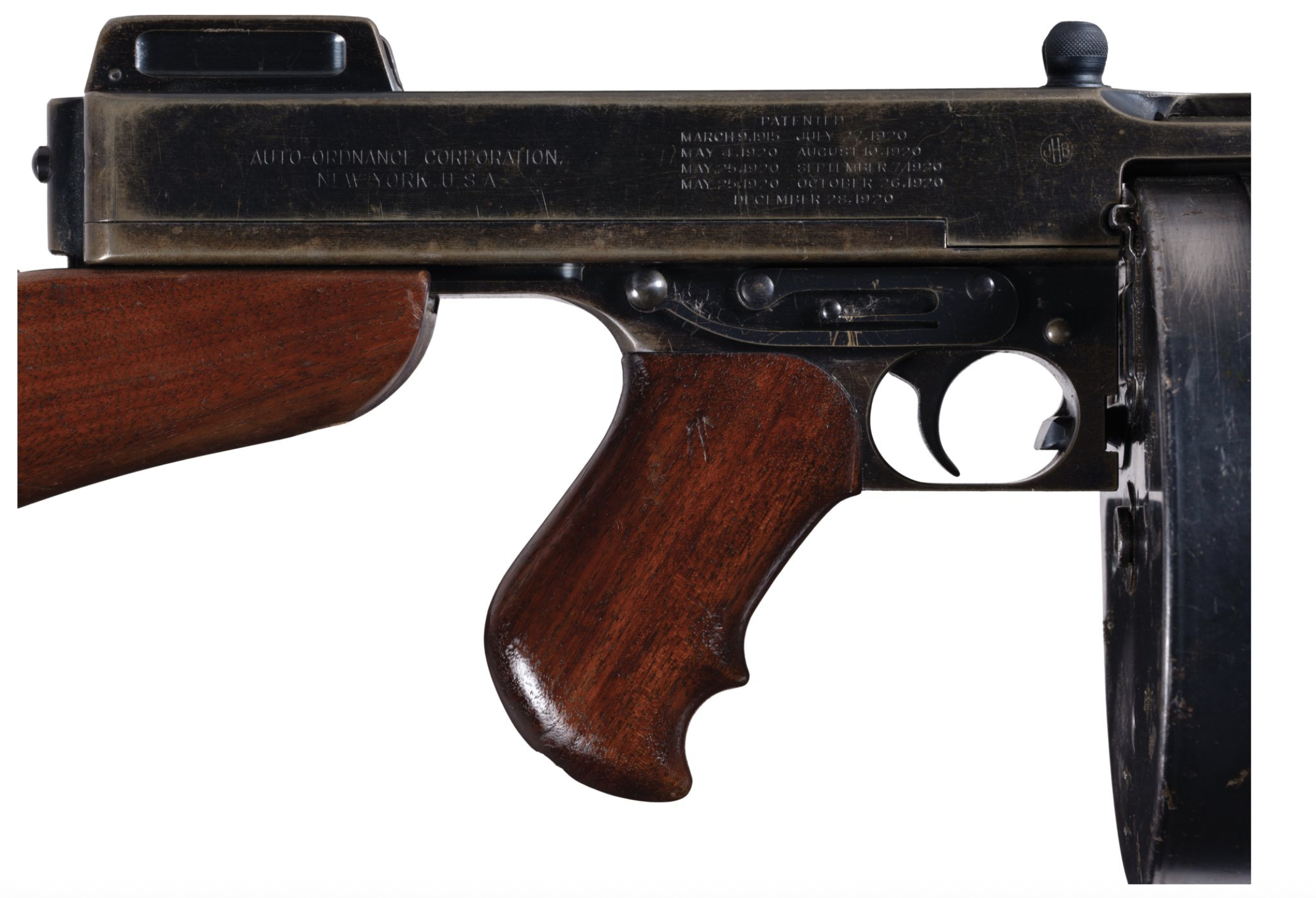
The Thompson retains matching serial number 8737 on the upper receiver and trigger housing. It has Model 1921 markings, the Thompson bullet logo, knurled controls, 1921-style internals, pistol grips, and a quick-detach buttstock with anchor stamp. The gun is accompanied by registration and importation paperwork, photographs and research related to Haughey, a Seymour Products Co. Type “L” 50-round drum, tan canvas sling, extra Model 1921 parts, four additional 20-round Seymour magazines, a period magazine pouch, and related historical reference material.
The Artifacts of Valor collection acquired this Thompson from Haughey’s son in 2026.
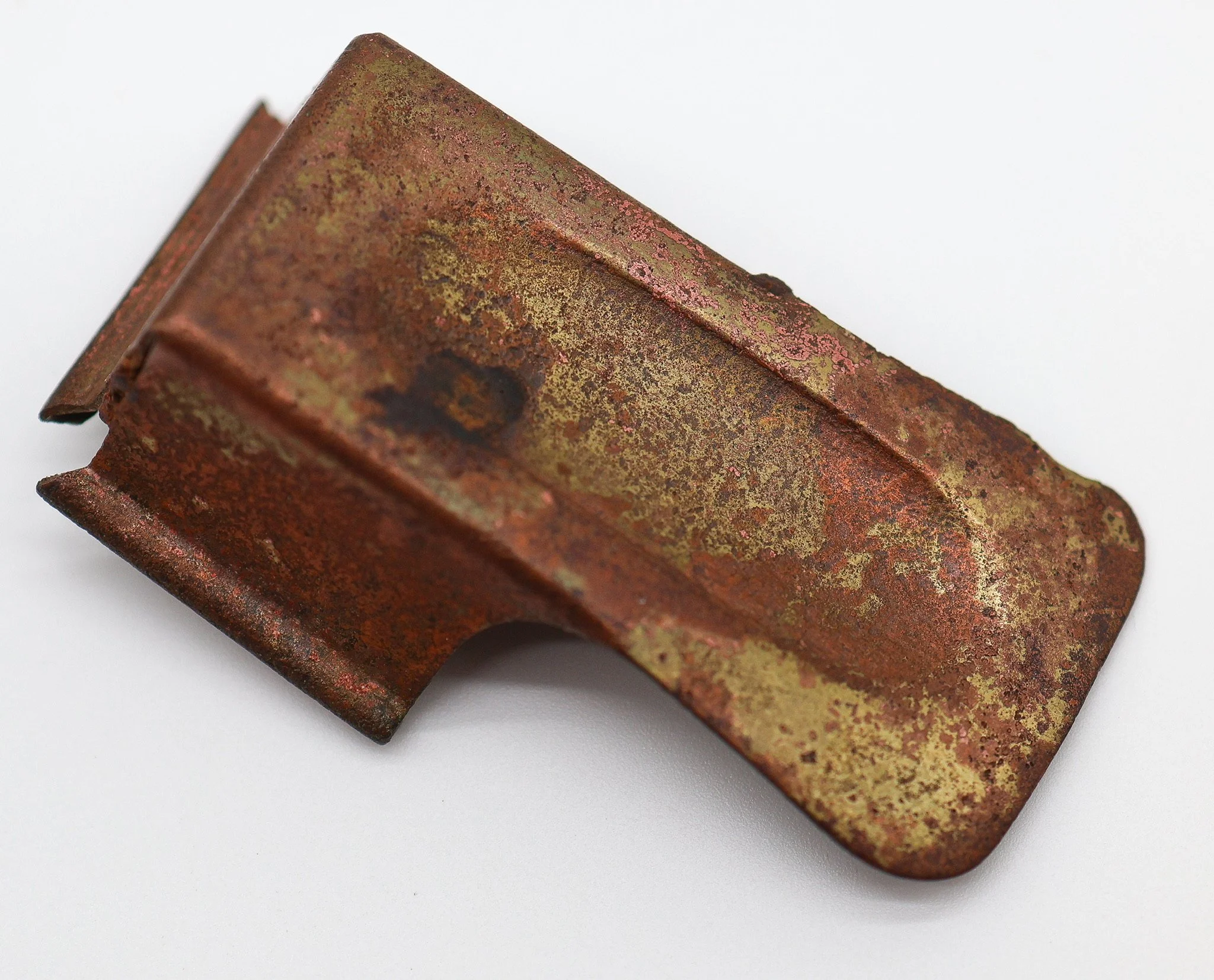
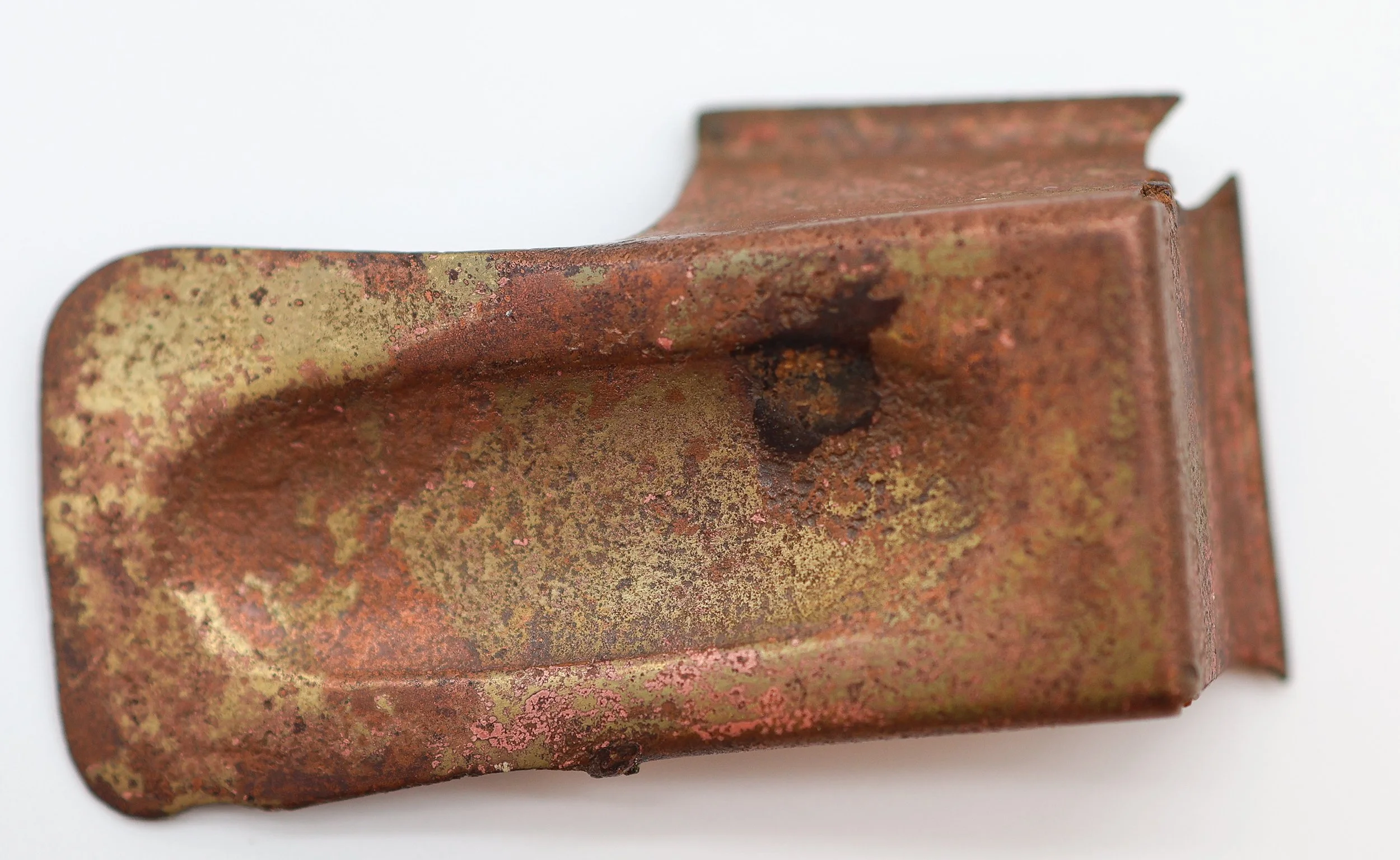
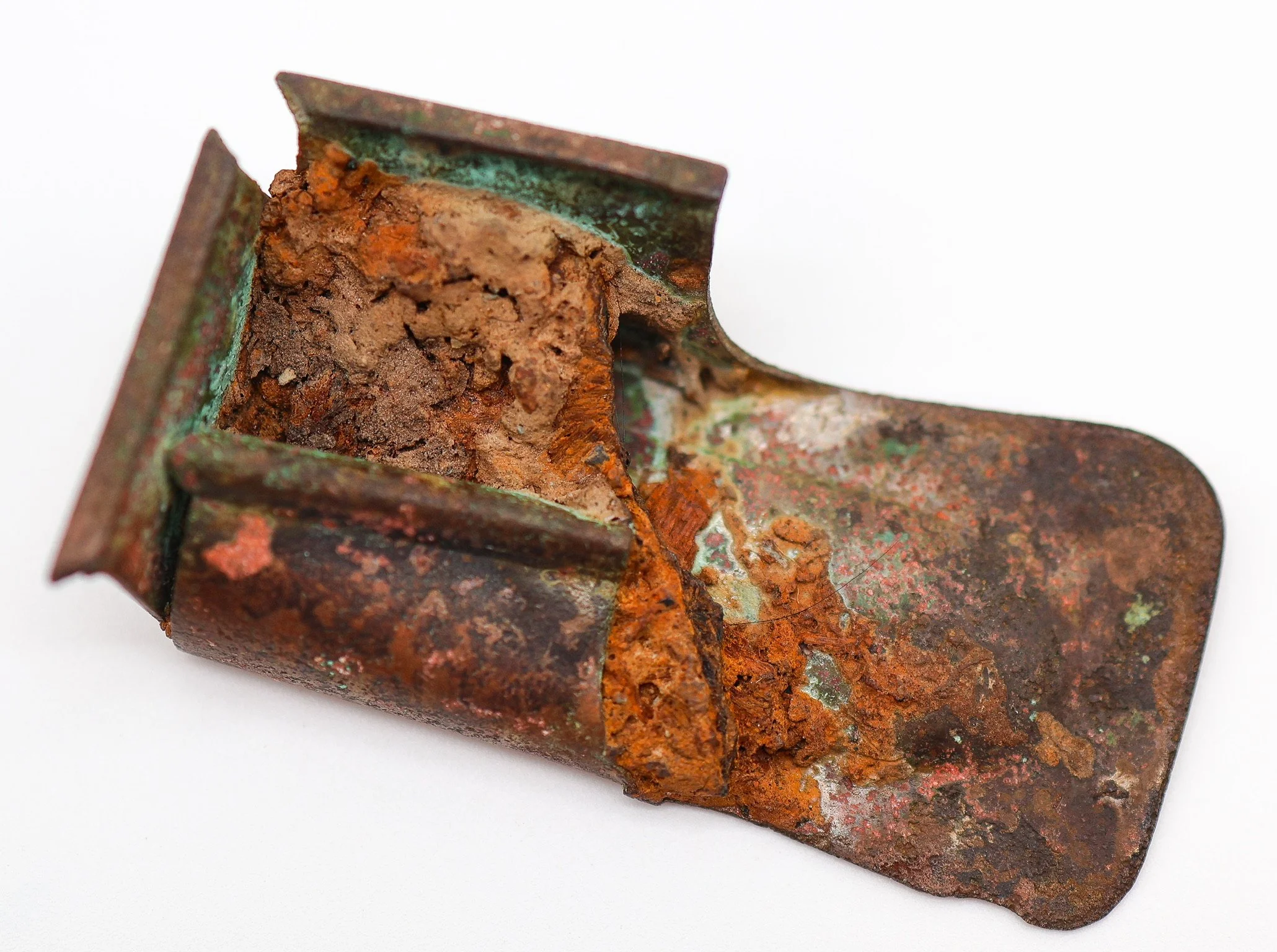
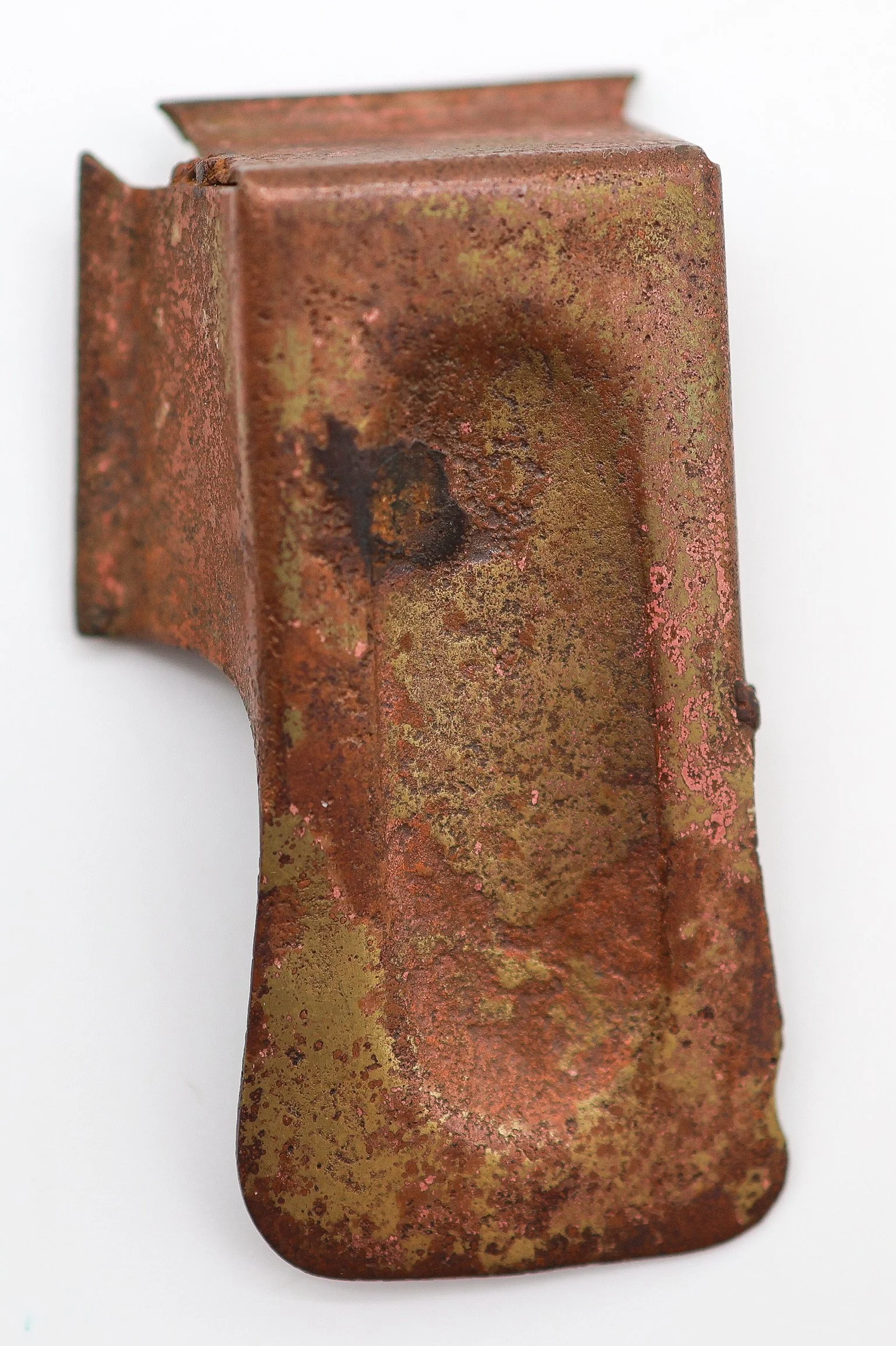
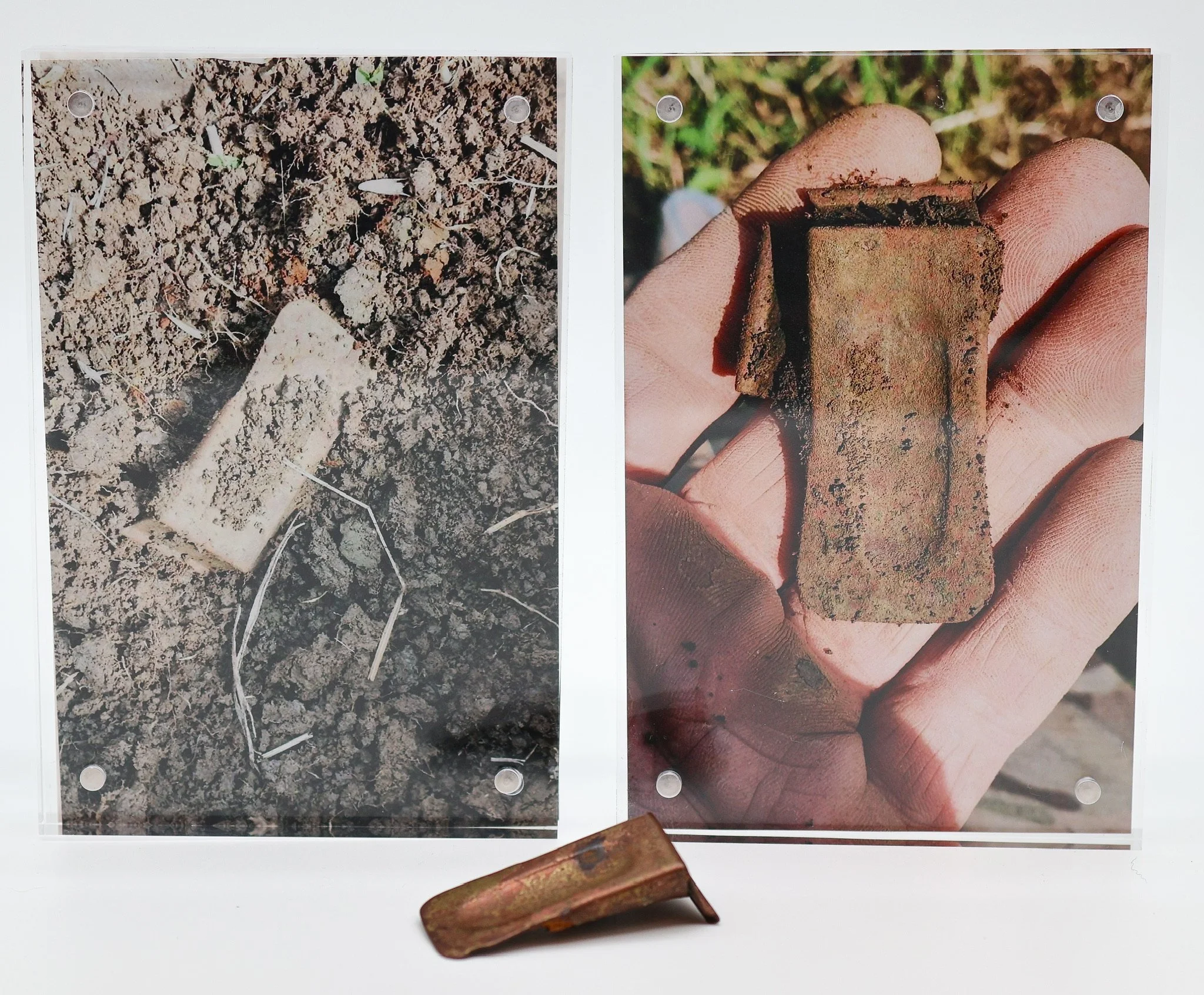
WWII Airborne Cricket Dug in Normandy
This WWII airborne “cricket” was recovered in April 2018 from the drop zone of the 505th Parachute Infantry Regiment, 82nd Airborne Division, northwest of Sainte-Mère-Église, Normandy, France.
The cricket was excavated by a museum curator and collector based in Sainte-Marie-du-Mont. The recovery was photographed immediately after excavation.
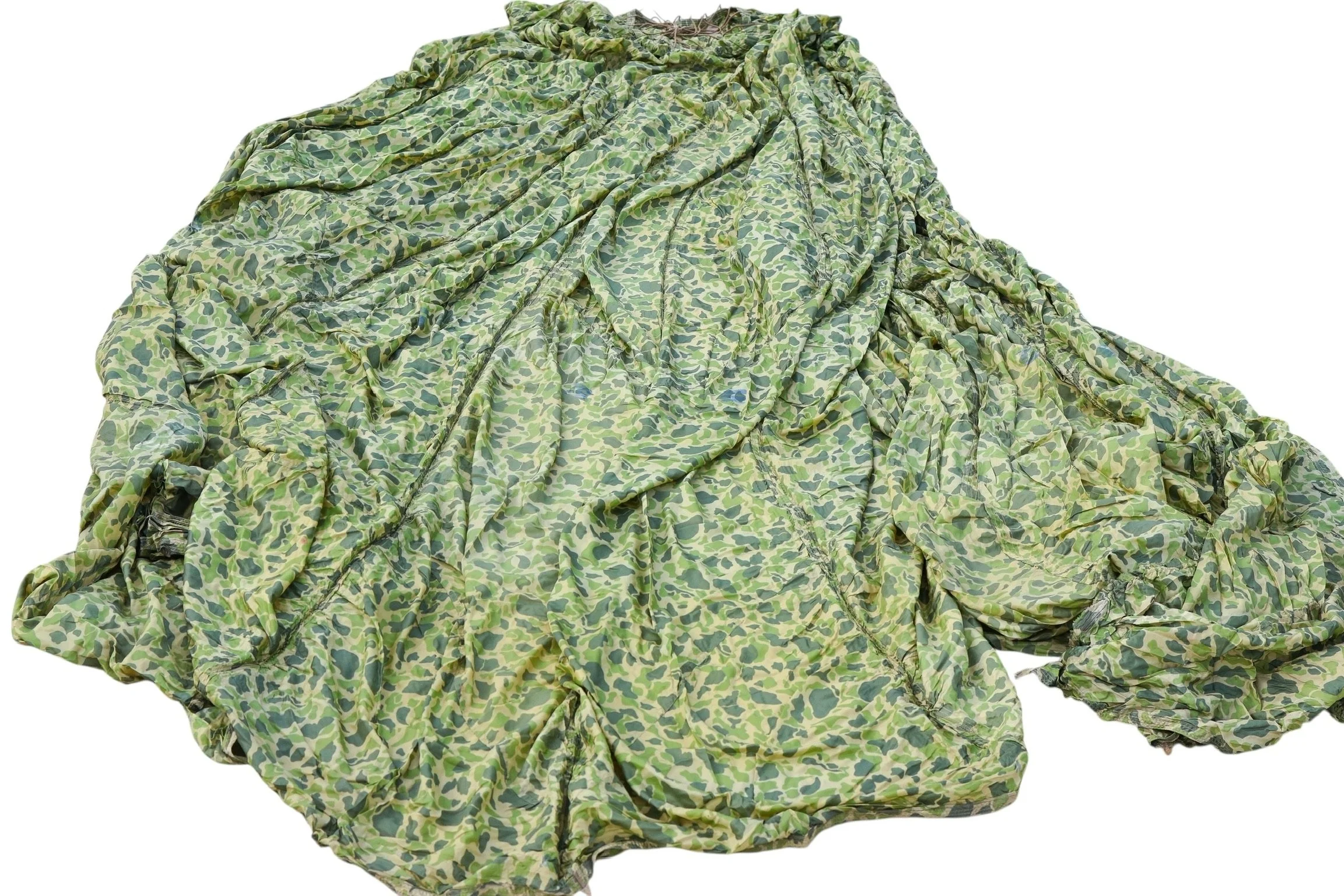
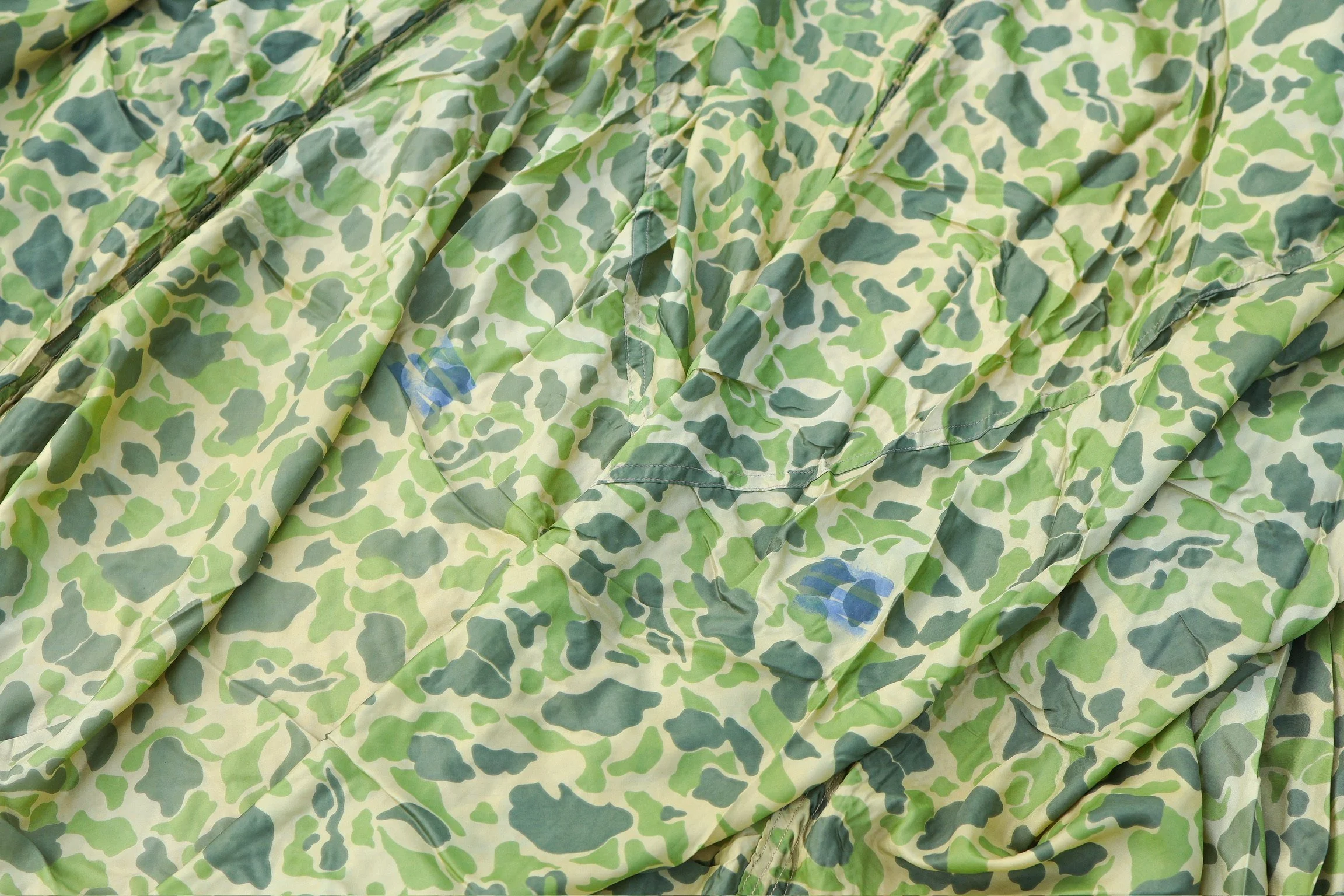
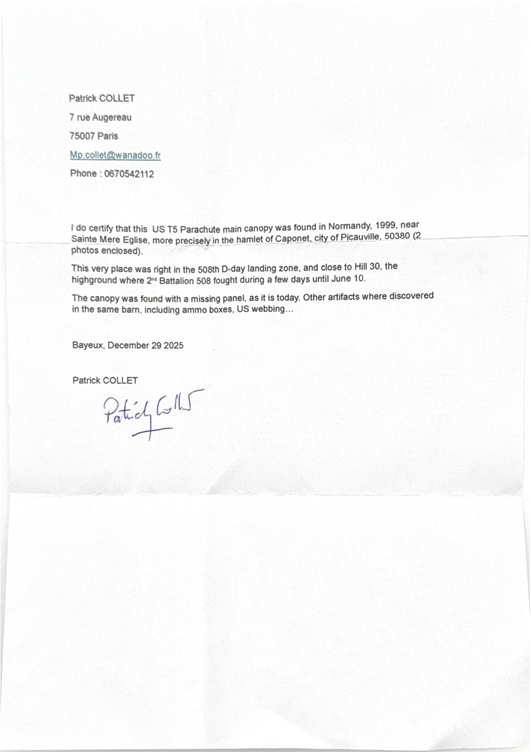
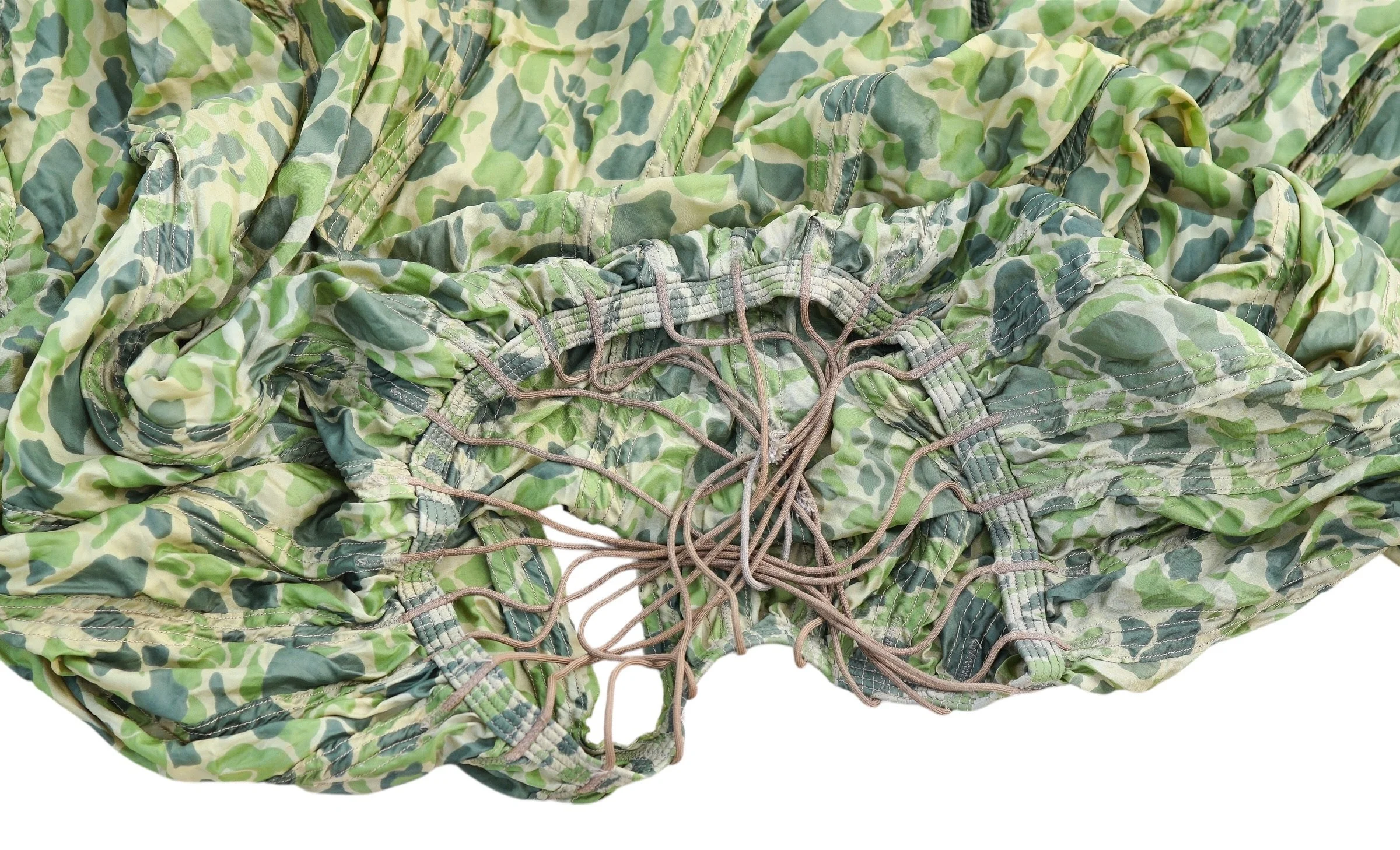
WWII U.S. T-5 Parachute Canopy — Normandy Recovery
This WWII U.S. T-5 parachute main canopy was recovered in Normandy in 1998 near Sainte-Mère-Église, specifically in the hamlet of Caponnet, Picauville. According to the accompanying signed letter from the finder, the recovery location lies within the D-Day drop zone of the 508th Parachute Infantry Regiment and near Hill 30, where the 2nd Battalion, 508th PIR fought from June 6 through June 10, 1944.
The parachute was found with one panel missing, consistent with its current condition. Other U.S. military artifacts were reportedly discovered in the same barn where the canopy was located, including ammunition boxes and U.S. web gear.
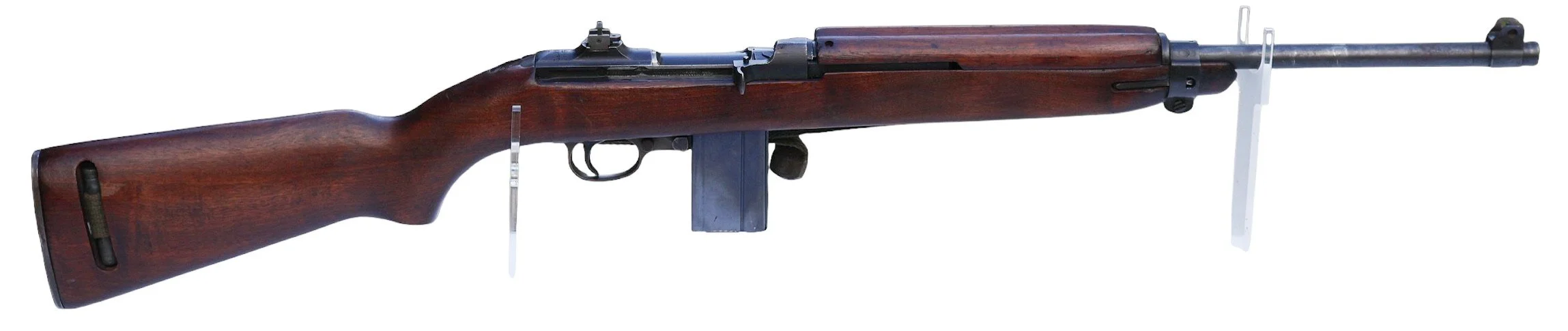
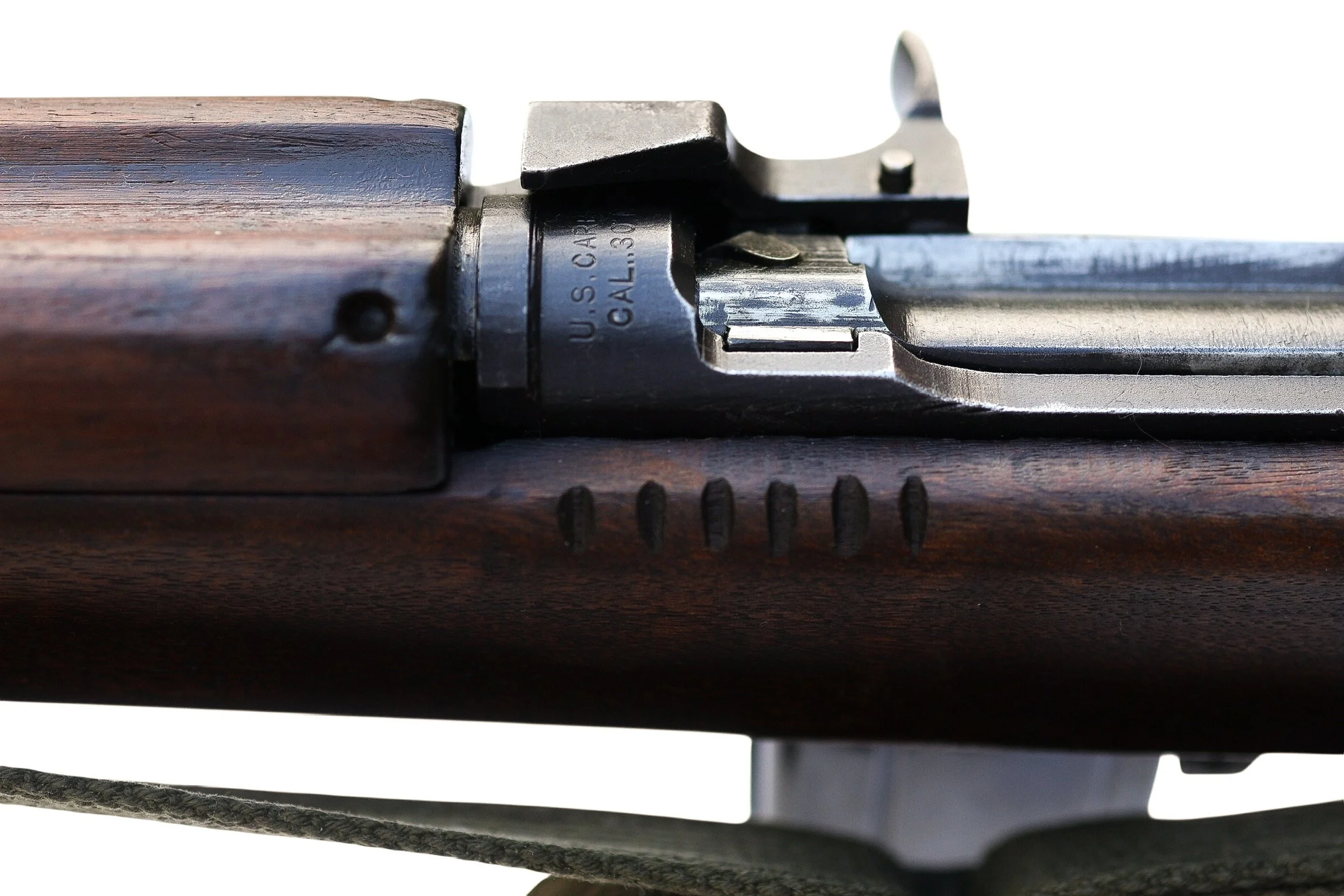
This Winchester M1 .30 caliber carbine is an early production example, serial number 1174470, manufactured during early 1943. The carbine remains in overall excellent condition with a good bore and retains its wartime configuration.
The stock bears six carved “kill” notches on the left side, just forward of the receiver.The carbine is accompanied by a period sling and magazine clip, completing the grouping.
Winchester M1 .30 Caliber Carbine — Early Production, Kill-Notched Stock