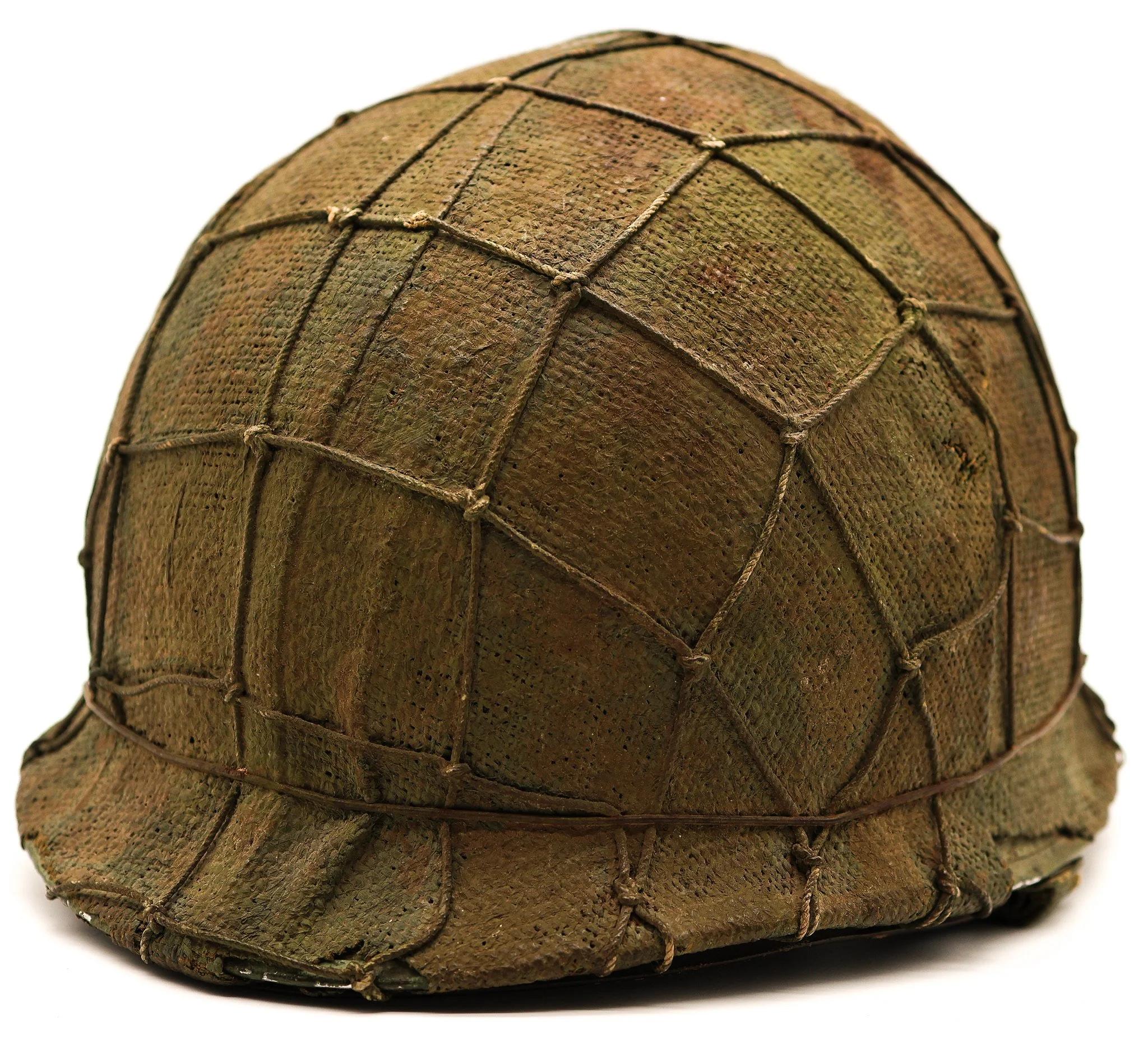
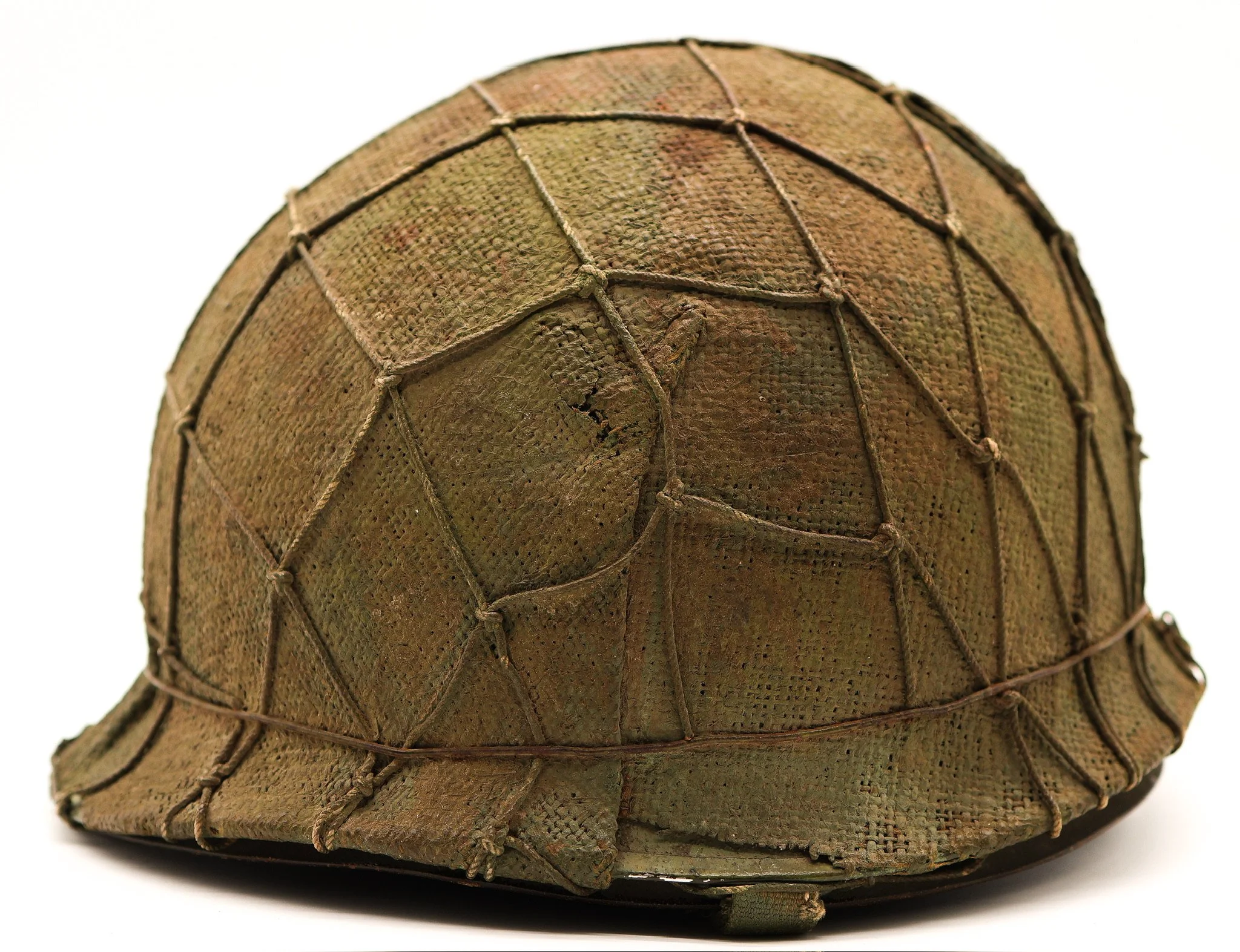
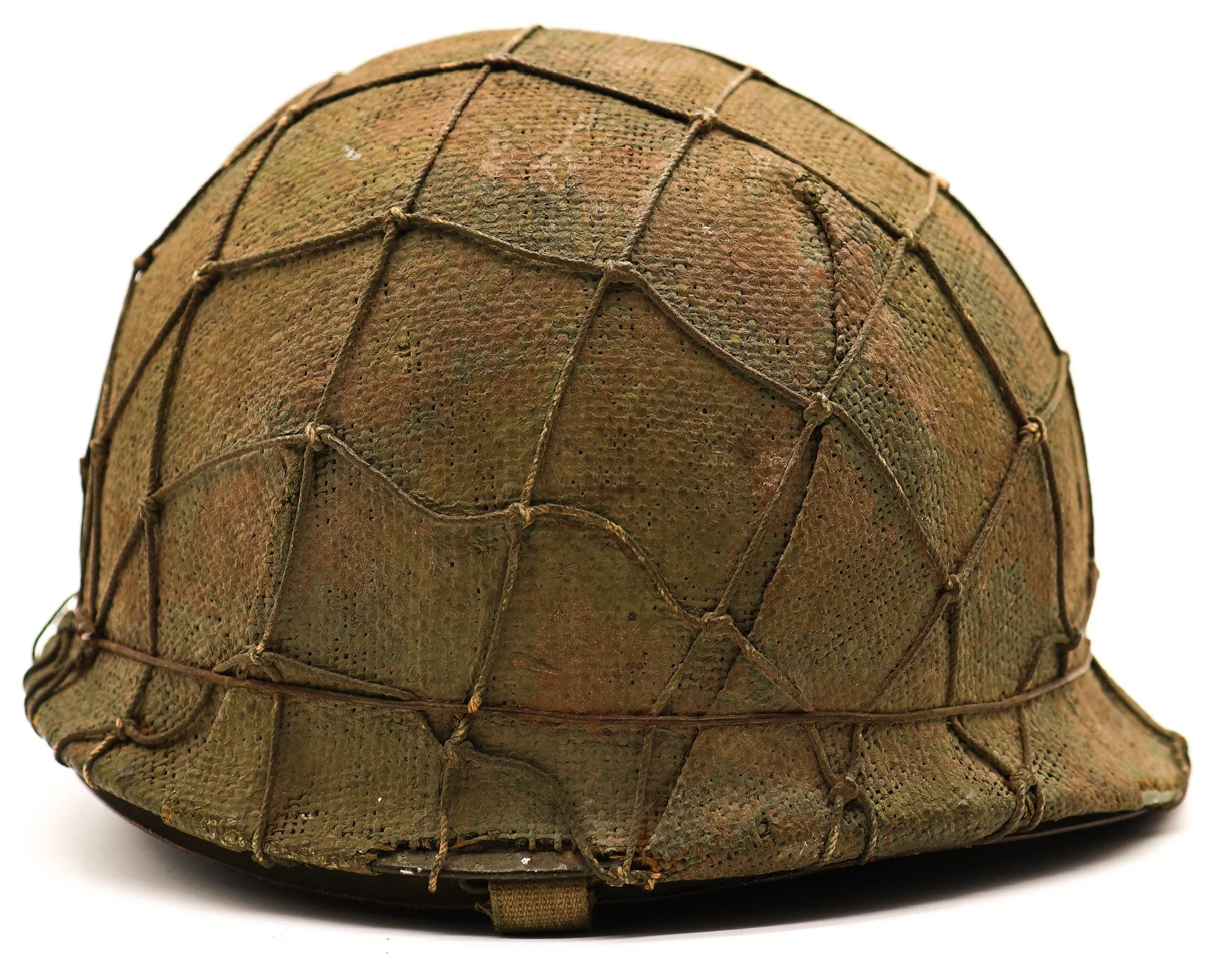
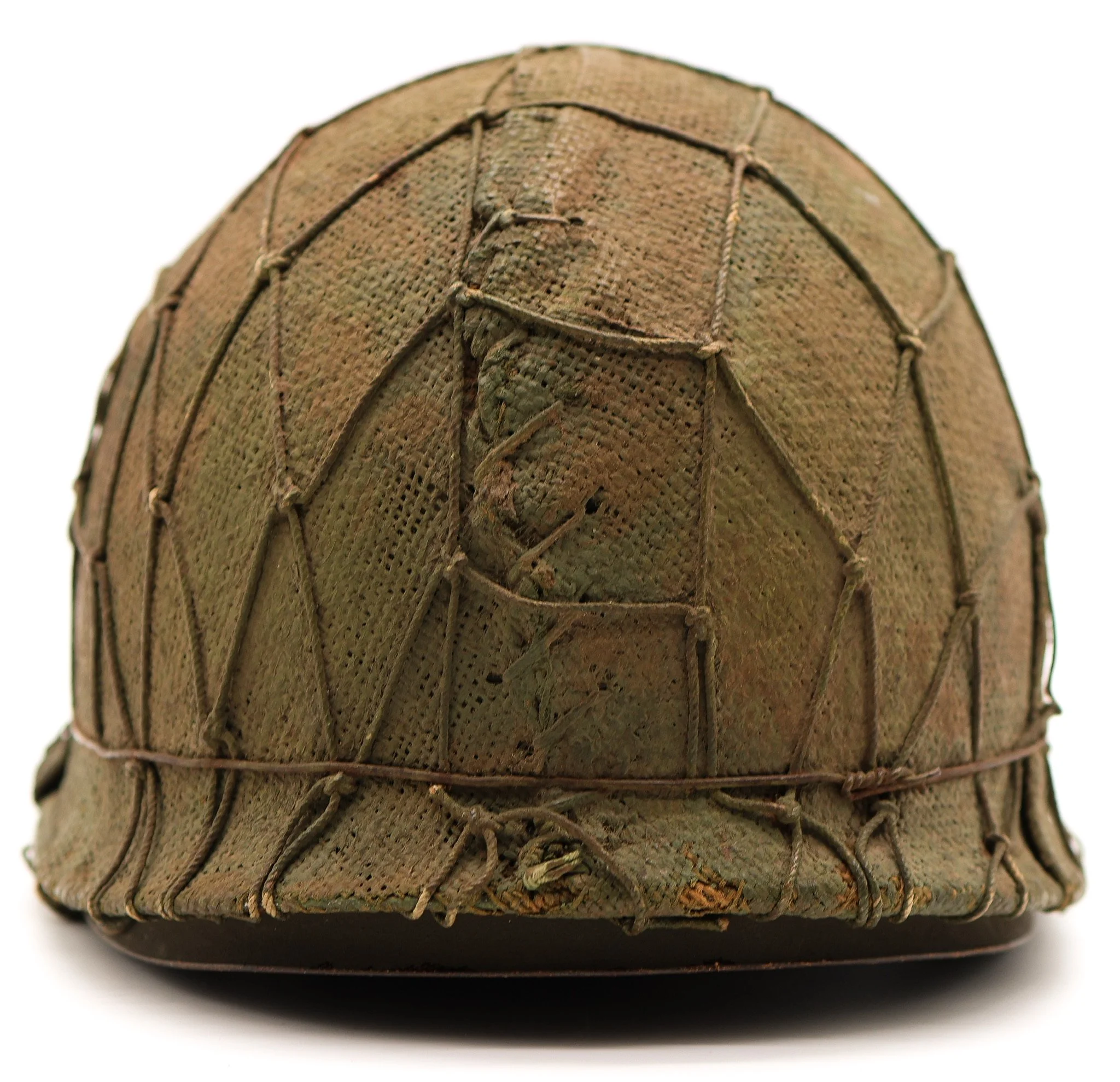
Marine Raider Camouflaged Helmet Identified to PFC Elmer A. Mapes, 2nd Raider Battalion
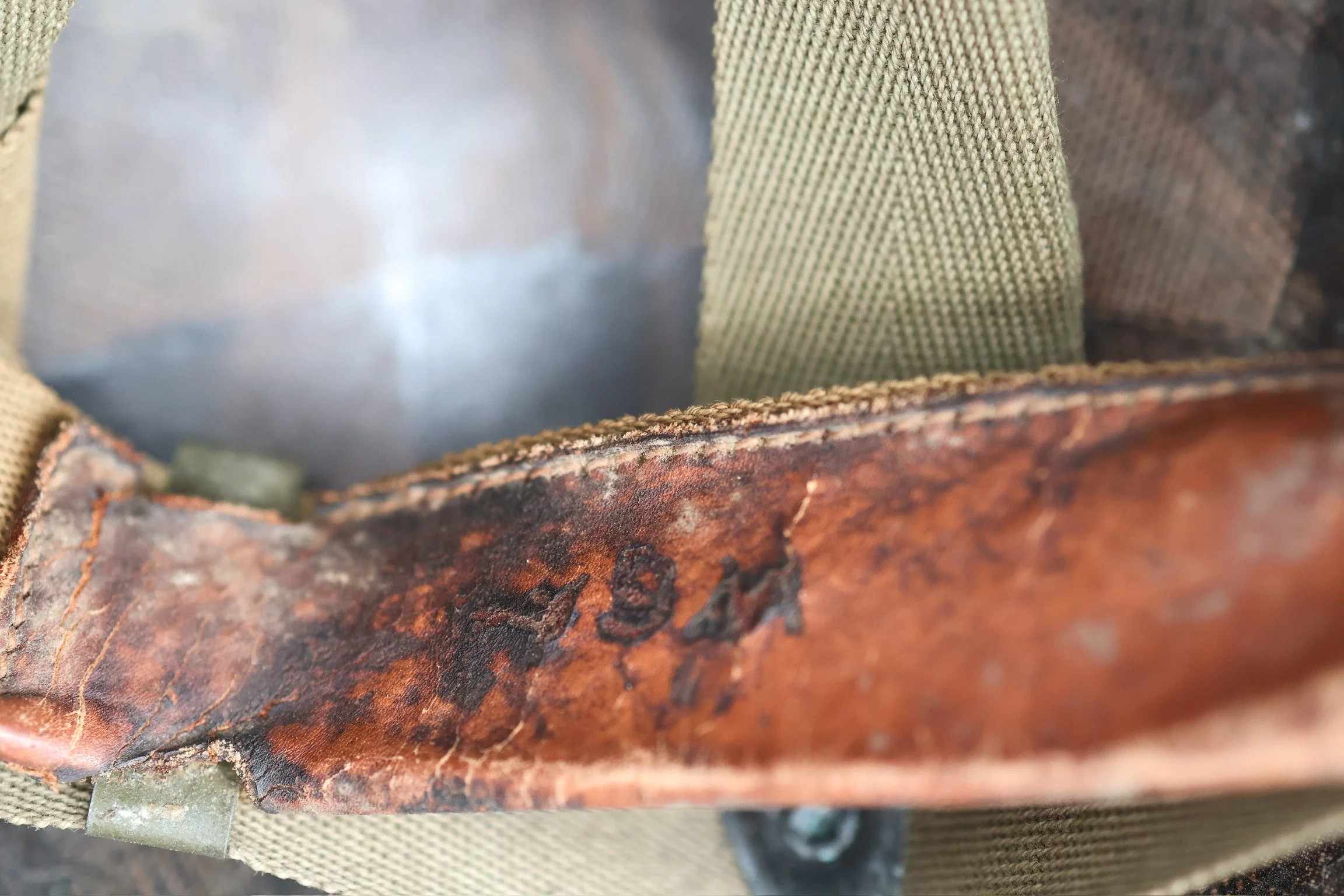
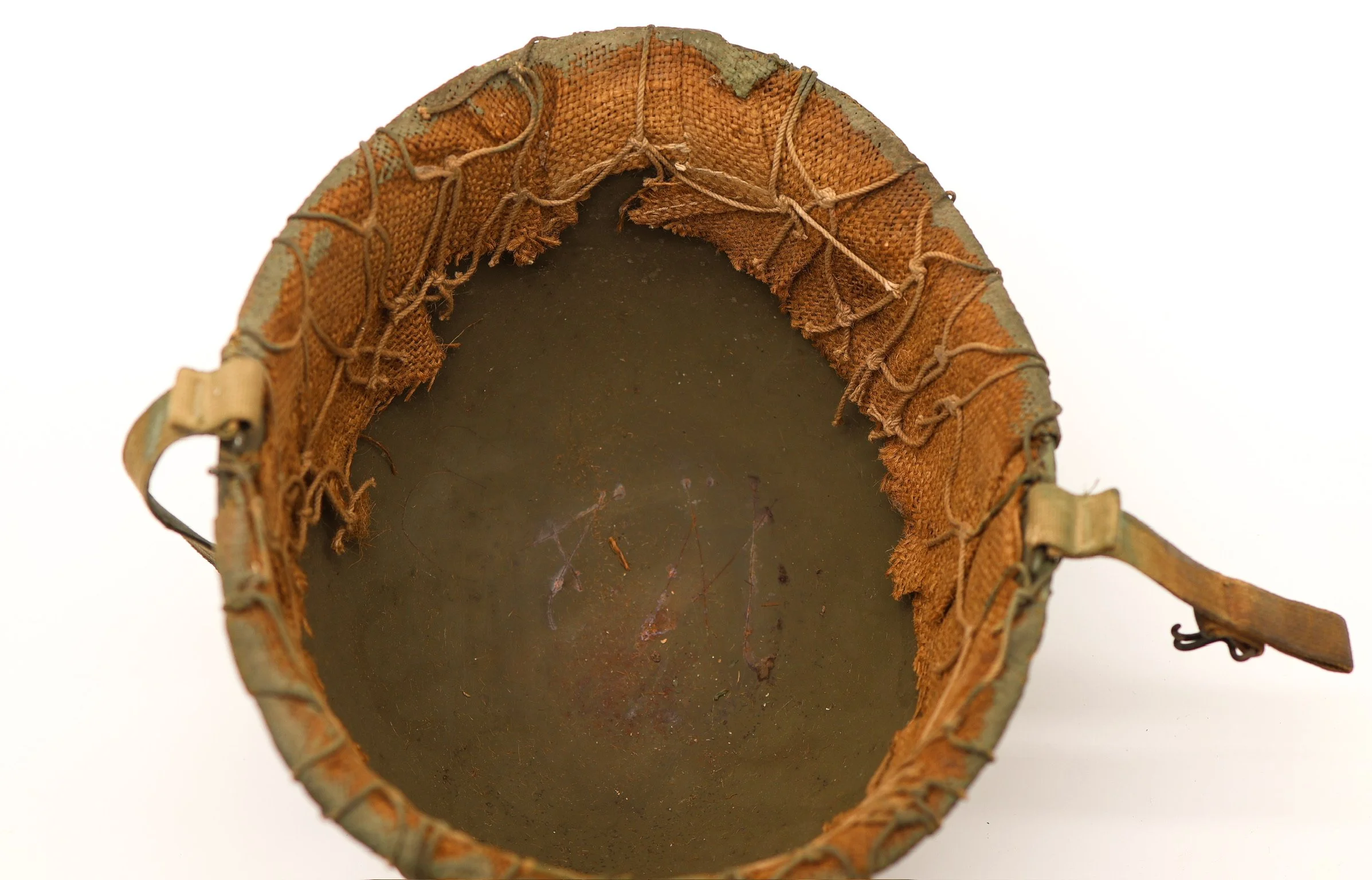
This U.S. M1 helmet and low-pressure liner are identified to PFC Elmer Arthur Mapes, USMCR, service number 479841. Mapes was born on September 26, 1922, in Muscatine, Iowa, and enlisted in the Marine Corps Reserve on November 9, 1942. His service records place him with the 2nd Marine Raider Battalion, 2nd Marine Raider Regiment, during the Bougainville campaign. After his Raider service, Mapes transferred into 2nd Battalion, 4th Marines, later part of the 6th Marine Division.
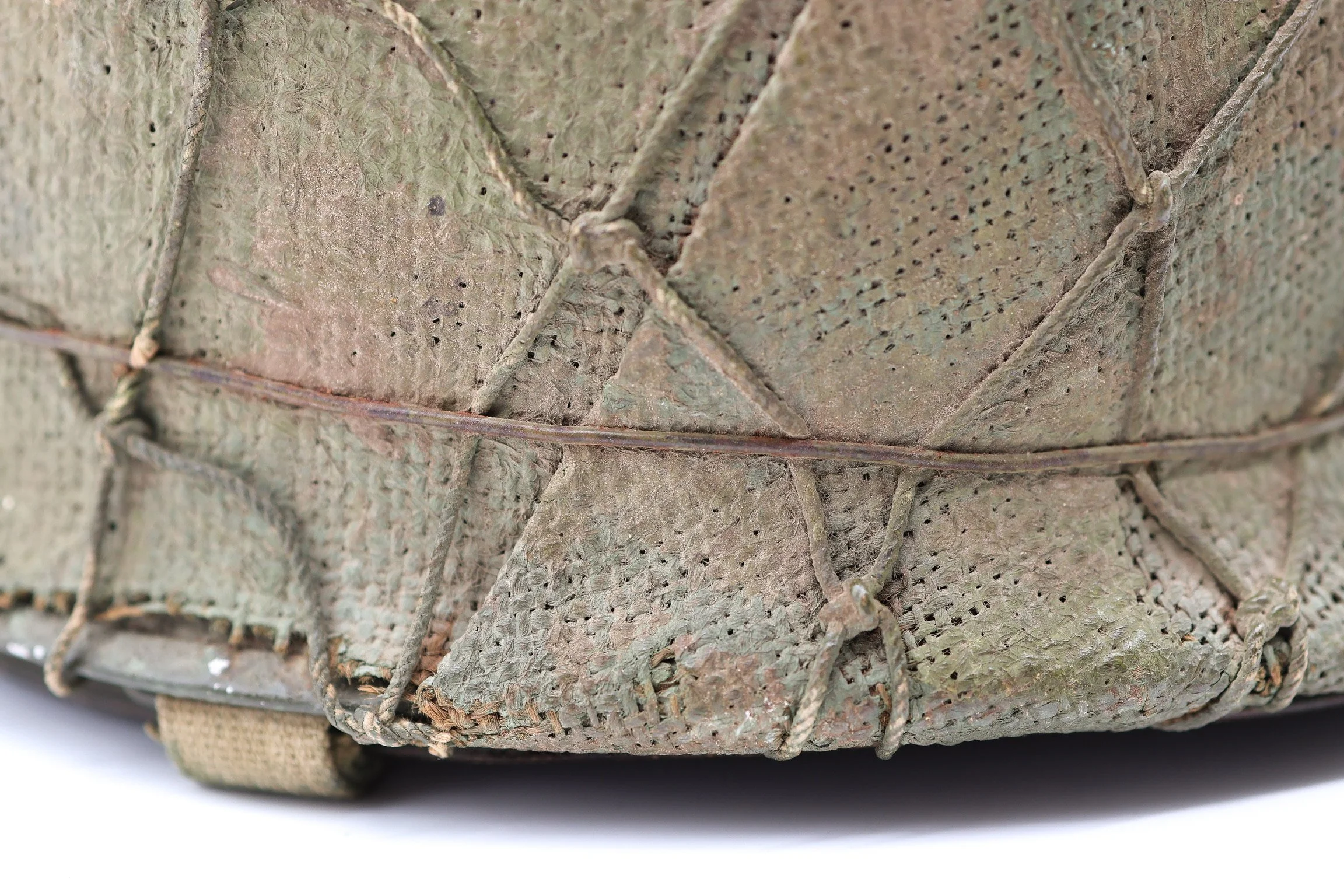
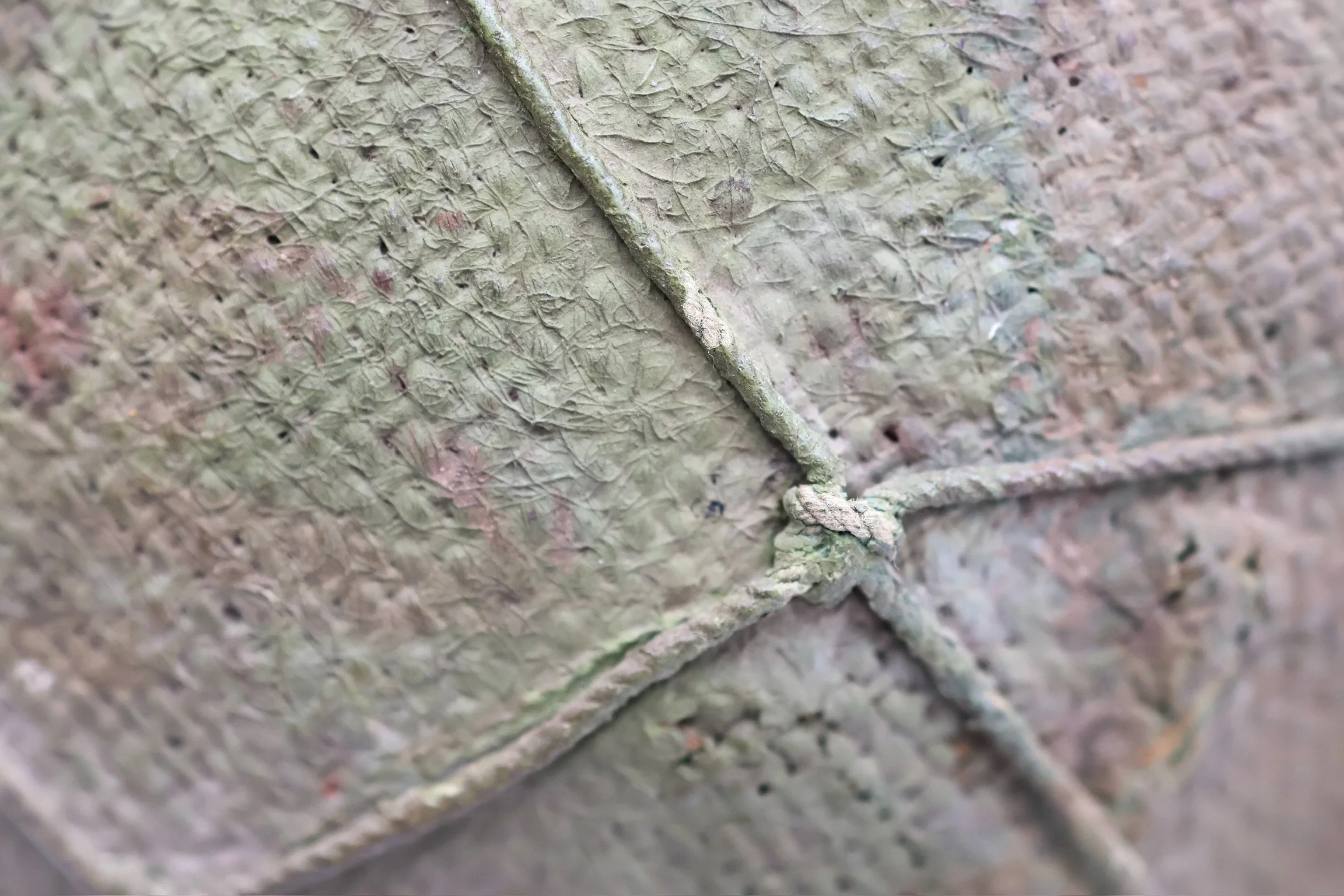
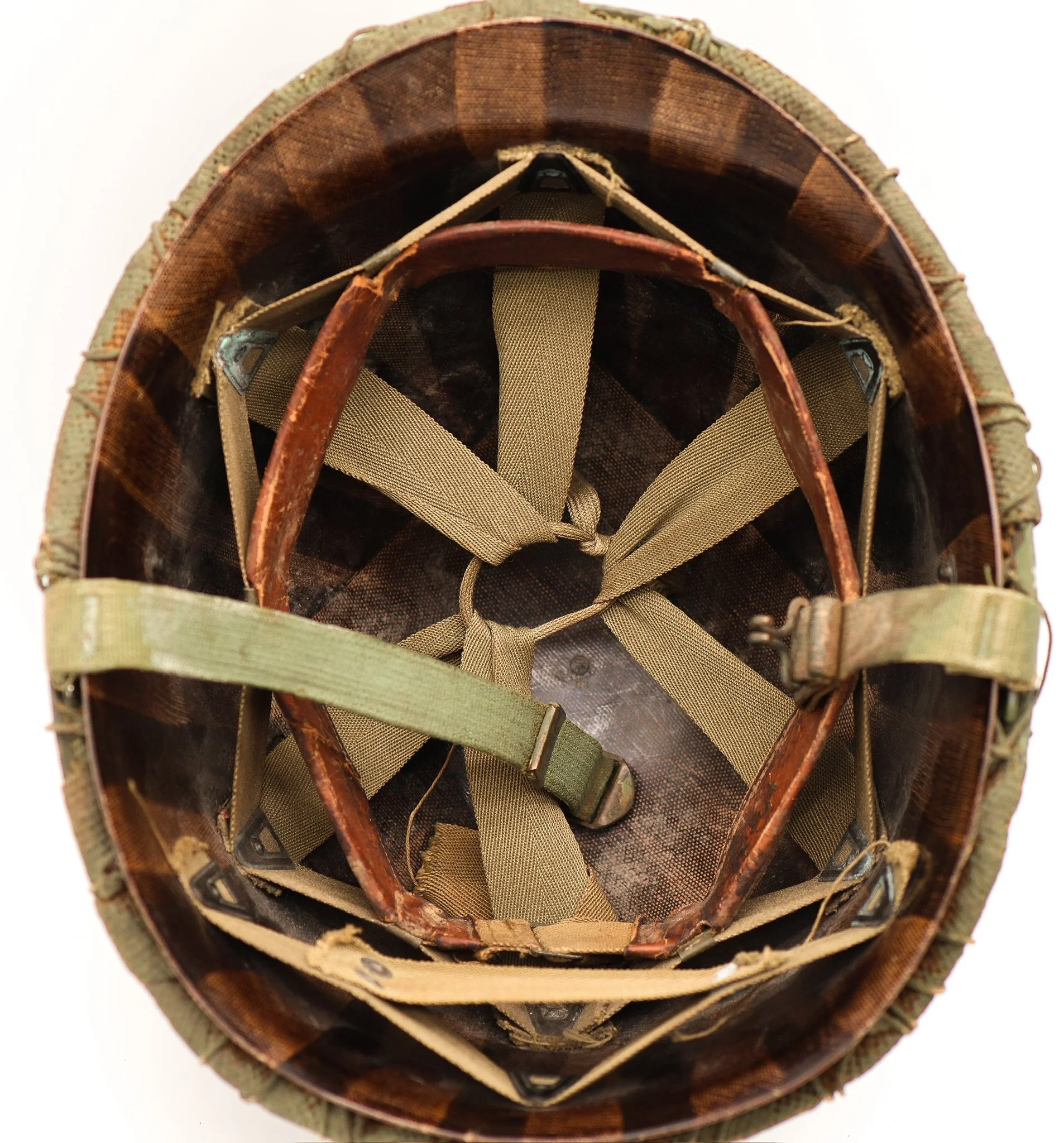
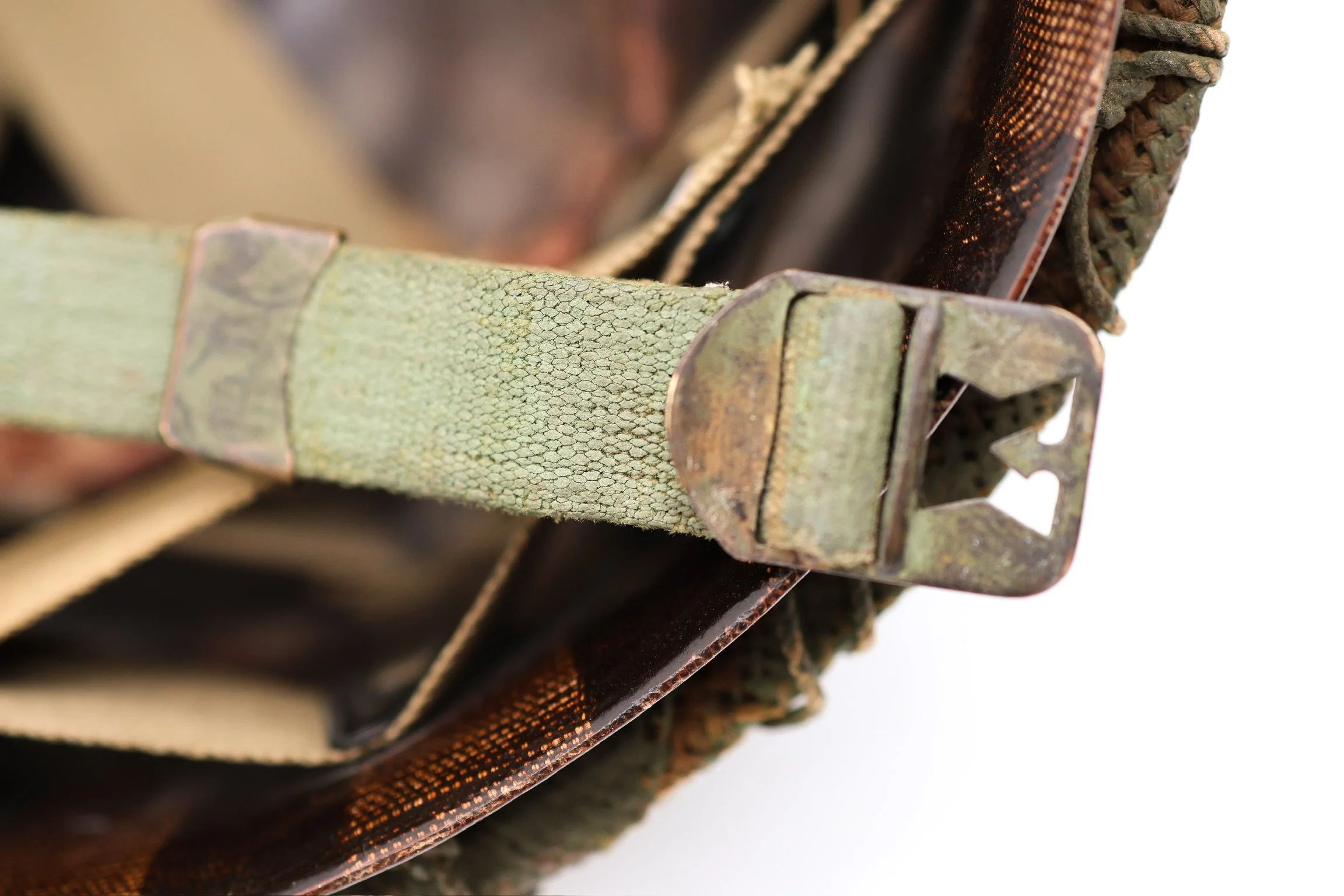
The helmet retains a rare field-applied Raider-style camouflage associated with Bougainville. Burlap was fitted over the shell, painted in heavy green and brown tones, and secured with a two-inch net and wire band around the helmet. The paint is also present on the chinstraps, and the burlap has hardened to the shell over time.
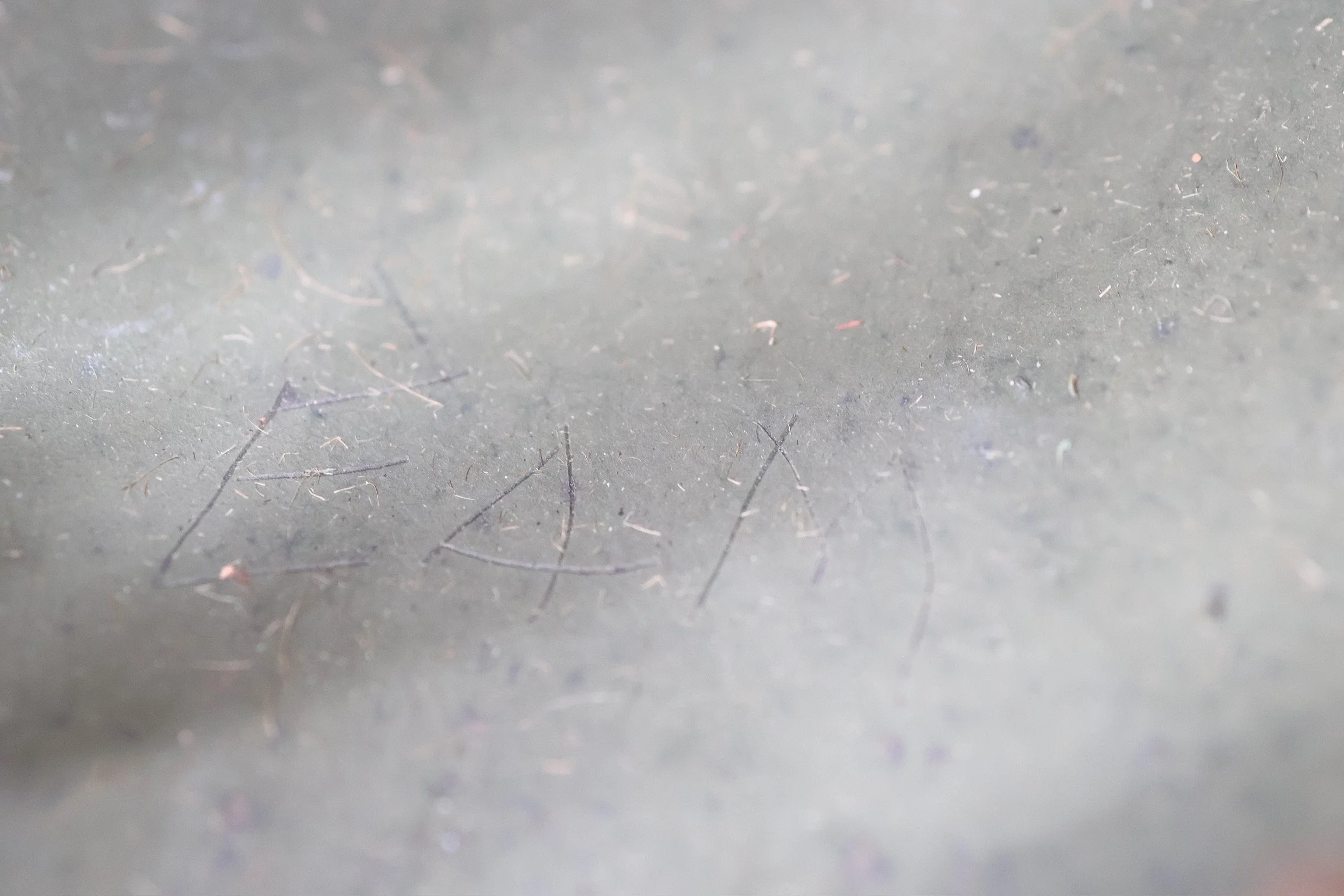
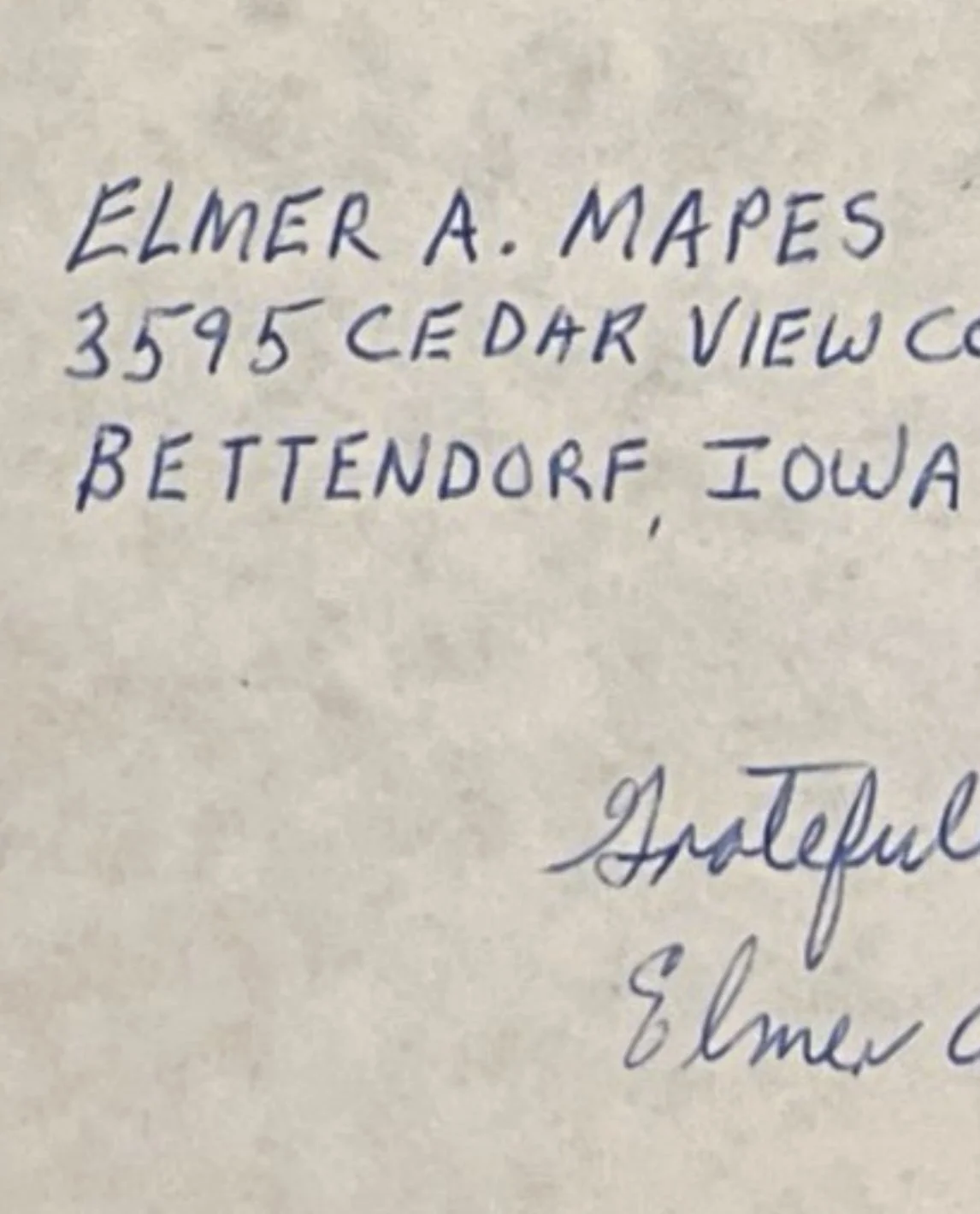
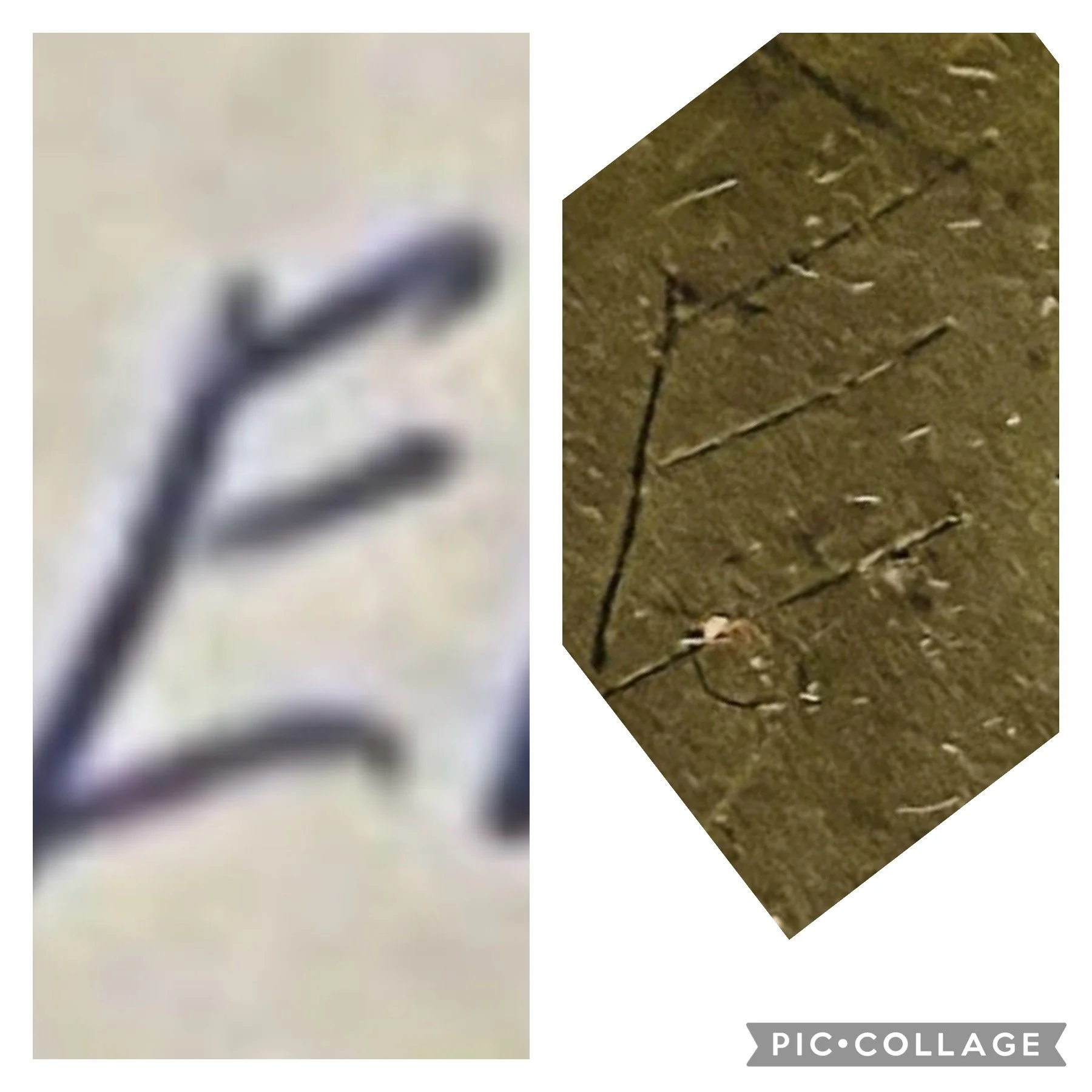
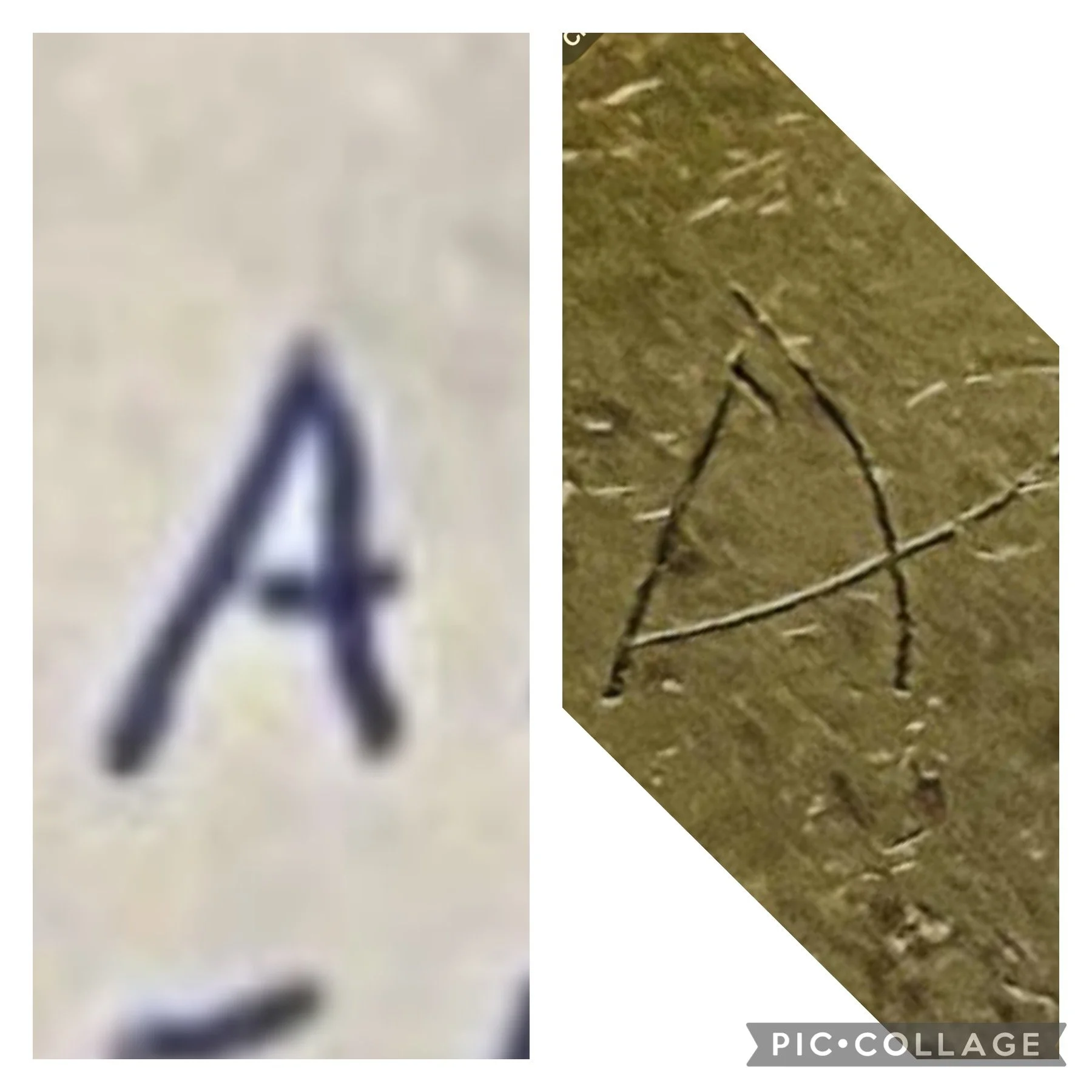
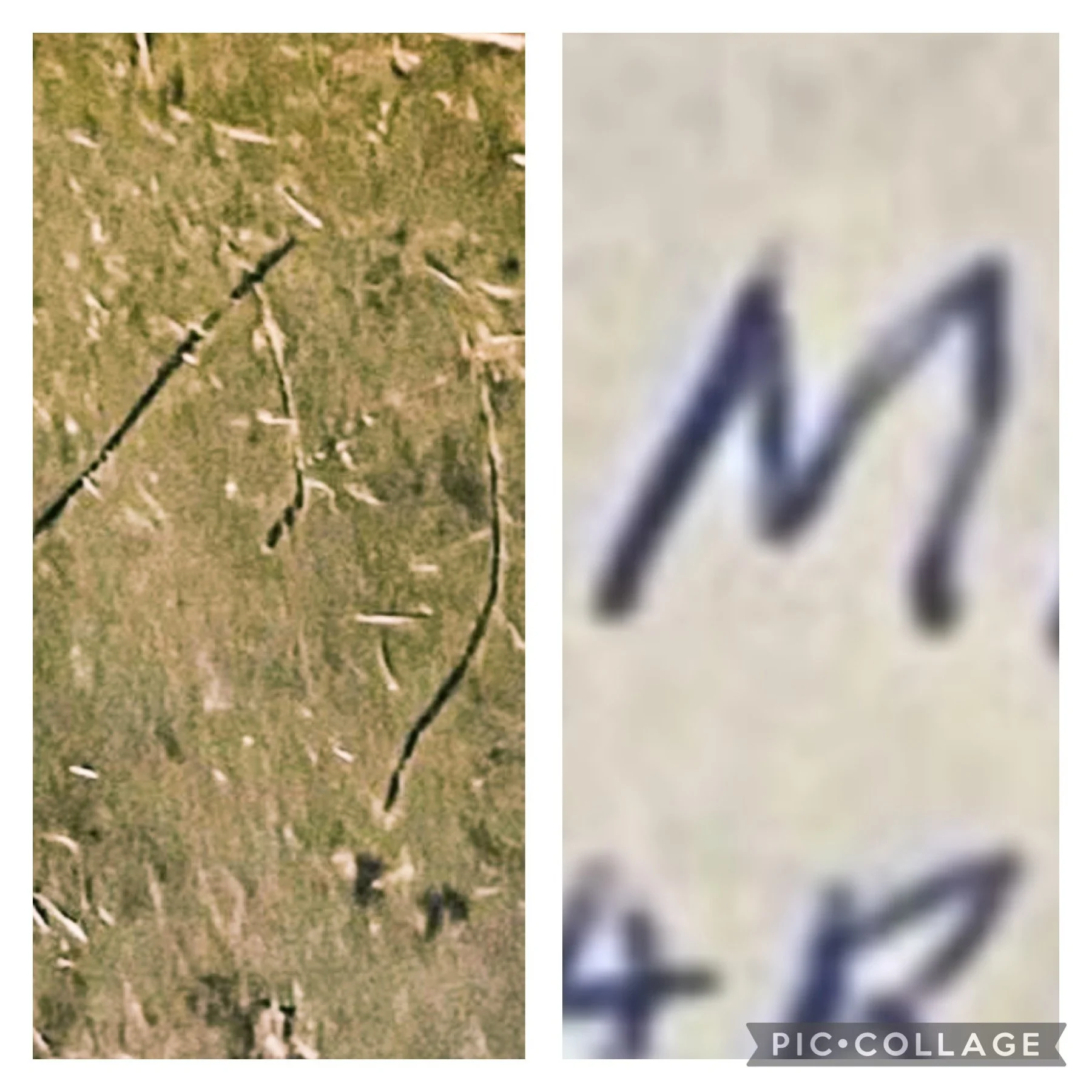
The identification is based on “E.A.M.” scratched inside the helmet shell and also marked in the liner. Research of Marine Raider rosters narrowed those initials to two possible Marines. The other E.A.M. served with the Raiders on Guadalcanal, while Mapes’s record places him with the 2nd Raider Battalion on Bougainville, matching the campaign and style of camouflage. The initials scratched into the helmet were also compared with Mapes’s handwritten name and address in his service records, with the formation of the E, A, and M closely matching the way he wrote those same letters.
-
The survival of the helmet makes sense in the context of Mapes’s service. After Bougainville, he left the Raiders and continued with 2nd Battalion, 4th Marines. This Bougainville-style burlap, net, and wire camouflage would not have been standard for his later service, making it likely that Mapes either retained the helmet as a personal item or sent it home after transferring out of the Raiders. He would have been issued or used a different helmet for his later campaigns.
Mapes later served with 2nd Battalion, 4th Marines during the Guam and Okinawa campaigns. His records show participation in the seizure and occupation of Guam from July 21 to August 27, 1944, and Okinawa from April 1 to July 6, 1945. He was discharged on December 10, 1945. His award records list the World War II Victory Medal, Asiatic-Pacific Campaign Medal with four bronze stars, Navy Occupation Service Medal with Asia clasp, Marine Corps Good Conduct Medal, Presidential Unit Citation Ribbon, Navy Unit Commendation Ribbon, and Marine Corps Sharpshooter Rifle Badge.
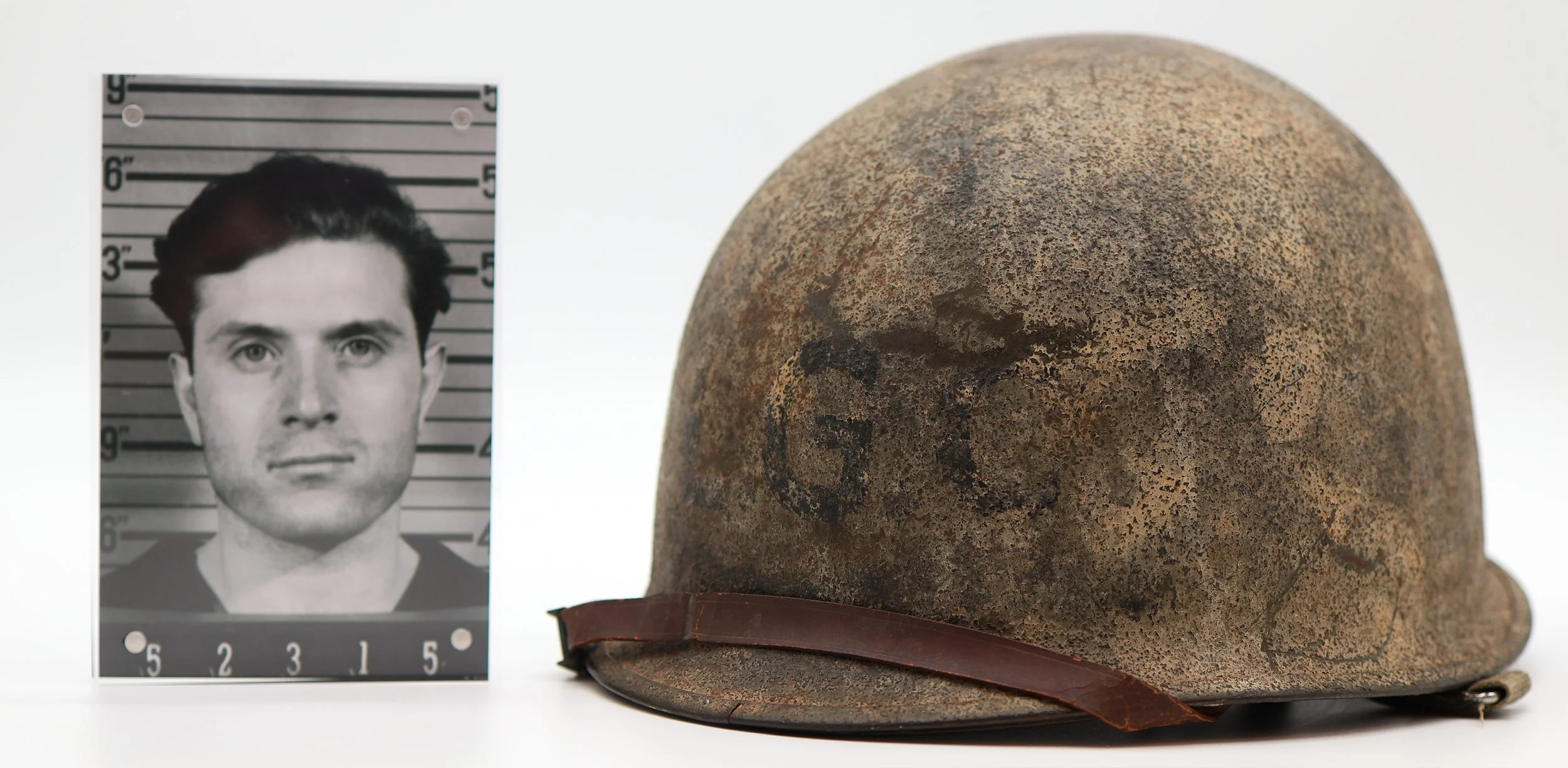
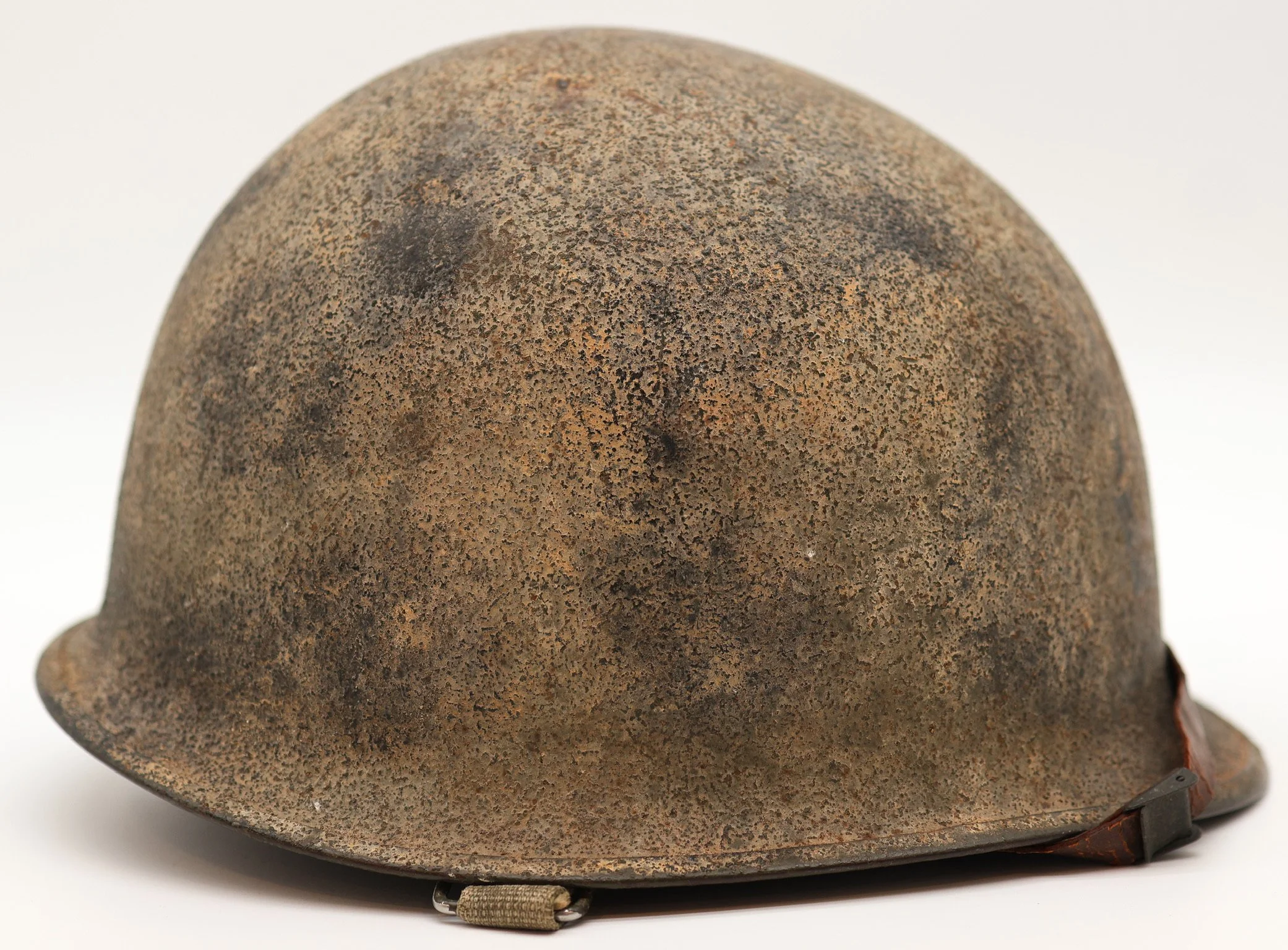
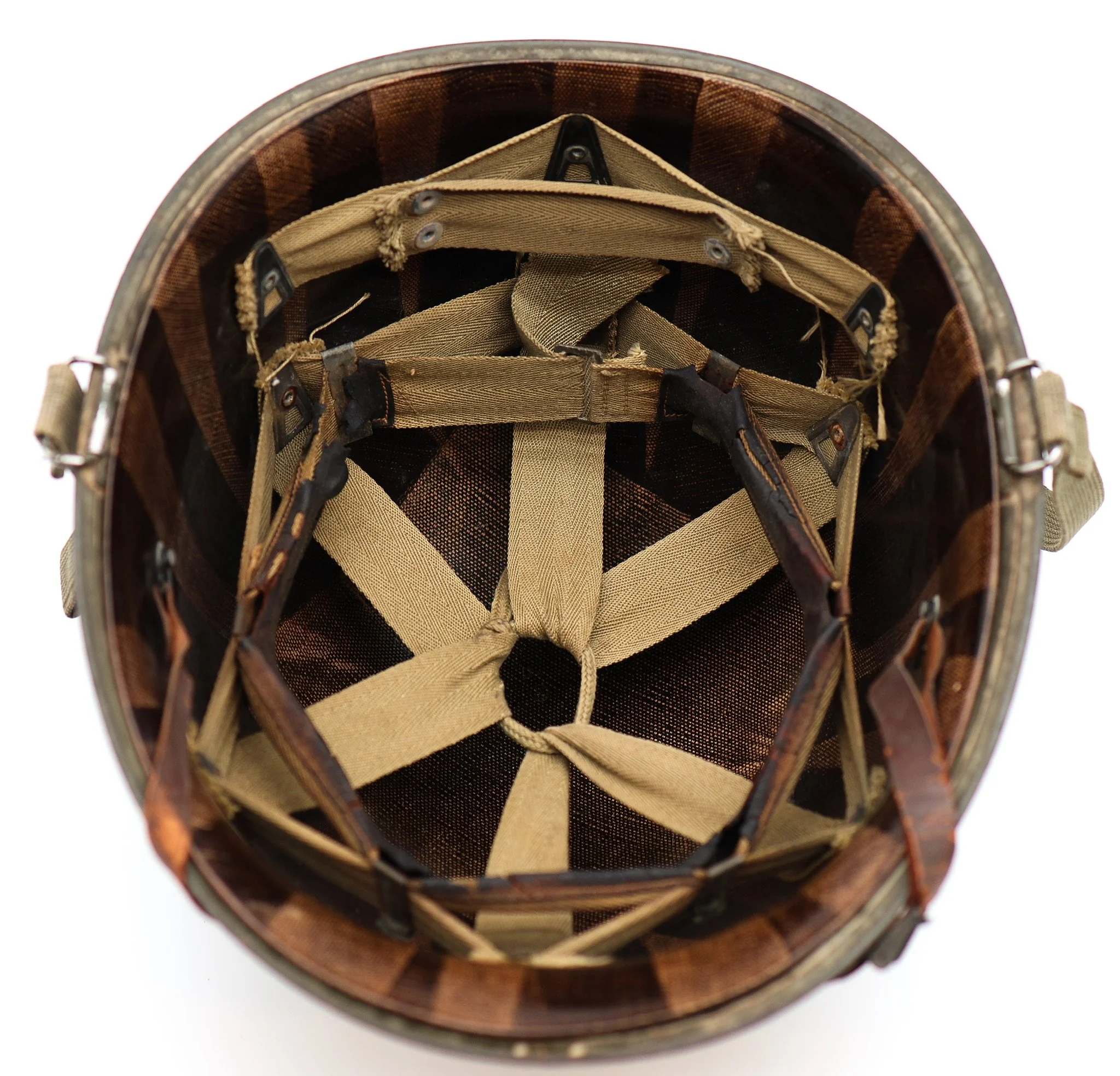
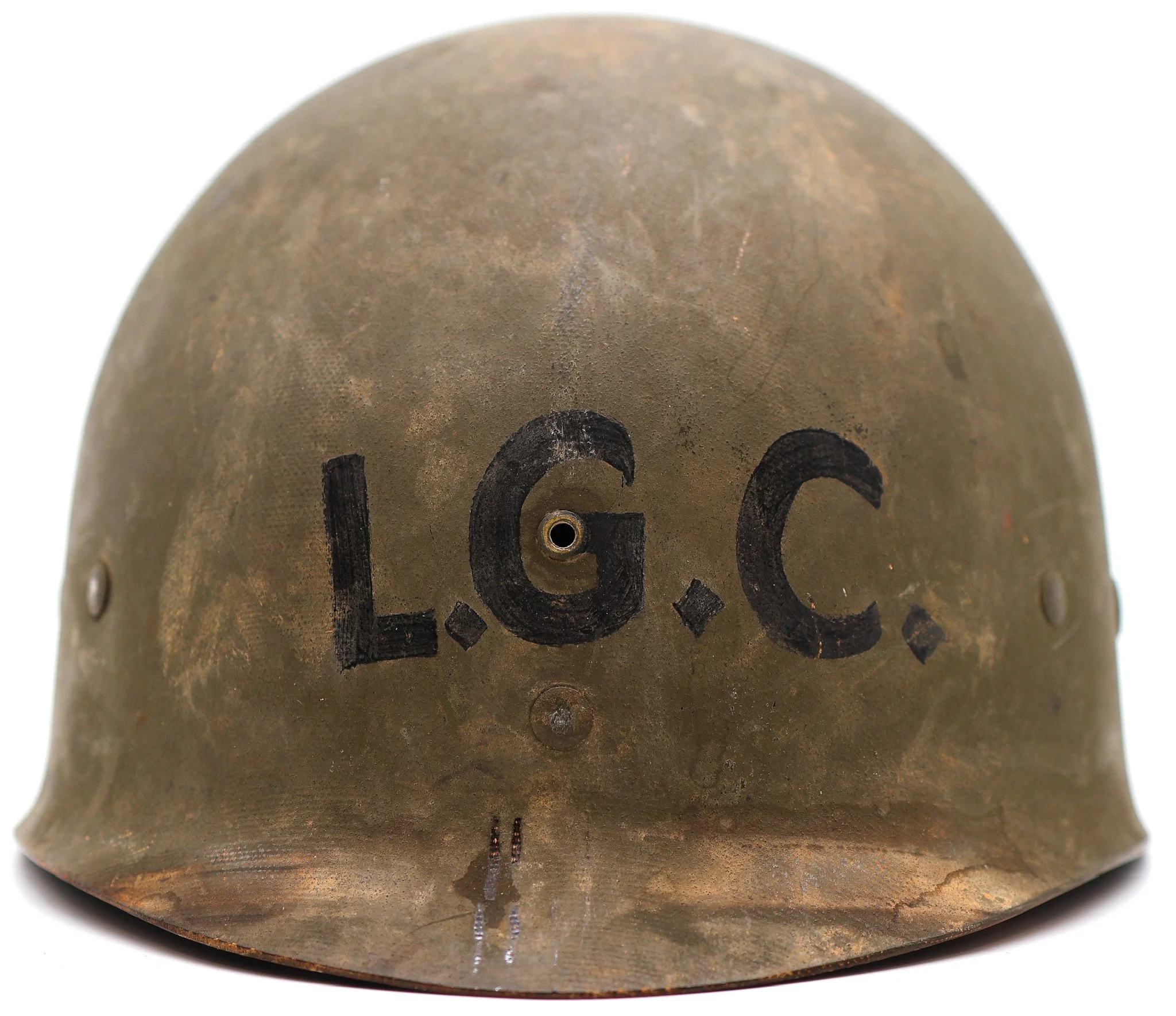
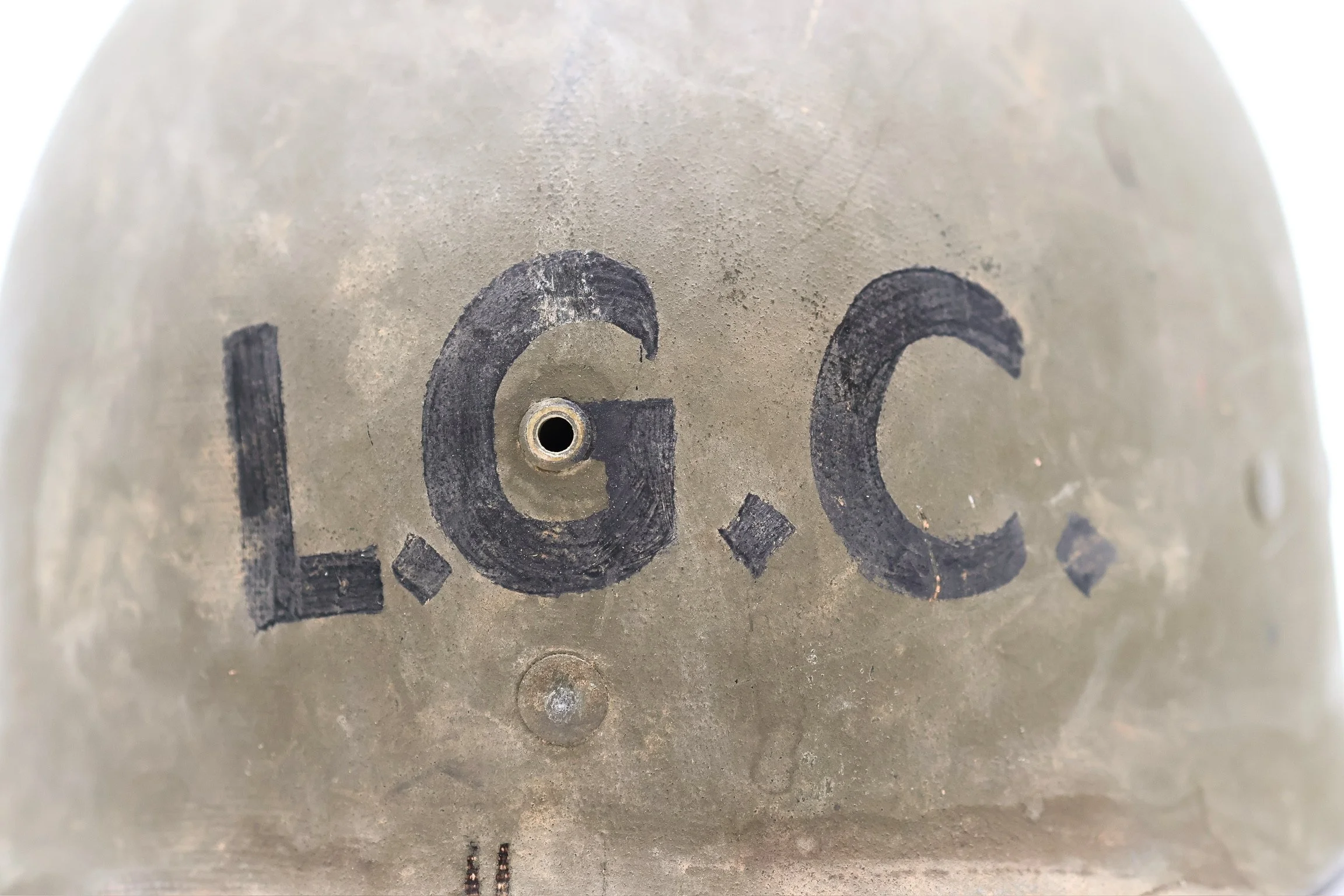
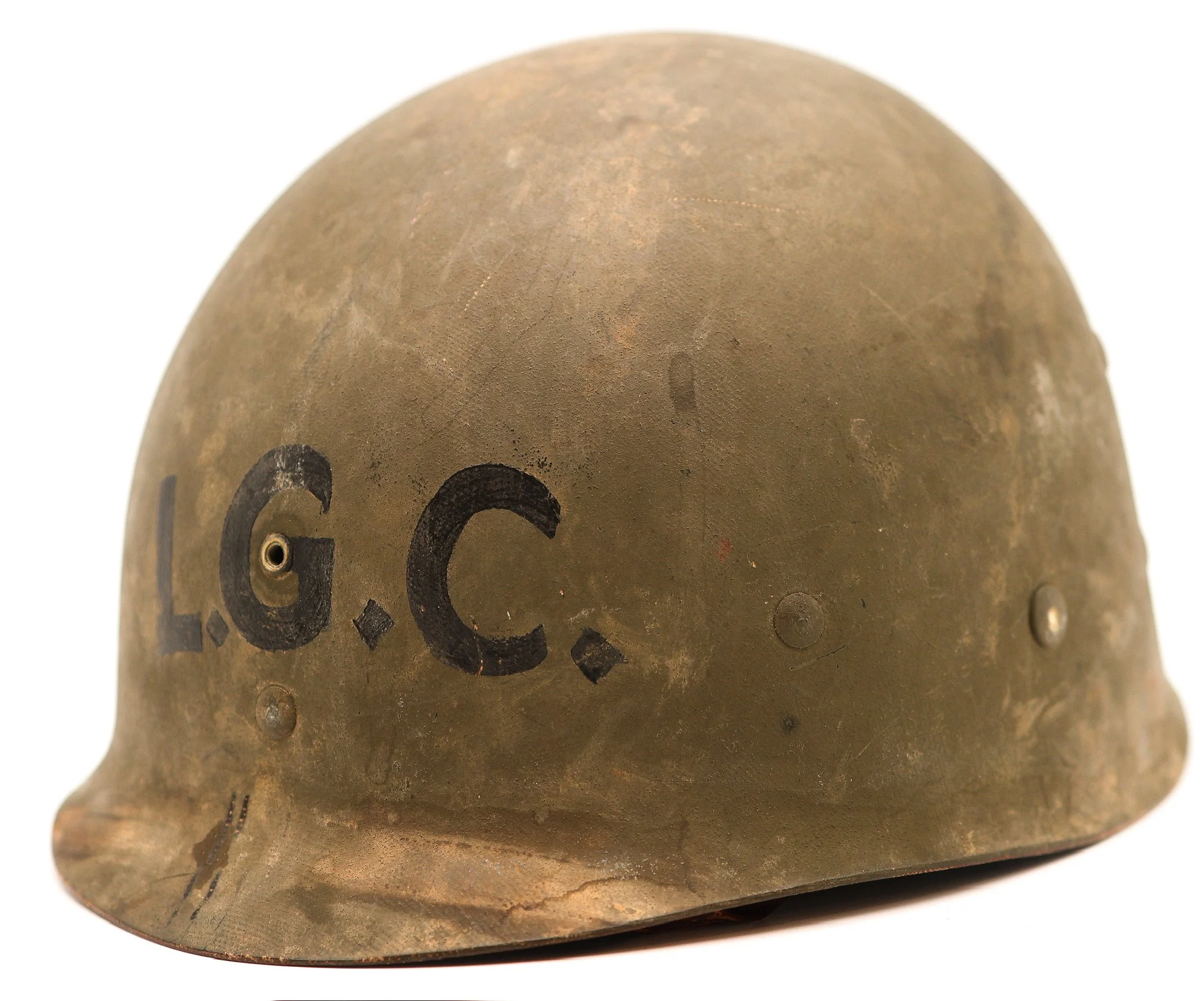
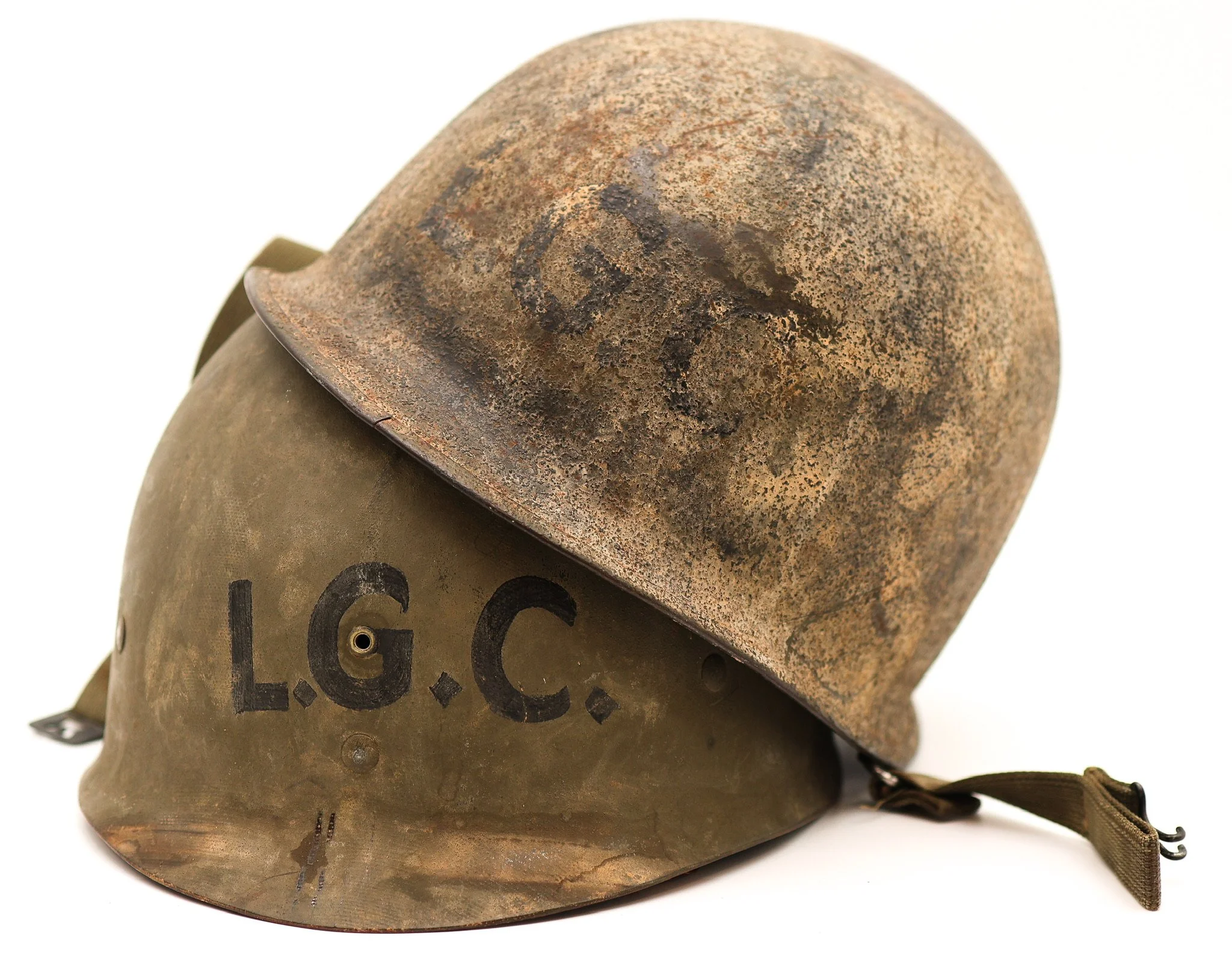
Helmet worn by Pharmacist’s Mate Louis Greco Castellaneta, 1st Marine Division
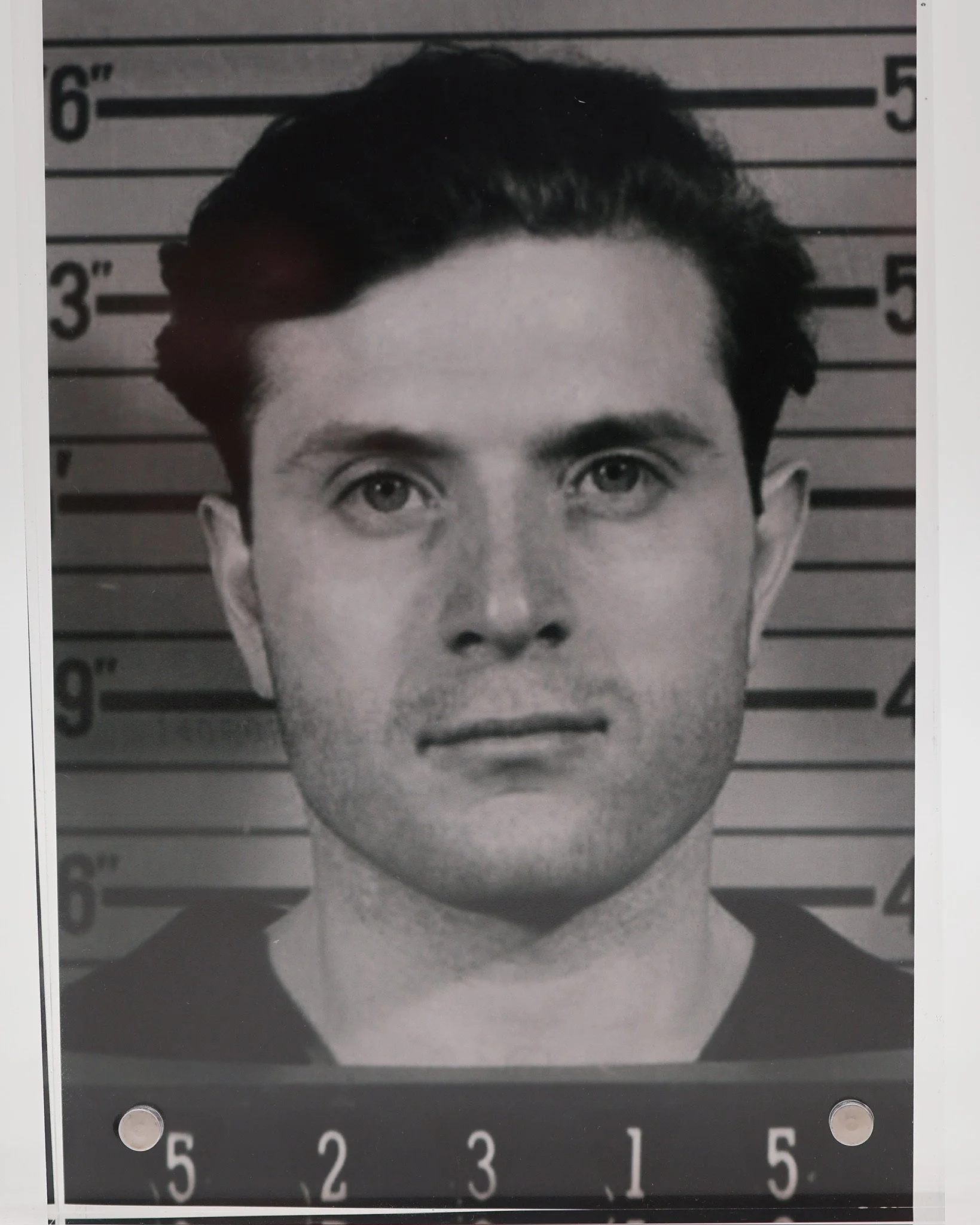
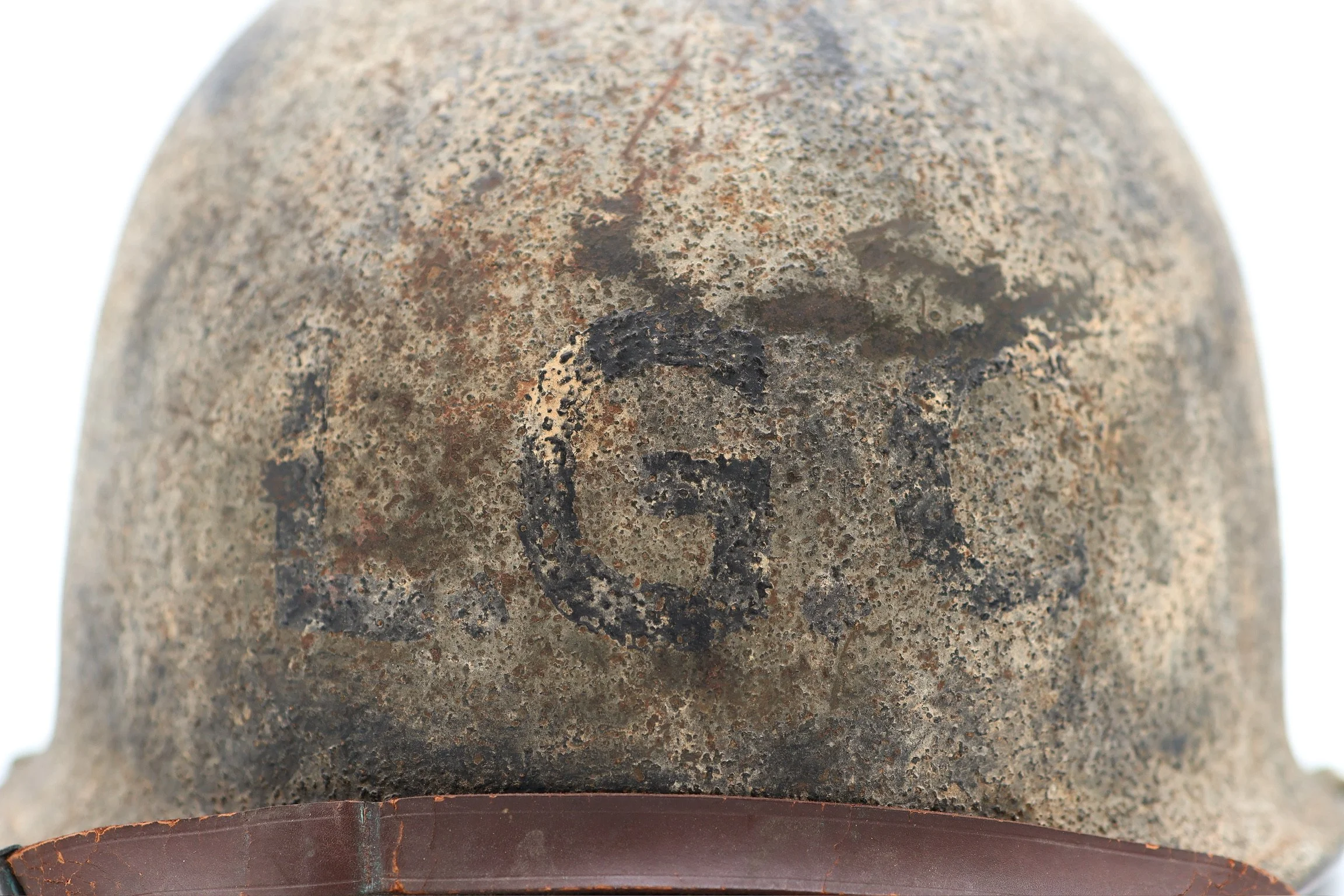
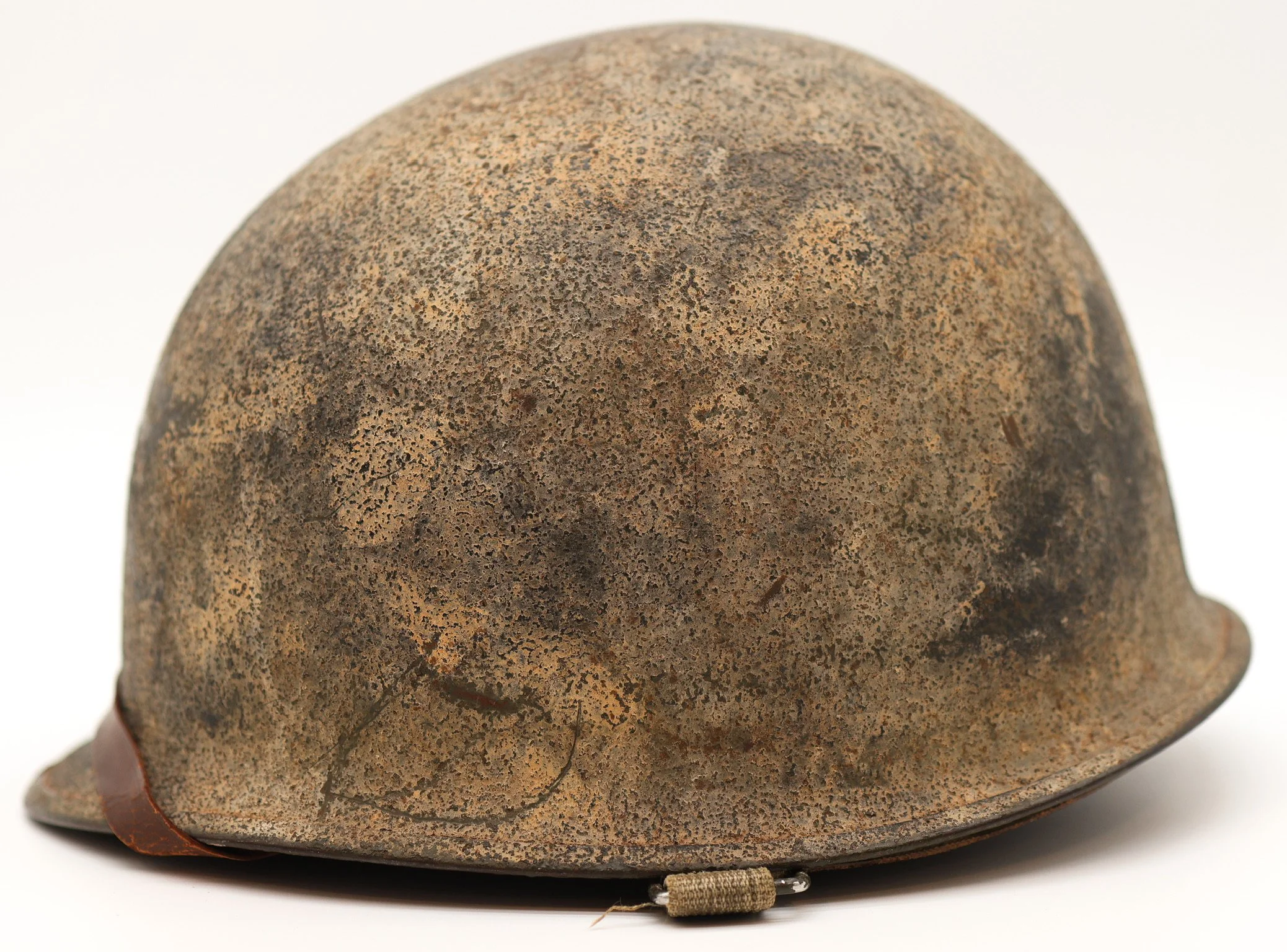
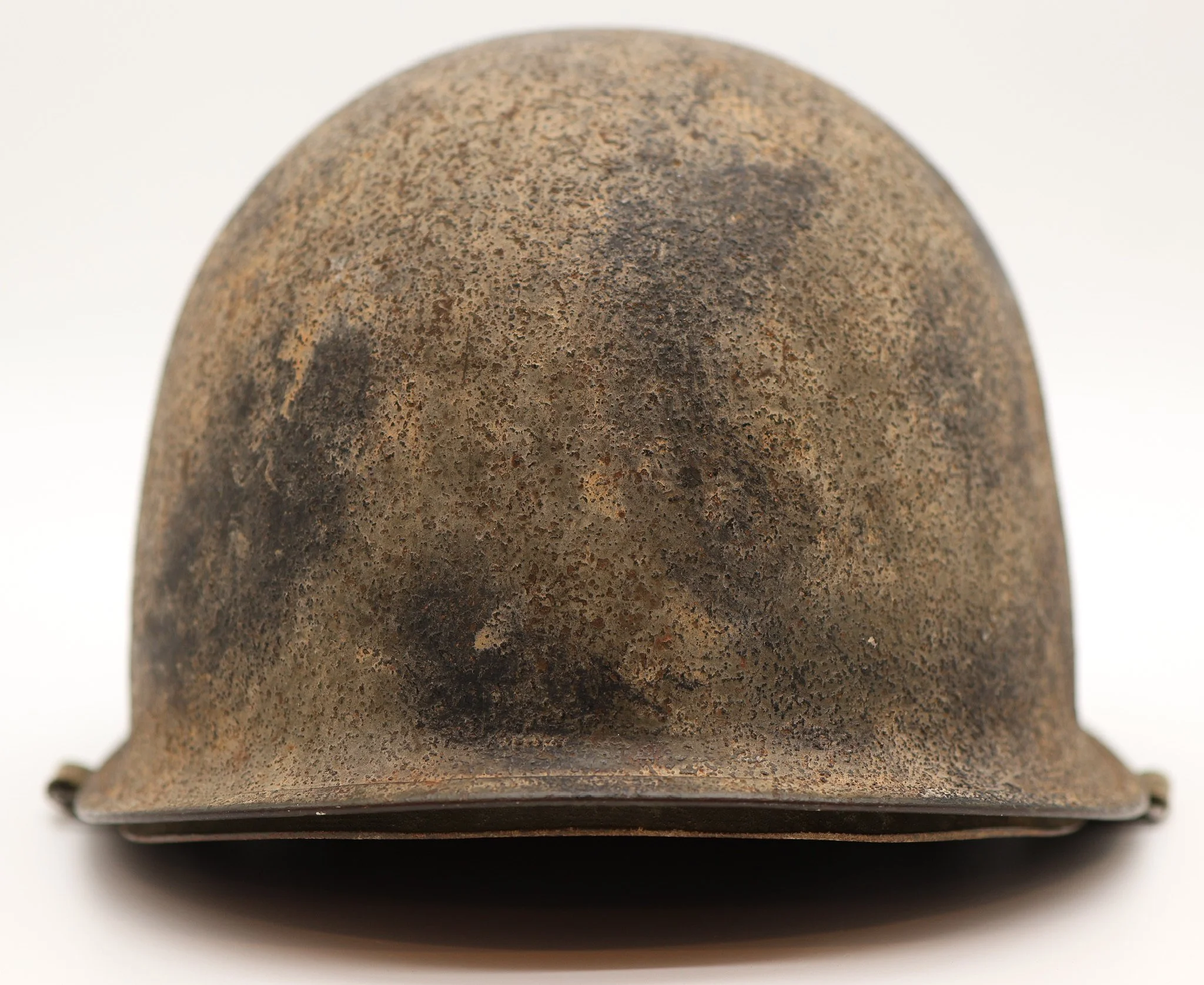
This U.S. M1 helmet was worn by Pharmacist’s Mate Louis Greco Castellaneta of the U.S. Navy Hospital Corps while serving alongside the 1st Marine Division during the Pacific campaigns of World War II. The helmet was finished in original Pacific camouflage, a style commonly used during the Battle of Okinawa.
Louis Greco Castellaneta was born on June 7, 1915, in Chicago, Illinois. As a Navy corpsman attached to Marine infantry units, his role placed him in the most exposed and dangerous positions on the battlefield. Corpsmen moved with assault troops, often unarmed, providing lifesaving medical care under direct enemy fire. During the Okinawa campaign, Castellaneta treated wounded Marines amid constant artillery barrages, small-arms fire, and the chaos of close combat…
-
Okinawa left a lasting impression on Castellaneta. One incident in particular—witnessing a Japanese prisoner take his own life with a grenade—deeply affected him and reinforced his belief in the futility and human cost of war. Like many medical personnel, he carried the emotional weight of what he had seen long after the fighting ended.
Castellaneta’s initials appear on both the steel shell and the liner. This helmet was originally acquired through a yard sale at his former home and was later confirmed by the family, through correspondence, to be Louis’s helmet.
After the war, Castellaneta returned to Chicago, where he built a quiet life centered on family and community. He and his wife, Elsie, raised three children, and he became known as a humble man who spoke openly about his wartime experiences when asked, often emphasizing the value of compassion over violence. His legacy extended beyond military service; his son, Dan Castellaneta, would later become widely known as the voice of Homer Simpson, carrying the family name into American cultural history. Louis Castellaneta lived to the age of 99, passing away on September 30, 2014.
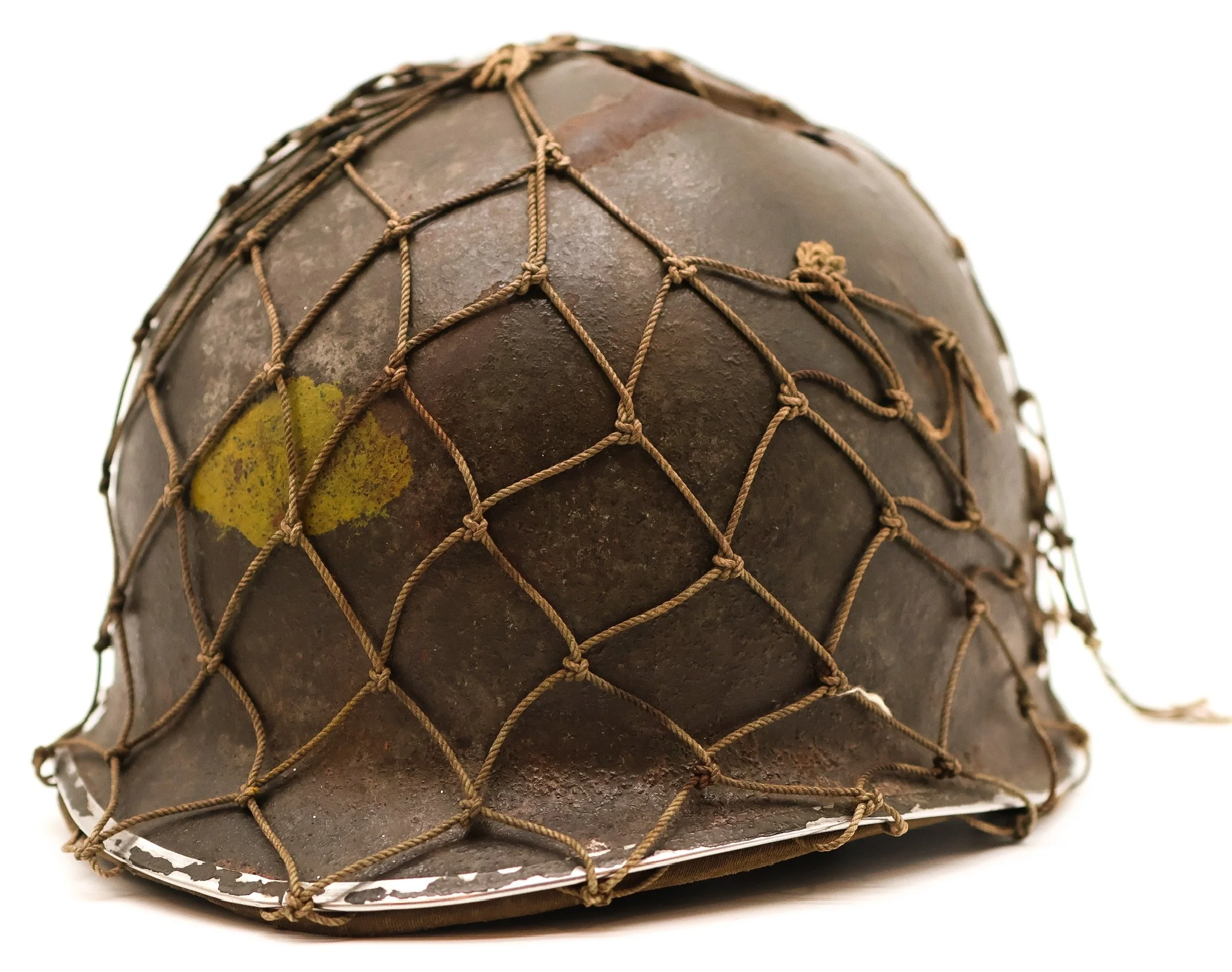
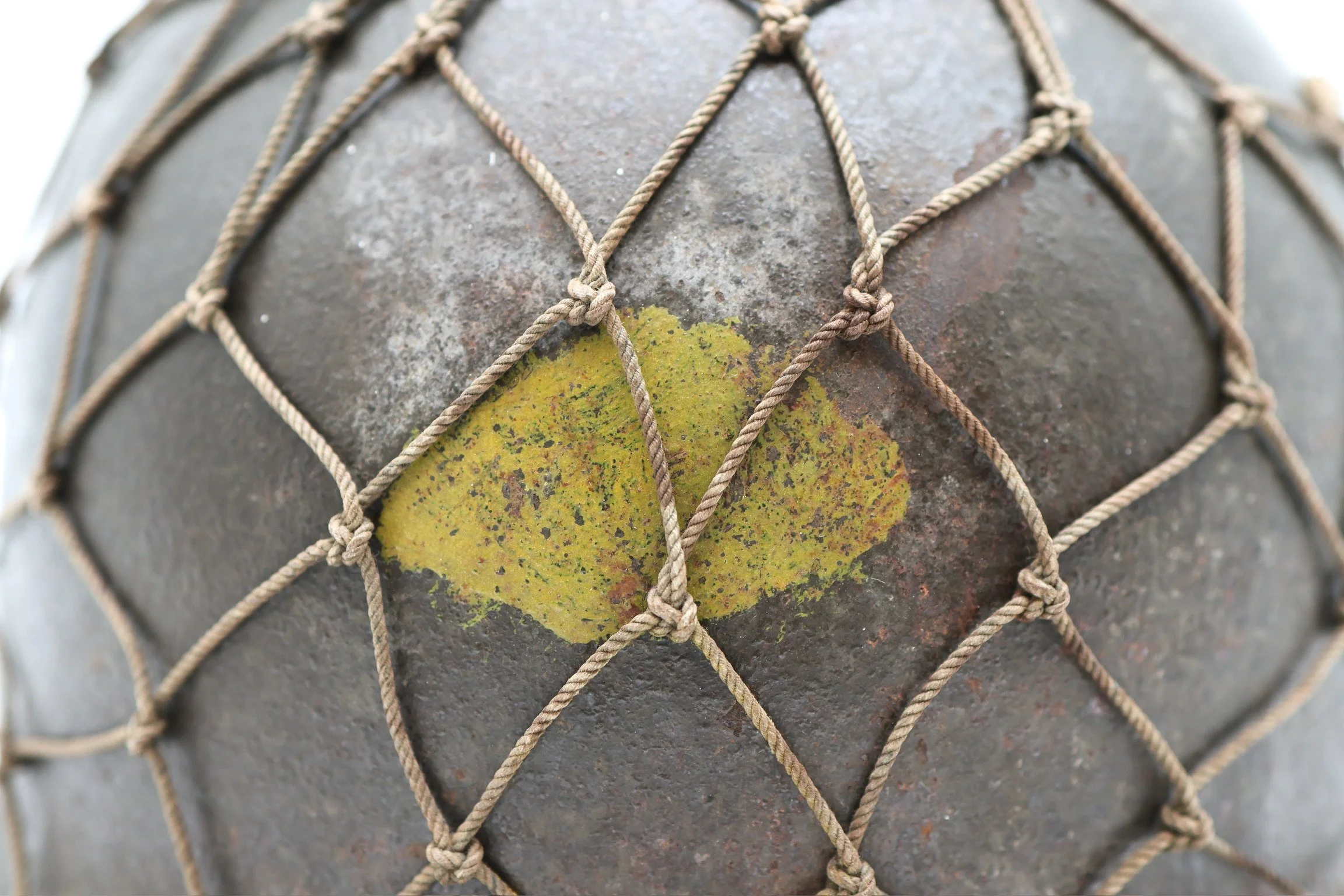
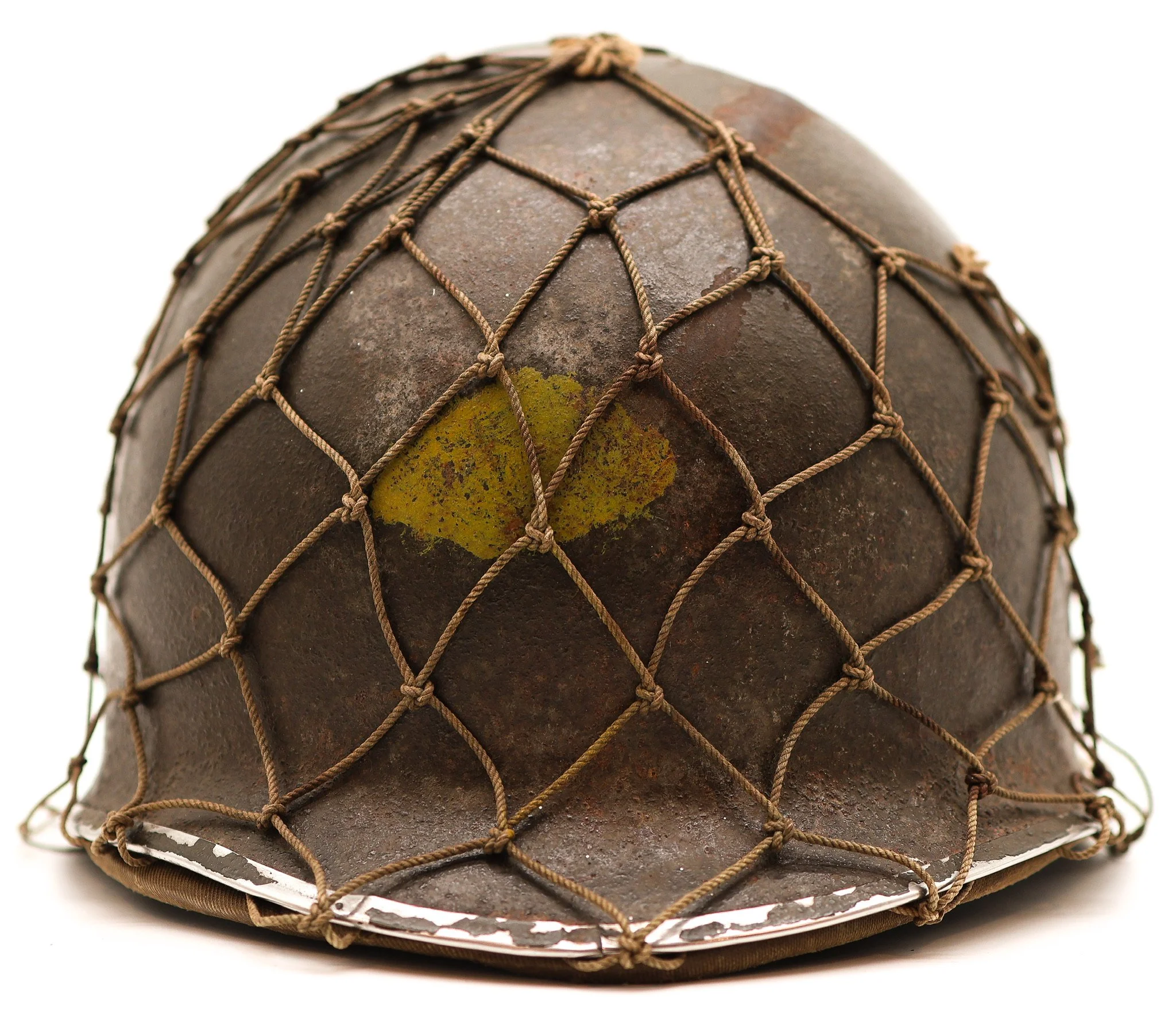
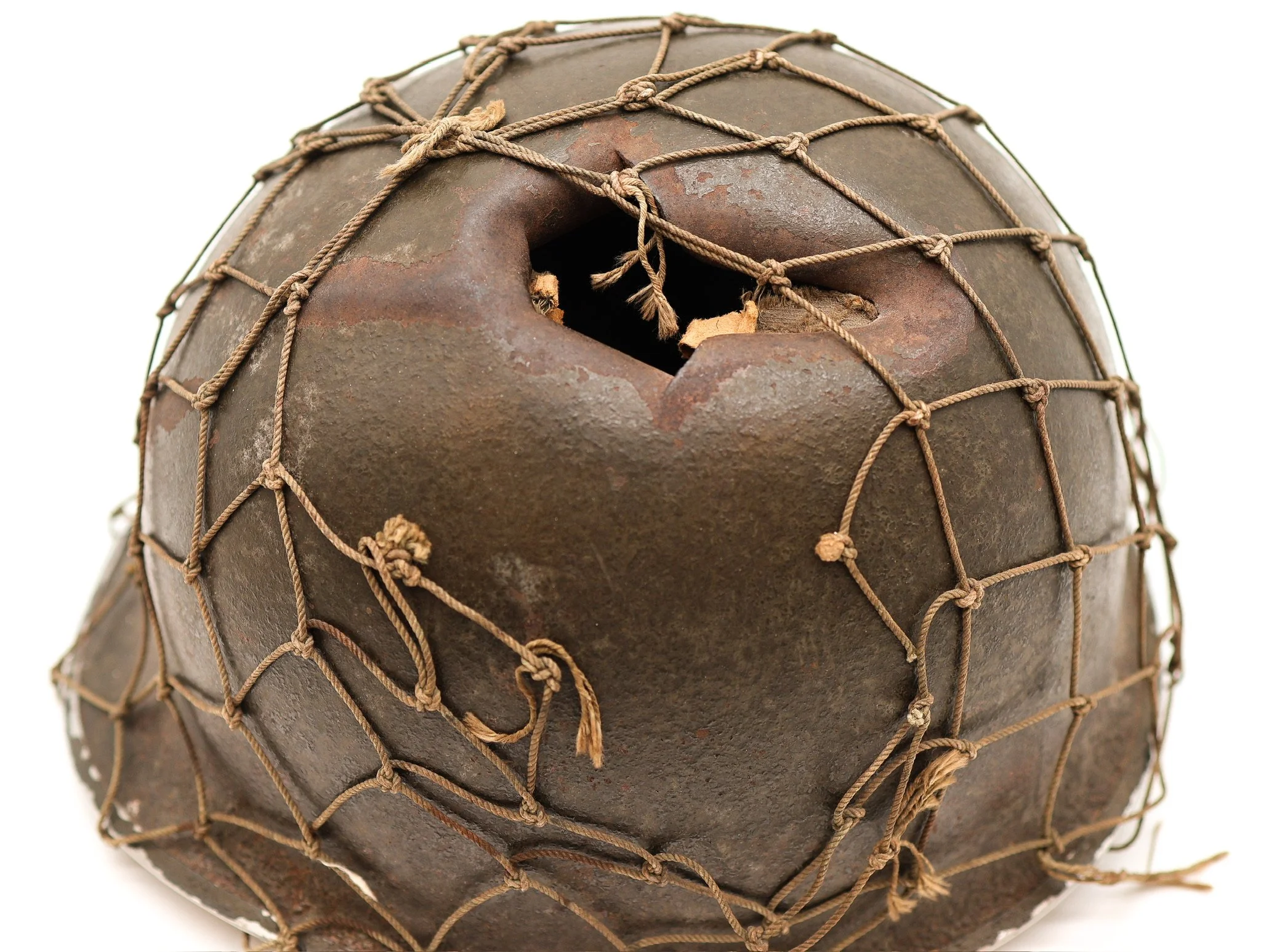
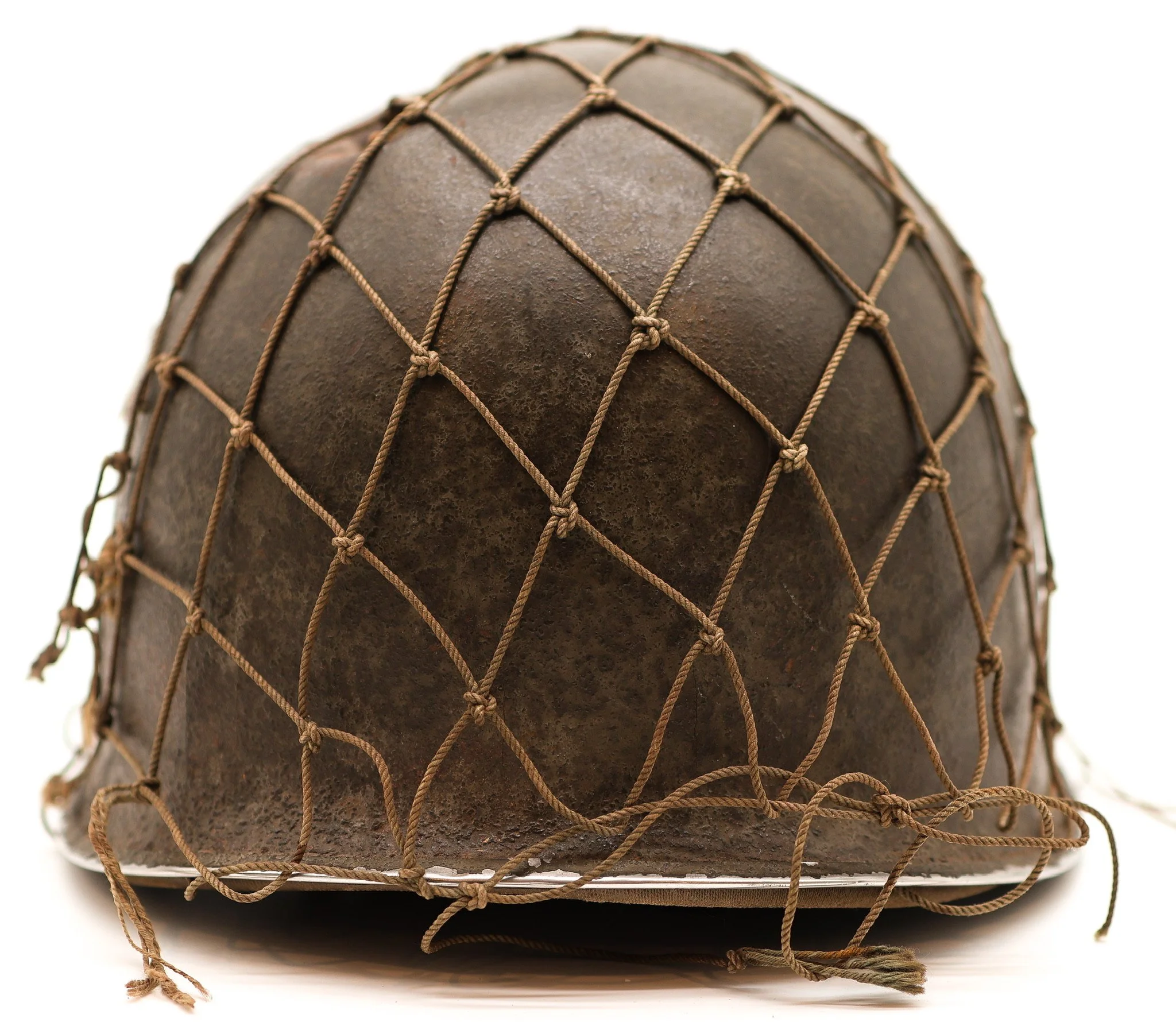
U.S. WWII M1 Helmet of Pvt. Joe Muffeletto, 7th Infantry Division (KIA)
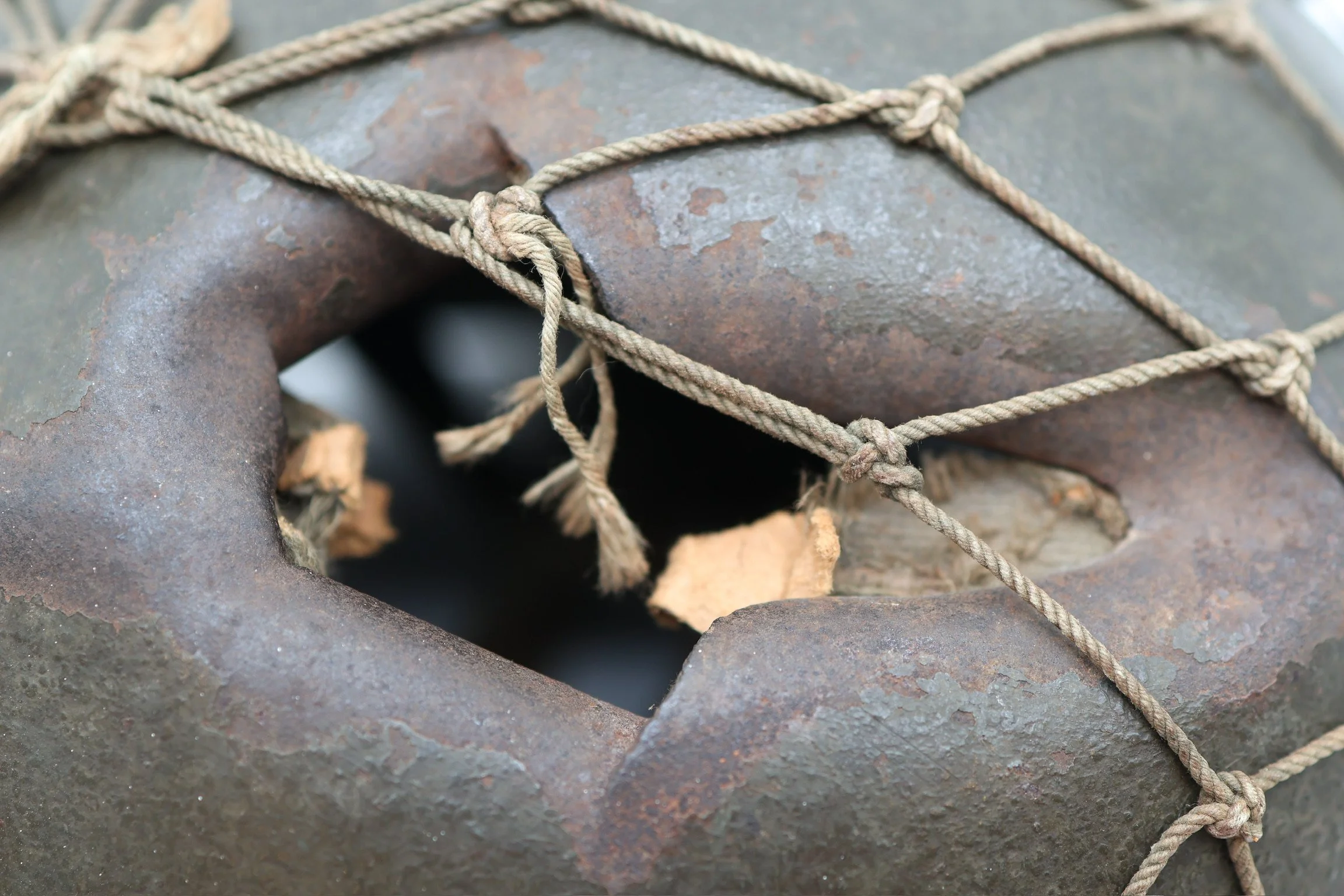
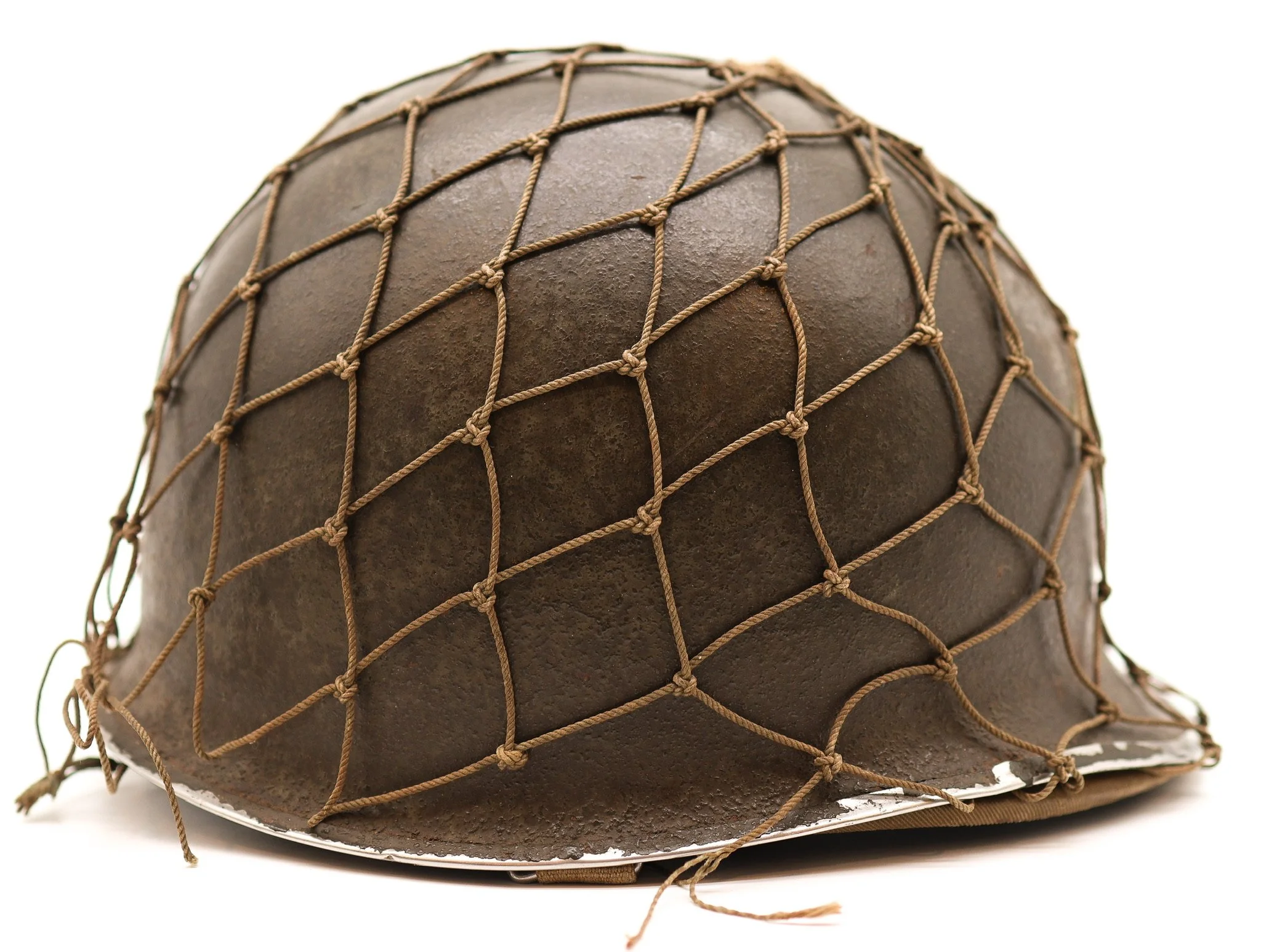
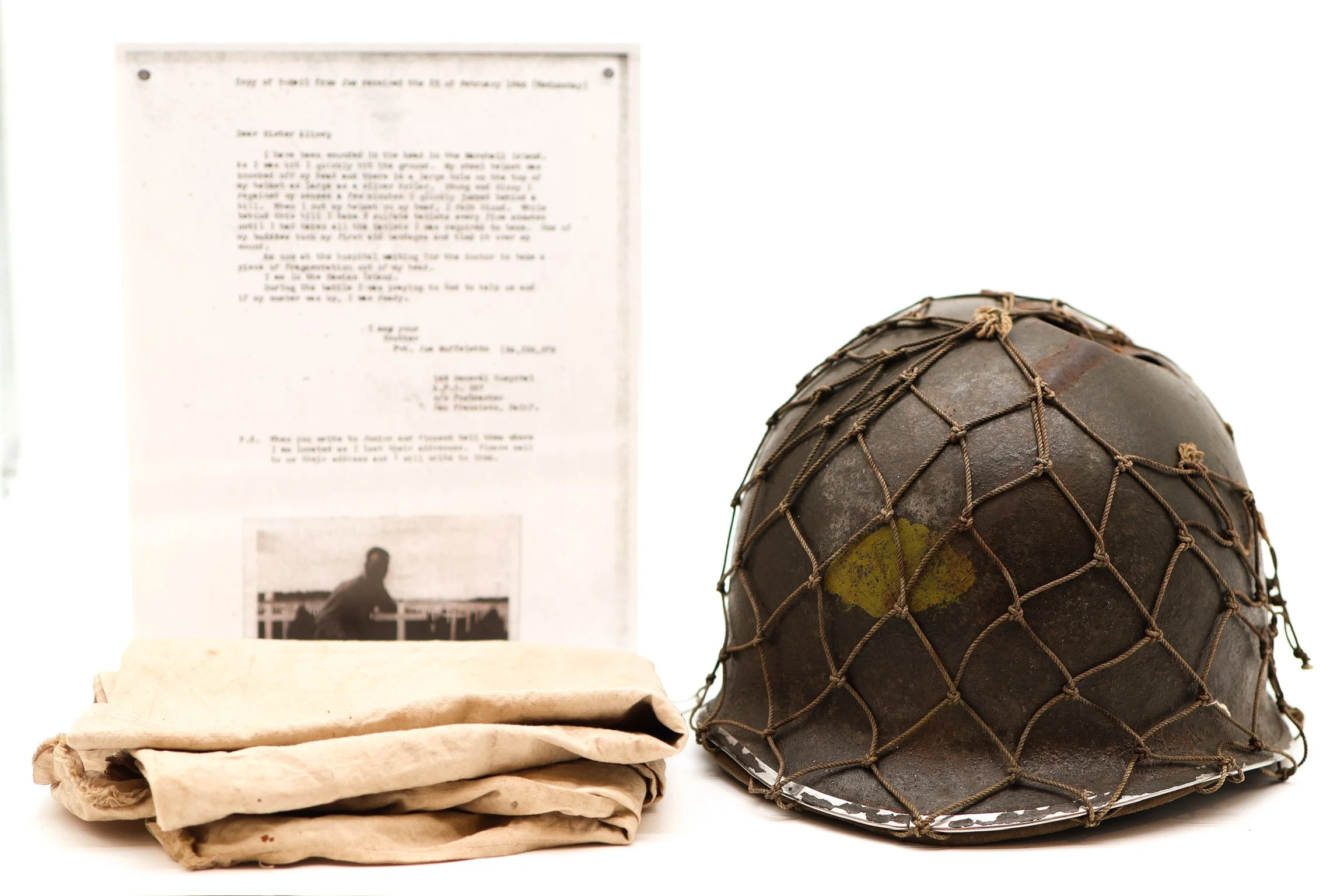
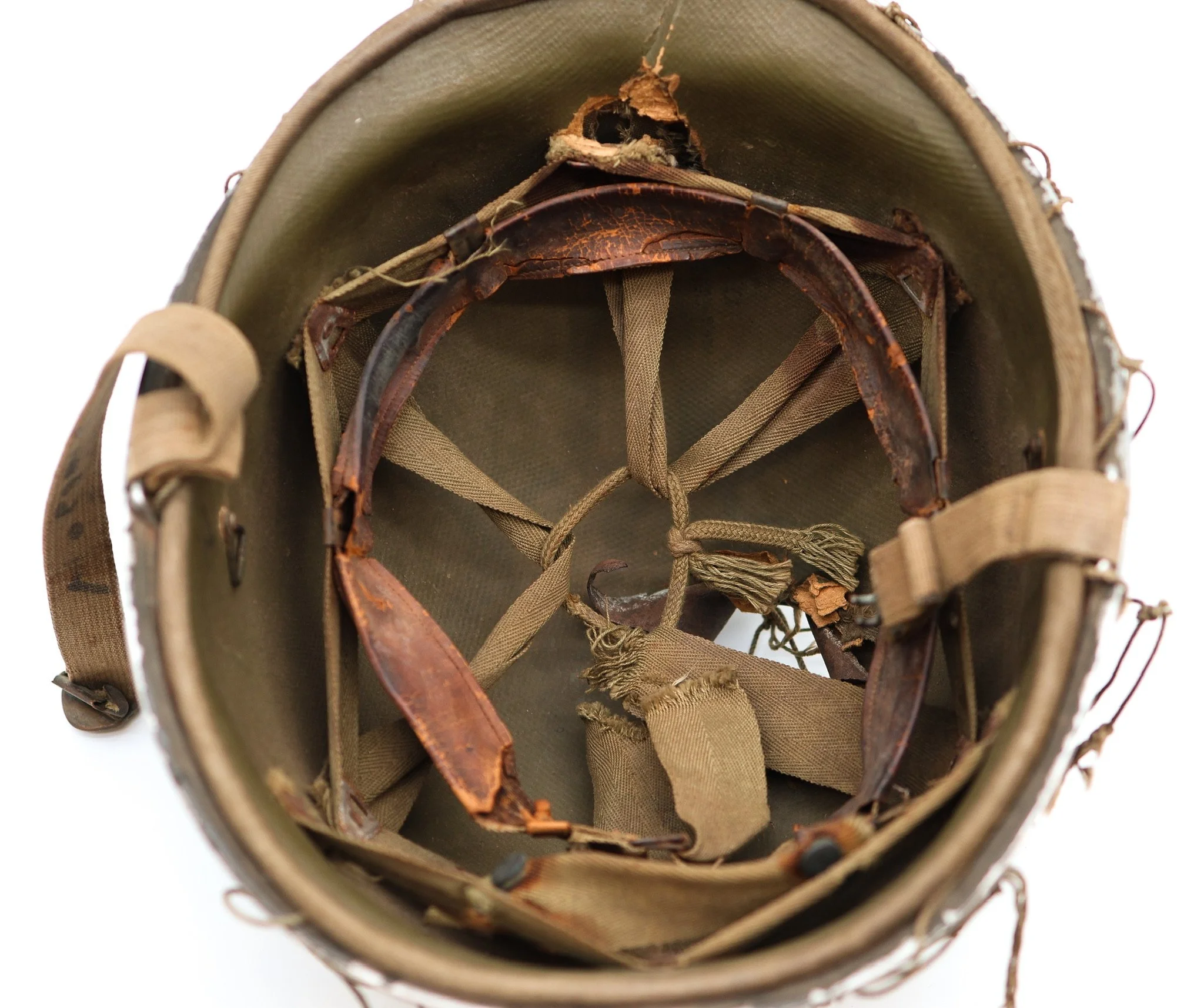
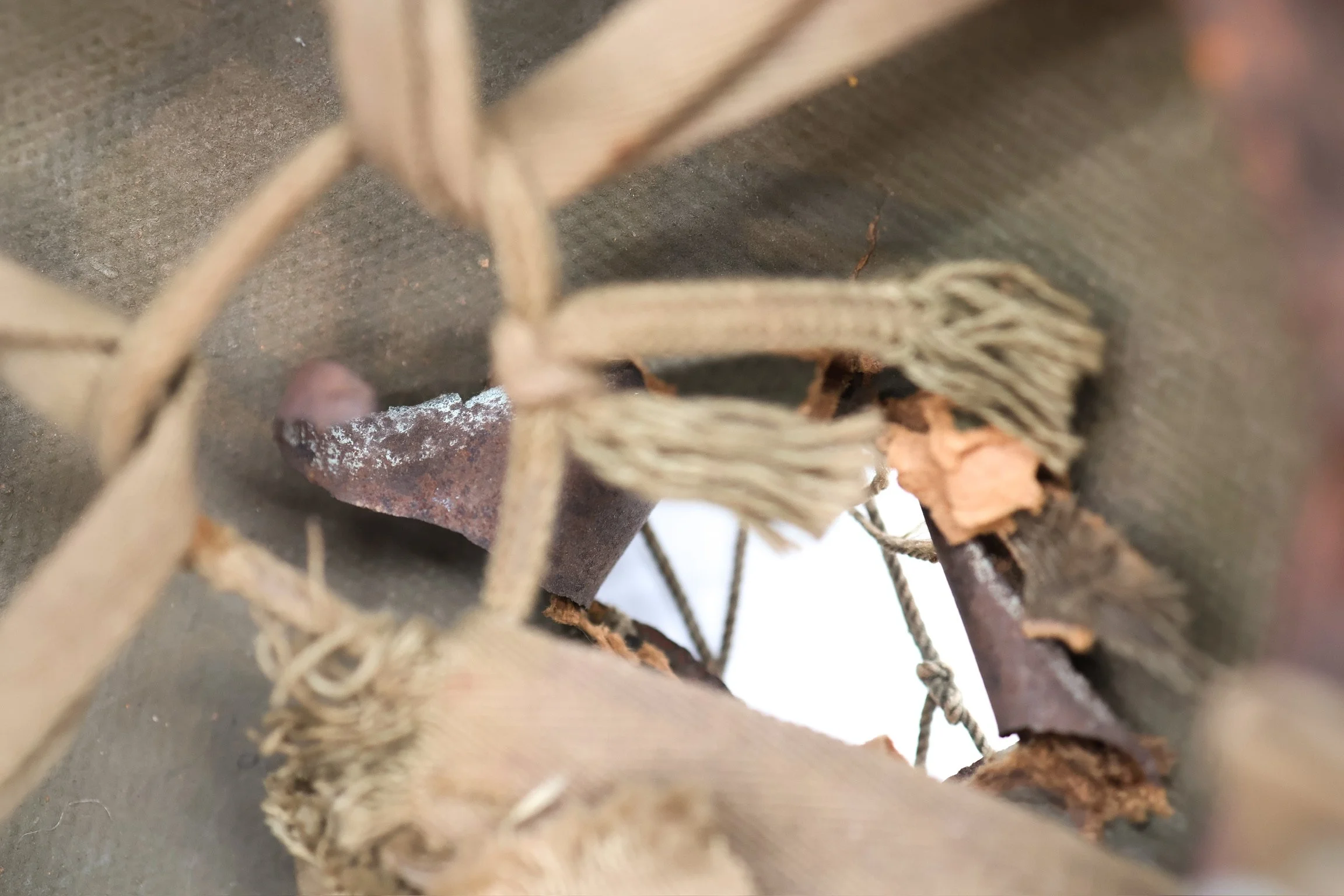
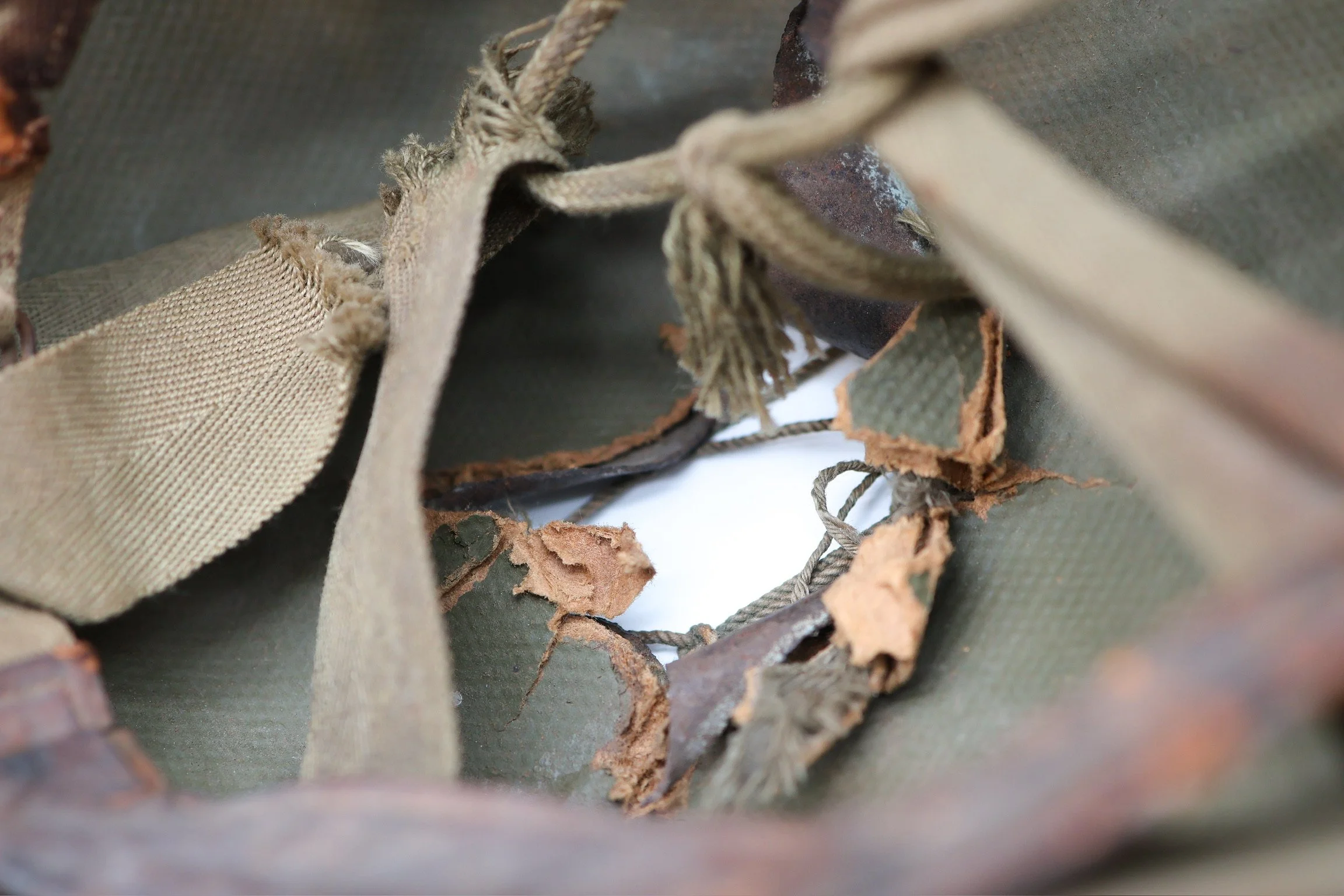
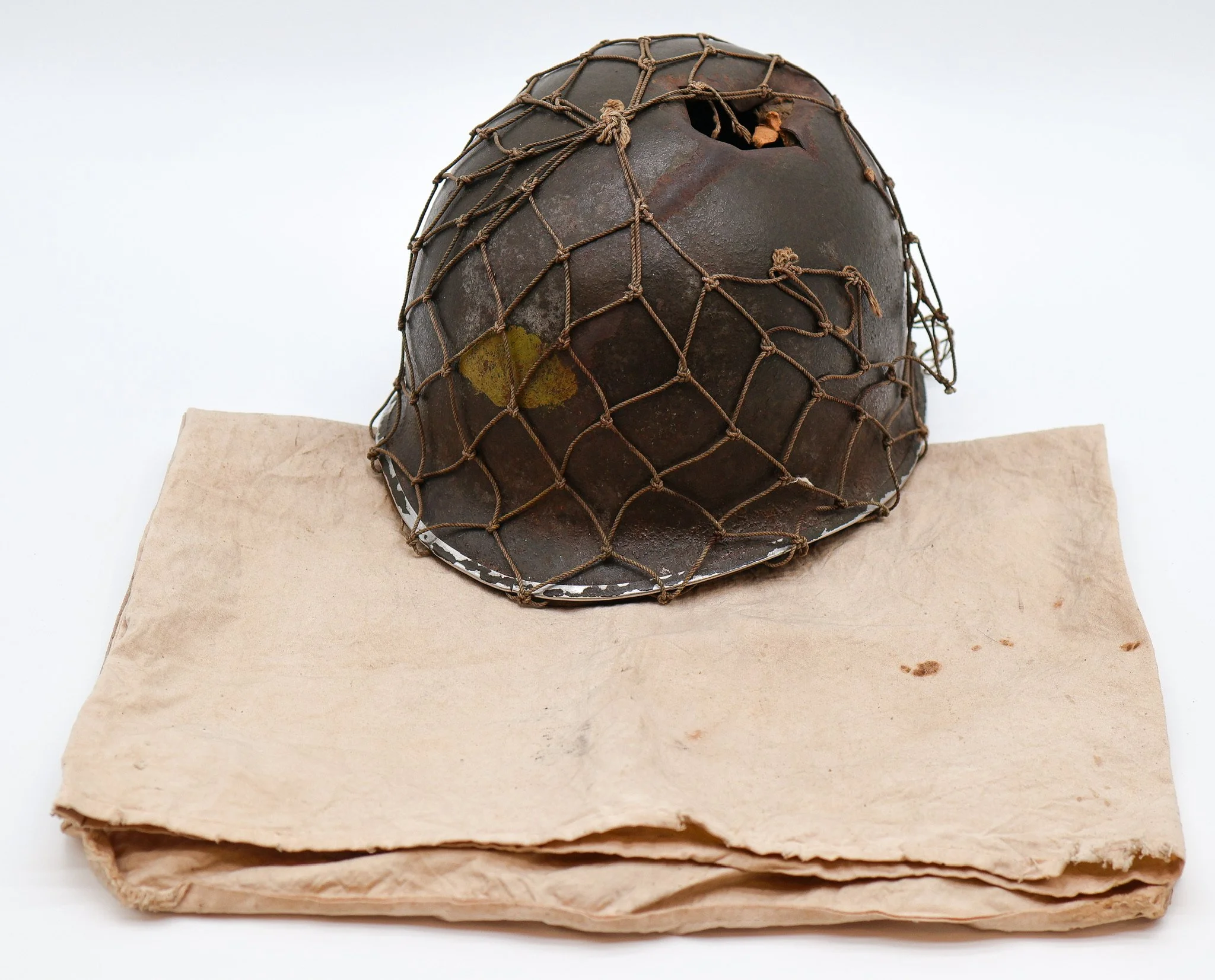
This M1 helmet was worn in combat by Private Joe Muffeletto, Company G, 184th Infantry Regiment, 7th Infantry Division, during the Kwajalein operation in the Marshall Islands. The helmet sustained direct battle damage when Muffeletto was wounded in action by shrapnel to the head while wearing it.
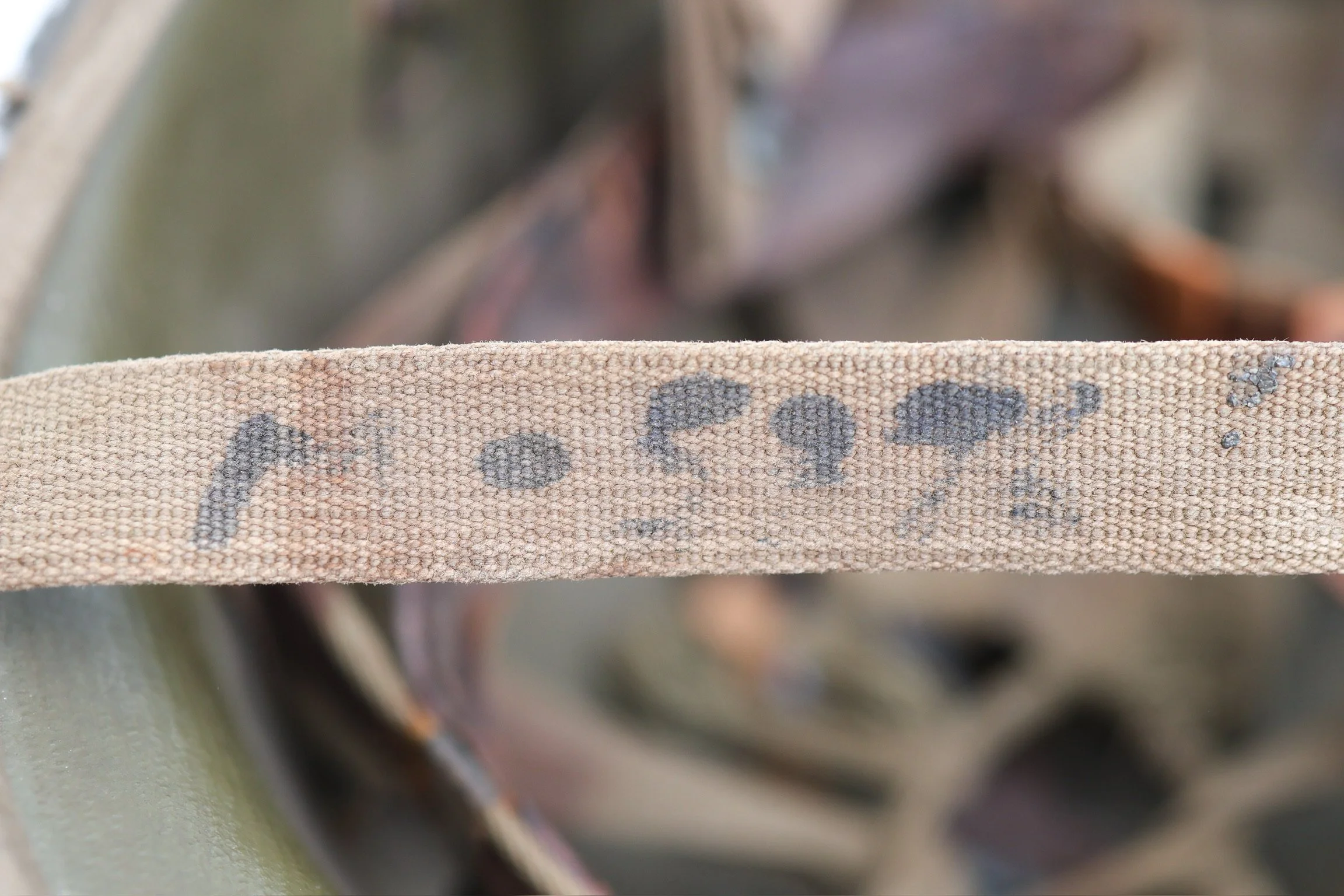
The impact was severe enough that the steel shell and liner became permanently fused together. The helmet and liner cannot be separated and have not been apart since the moment of damage. The helmet retains its wartime tactical marking and a captured Japanese helmet net applied in the field. Muffeletto’s laundry number is written on the chinstrap.
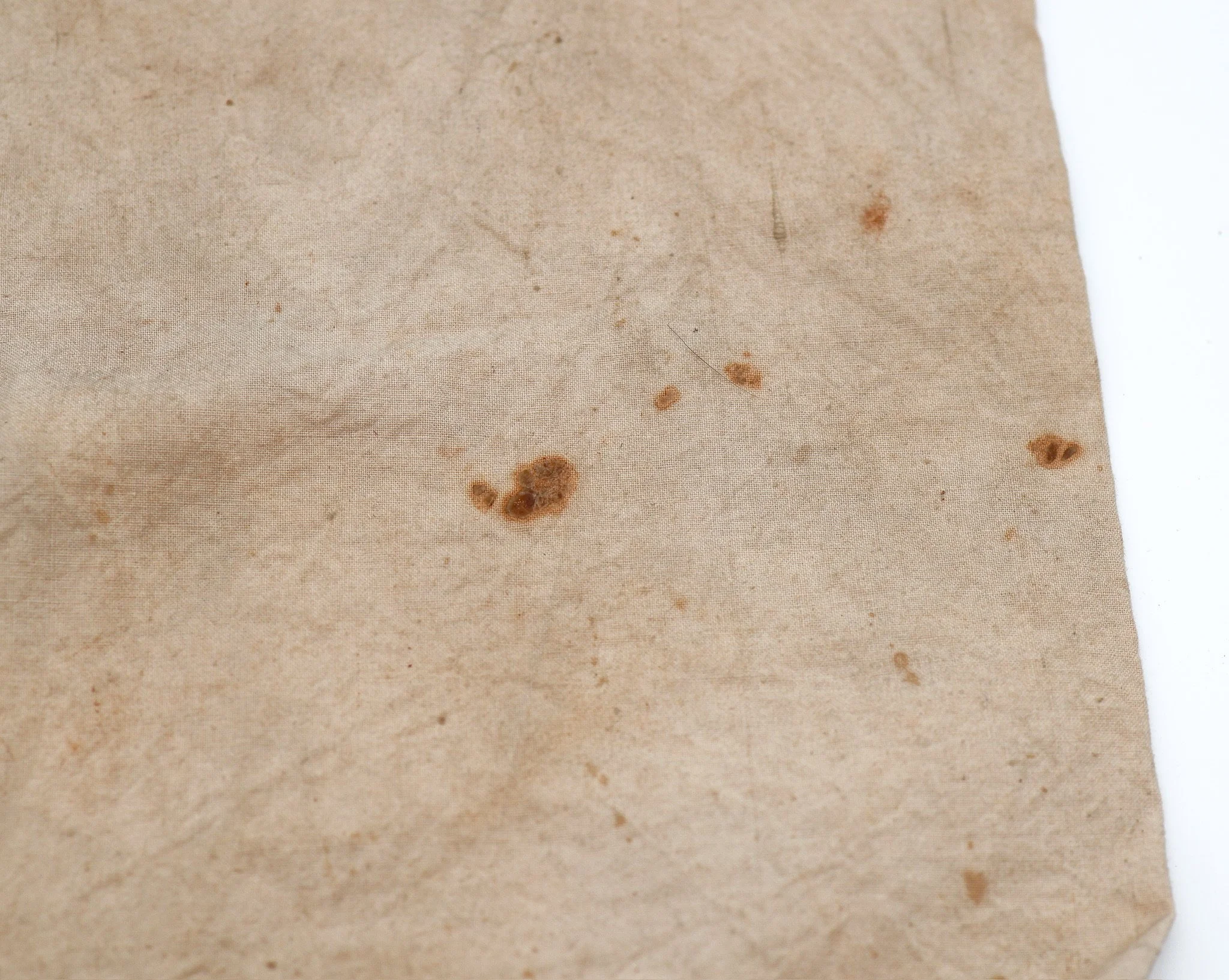
Following his wounding at Kwajalein, Muffeletto was hospitalized and underwent surgical removal of metal fragments from his head. He sent this helmet home from the hospital inside its original pillowcase, which remains with the helmet today and shows visible blood staining..
-
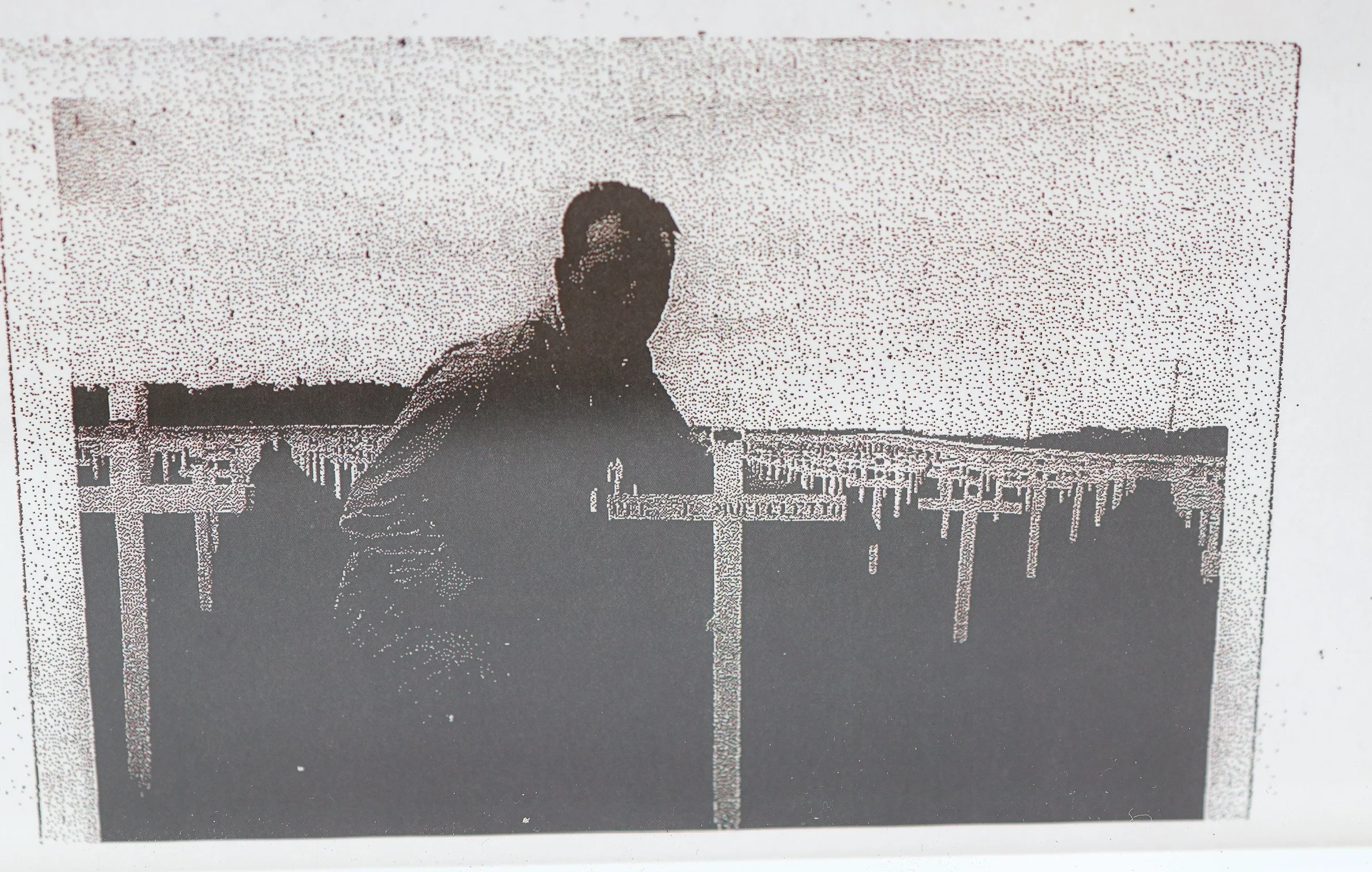
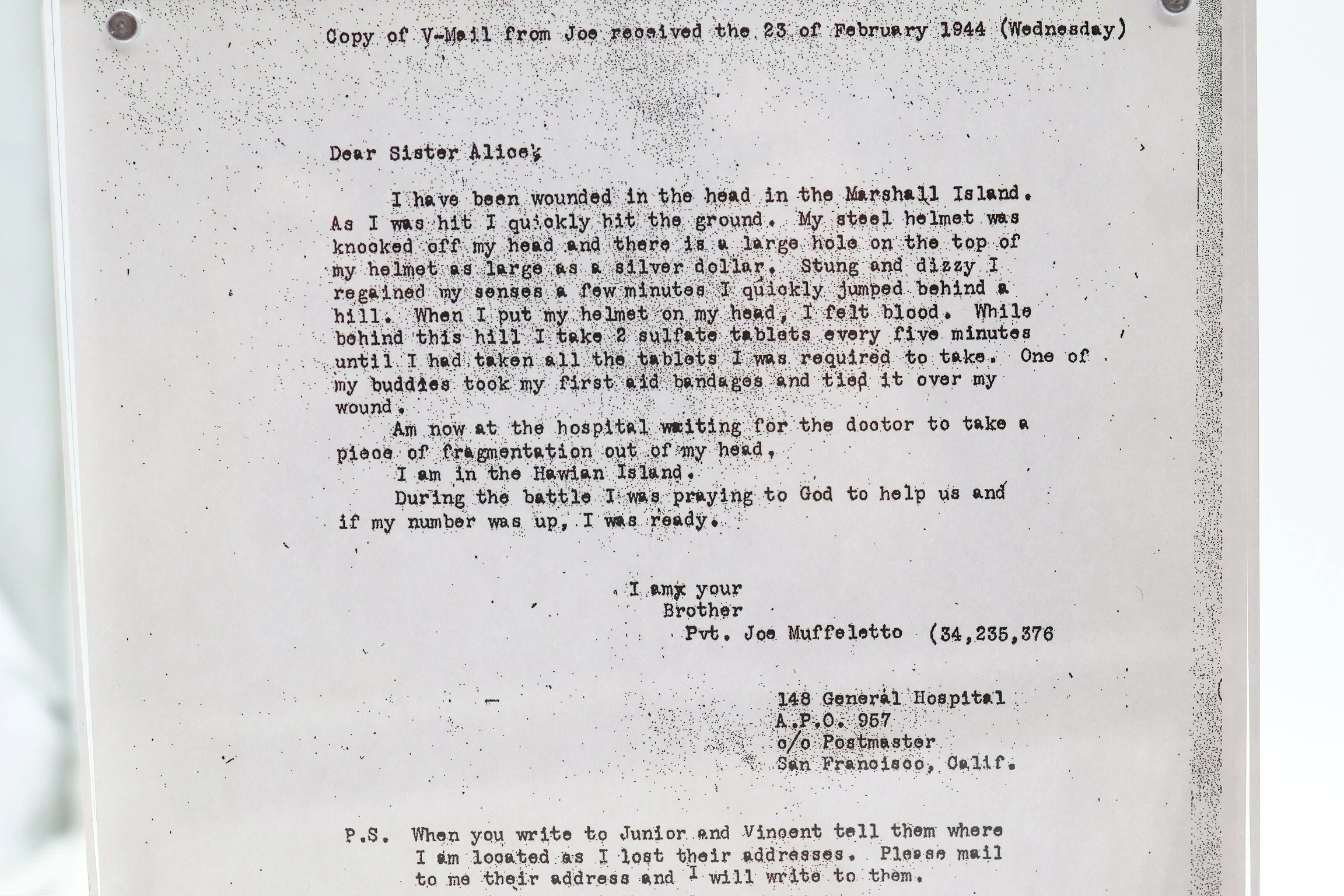
While hospitalized, Muffeletto wrote a letter to his sister describing the moment he was hit, the helmet being knocked from his head, and the circumstances of his wound. The helmet, pillow case, and additional documentation were sold by the family years ago.
After recovering from his wounds, Muffeletto returned to duty. He was later killed in action on Okinawa on April 8, 1945, after being struck by artillery shell fragments to the chest. Born May 24, 1910, he was 34 years old at the time of his death.
Letter Transcript (verbatim)
Dear Sister Alice,
I have been wounded in the head in the Marshall Island.
As I was hit I quickly hit the ground. My steel helmet was knocked off my head and there is a large hole on the top of my helmet as large as a silver dollar. Stung and dizzy I regained my senses a few minutes. I quickly jumped behind a hill.When I put my helmet on my head, I felt blood. While behind this hill I take 2 sulfate tablets every five minutes until I had taken all the tablets I was required to take. One of my buddies took my first aid bandages and tied it over my wound.
Am now at the hospital writing for the doctor to take a piece of fragmentation out of my head.
I am in the Hawaiian Island.
During the battle I was praying to God to help us and if my number was up, I was ready.
I am your
Brother
Pvt. Joe Muffeletto
(34,235,376)
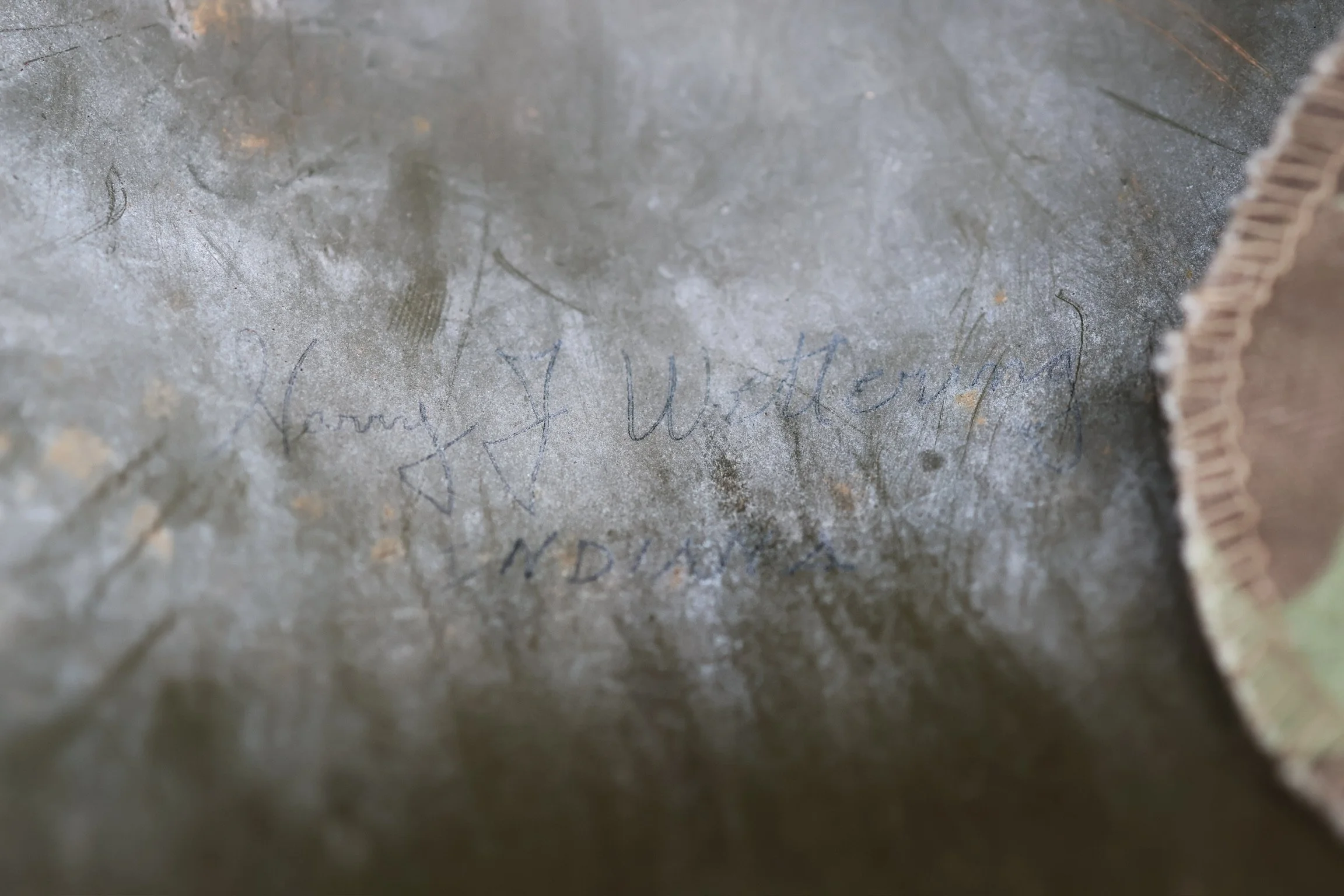
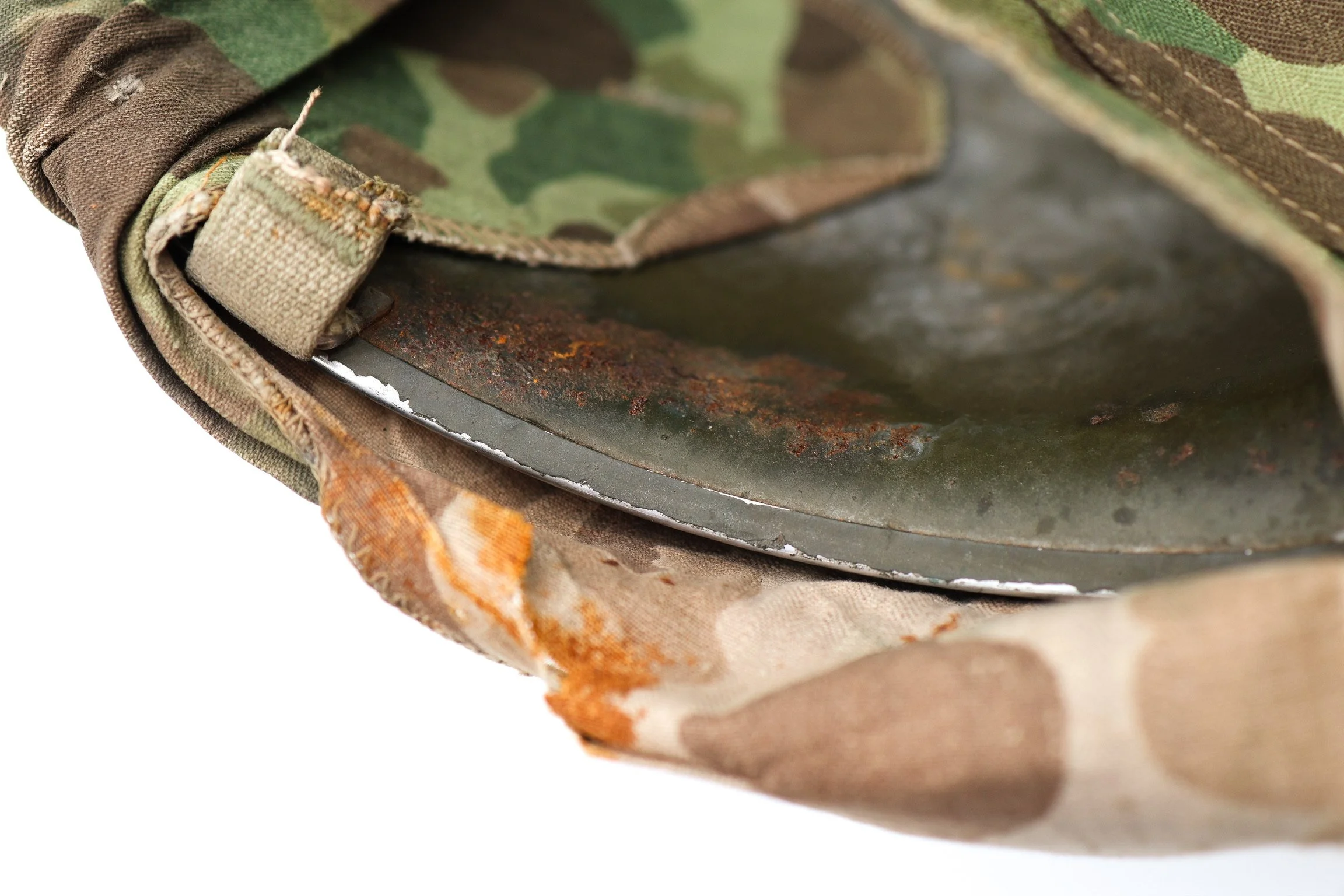
M1 Helmet ID’ed to Sgt. Harry J. Wettering, 2nd MarDiv
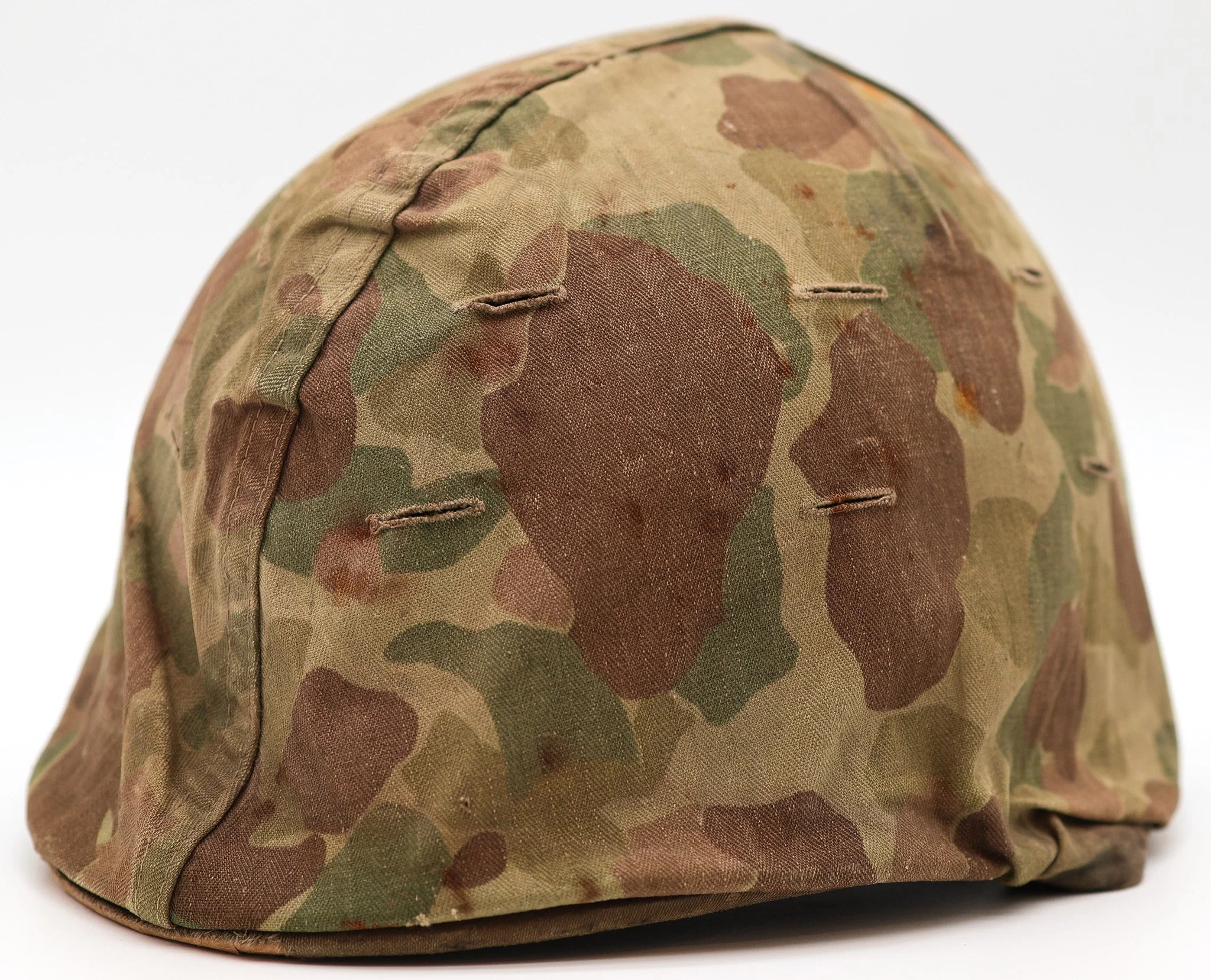
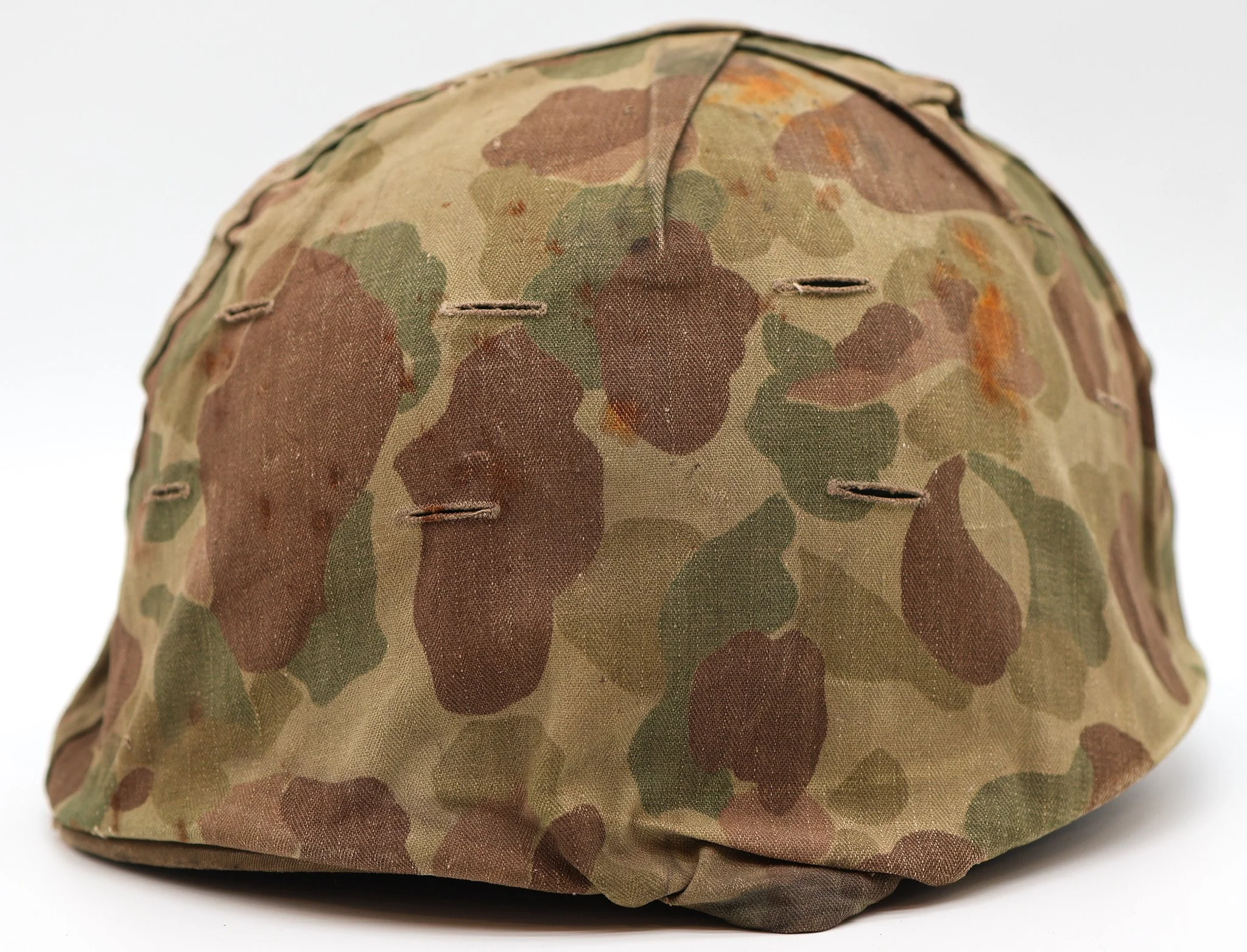
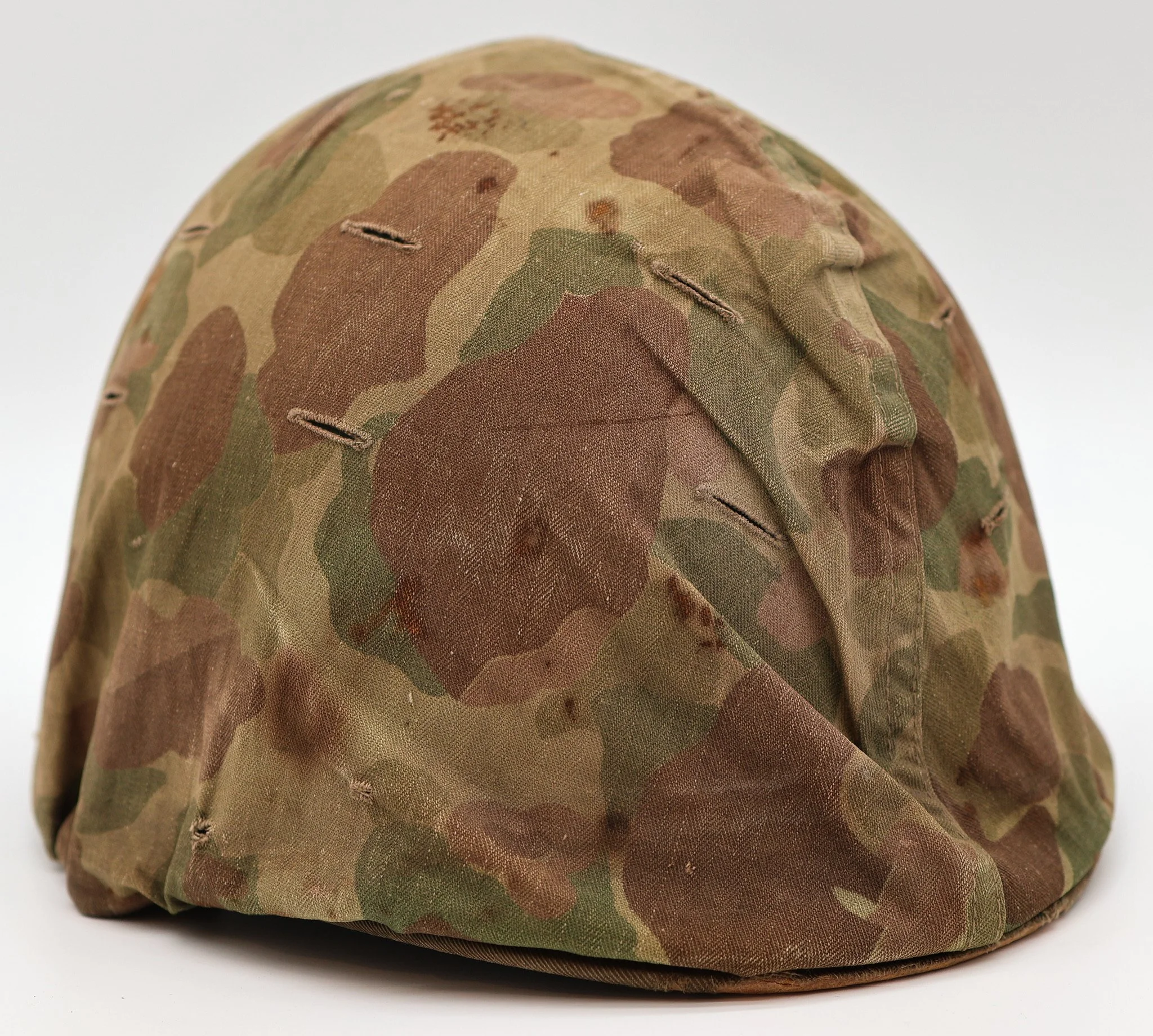
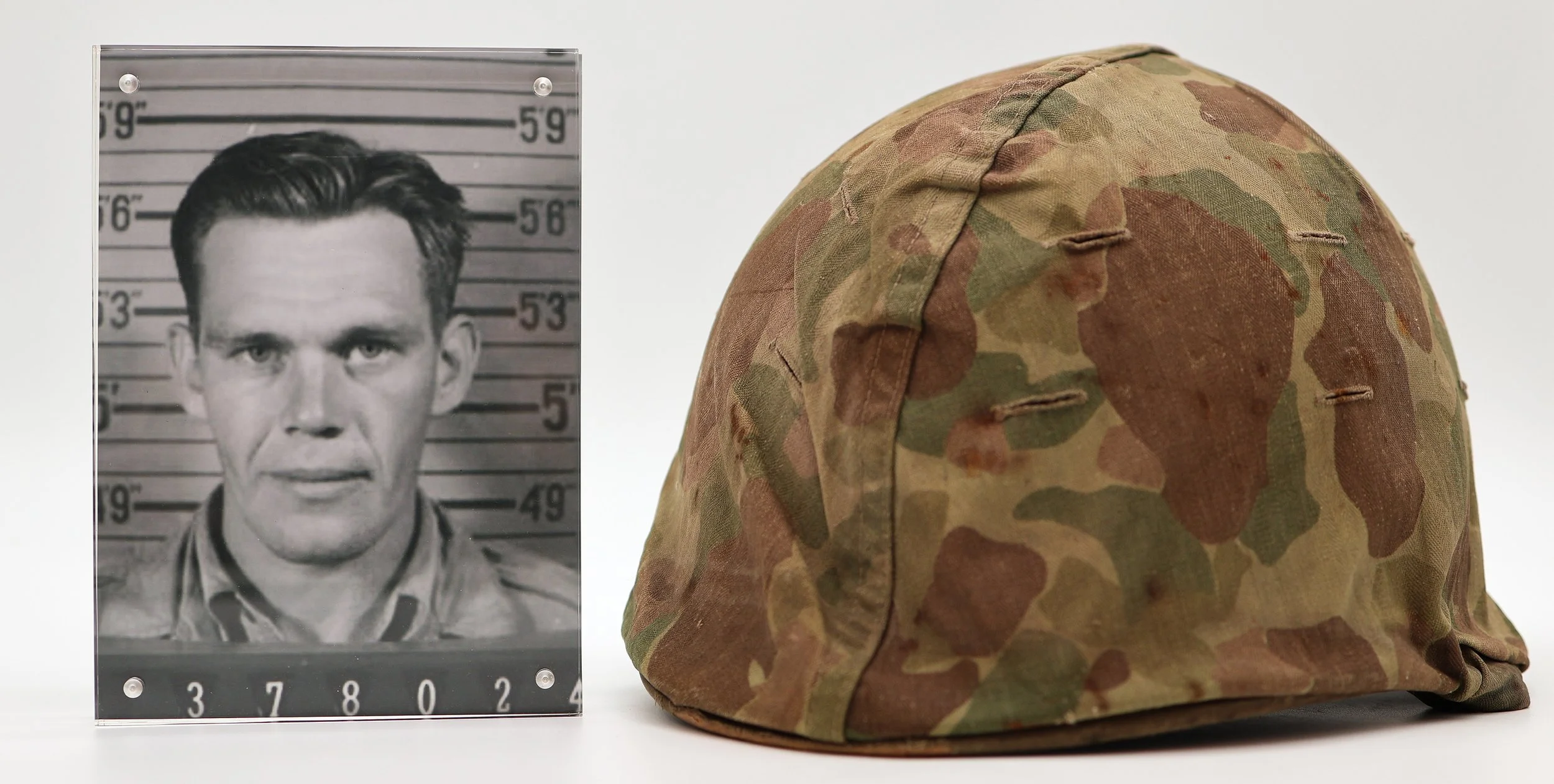
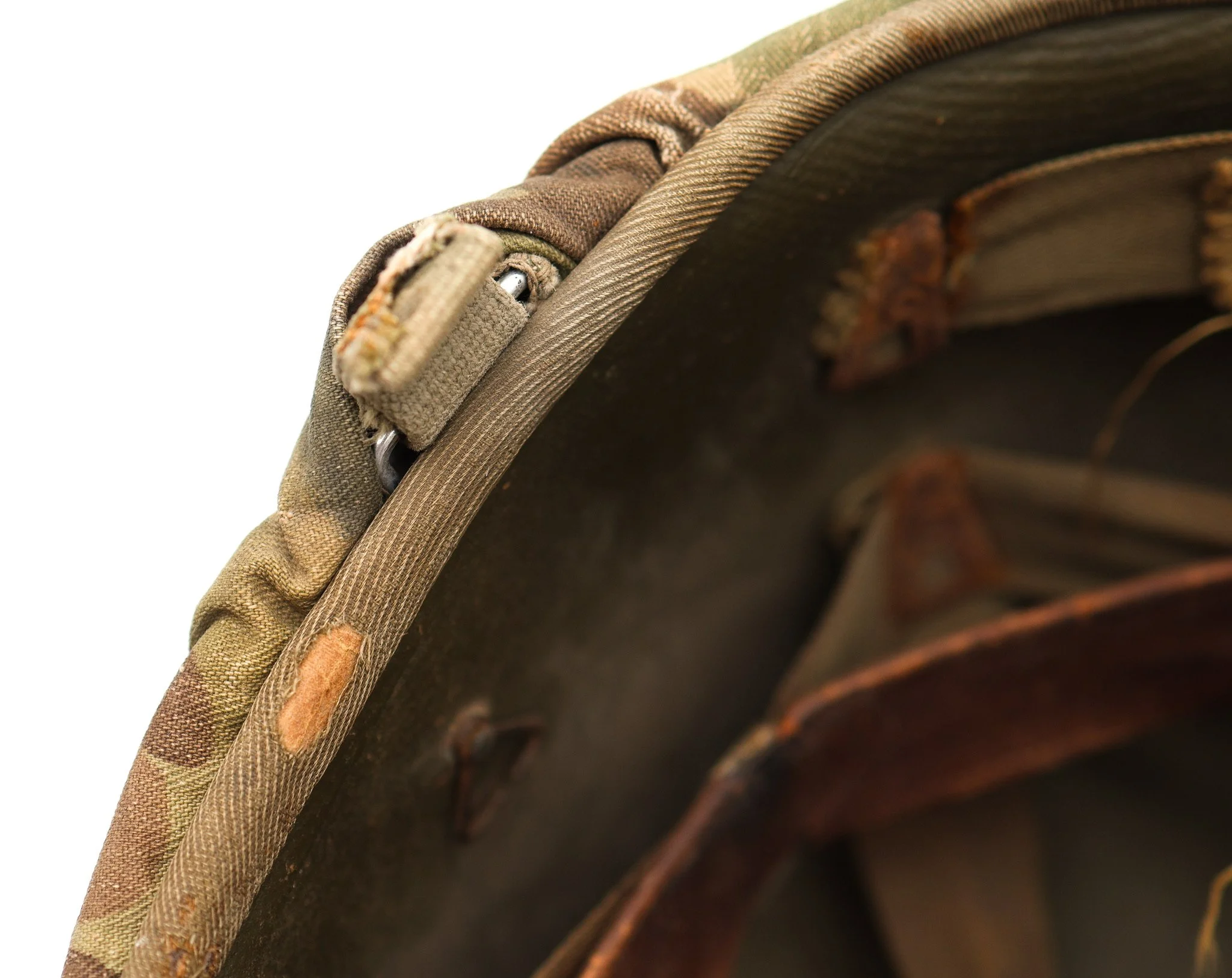
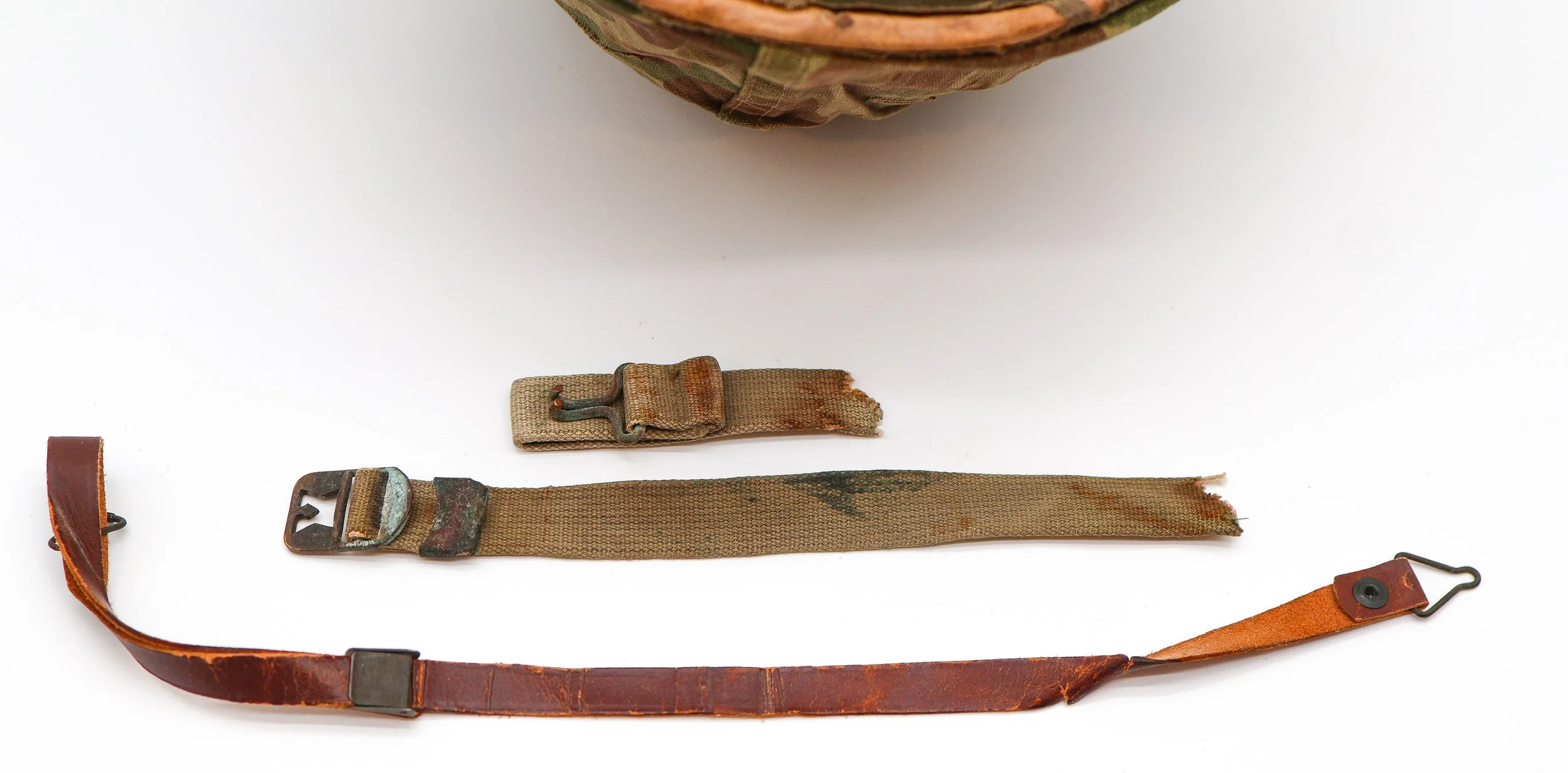
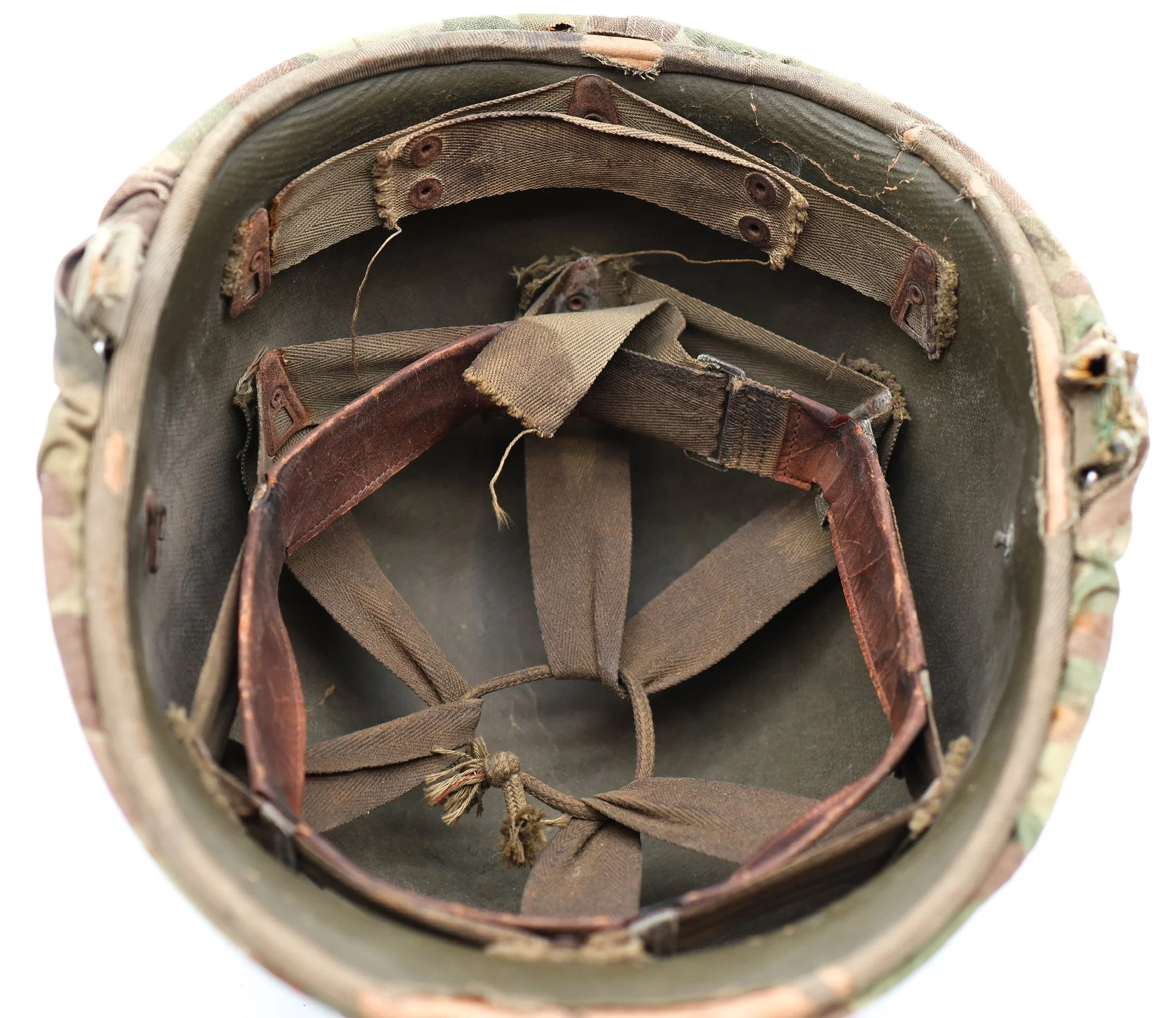
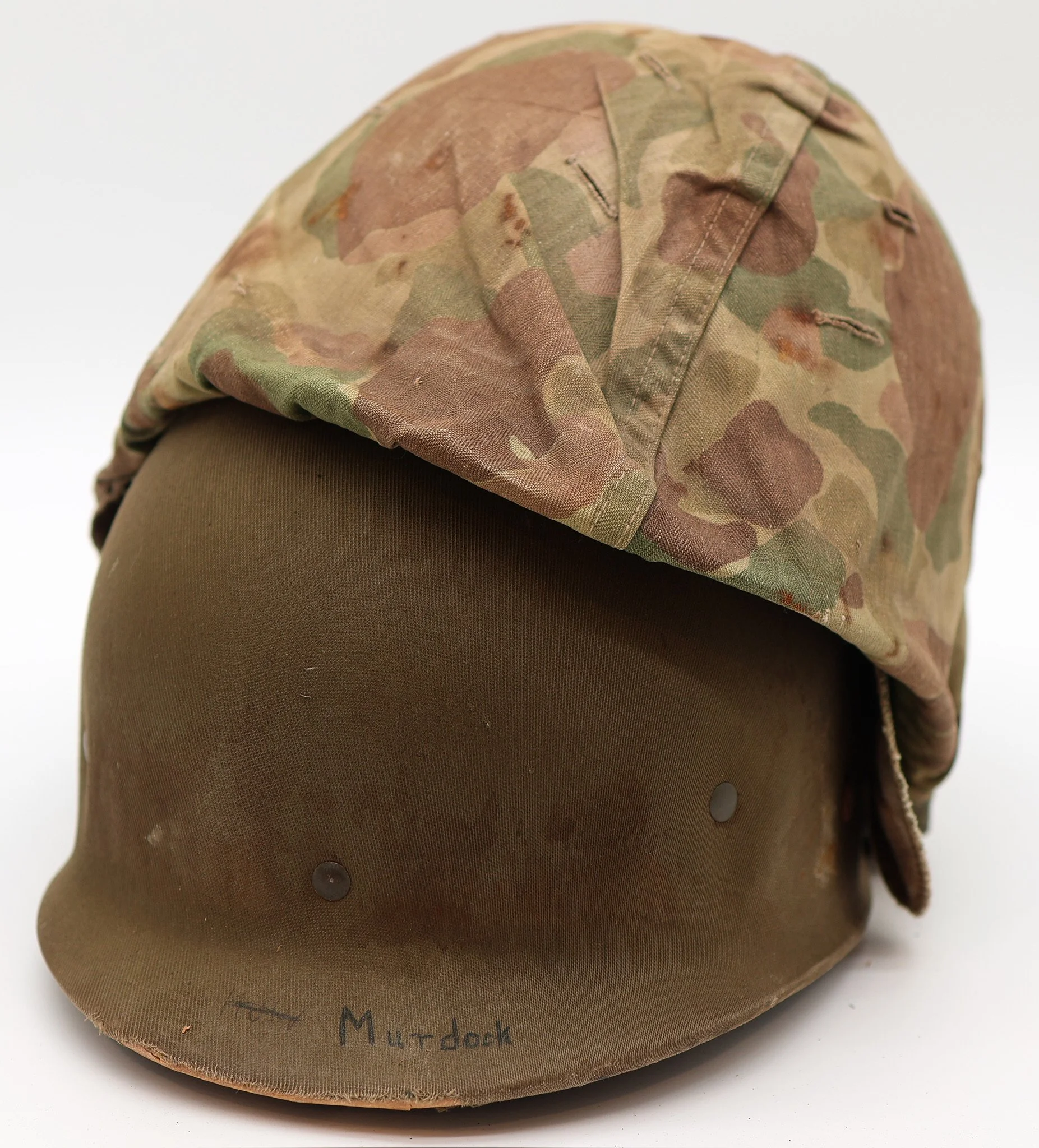
This U.S. M1 helmet with its original Marine Corps camouflage cover was worn by Sergeant Harry J. Wettering while serving with Company B, 1st Battalion, 8th Marines, 2nd Marine Division during World War II. Wettering enlisted in 1942 and served as a Browning Automatic Rifle (BAR) gunner, a role that placed him at the forefront of some of the most intense combat in the Pacific Theater.
Wettering first saw combat on Guadalcanal, where Marines fought to secure the island against entrenched Japanese forces in dense jungle terrain. He later participated in the Battle of Tarawa in November 1943, one of the bloodiest amphibious assaults in Marine Corps history. Following Tarawa, Wettering continued his combat service during the Saipan campaign in 1944…
-
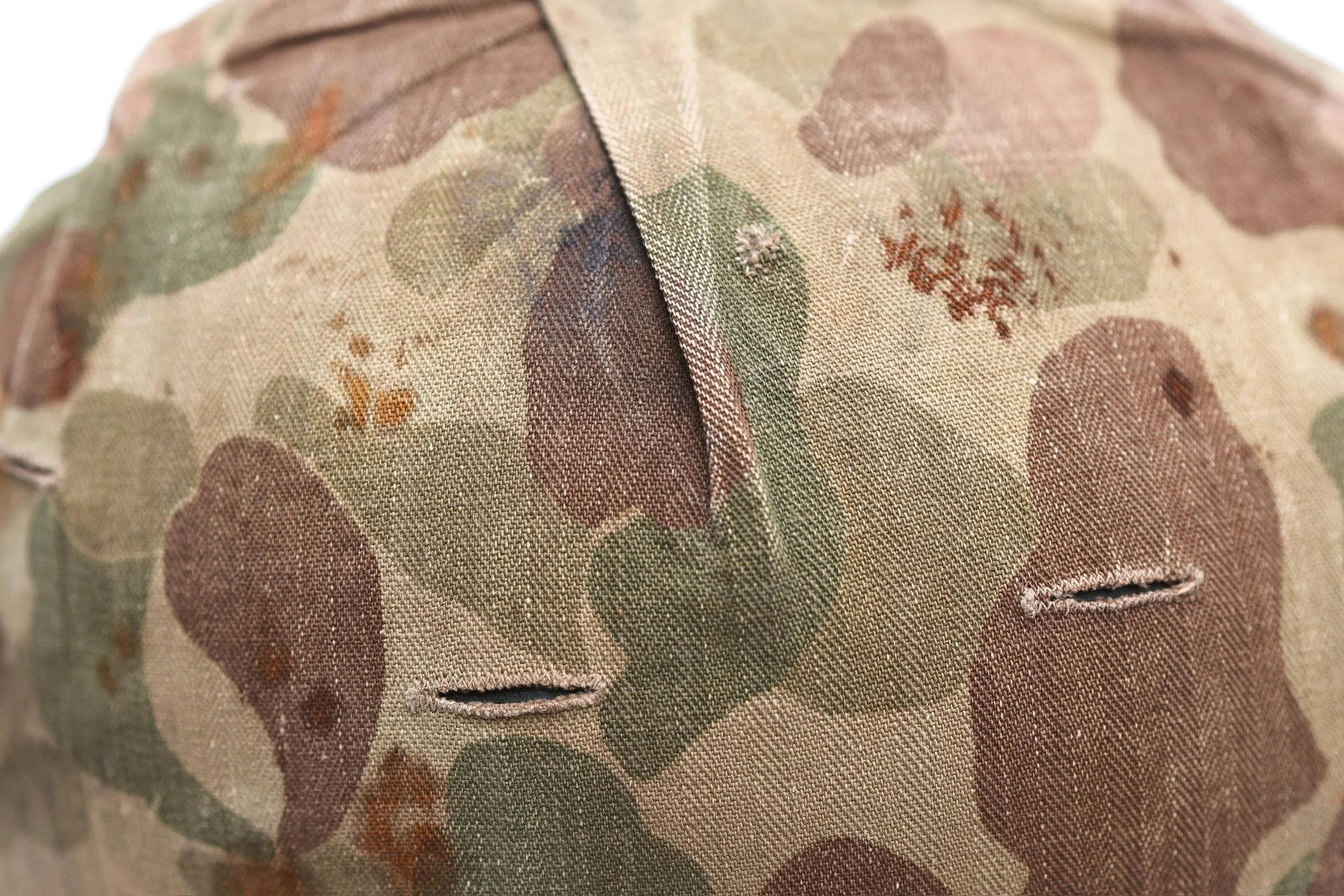
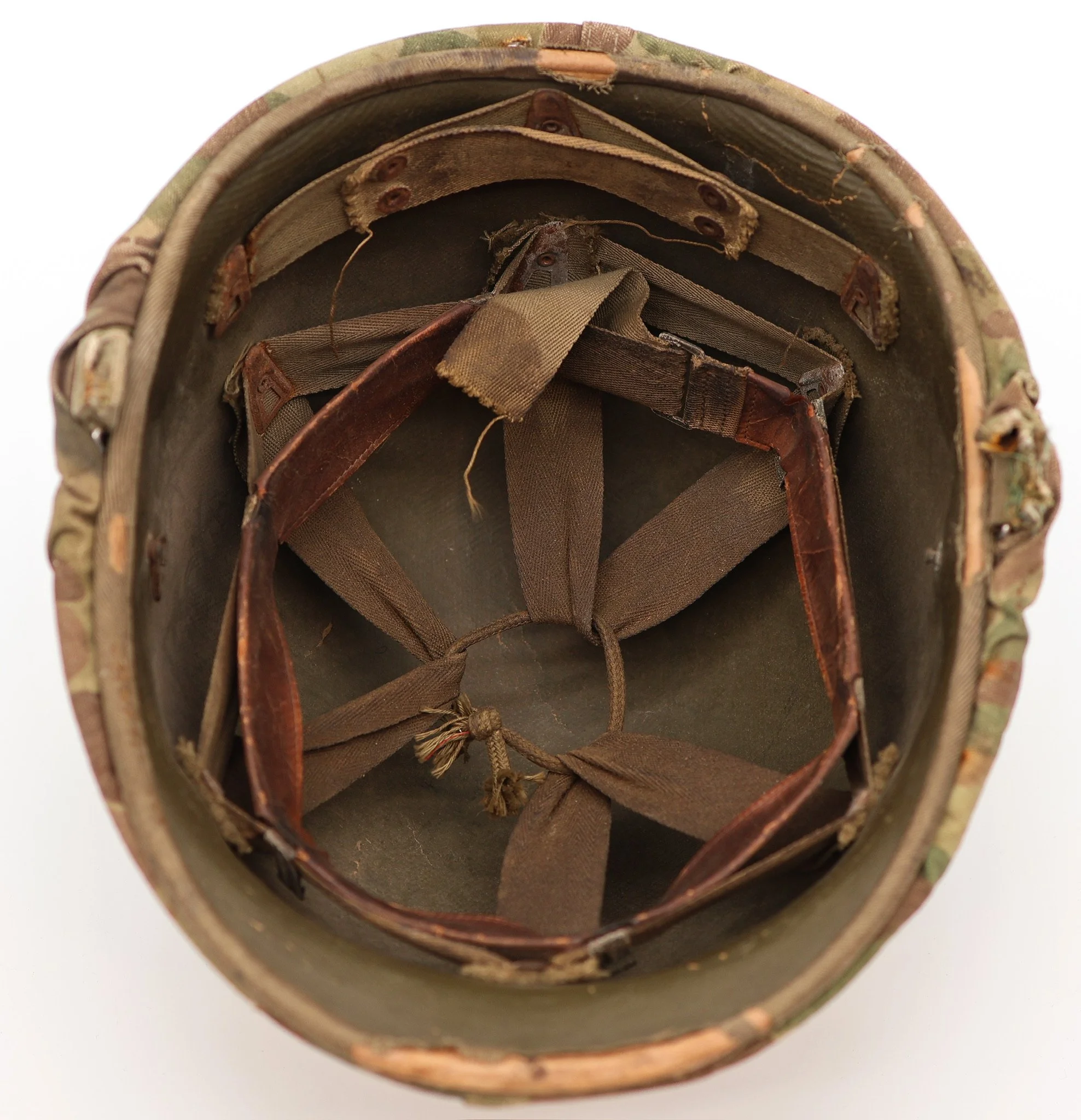
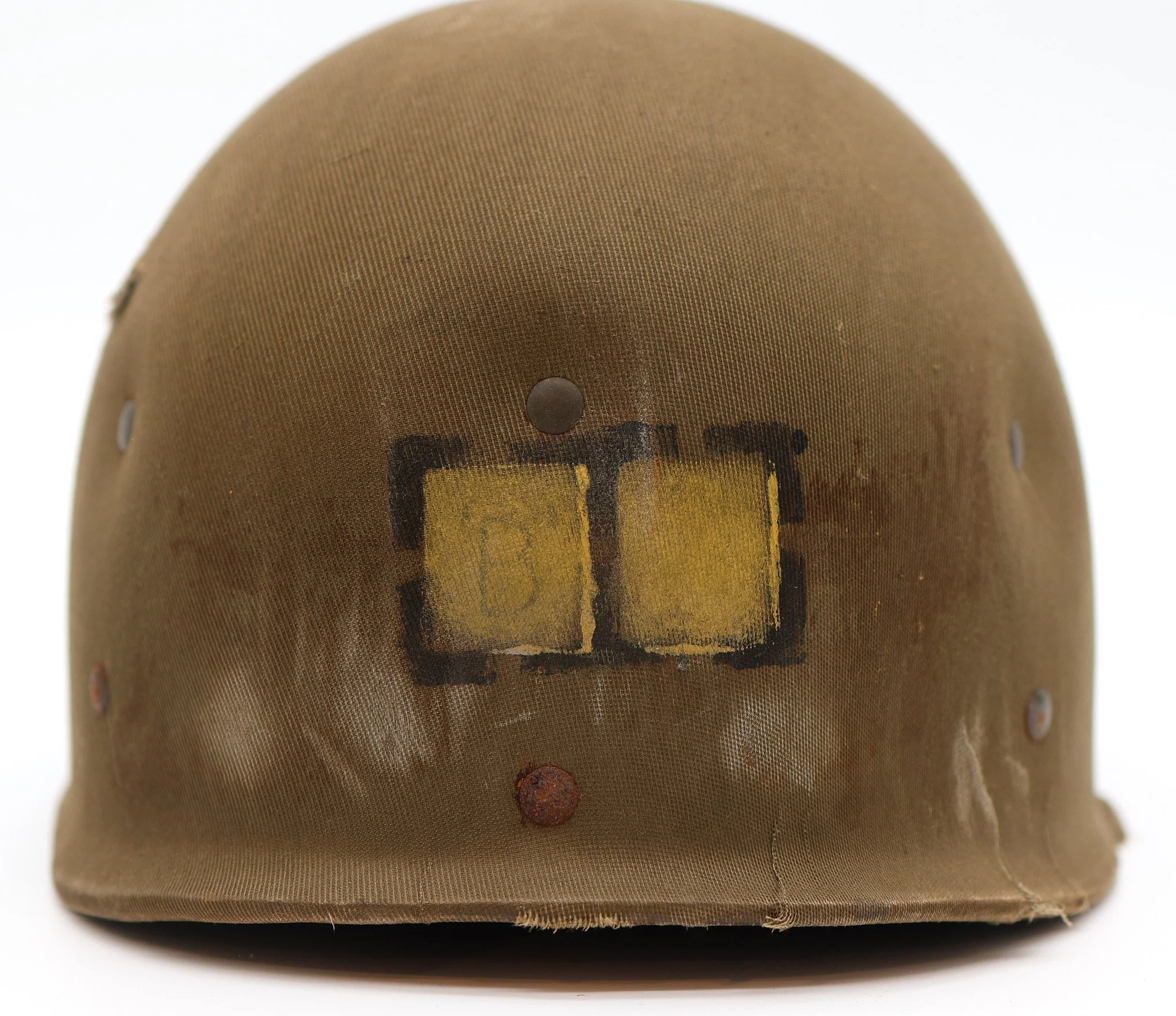
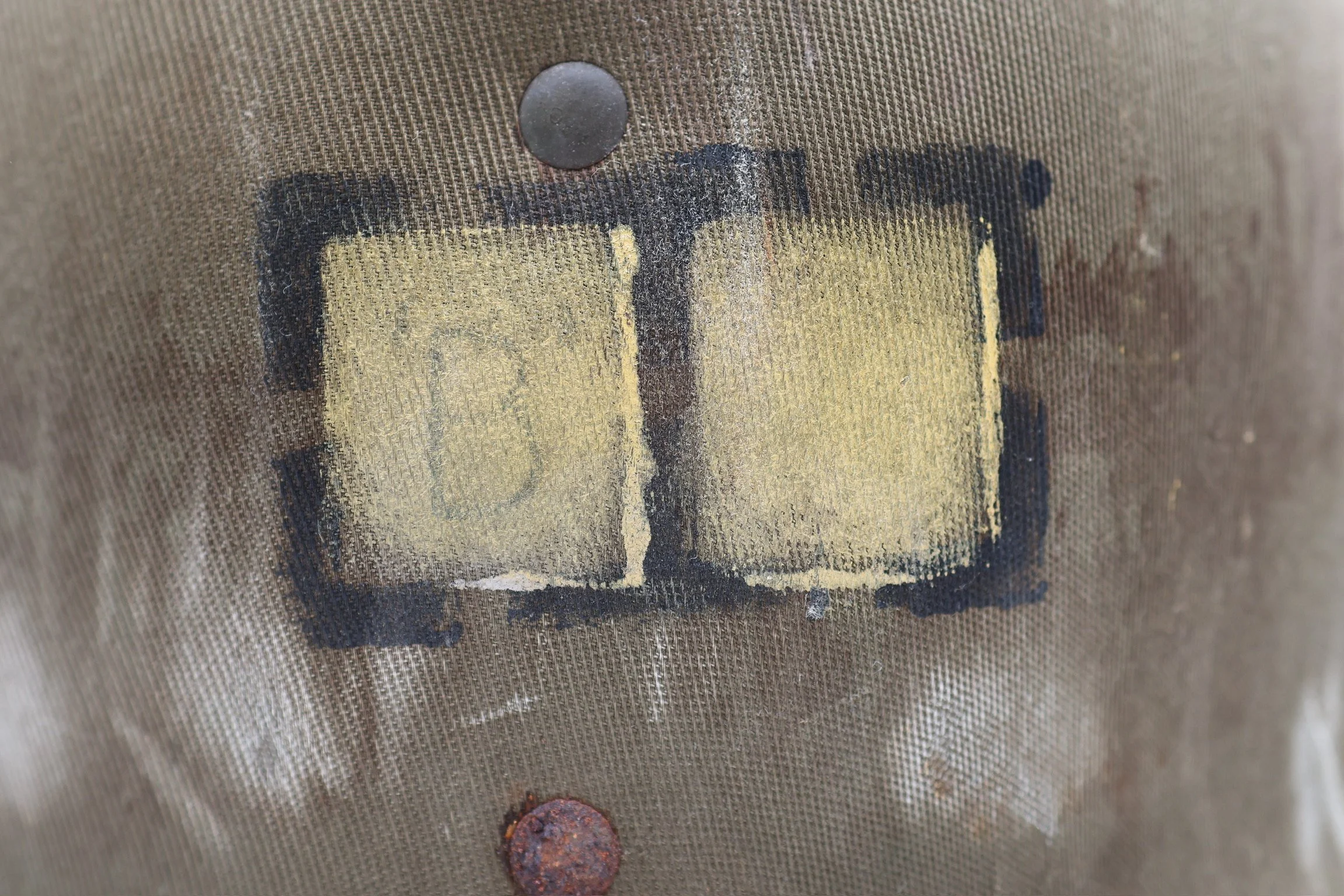
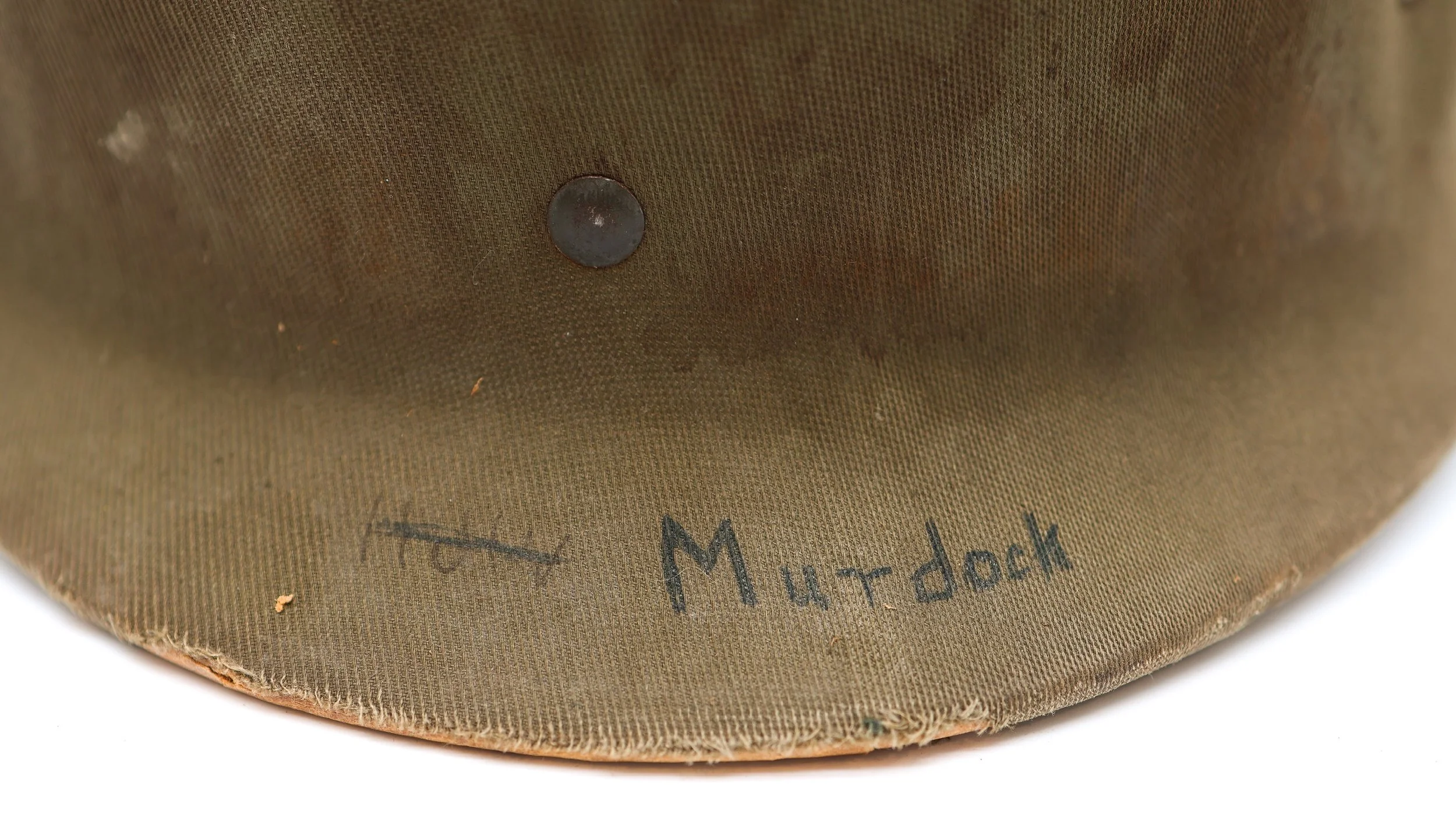
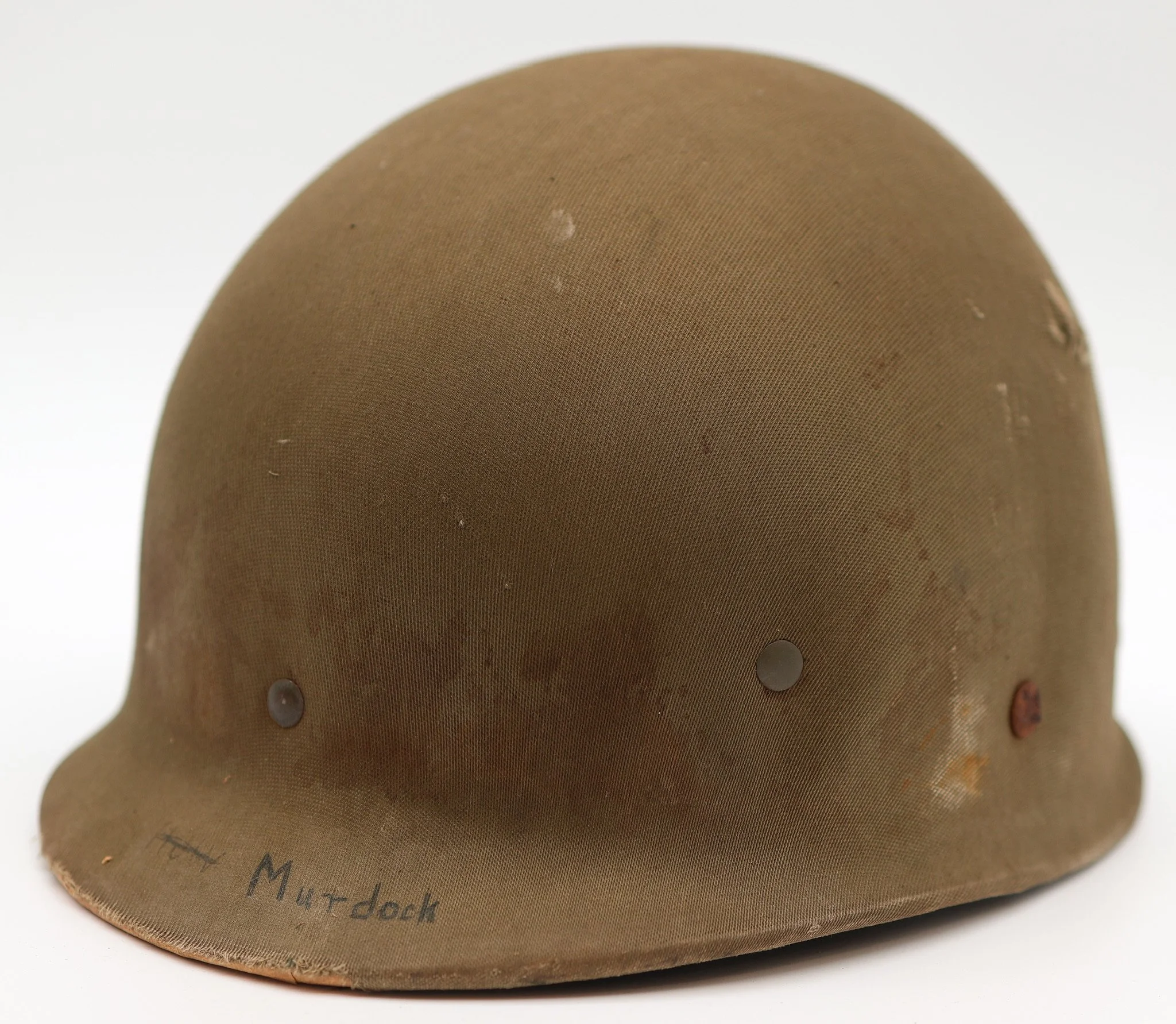
The helmet retains its original Marine Corps camouflage cover. A yellow tactical marking on the Hawley liner corresponds to the 8th Marines and would have been used for unit identification during amphibious landings and jungle operations. The shell is marked with Wettering’s name. The liner bears the name “Murdock” along with an 8th Marines tactical marking; John B. Murdock was an officer in Company B, and it is believed Wettering acquired the liner from Lt. Murdock during his service. Wear and patina throughout are consistent with extended field use across multiple major Pacific campaigns.
After the war, Wettering returned to Batesville, Indiana, where he lived a quiet life and rarely spoke about his wartime experiences. He passed away on January 23, 1993. The helmet was acquired from his family in Florida by a collector, from whom the Artifacts of Valor collection later acquired it.
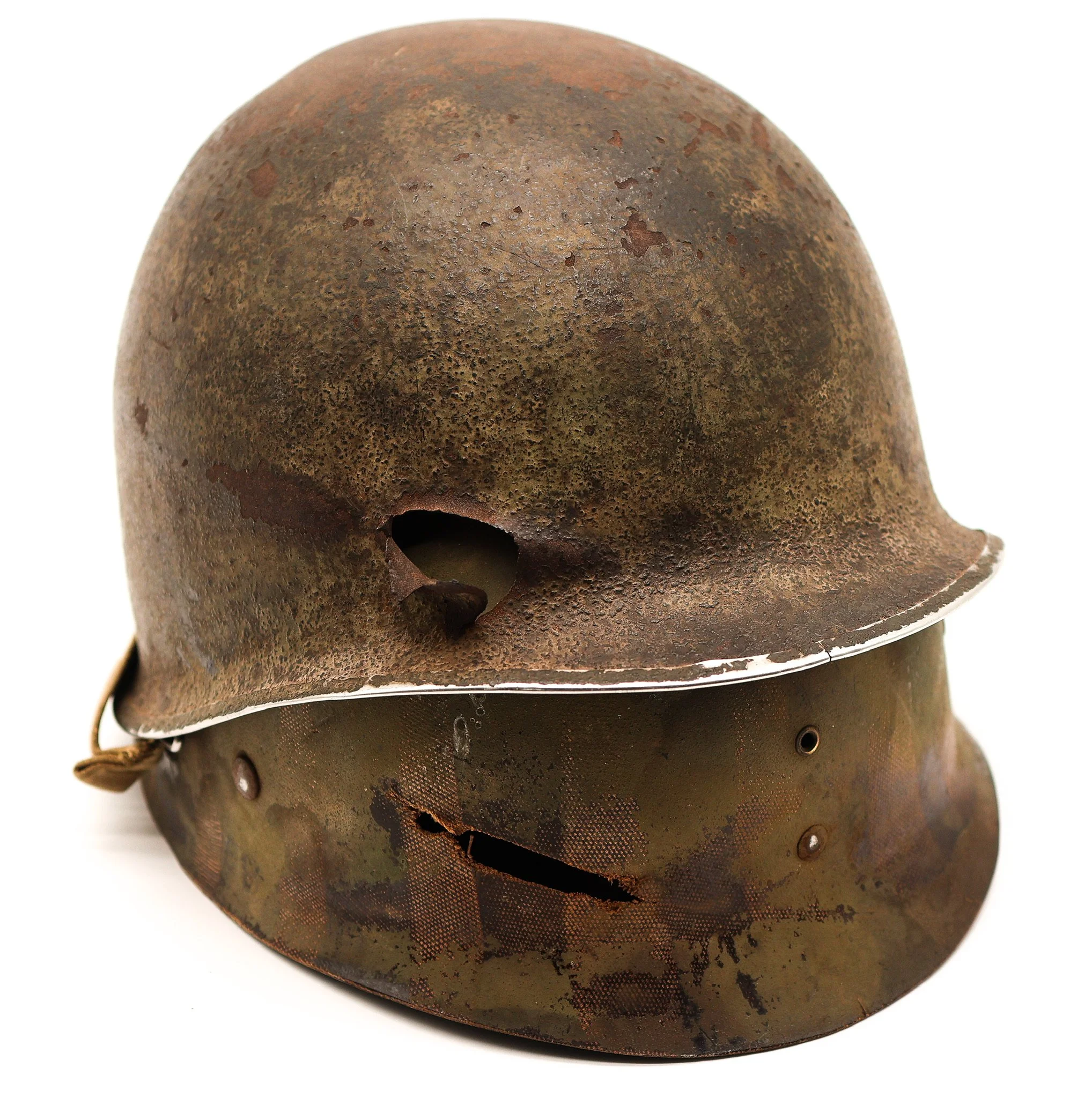
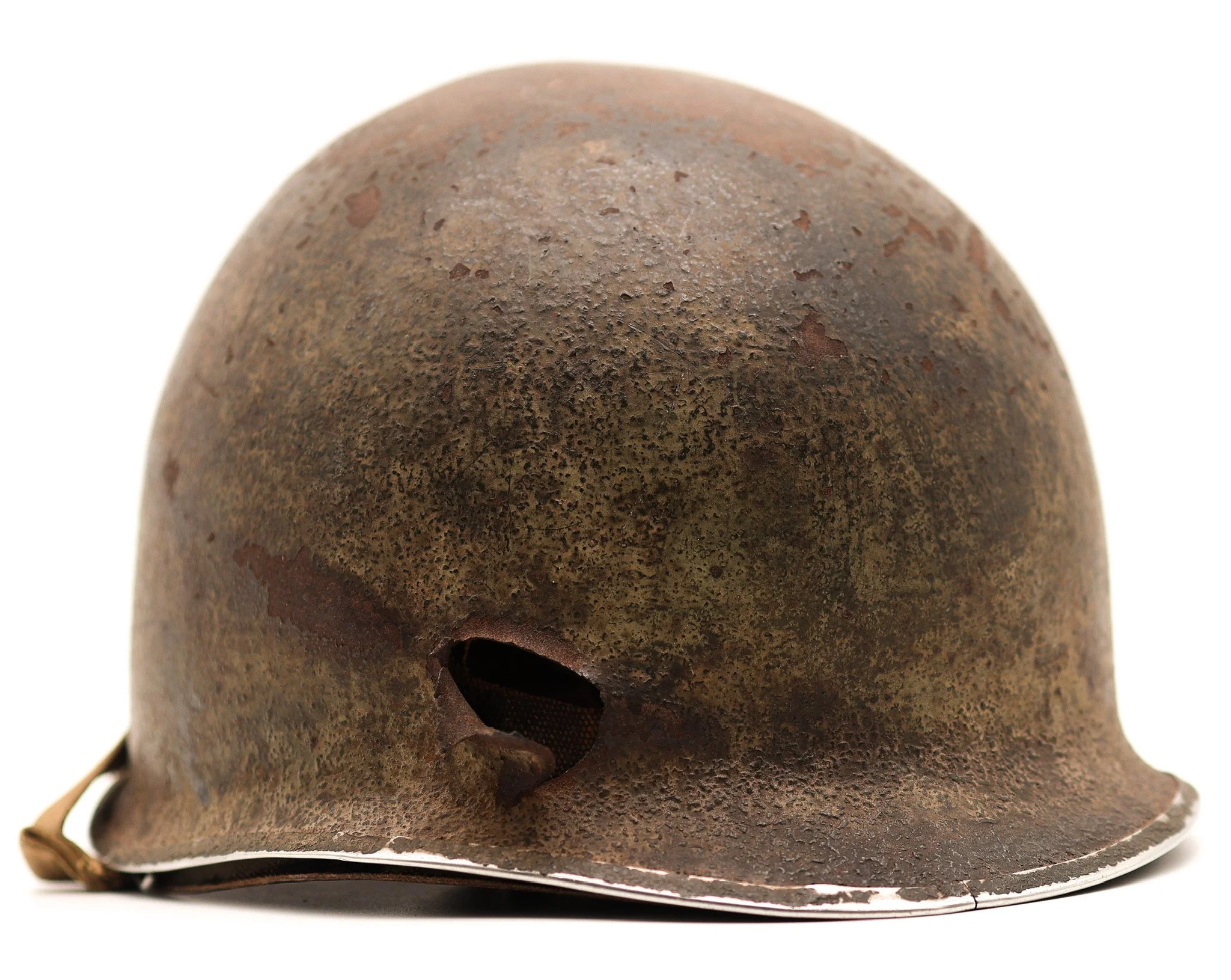
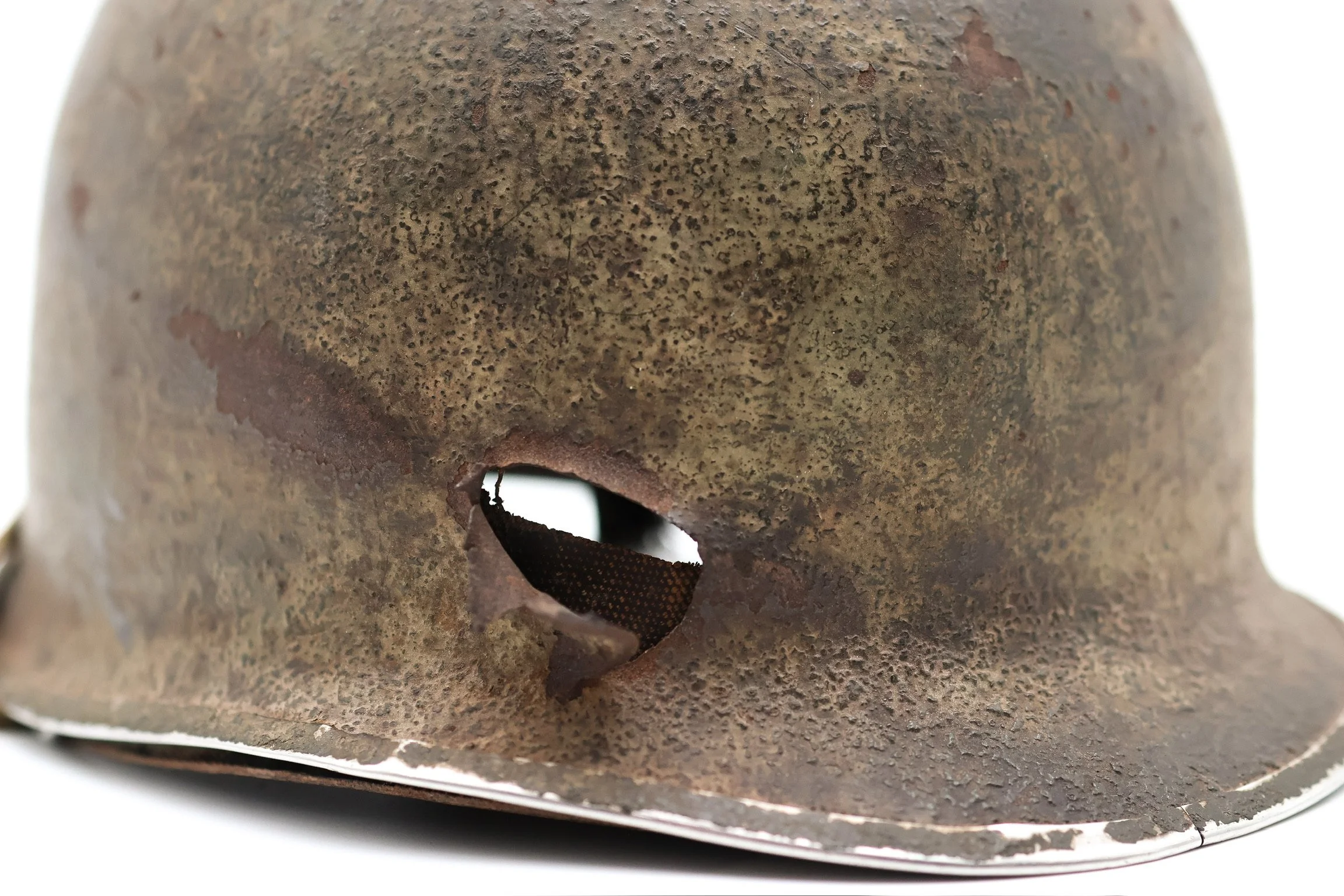
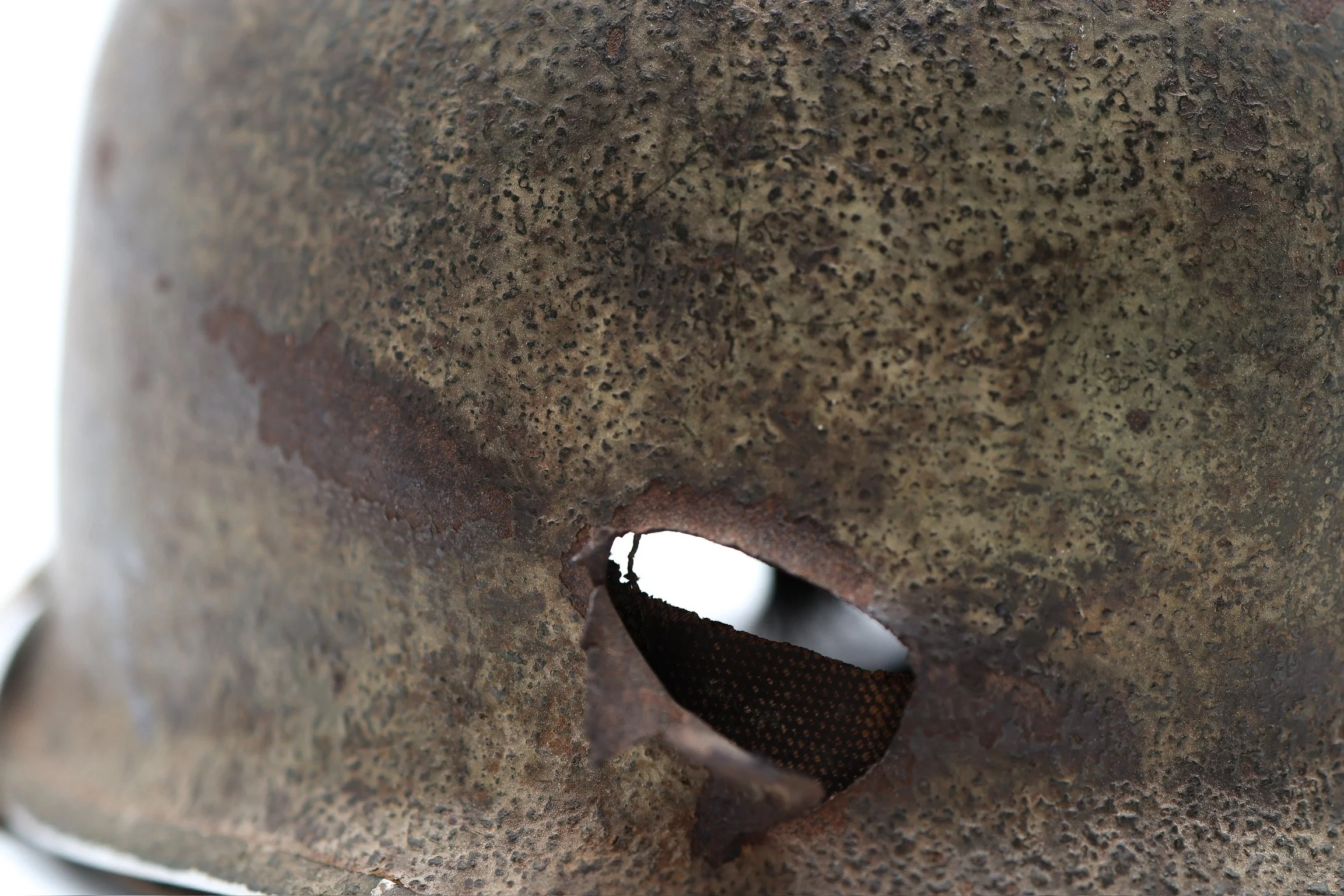
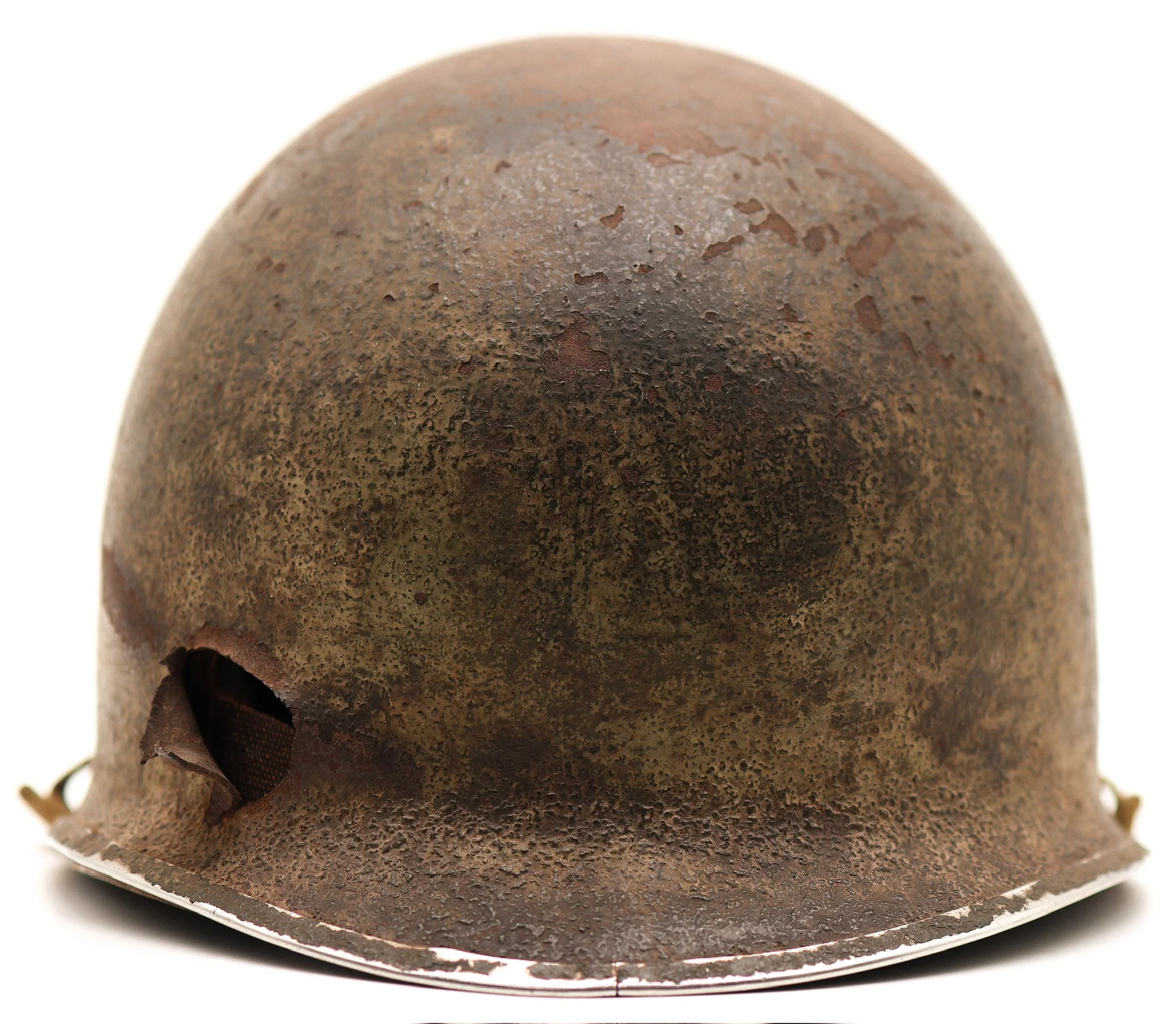
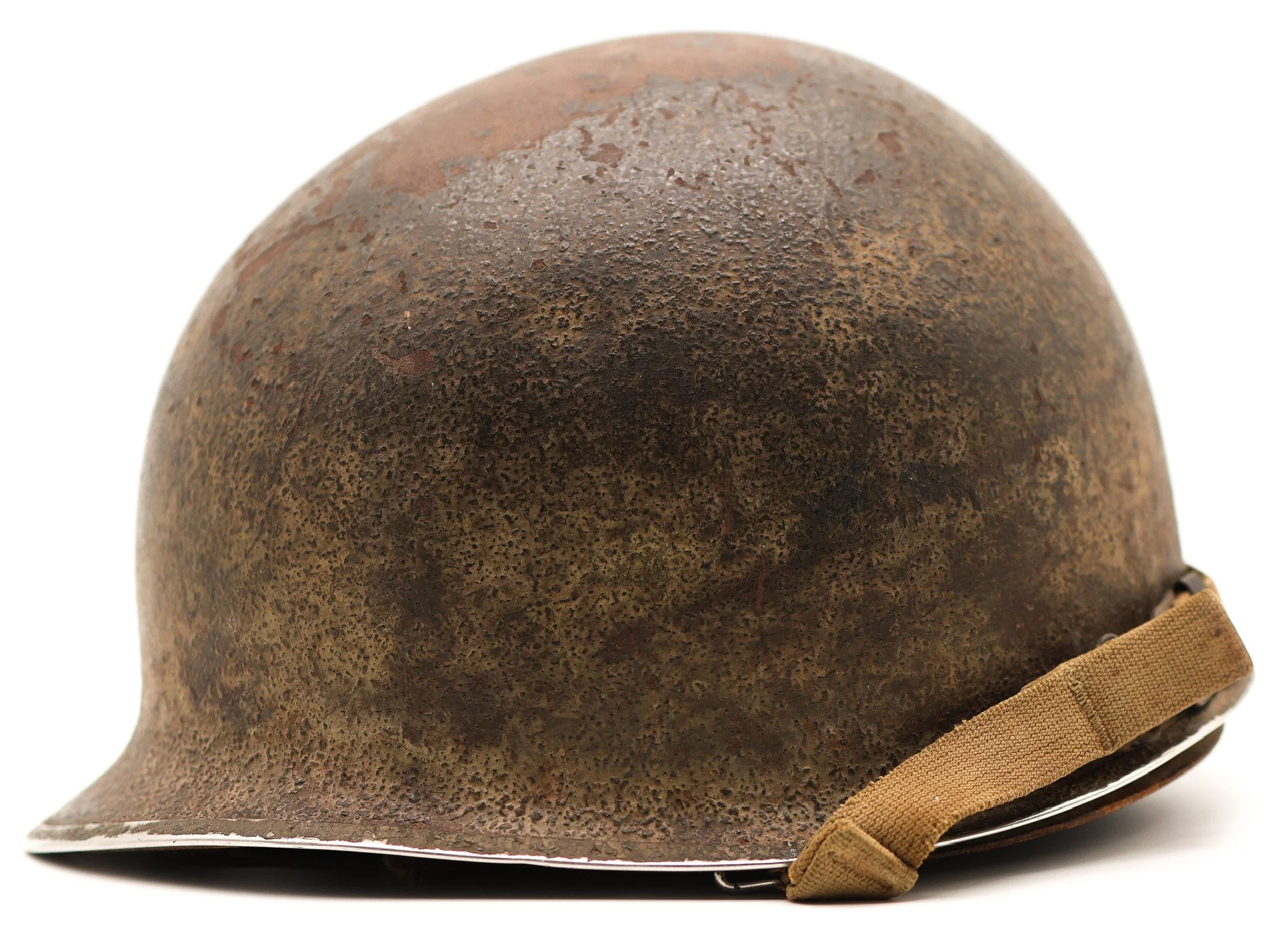
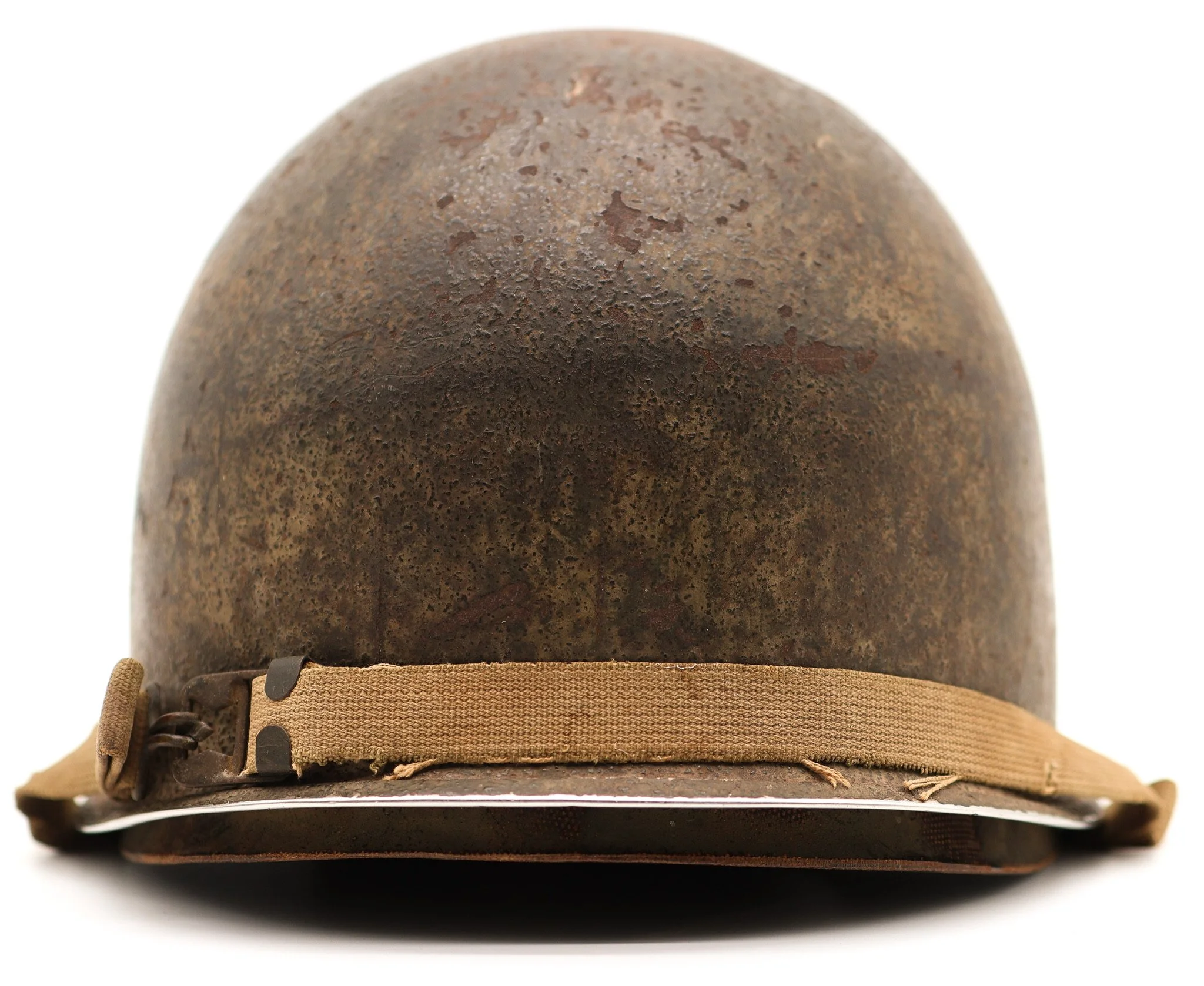
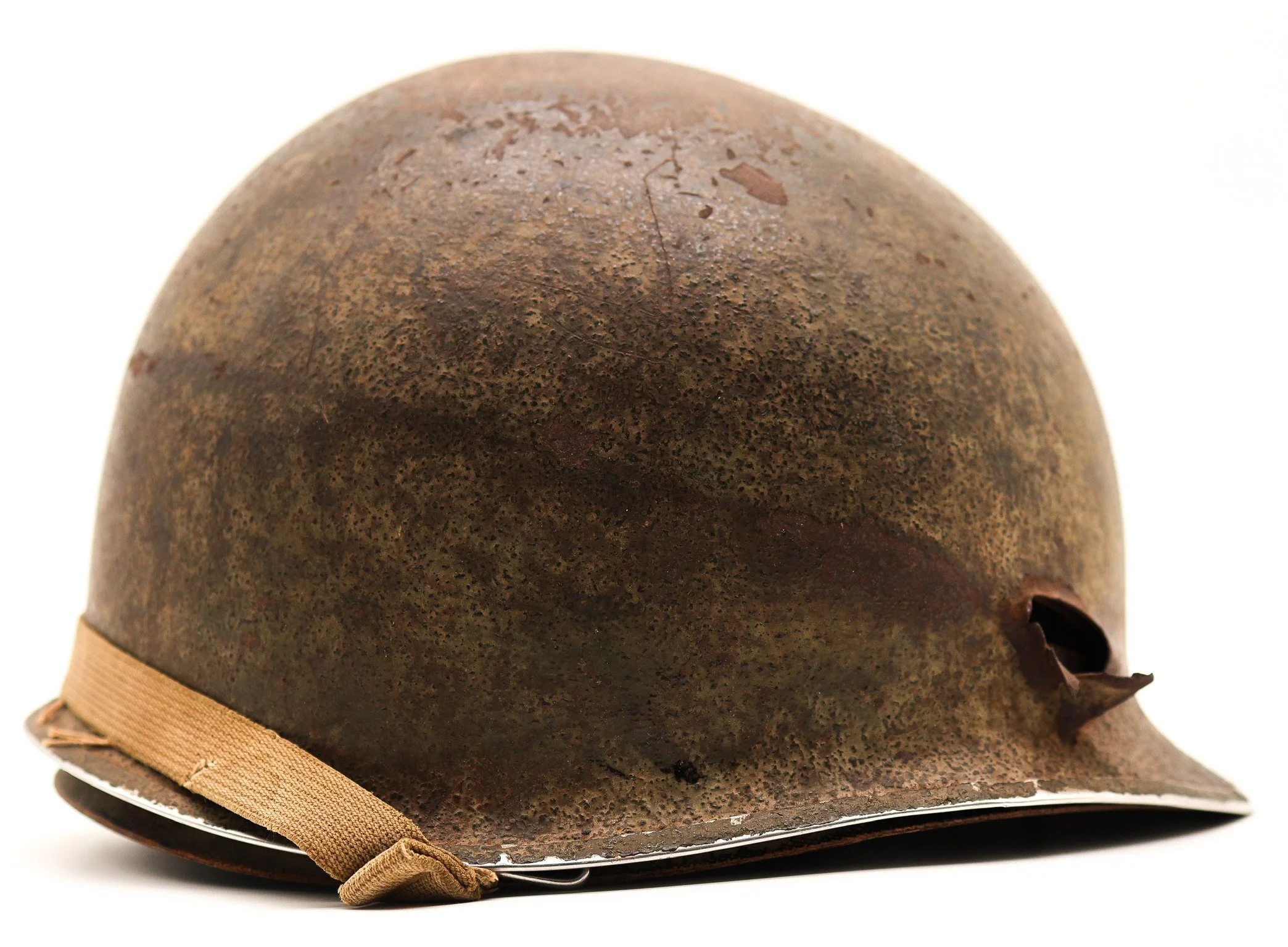
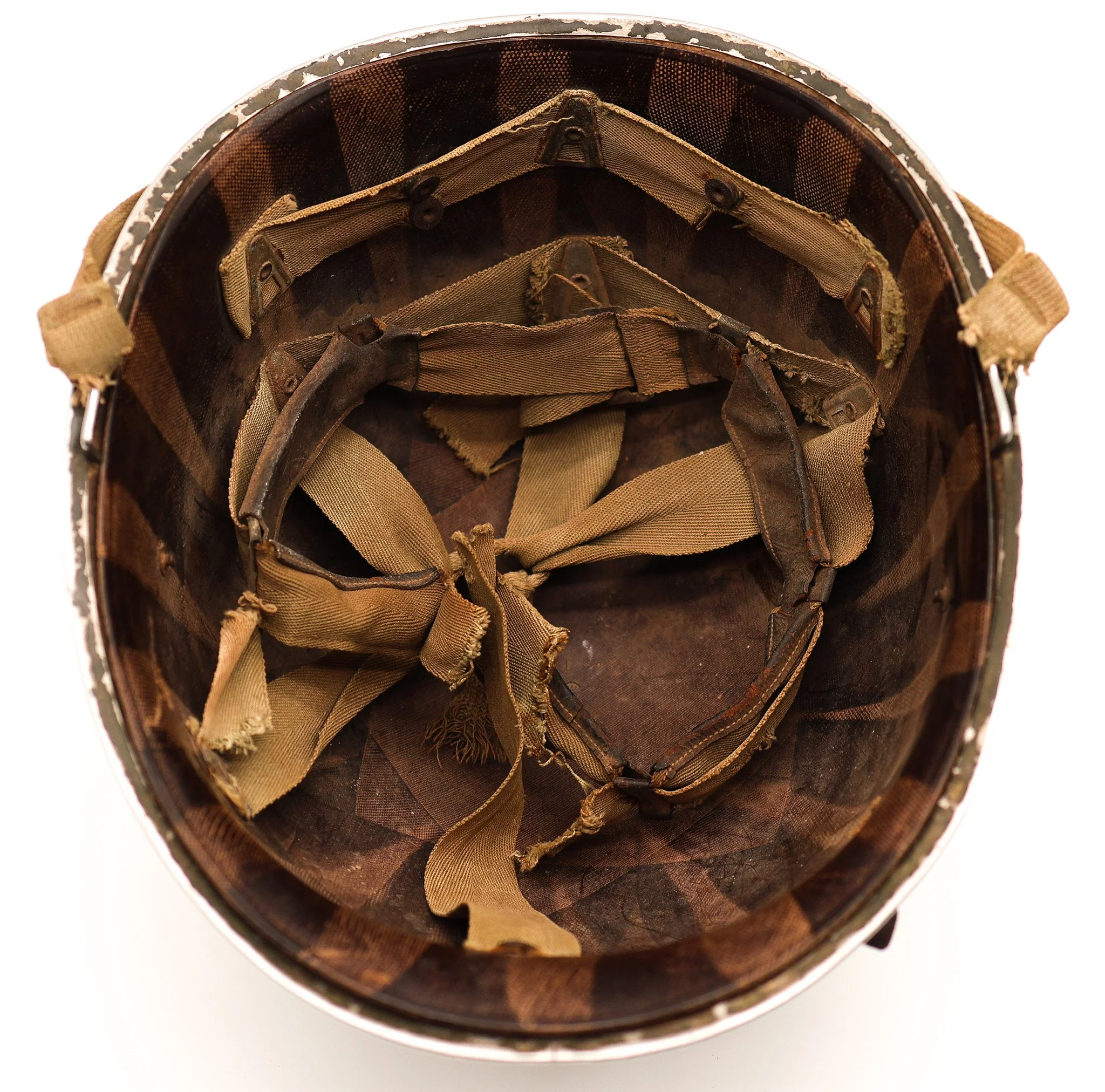
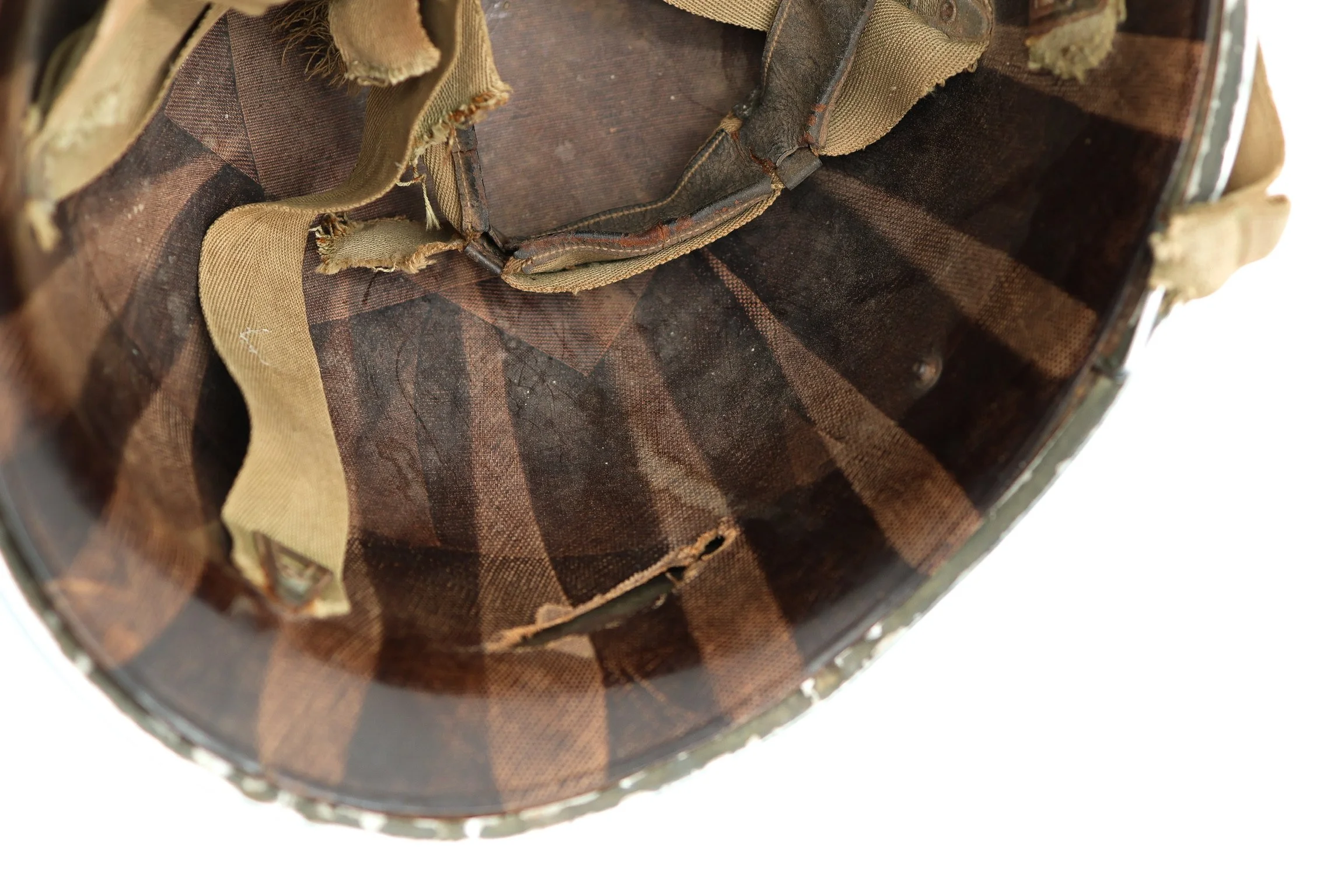
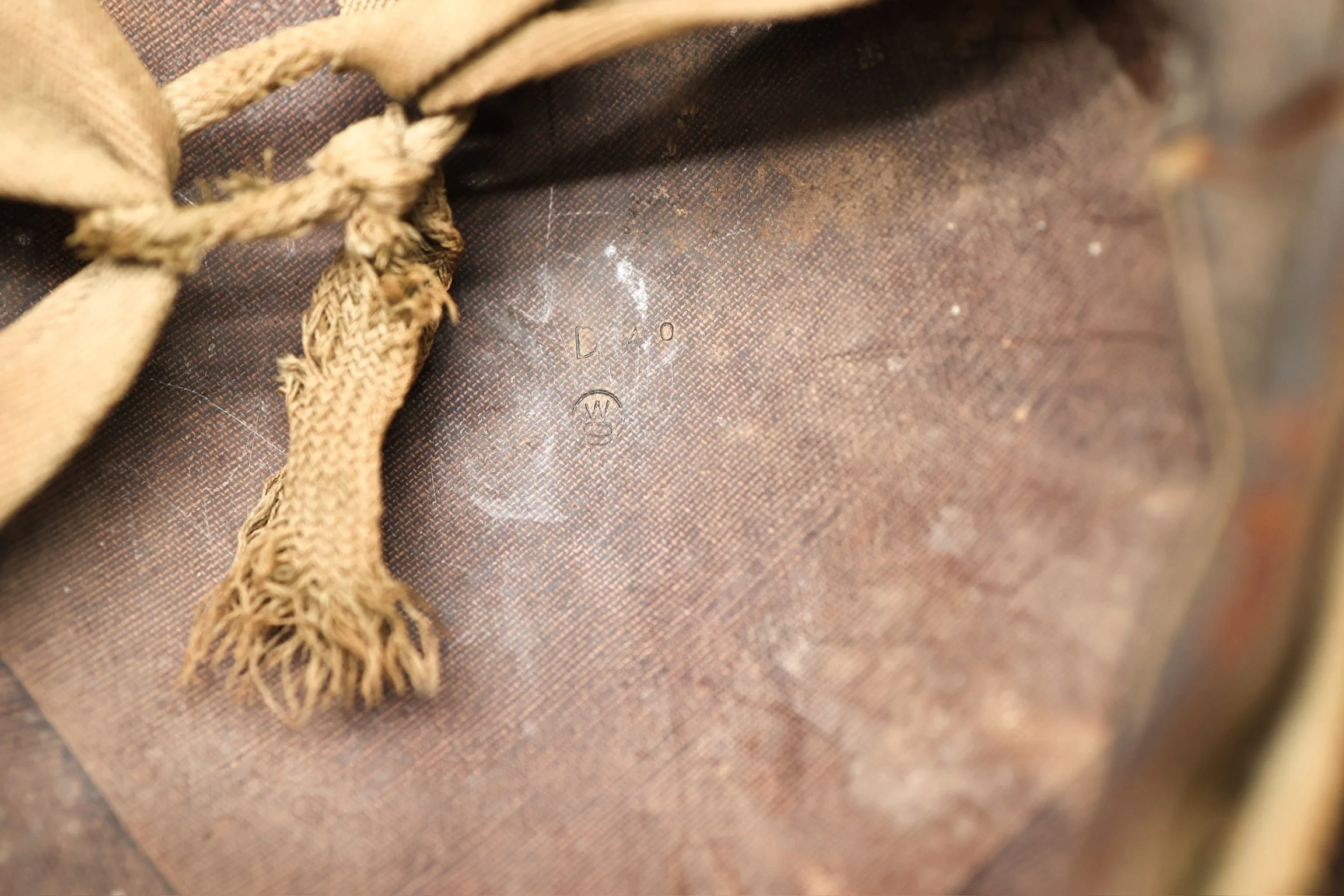
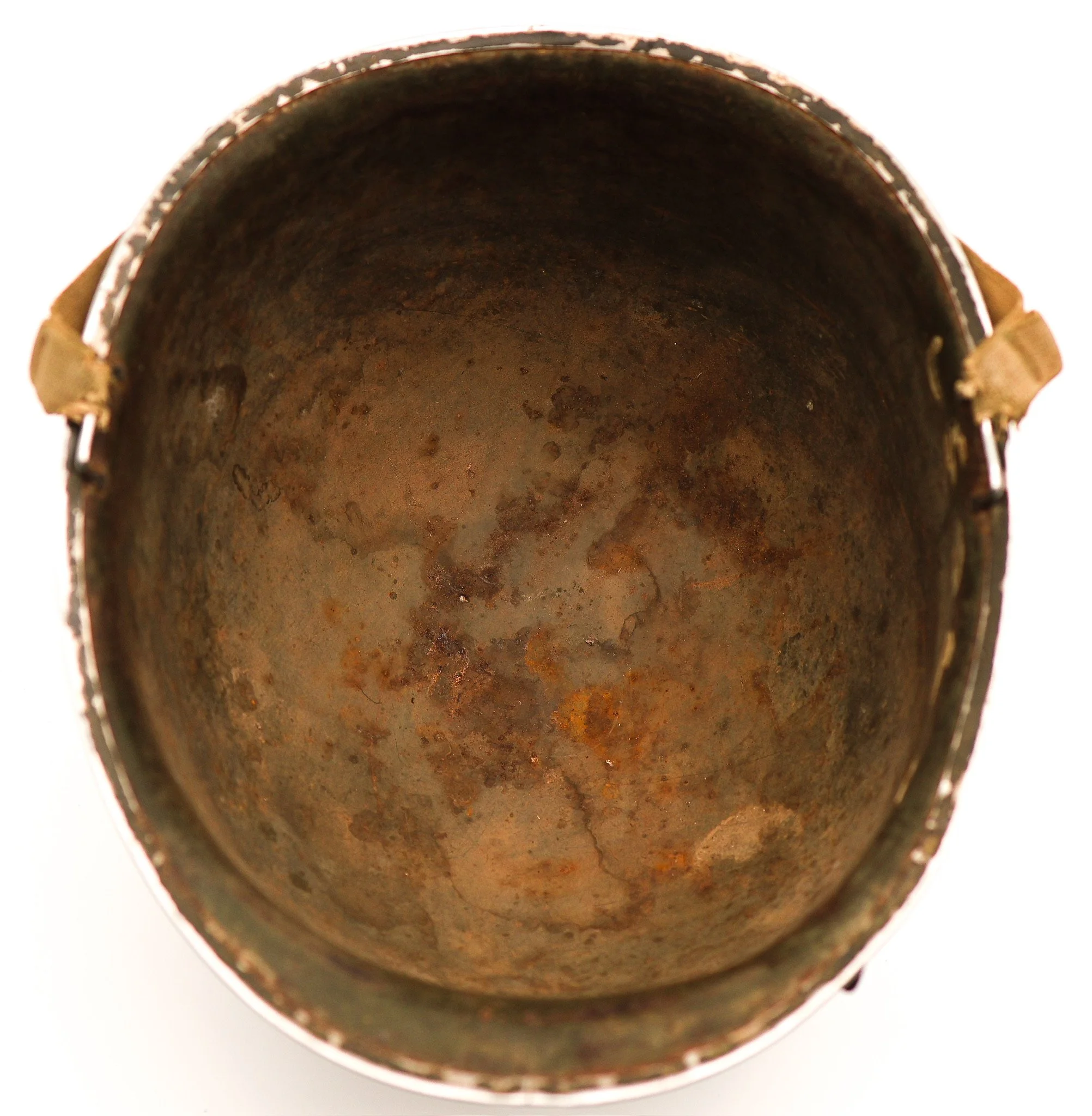
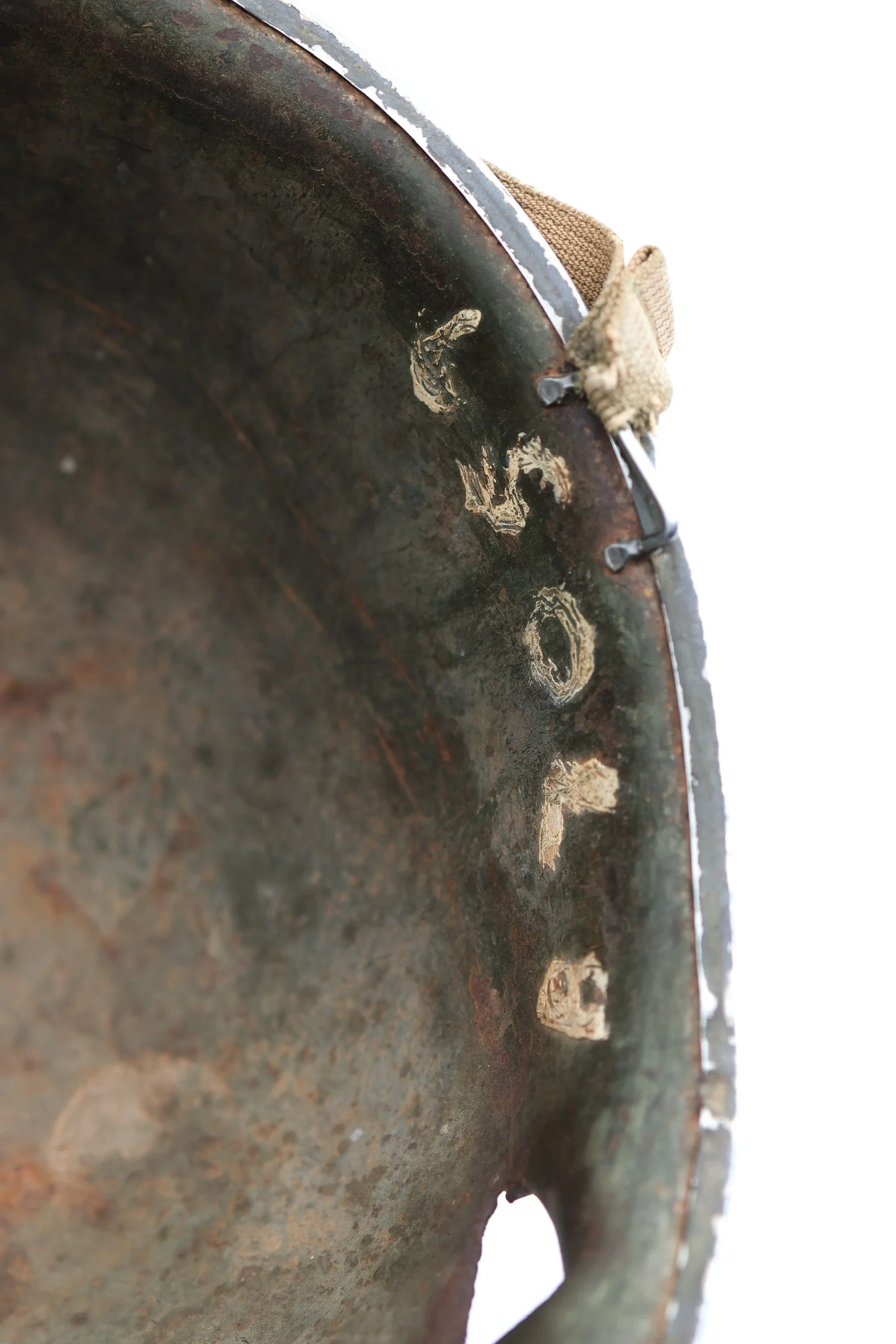
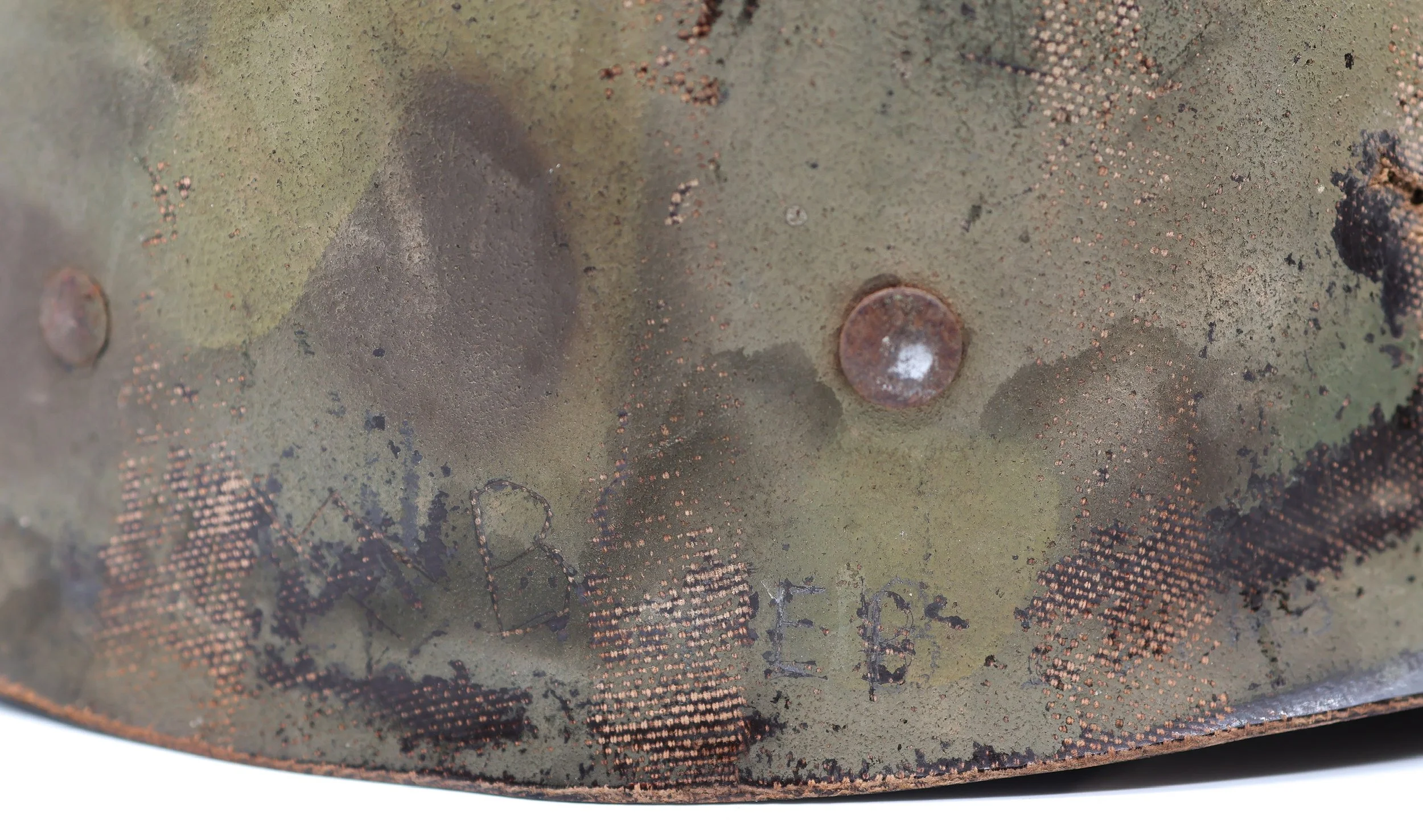
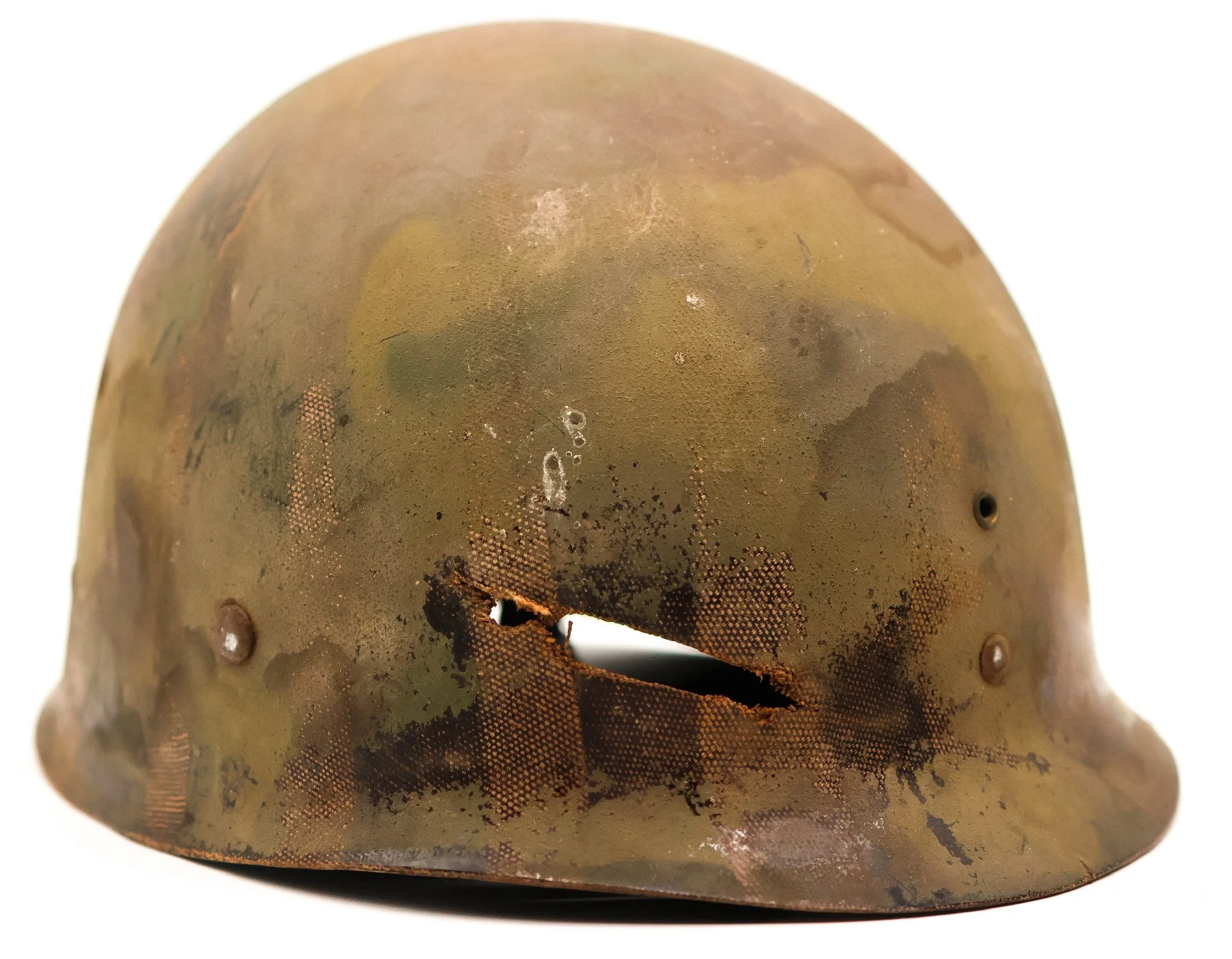
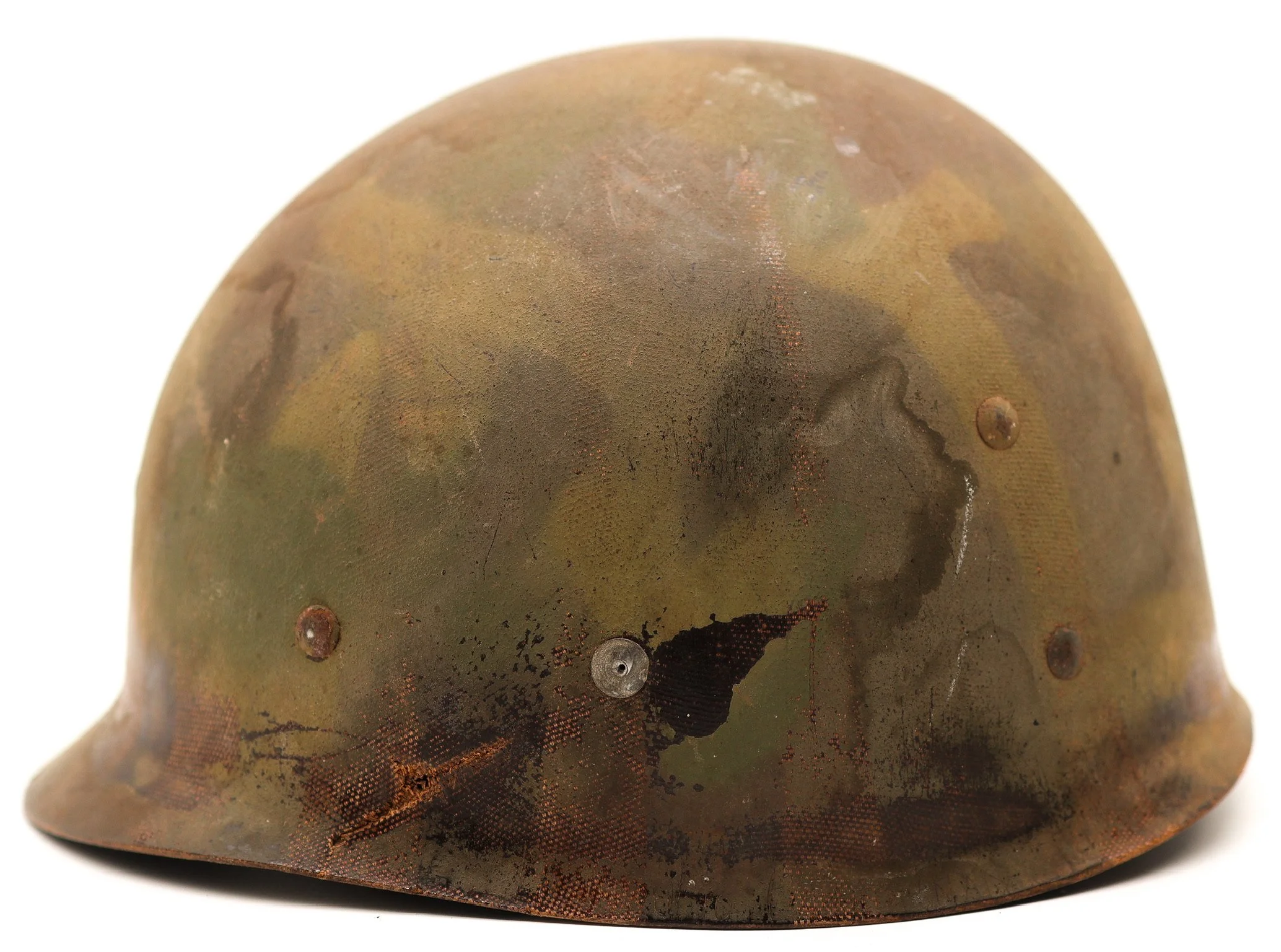
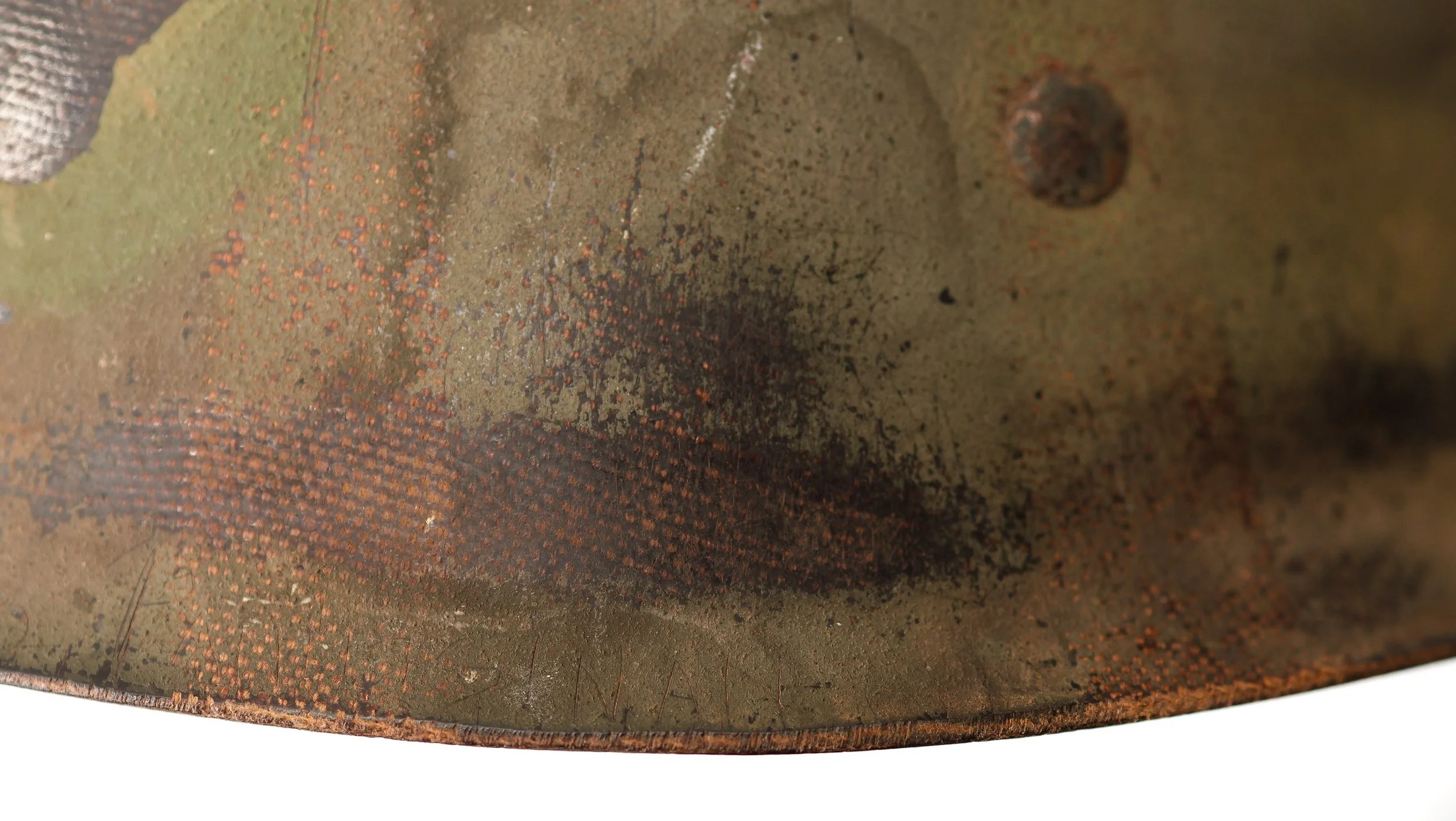
Battle-Damaged M1 Helmet — T/5 Melvin E. Babcock, U.S. Army Medic, Luzon 1945
This U.S. M1 helmet was worn by Technician Fifth Grade Melvin E. Babcock while serving as a combat medic in the Pacific Theater during World War II. Babcock enlisted in the U.S. Army in Boston, Massachusetts, on September 29, 1942, and served with a medical detachment attached to infantry forces in the Philippines.
In February 1945, during the Battle of Luzon, Babcock was wounded by shrapnel in Pangasinan. His injuries included a concussion, a wound to the foot, and bruising near the eye. The helmet sustained heavy battle damage from the same explosion, absorbing the force of the shrapnel and preventing more serious or fatal injury. The damage pattern remains clearly visible, with shrapnel entering one side of the shell, traveling along the interior, and exiting the opposite side.
-
The helmet retains light camouflage and is paired with a jungle-patterned Westinghouse liner. Babcock later etched “Pangasinan” into the brim, documenting the location of his wounding.
After recovering, Babcock returned to duty and was later transferred to Europe during the postwar occupation. His final discharge in October 1945 was with the 2nd Infantry Division, though this assignment occurred after the fighting and was unrelated to his service in the Philippines.