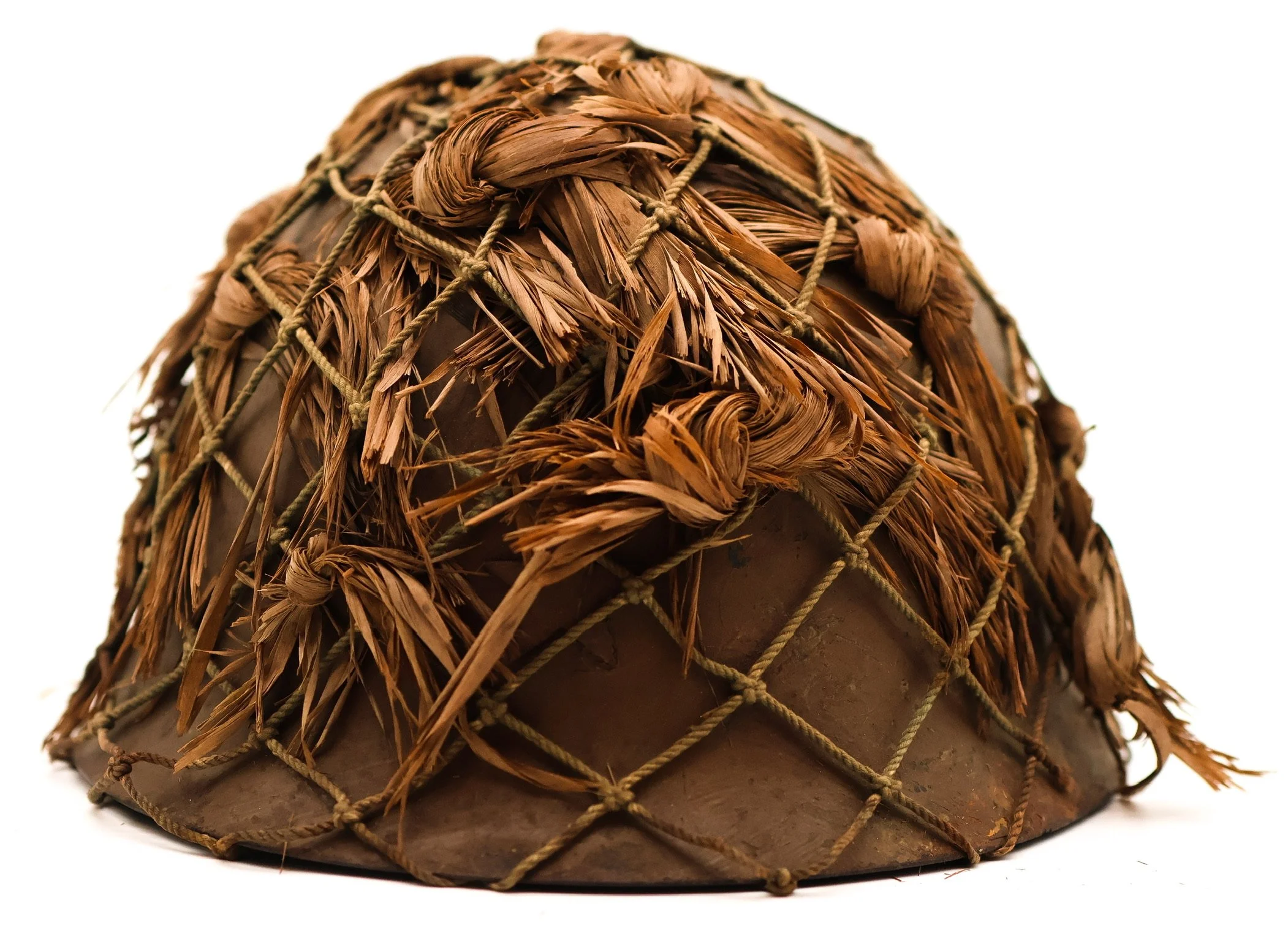
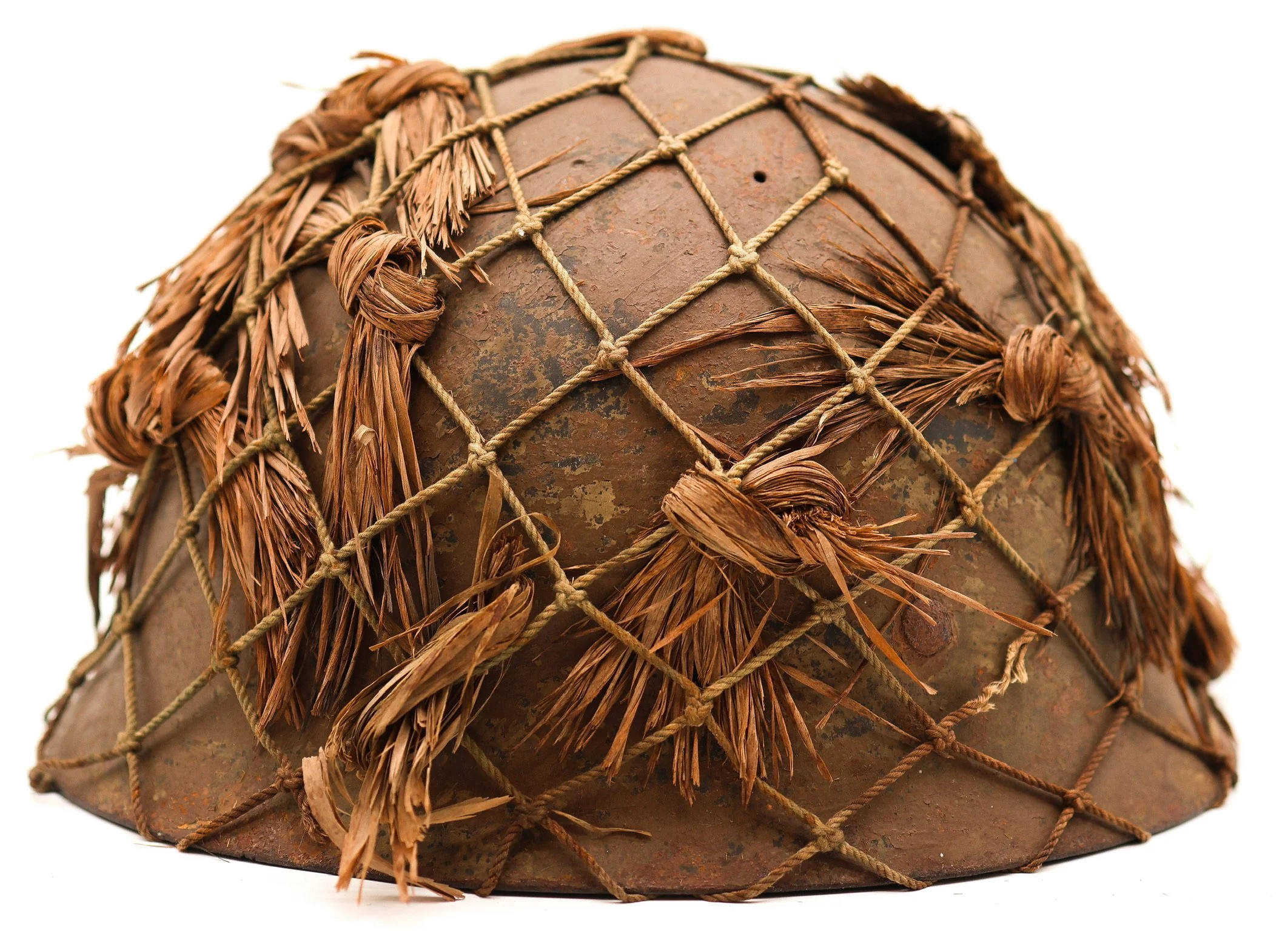
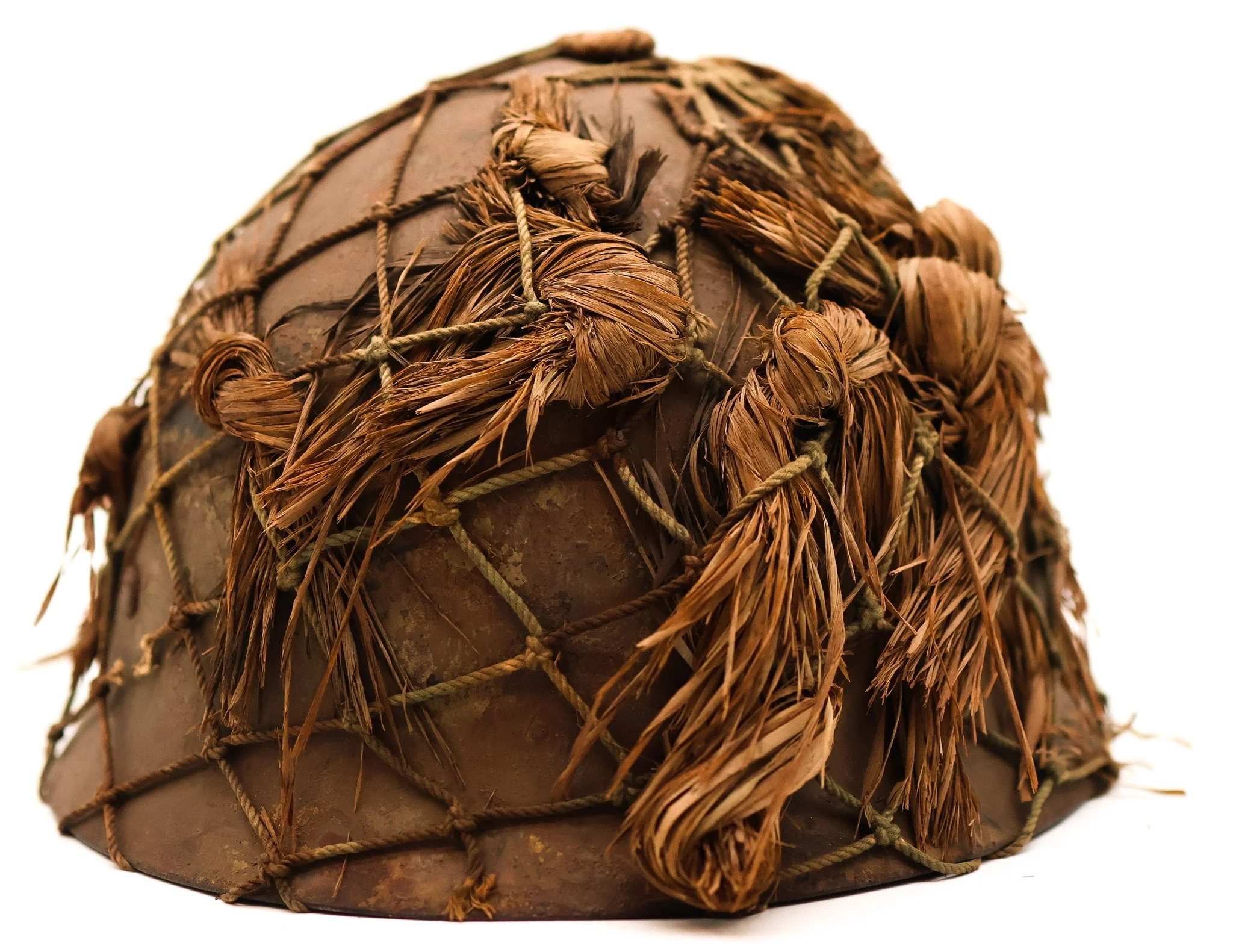
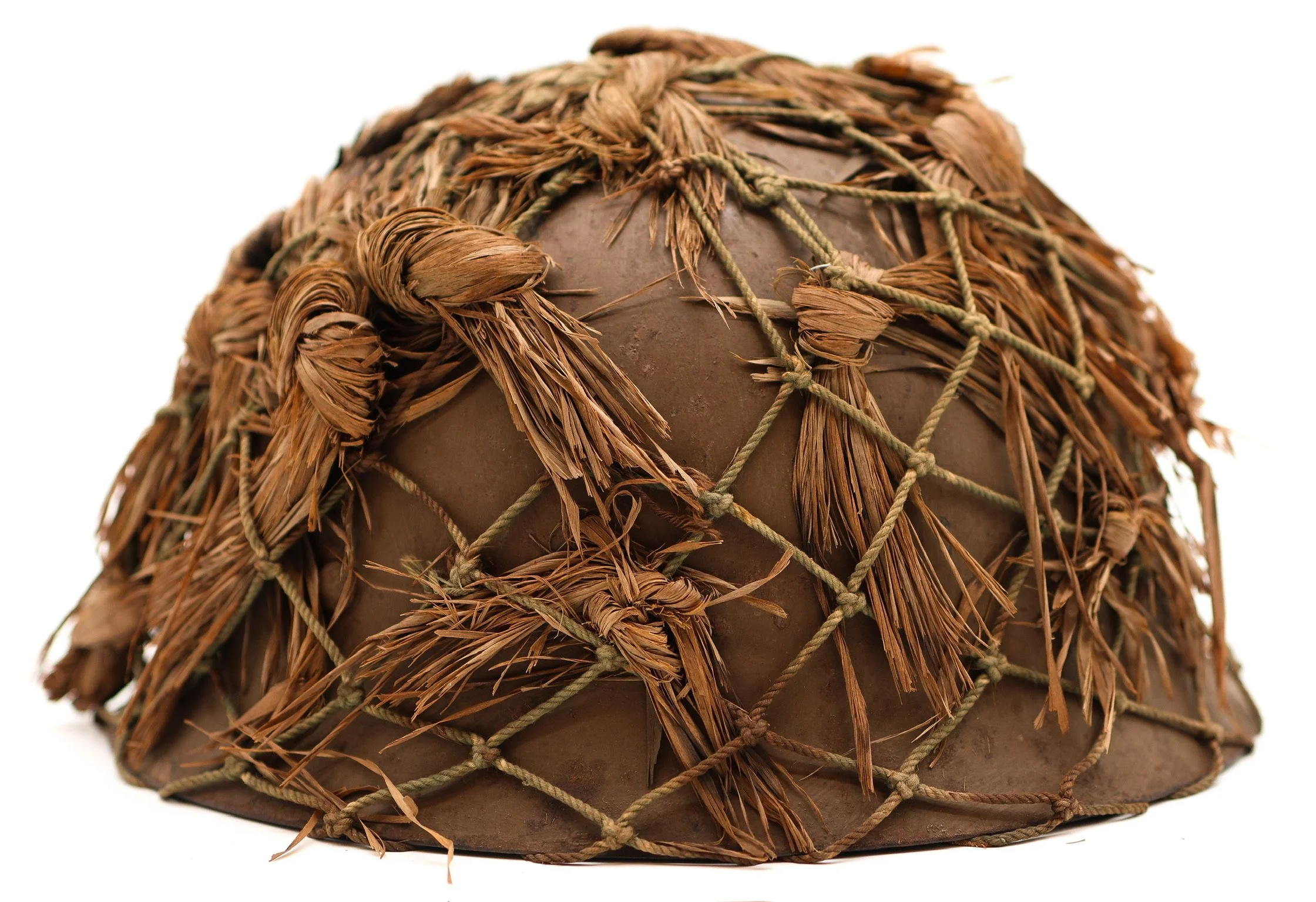
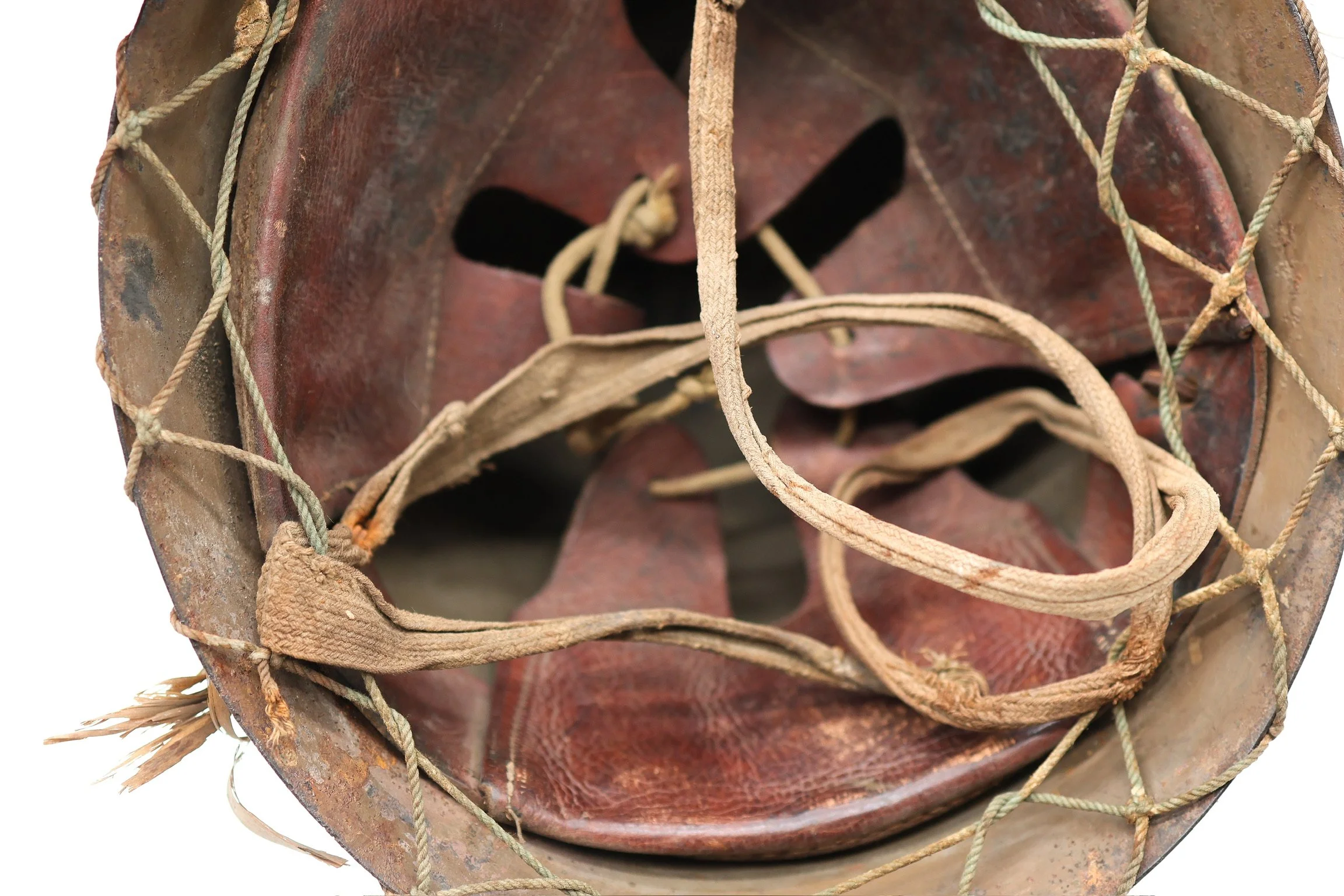
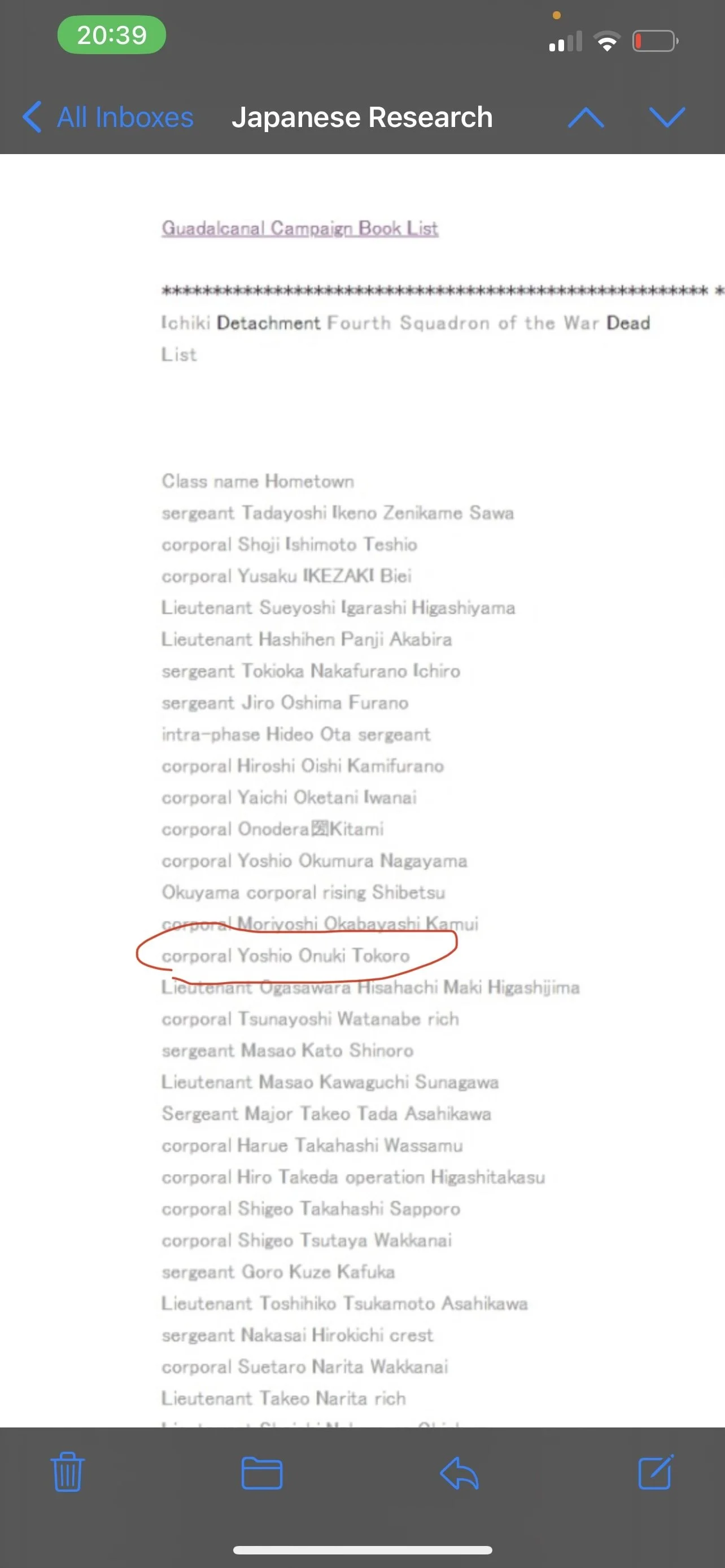
Japanese Type 90 Helmet from the Ichiki Detachment, Guadalcanal, 1942
This Japanese Type 90 steel helmet was taken from a soldier killed during the Battle of Alligator Creek, also known as the Battle of the Tenaru River, during the Guadalcanal campaign in August 1942. The soldier was a member of the Ichiki Detachment, the first Japanese ground force committed to the fighting on Guadalcanal.
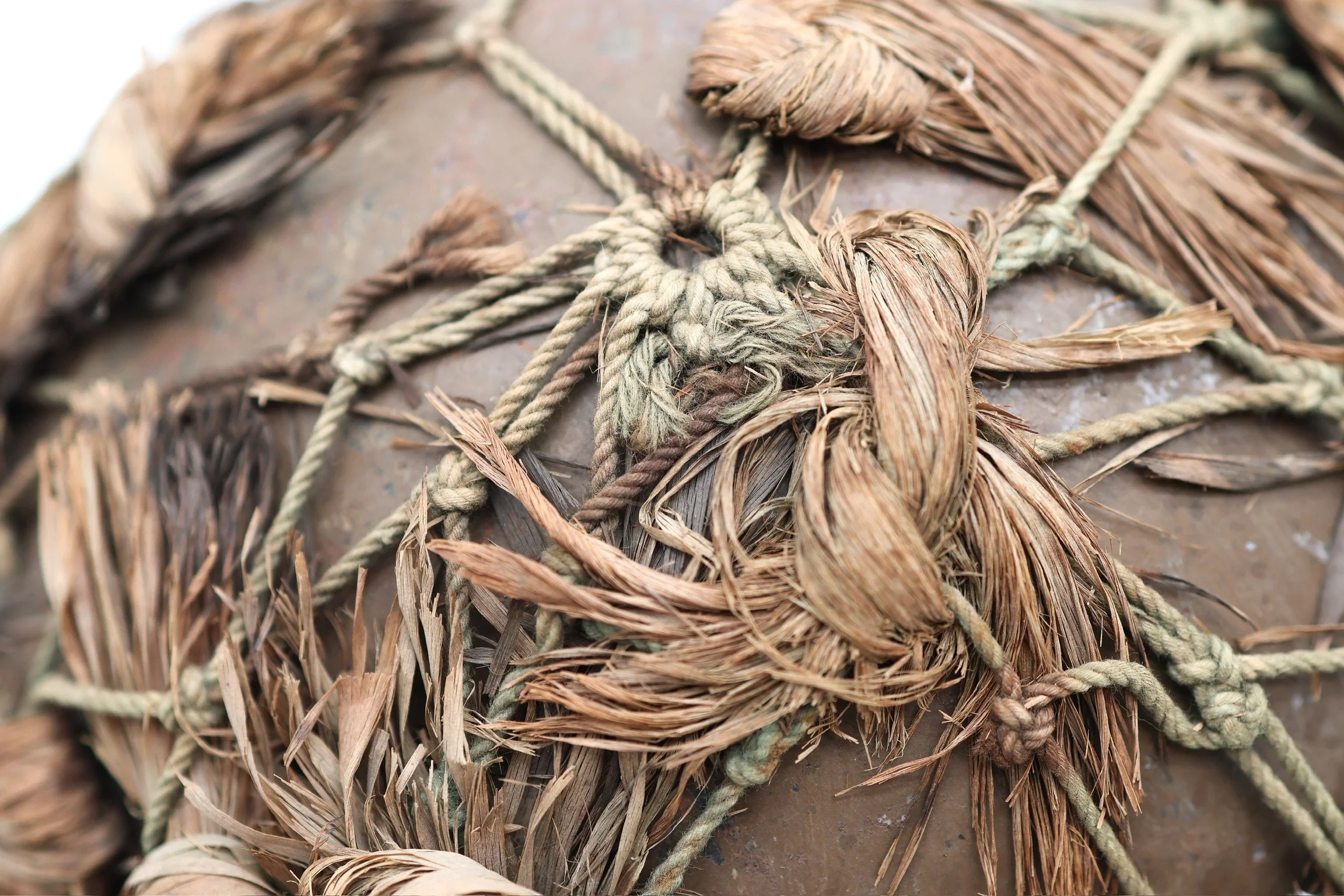
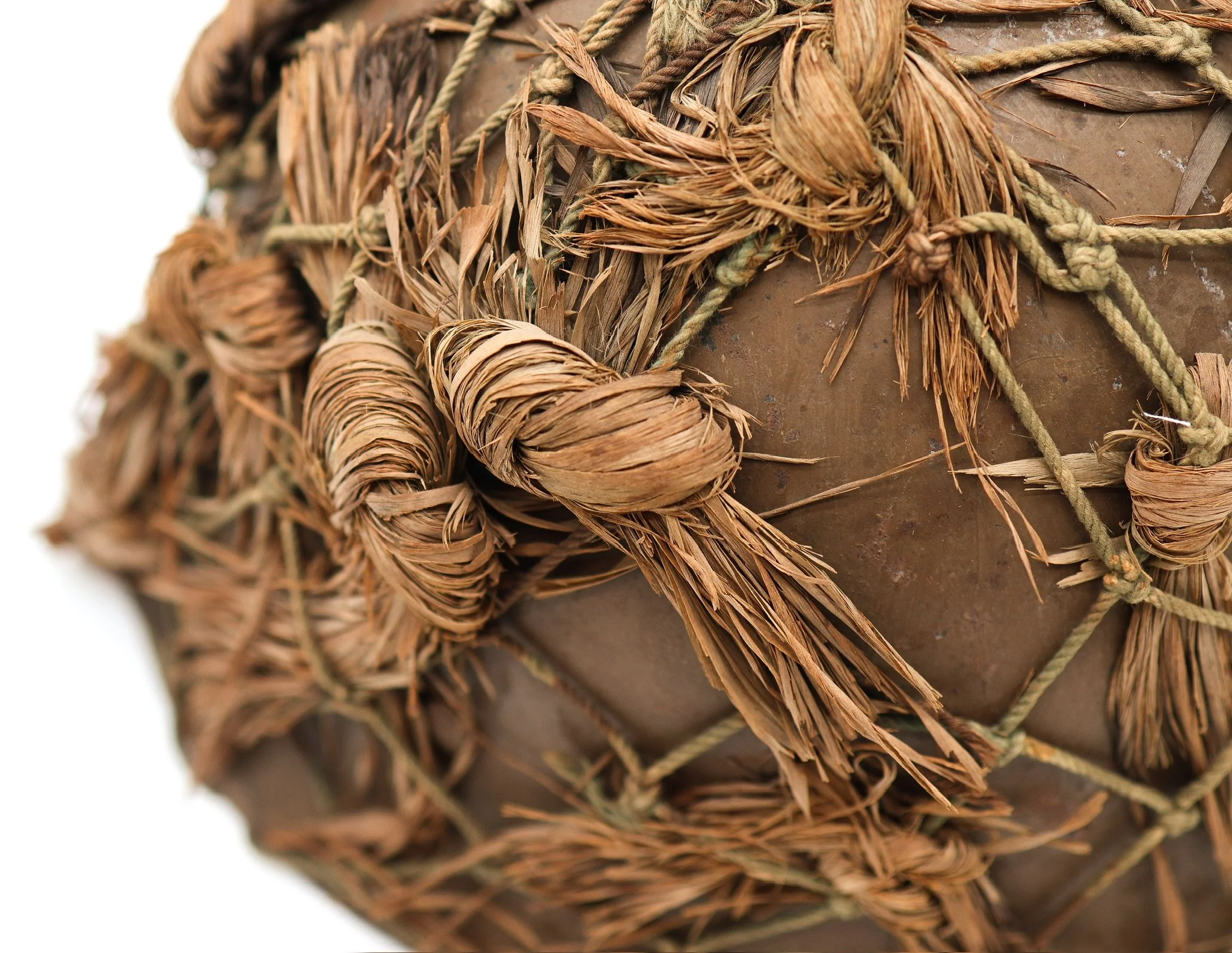
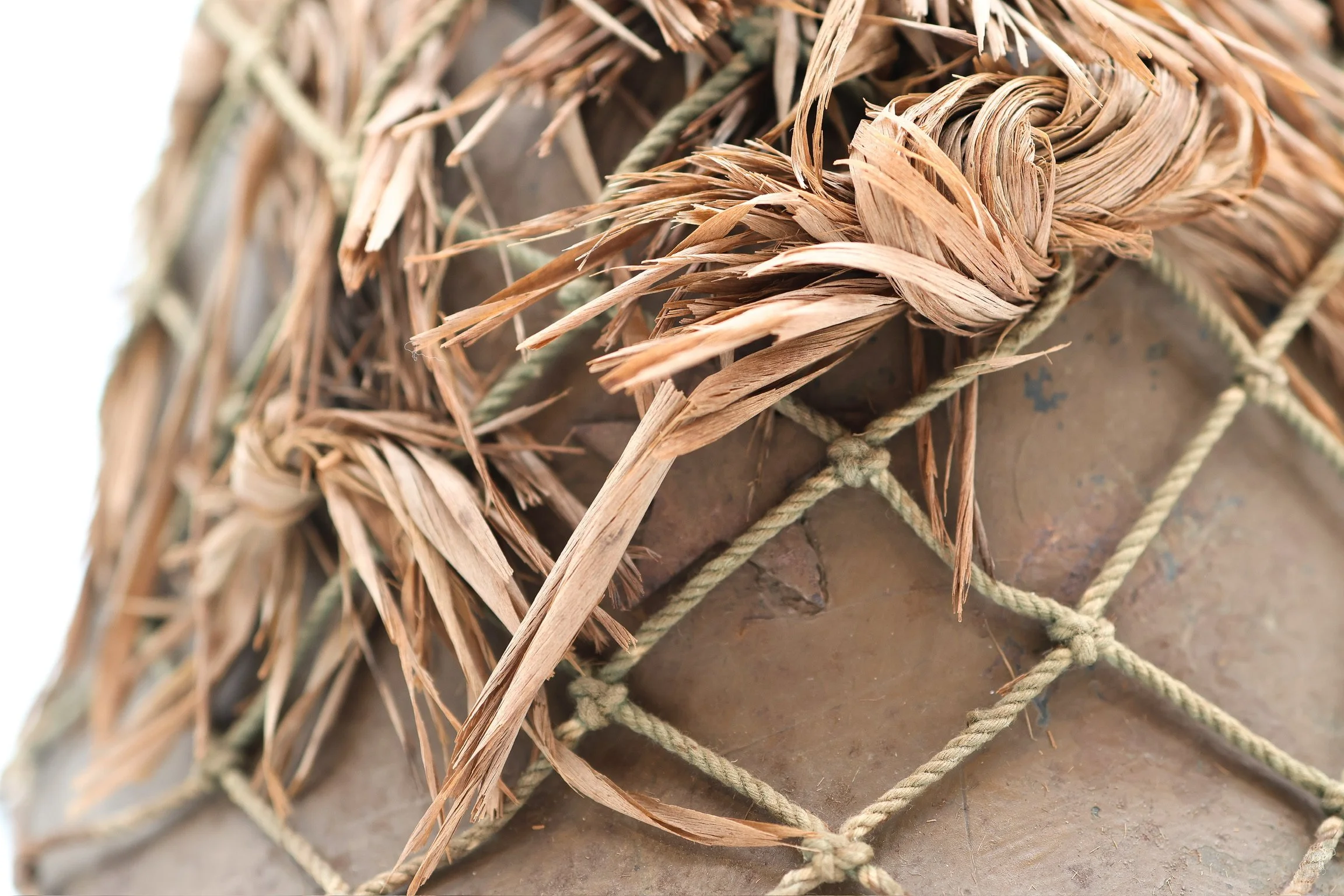
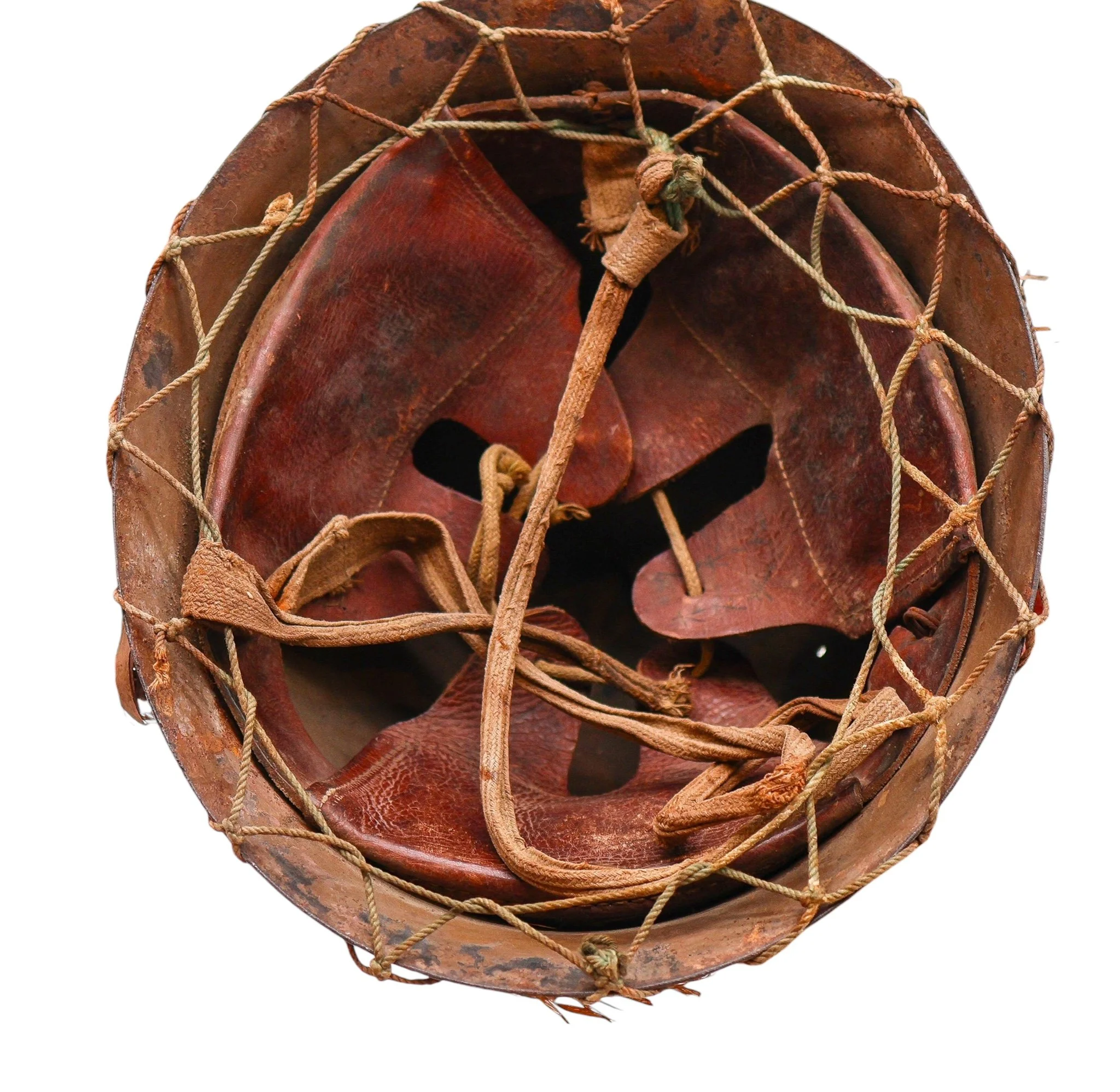
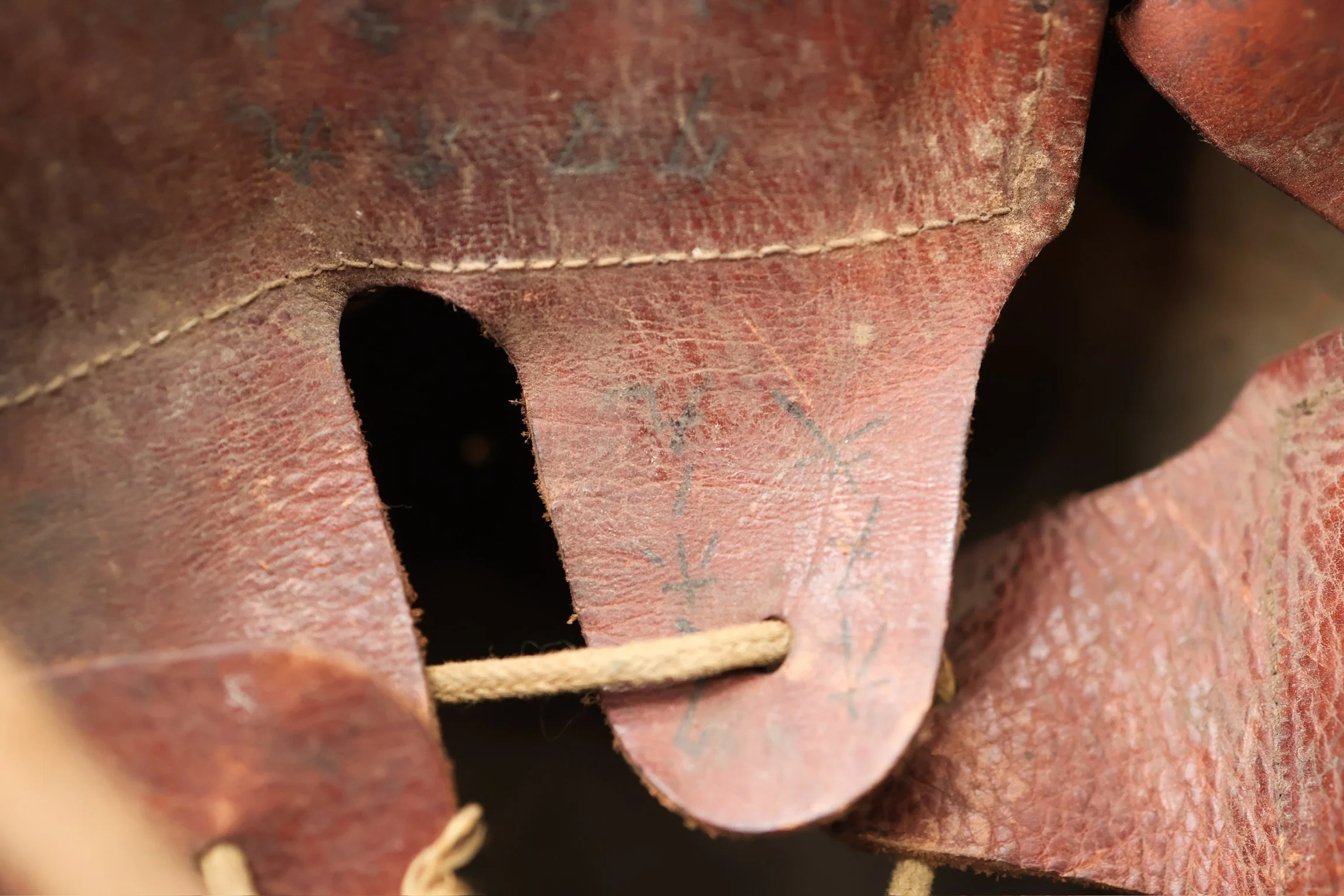
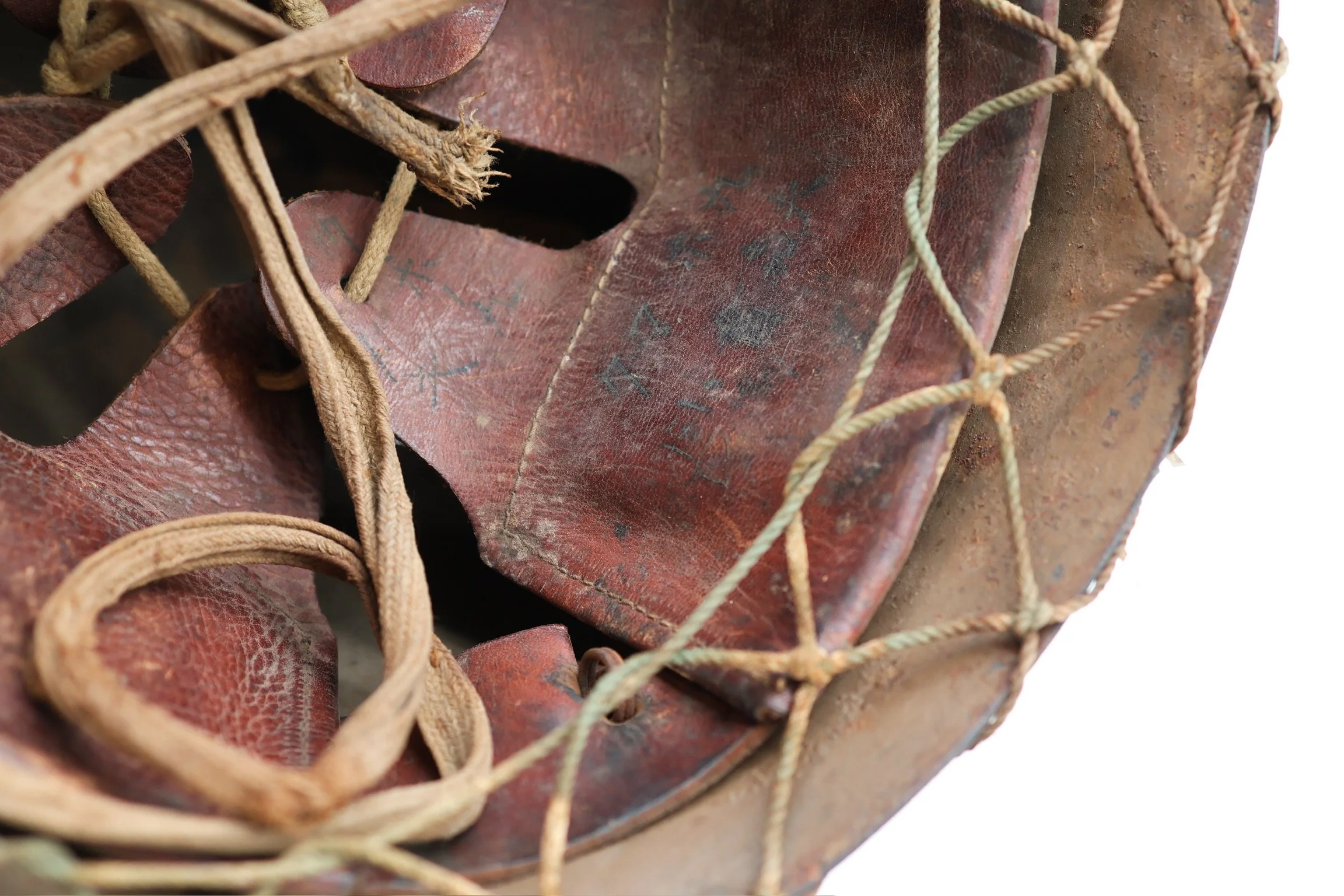
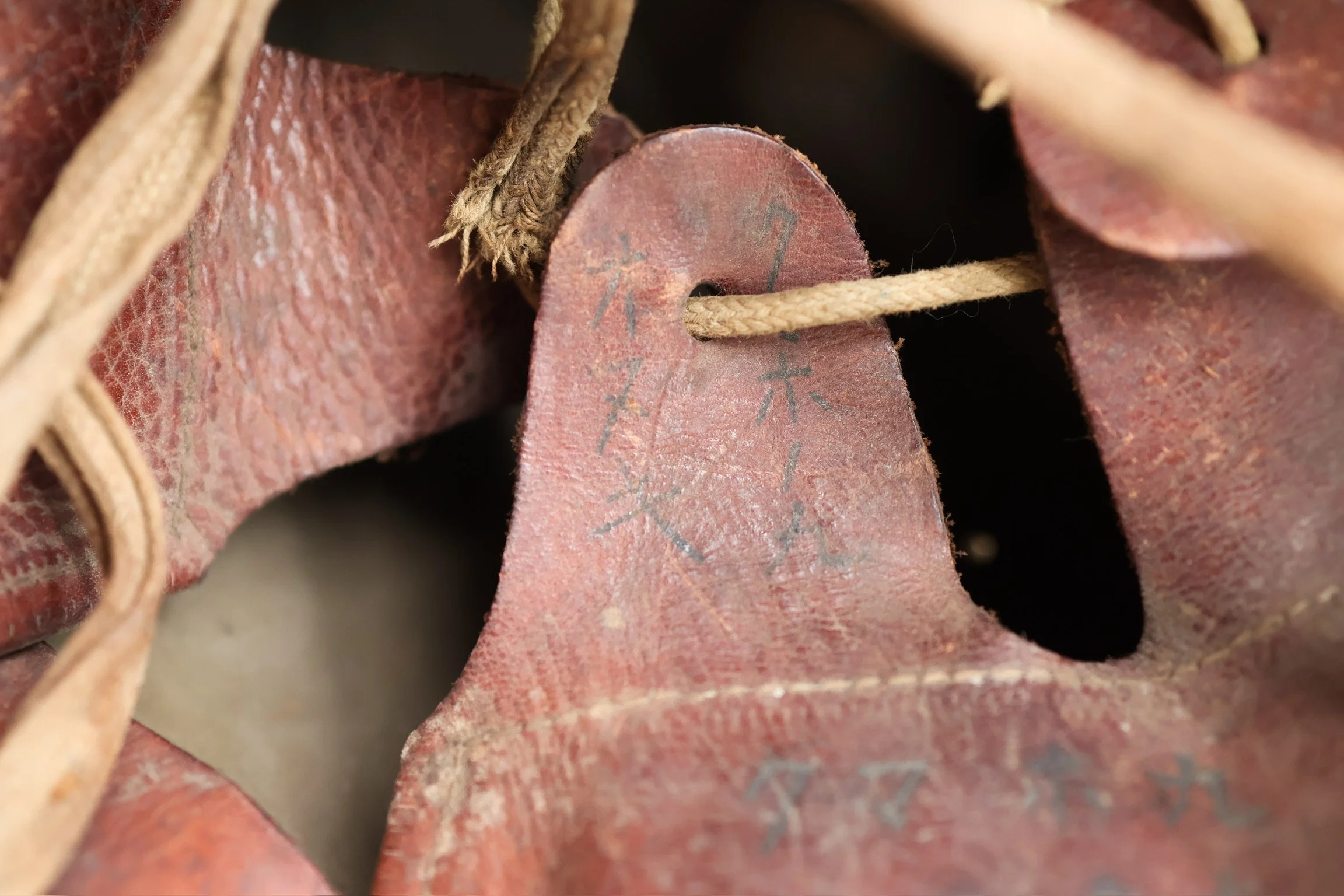
The helmet retains original Guadalcanal foliage still attached to the exterior. Remarkably, the foliage has remained intact since the time of recovery and has not been removed or disturbed. The interior liner bears detailed hand-written kanji identifying the soldier as Corporal Onuki Yoshio, from Tokoro, Hokkaido, with markings consistent with the Ichiki Detachment.
Photographing the kanji is challenging, as the foliage has been intentionally left undisturbed to avoid damage, limiting access and visibility to portions of the liner.
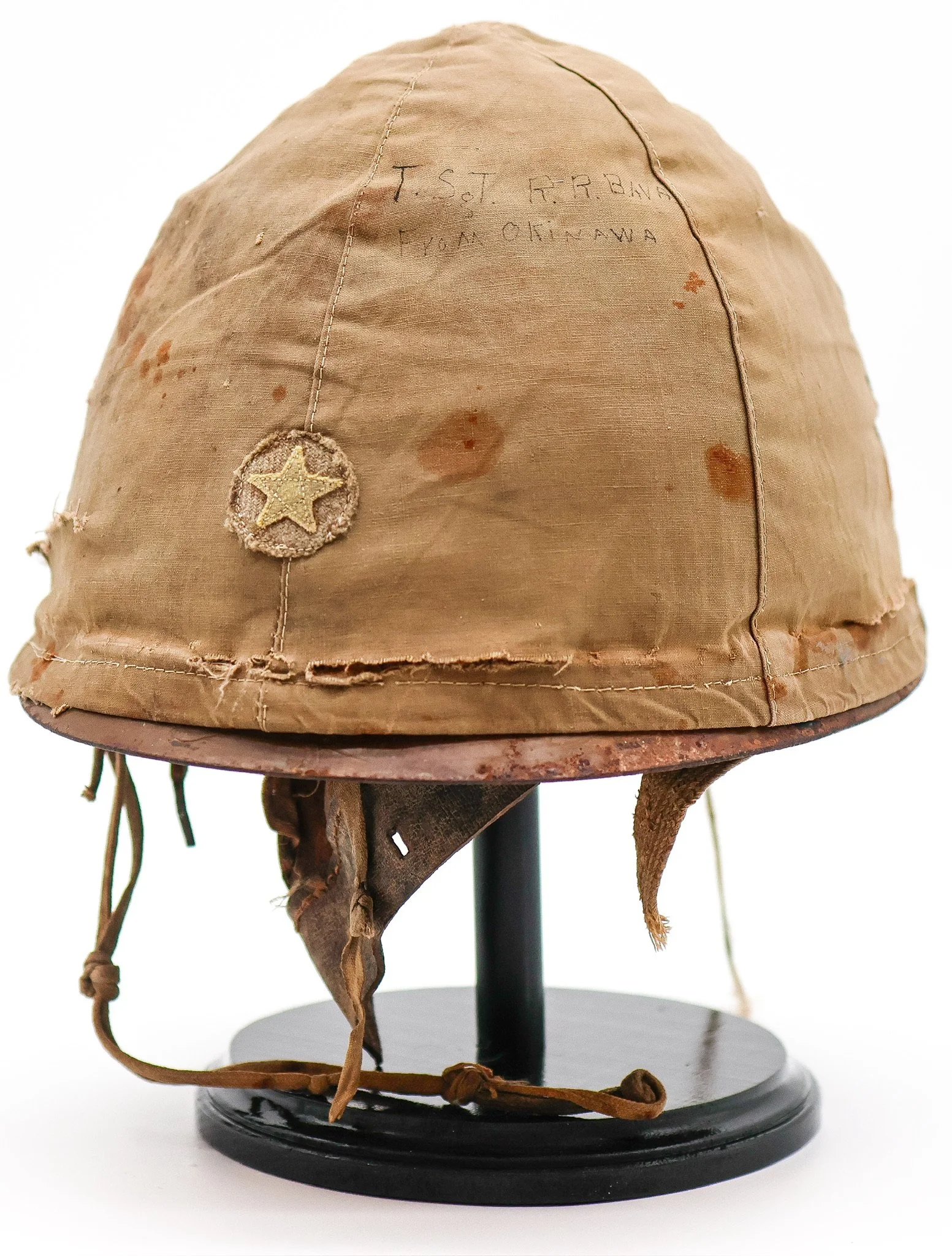
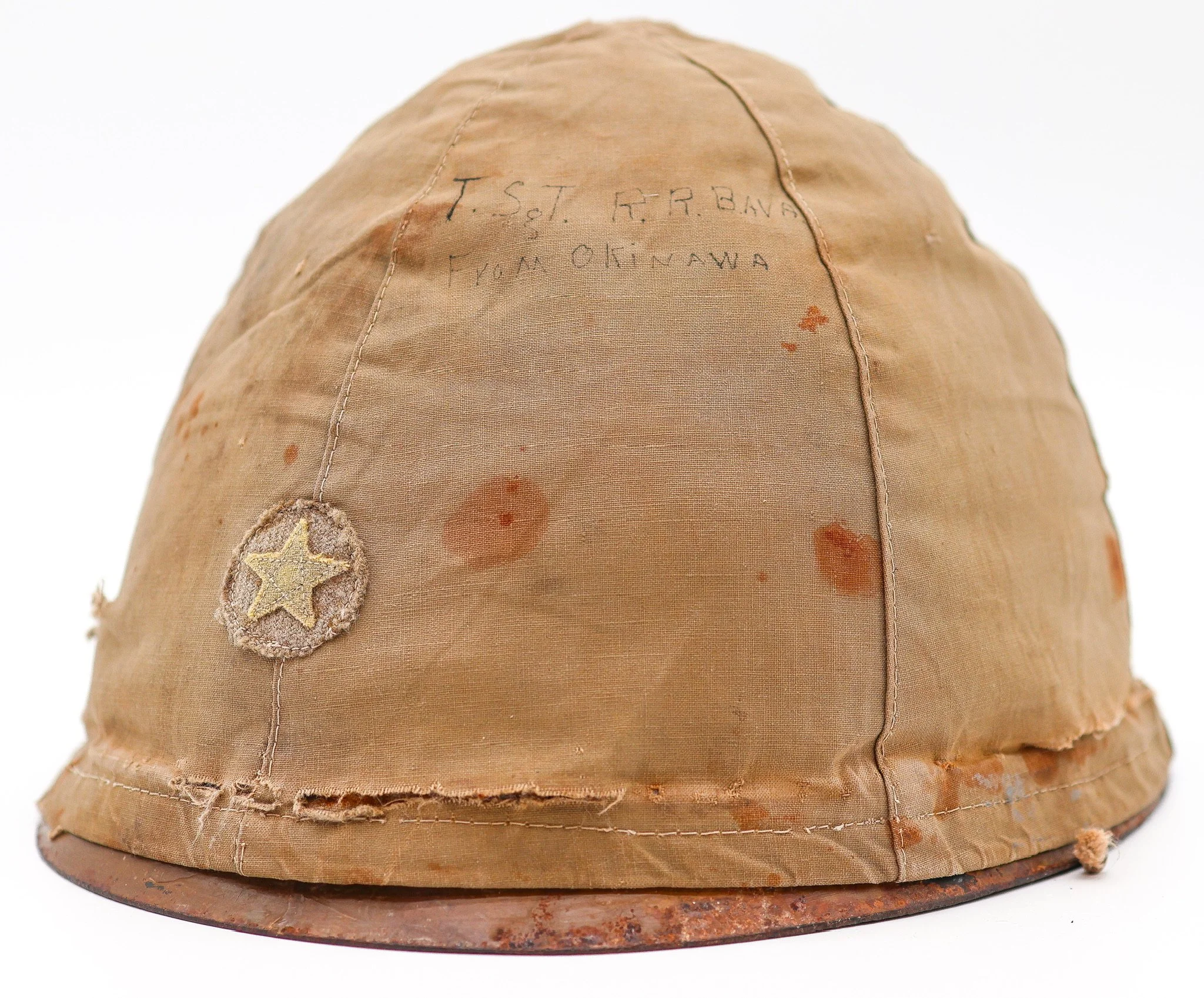
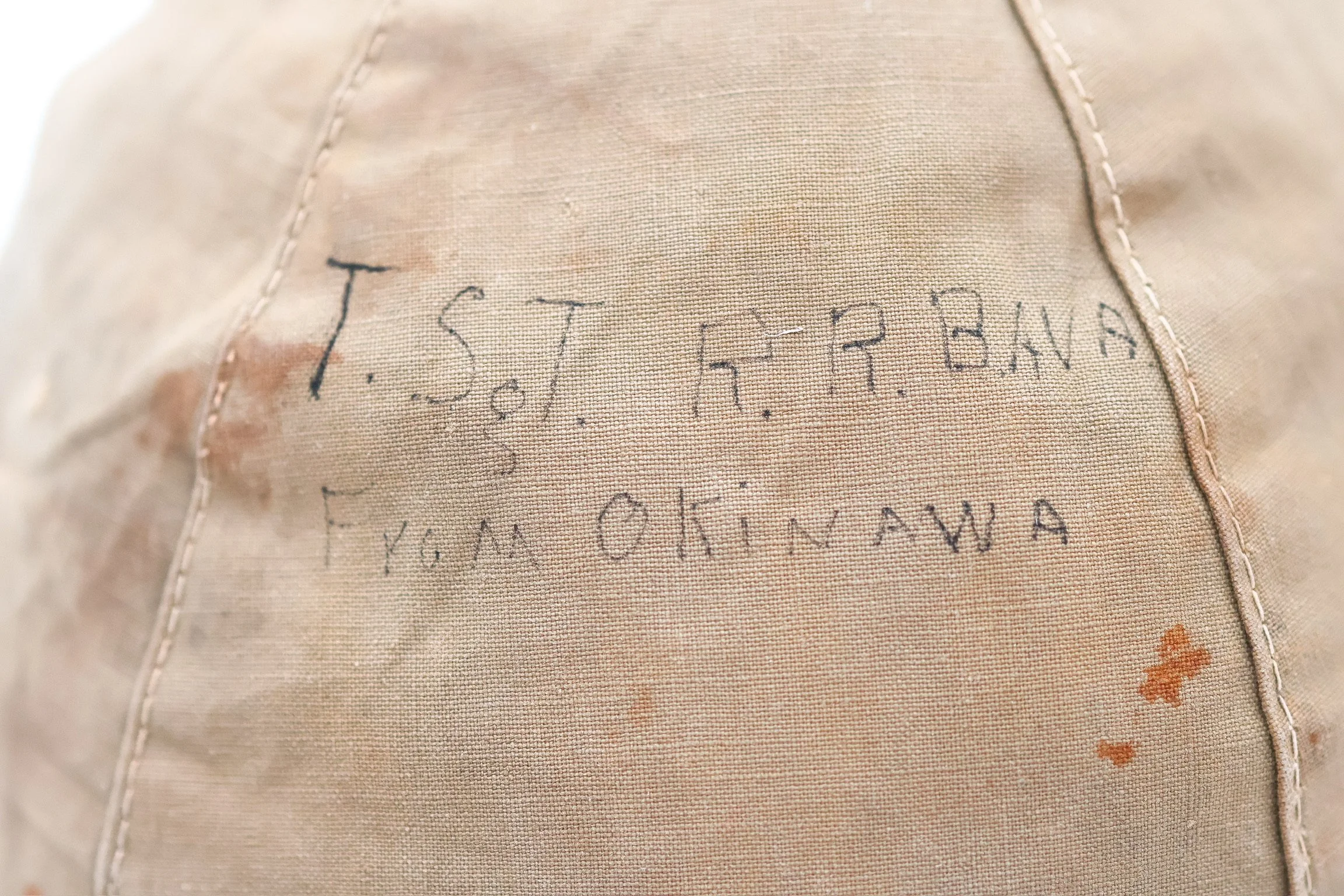
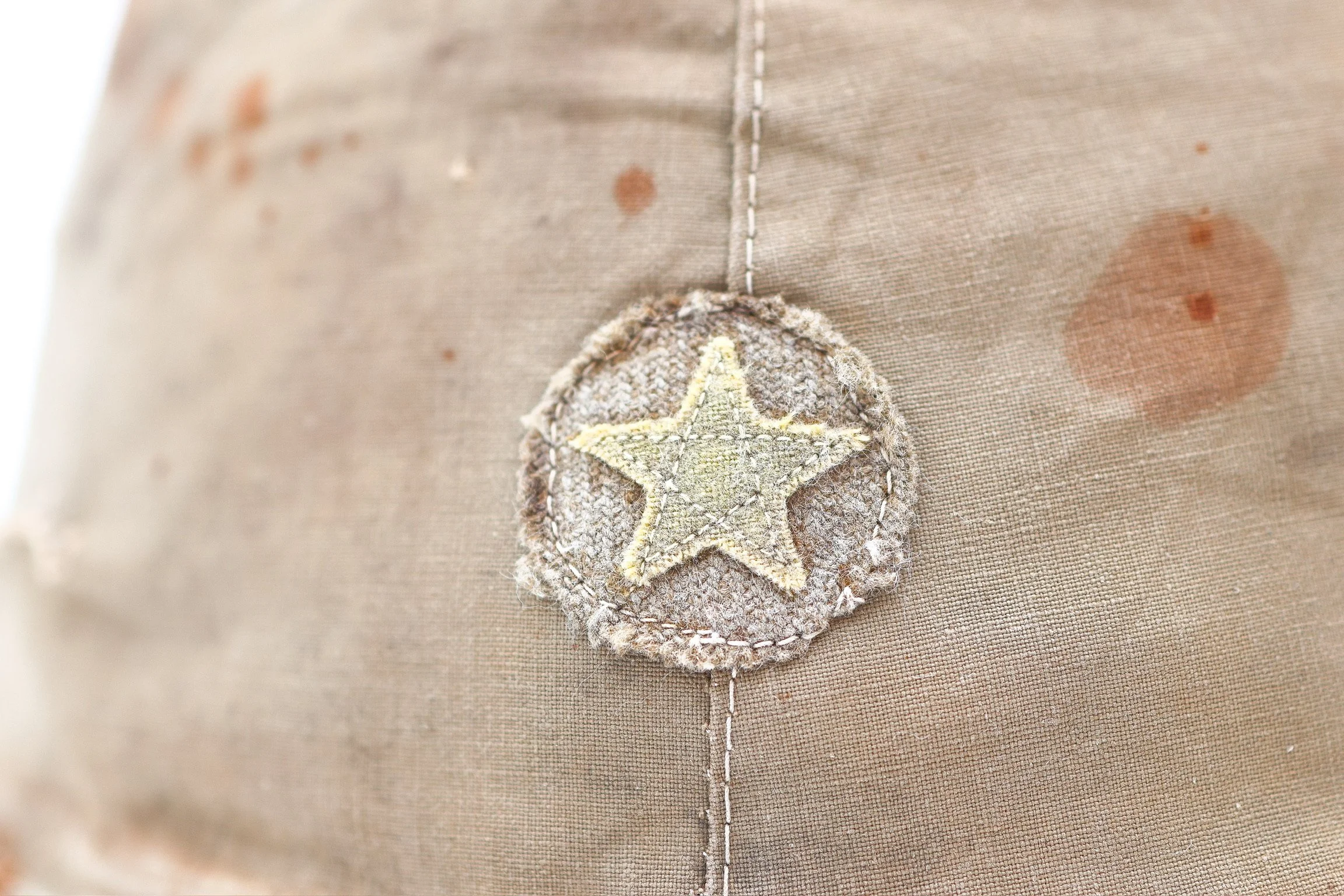
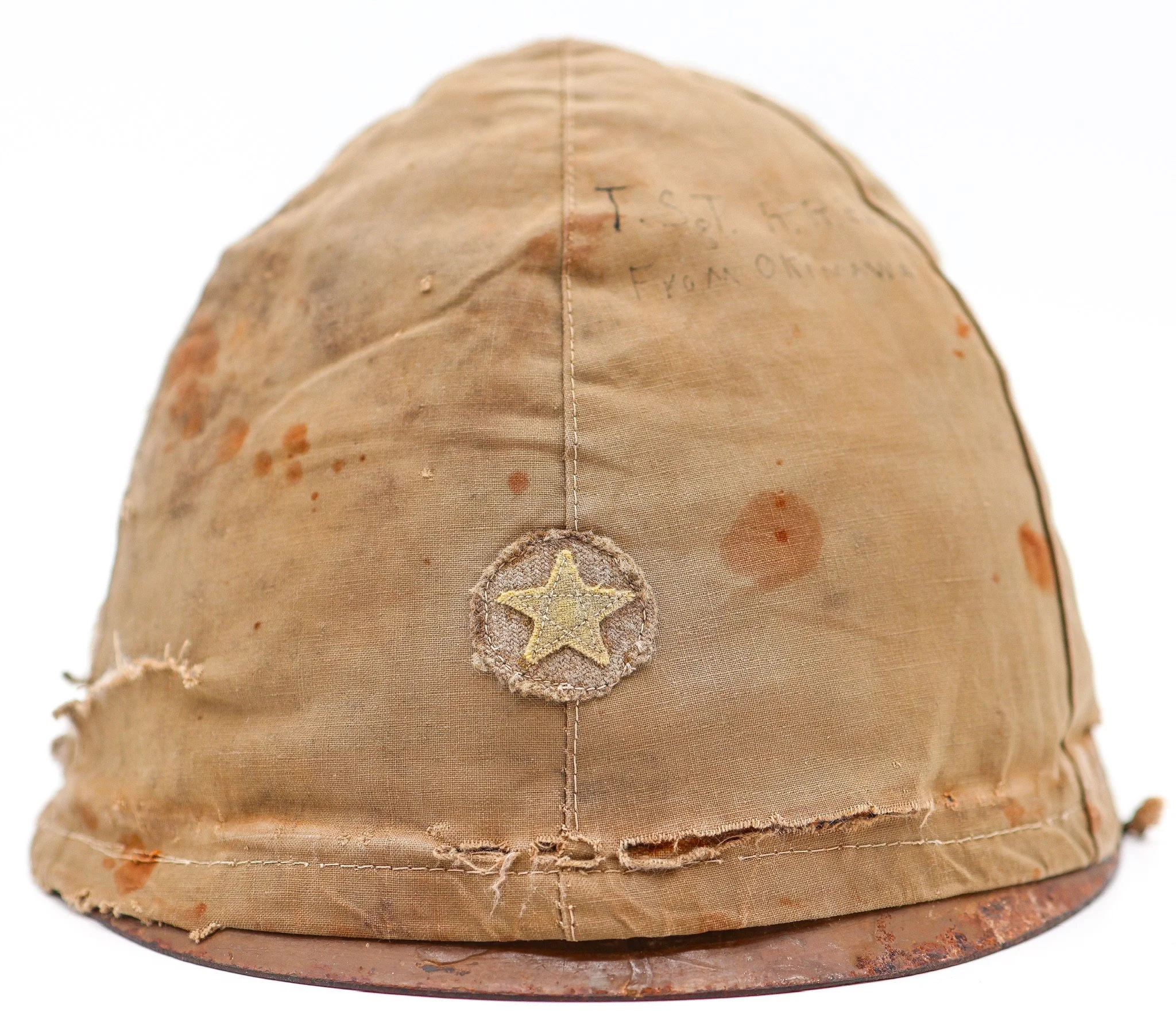
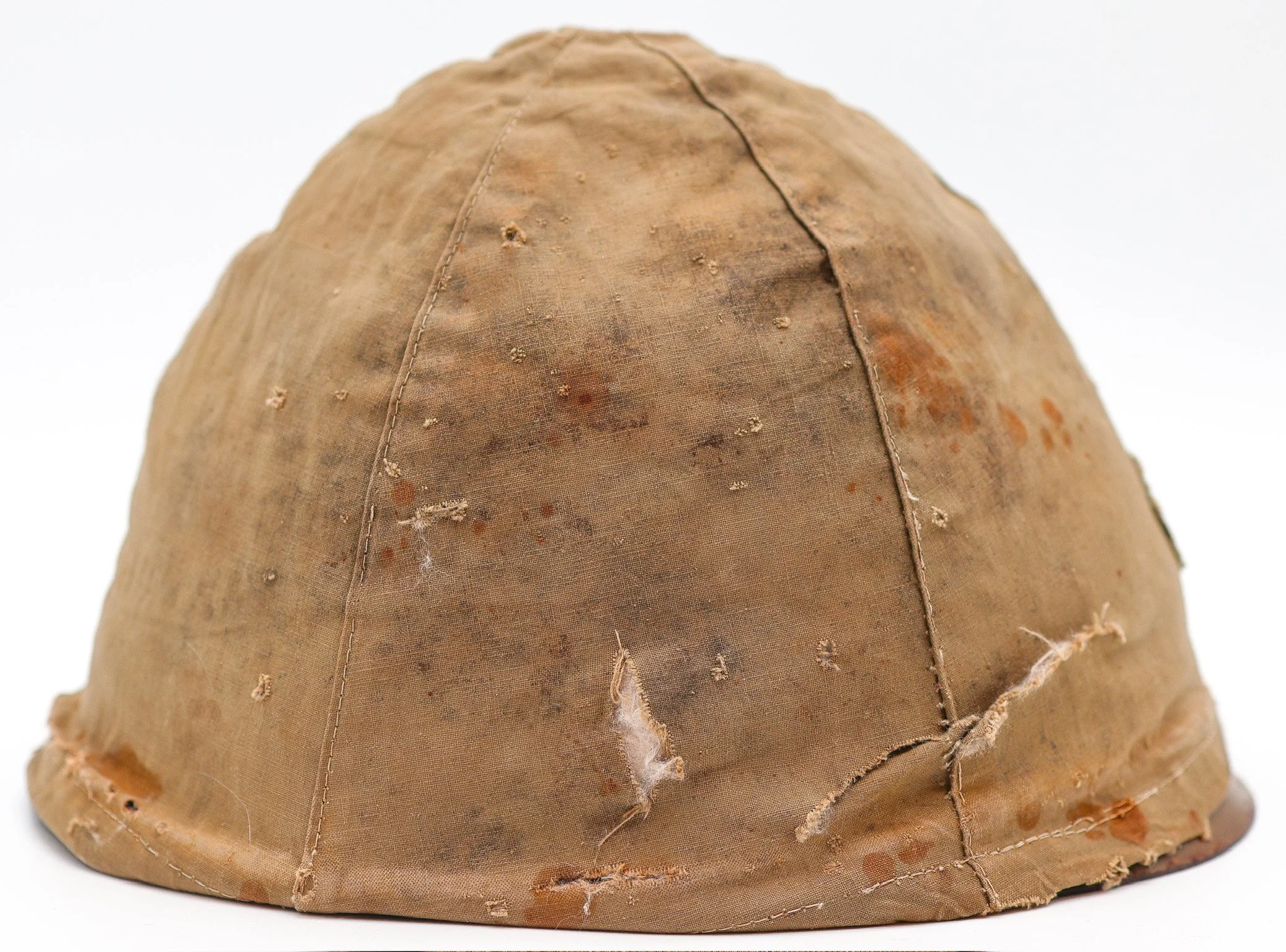
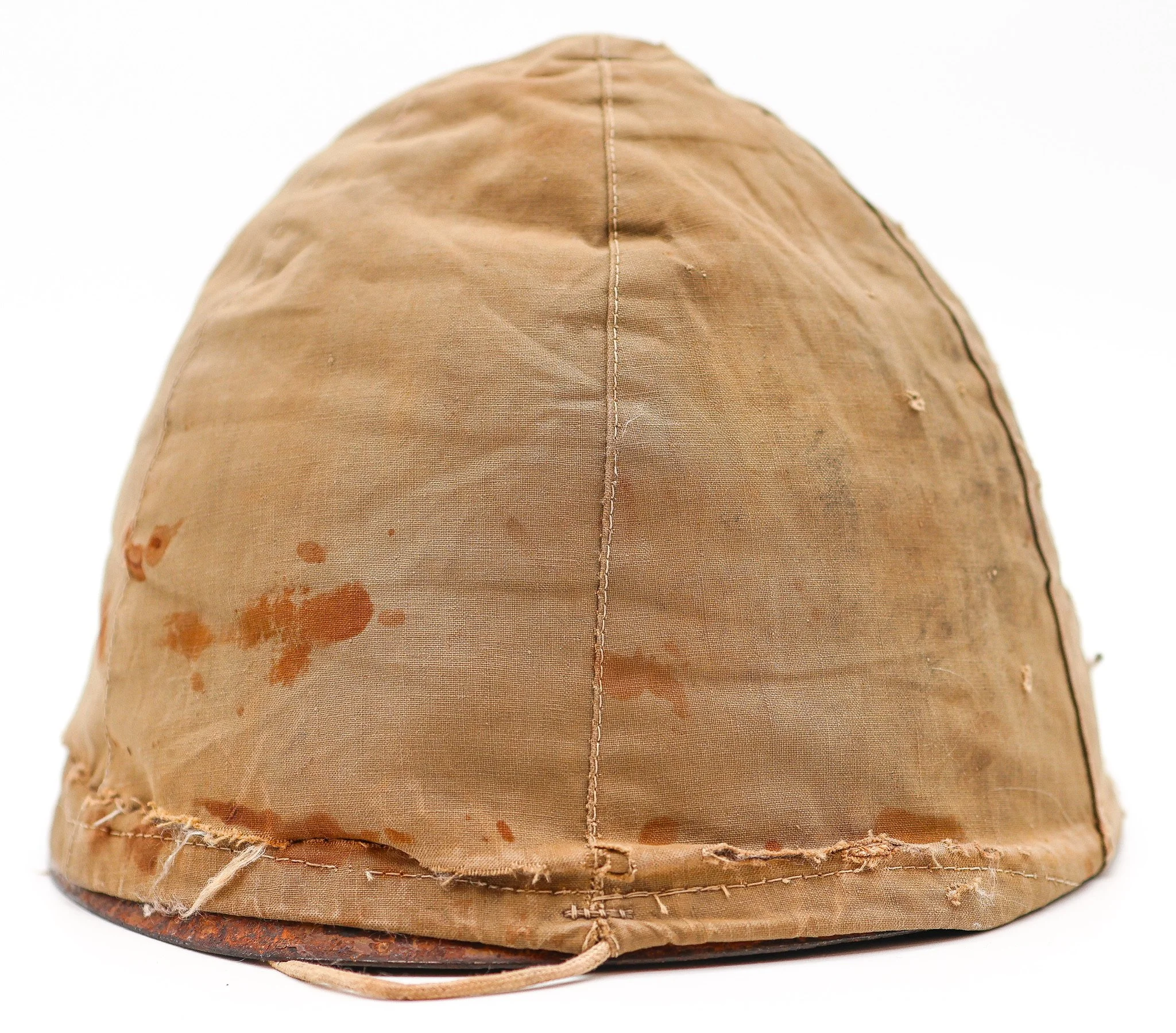
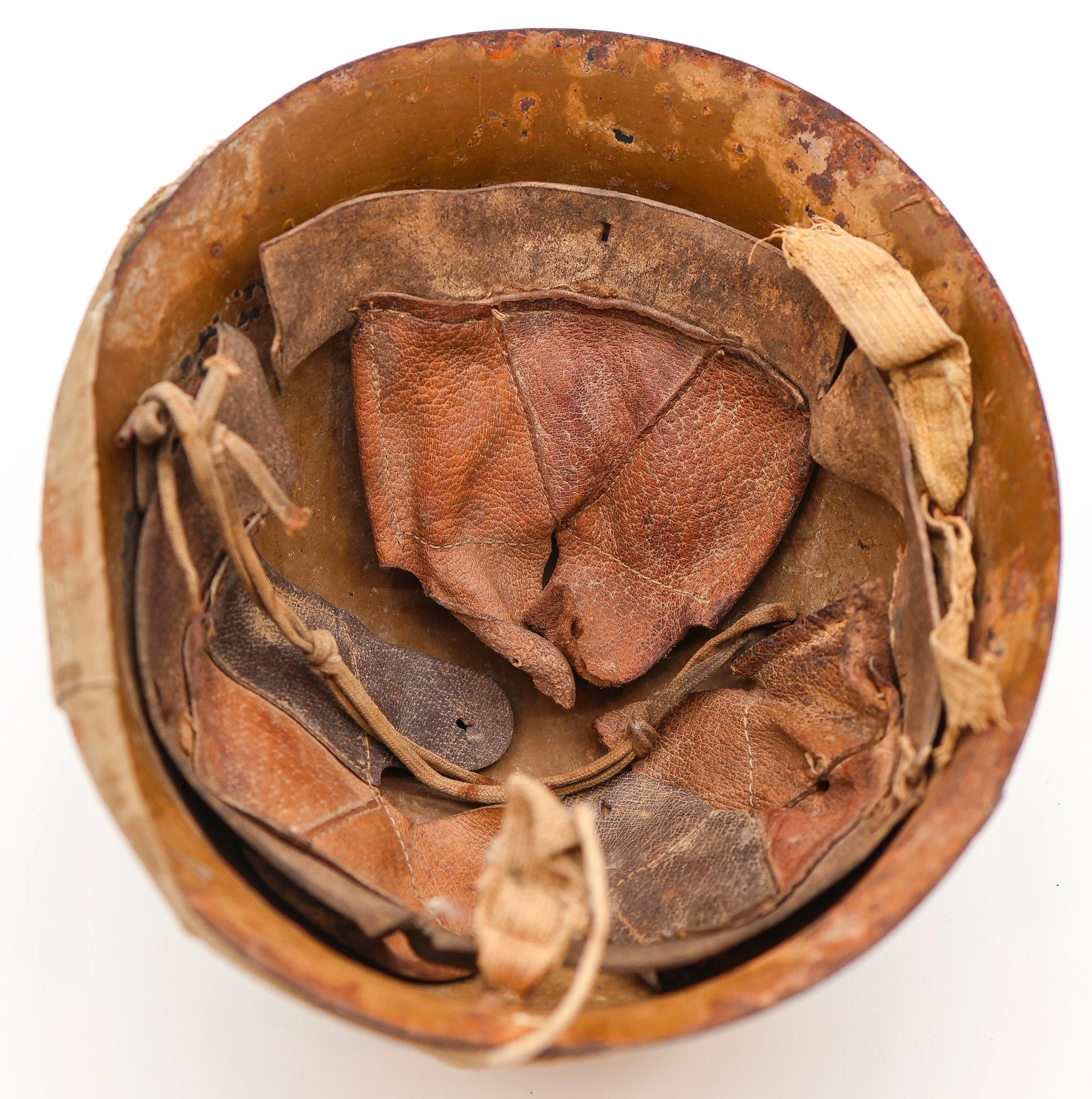
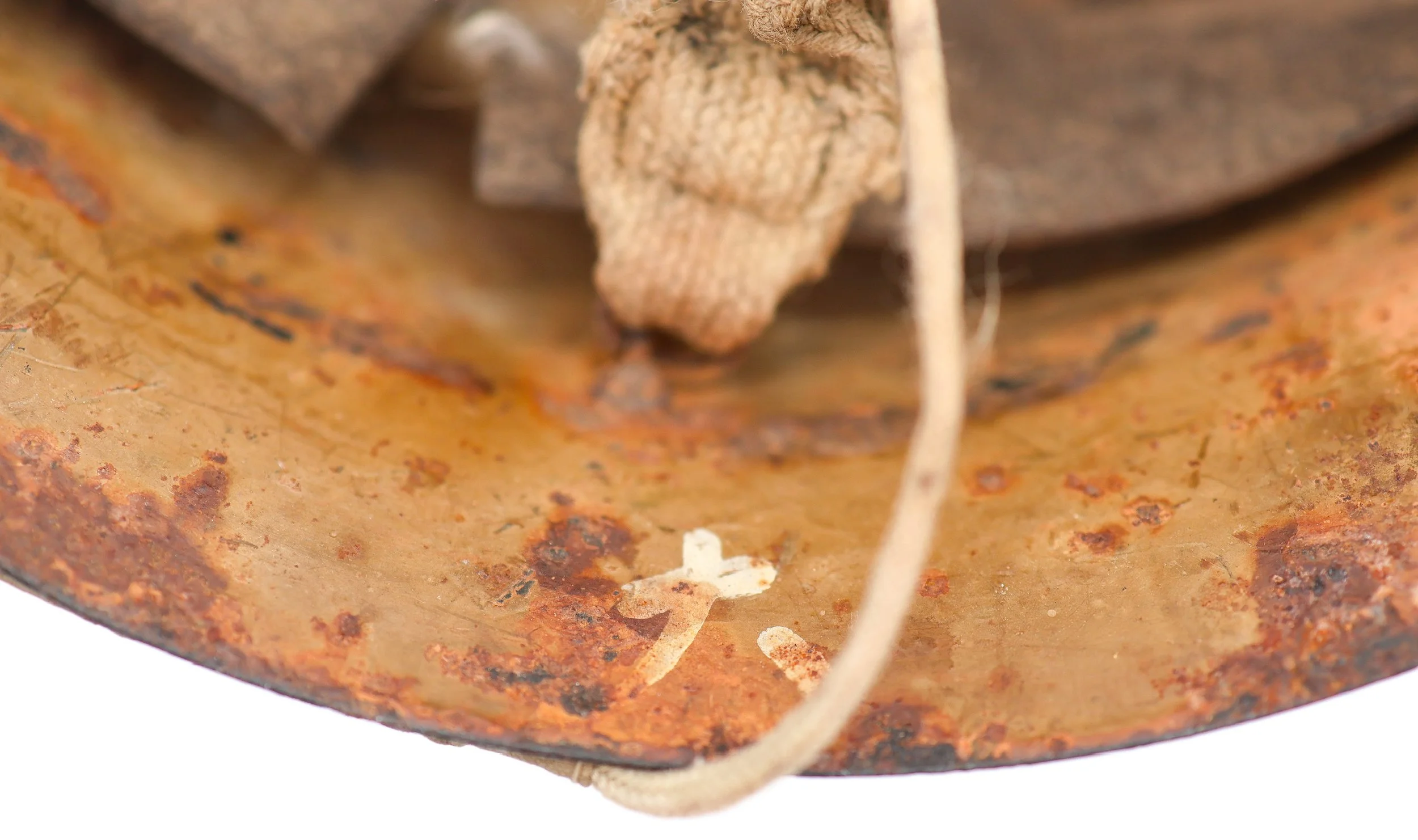
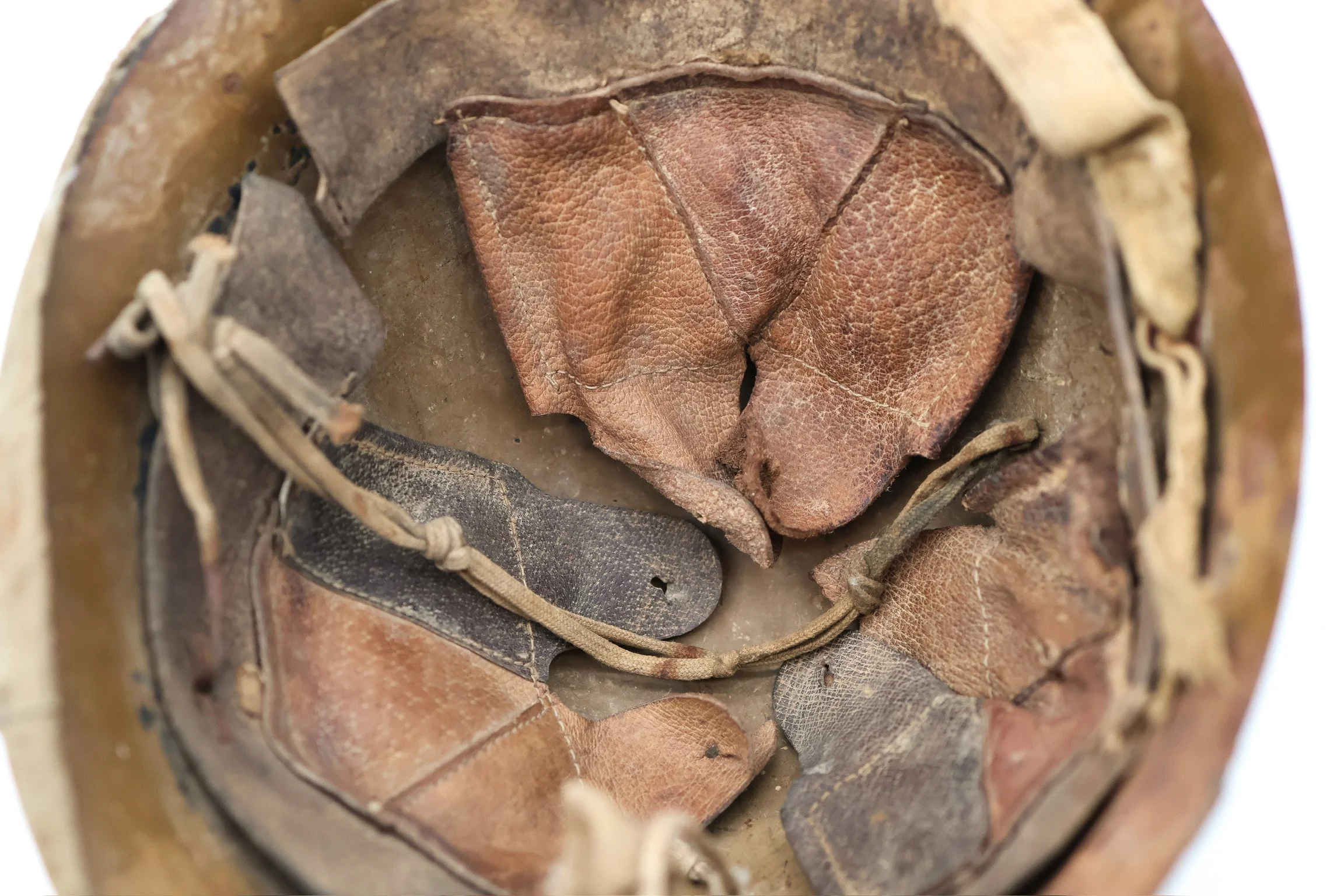
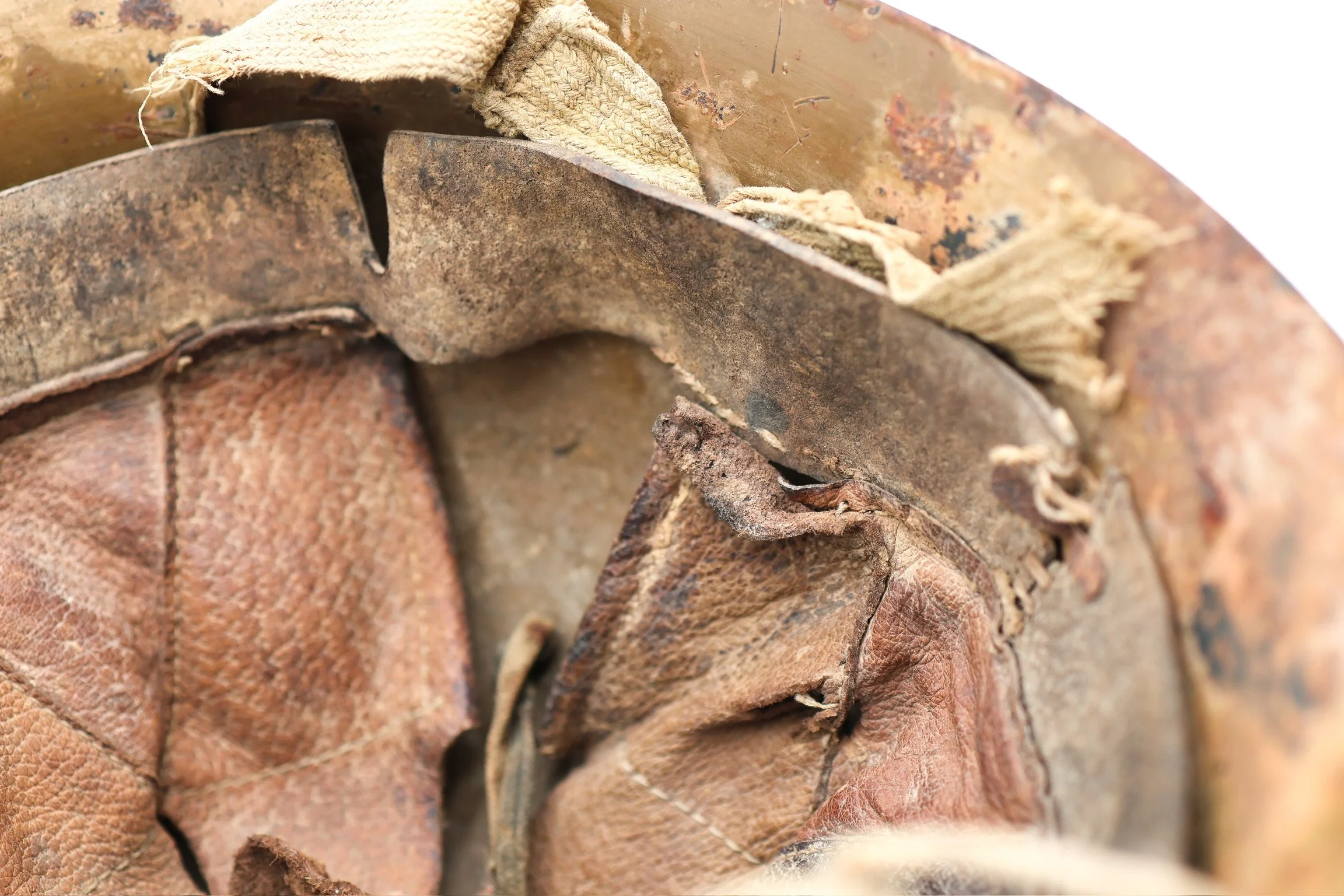
Japanese Type 90 steel helmet with original liner and canvas cover. The helmet was brought back from Okinawa by Rudolph Raymond Bava, U.S. Marine Corps, 2nd Marine Aircraft Wing, mechanic.
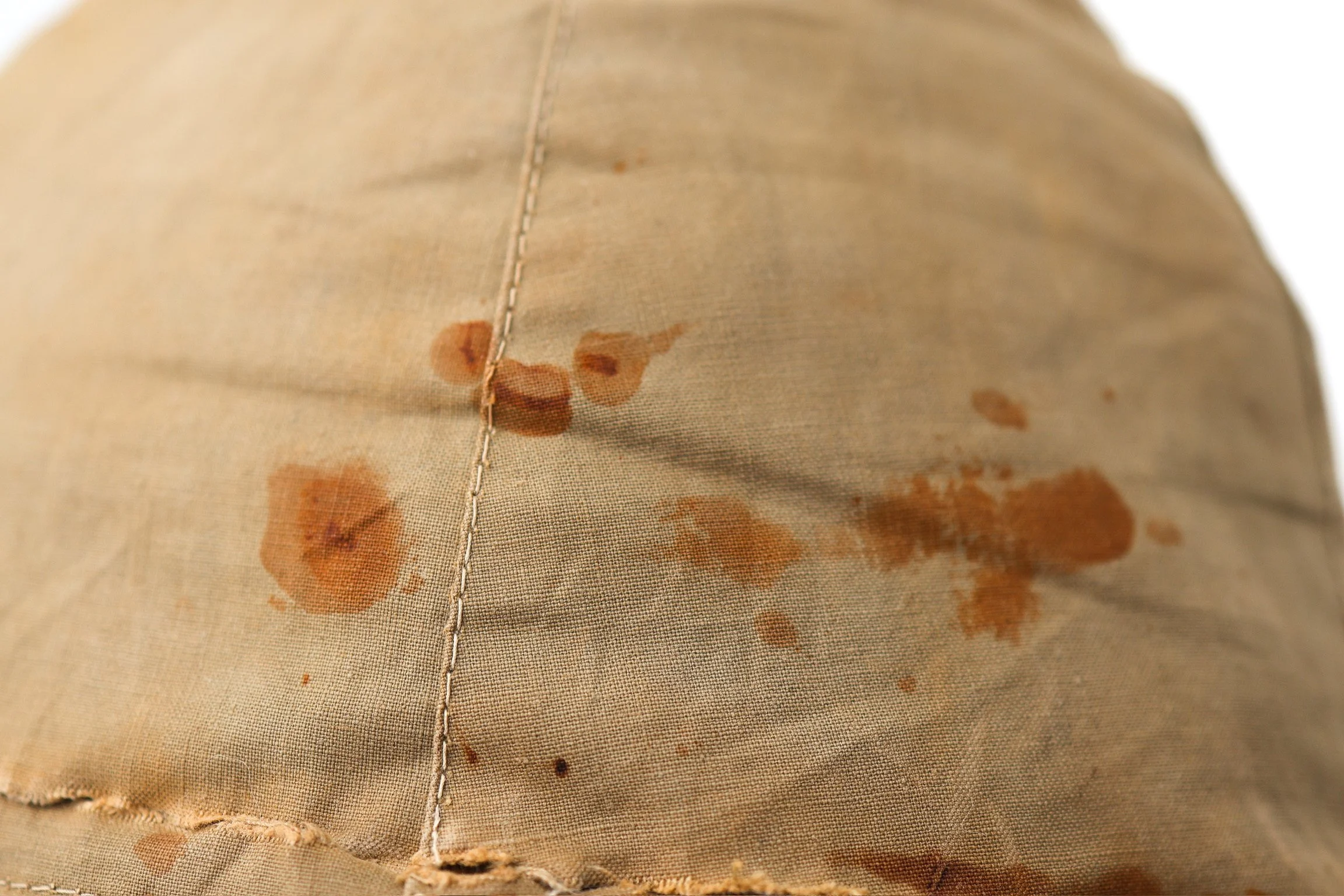
The canvas cover remains present and shows shrinkage and wear from use. Handwritten on the exterior of the cover is “R. R. Bava” and “From Okinawa.” Blood staining is visible on portions of the cover. The cover remains attached to the helmet.
The steel shell retains its original finish with visible wear. The interior liner is original and intact, consisting of multi-section leather pads and original suspension. The chin cord is present and shows repair, with one section stitched back together and the guide loop missing.
The helmet was purchased from a collector who acquired it from Kenneth Whitcomb, who found the helmet at a flea market in South Lake Tahoe. The helmet was brought back to Gilroy, California by Bava following World War II.
Japanese Type 90 Helmet – Okinawa Capture
Japanese Army Type 90 Helmet with Net and Screw Pine Scrim – Iwo Jima, 1945
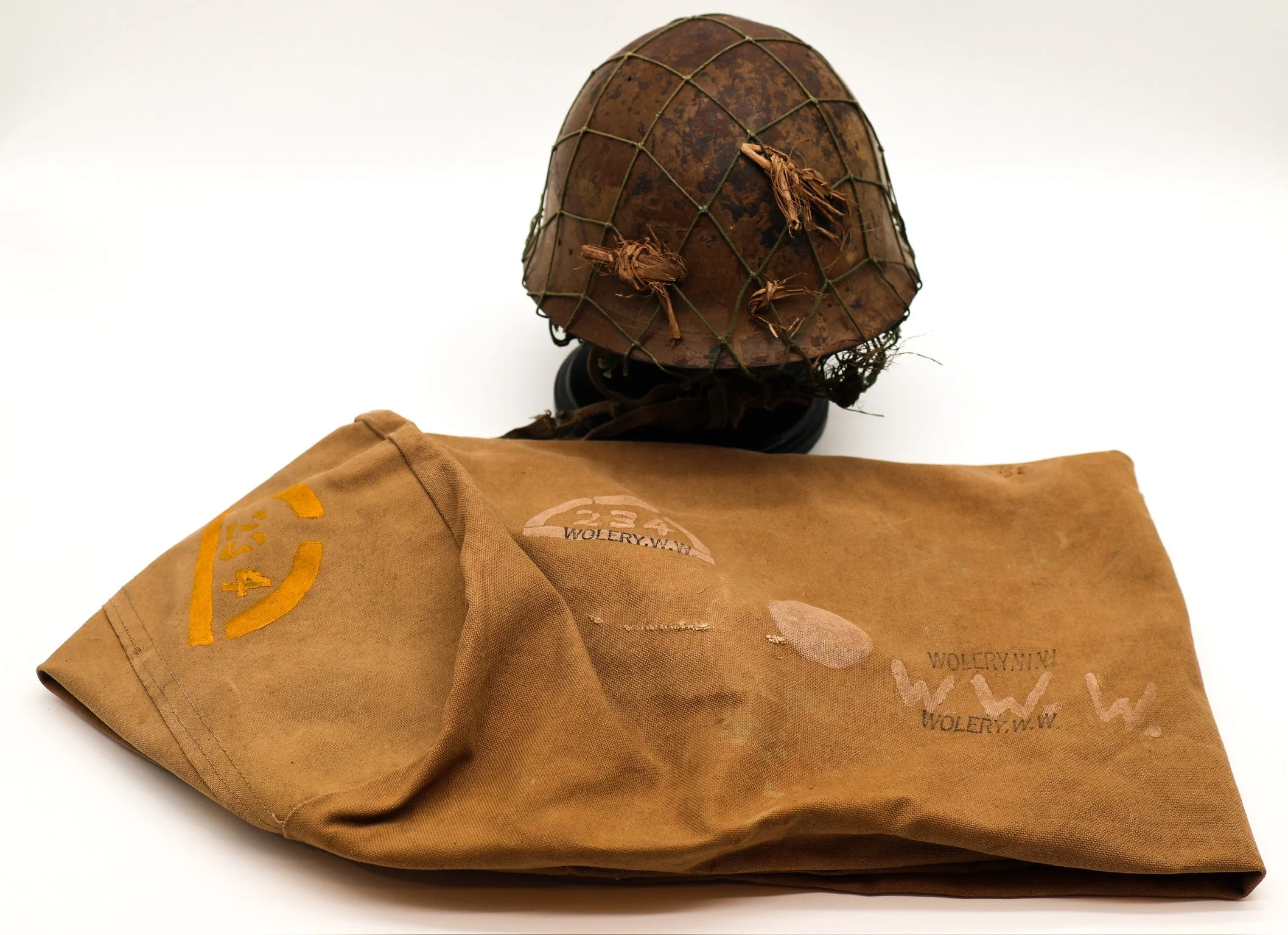
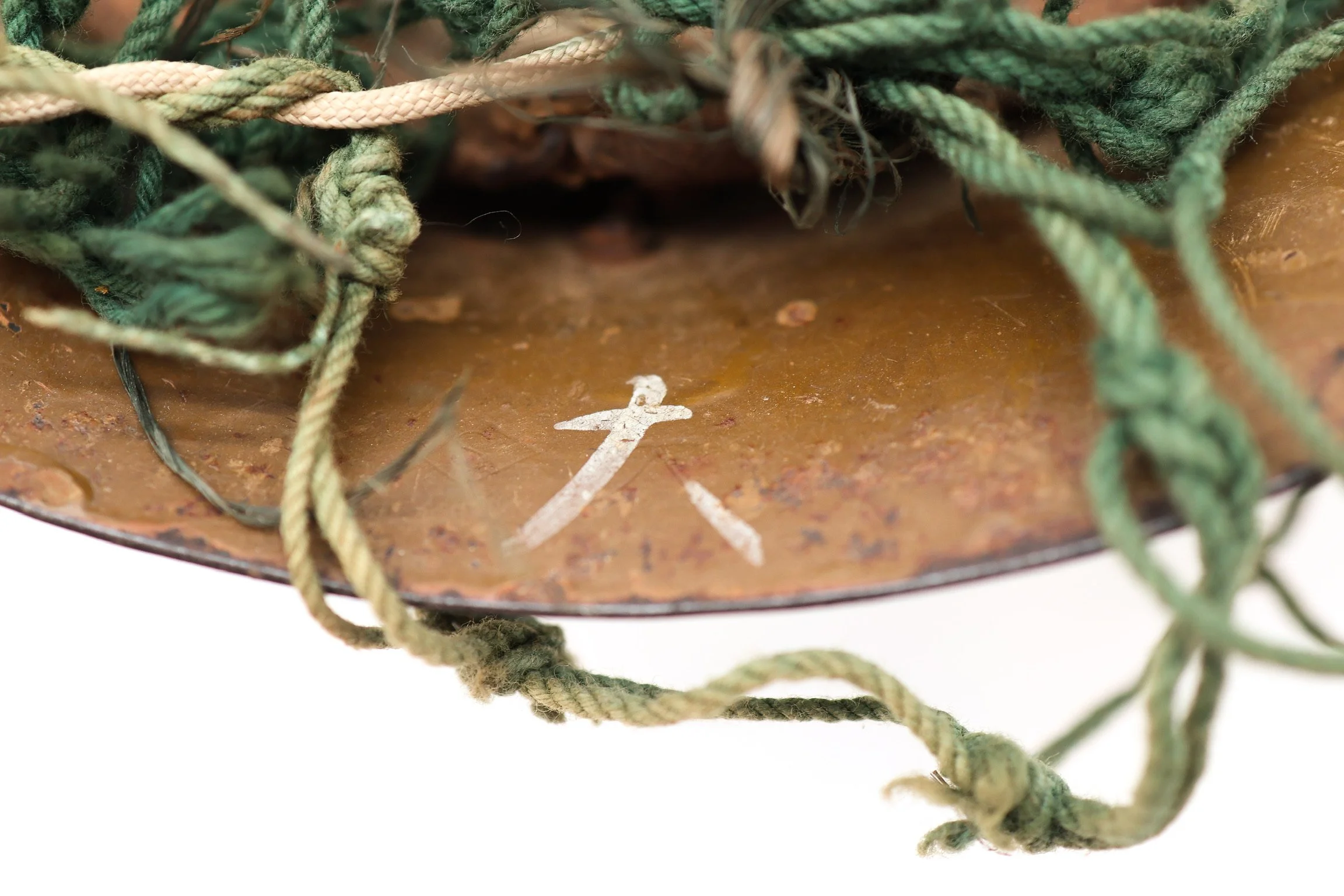
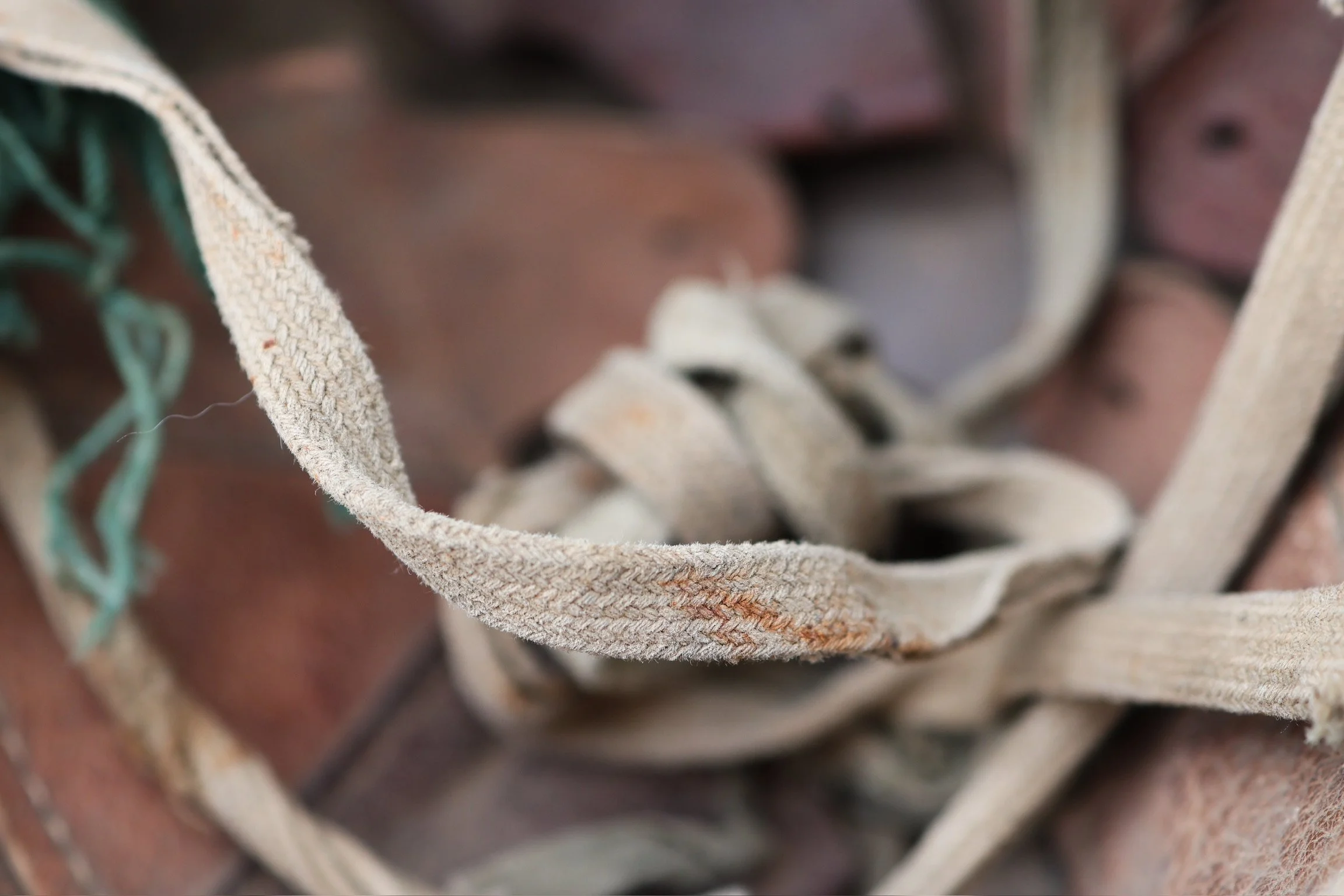
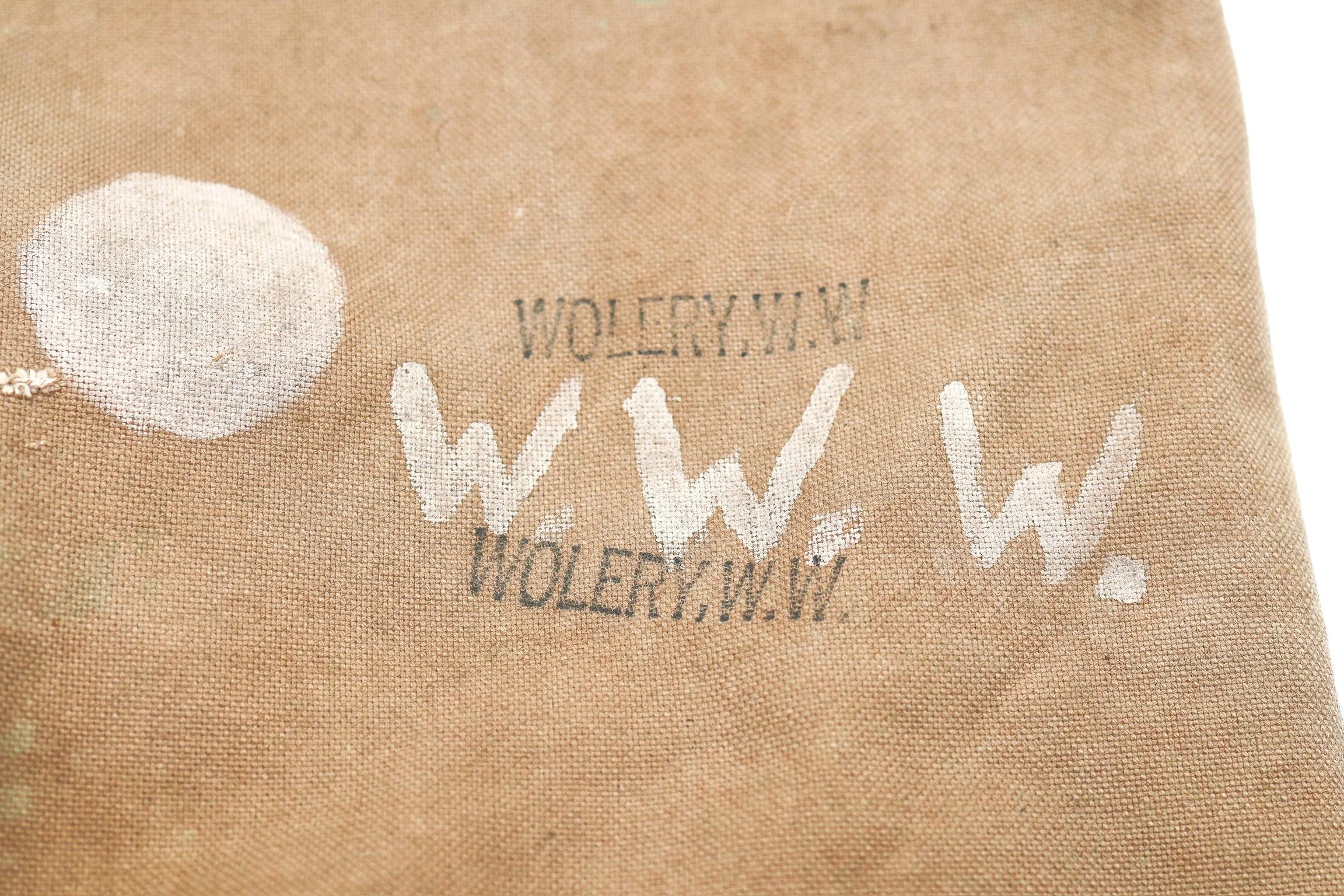
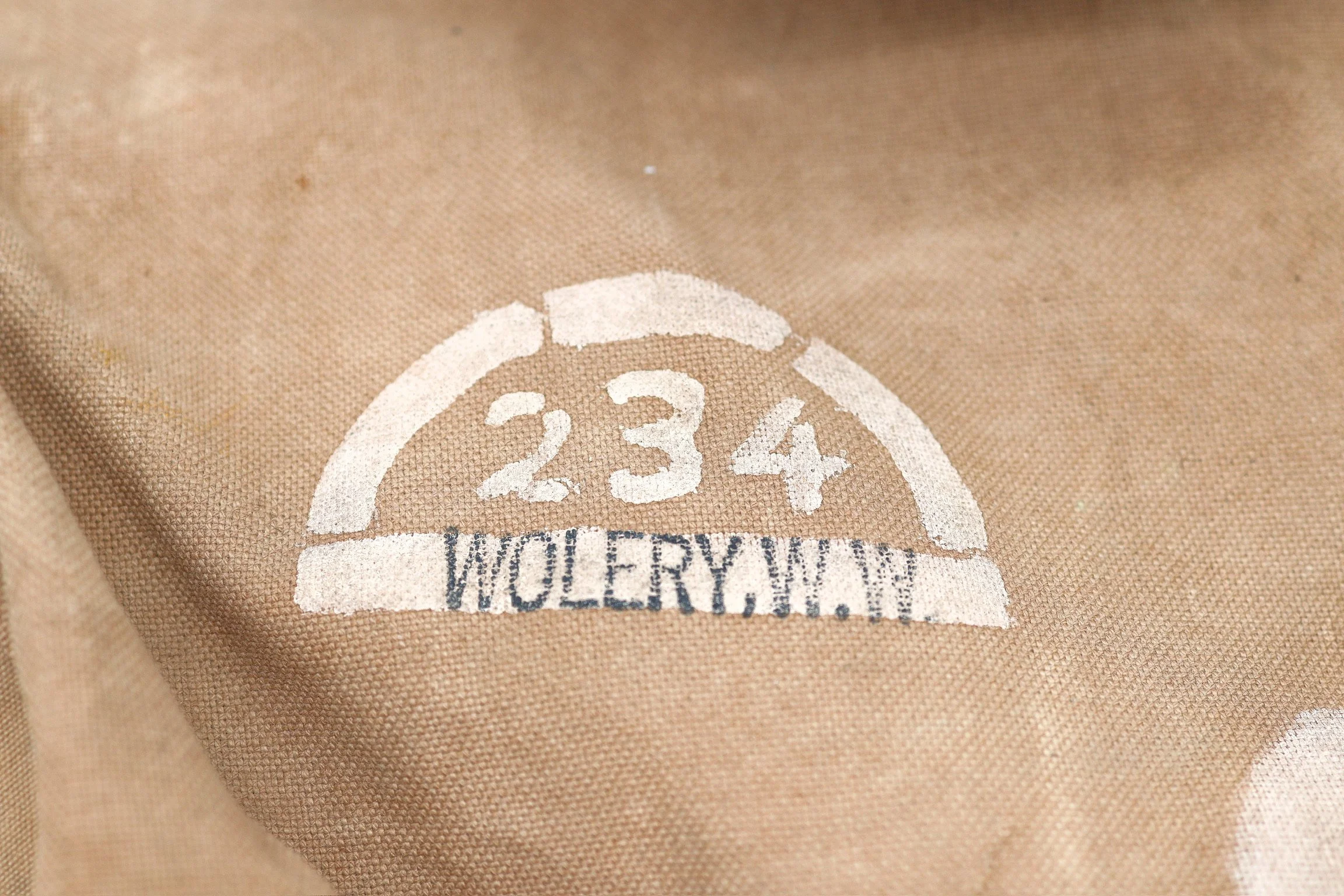
This Japanese Army Type 90 helmet was brought back from Iwo Jima by Walter W. Wolery, a U.S. Navy Corpsman (PhM2c) serving with Company C, 4th Medical Battalion, 4th Marine Division. Wolery served in the Marshall Islands campaign, Saipan, Tinian, and Iwo Jima.
Wolery removed this helmet from a deceased Japanese soldier near Mount Suribachi during the Battle of Iwo Jima in February 1945.
The helmet was purchased in 2016 by collector Matt Stone. The original shipment contained more than the helmet, including two duffle bags, leggings, a Japanese tropical uniform set, and additional U.S. items marked to Walter Wolery. Stone later contacted Wolery’s daughter, Janet, who showed photographs of the helmet to her father. Wolery stated that he took a helmet home from each campaign in which he served, including this one from Iwo Jima. He also recalled taking a Japanese tropical uniform set from the backpack of a deceased Japanese soldier on Tinian. At that time, Wolery had already undergone multiple brain surgeries.
-
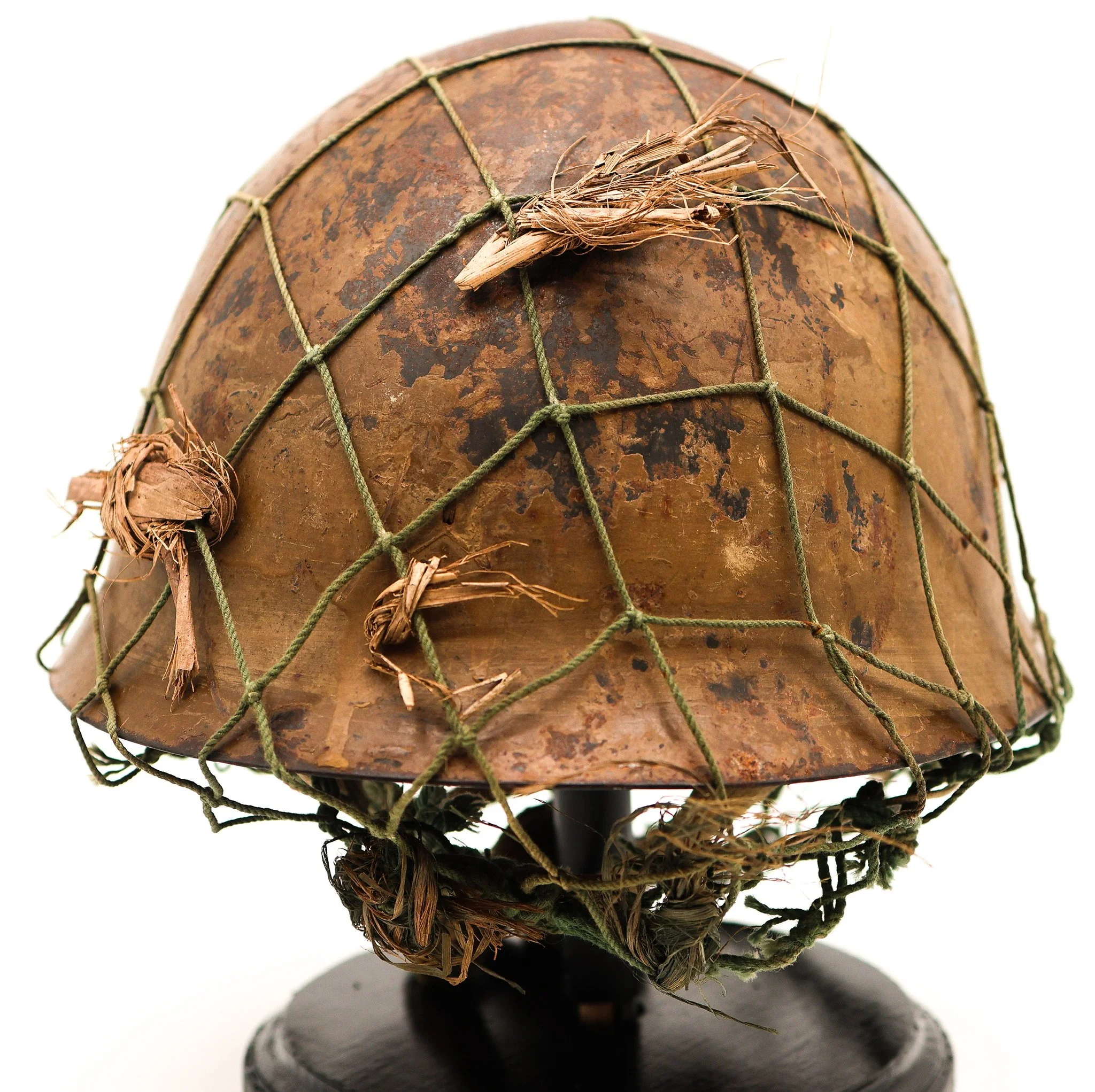
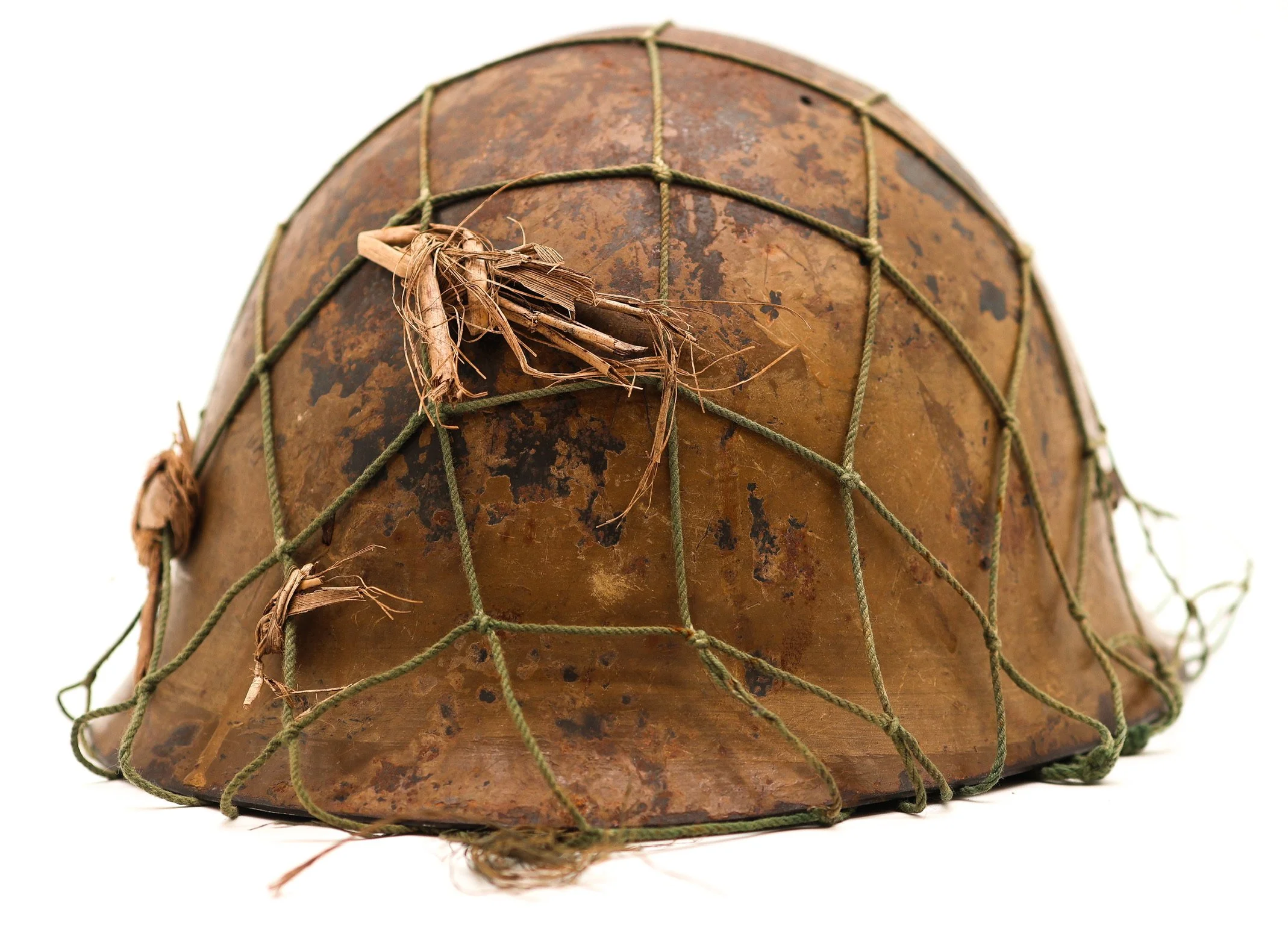
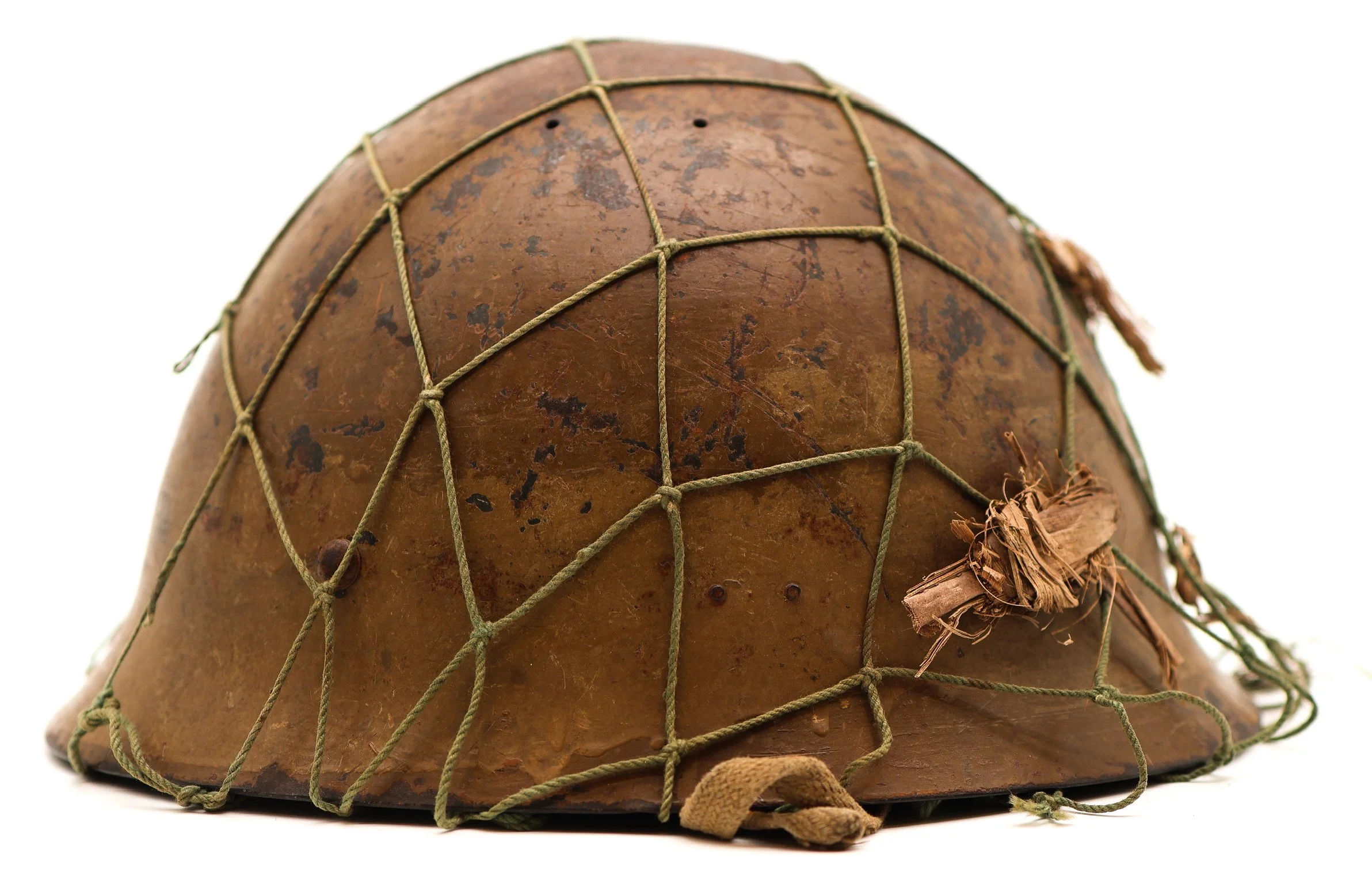
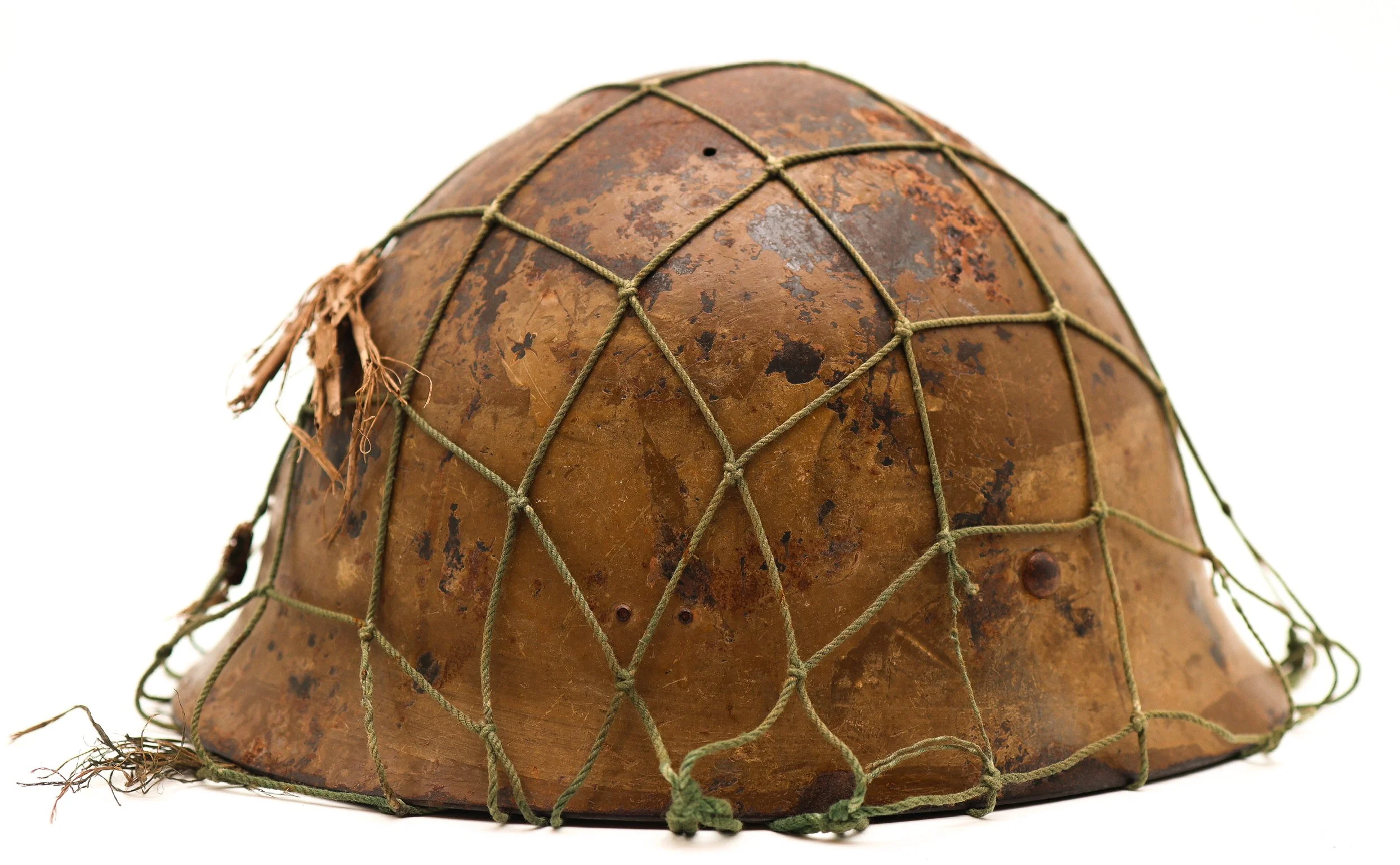
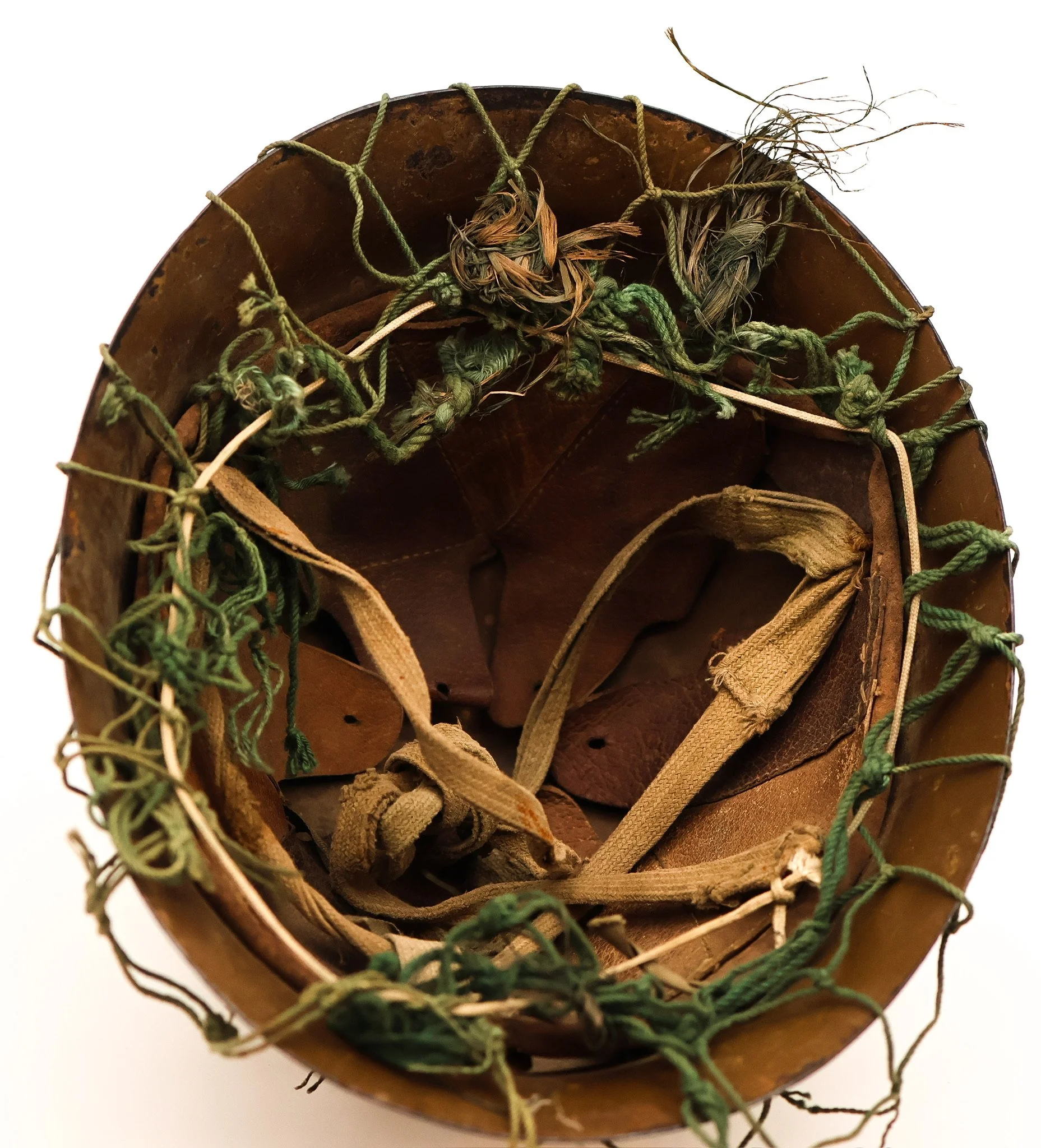
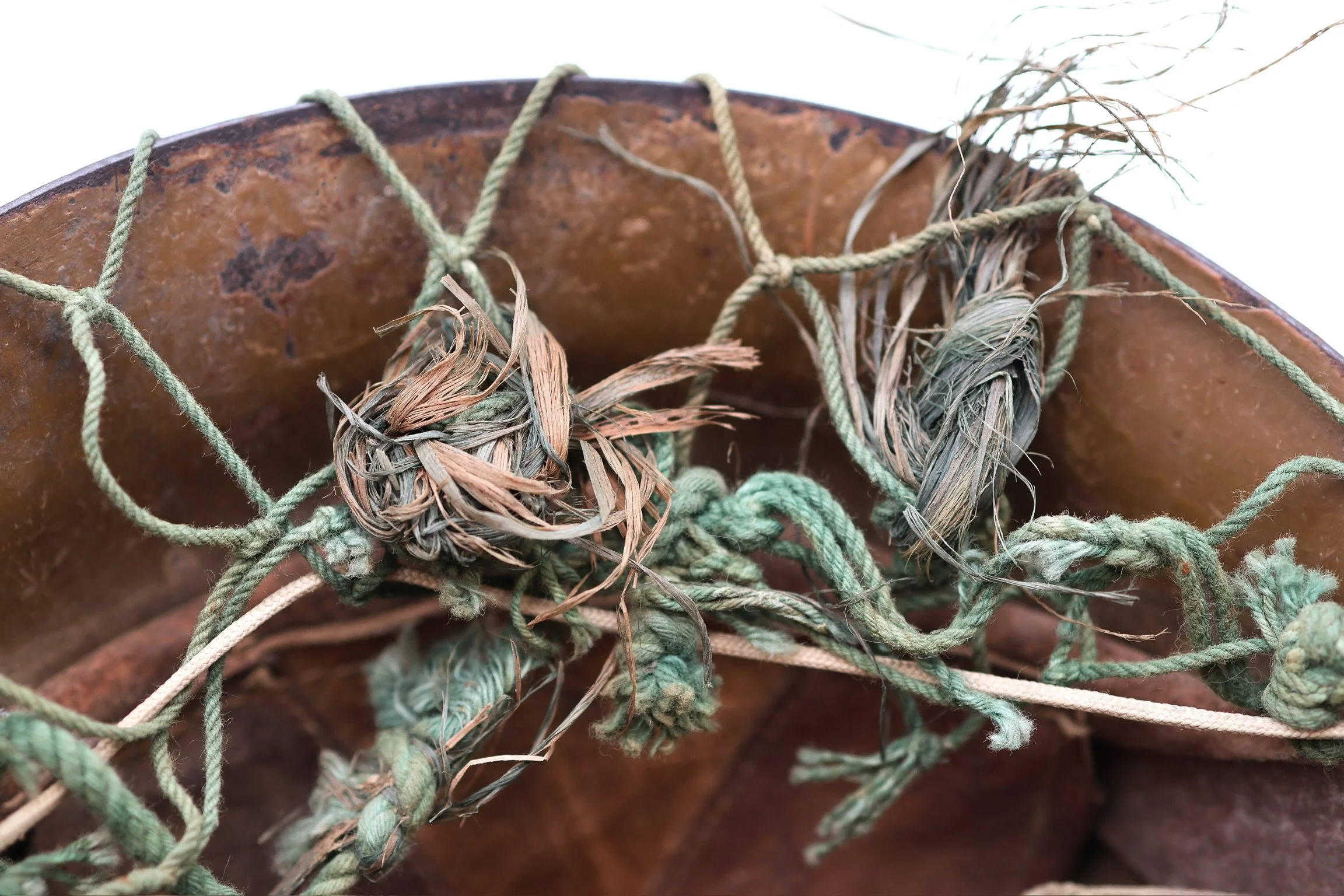
The helmet retains its original camouflage net fitted with screw pine (pandanus) scrim, a plant commonly encountered on Iwo Jima. Portions of original grass remain interwoven in the netting. Mud residue remains present inside the liner, consistent with field conditions. The olive drab finish is approximately 75% intact, with slightly lighter coloration along the lower edge. The Imperial Army star is missing, with only the mounting rivets remaining.
The interior features a three-pad brown leather liner that remains intact, showing wear and stiffness consistent with age and use. The drawstring and suspension/chinstrap are present. A small kanji character is stamped on the rear skirt. Dark staining consistent with blood is present.
Wolery was wounded on Saipan in 1944 by shrapnel, and his right hand was run over by a Japanese tank before returning to combat and later landing on Iwo Jima.