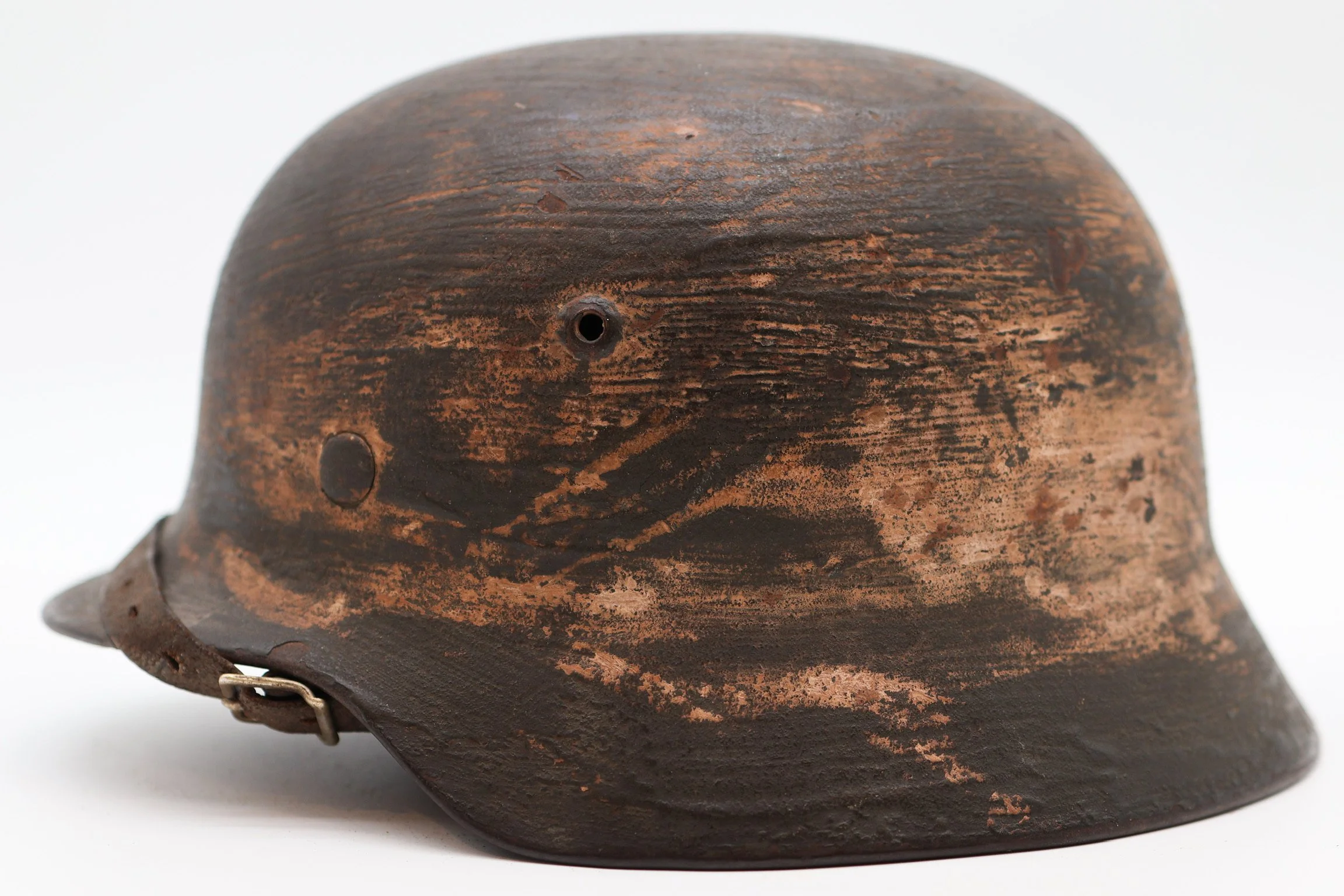
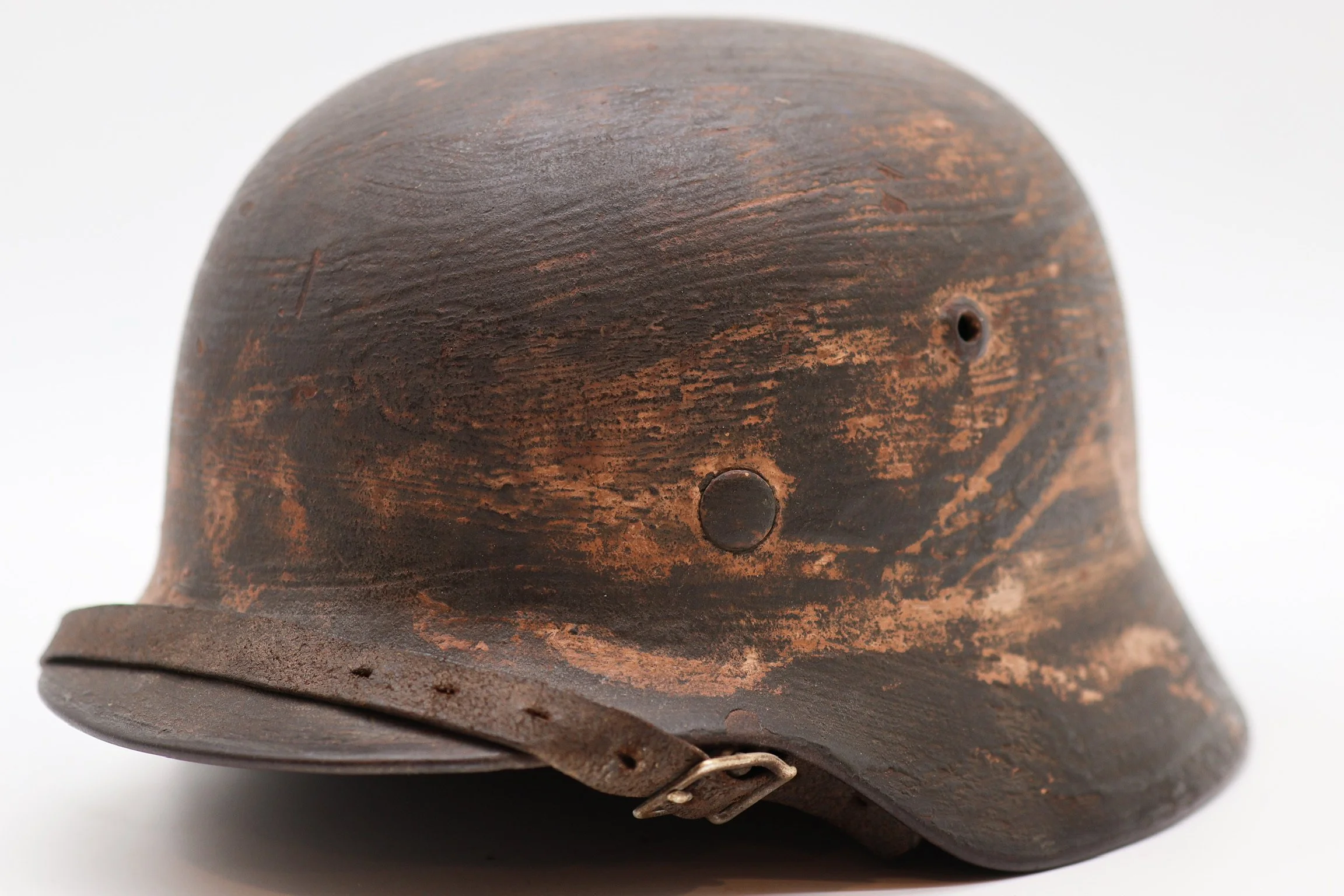
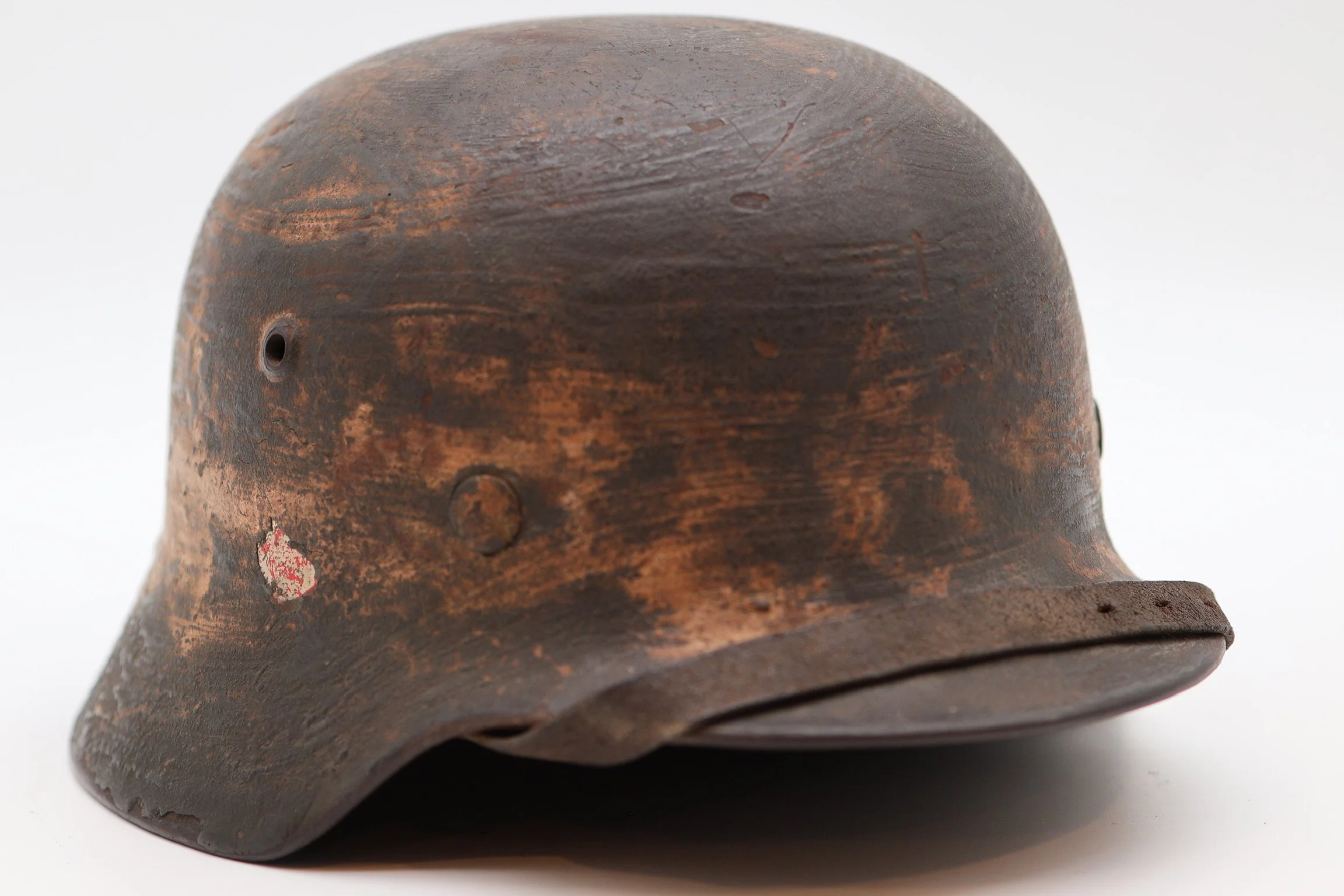
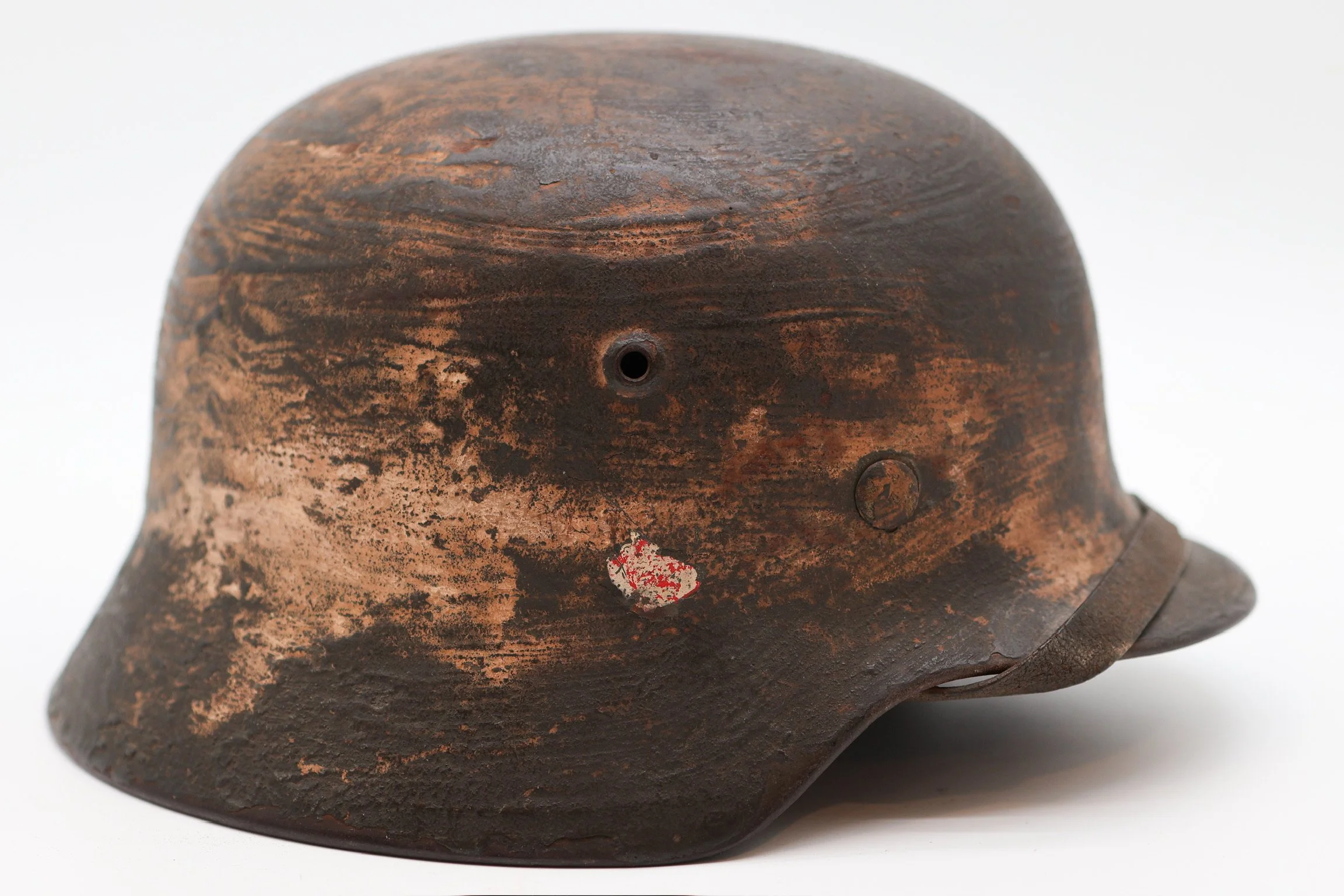
German M35 Helmet Named to Karl-August Blendermann, with War Diary
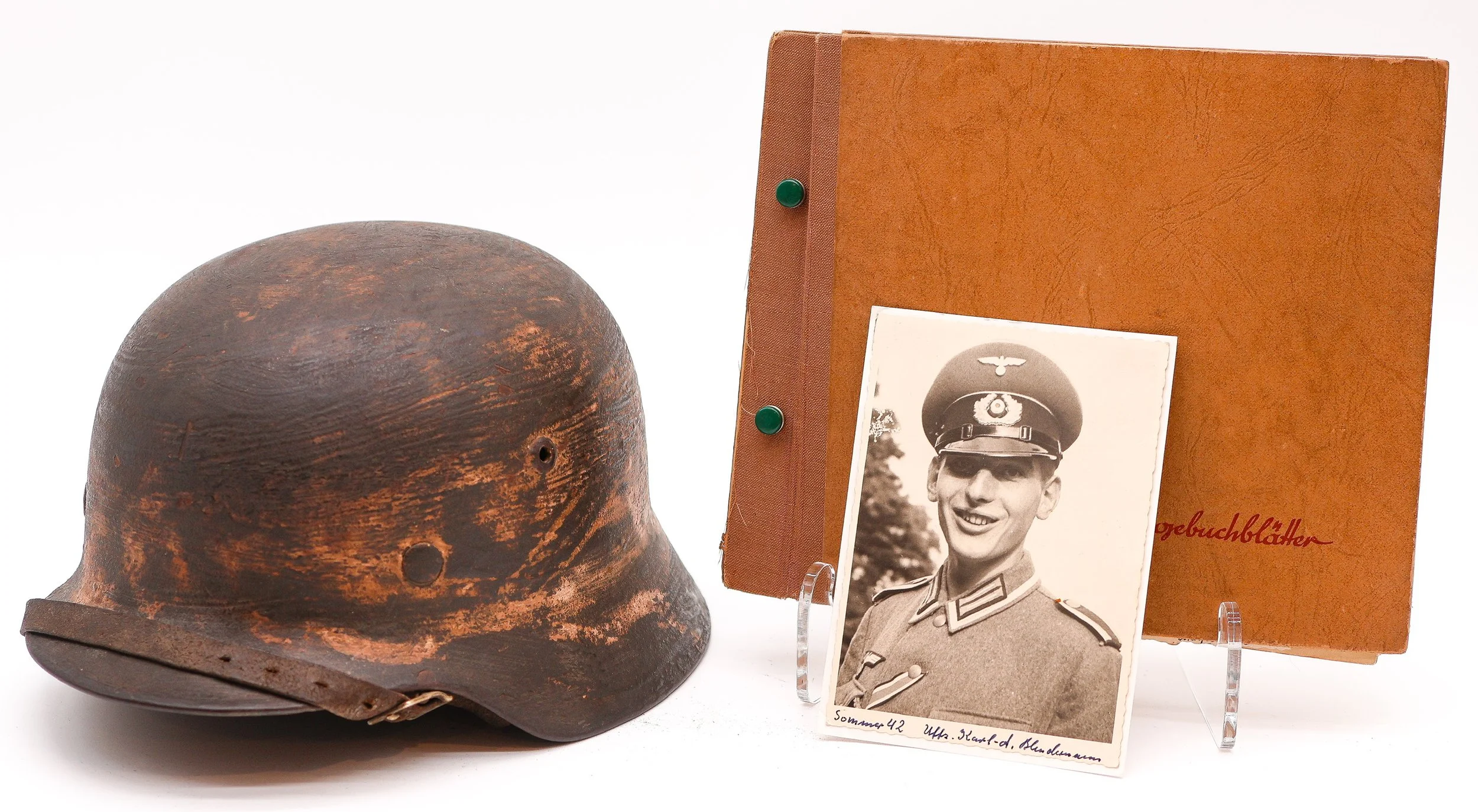
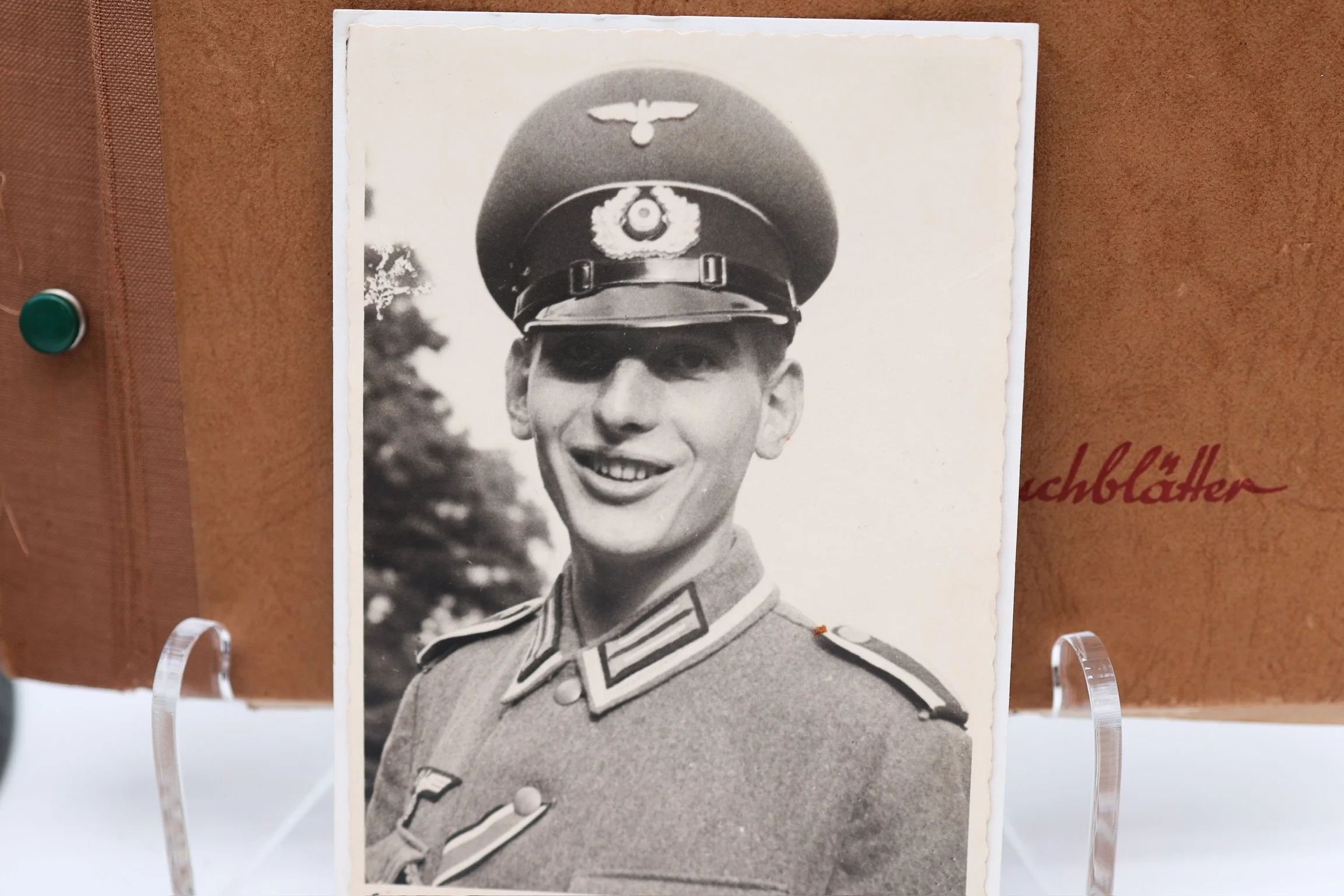
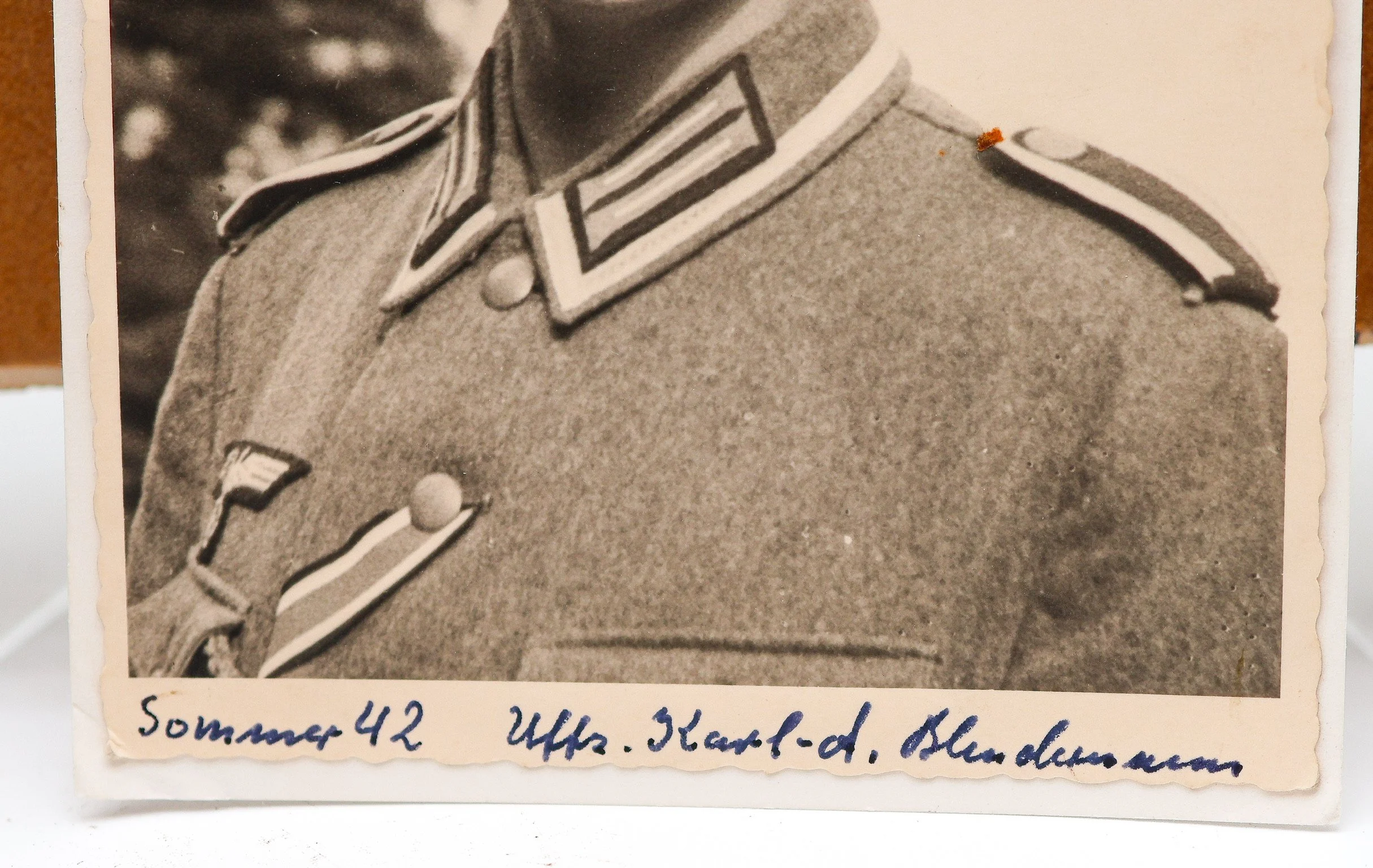
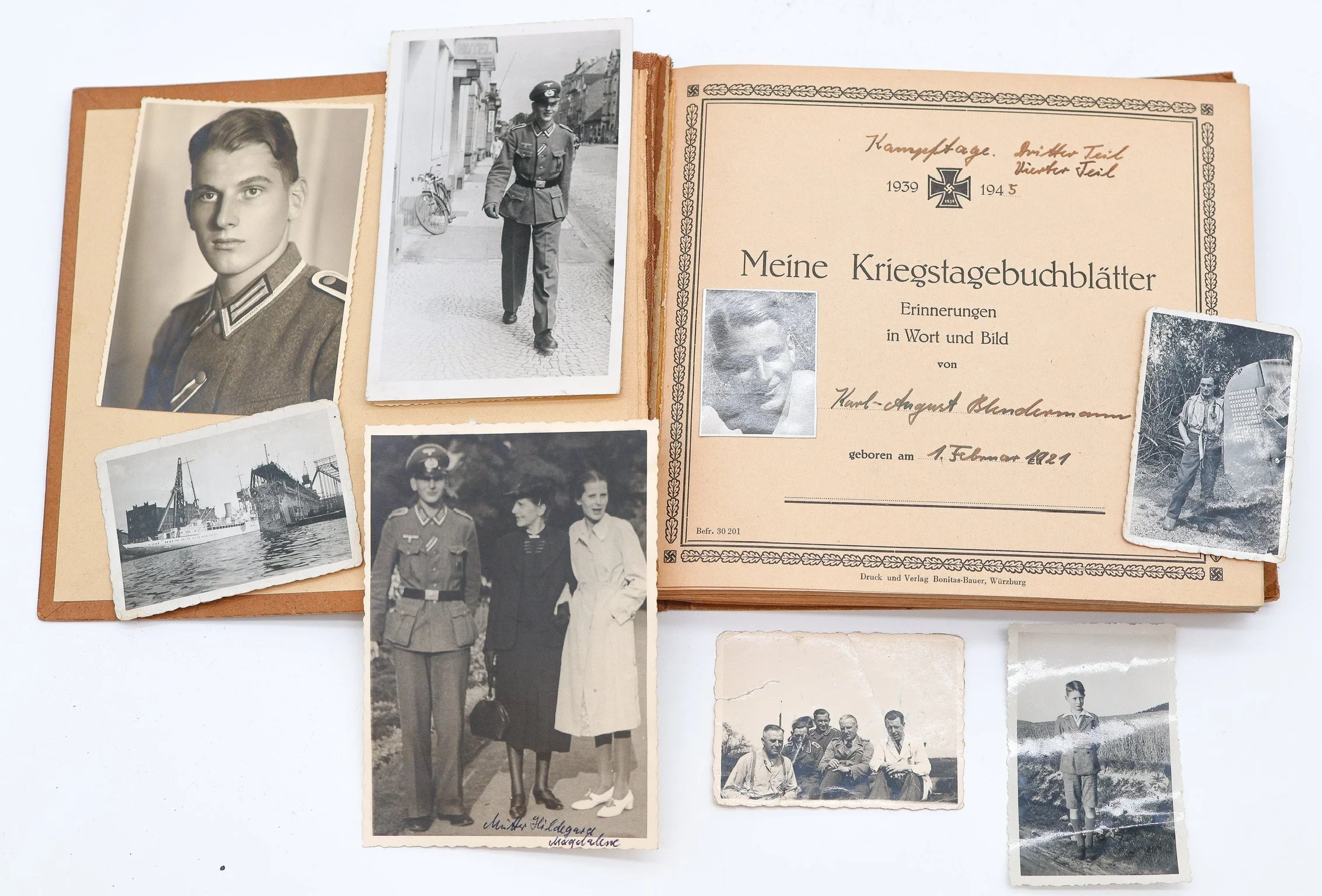
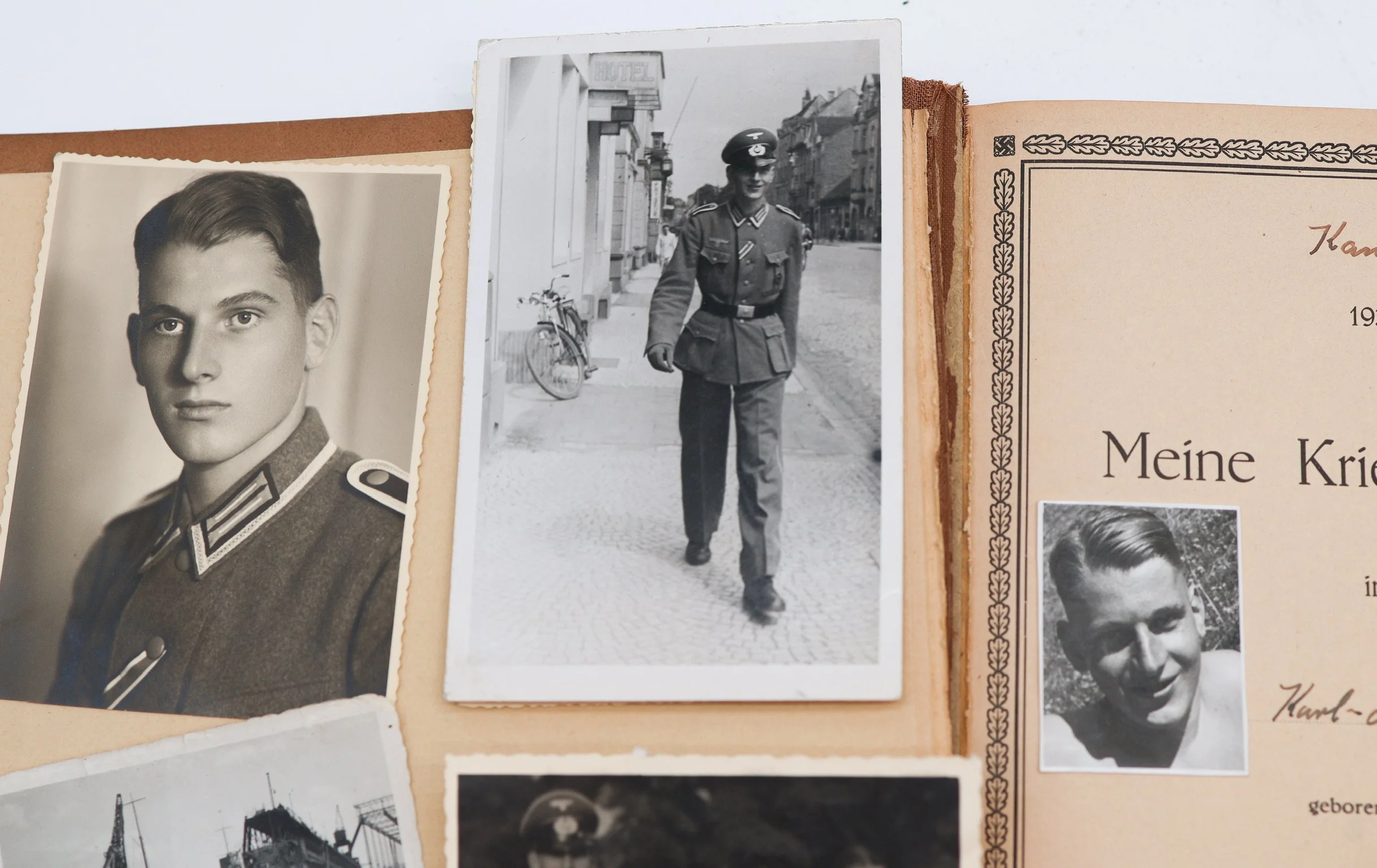
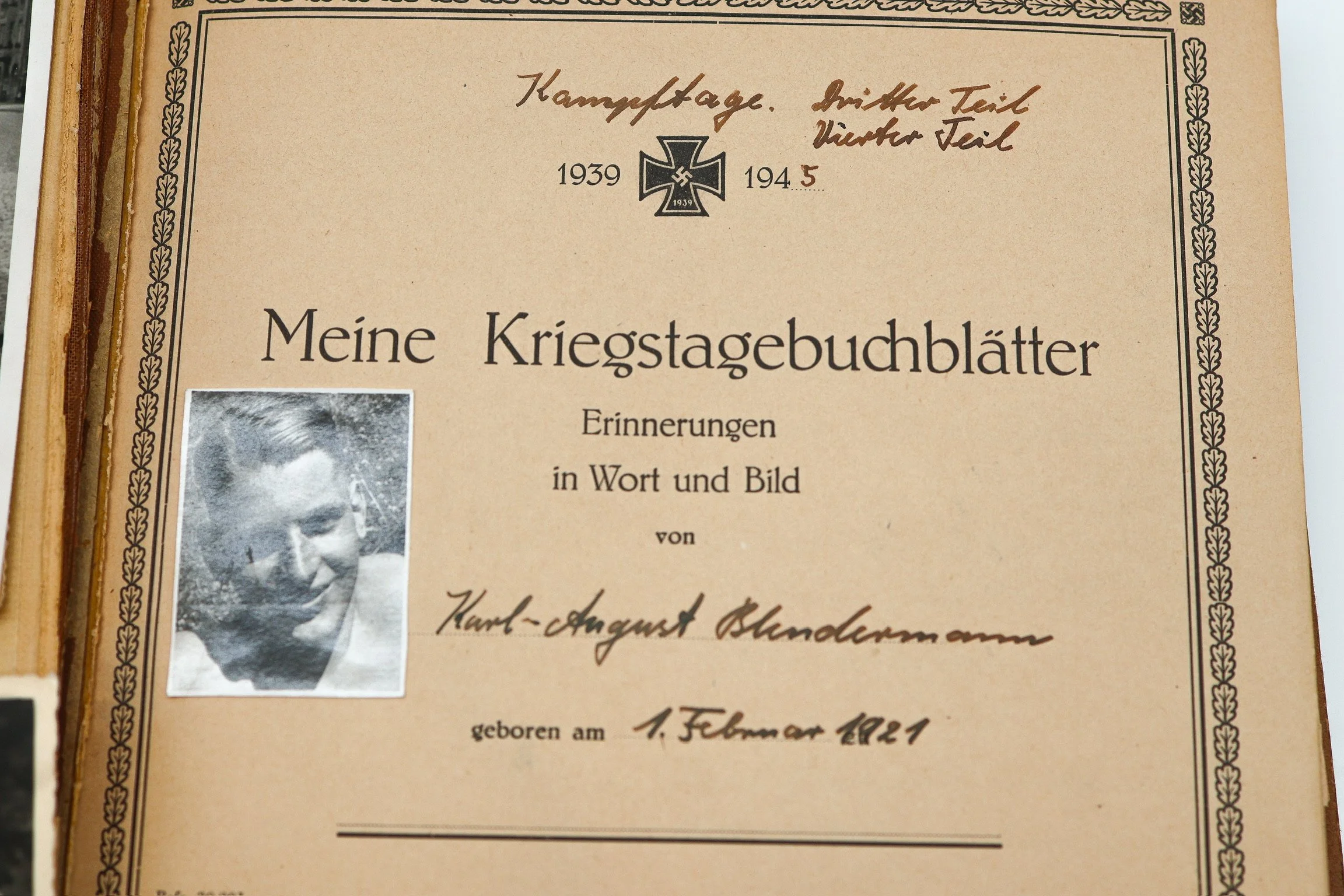
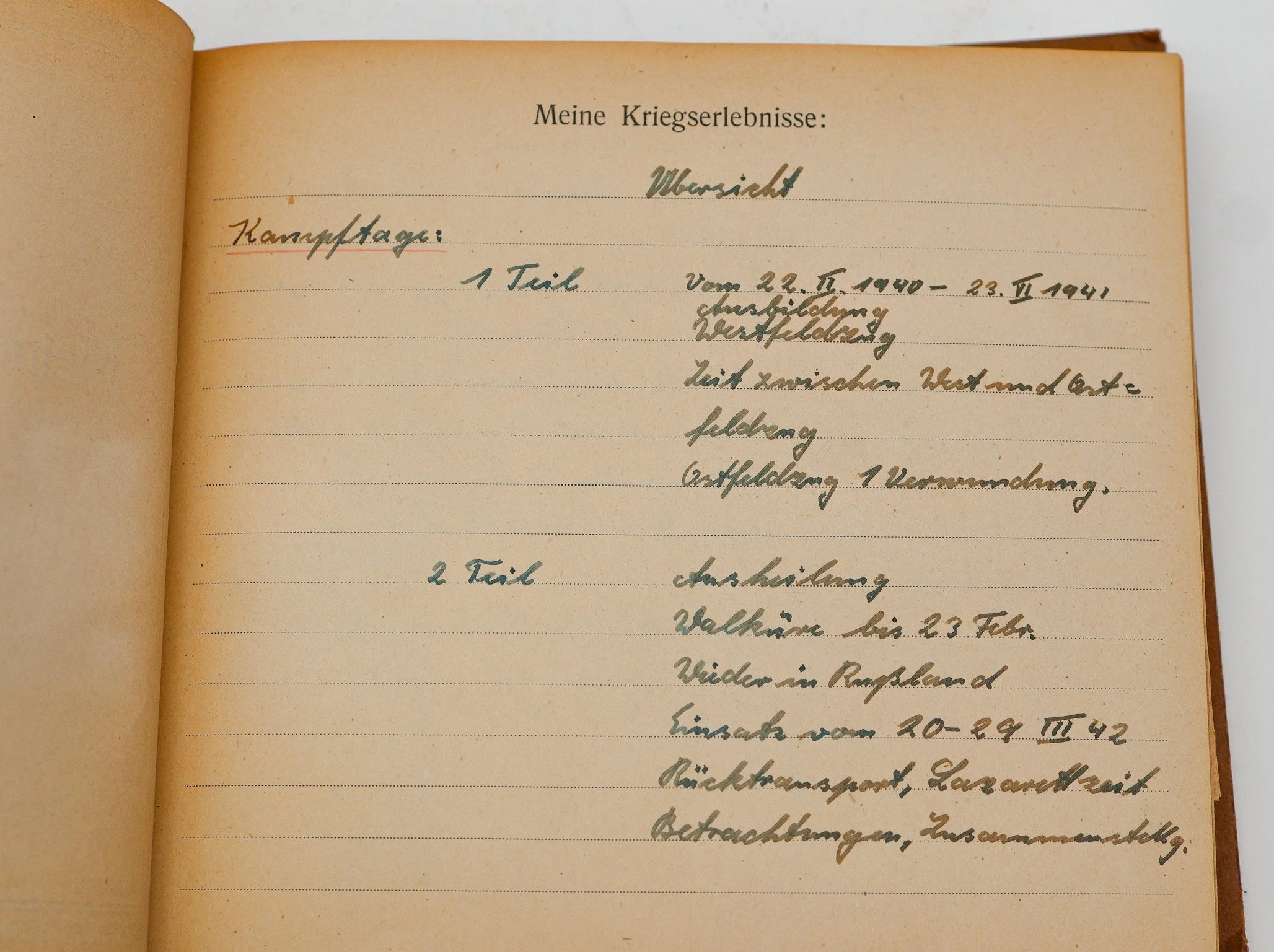
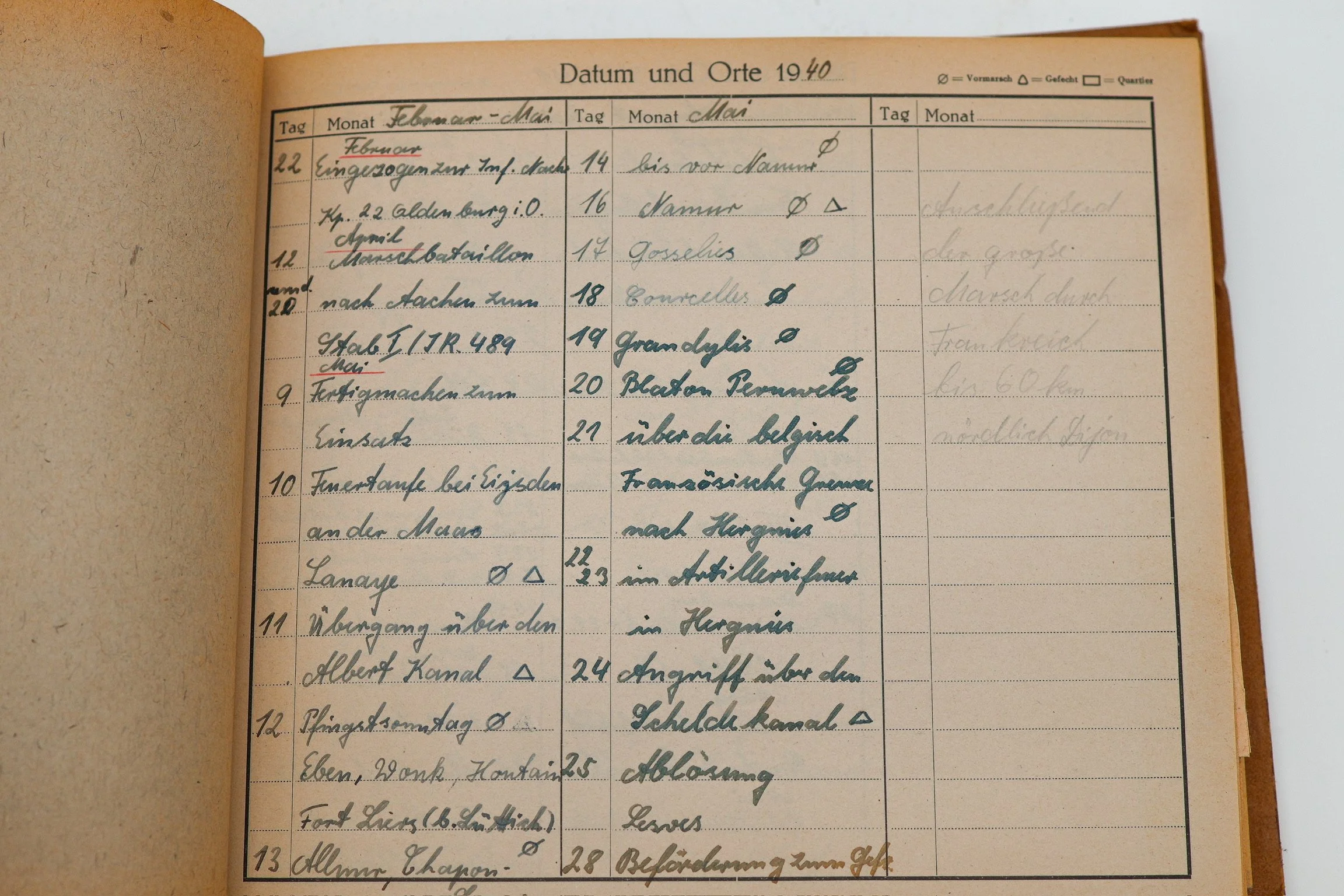
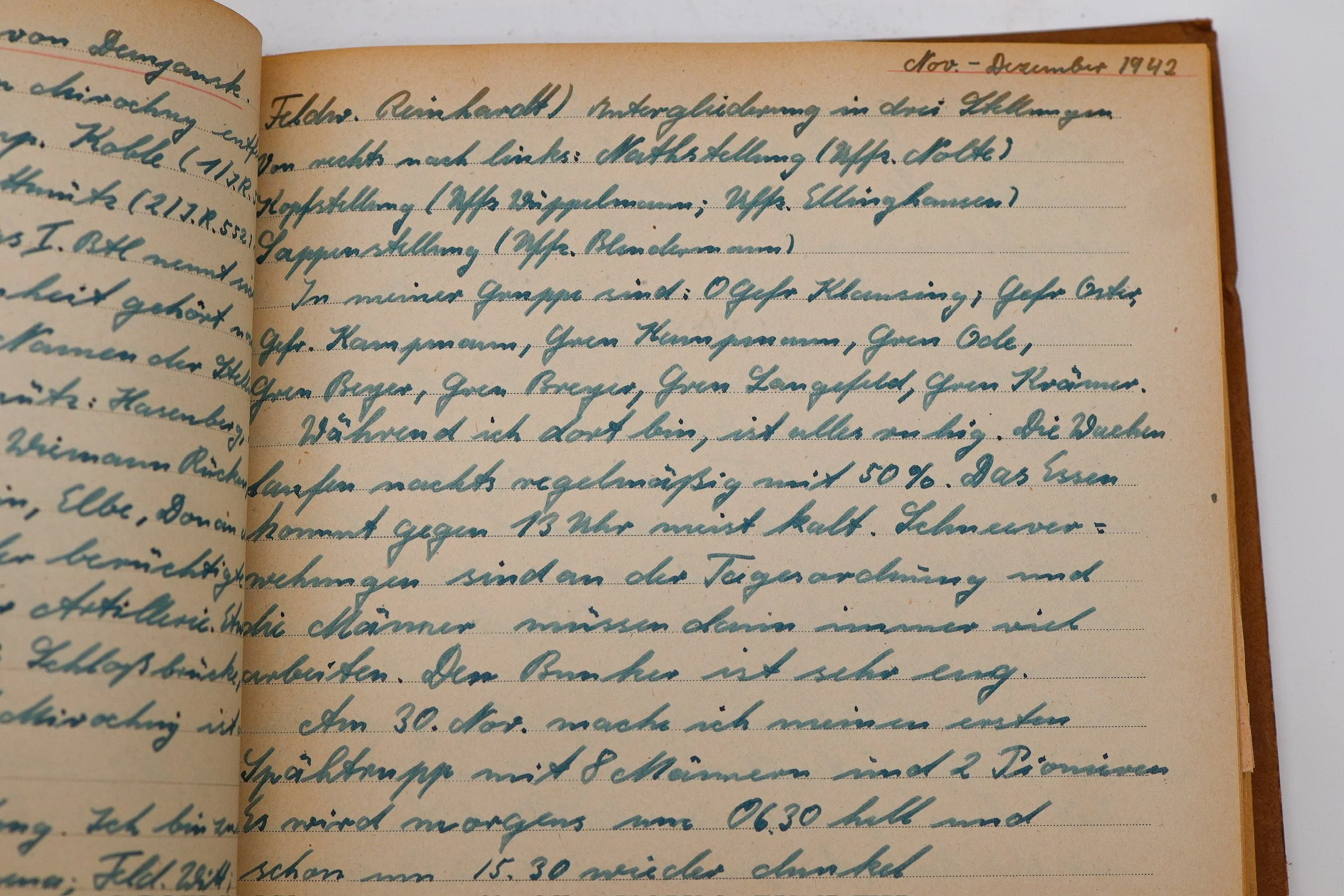
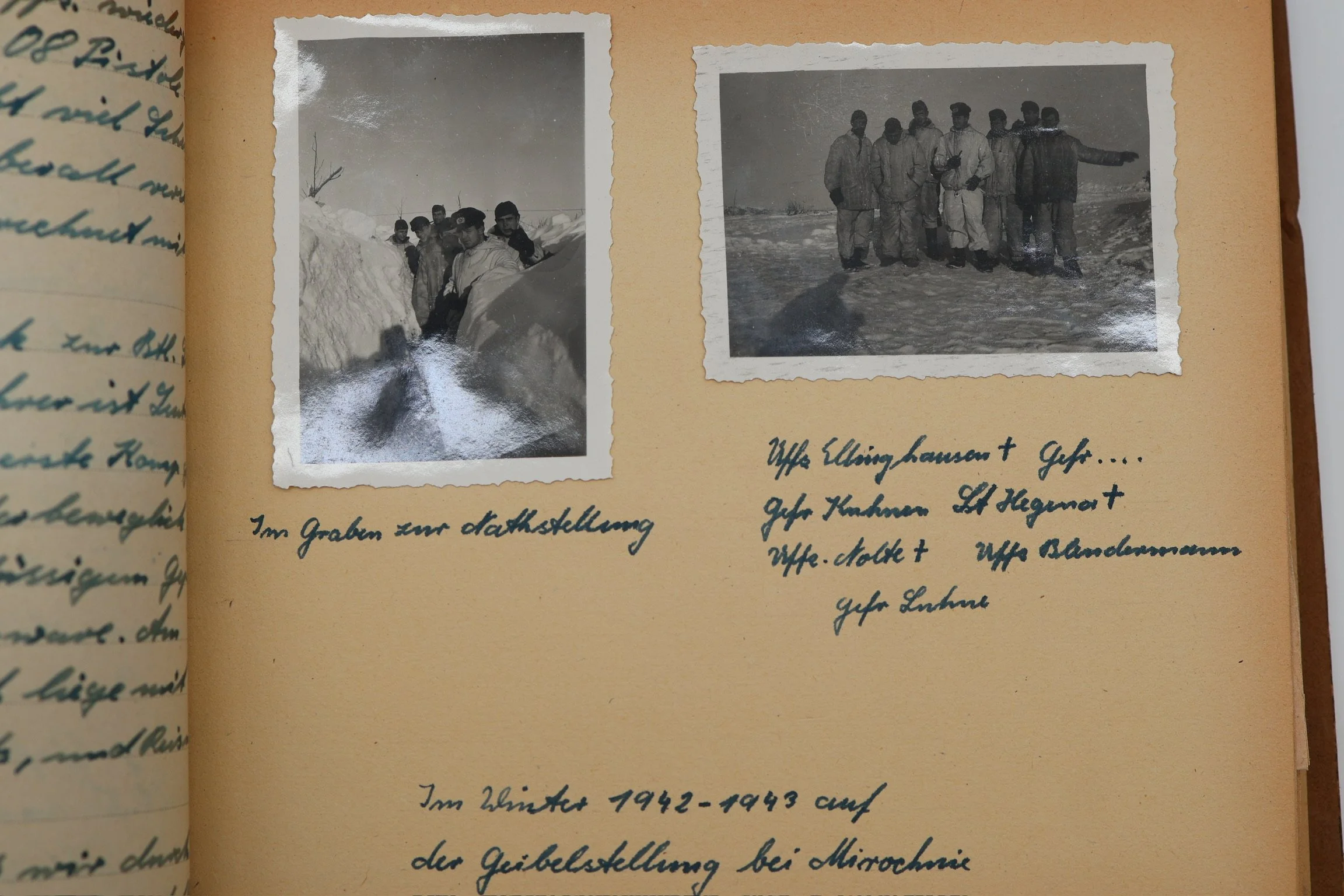
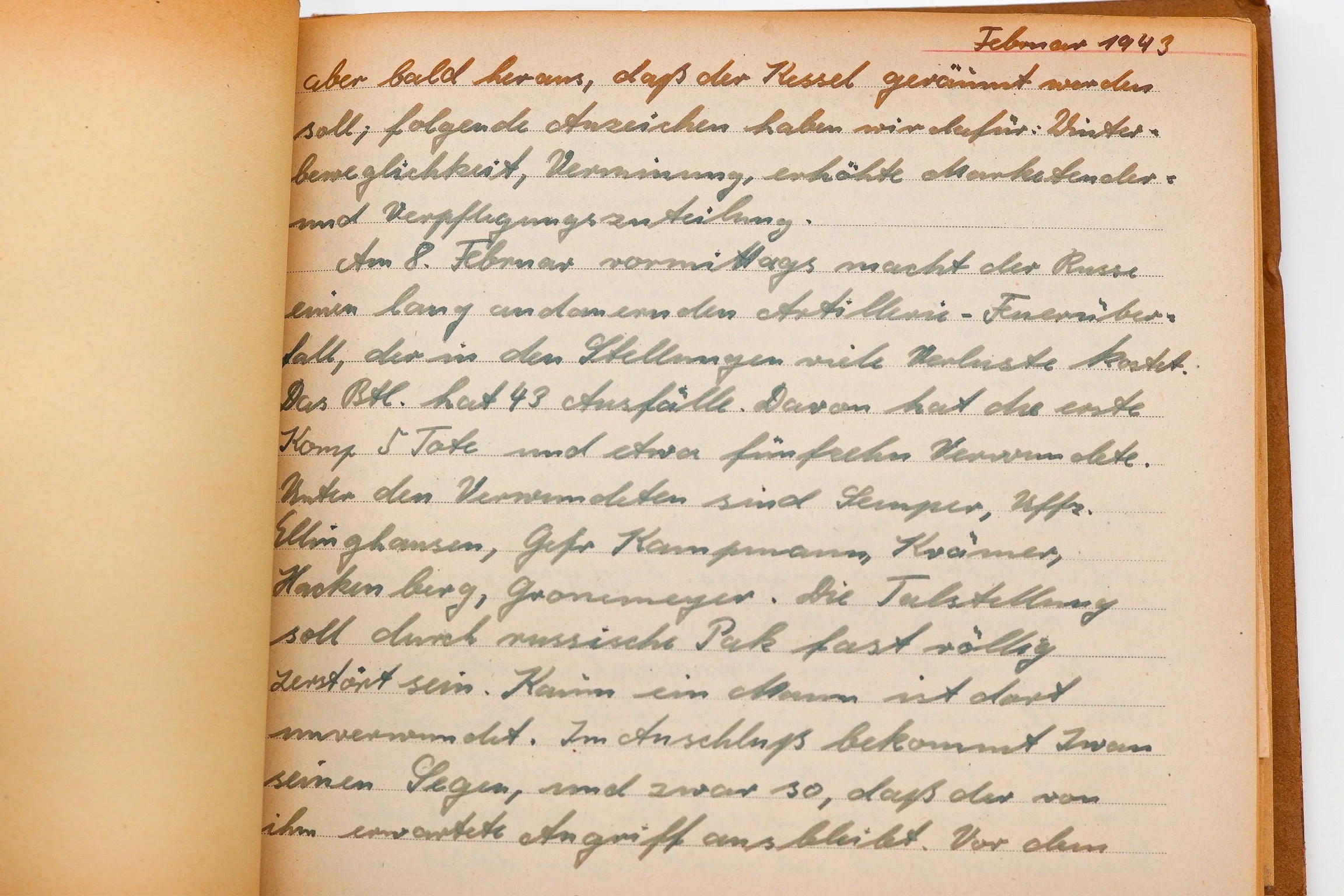
This German M35 steel helmet is named to Karl-August Blendermann, born February 7, 1921, who served as a Wehrmacht noncommissioned officer from May 1940 through the end of World War II. Blendermann served with Infantry Regiment 489 and saw action in Holland, Belgium, France, Denmark, Russia, including Demjansk, and other locations recorded in his wartime diary.
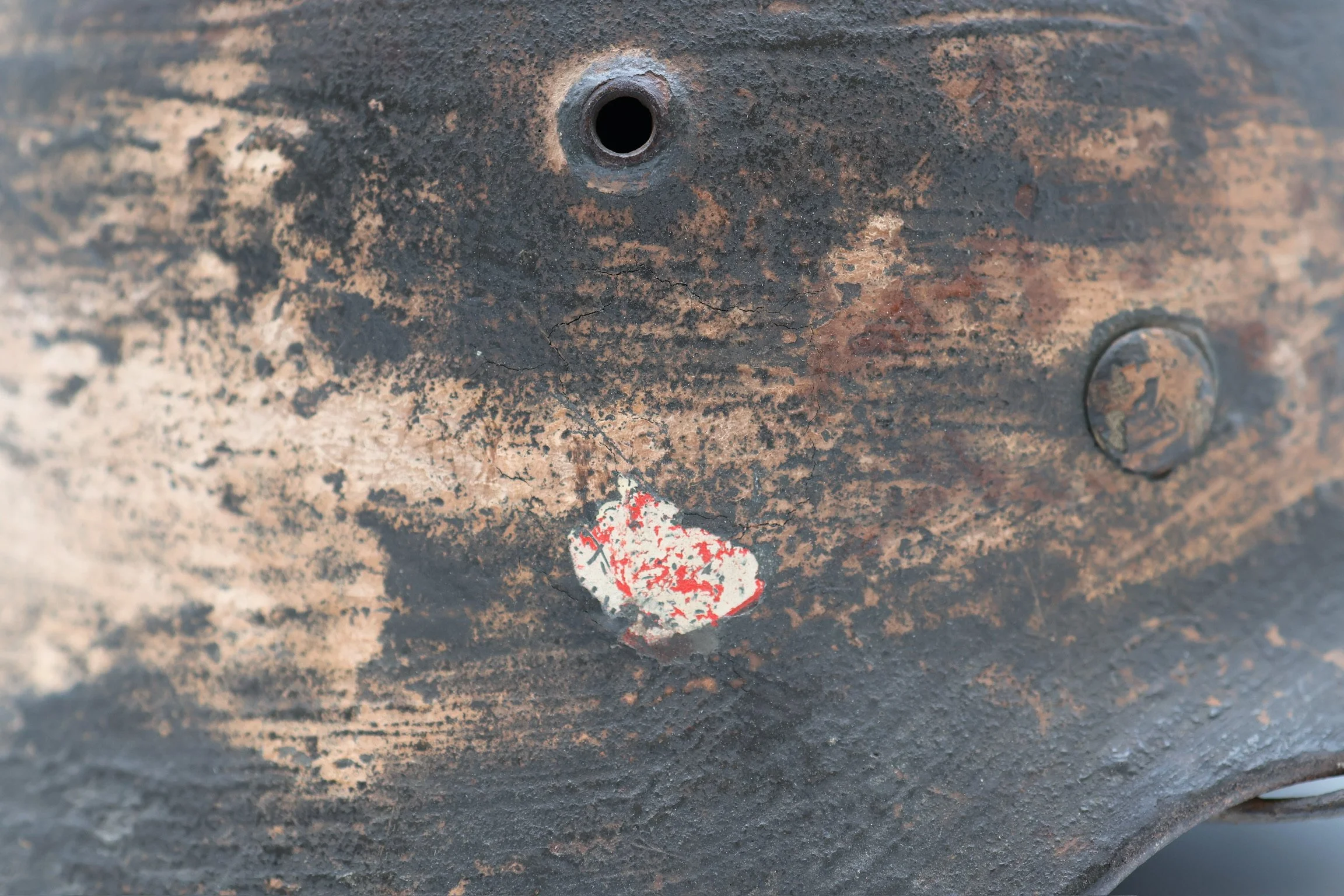
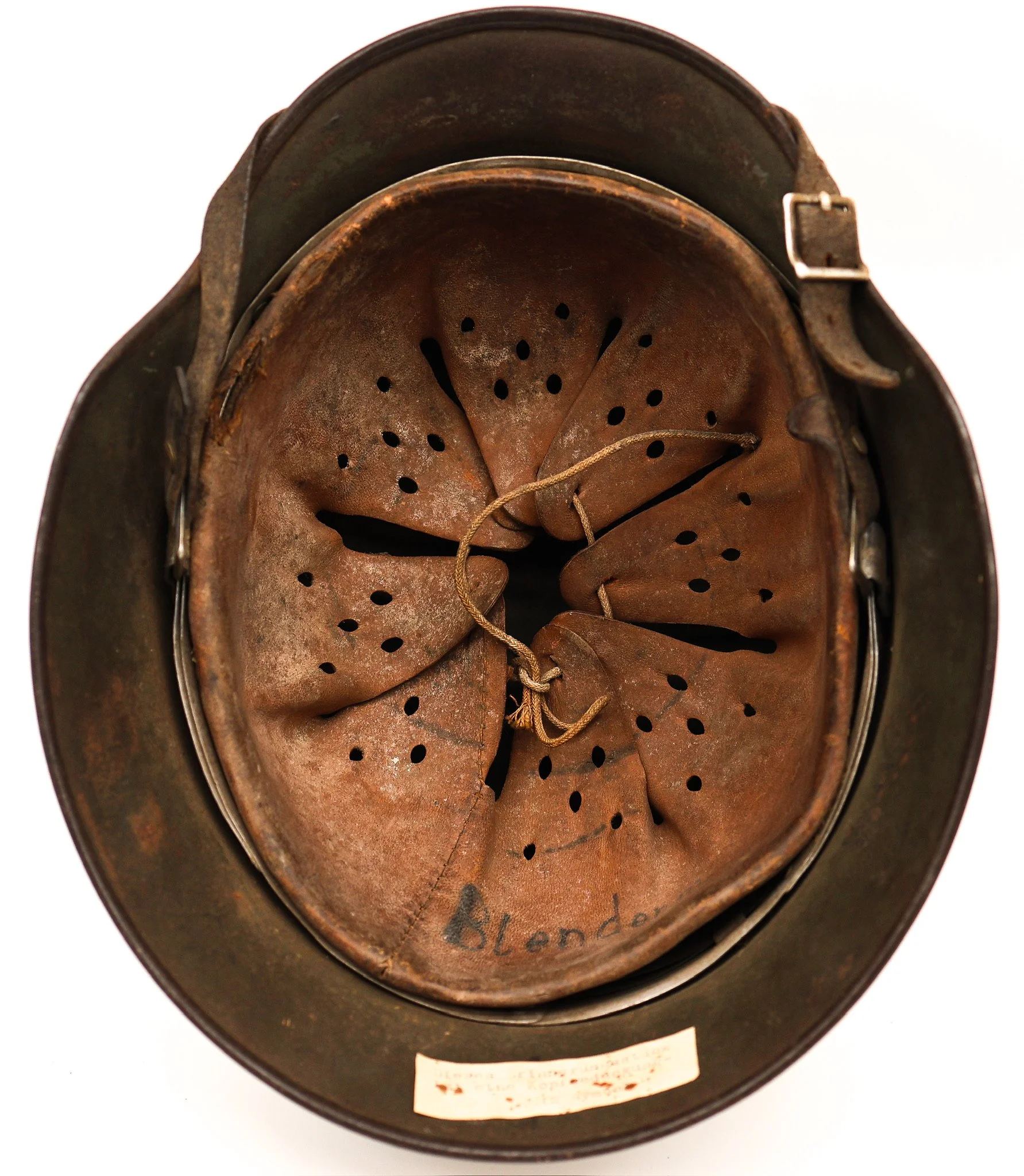
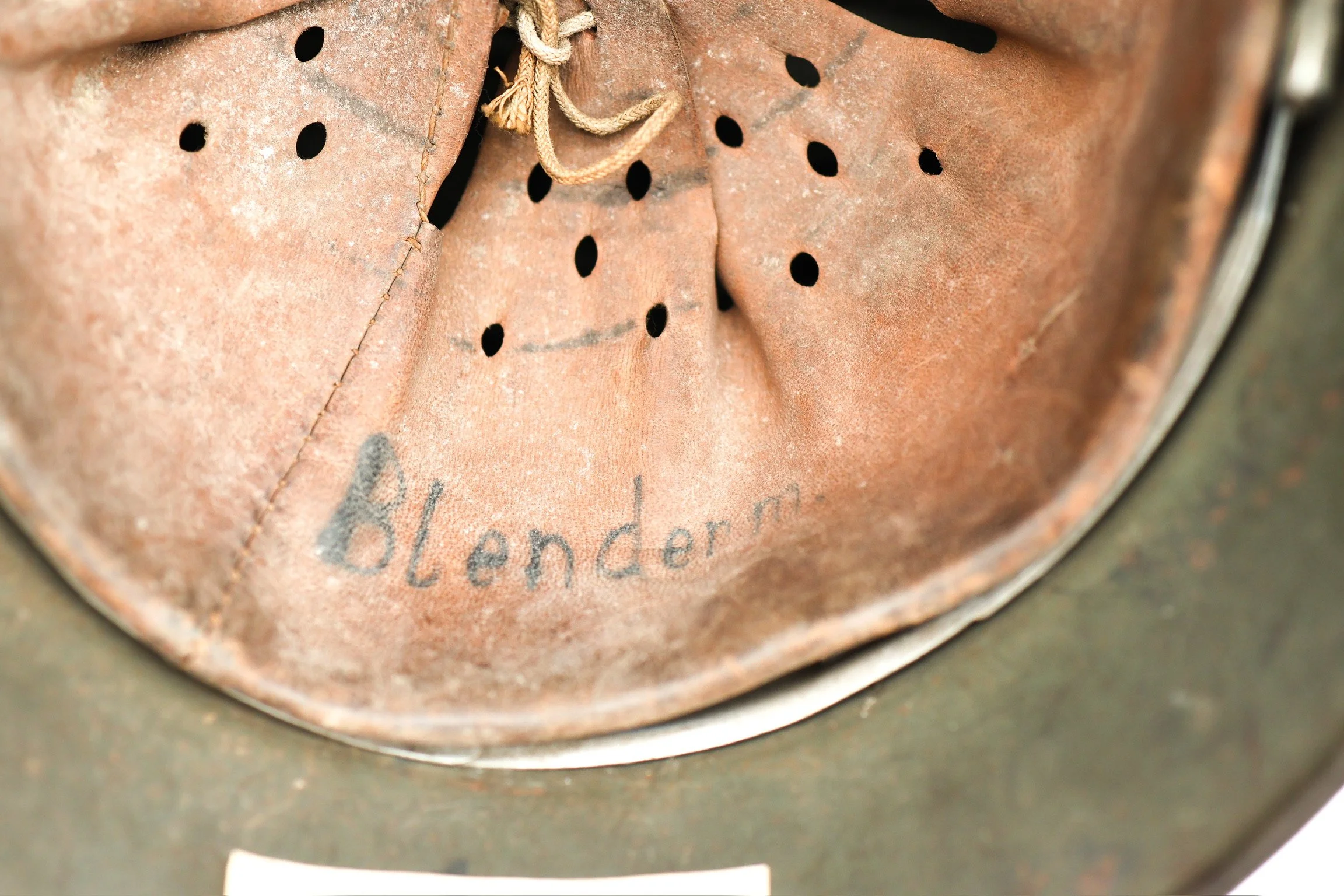
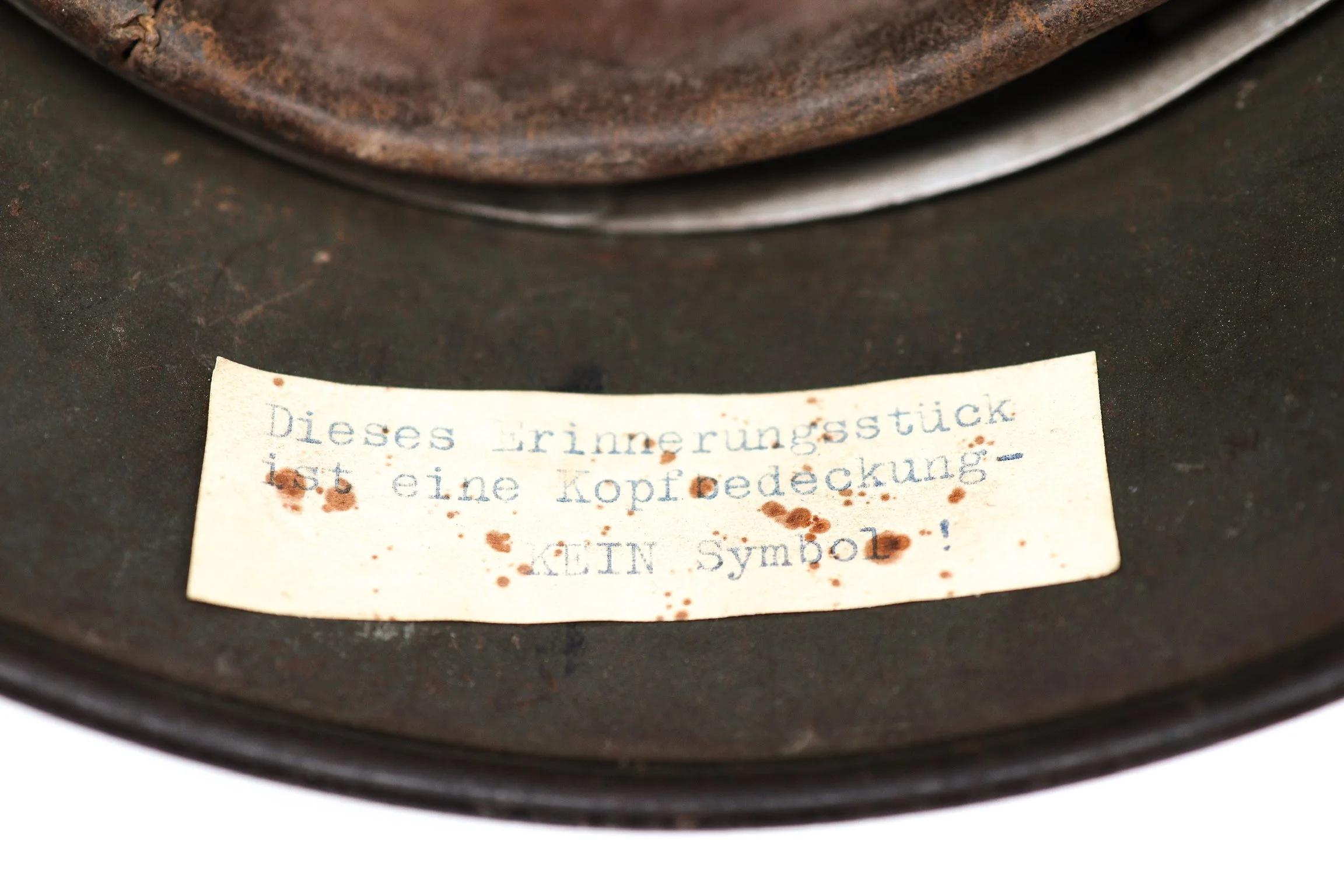
The helmet is a size 64 shell with a size 58 liner and was originally an M35 double-decal helmet. It was later overpainted with wartime camouflage, including a textured Zimmerit-style layer applied over the original factory paint and an additional winter camouflage layer. Portions of both original decals remain visible beneath the later paint, including part of the national tricolor decal. The helmet retains its original liner and an early aluminum chinstrap, which was shortened during service. Blendermann’s name is written inside the liner.
-
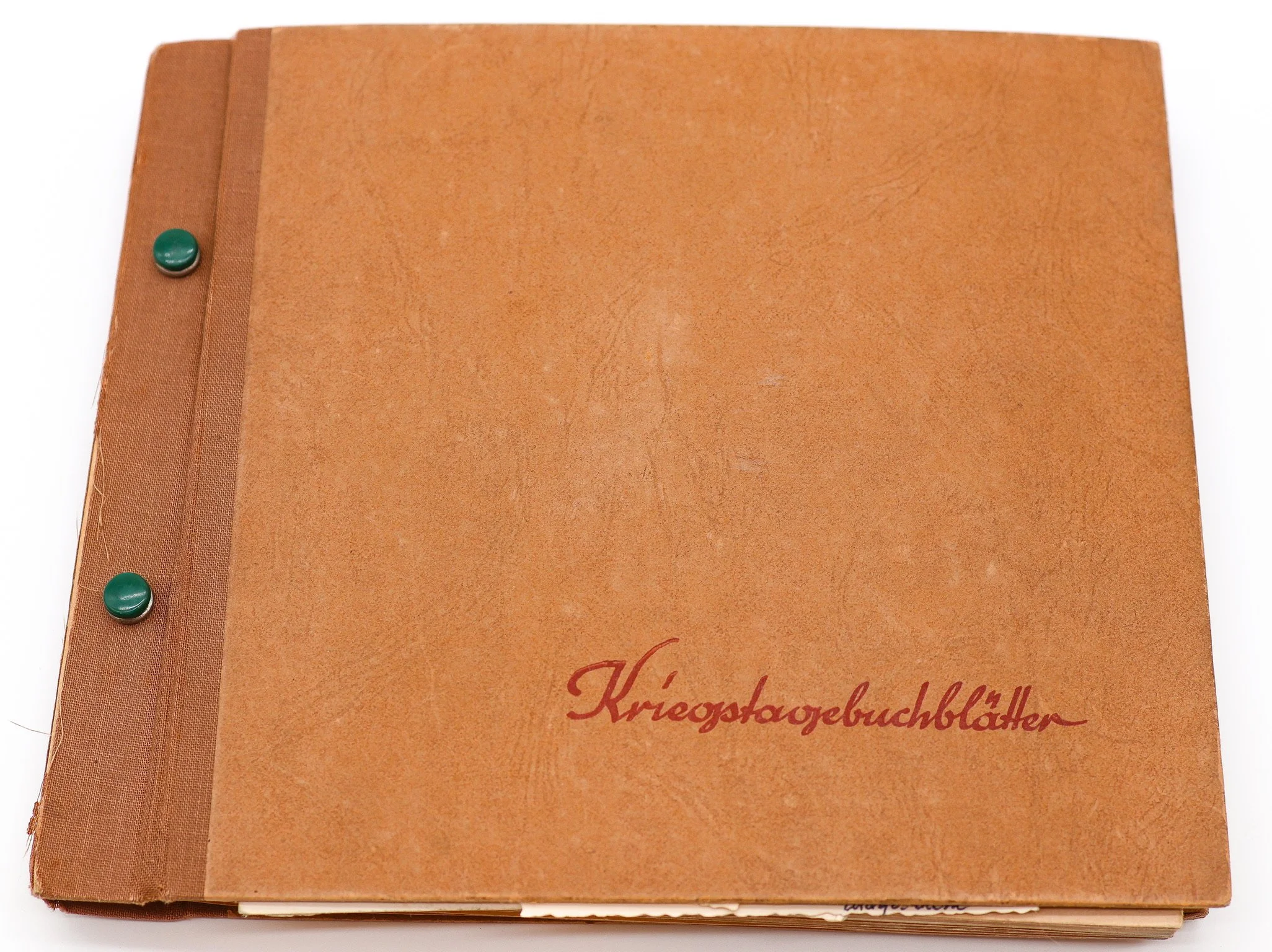
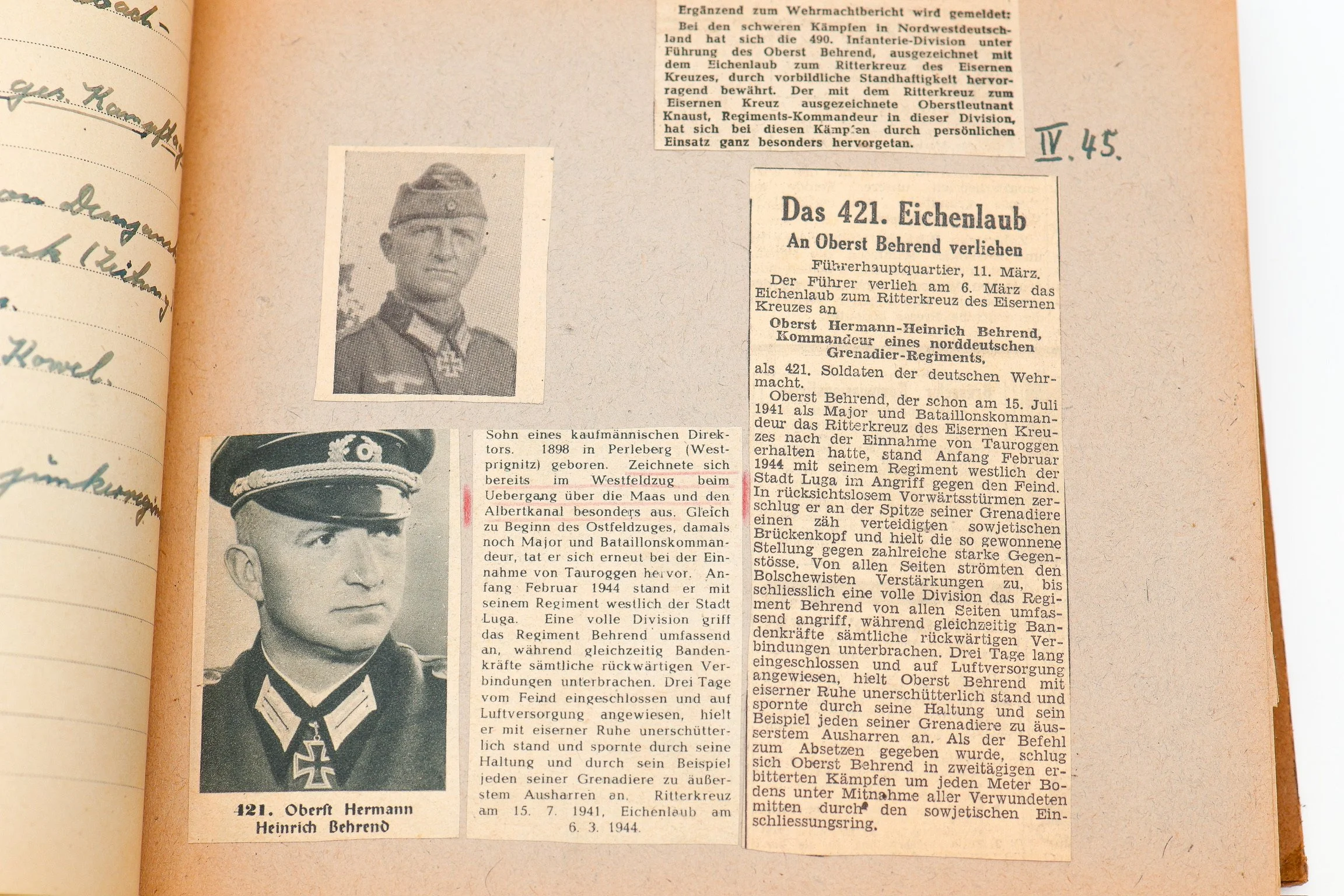
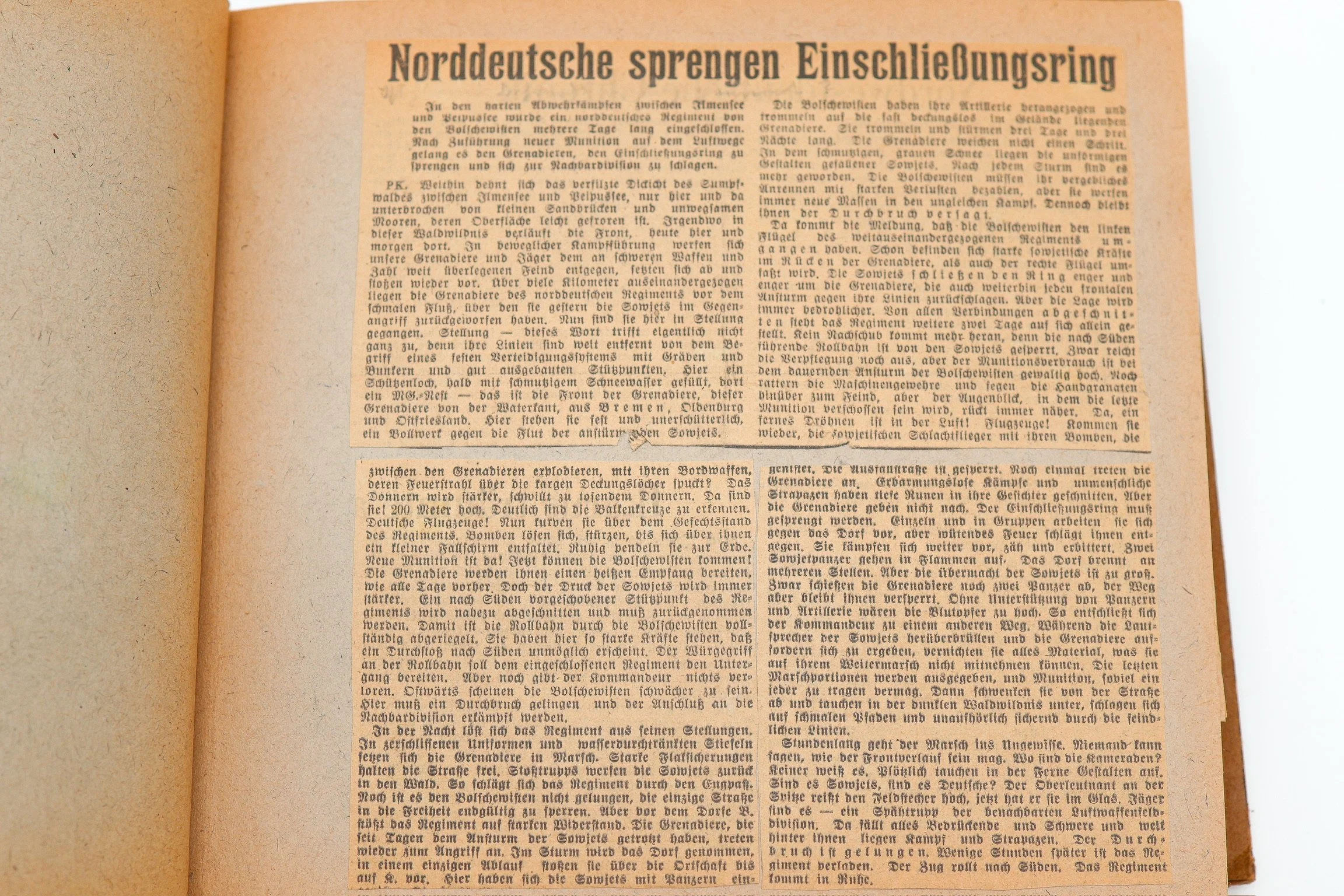
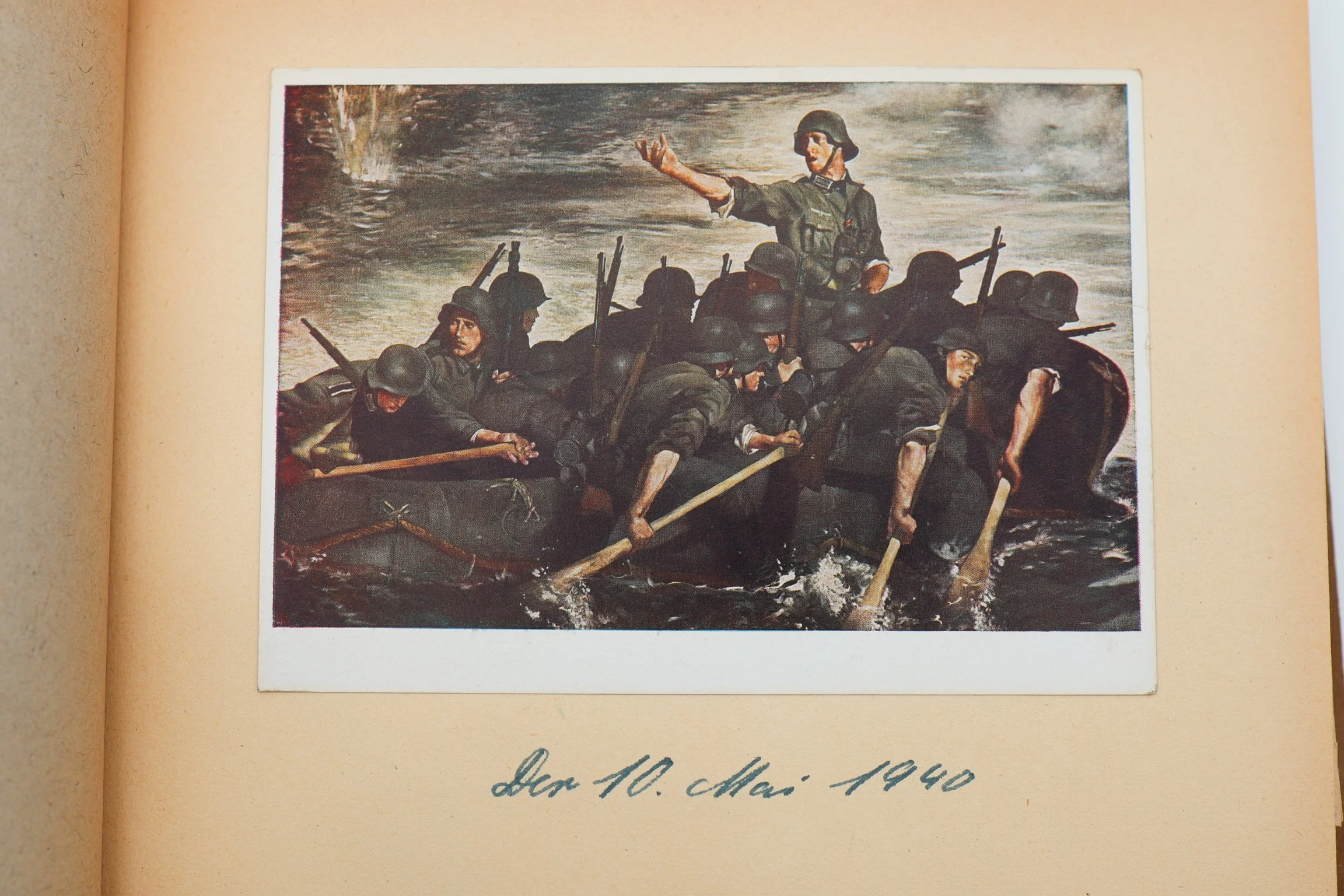
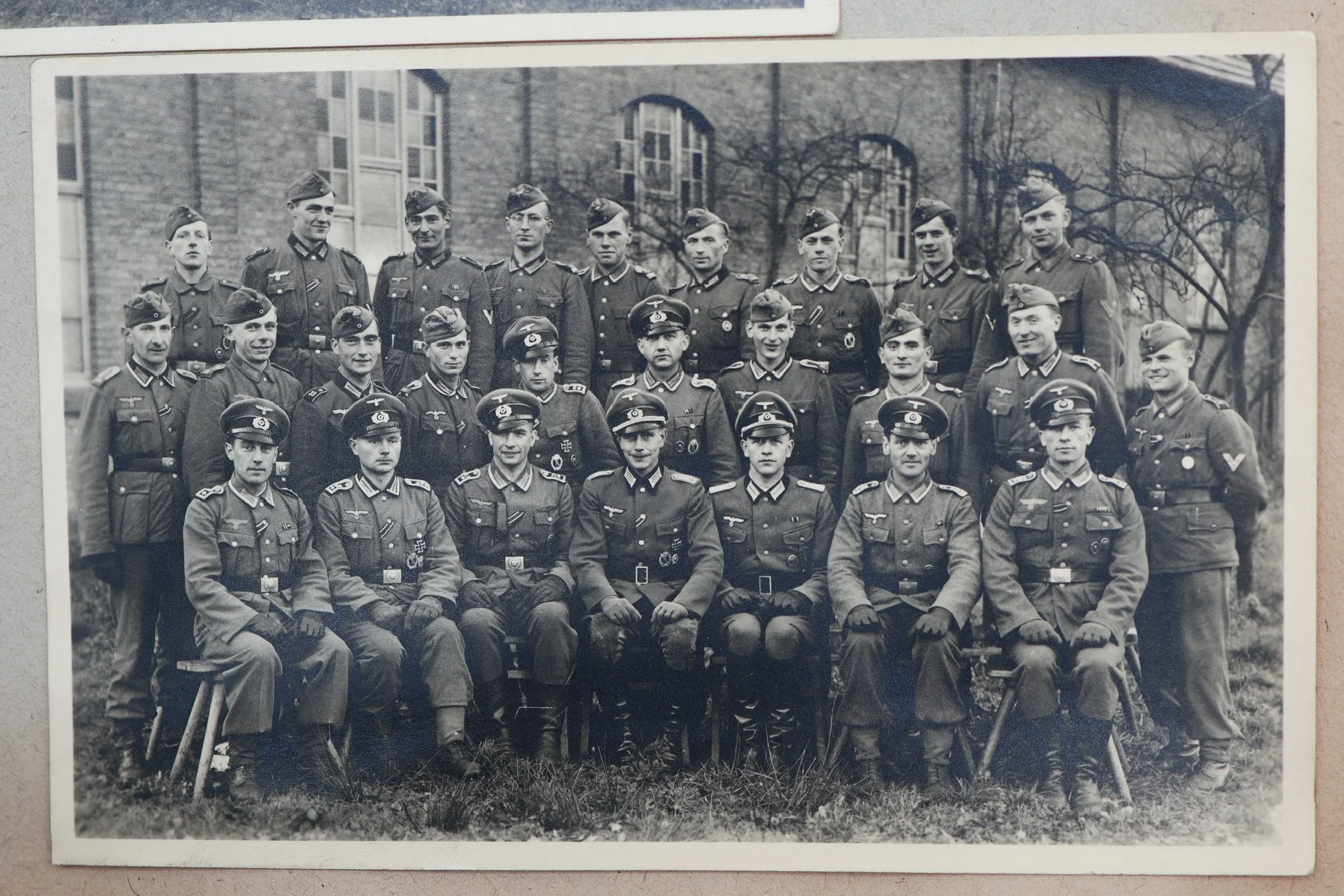
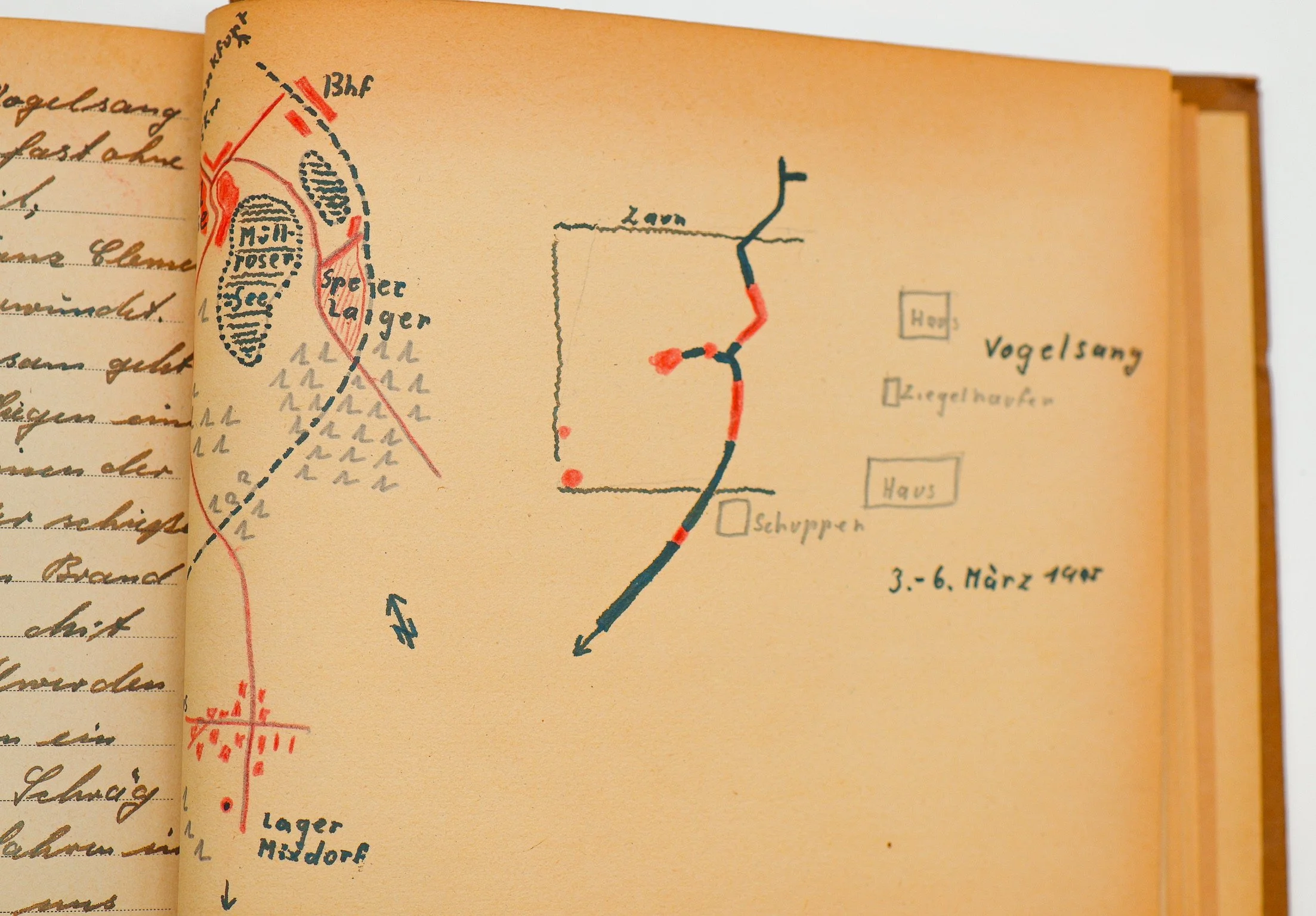
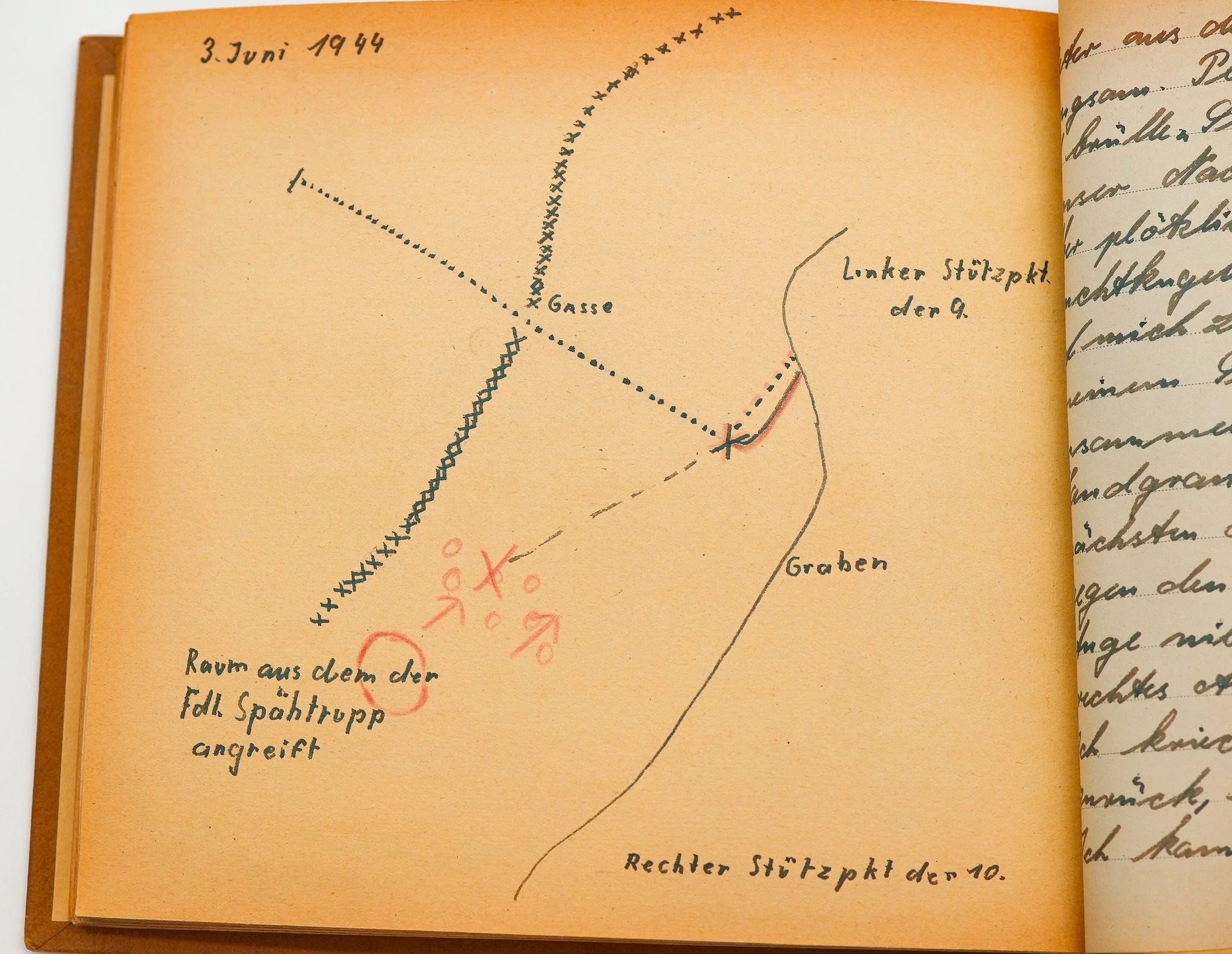
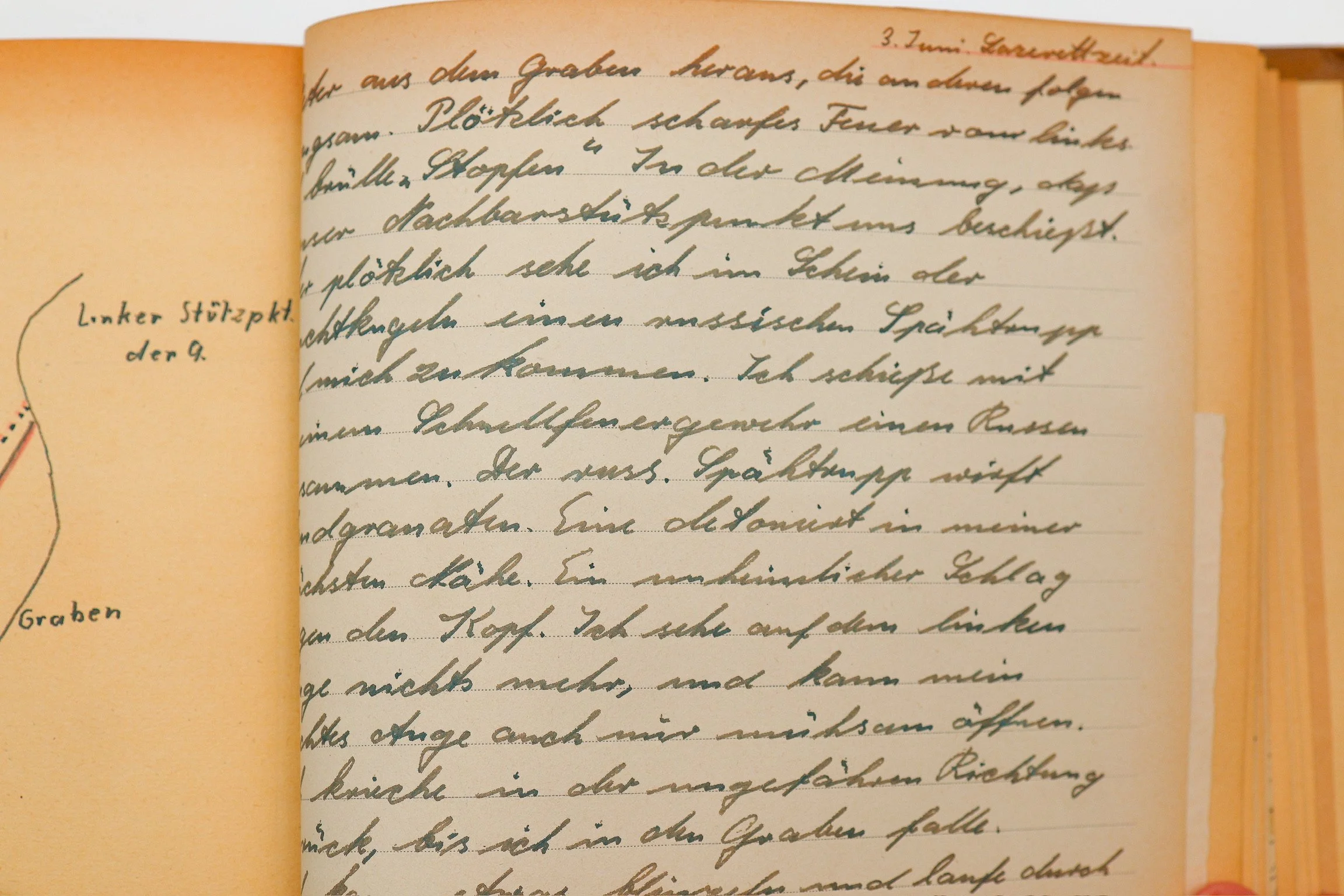
The helmet is accompanied by Blendermann’s wartime diary, which documents his service through multiple campaigns. The diary includes locations, company names, photographs, newspaper articles, original road maps, and postcards, providing firsthand context to the helmet and the soldier who wore it.
This helmet and diary were acquired years ago directly from Blendermann by the collector who originally obtained them. After Blendermann passed away, the collector attempted to acquire the remaining items still held by the family, but those pieces were later destroyed. The helmet and diary remain together as the surviving core of the grouping.
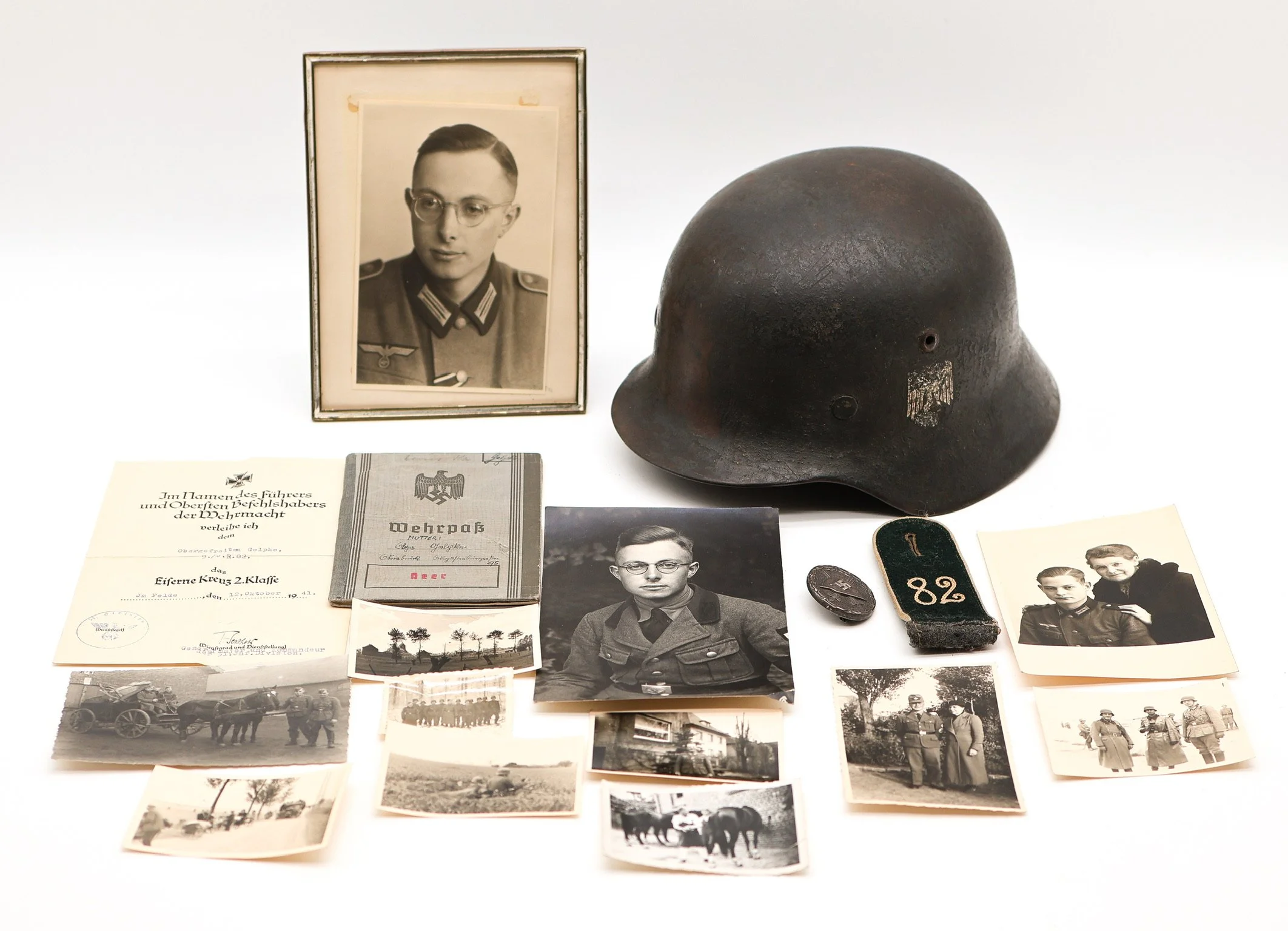
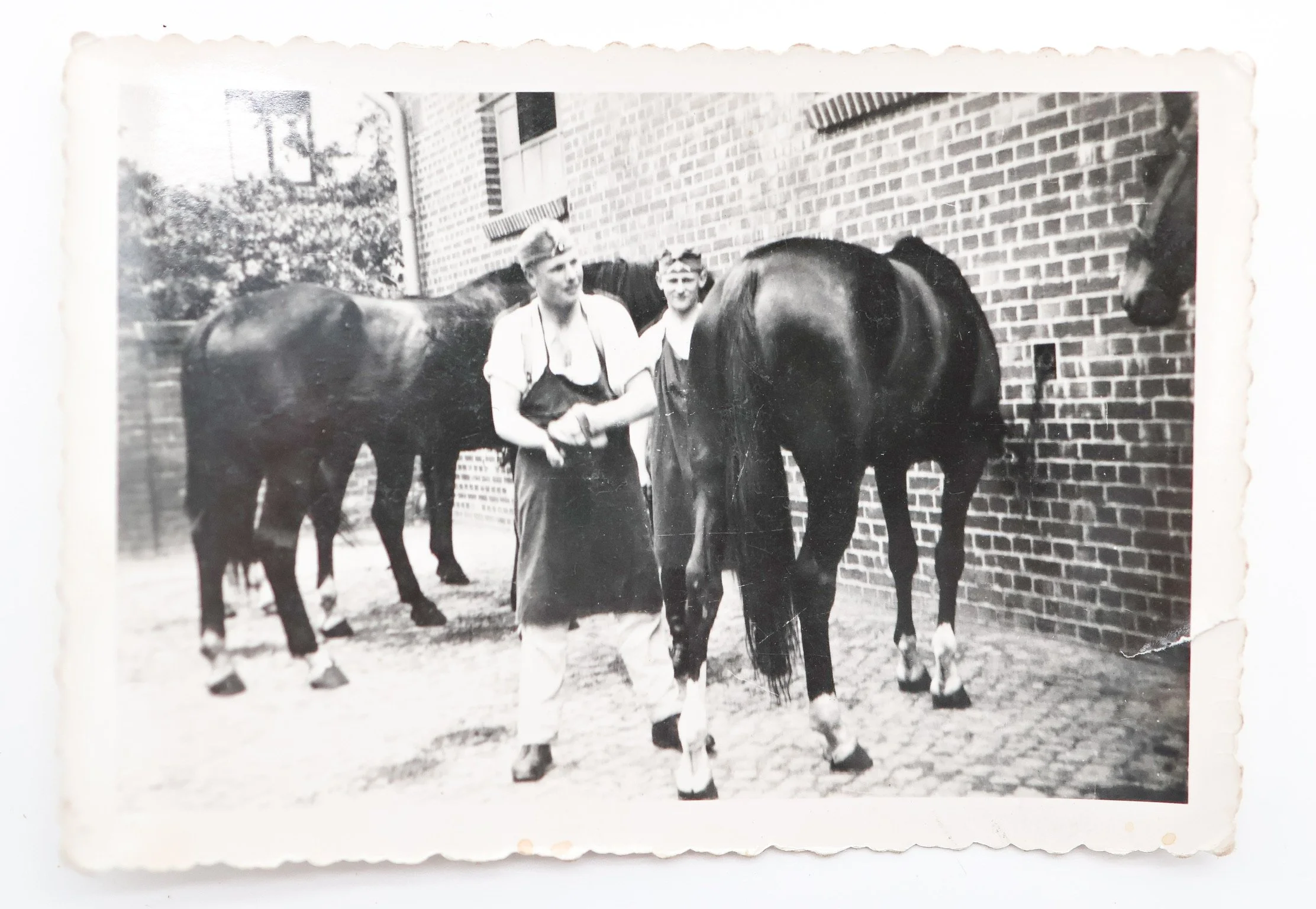
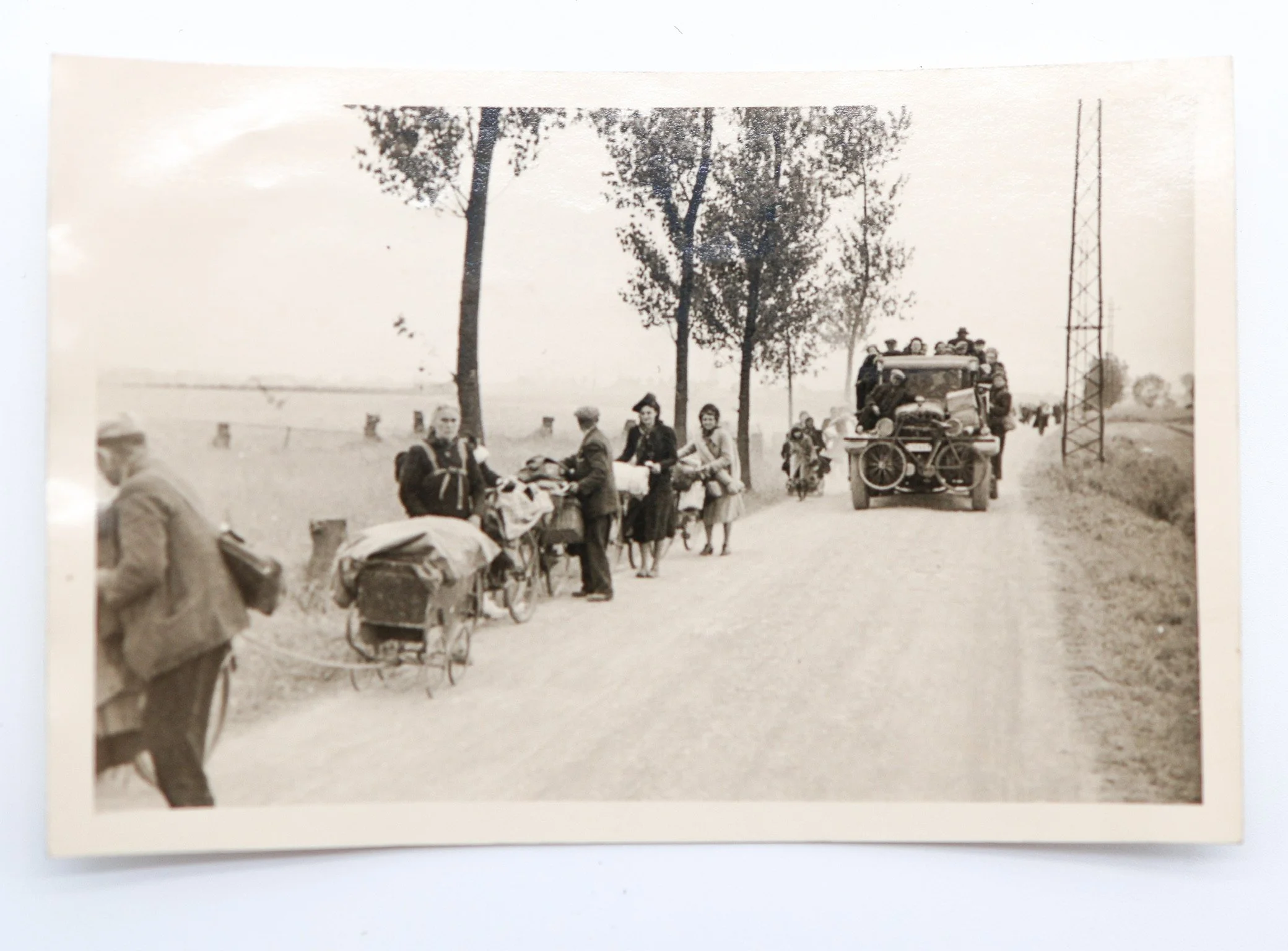
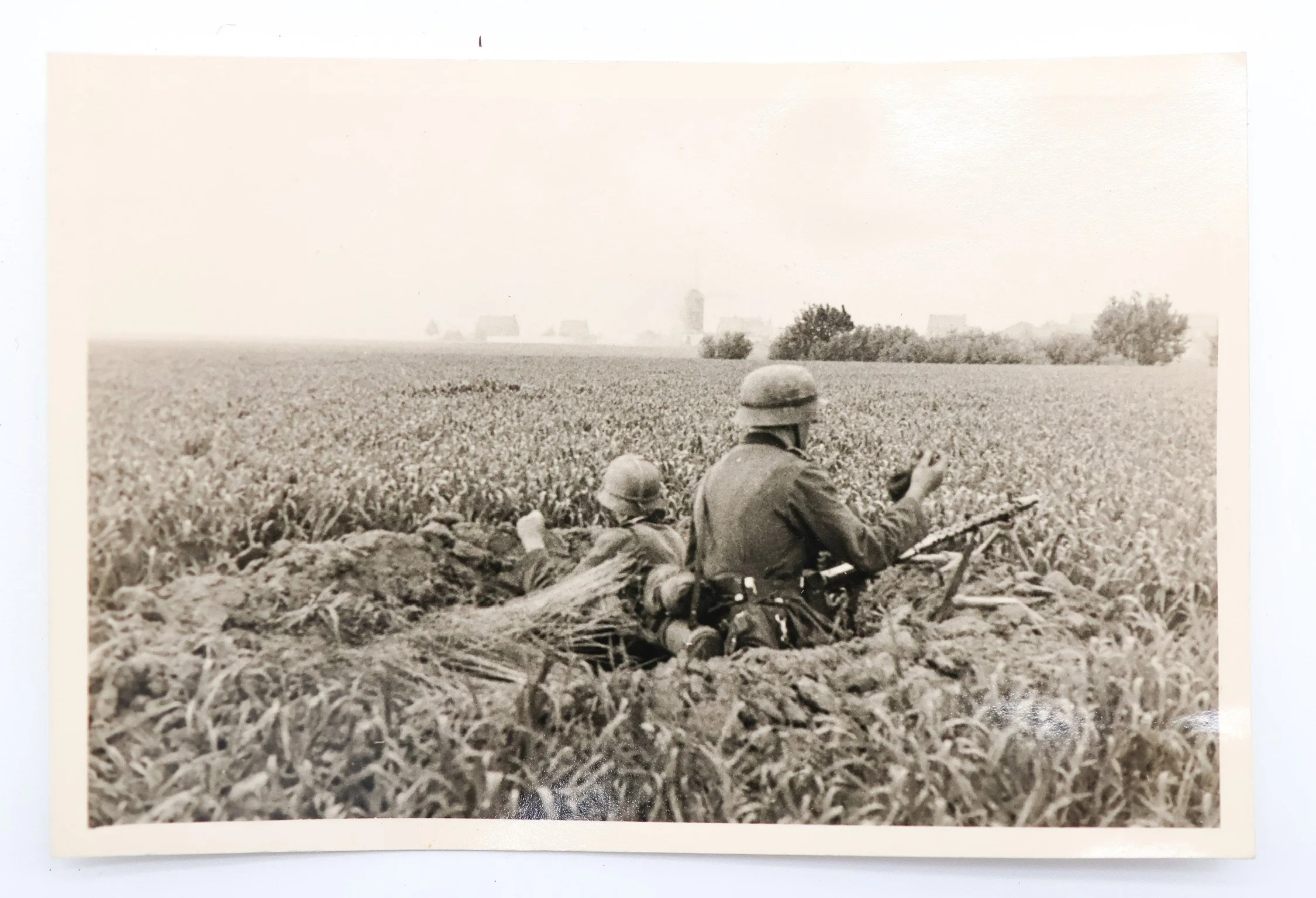
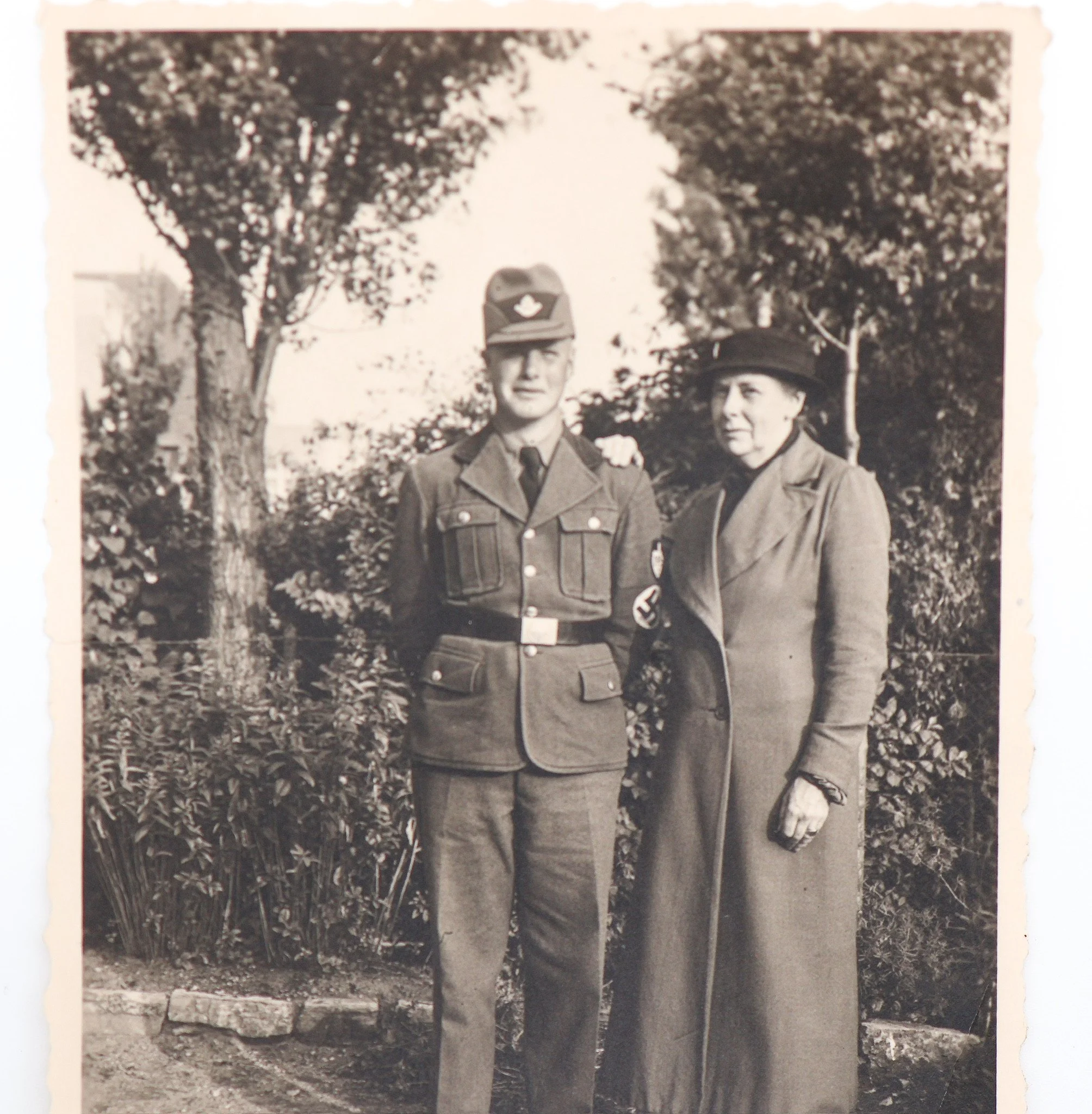
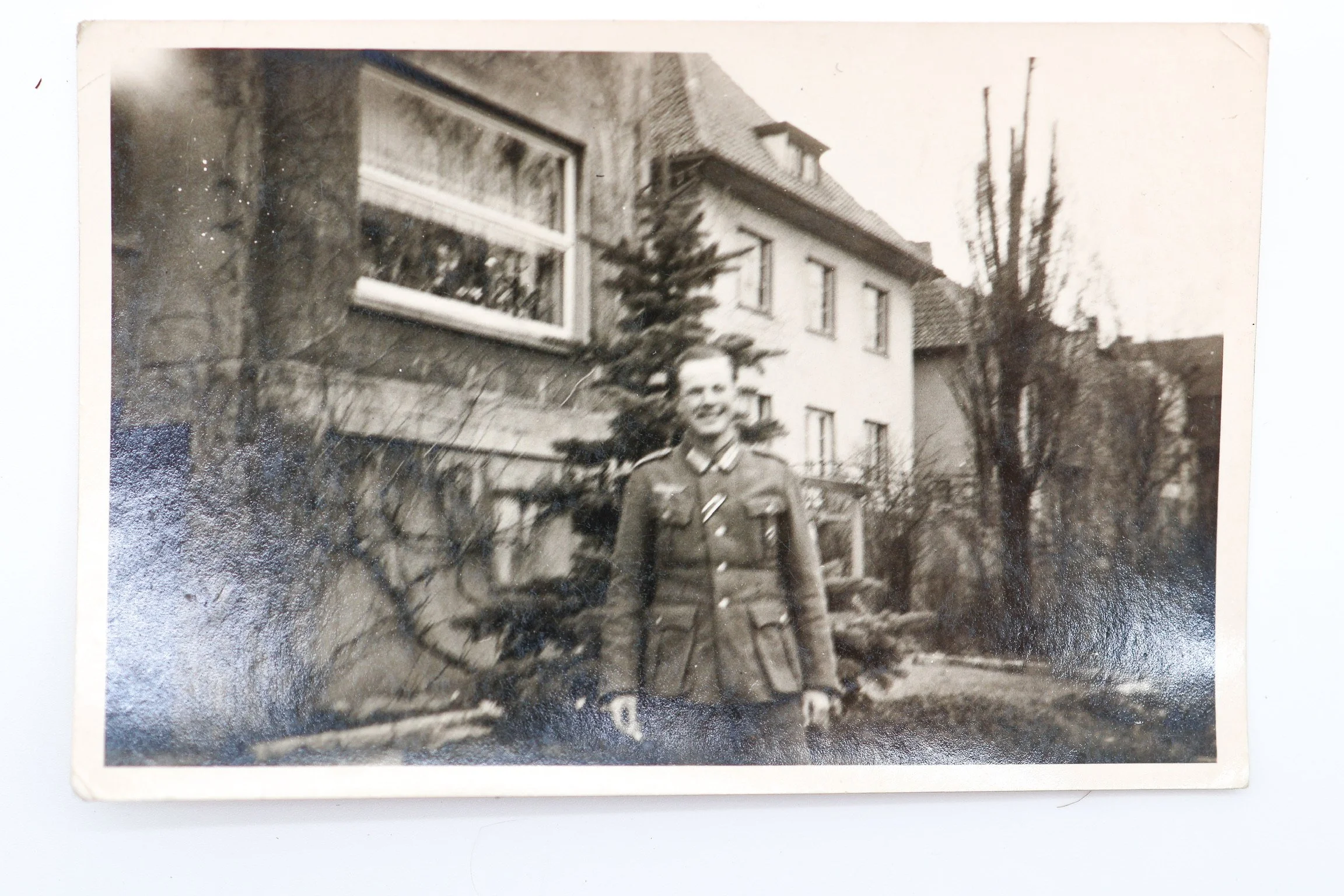
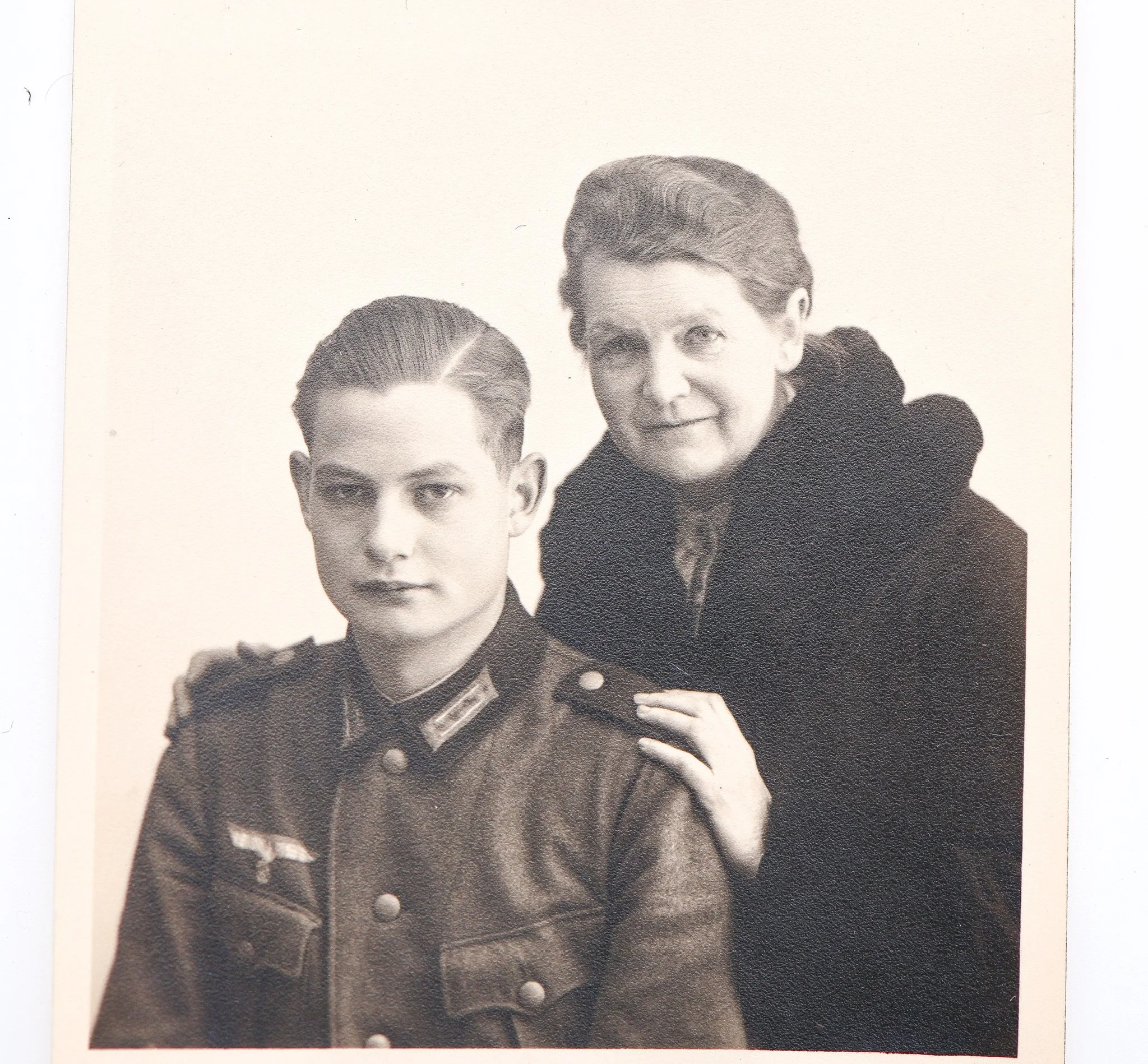
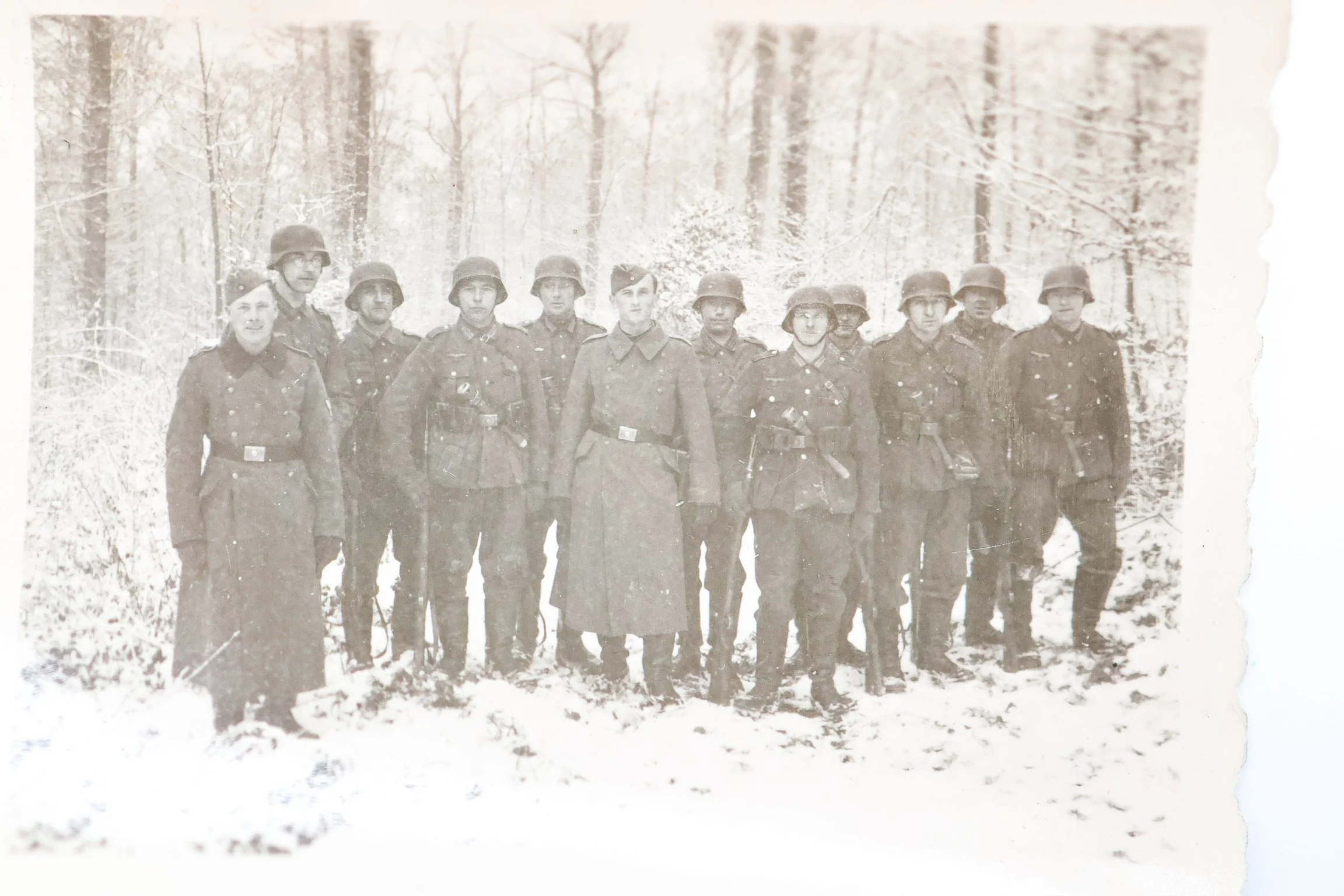
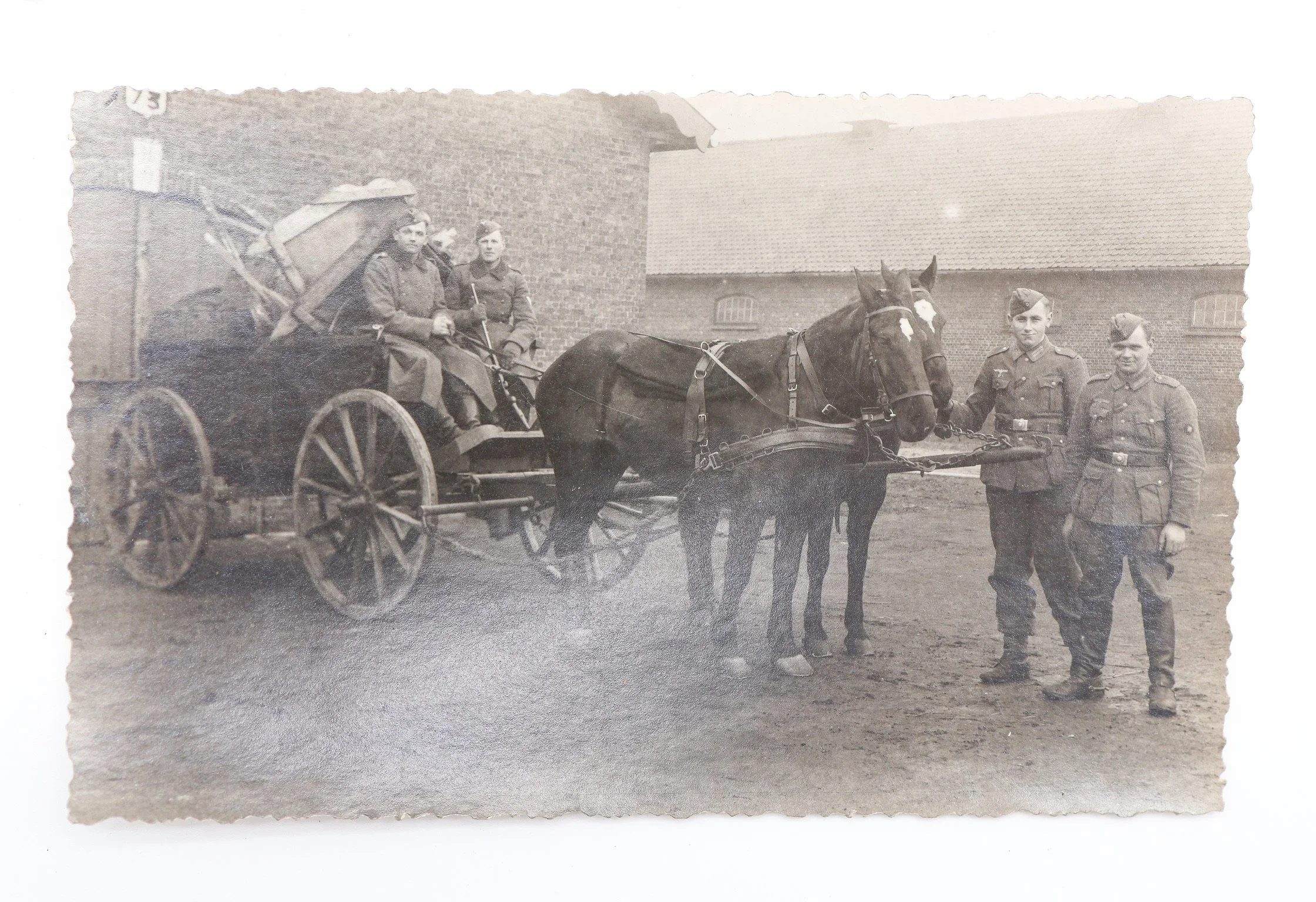
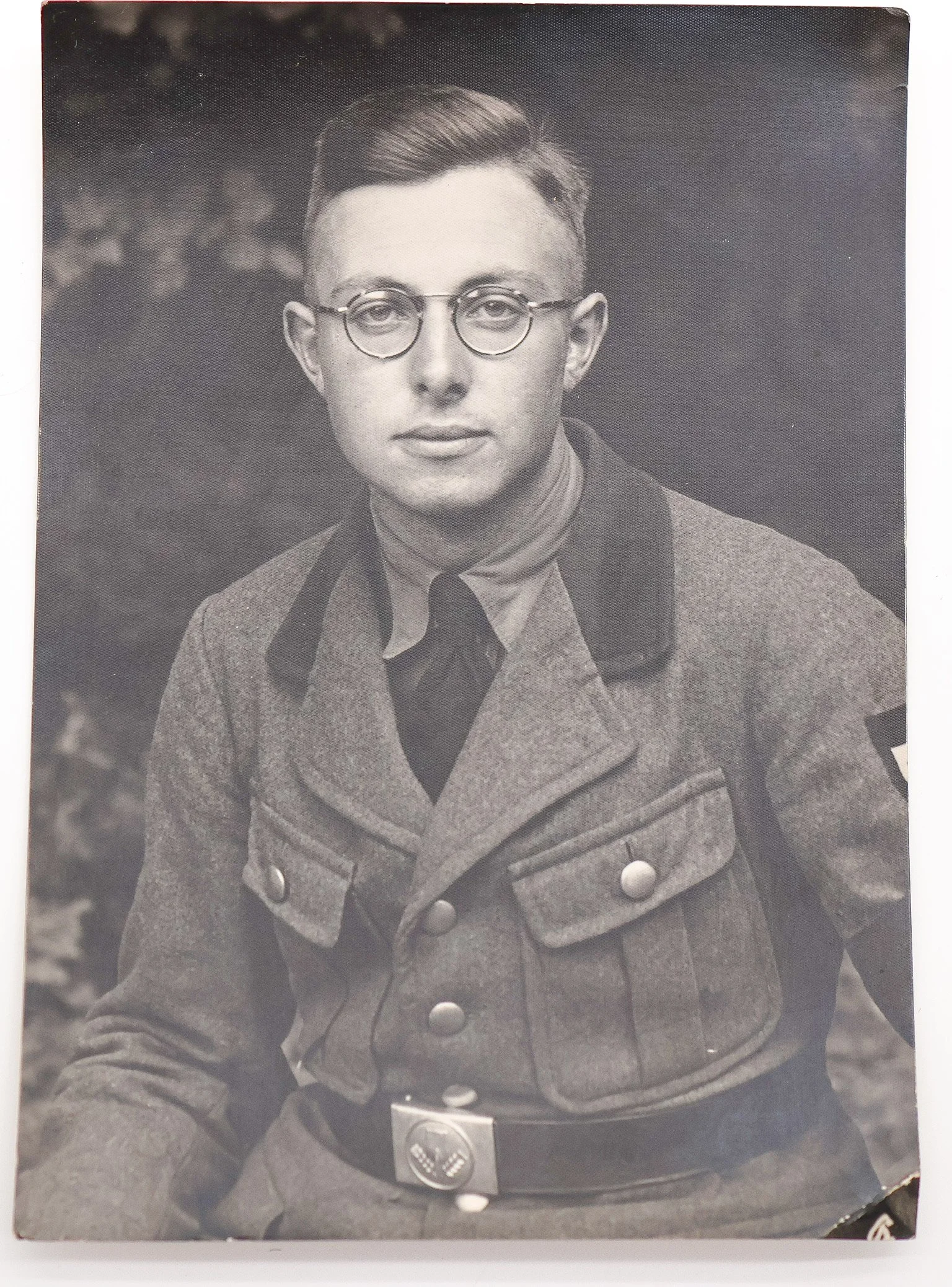
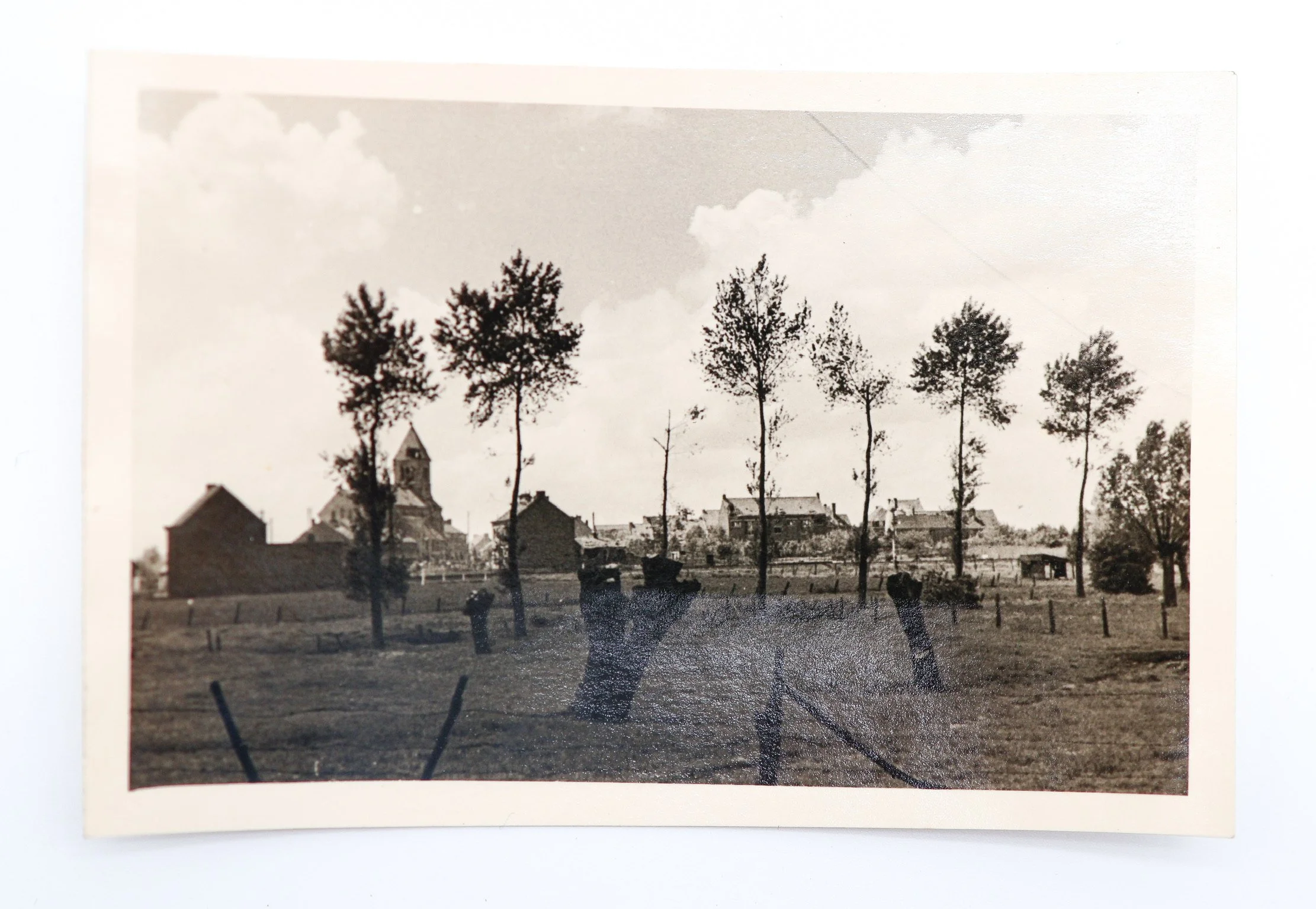
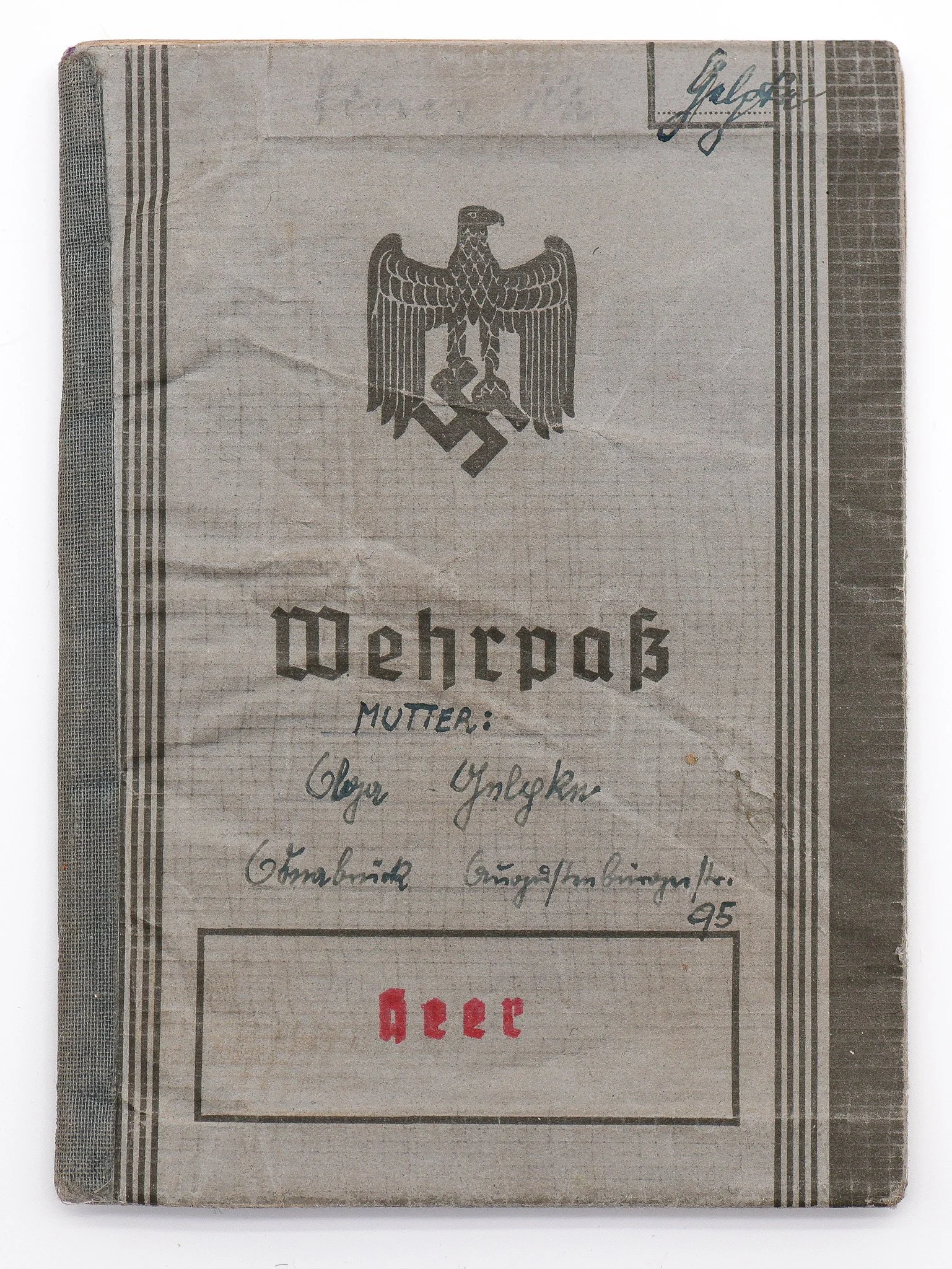
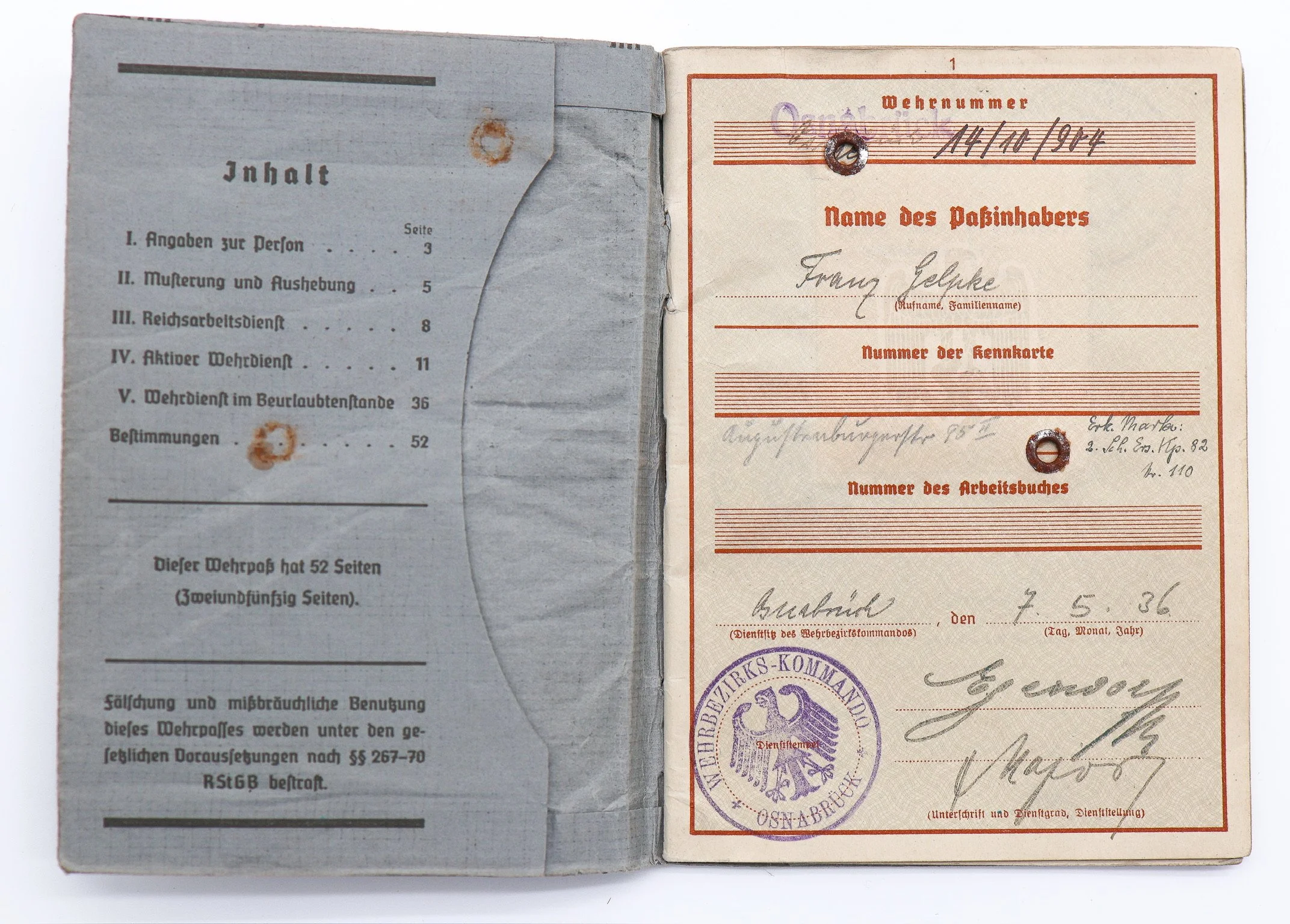
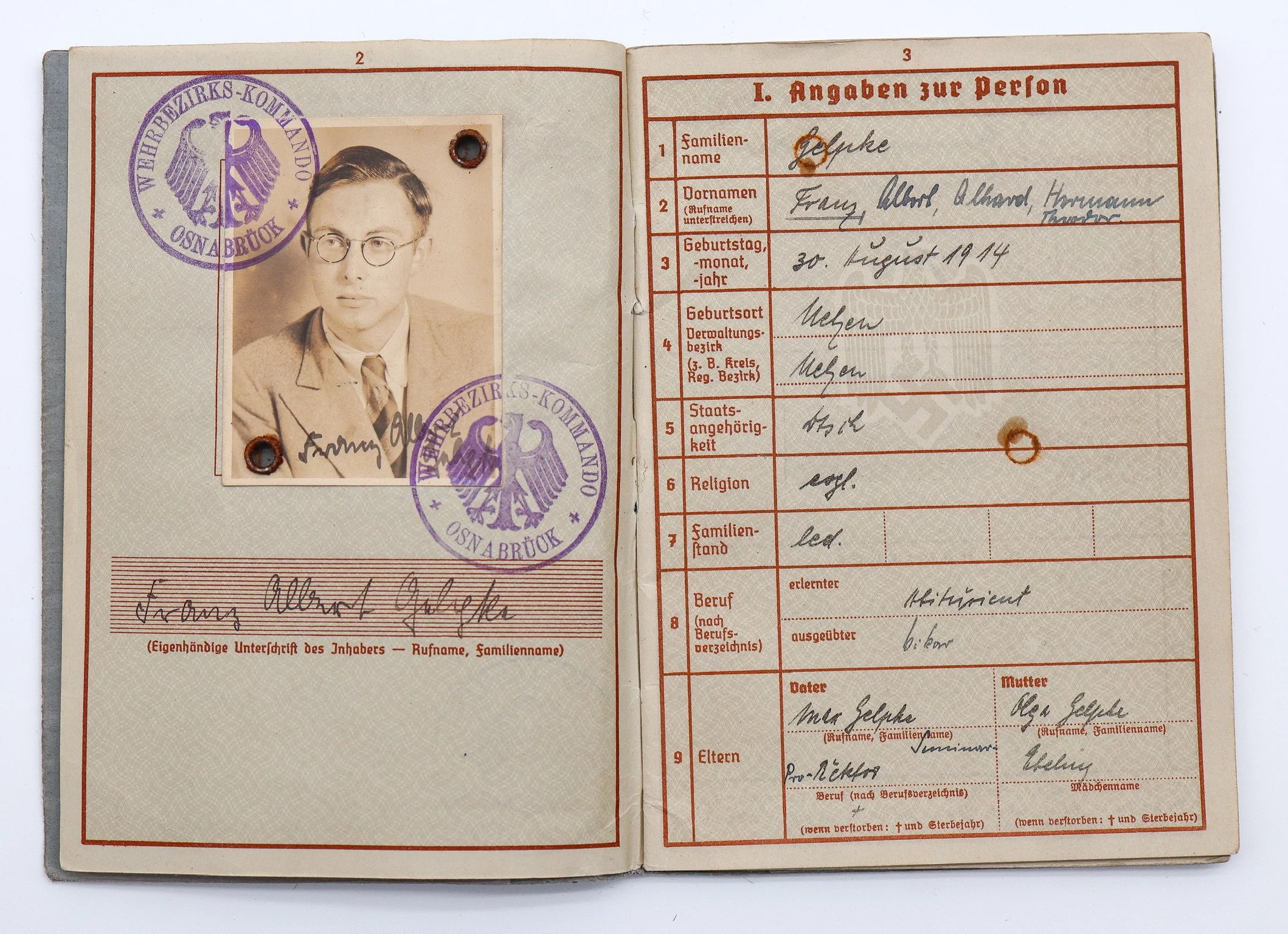
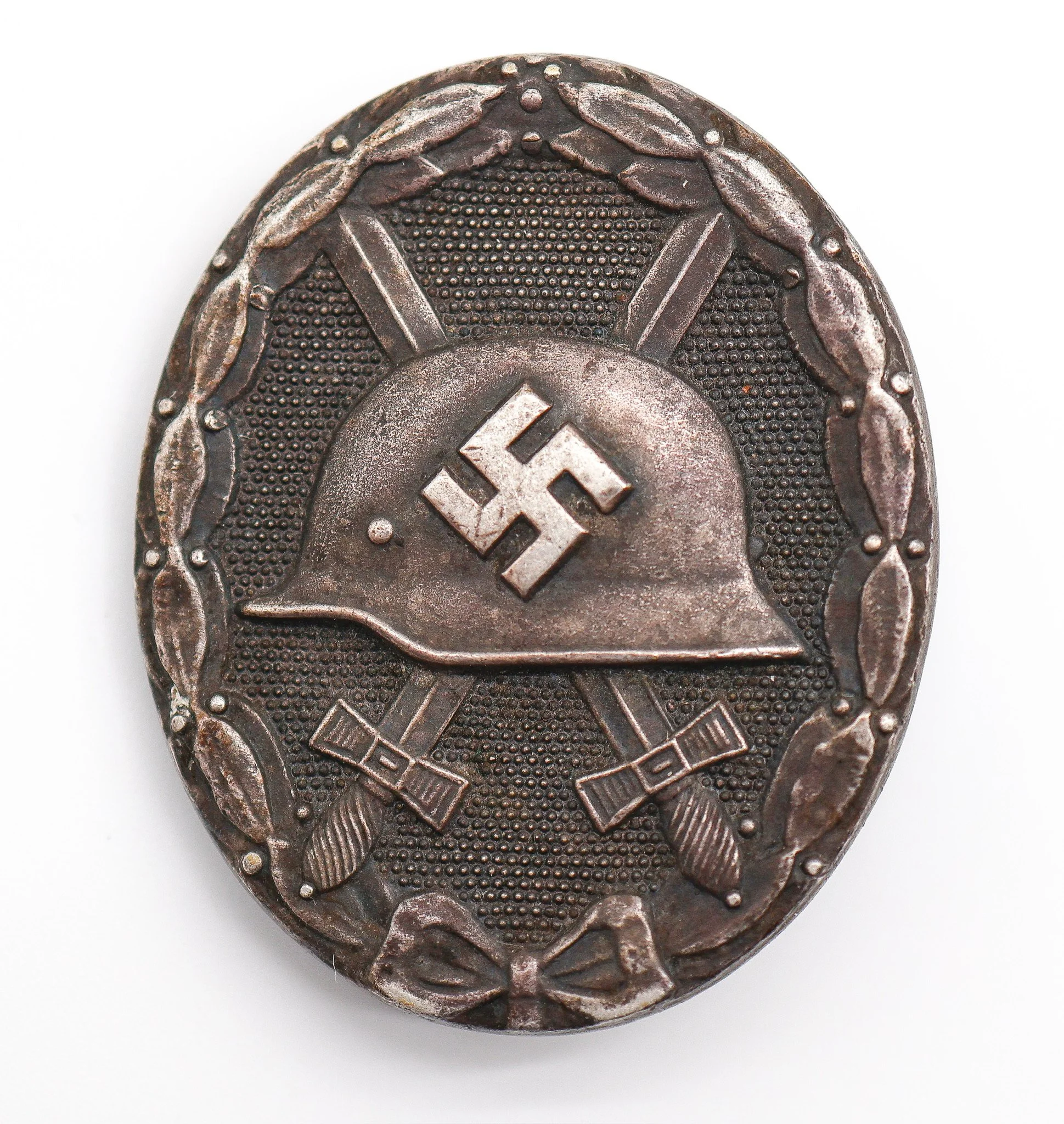
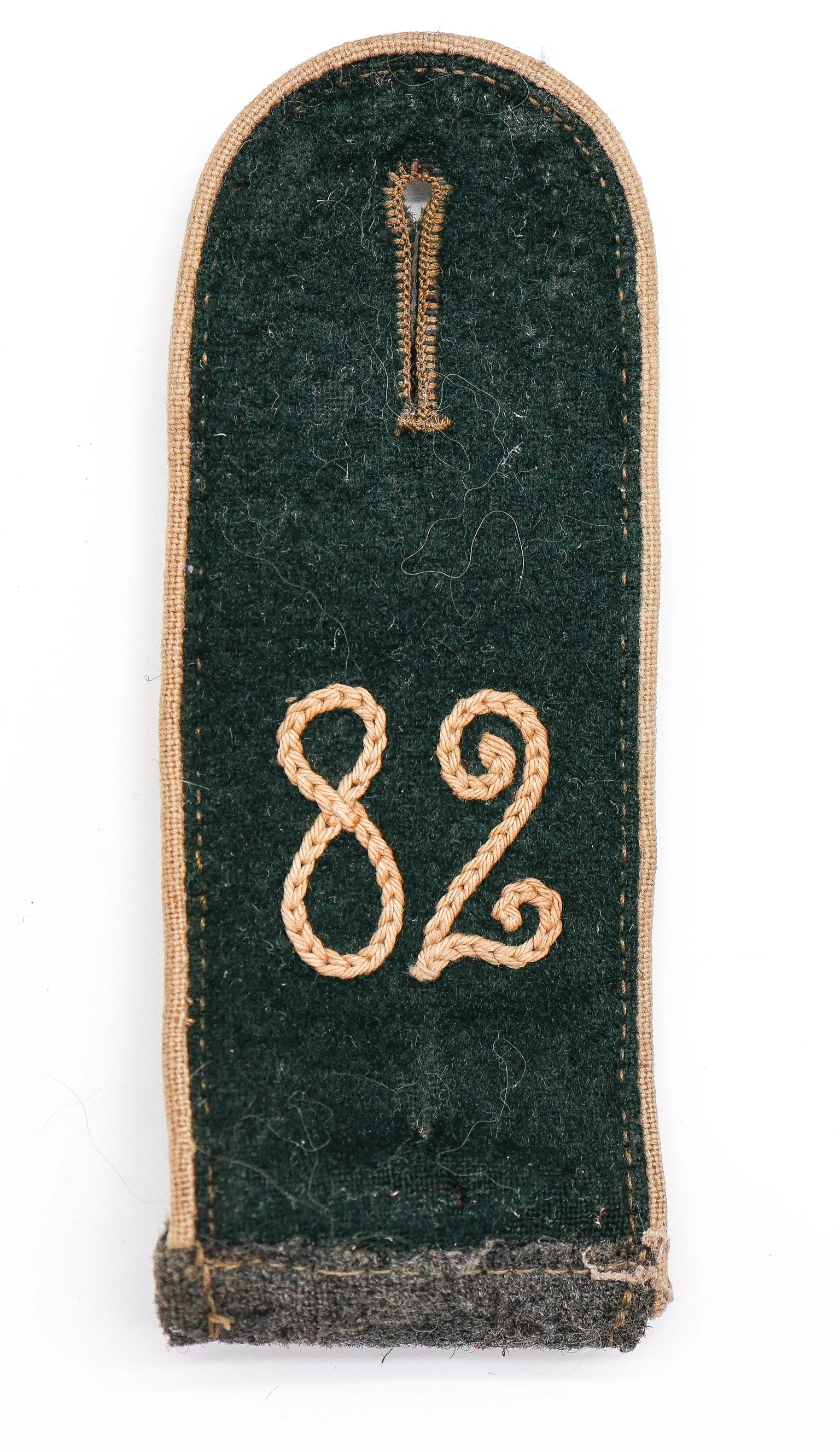
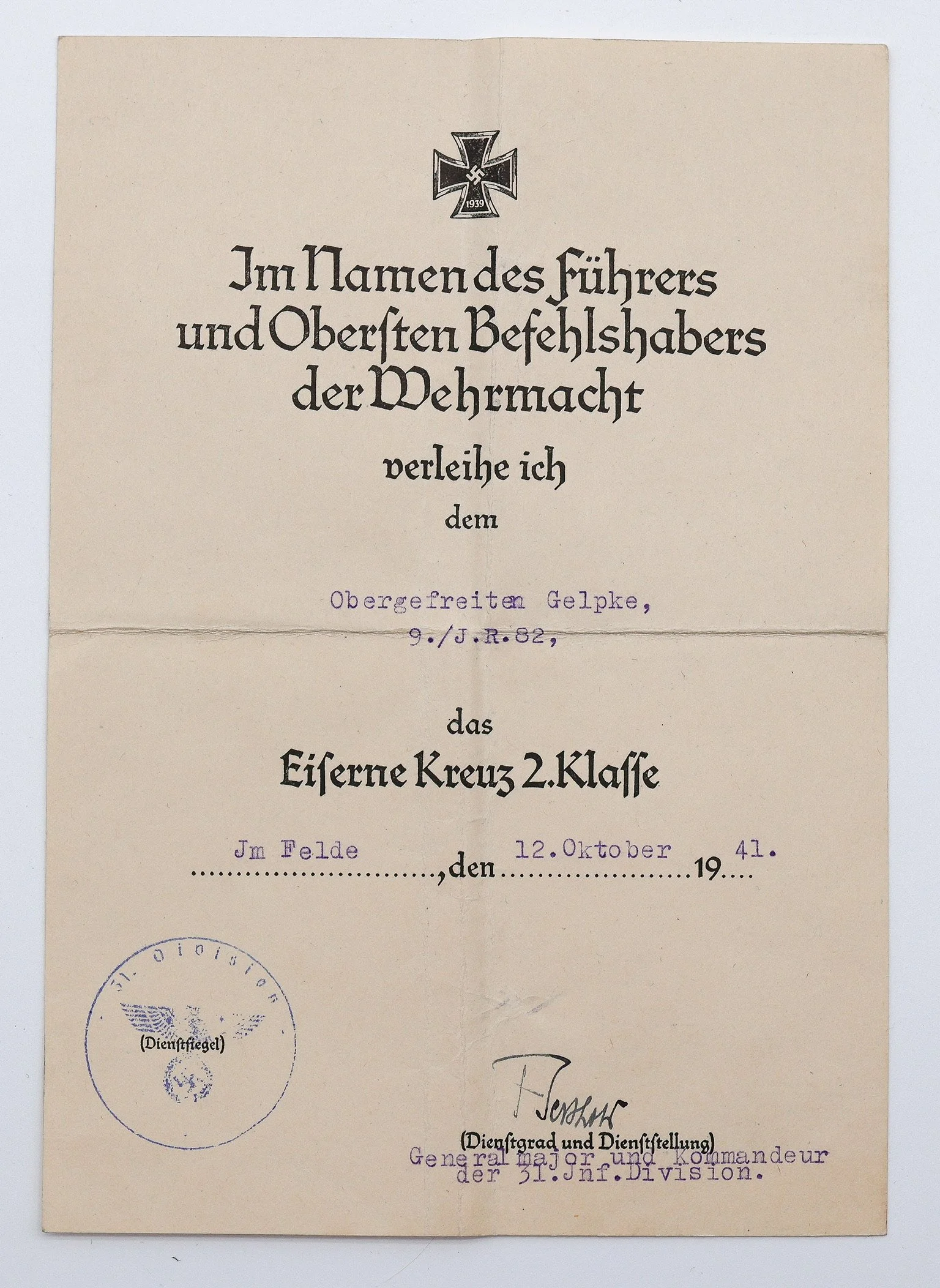
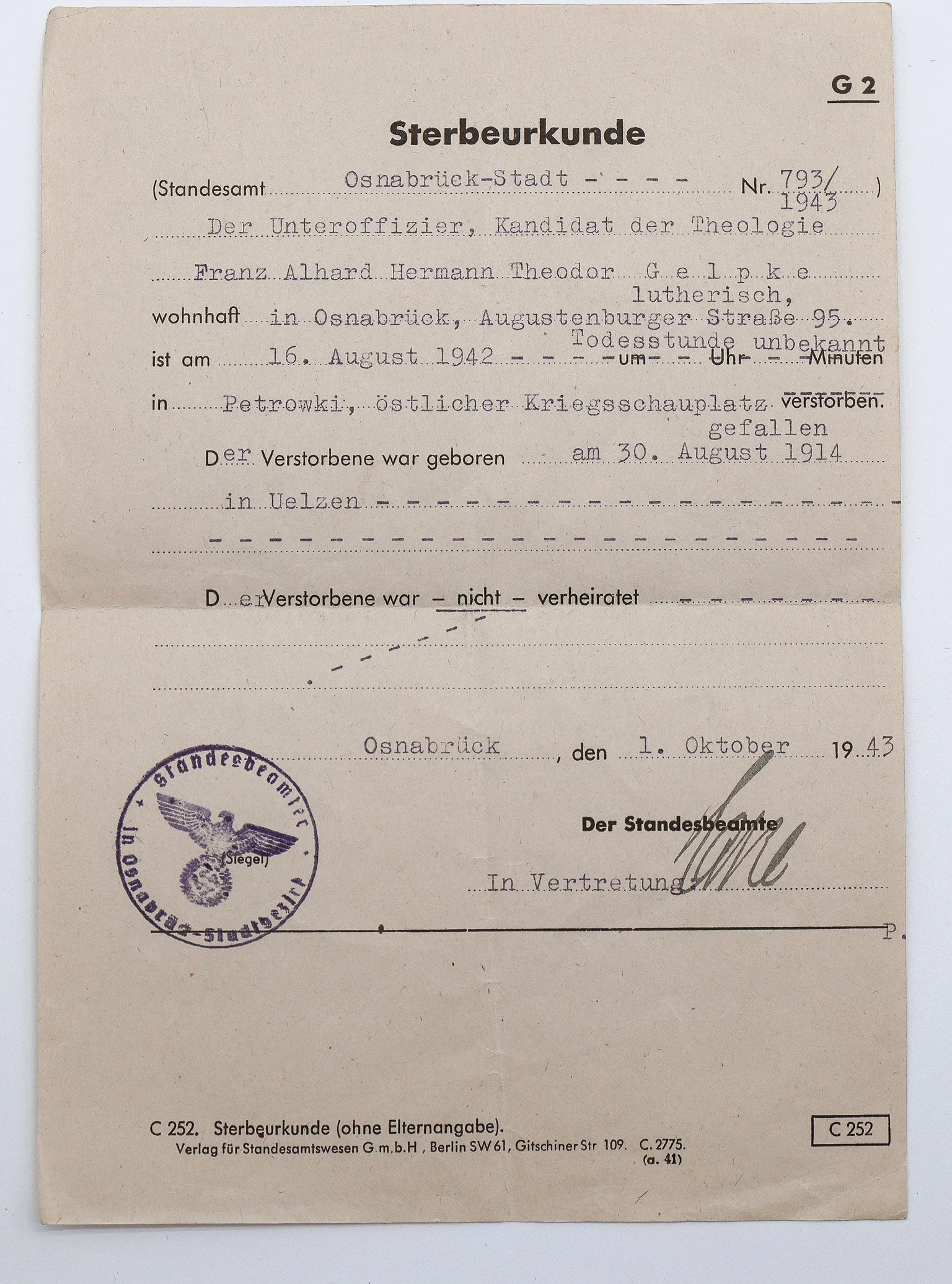
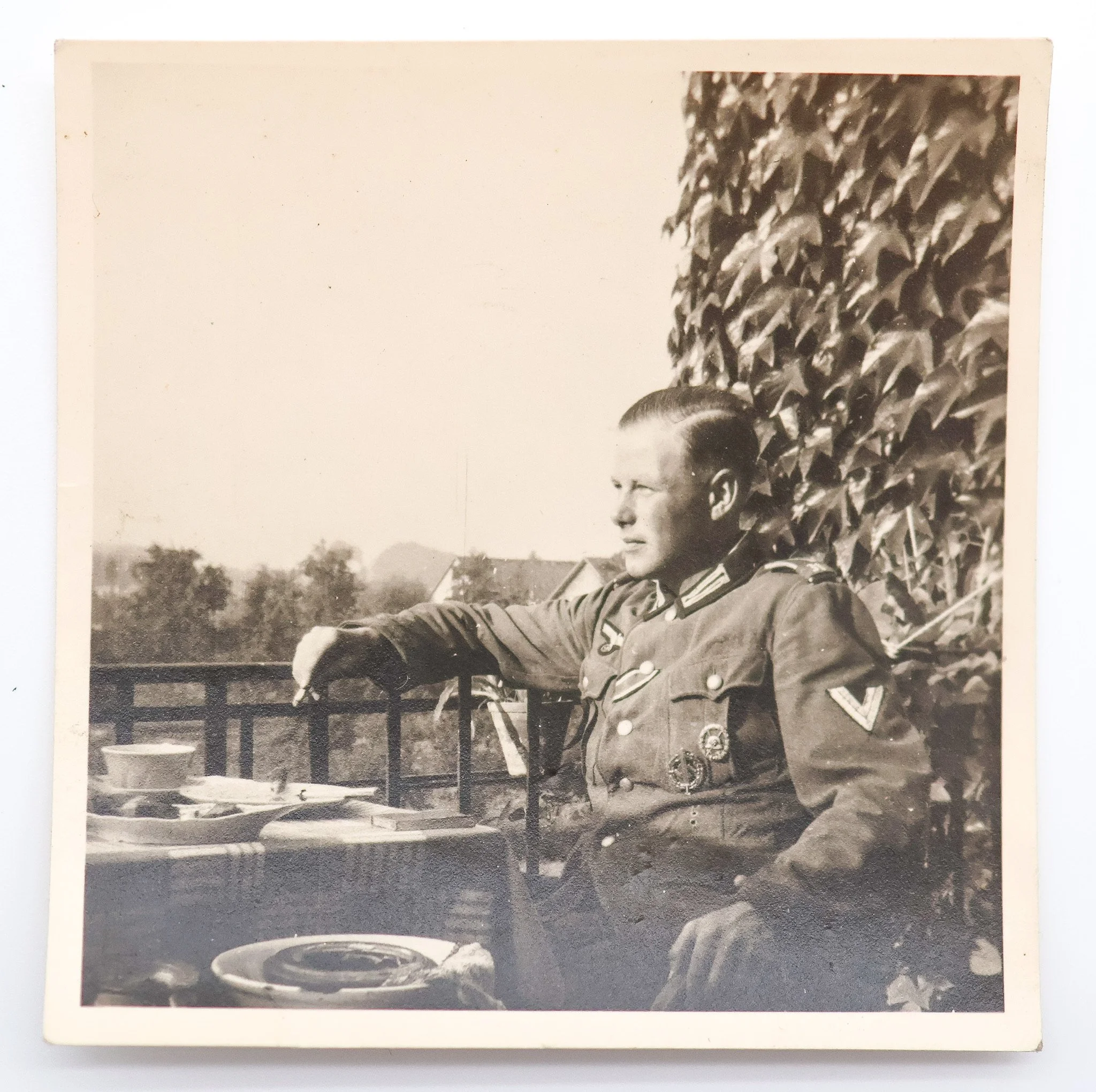
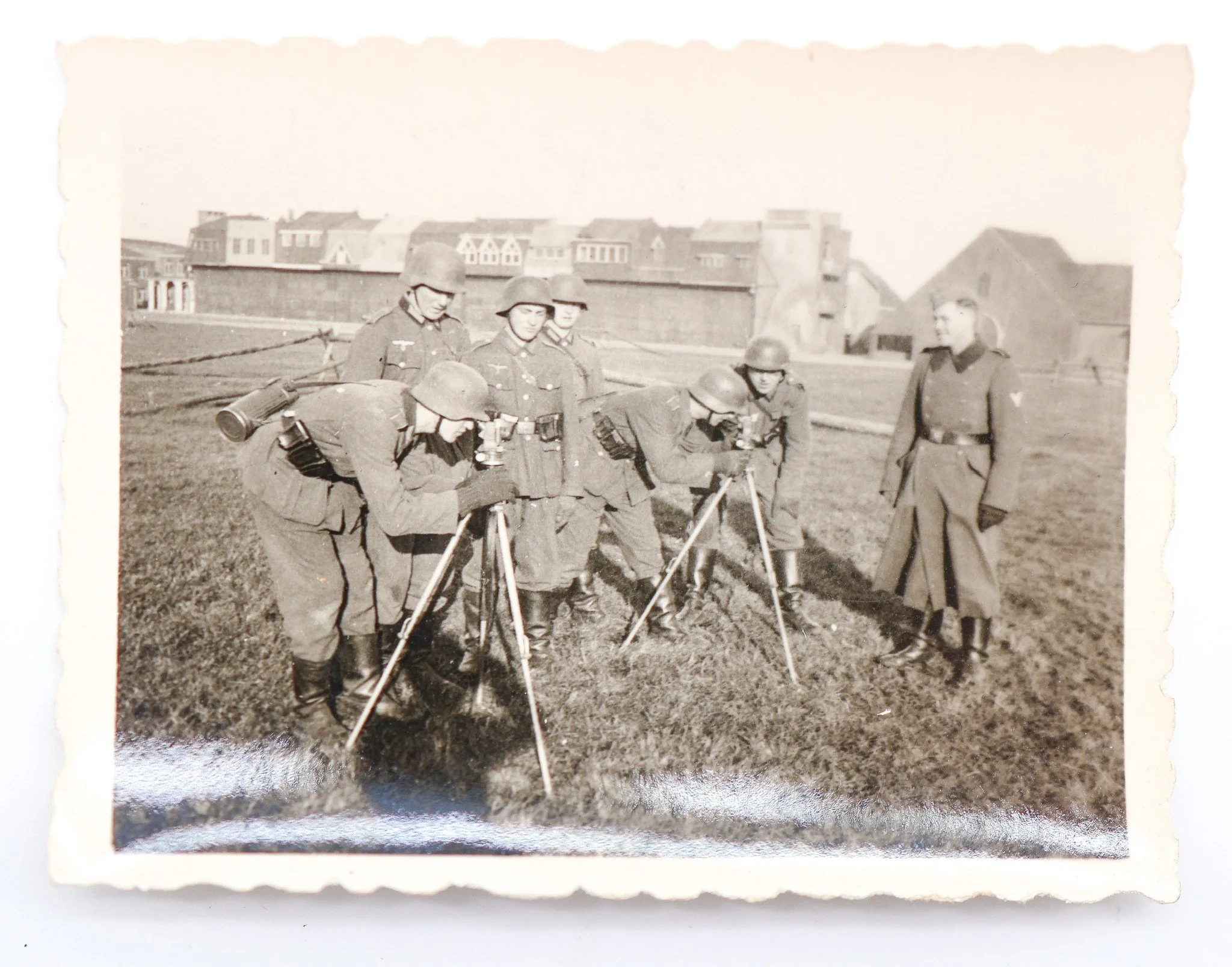
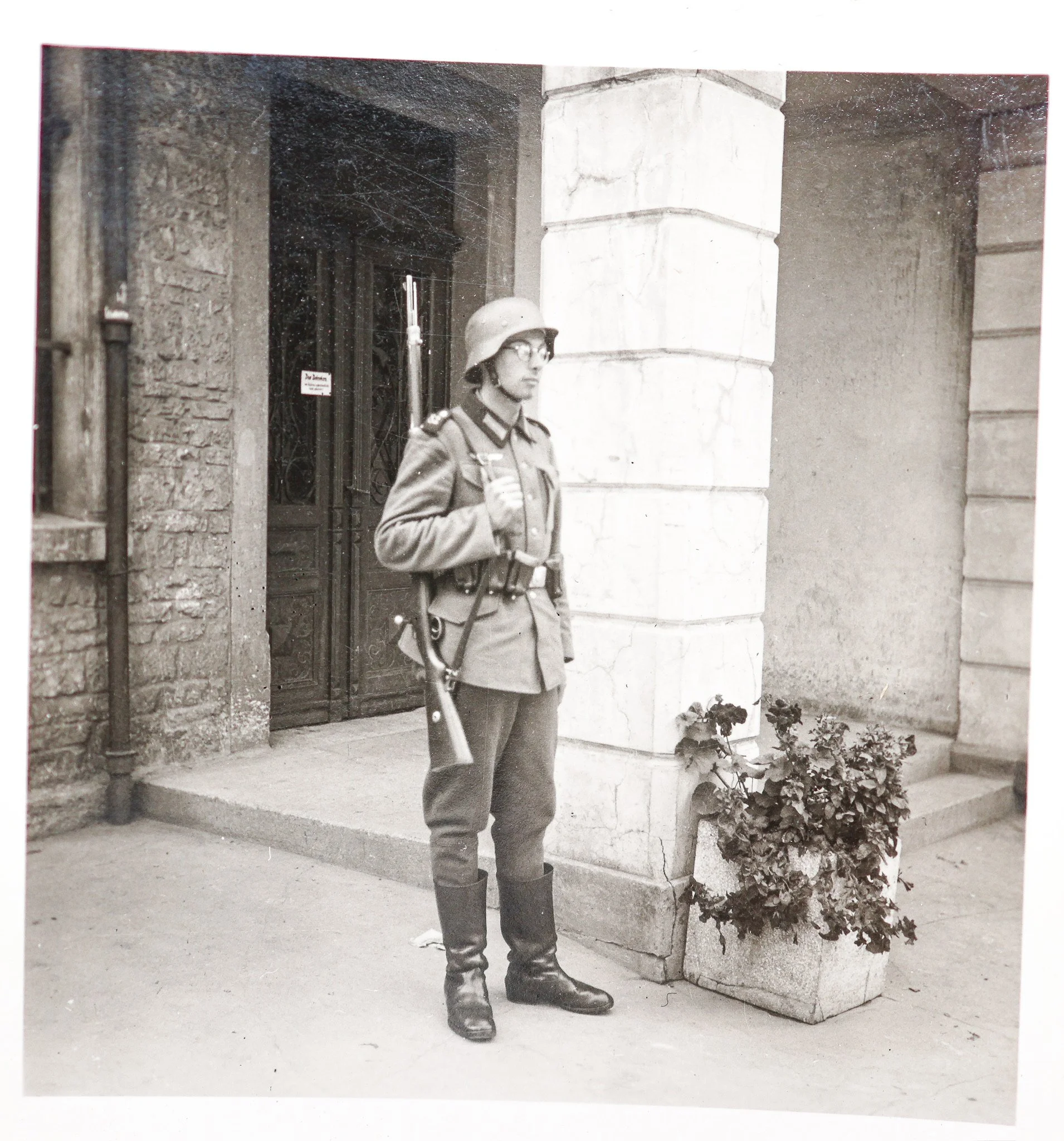
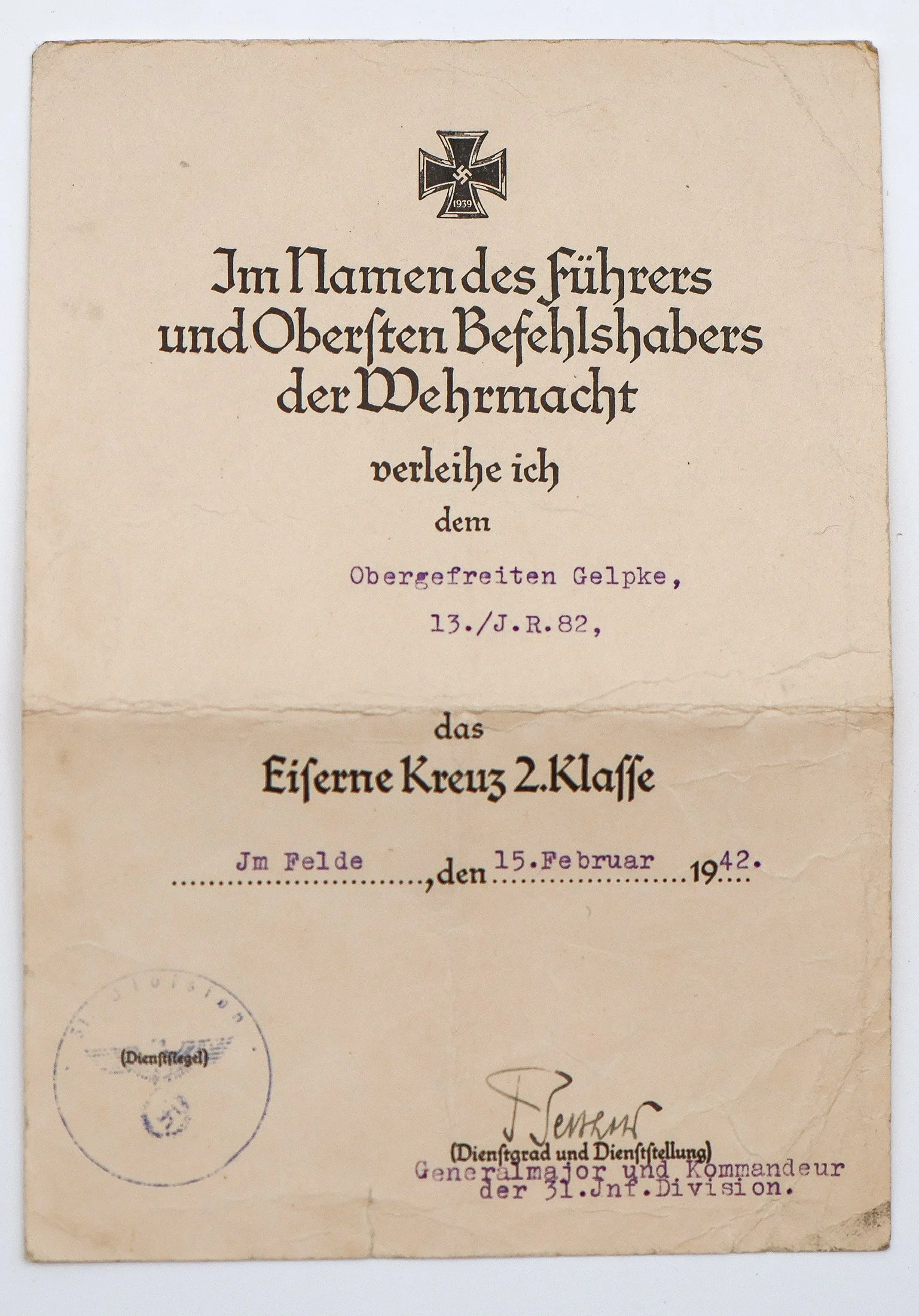
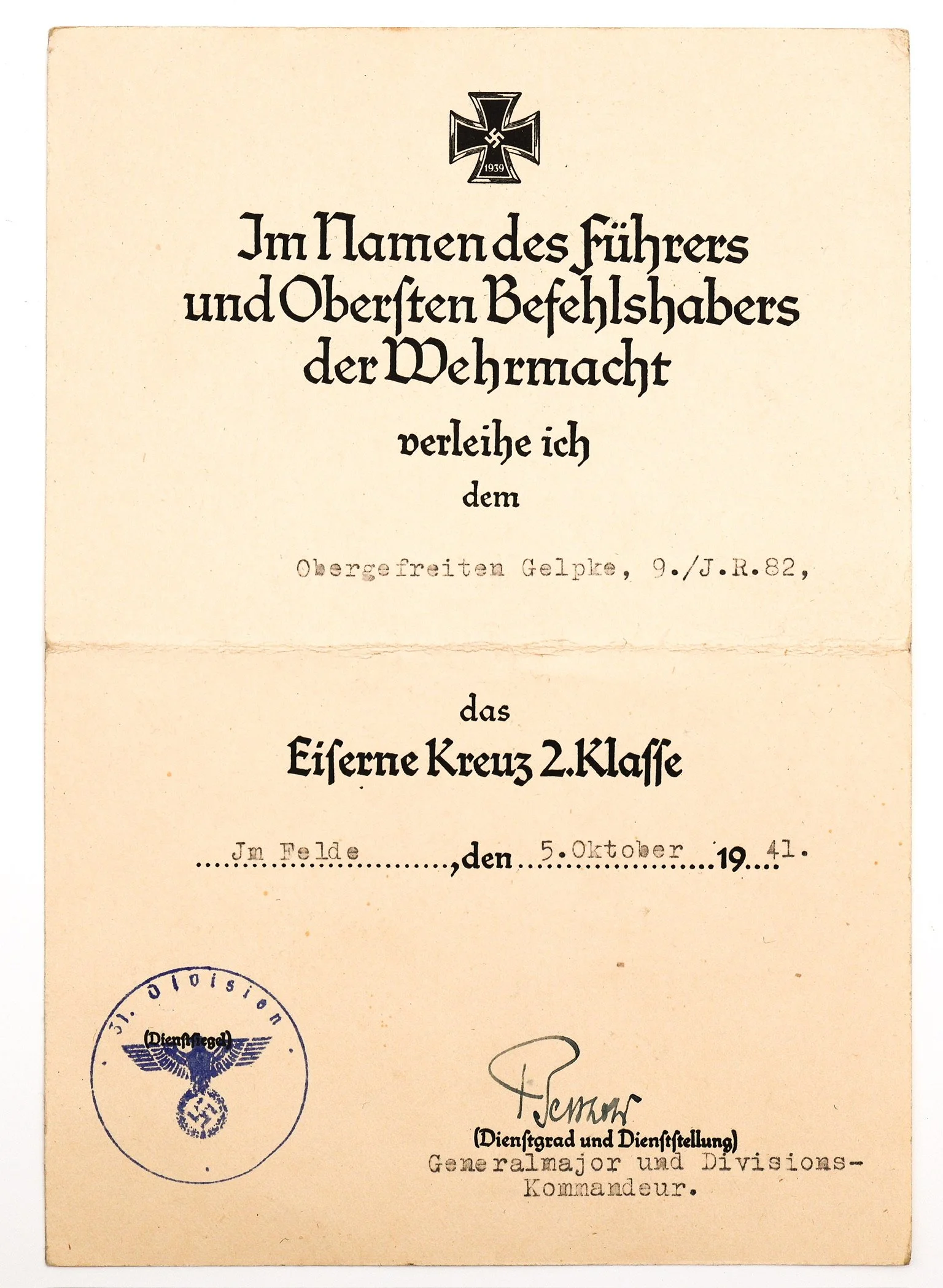
German Wehrmacht M35 Helmet Grouping – Obergefreiter Franz Gelpke (KIA, 1942)
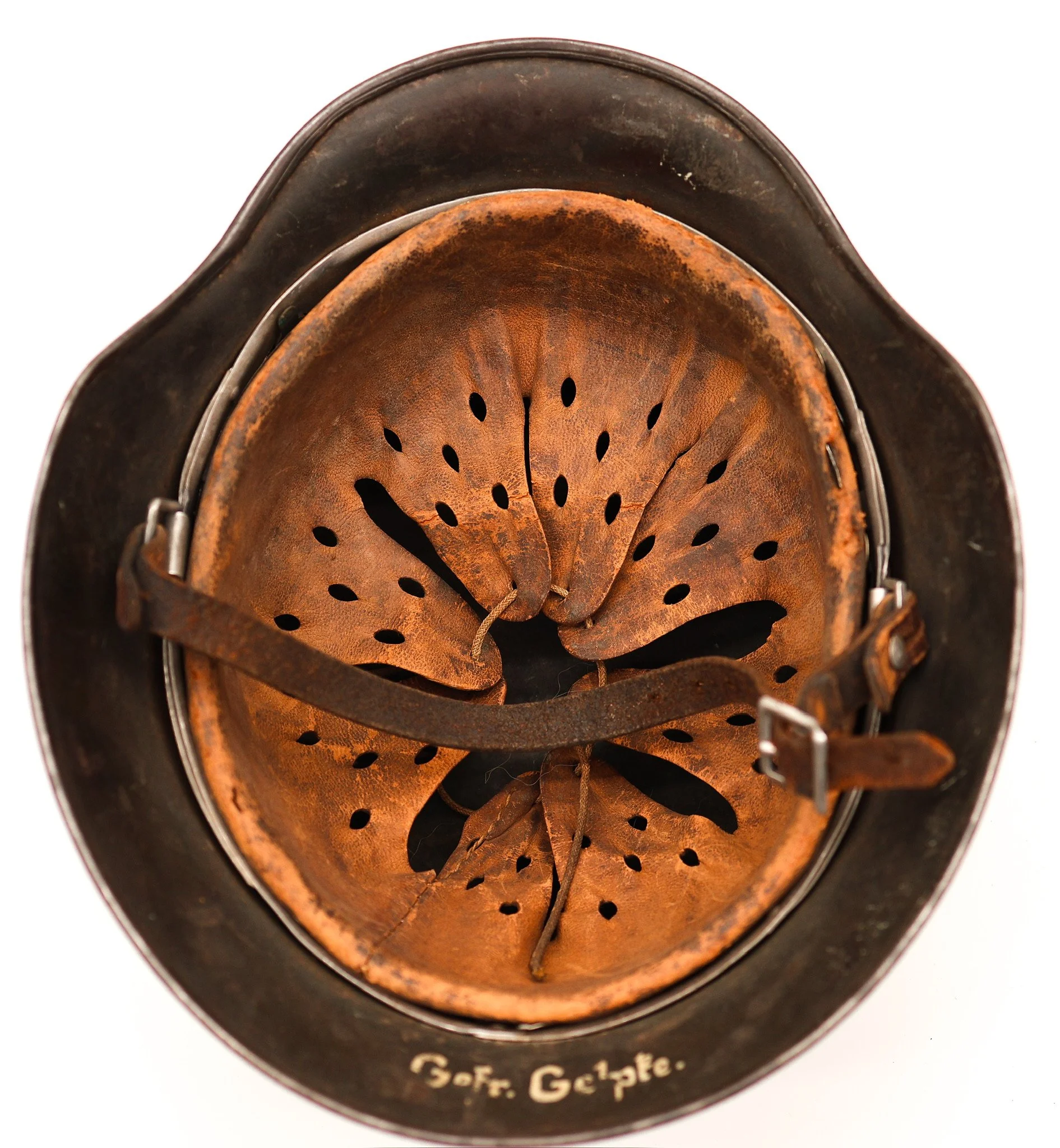
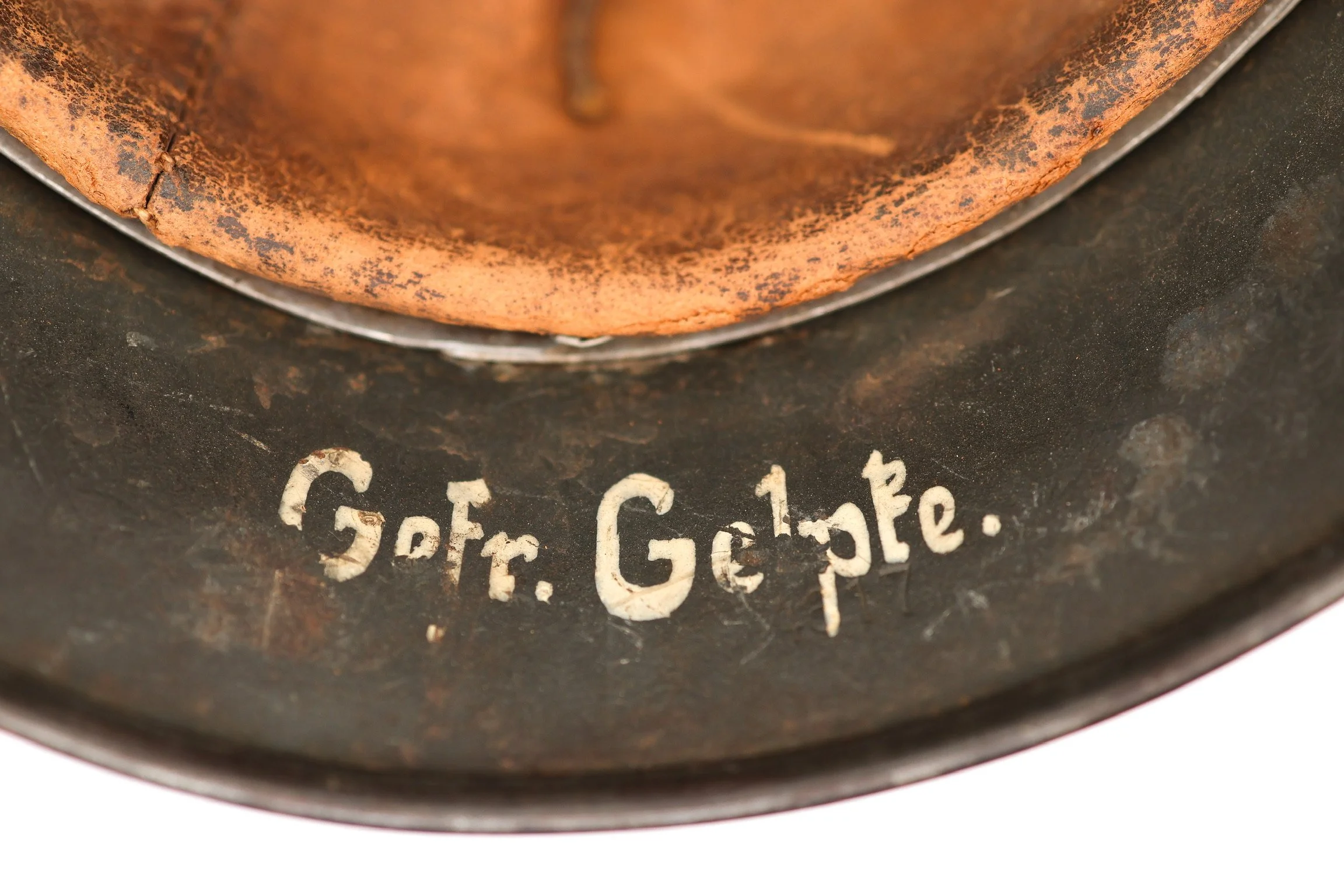
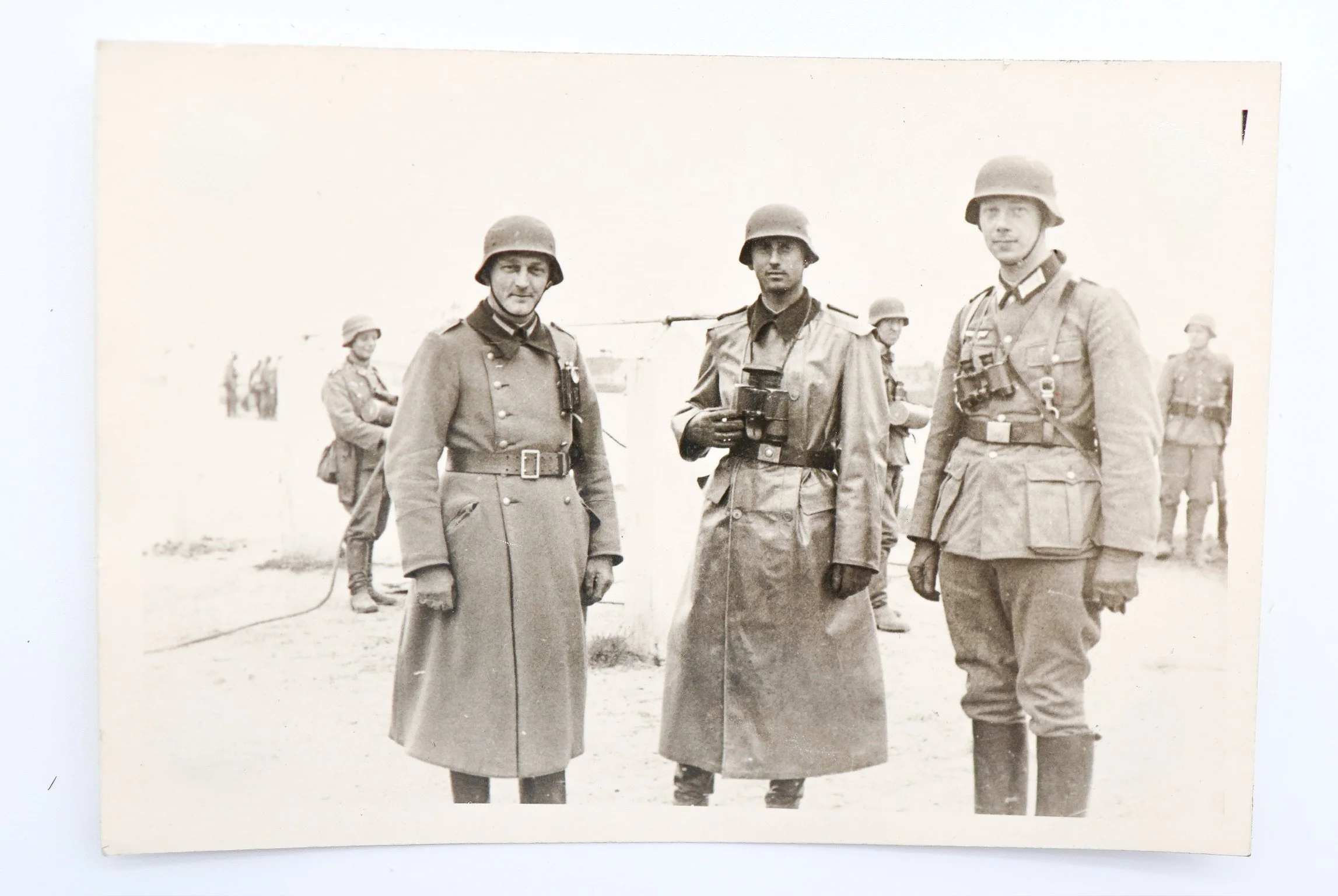
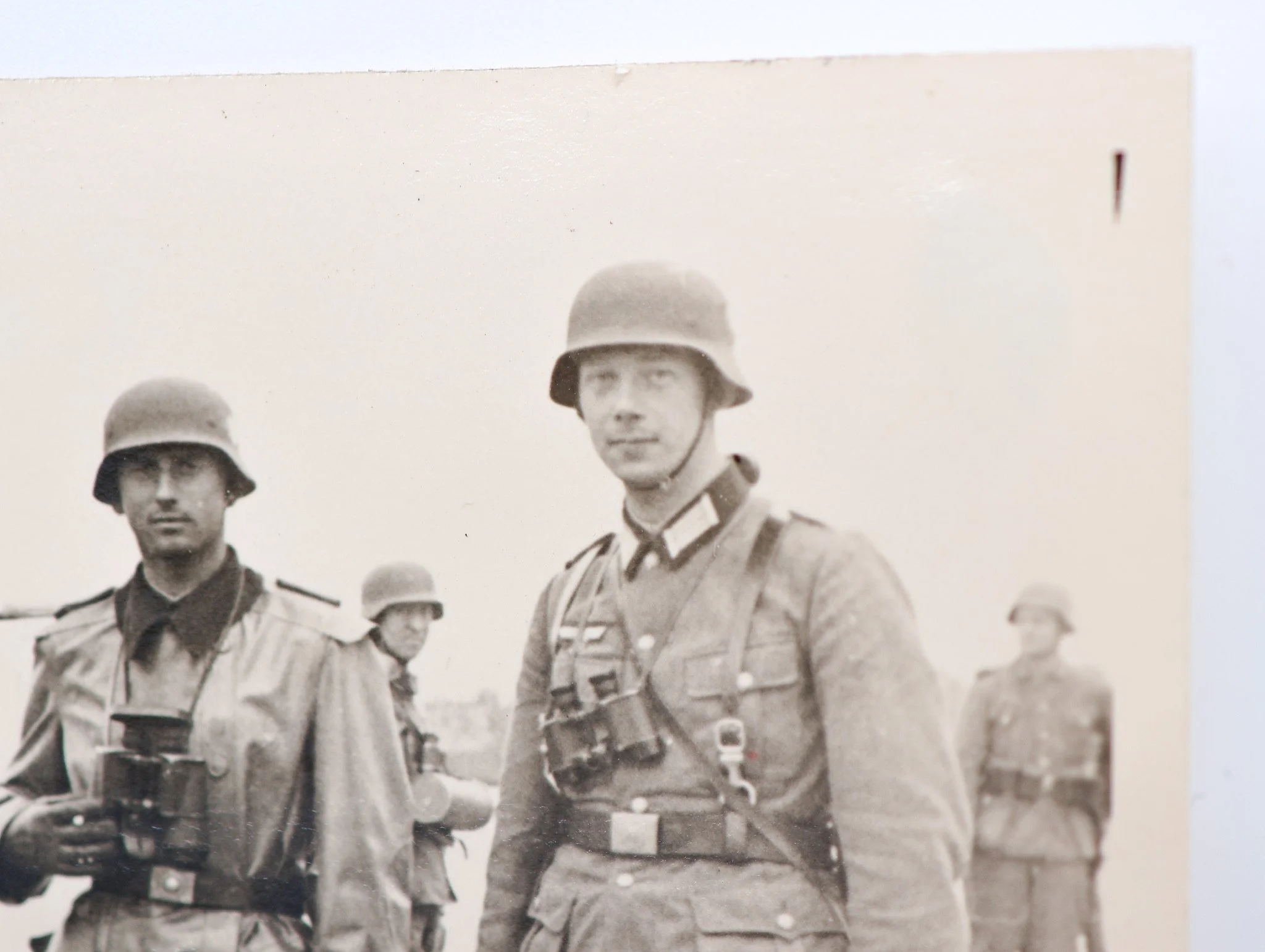
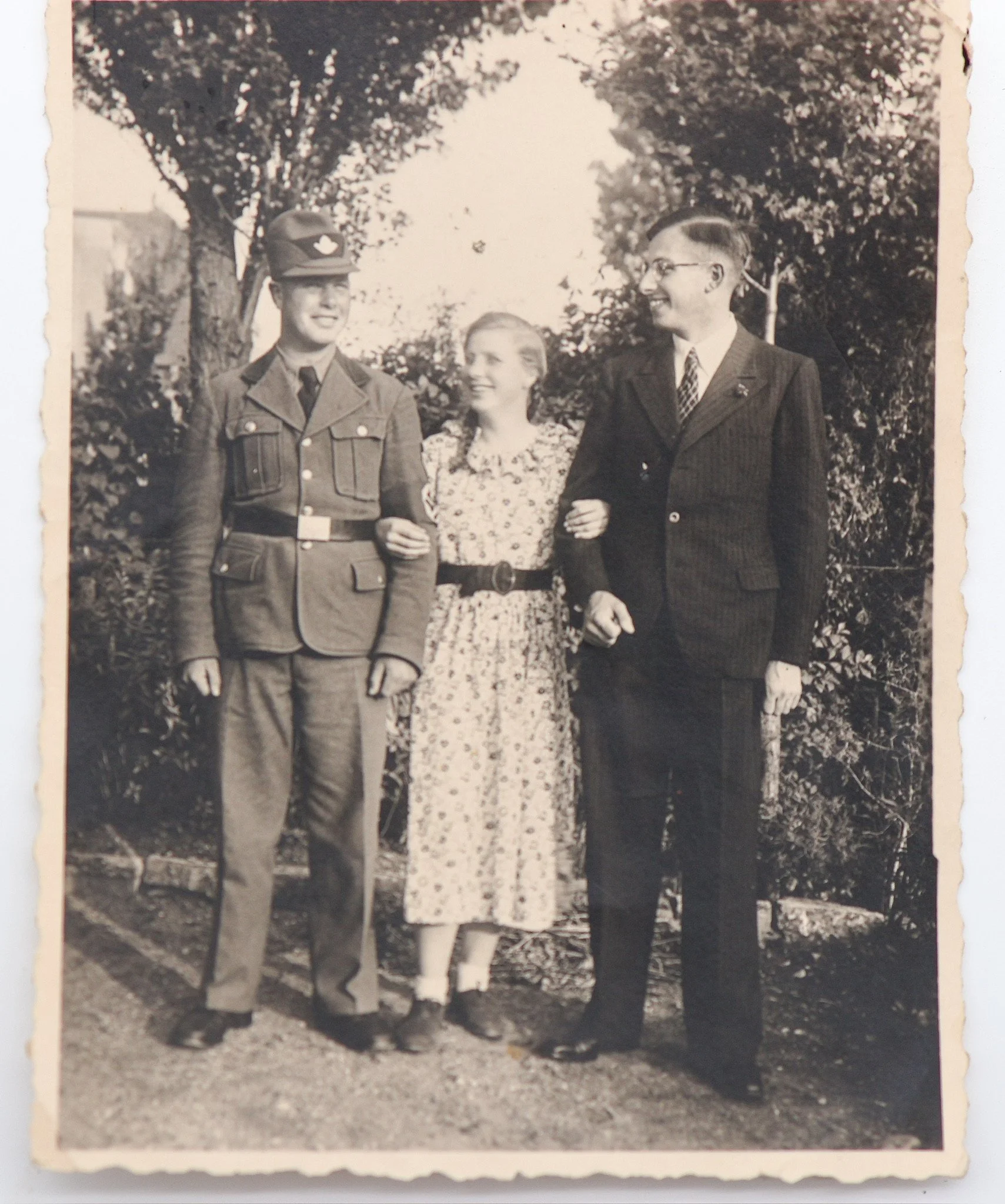
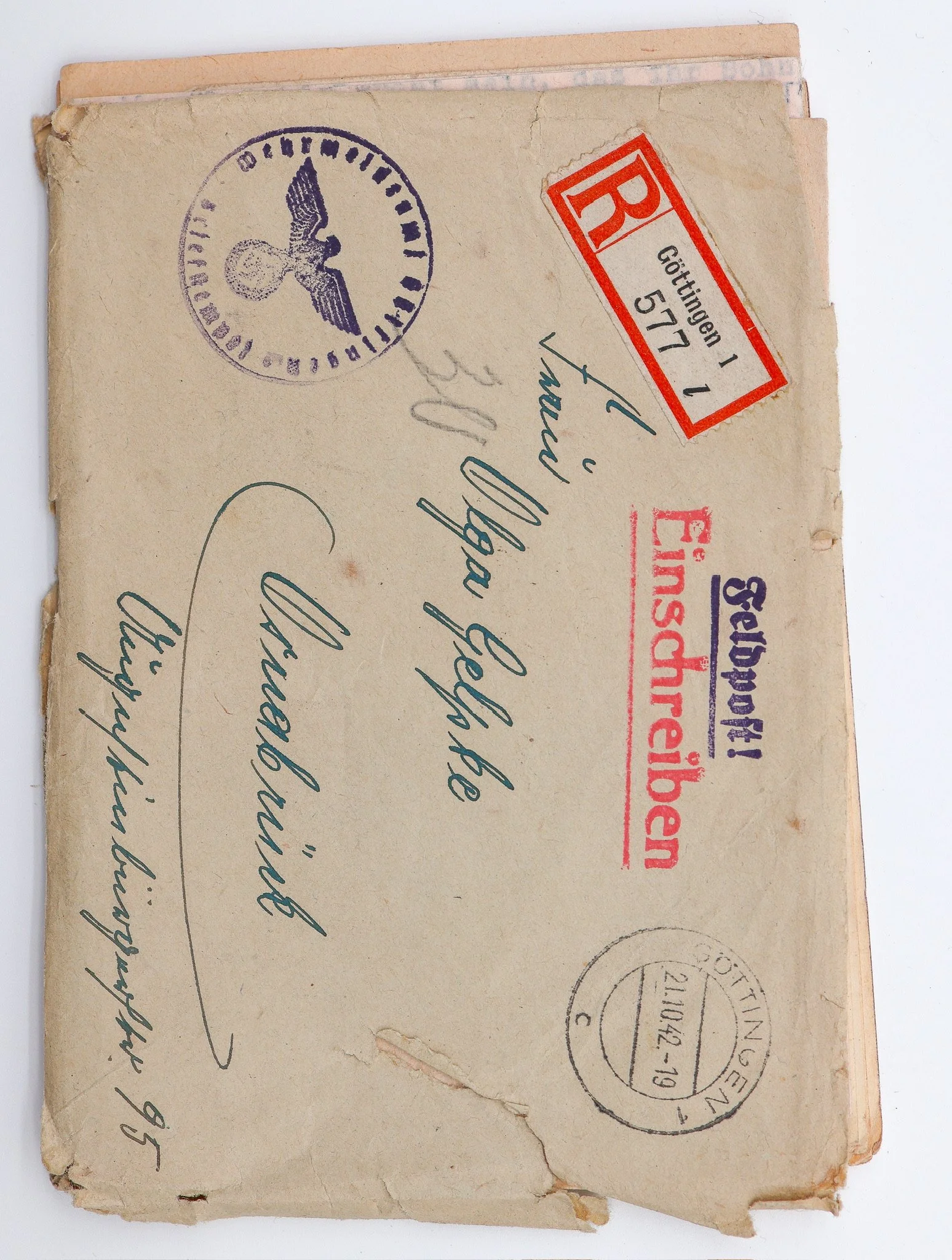
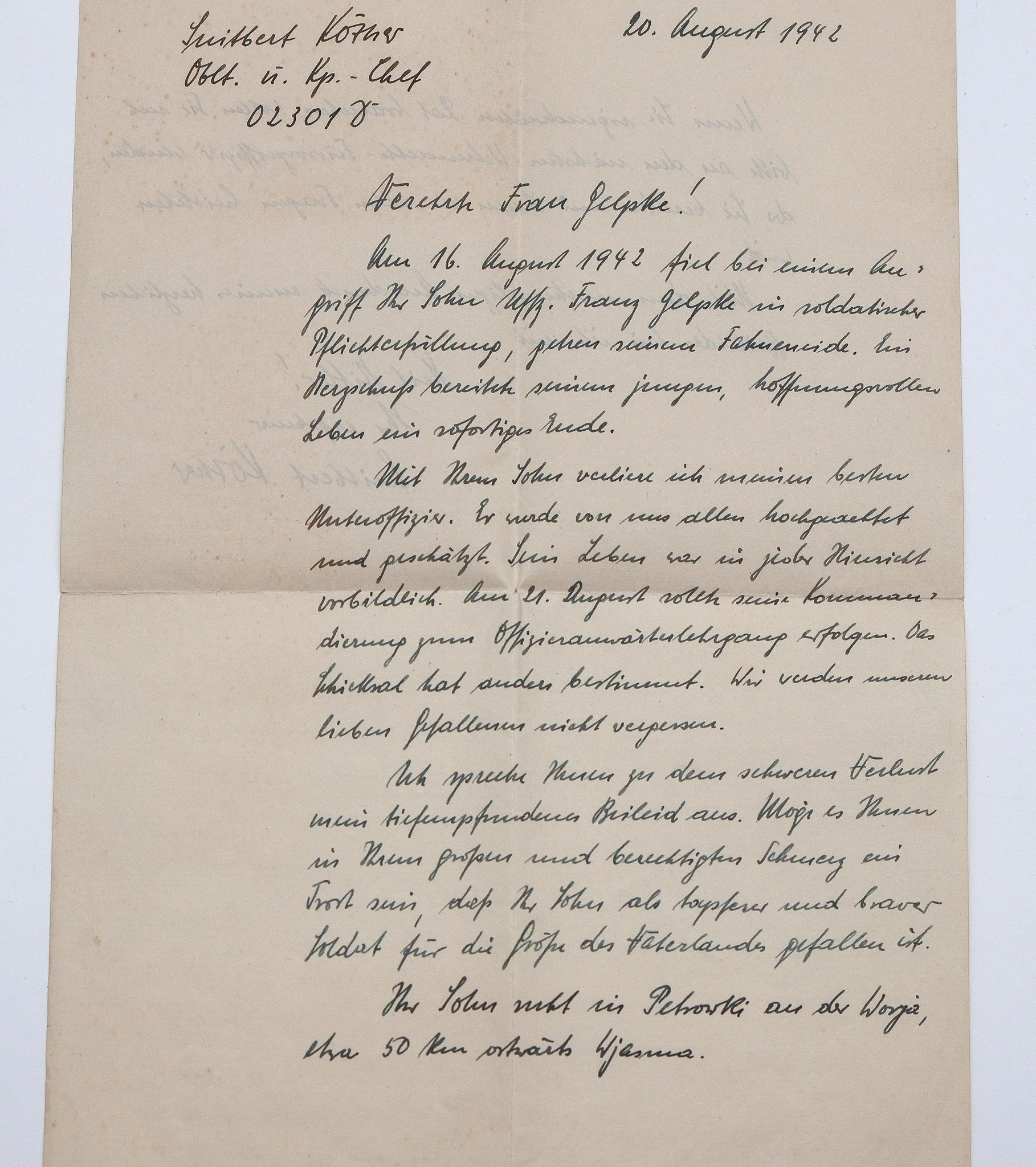
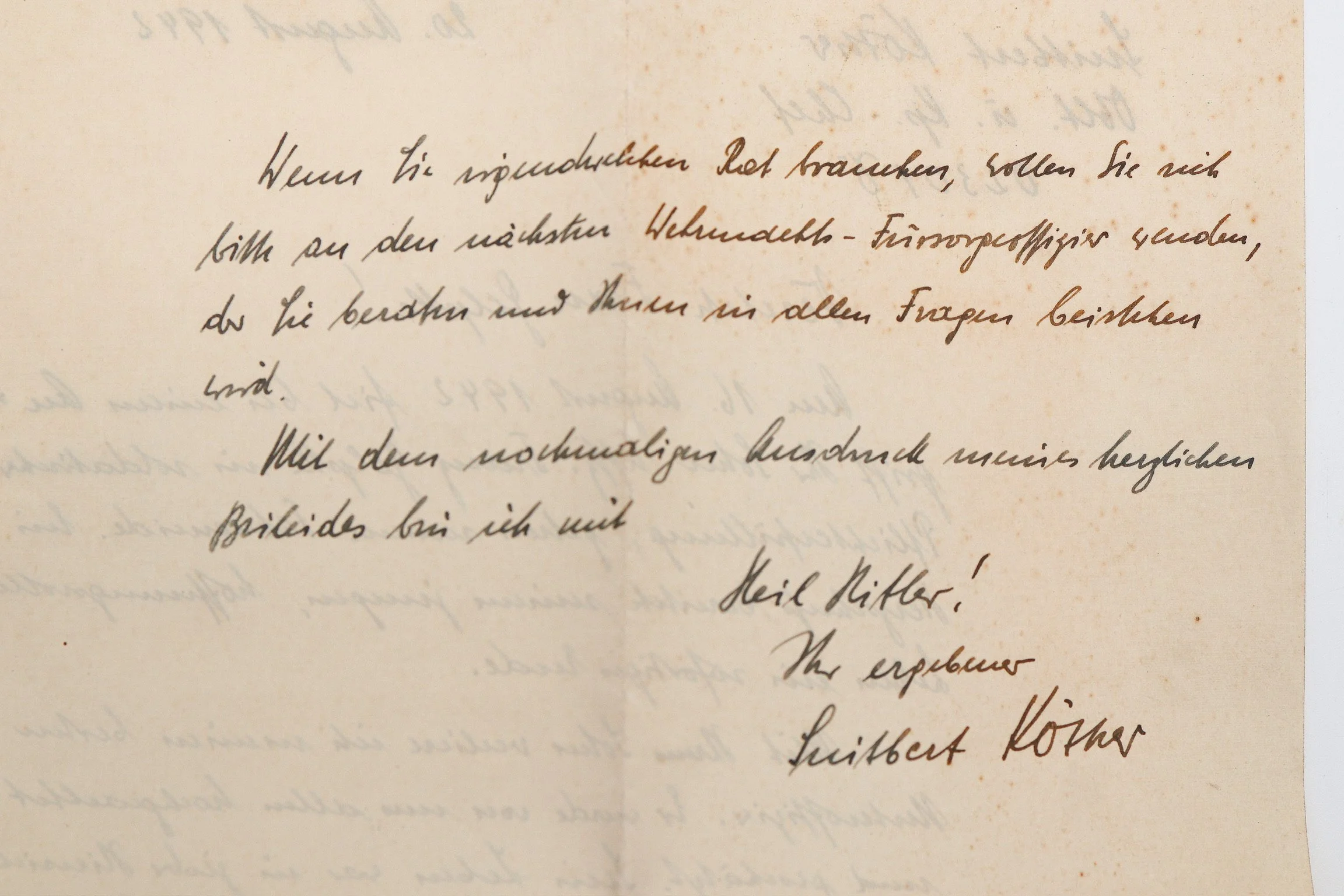
This grouping is attributed to Obergefreiter Franz Gelpke, a soldier of Infanterie-Regiment 82 who served from August 1939 until he was killed in action on 16 August 1942 in Petrowski, Russia. His service spanned multiple campaigns, including operations in Holland, Belgium, France, and later on the Eastern Front. Following his death, his personal effects—including his helmet, shoulder board, and Wehrpass—were returned to his family.
The helmet is a Wehrmacht M35 reissued single decal combat helmet manufactured by ET in size 62, with lot number 4617. It retains its original liner and a shortened chinstrap still attached. The helmet shows reissue paint with an additional field-applied rauchtarn camouflage pattern. The grouping also includes his first pattern Wehrpass documenting his service, along with photographs of Gelpke wearing the helmet, award documents including multiple Iron Cross 2nd Class entries, a single shoulder board, and a Silver Wound Badge.
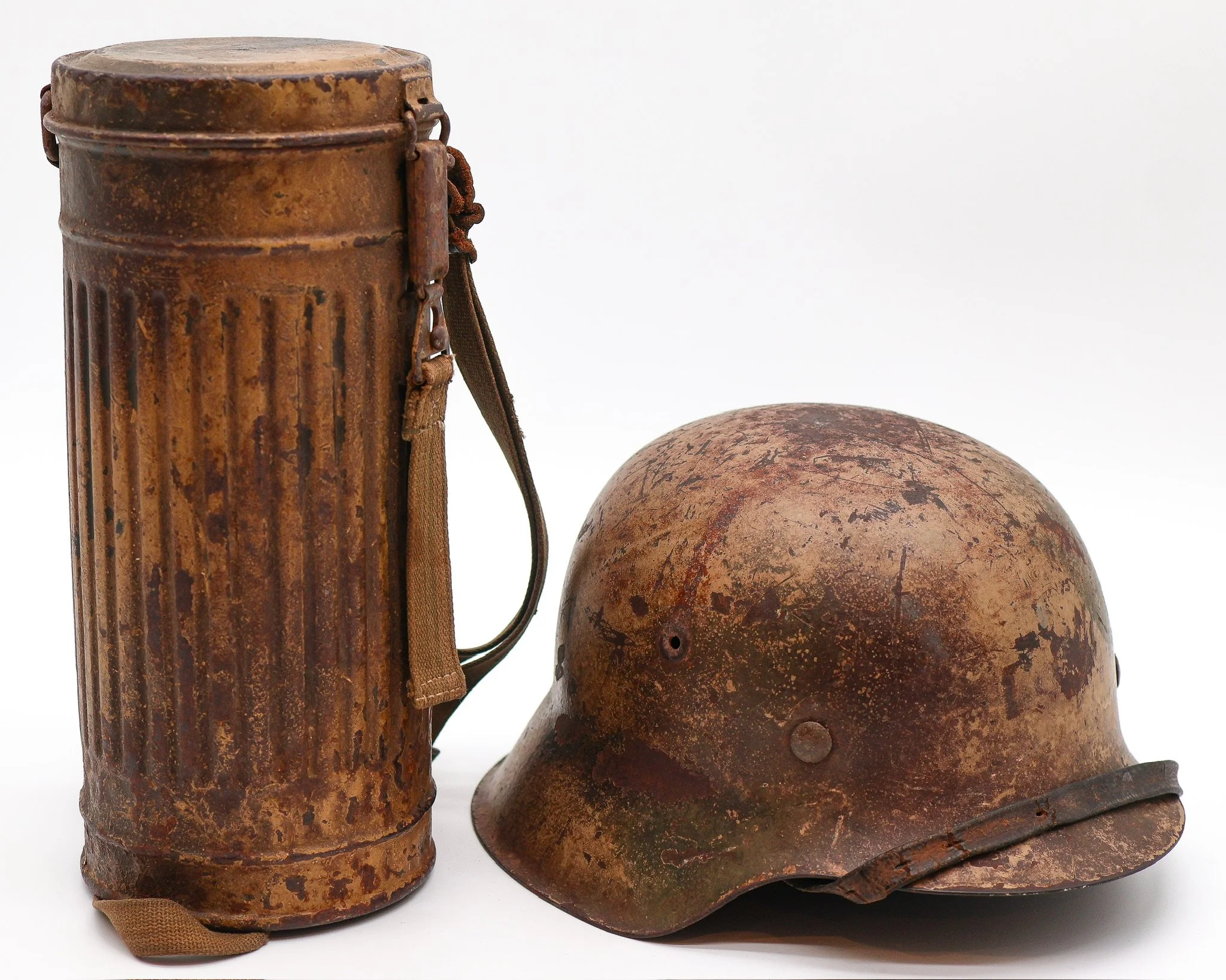
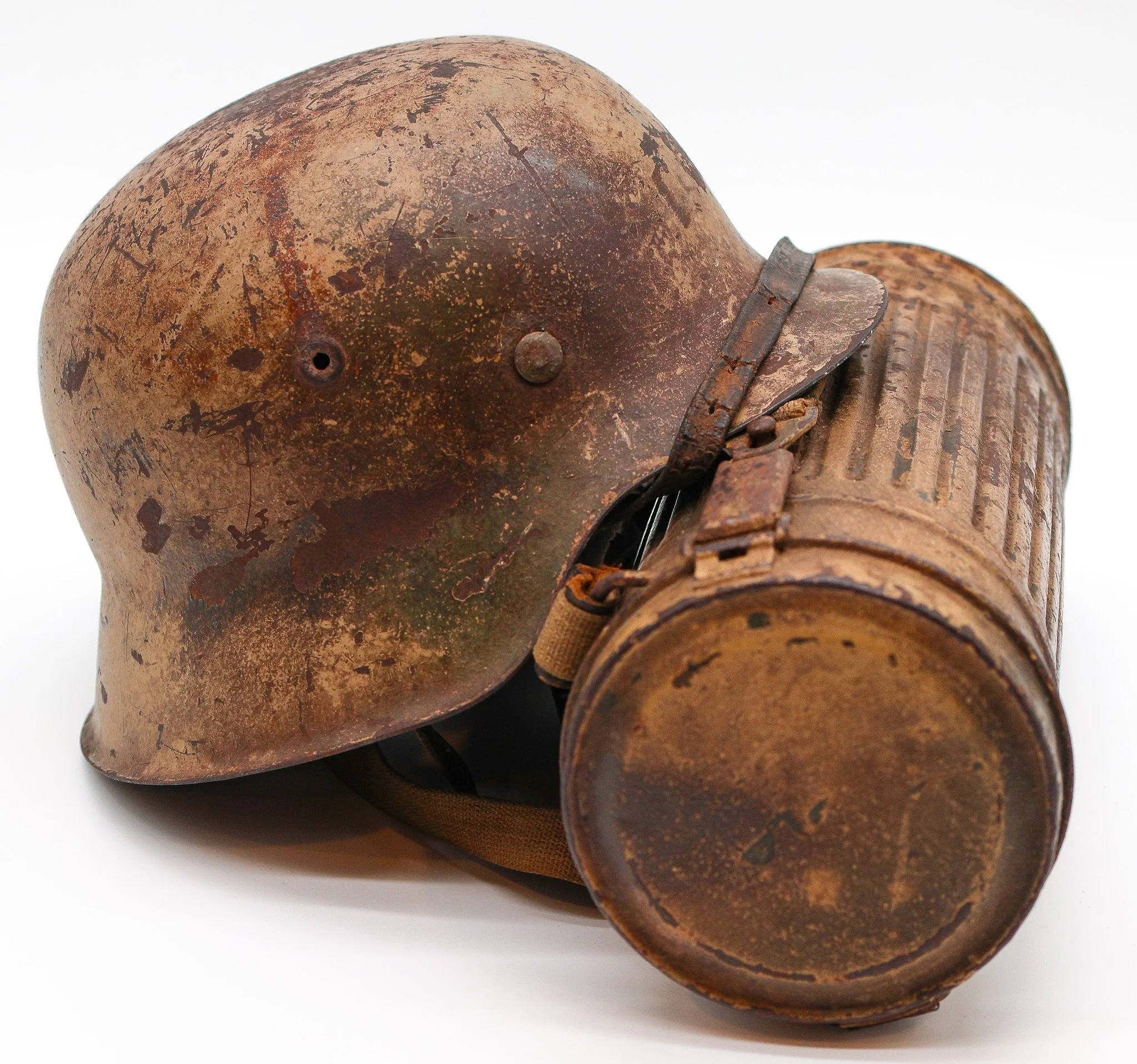
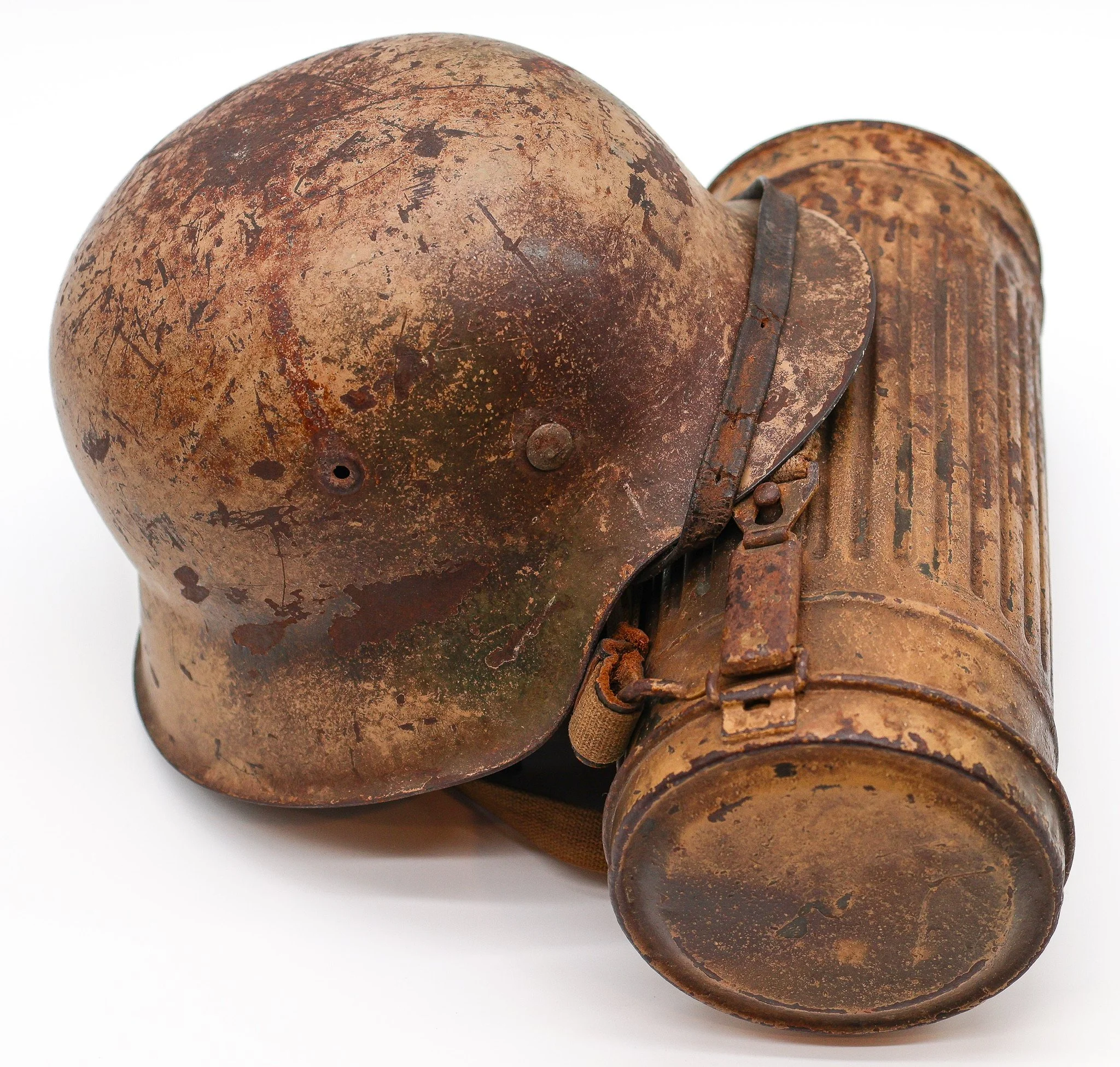
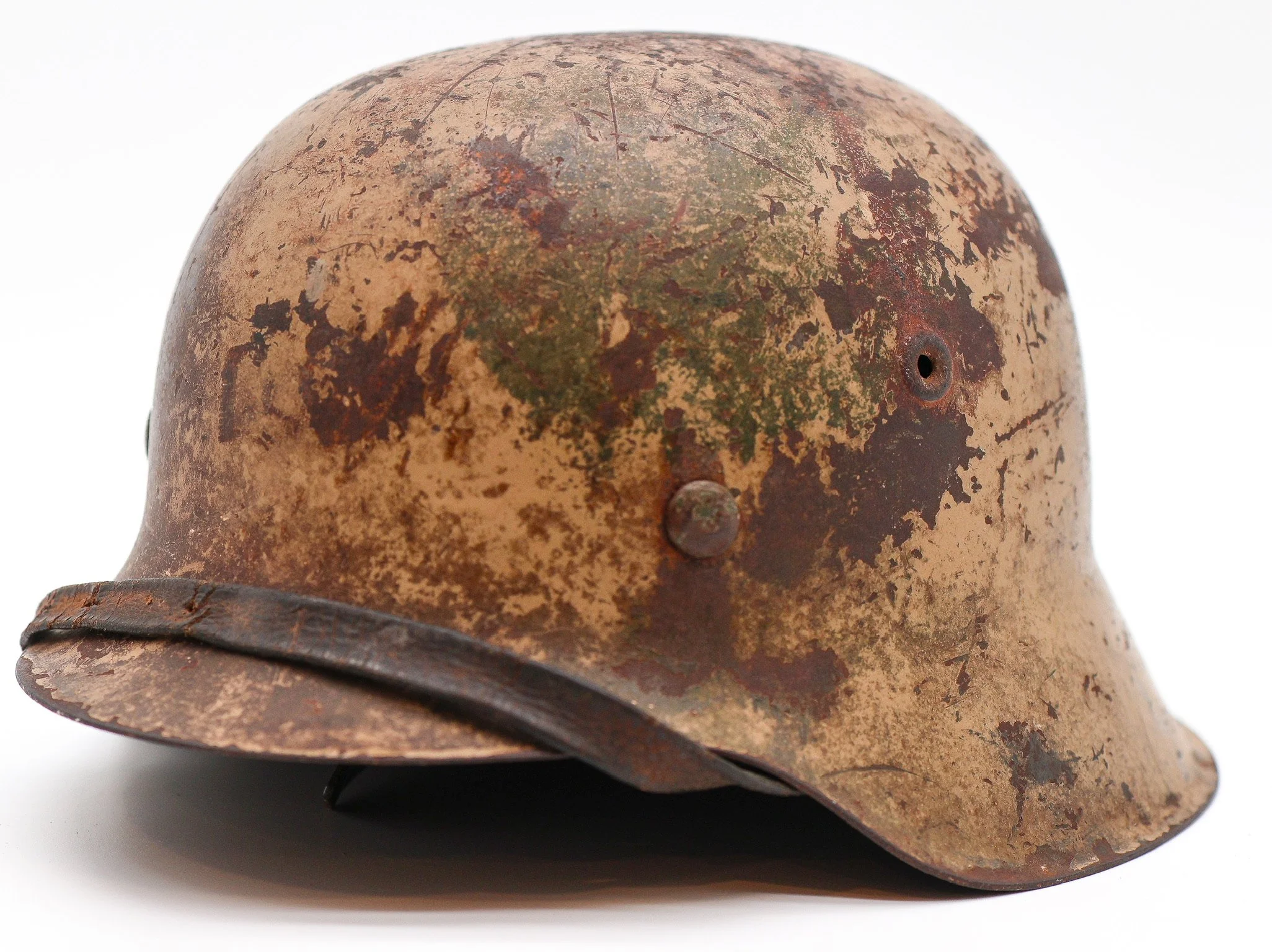
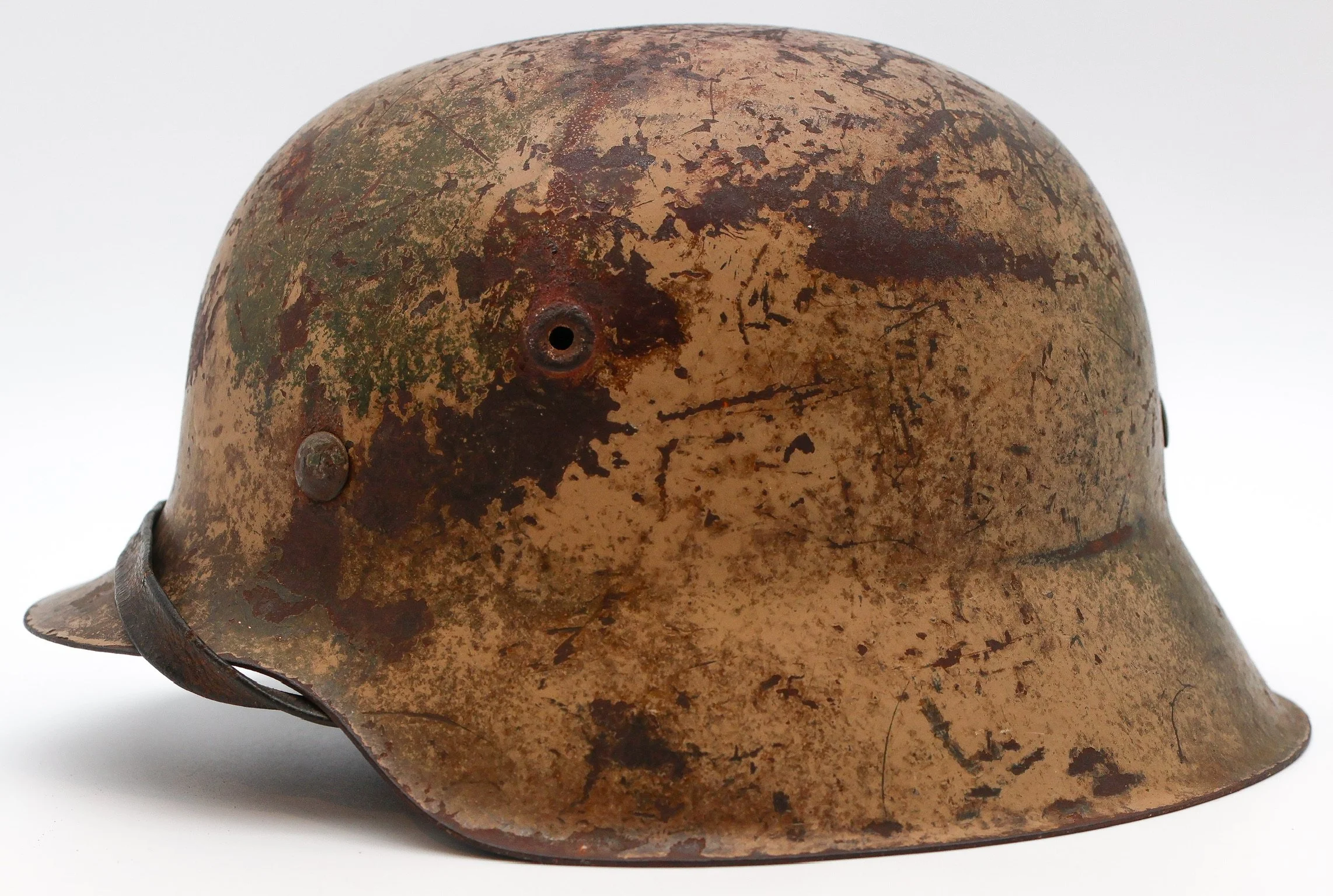
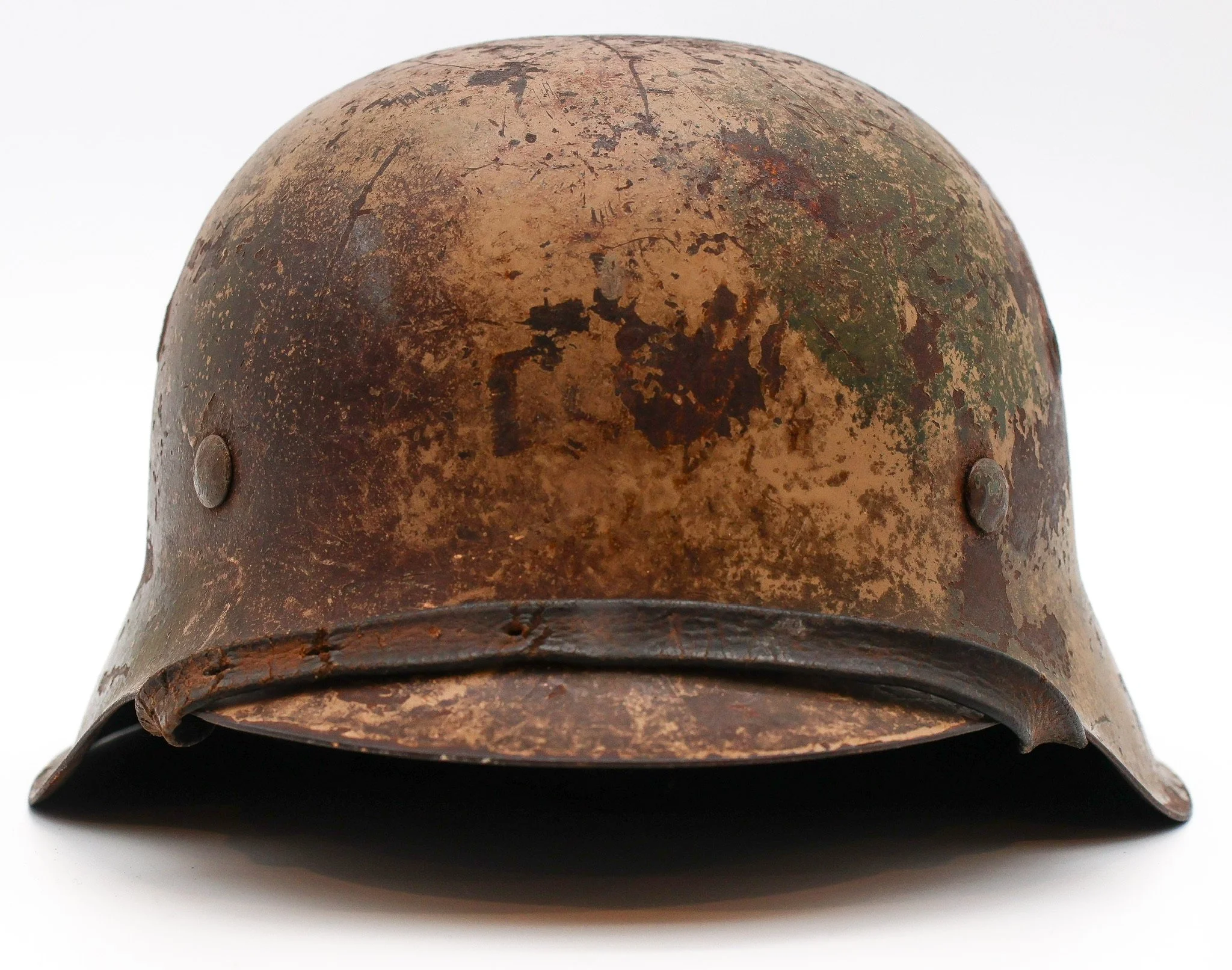
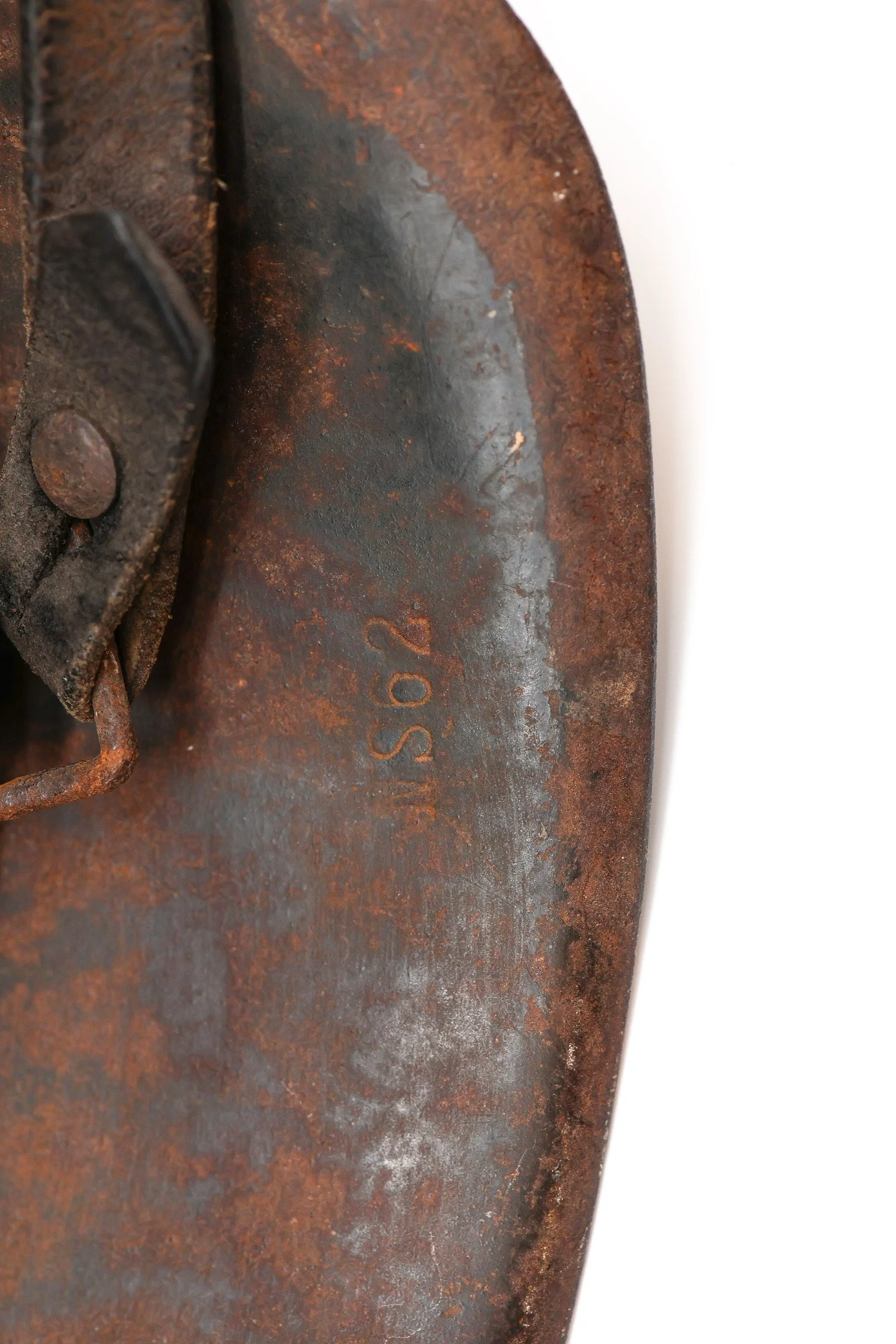
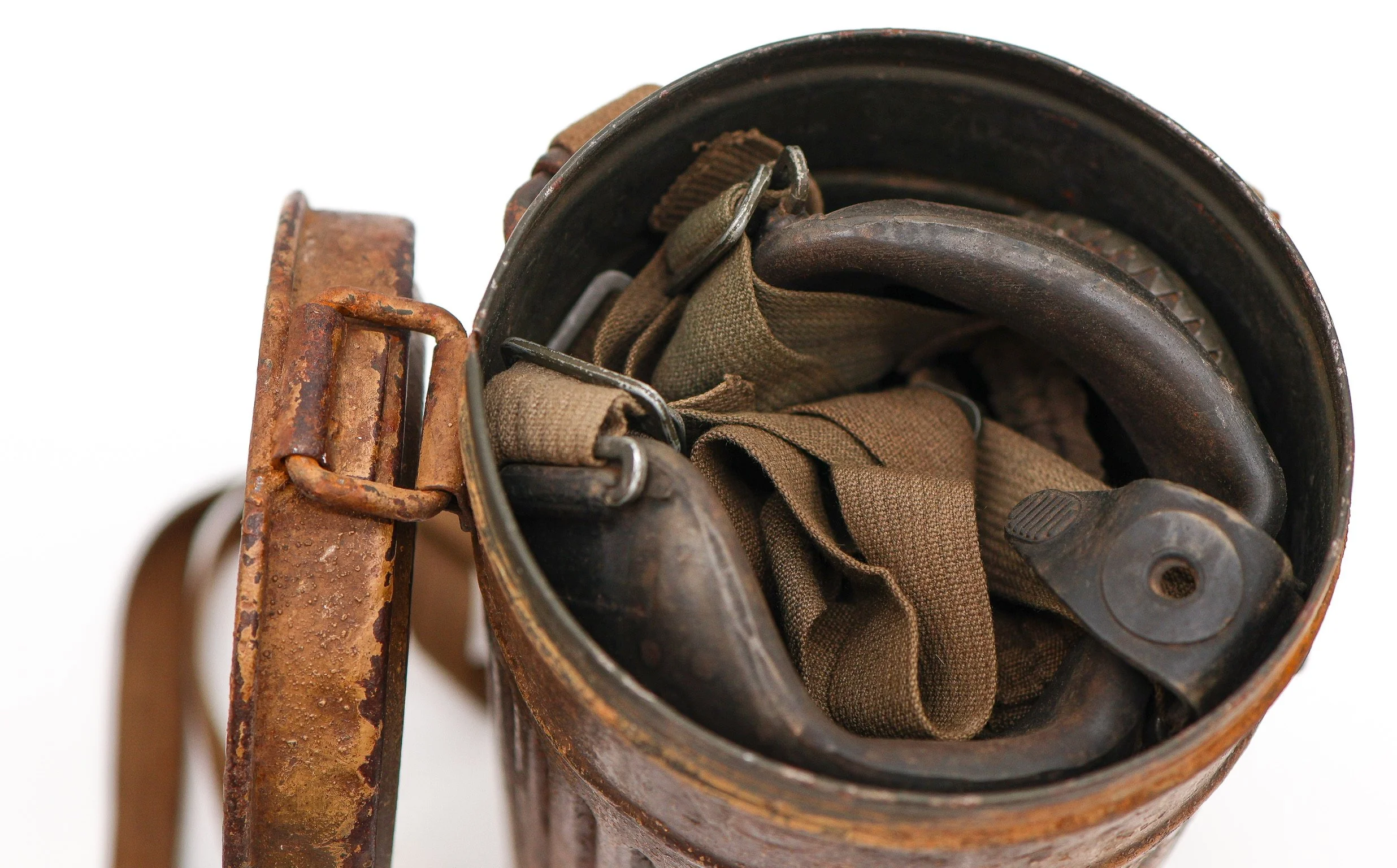
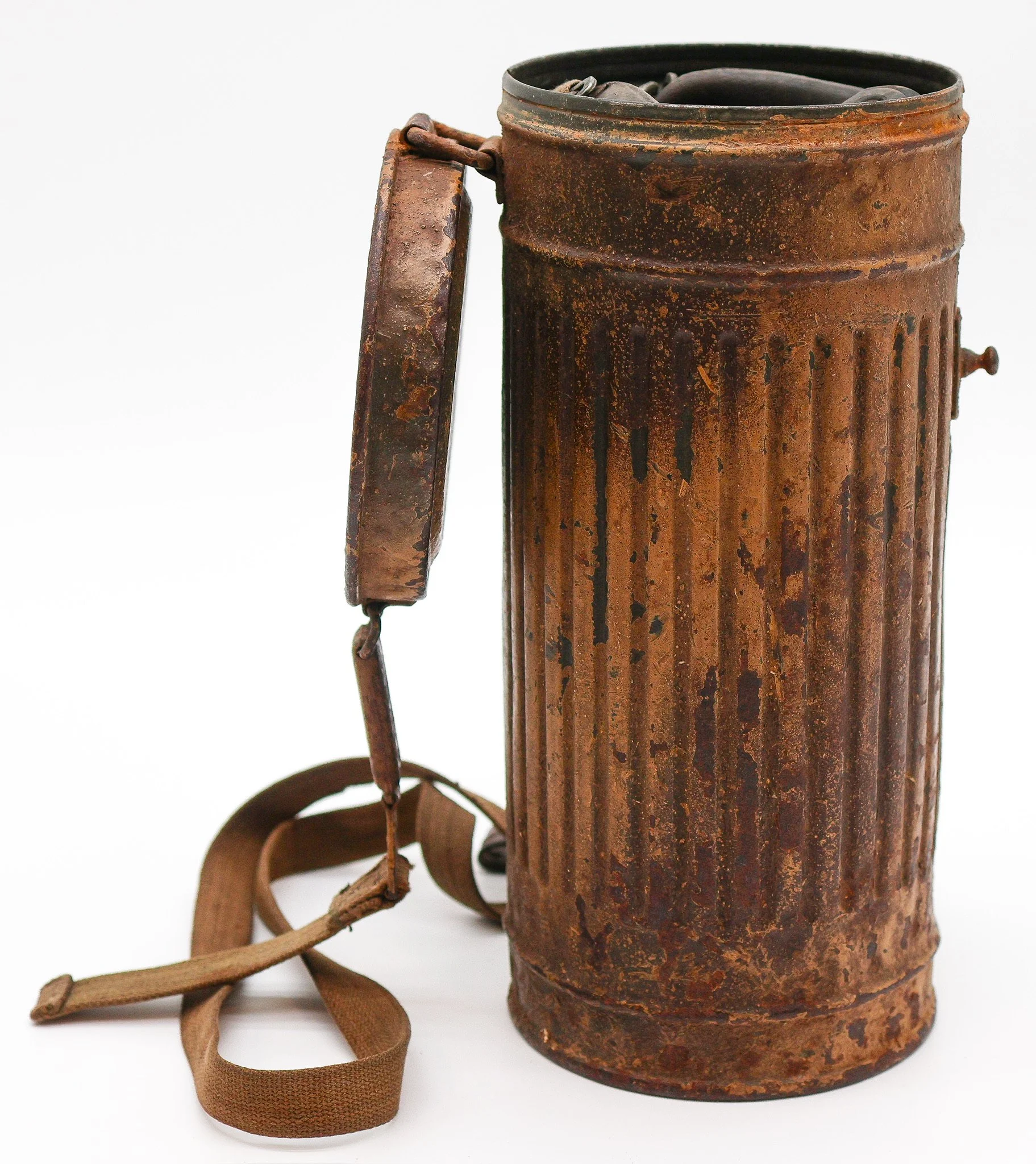
German Three-Tone Normandy Camouflage Helmet and Gas Mask
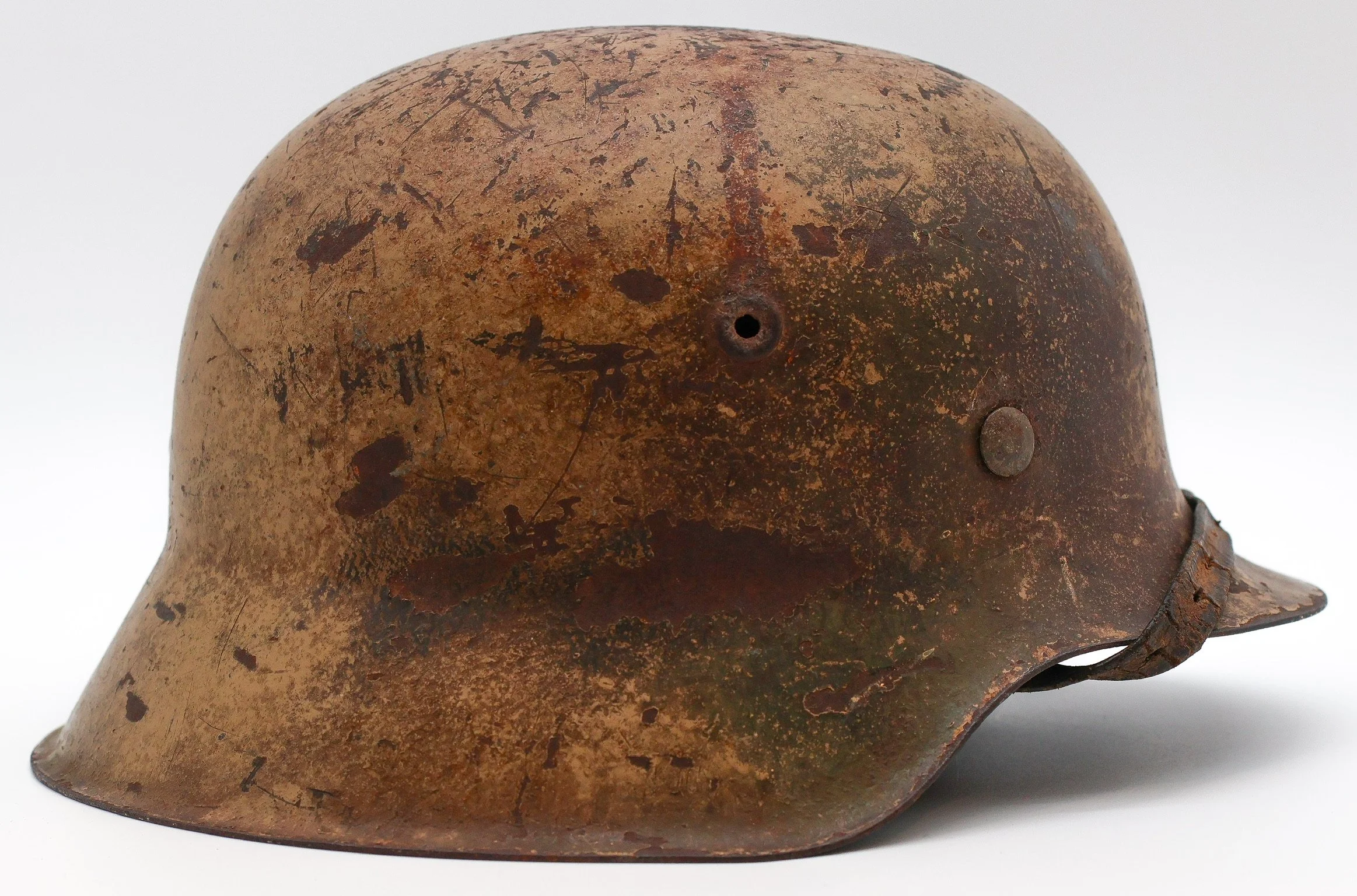
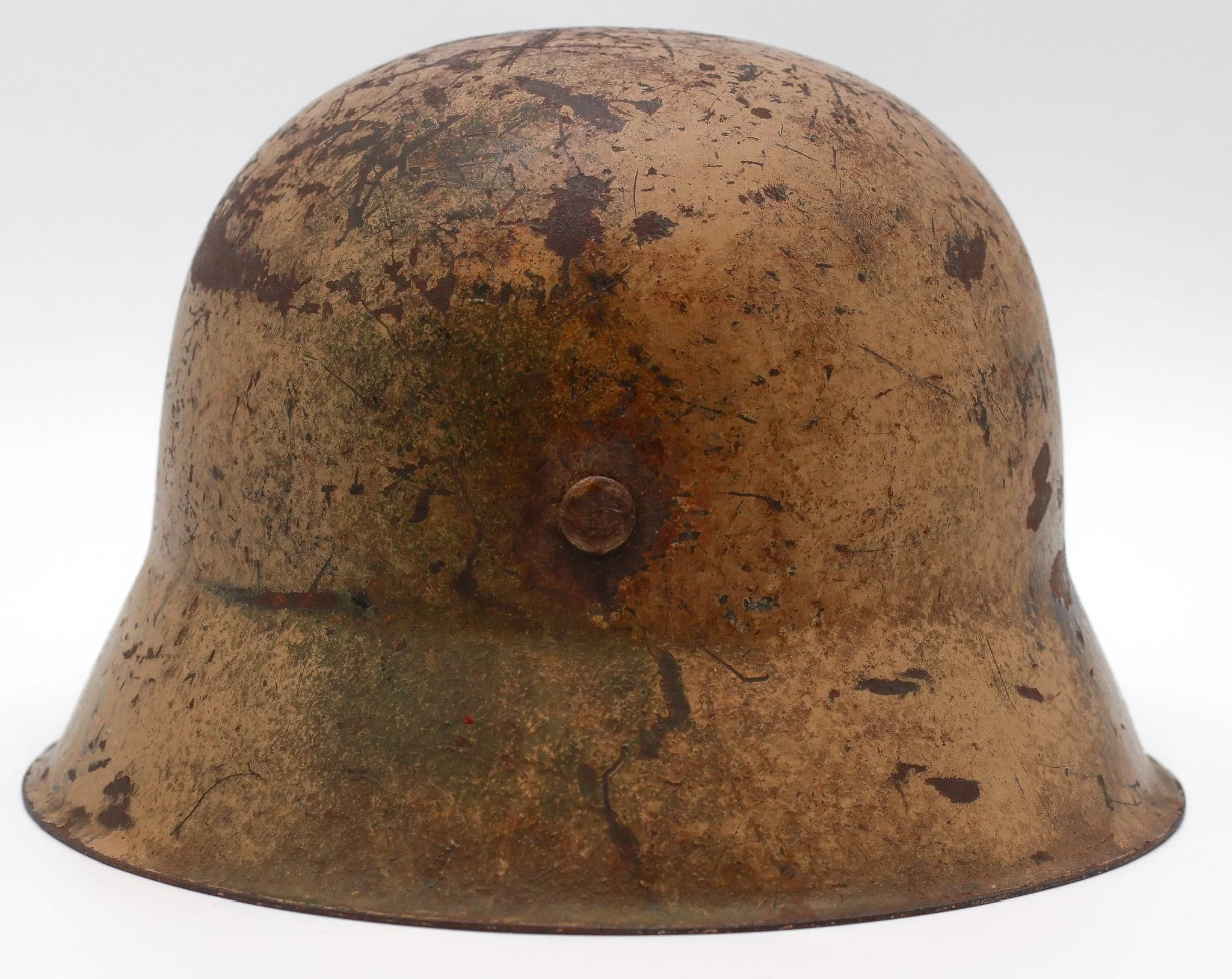
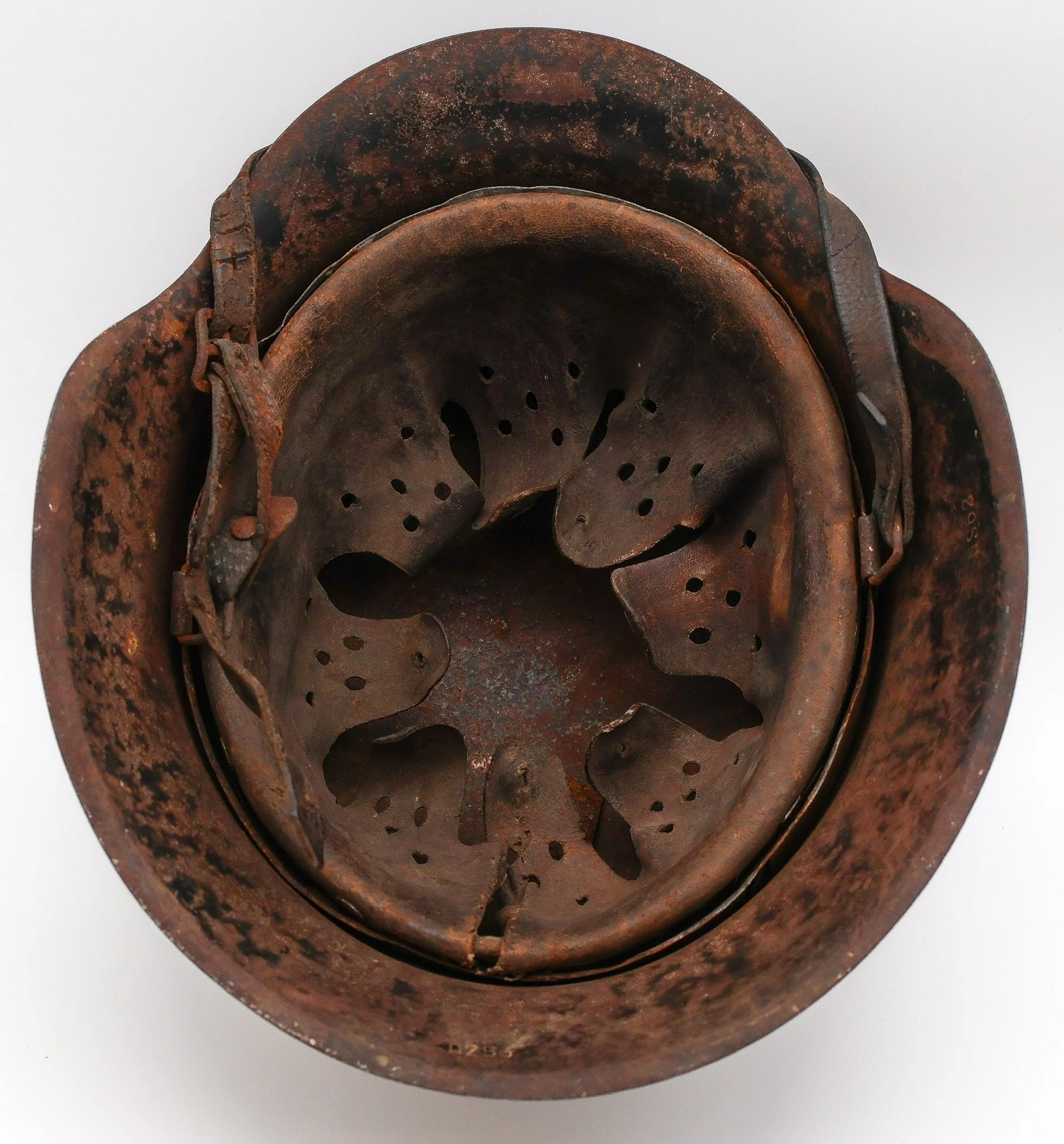
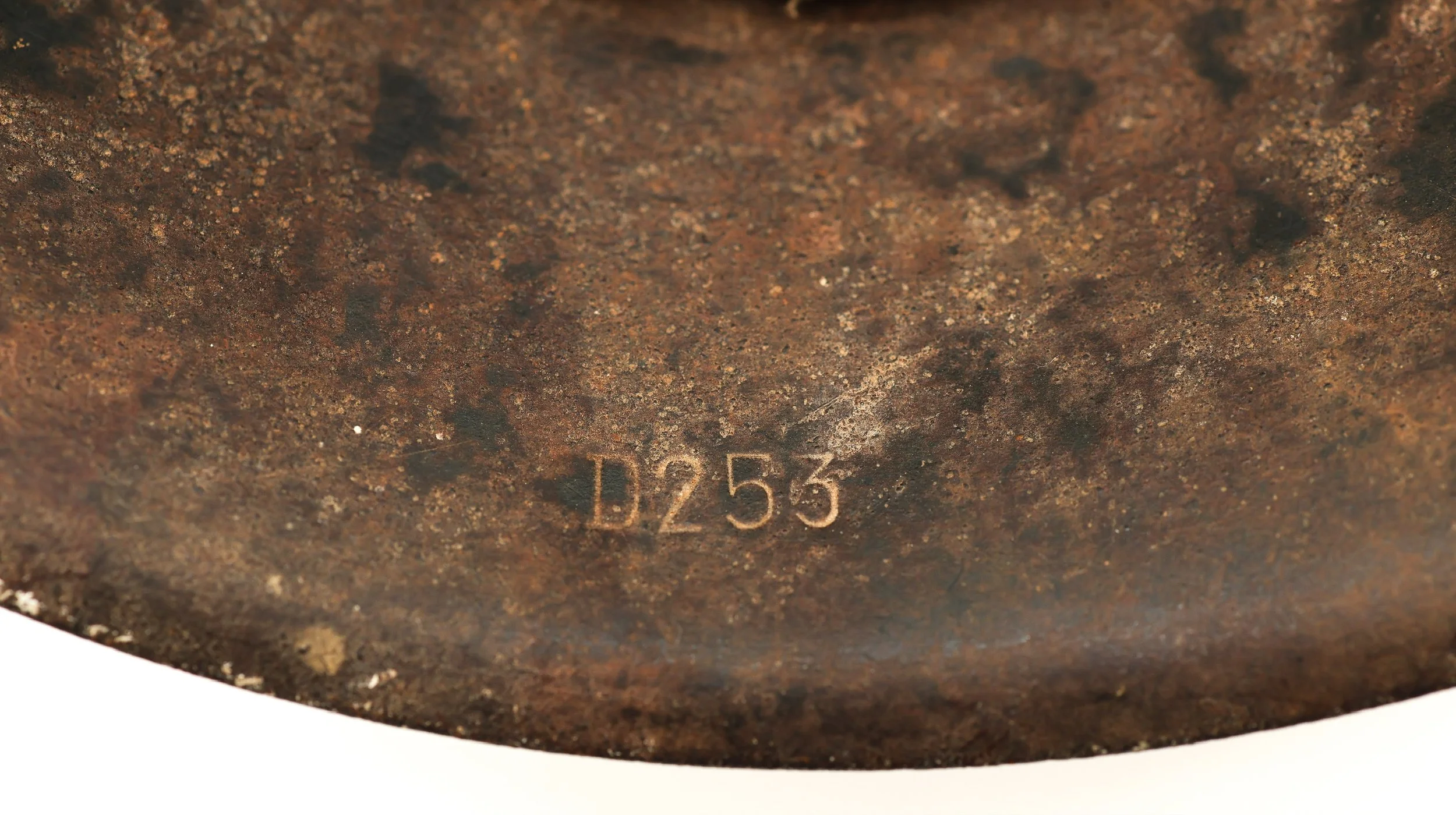
This German steel helmet features a distinctive three-tone Normandy camouflage pattern applied in the field, characteristic of German defensive positions in northwest France in 1944. The helmet was recovered in Sartilly, in the Manche department of Normandy near the coast. Its layered camouflage reflects regional Normandy practices adapted to hedgerow and coastal terrain.
Accompanying the helmet is a German gas mask displaying a closely related three-tone camouflage scheme. The gas mask was not found with the helmet and did not originate from the same recovery. It was discovered separately in Saint-Georges-des-Groseilliers, where it surfaced locally and later entered the Goliath Collection before being purchased later at auction.
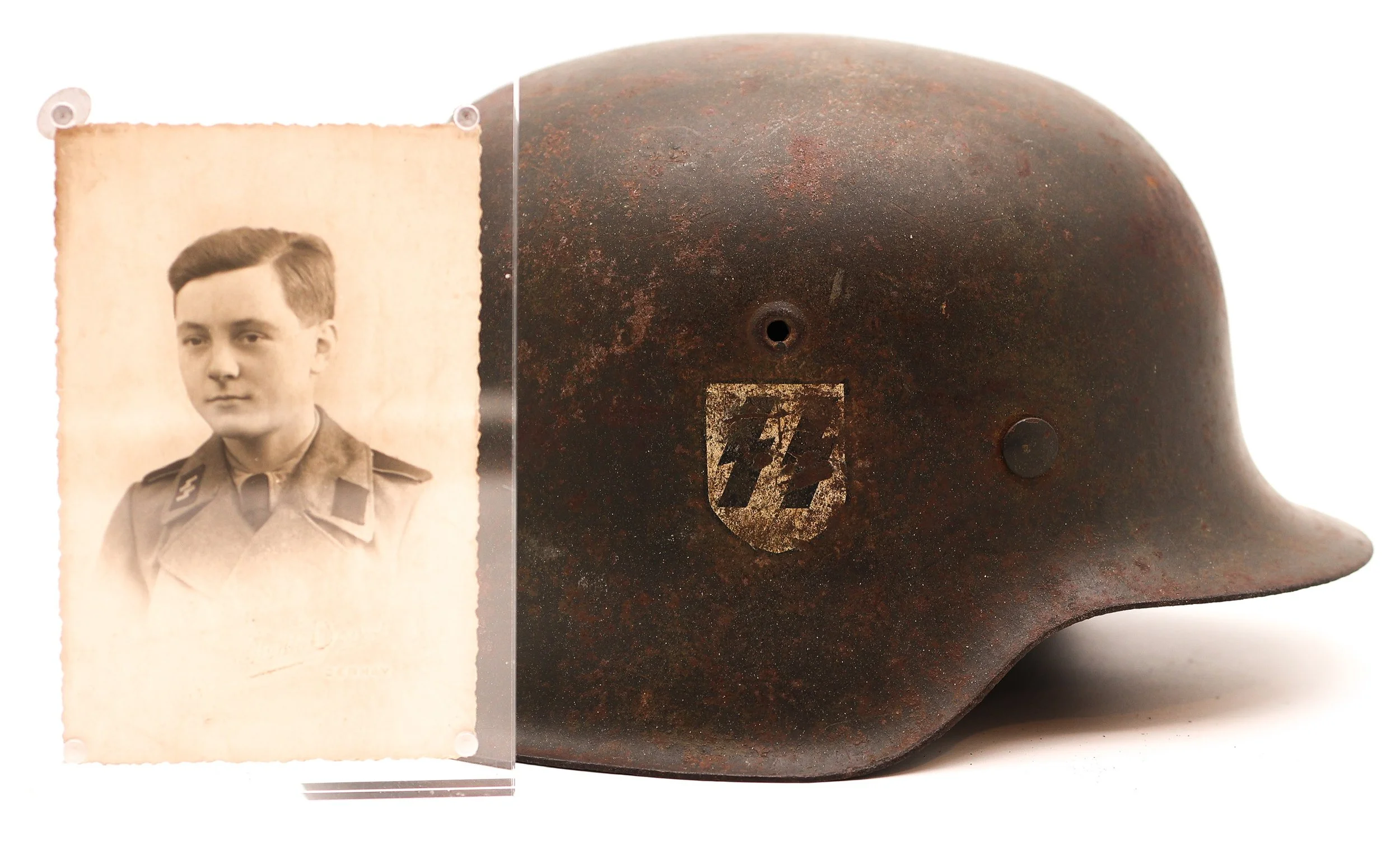
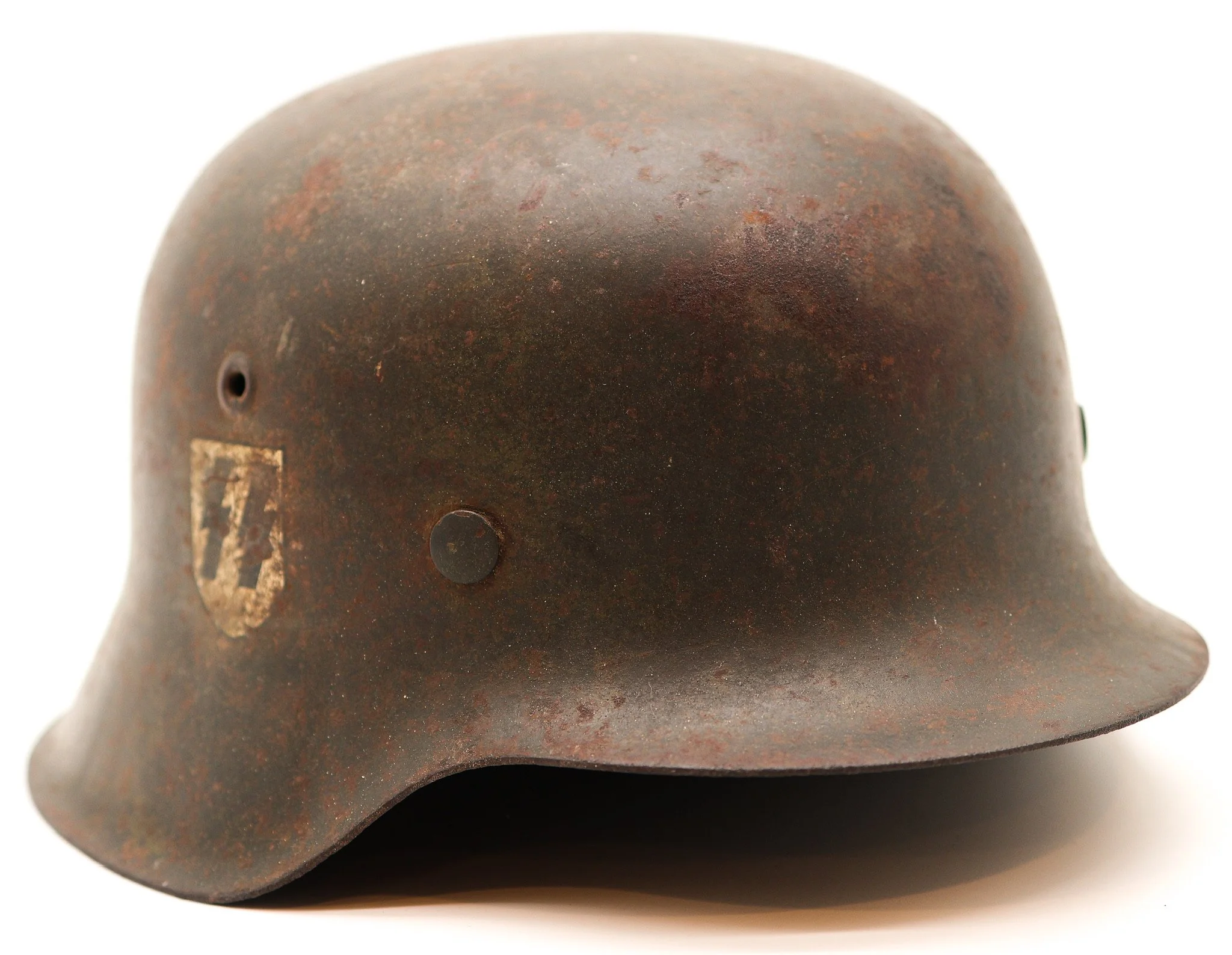
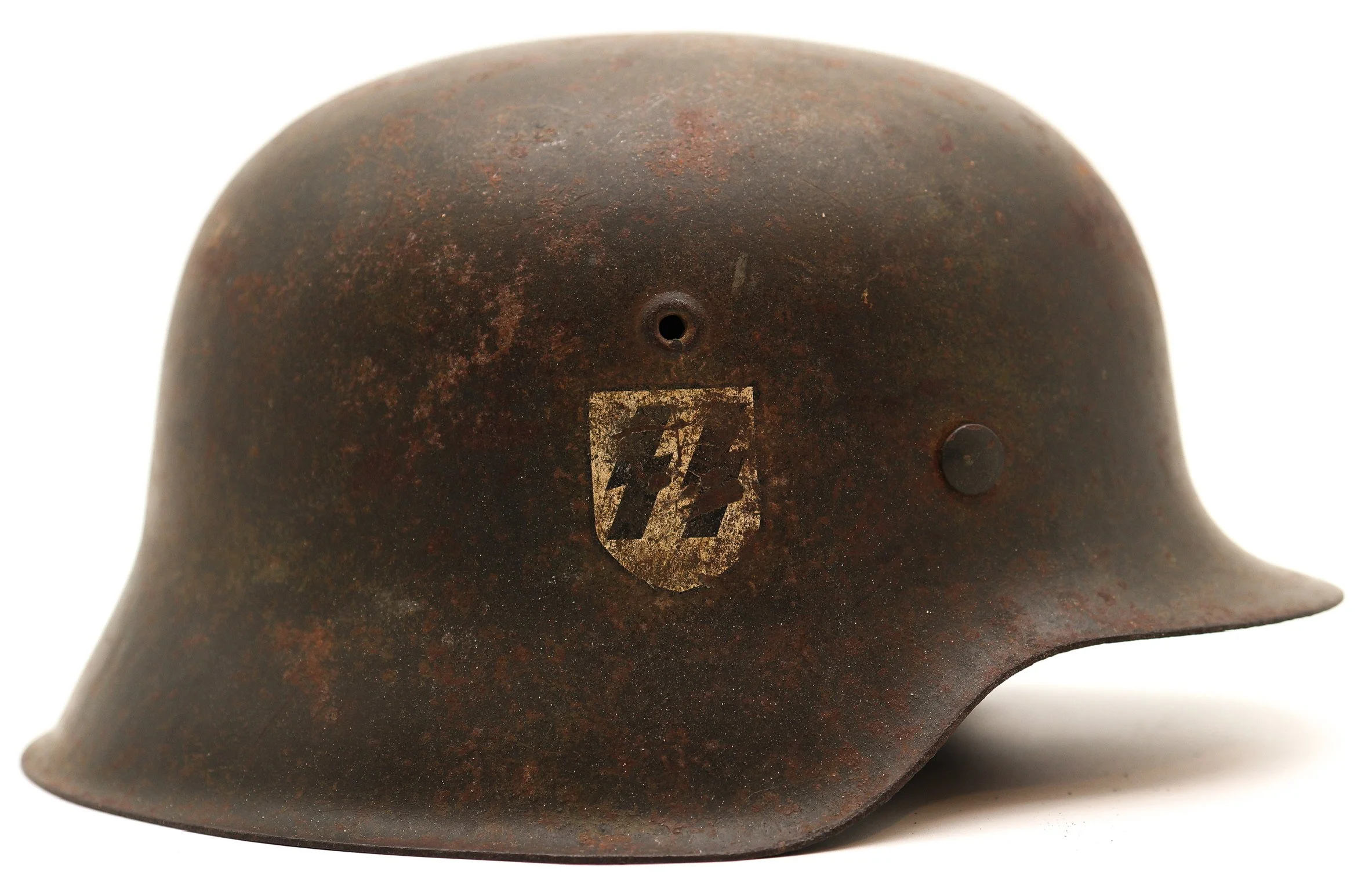
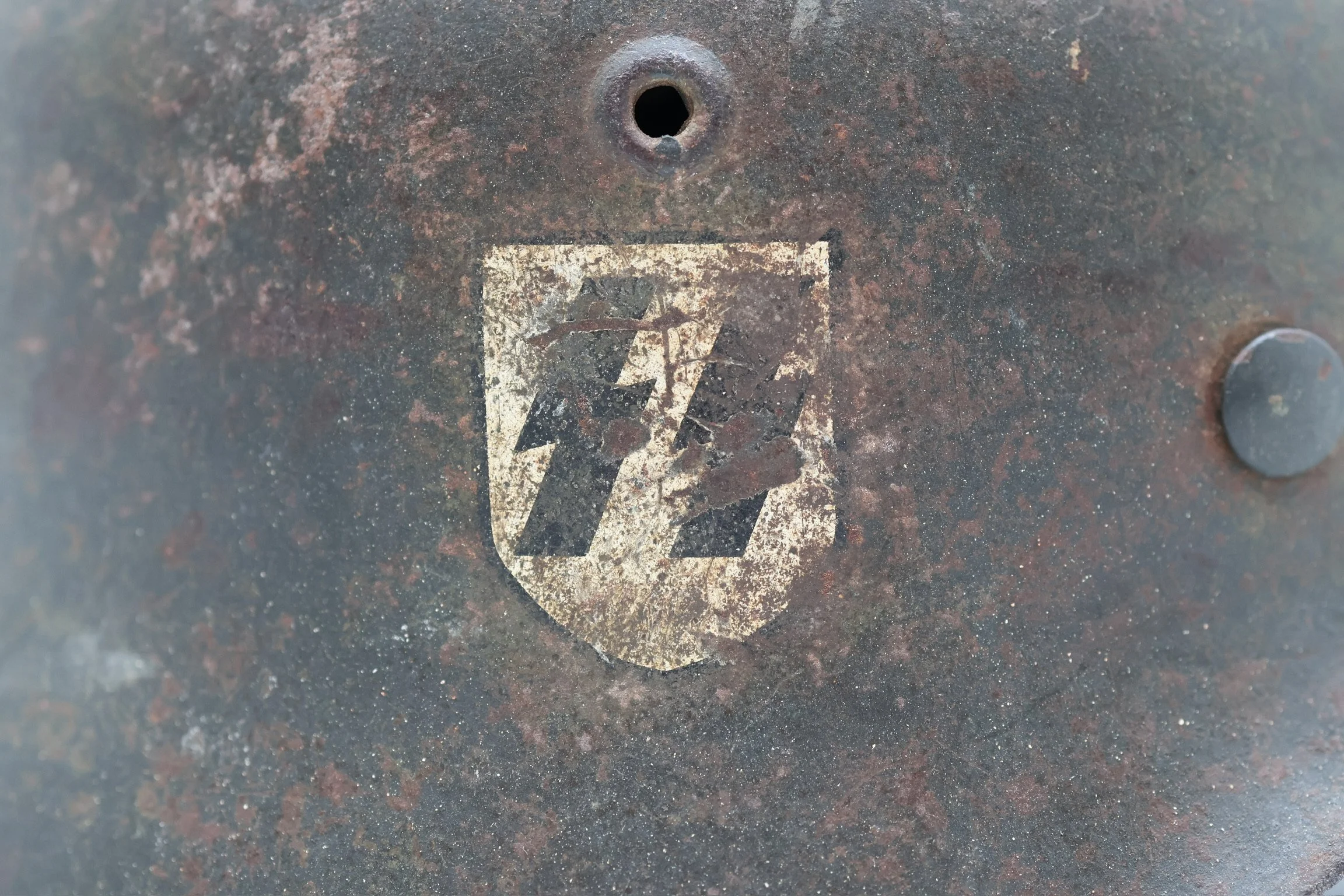
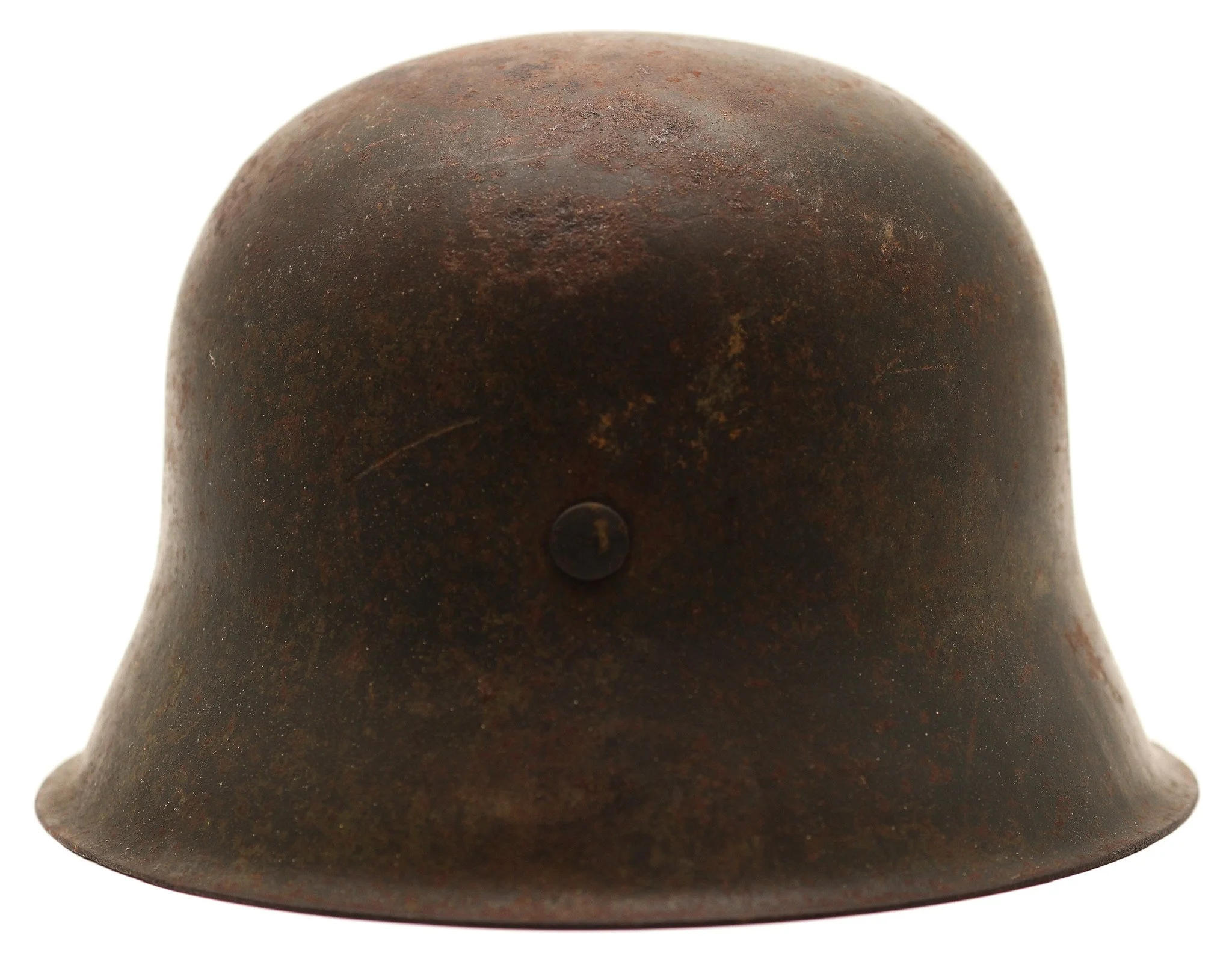
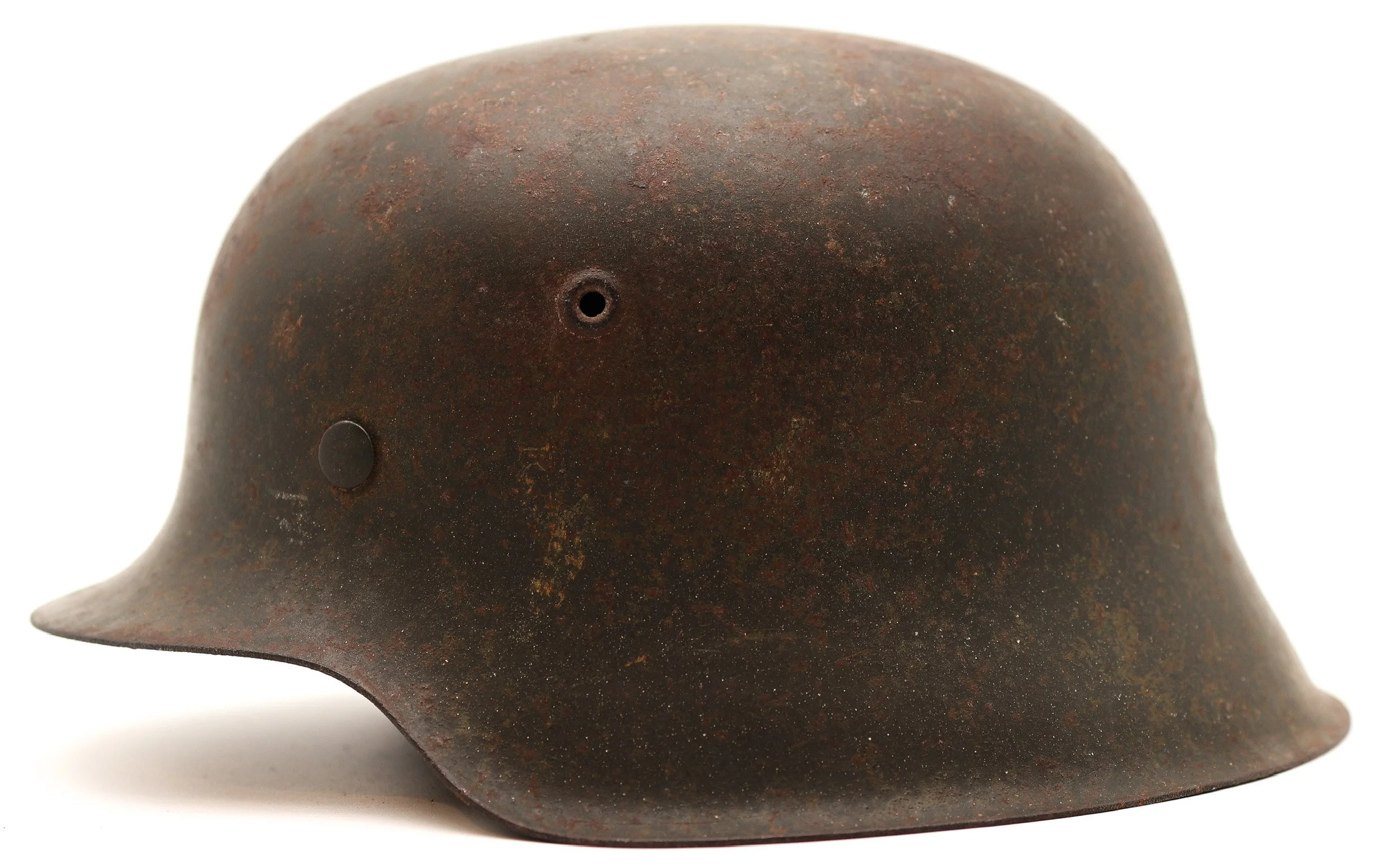
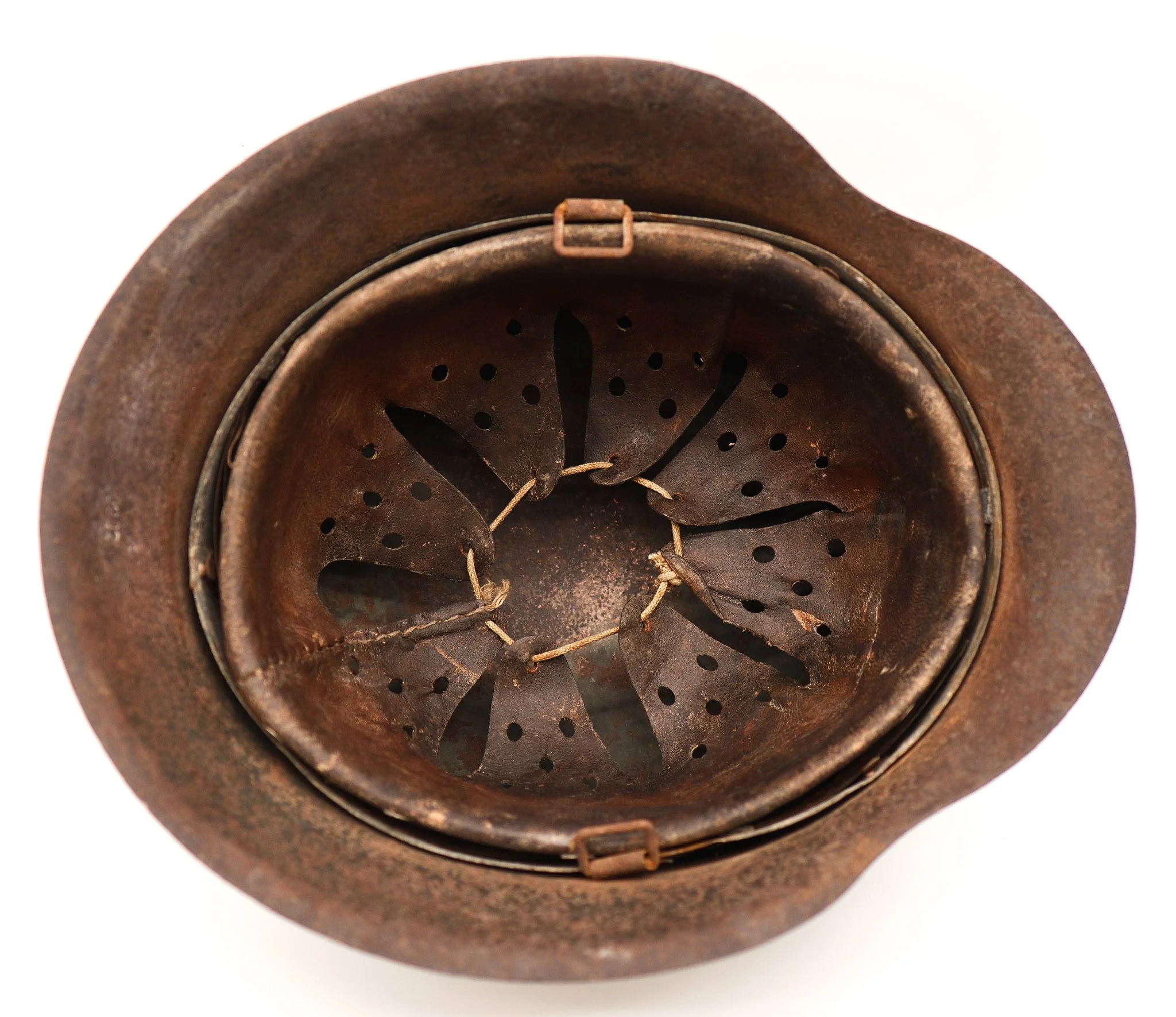
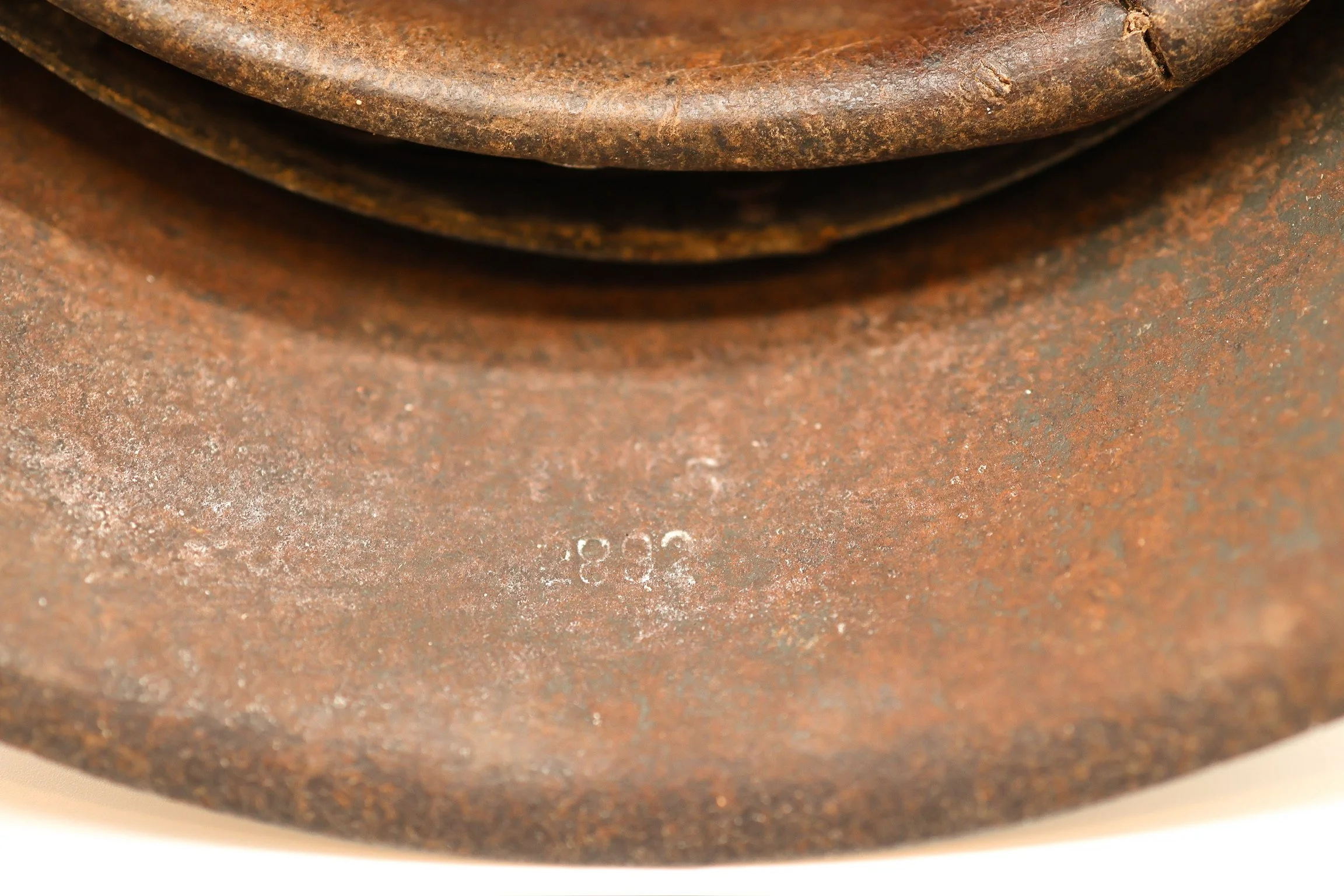
Waffen-SS Helmet Recovered in Normandy
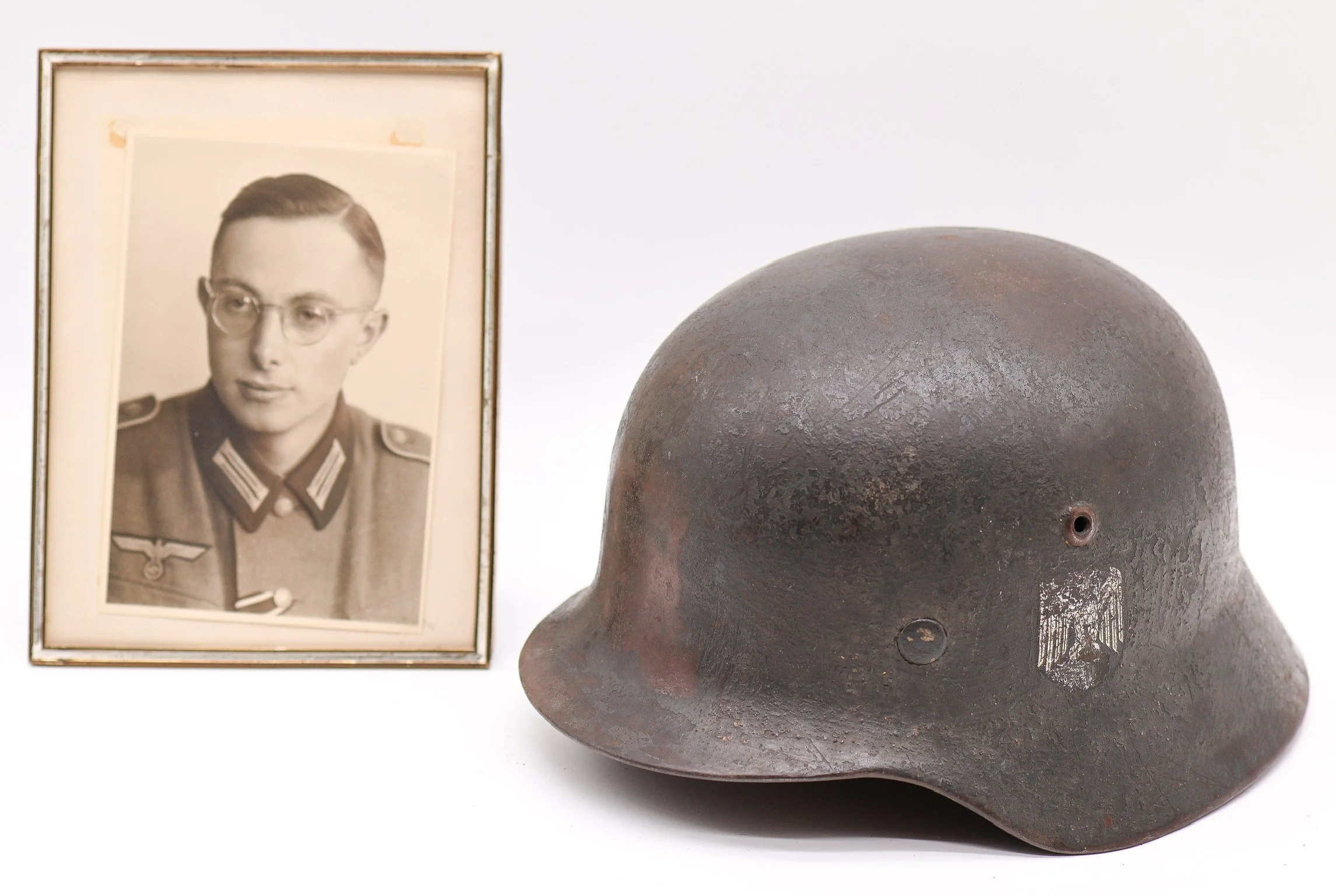
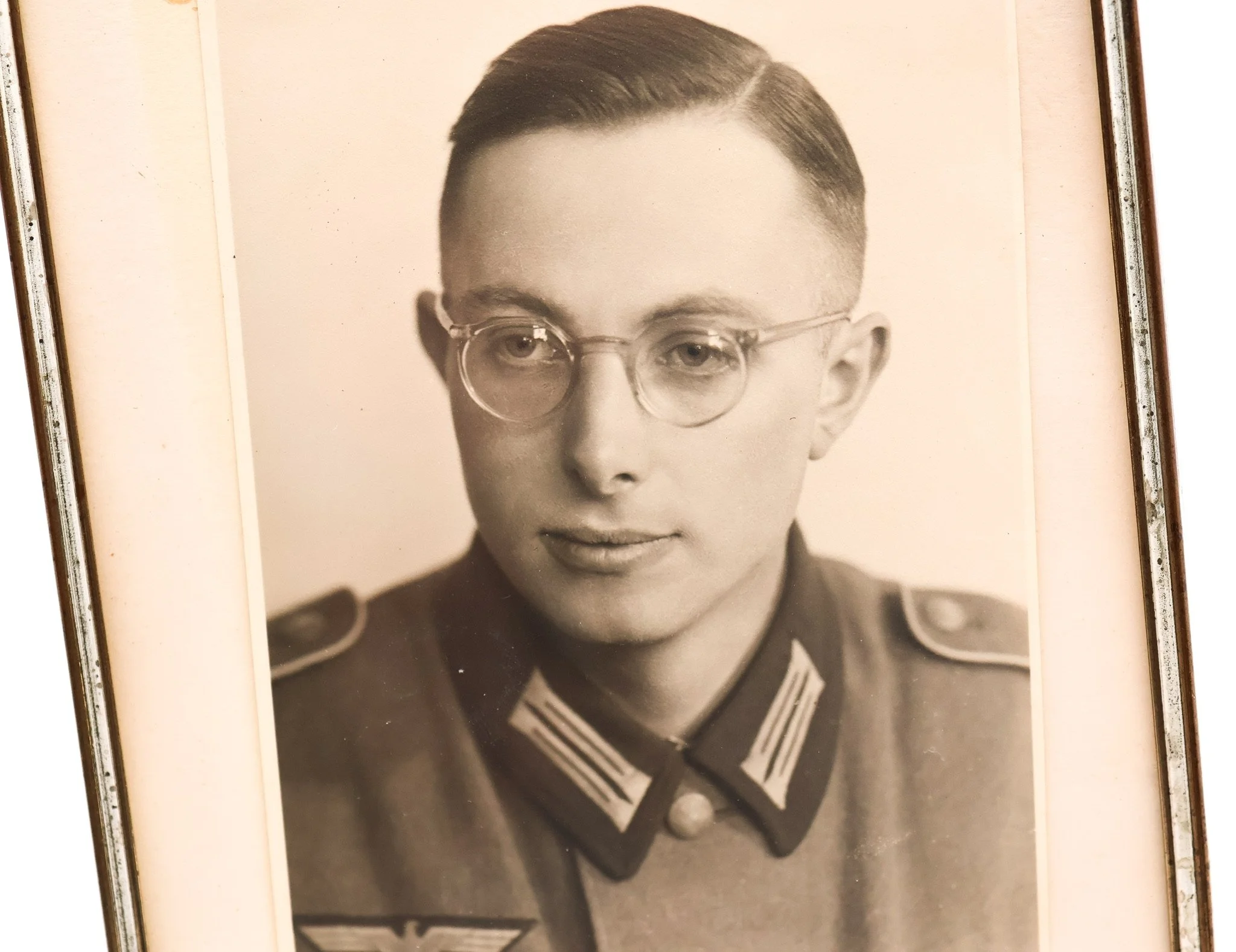
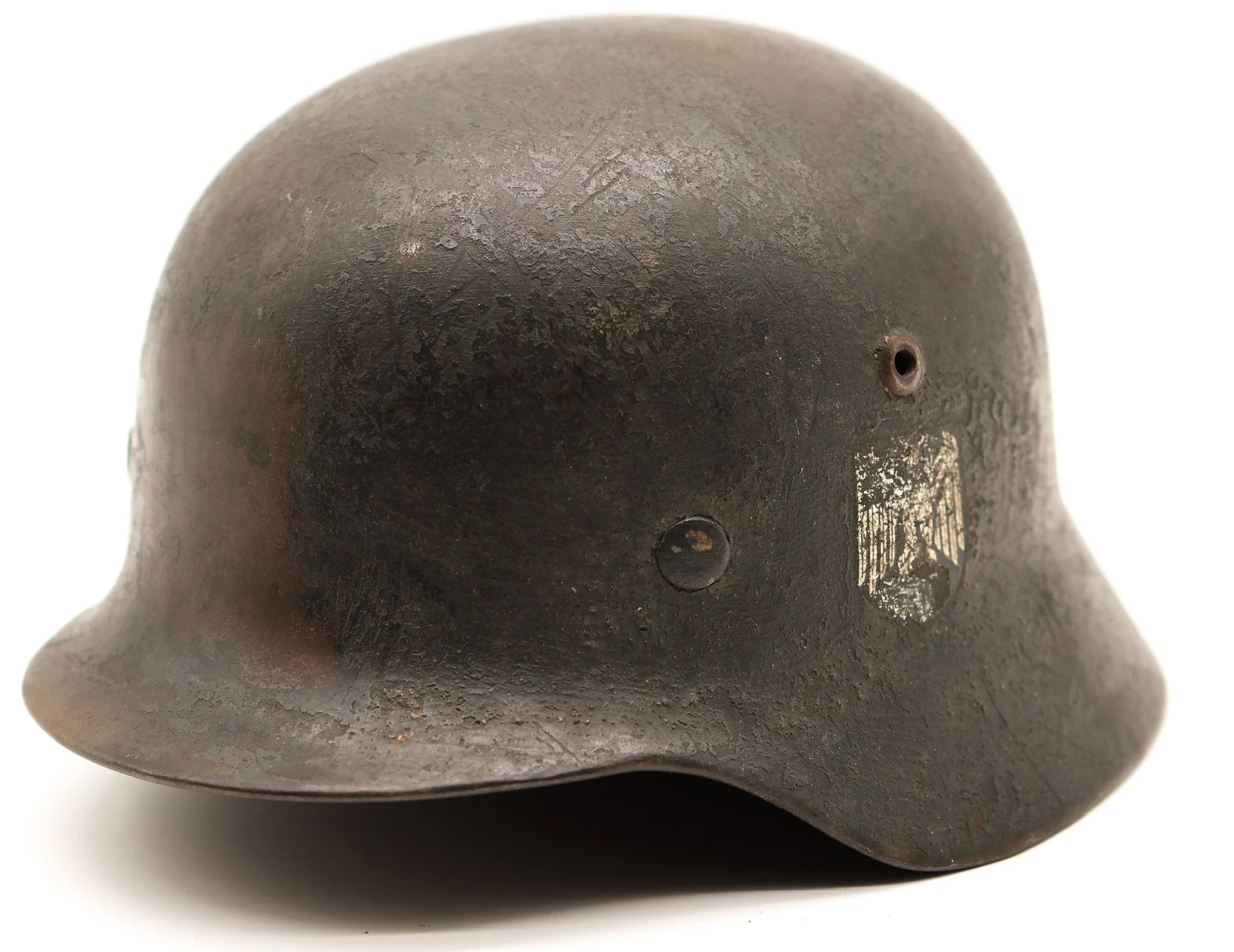
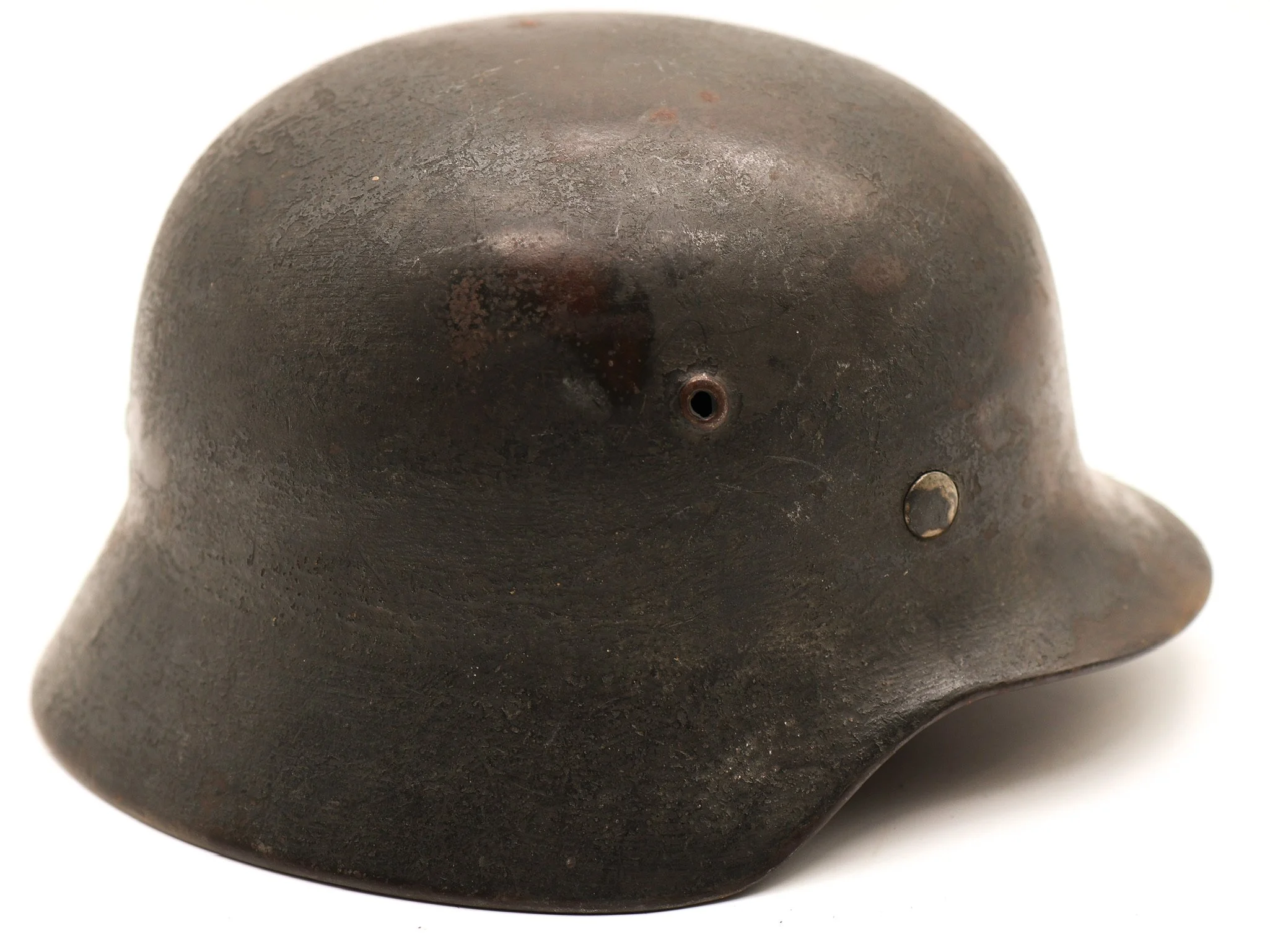
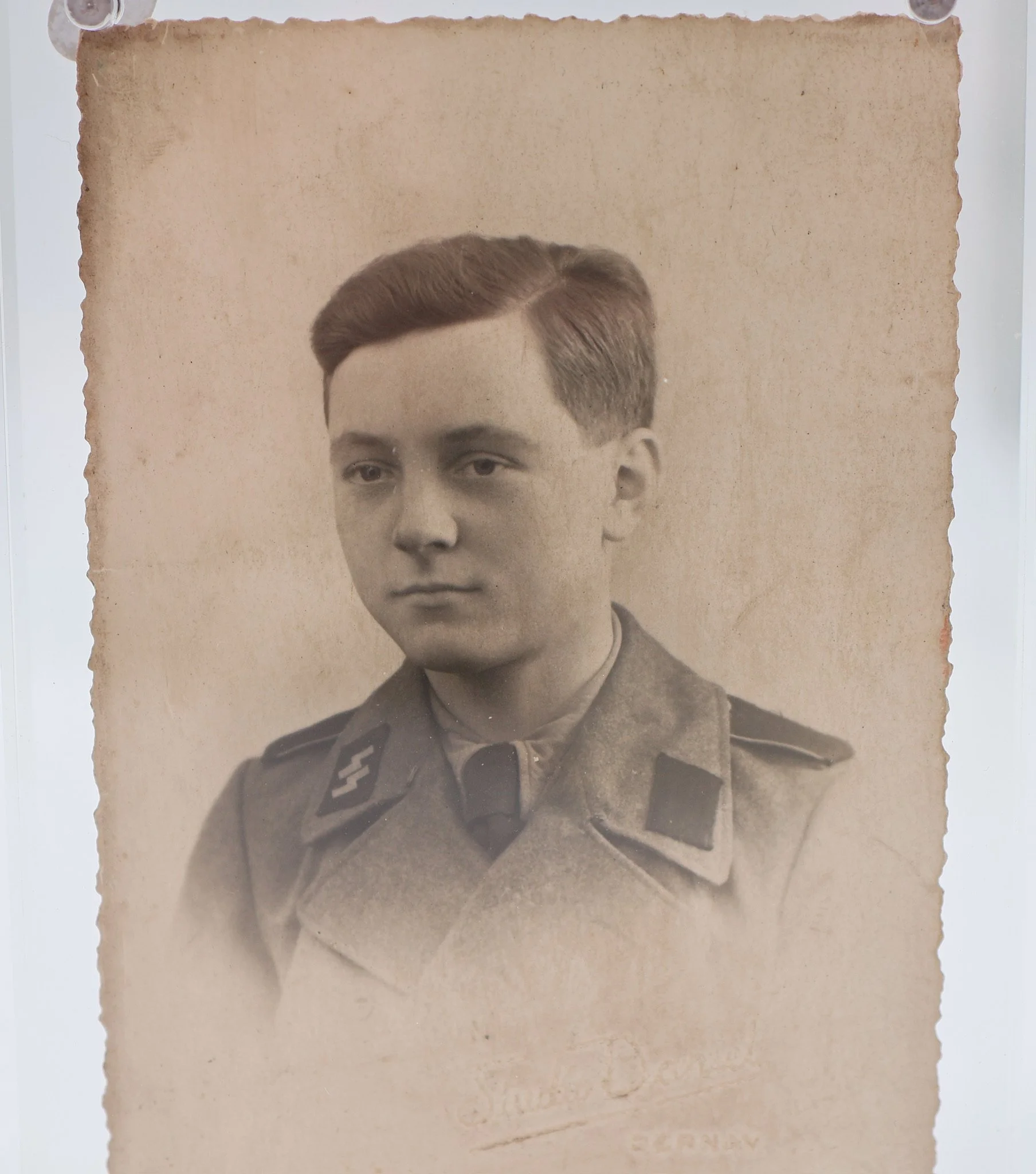
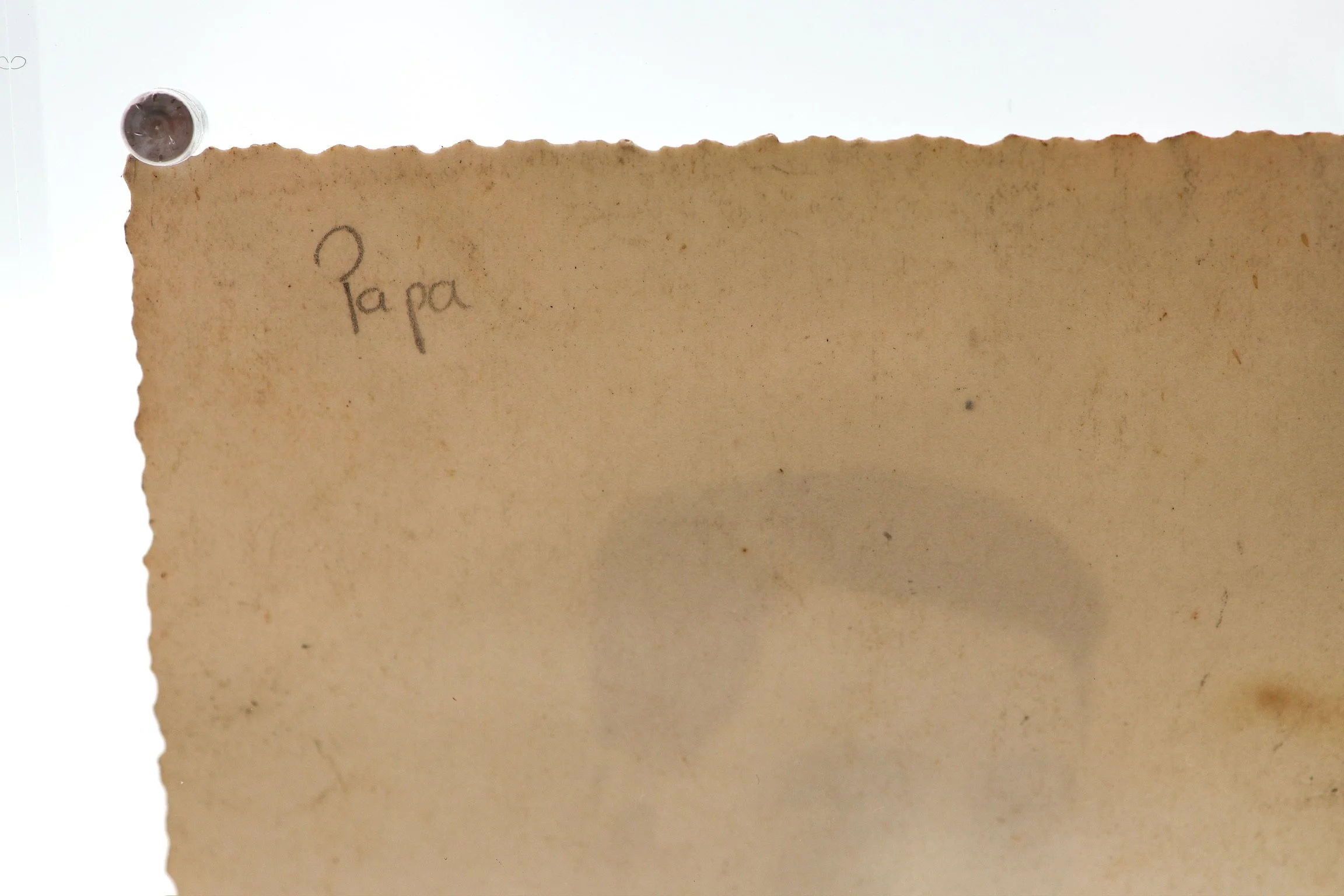
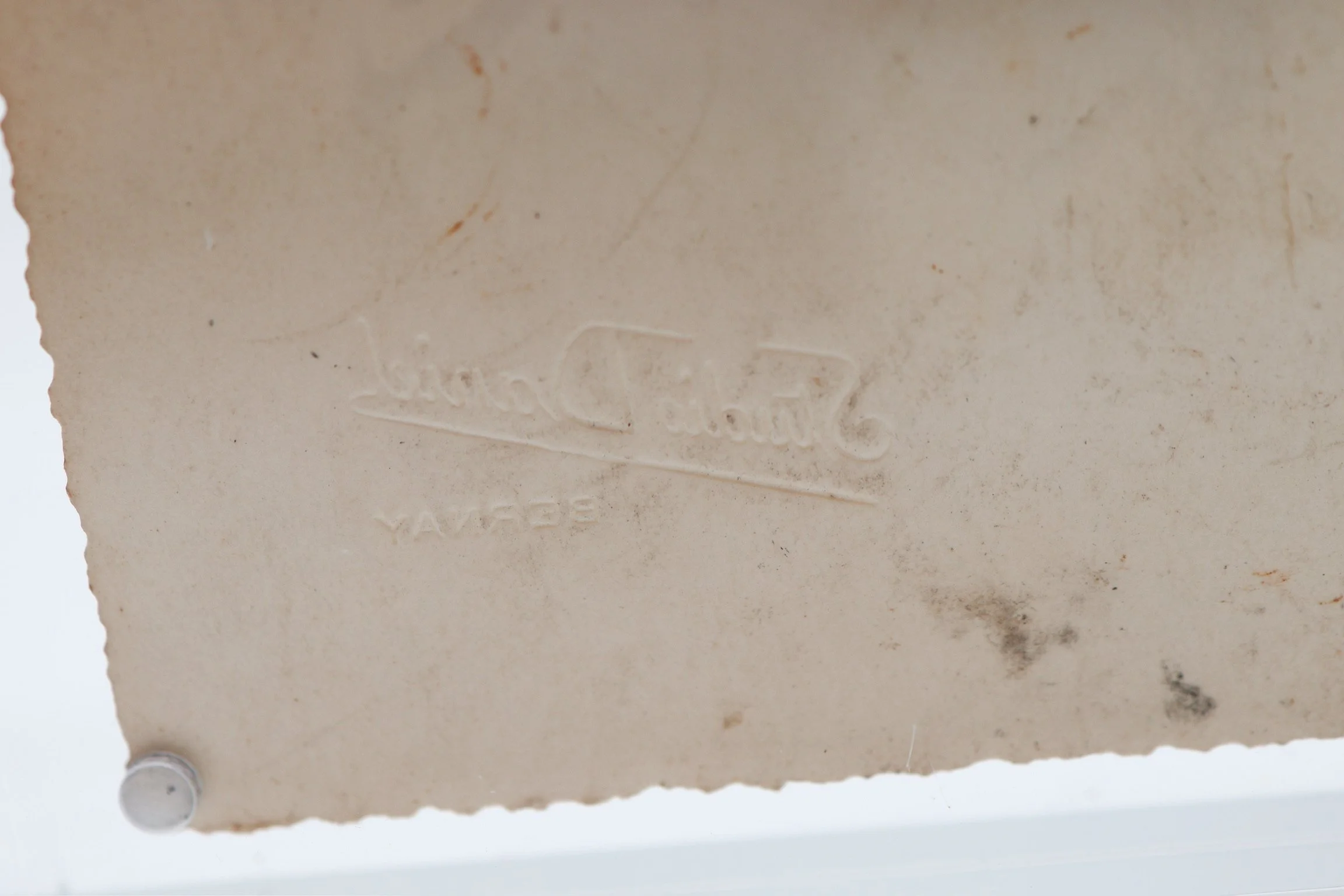
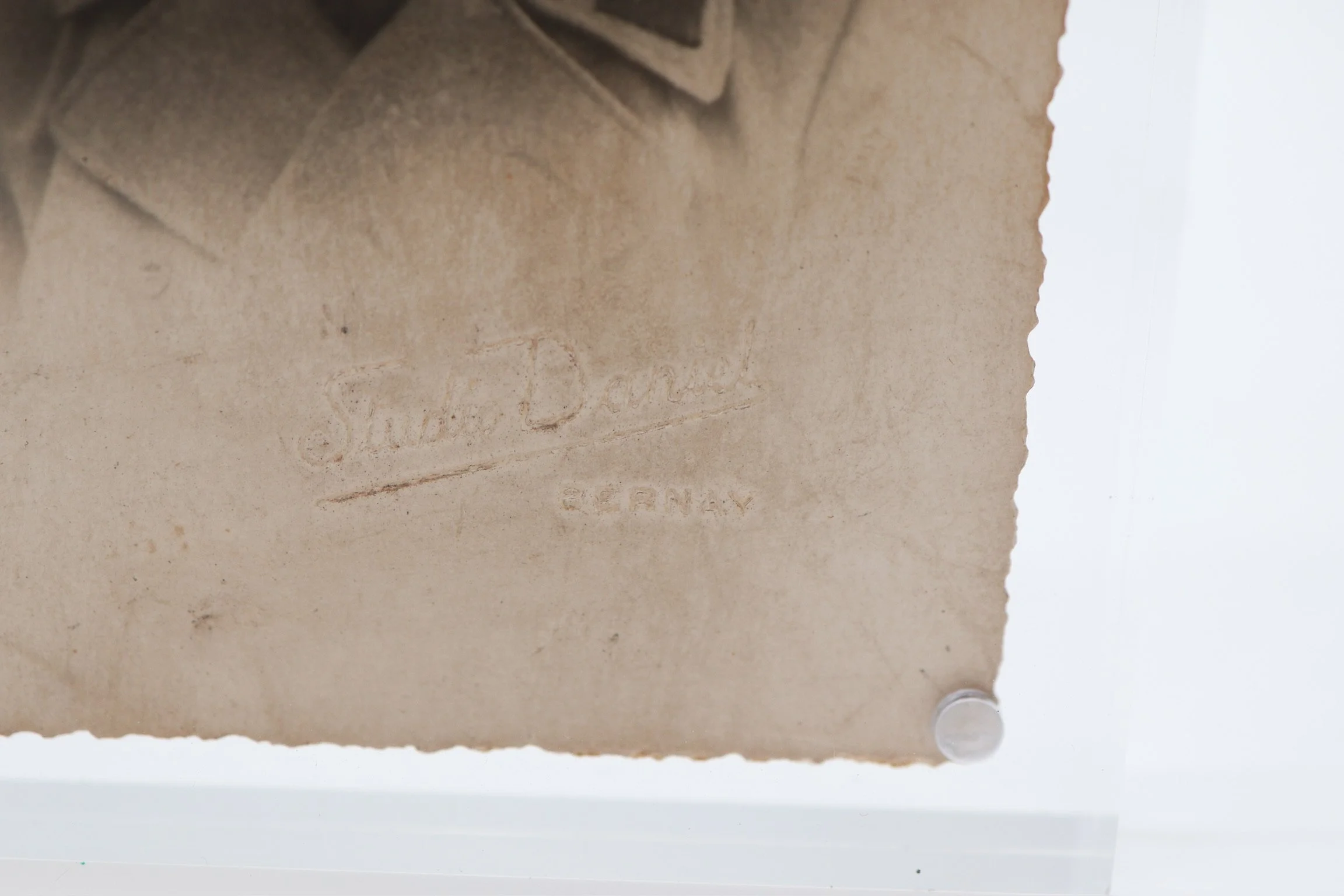
This Waffen-SS steel helmet was recovered in Normandy and was acquired directly from the home of an elderly man living near Rouen. The helmet, a period portrait photograph, and additional German equipment were removed from the attic during multiple visits after trust was established with the owner. The helmet and photograph were found together and have remained associated since their discovery.
The photograph bears the handwritten word “papa” on the reverse and was taken at a studio in Bernay, approximately an hour’s drive from Rouen, near the area where the helmet was recovered. A K98 rifle was displayed above the fireplace in the home, while additional items found in the attic included a Zeltbahn and other German field equipment. The Zeltbahn was sold separately, and the rifle could not be exported.
-
The finder provided the following written statement, translated from French:
“I found this helmet in a house near Rouen in Normandy. The old man had a K98 hanging above the fireplace. From there, it took several visits for me to earn his trust. After three or four visits, he told me there were items in the attic. When he allowed me to look, I found this helmet, the portrait, and two Waffen ponchos. After some patience, he agreed to sell me these objects.”
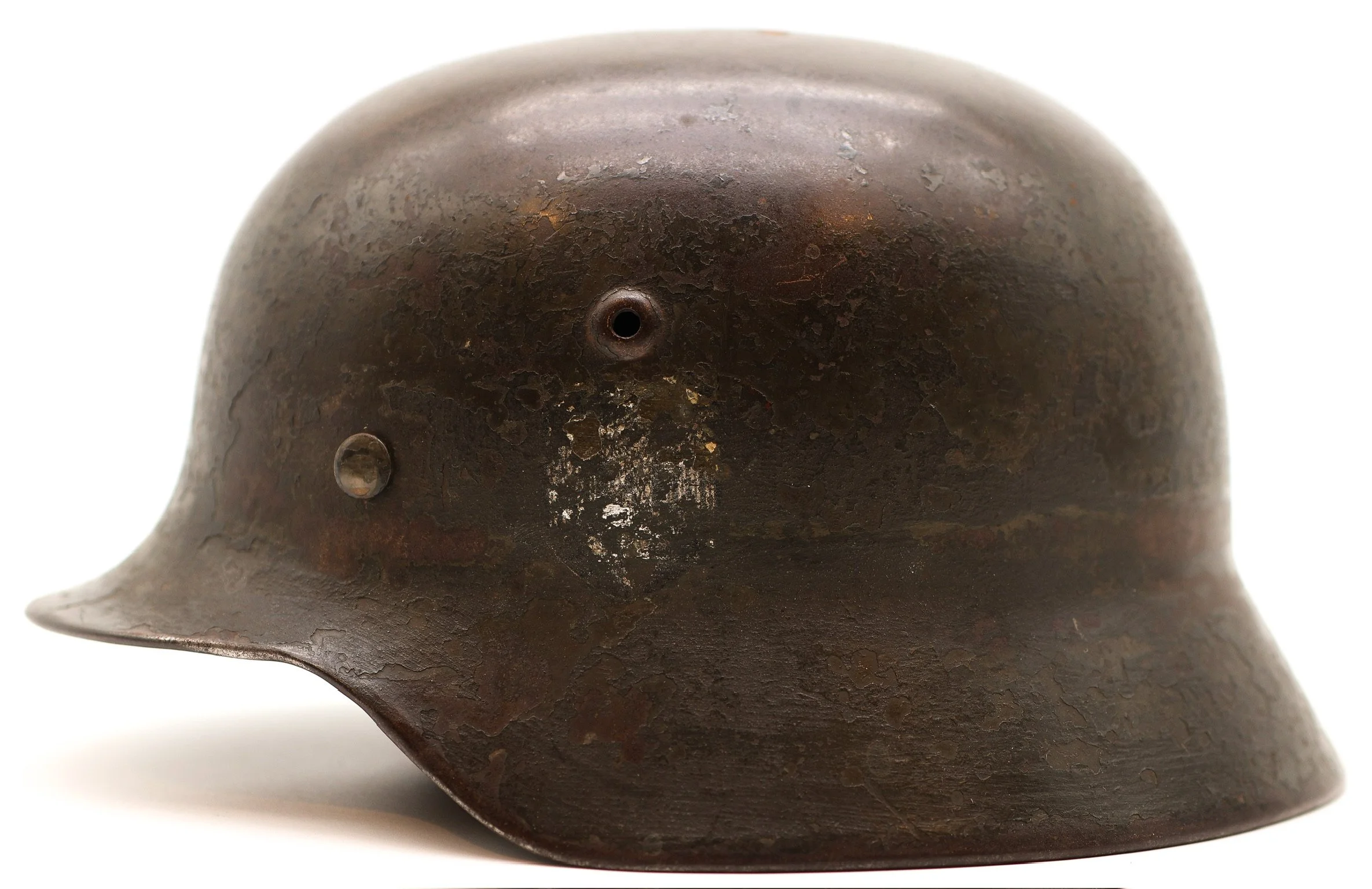
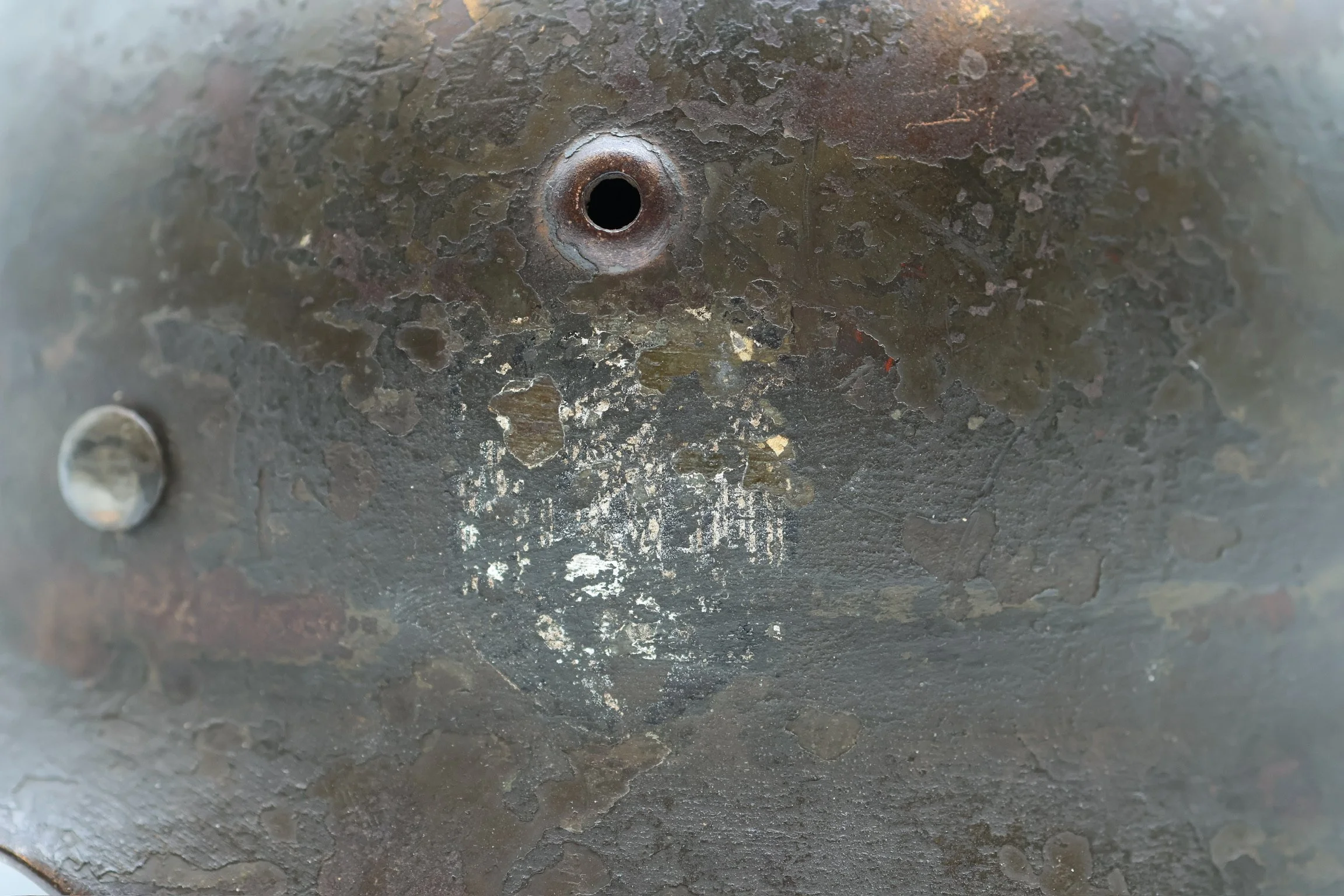
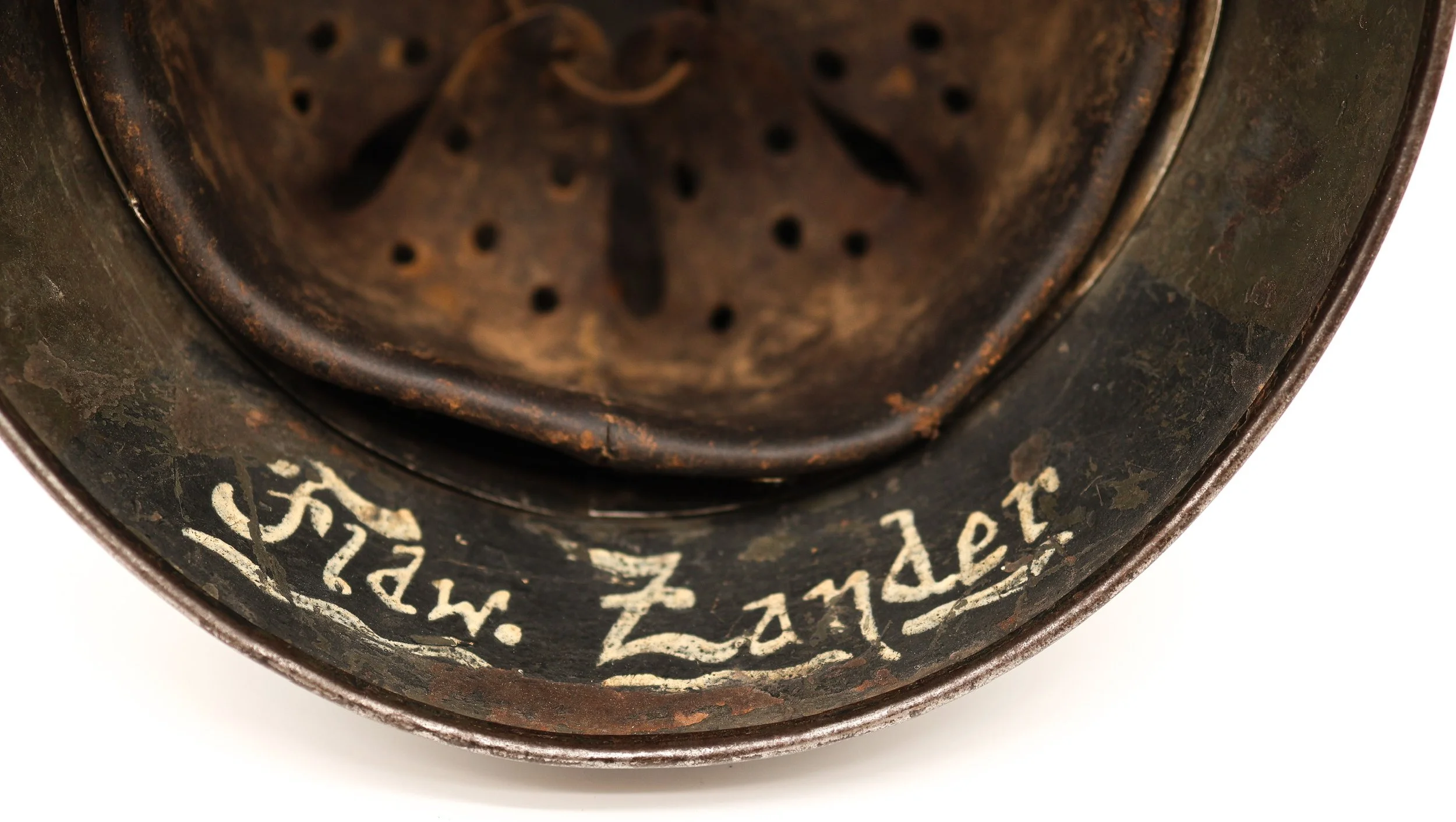
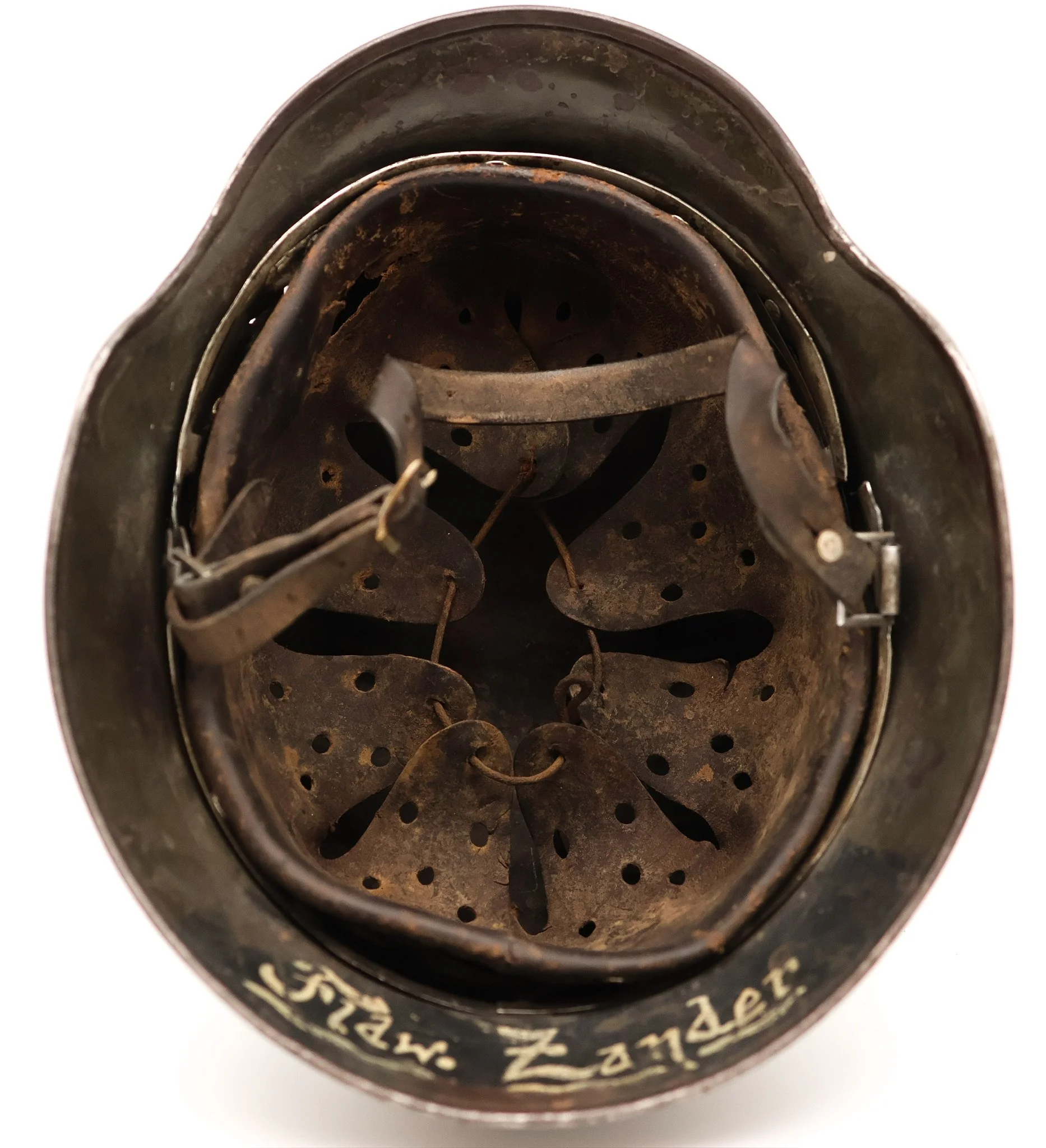
German M35 Helmet Named to Feldwebel Zander
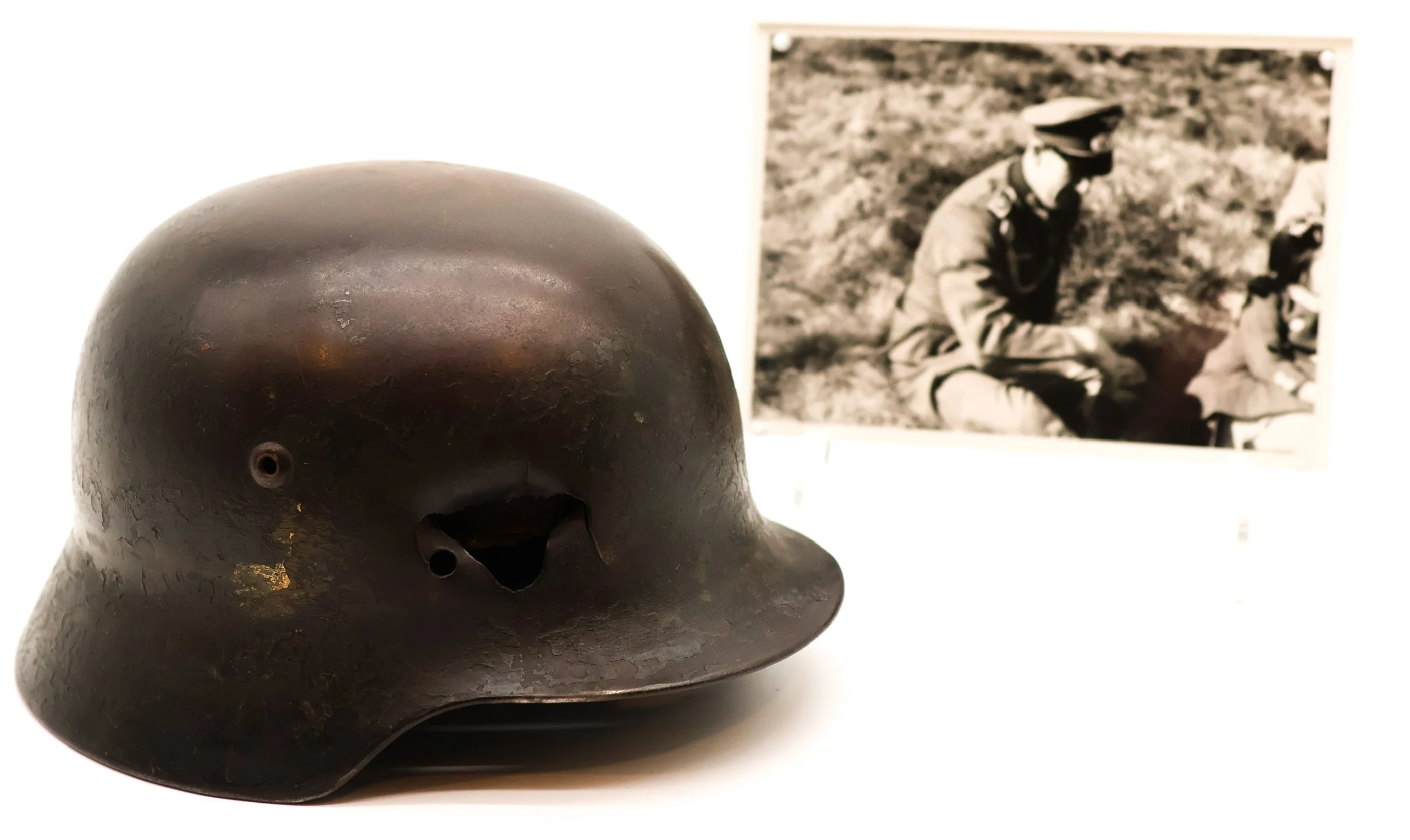
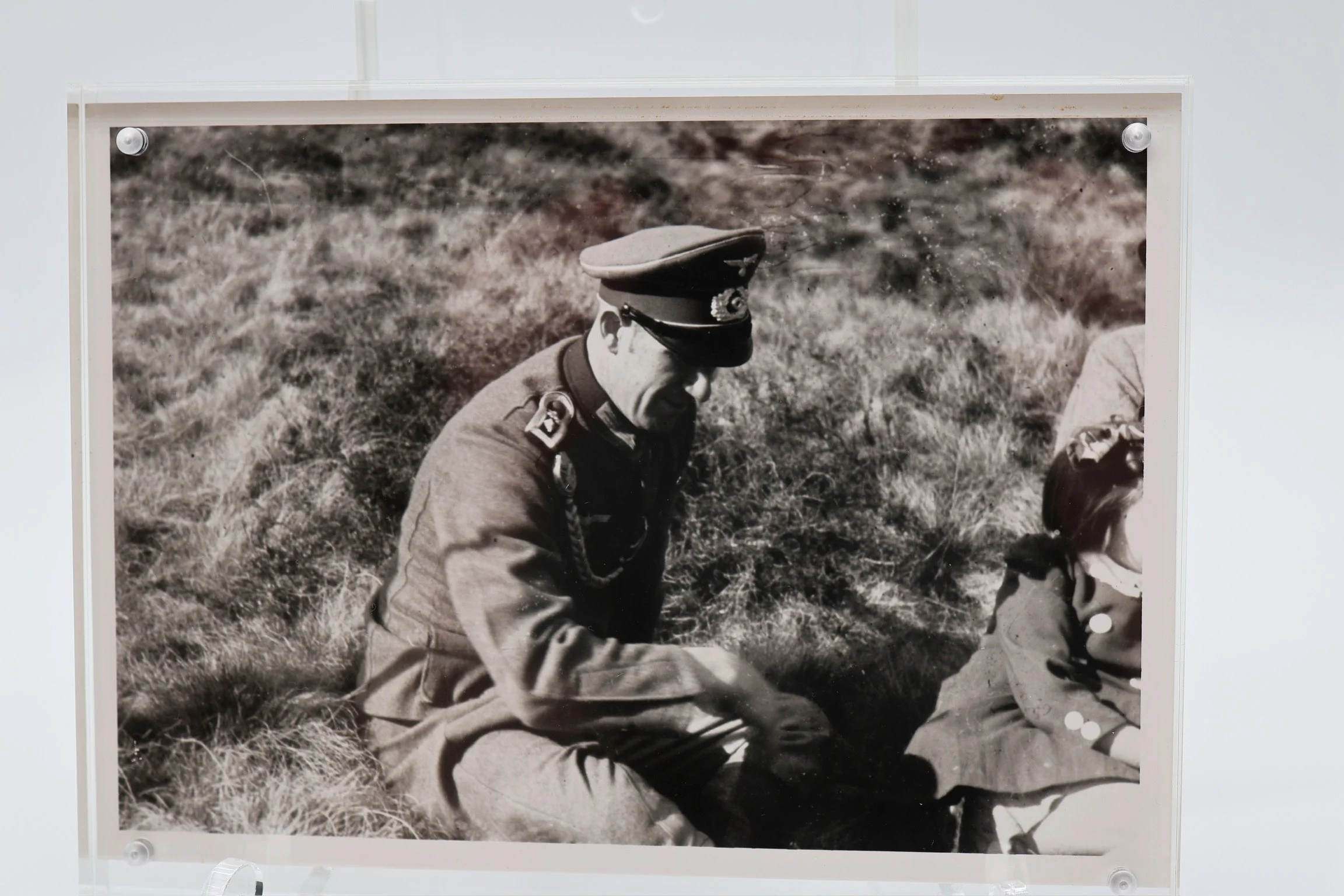
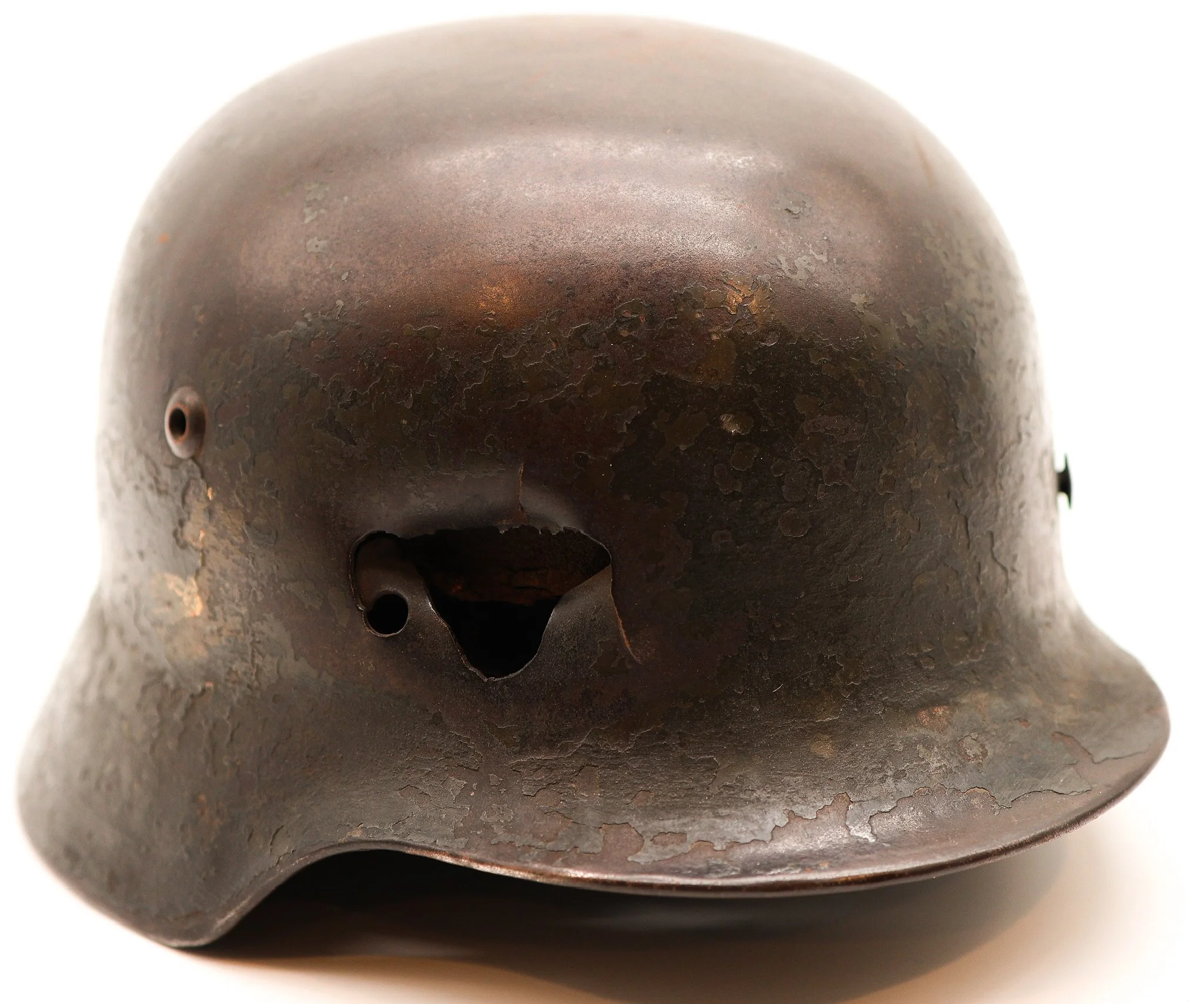
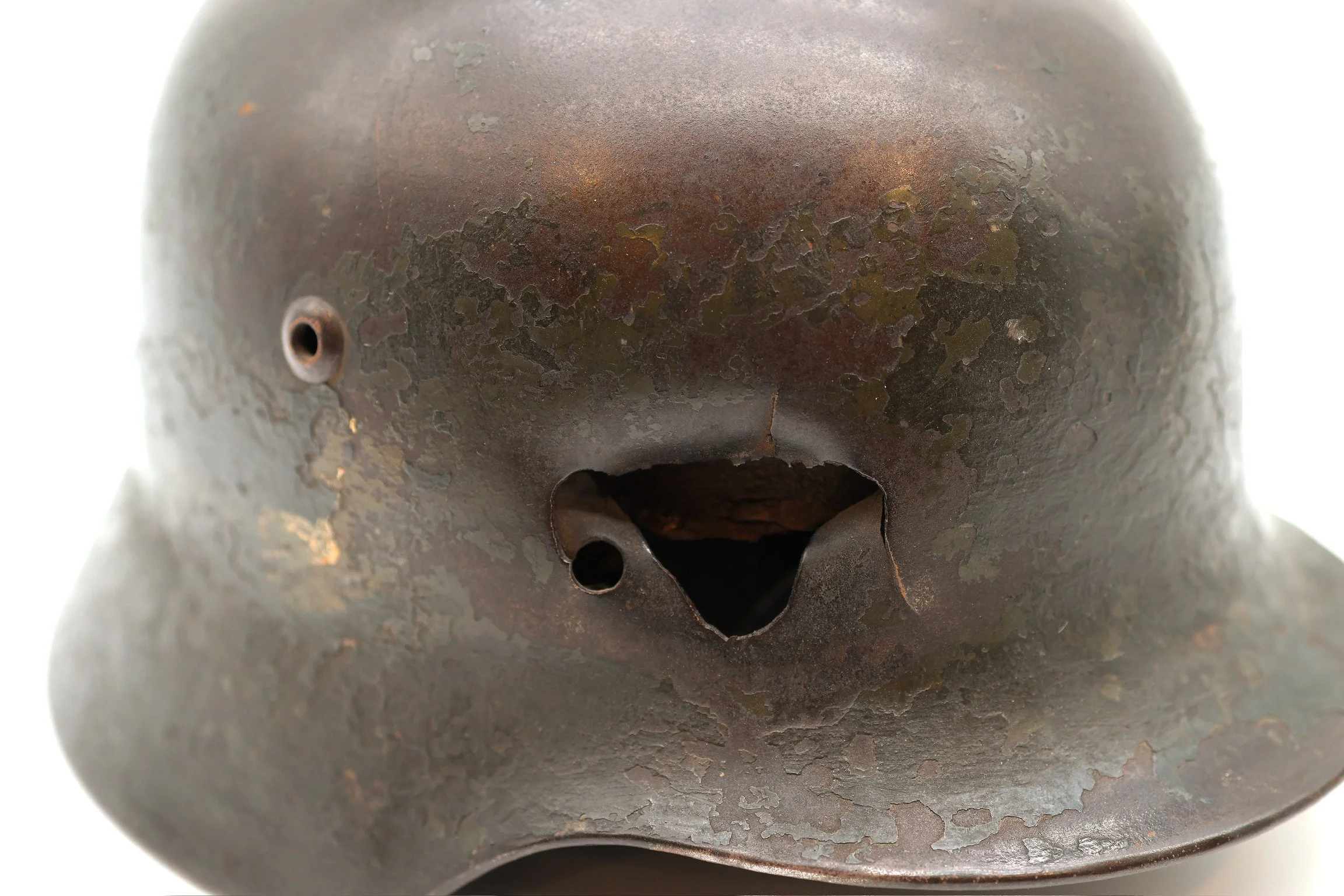
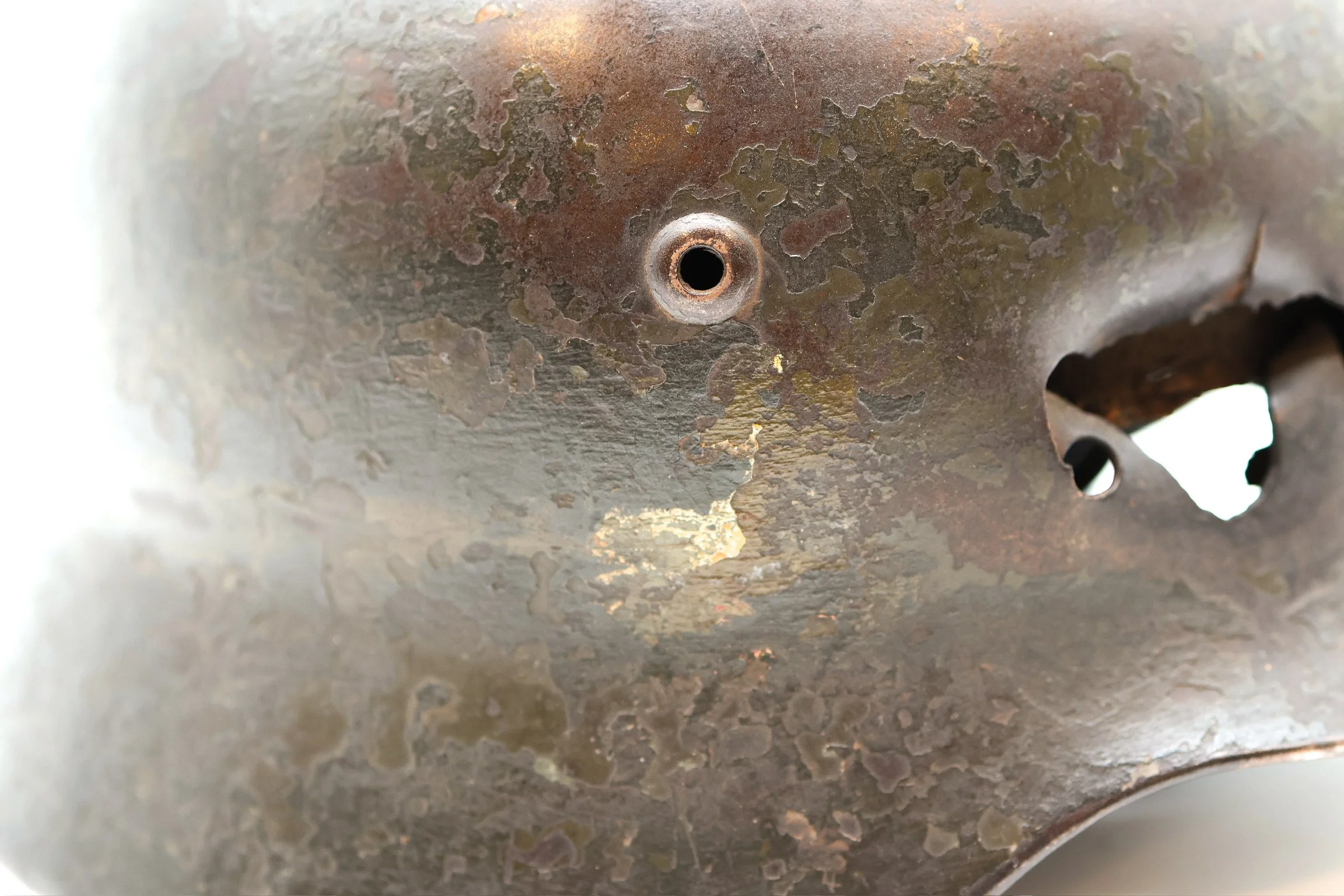
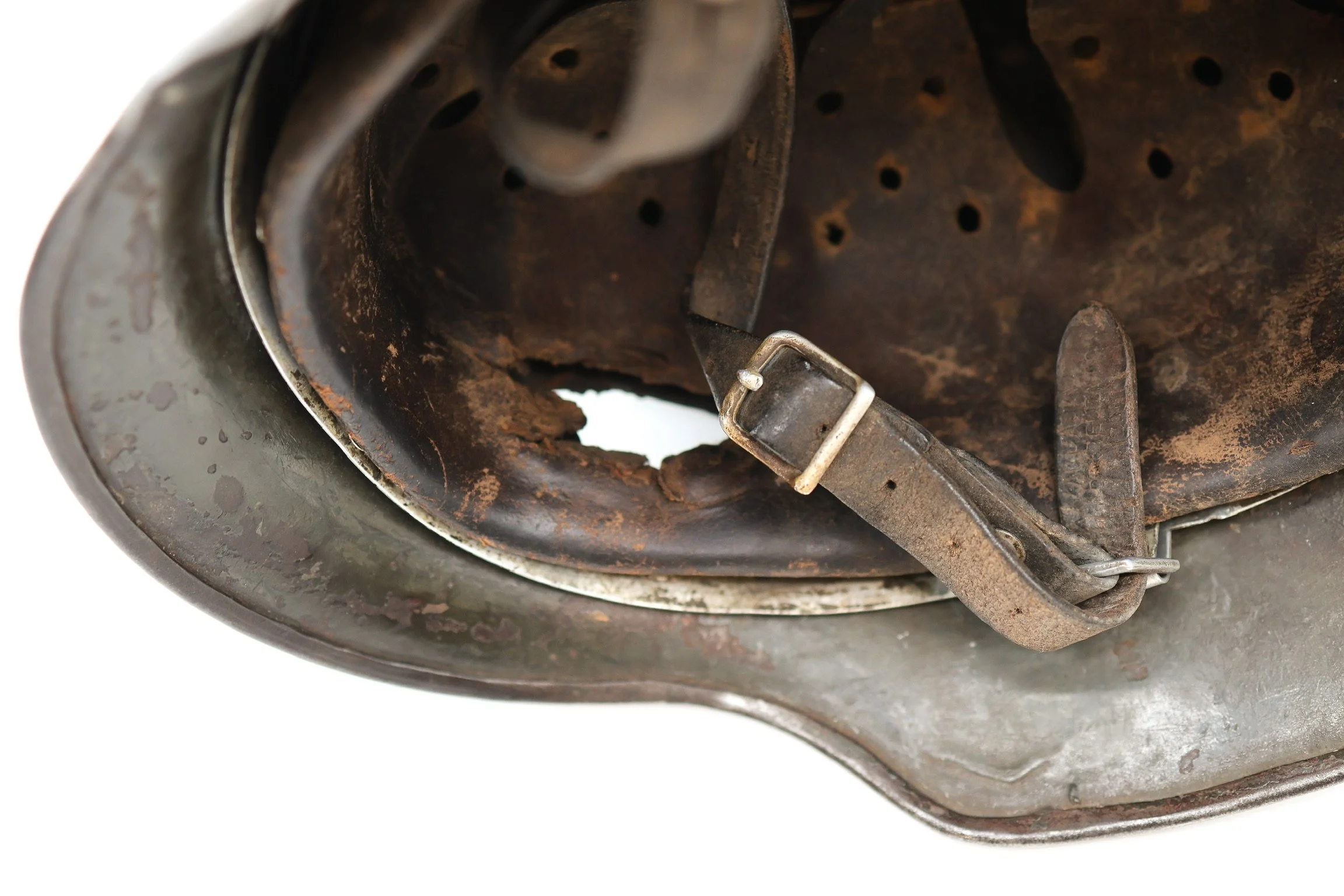
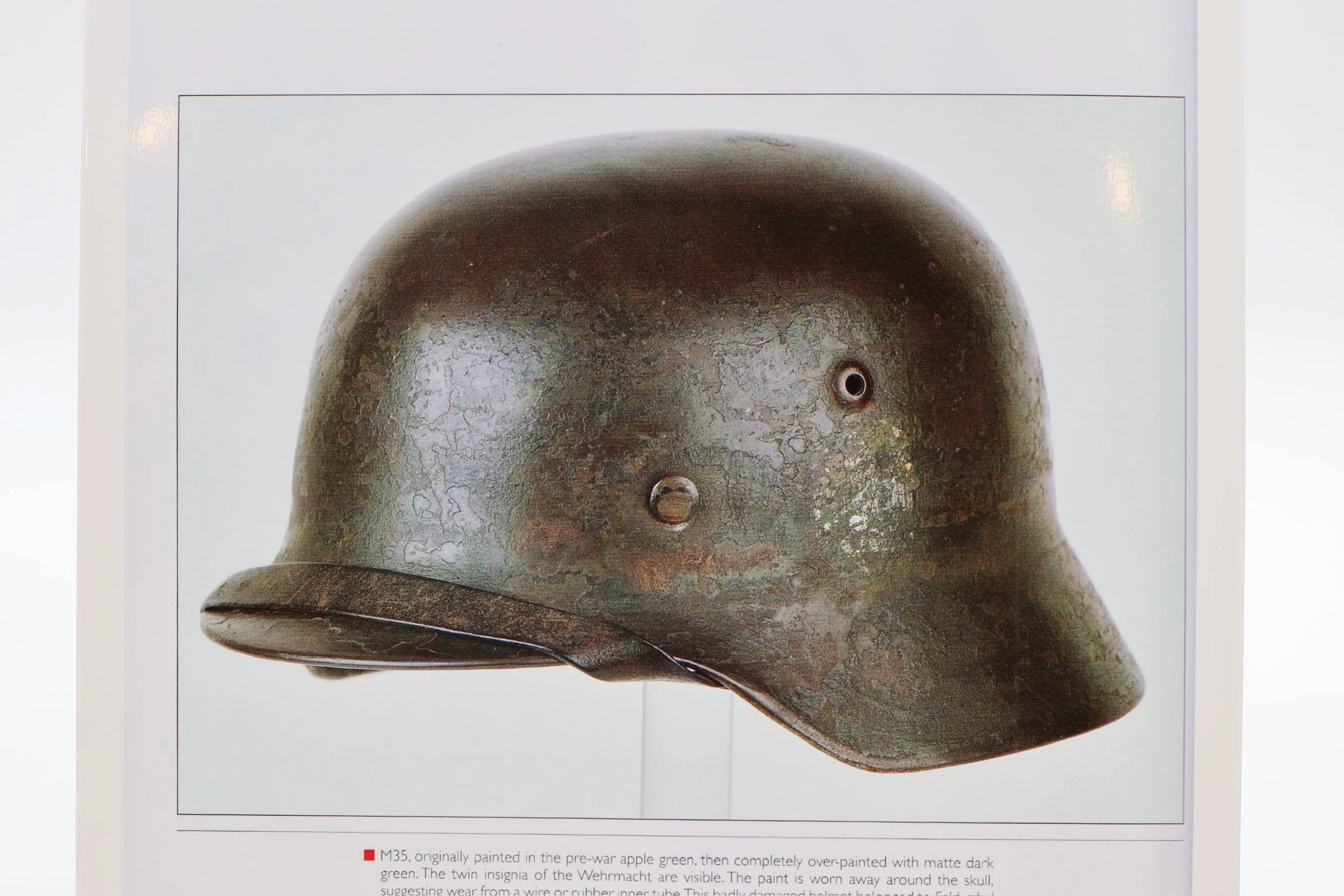
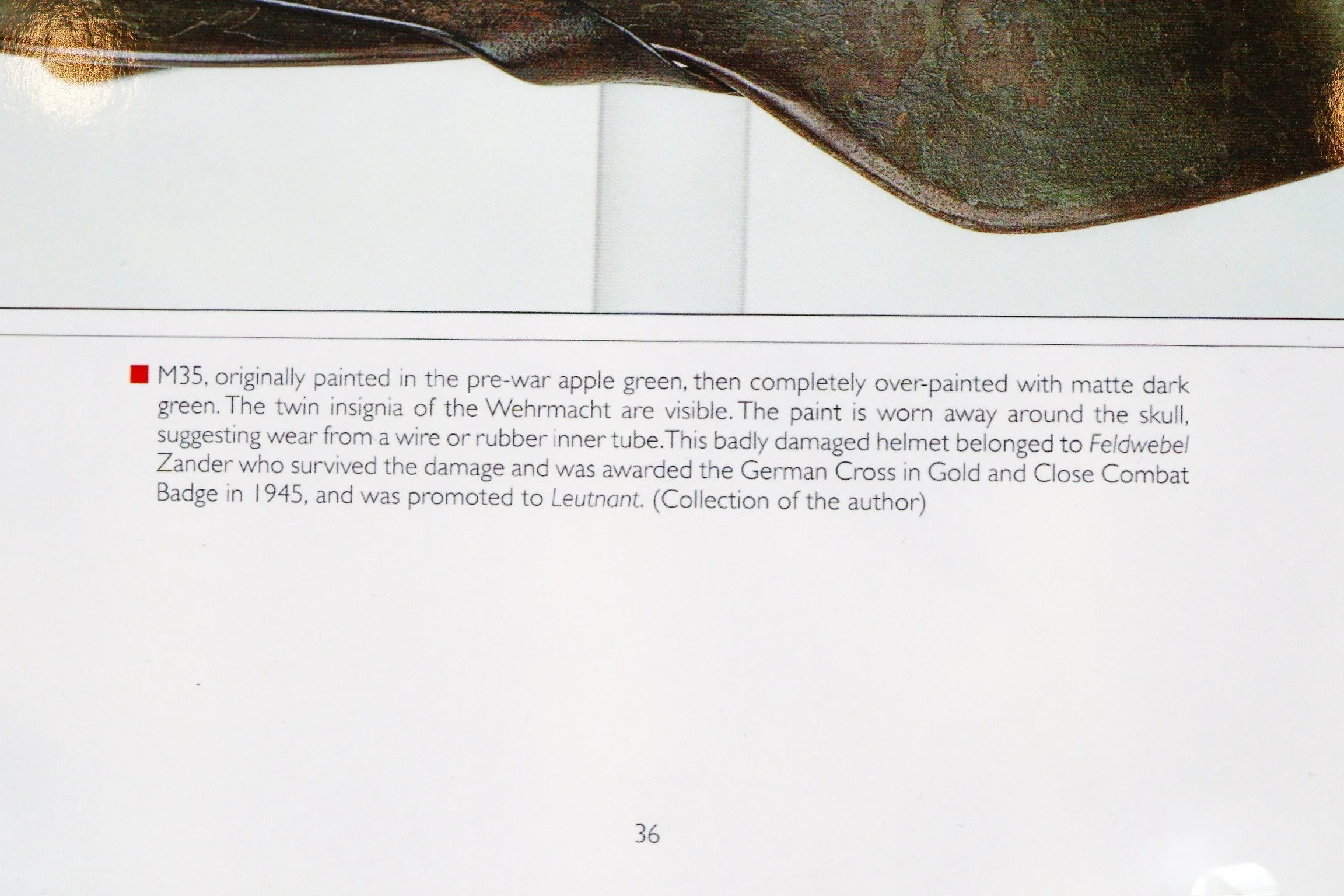
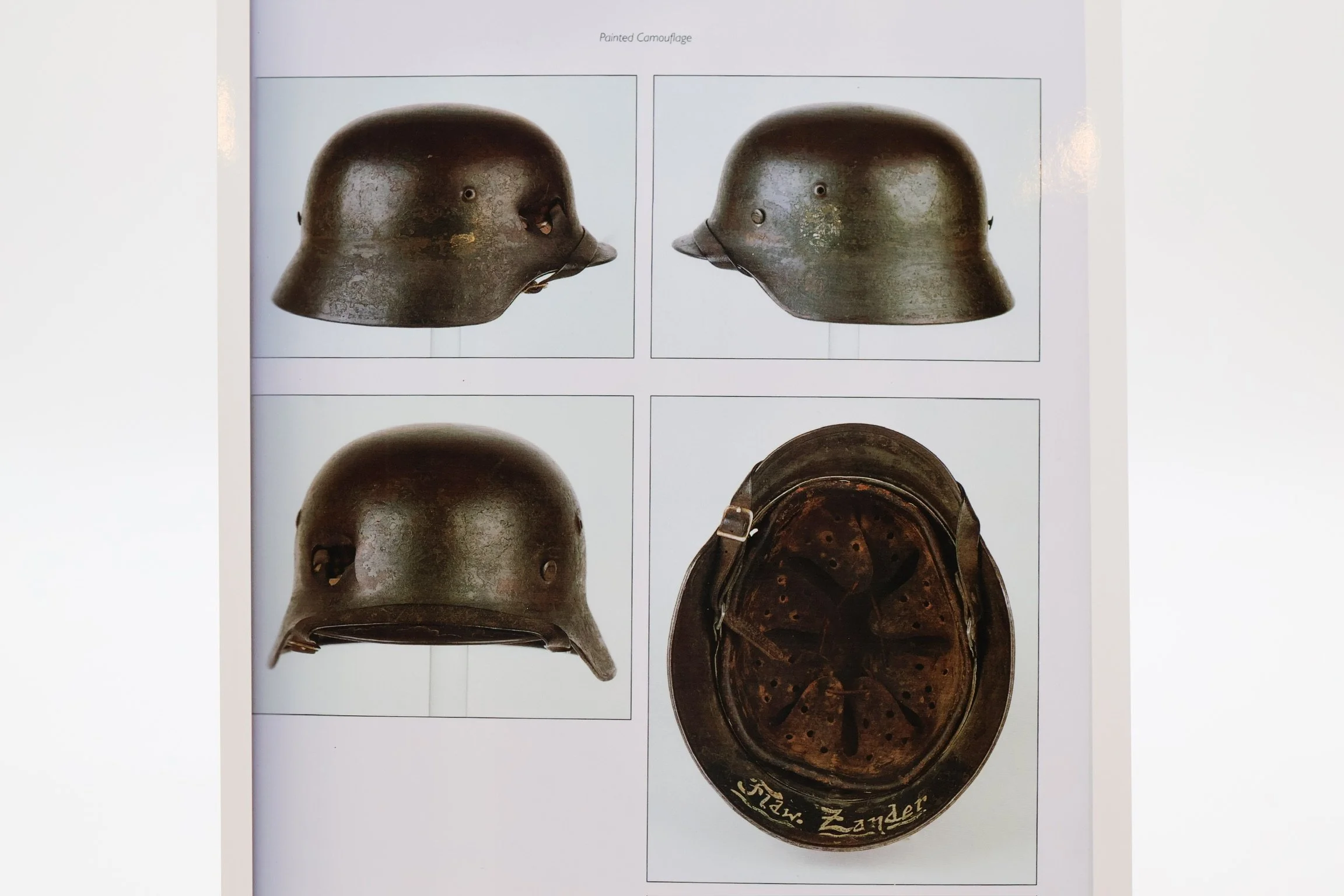
This German M35 steel helmet was originally finished in the pre-war apple green paint and later completely overpainted in a wartime matte dark green. Traces of the Wehrmacht twin insignia remain visible beneath the later finish, while wear around the crown suggests prolonged use with a wire or rubber inner tube liner modification. The helmet exhibits severe battle damage, including a large shrapnel strike to the front, indicating it was not being worn at the moment of impact.
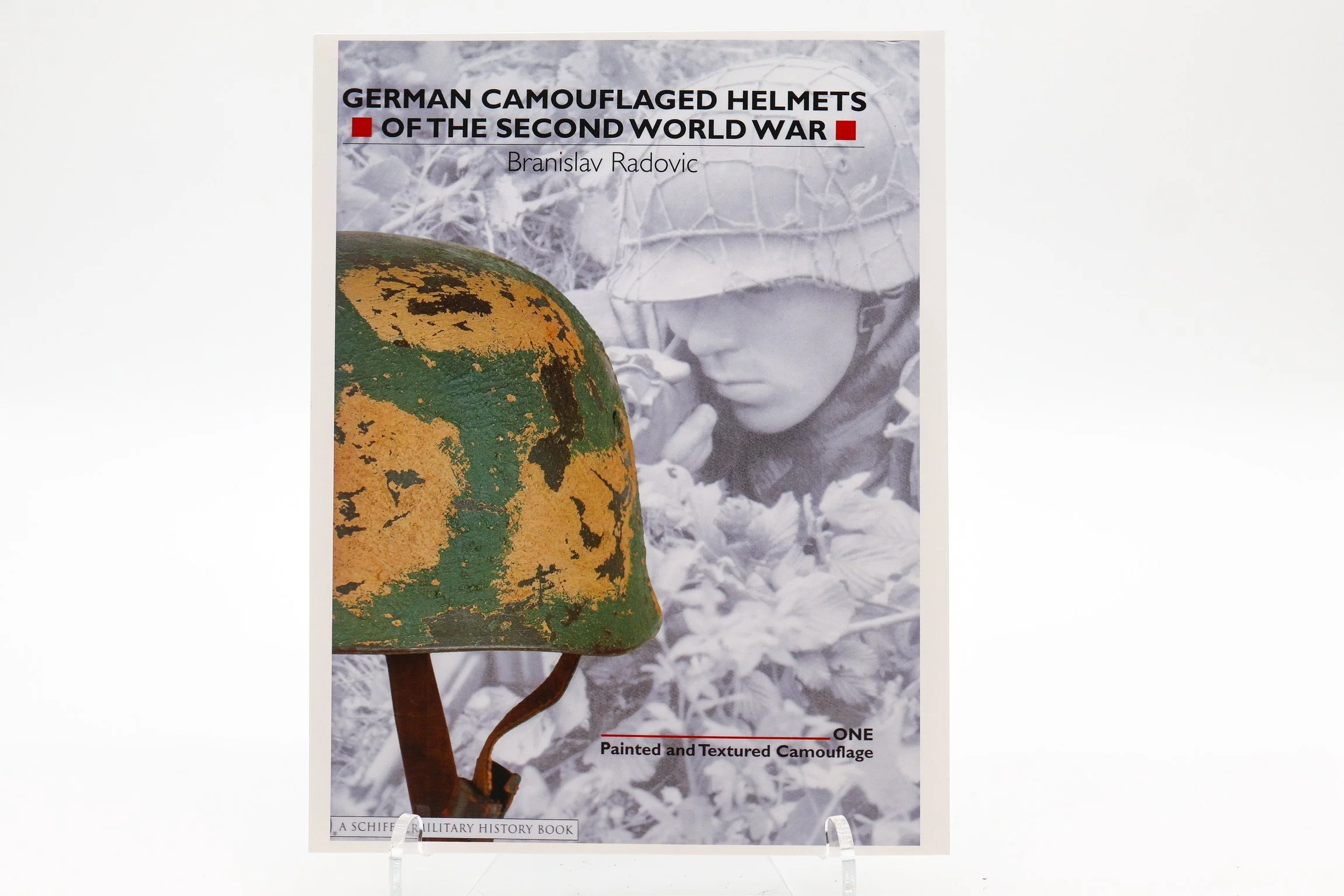
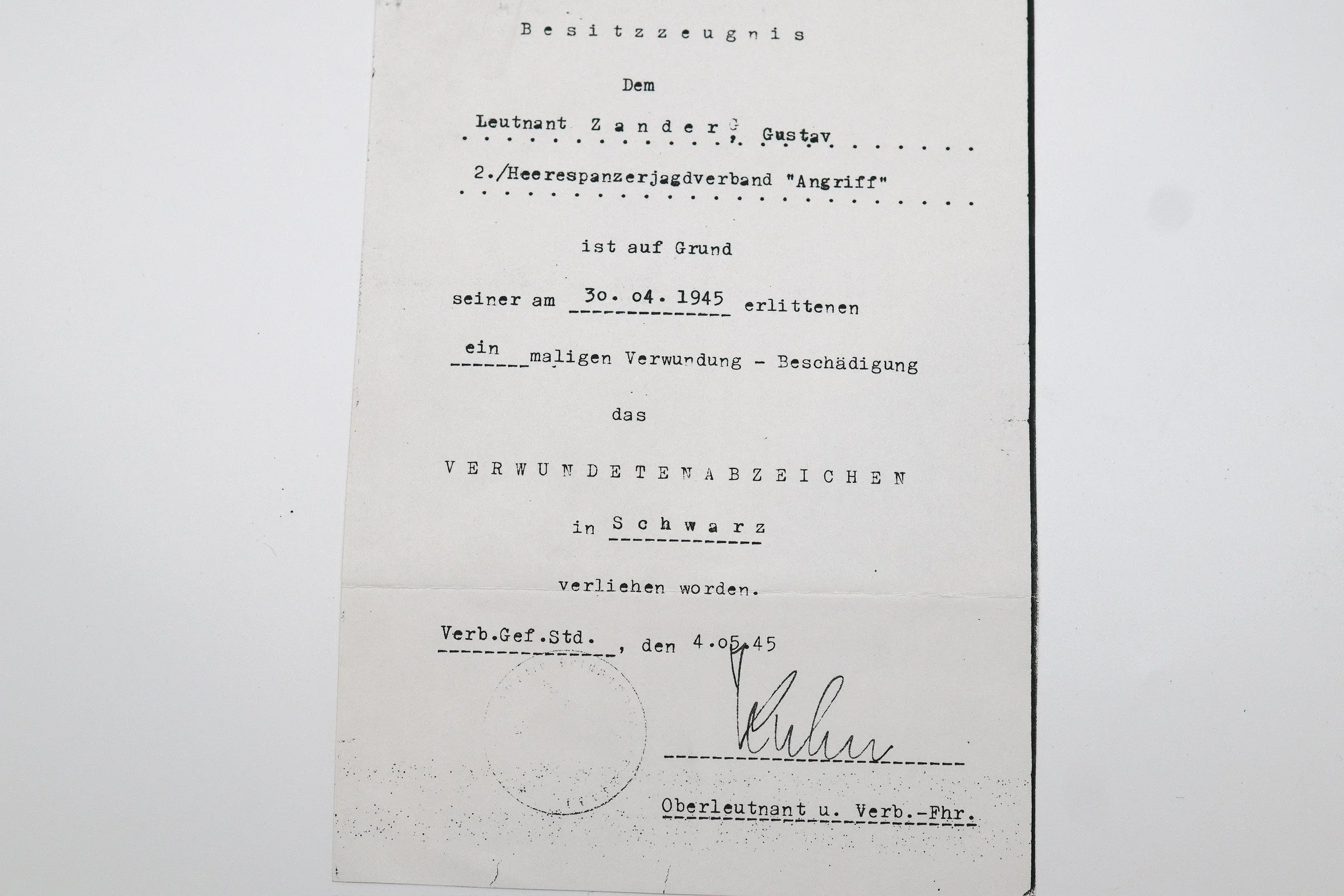
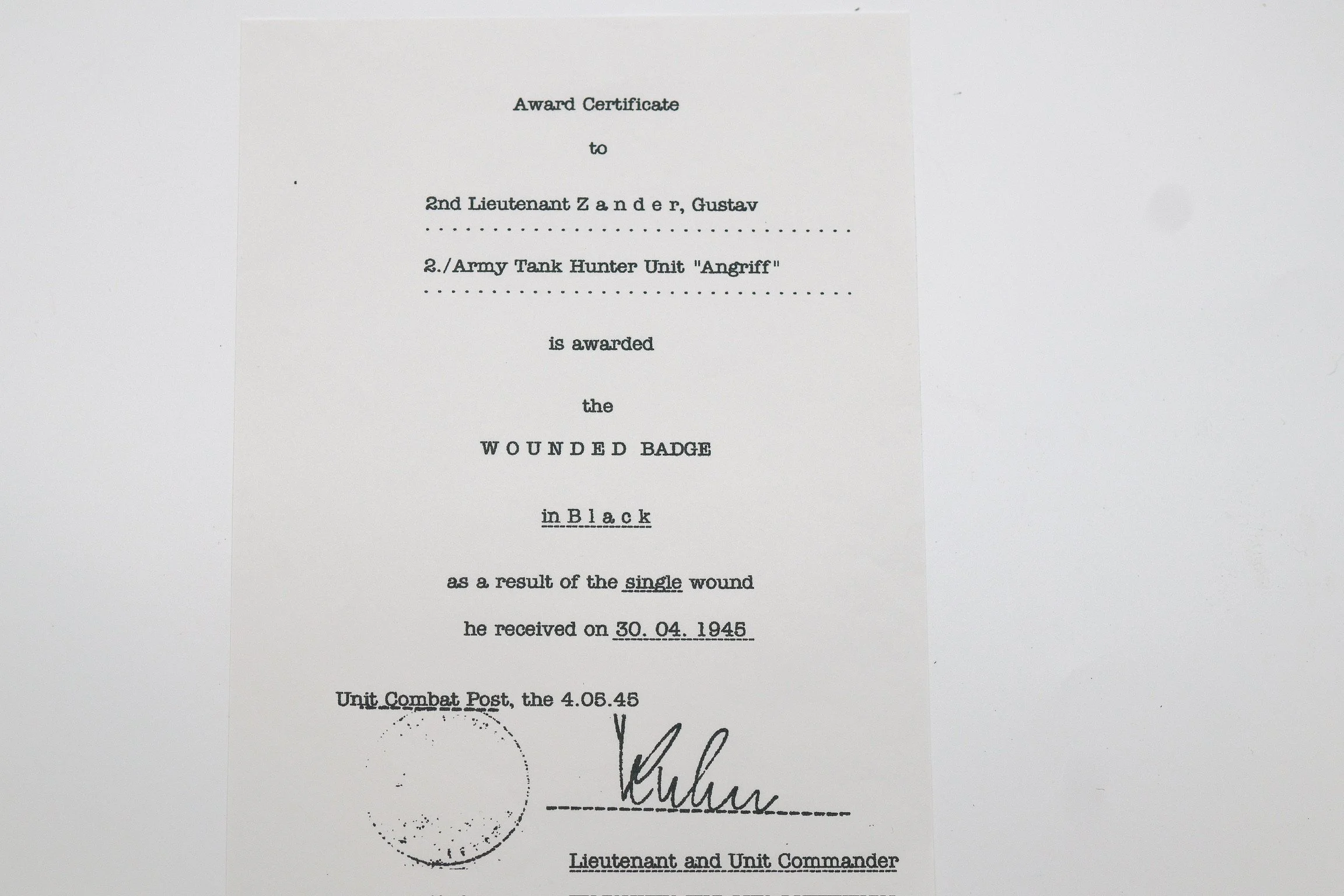
The helmet is named to Feldwebel Zander, who survived the incident and continued his service, later being awarded the German Cross in Gold and the Close Combat Clasp in 1945, and promoted to Leutnant. This exact helmet is documented in Radovic’s reference work on World War II German helmets.