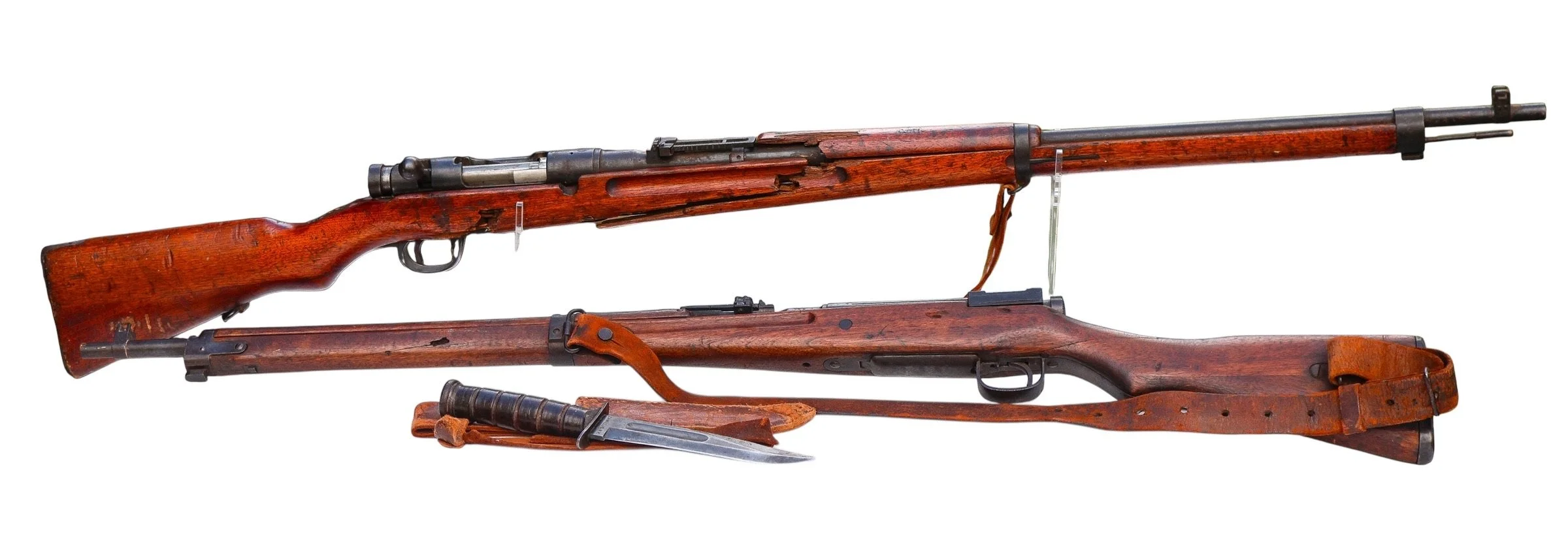
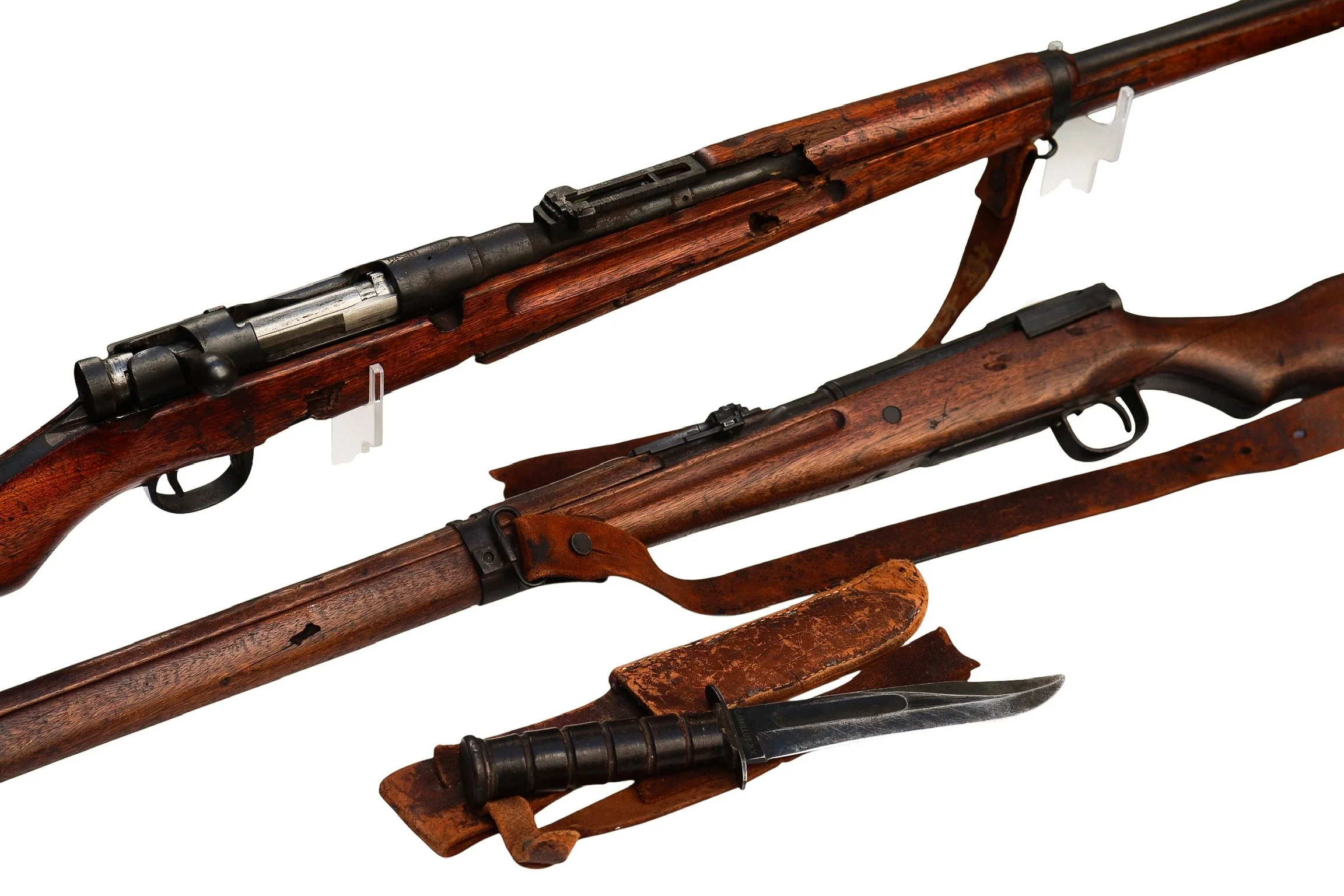
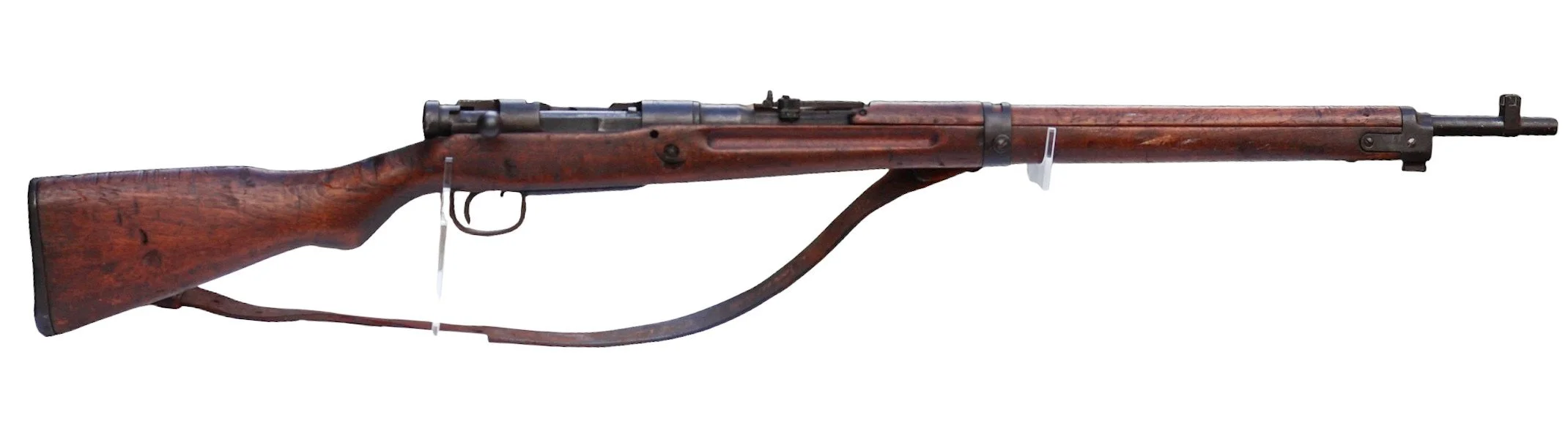
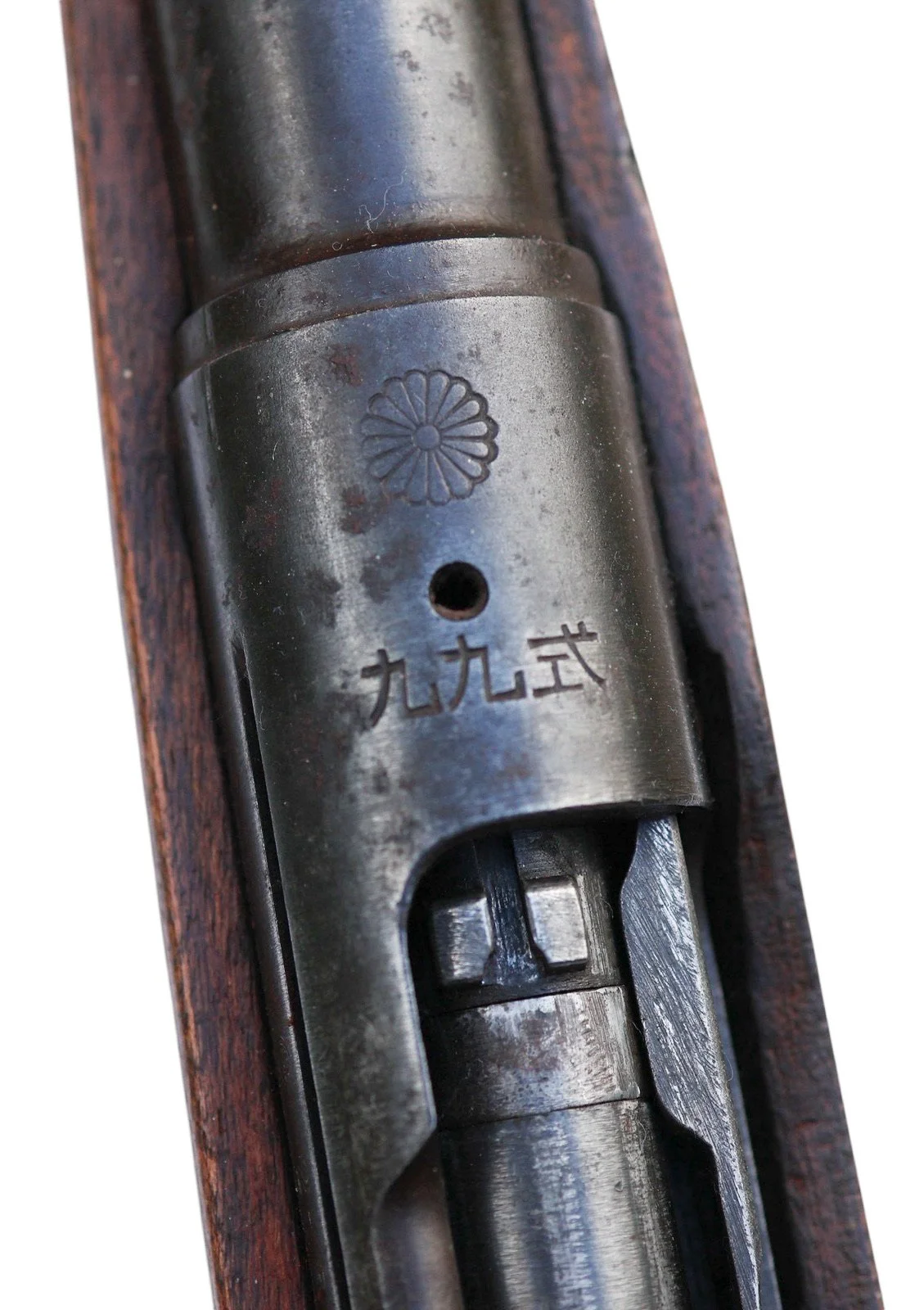
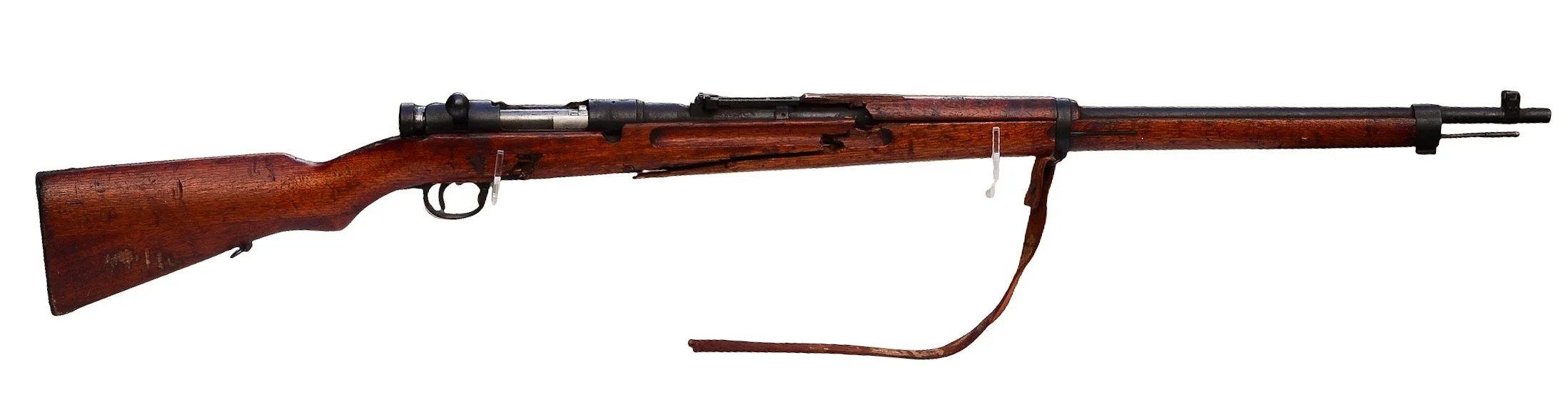
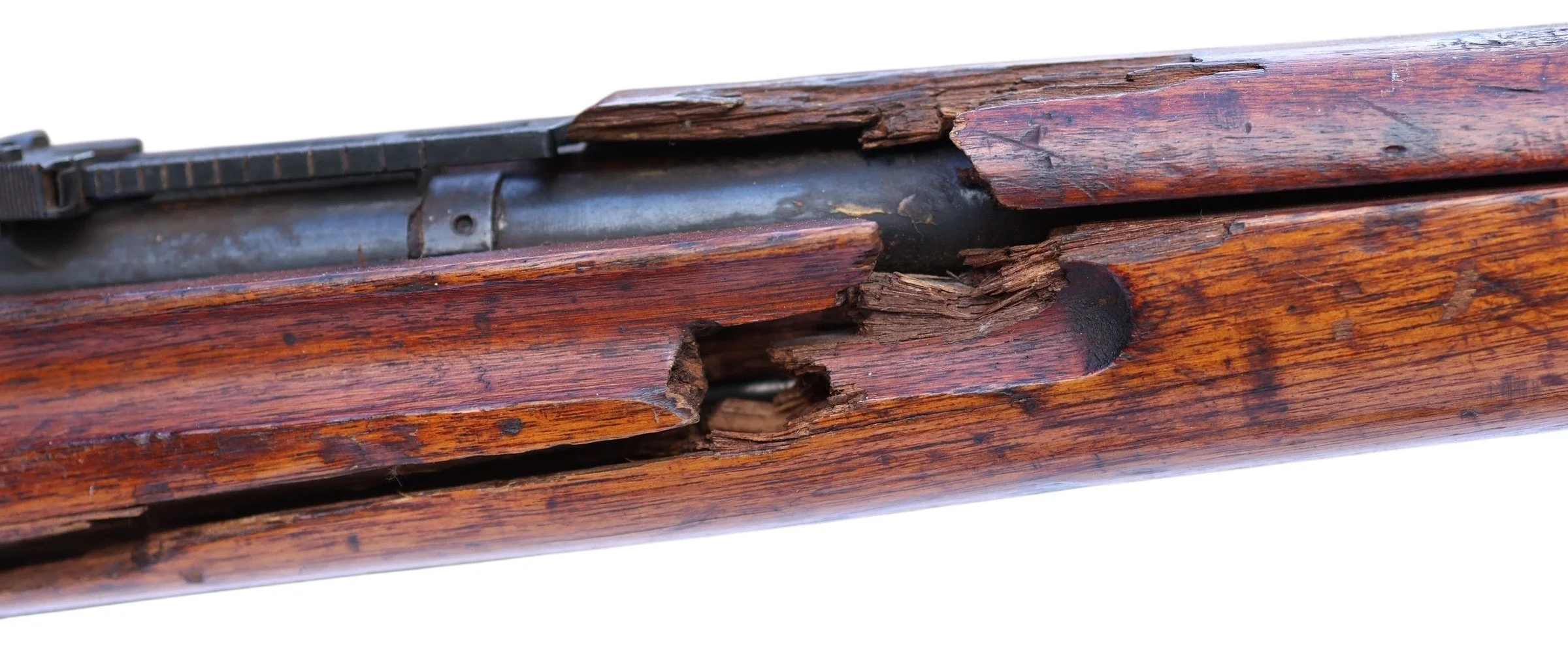
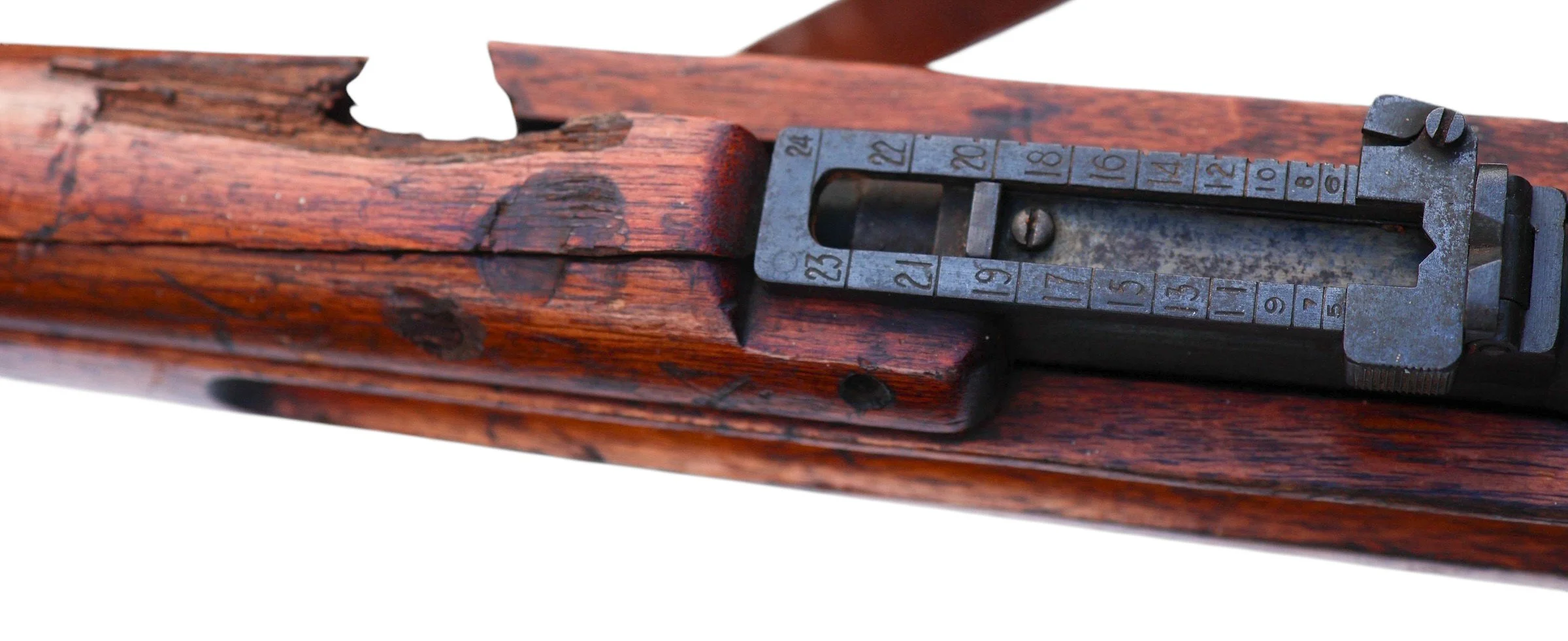
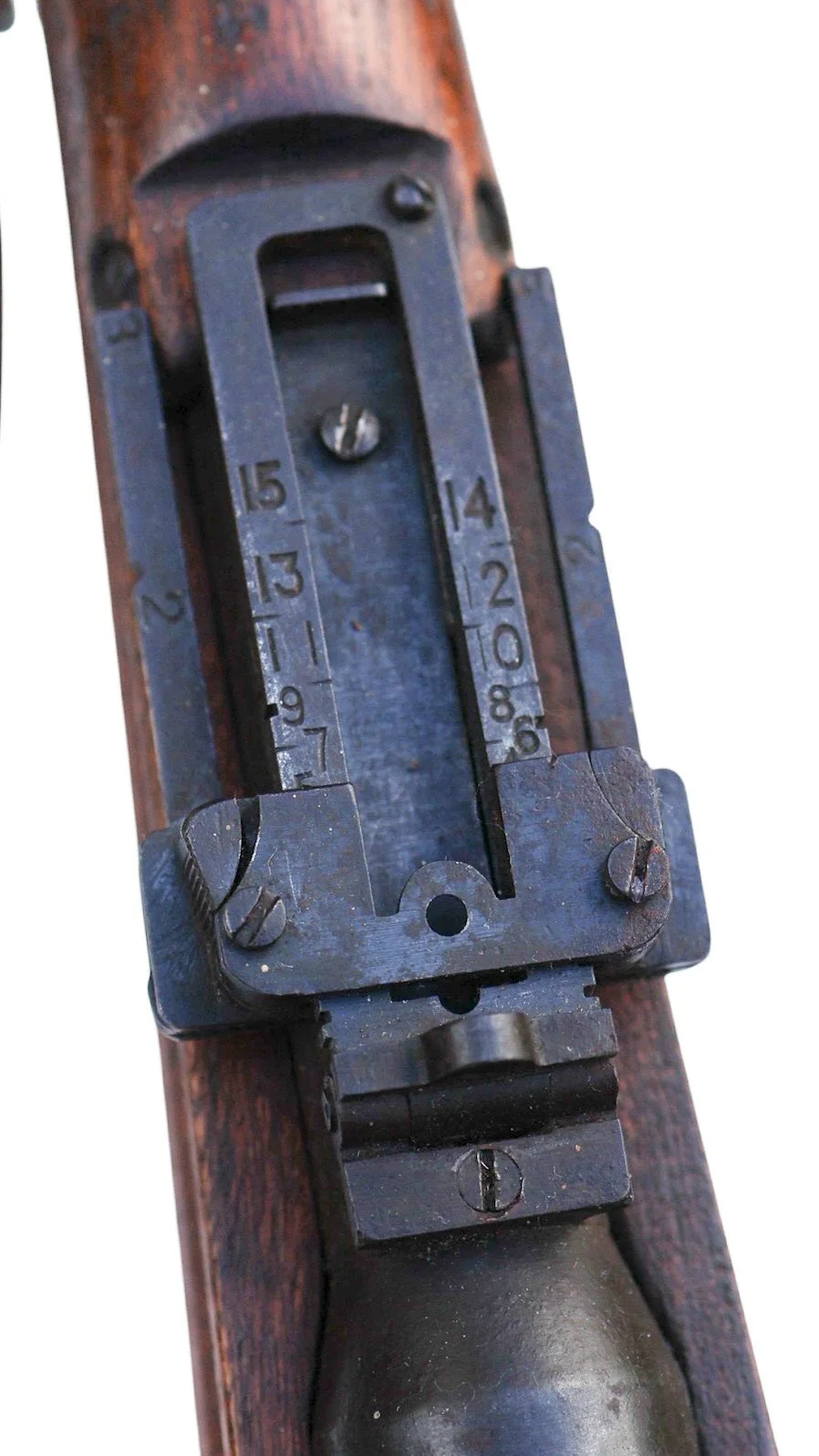
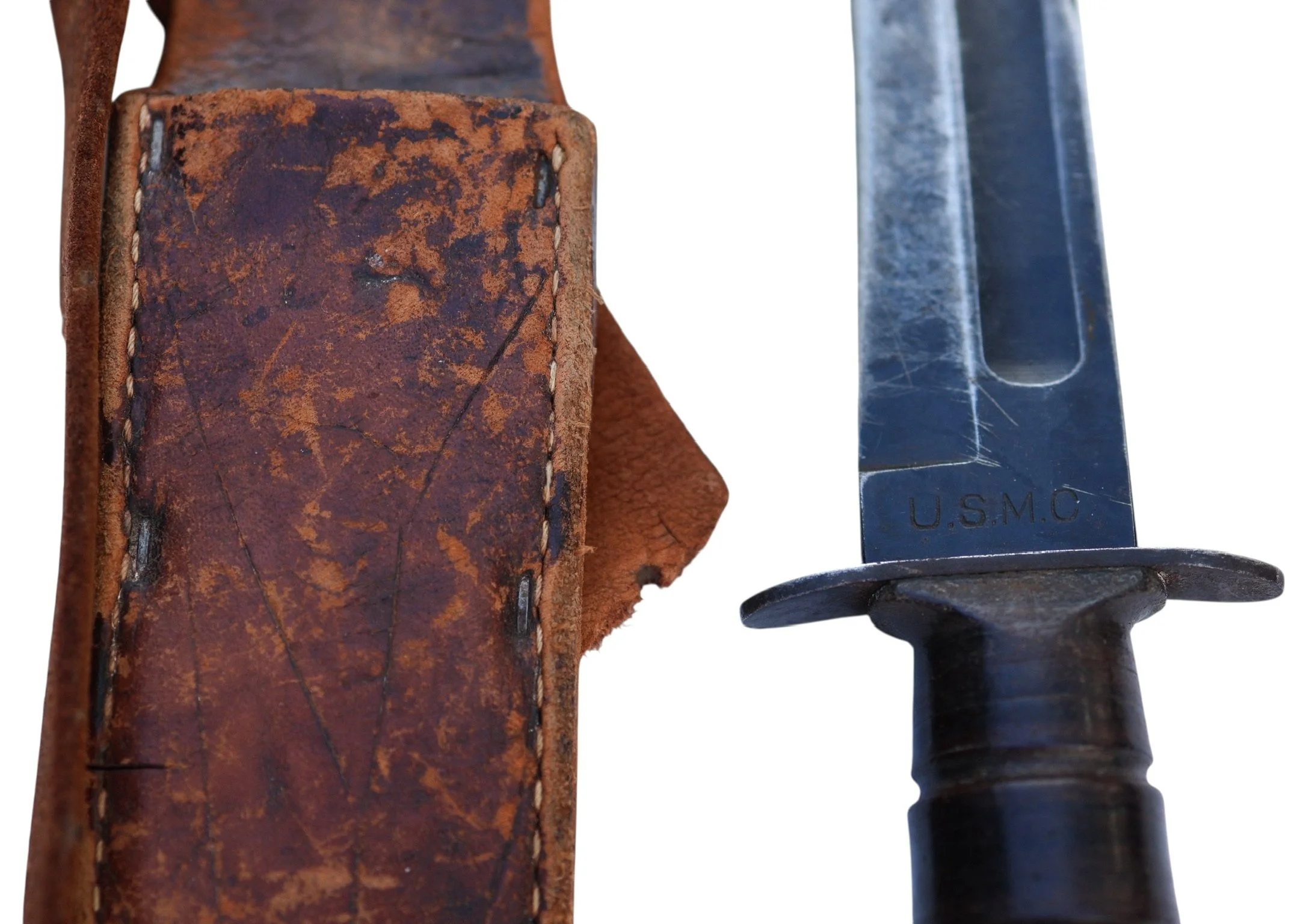
Grouping of Two Iwo Jima–Captured Arisaka Rifles with USMC Kabar Knife
This grouping consists of two Japanese Arisaka rifles and a U.S. Marine Corps Kabar fighting knife captured during the Battle of Iwo Jima in February–March 1945. The items were brought back by Private Lou DiPaolo, Headquarters Company, 3rd Battalion, 24th Marines, 4th Marine Division, who served as a radio operator in the Communications Platoon. The grouping was obtained directly from DiPaolo’s widow.
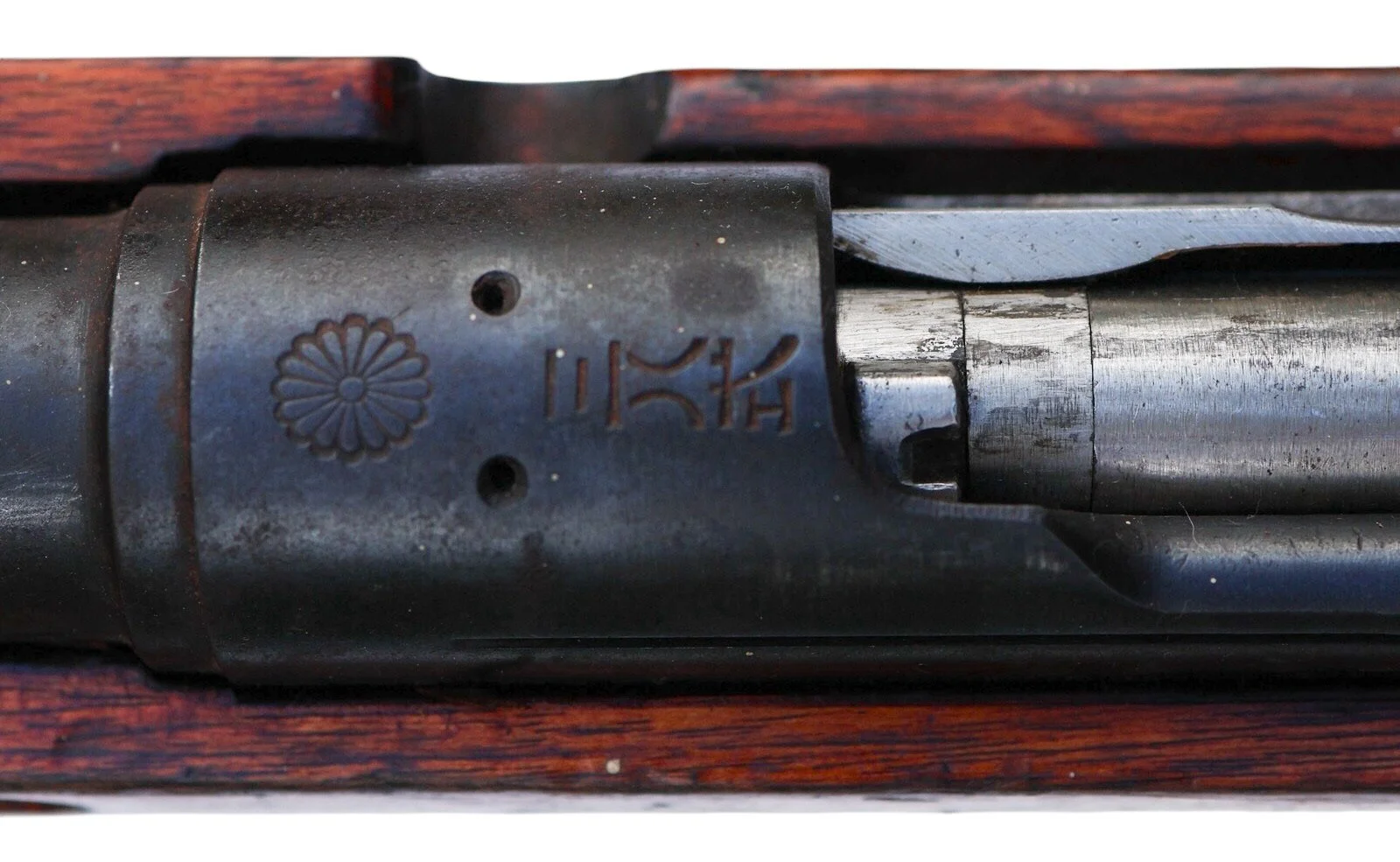
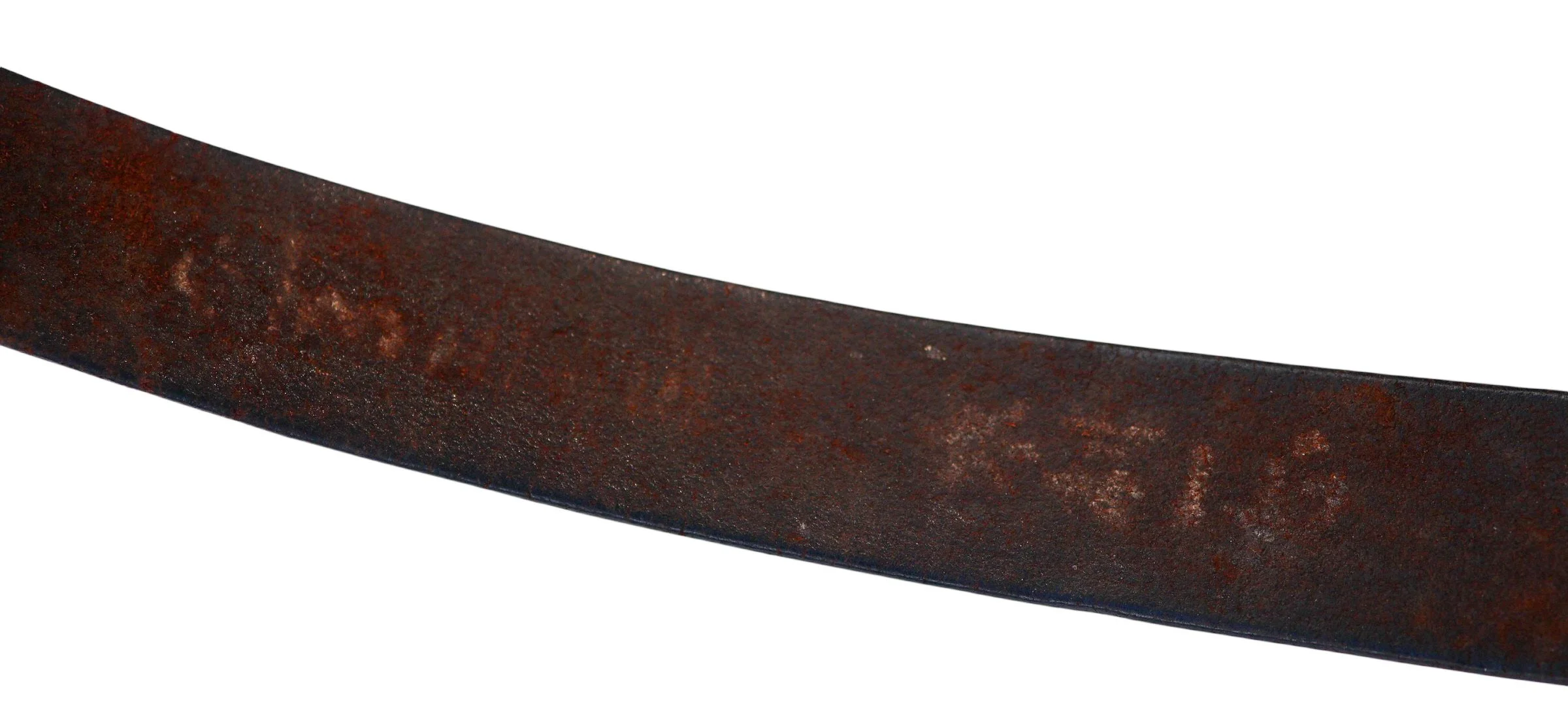
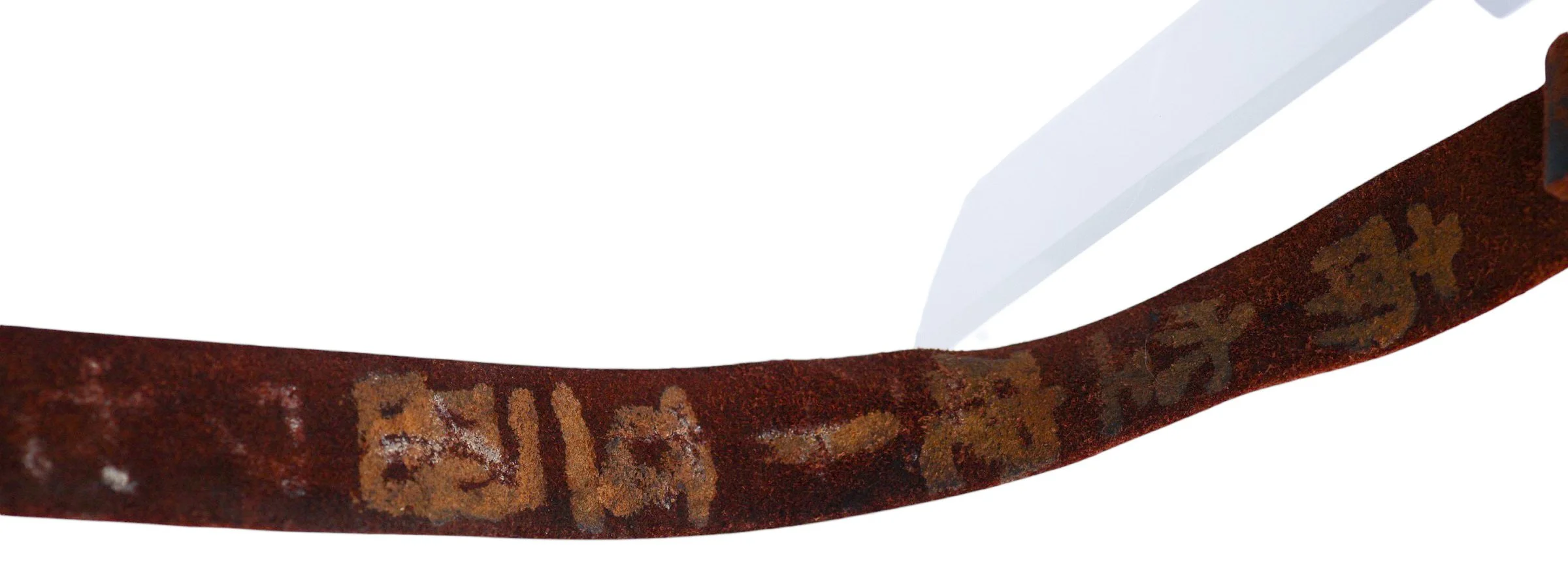
The first rifle is a Type 99 Arisaka retaining its original chrysanthemum marking, with heavy battlefield wear and kanji inscriptions on the stock. The second is a Type 38 Arisaka that shows two bullet strikes to the stock and additional kanji inscriptions. Its sling bears Japanese text reading “Southern Air Anti-Aircraft 10144,” along with two katakana characters, “wa” and “se,” of unknown abbreviation. The rifle was likely recovered near the airfield on Iwo Jima.
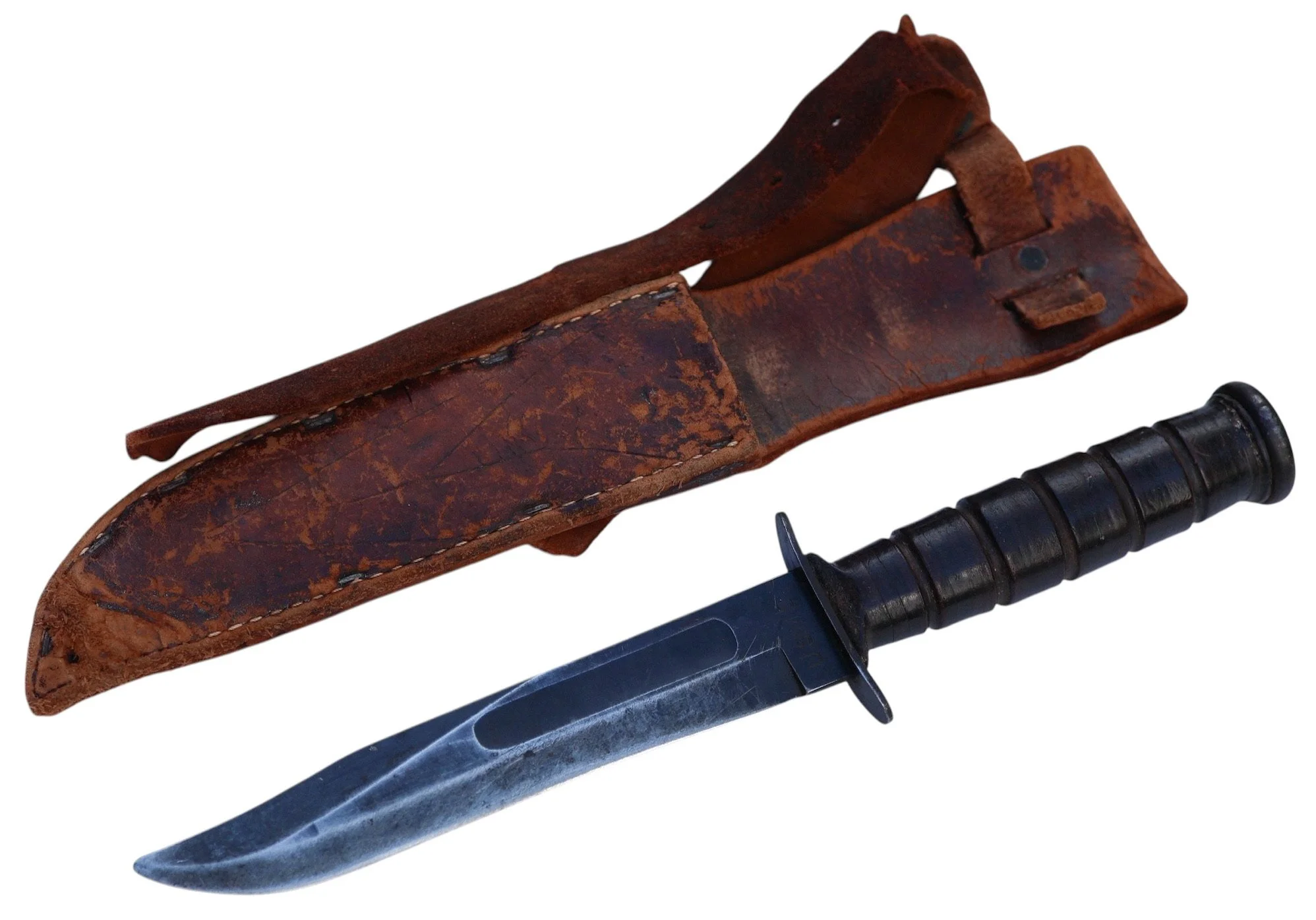
The grouping also includes a USMC Kabar fighting knife with a leather grip and blade markings “U.S.M.C.” and “Camillus, N.Y.”, carried by Private DiPaolo during his service.
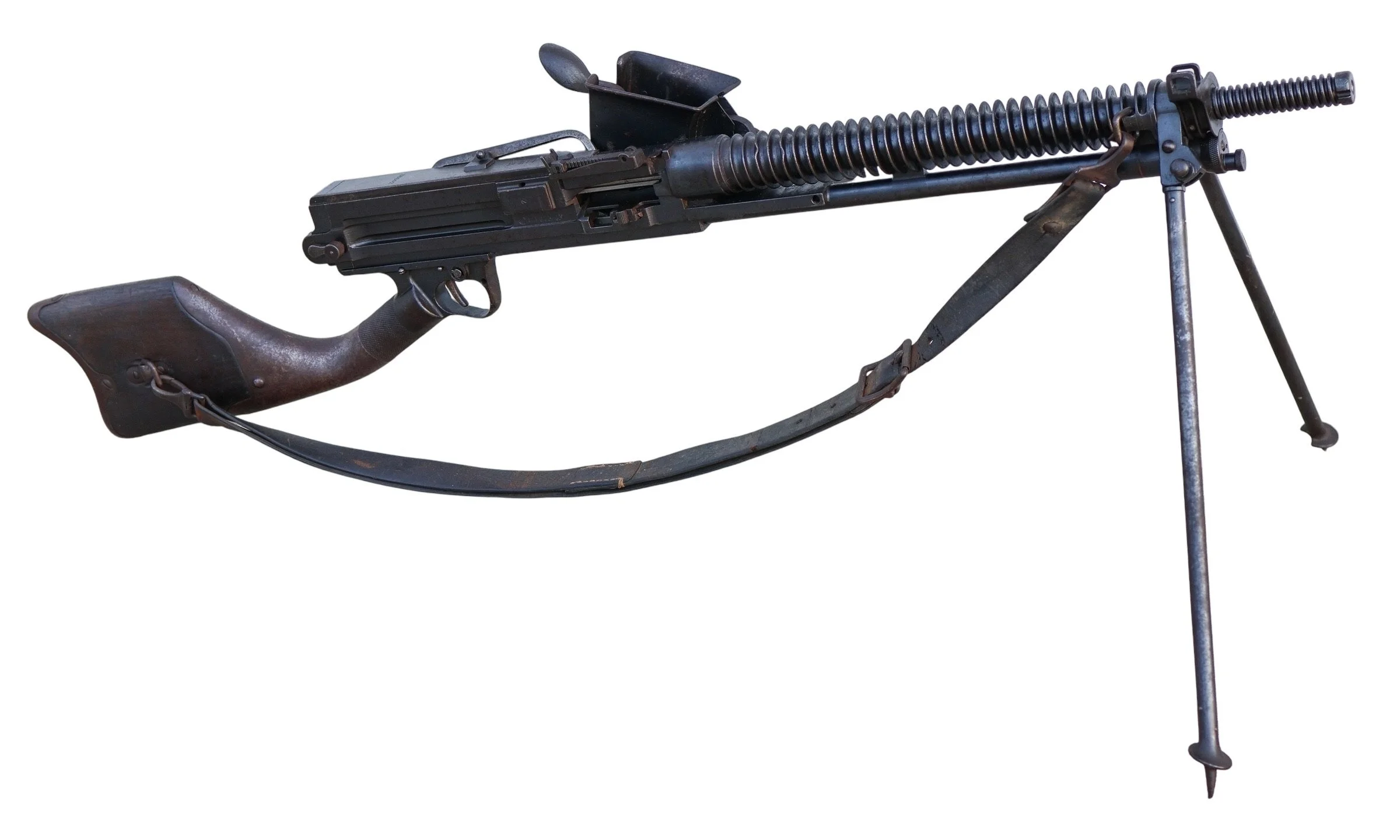
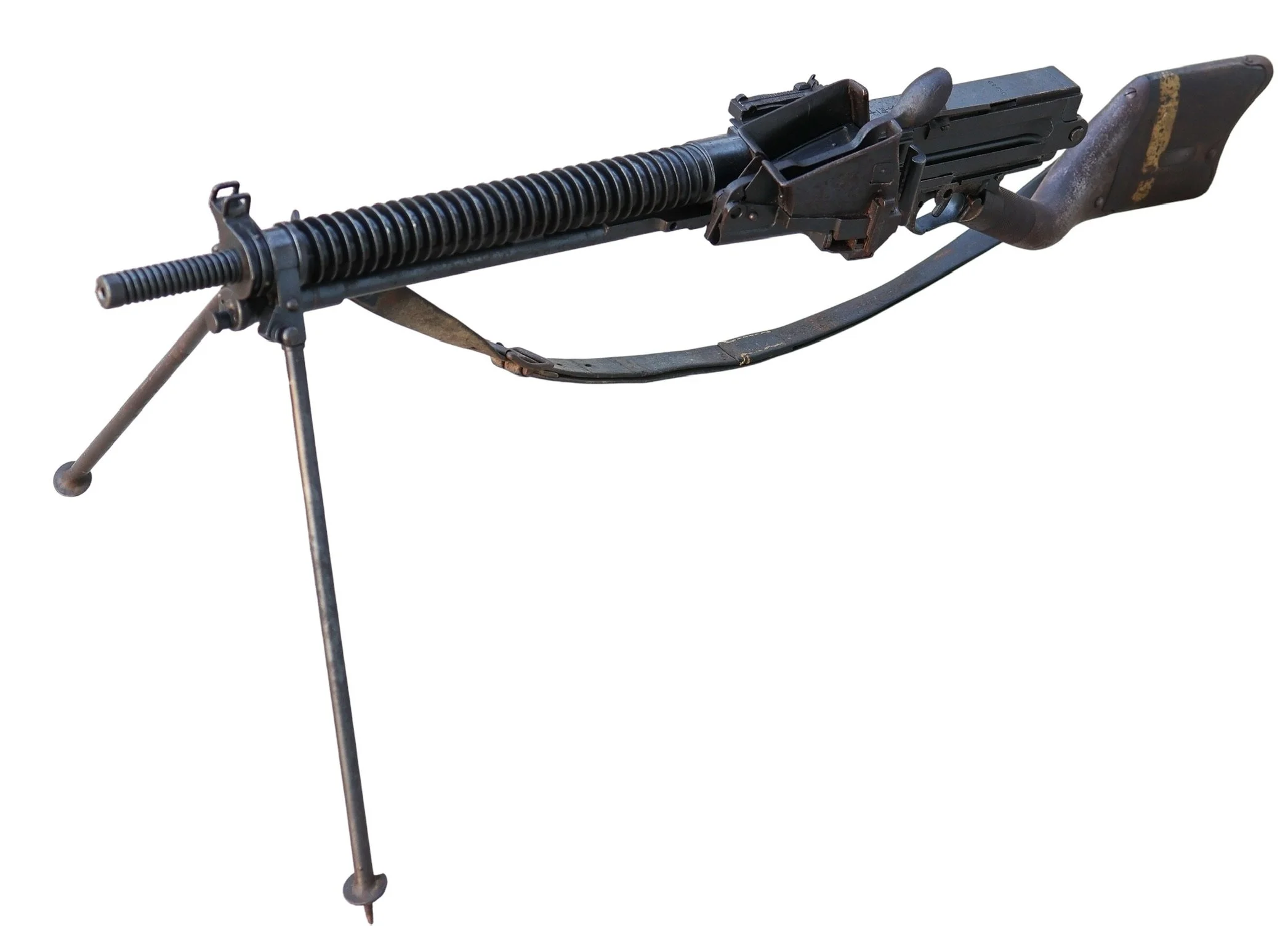
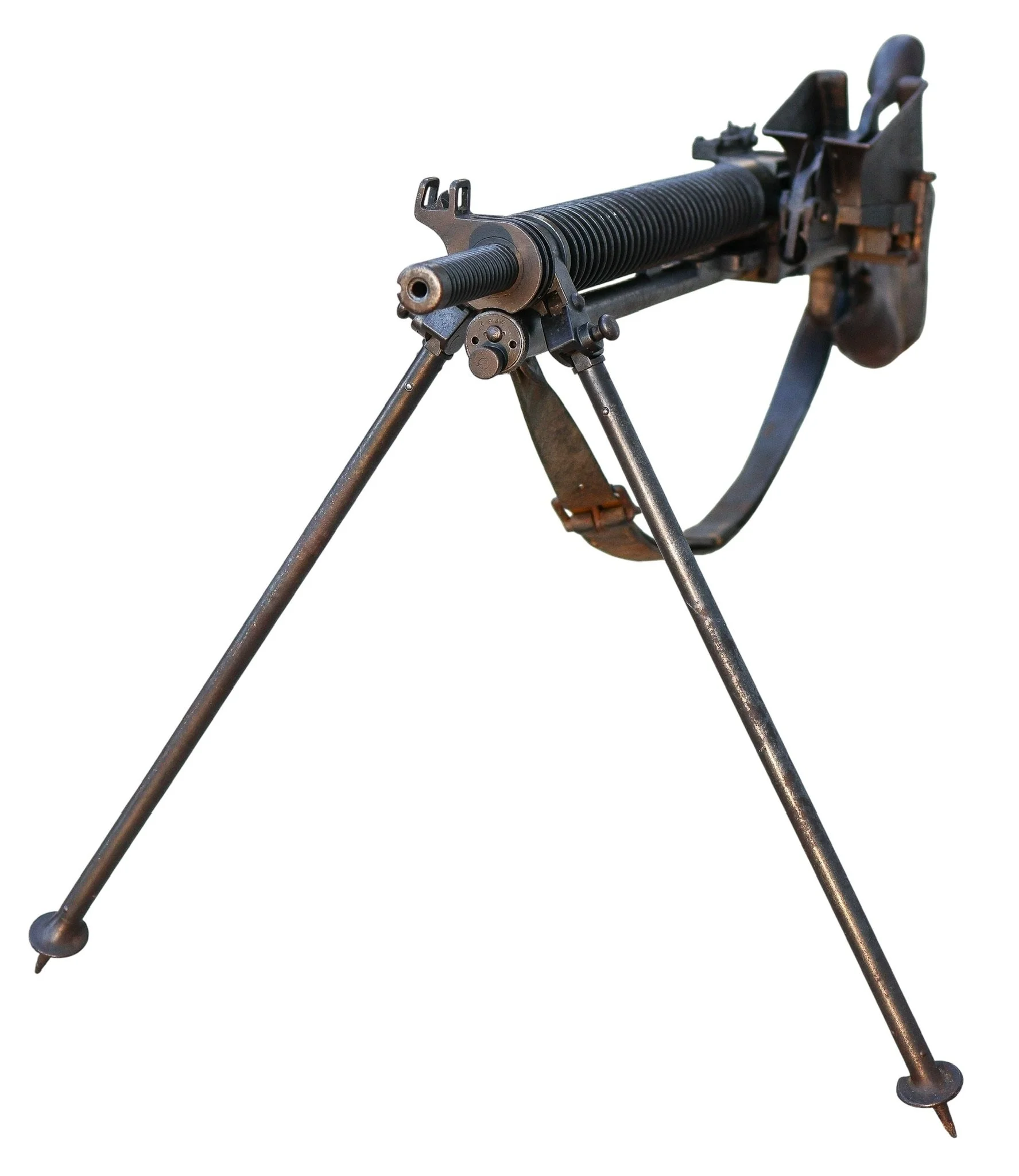
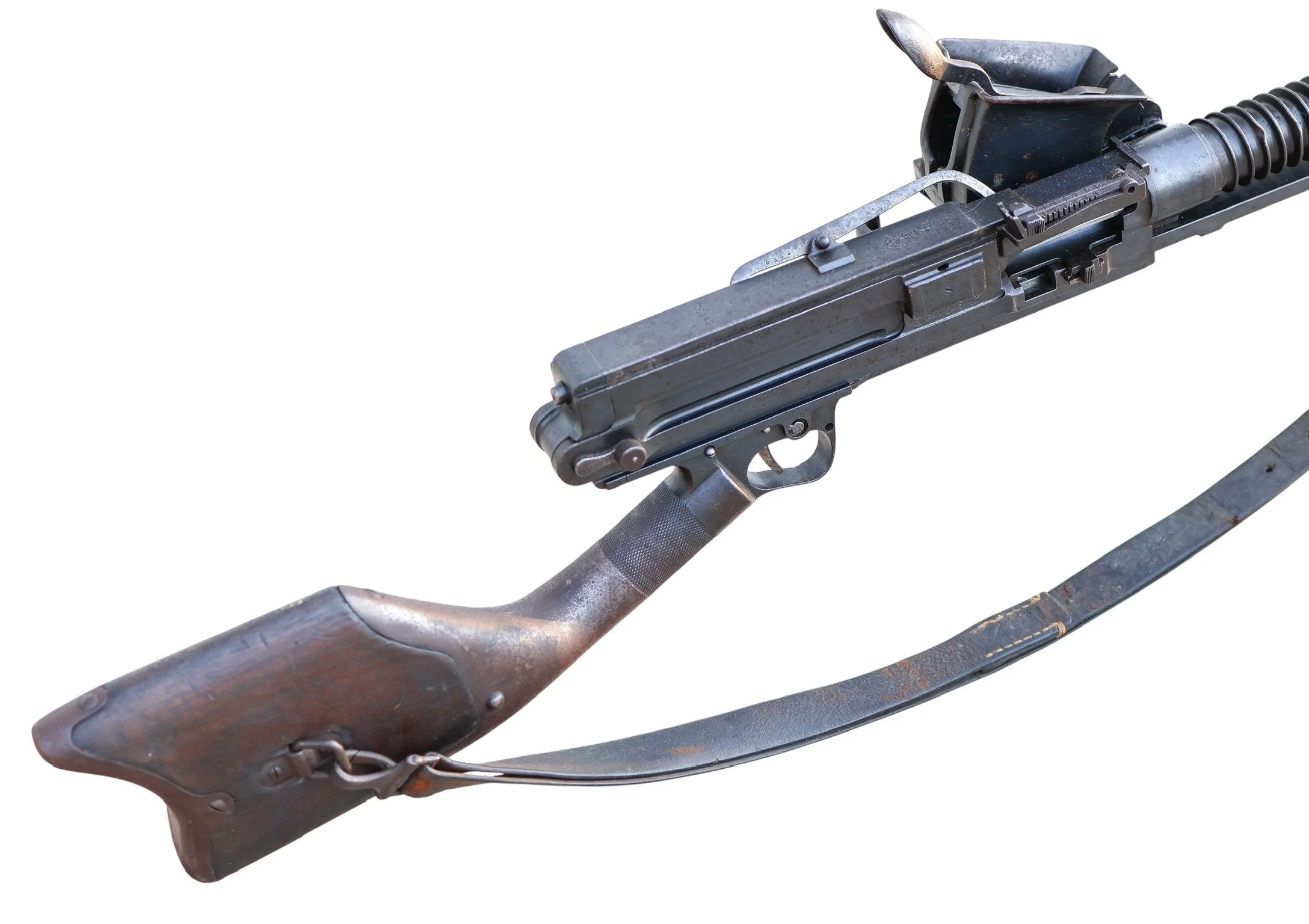
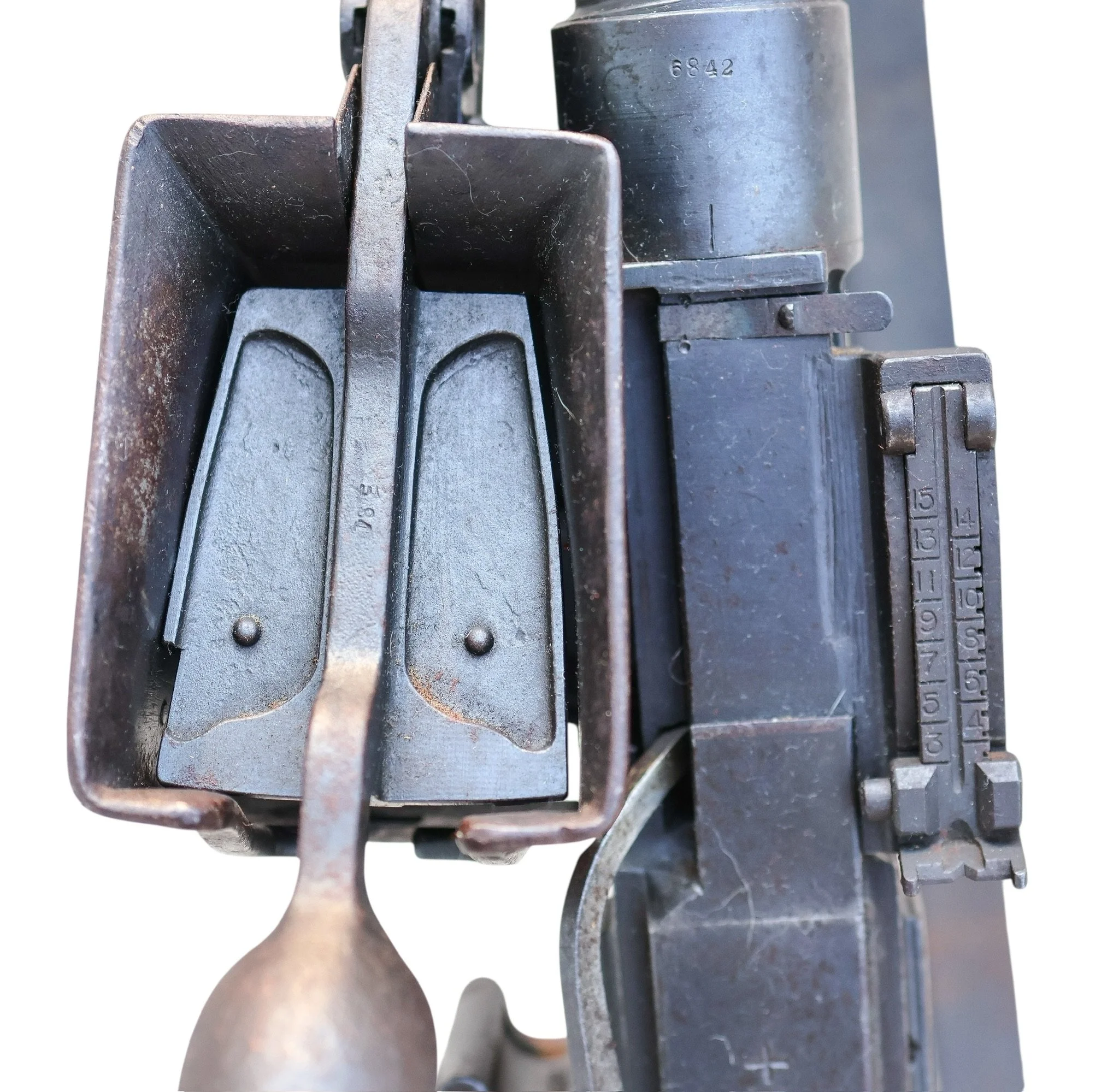
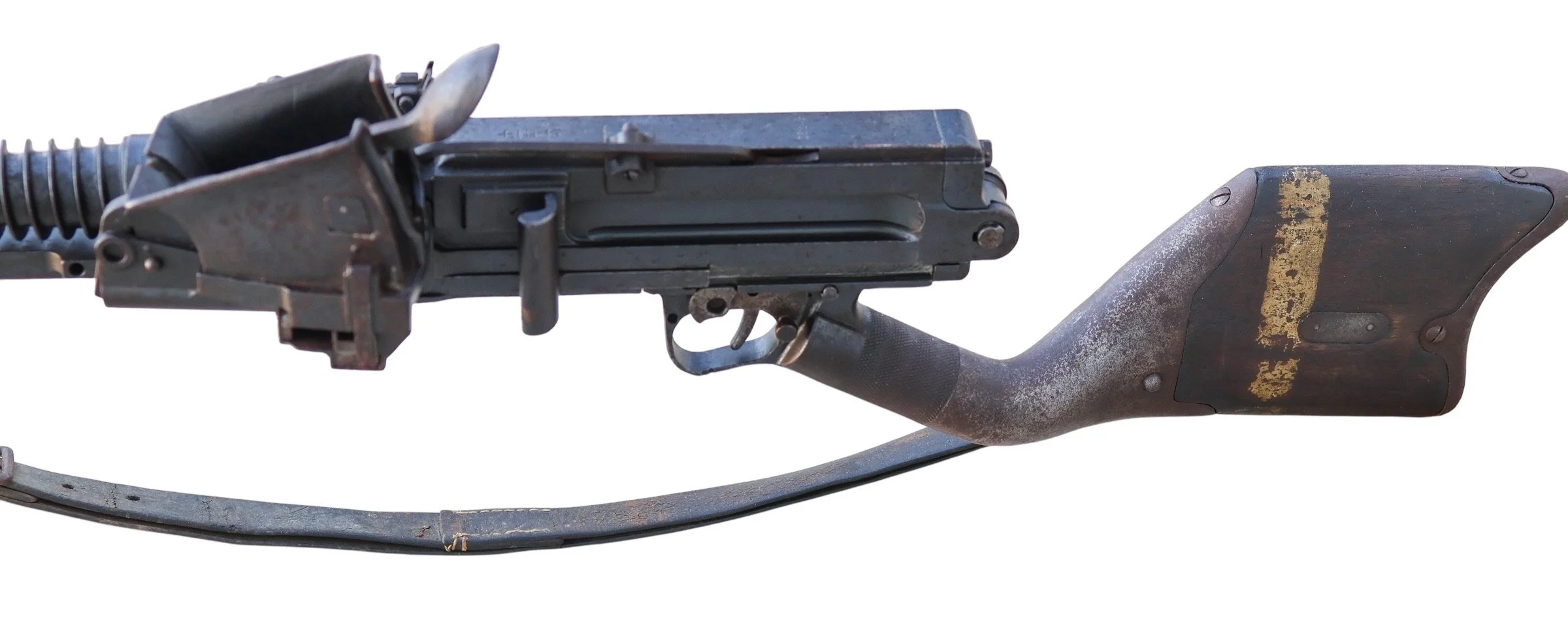
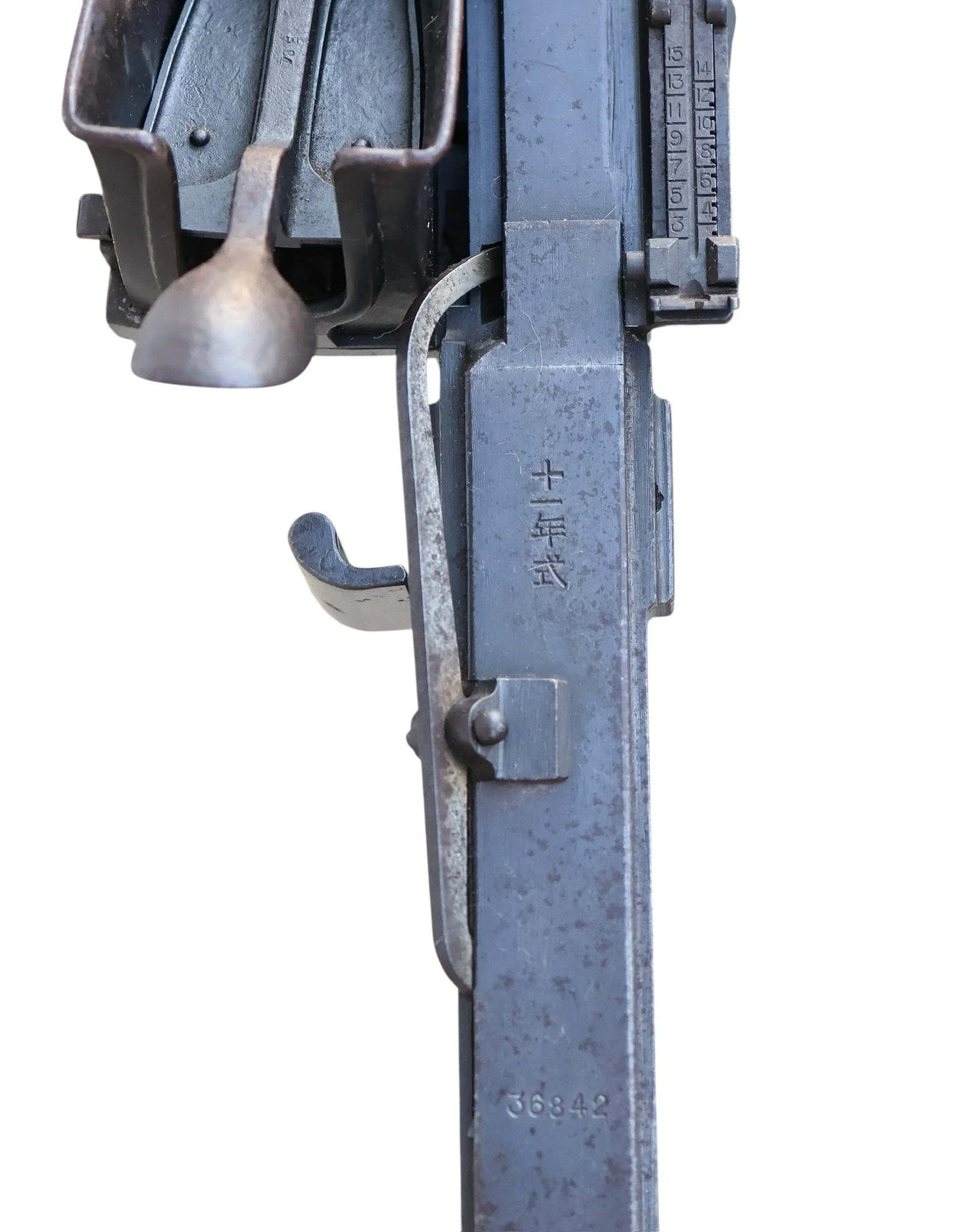
Japanese Type 11 Light Machine Gun Captured in Burma
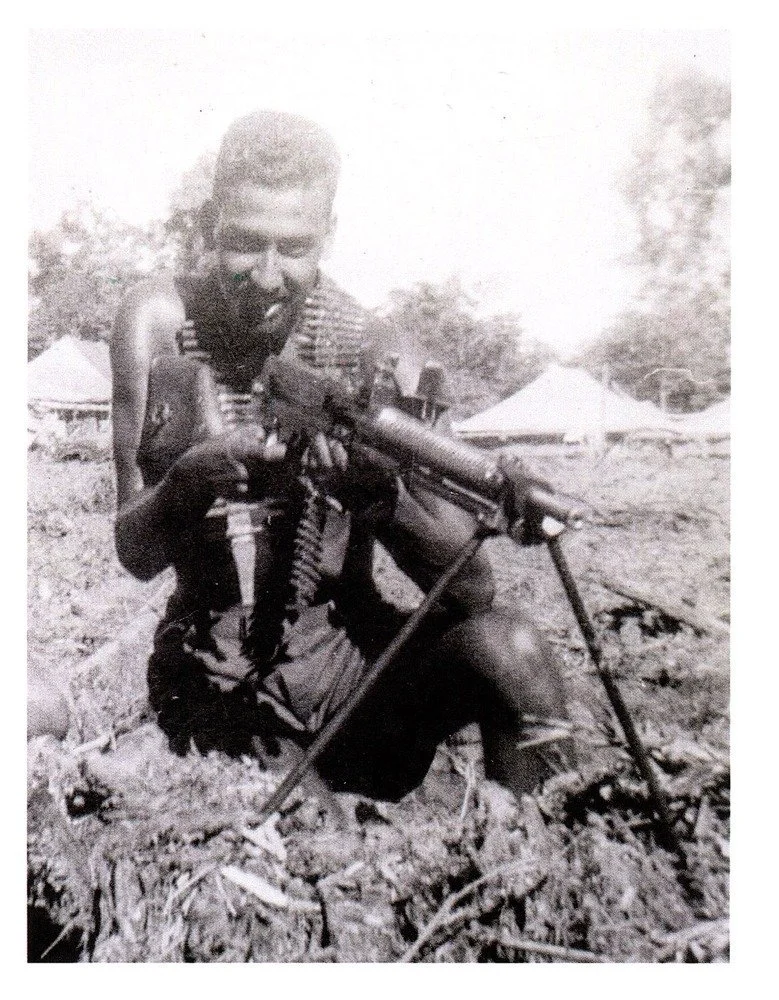
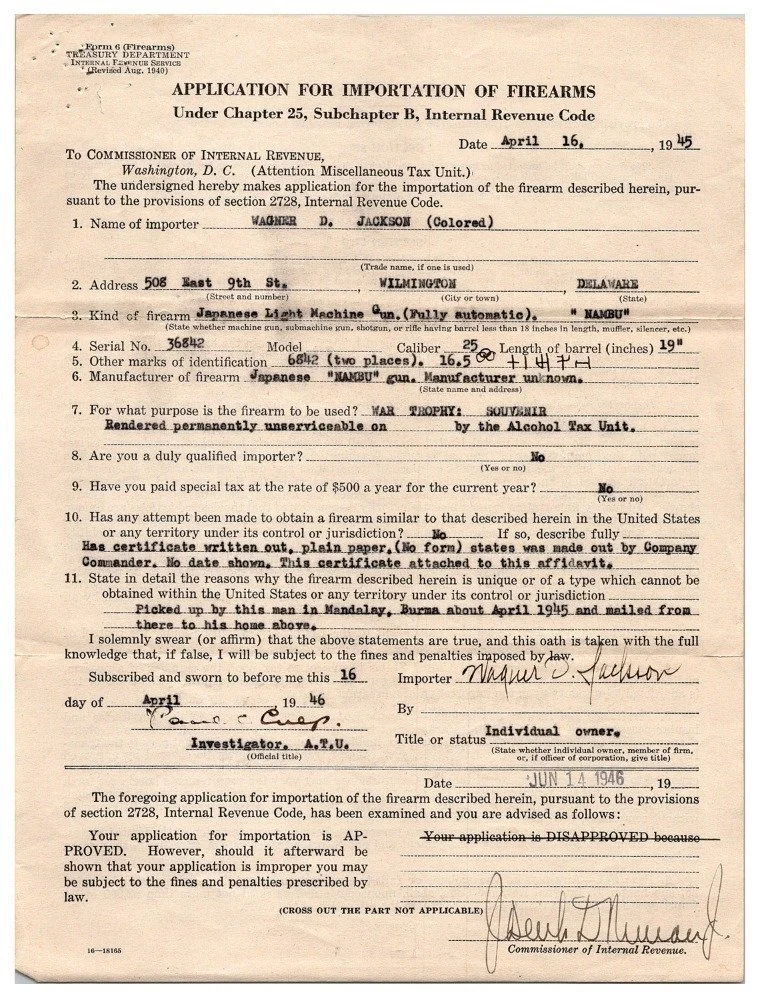
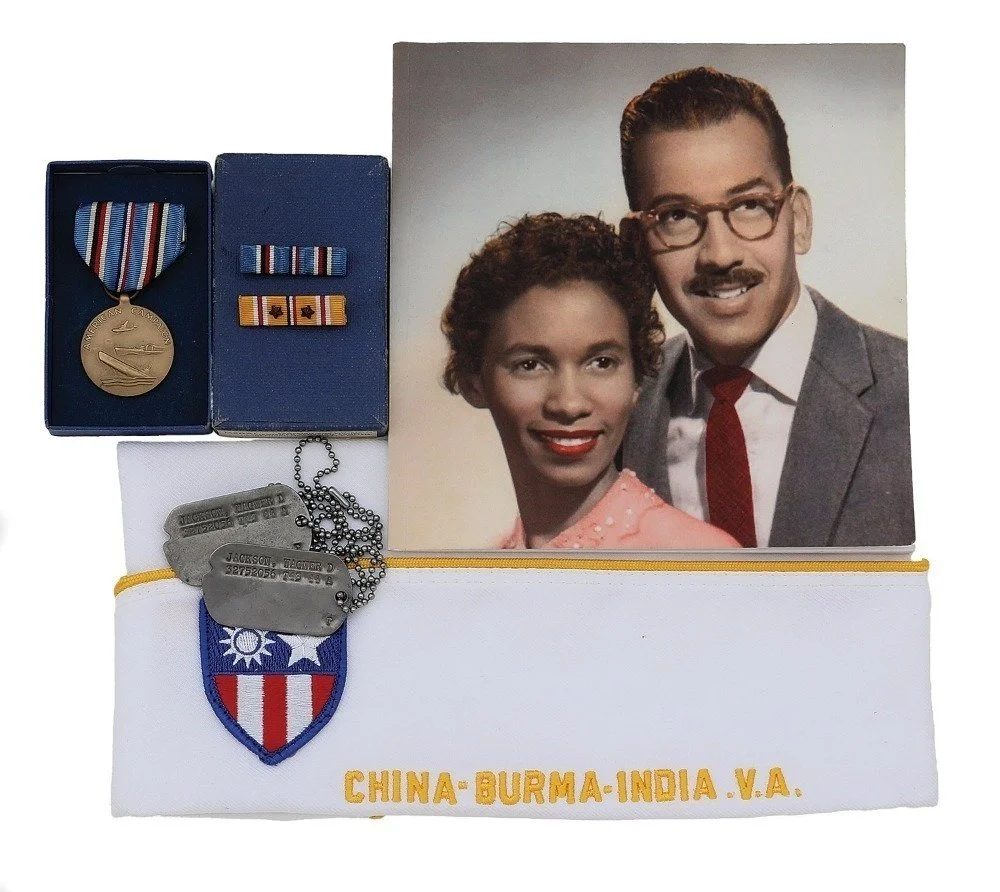
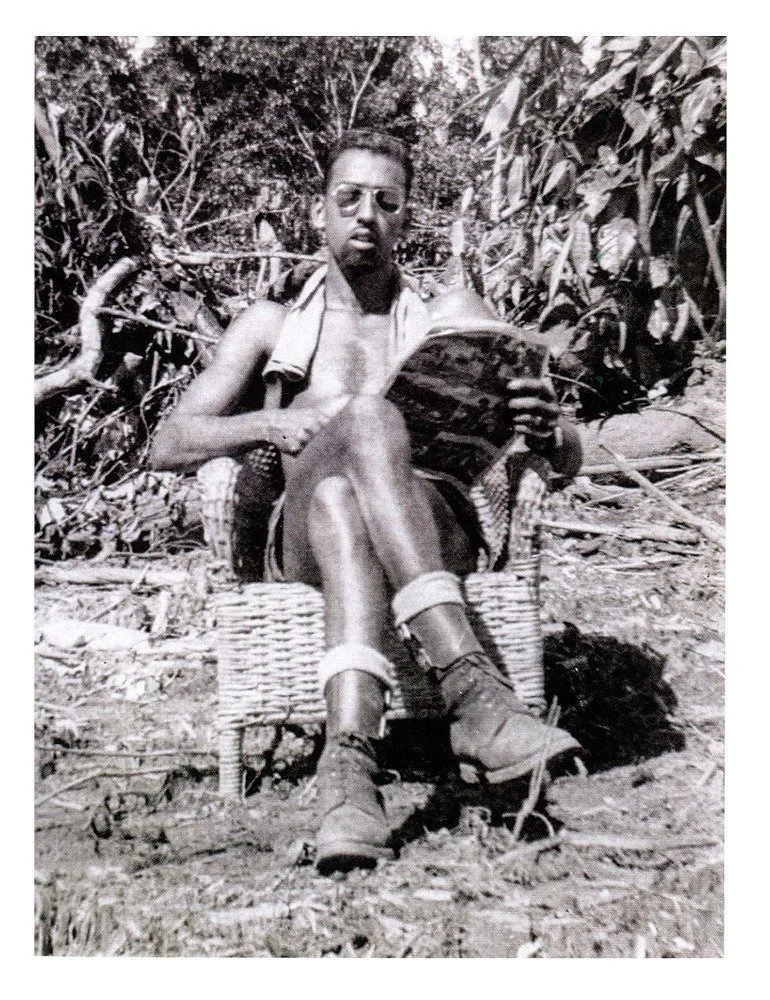
This Japanese Type 11 light machine gun was captured in Burma during World War II and brought back to the United States by Wagner Dupont Jackson, who served as a medic in the U.S. Army in the China–Burma–India Theater. The gun was manufactured in May 1941 and is serial number 36842, chambered in 6.5mm Arisaka. It was rendered unserviceable by the U.S. Alcohol Tax Unit in 1946 and is currently registered as a DEWAT on an ATF Form 5.
The machine gun retains approximately 70–75 percent of its original blued finish, with areas of oxidation, patina, and handling wear consistent with wartime use and long-term storage. The hardwood stock remains in very good condition, showing age-related darkening and scattered dings. Several components are missing, including the hopper cover spring, barrel–receiver connecting pin, and cartridge oiler mechanism, and the operating rod is mismatched, while the remaining visible serialized parts appear to match. A rare original leather sling accompanies the gun.
-
The grouping includes original U.S. Treasury Department documentation, including an Application for Importation of Firearms (Form 6) dated April 16, 1945, listing the machine gun by serial number and noting it was picked up in Mandalay, Burma, around April 1945 and mailed home as a war trophy. The paperwork further records that the weapon had been made unserviceable. While the original capture certificate referenced in the documents has been lost, period photographs provided by the family include an image of Jackson posing in the field with this same Type 11 machine gun.
Wagner Dupont Jackson was born in 1923 in Wilmington, Delaware, and served in the Pacific as a combat medic. After the war, he became a prominent civil rights leader, serving as president of the NAACP chapter in Wilmington and contributing to efforts that culminated in the Supreme Court decision Brown v. Board of Education. He later worked for the U.S. Department of Housing and Urban Development, retiring in 1992. Jackson passed away in 2003.
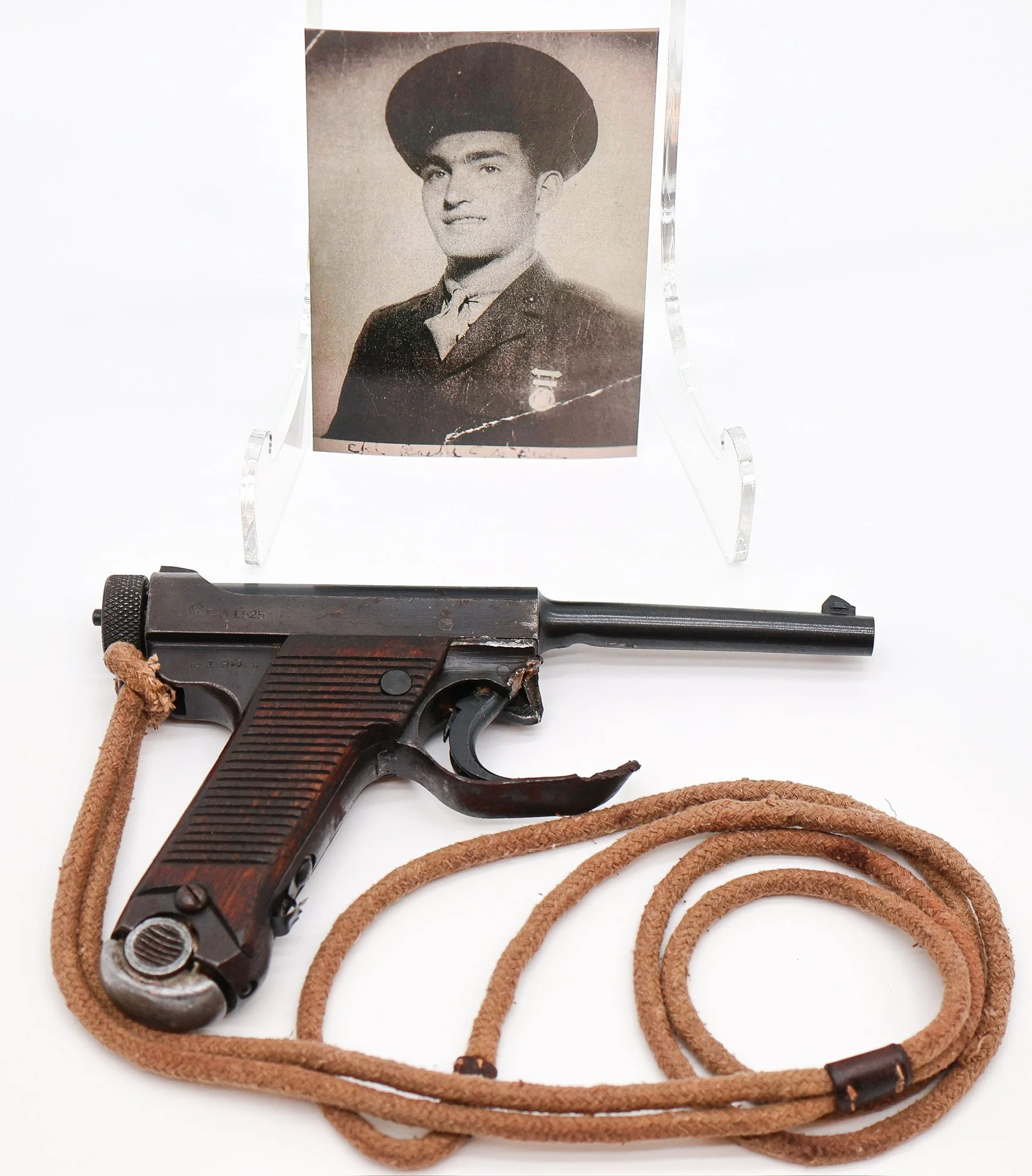
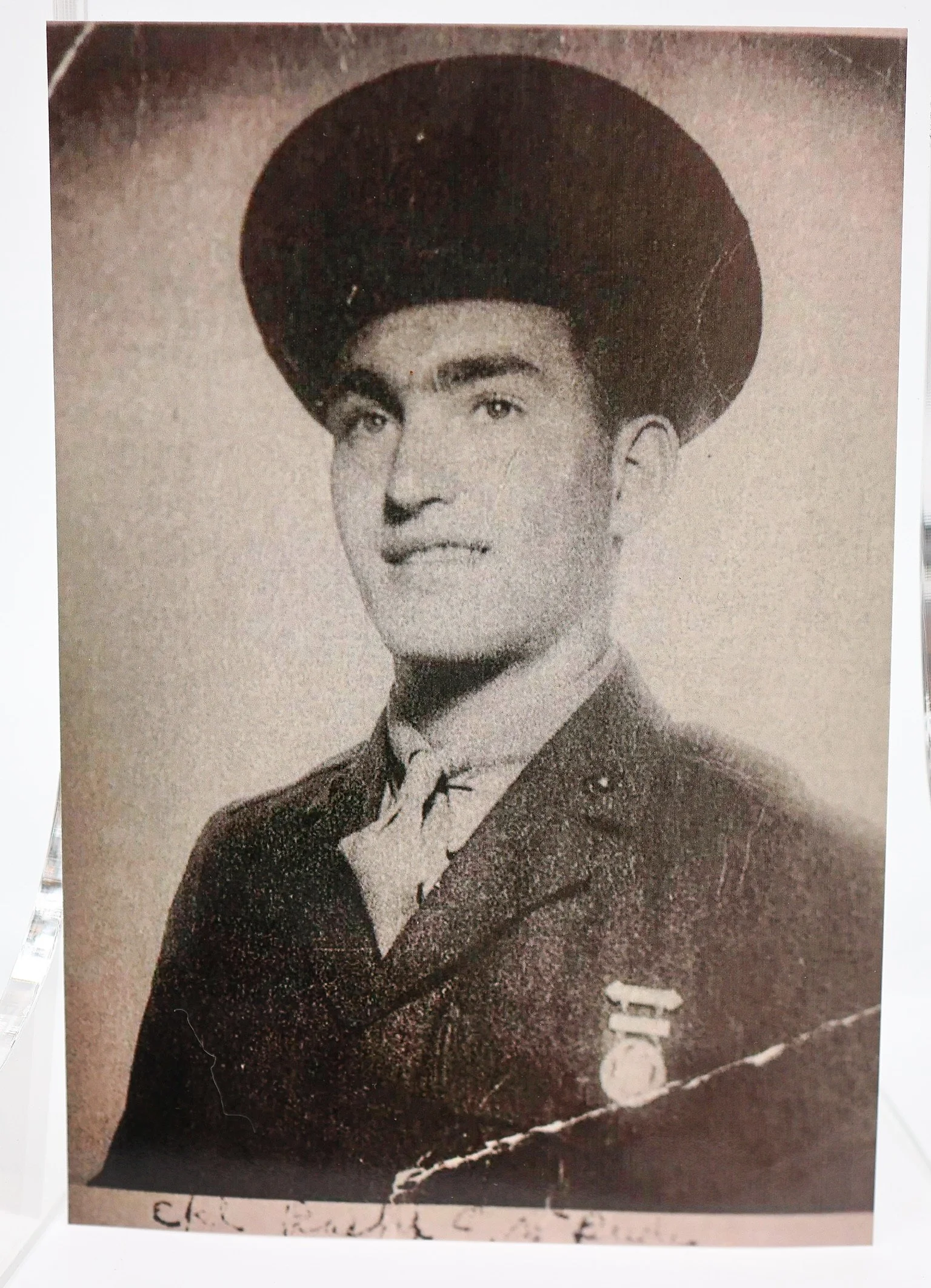
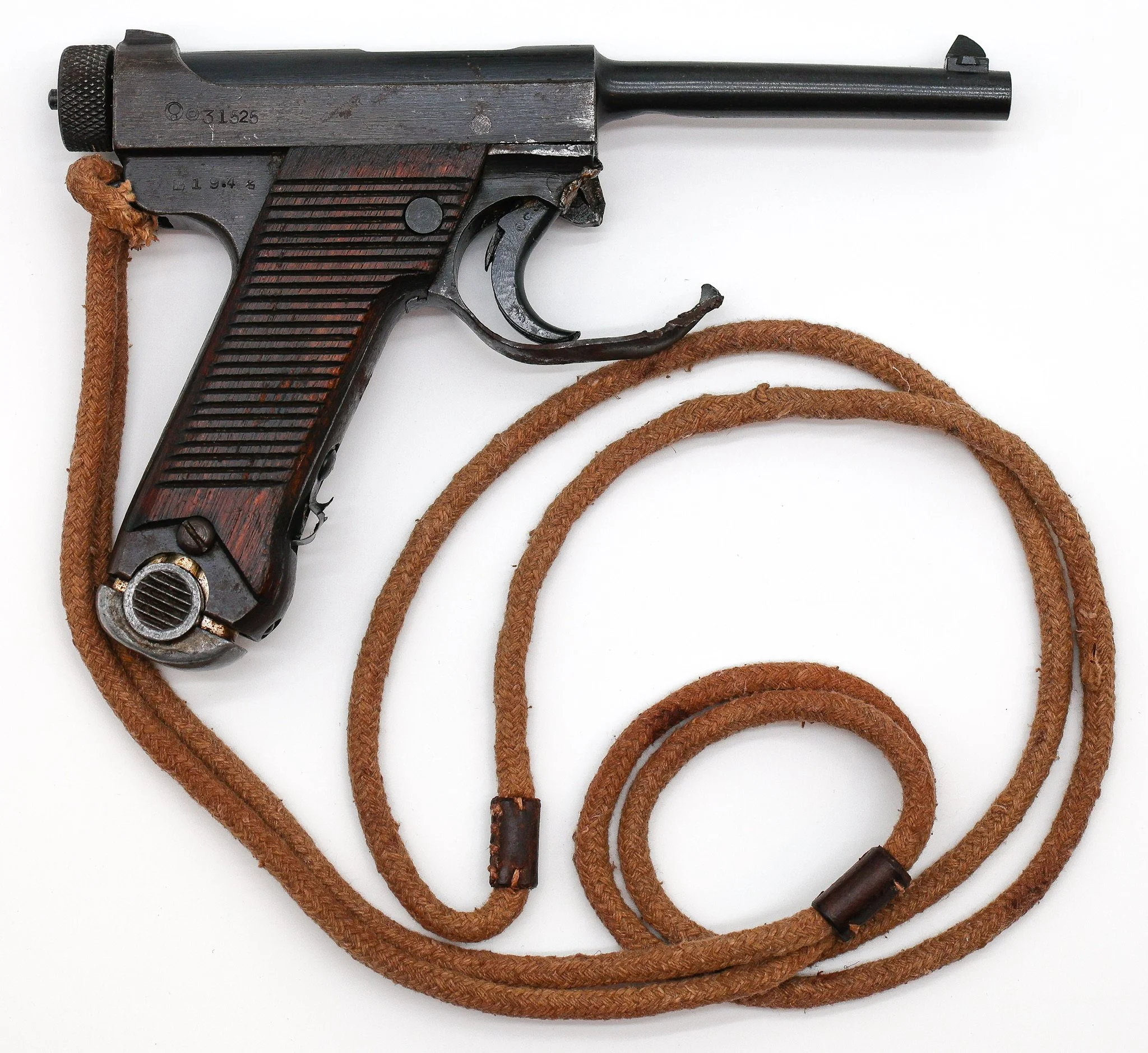
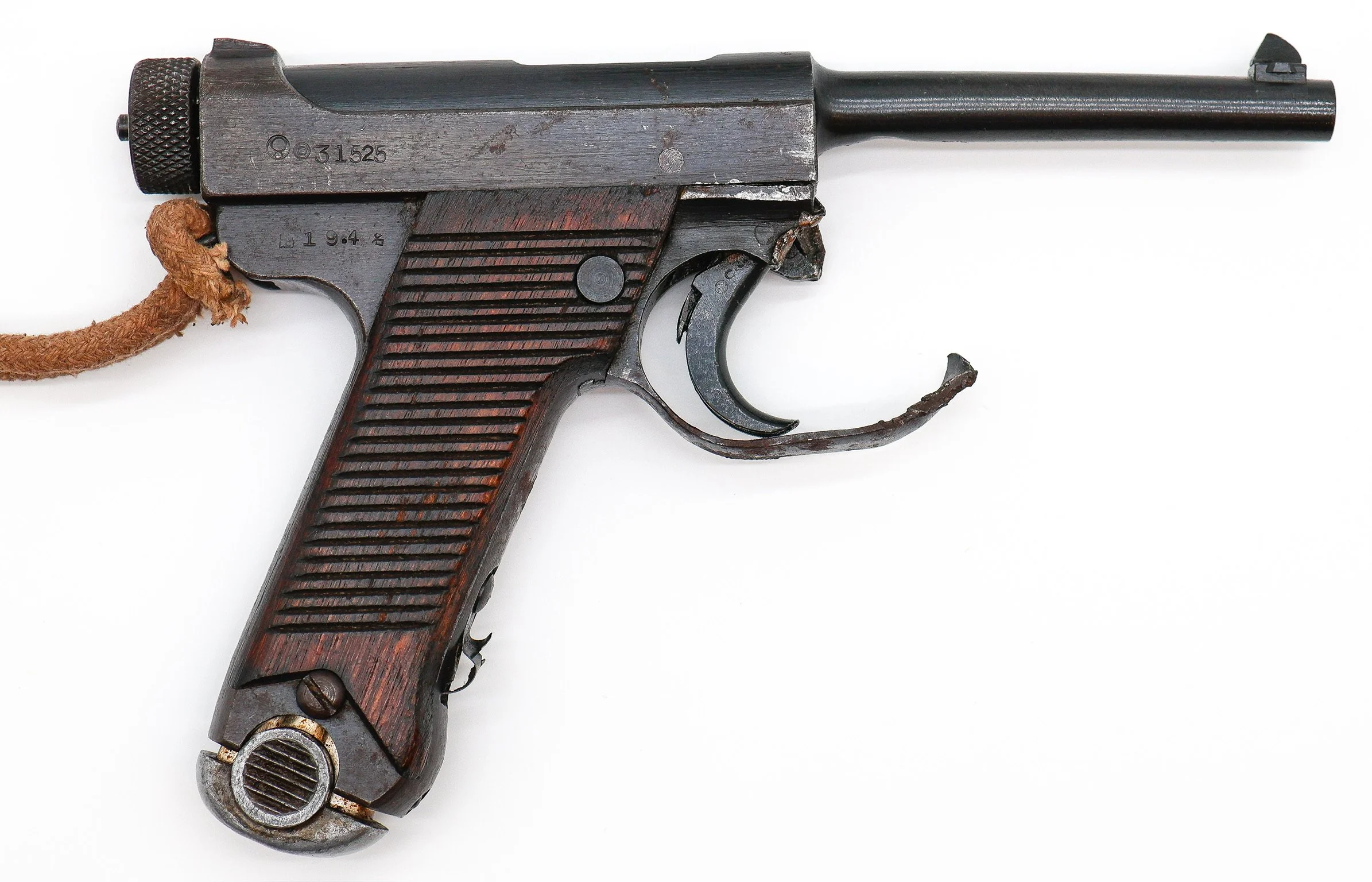
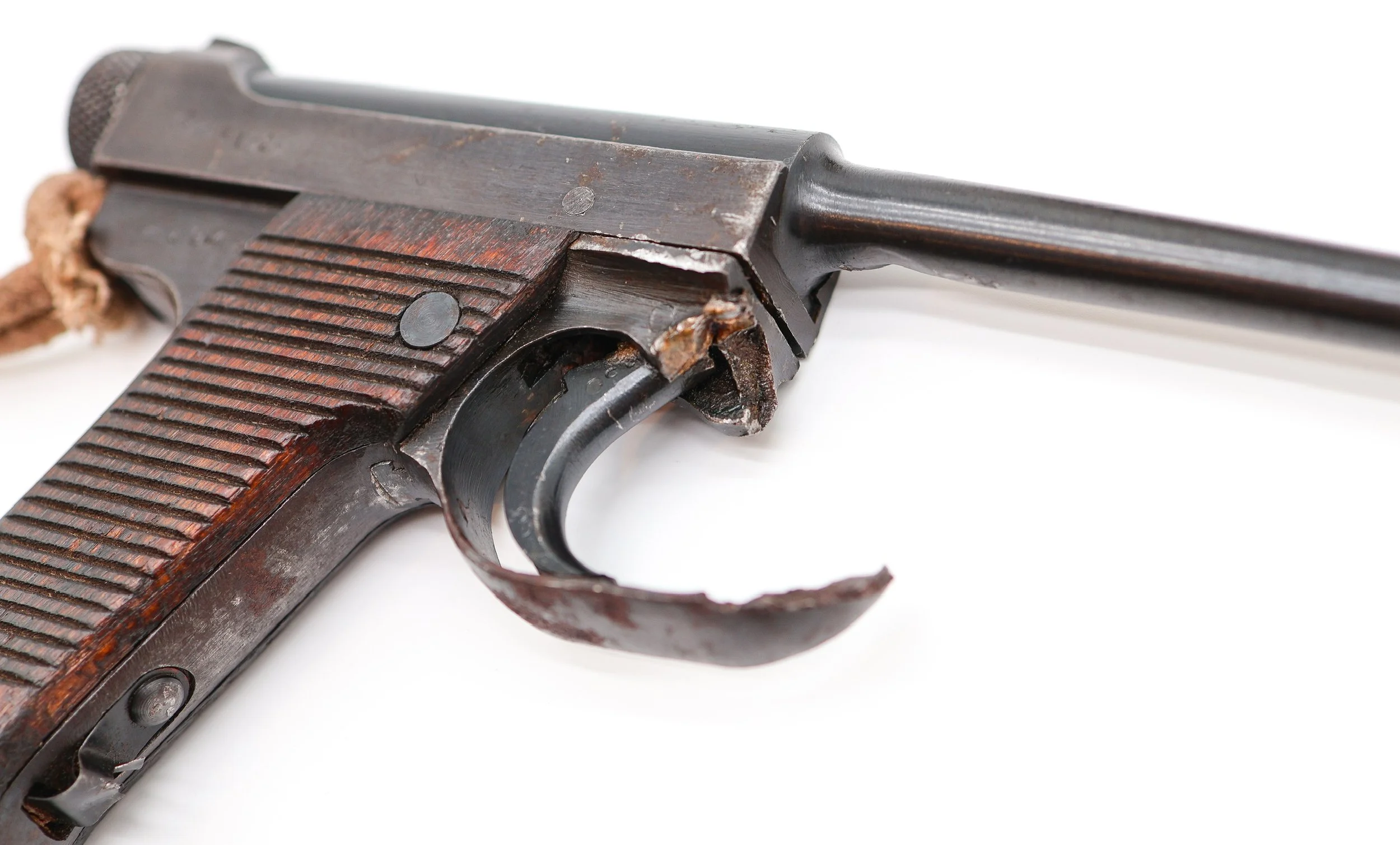
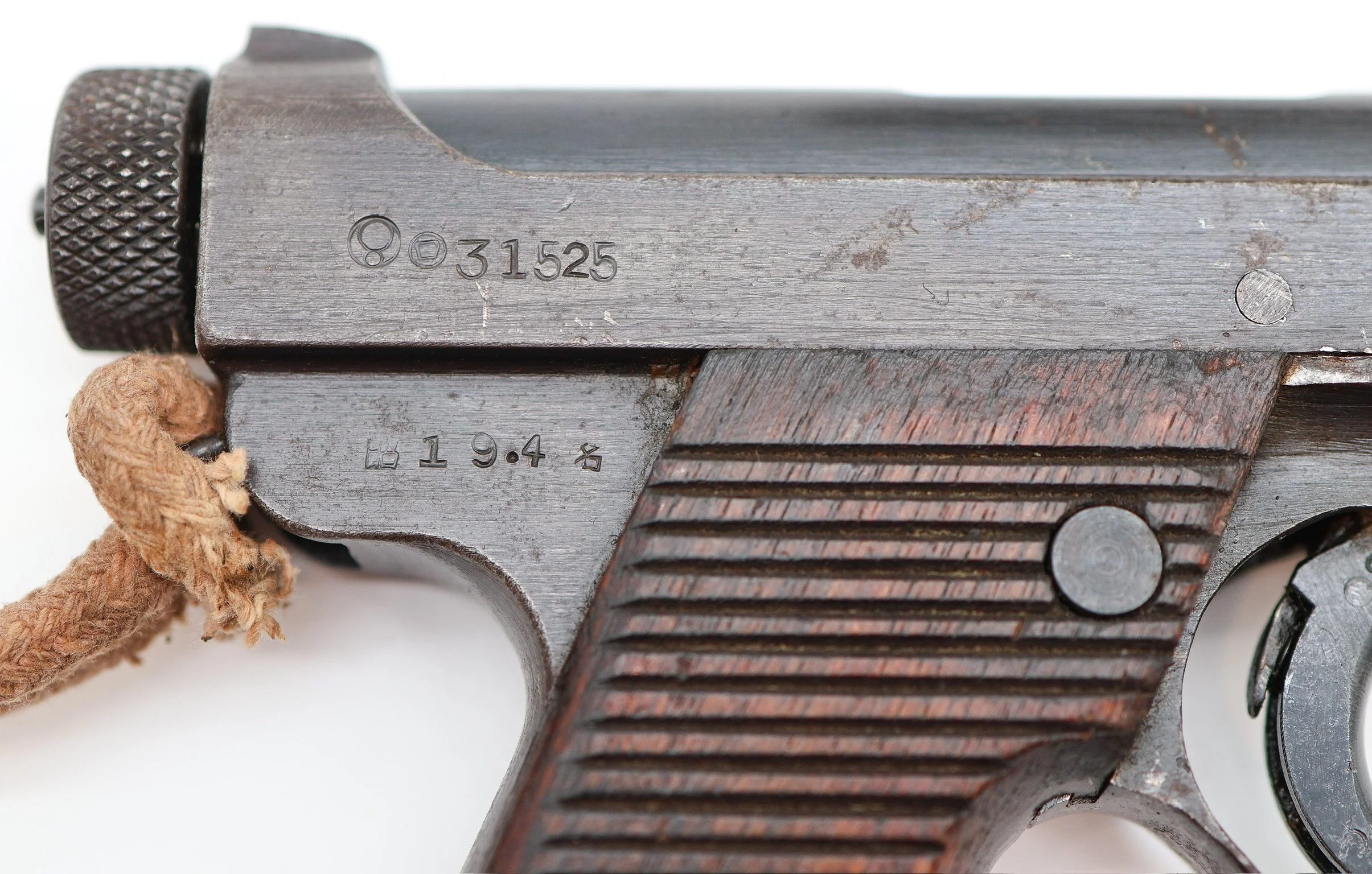
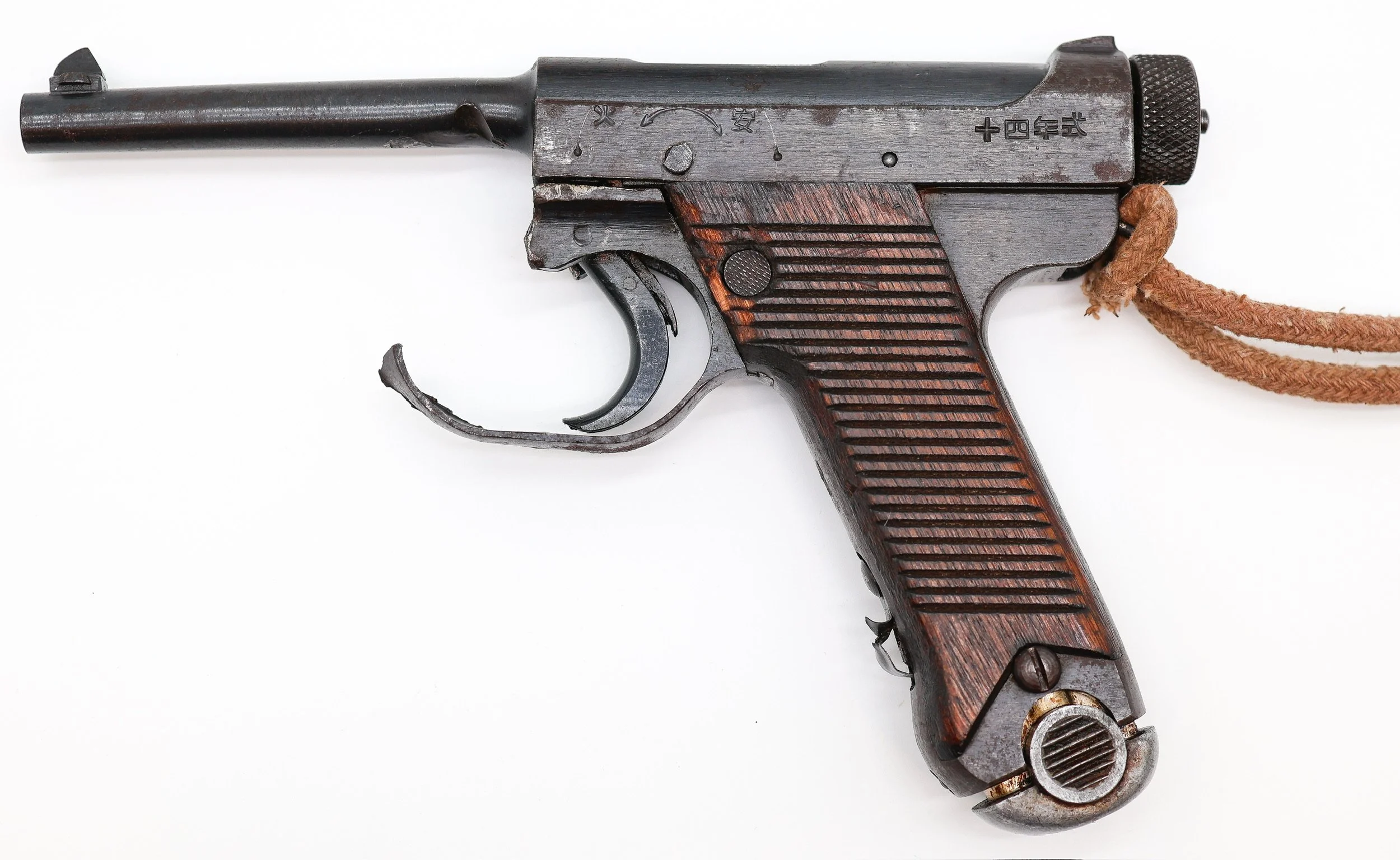
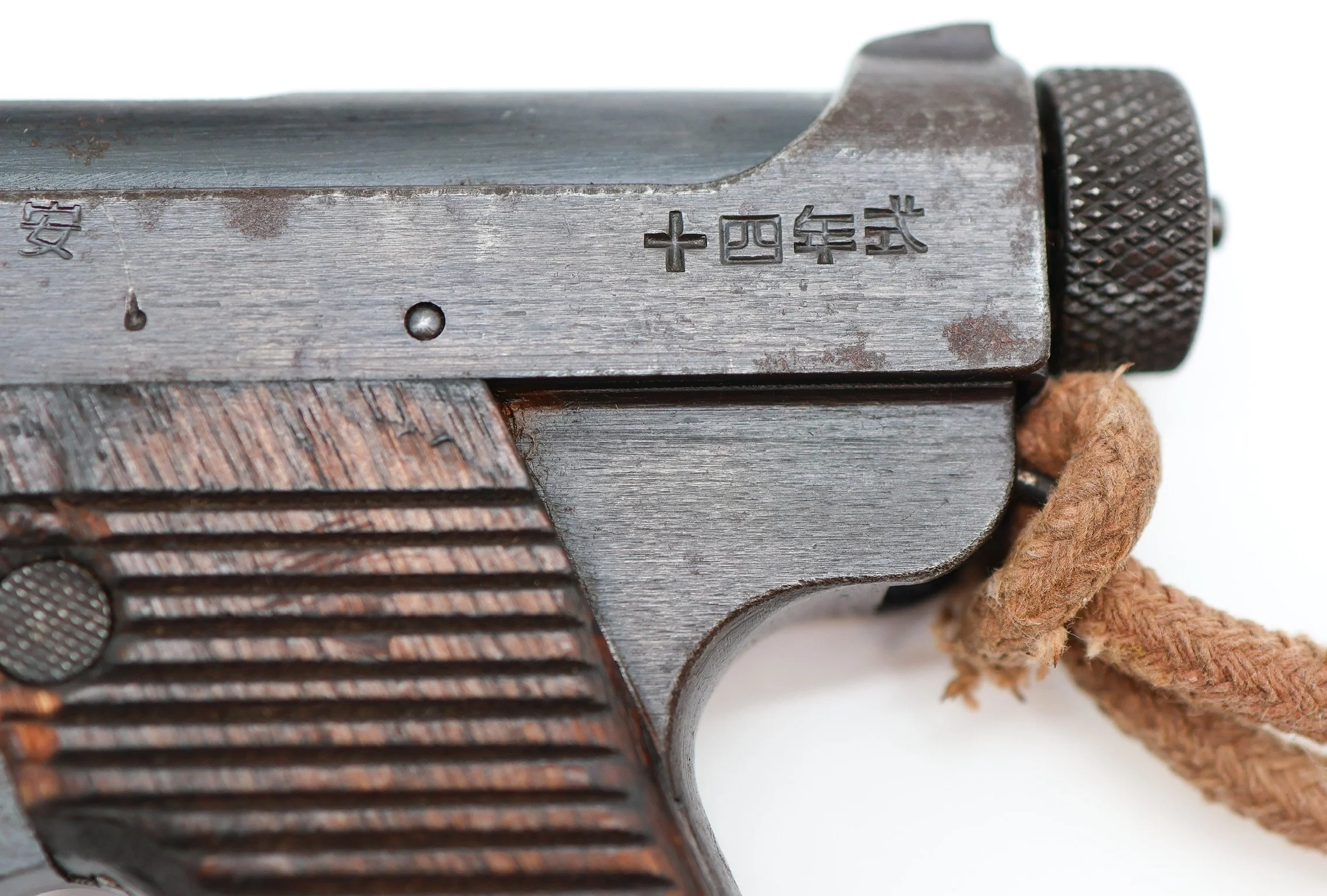
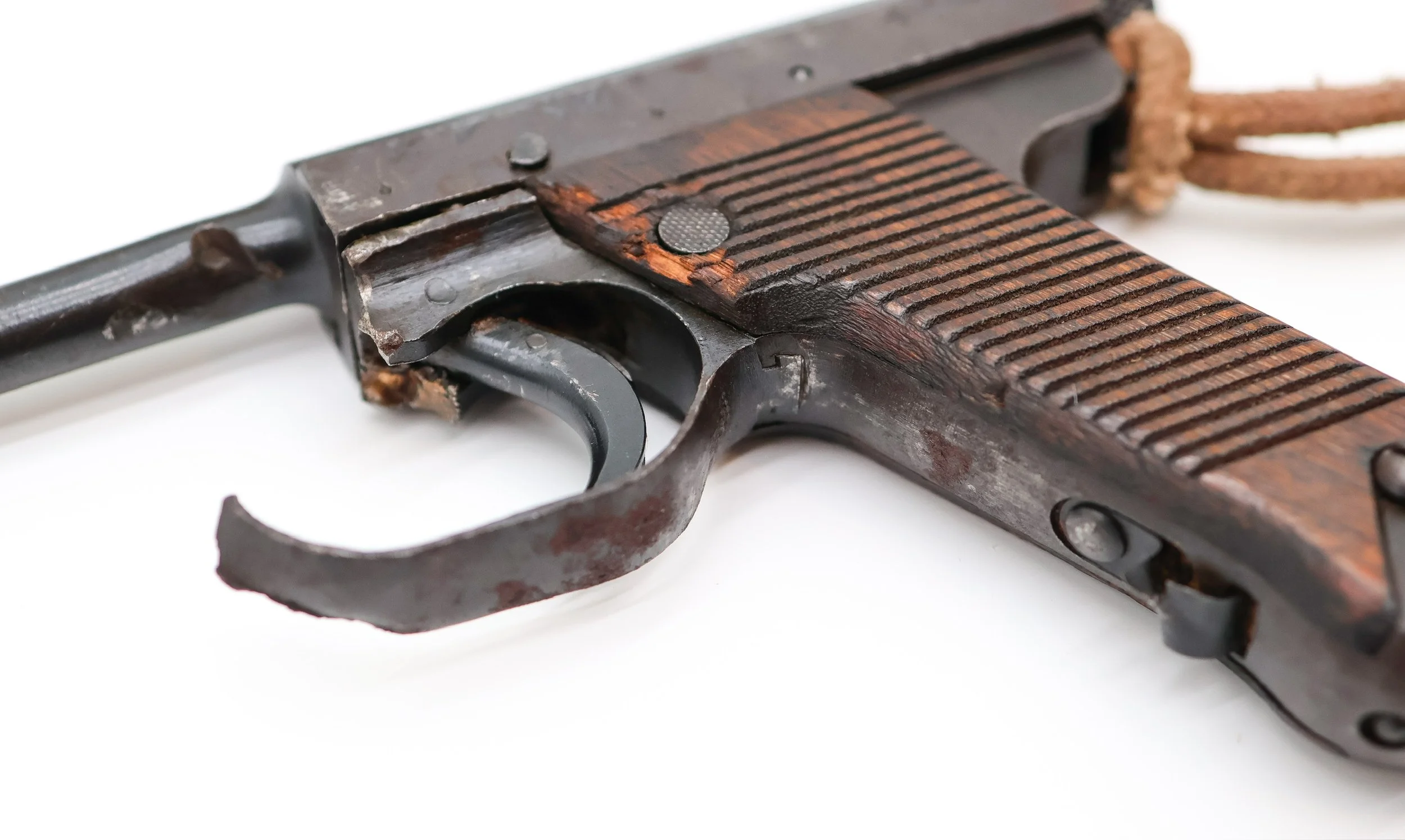
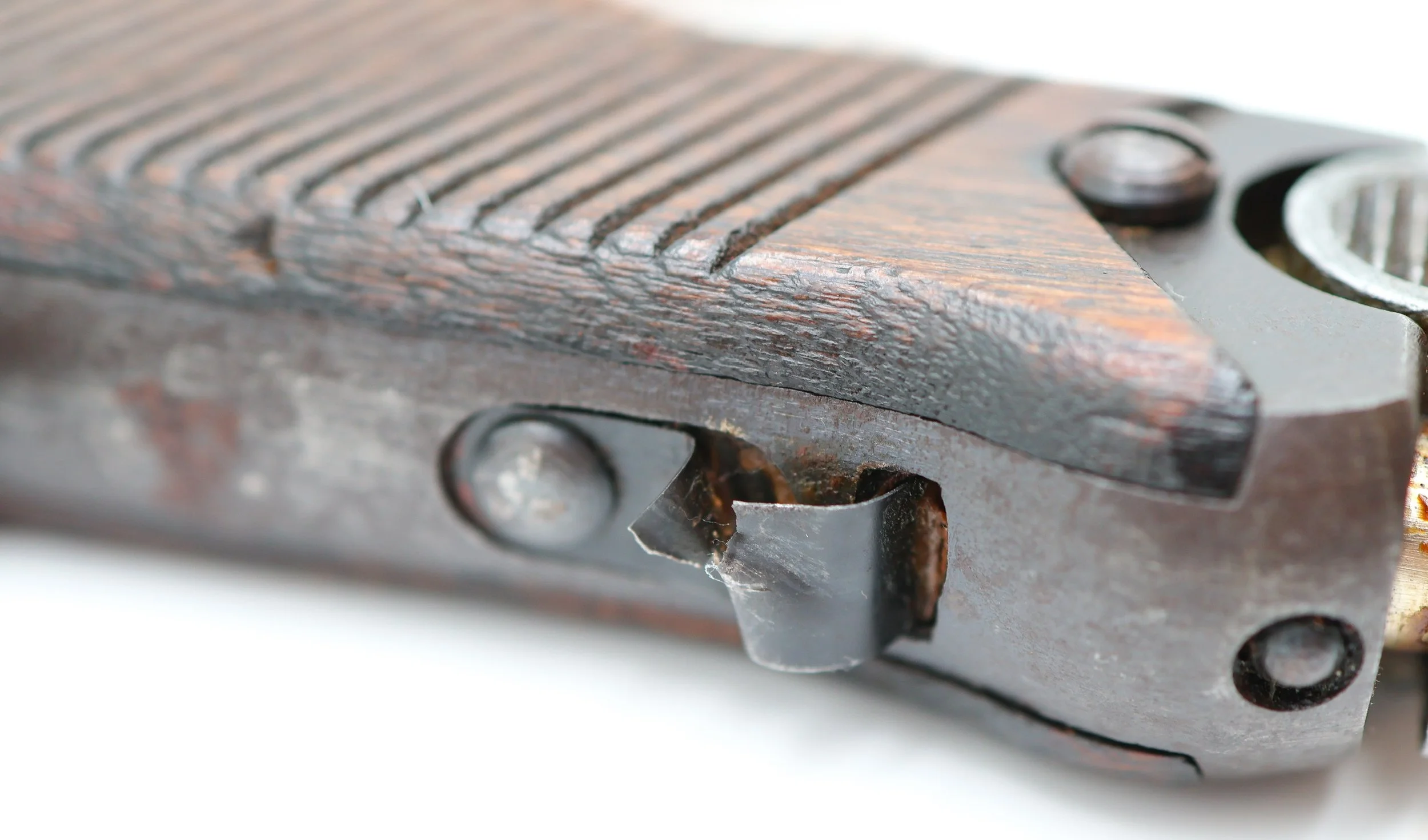
Battle-Damaged Japanese Type 14 Nambu Pistol Captured on Saipan, 1944
This Japanese Type 14 Nambu pistol, serial number 31525, was manufactured in April 1944 at the Torii-matsu branch of the Nagoya Arsenal and represents a late-war, second-series example. The pistol was captured during the Battle for Saipan by Sergeant R. E. McBride, who removed it from a fallen Japanese officer. A postwar tag written by McBride’s son accompanies the pistol and documents its capture. Also included is a period photograph of McBride dated 30 March 1946, along with his obituary.
The pistol is accompanied by one correct but non-matching magazine and an original lanyard. It exhibits notable combat-related damage to the trigger guard and the action does not currently cycle.
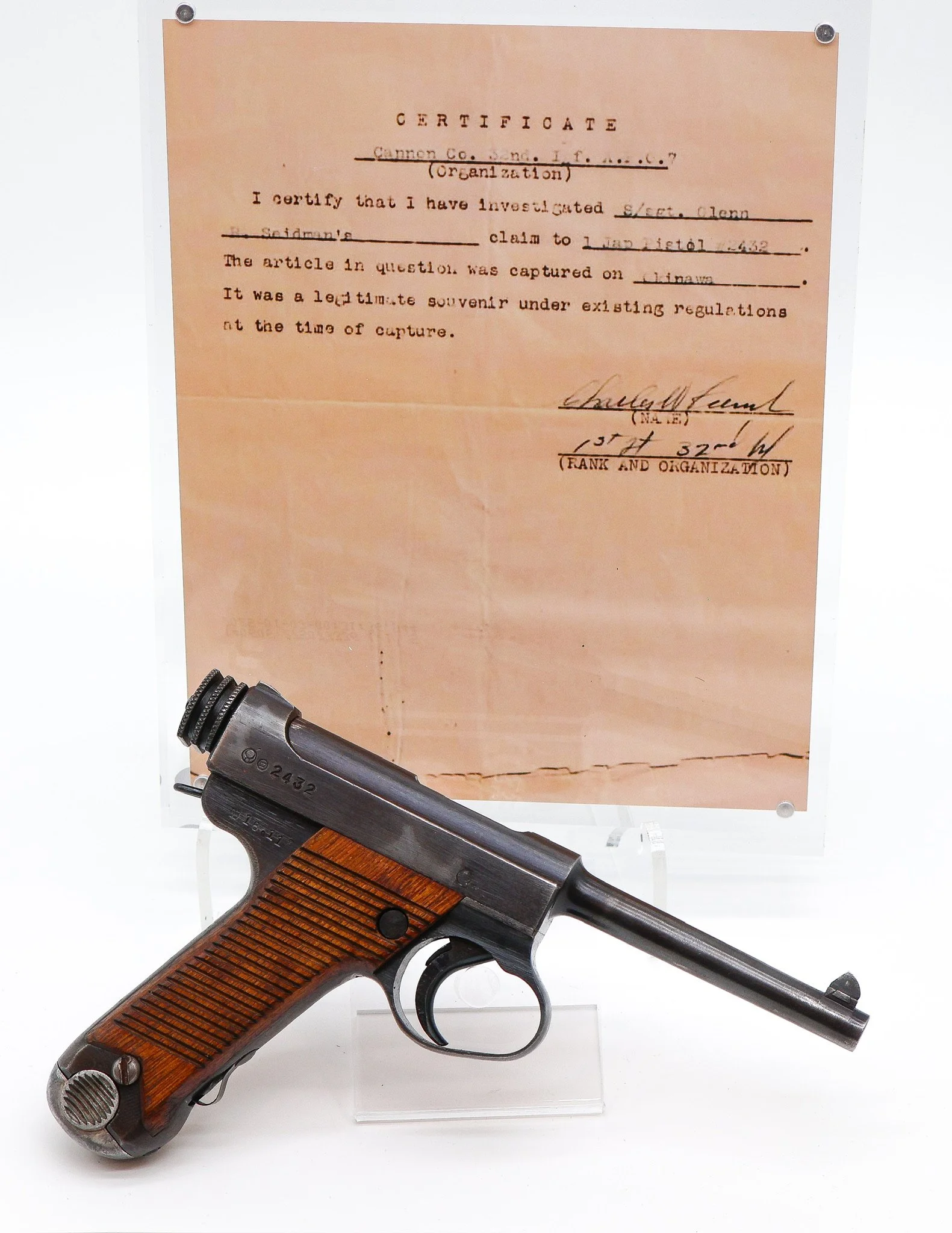
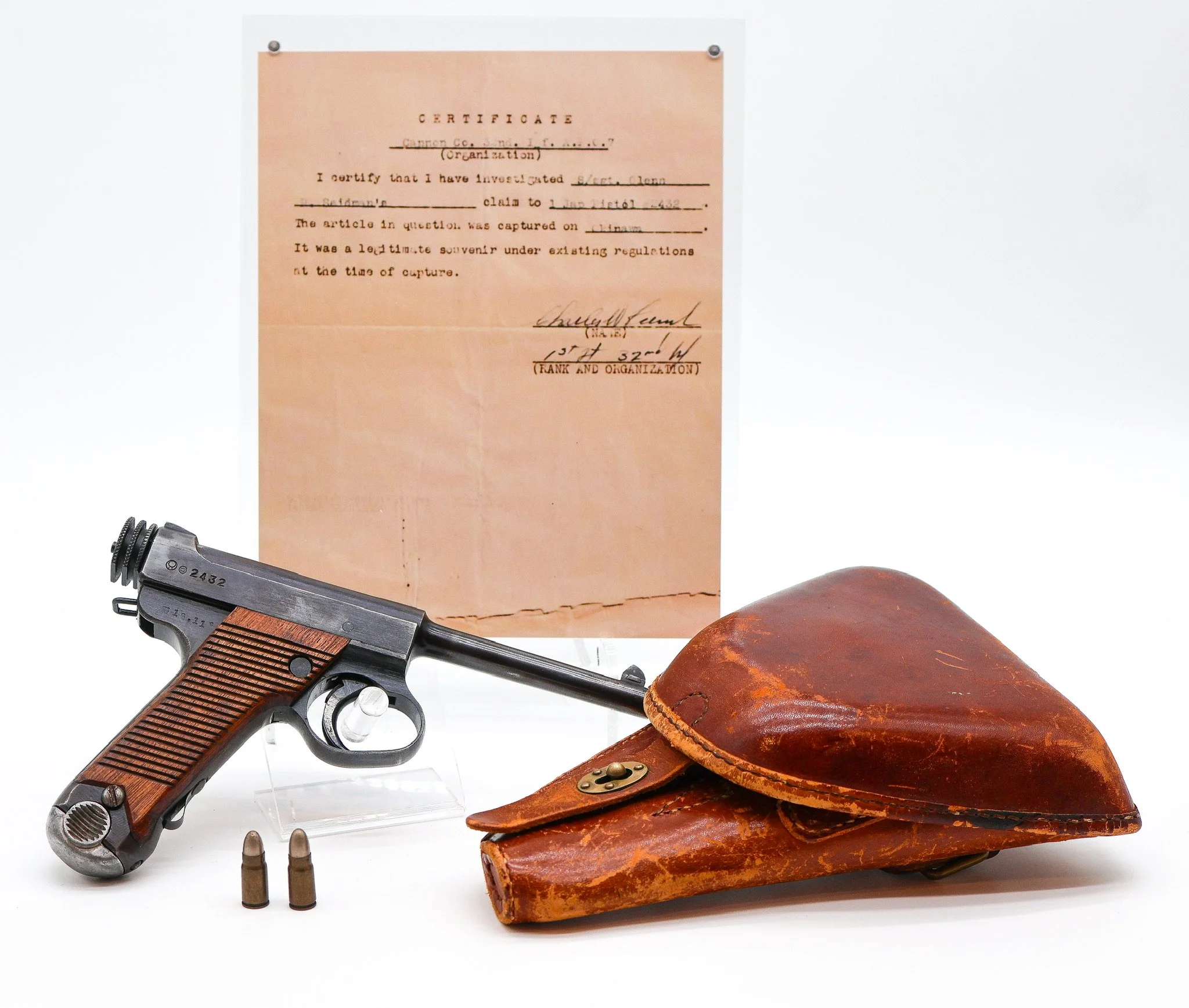
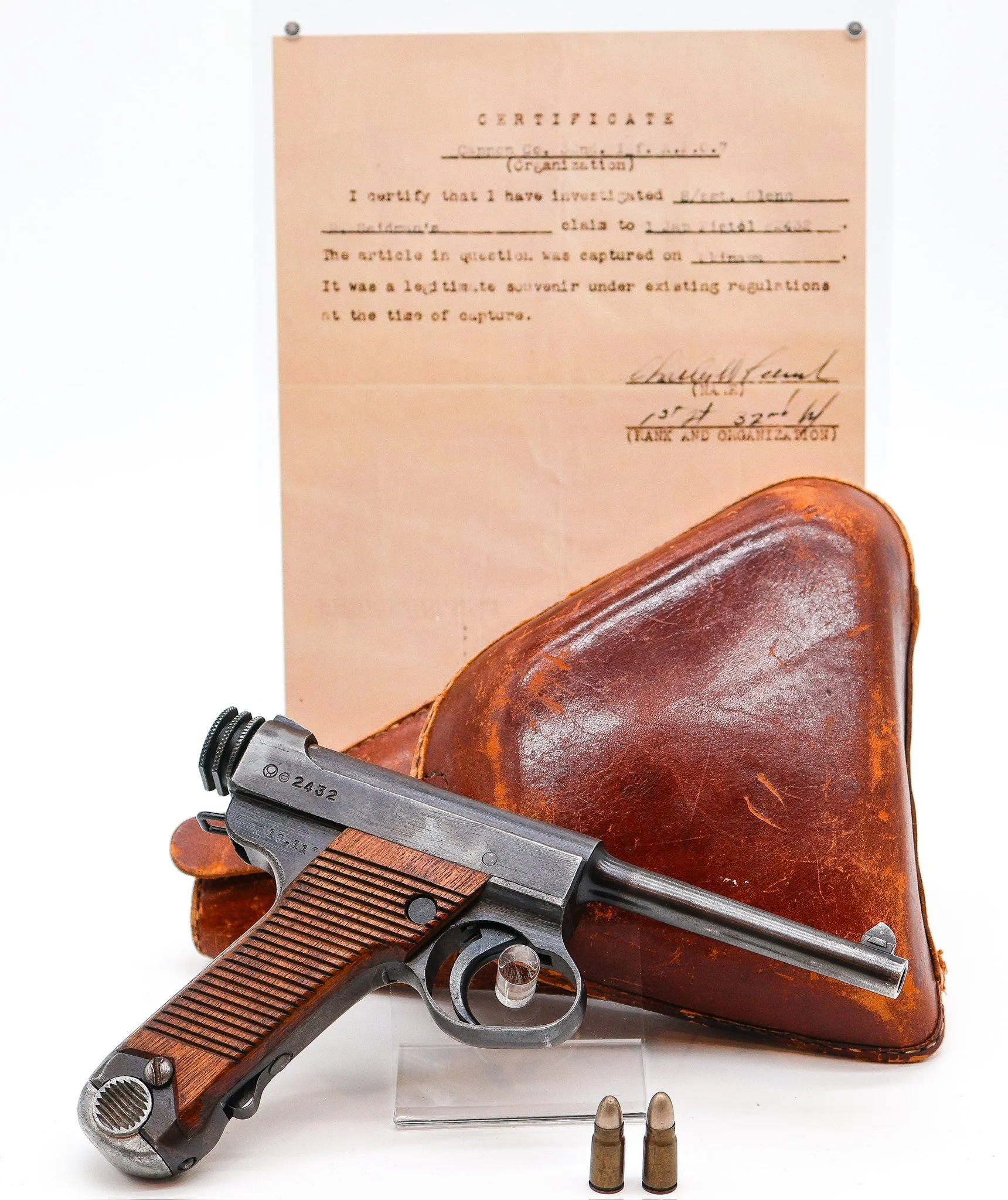
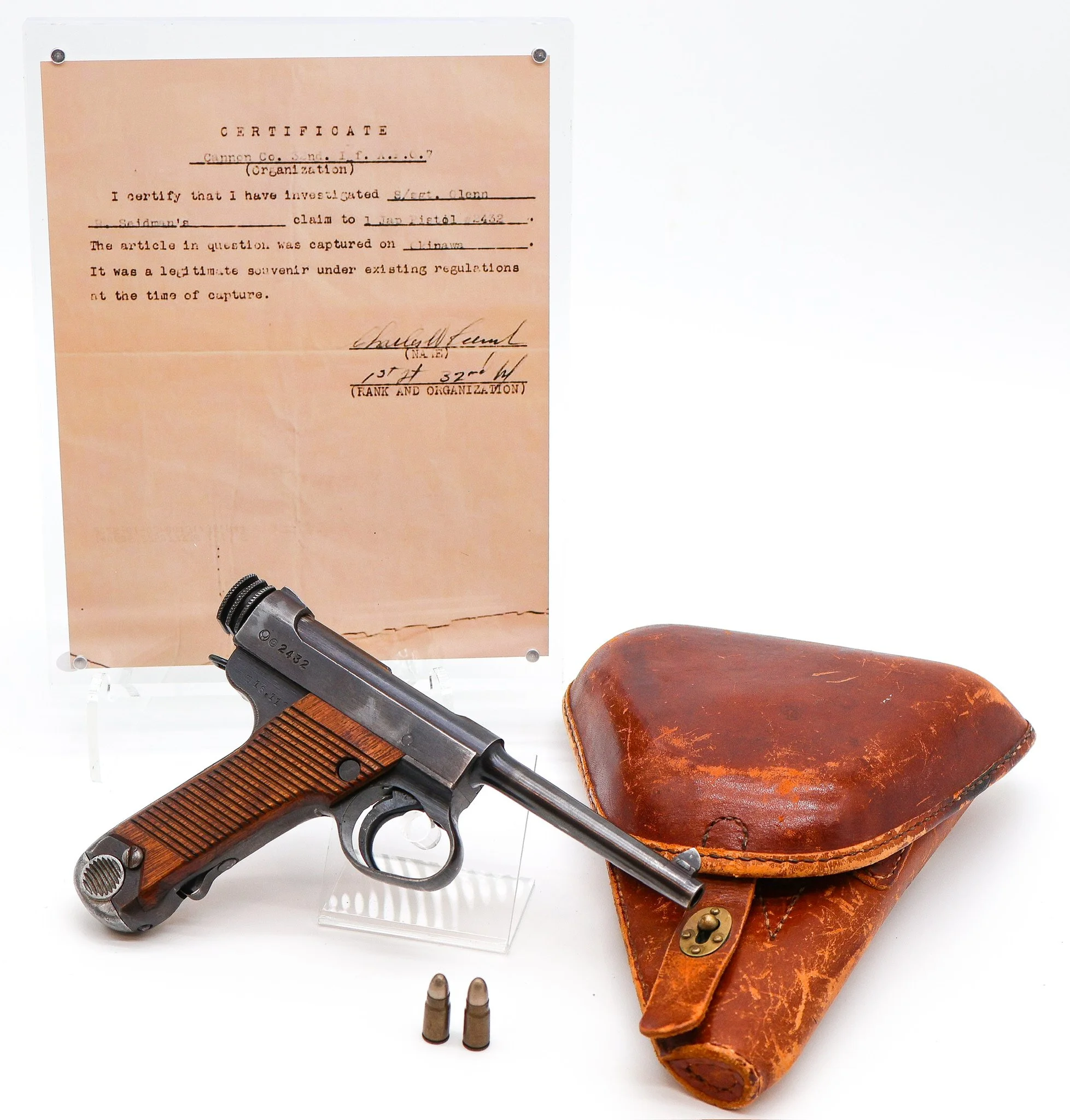
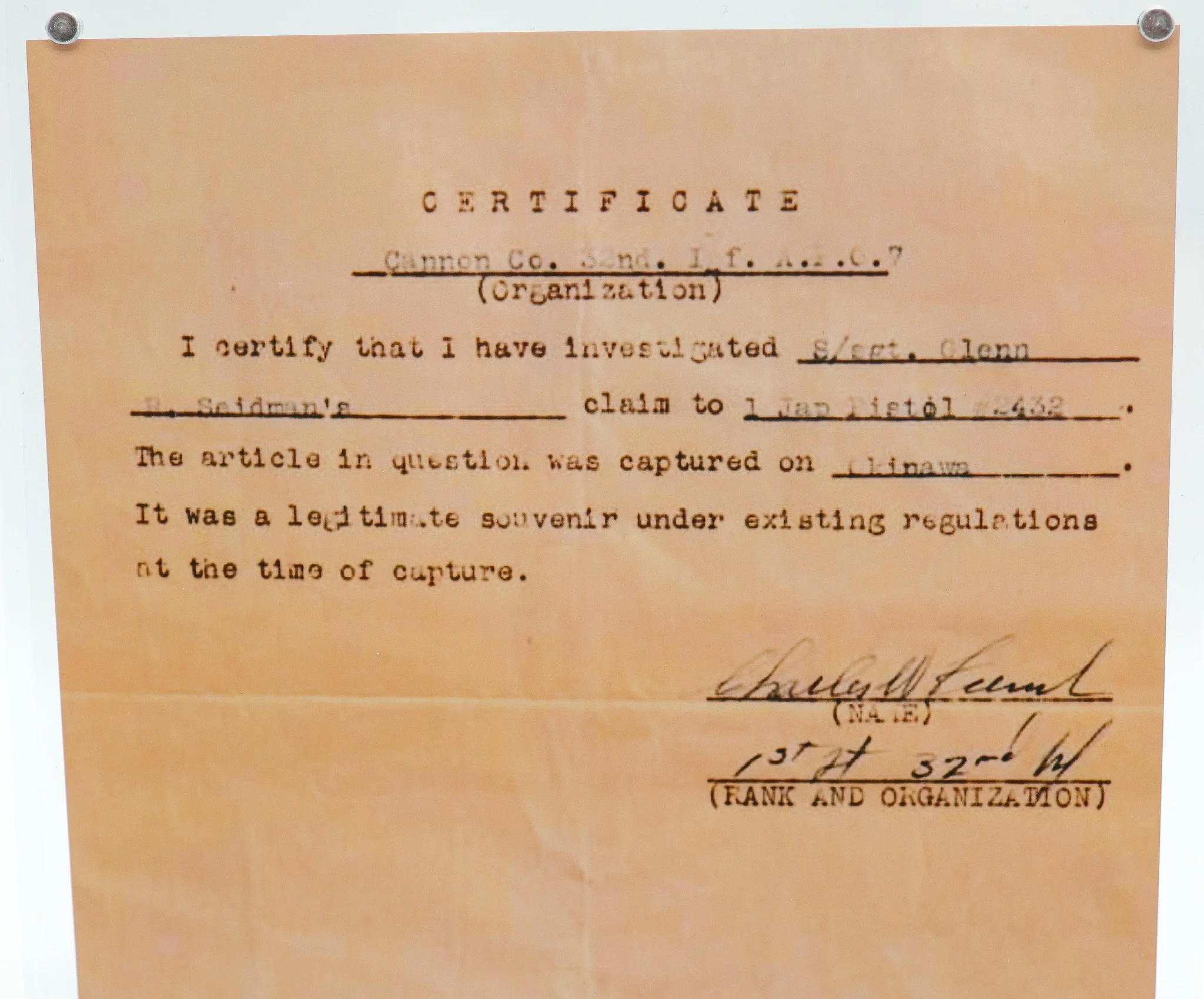
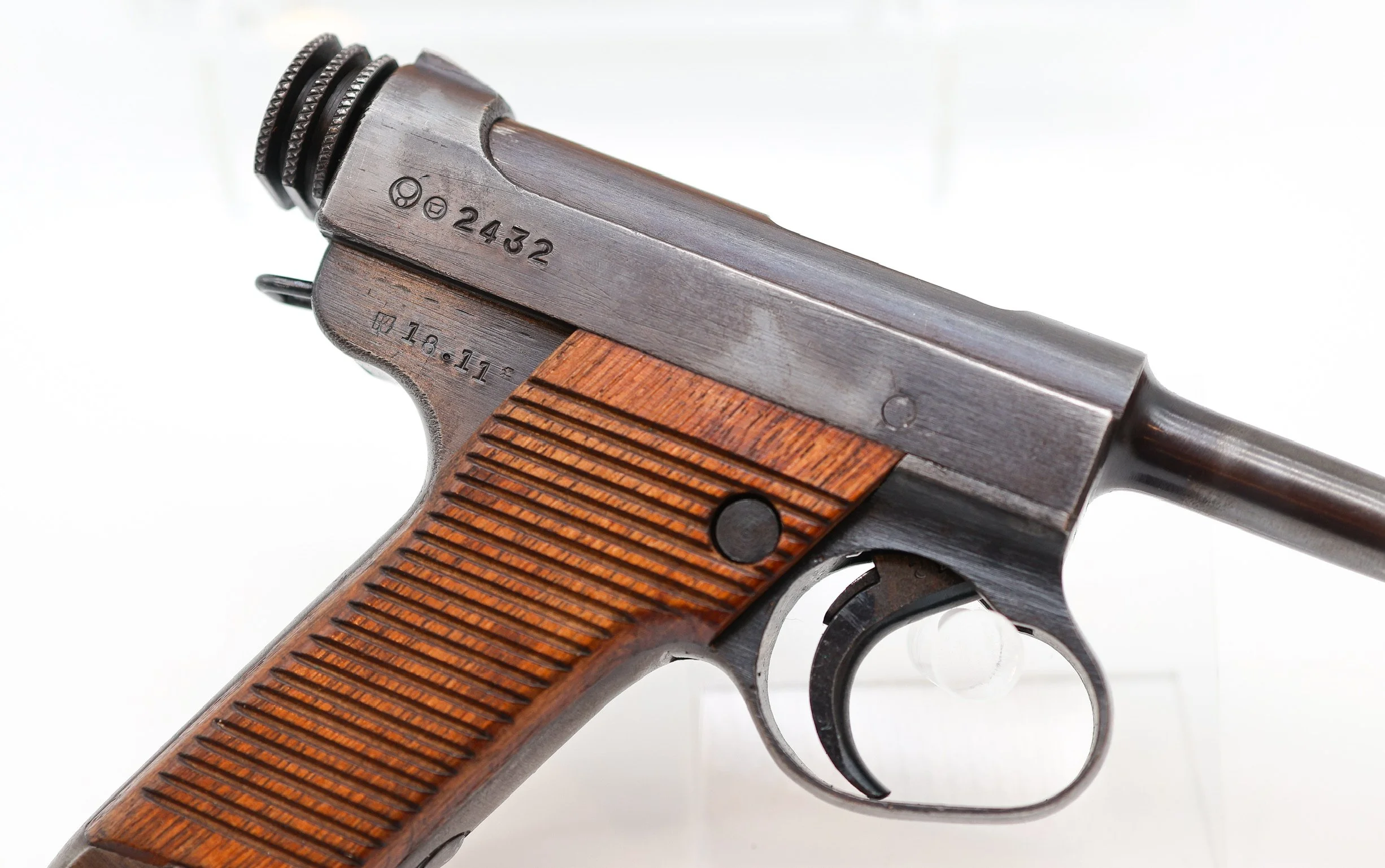
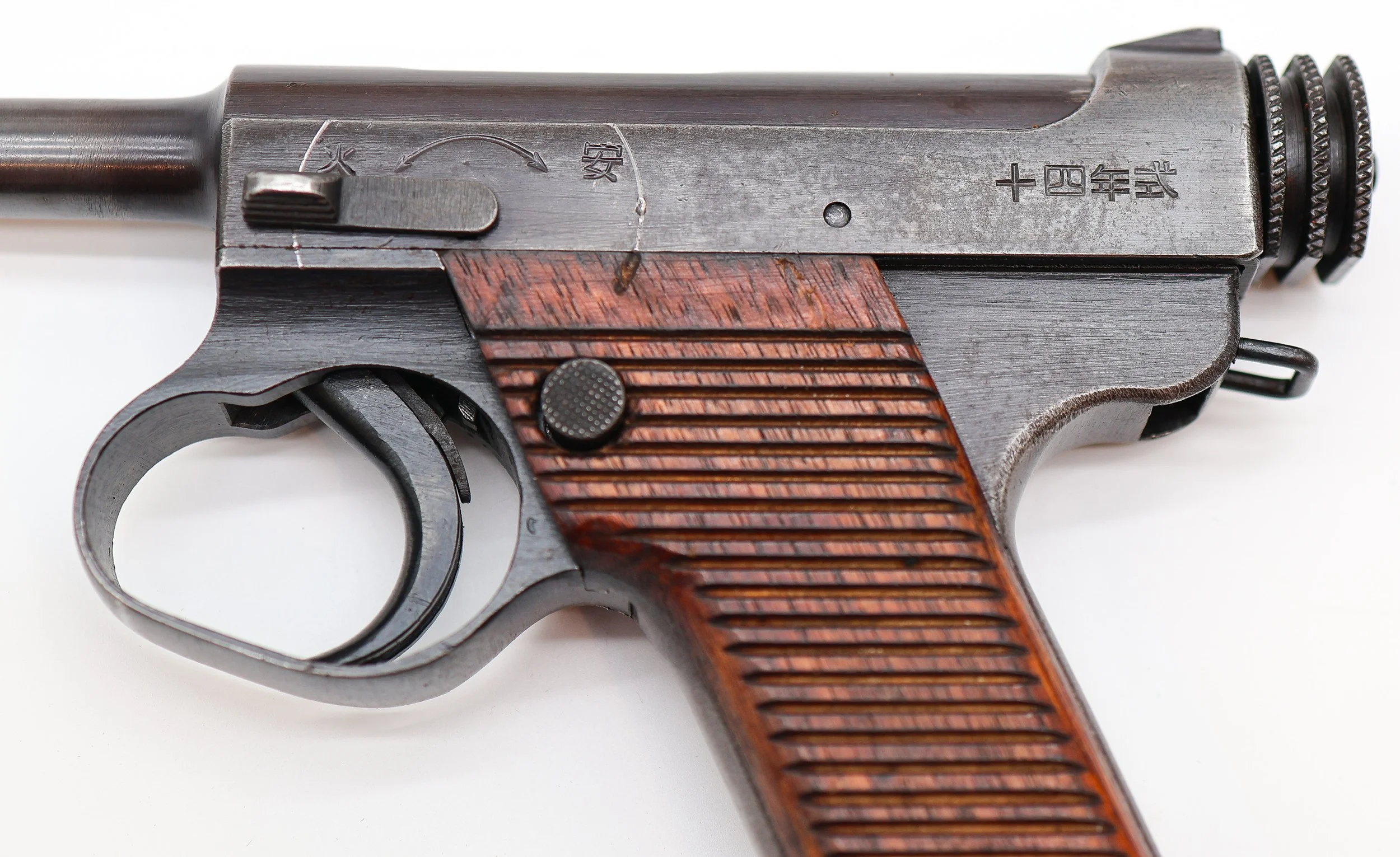
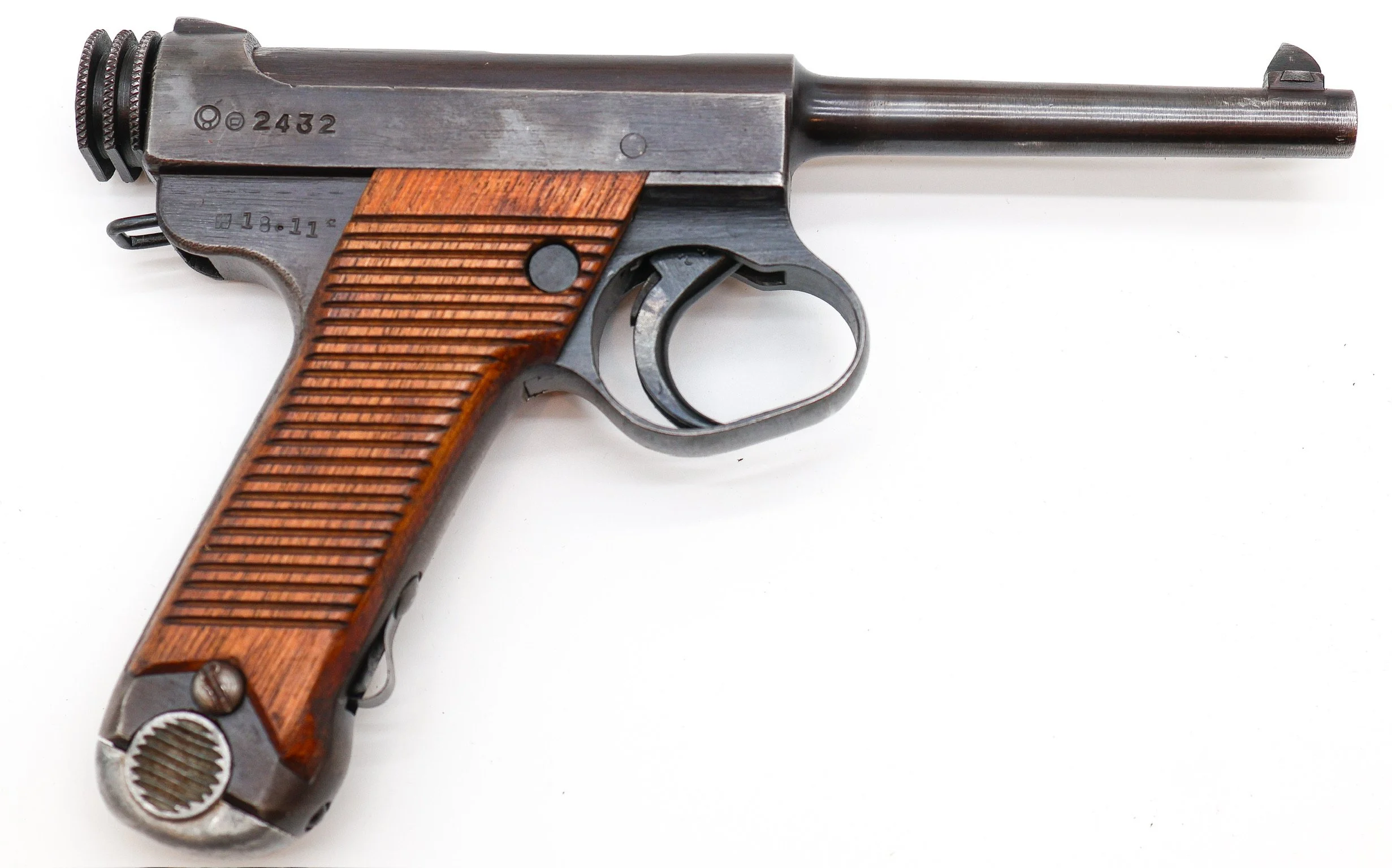
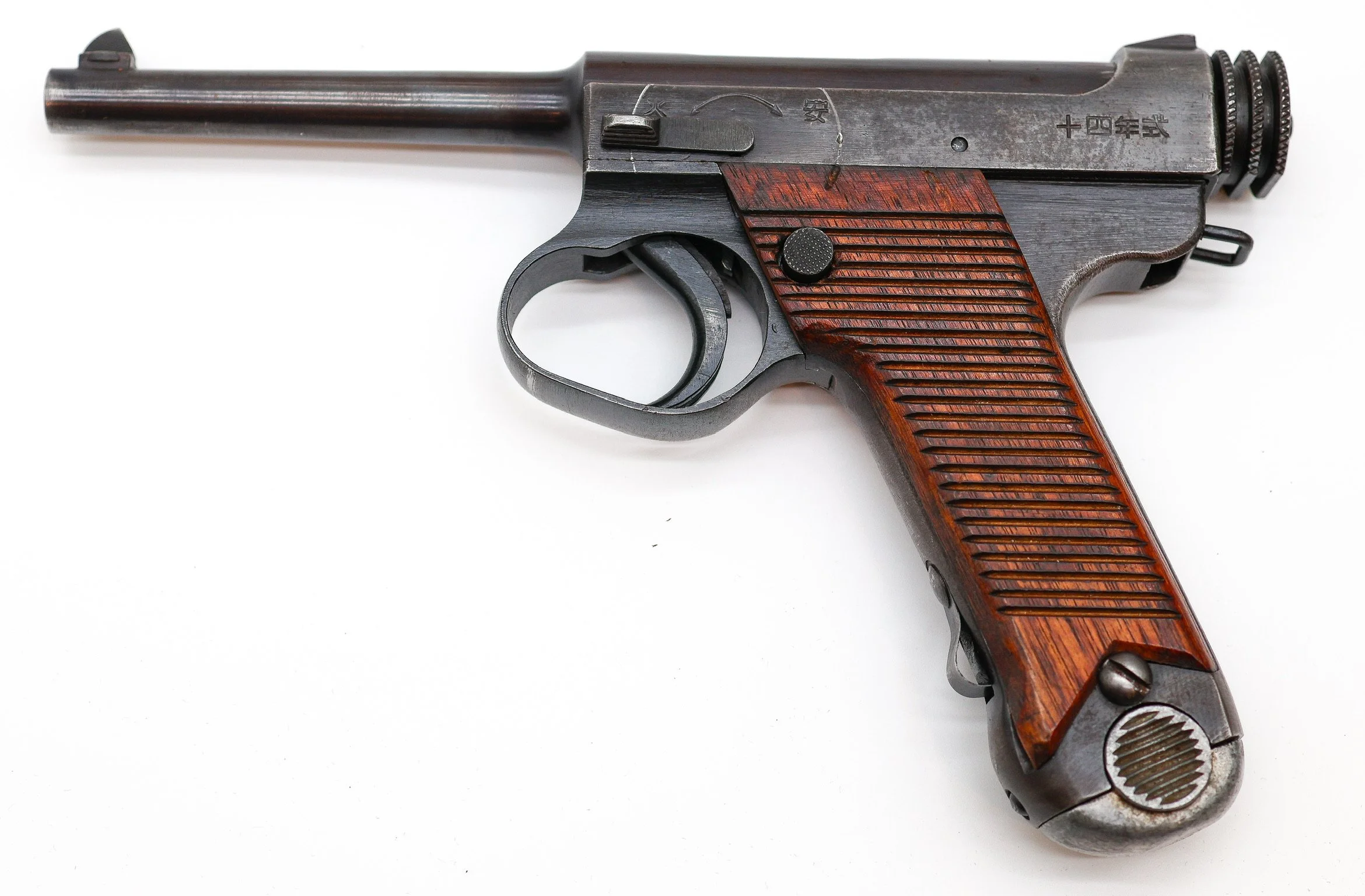
Japanese Type 14 Nambu Pistol Captured on Okinawa, 1945
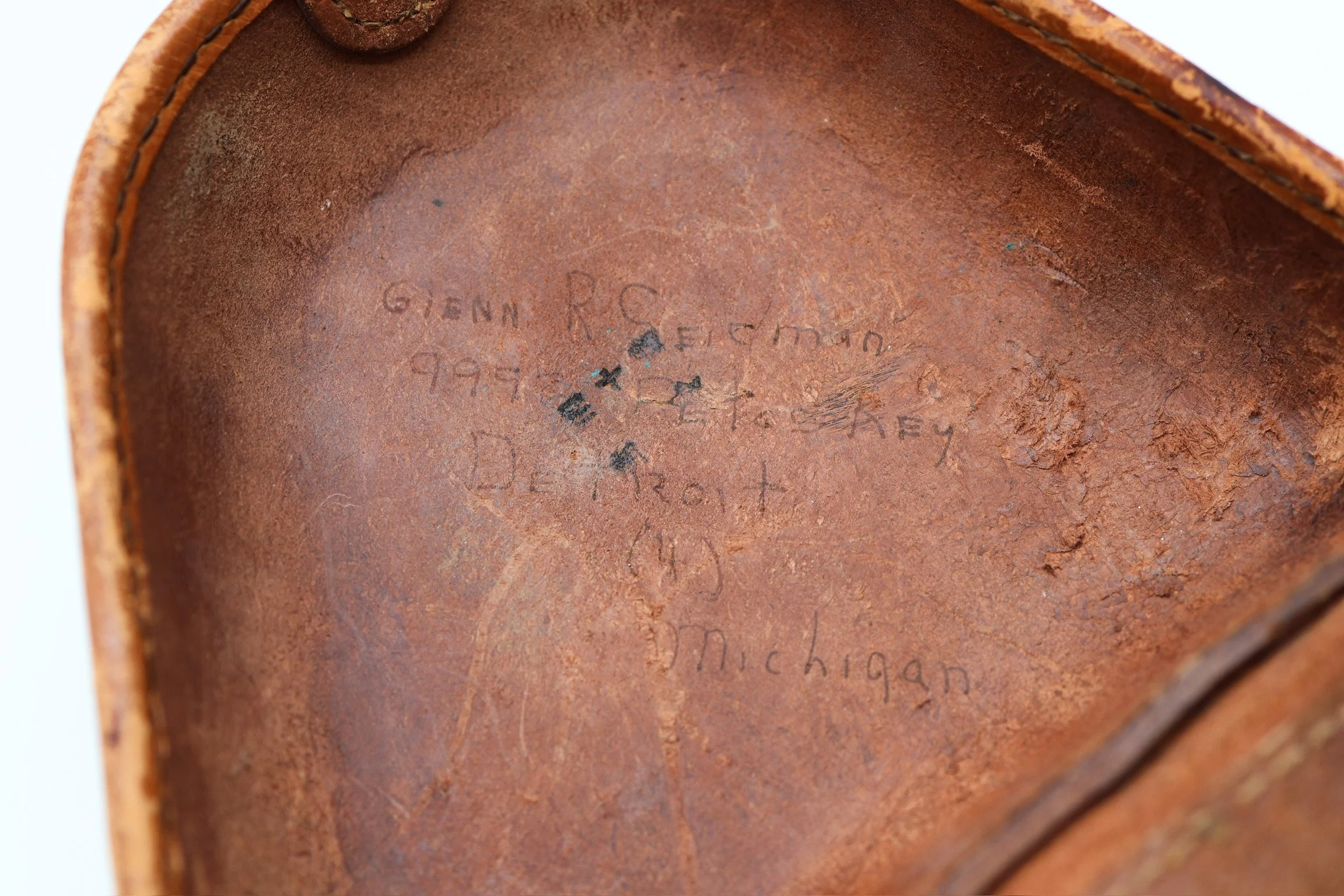
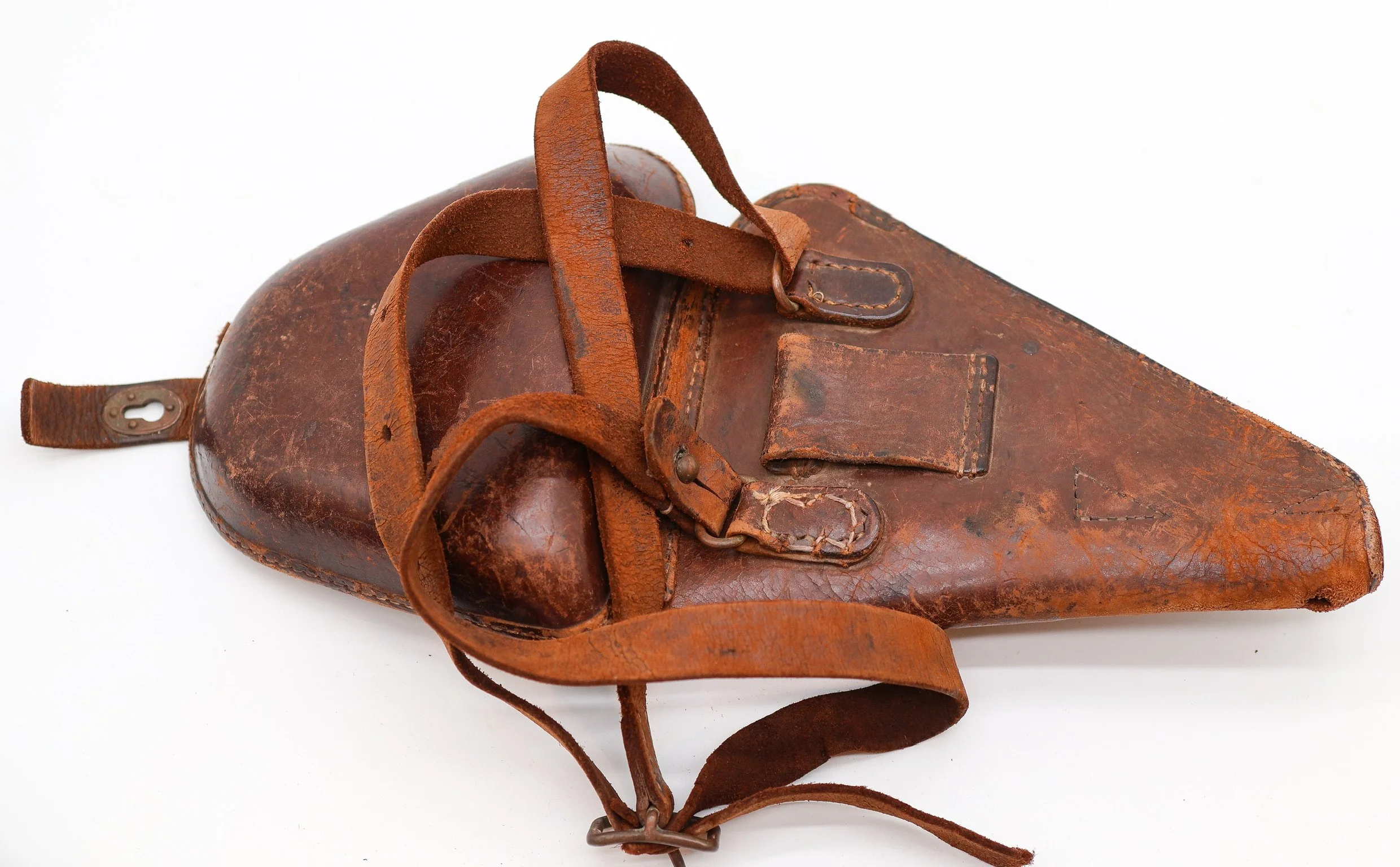
This Japanese Type 14 Nambu pistol, serial number 2432, was manufactured in November 1943, as indicated by the 18.11 date marking on the pistol. It was captured during the Battle of Okinawa in 1945 by Glenn R. Seidman, who served with Company C, 32nd Infantry Regiment, 7th Infantry Division. Seidman served in the U.S. Army from April 1943 through November 1945.
The pistol is accompanied by official capture papers and its original holster. Seidman’s handwritten name appears inside the holster. The grouping was acquired directly from Seidman’s granddaughter.
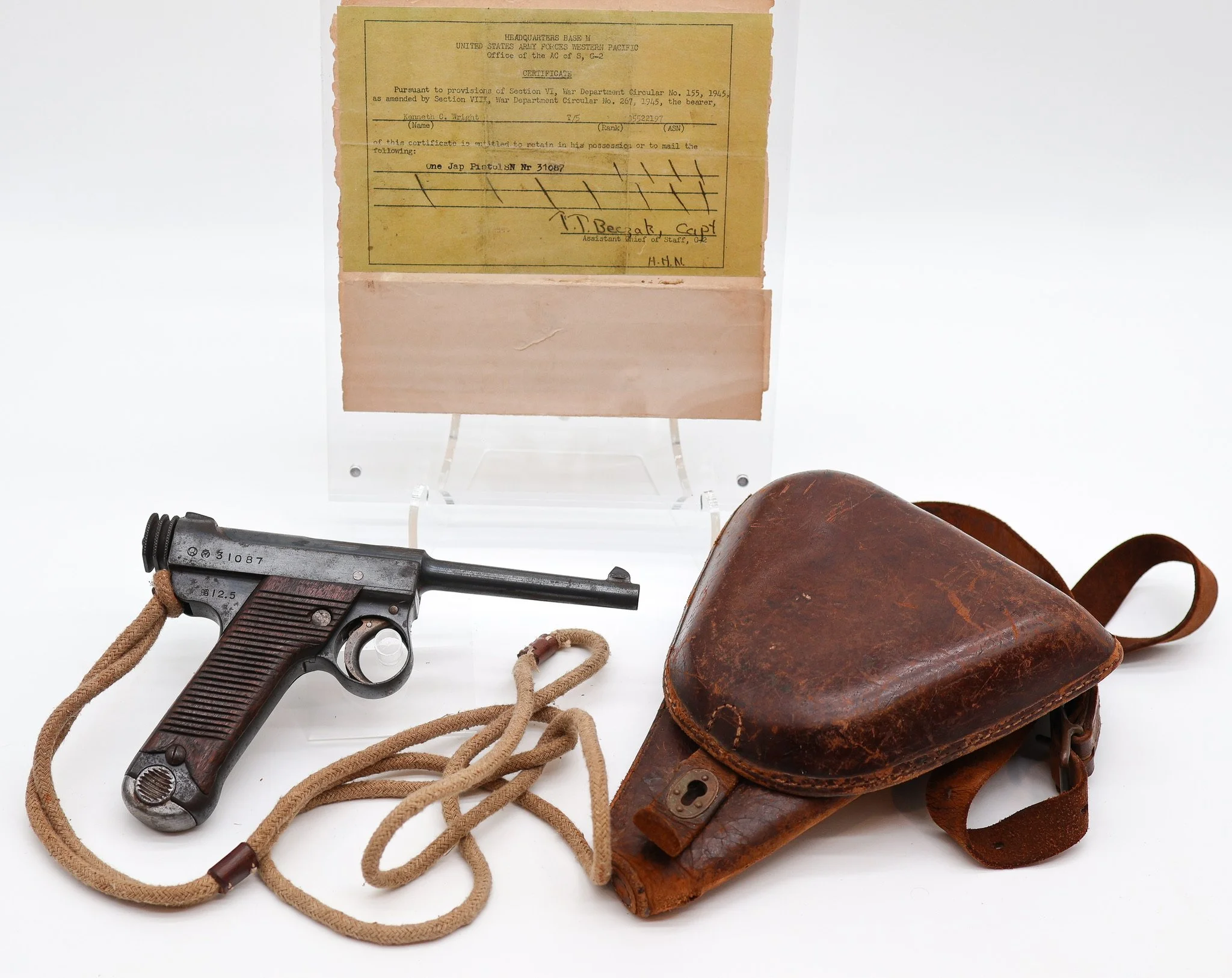
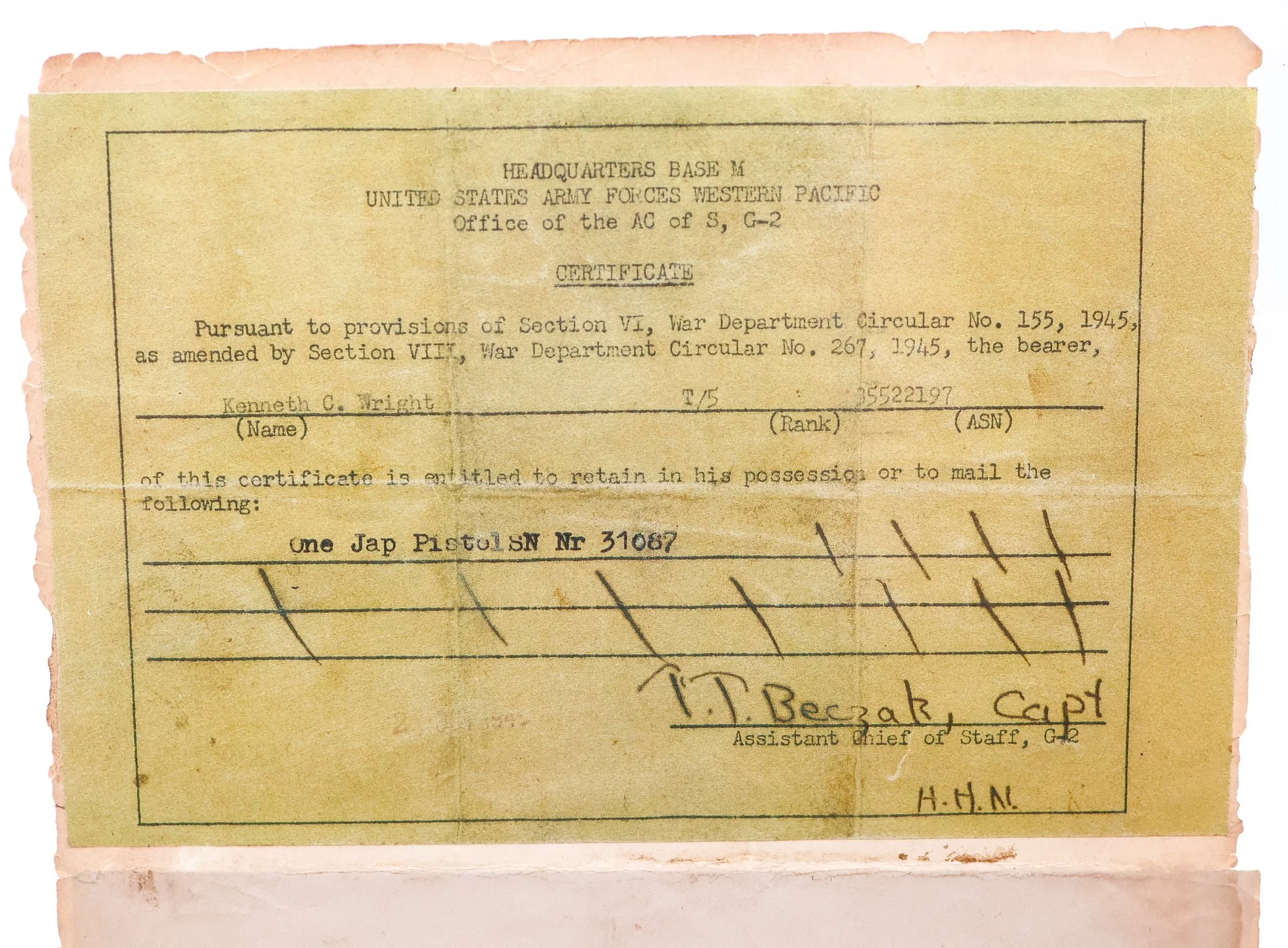
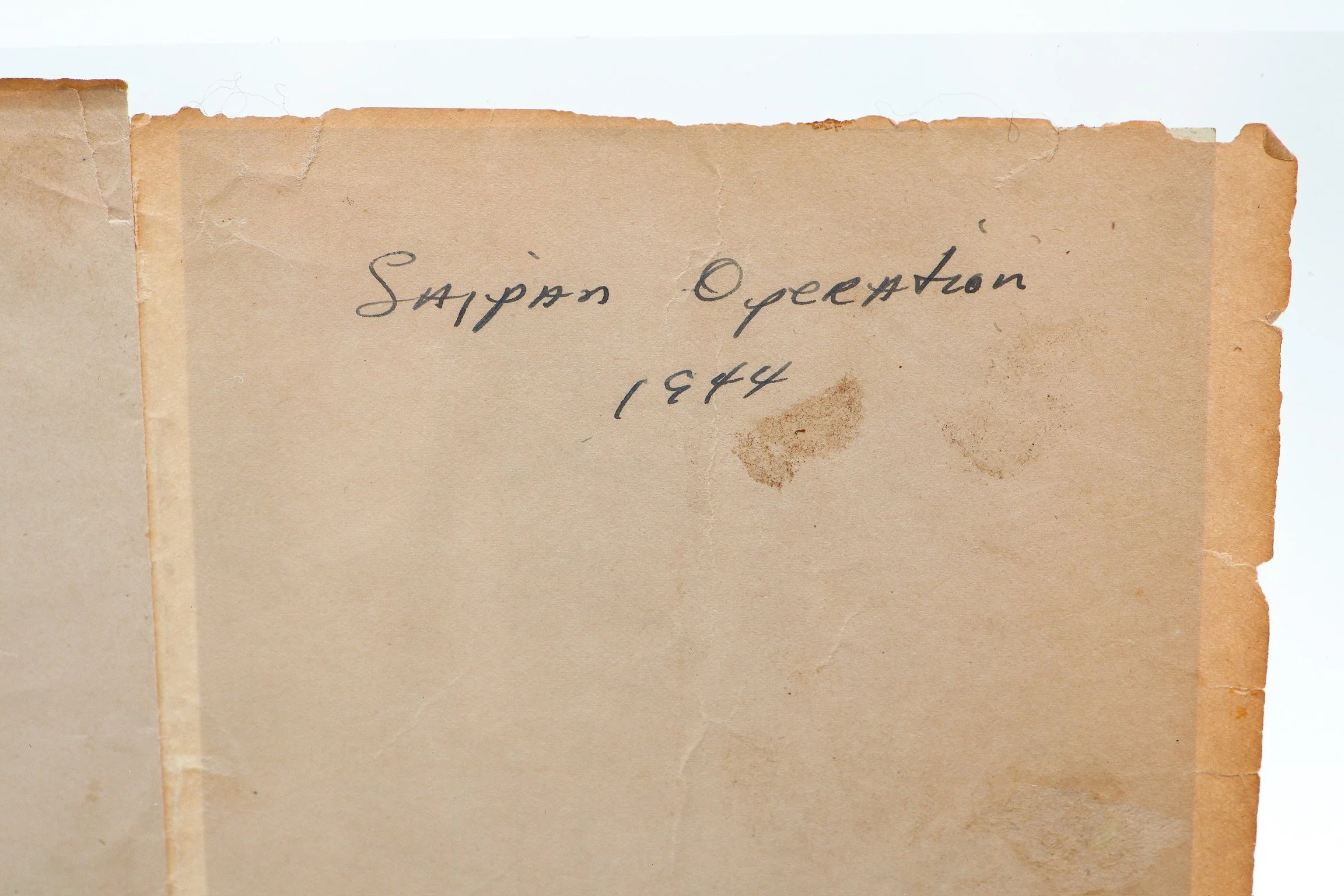
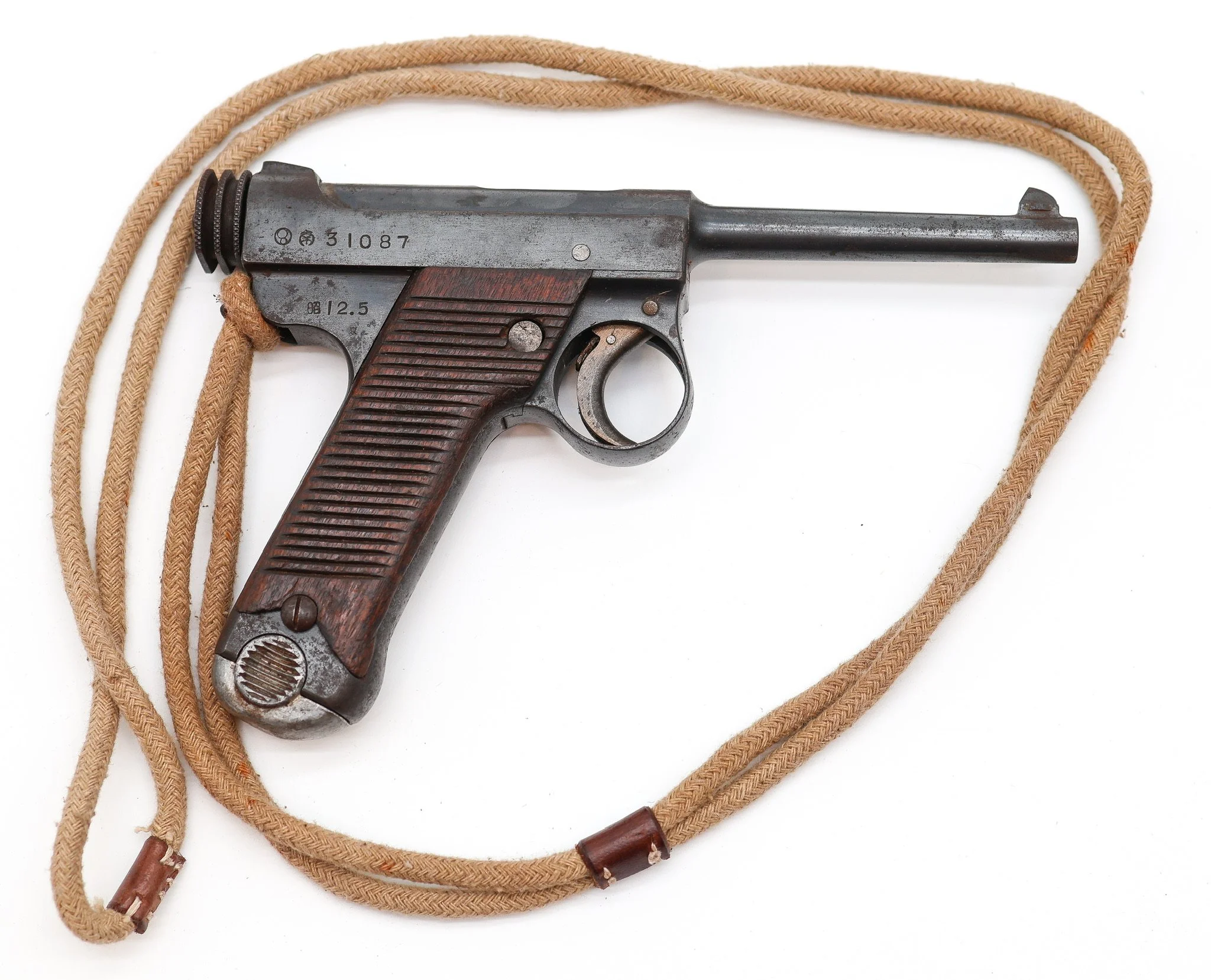
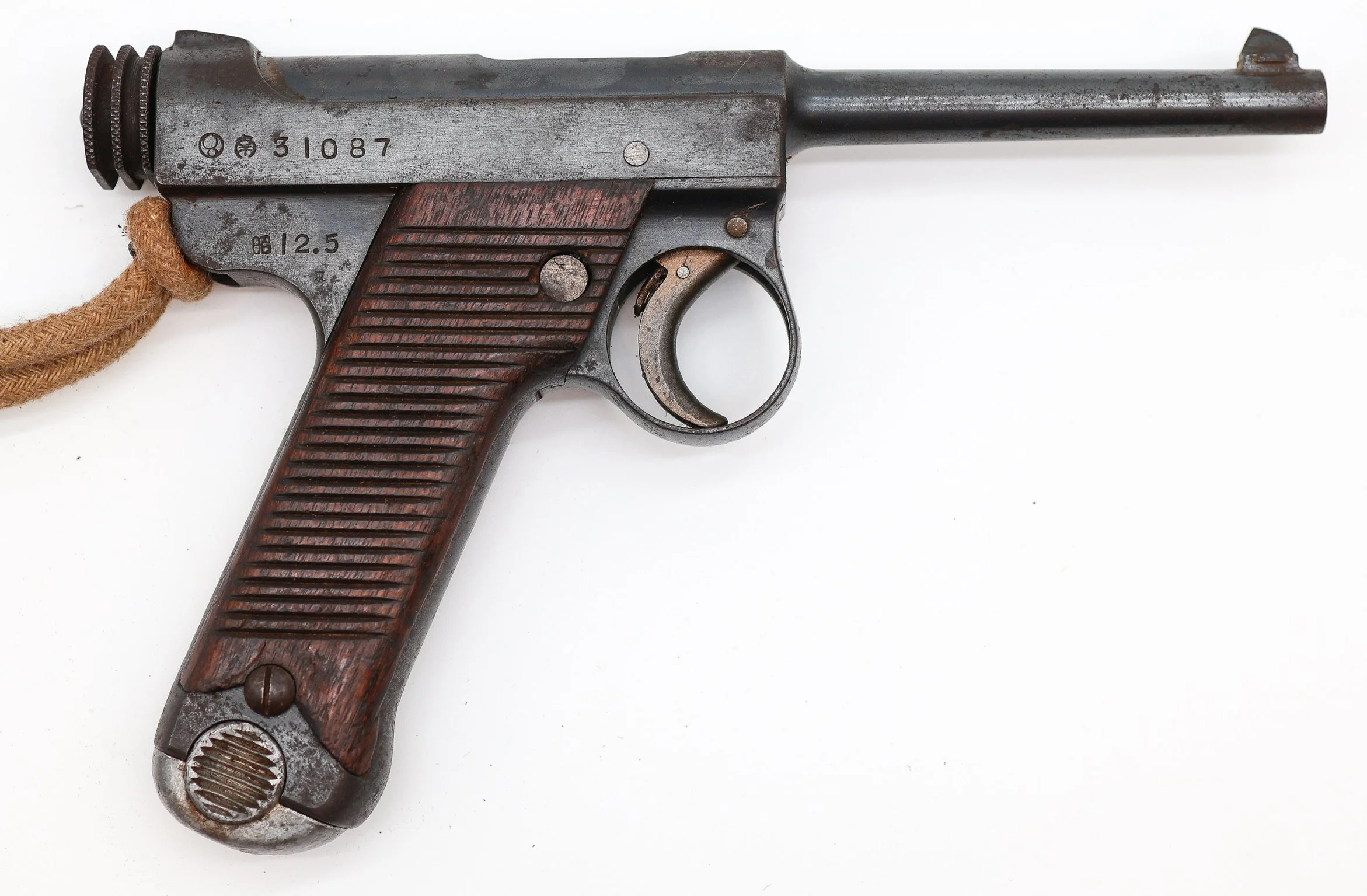
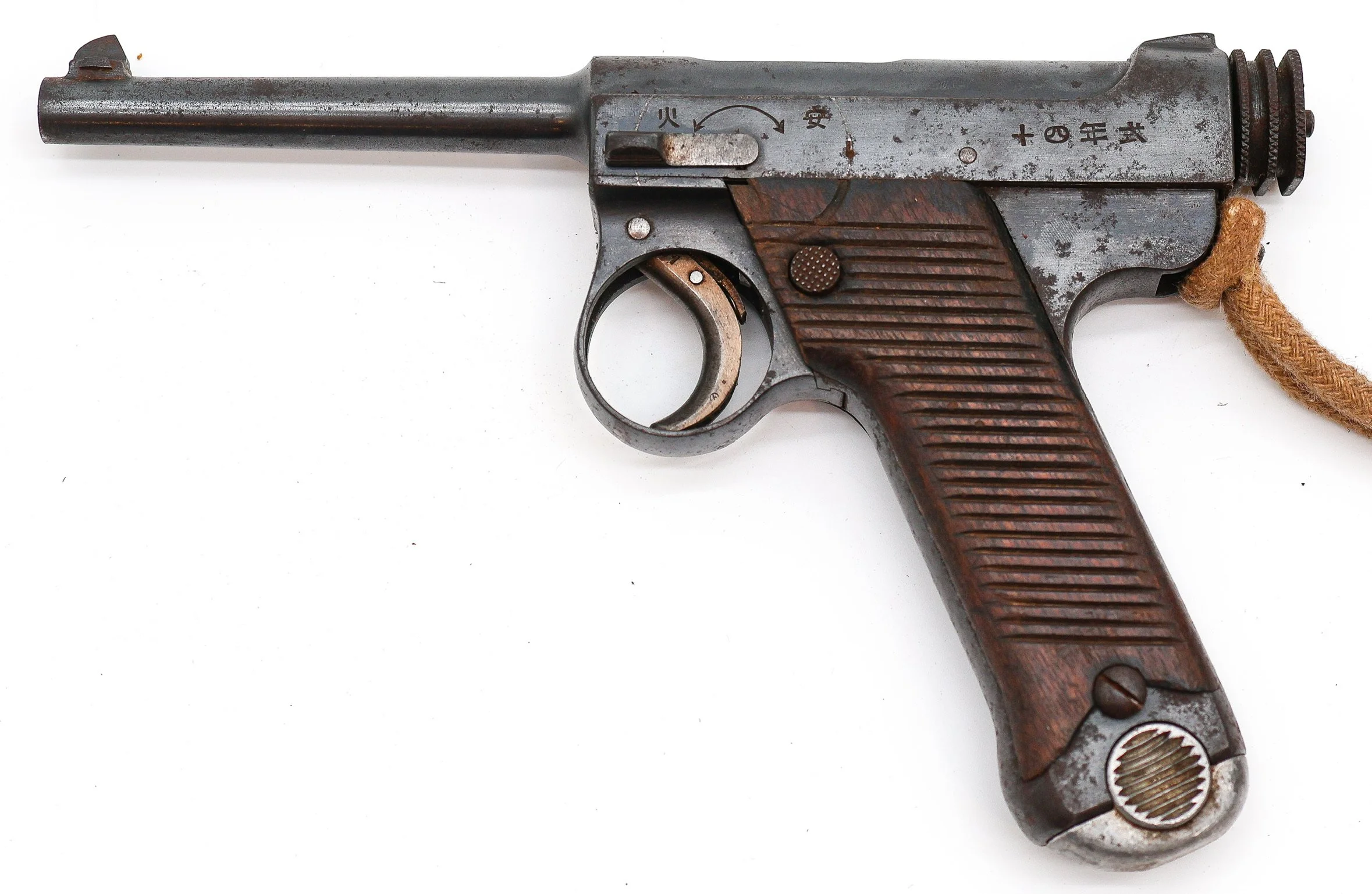
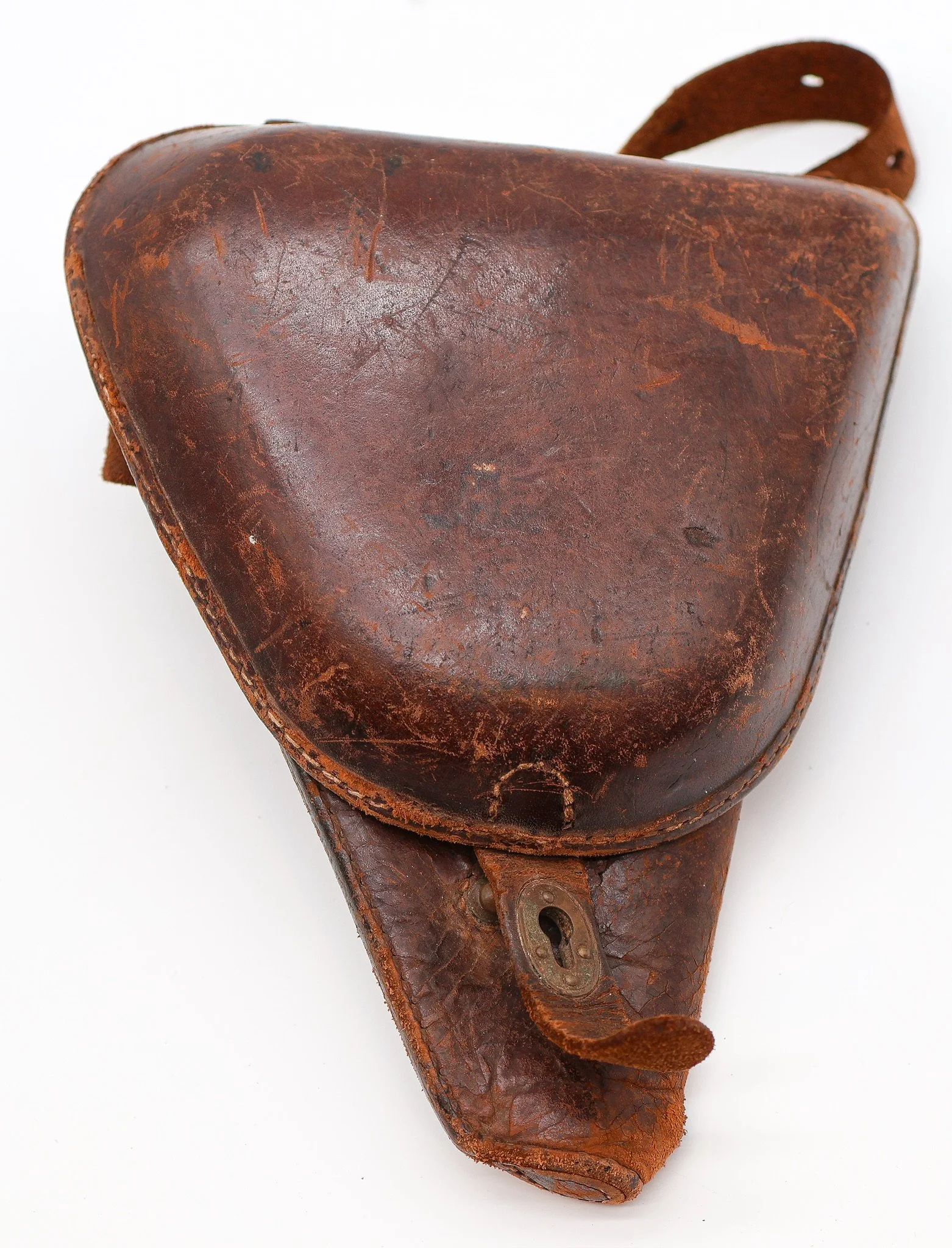
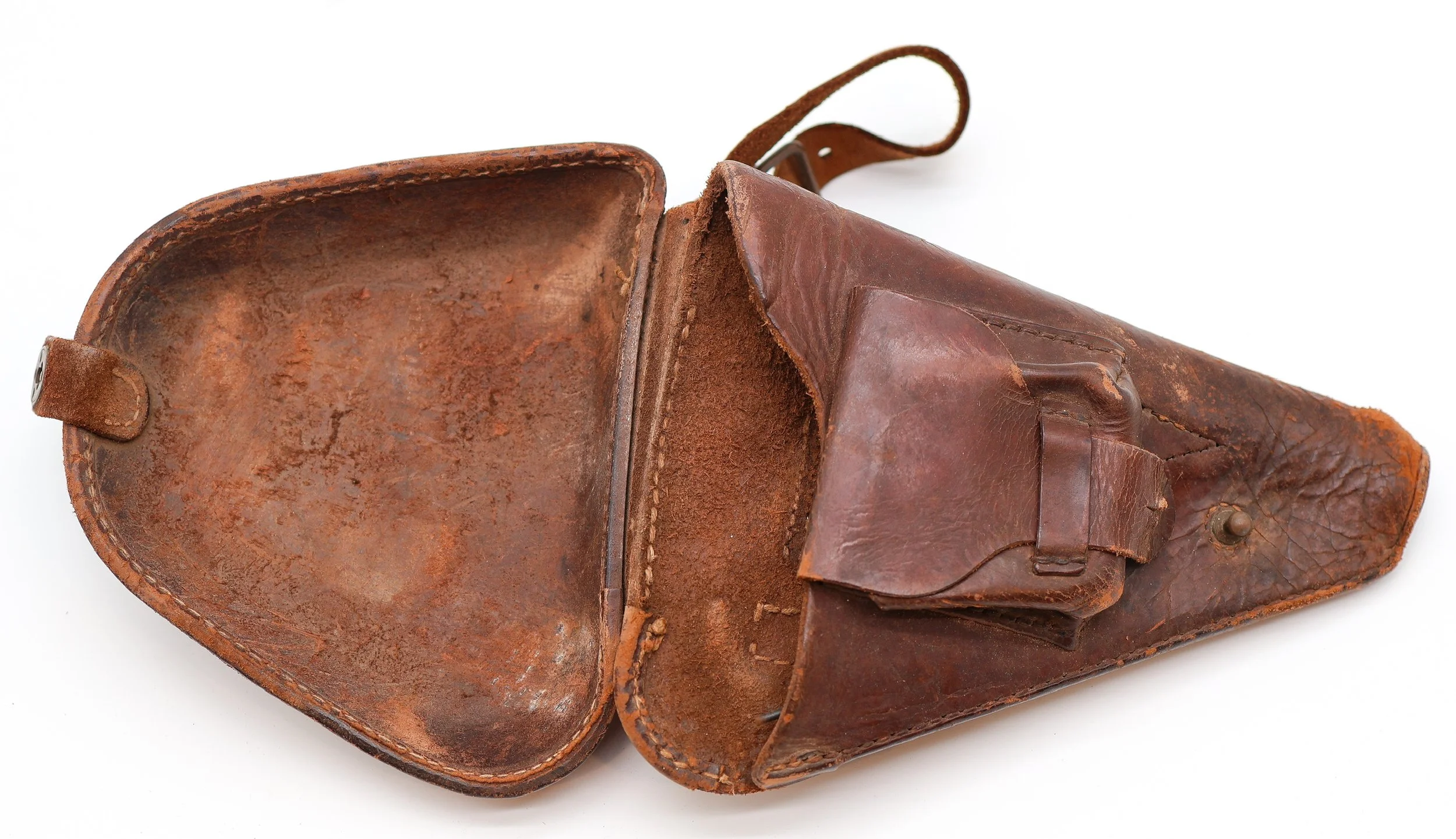
Japanese Type 14 Nambu Pistol Captured on Saipan, 1944
This Japanese Type 14 Nambu pistol, serial number 31087, was manufactured in May 1937, as indicated by the Showa 12.5 date marking. The pistol was captured during the Saipan operations in 1944 and was brought back by Technician Fifth Grade Kenneth C. Wright, ASN 35522197.
The pistol is accompanied by its original holster, a lanyard, and official U.S. bring-back papers documenting its capture and authorized return. All serial numbers match with the exception of the magazine, which is correct for the model but not original to the pistol. The grouping was acquired at auction as part of a larger collection of war trophies retained by the same serviceman following his service in the Saipan campaign.
Japanese Arisaka Type 38 Rifle Recovered at “Bloody Ridge,” Guadalcanal
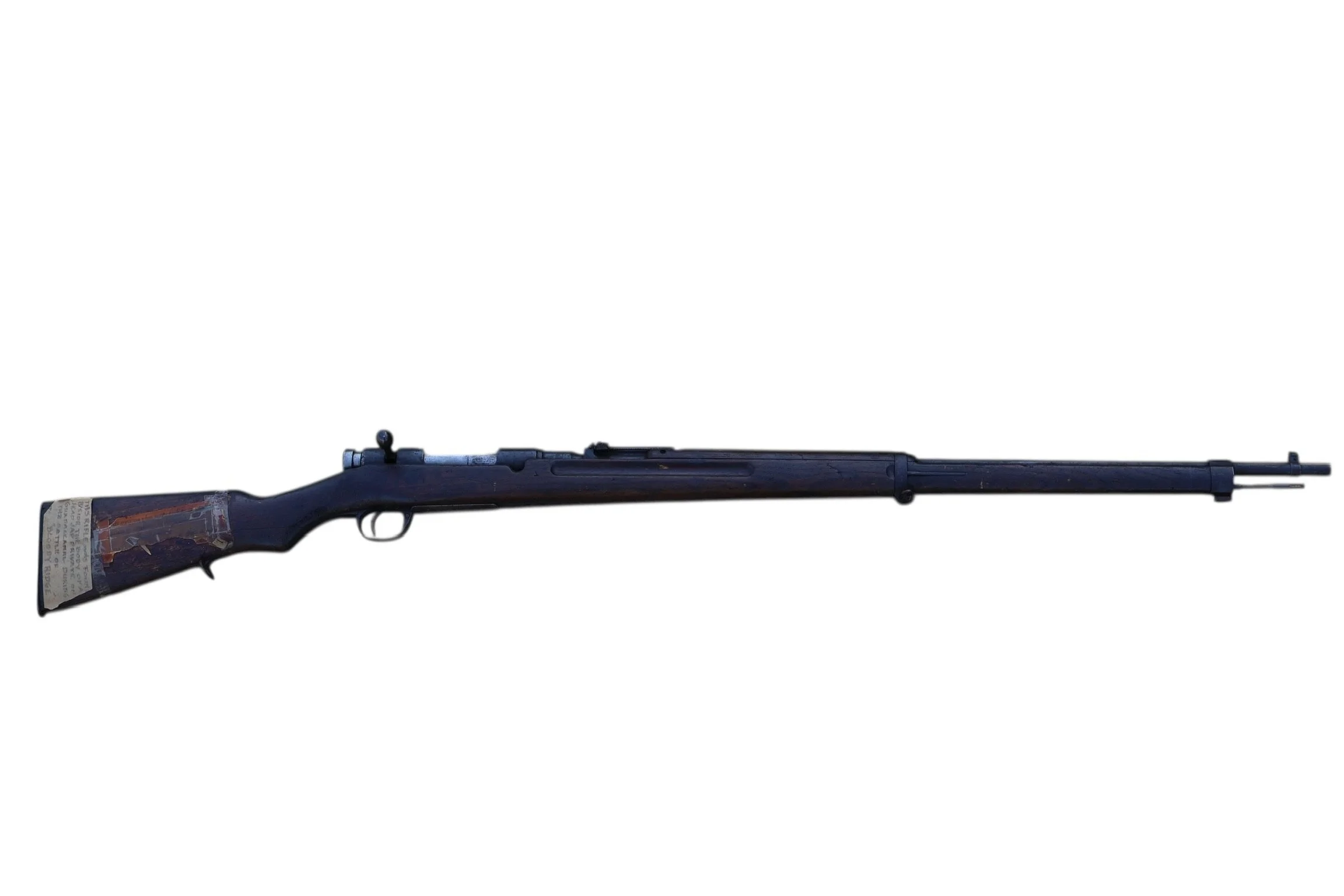
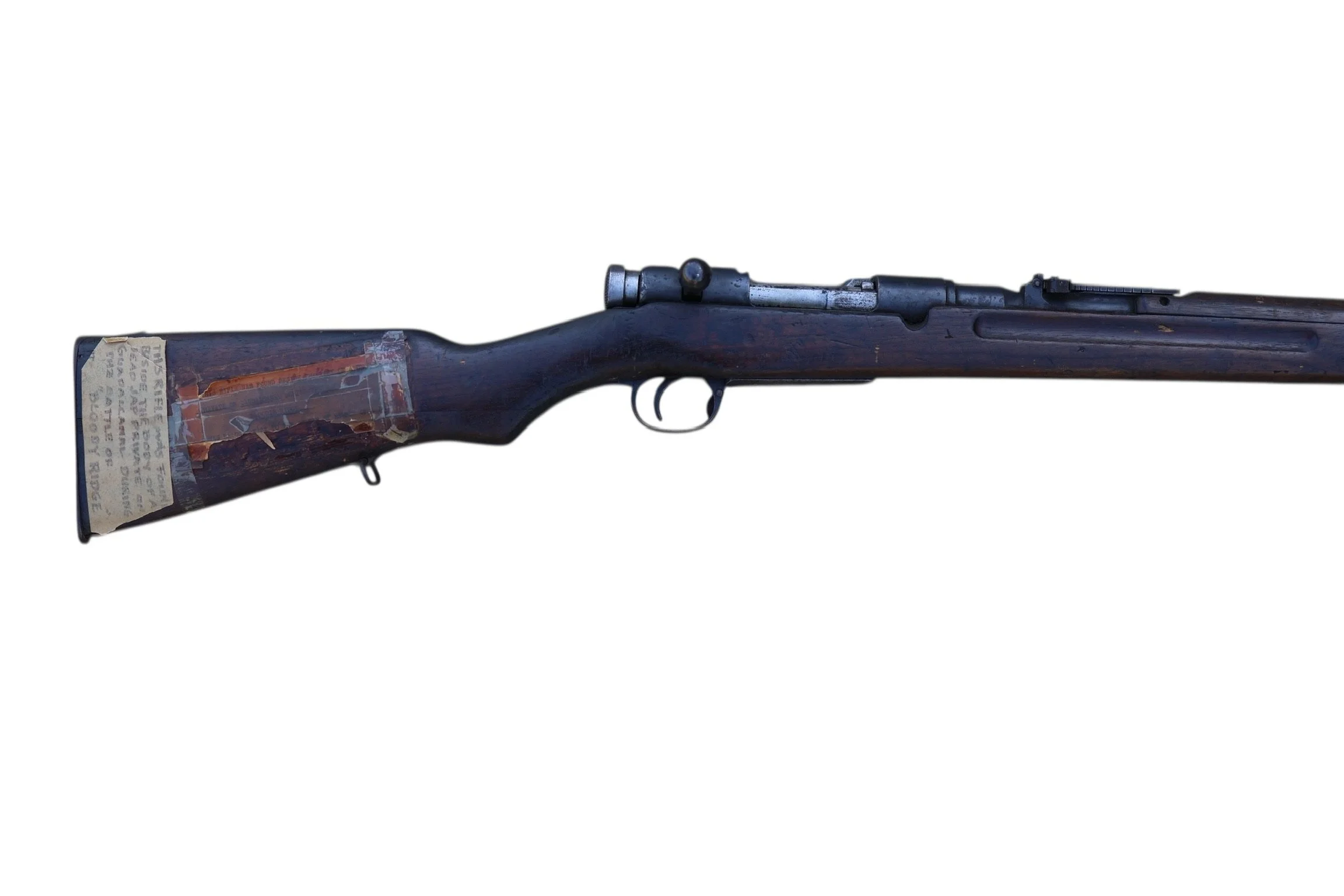
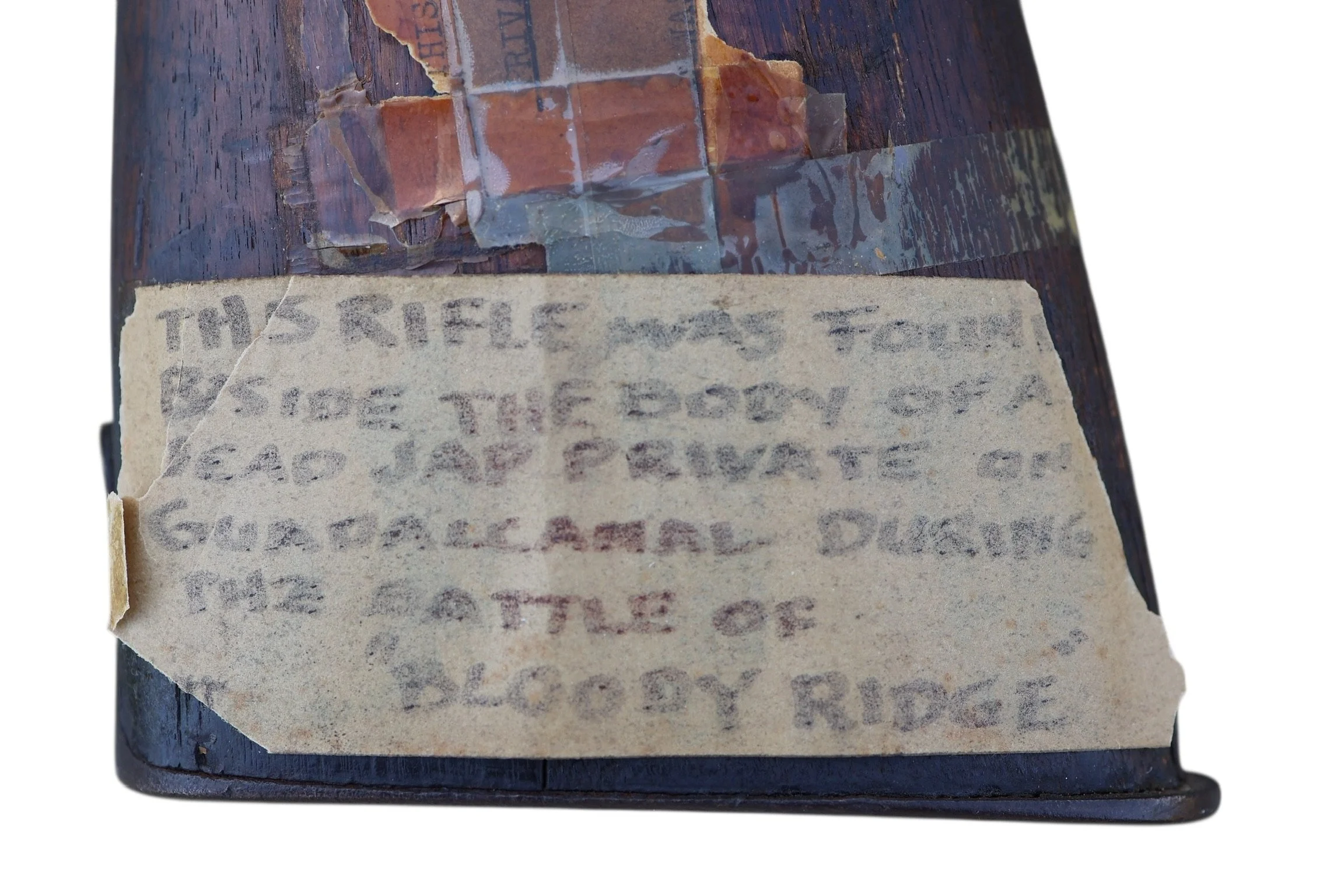
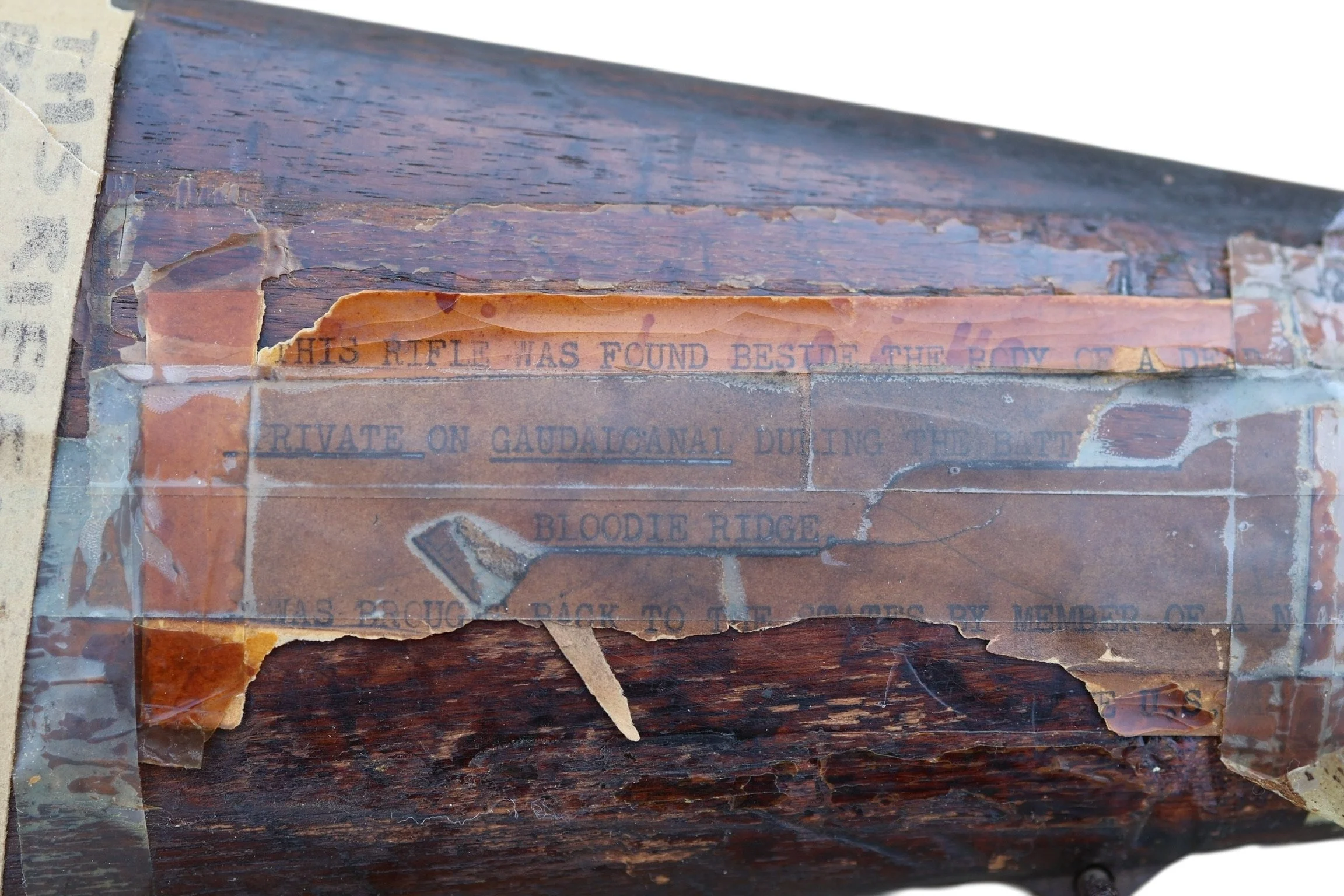
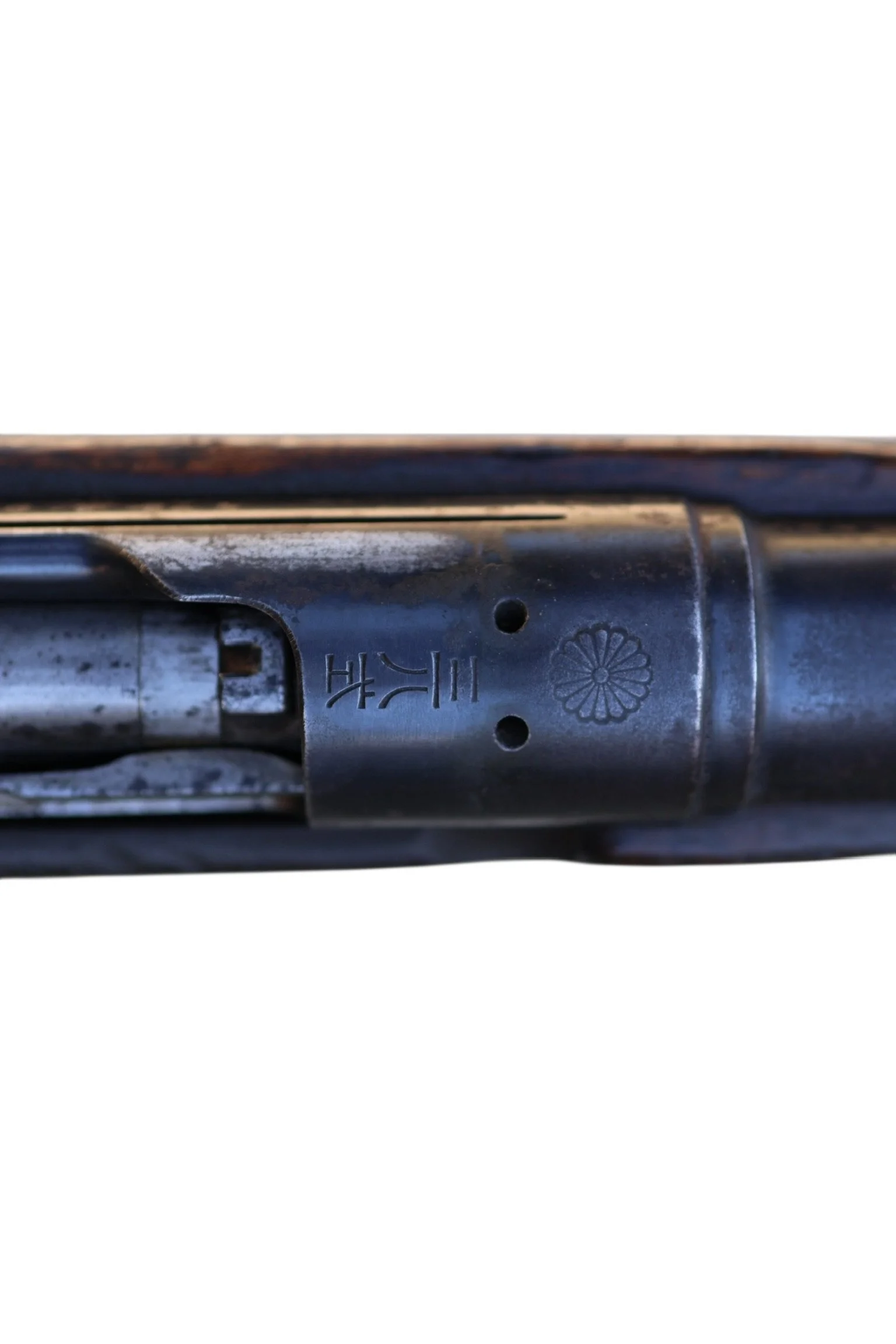
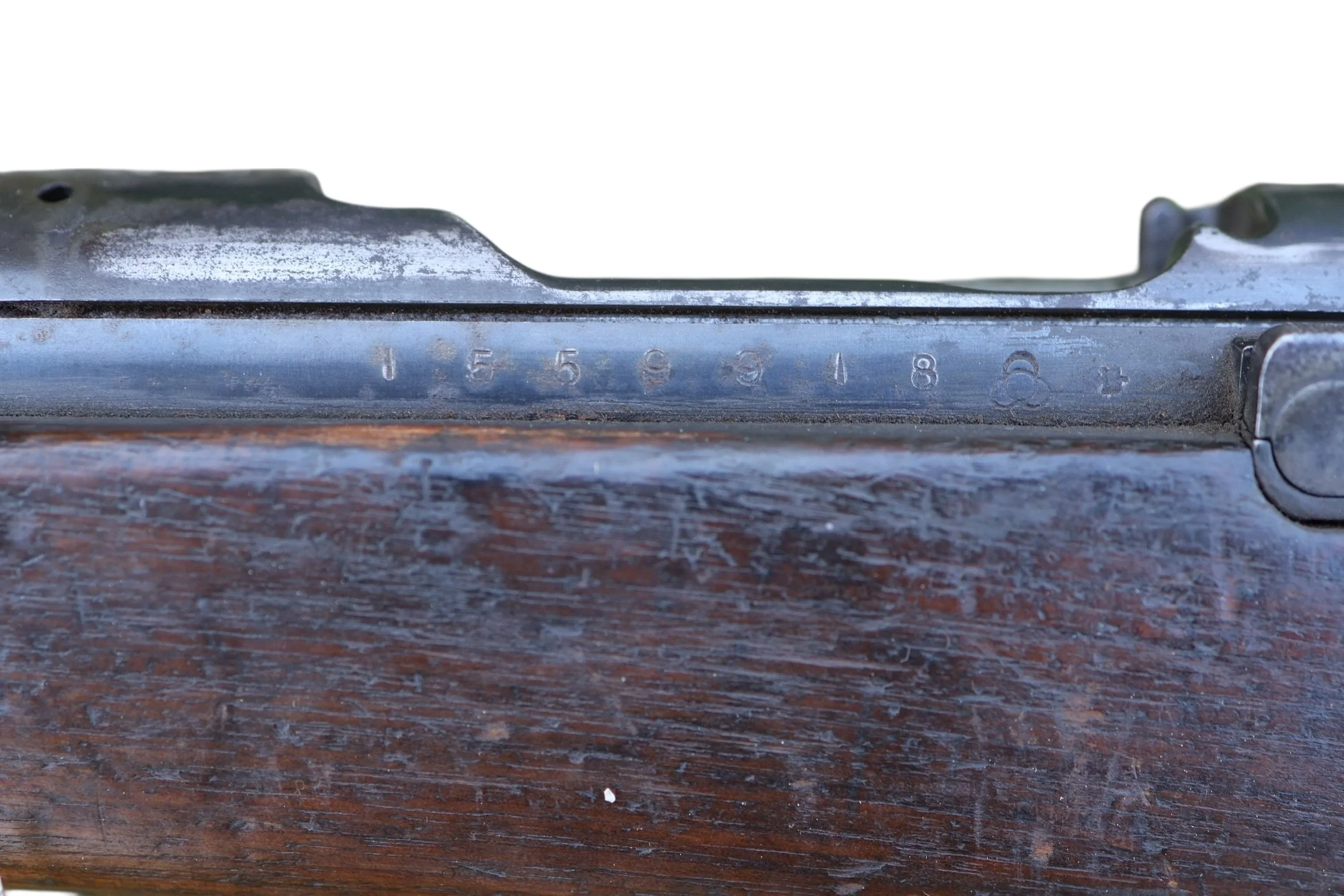
This Japanese Type 38 Arisaka 6.5mm rifle is a battlefield-recovered example from the Guadalcanal campaign. The rifle is in decent condition overall, showing expected combat wear and a dark bore. It retains a complete Imperial chrysanthemum (MUM) on the receiver, with non-matching serial numbers, a common characteristic among rifles that saw field use.
The rifle is accompanied by period provenance in the form of two handwritten tags affixed near the base of the stock. One tag reads: “THIS RIFLE WAS FOUND BESIDE THE BODY OF A DEAD JAP PRIVATE ON GUADALCANAL DURING THE BATTLE OF ‘BLOODY RIDGE’.”
Bloody Ridge, also known as Edson’s Ridge, was the site of intense fighting in September 1942, when U.S. Marine forces repelled repeated Japanese assaults during one of the most critical battles of the Guadalcanal campaign.
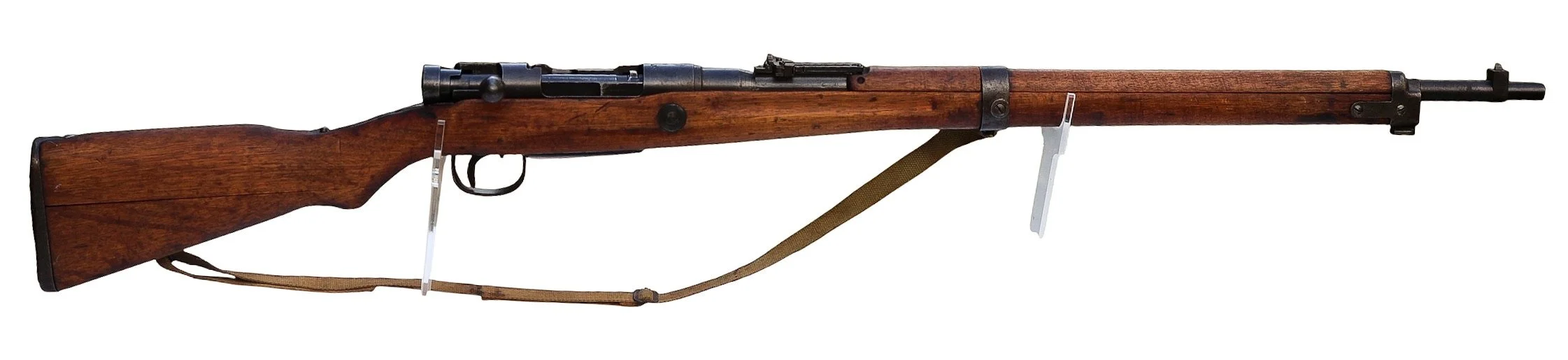
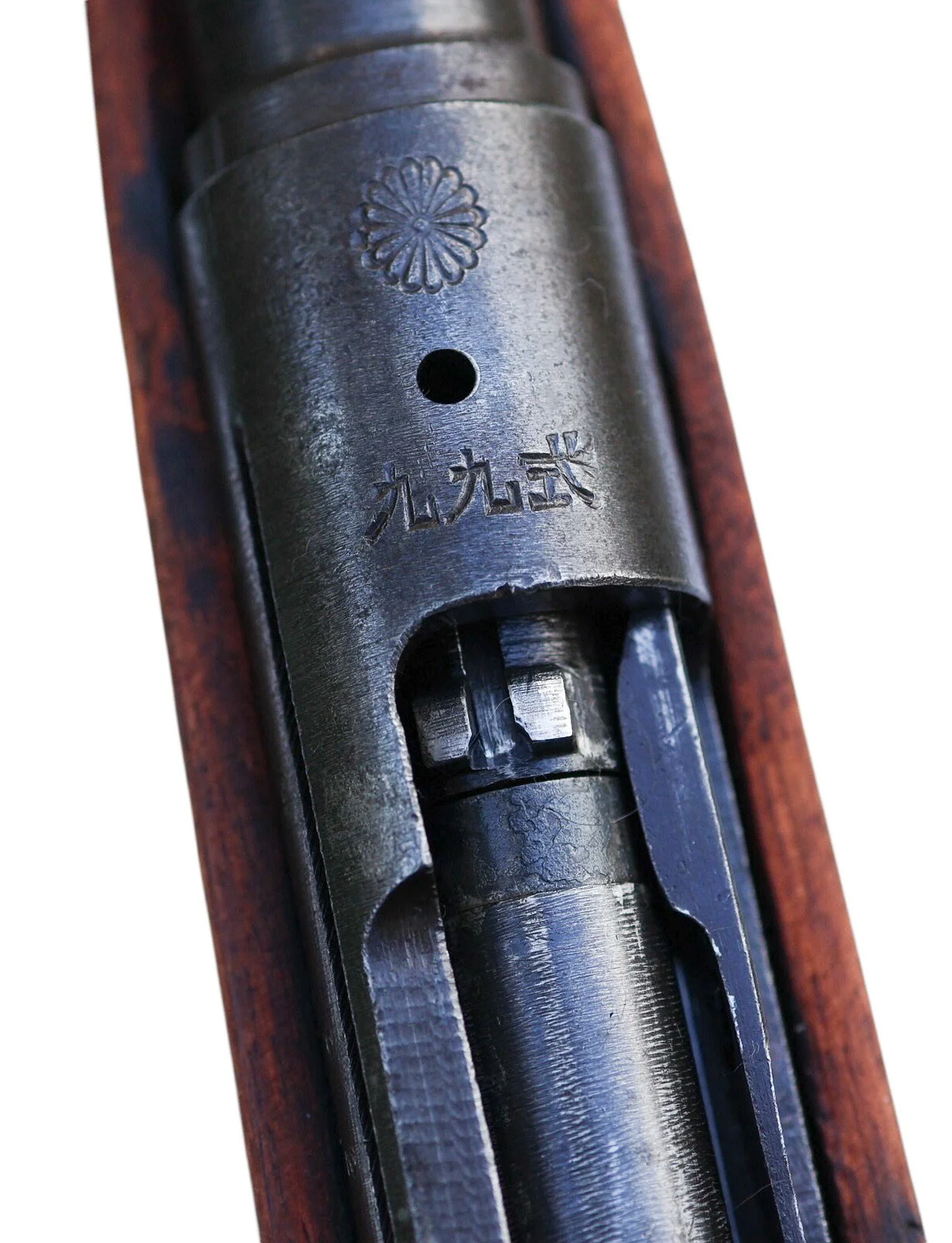
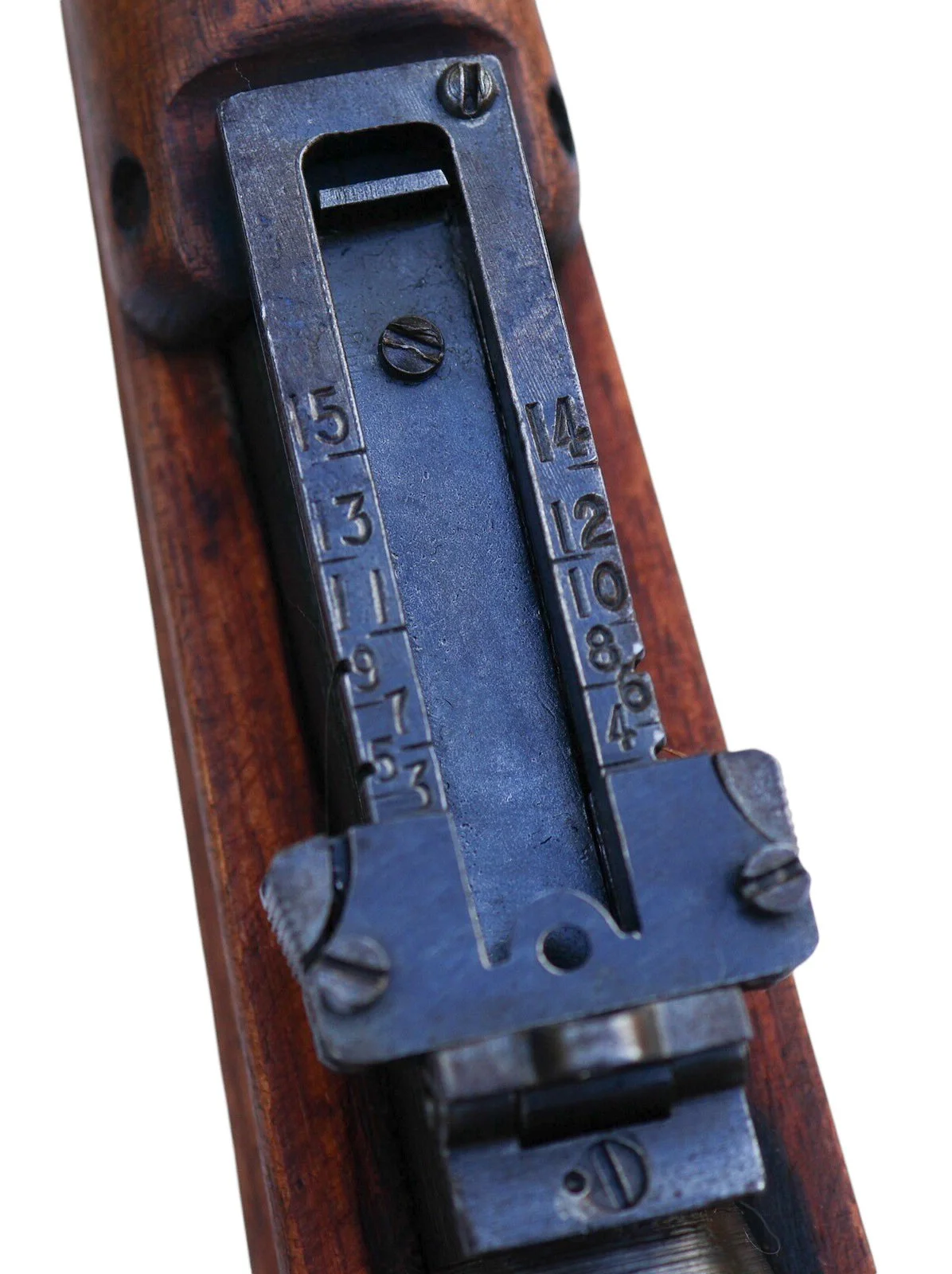
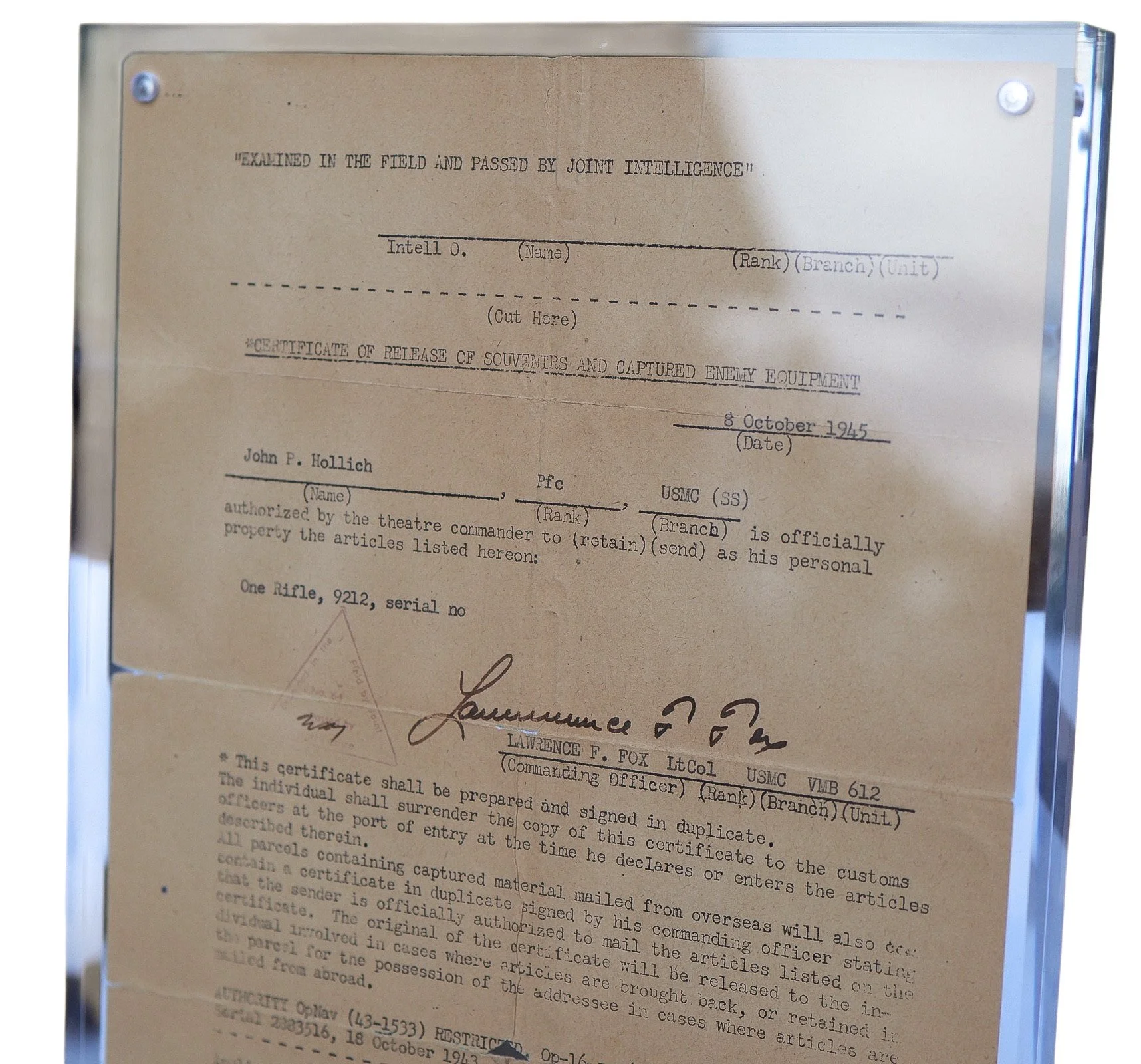
Japanese Type 99 Arisaka Rifle Captured on Okinawa by PFC John P. Hollich, USMC
This Japanese Type 99 Arisaka rifle was captured on Okinawa by PFC John P. Hollich of the United States Marine Corps. Capture papers dated 8 October 1945 document the rifle’s removal from Okinawa, shortly before Hollich sailed home in late October. The rifle is identified on the paperwork by serial number 9212.
The rifle retains its full imperial chrysanthemum. It is fitted with a U.S. sling rather than a Japanese sling, likely added by Hollich after capture.