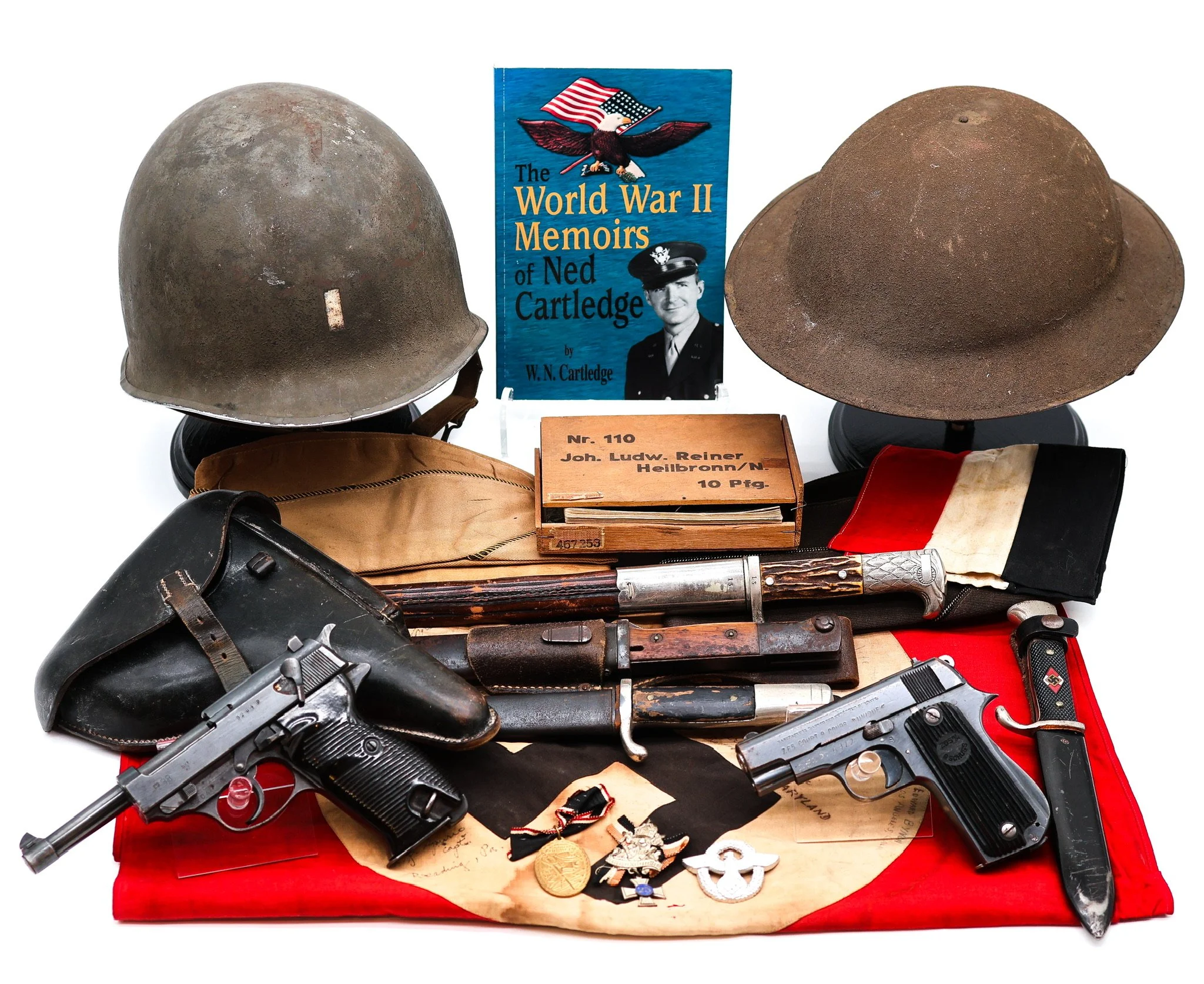
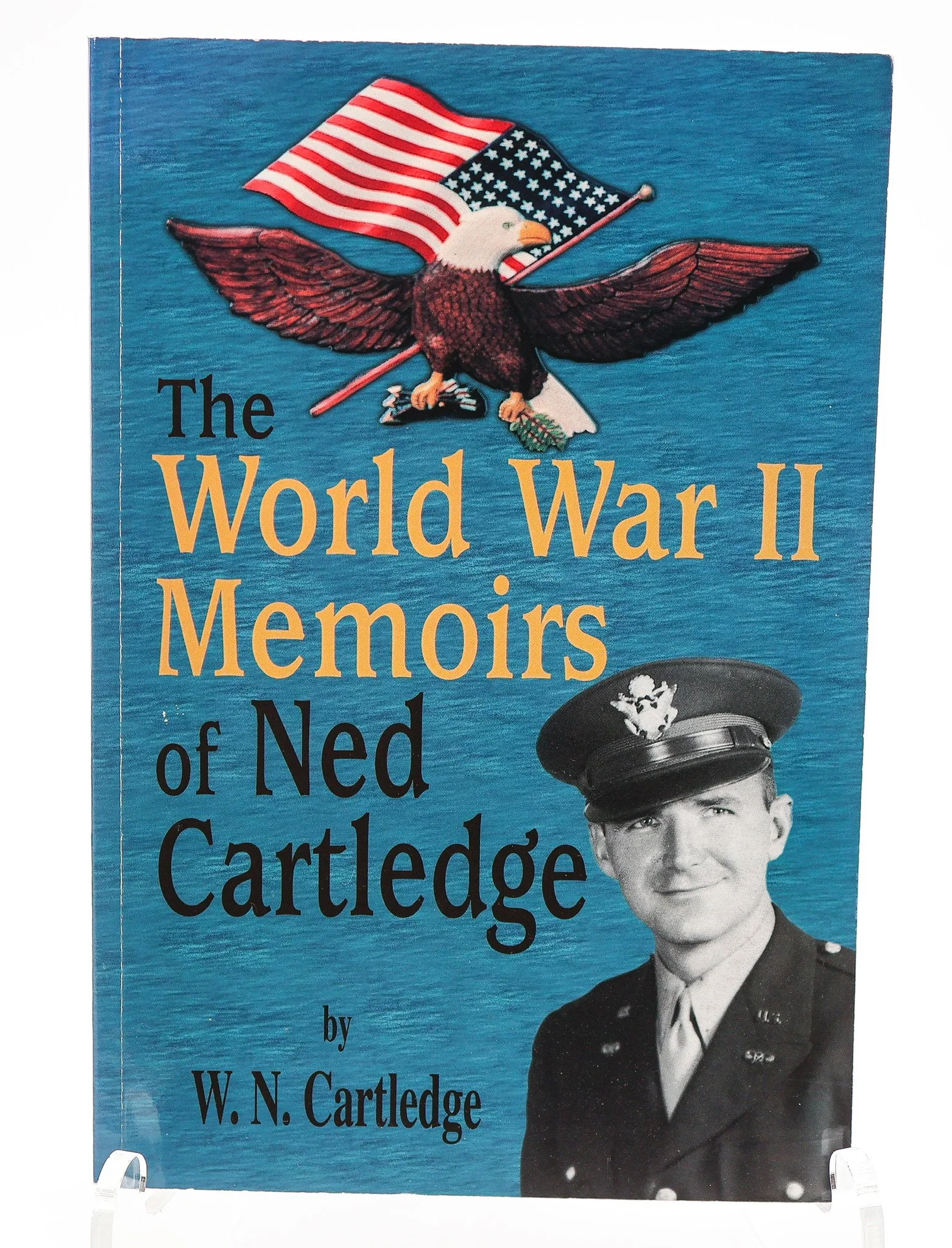
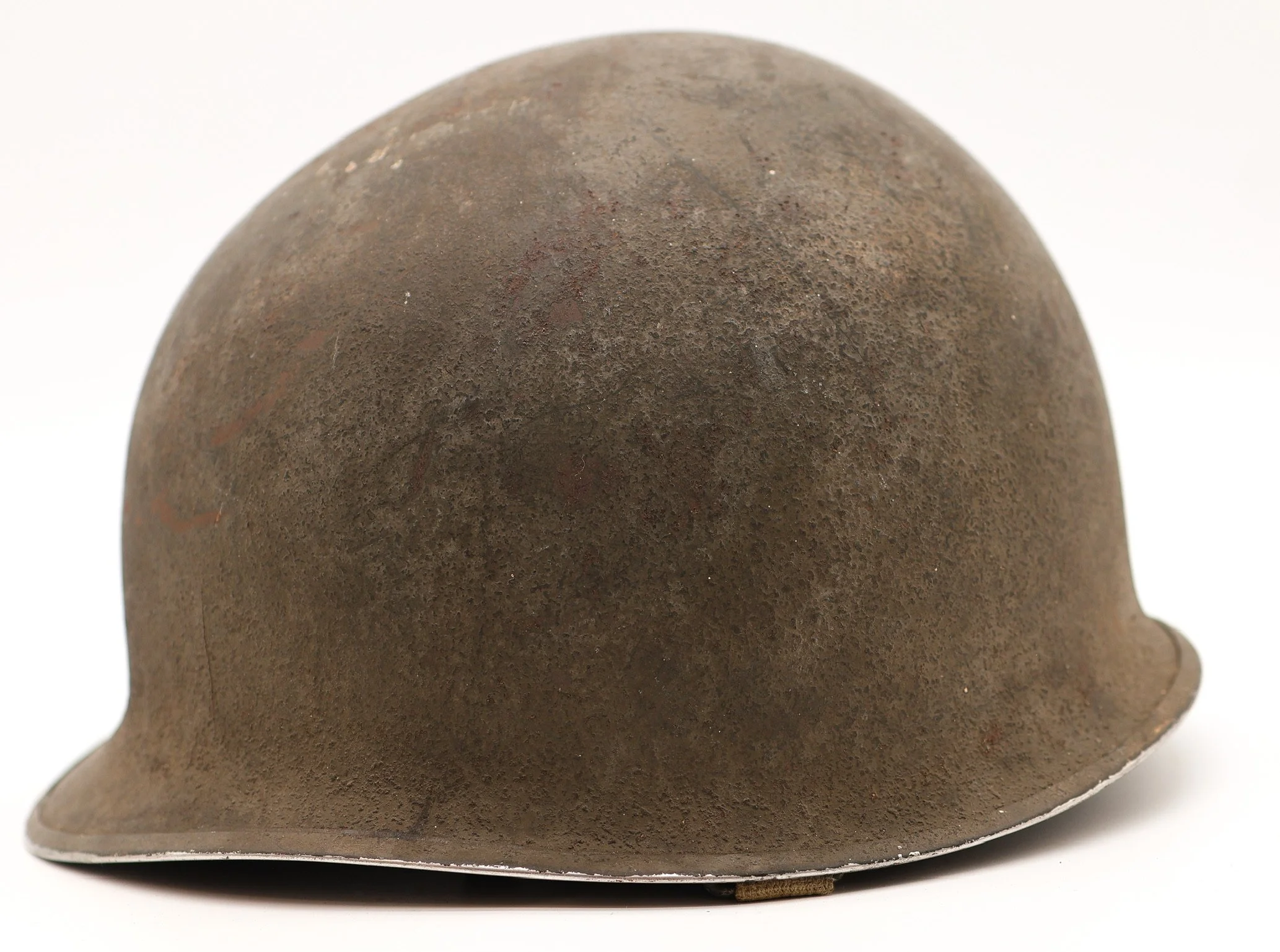
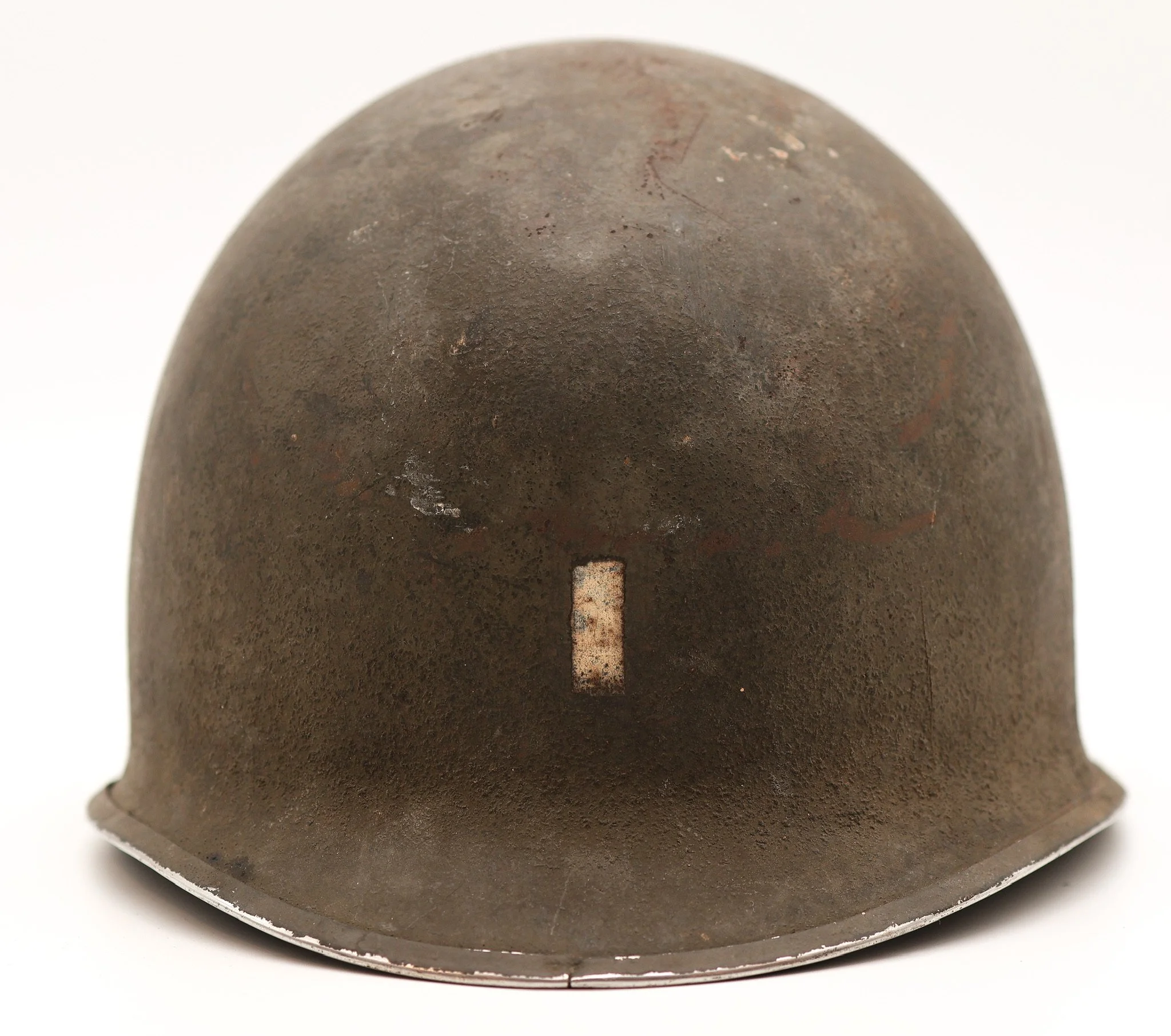
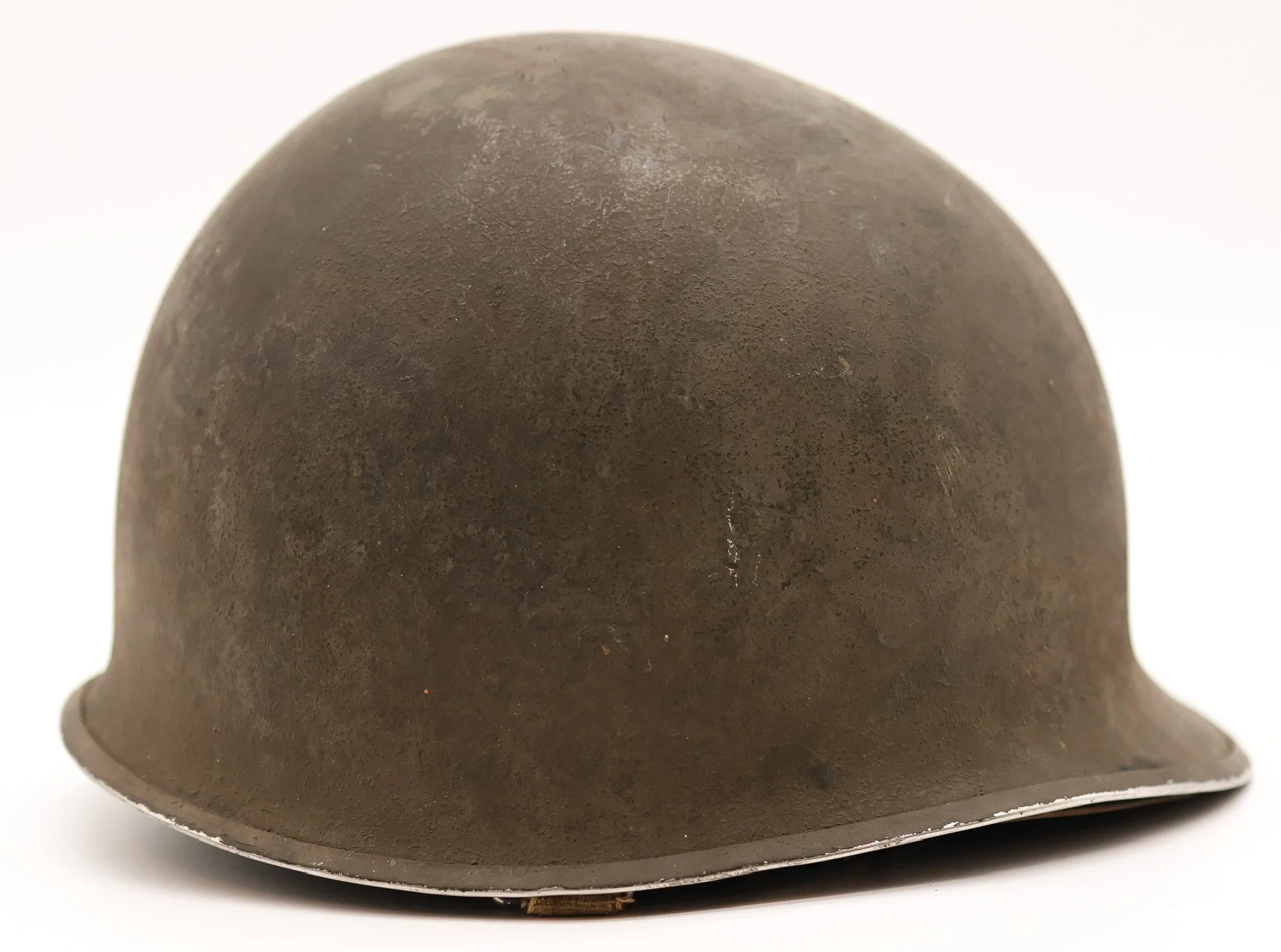
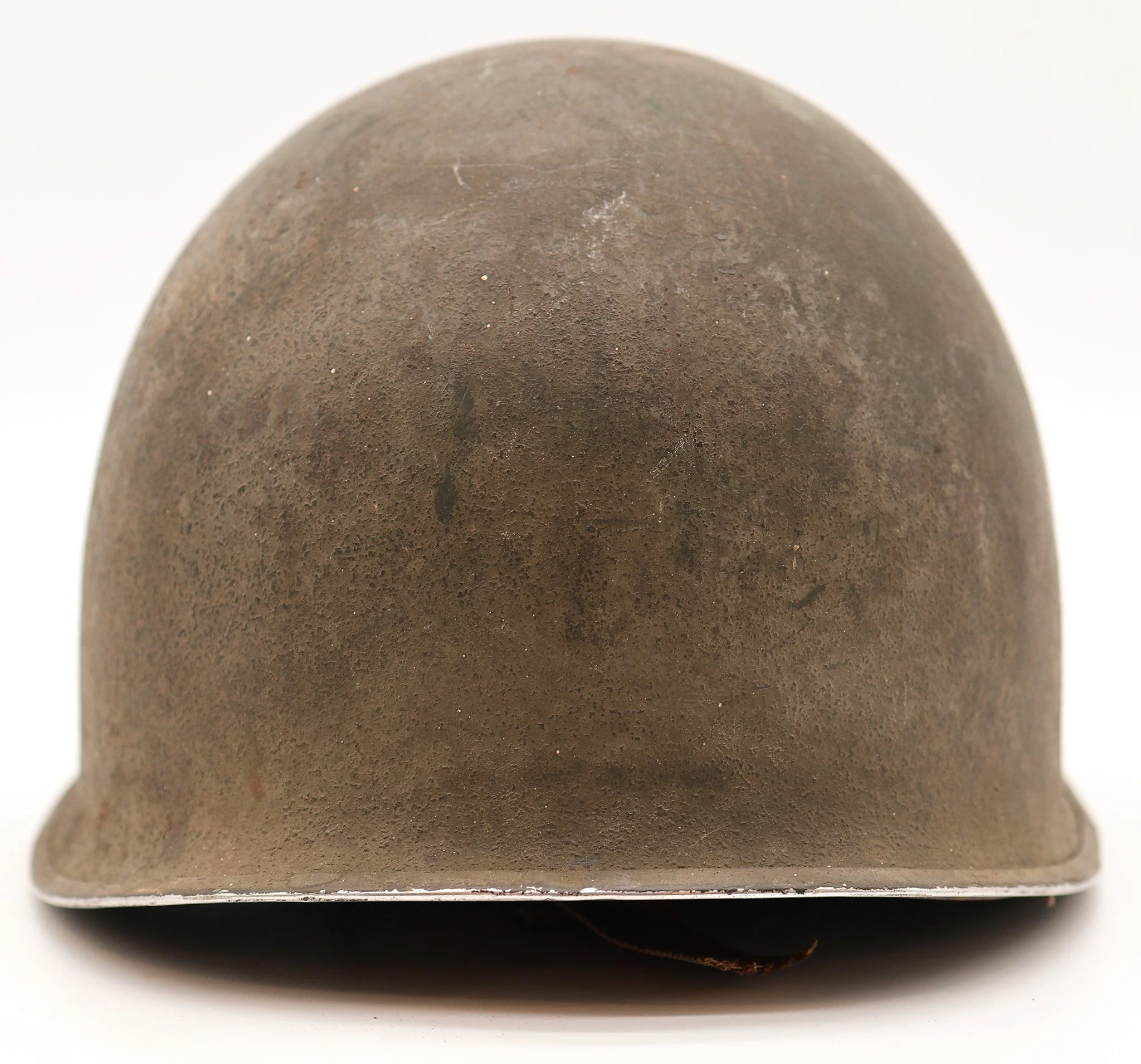
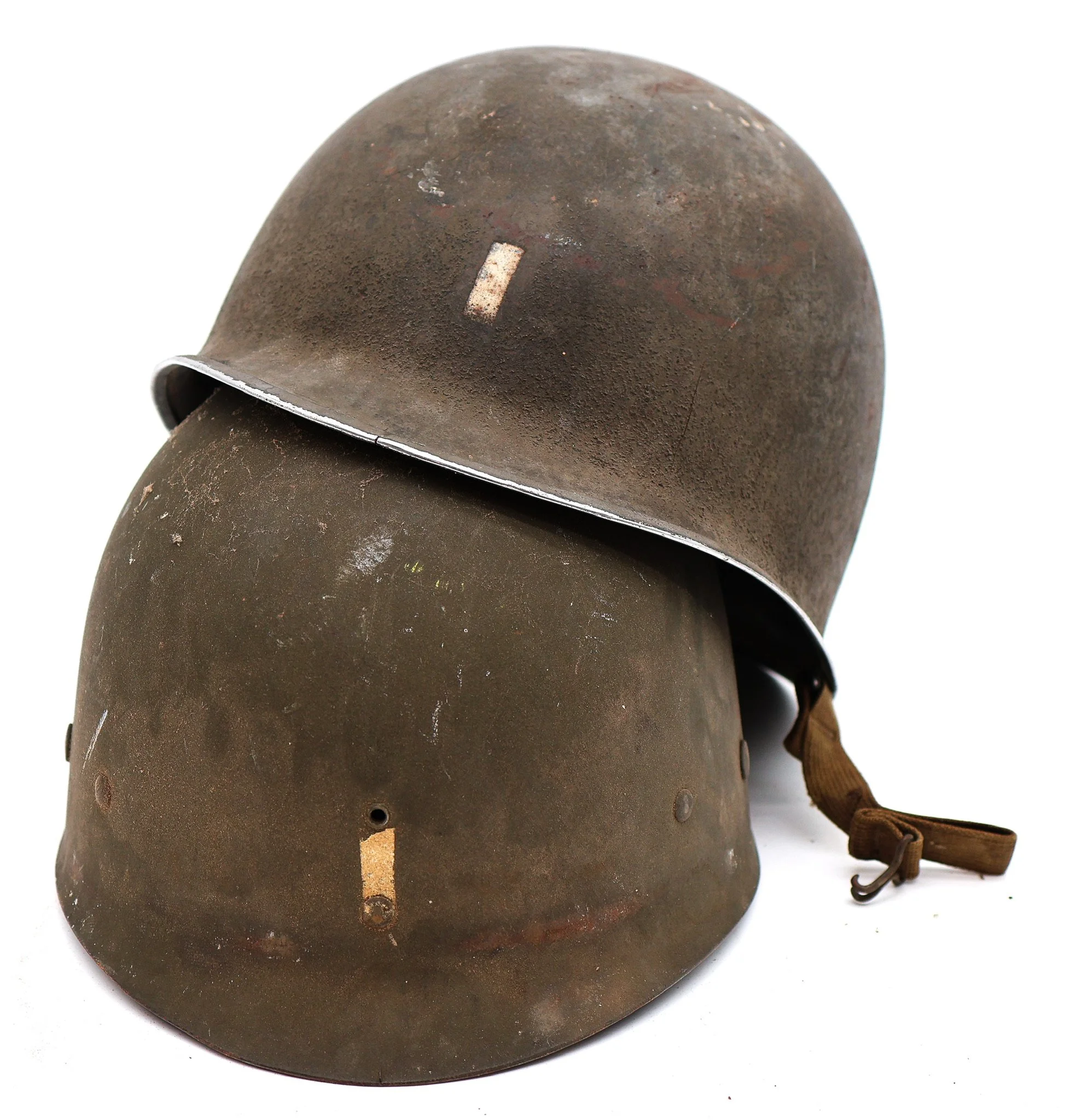
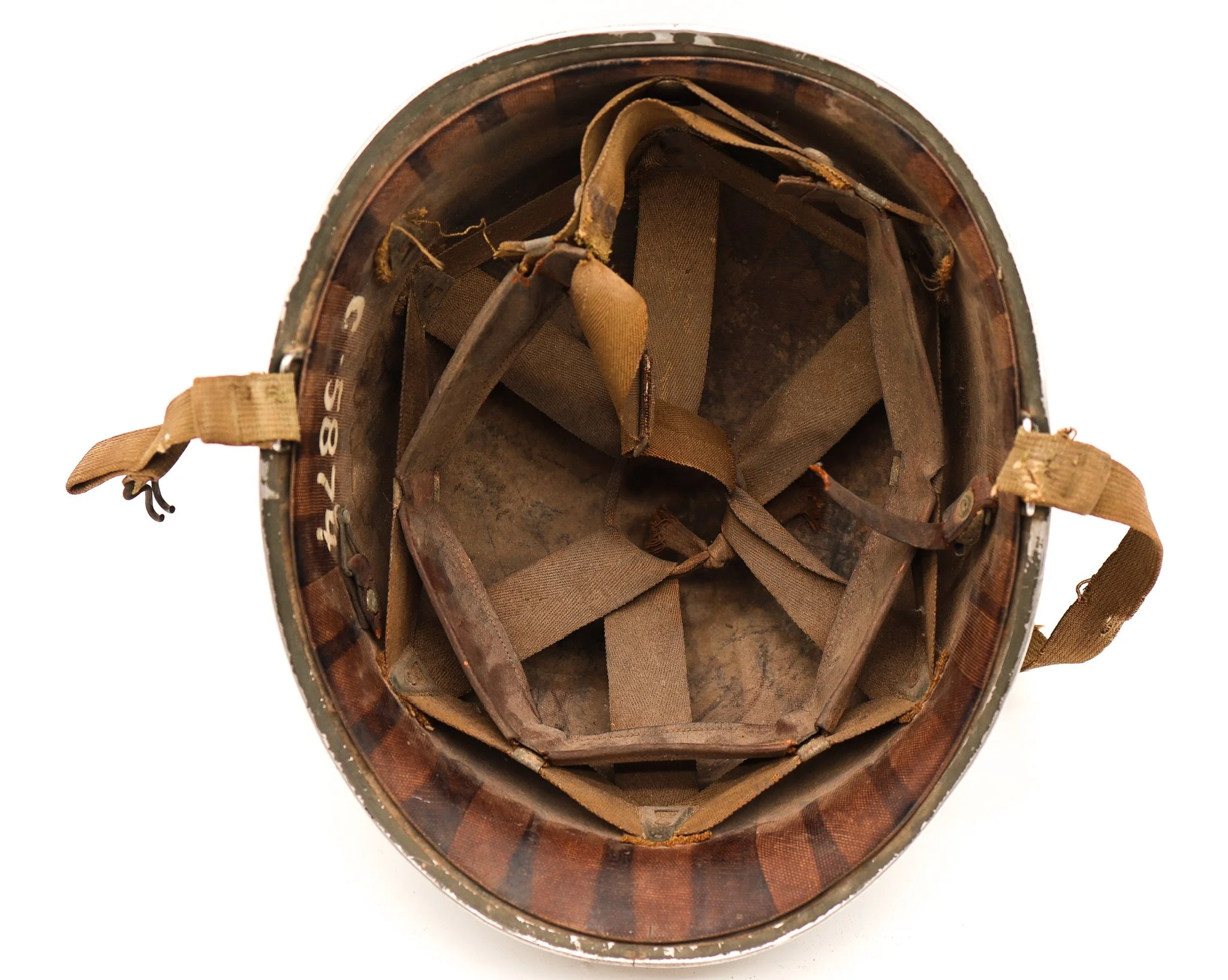
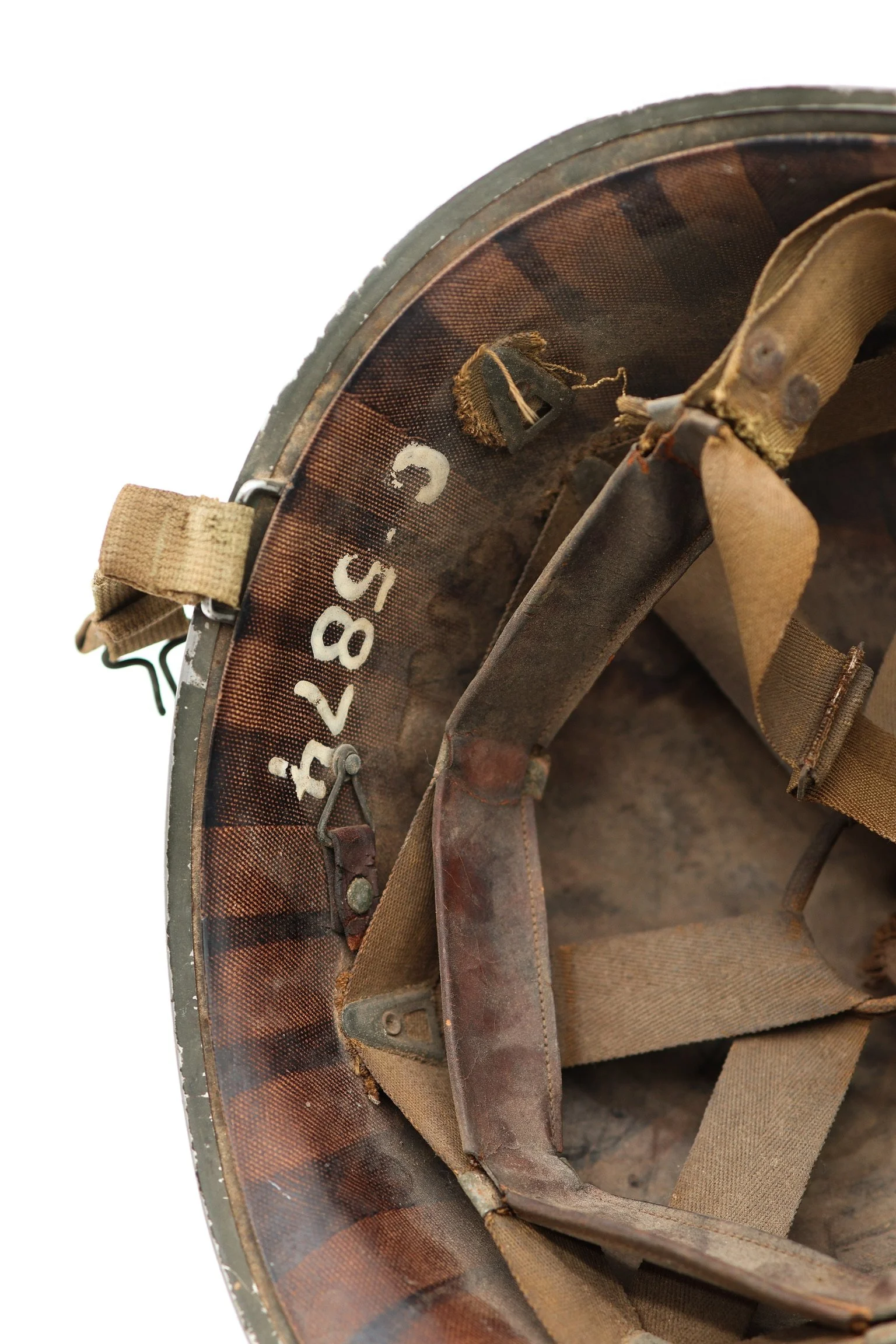
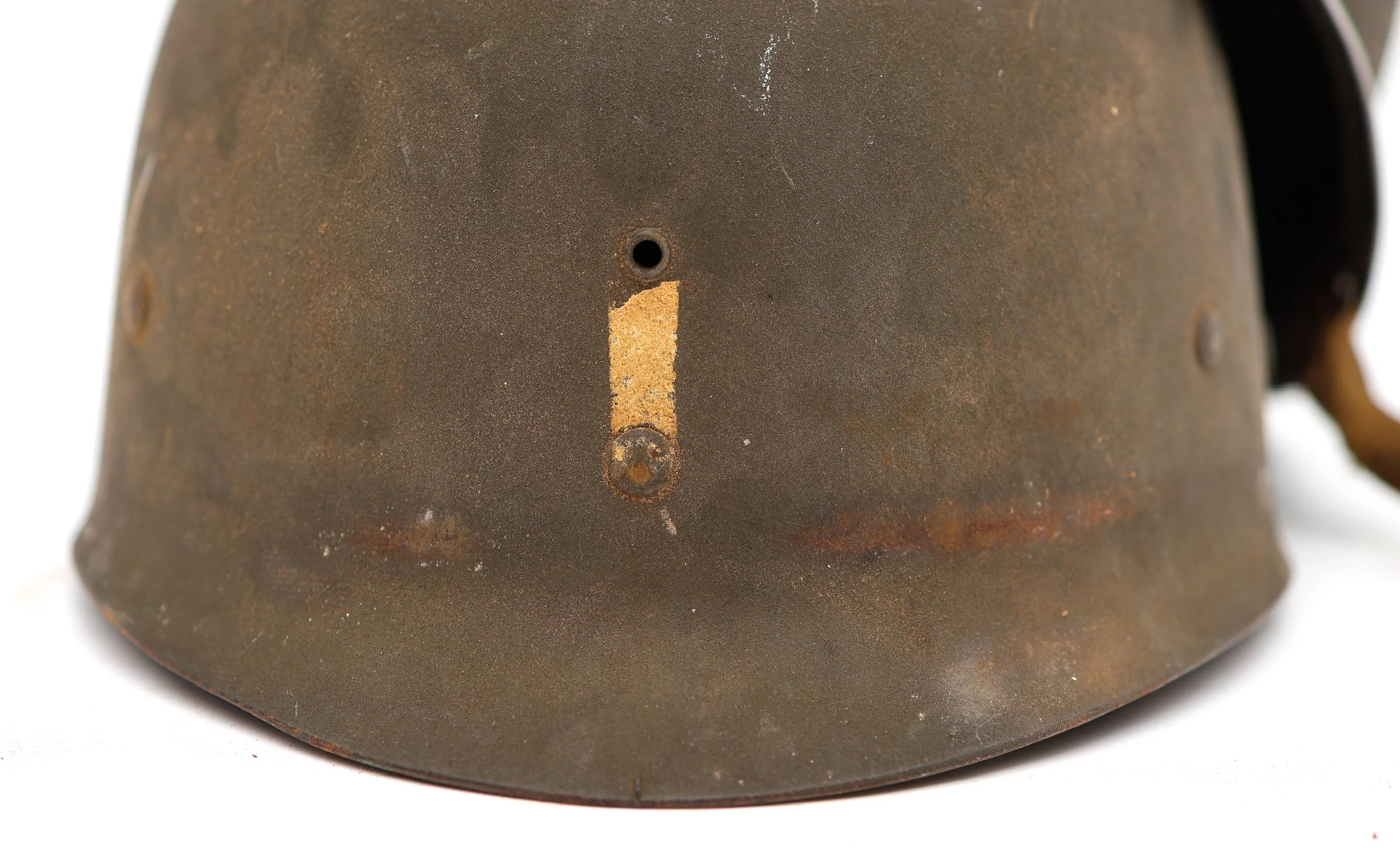
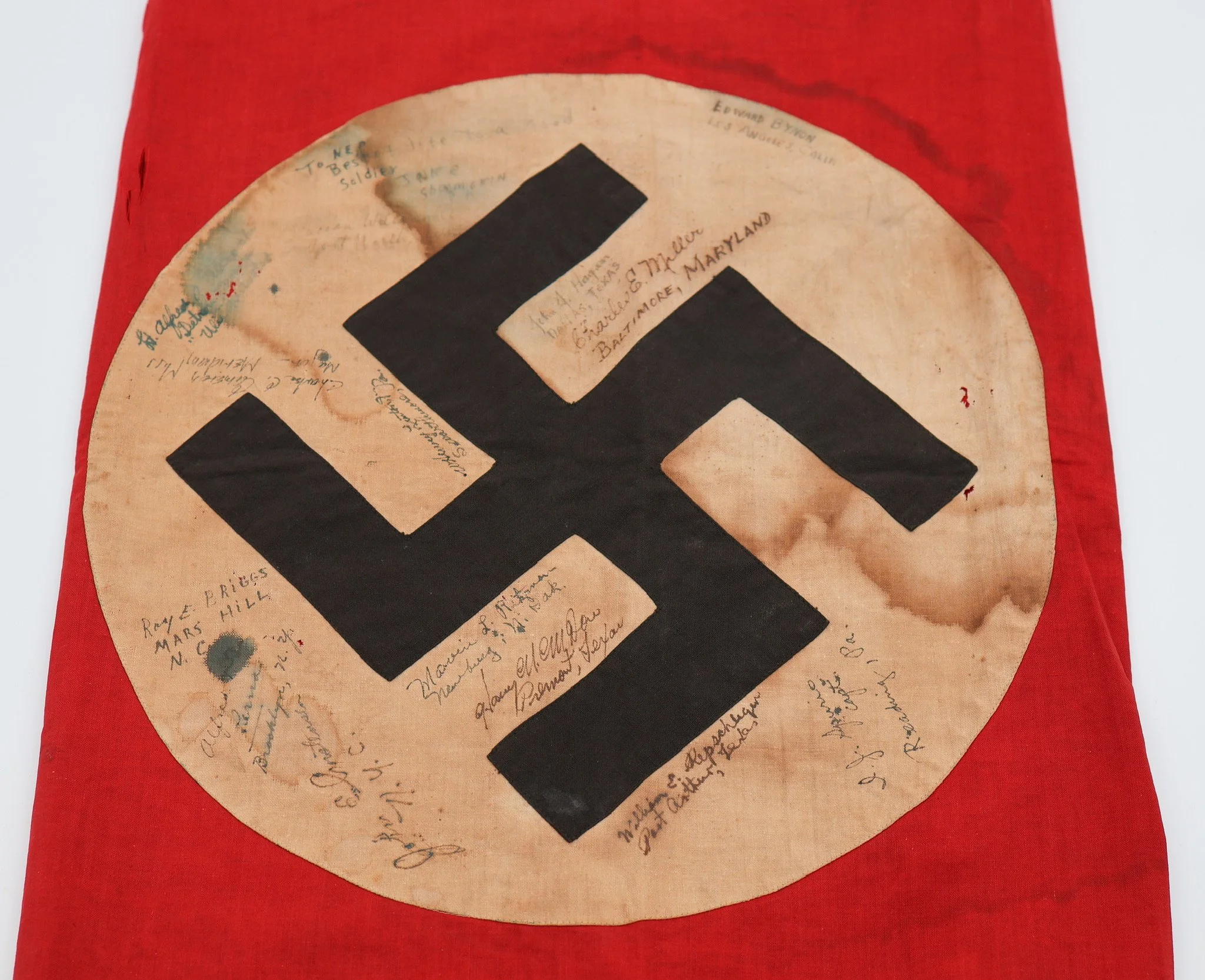
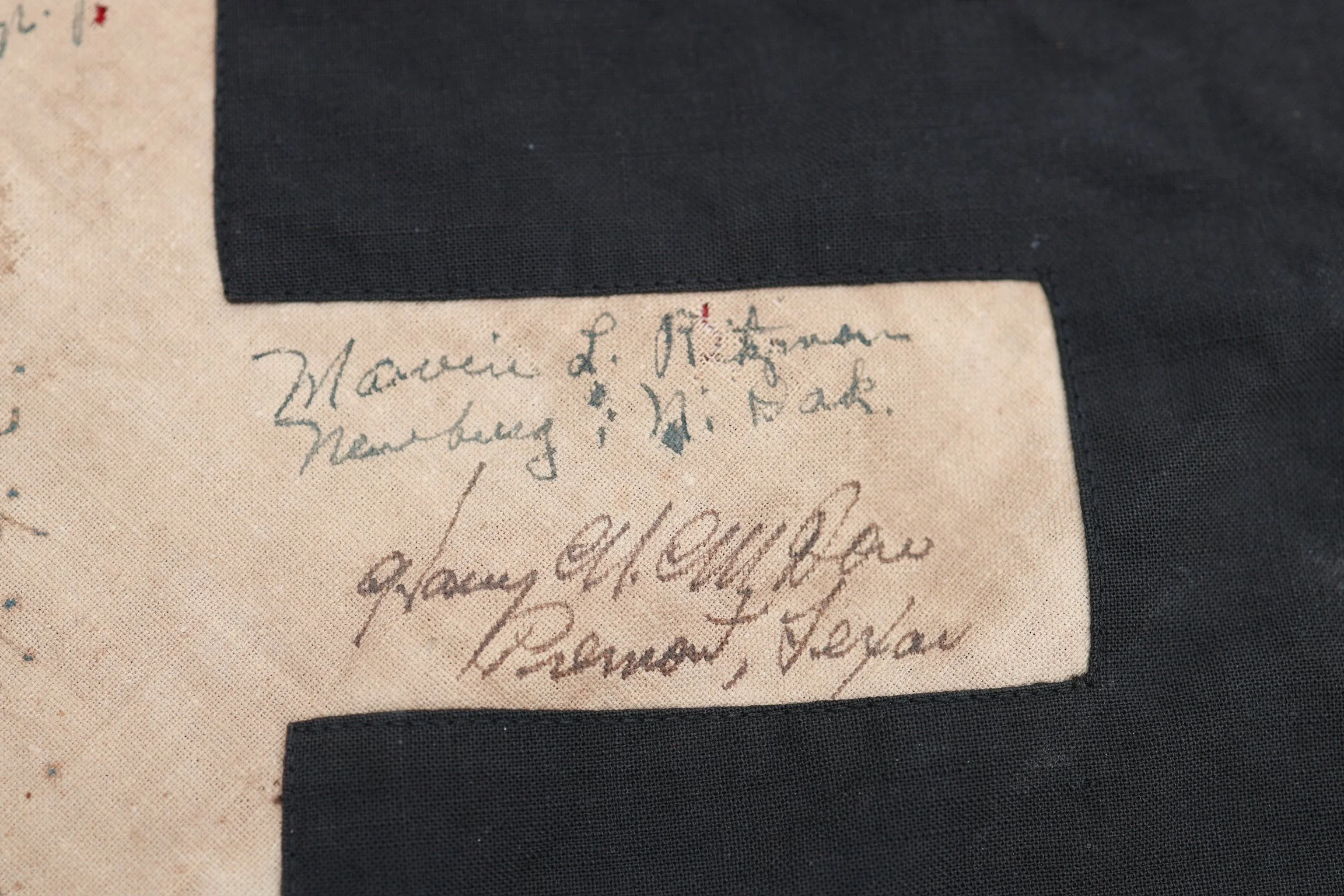
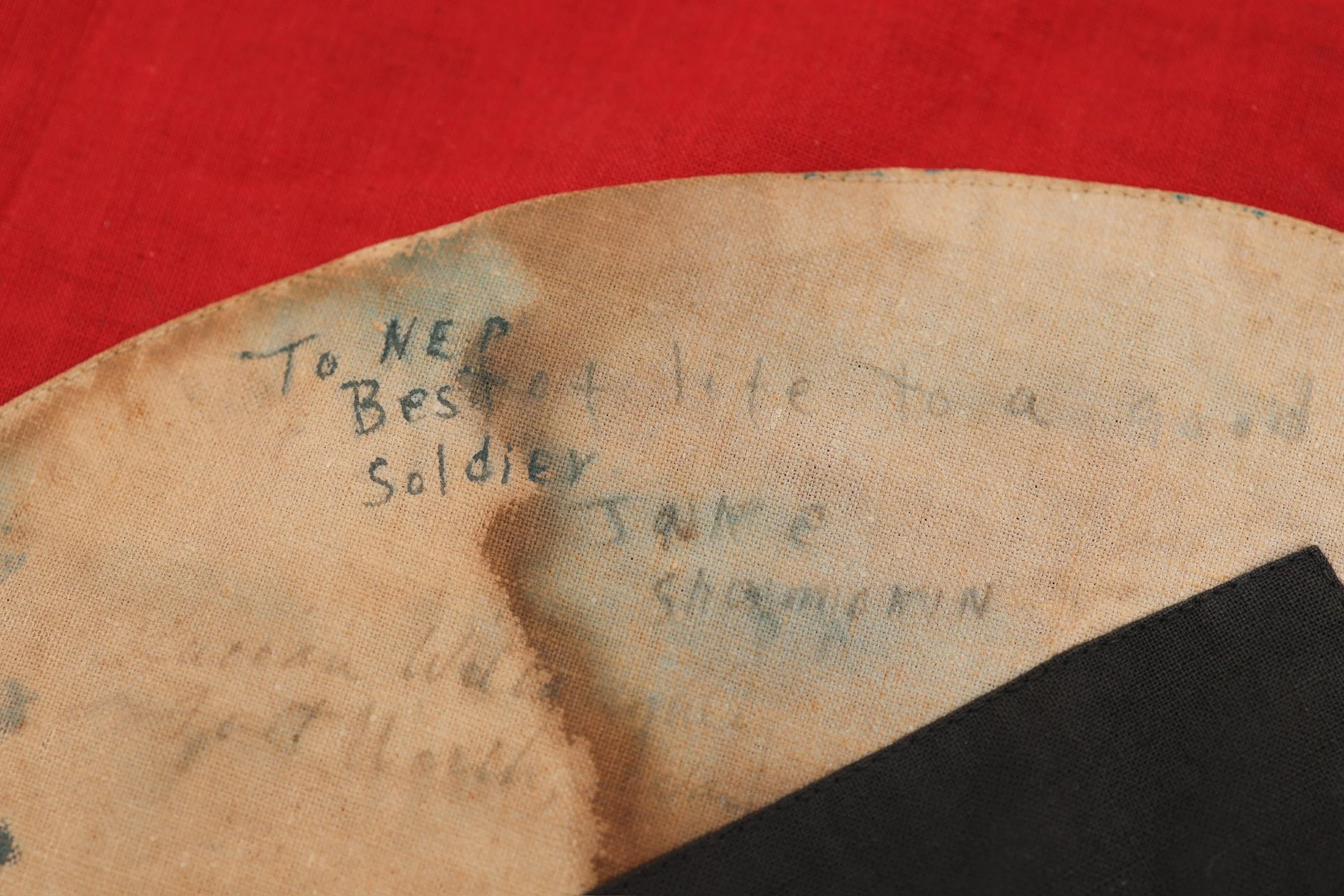
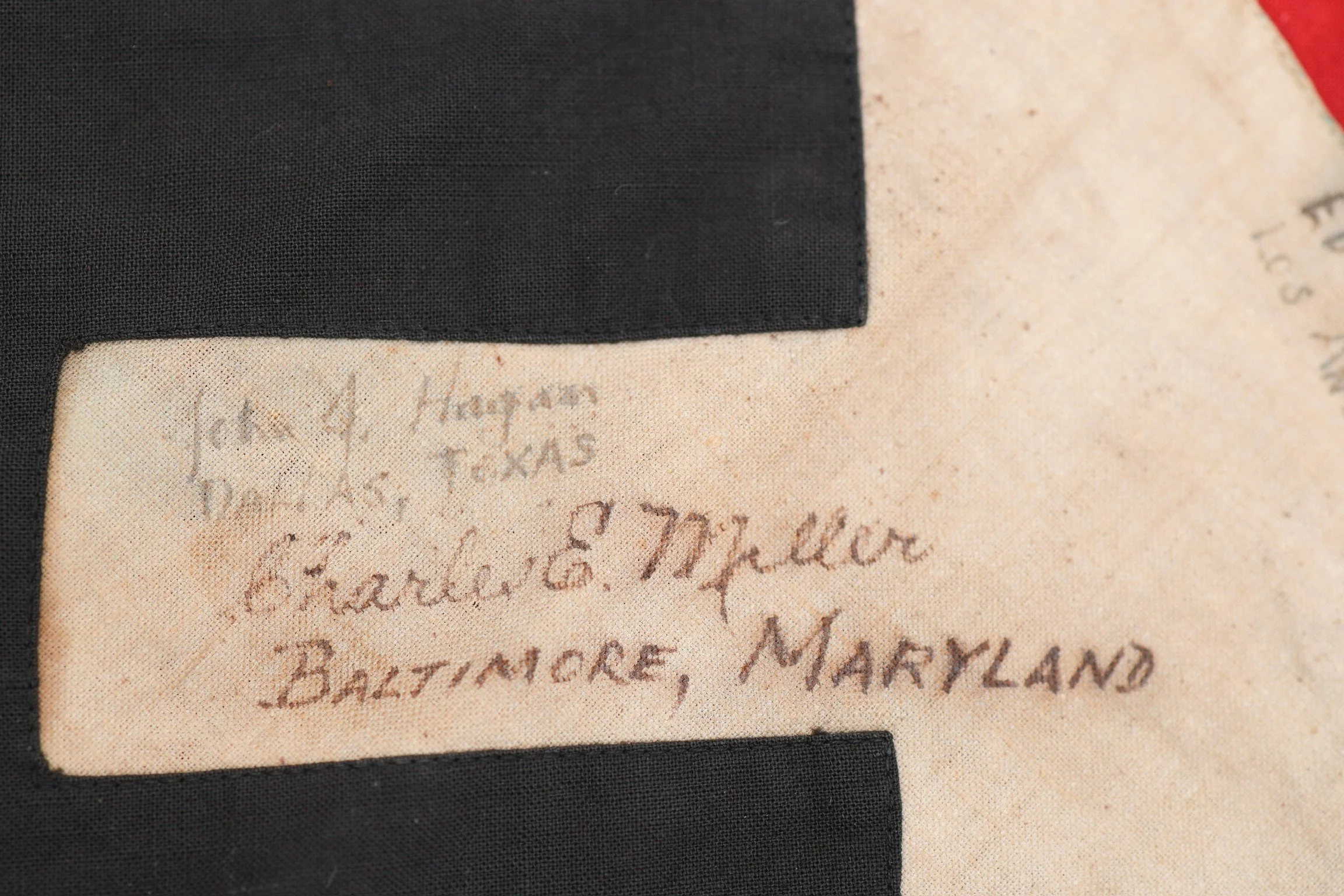
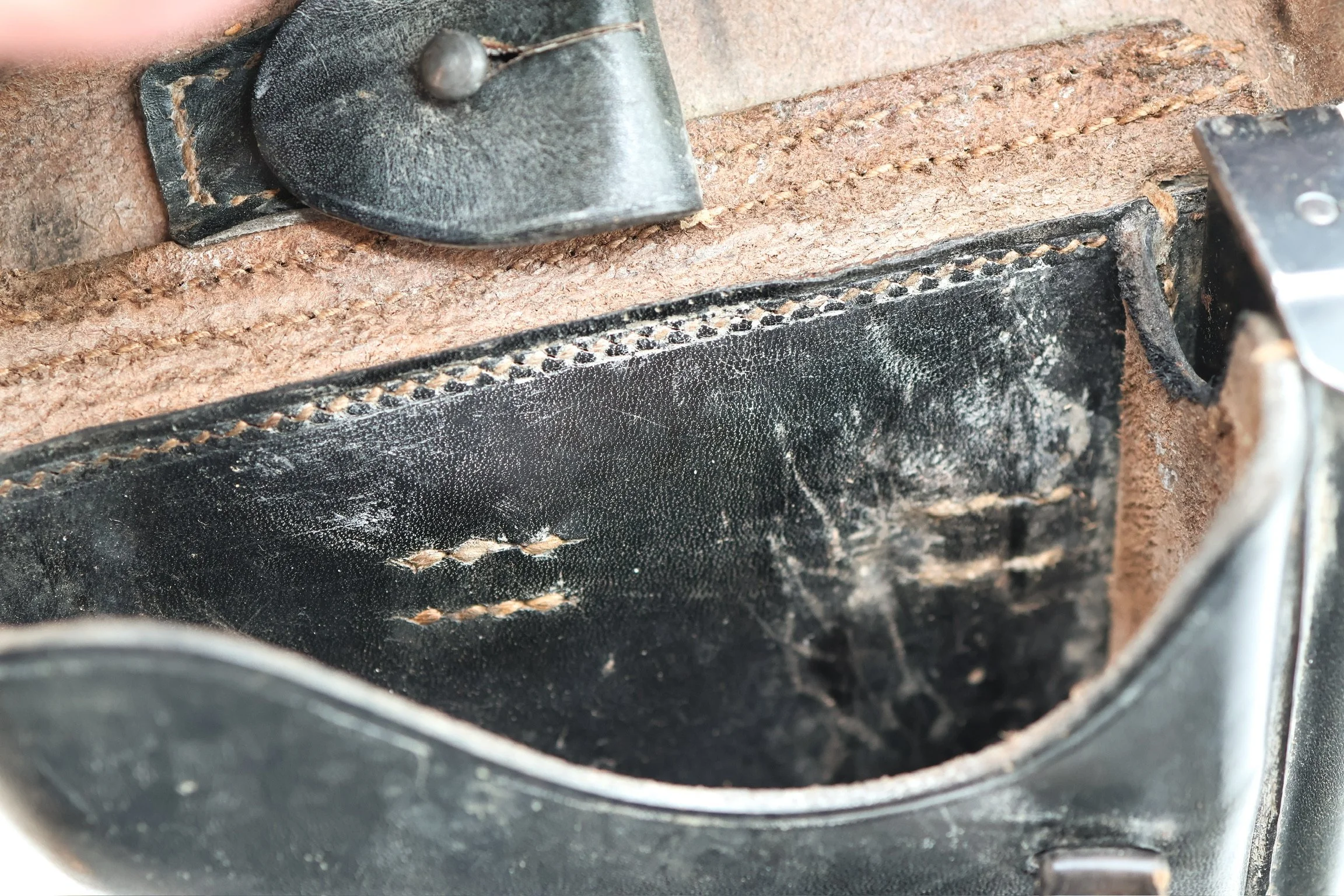
This grouping documents the wartime service of 1st Lt. Ned Cartledge, who served with the 89th Chemical Mortar Battalion in the European Theater during the final months of World War II. The battalion arrived in Europe in February 1945 and provided close fire support with 4.2-inch mortars during the Allied advance into Germany. Cartledge’s unit participated in major late-war operations, including the crossing of the Rhine at Wesel and the crossing of the Elbe River alongside the 82nd Airborne Division, operations that marked the collapse of organized German resistance in the west.
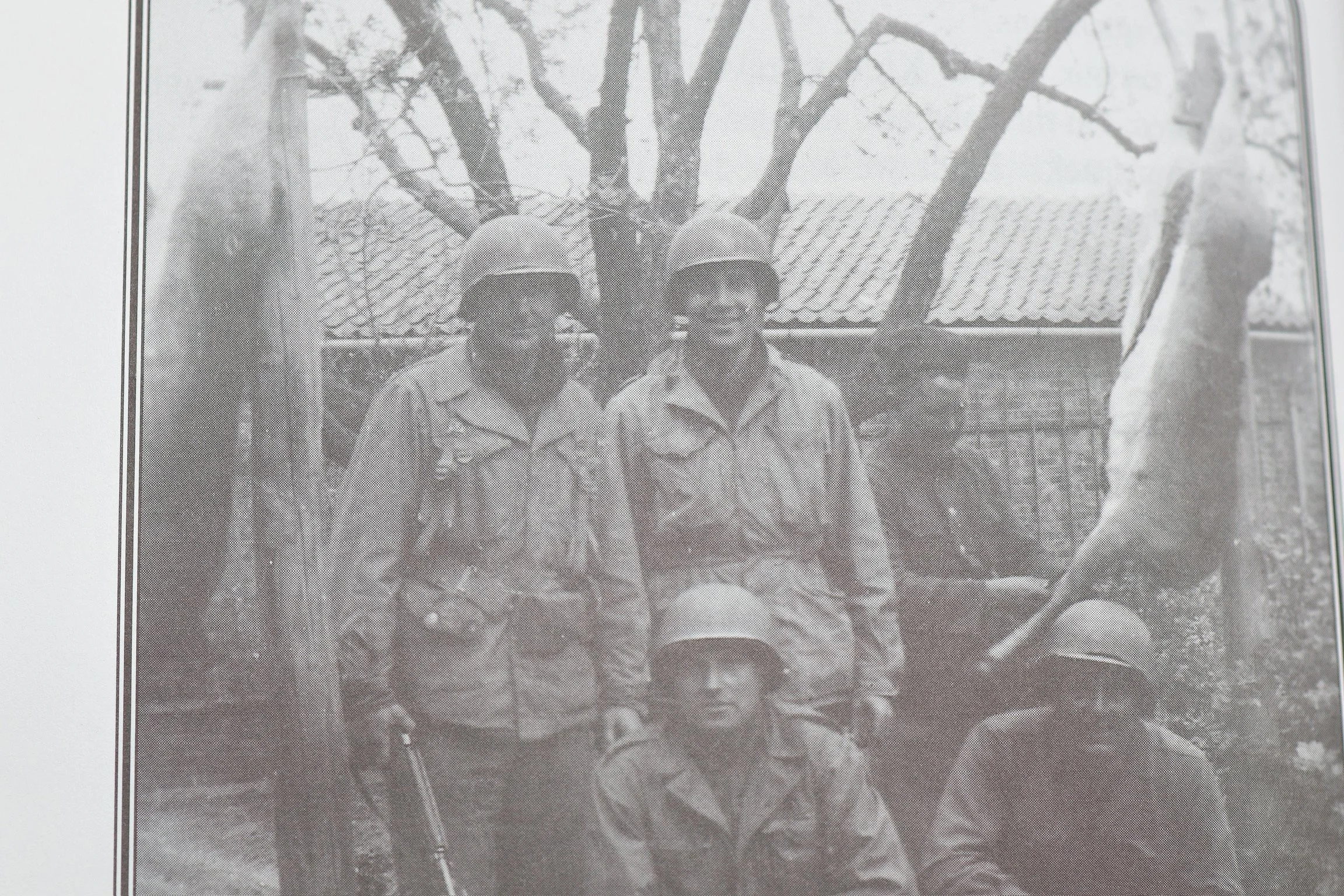
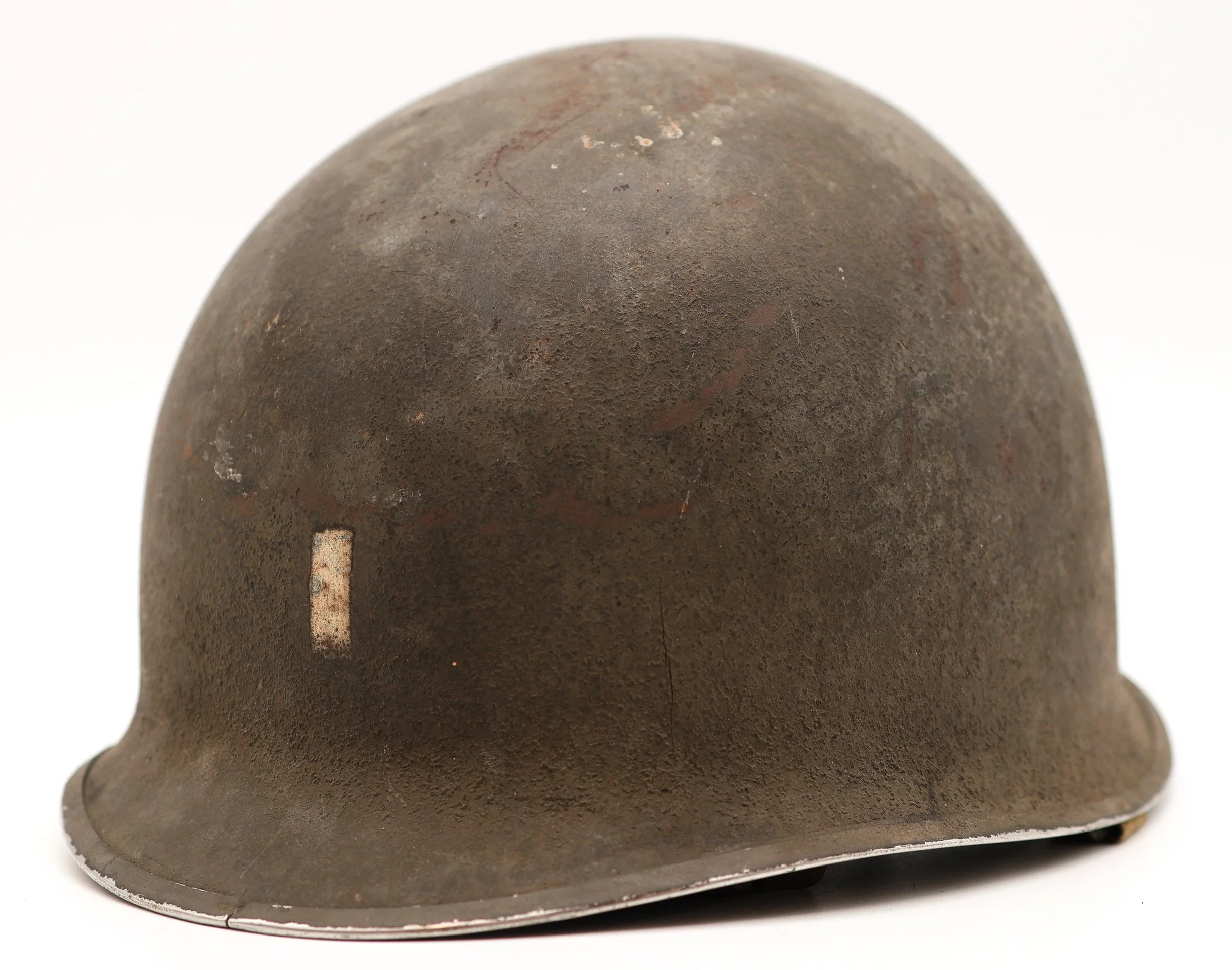
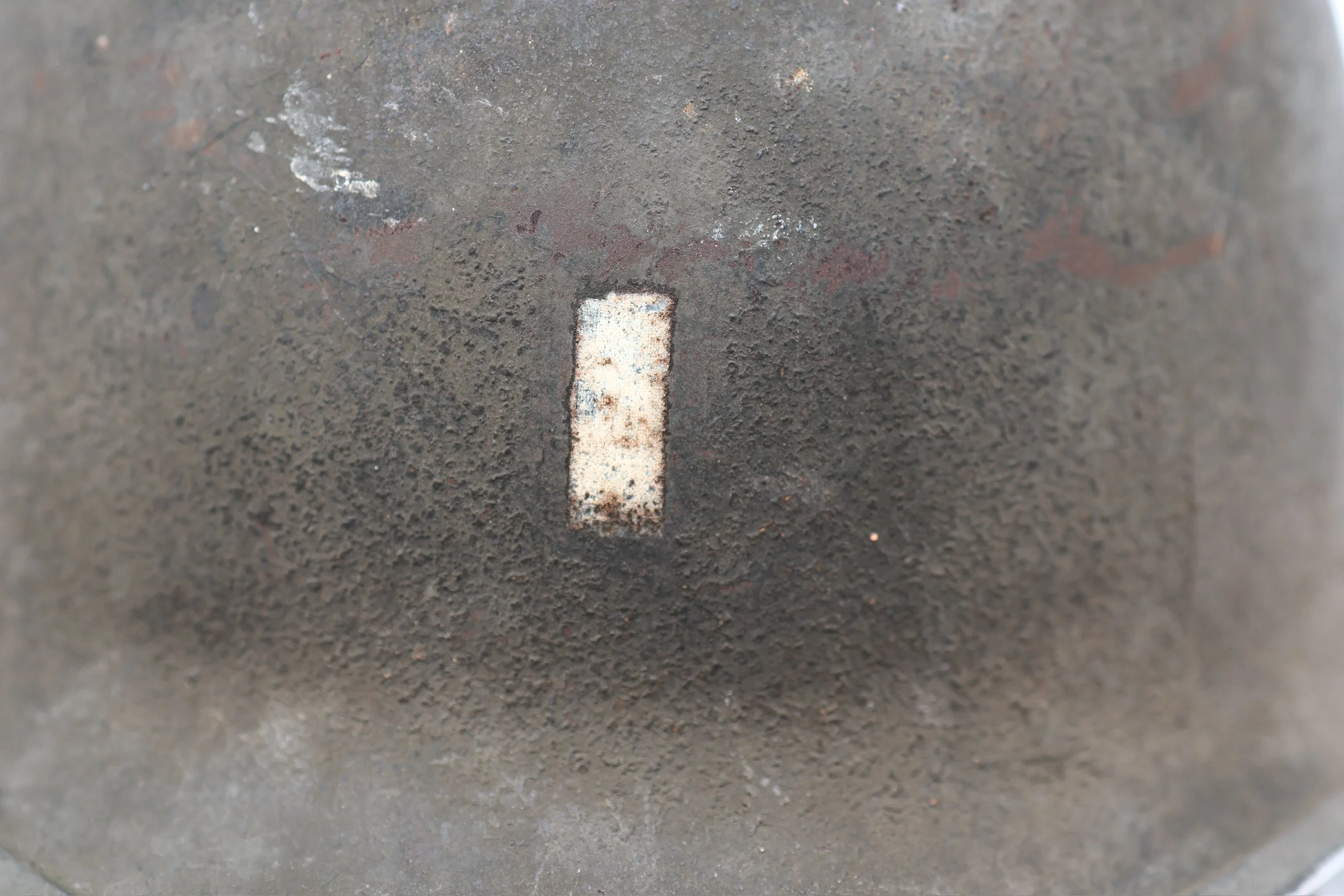
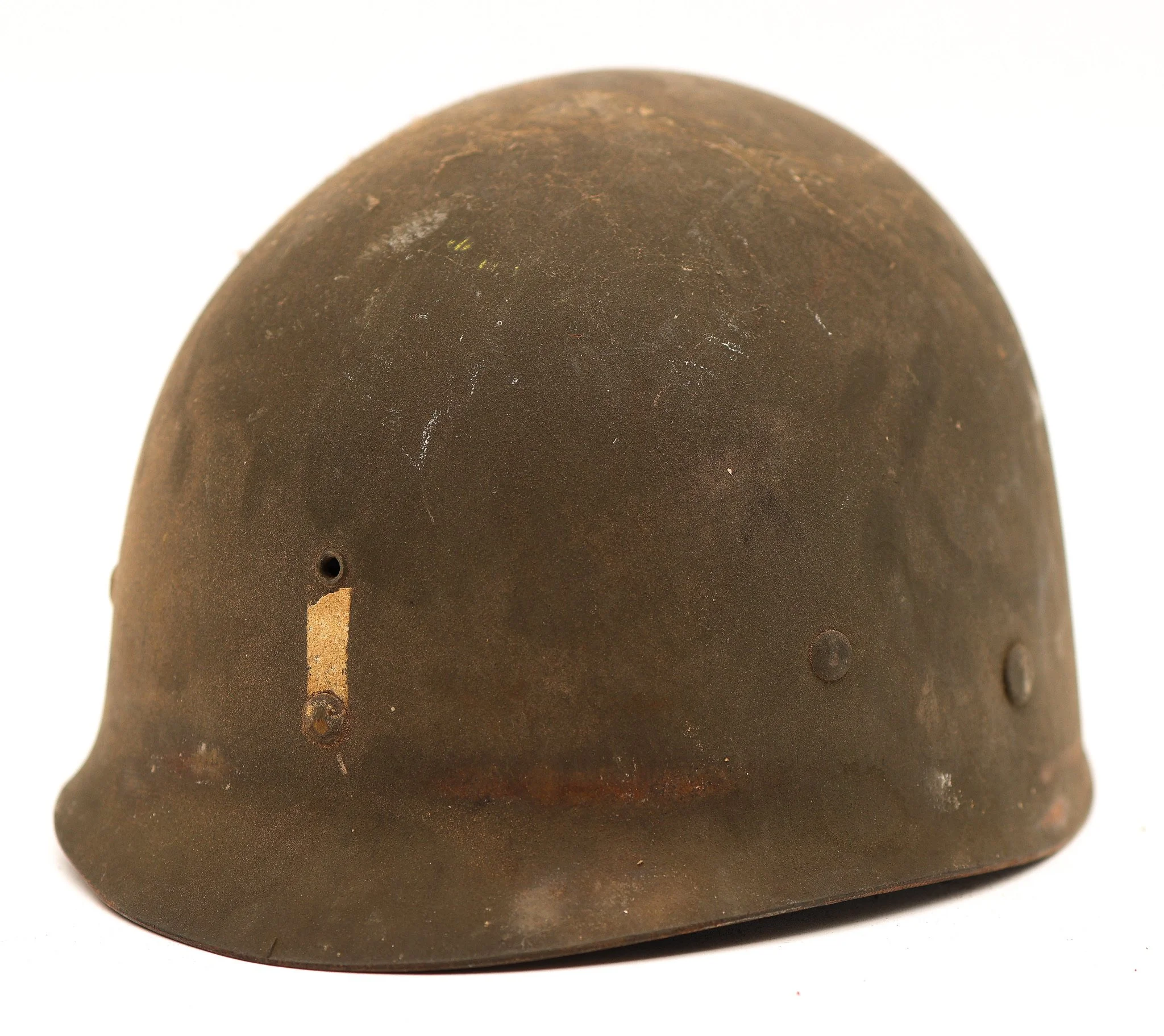
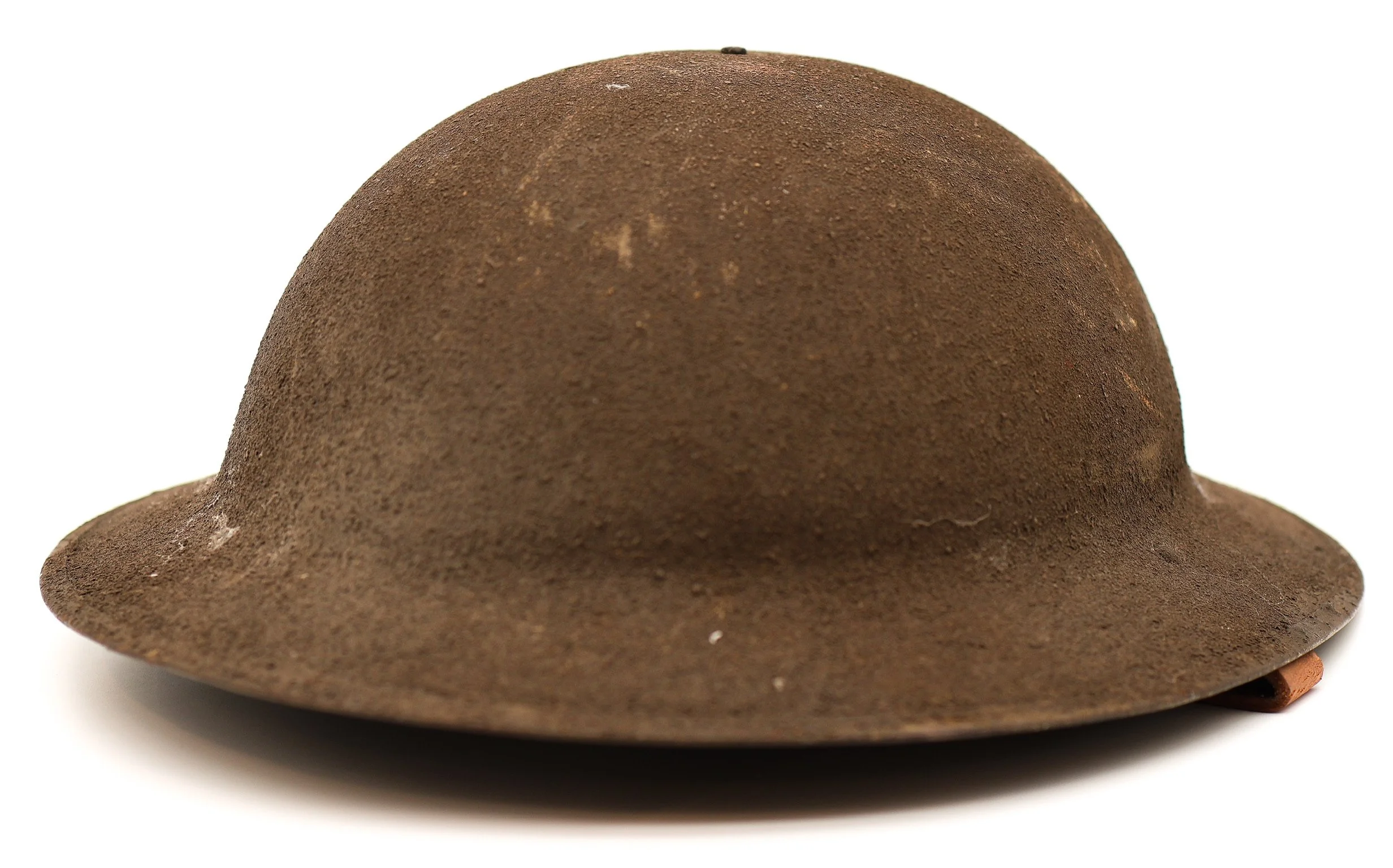
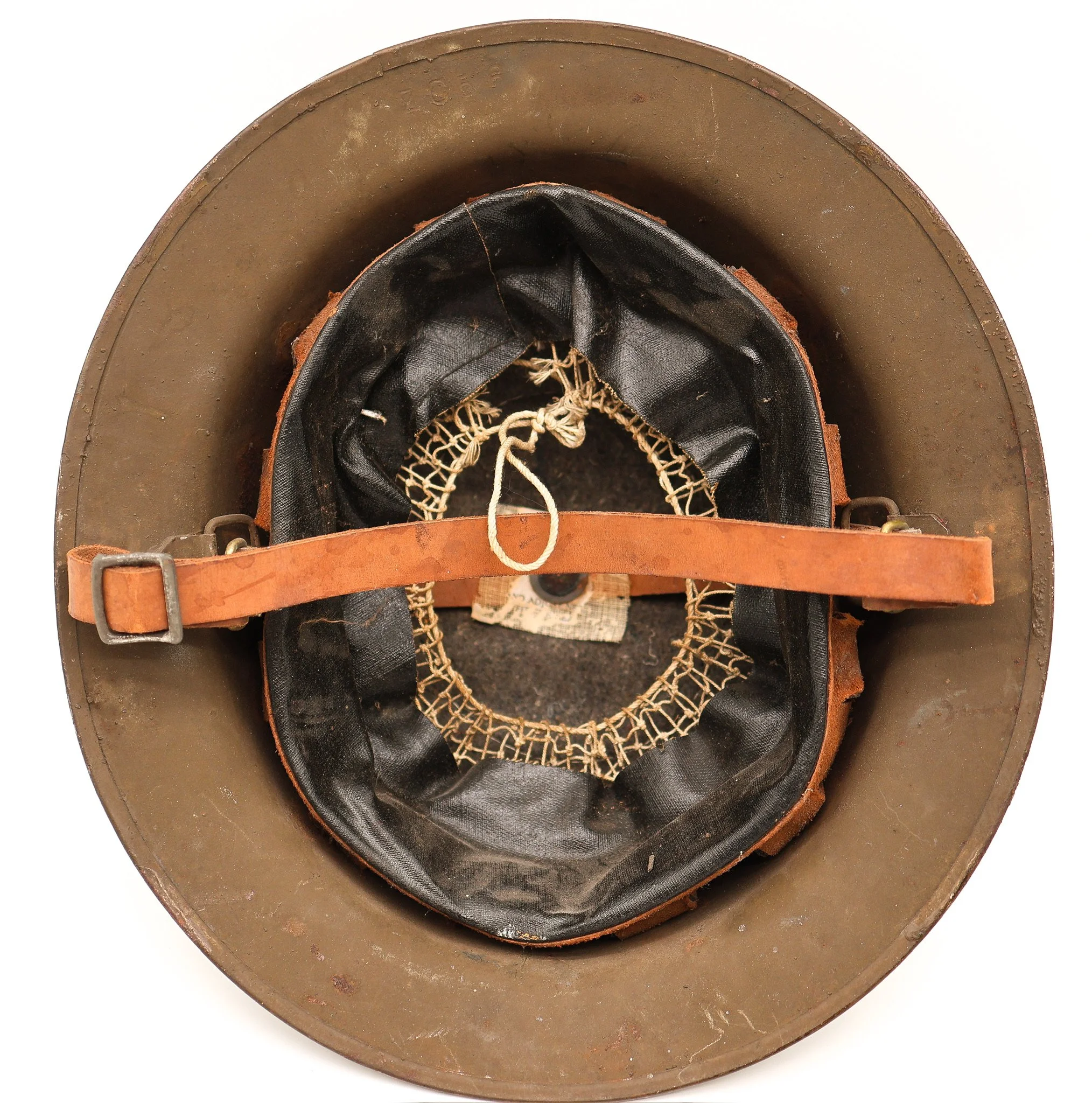
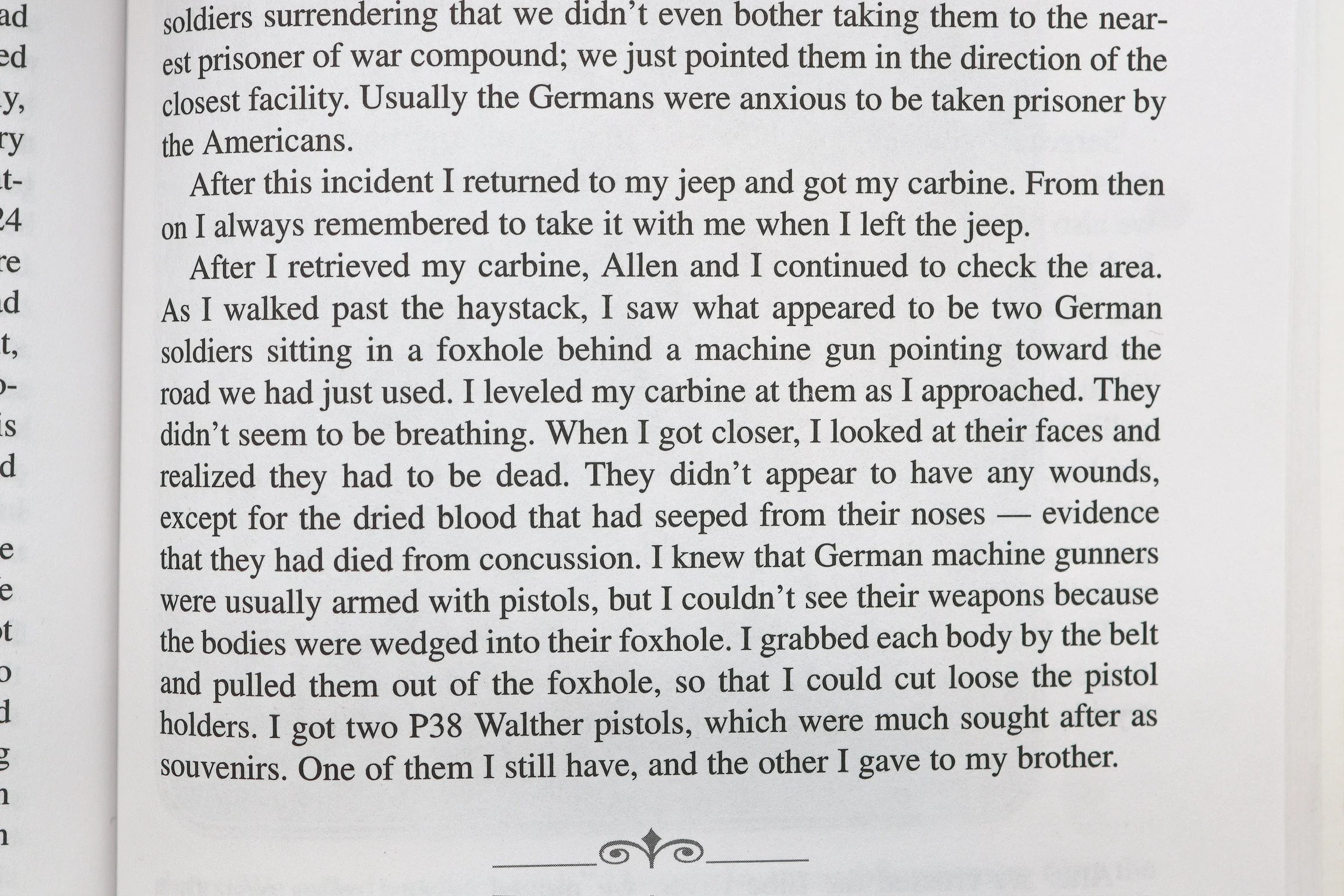
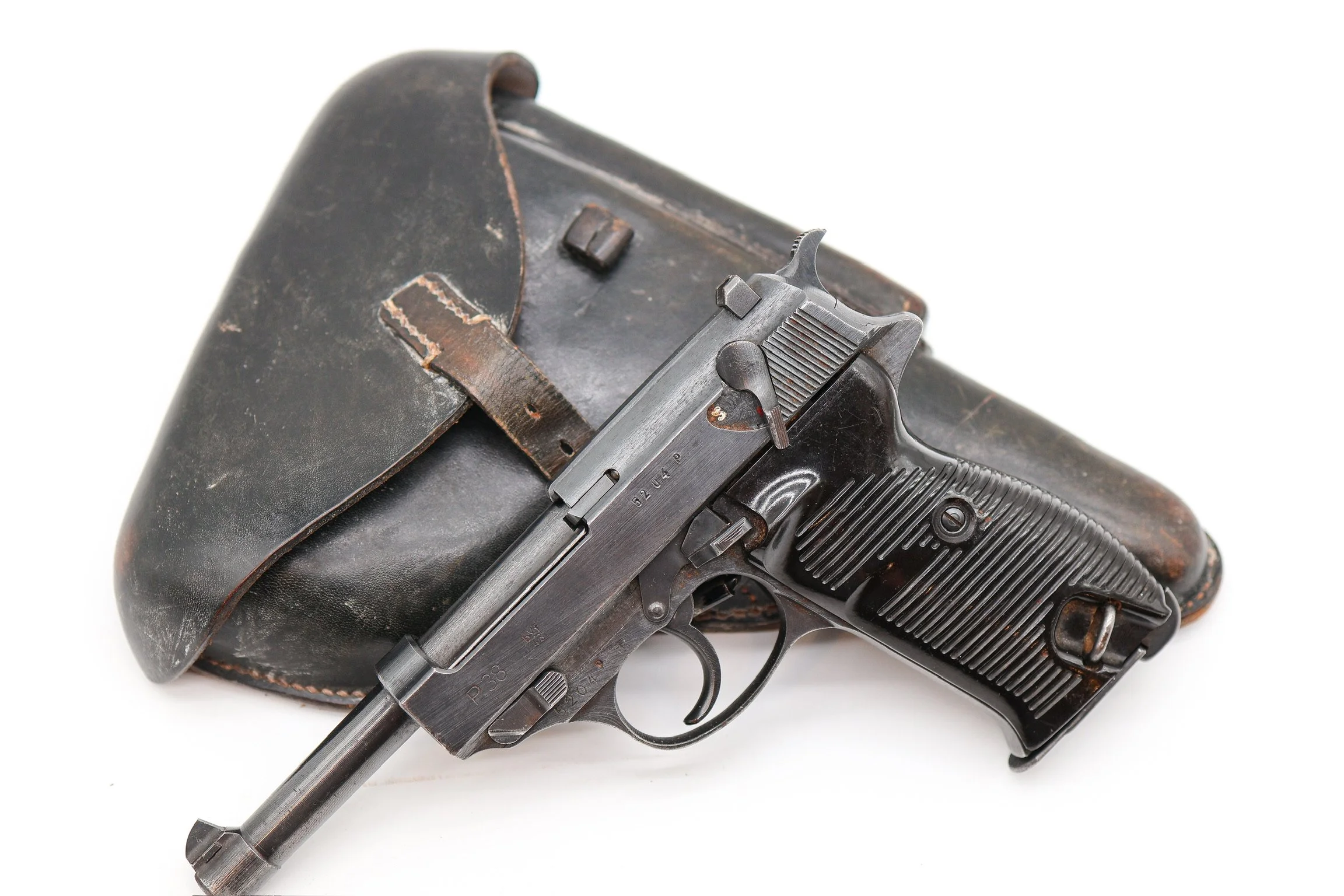
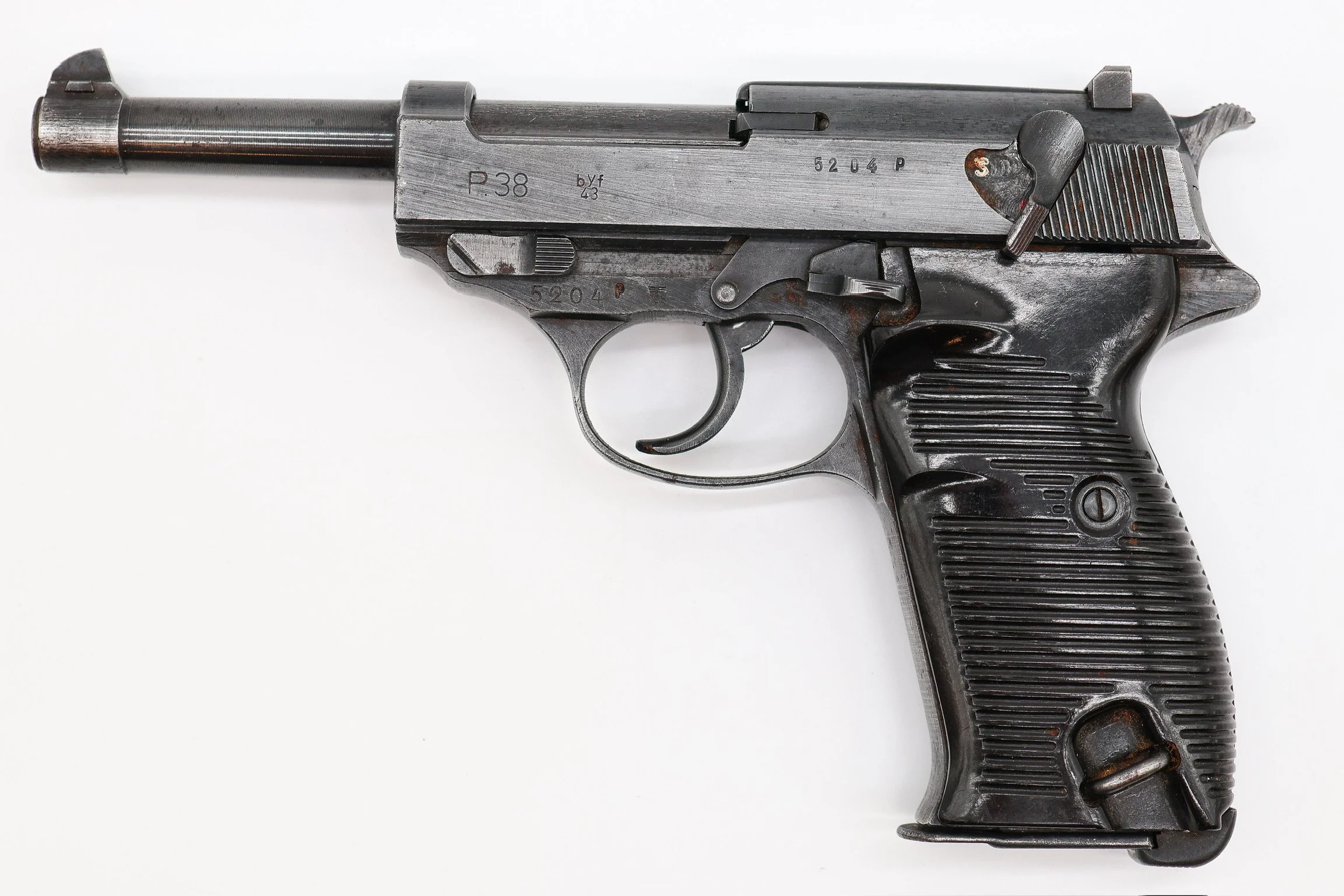
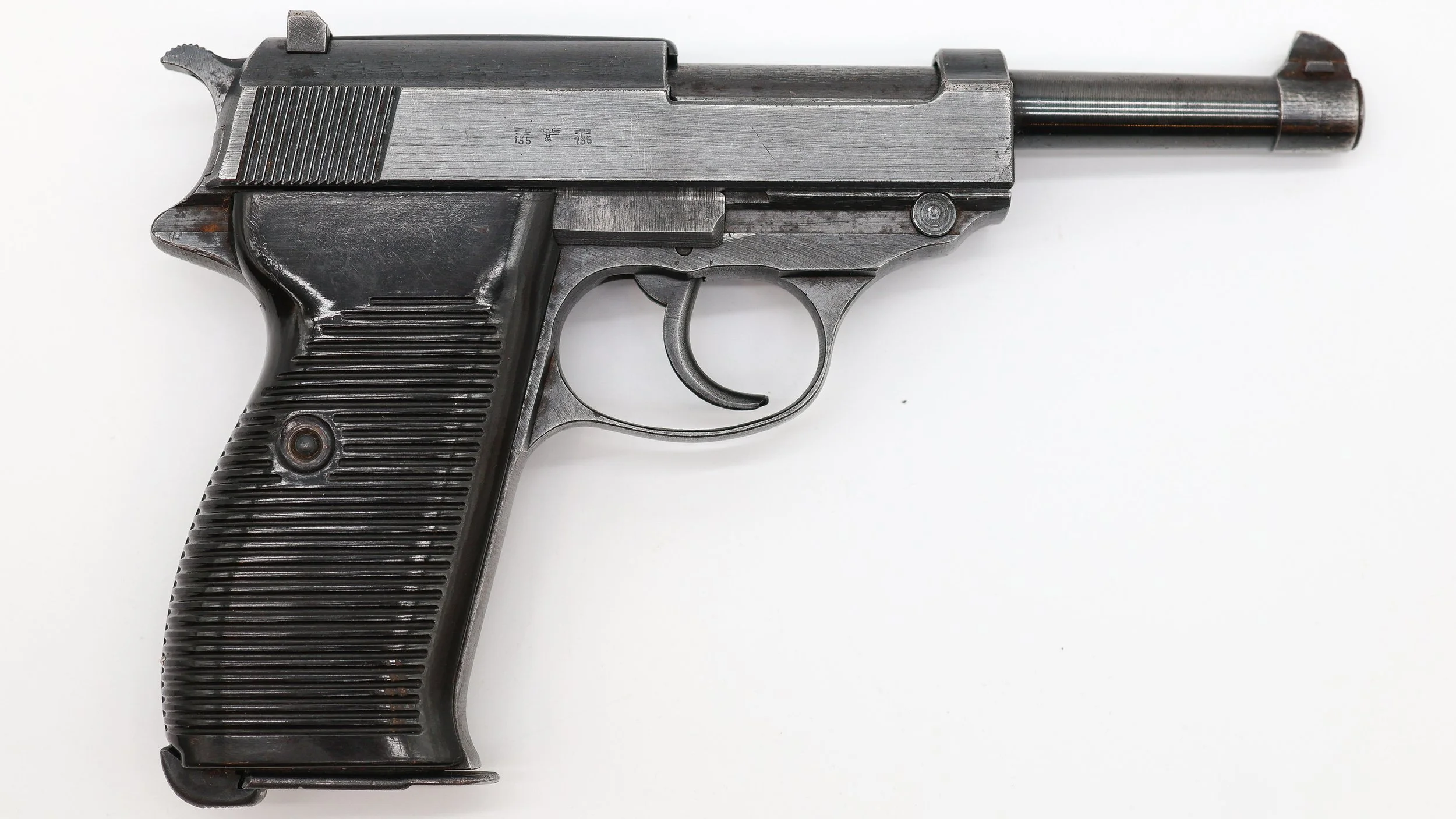
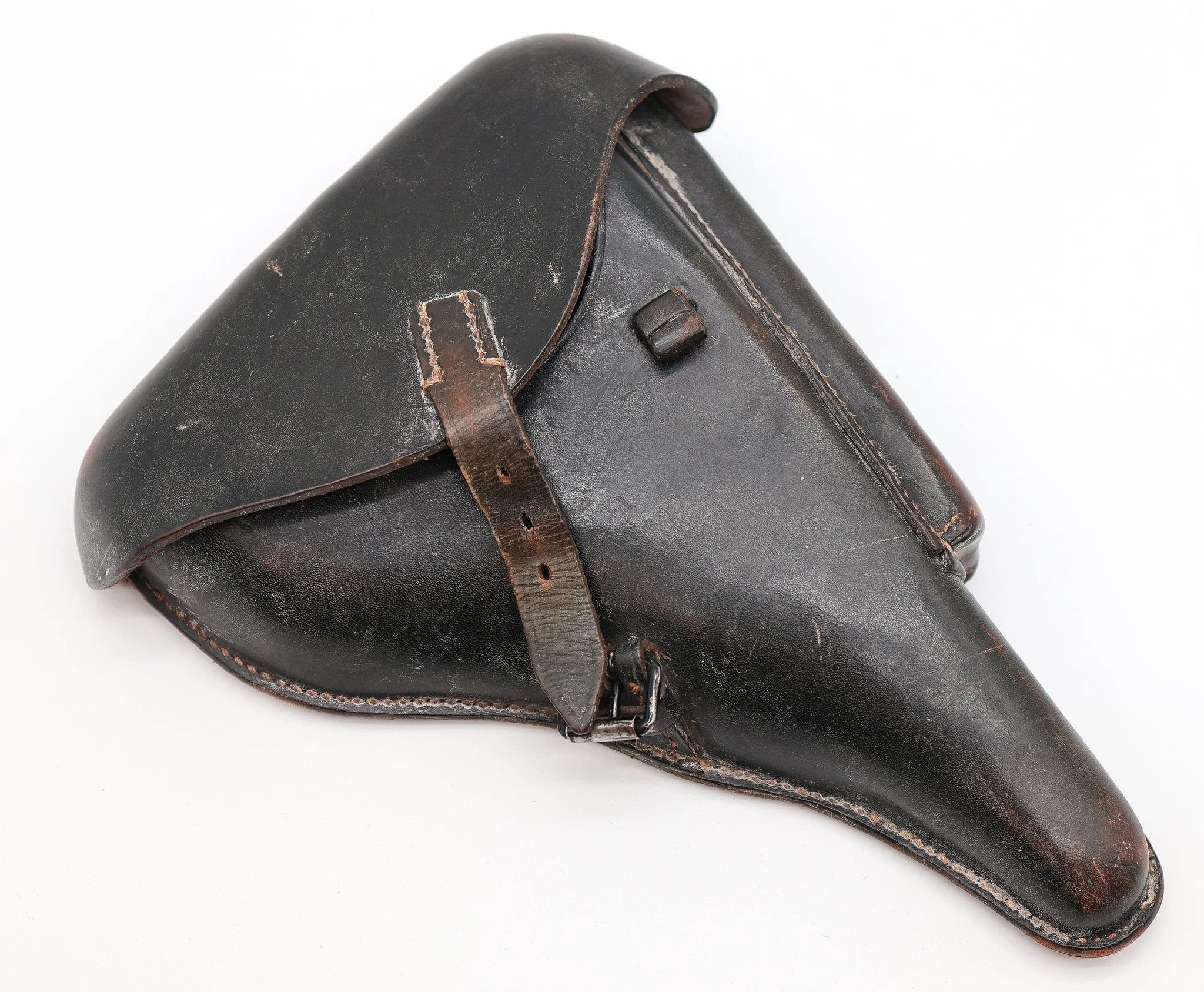
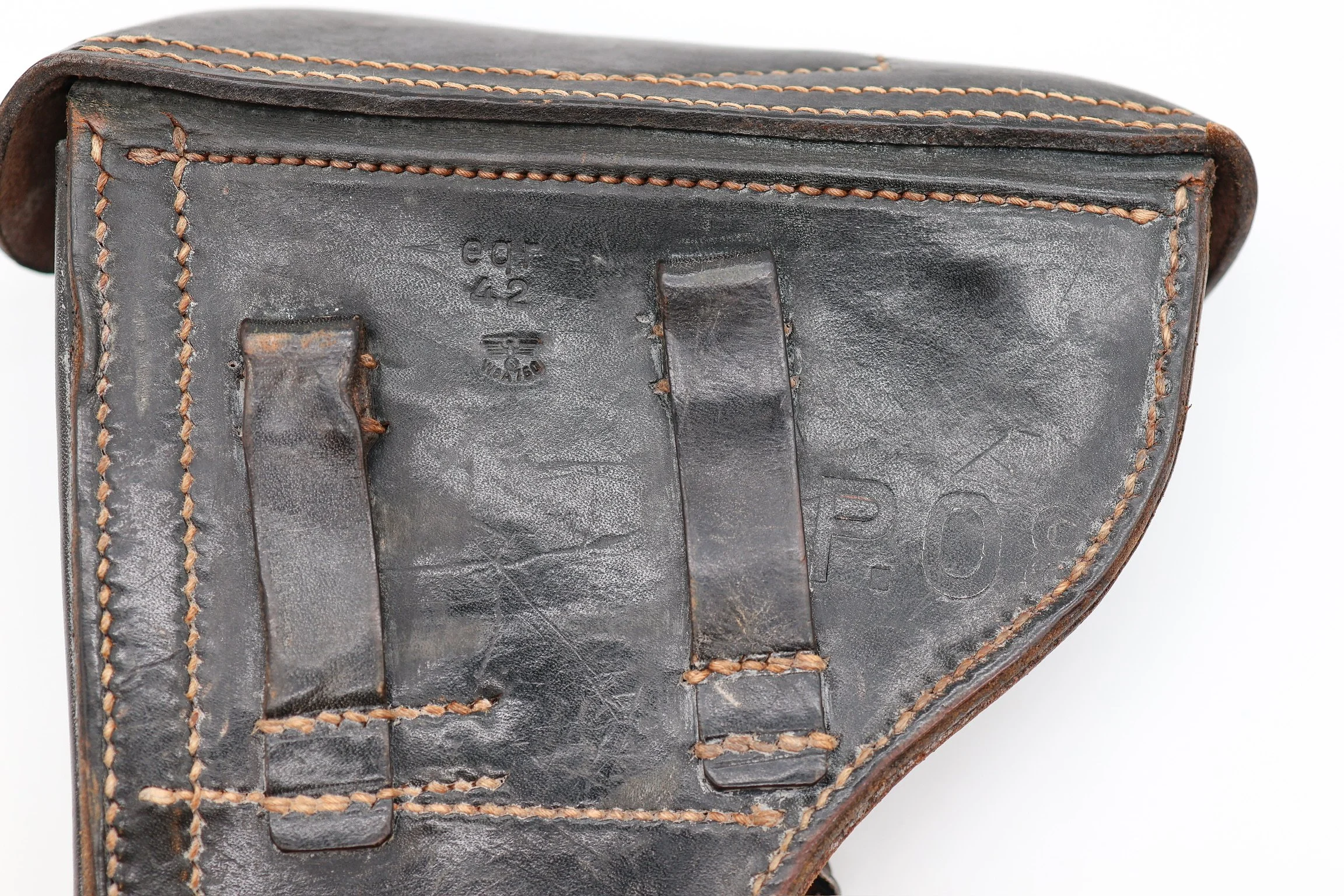
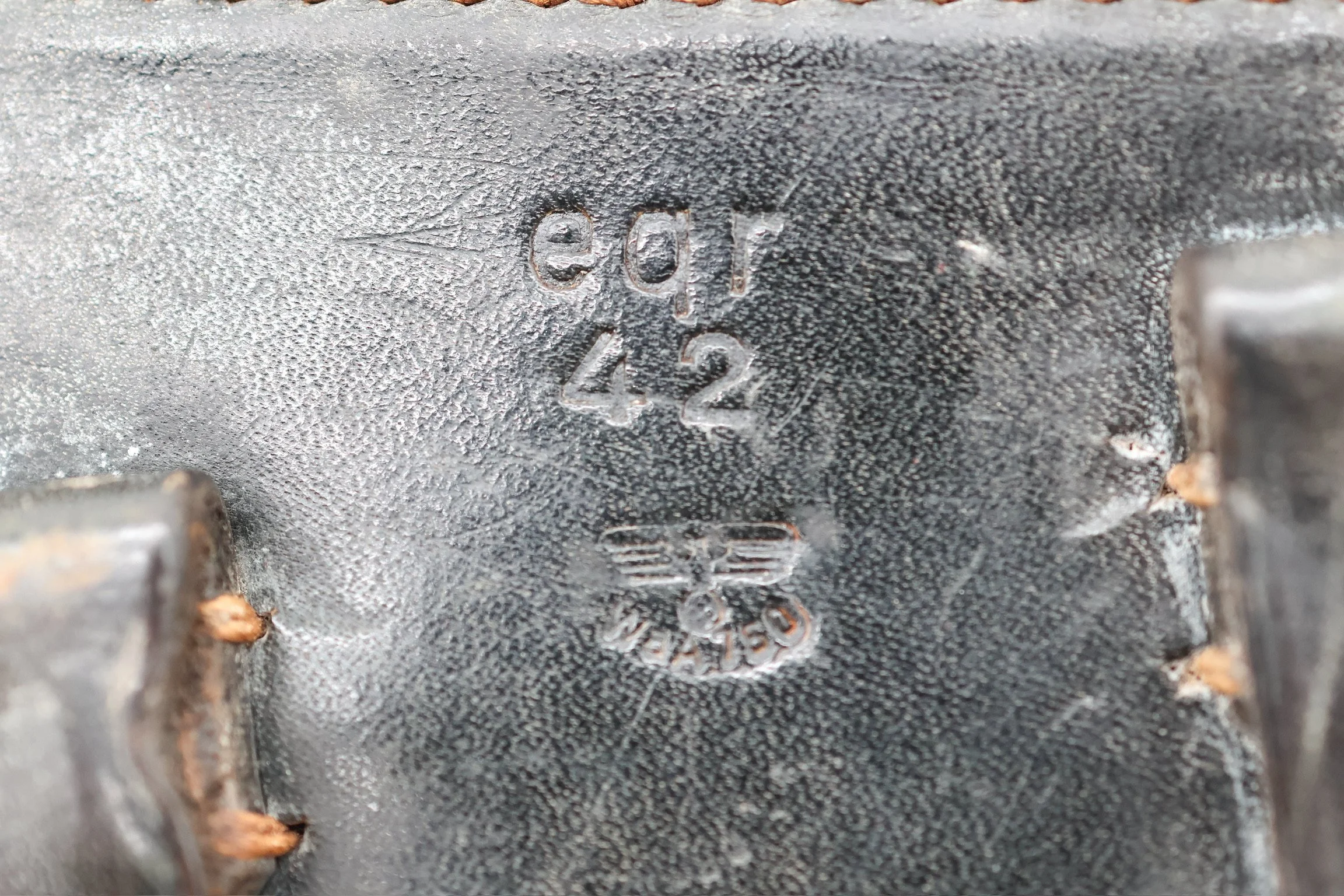
The grouping includes Cartledge’s WWII combat helmet, which is visible in period photographs reproduced in his later memoir. A second WWI-style helmet is also present in the grouping; while period to the earlier conflict, it was not used by Cartledge in combat. Among the most significant items is a captured Walther P-38 pistol, one of two Cartledge recovered during a patrol in Germany. In his memoir, Cartledge recounts discovering two German soldiers slumped dead in a foxhole behind a machine gun position, both apparently killed by concussion, with dried blood visible around their noses. He removed the pistols from their bodies as battlefield trophies, retaining one for himself and later giving the second to his brother.
Incredible WWII Grouping of 1st Lt. Ned Cartledge
-
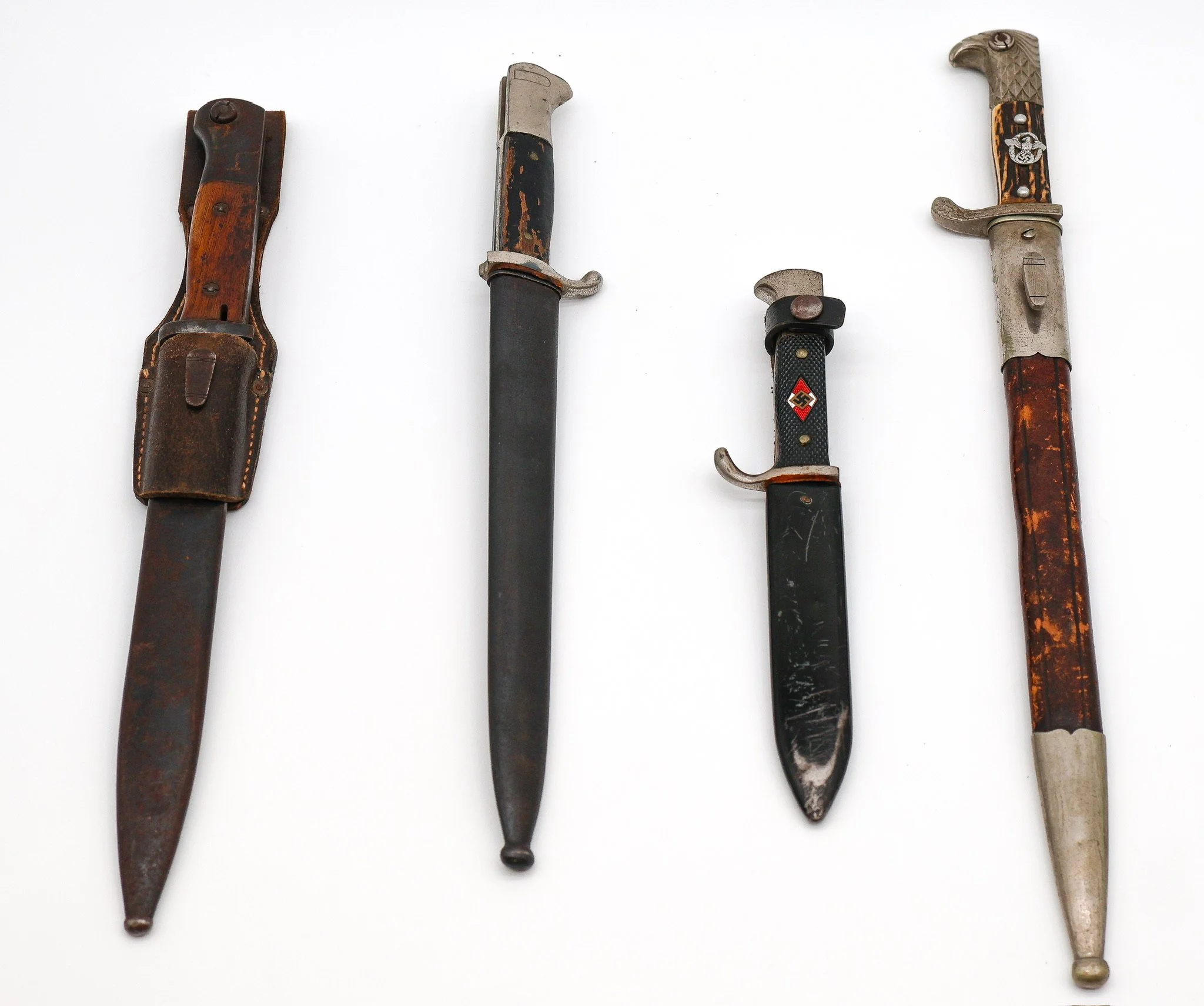
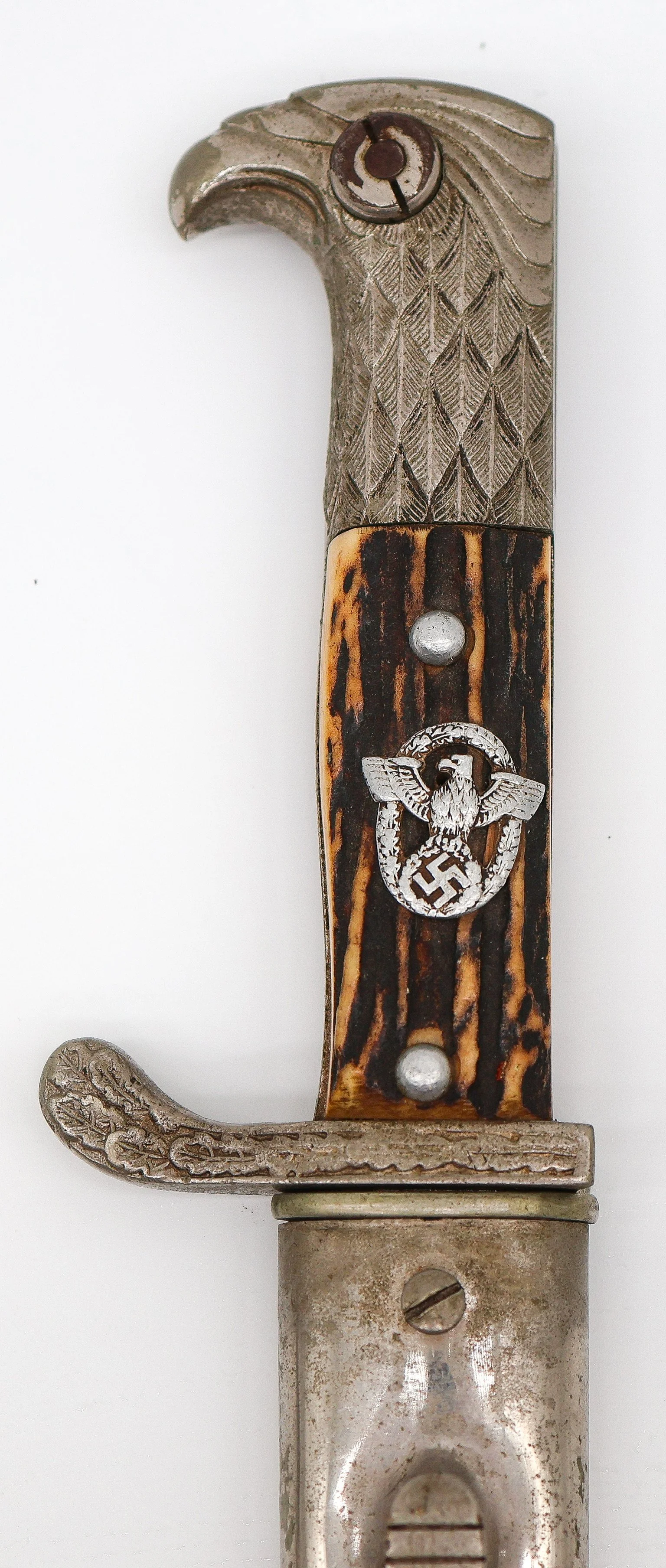
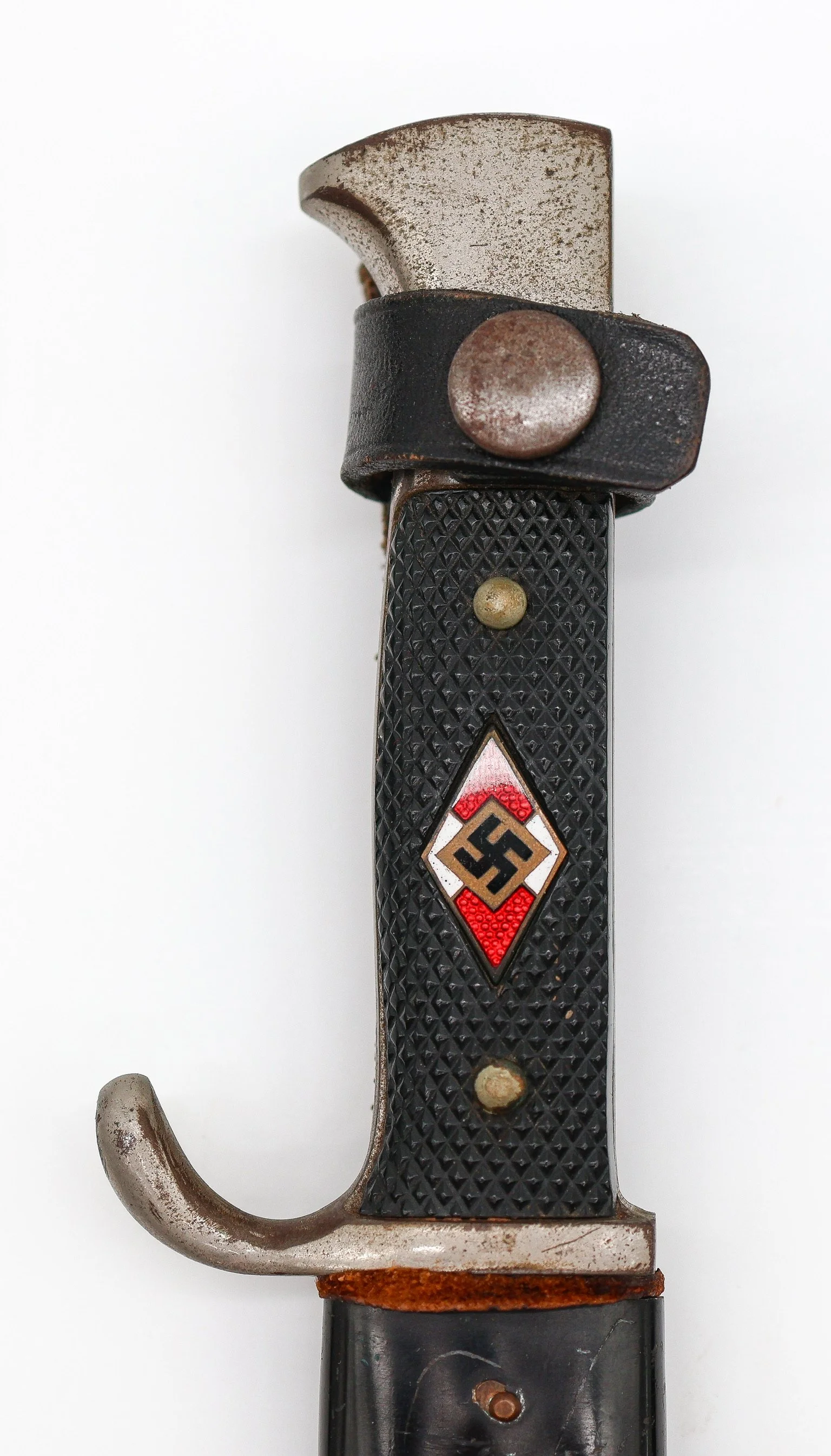
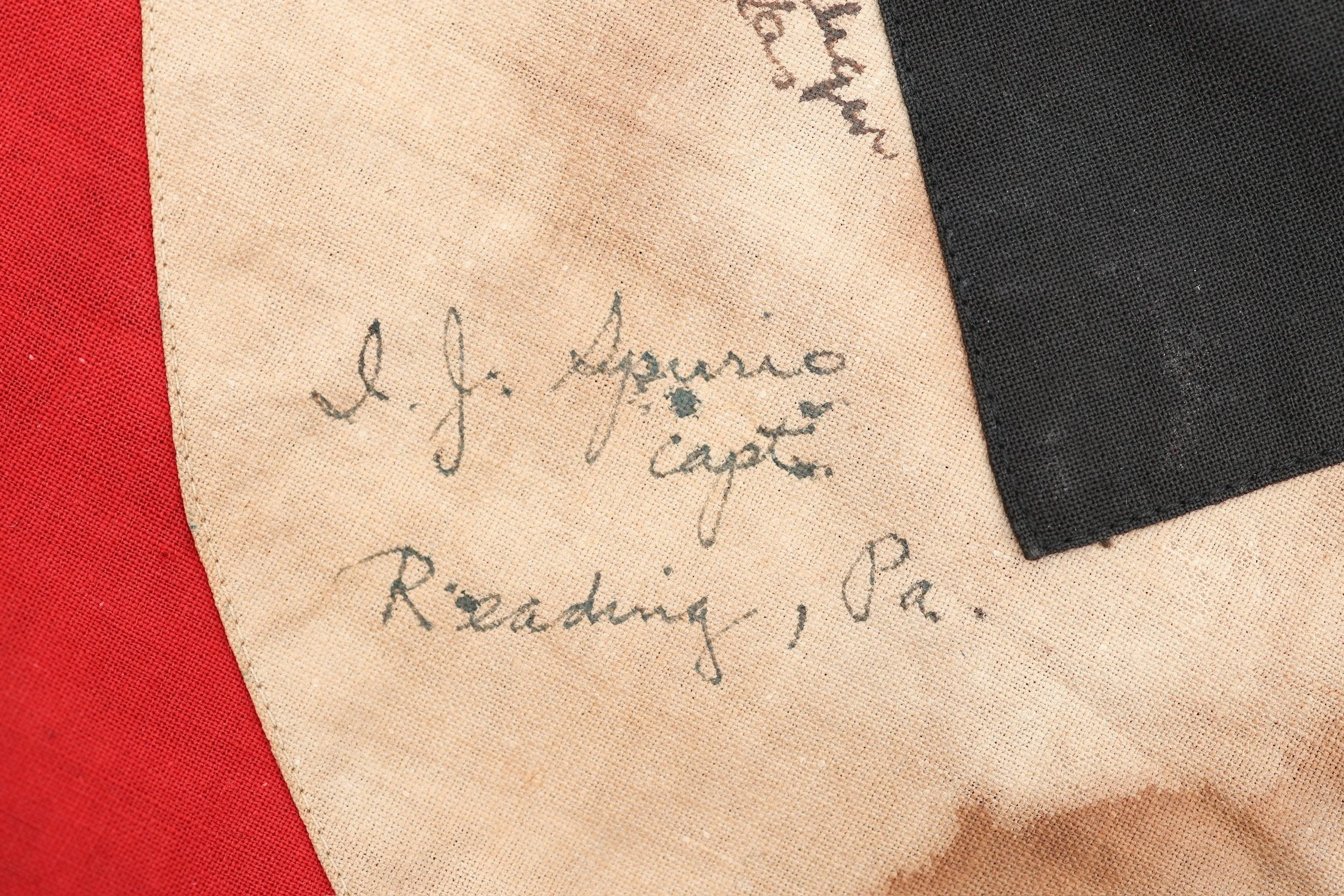
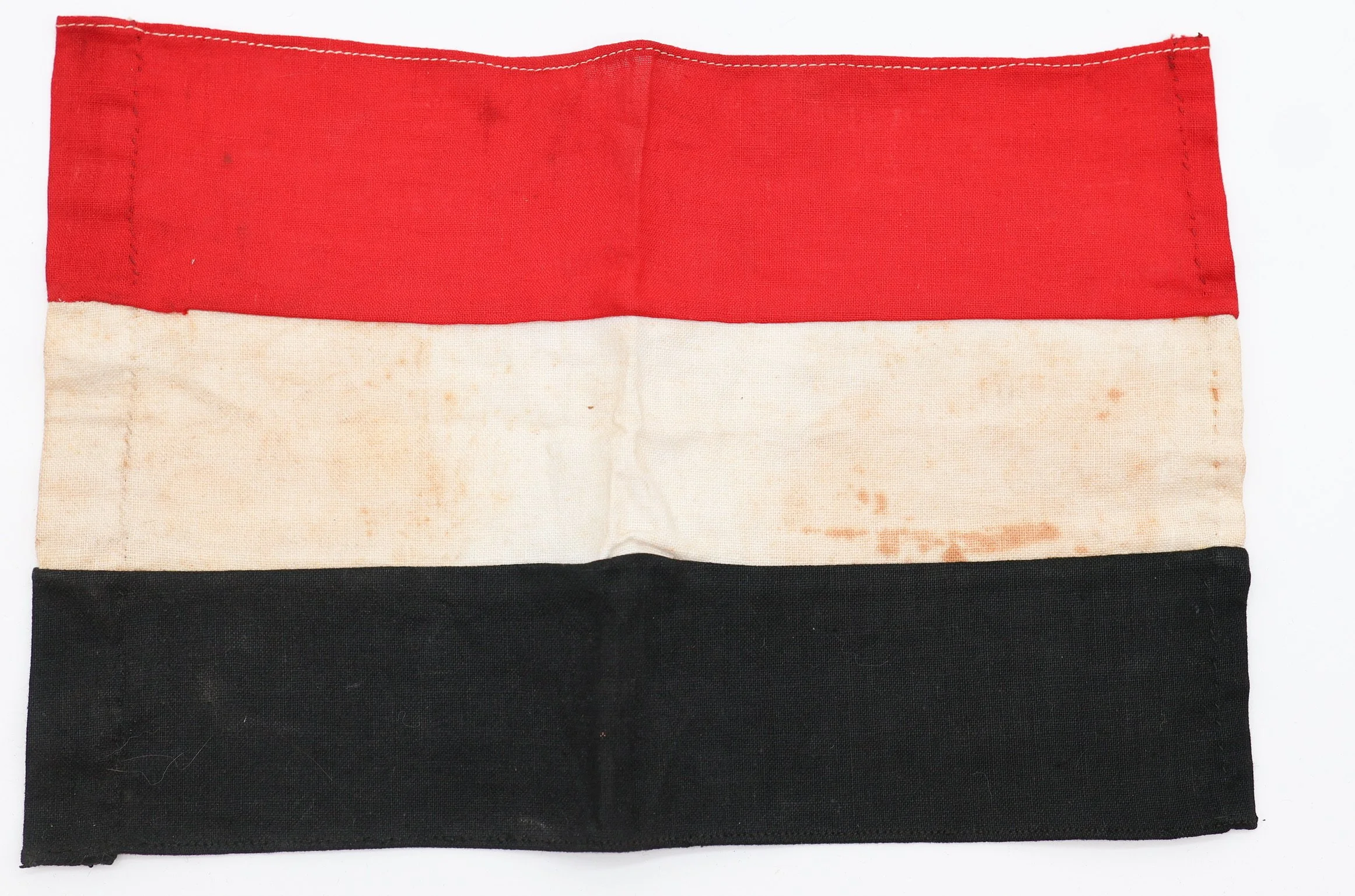
Additional captured items include German flags, daggers, and bayonets, typical battlefield souvenirs taken during the rapid Allied advance through Germany. Cartledge later published a memoir detailing his service, which provides rare firsthand insight into the experiences of Chemical Mortar Battalion officers during late-war combat operations.
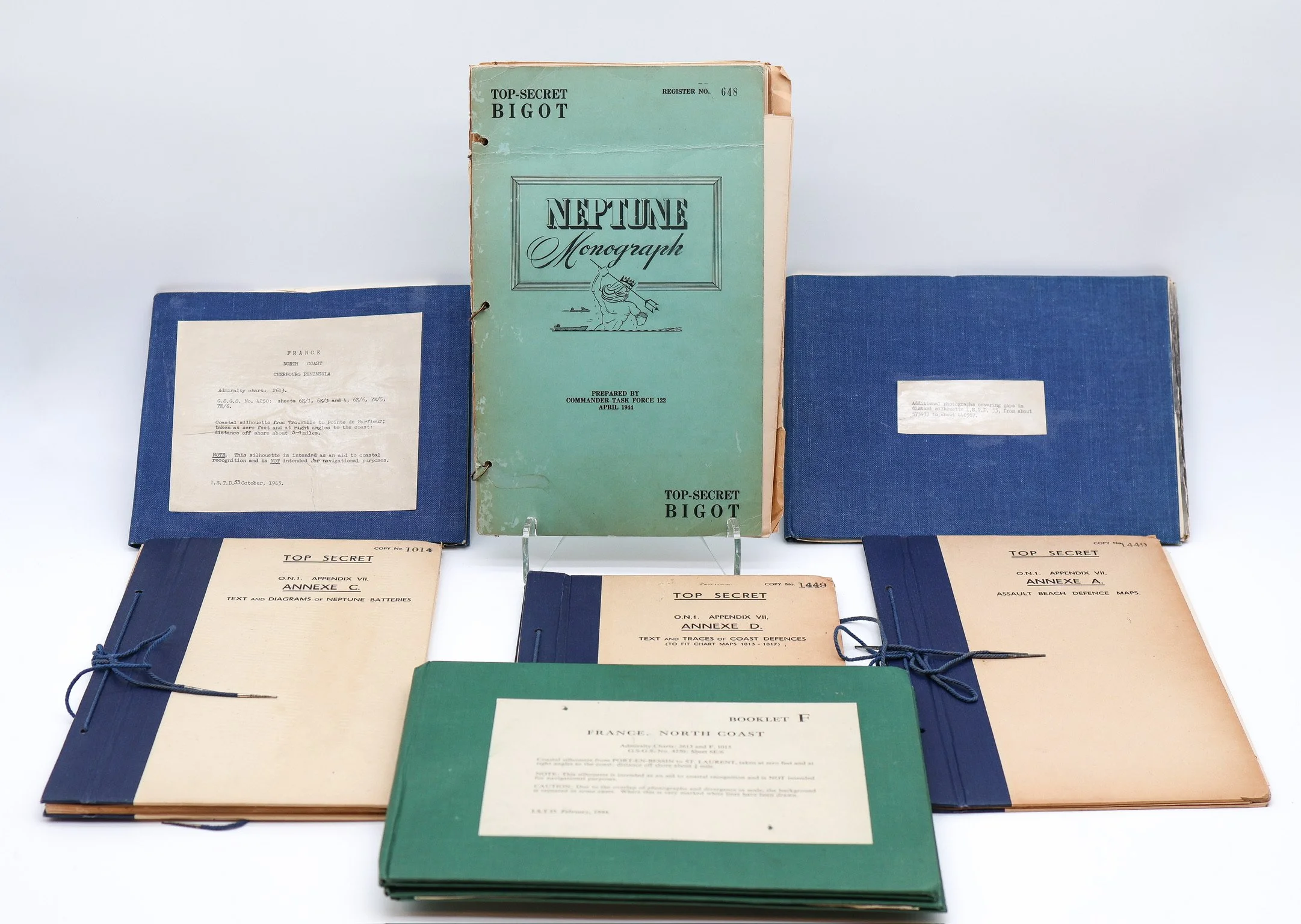
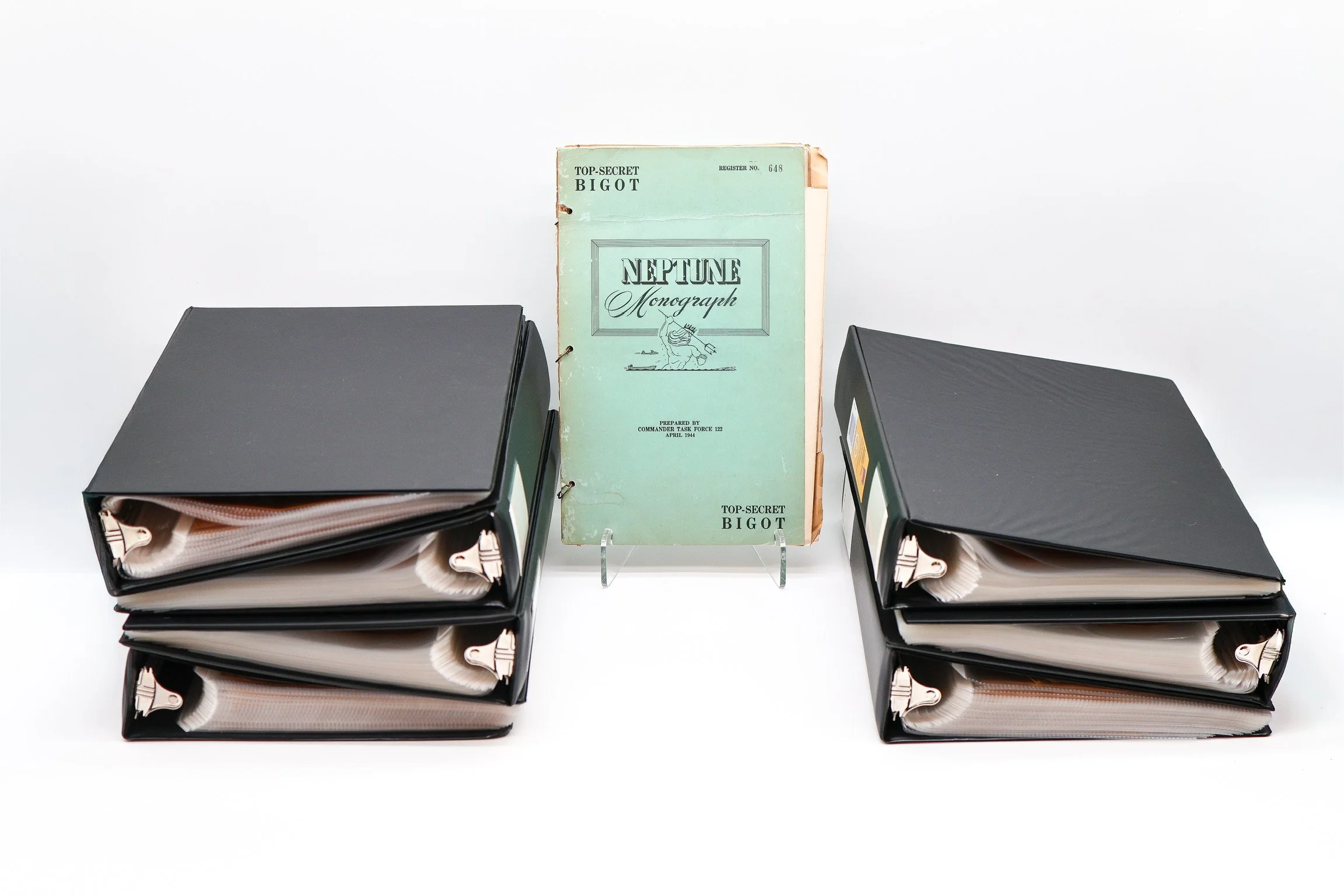
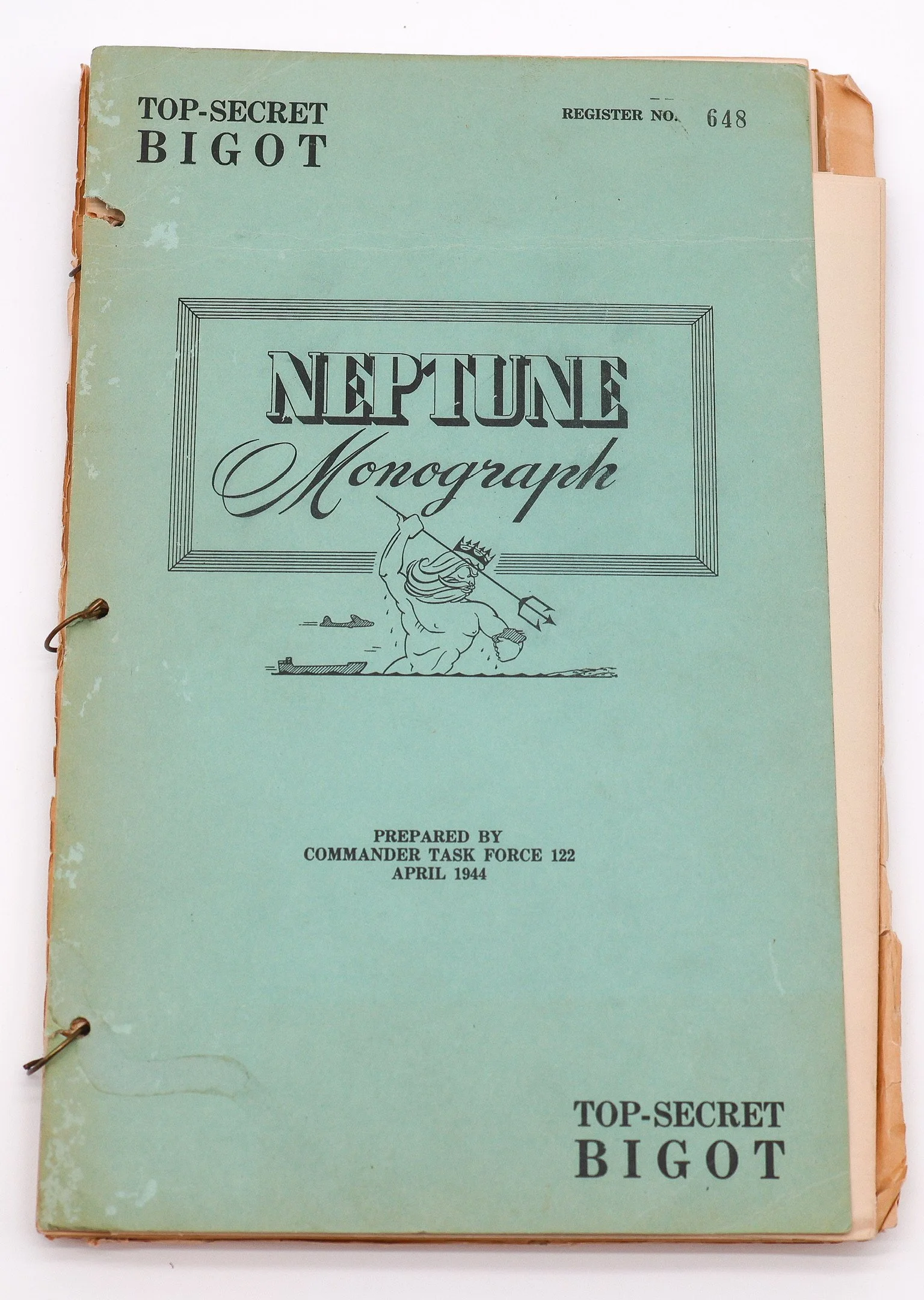
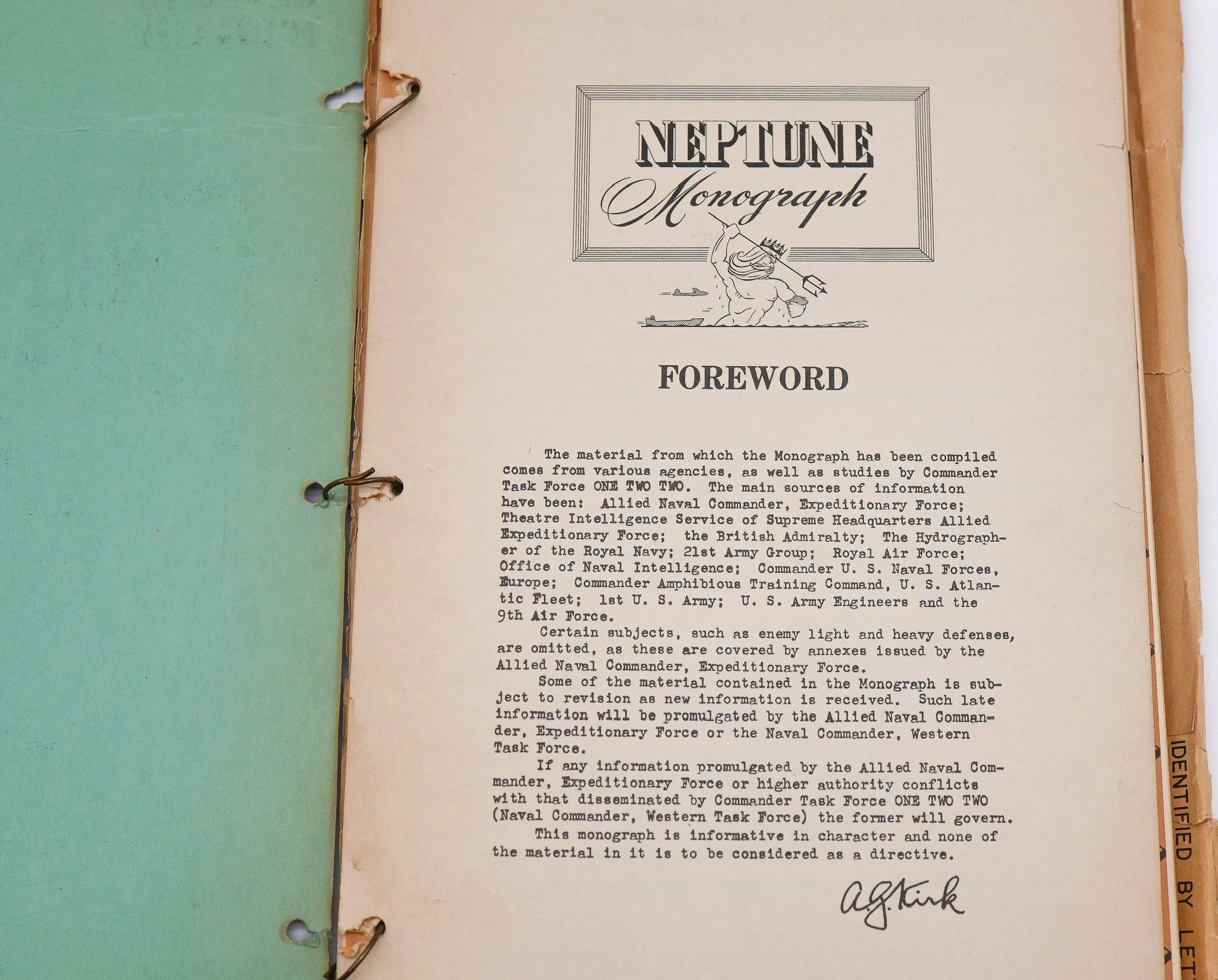
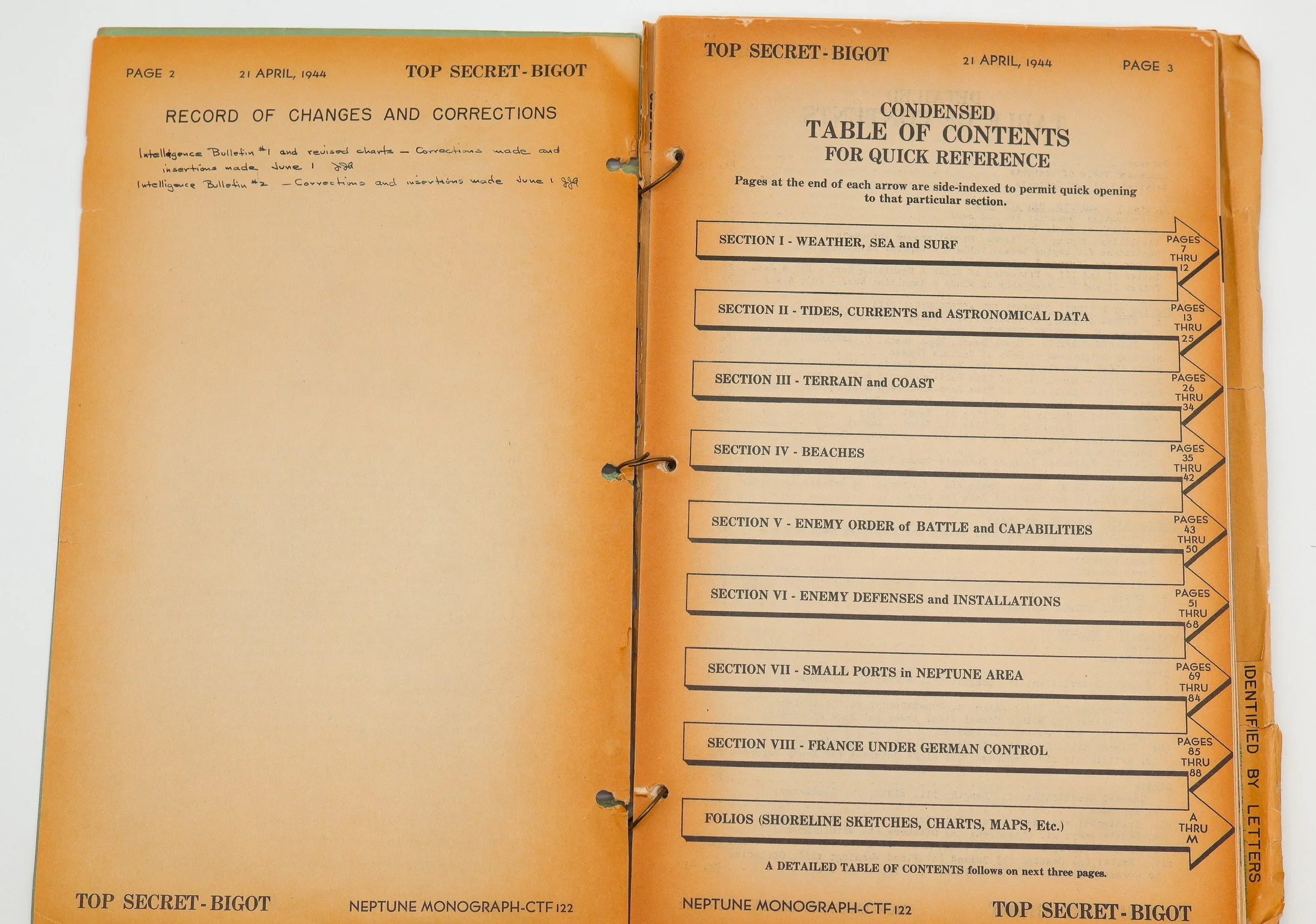
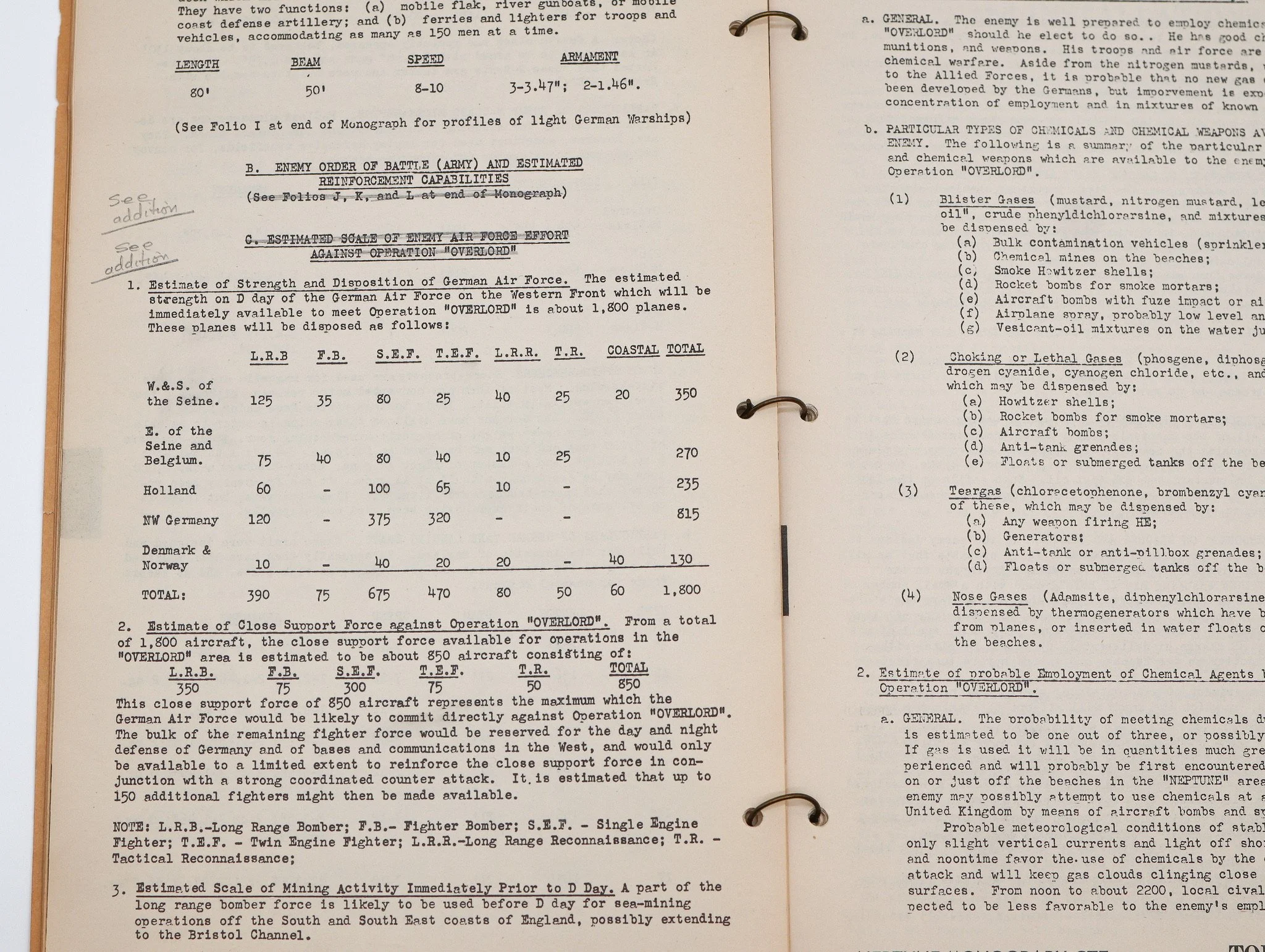
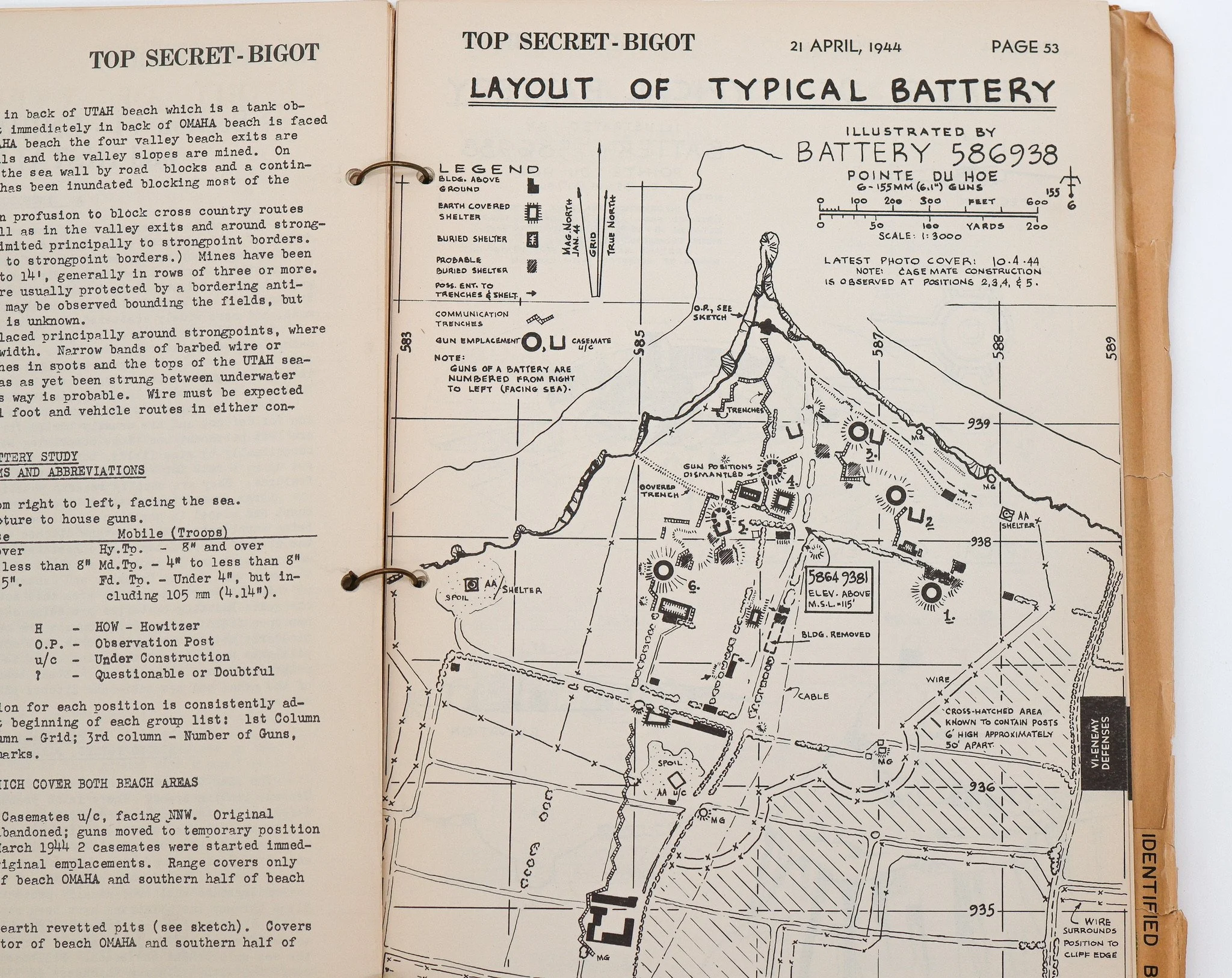
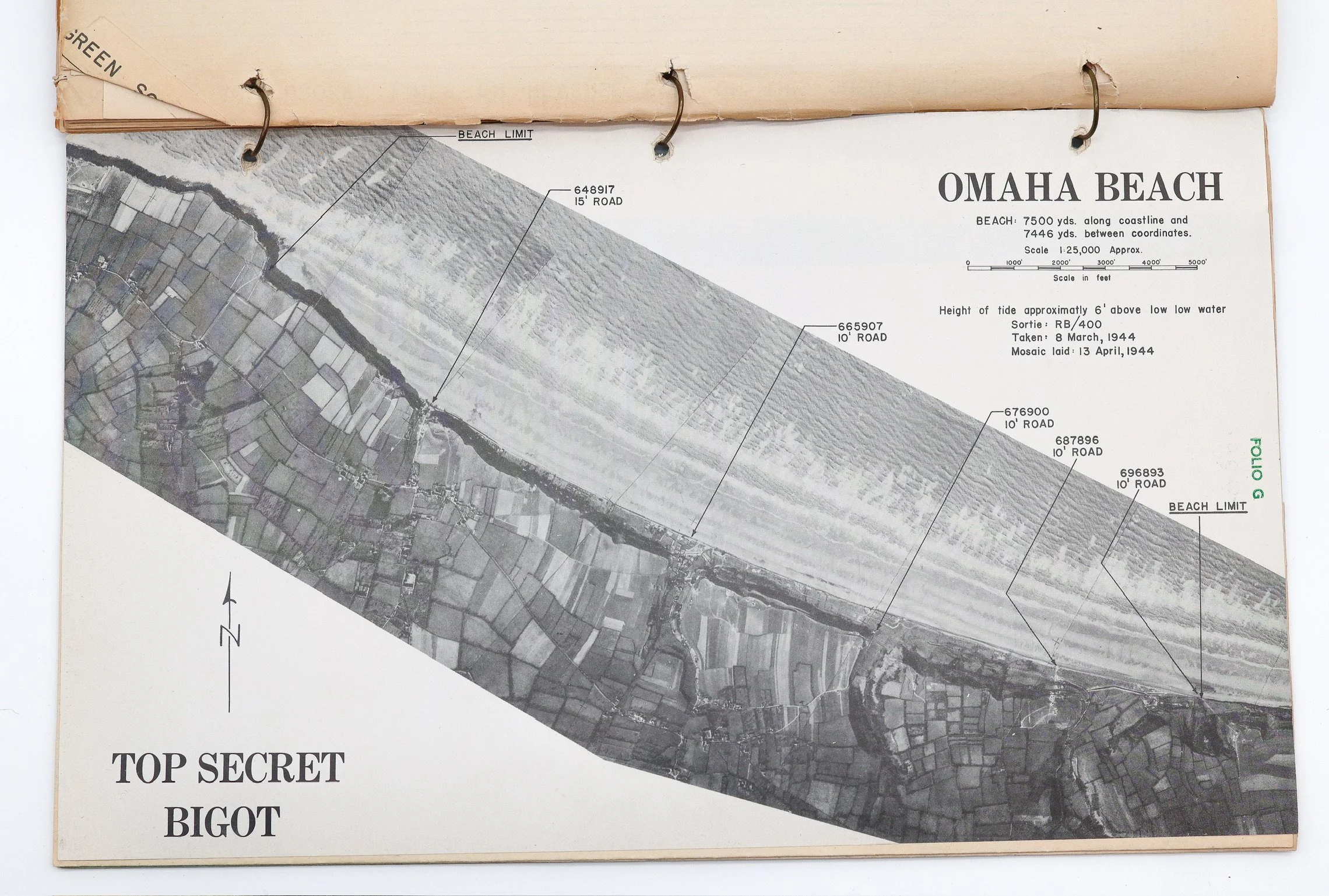
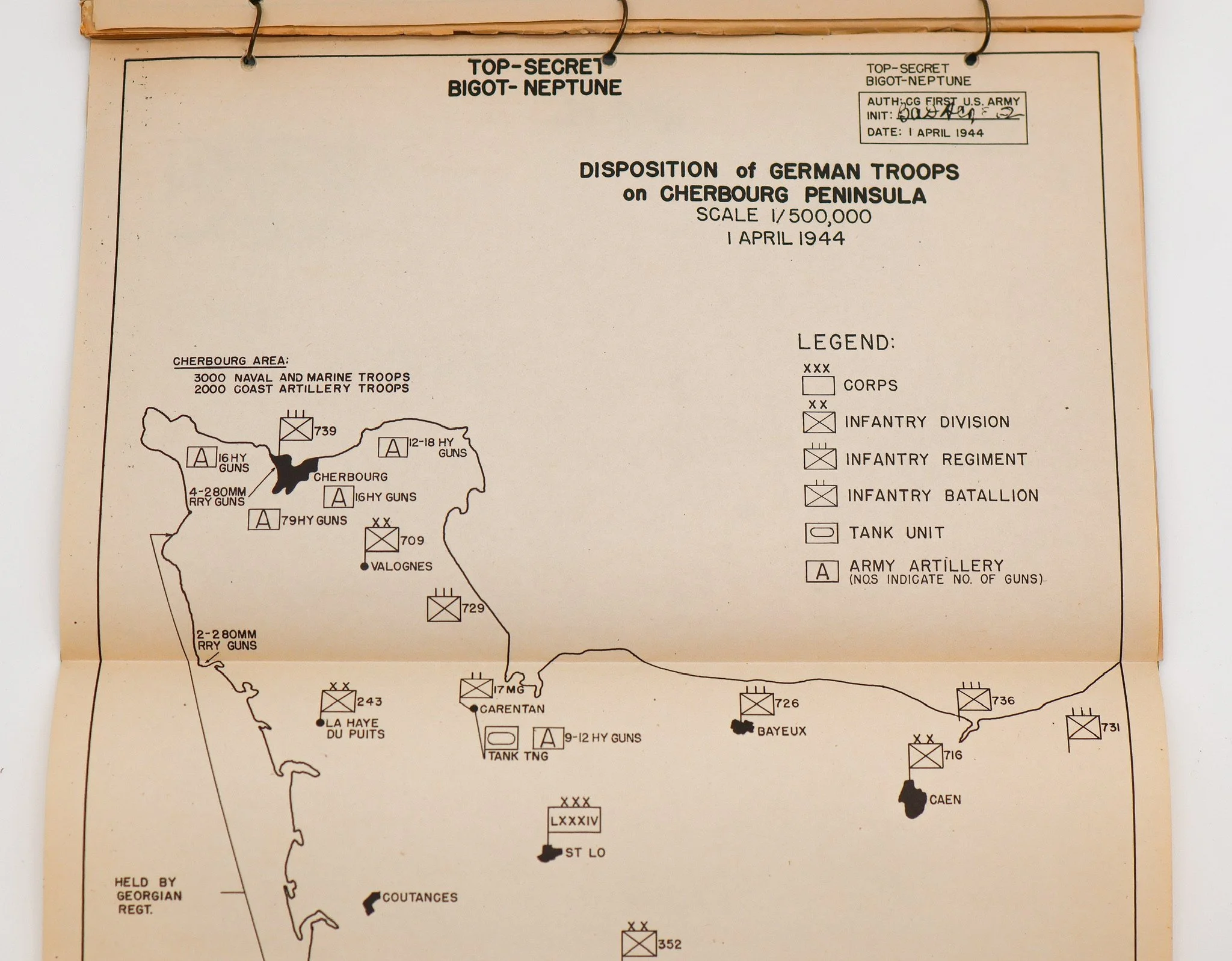
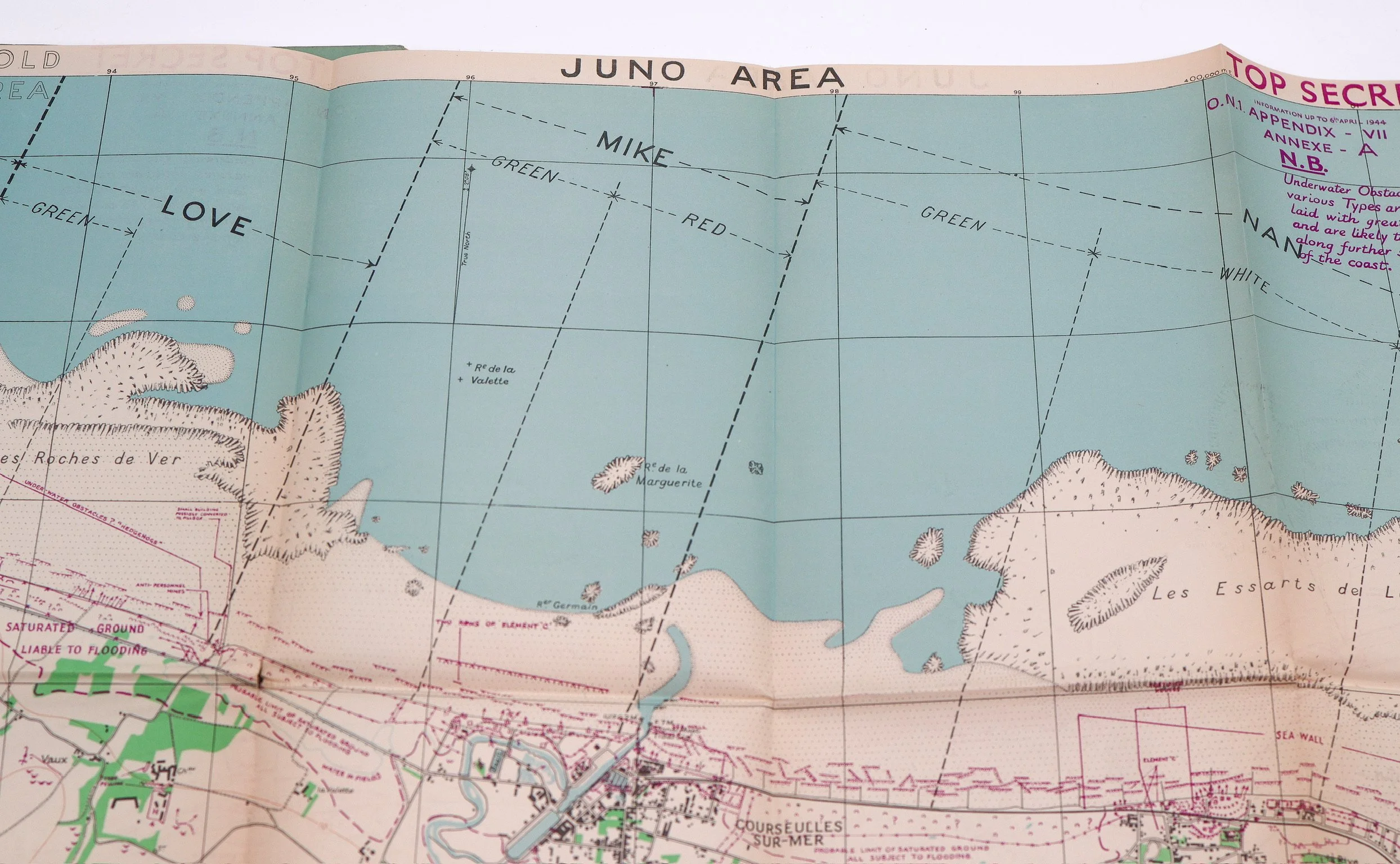
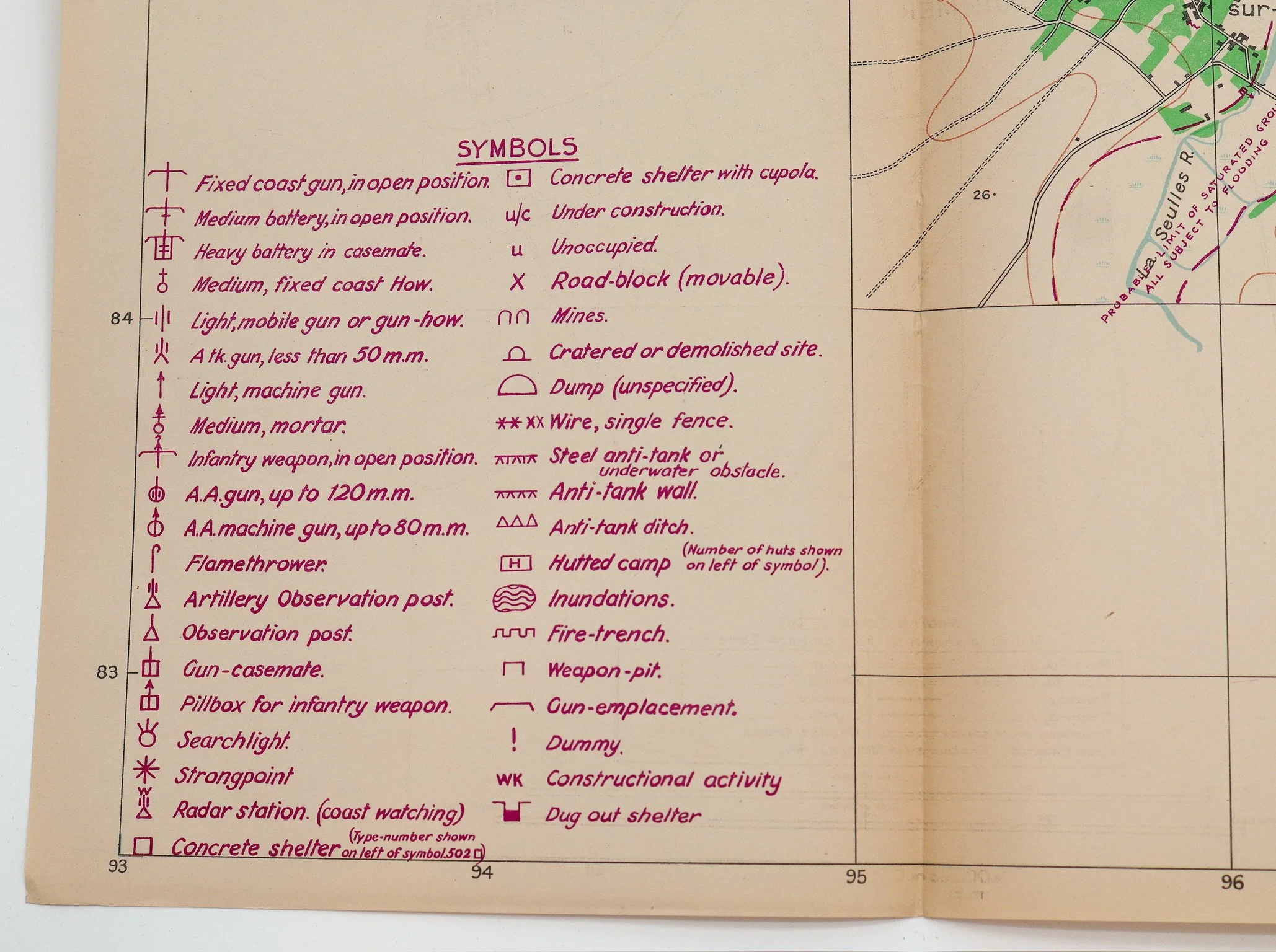
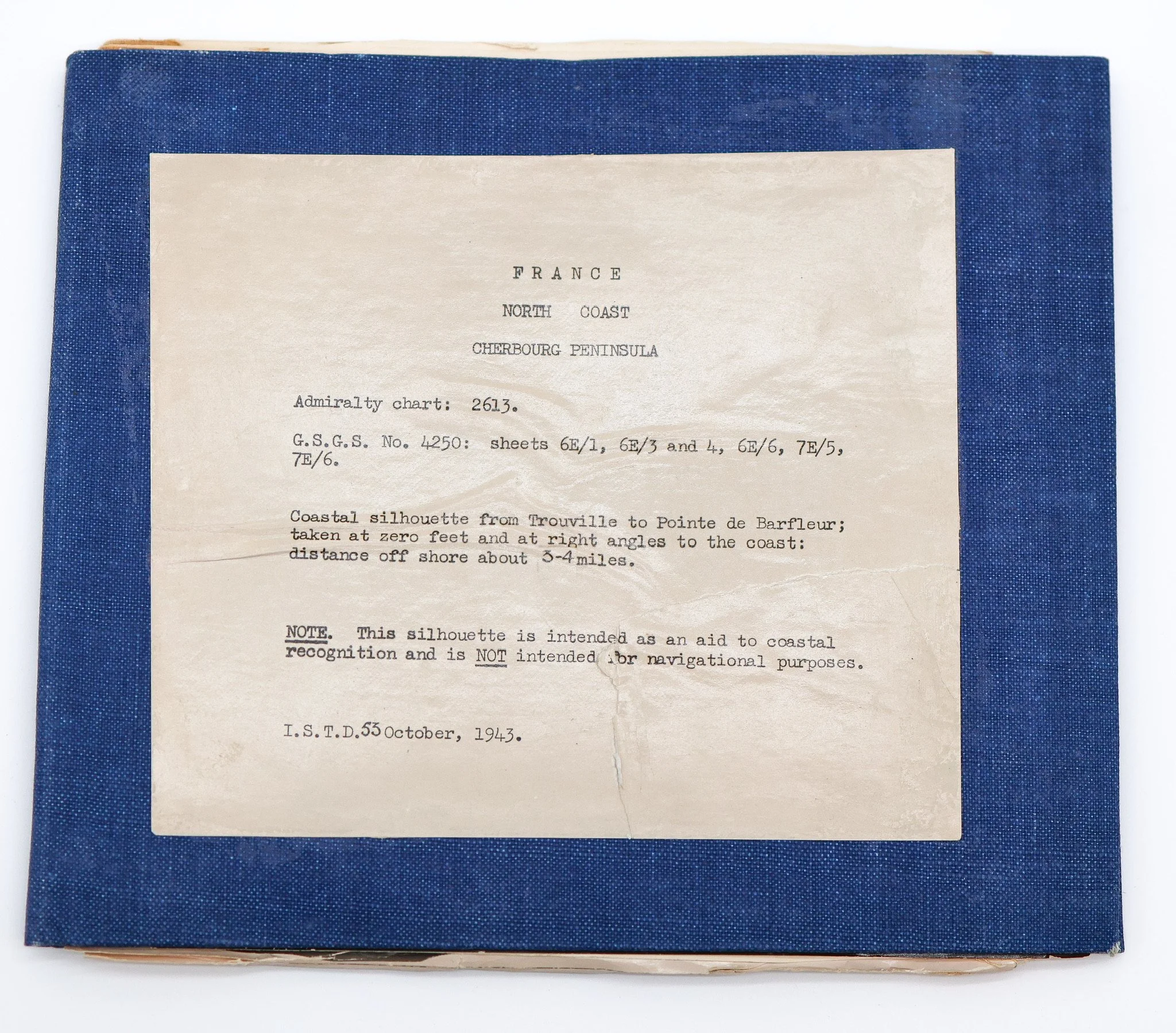
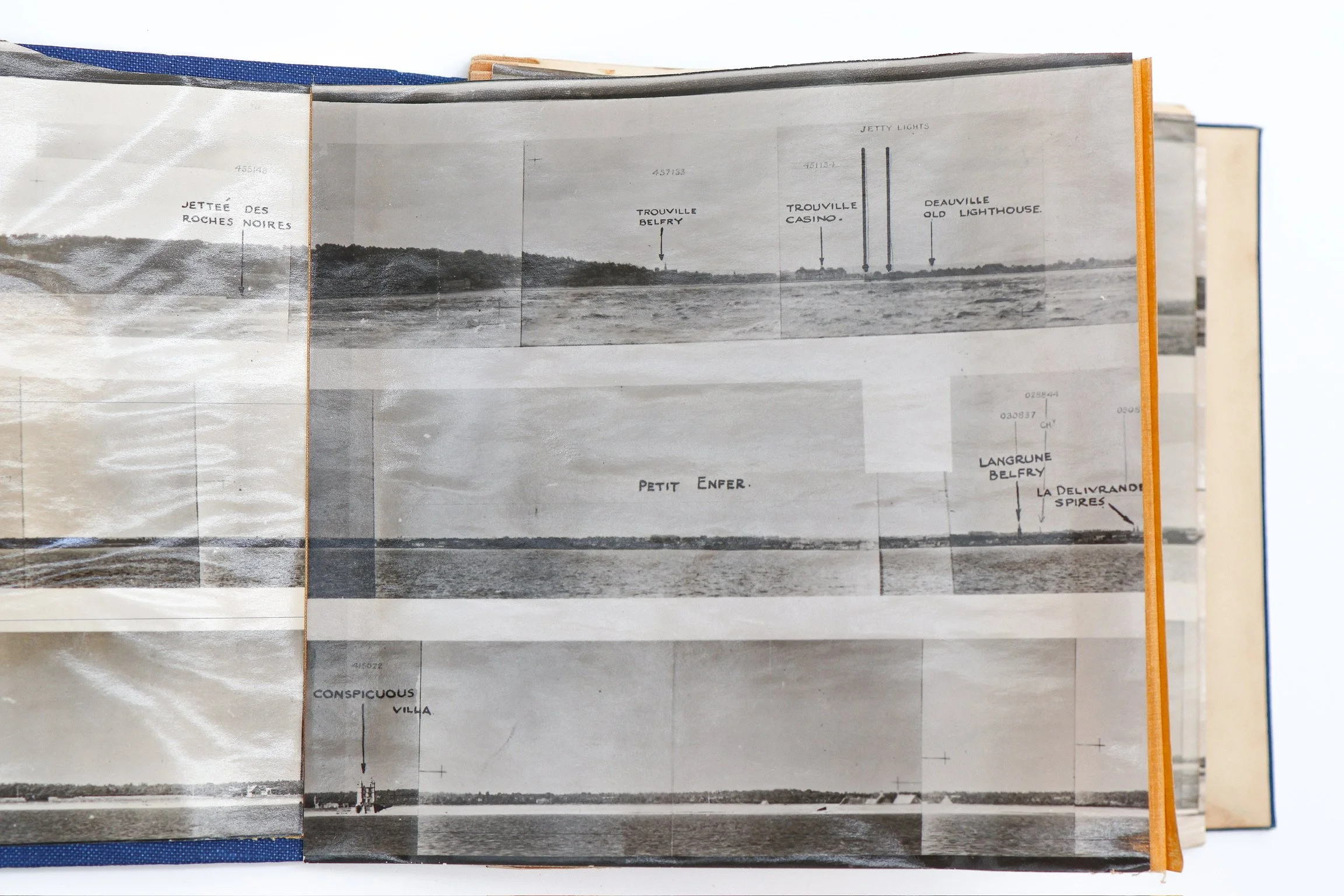
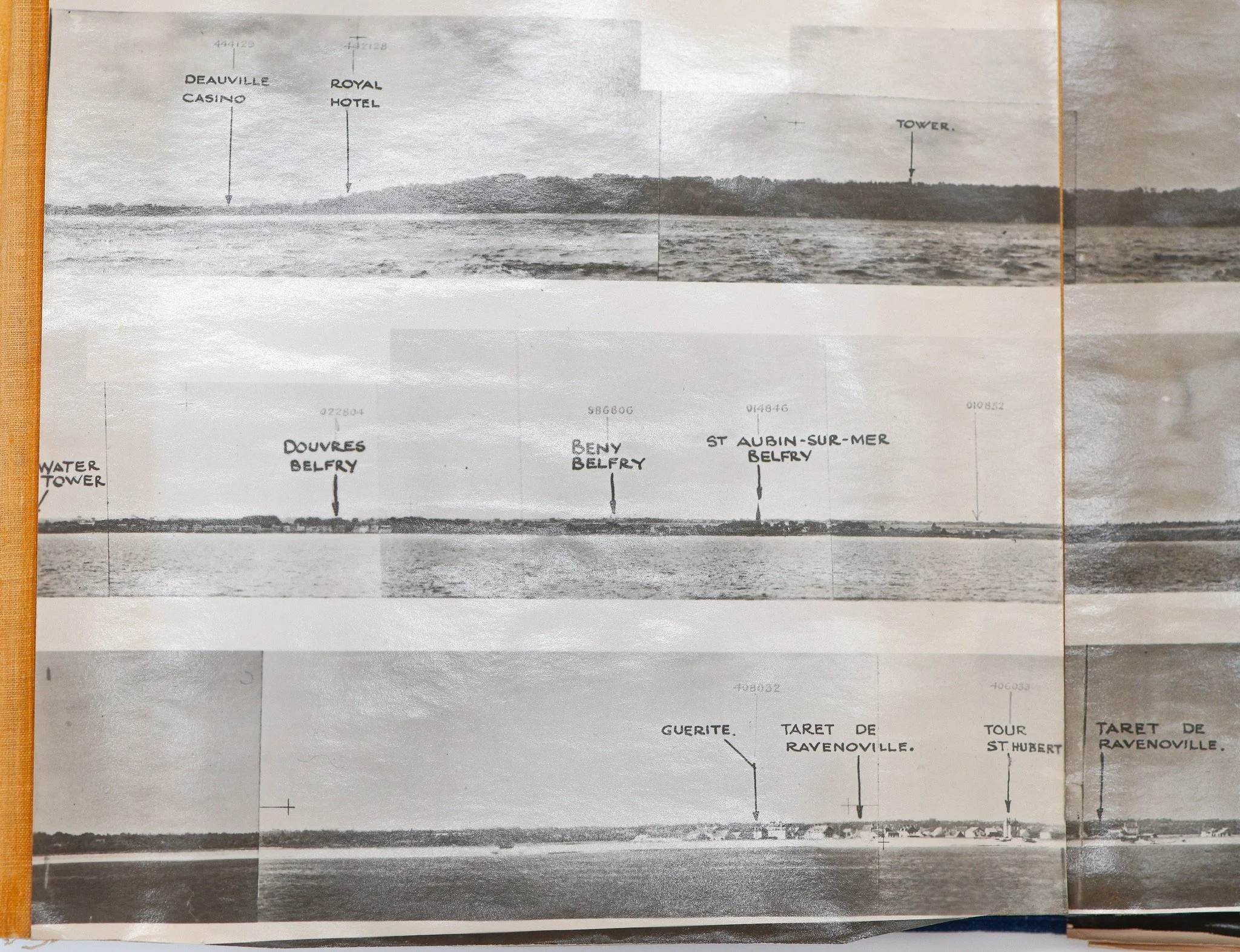
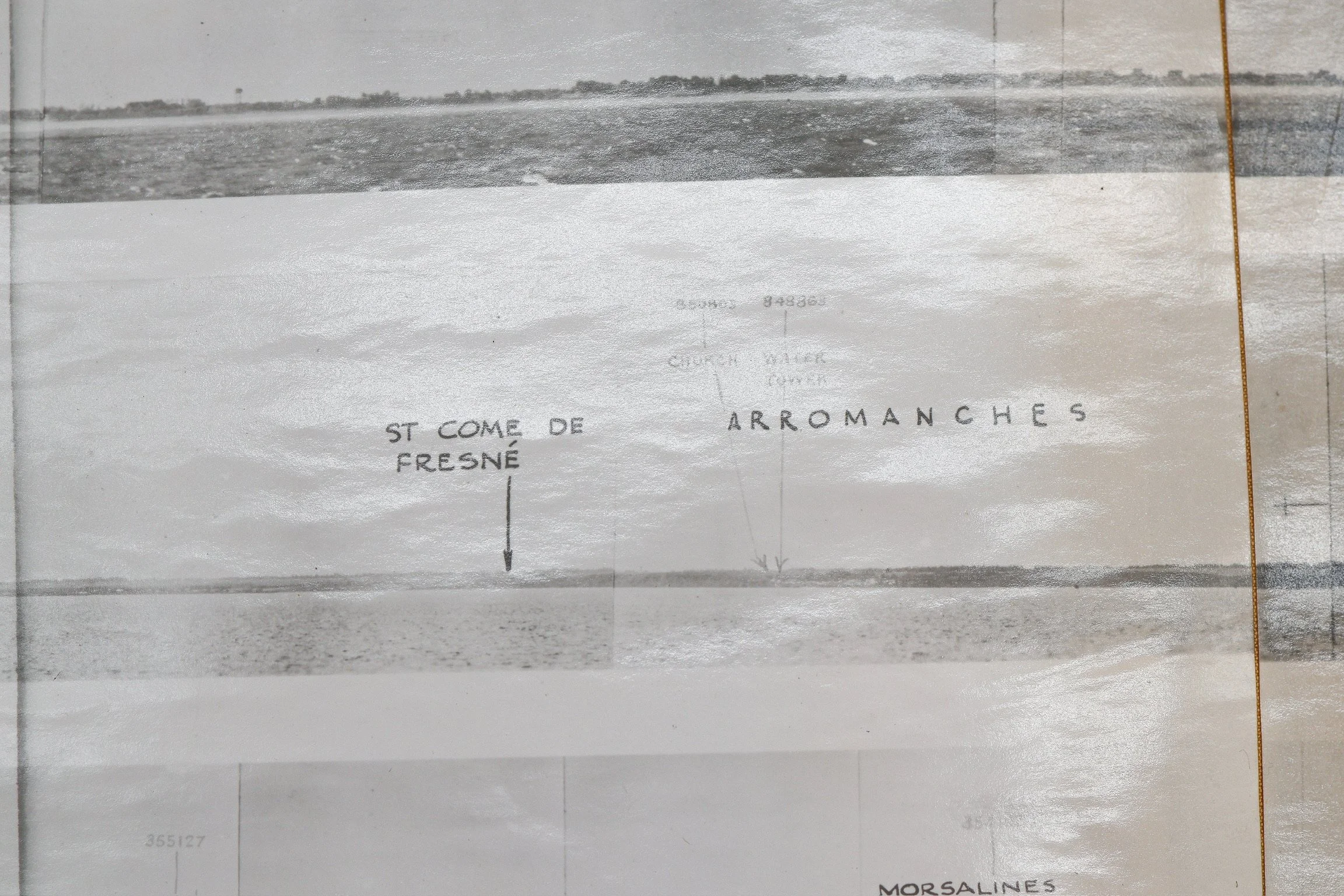
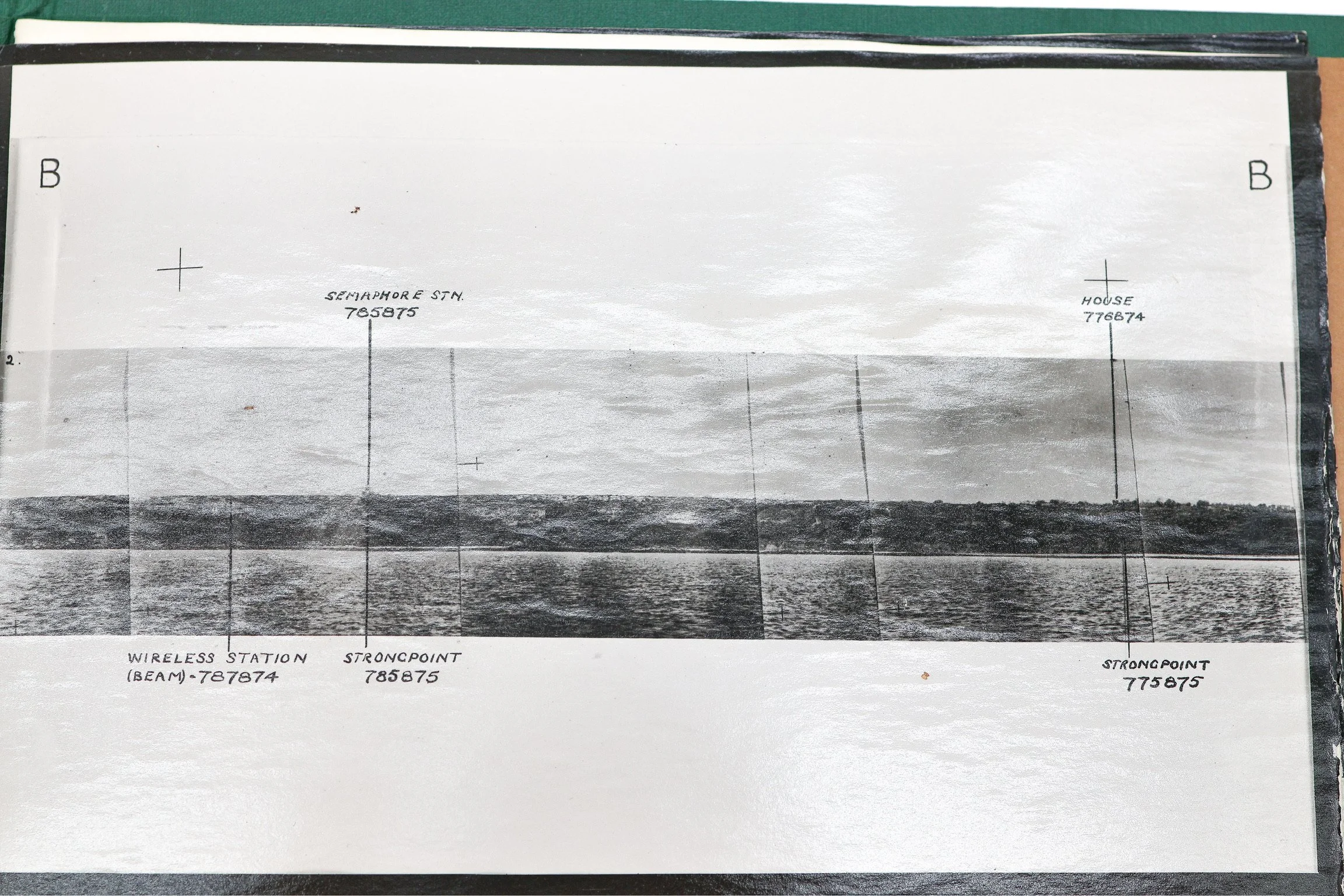
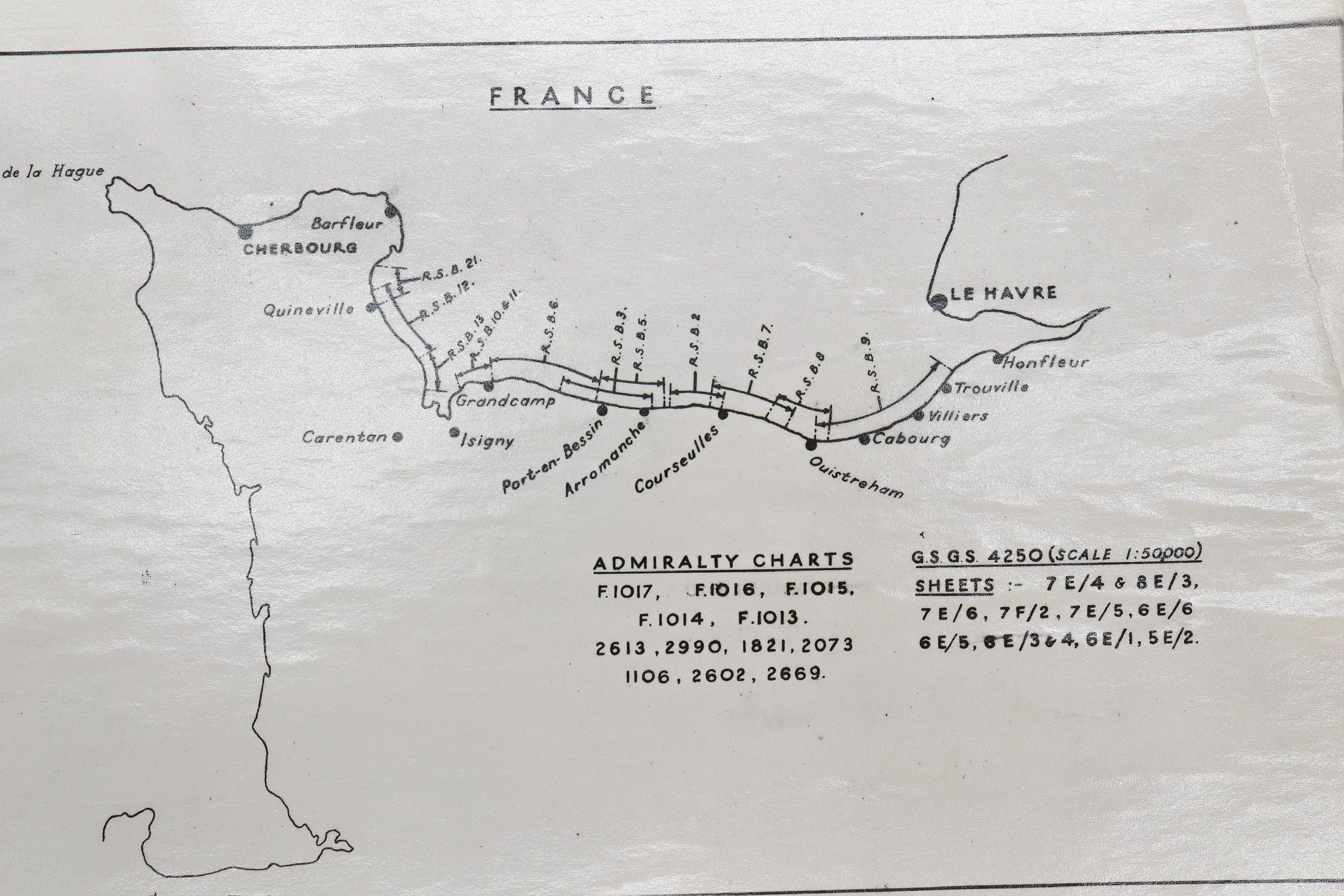
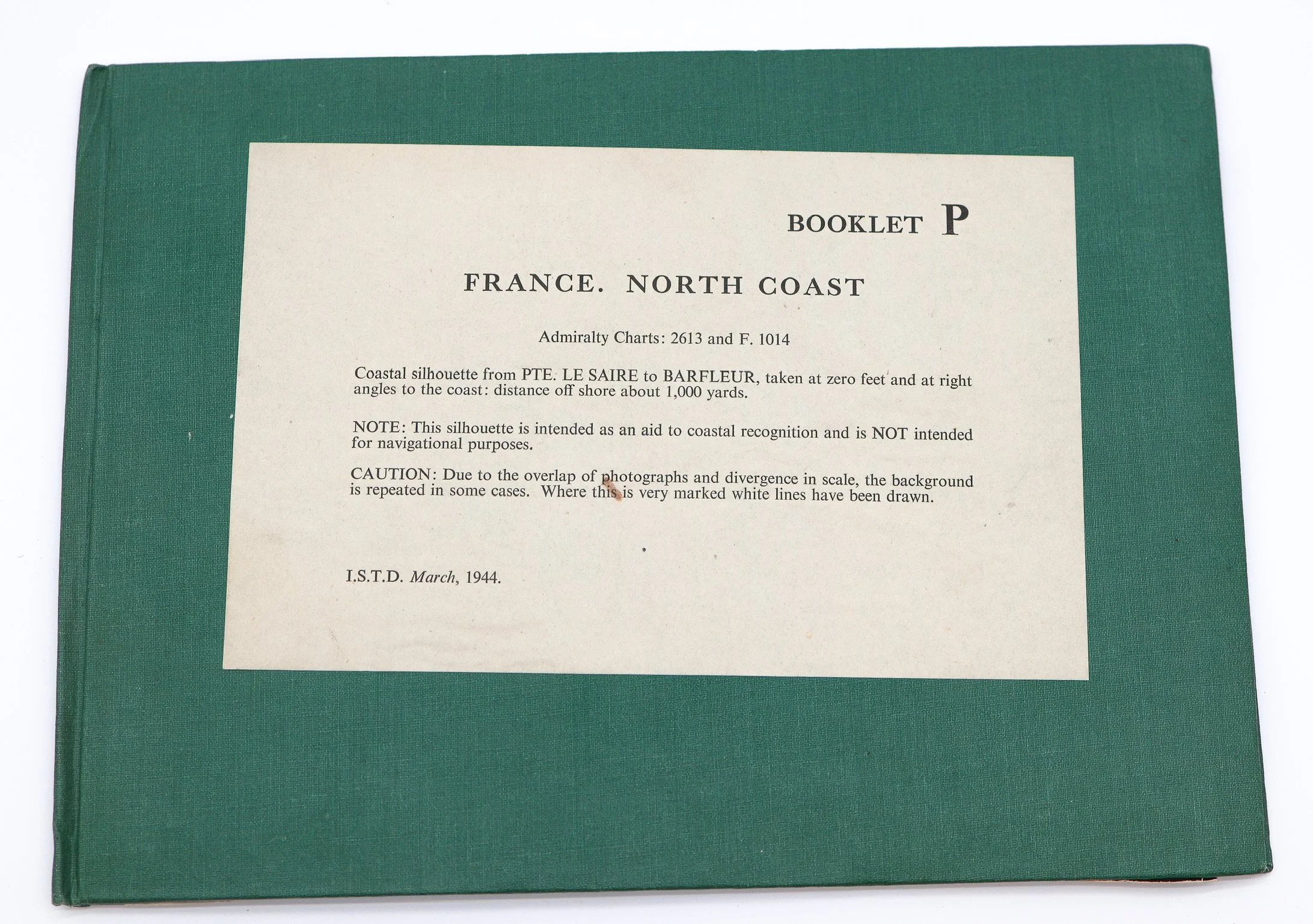
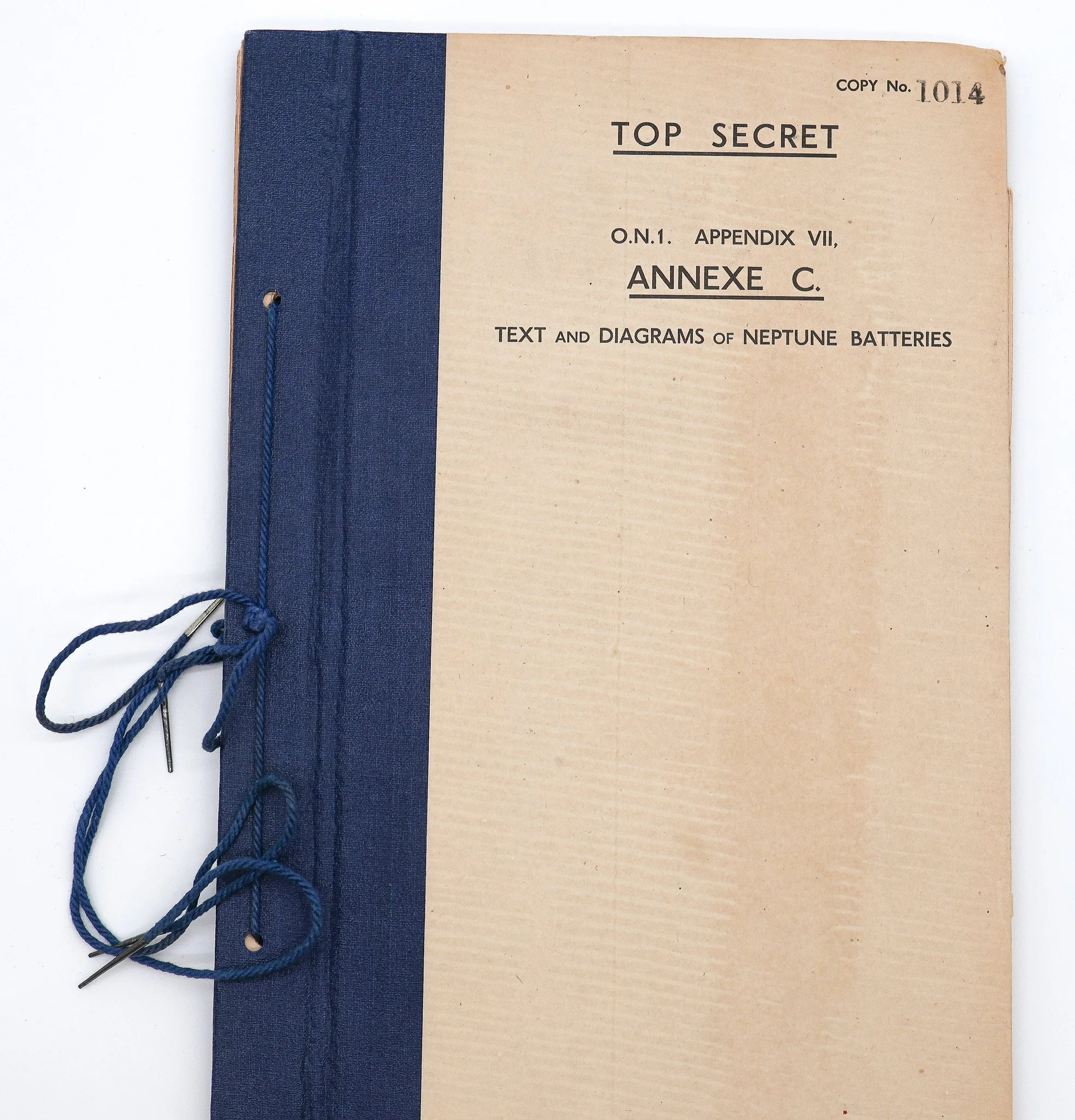
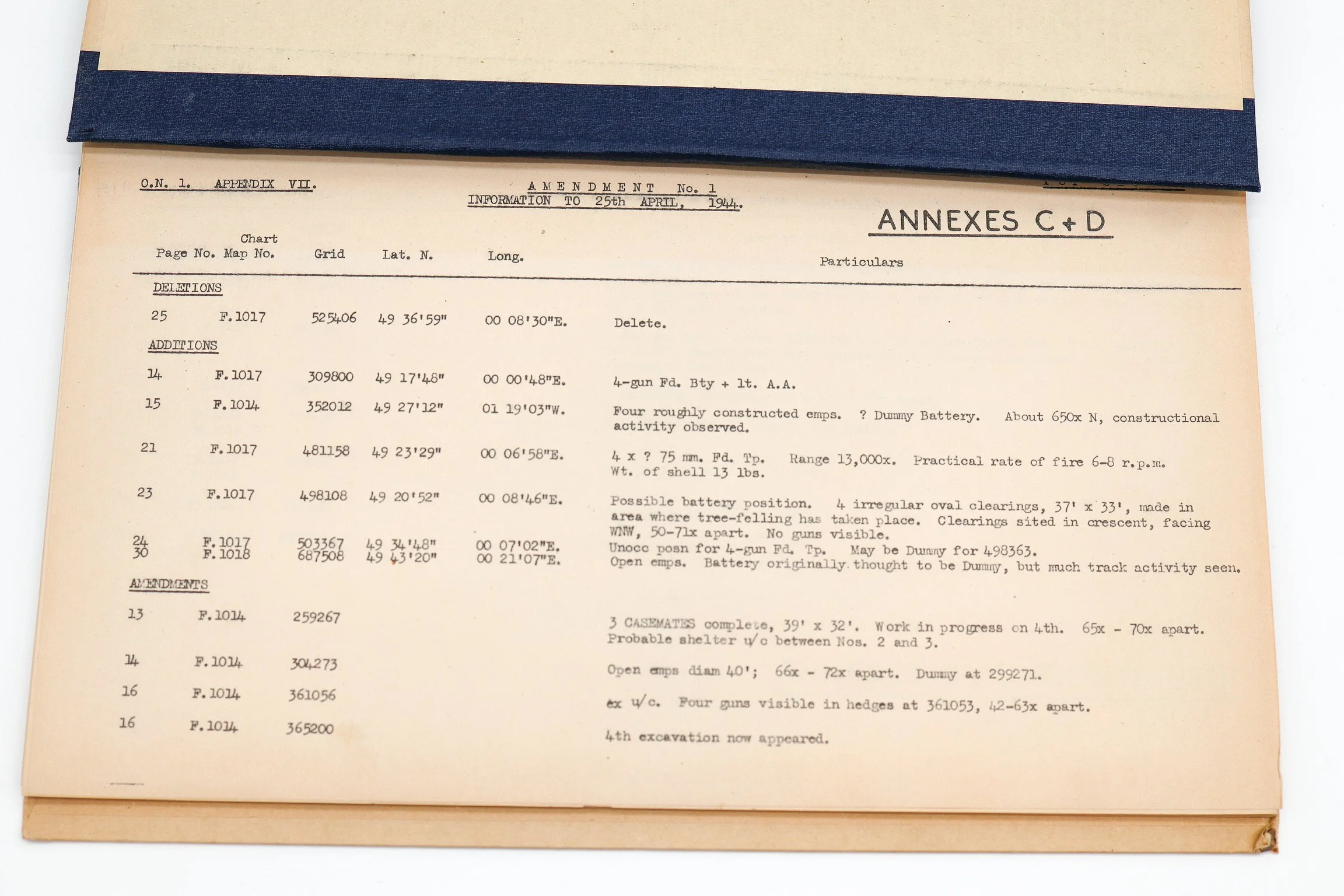
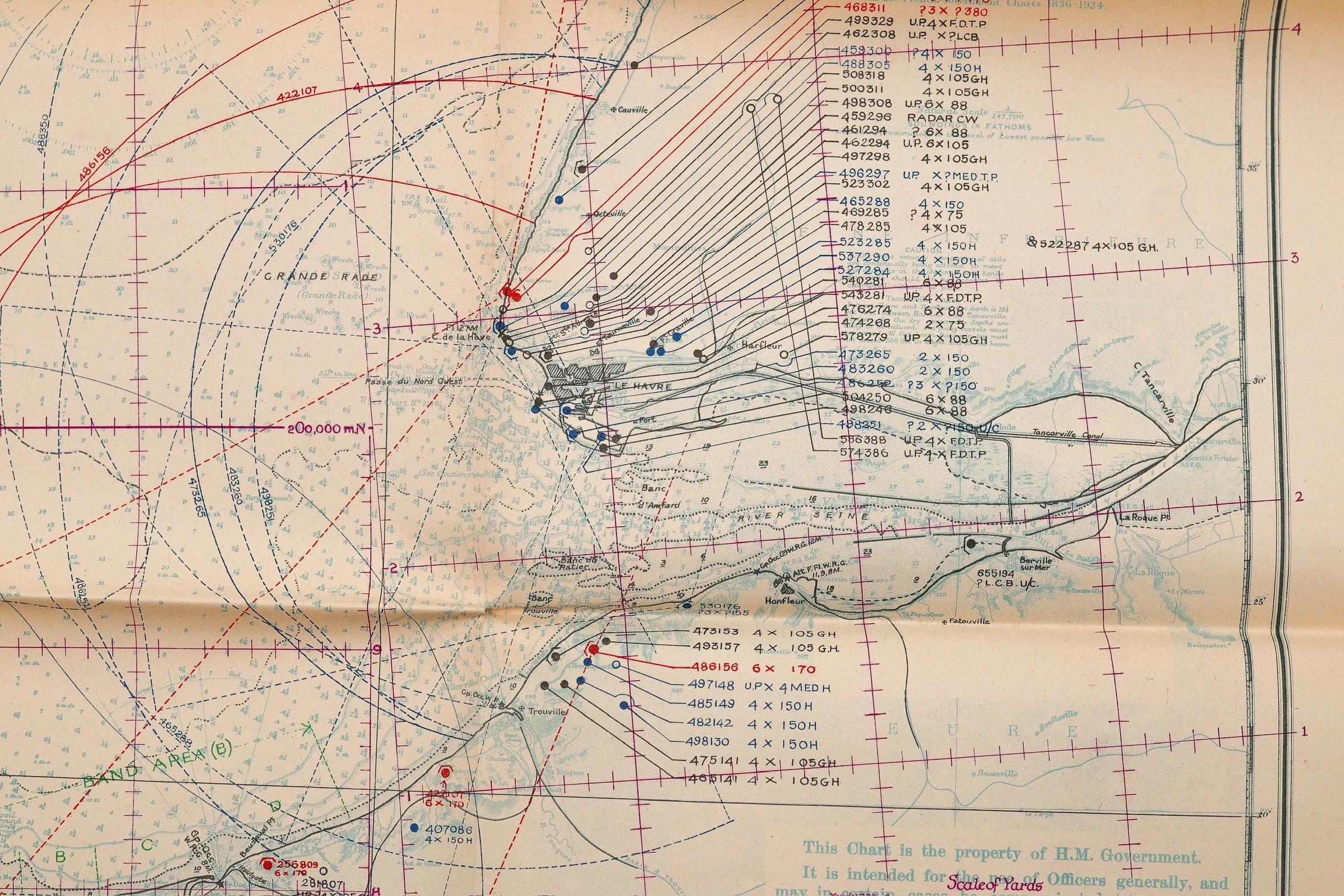
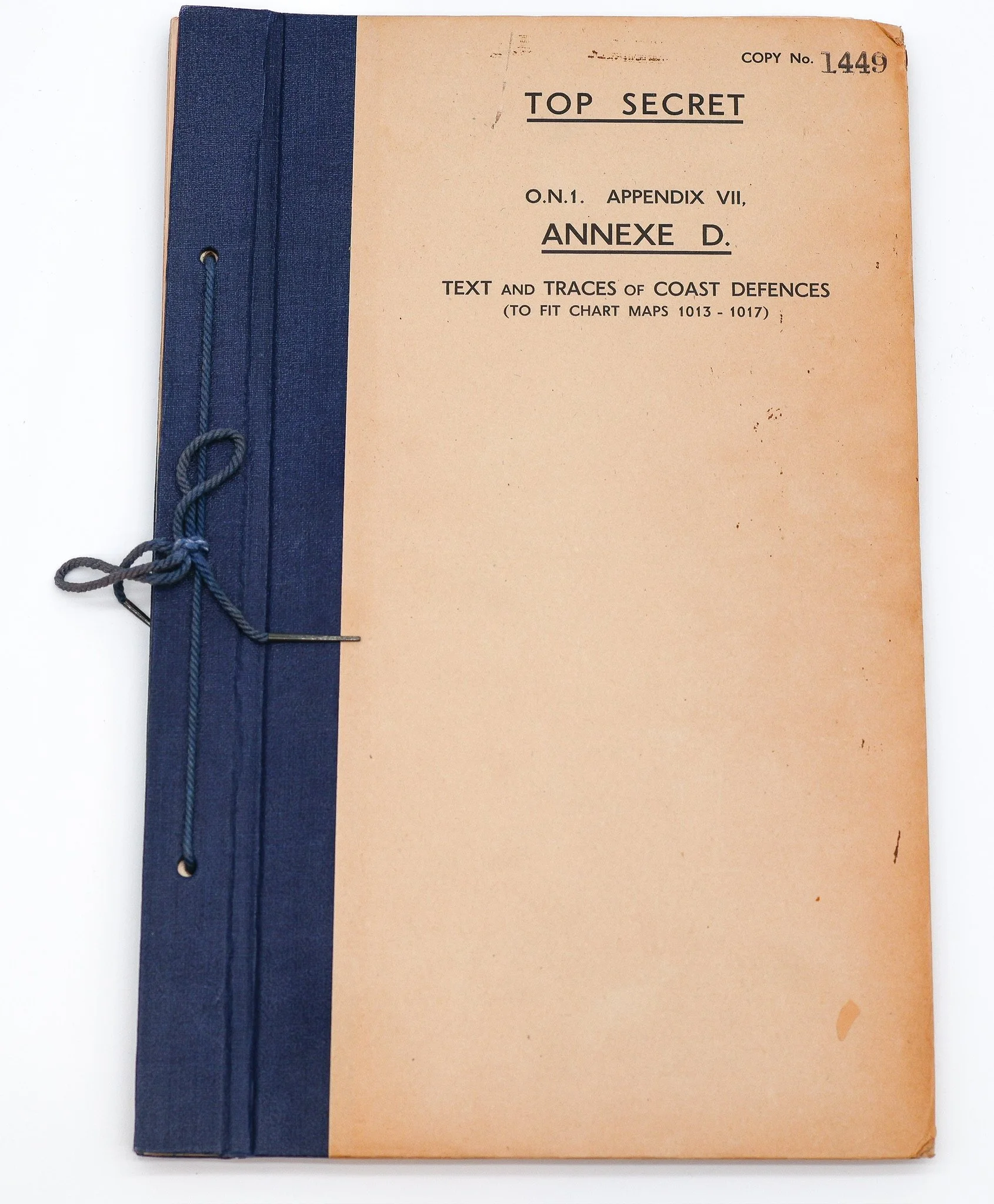
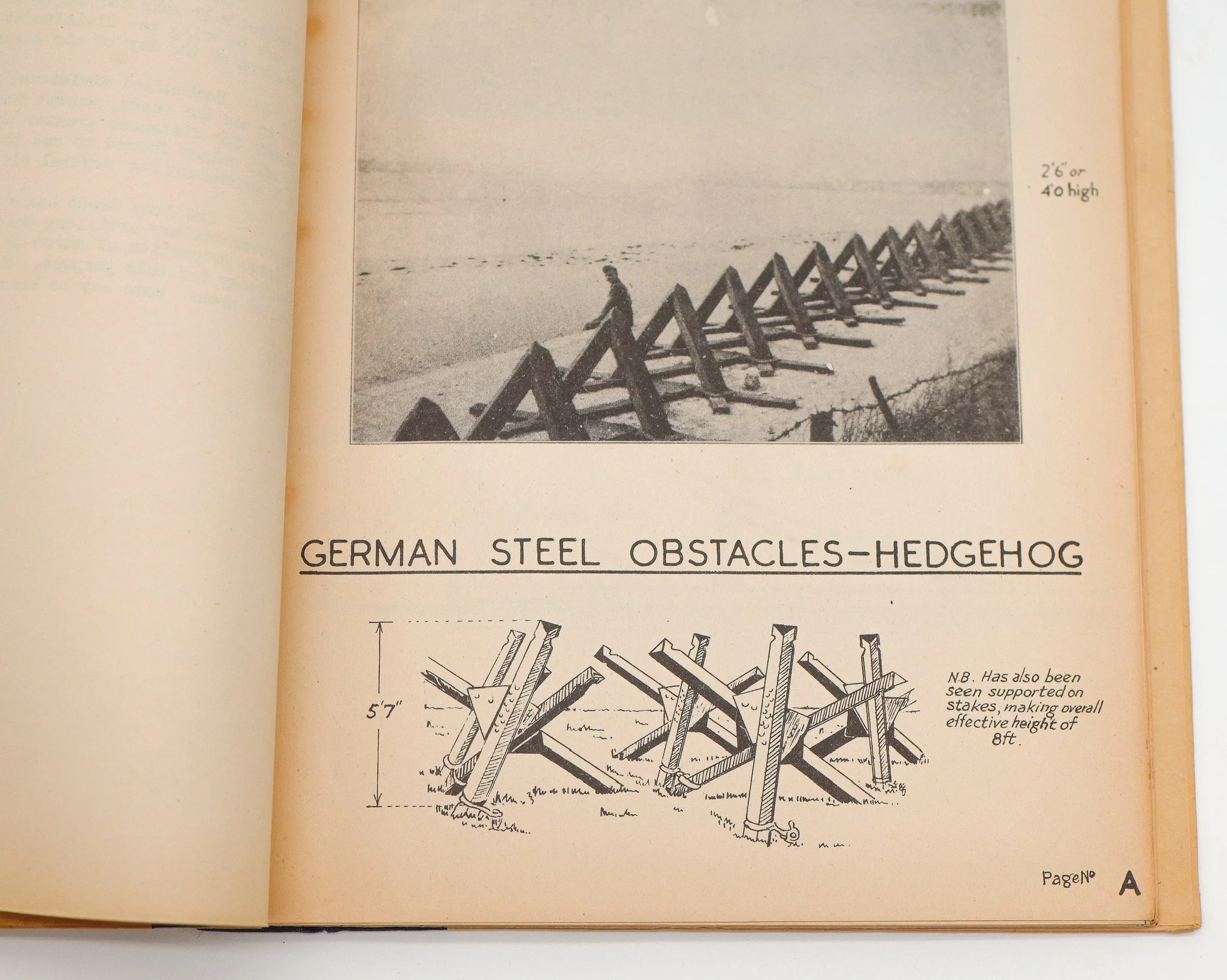
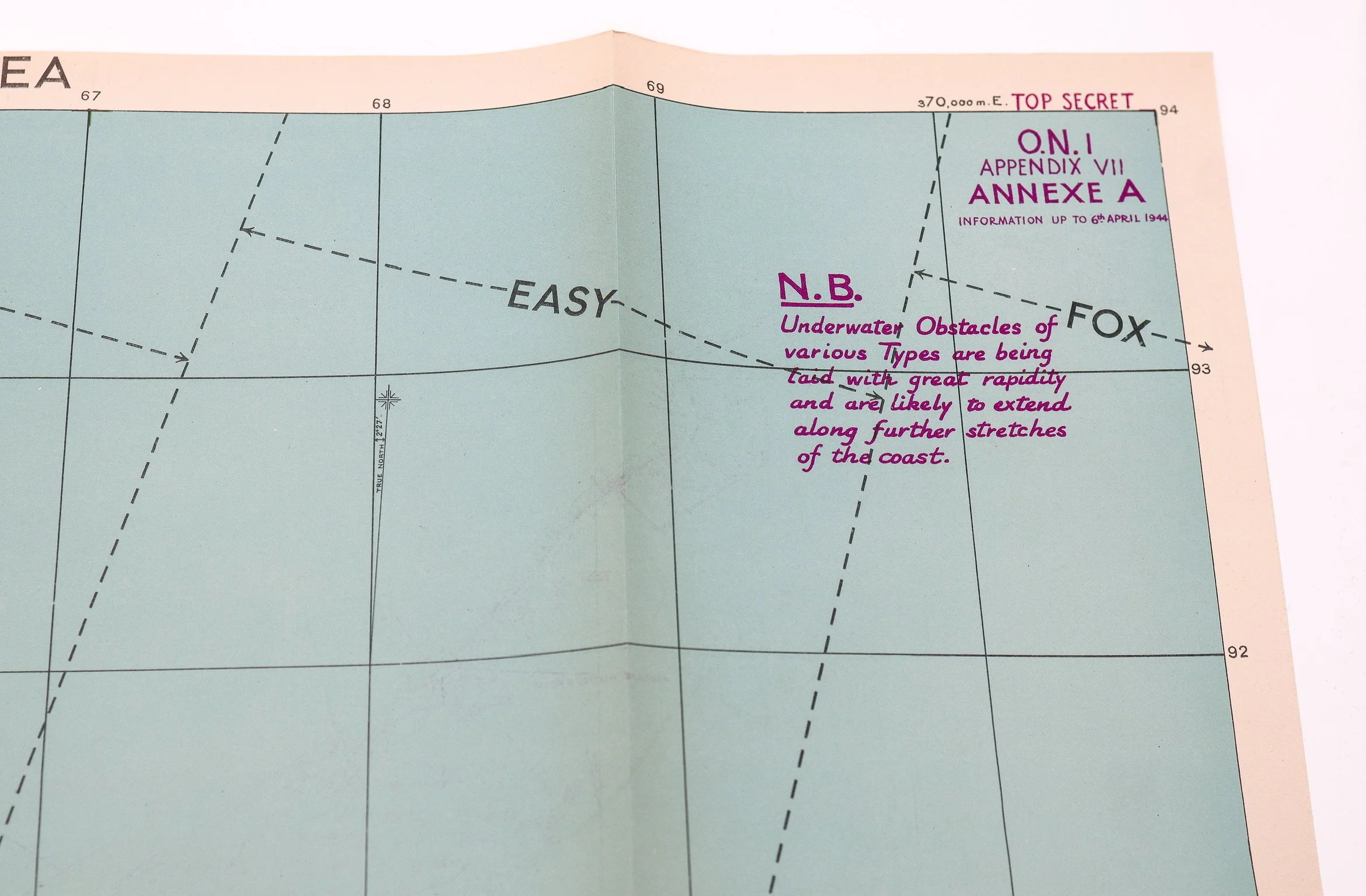
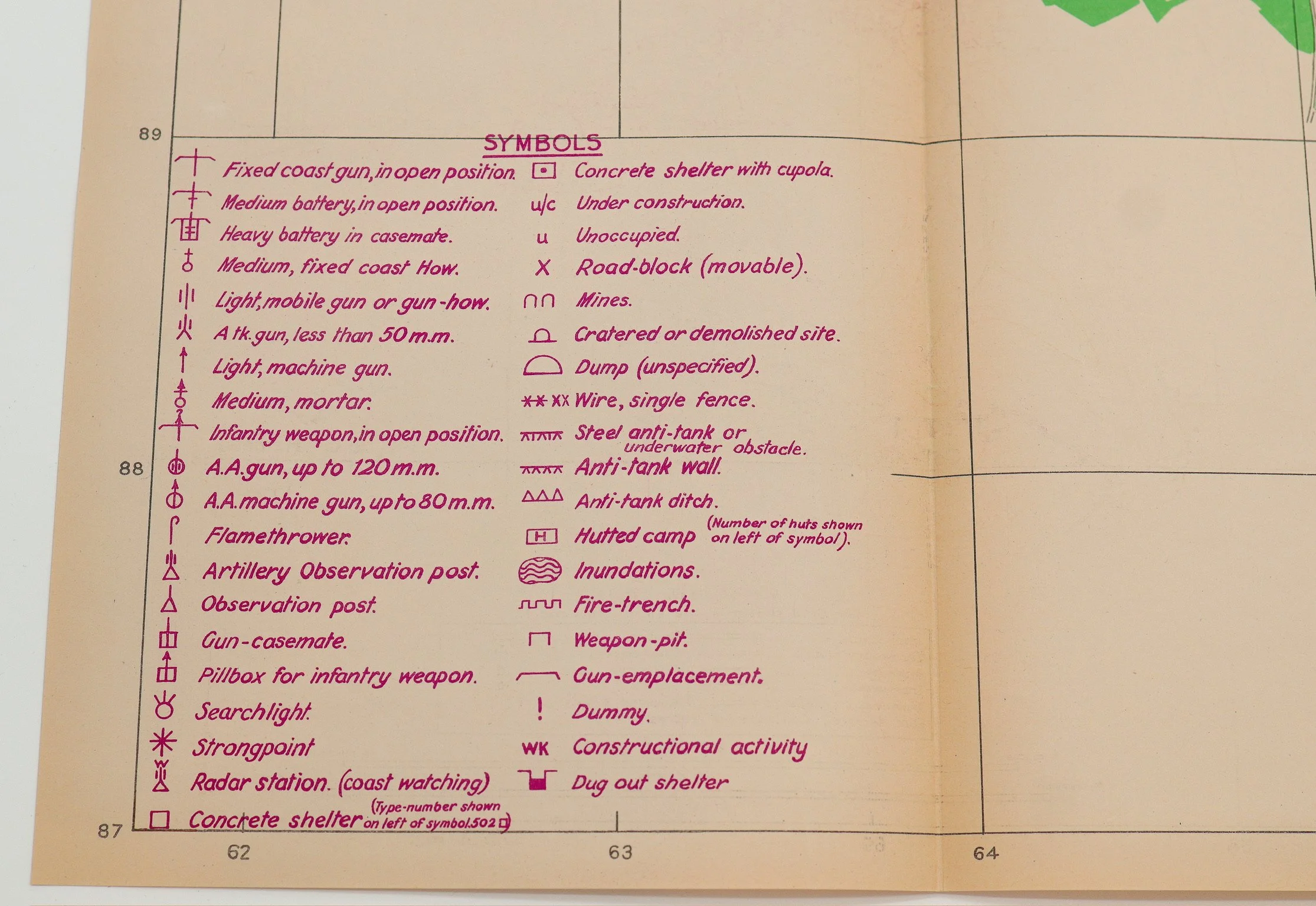
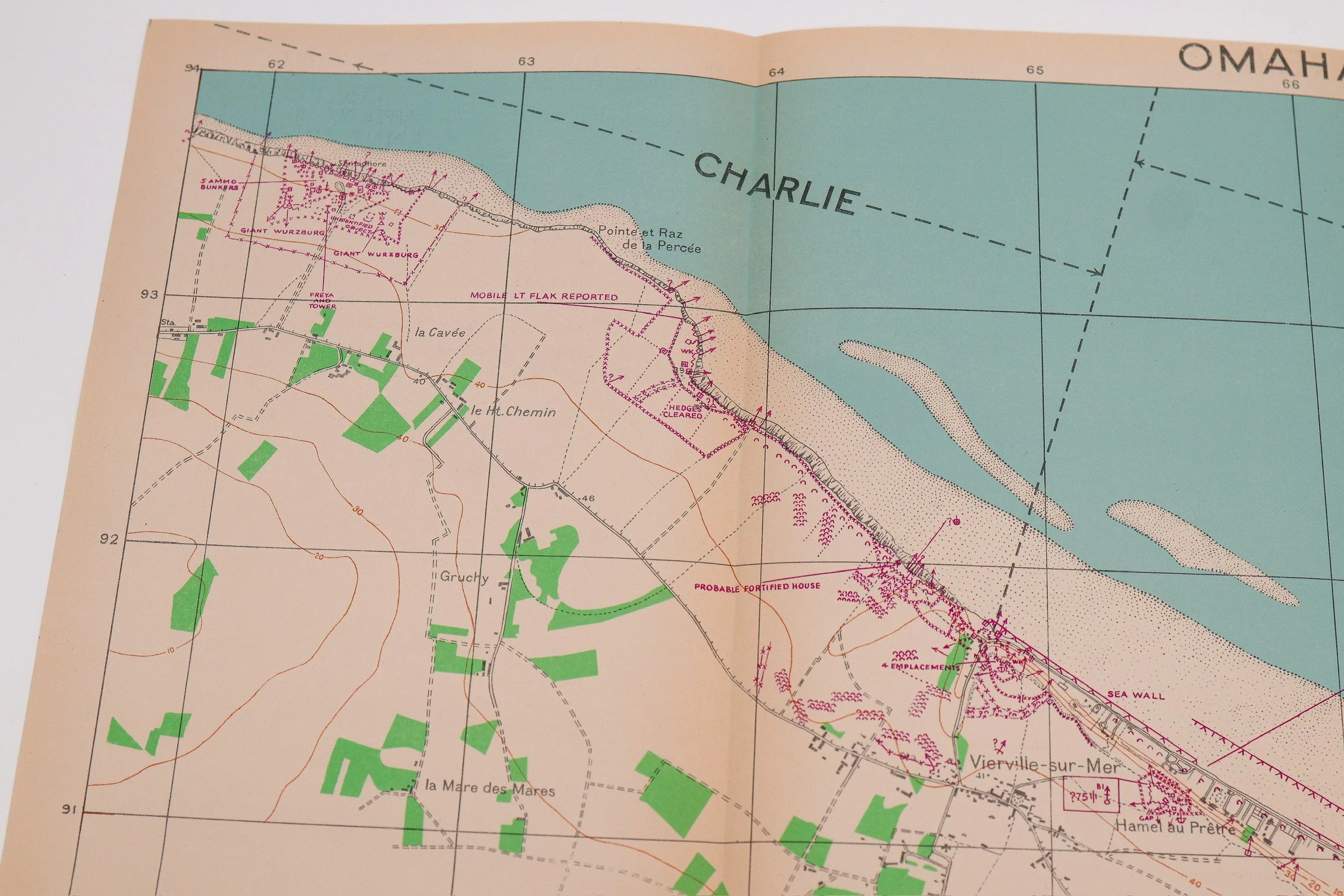
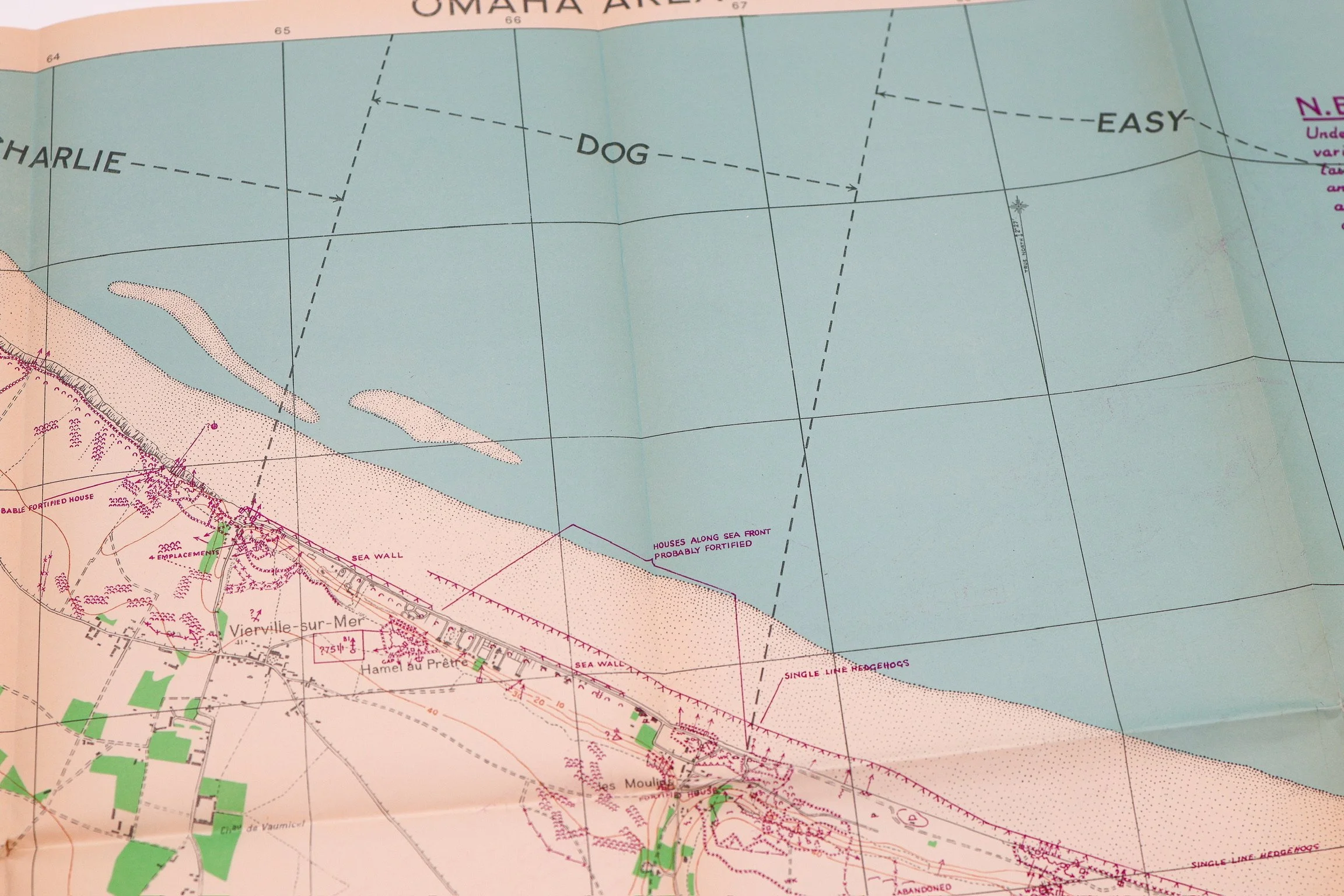
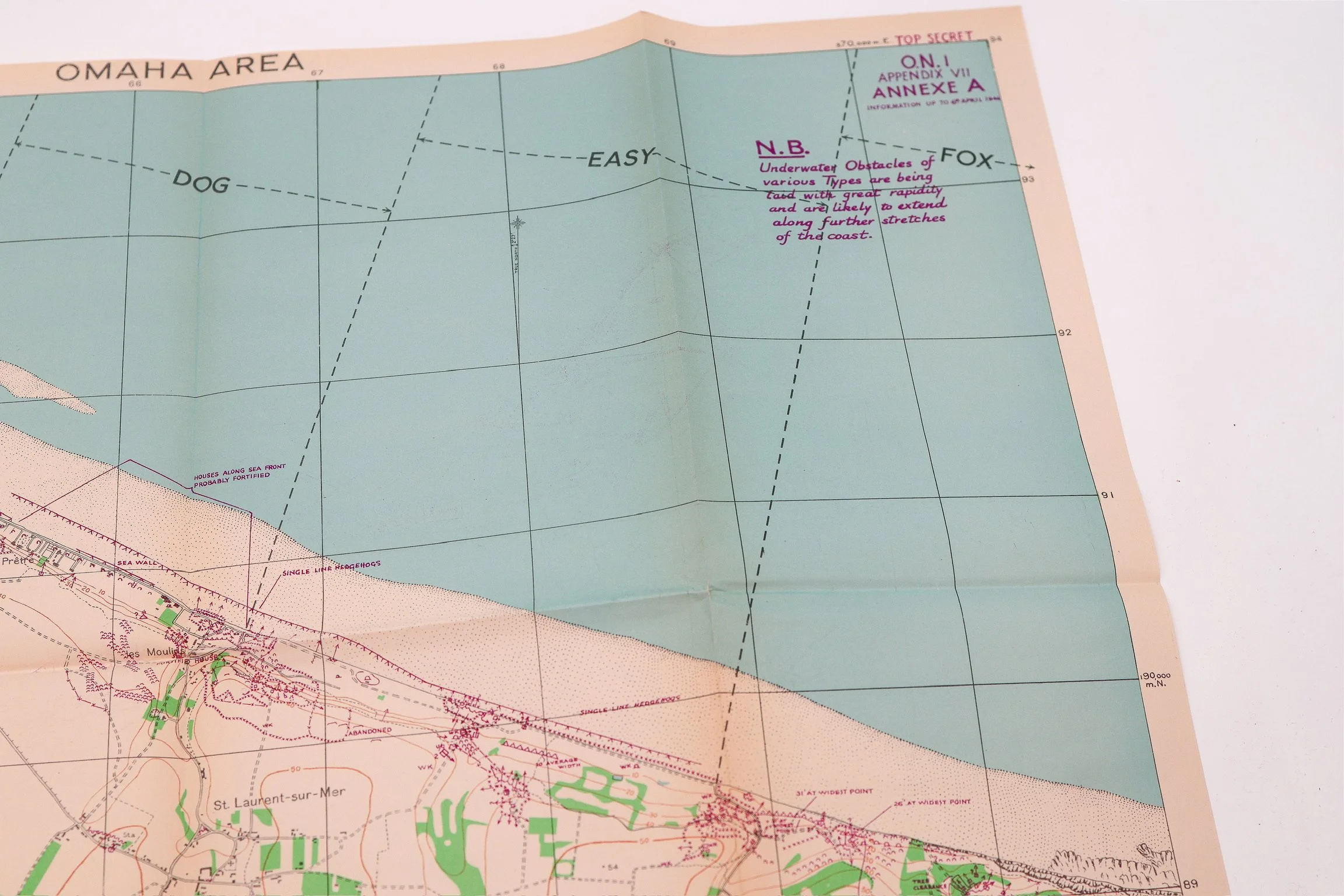
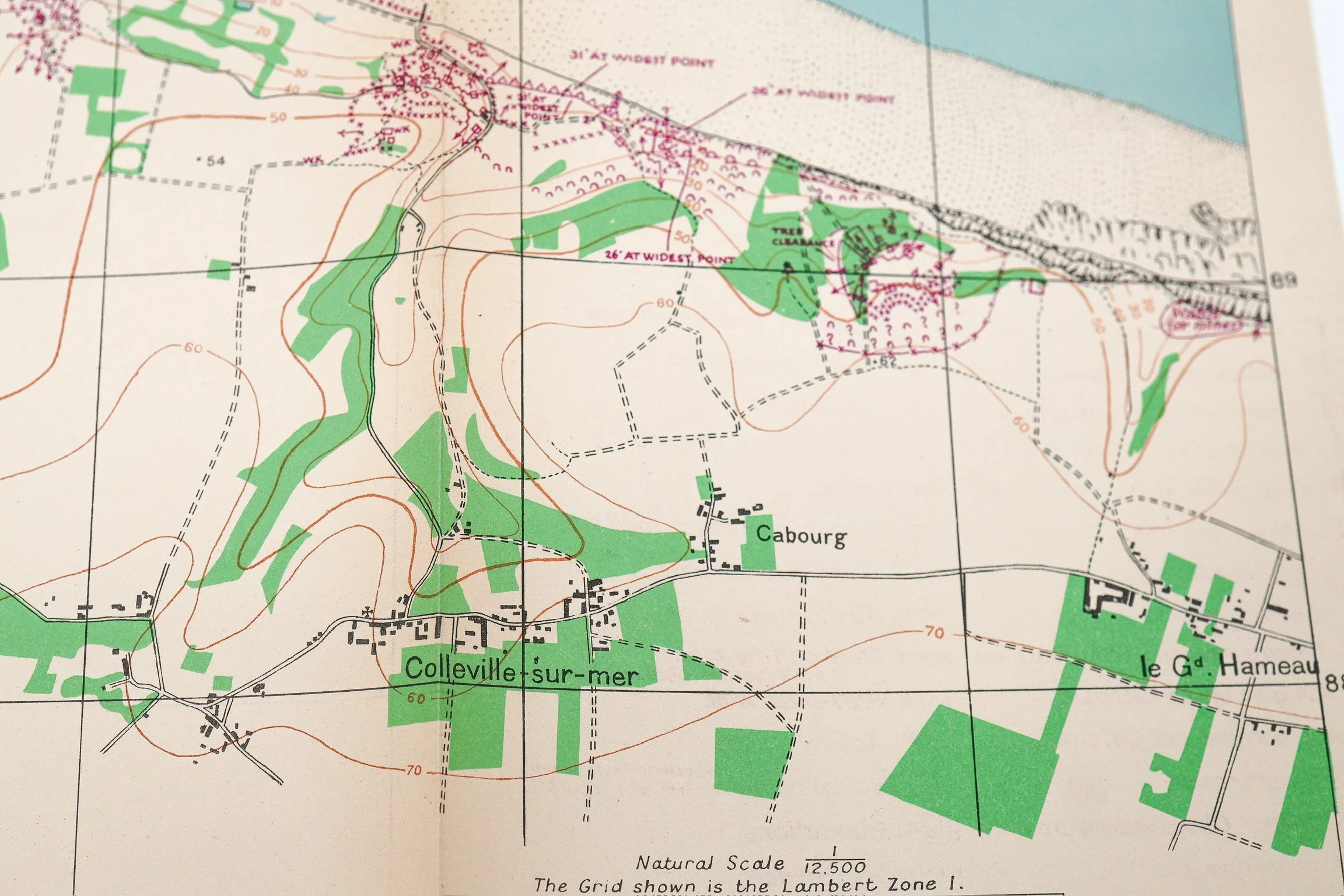
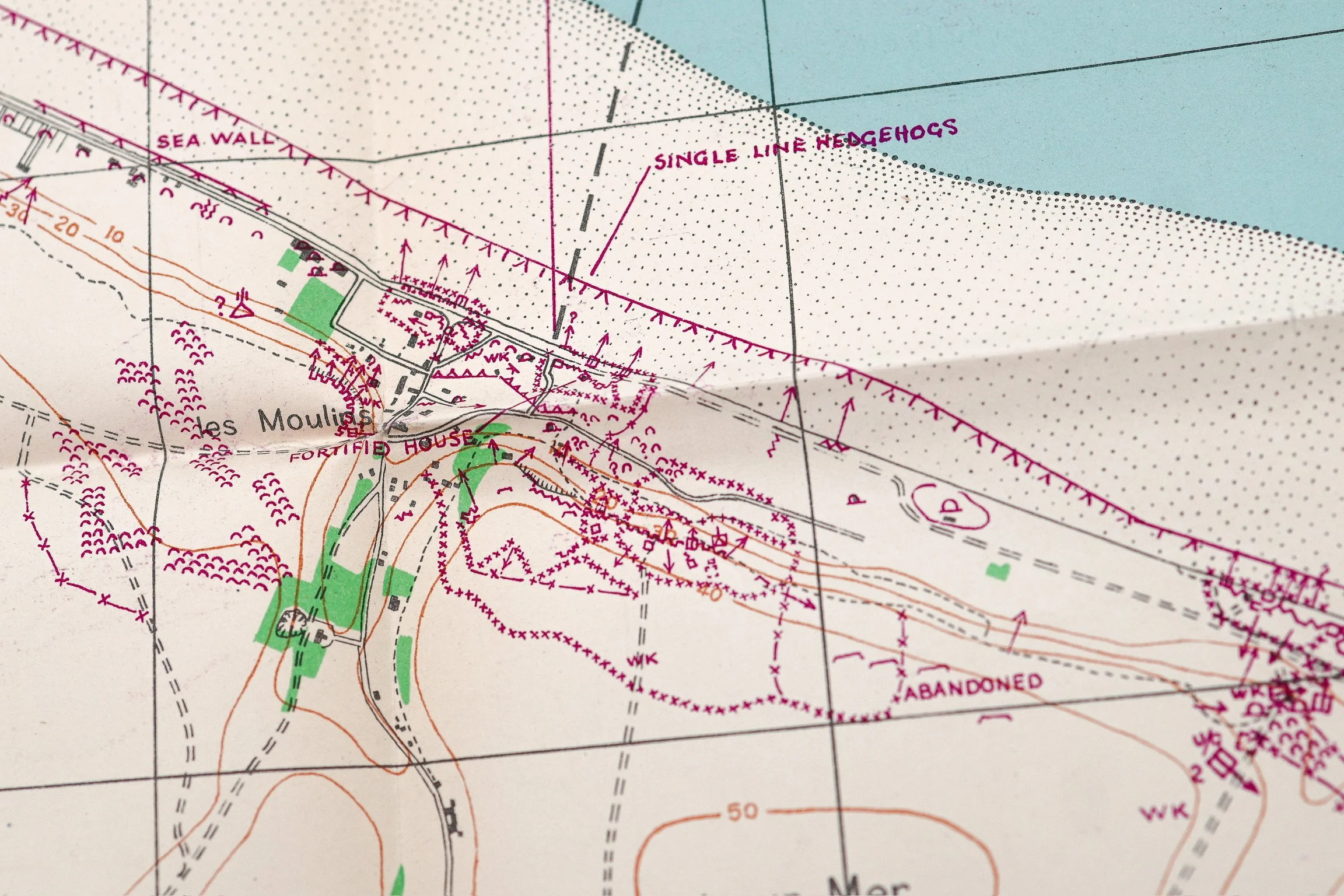
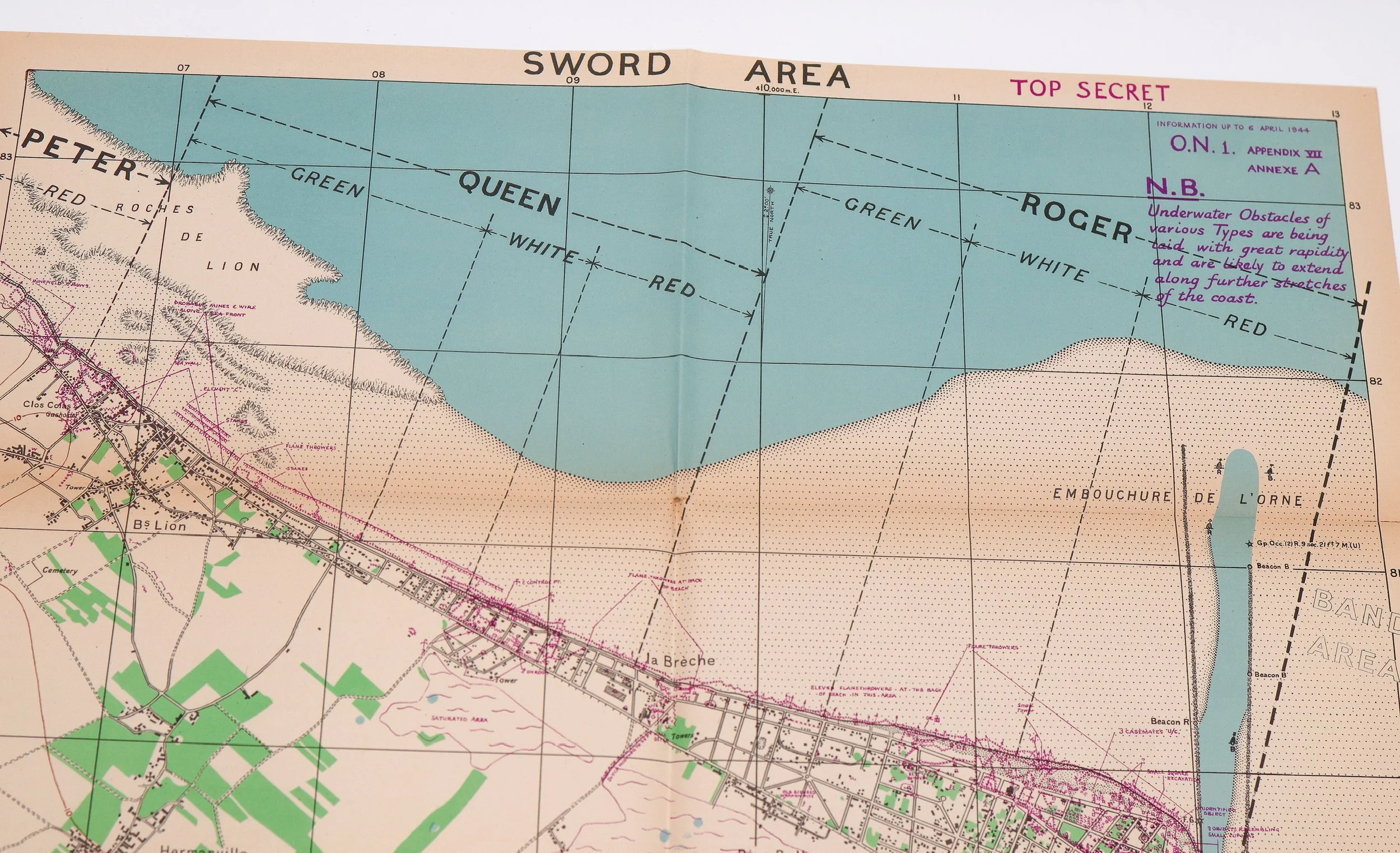
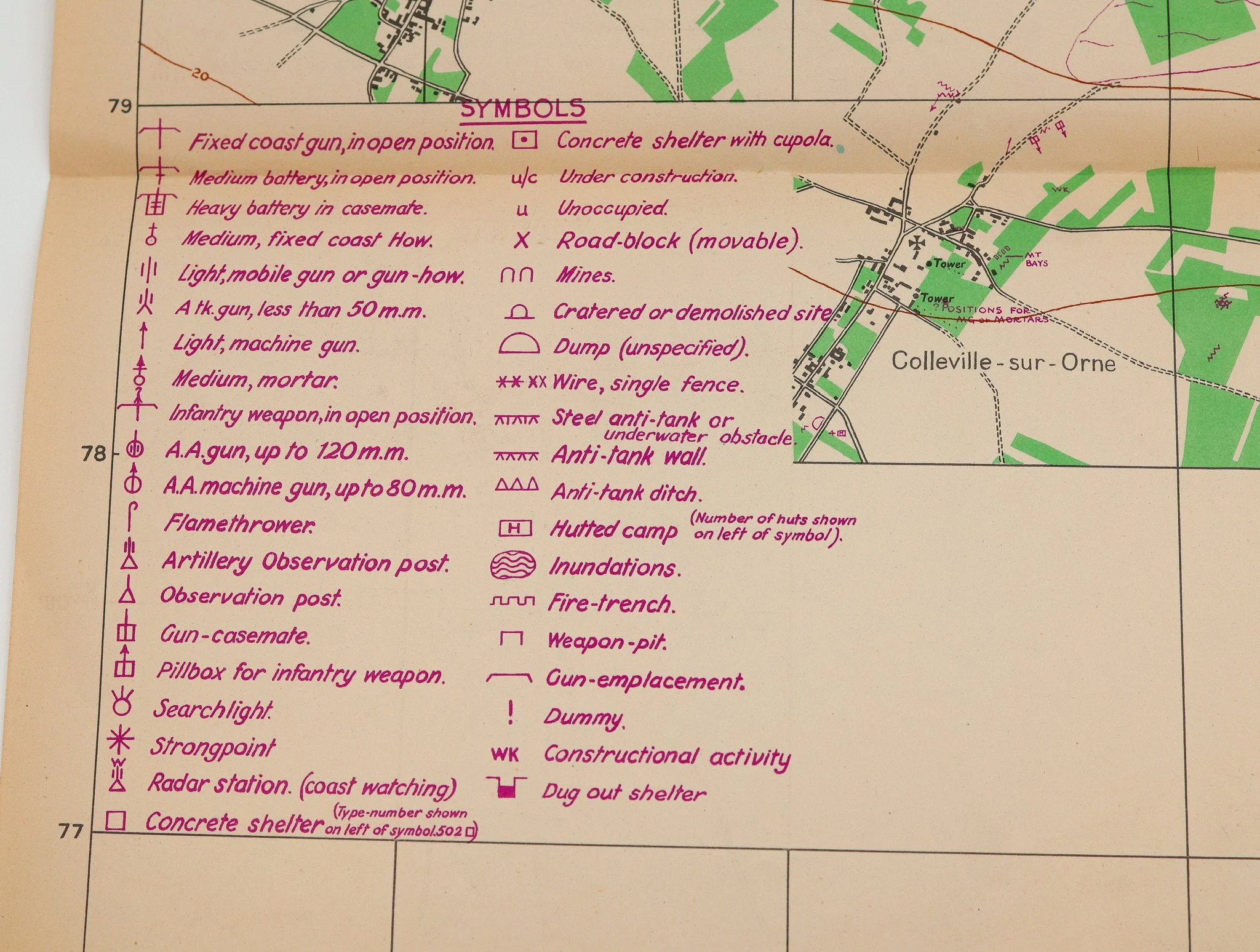
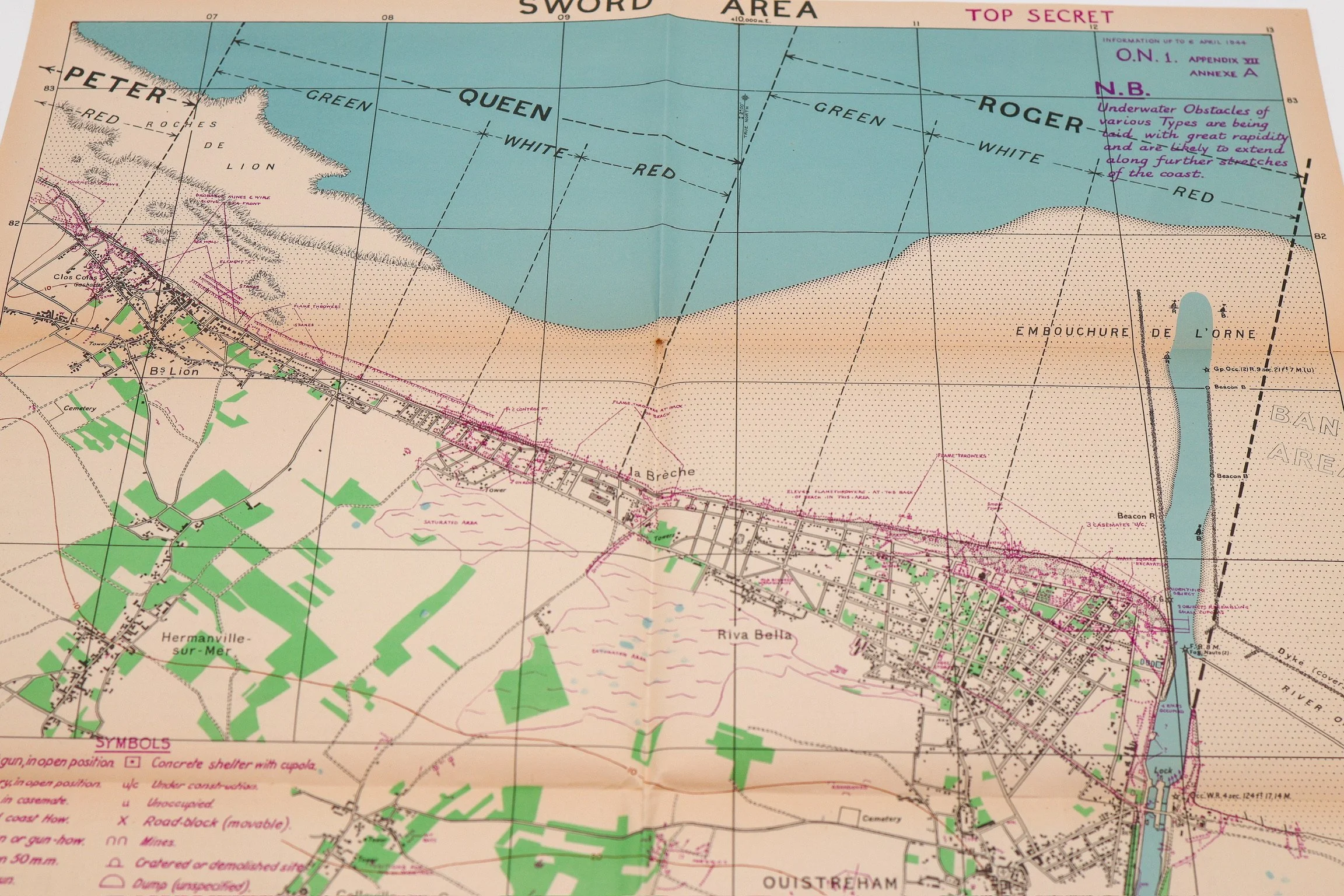
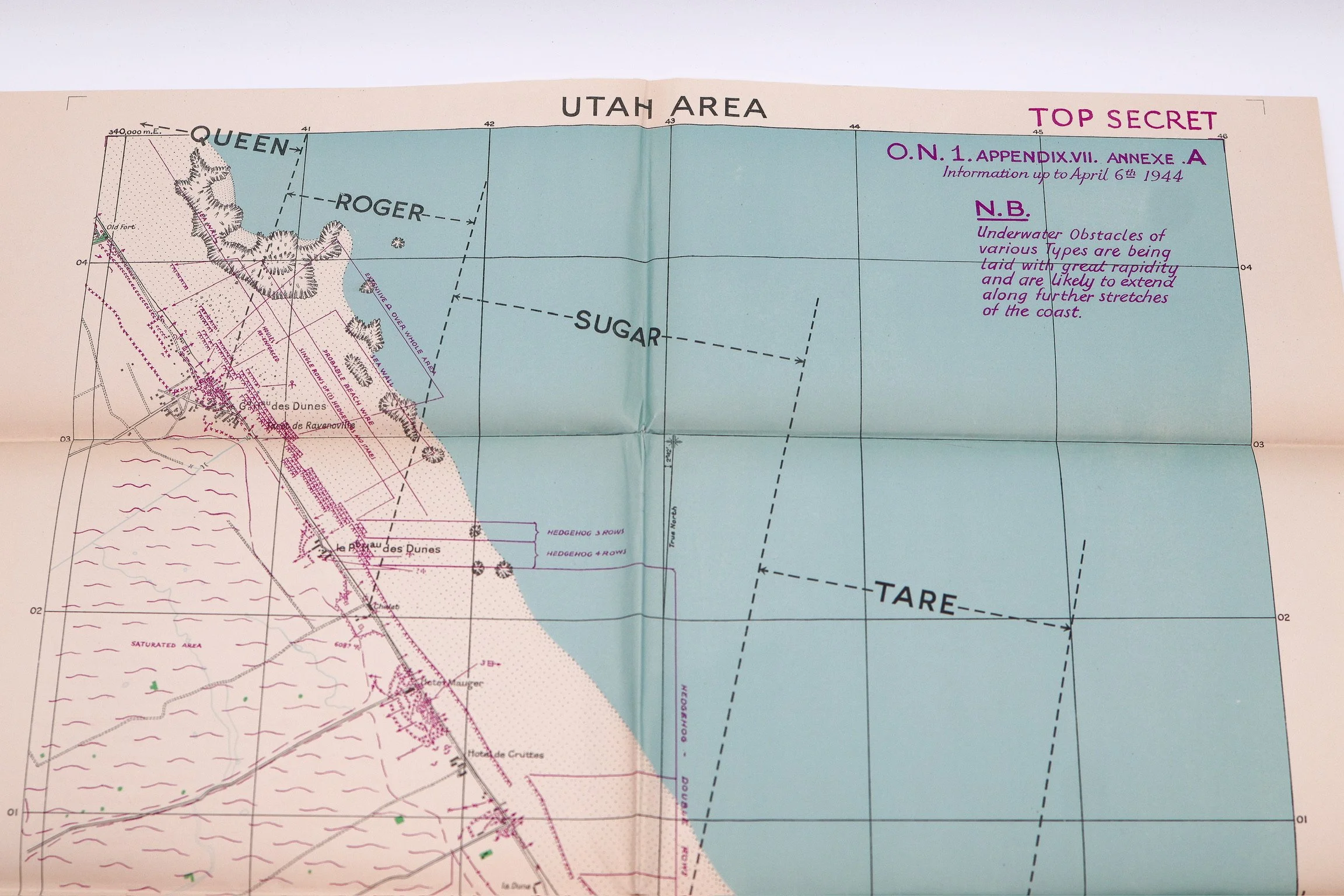
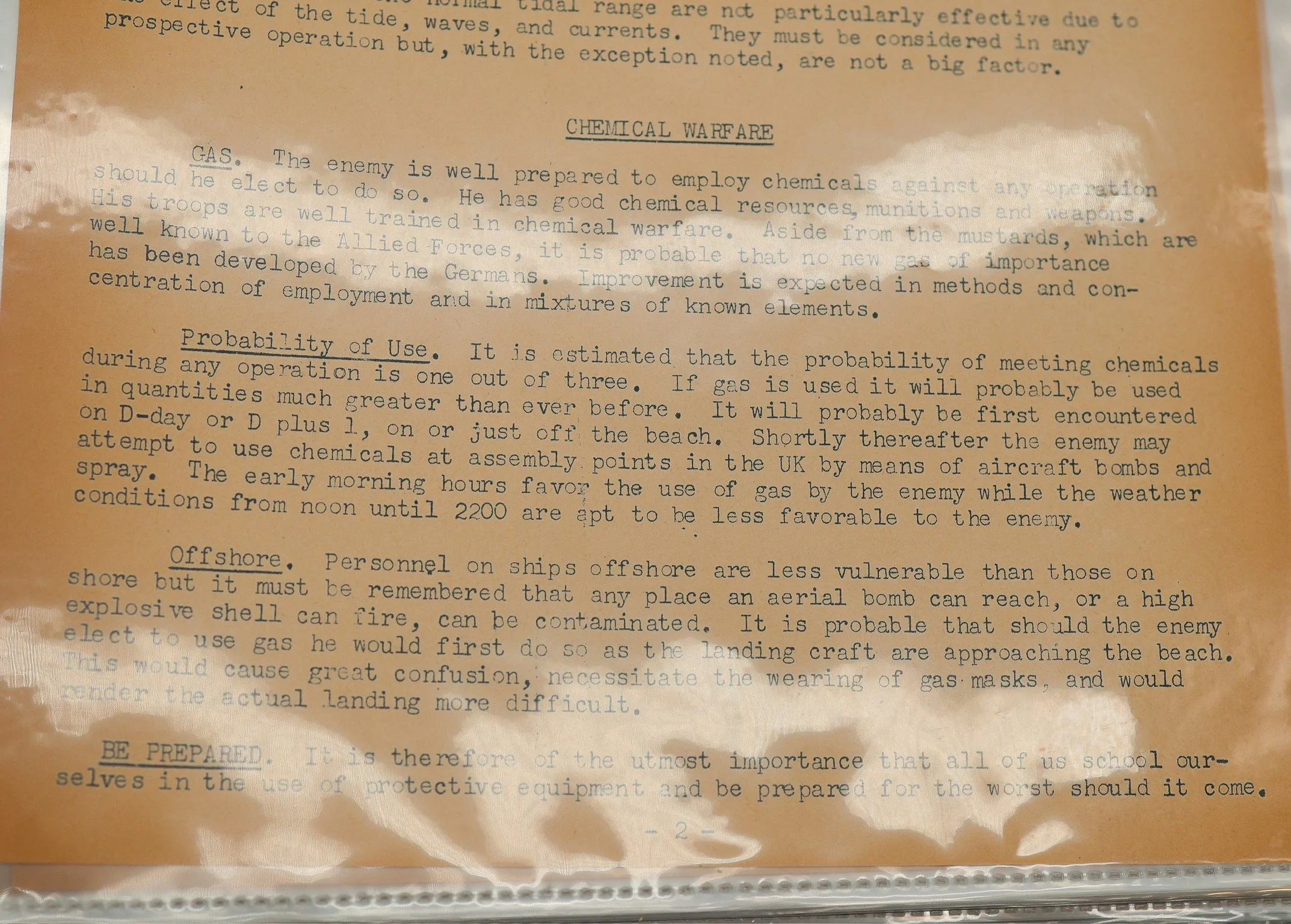
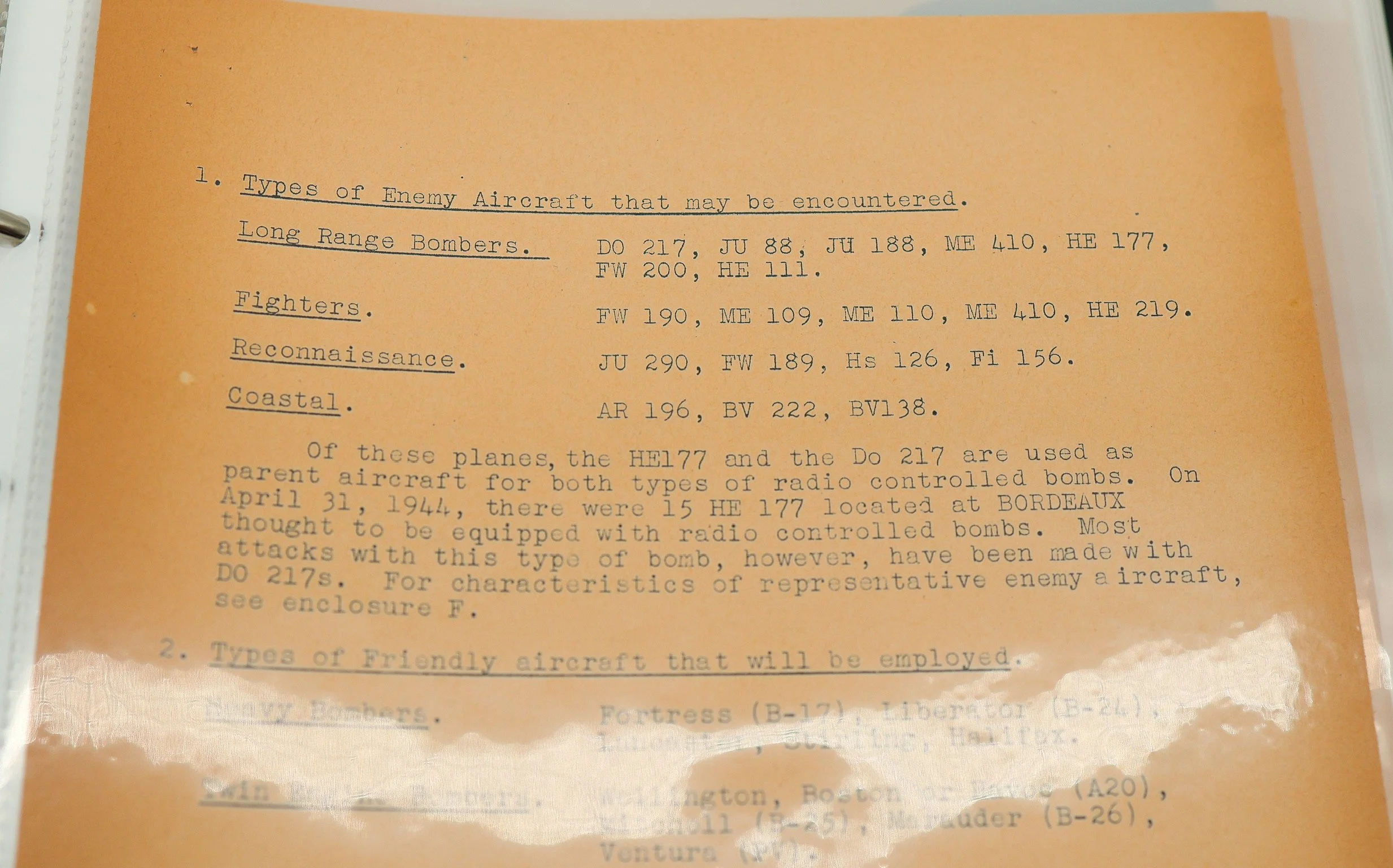
D-Day Planning Grouping with BIGOT Maps & Content — Operation Overlord / Operation Neptune
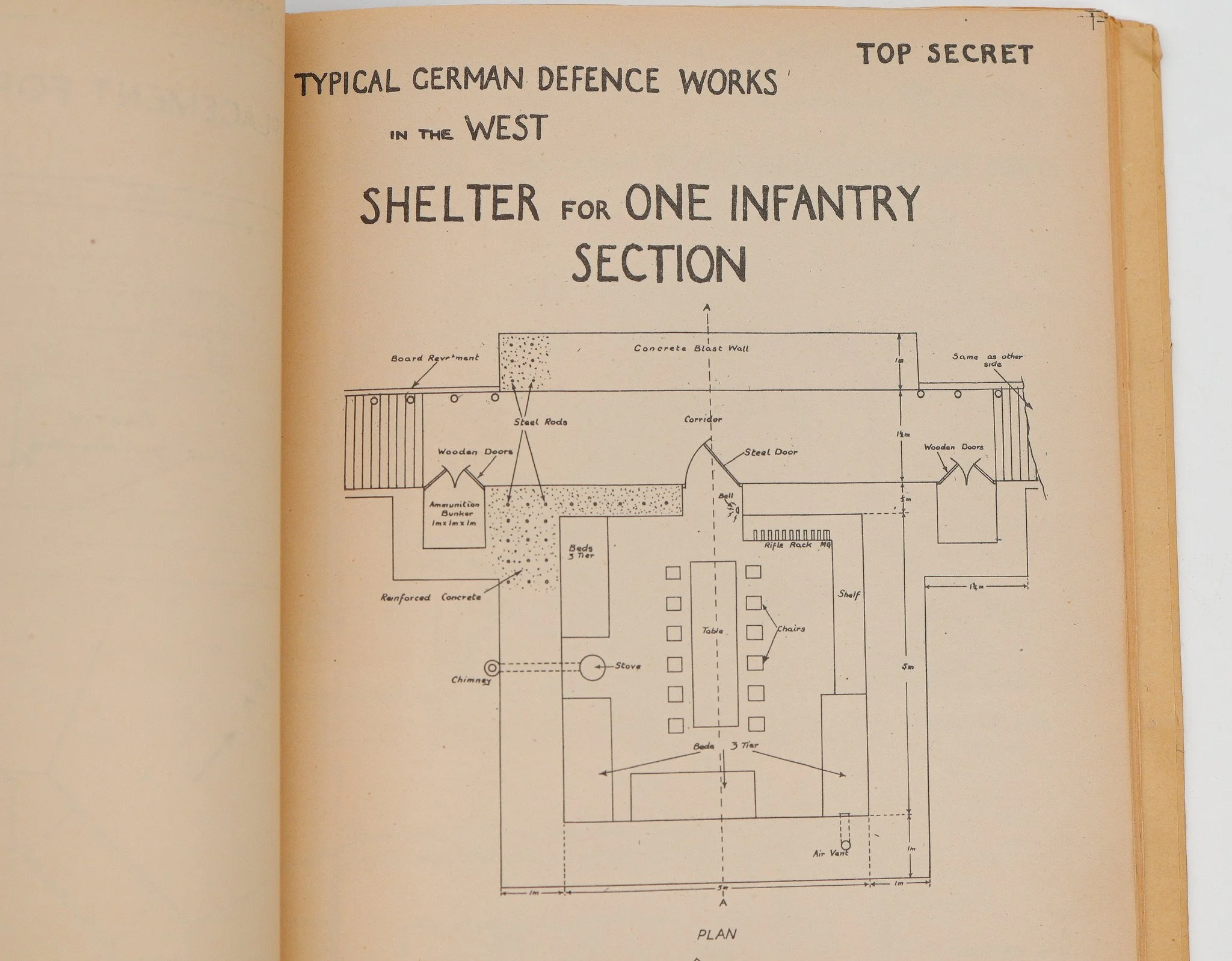
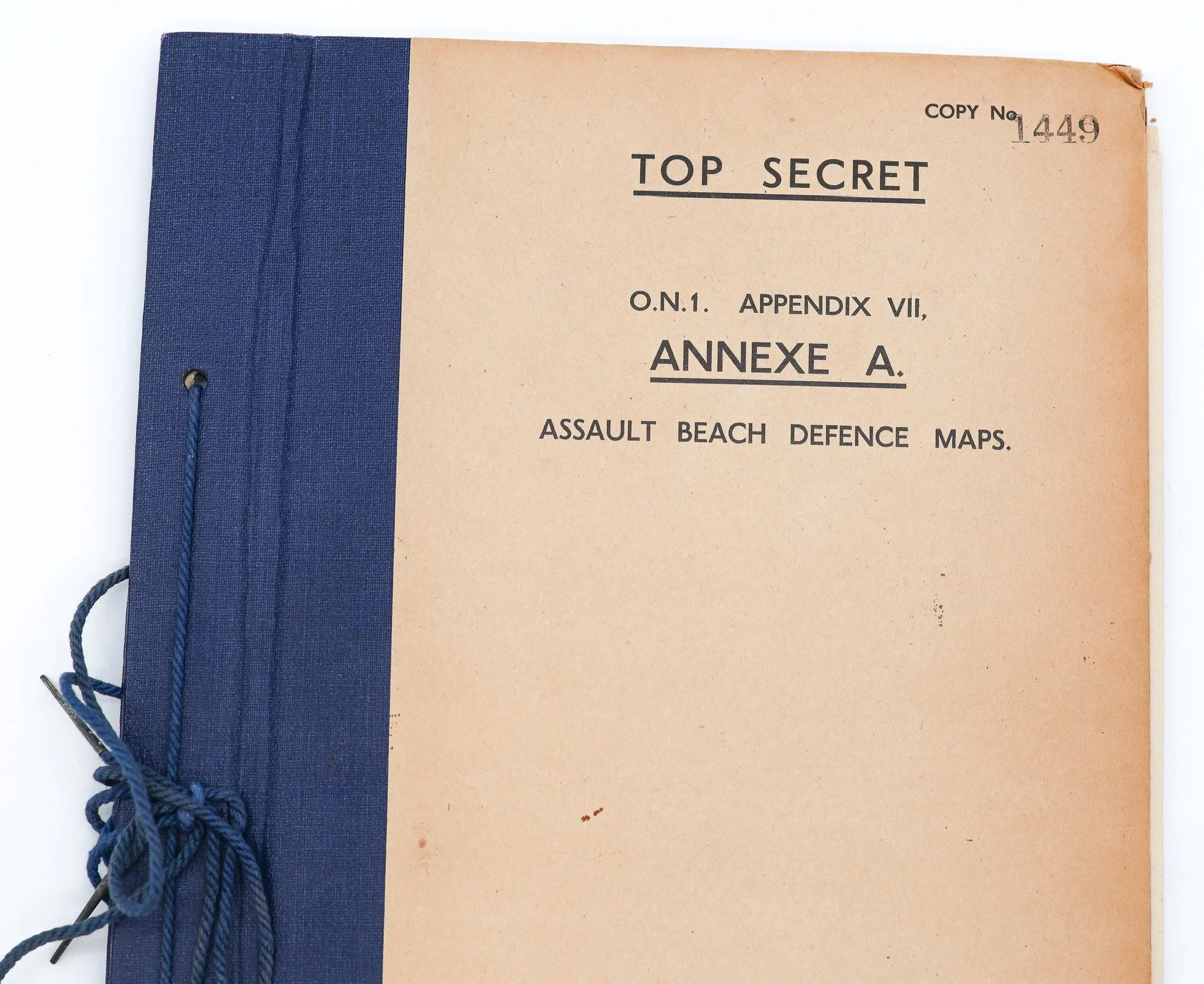
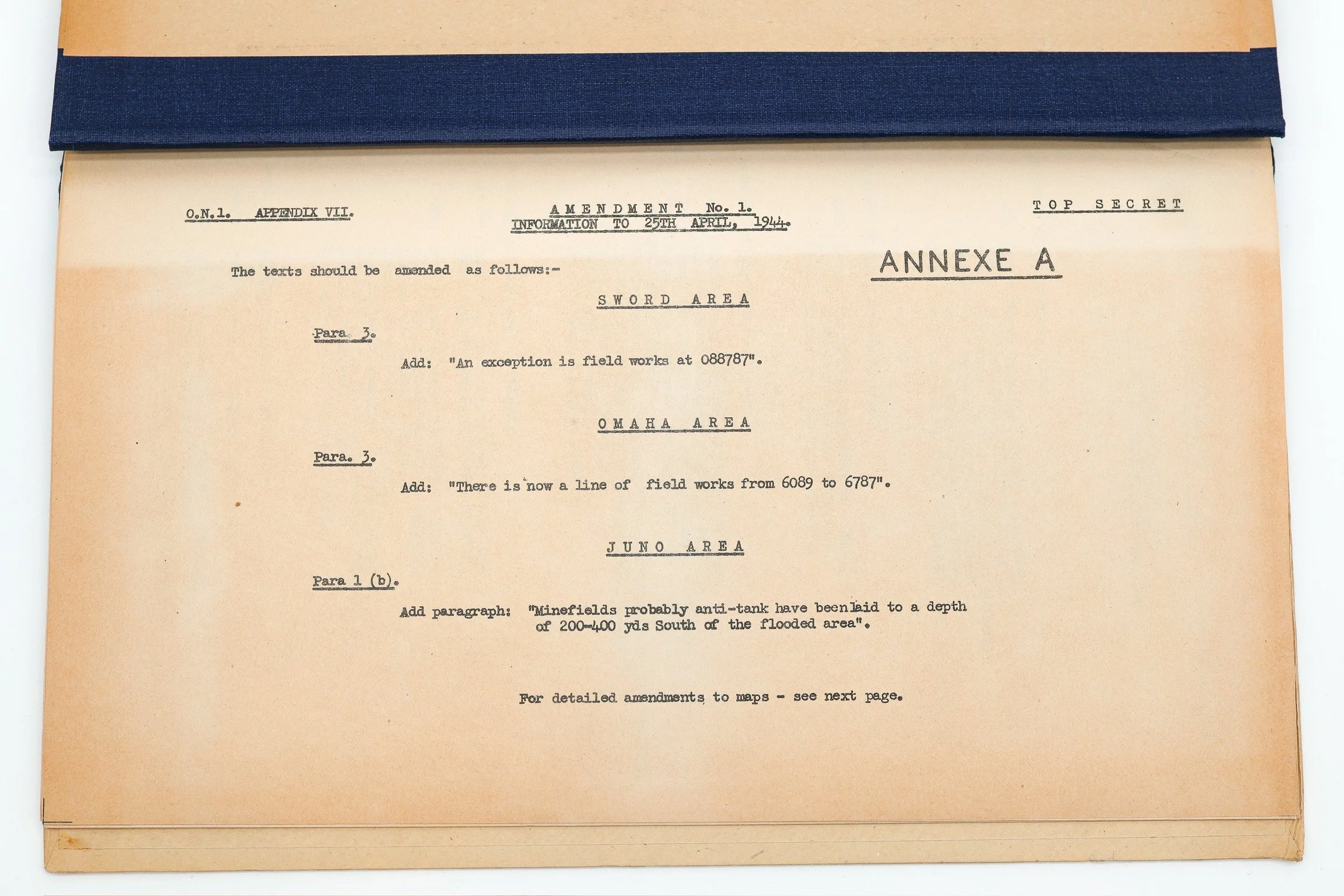
This grouping consists of original Allied planning documents and reference materials prepared for the Normandy Invasion on June 6, 1944. The materials reflect the depth, scale, and security surrounding the planning of the amphibious assault and its supporting naval and ground operations…..
-
Contents include:
1. Top-Secret “BIGOT” Classified Documents
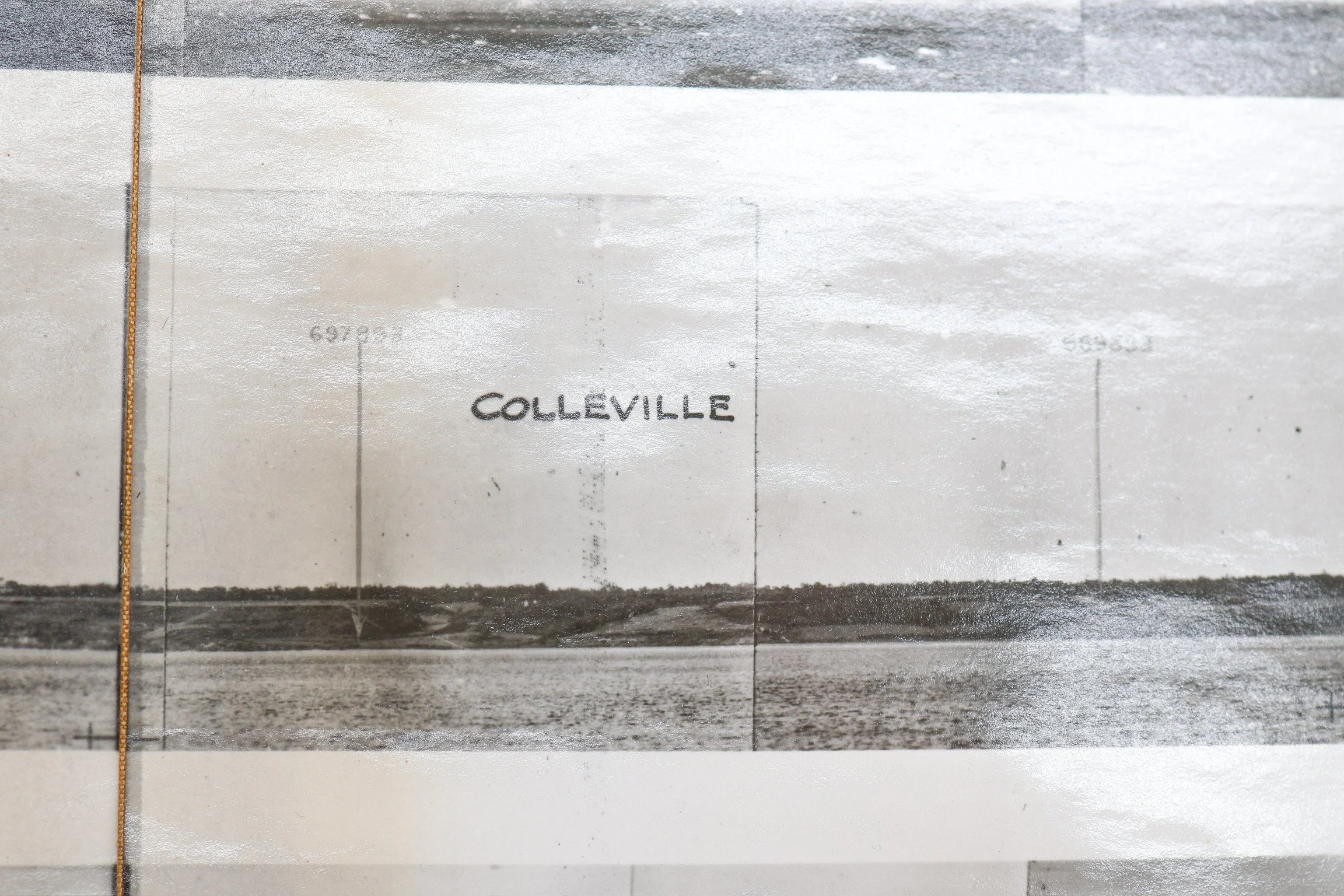
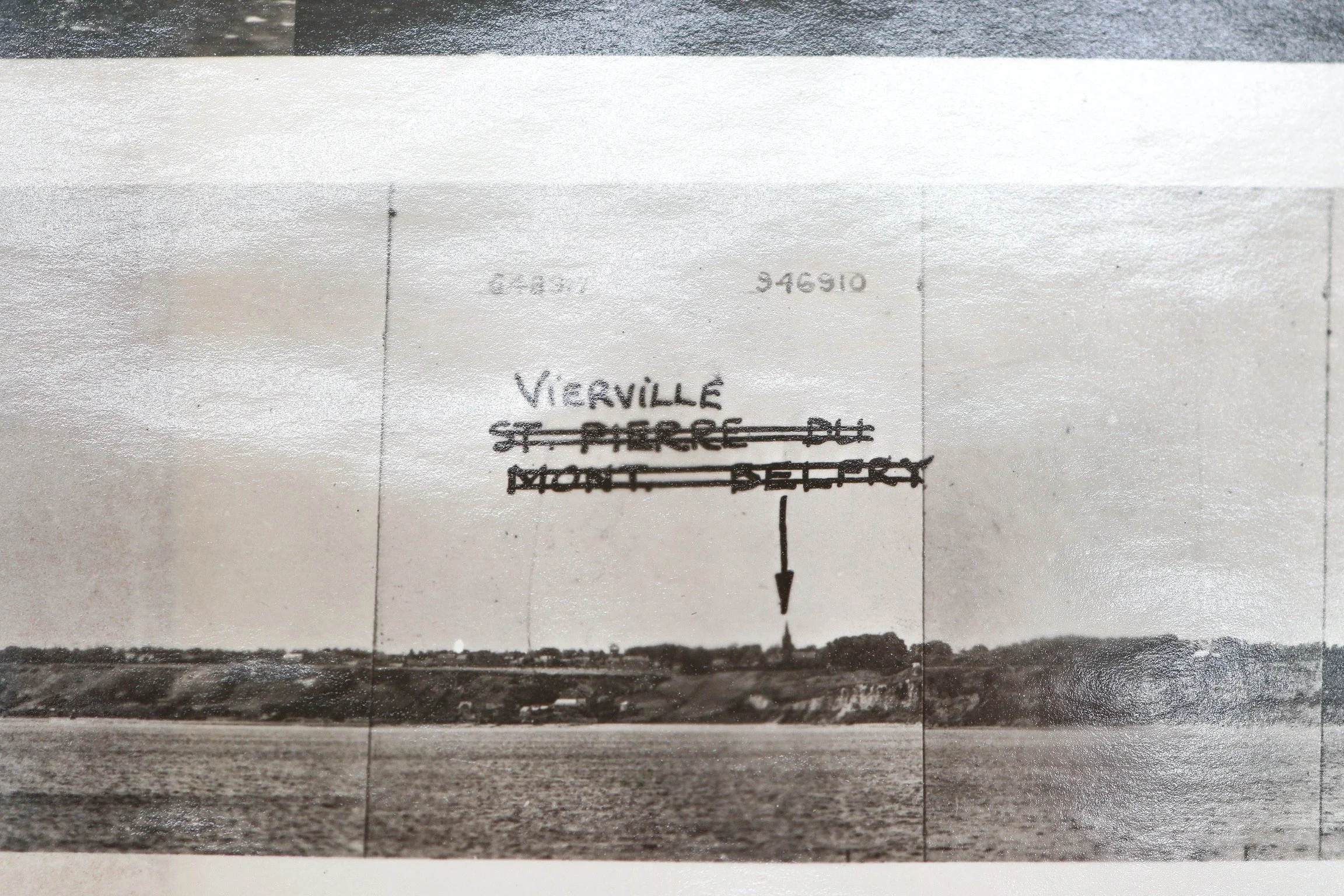
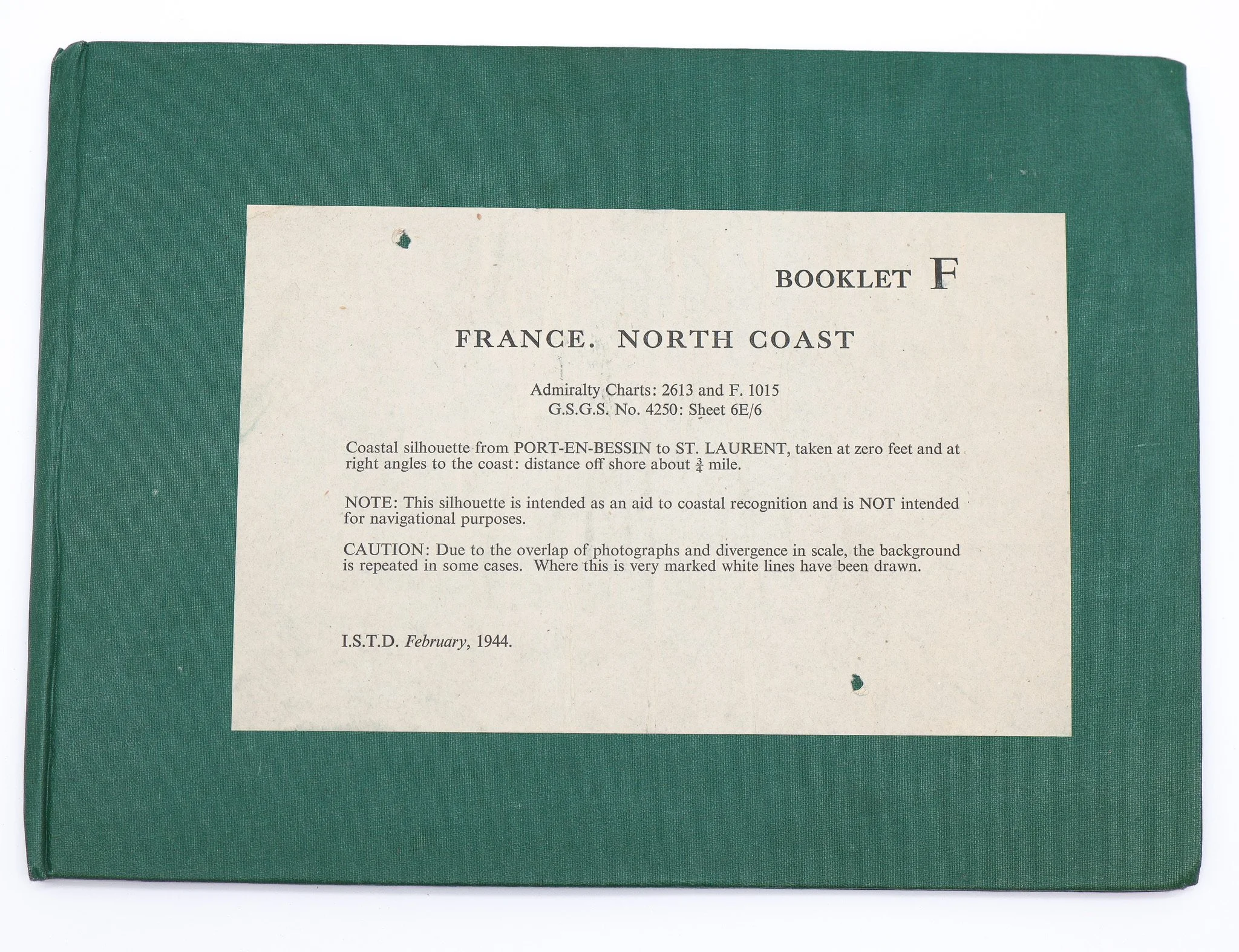
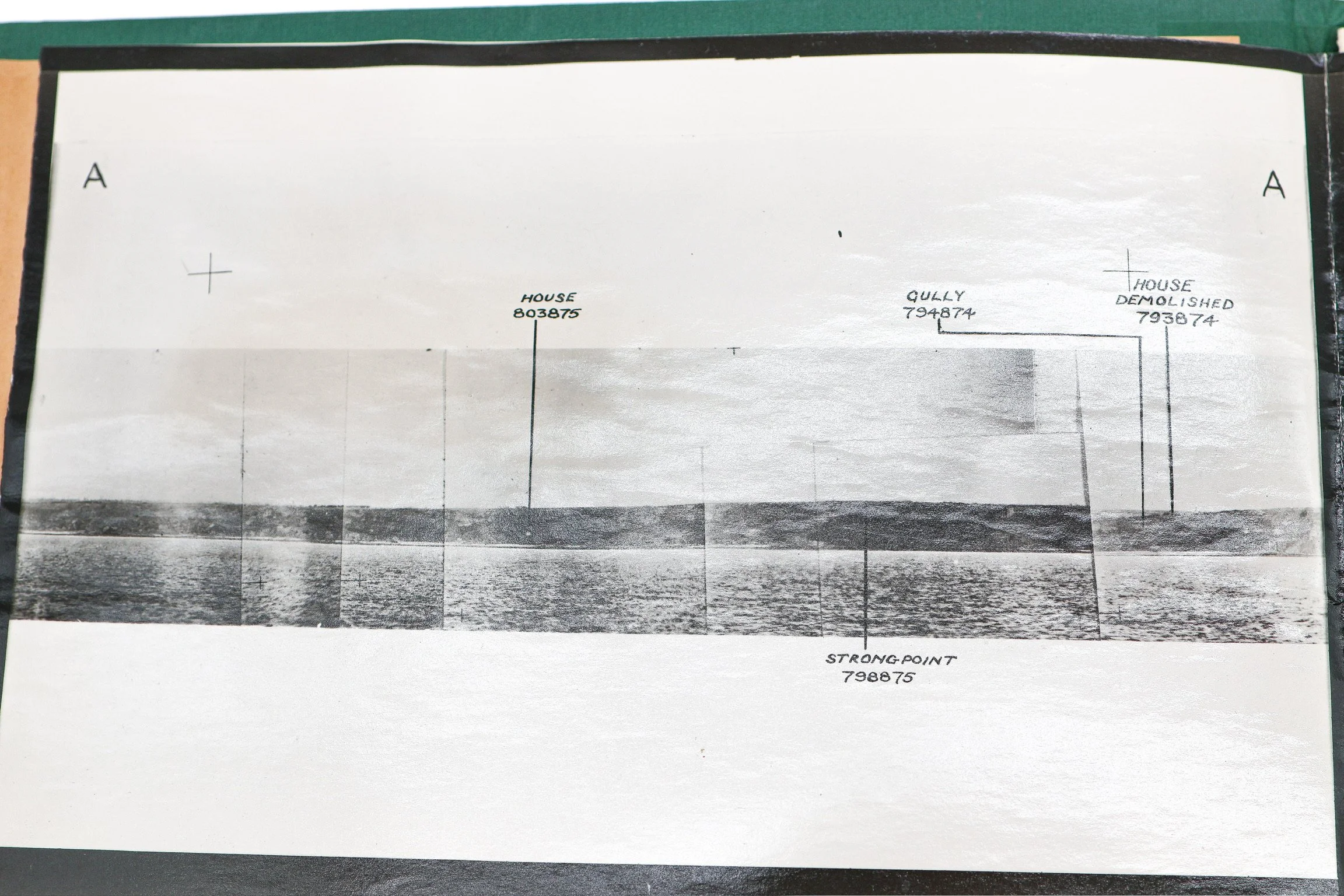
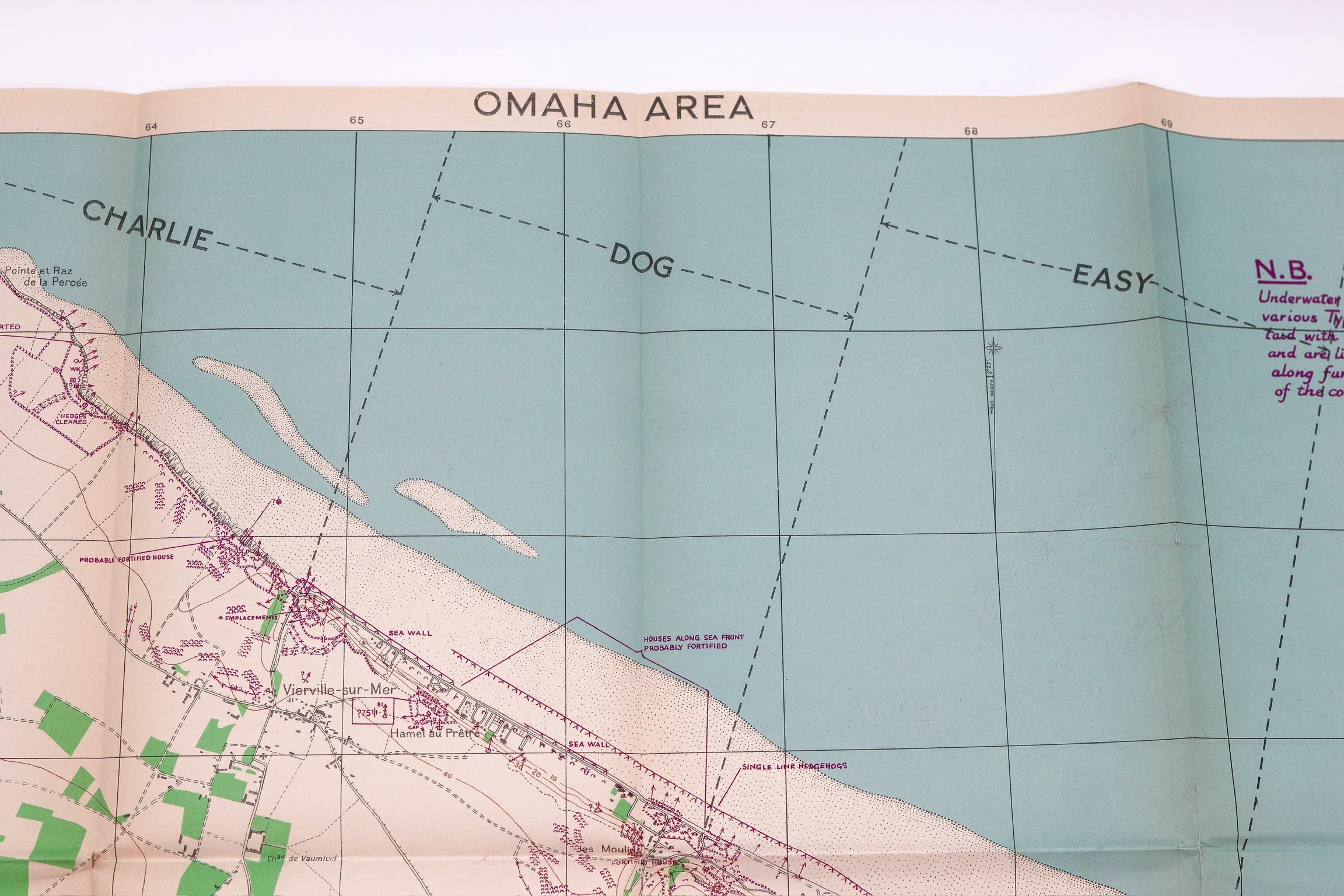
These materials were issued under the highest level of invasion security and were restricted to personnel directly involved in the planning and execution of the landings. The documents include invasion maps, coastal reconnaissance photographs, and analytical material covering Omaha, Utah, Gold, Juno, and Sword Beaches. Shown are German defensive strongpoints, beach obstacles, gun emplacements, and known or suspected troop concentrations.2. Assault Beach Defense and Coastal Silhouette Maps
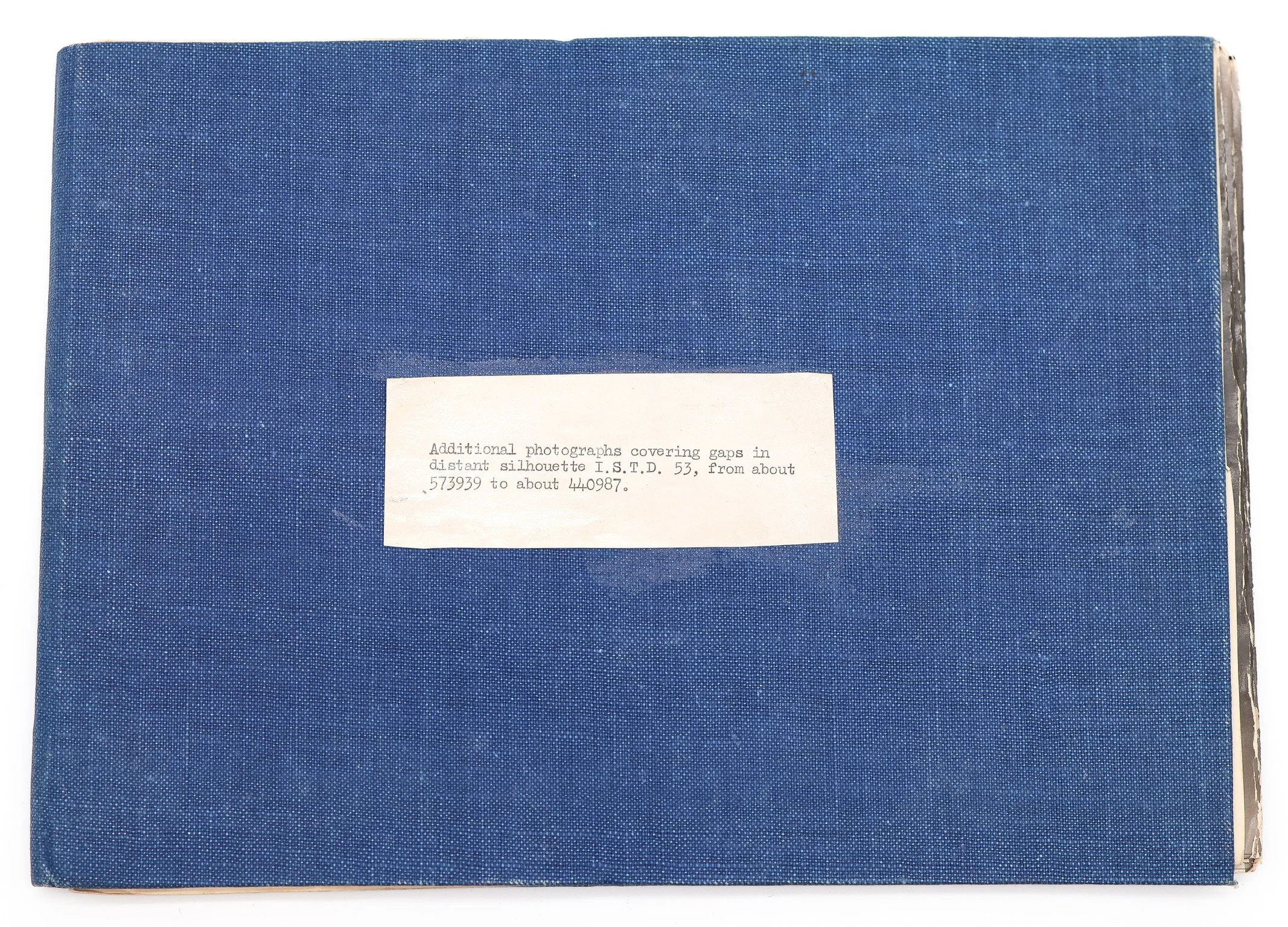
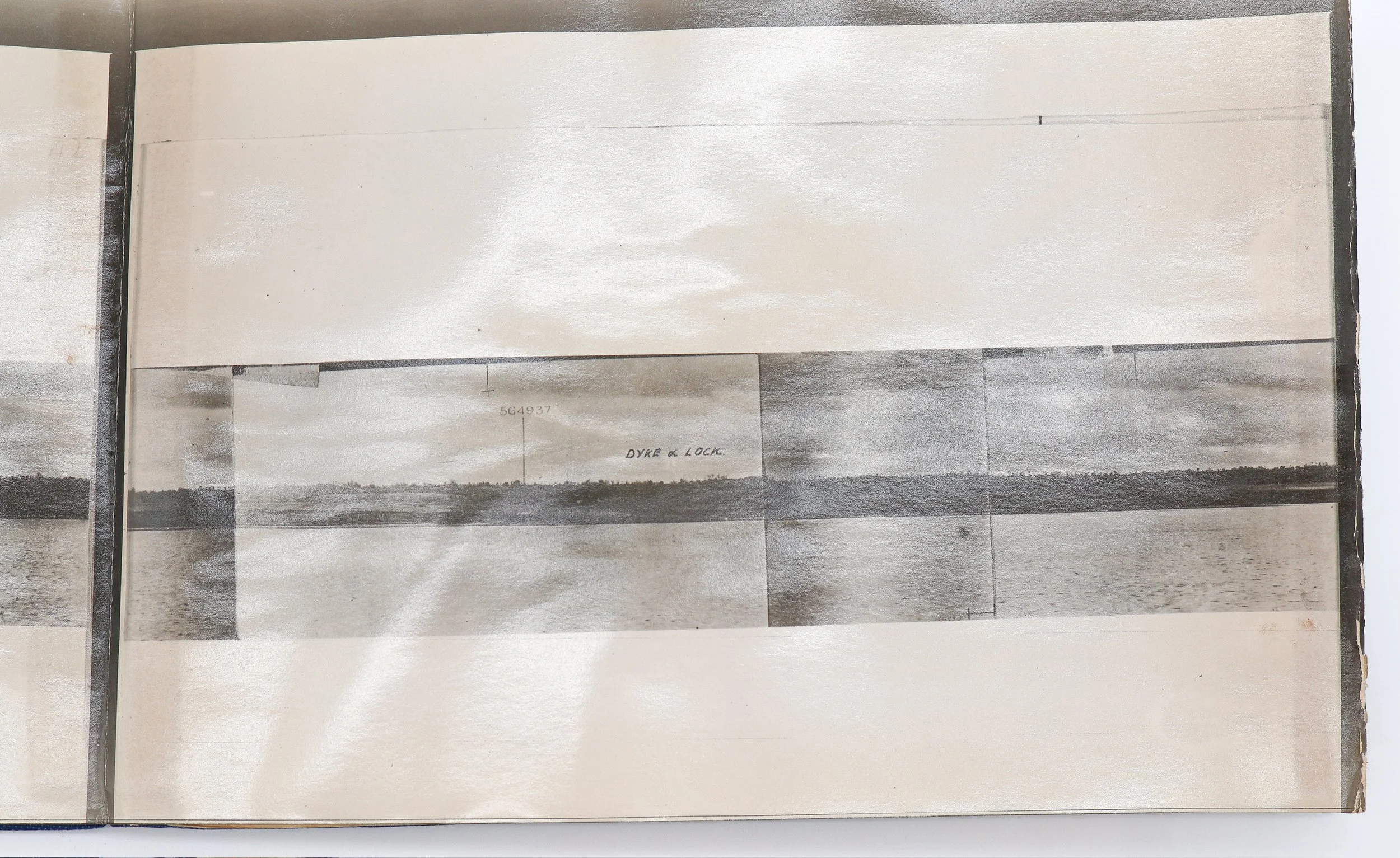
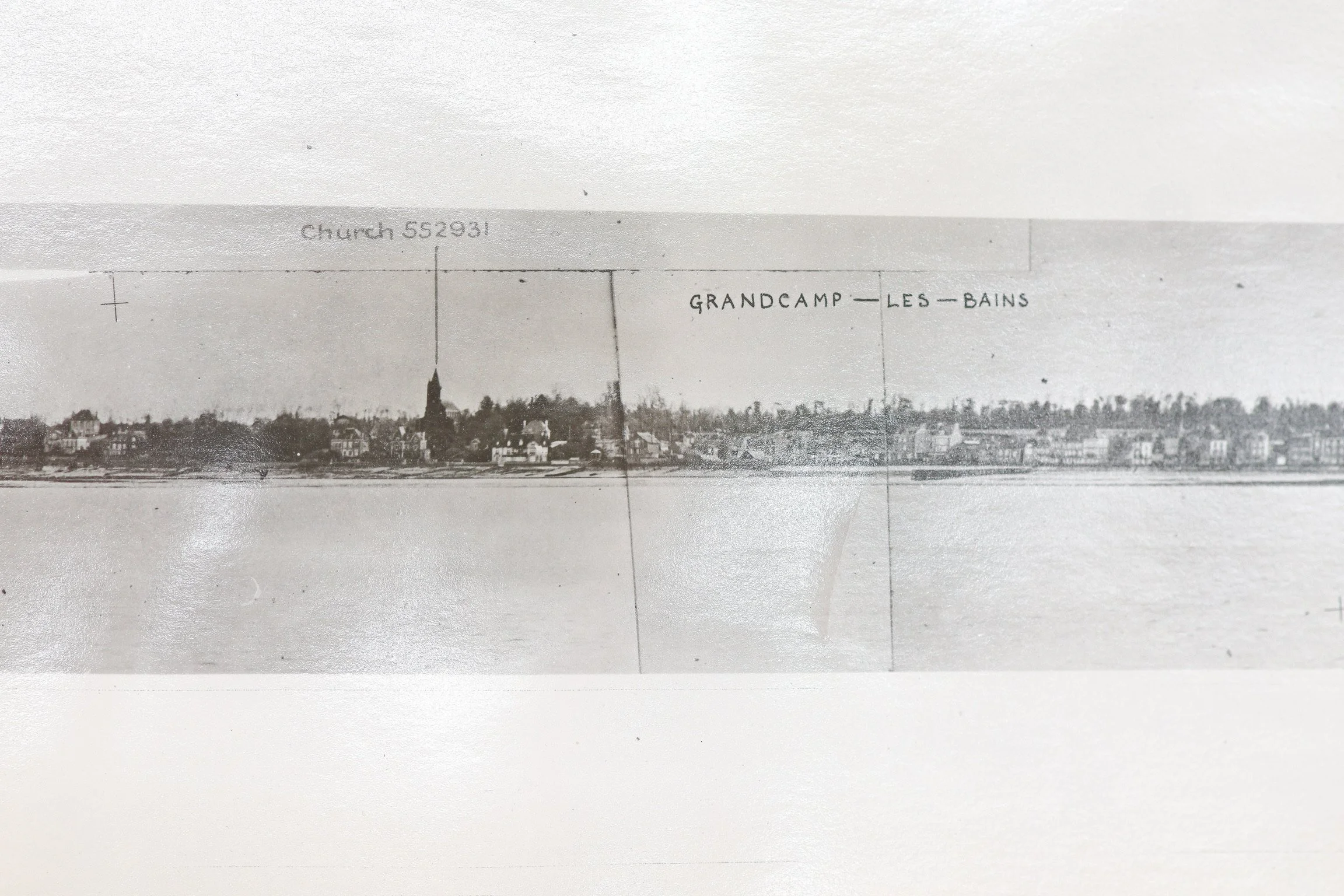
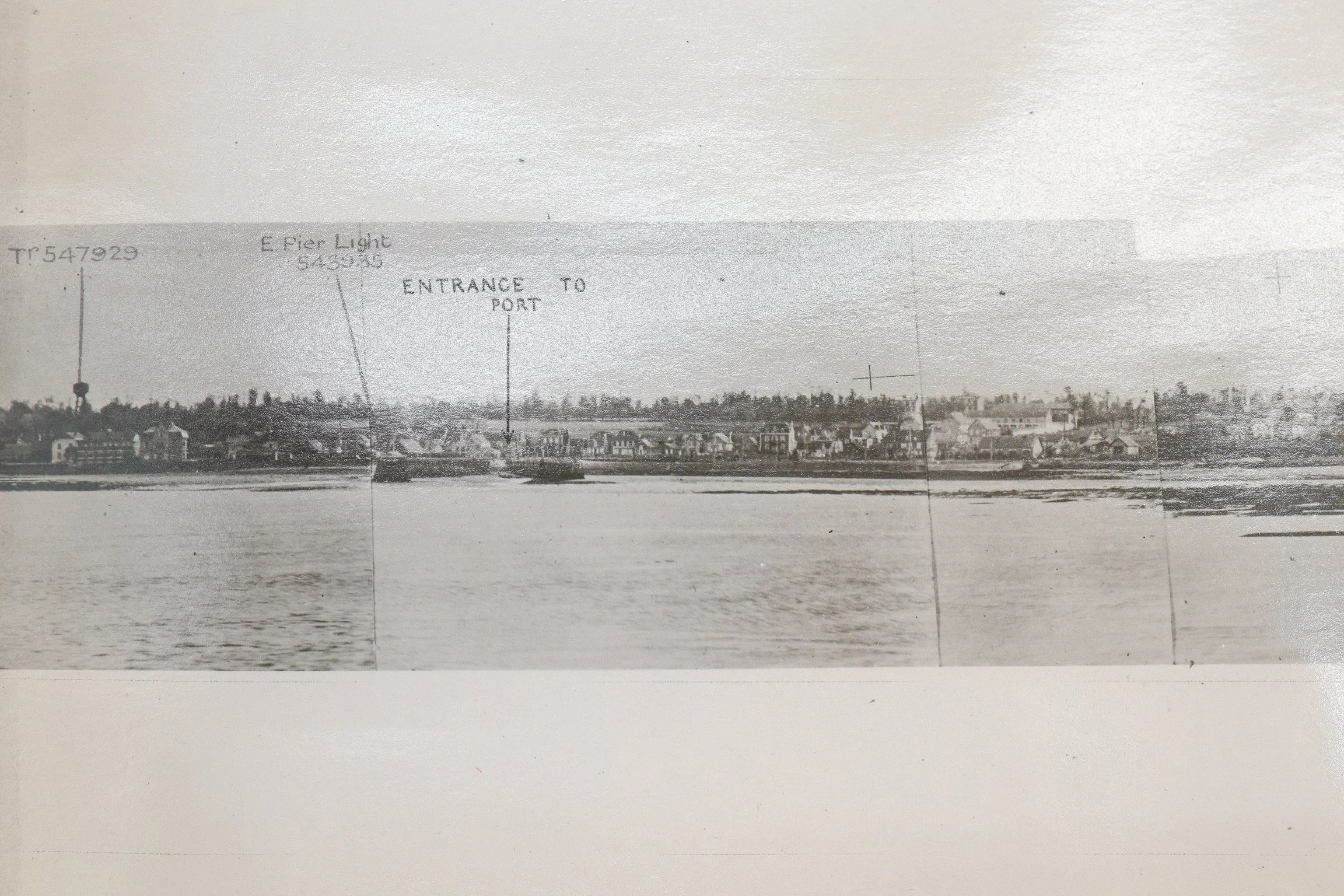
Visual recognition diagrams and coastal silhouettes depicting the Normandy coastline and the Cherbourg Peninsula. These were used by naval and landing forces to identify shore features, confirm approach sectors, and orient units during the assault phase.3. Operation Neptune Planning Monograph (April 1944)
A comprehensive operational study prepared for Commander, Task Force 122, detailing the naval component of the invasion. The monograph addresses tides, weather forecasting, landing craft organization, convoy movements, timing schedules, naval gunfire support, and the sequencing of assault waves. This document represents the finalized planning immediately prior to the invasion.4. Extensive Invasion Maps and Tactical Overlays
Dozens of large-scale maps and transparent overlays showing terrain features, beach exits, obstacles, defensive belts, road networks, and inland objectives. These materials were intended for use by assault and follow-on forces to navigate, advance inland, and overcome German defenses.Taken together, this grouping documents the operational intelligence, security measures, and logistical coordination required to execute the largest amphibious invasion in history. The survival of these classified planning materials offers a rare, first-hand view into the decision-making and preparation that preceded the Allied landings in Normandy.
This is a museum-level documentation grouping that illustrates the complexity and precision behind the Normandy invasion and the broader Allied effort to liberate Western Europe.
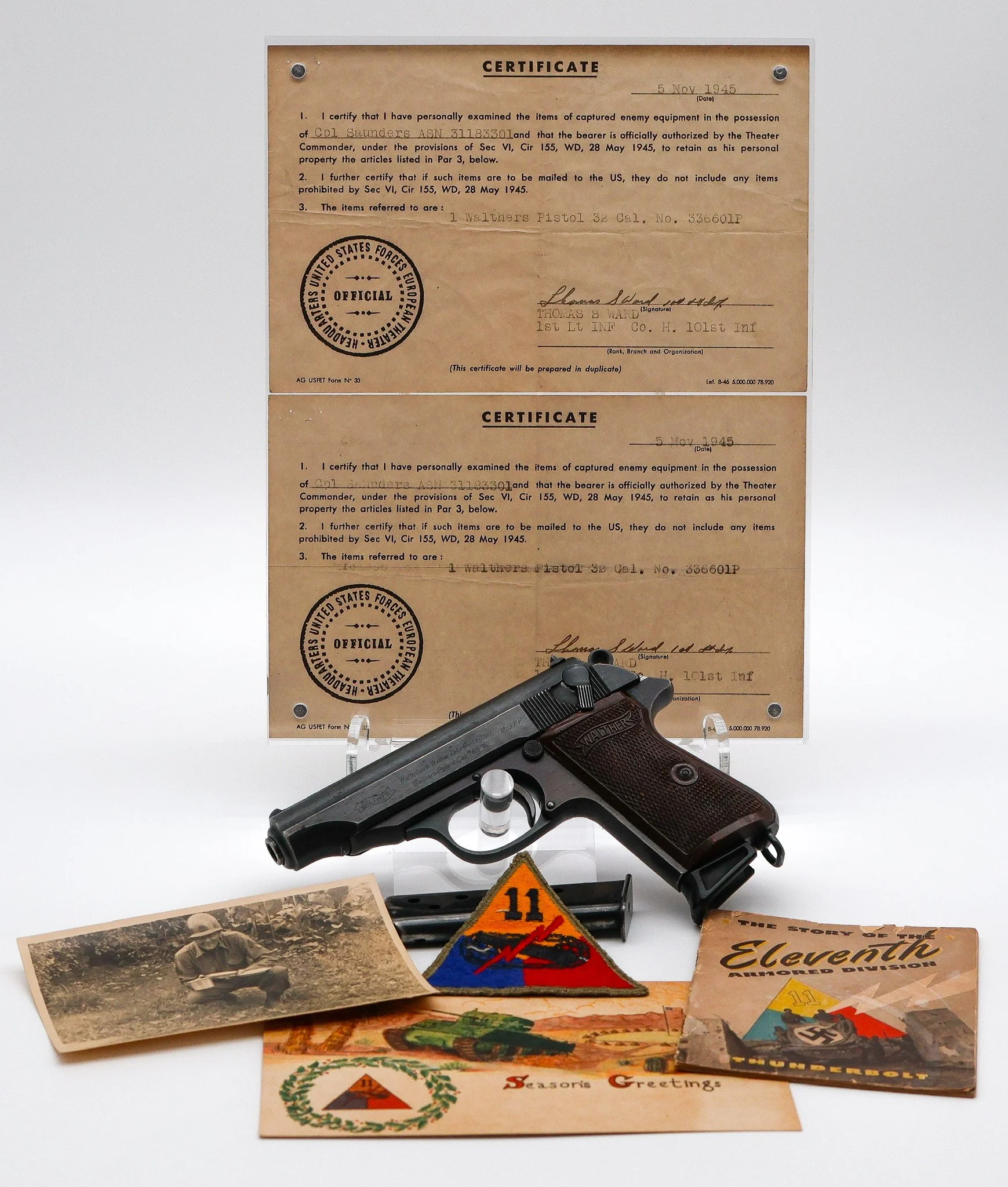
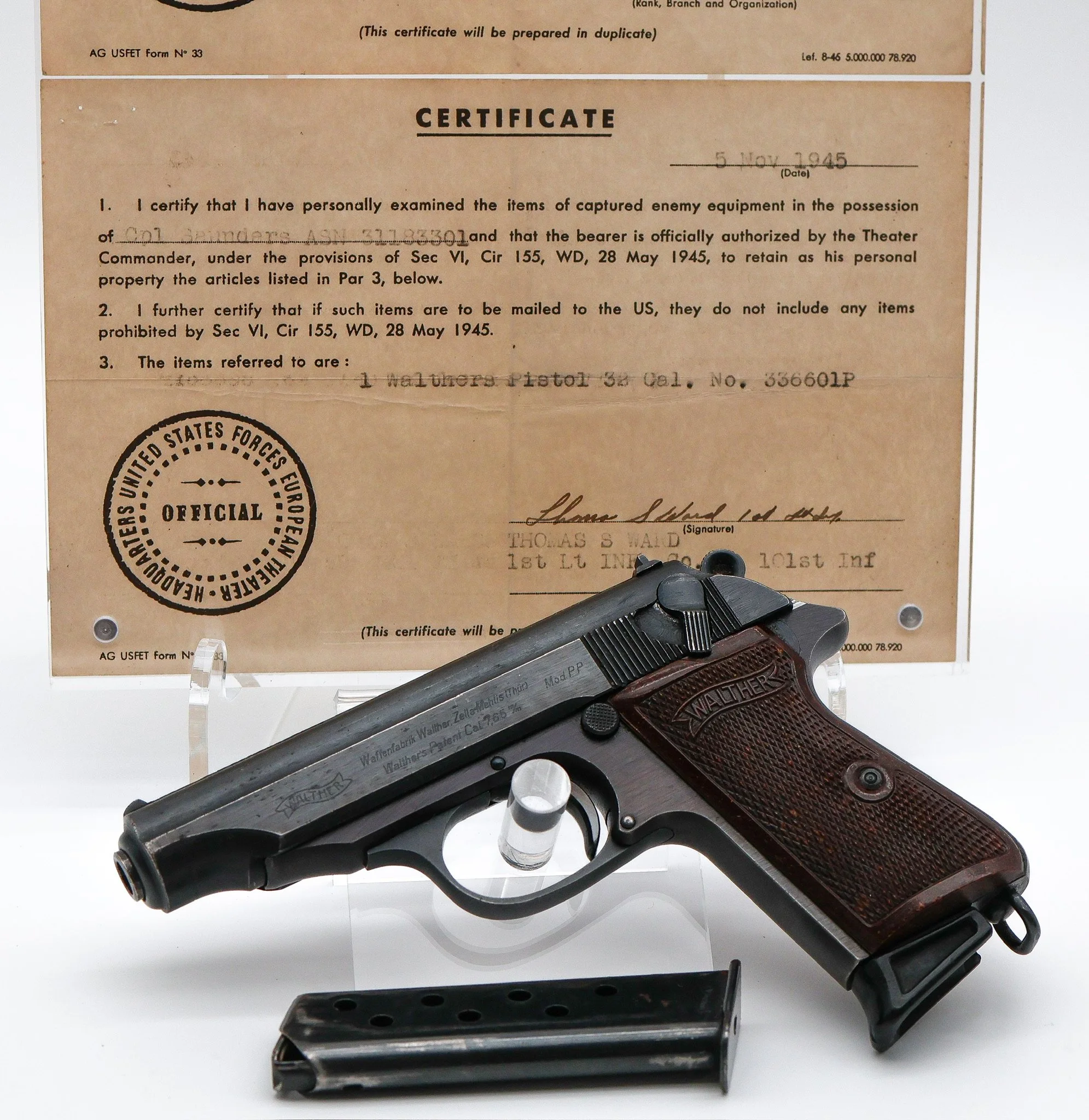
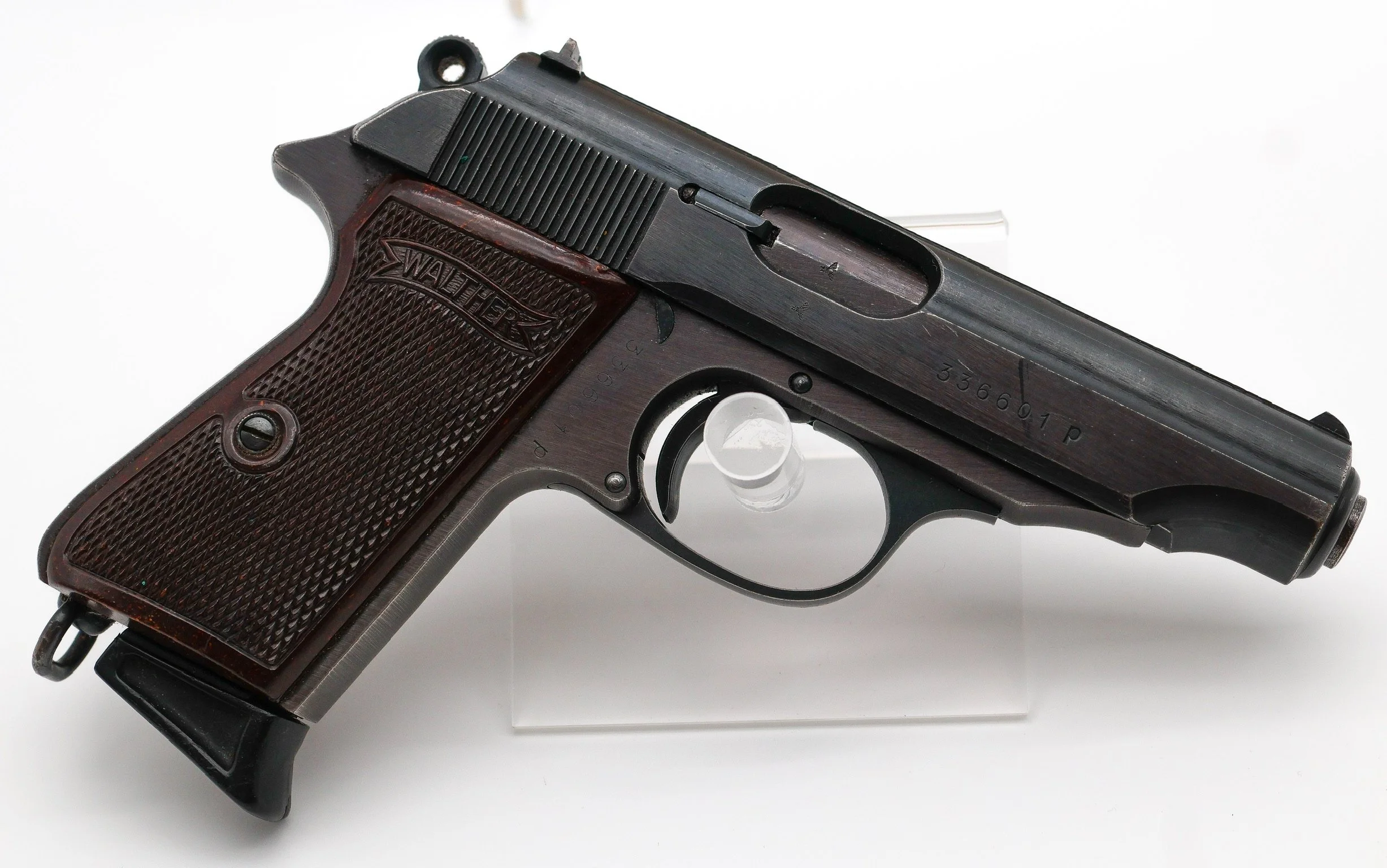
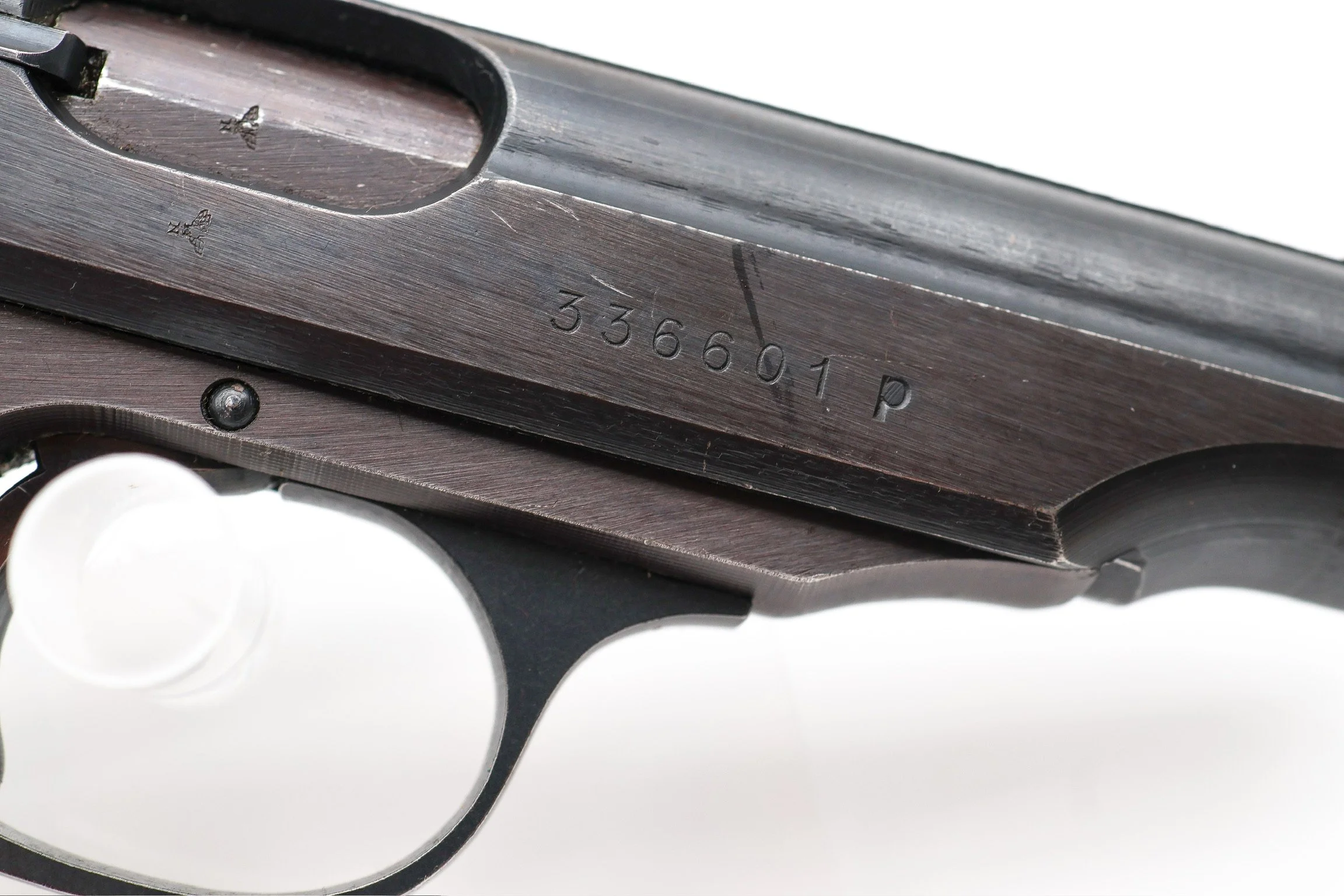
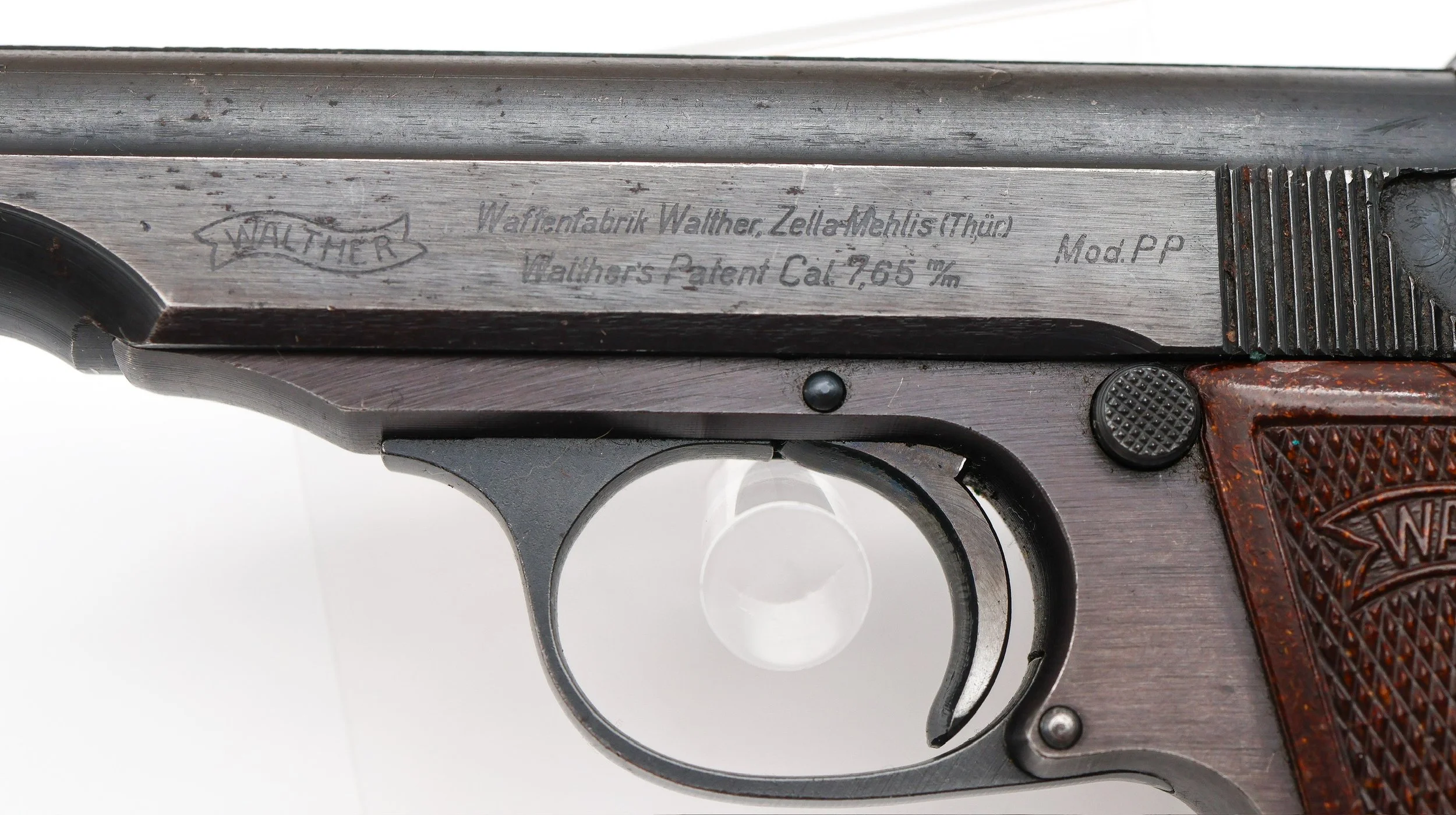
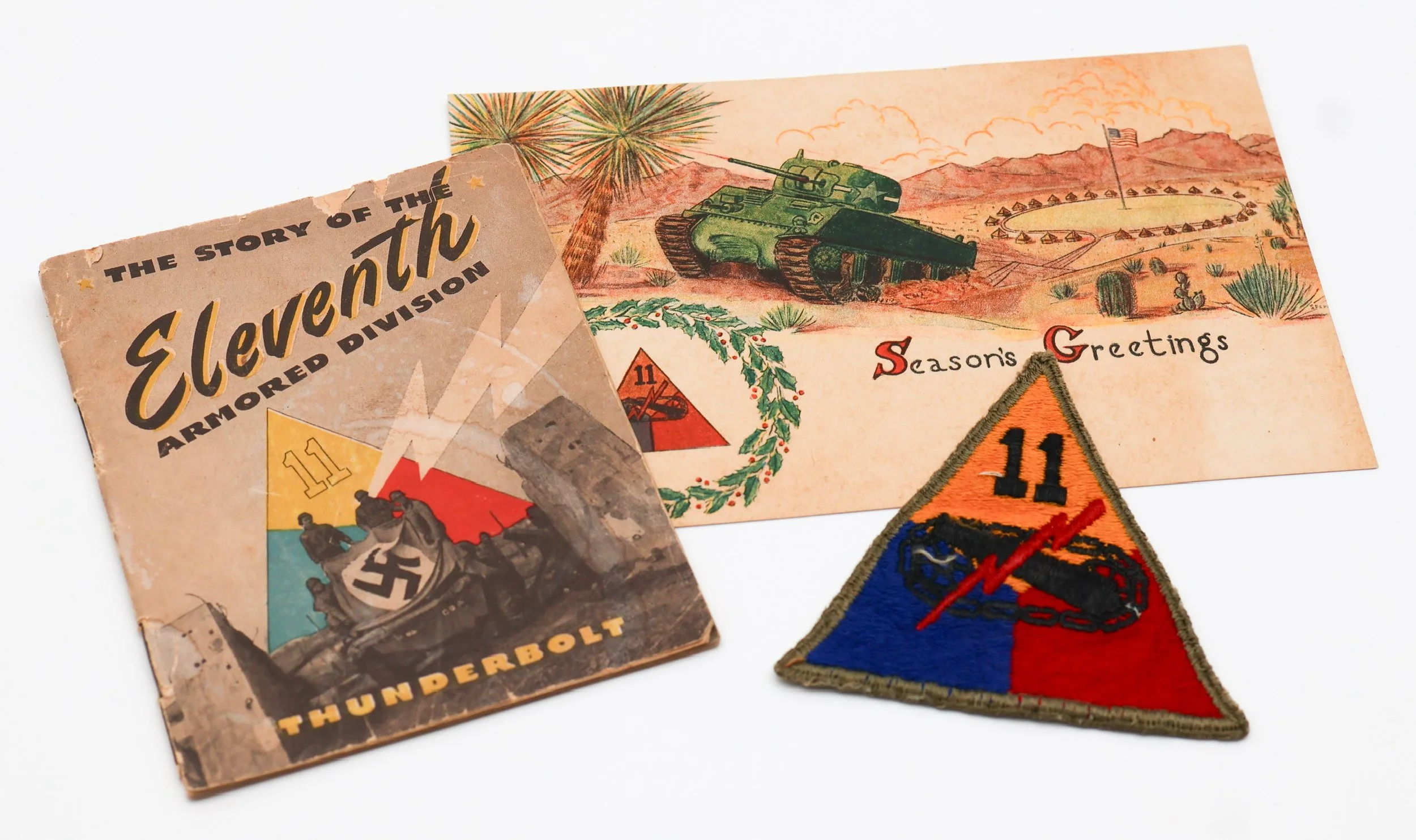
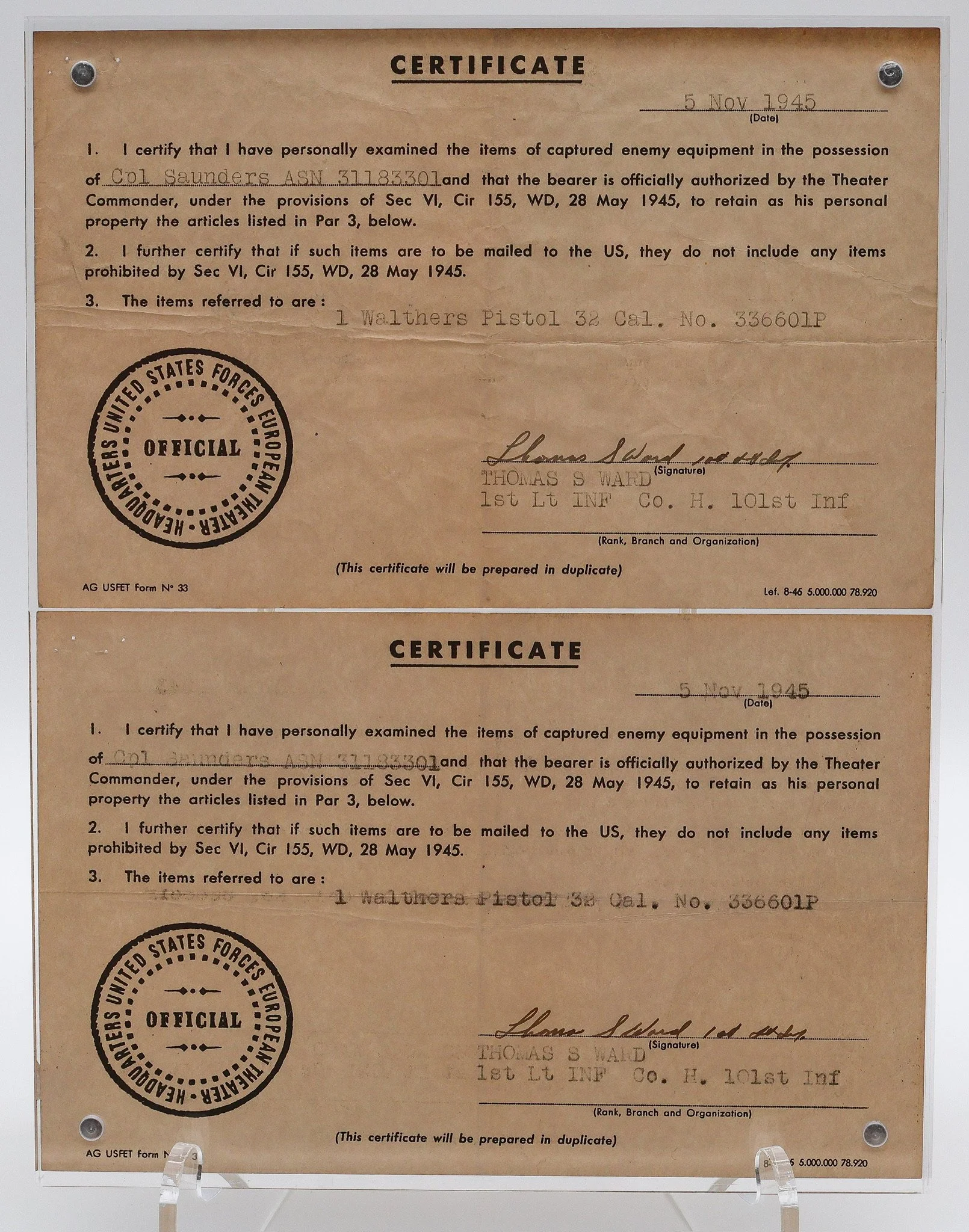
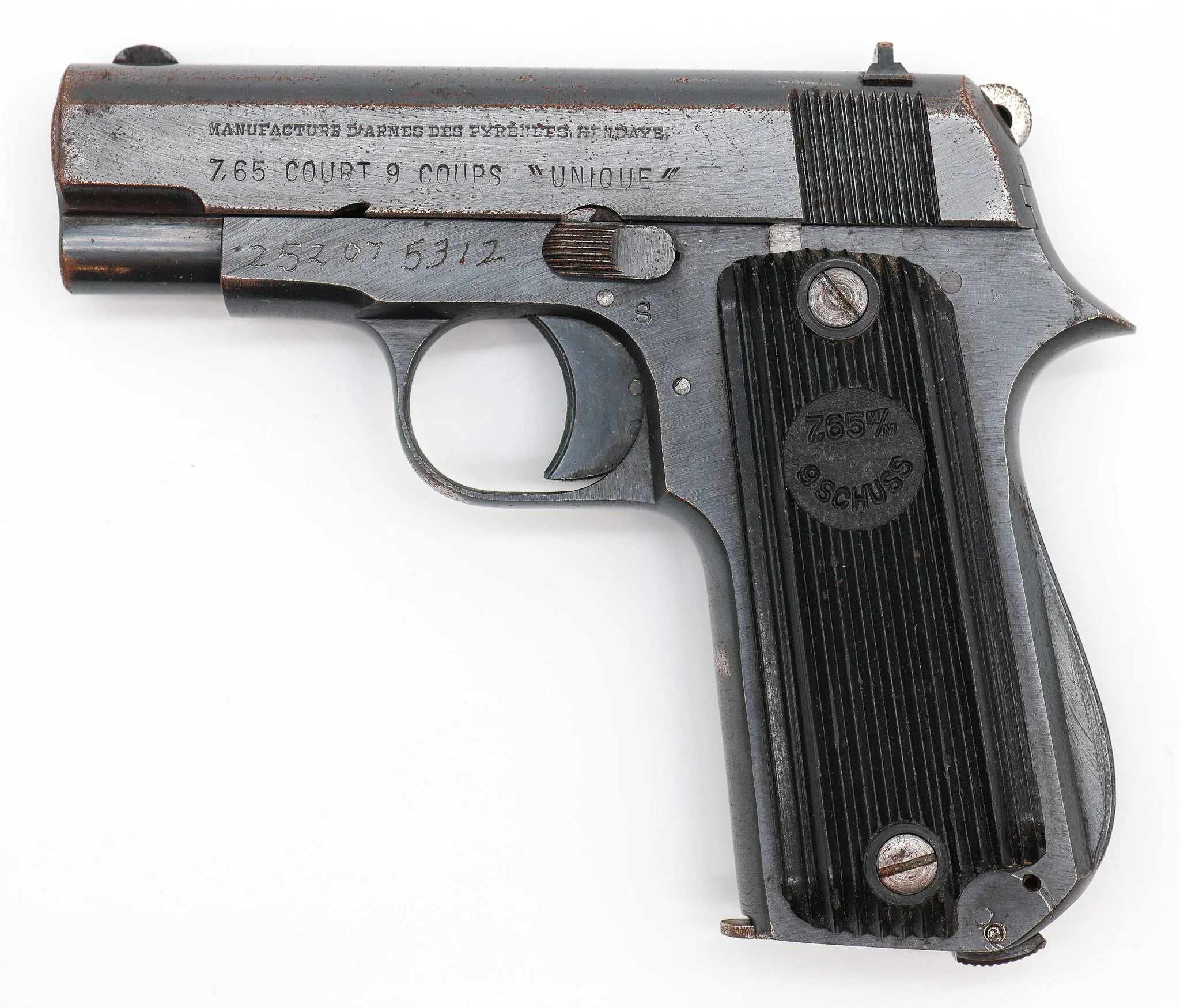
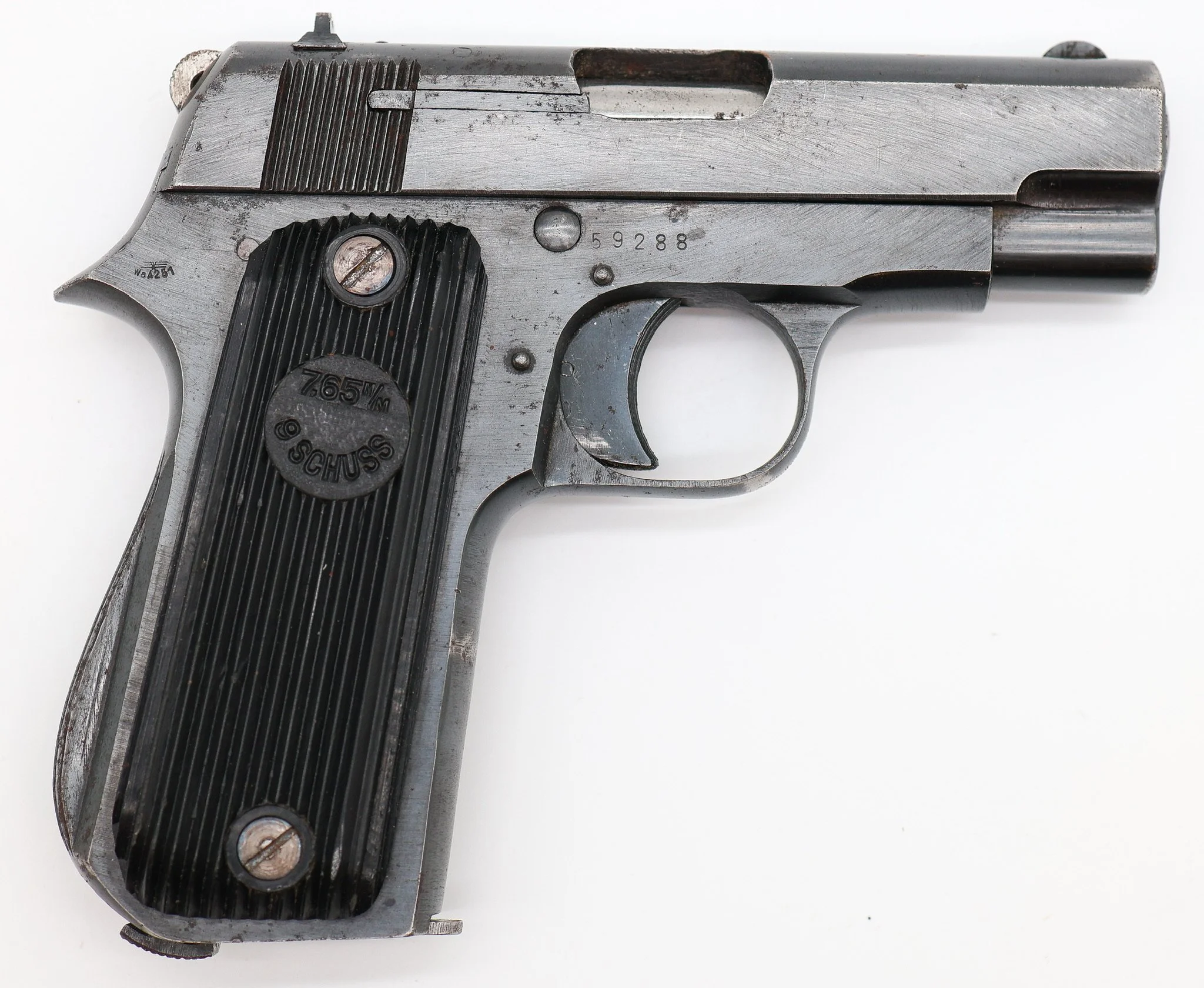
Walther PP Pistol Grouping with Bring-Back Papers – Master Sergeant Francis O. Saunders
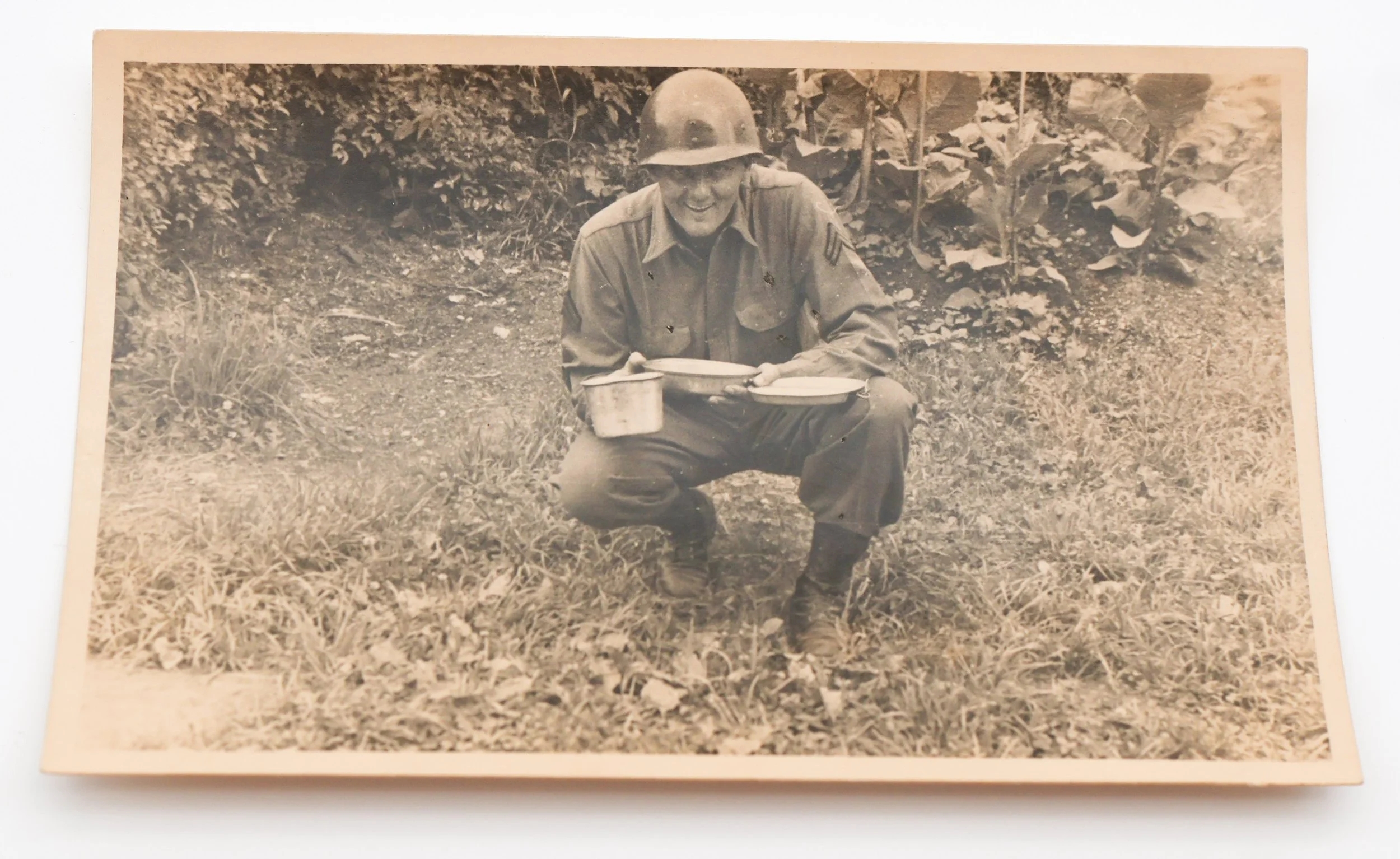
This Walther PP pistol grouping was brought home from Europe by Master Sergeant Francis O. Saunders, who served with Company B, 22nd Tank Battalion, 11th Armored Division during World War II. The pistol dates to the early 1940s and retains matching serial numbers. It is accompanied by official U.S. bring-back papers and a broad grouping of period memorabilia retained together since the war.
The grouping includes original documents, photographs, maps, insignia, helmet liner decals, and patches associated with the 11th Armored Division (“Thunderbolt”). Company B, 22nd Tank Battalion operated as a medium tank company and took part in major late-war operations, including the Battle of the Bulge, the advance into Germany, and subsequent combat operations through the final months of the war.
-
Francis O. Saunders was born on 7 September 1917 in Providence, Rhode Island. He enlisted in the U.S. Army on 21 October 1942 and served in Europe with the 11th Armored Division before continuing military service during the Korean War. He passed away on 25 March 2002 and was buried with full military honors at the Rhode Island Veterans Memorial Cemetery.
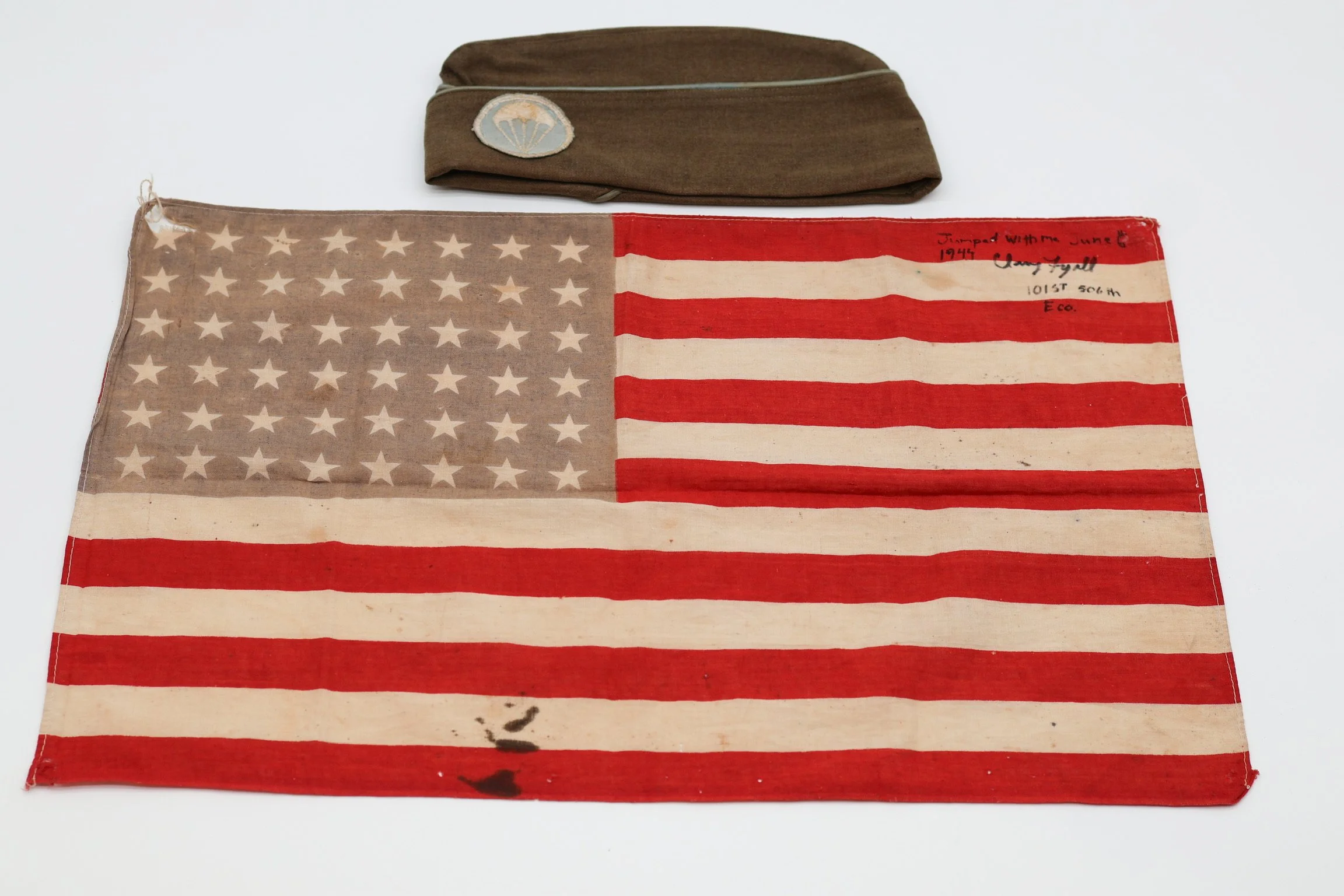
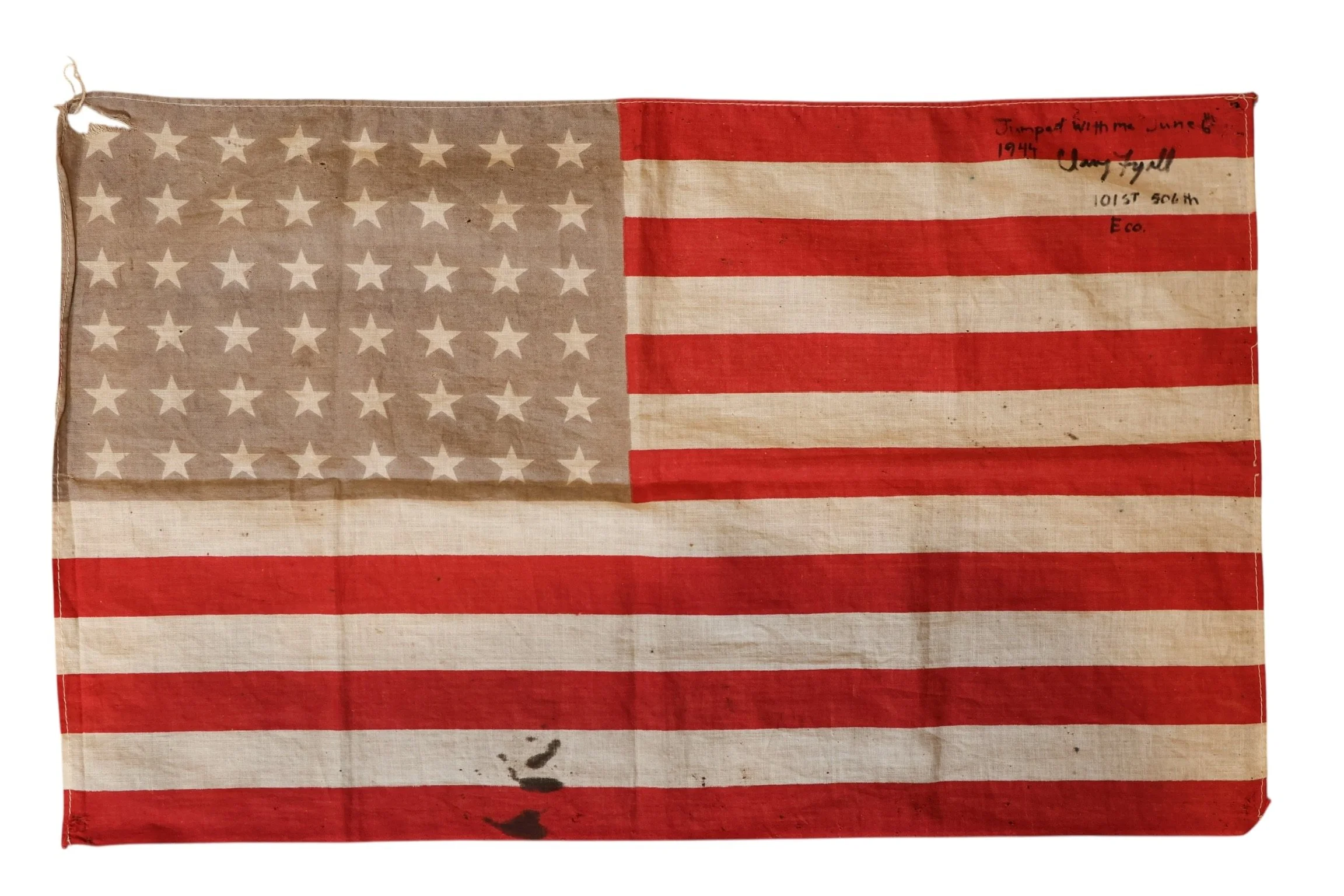
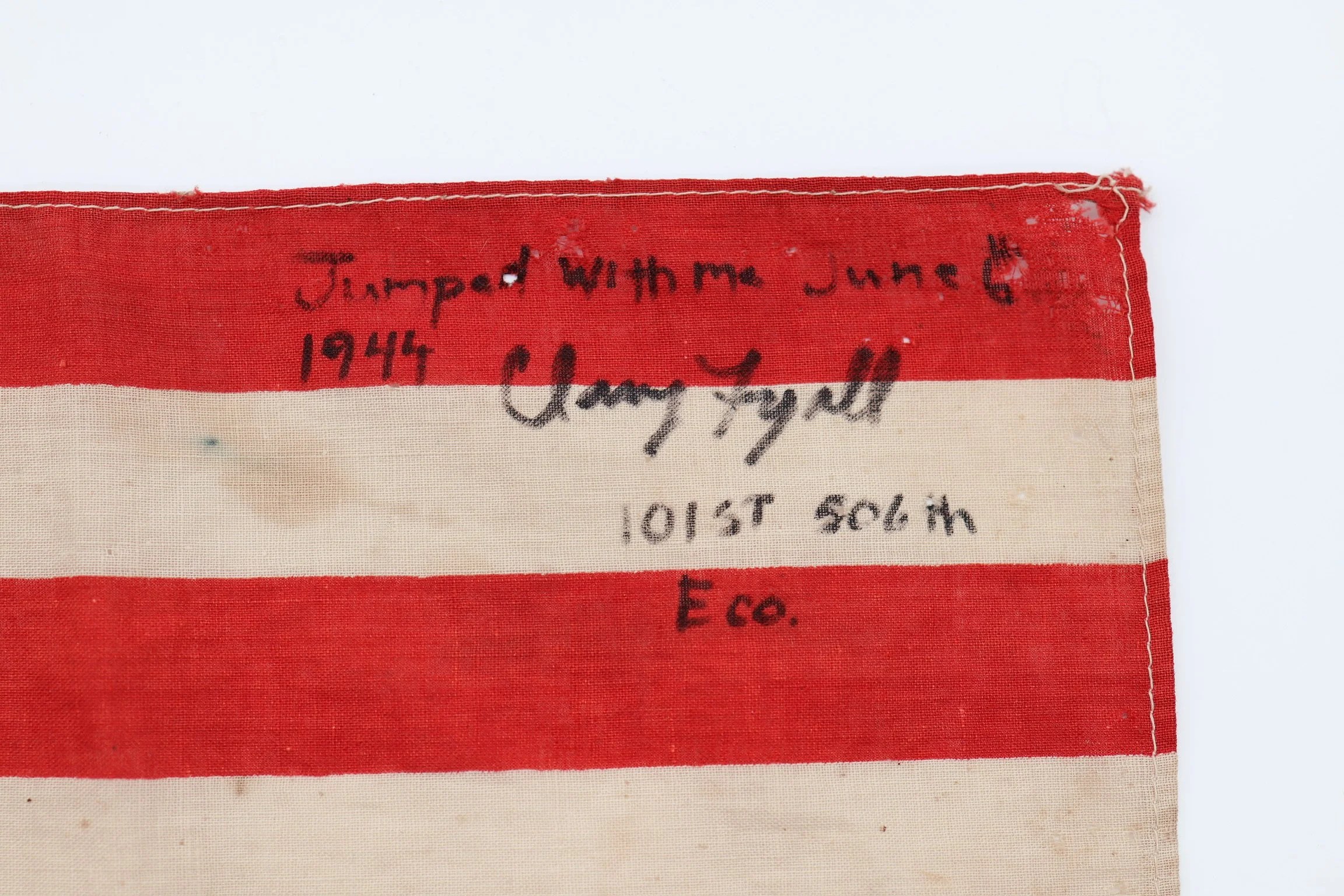
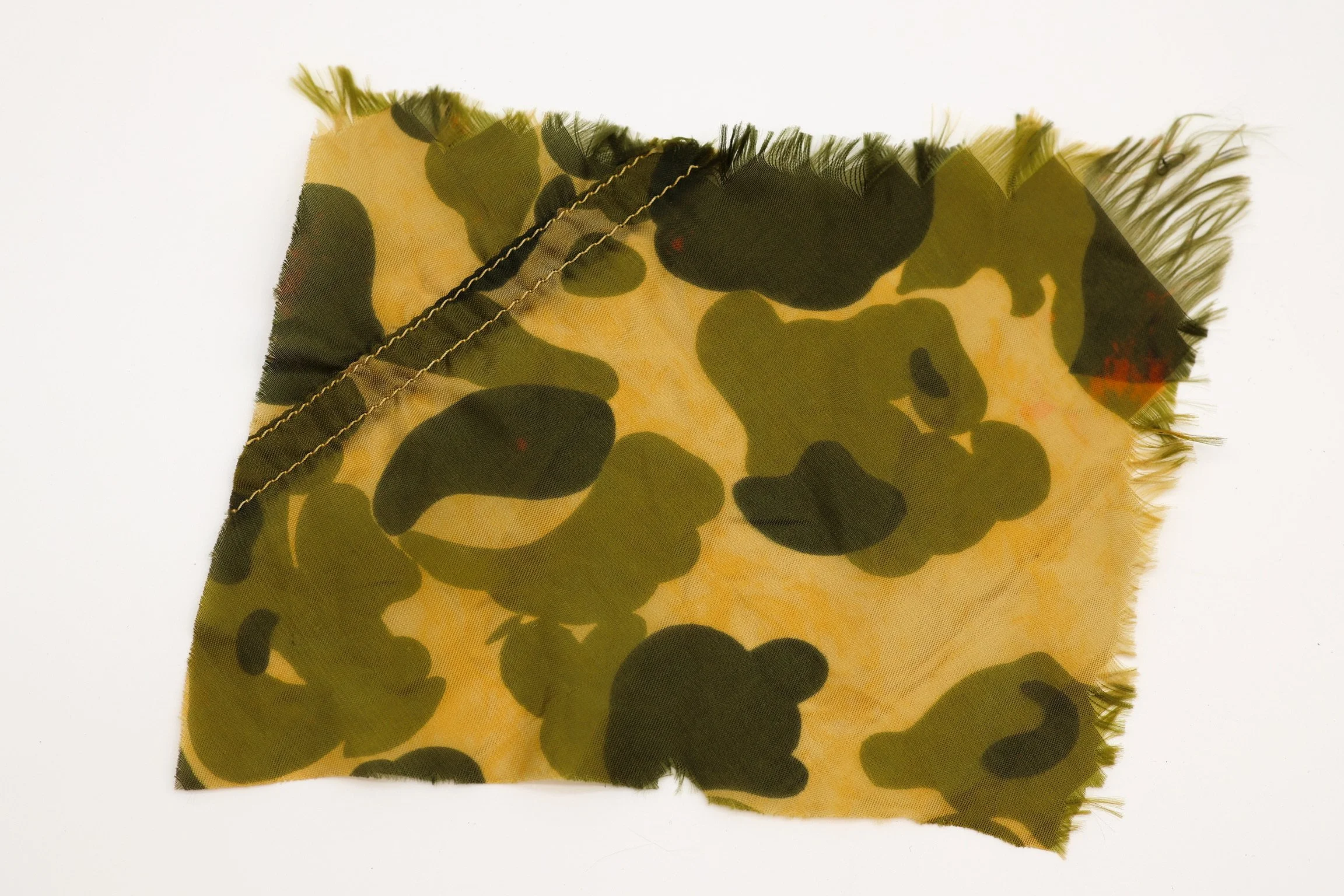
D-Day Jump Flag and Memorabilia — T/Sgt. Clarence “Clancy” Lyall, Easy Company, 506th PIR, 101st Airborne Division
This grouping belonged to Technical Sergeant Clarence “Clancy” Lyall, Easy Company, 506th Parachute Infantry Regiment, 101st Airborne Division. The centerpiece is a U.S. flag inscribed by Lyall, “Jumped with me June 6, 1944 – 101st 506th E Co.”, documenting that it accompanied him during his combat parachute jump into Normandy on D-Day.
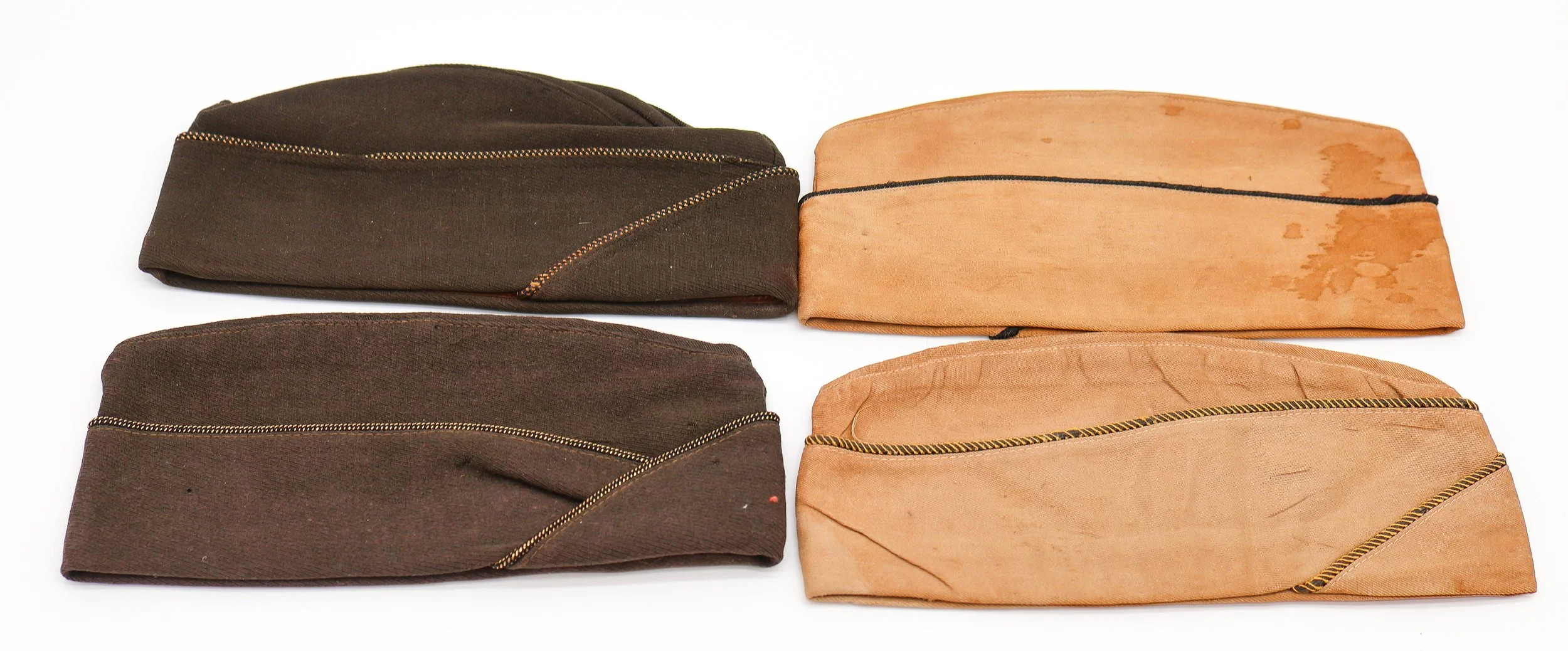
Also included are Lyall’s overseas cap with paratrooper insignia, signed books related to his wartime service, and later Easy Company reunion and memorial materials. These items reflect both his wartime service and his postwar role in preserving Easy Company’s history.
Lyall served in the European Theater from Normandy through subsequent campaigns, including the Battle of the Bulge. His service is well known through the history of Easy Company, later popularized in Band of Brothers.