Helmet of Cpl. Joseph A. Brozowski Murdered in the Malmedy Massacre
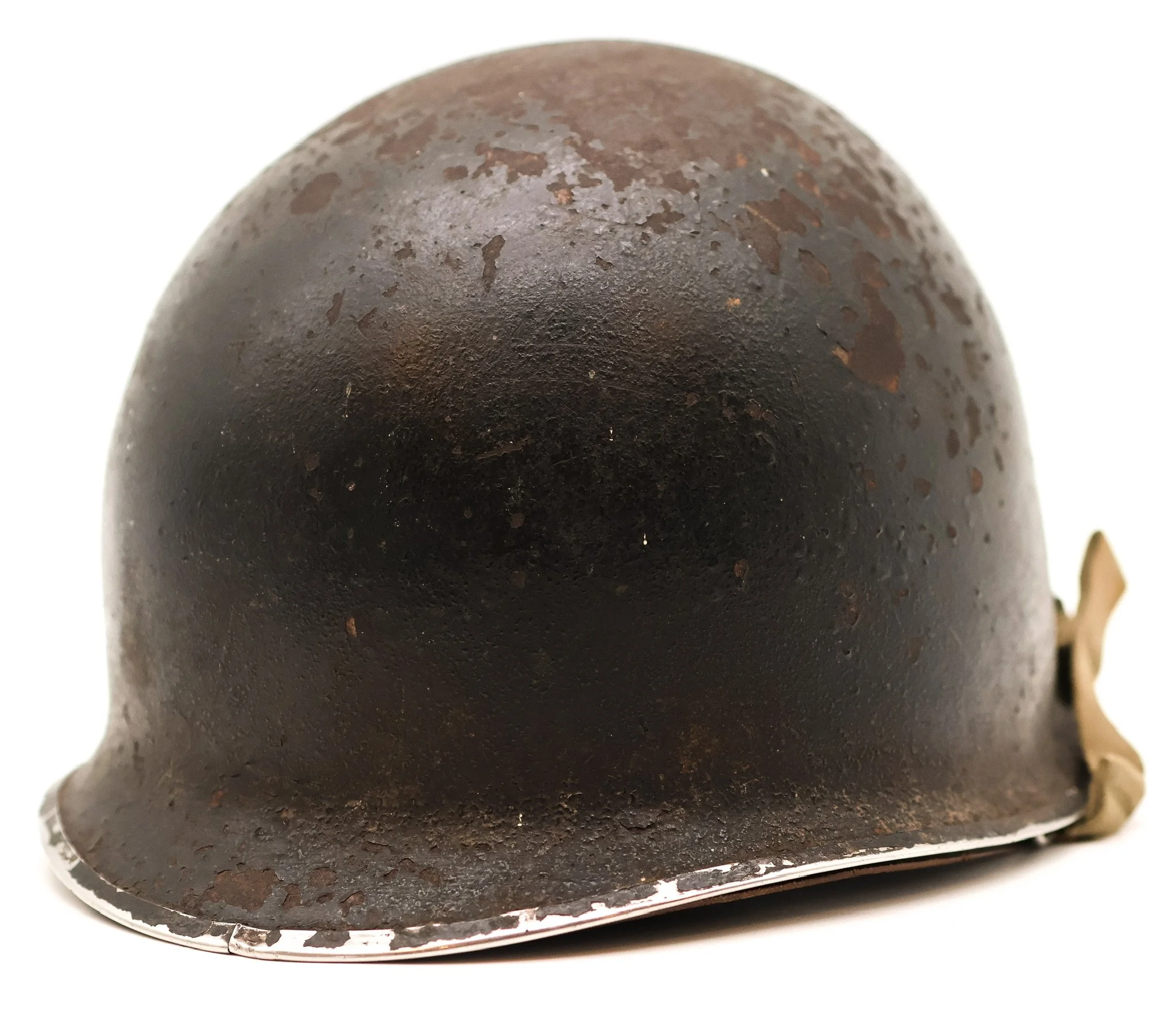
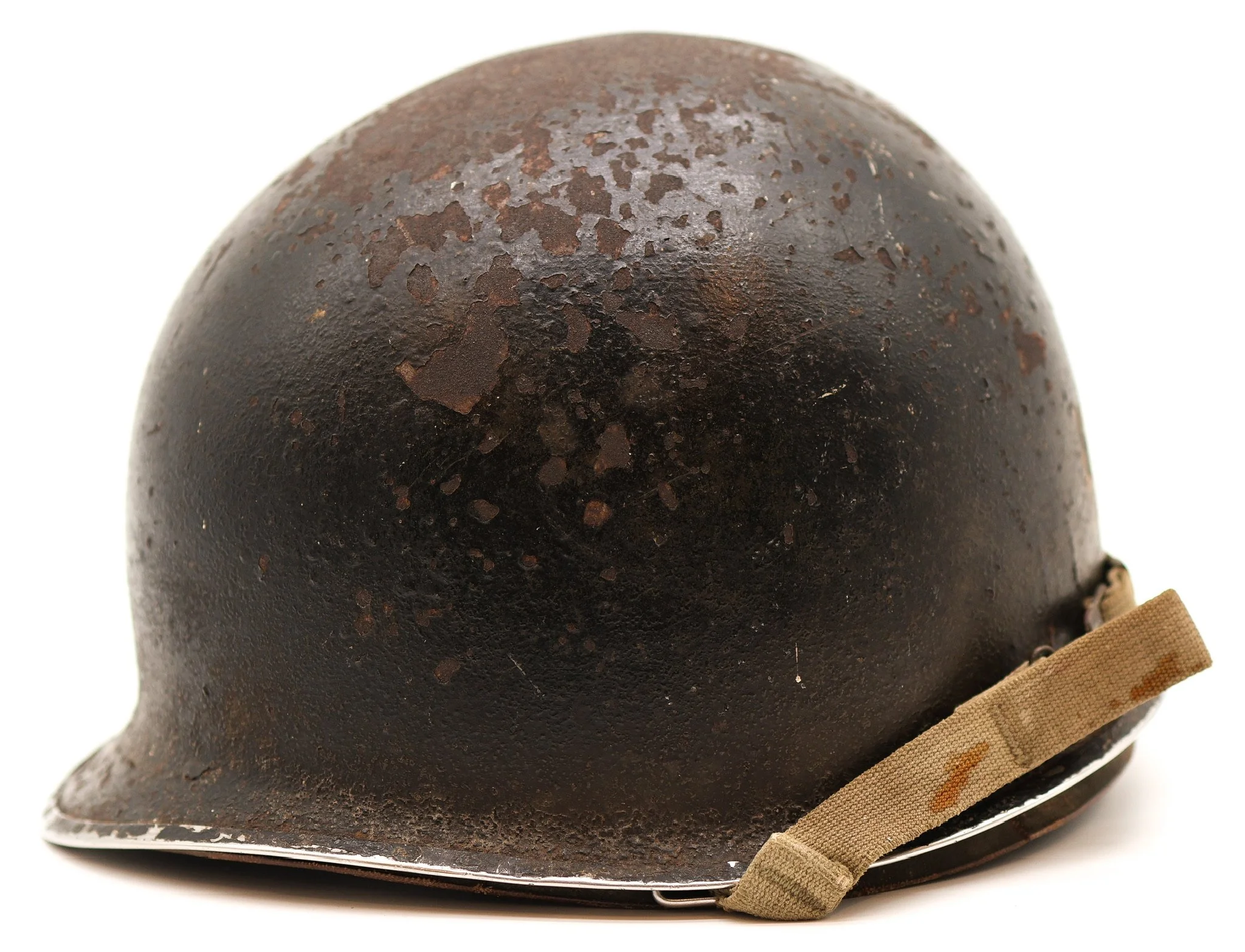
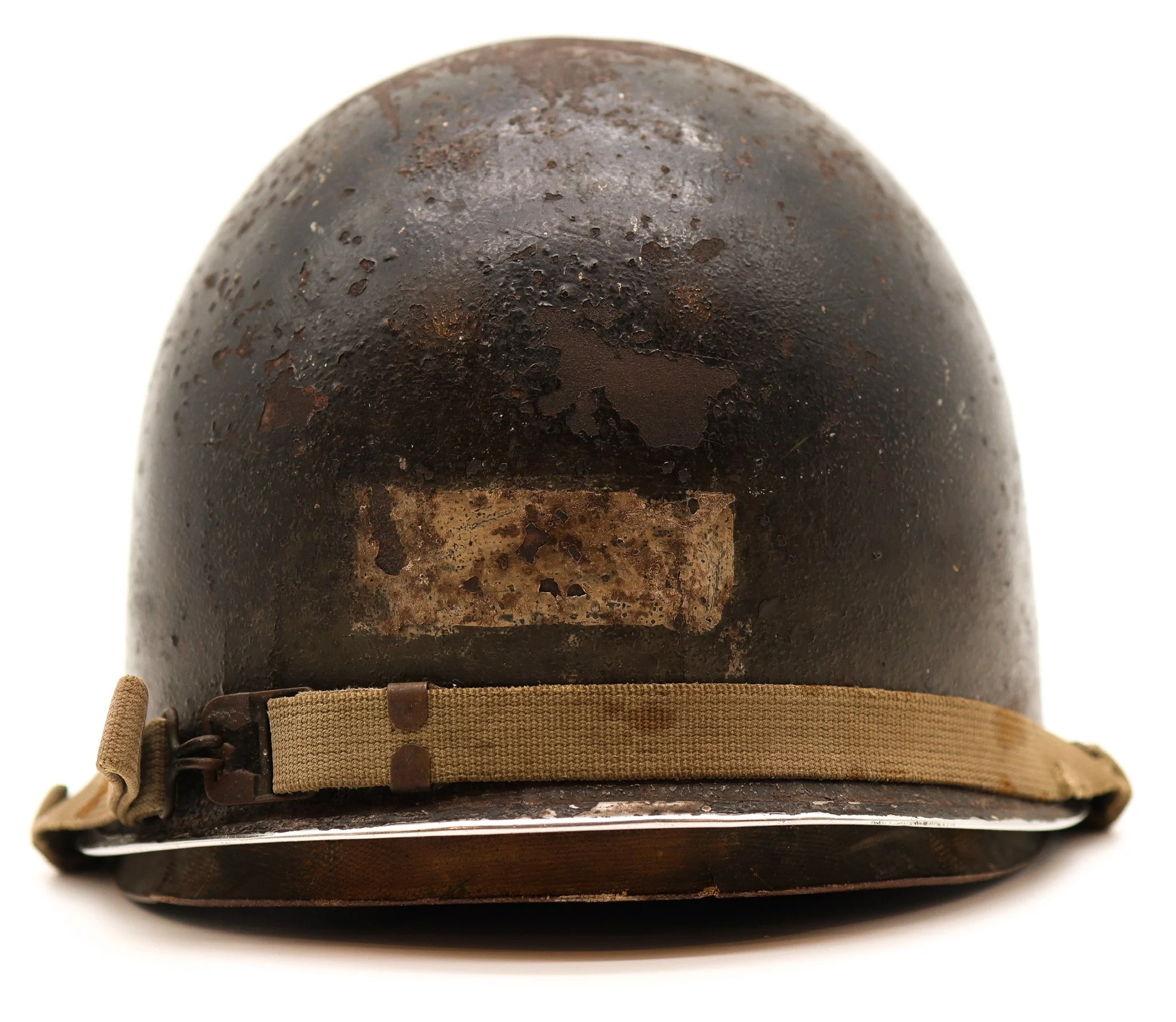
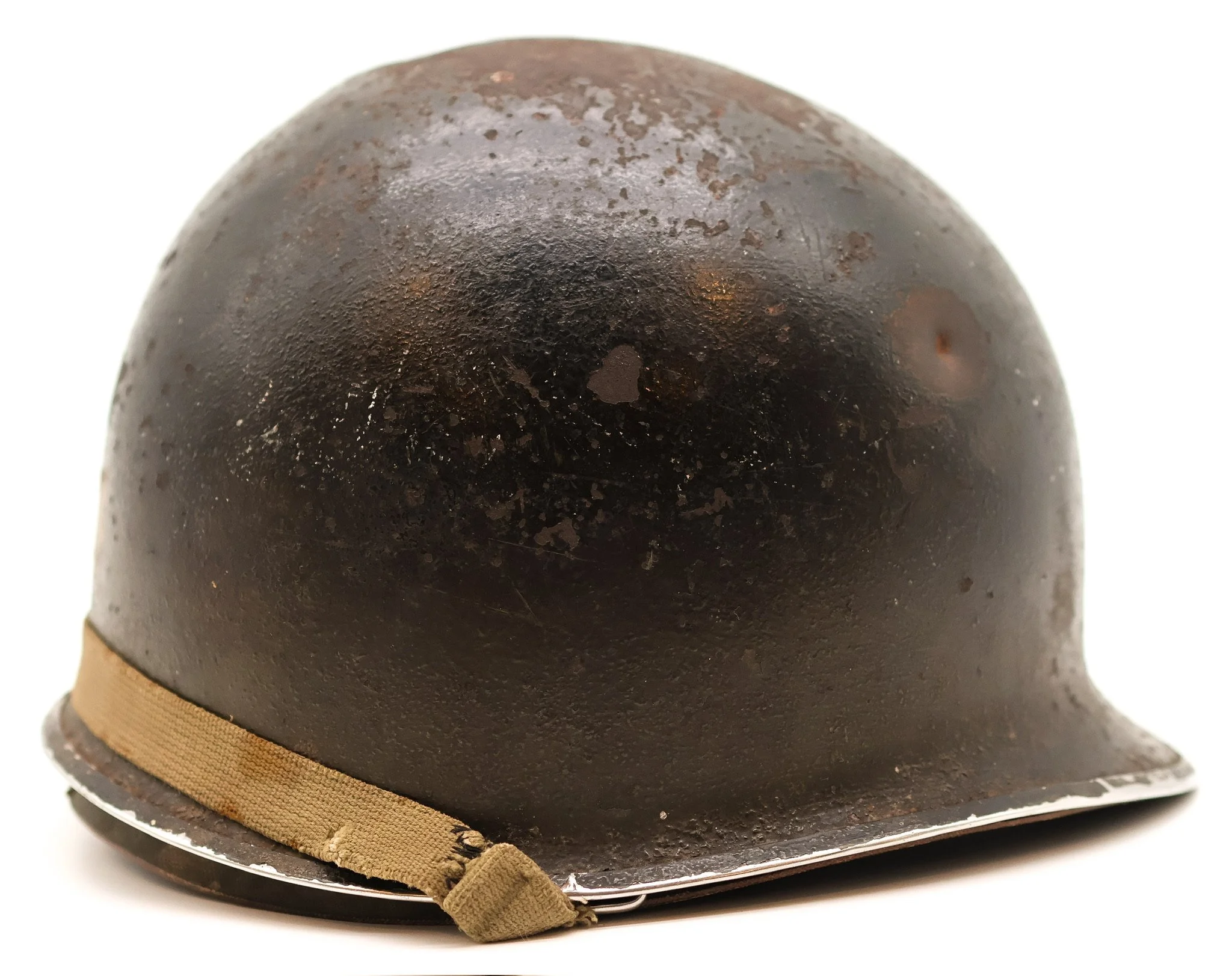
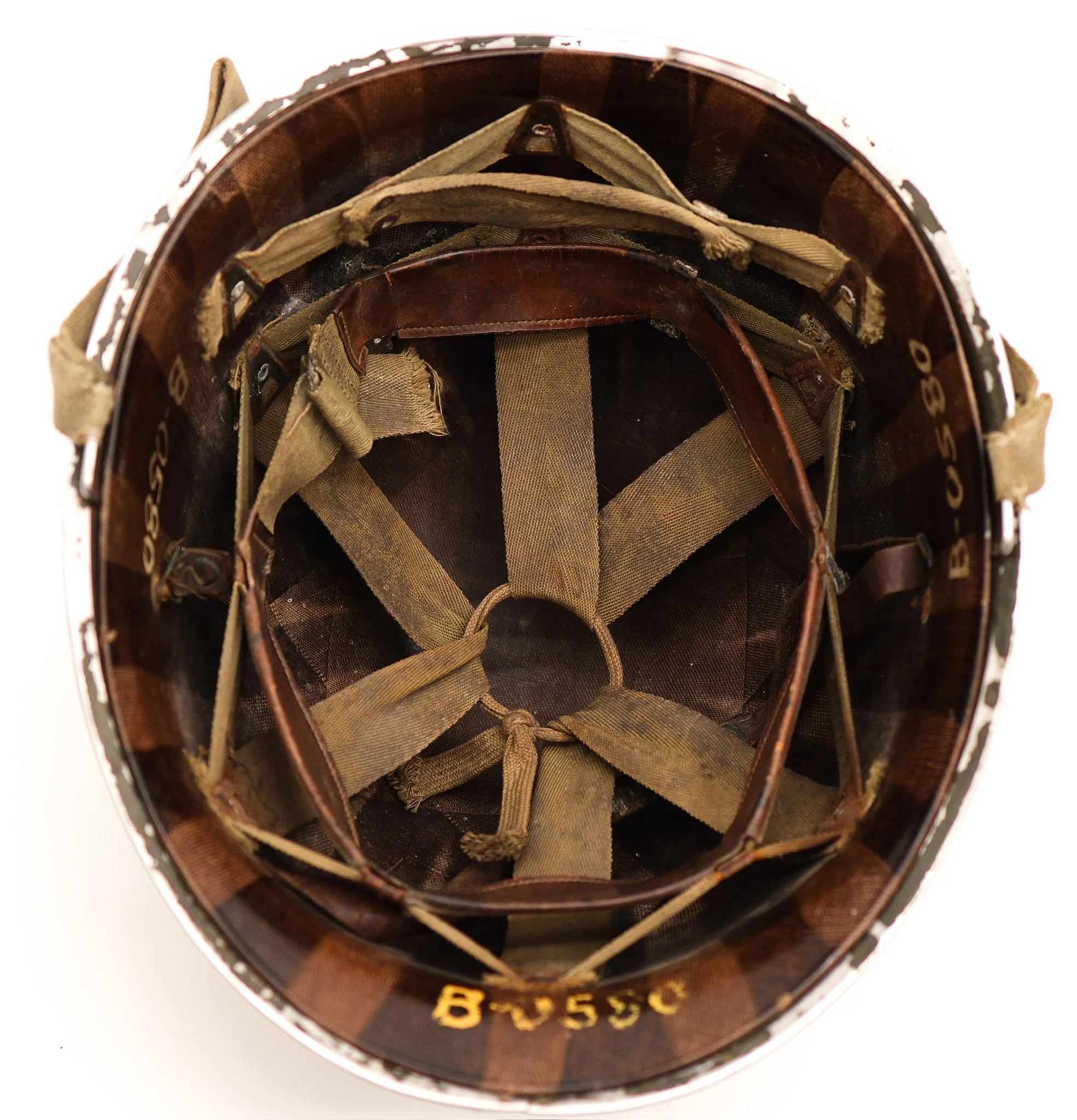
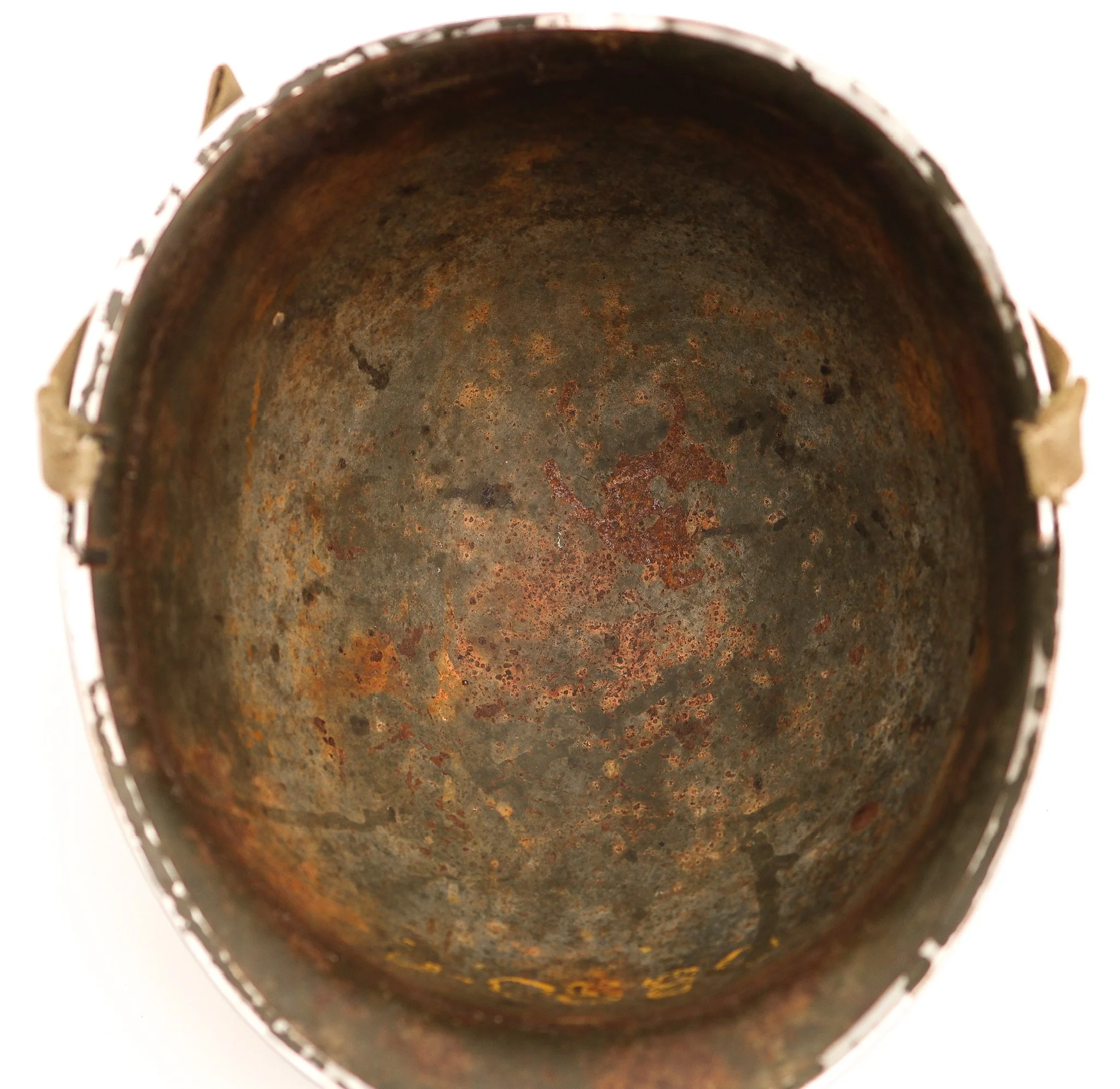
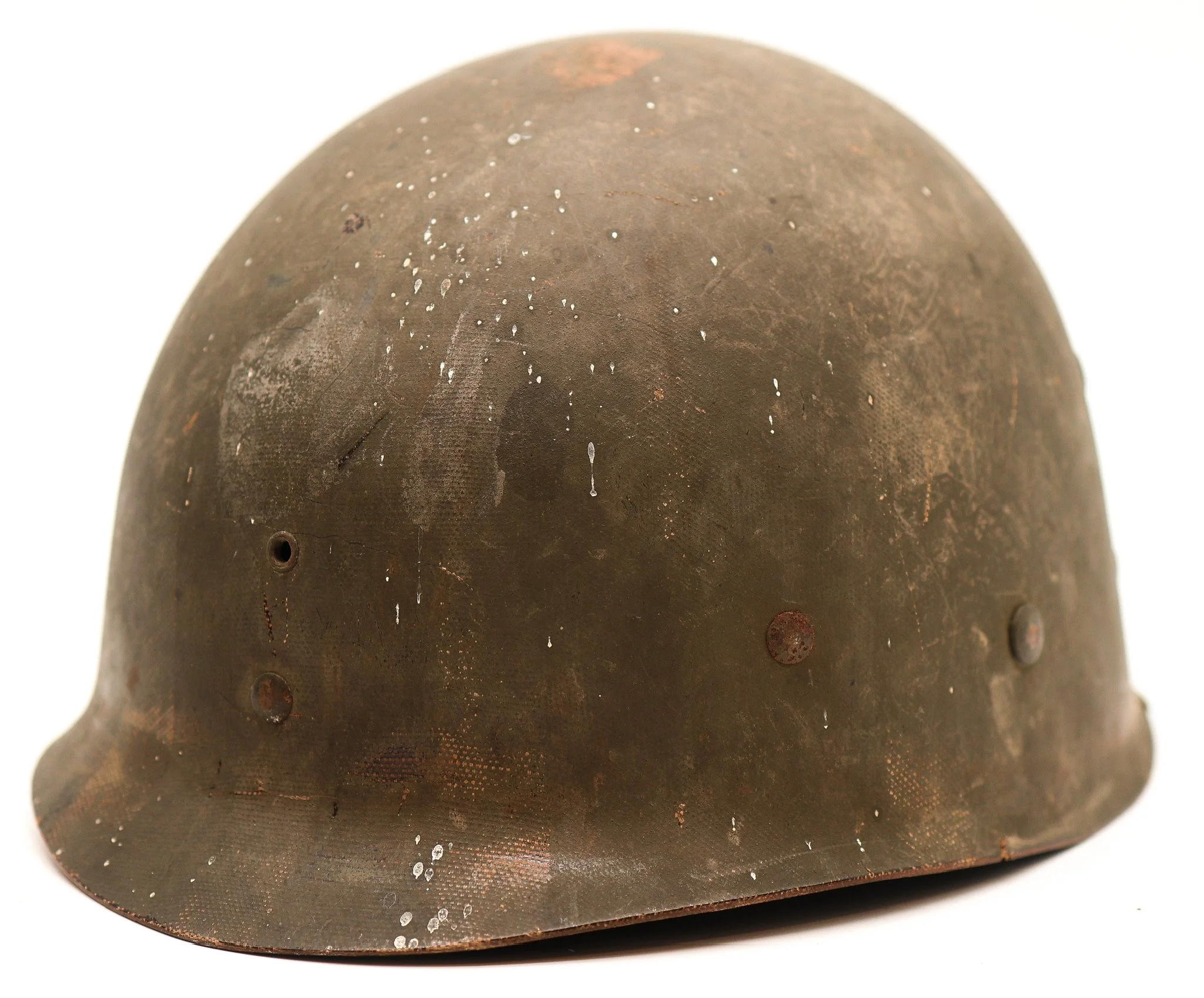
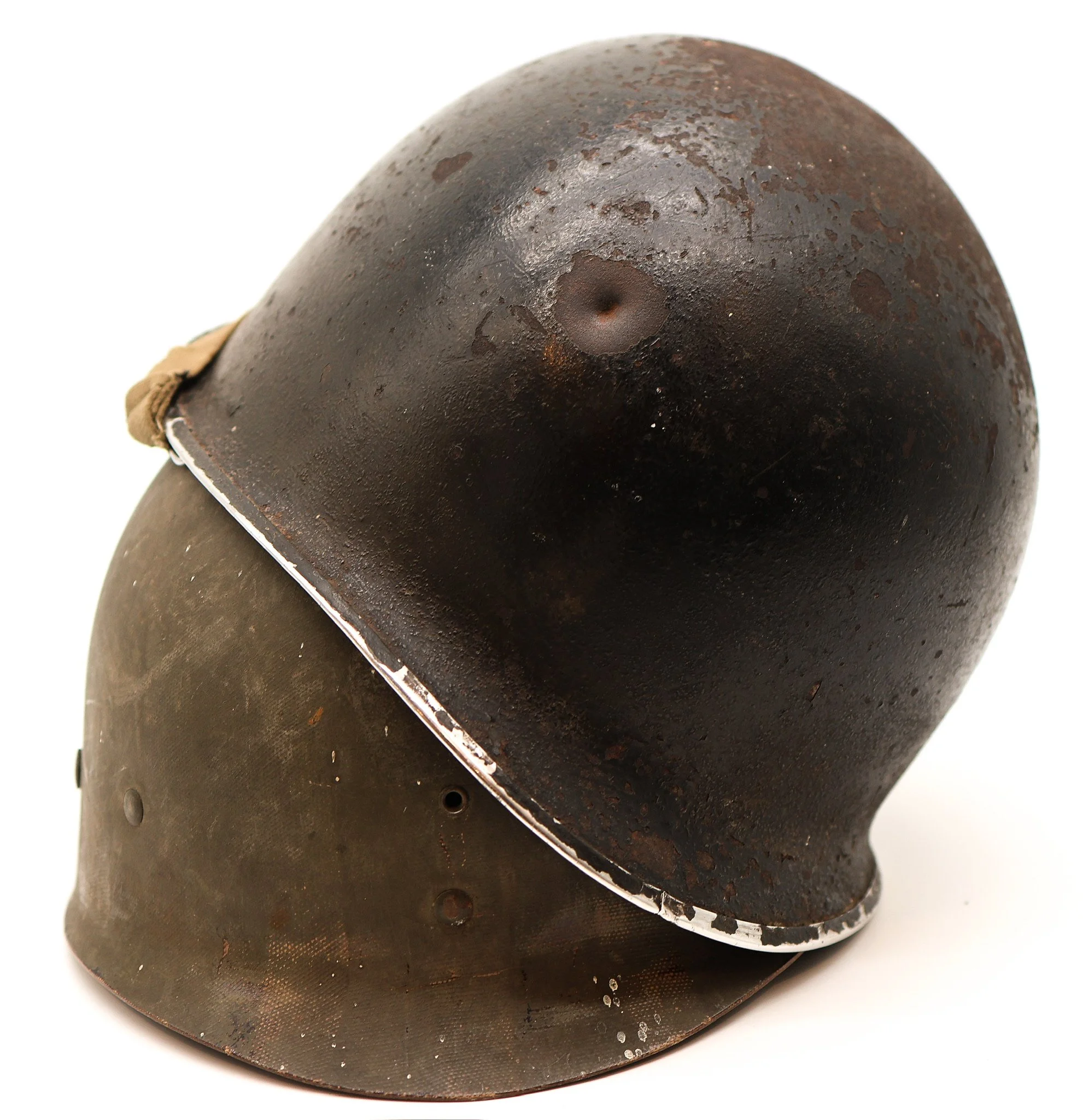
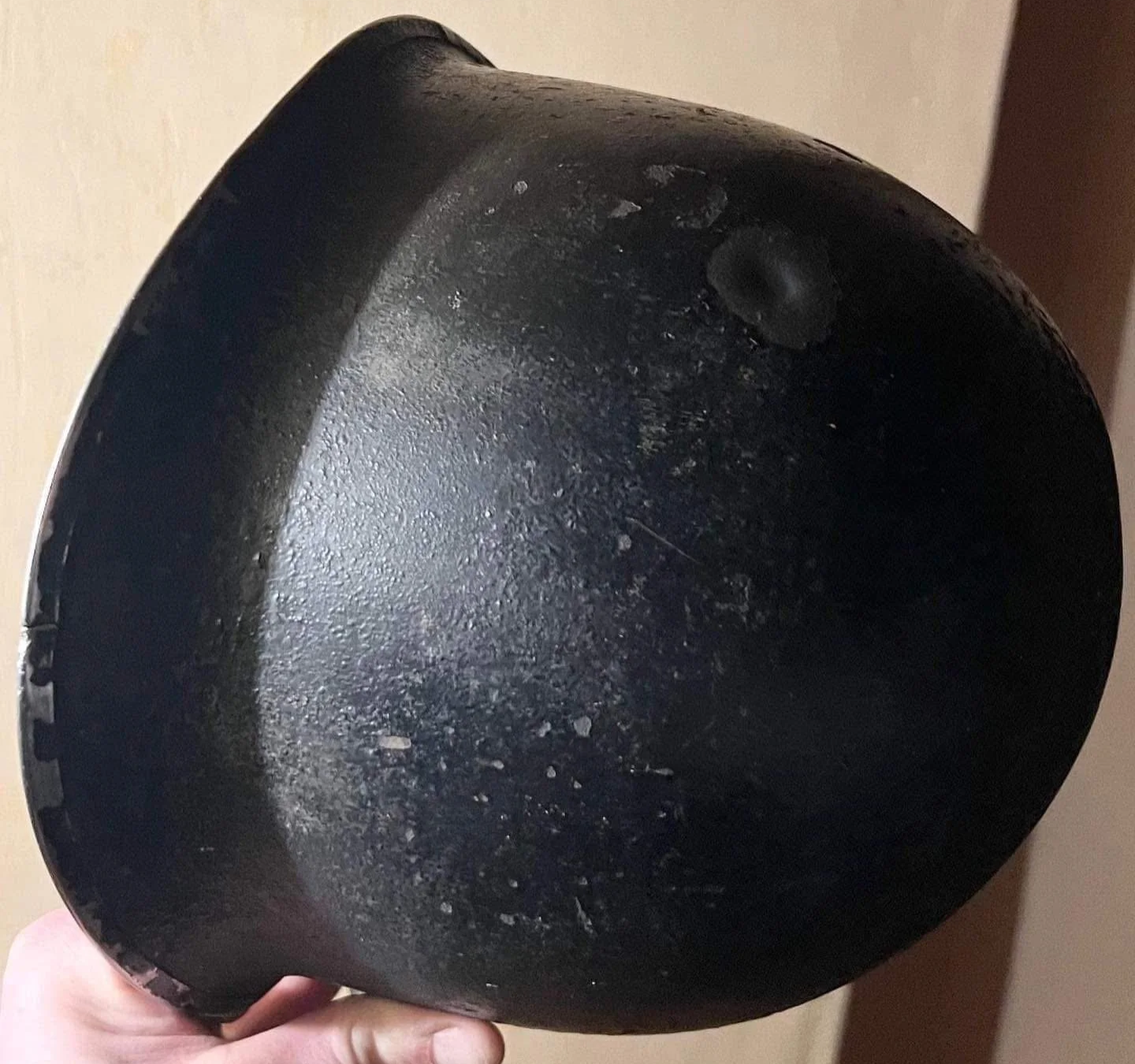
This U.S. M1 helmet was worn by Joseph A. Brozowski, a corporal in the 285th Field Artillery Observation Battalion, and was recovered from the site of the Malmedy Massacre near the Baugnez crossroads, southeast of Malmedy.
On December 17, 1944, during the German Ardennes Offensive (Battle of the Bulge), elements of the 285th Field Artillery Observation Battalion were captured by SS forces from Kampfgruppe Peiper. After surrendering, more than 120 American prisoners of war were assembled in a field and systematically machine-gunned. Approximately 84 Americans were killed in what became known as the Malmedy Massacre.
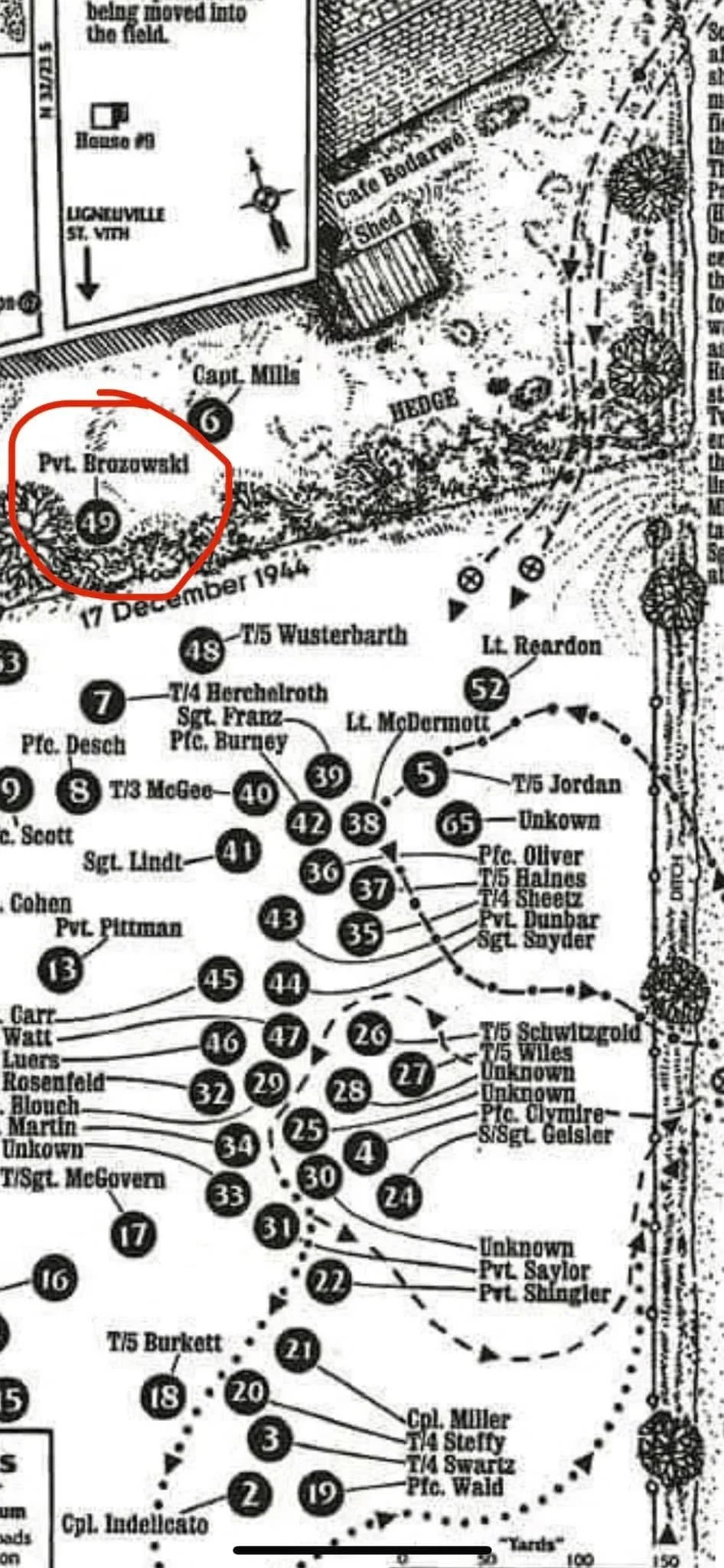
Cpl. Brozowski was among those murdered. His remains were identified as body tag #49 and were found at the northern edge of the massacre field near the hedgerow. An autopsy conducted on January 22, 1945, by Major Giacento Morrone at the 44th Evacuation Hospital documented multiple gunshot wounds to the leg, right arm, and face, indicating repeated close-range fire…
-
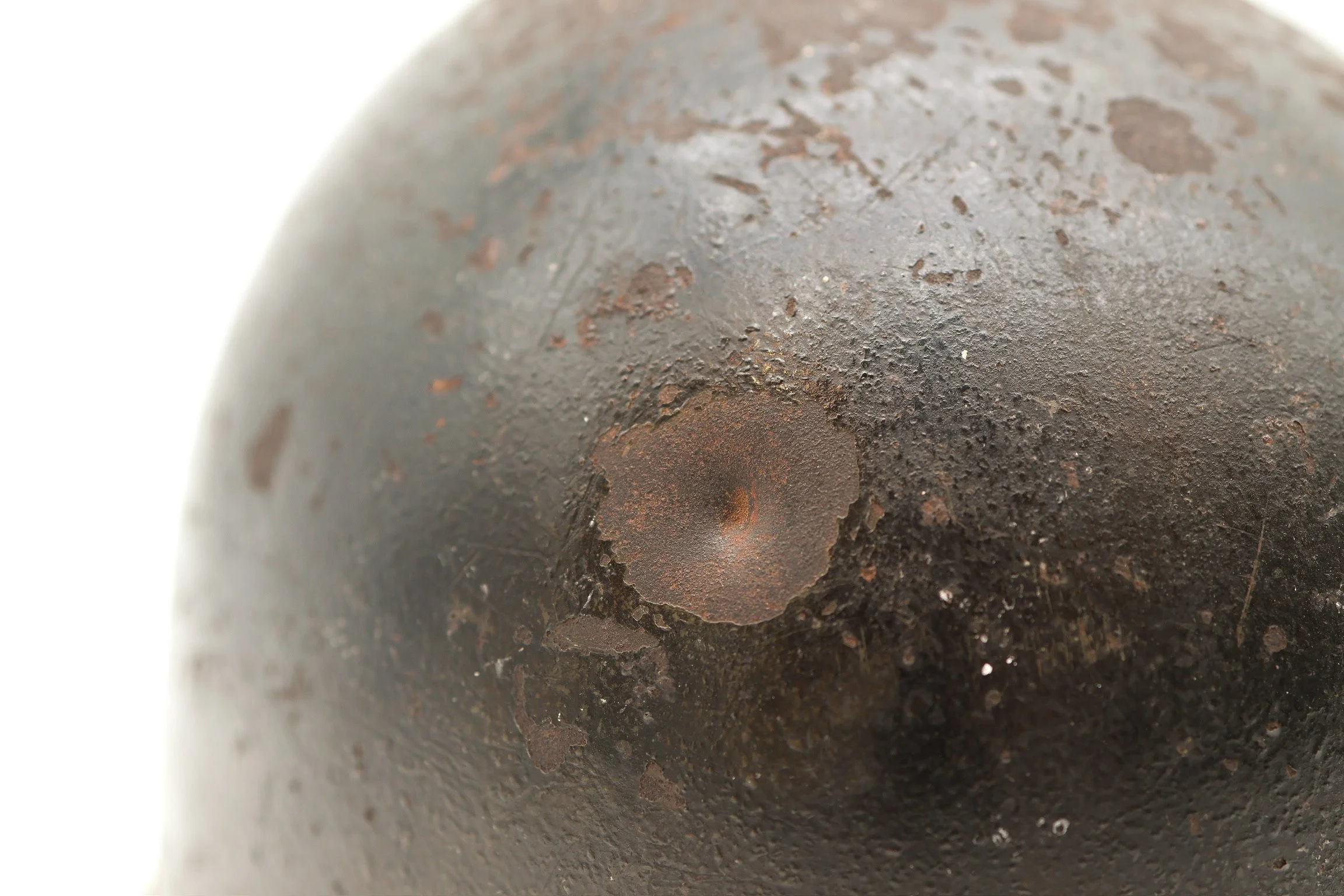
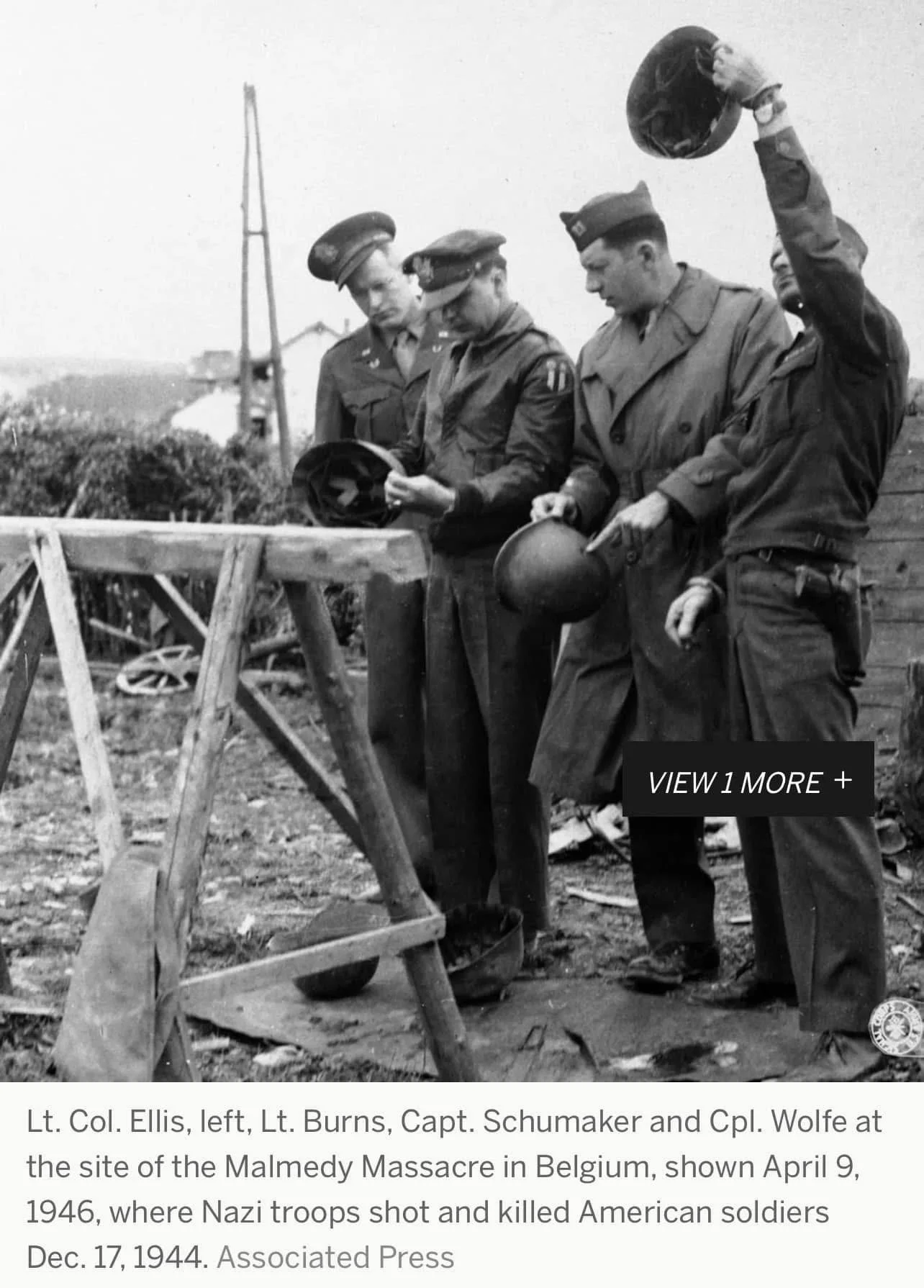
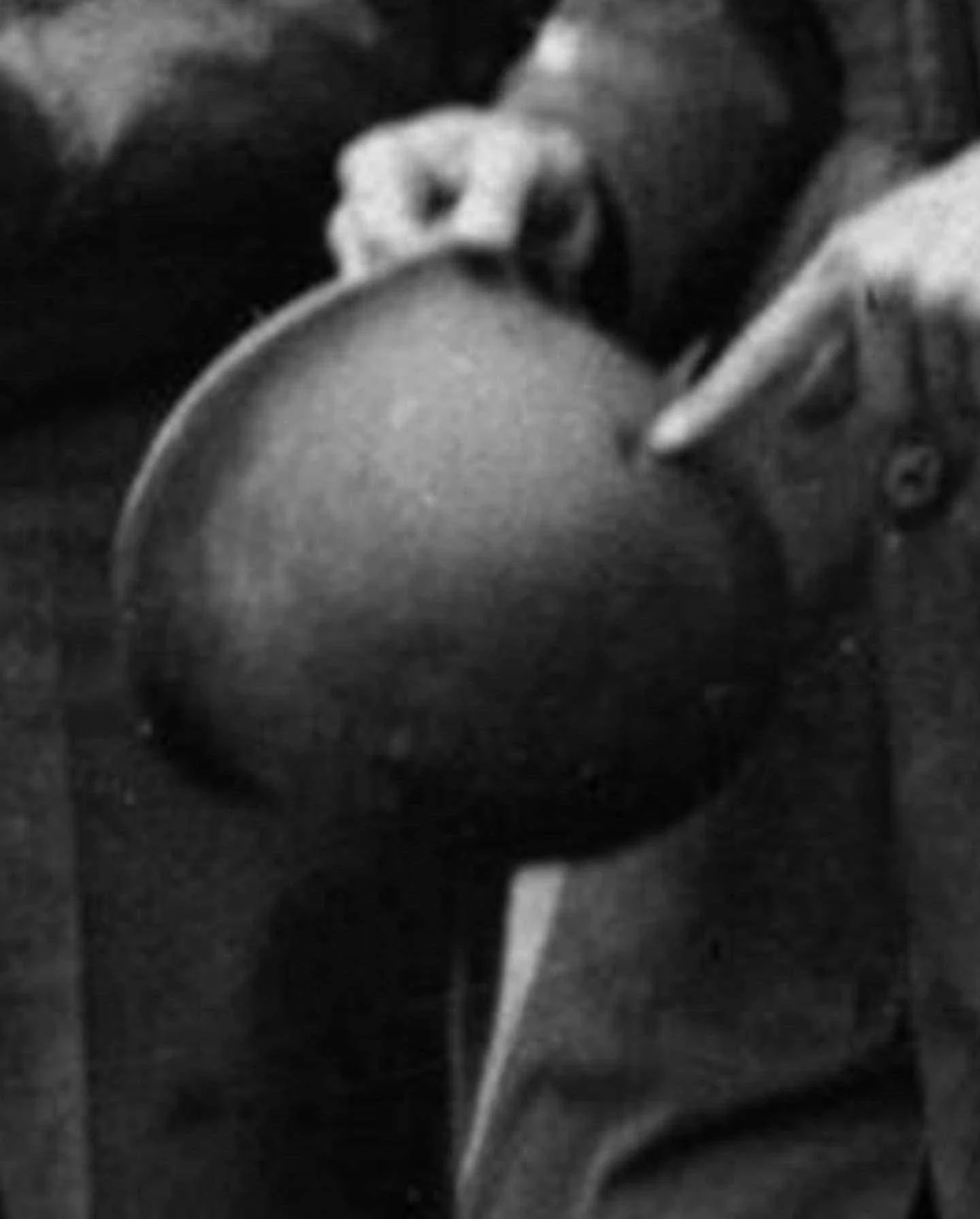
This helmet was recovered from the massacre site and appears in U.S. Army press photographs taken in 1946 during the official war crimes investigation. One photograph shows a soldier holding the helmet at the site; a clearly visible bullet strike on the helmet in that image aligns precisely with the impact damage present on the helmet today. This provides rare photographic confirmation of the helmet’s presence at the massacre site shortly after the war and constitutes extraordinary provenance.
Cpl. Brozowski is specifically referenced in Fatal Crossroads, a detailed study of the Malmedy Massacre. Survivor Kenny Kingston recalled witnessing Brozowski’s final moments:
“Cpl. Joseph Brozowski — he must have been hit by machine gun fire — I seen him [sic] get up on his knees, moaning and hollering. These fellows came into the field and emptied five rounds [into him].”
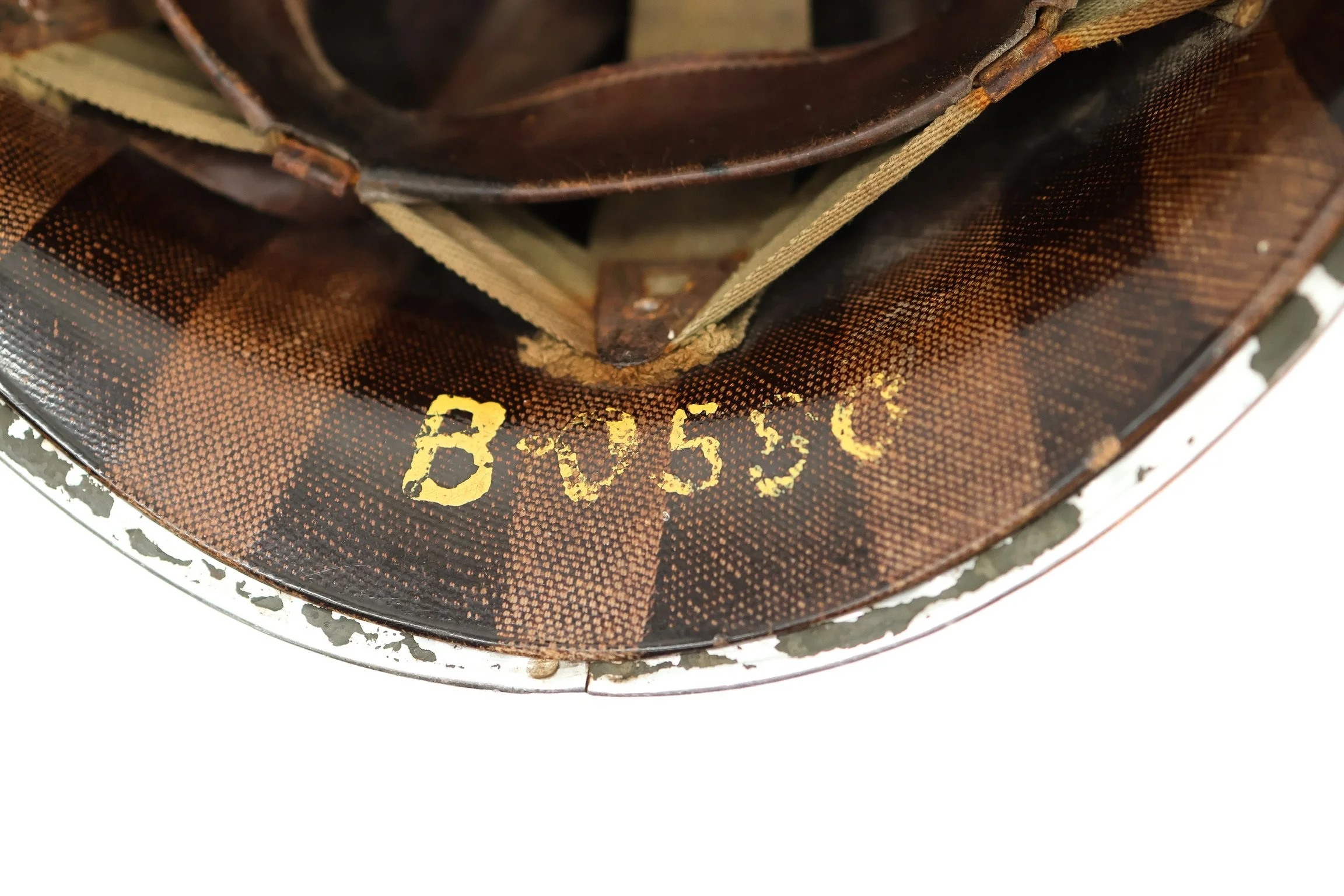
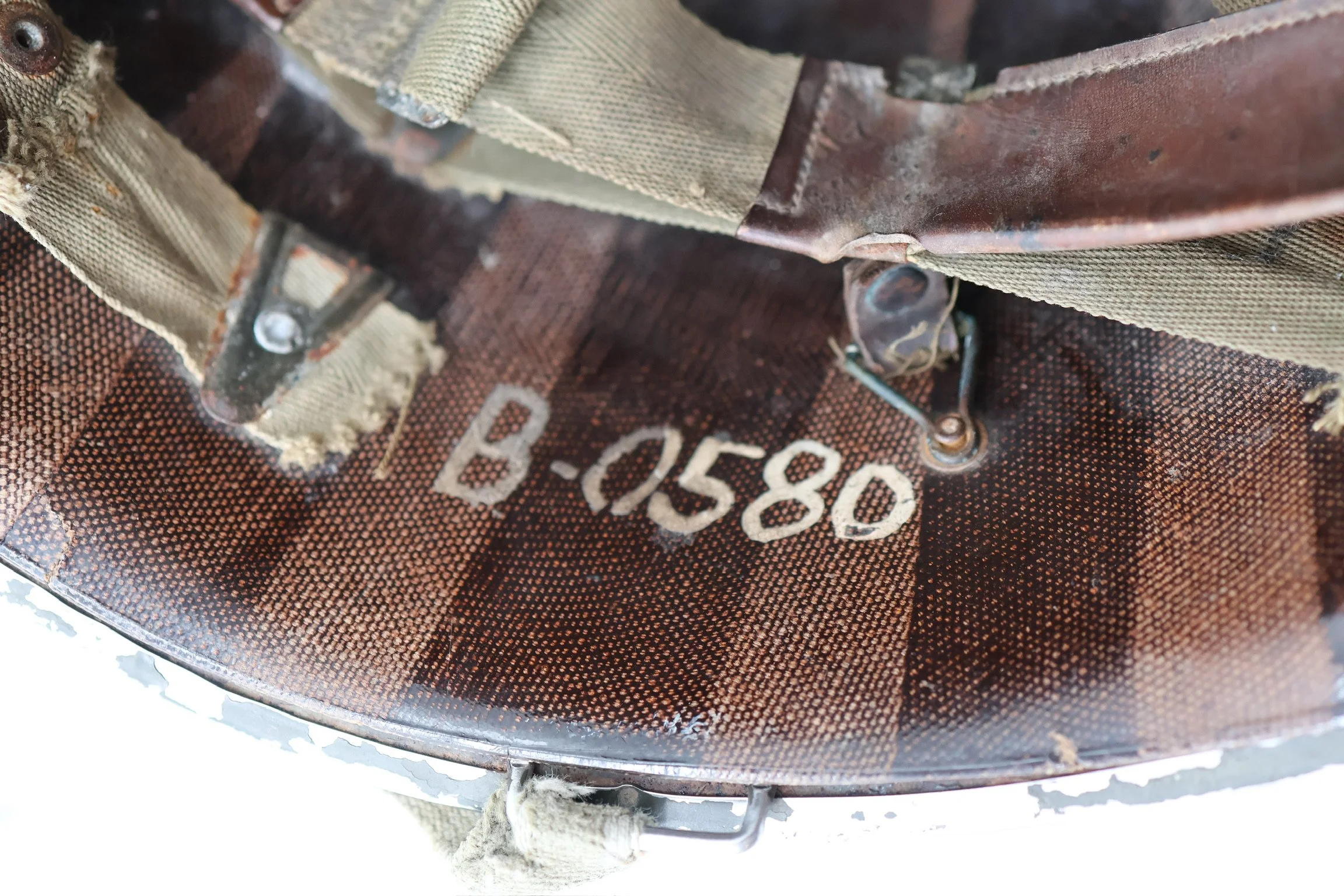
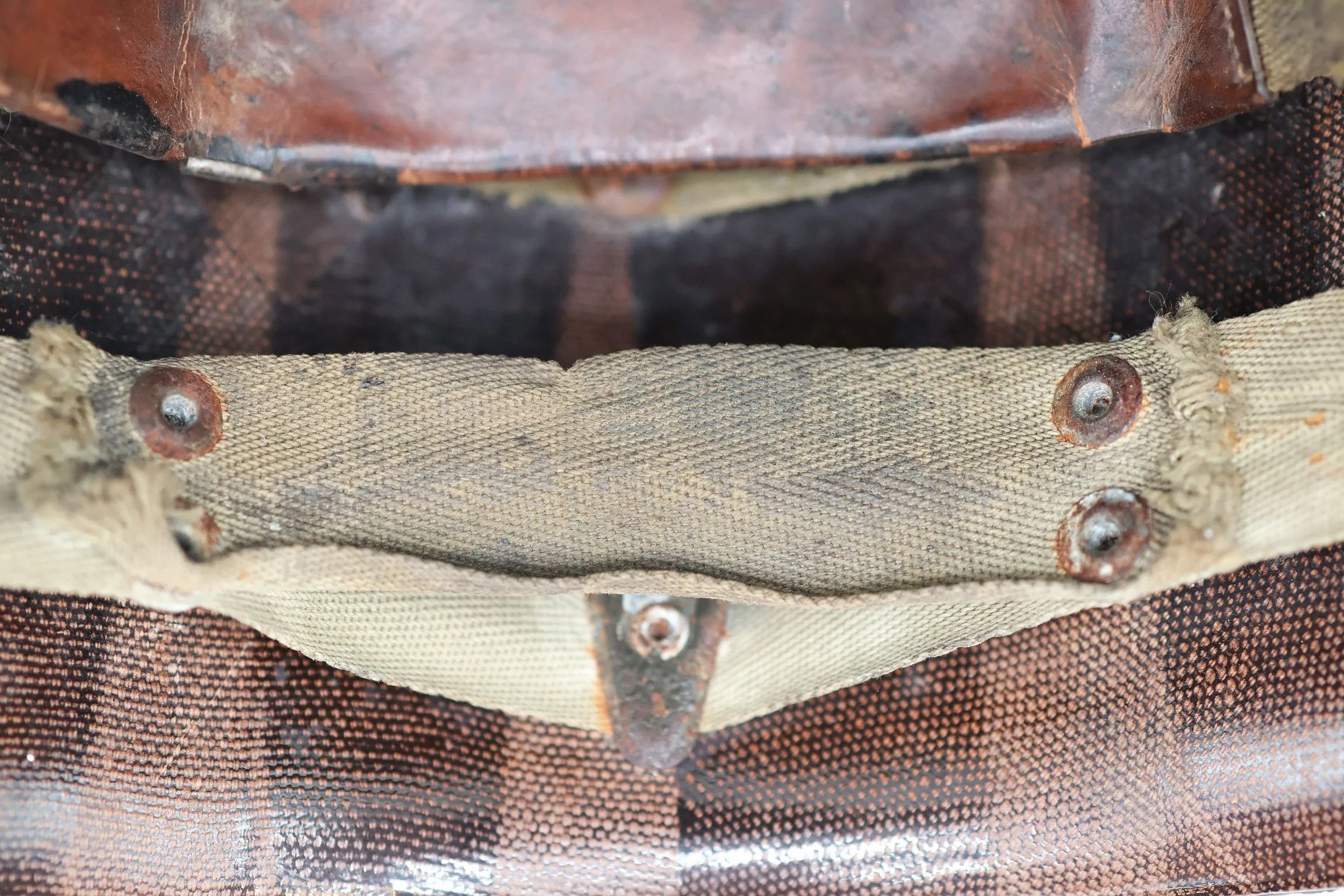
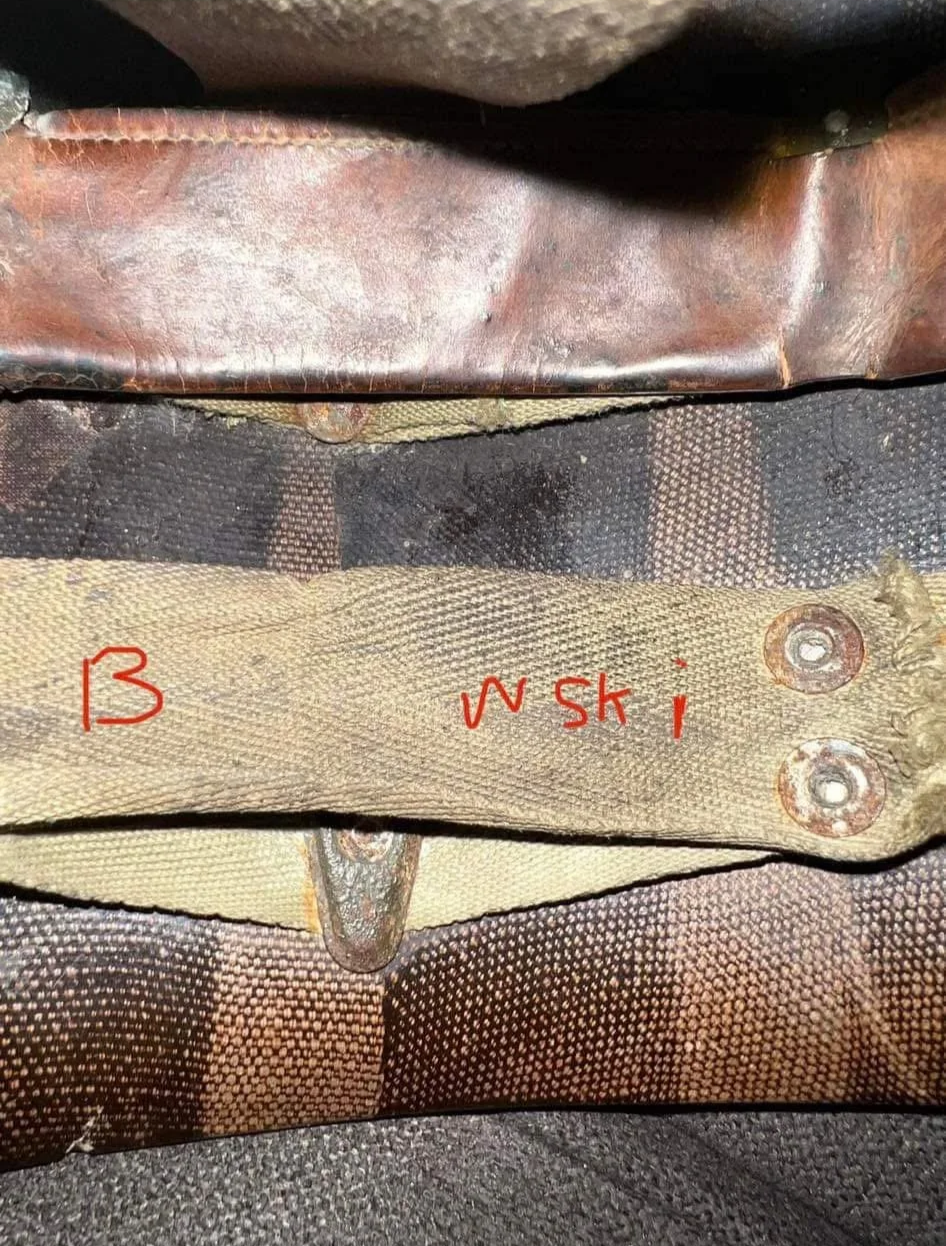
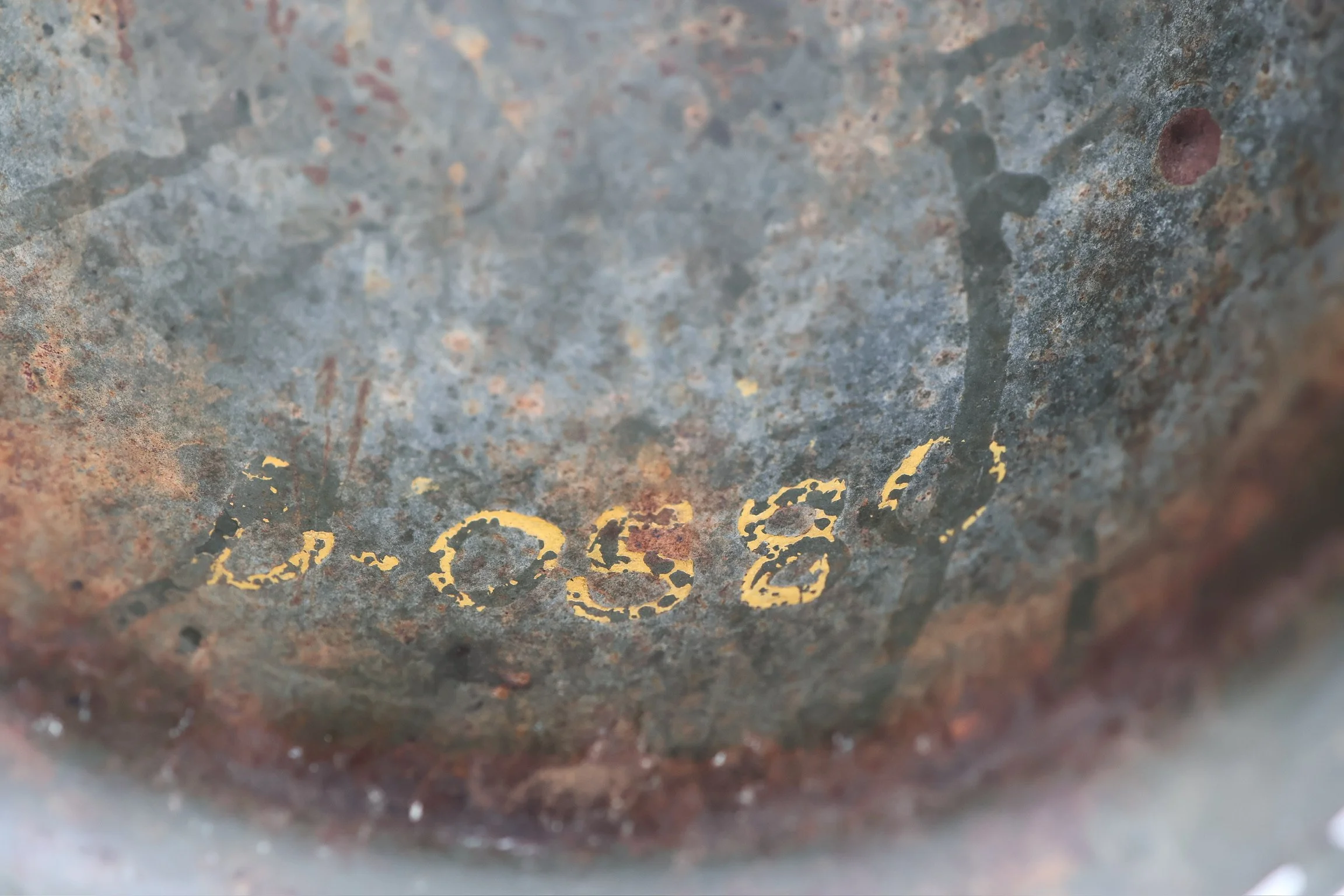
After the war, the helmet remained stored in a private residence near Malmedy until its rediscovery decades later. Its identification is confirmed by the laundry number and faint writing of “Brozowski” on the liner headband.
Cpl. Joseph A. Brozowski was born in 1919 in Wilkes-Barre, Pennsylvania. He enlisted in 1943 and was killed in action on December 17, 1944. He is buried at the Henri-Chapelle American Cemetery.
Helmet Worn By PFC Charles Raymond Adam, 79th Infantry Division (KIA)
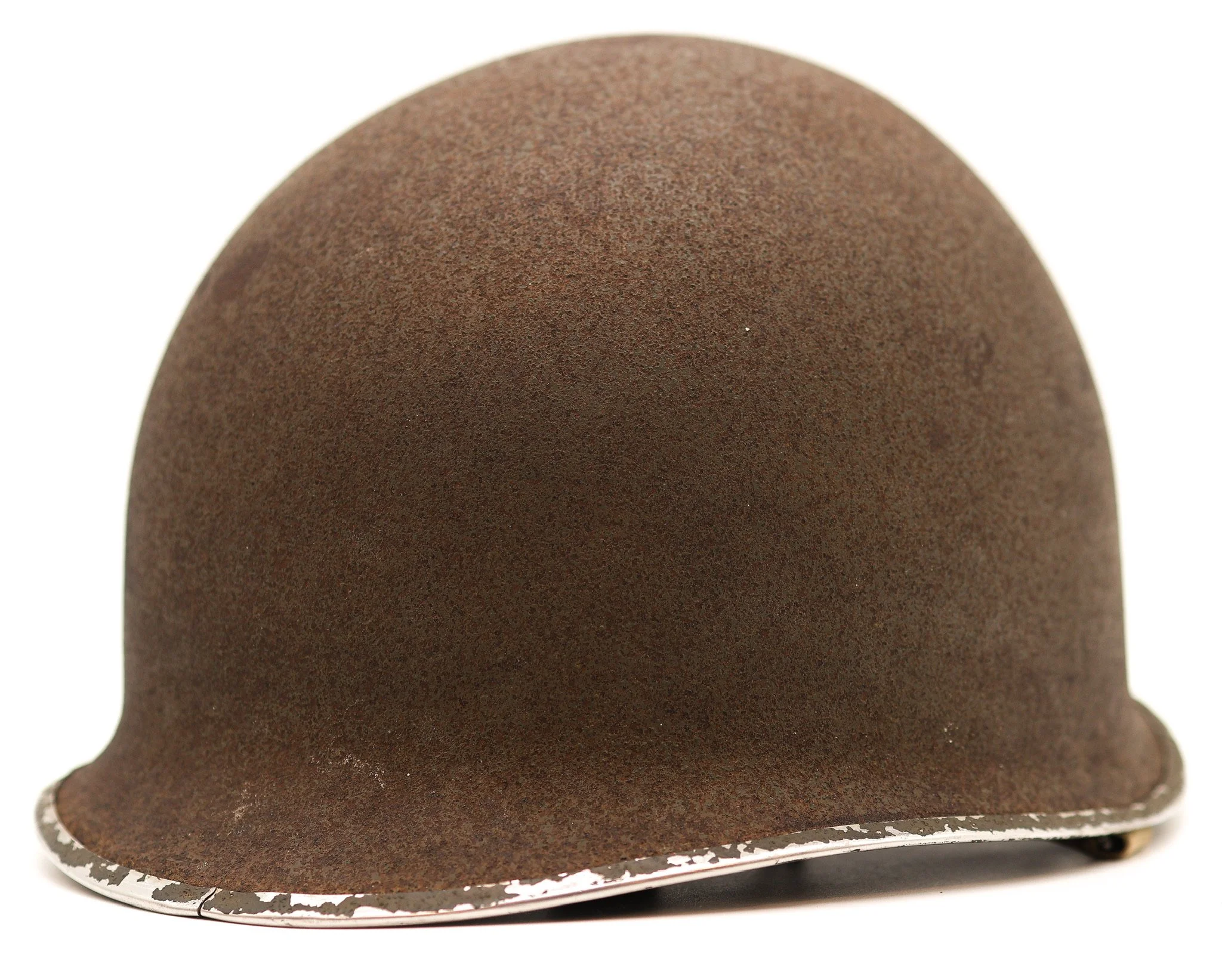
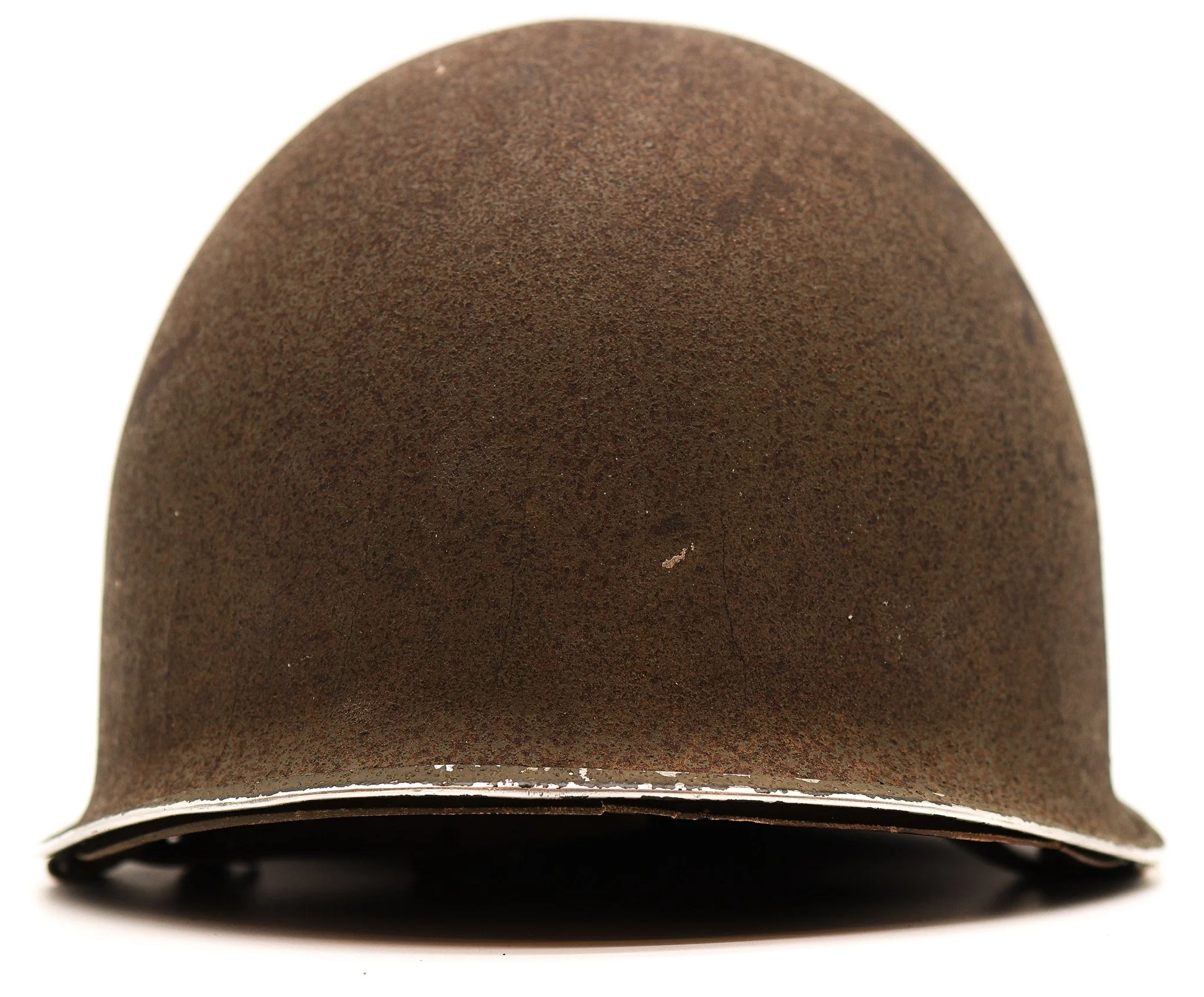
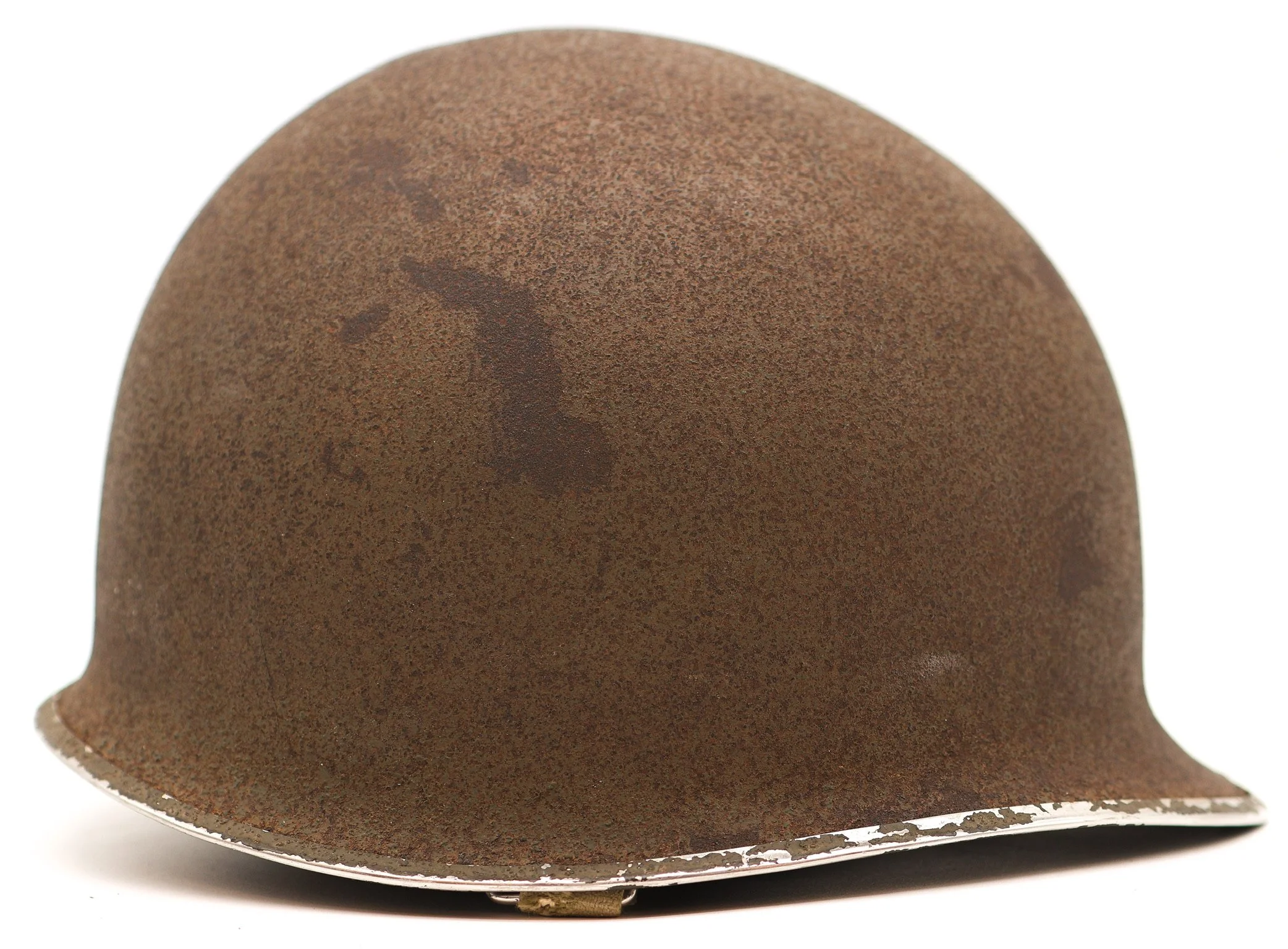
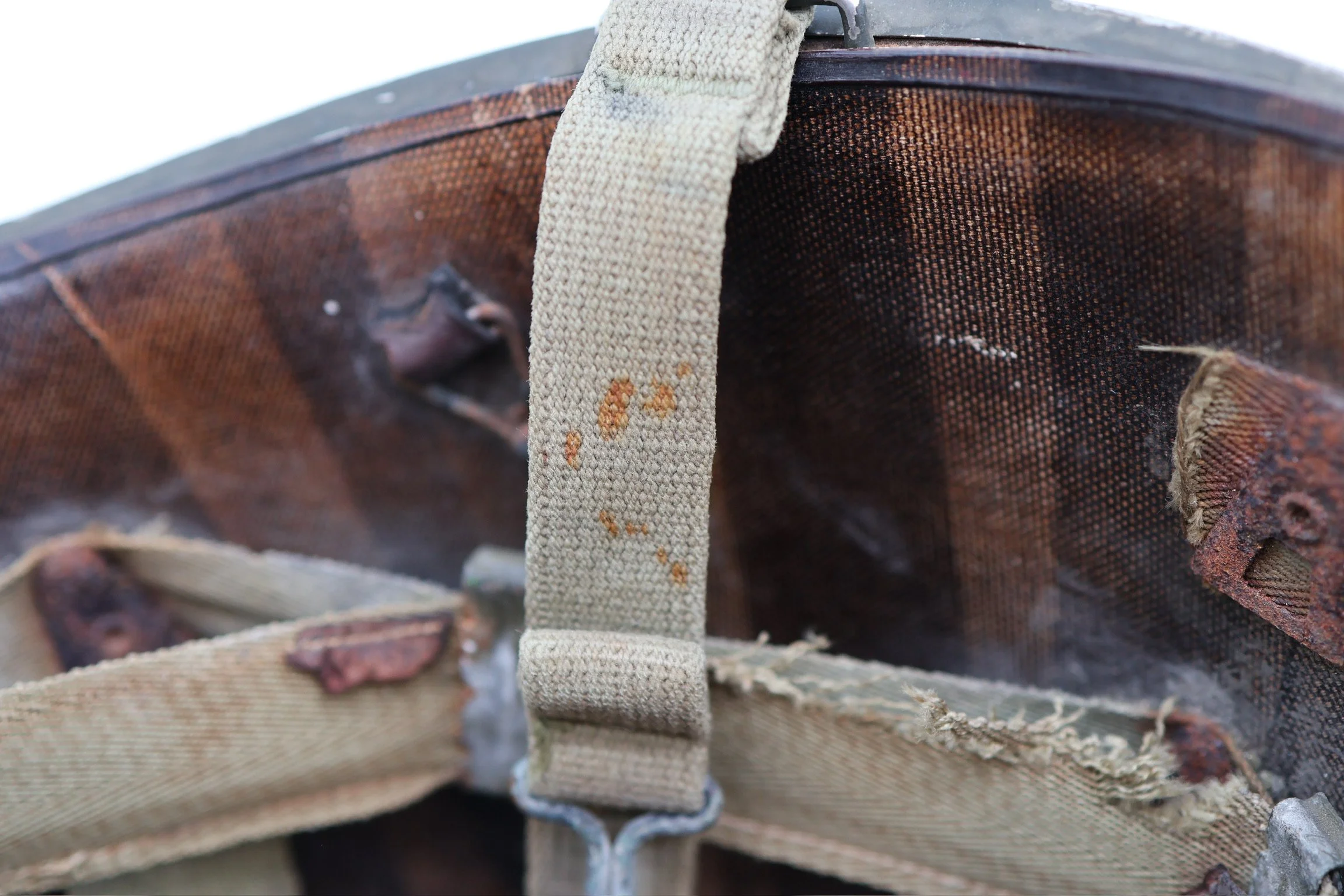
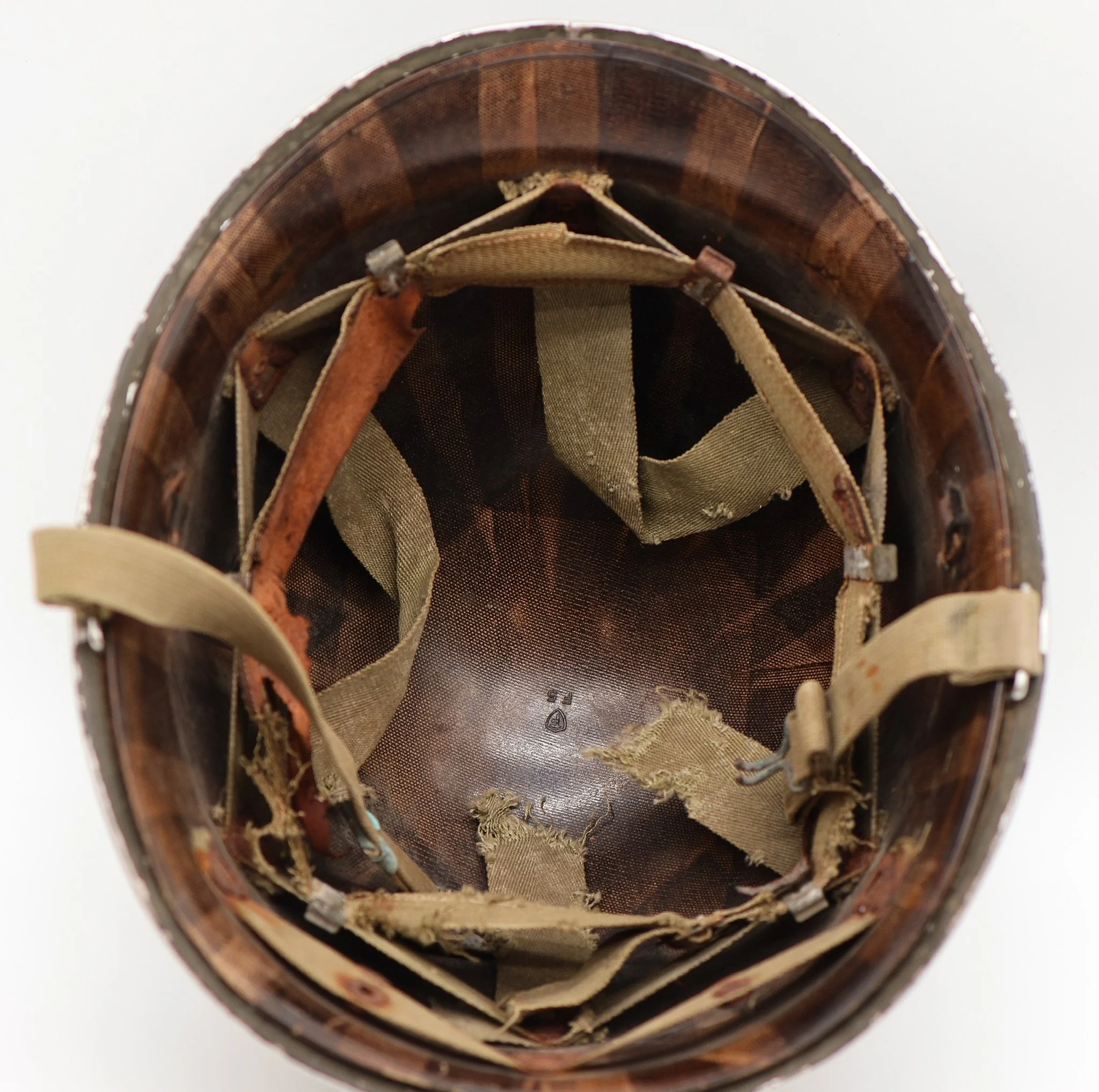
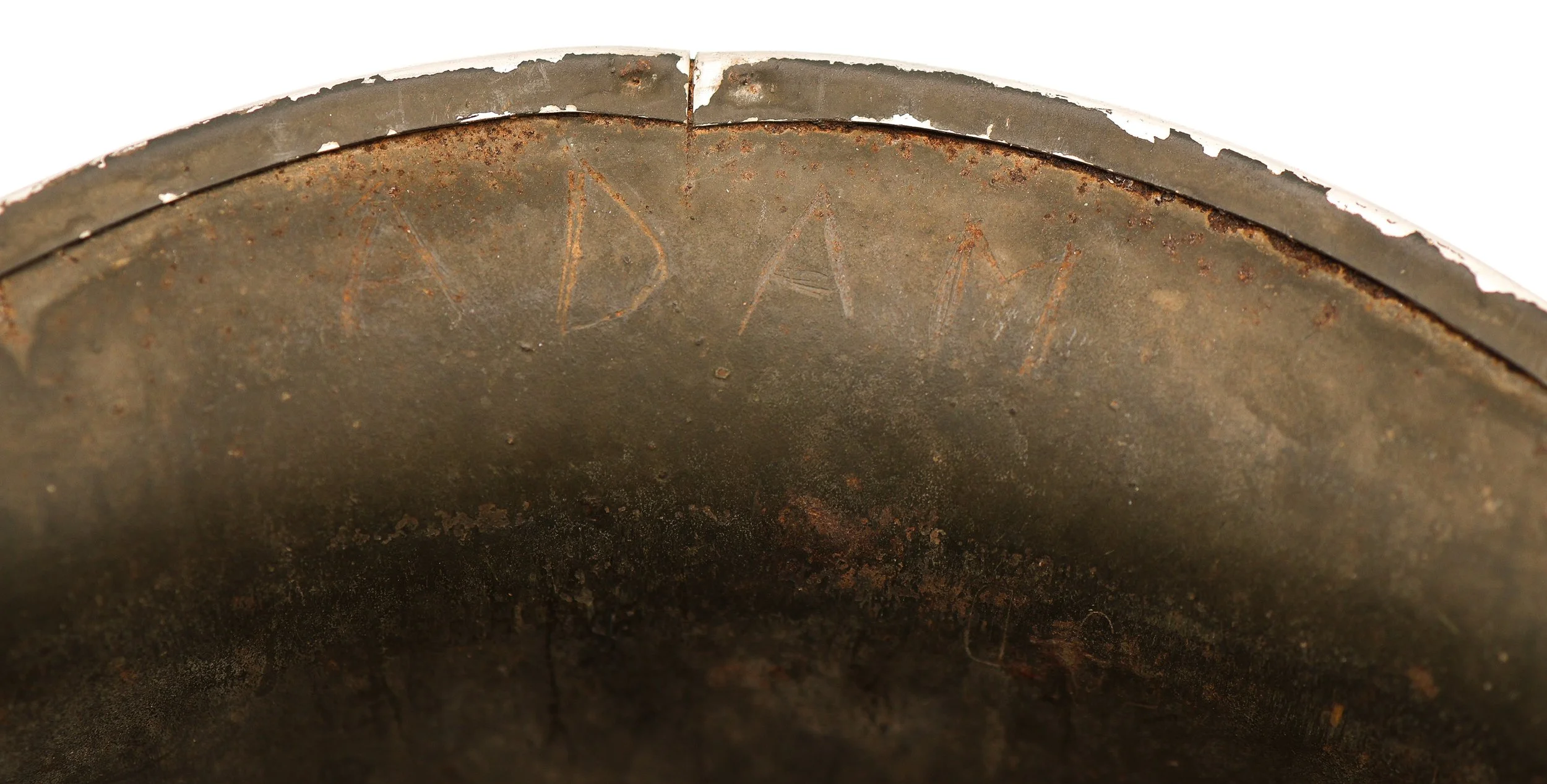
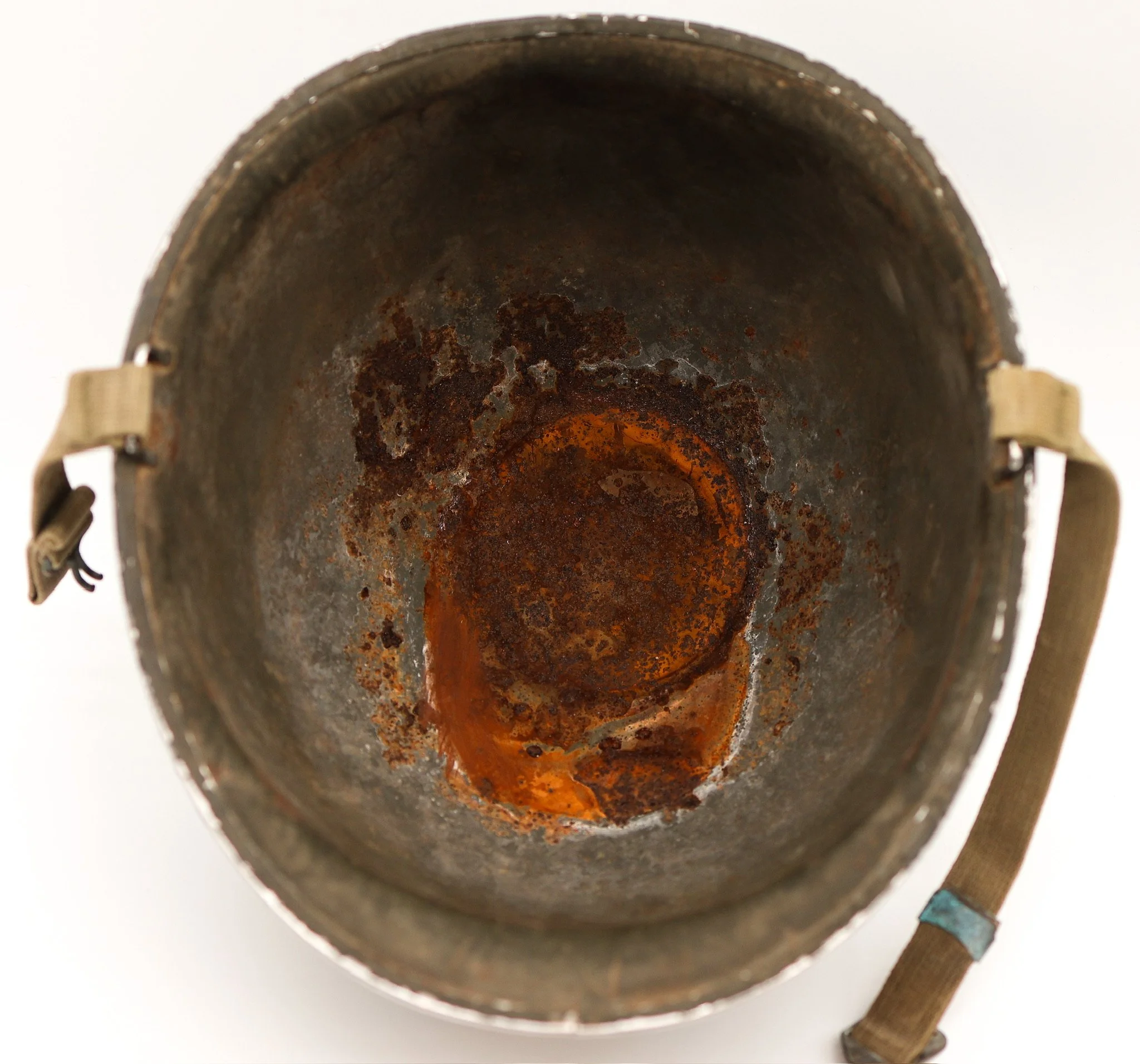
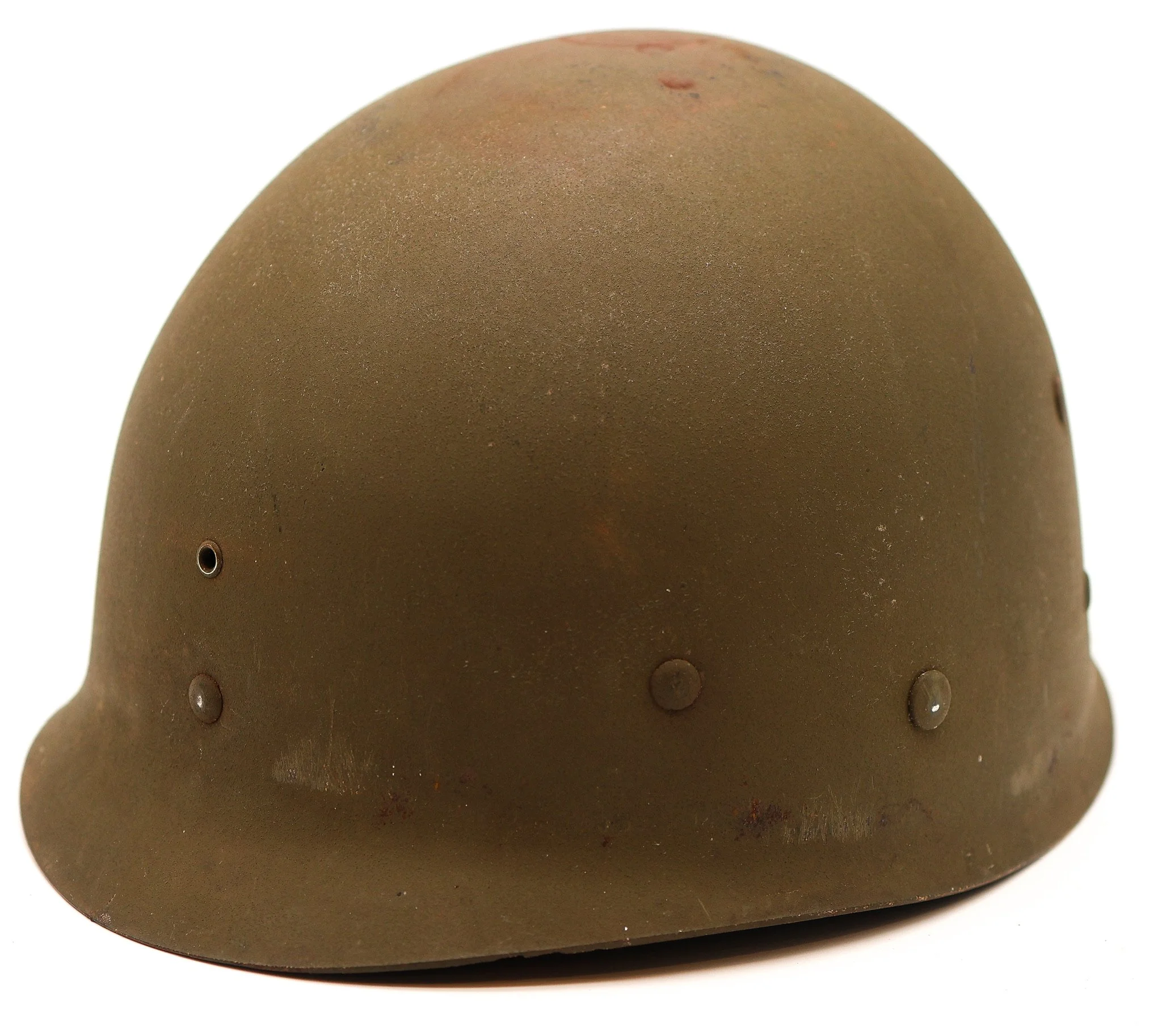
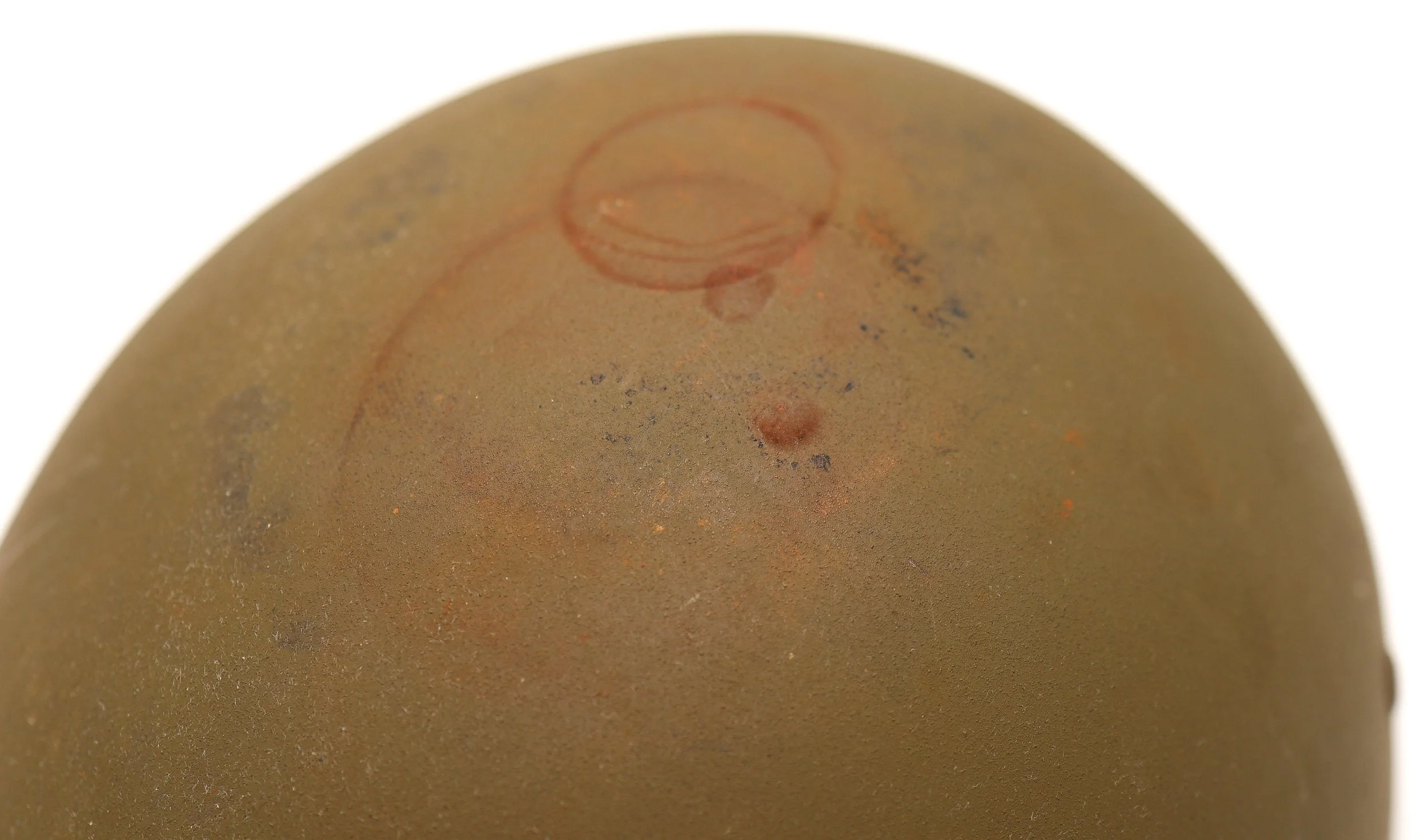
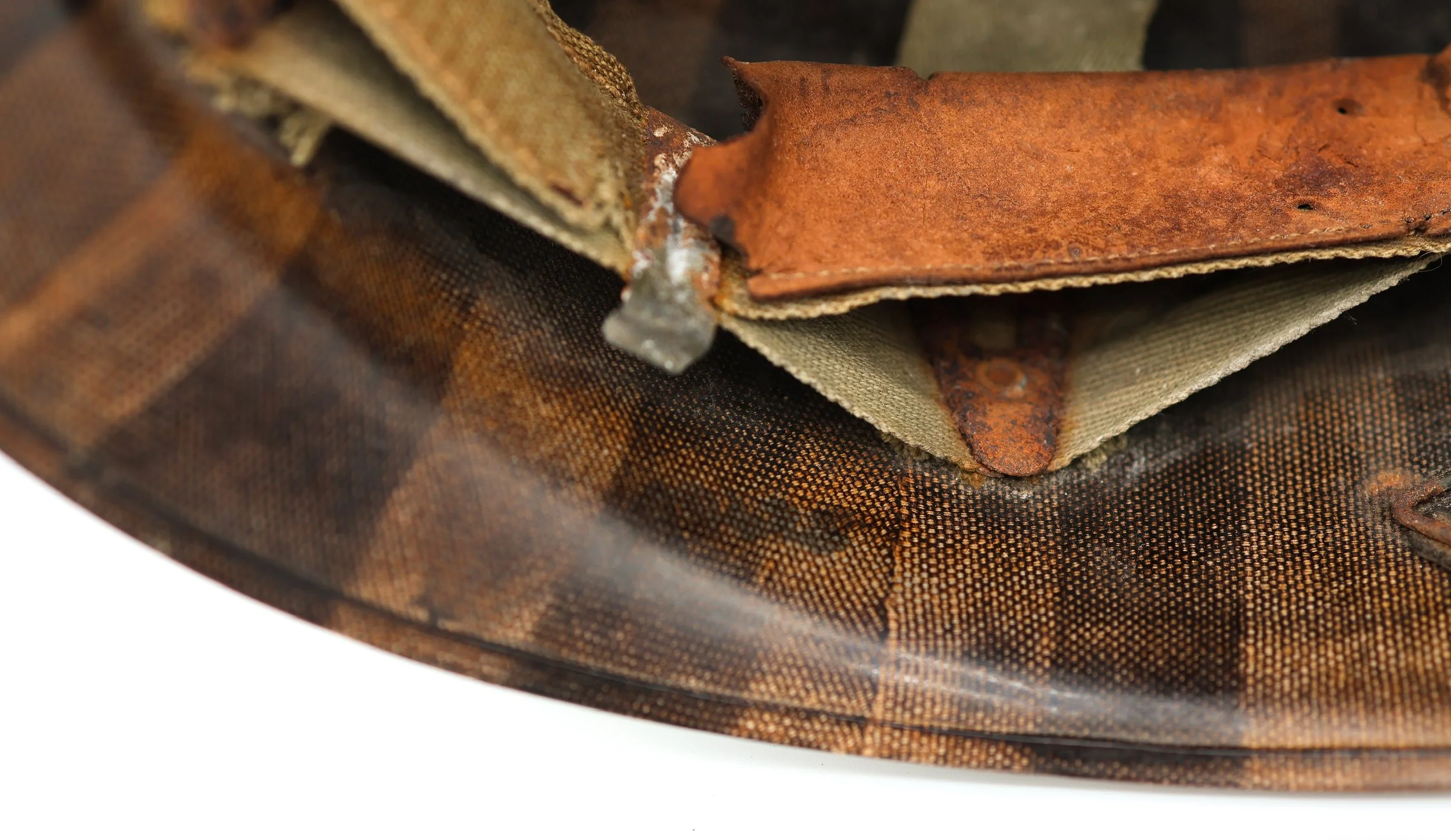
This U.S. M1 helmet and liner are identified to Private First Class Charles Raymond Adam. The steel shell is named “ADAM,” and the liner bears the laundry number A8425, which corresponds to Adam’s Army Serial Number 33618425. The shell and liner have remained together since the war and were recovered in the Montgardon / La Haye-du-Puits area of Normandy, near where PFC Adam was killed.
Charles Raymond Adam was born on March 24, 1924, in Kutztown (Maxatawny), Pennsylvania. He enlisted in the U.S. Army on March 4, 1943, and served as an infantryman with Company F, 315th Infantry Regiment, 79th Infantry Division. The 79th Infantry Division arrived in England in April 1944 and landed in Normandy on Utah Beach on June 12, 1944 (D+6). Following the breakout from the beachhead, the division advanced through Normandy during the bitter fighting in the Cotentin region…
-
On July 10, 1944, PFC Adam was killed in action in France, near Montgardon, after being struck by a gunshot wound to the neck, as documented in hospital admission and casualty records. He was 20 years old at the time of his death. After initial burial overseas, his remains were repatriated to the United States in 1948 and reinterred with full military honors at Hope Cemetery, Kutztown, Pennsylvania, Section F, Grave 18.
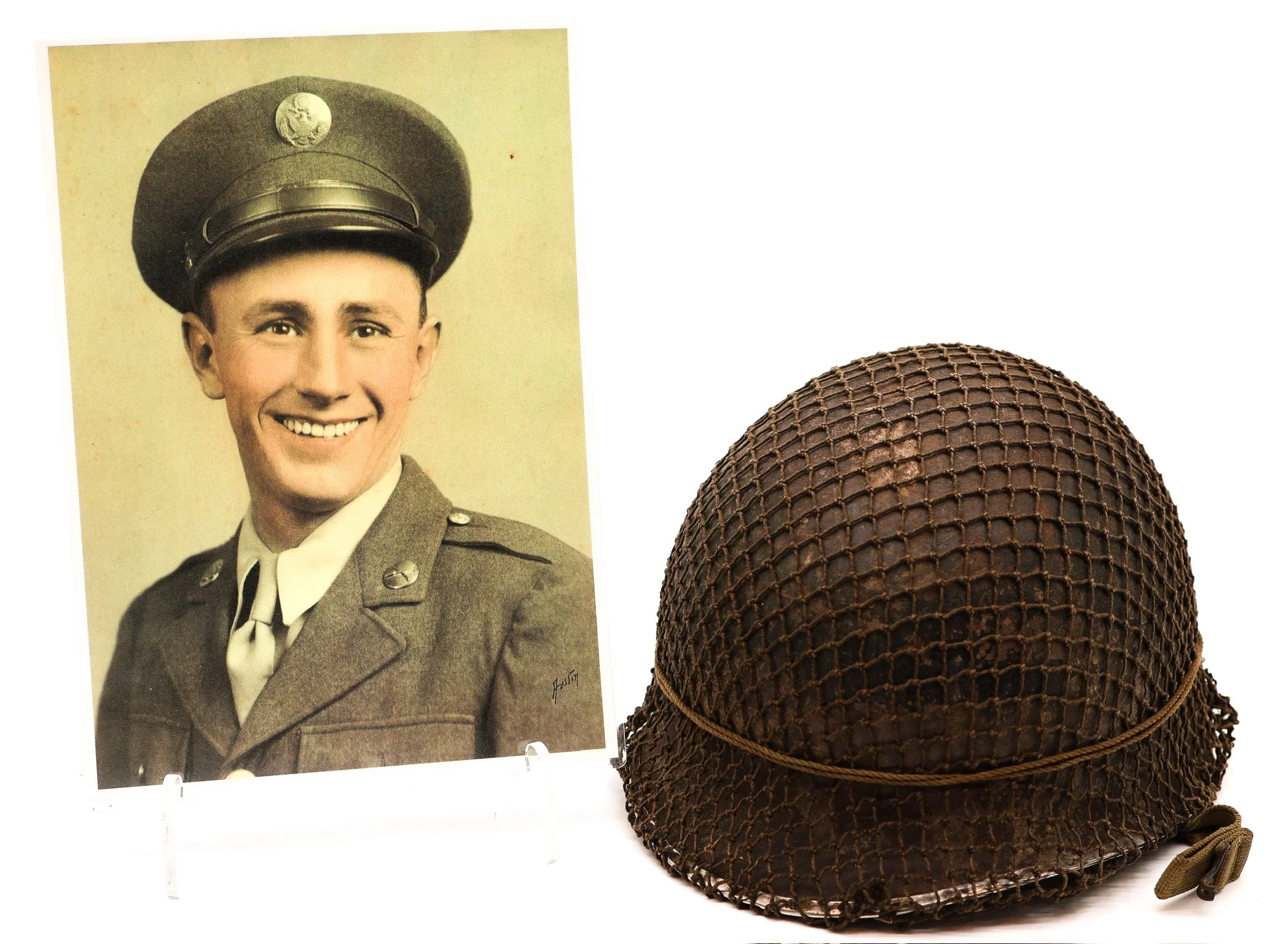
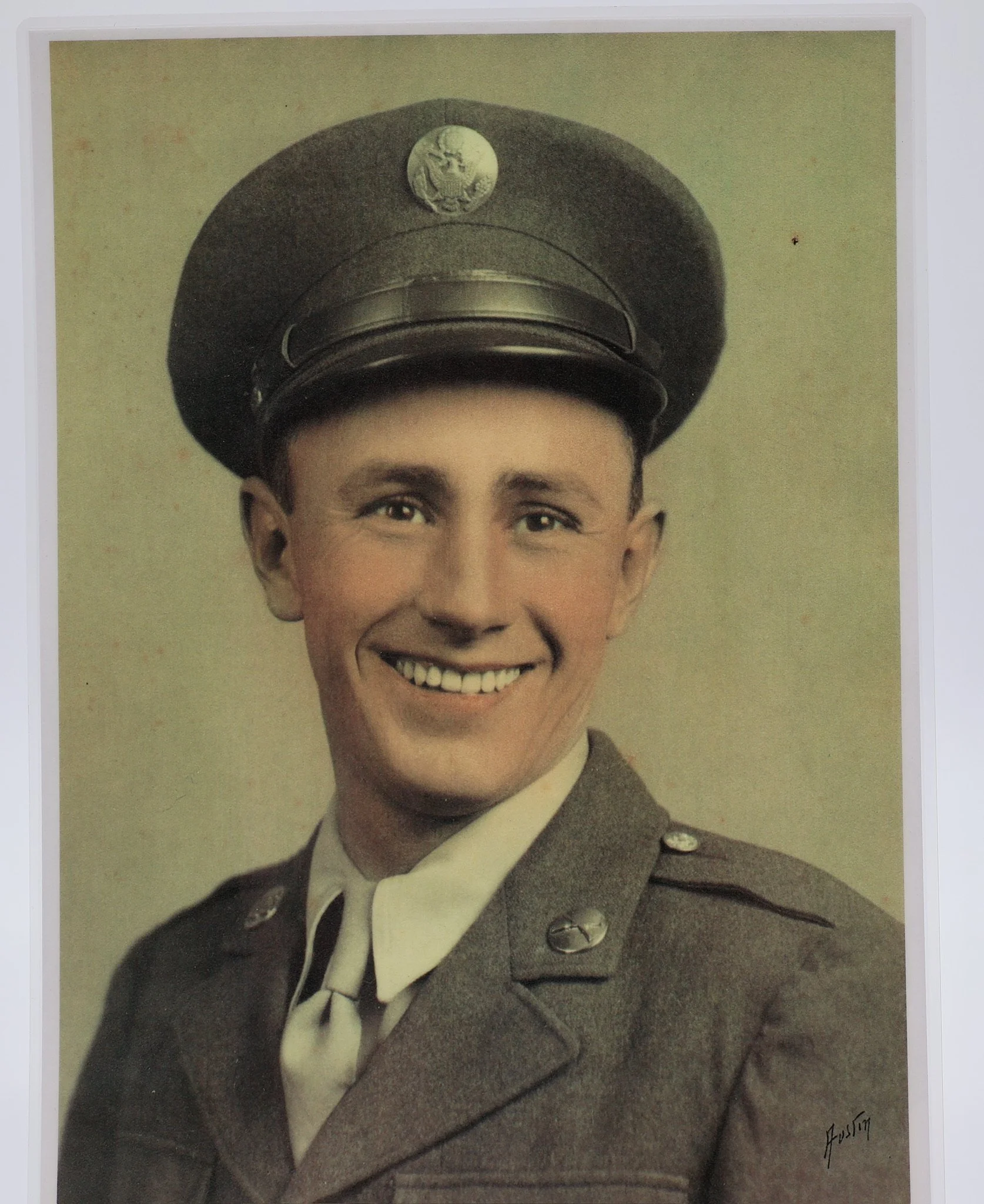
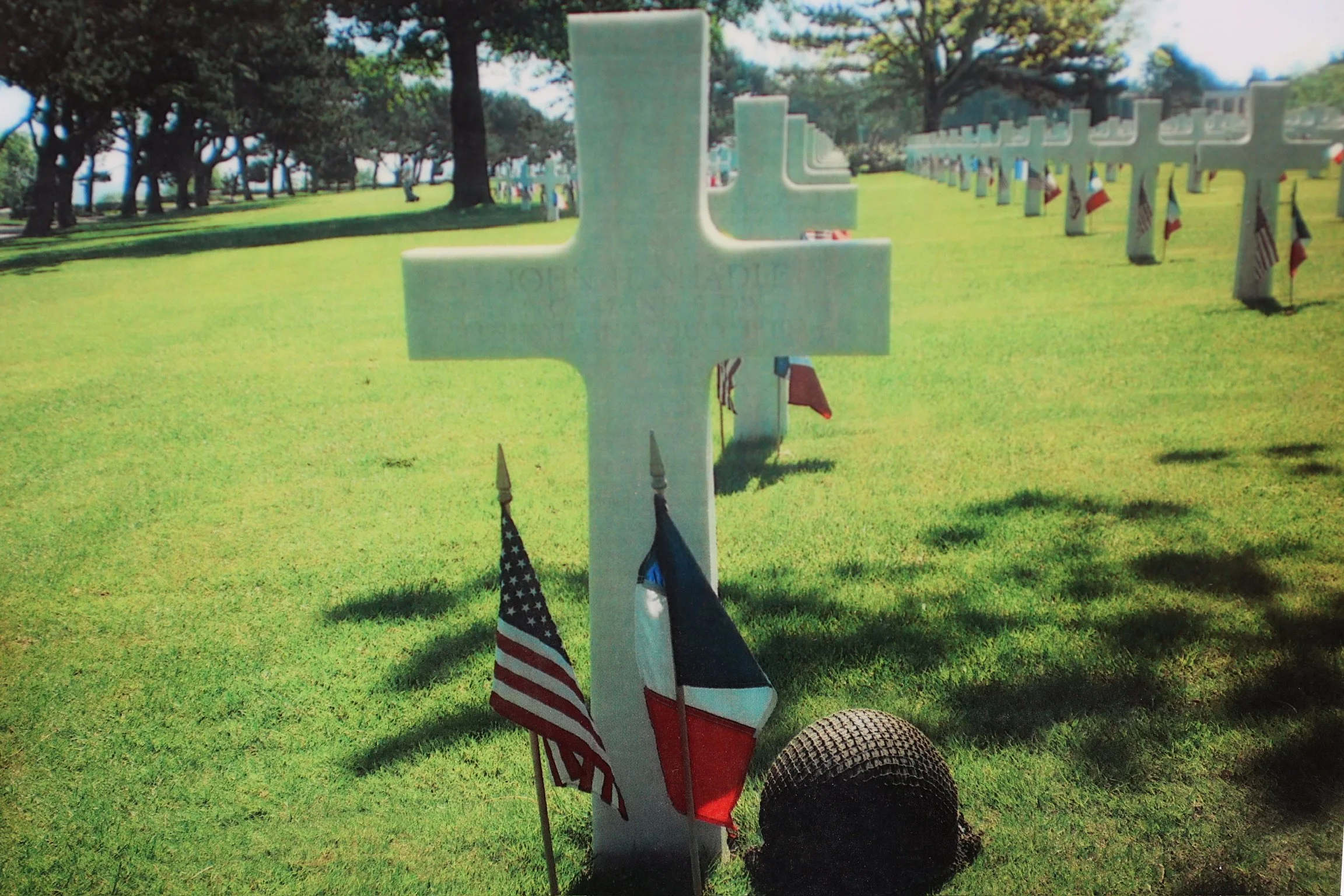
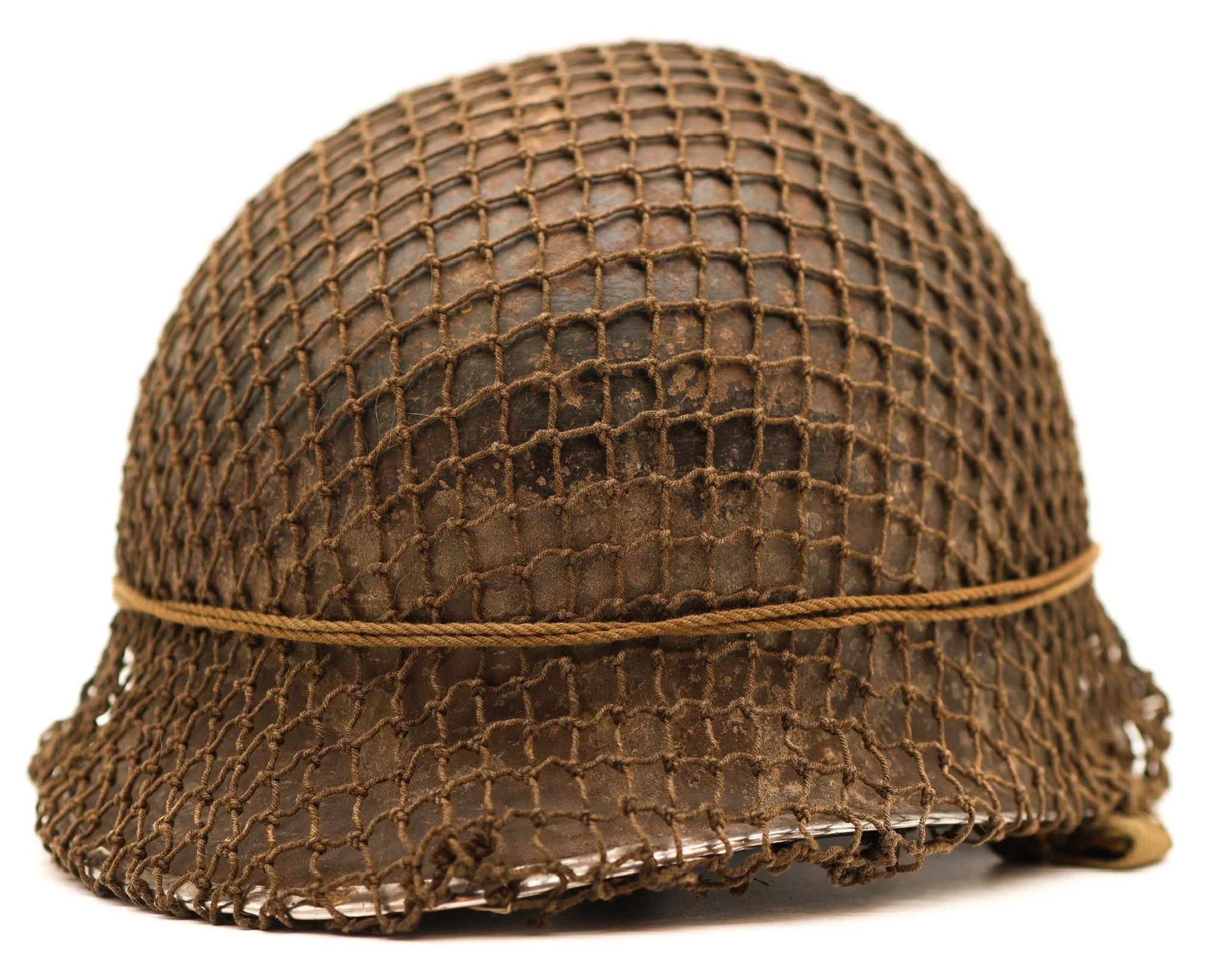
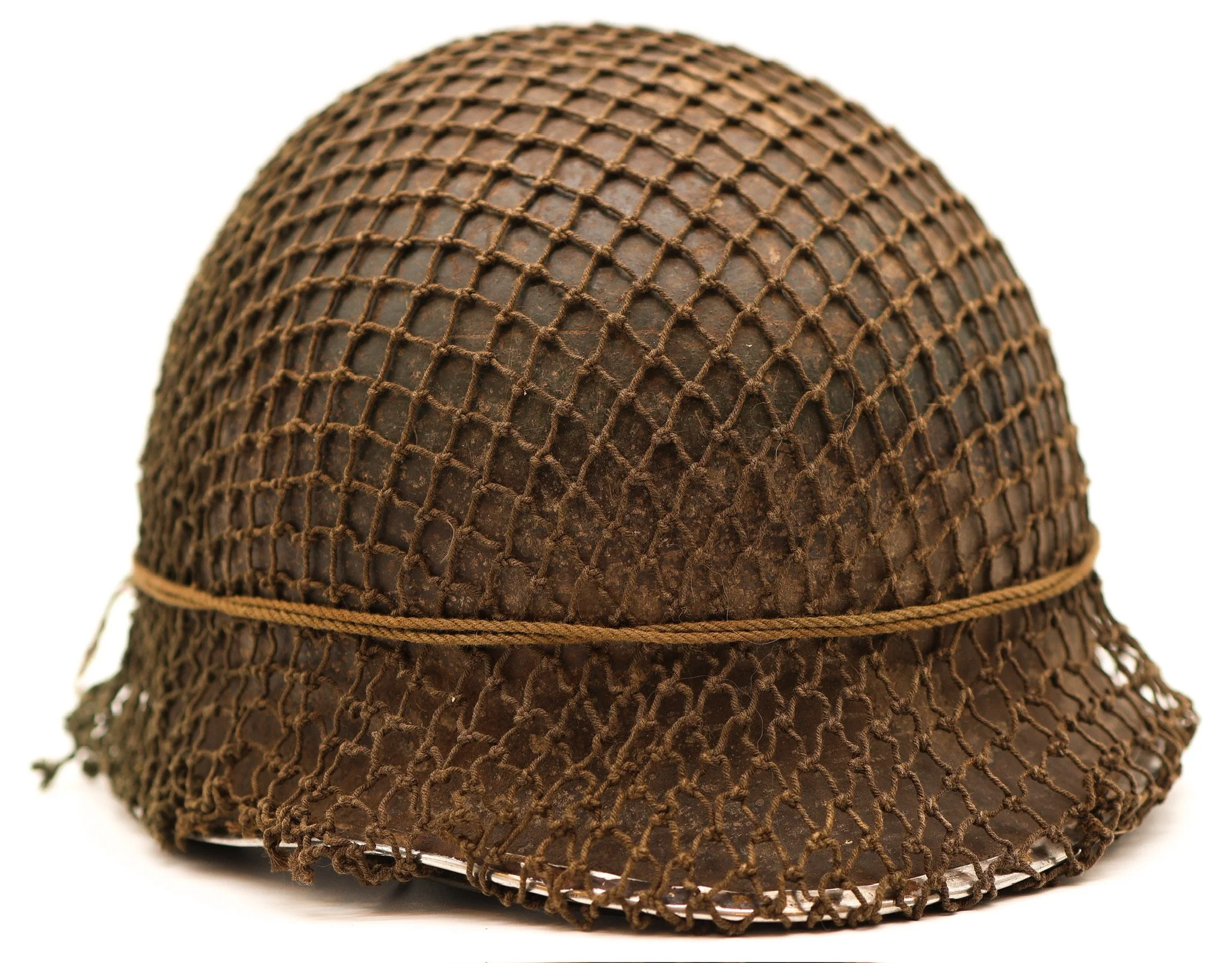
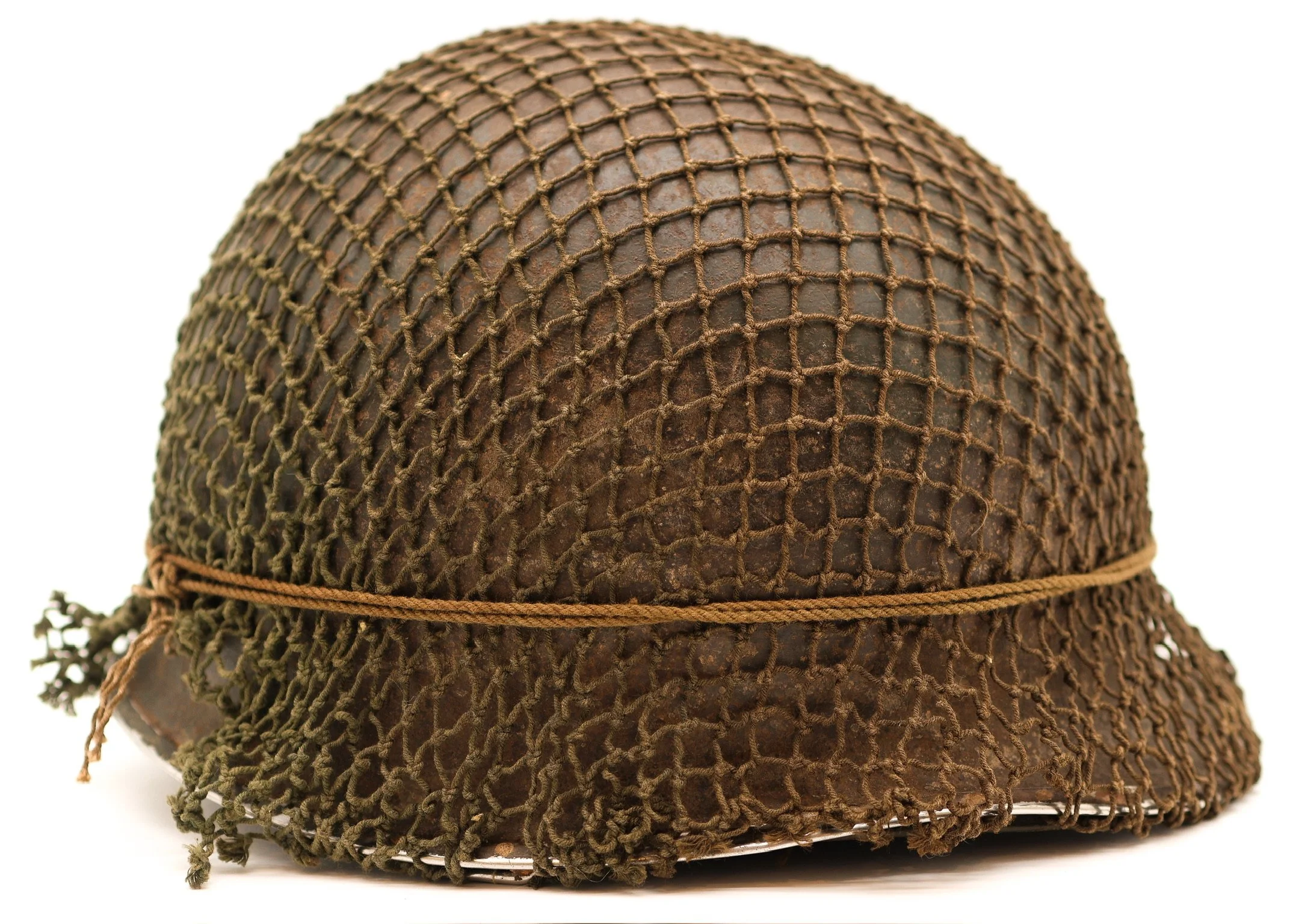
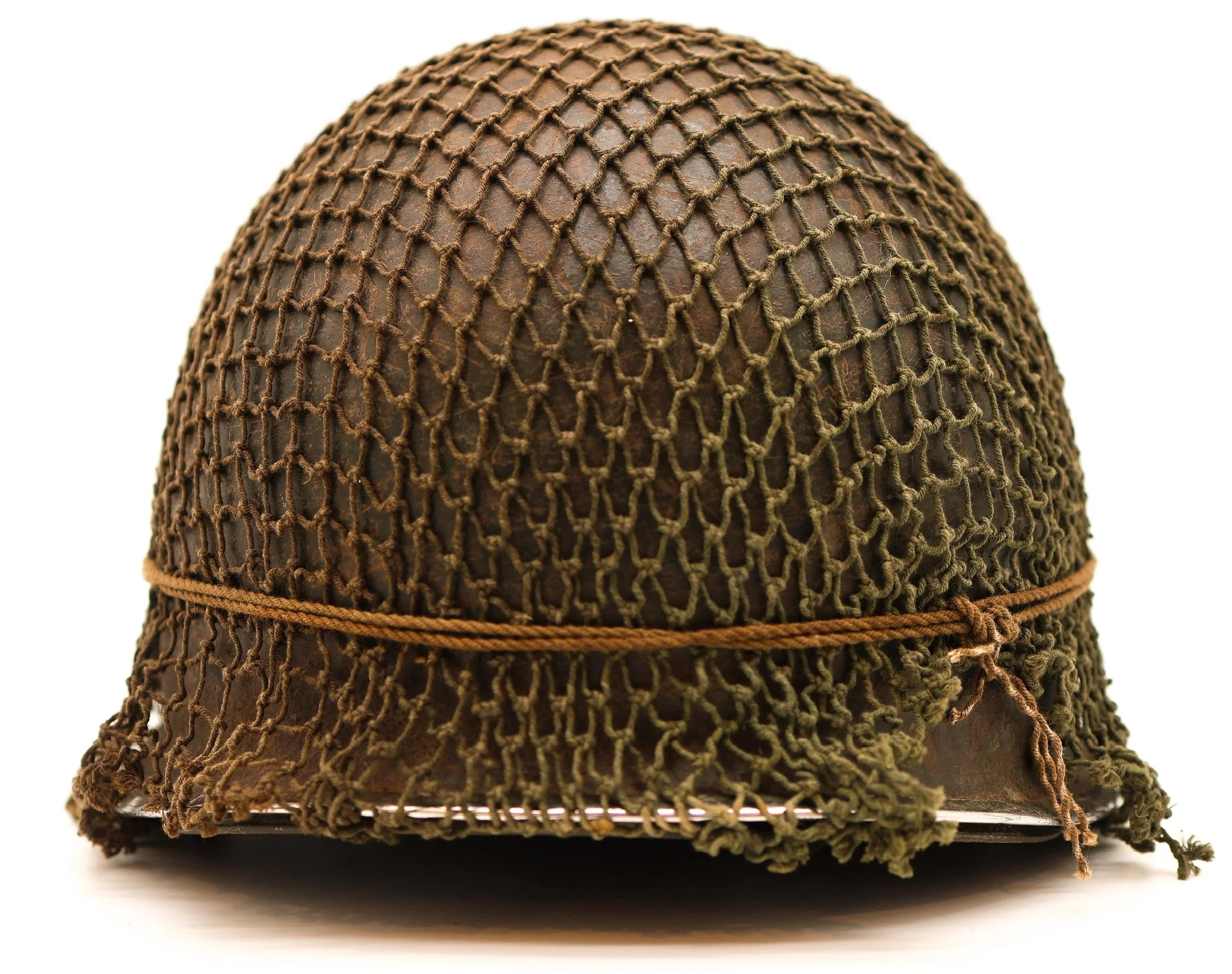
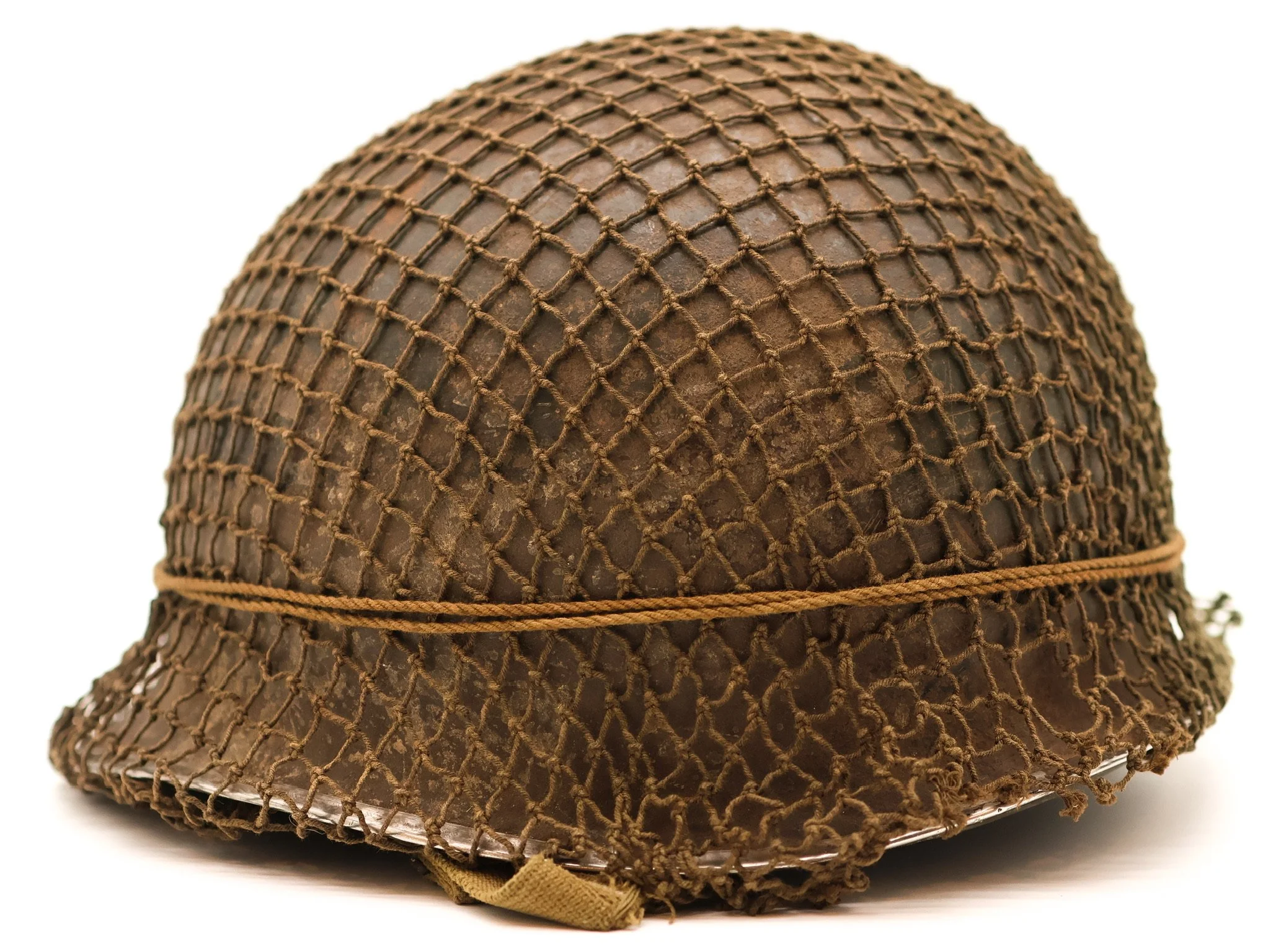
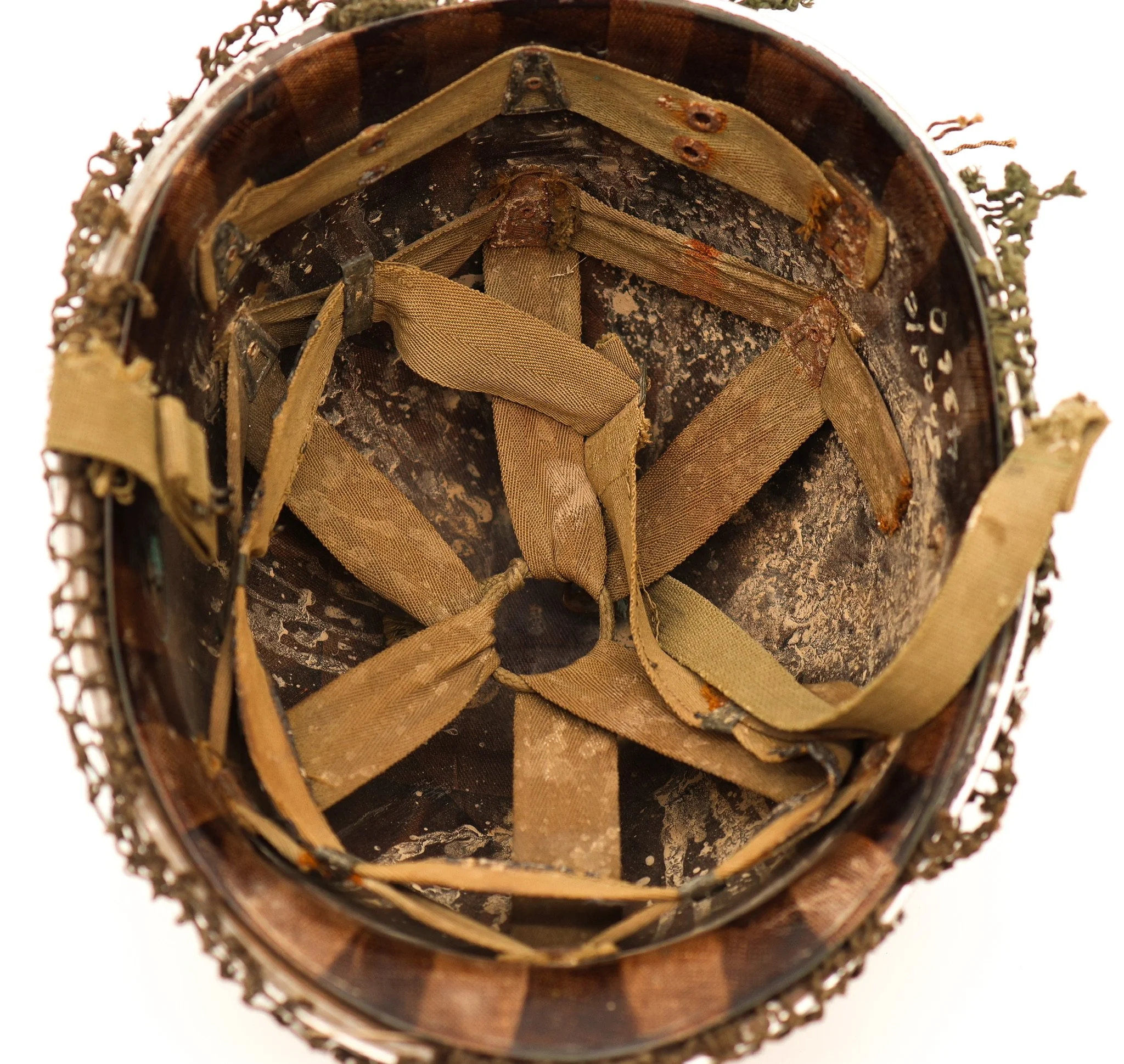
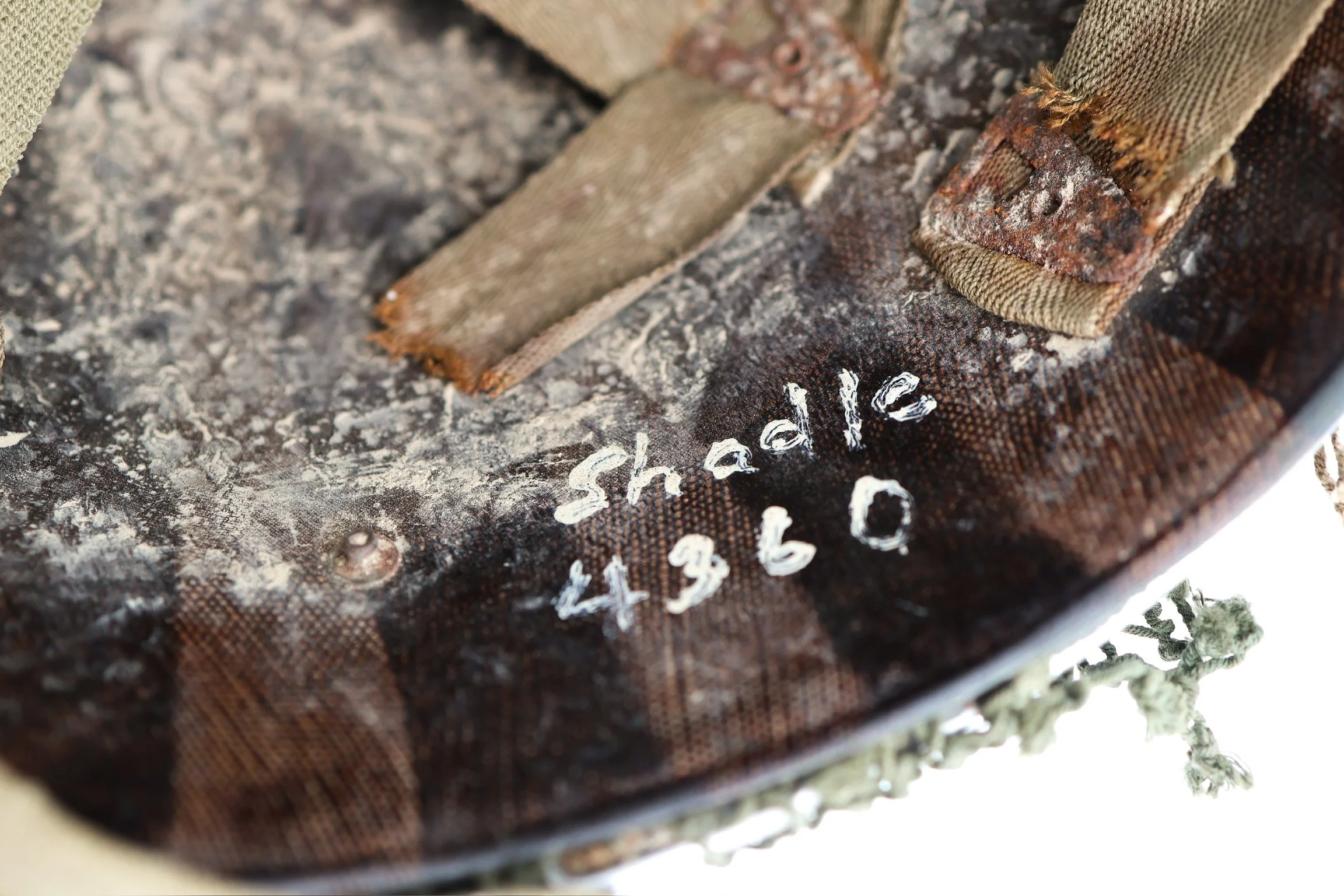
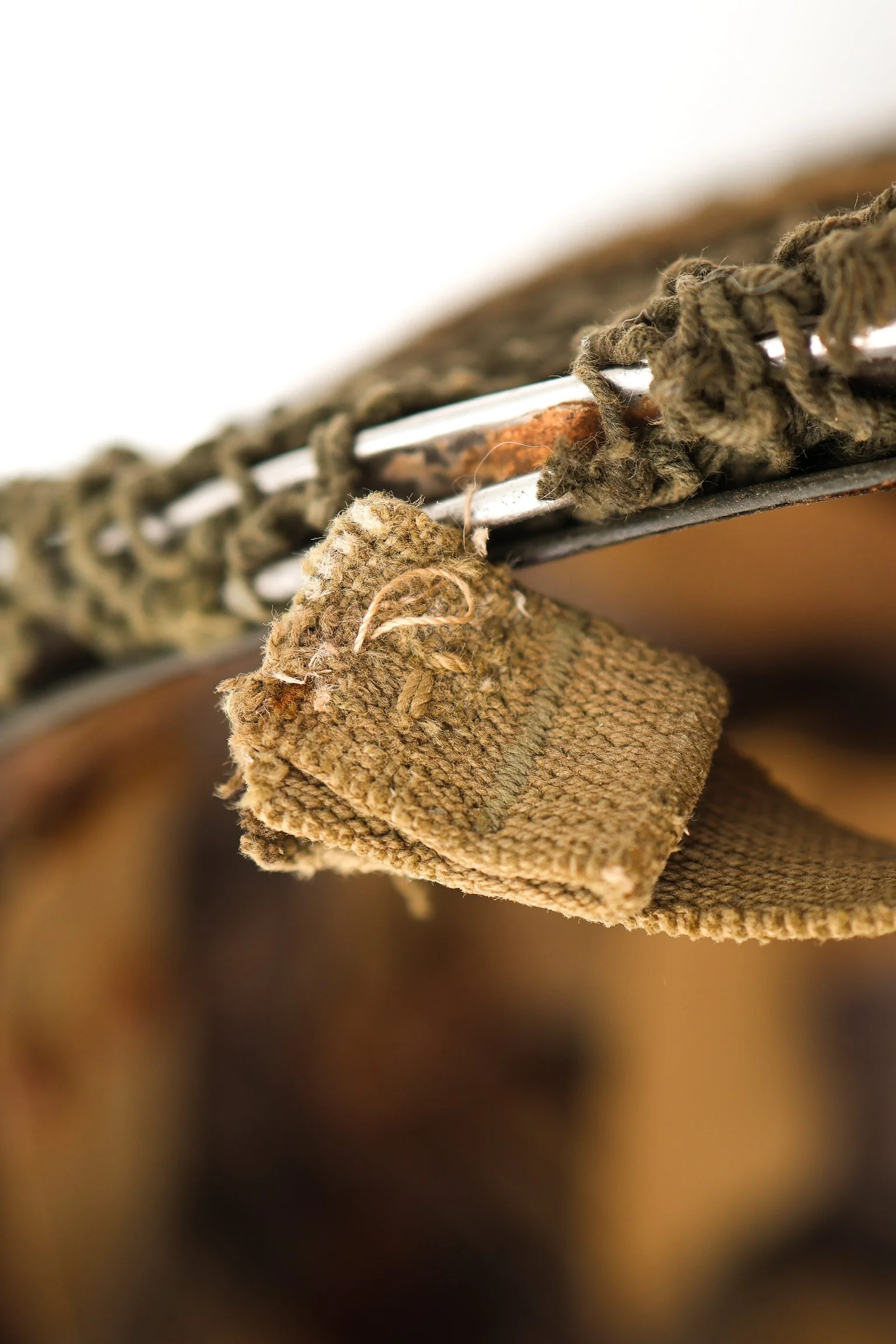
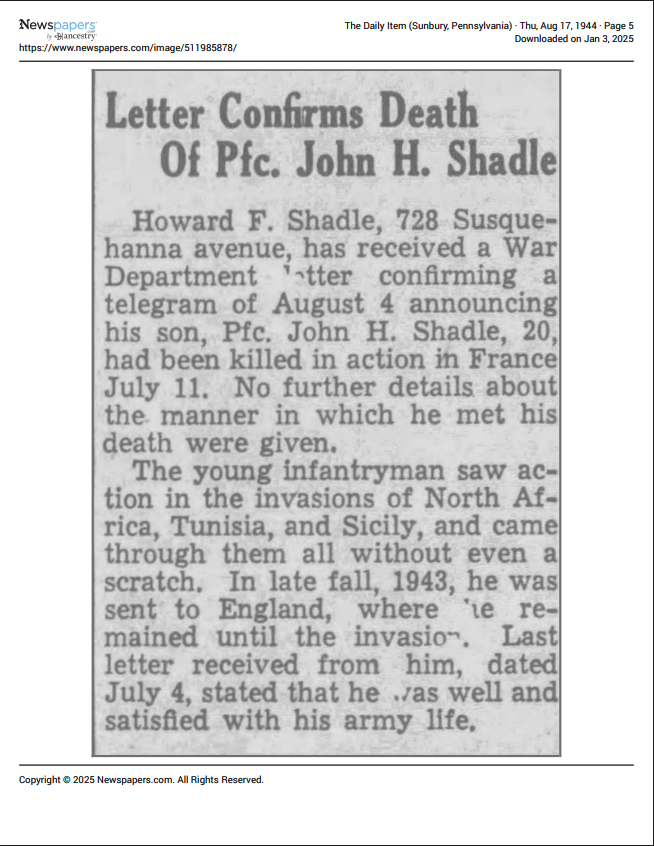
This M1 helmet belonged to Private First Class John H. Shadle (ASN 33234360), a young infantryman whose combat service ended just weeks after he landed in France. The helmet remains with its period net and is identified to Shadle who wrote his last name and laundry number in the liner.
Shadle was originally from the Harrisburg, Pennsylvania area and enlisted on June 23, 1942. Contemporary reporting noted that he tried repeatedly to enlist but was initially turned away due to poor vision—only later being accepted into the Army. Once in uniform, he trained at Camp Wheeler, Georgia, where he qualified as a sharpshooter and earned multiple marksmanship awards. His early wartime service took him through the Mediterranean campaigns, including the invasions of North Africa, Tunisia, and Sicily, before his unit shifted to England in late 1943 to prepare for the cross-Channel assault…
Helmet of PFC John H. Shadle, 9th Infantry Division (KIA in Normandy)
-
On June 11, 1944, Pfc. Shadle landed in Normandy with the 47th Infantry Regiment (9th Infantry Division) at Sainte-Marie-du-Mont. Within one month—on July 11, 1944—he was killed in action by artillery shrapnel near the village area of Mesnil-Véneron during a violent German counterattack associated with the Panzer Lehr Division. He was only 20 years old at the time of his death.
Official records list Shadle as killed in action on July 11, 1944, and he was awarded the Purple Heart. He is buried in France at the Normandy American Cemetery at Colleville-sur-Mer (Plot H, Row 20, Grave 37).
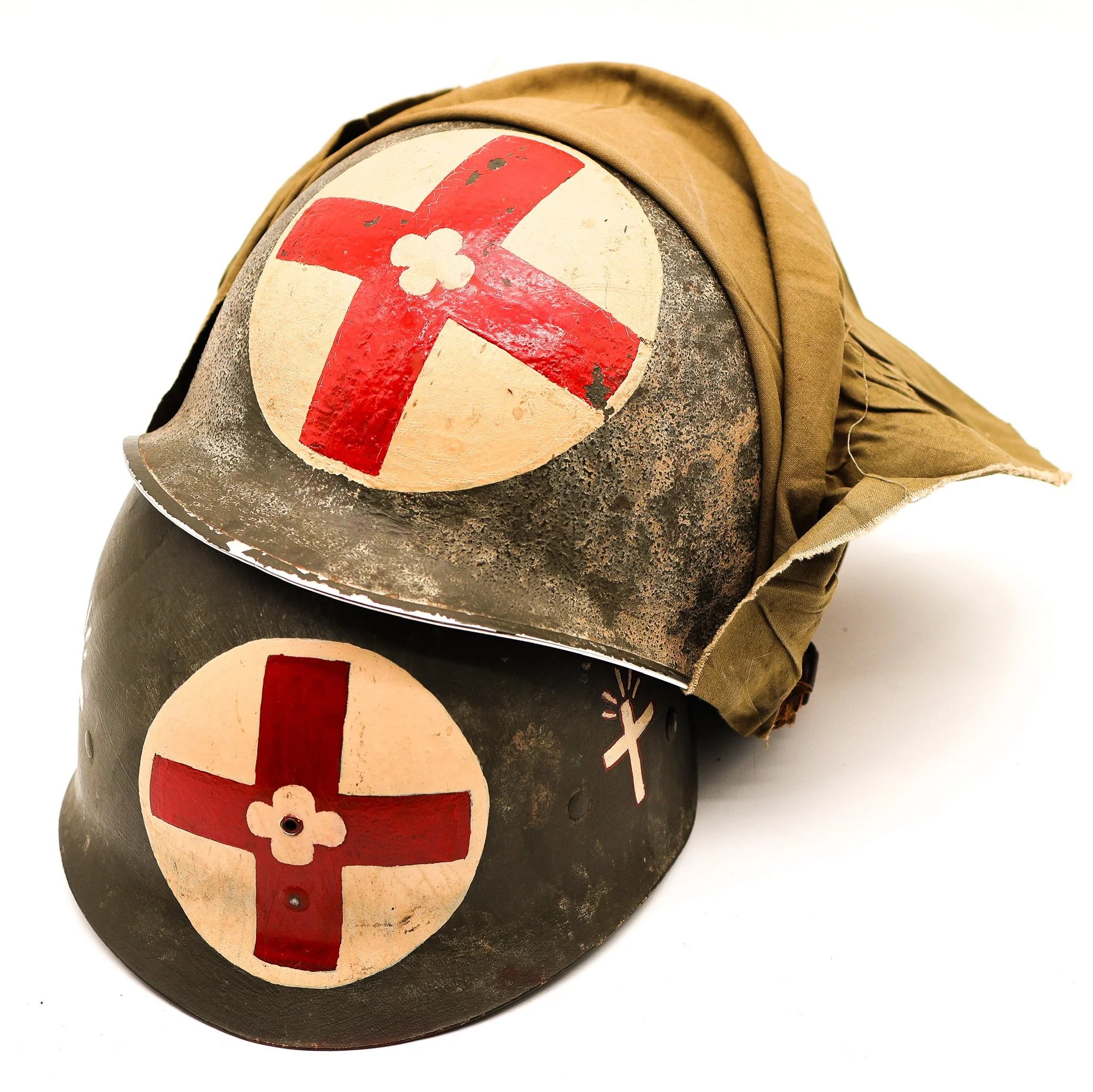
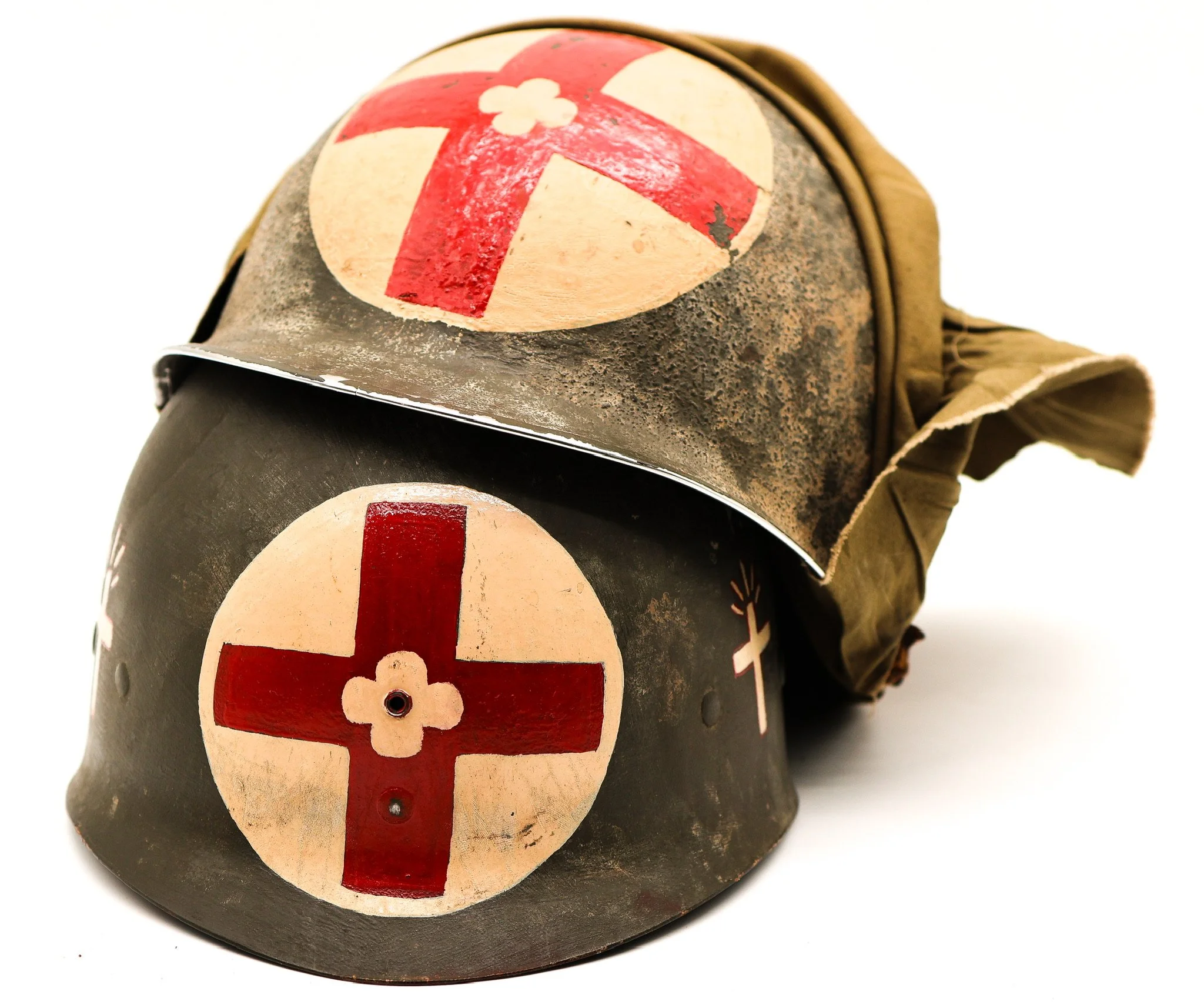
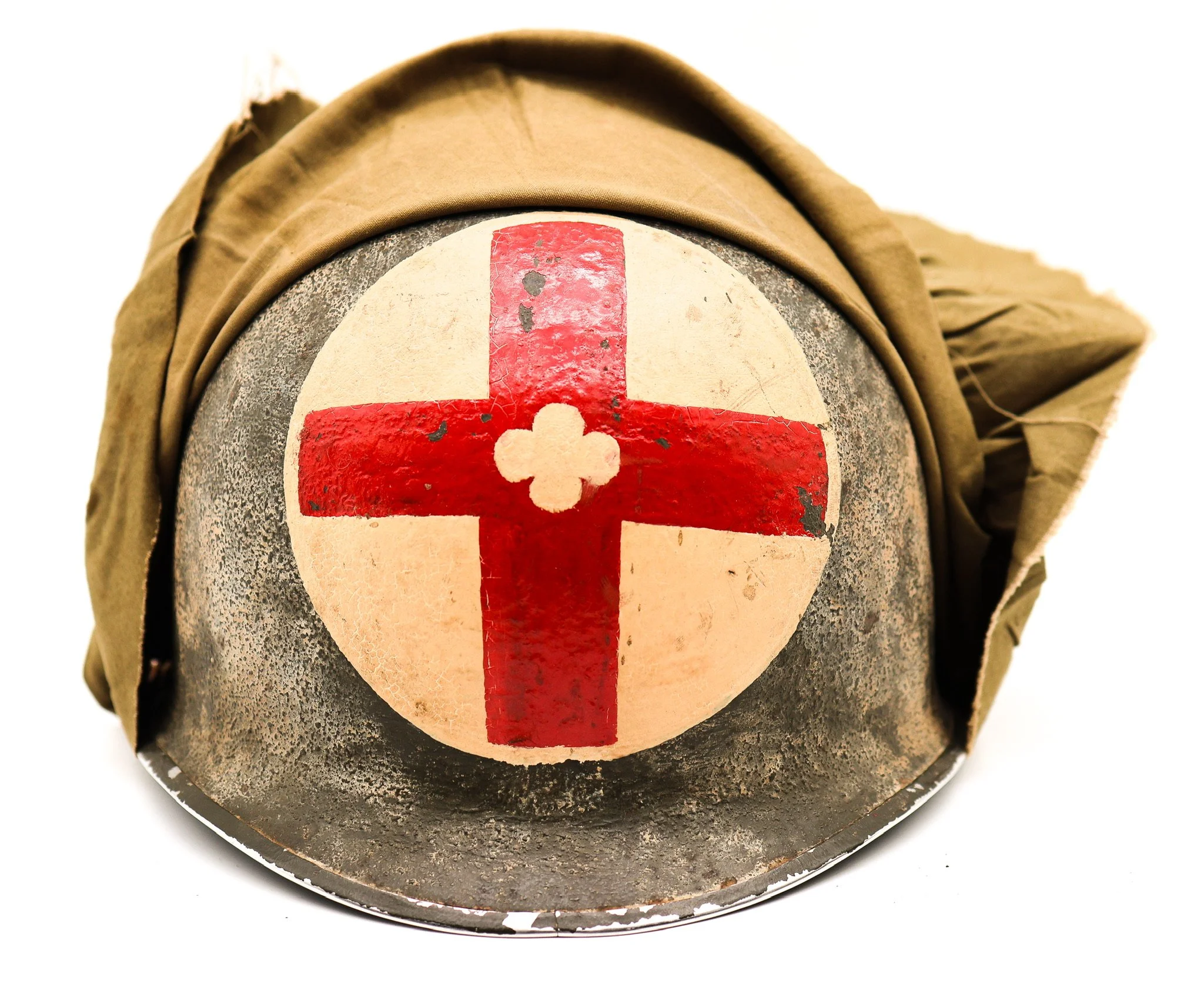
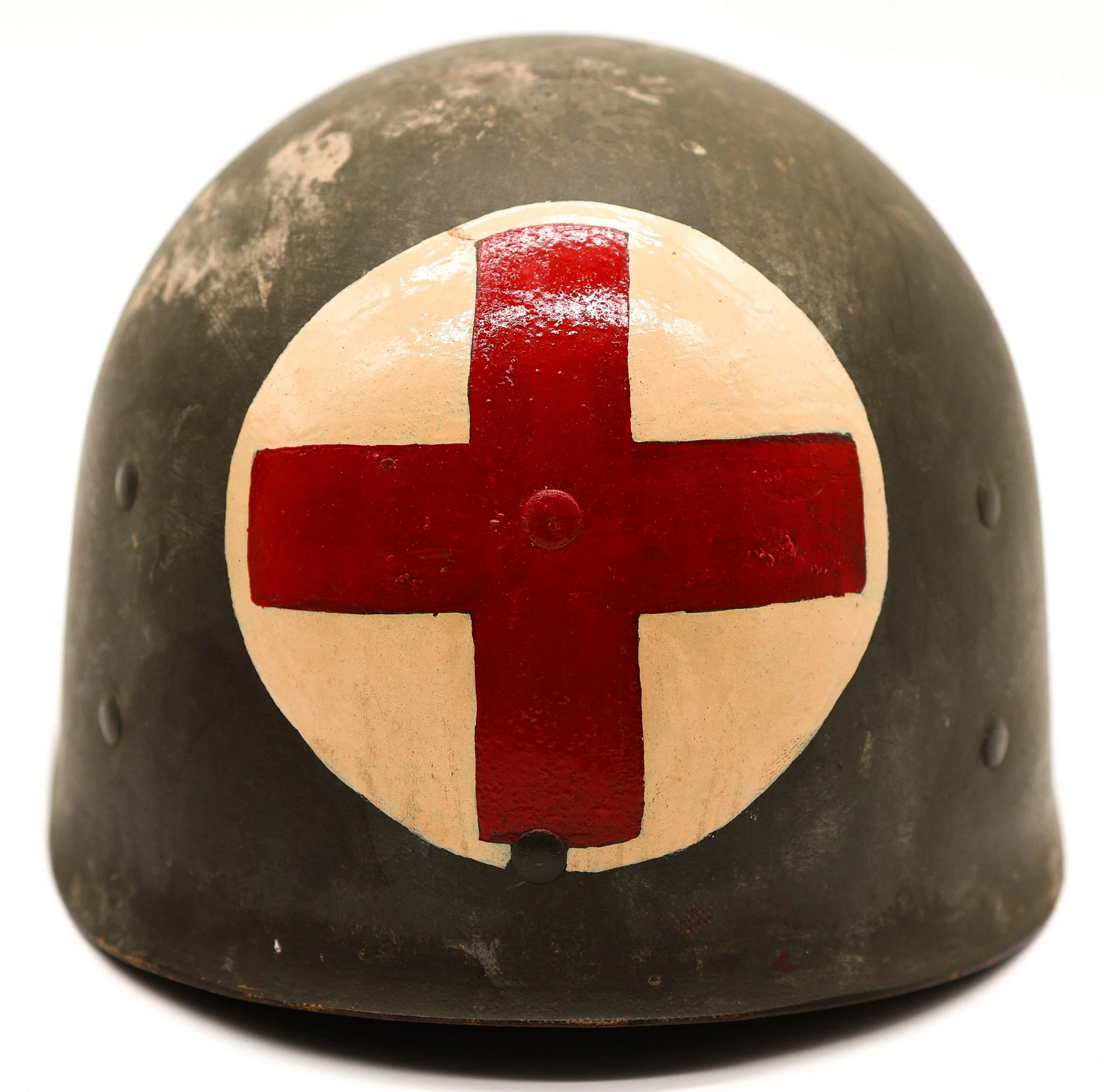
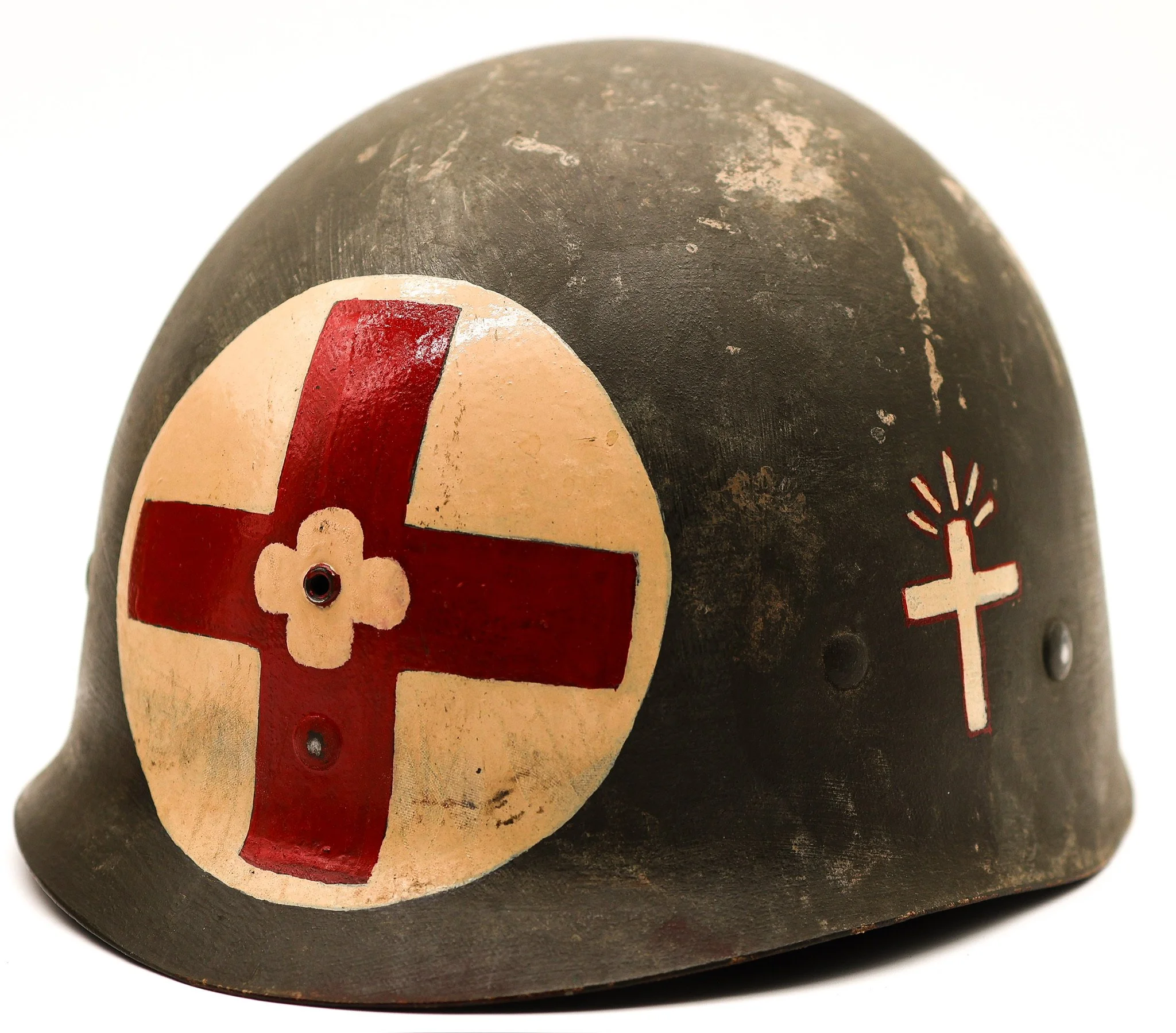
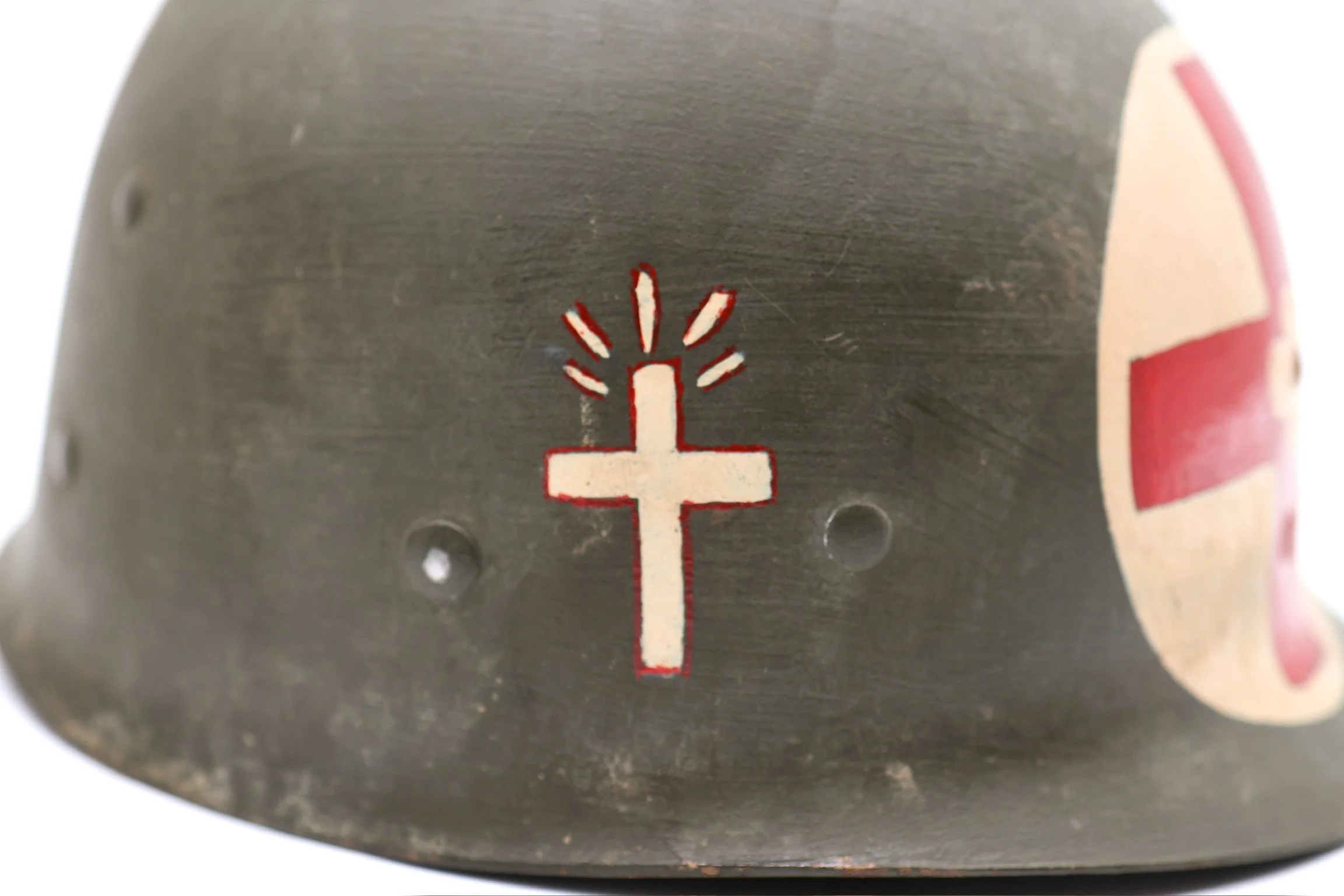
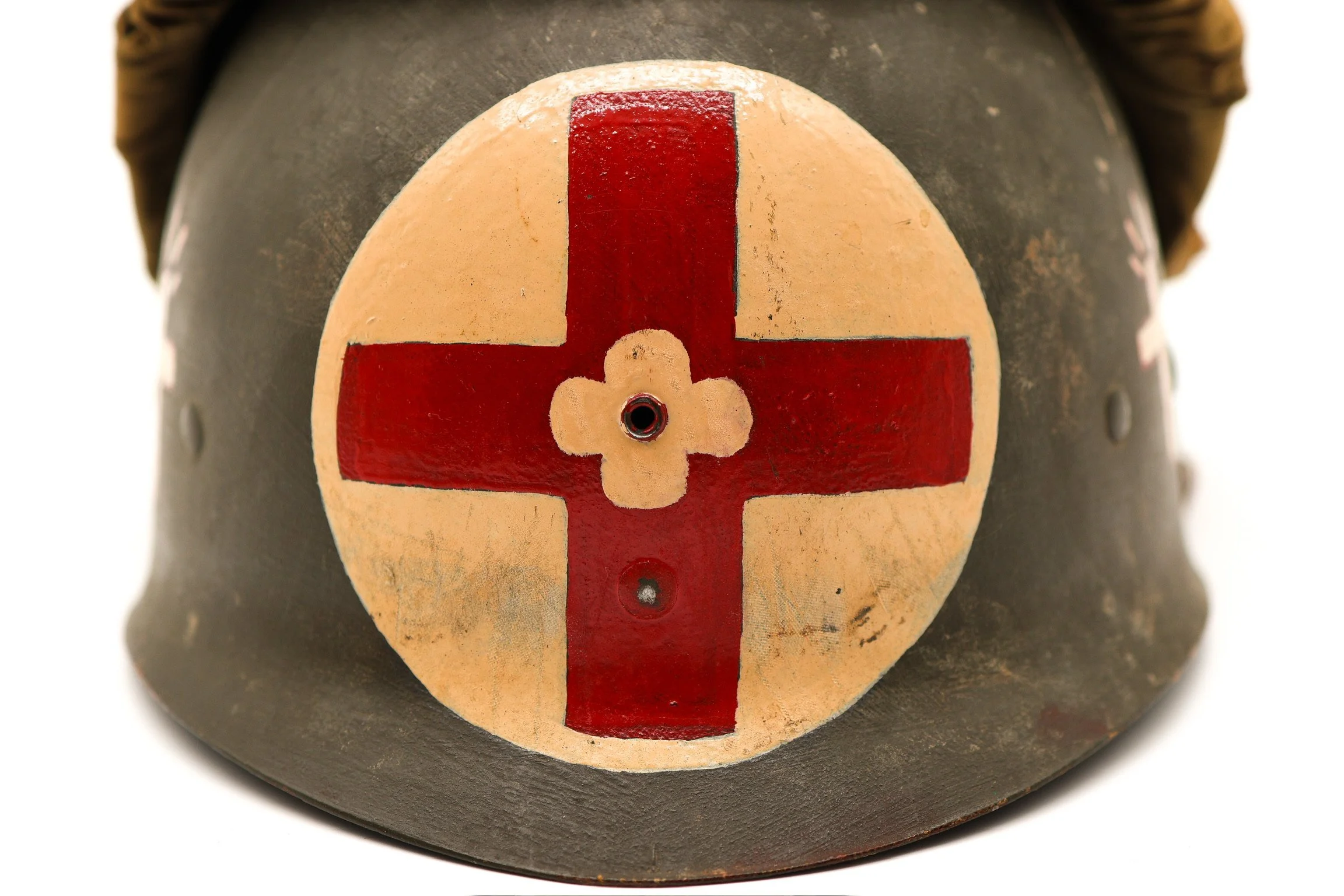
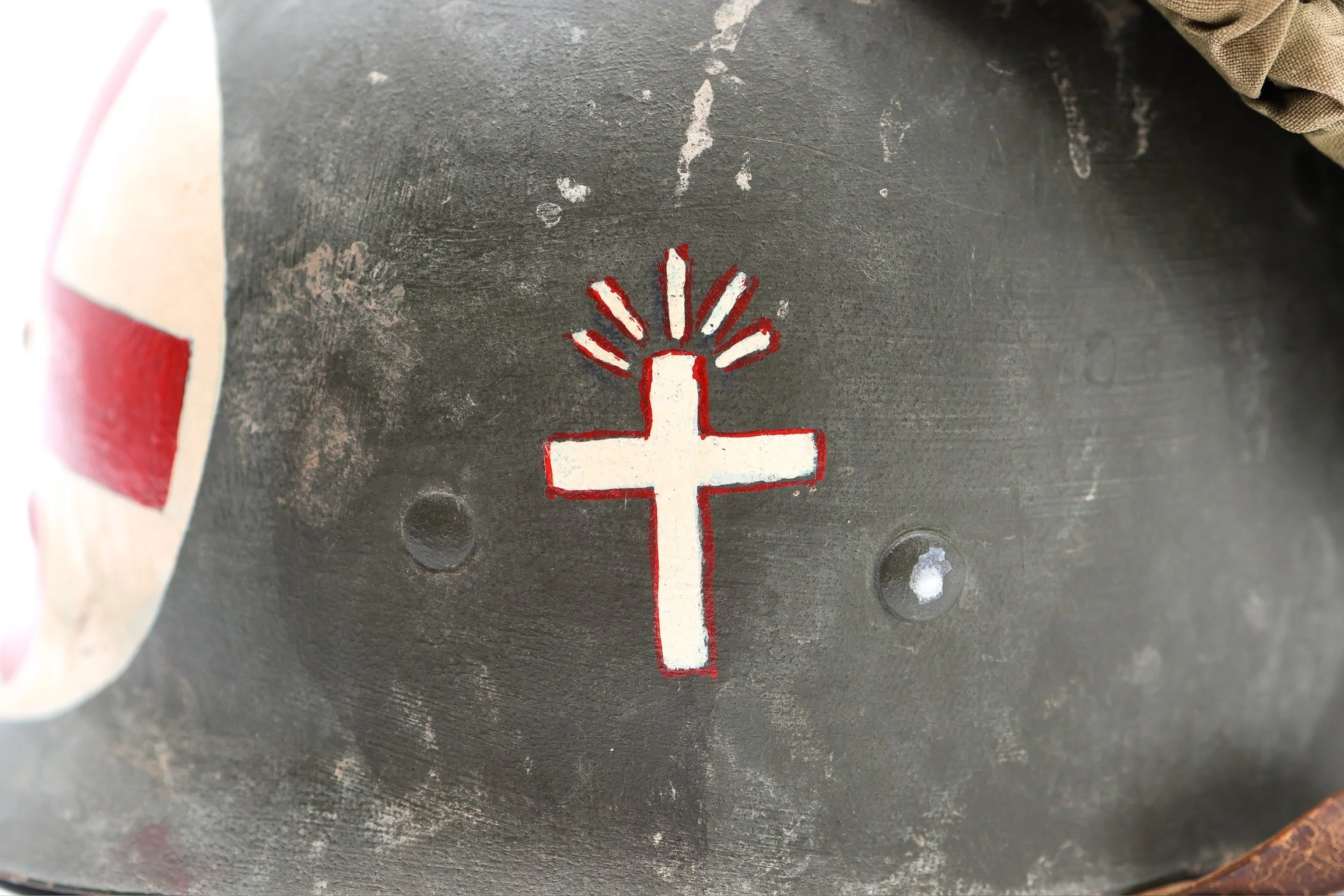
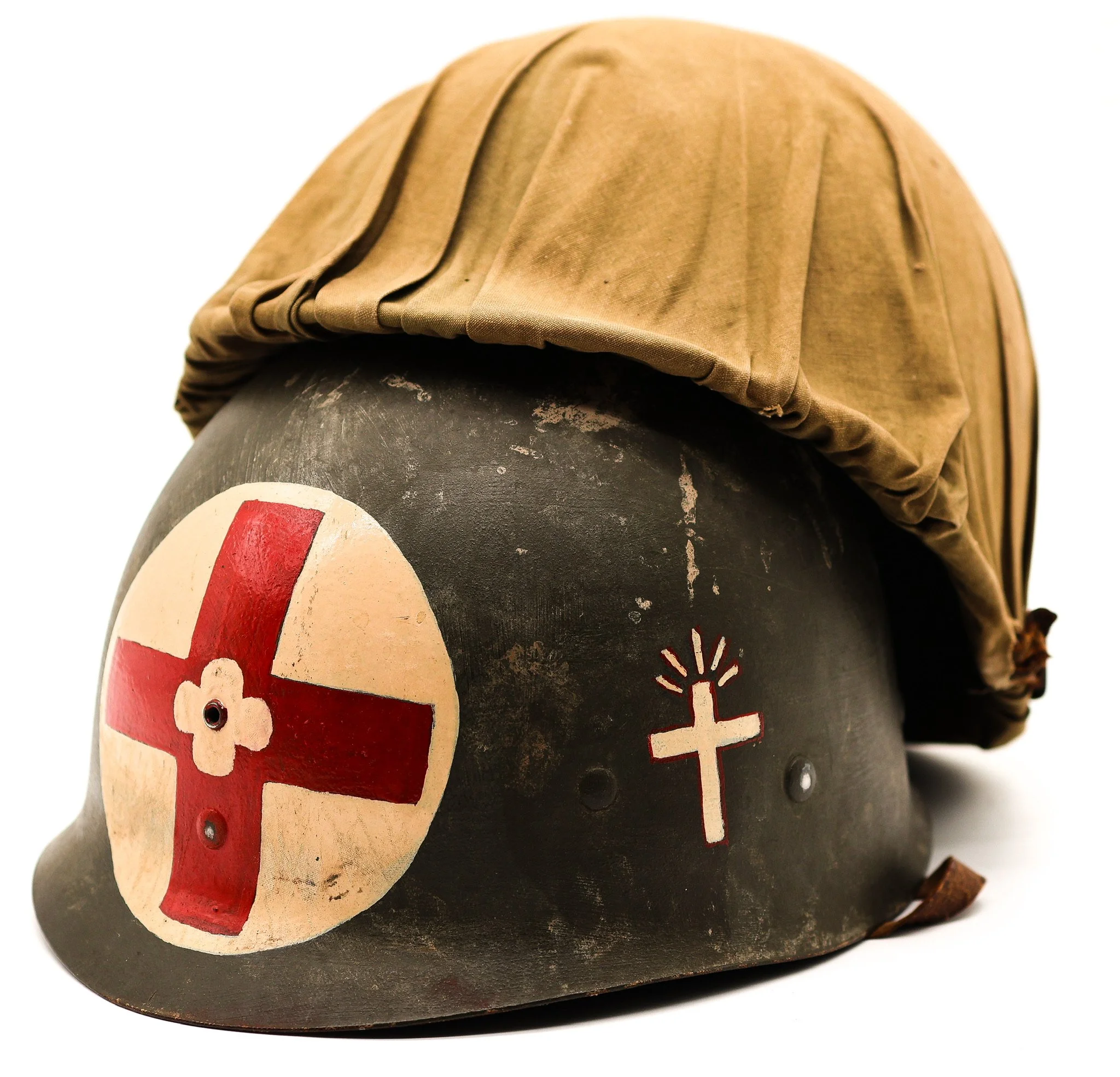
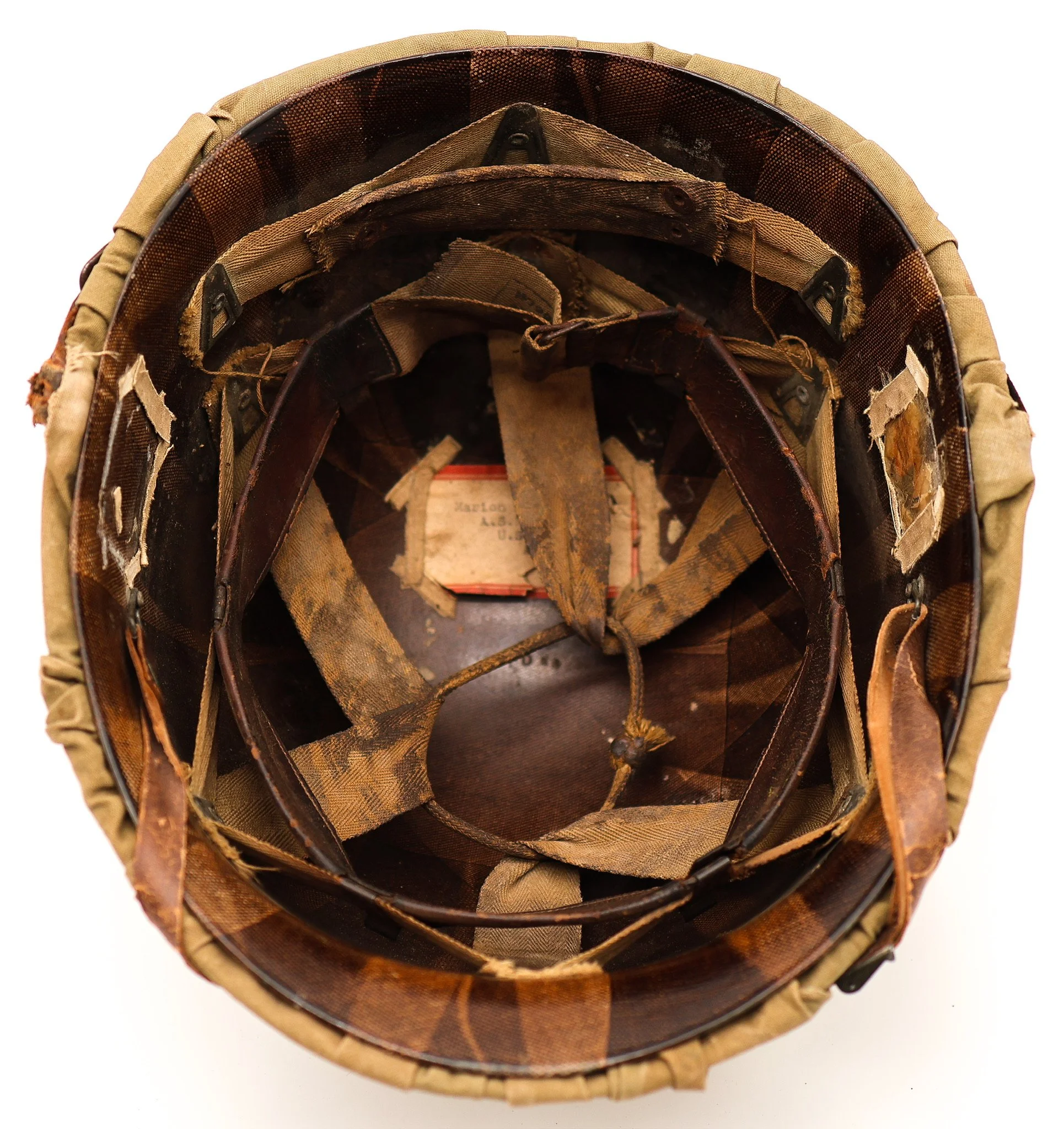
Medic Helmet ID’ed to Marion Kimbrough Jr., 88th Infantry Division
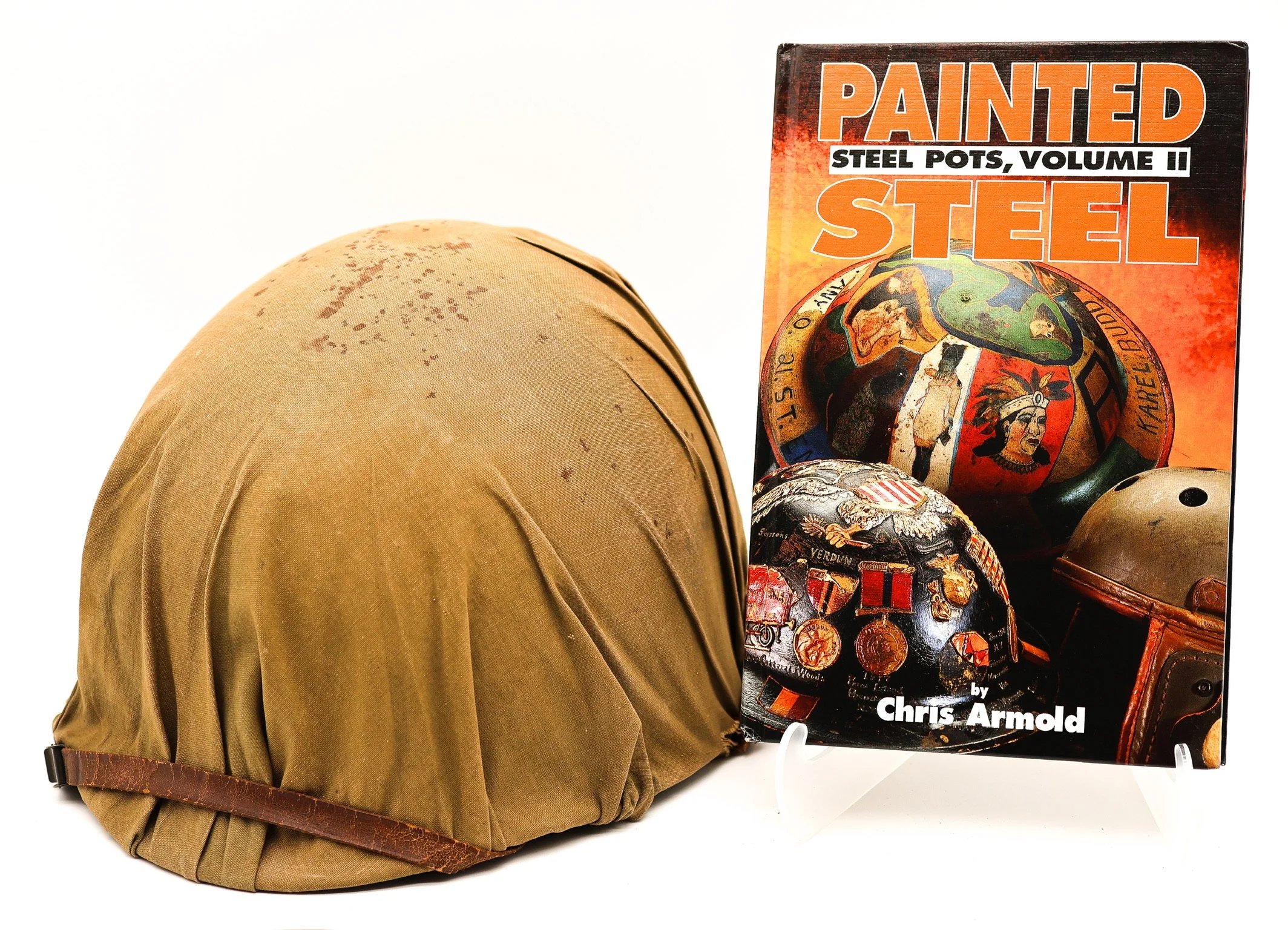
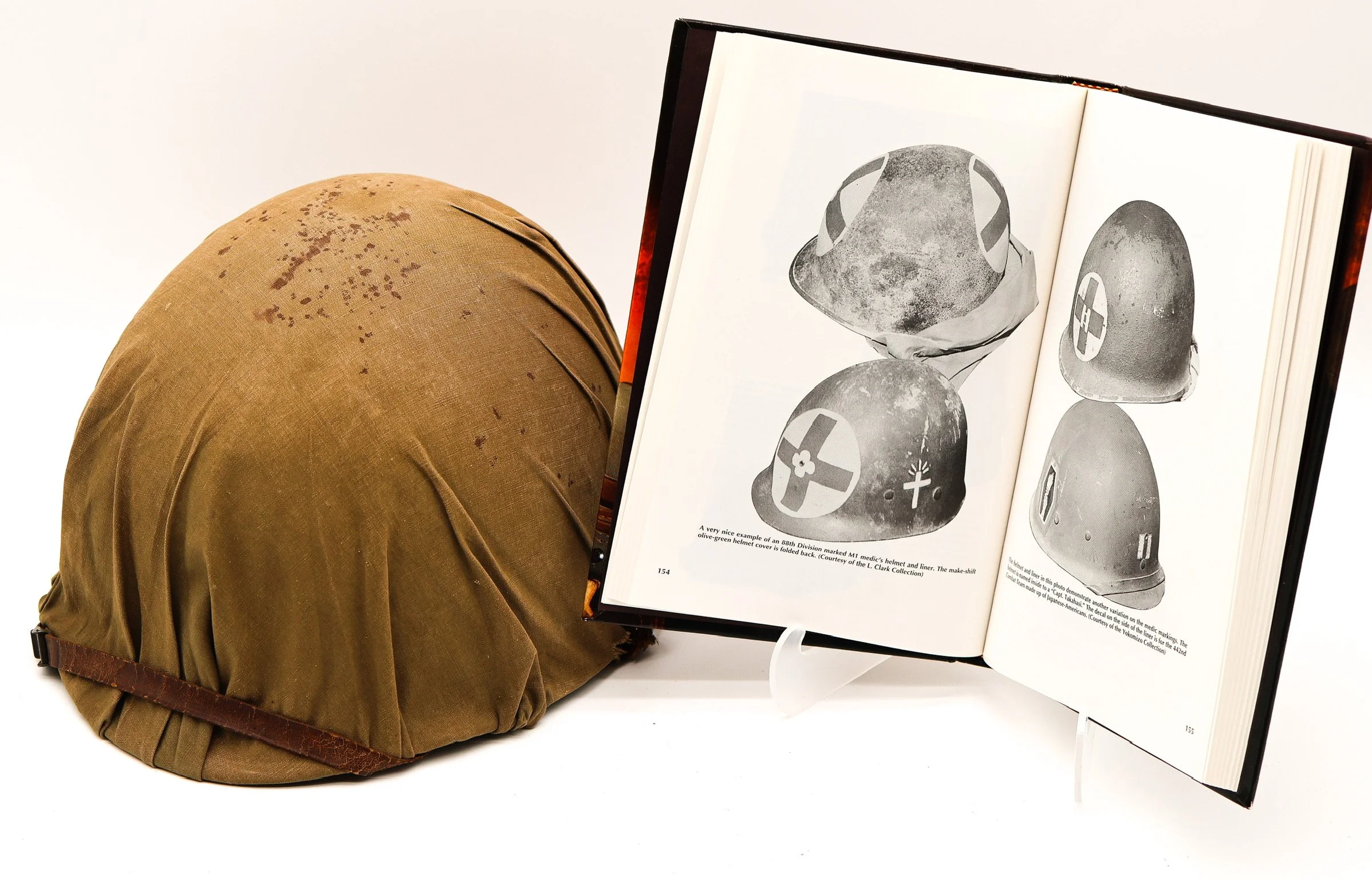
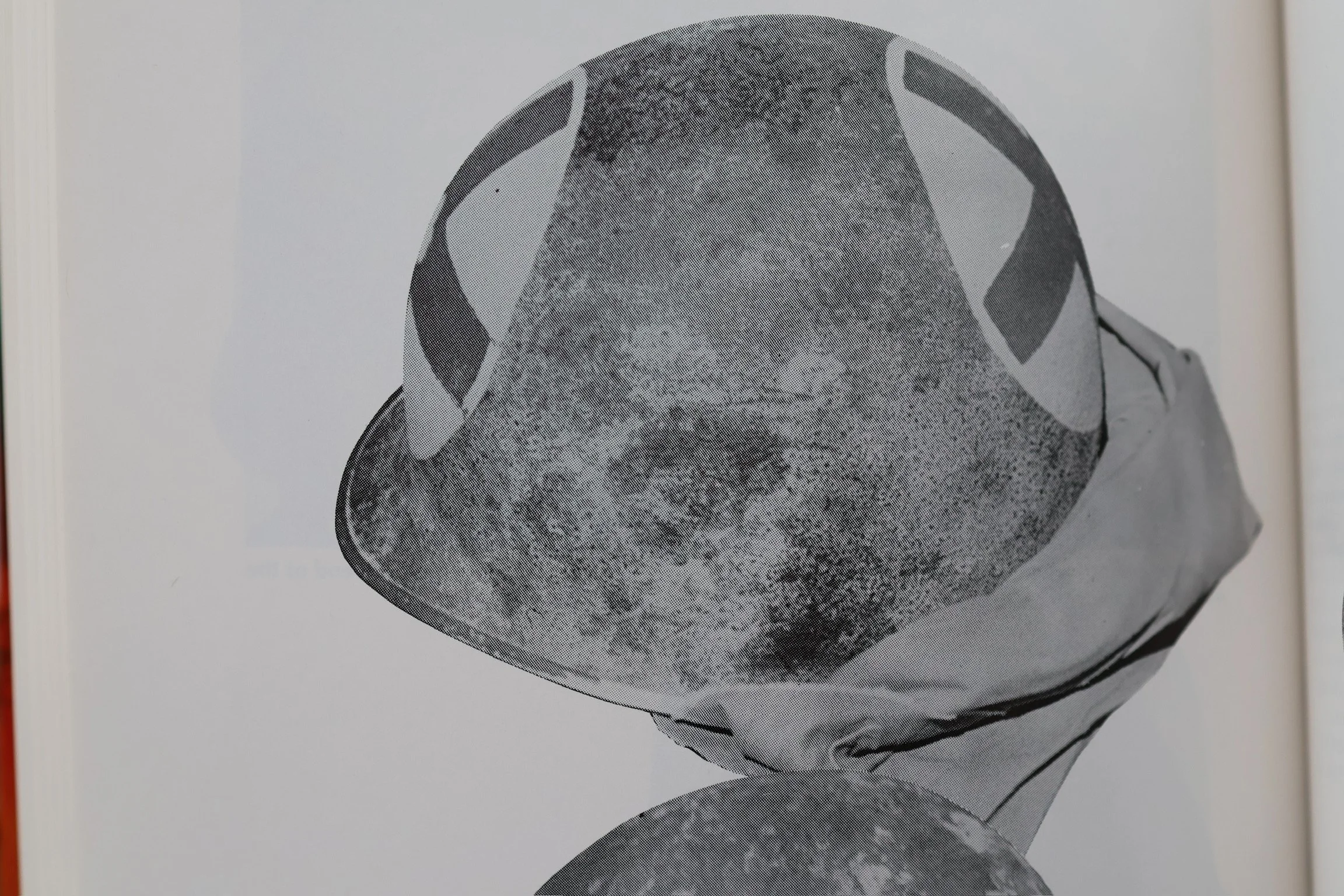
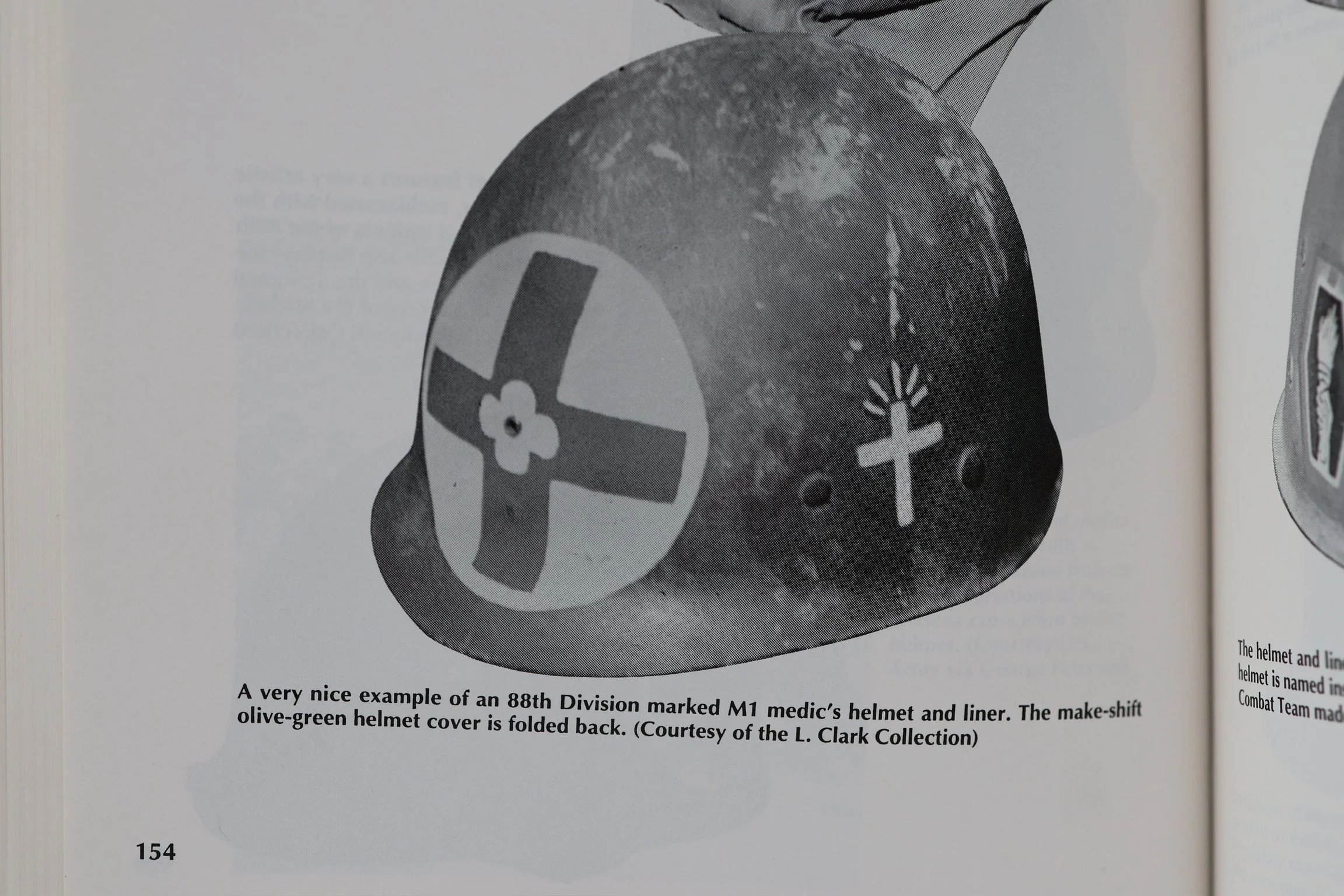
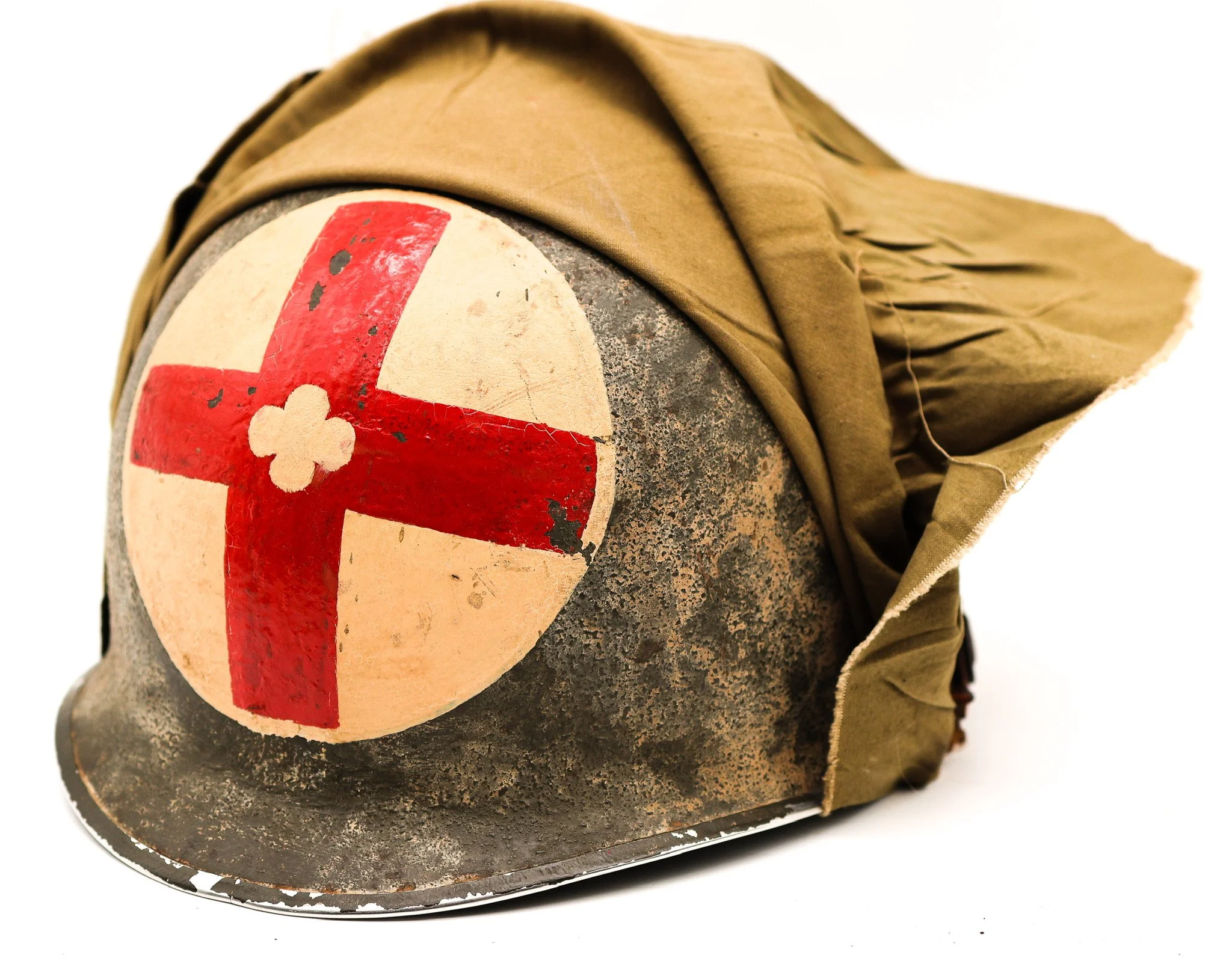
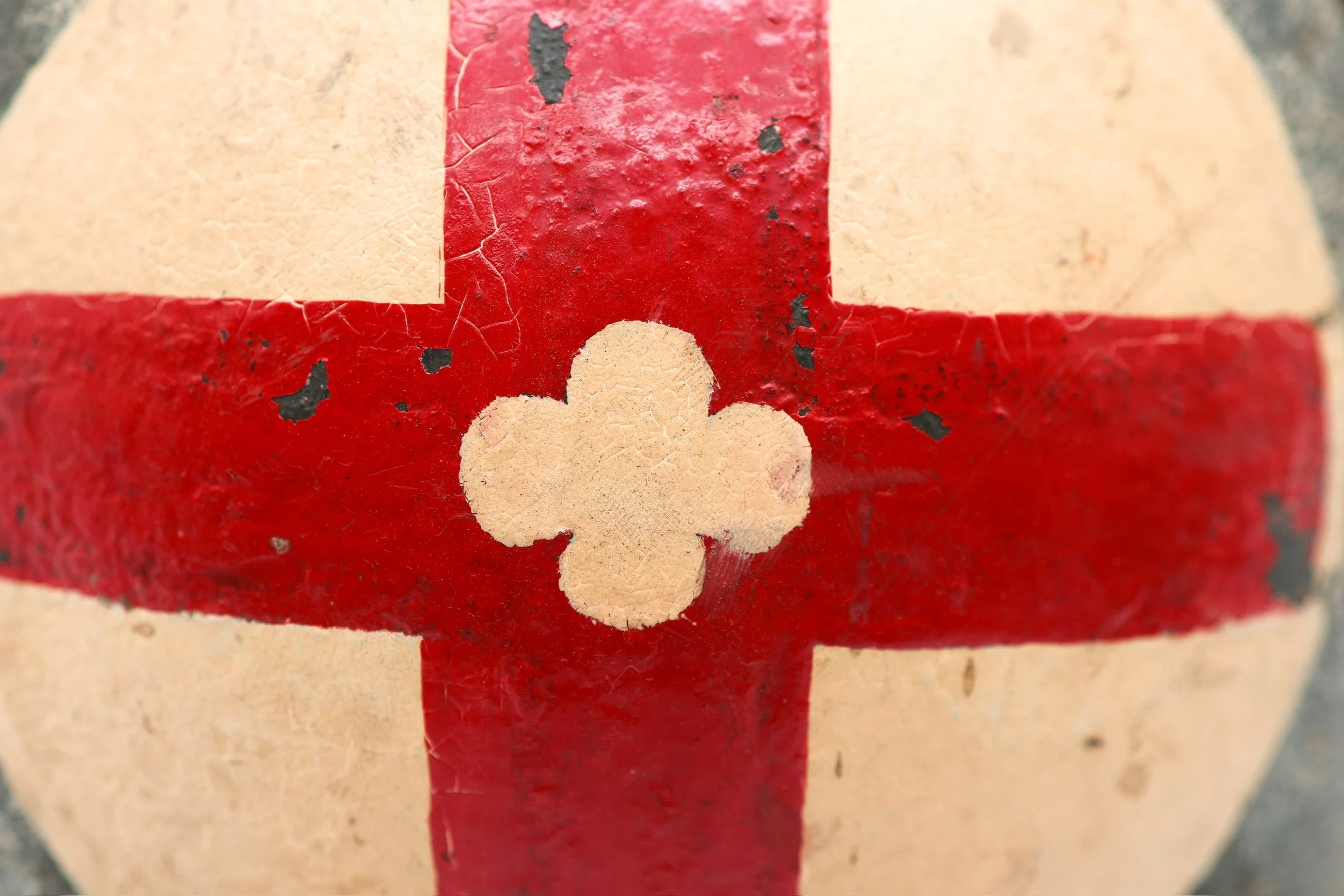
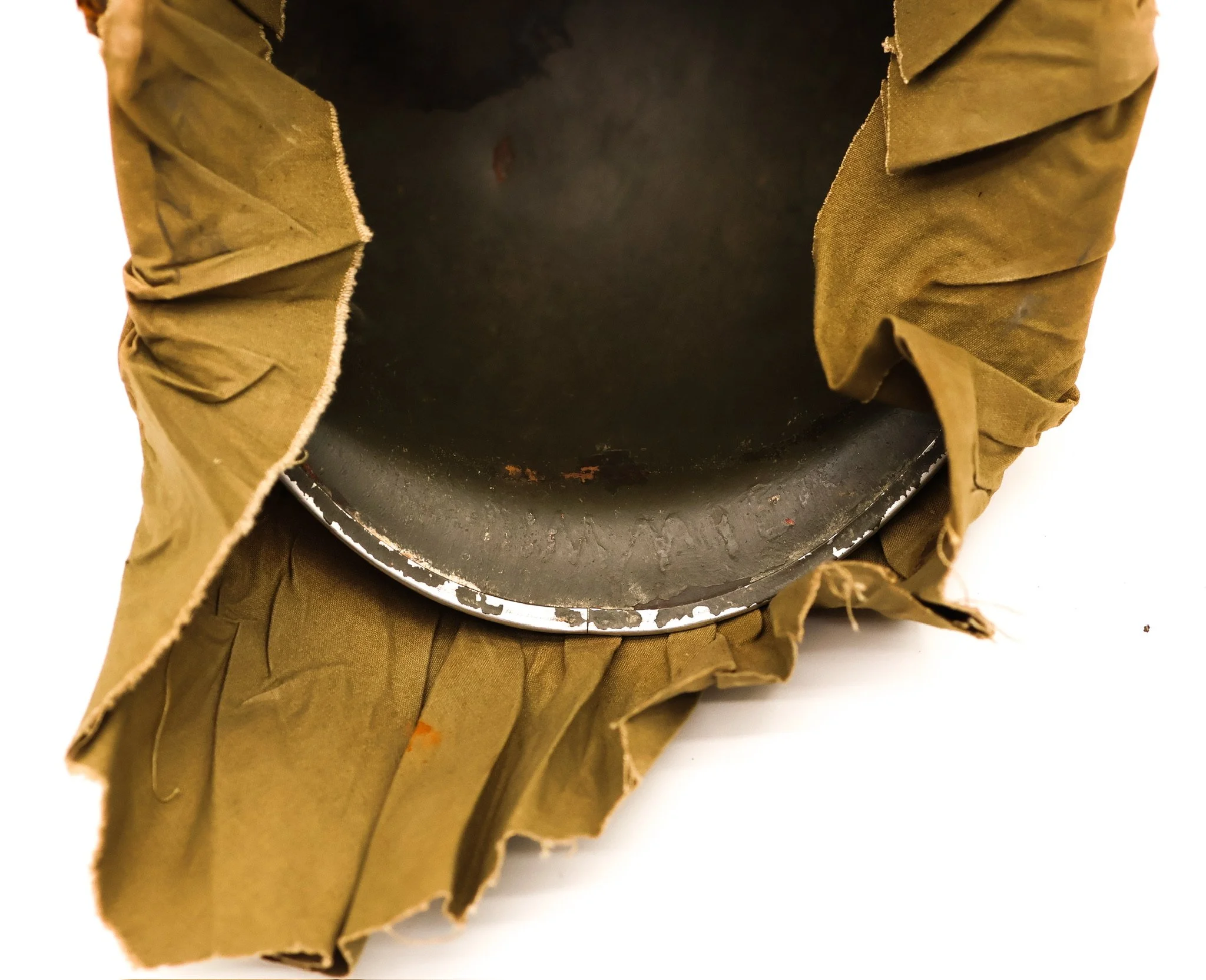
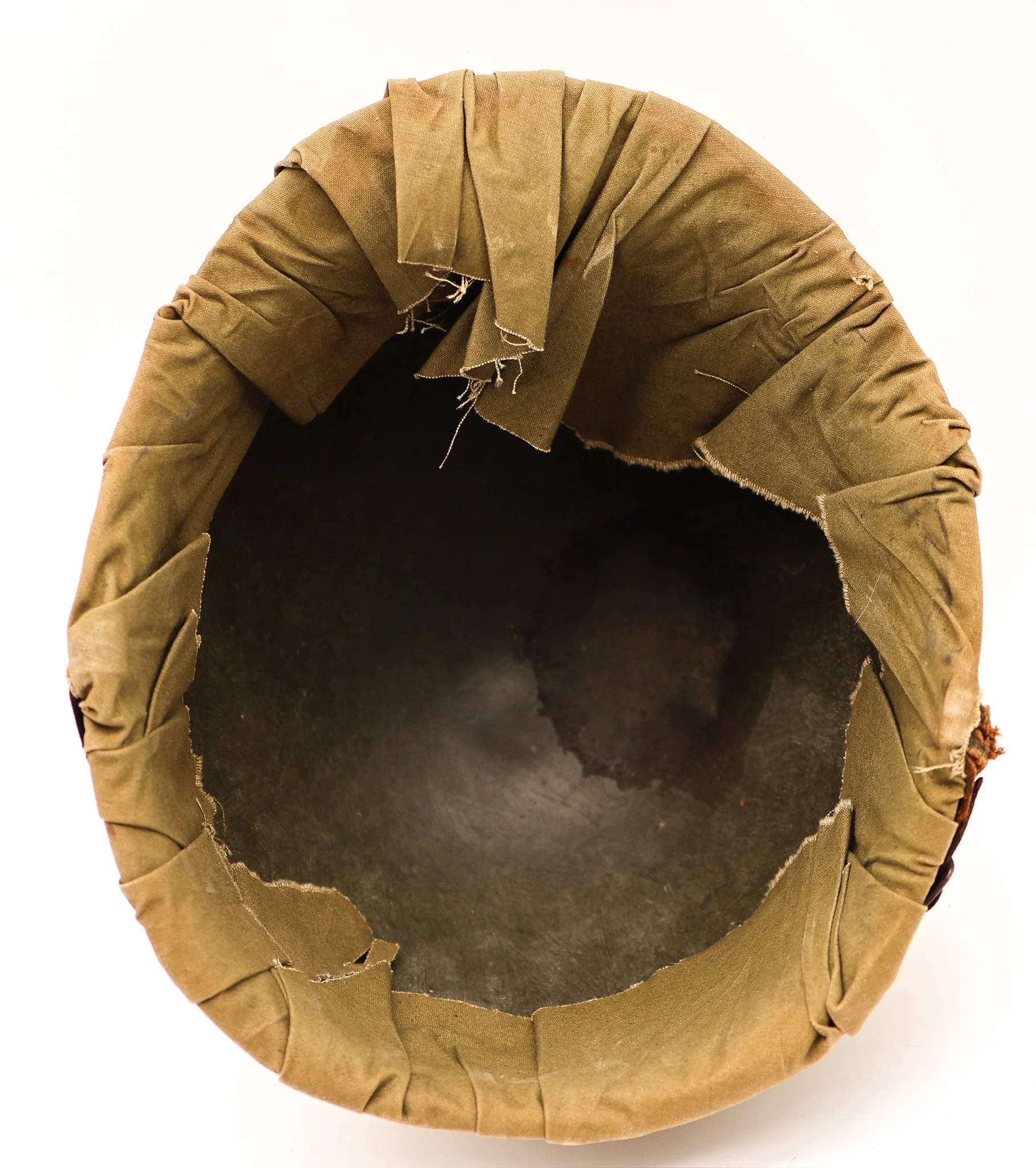
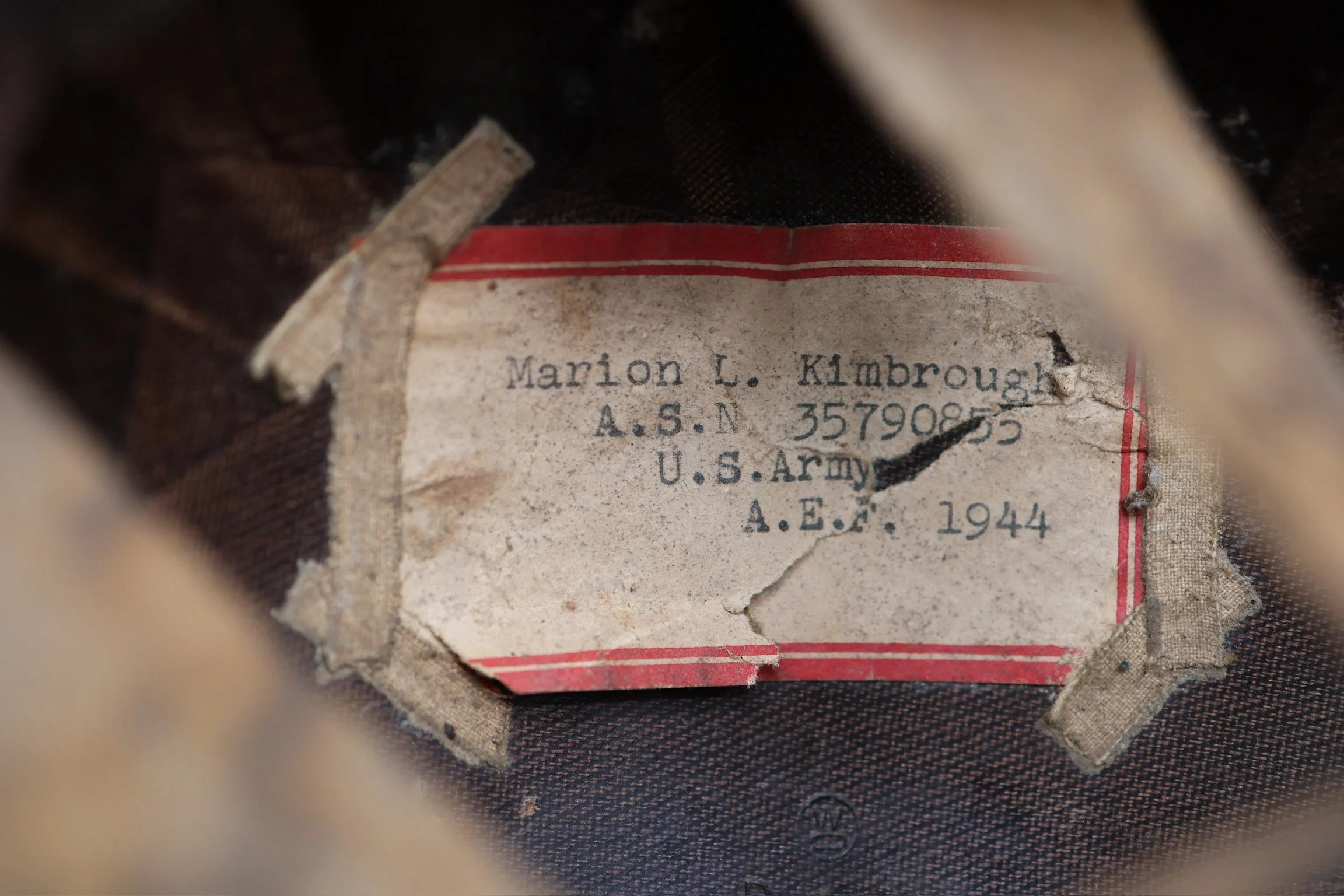
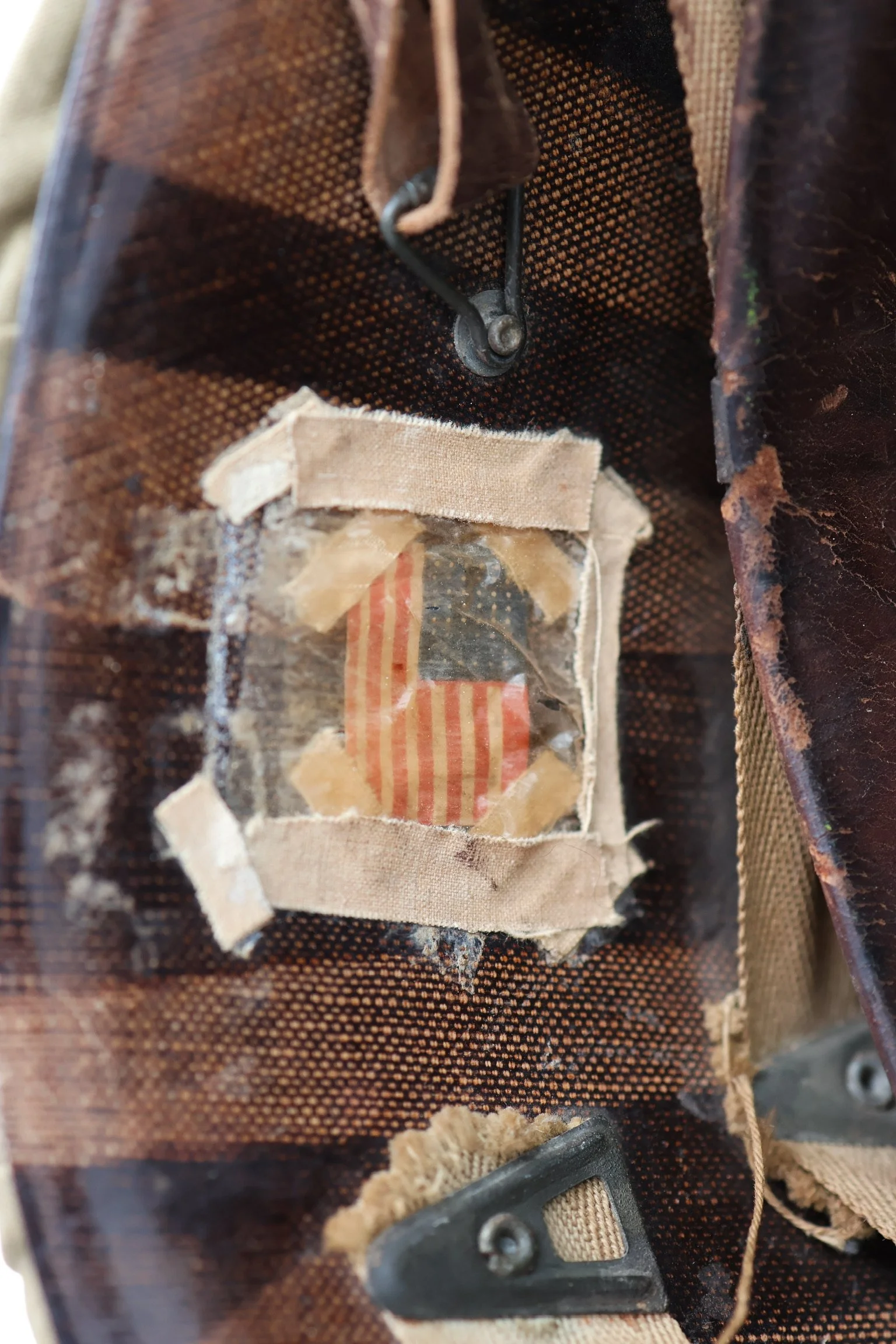
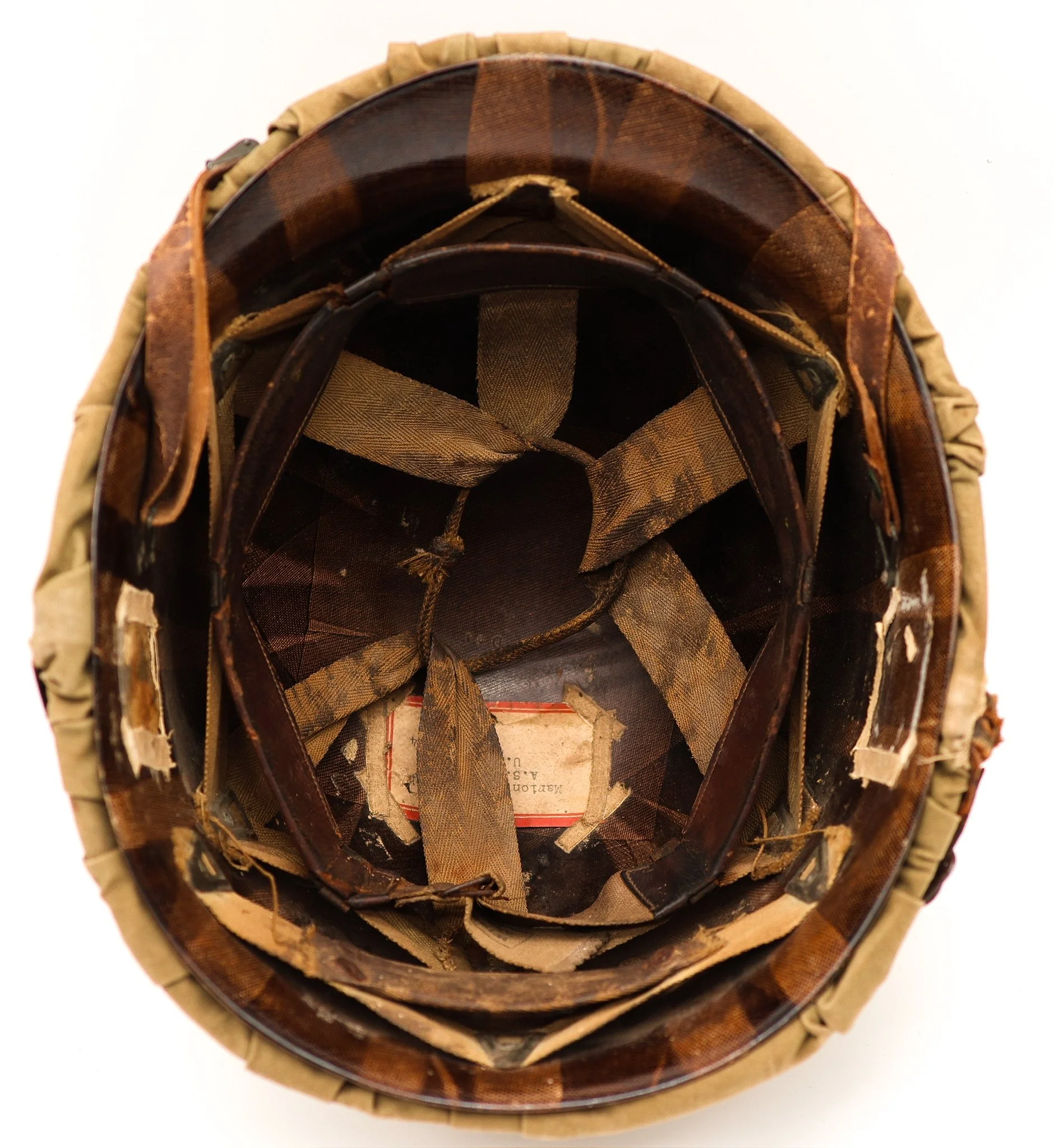
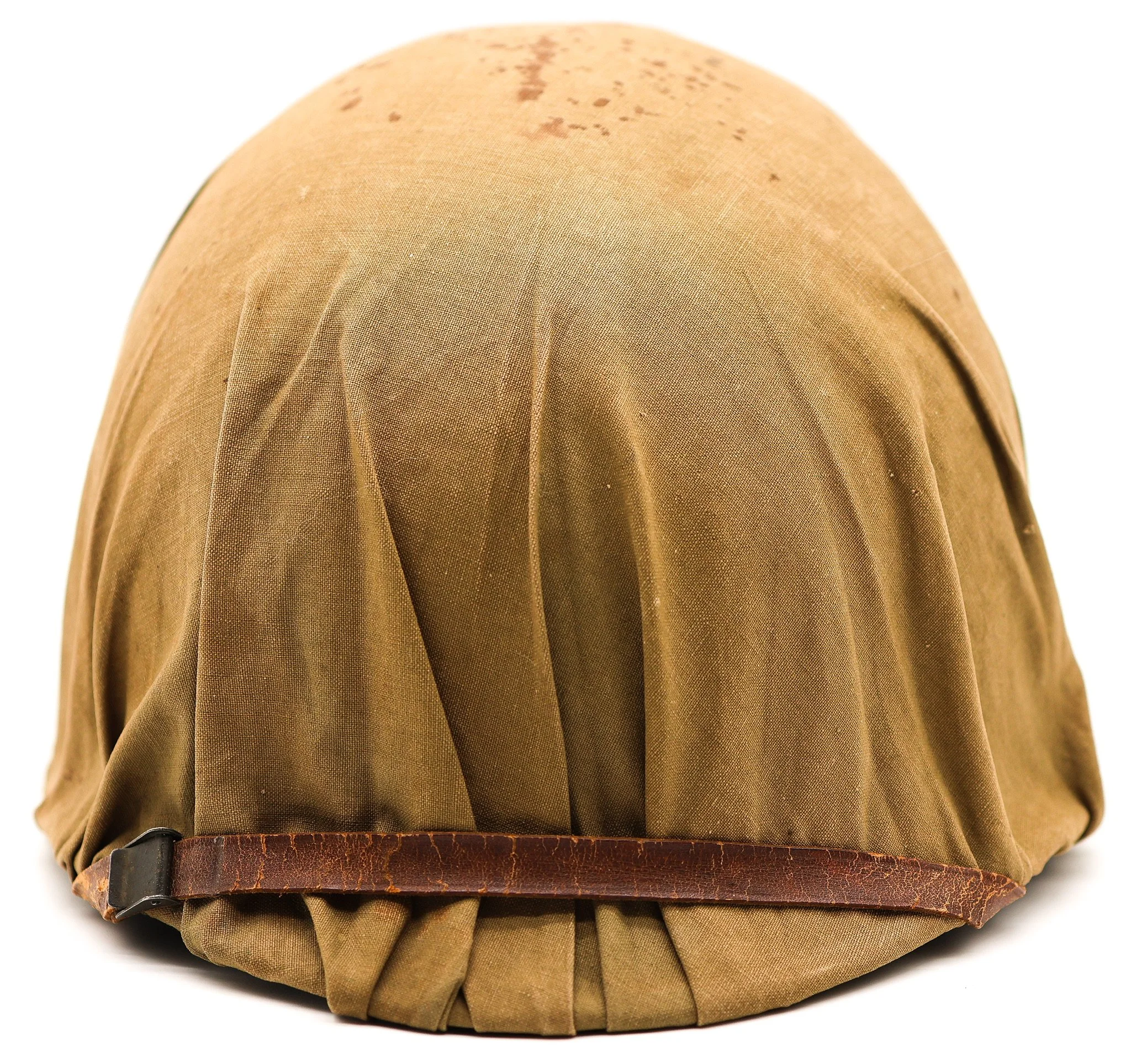
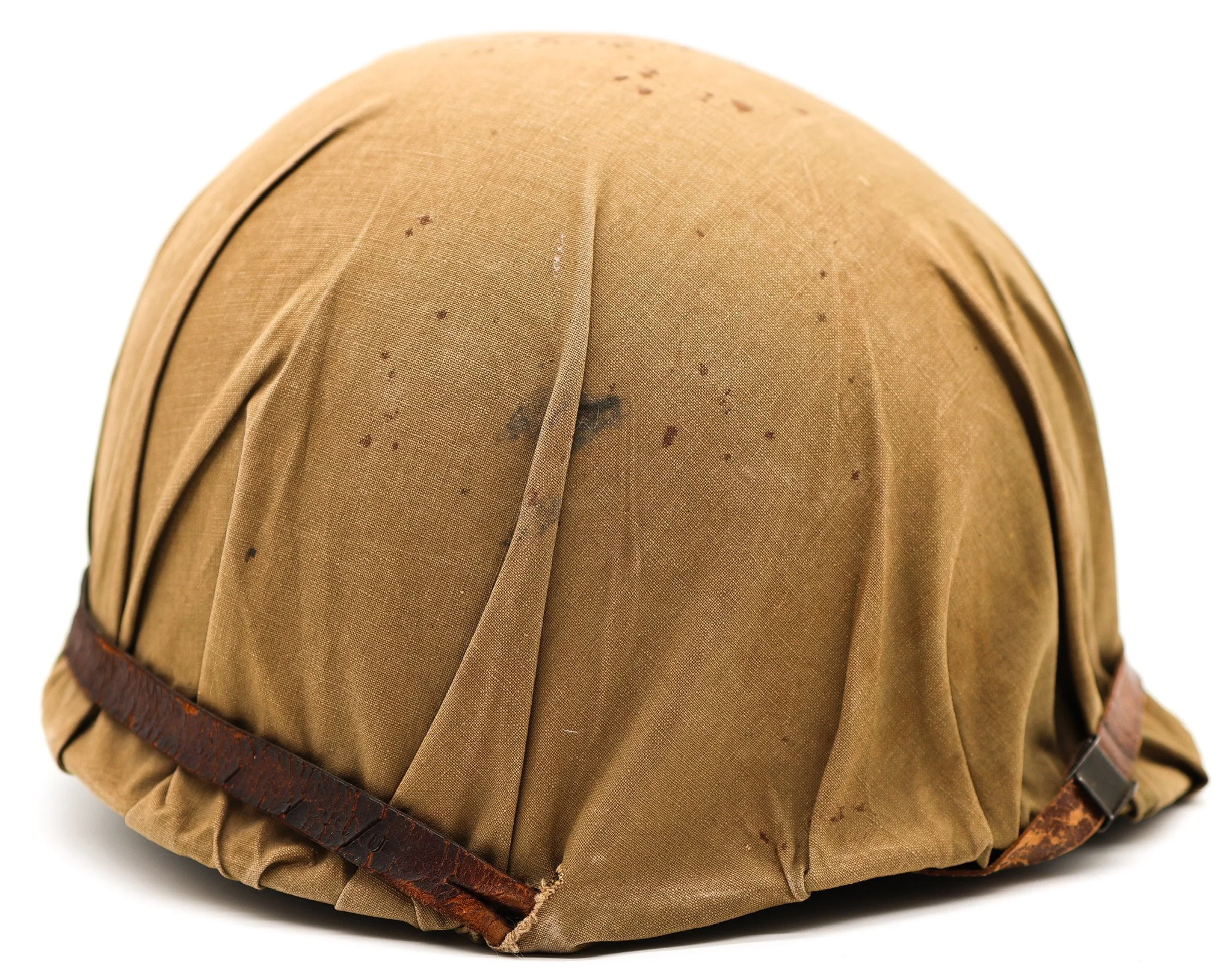
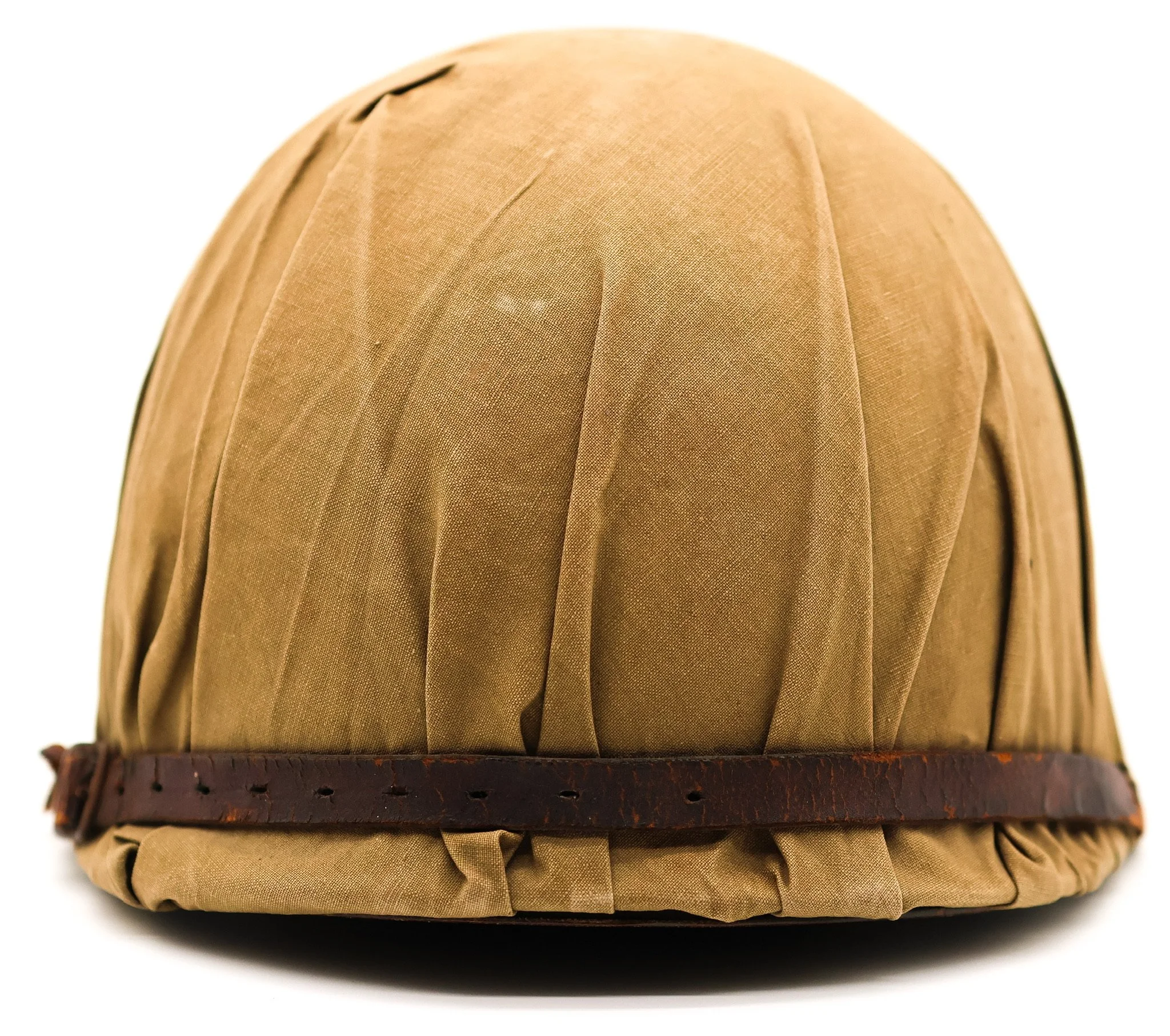
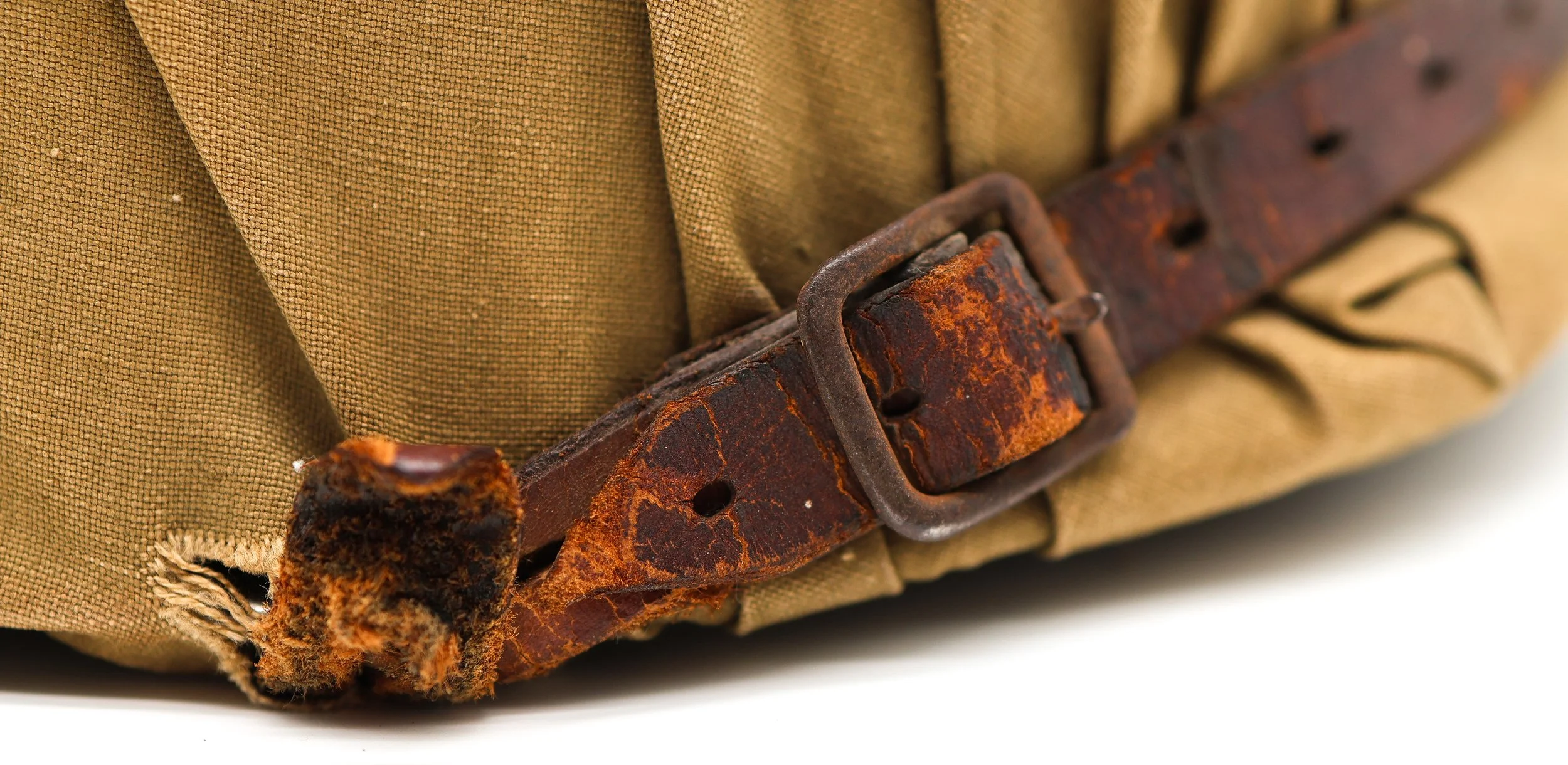
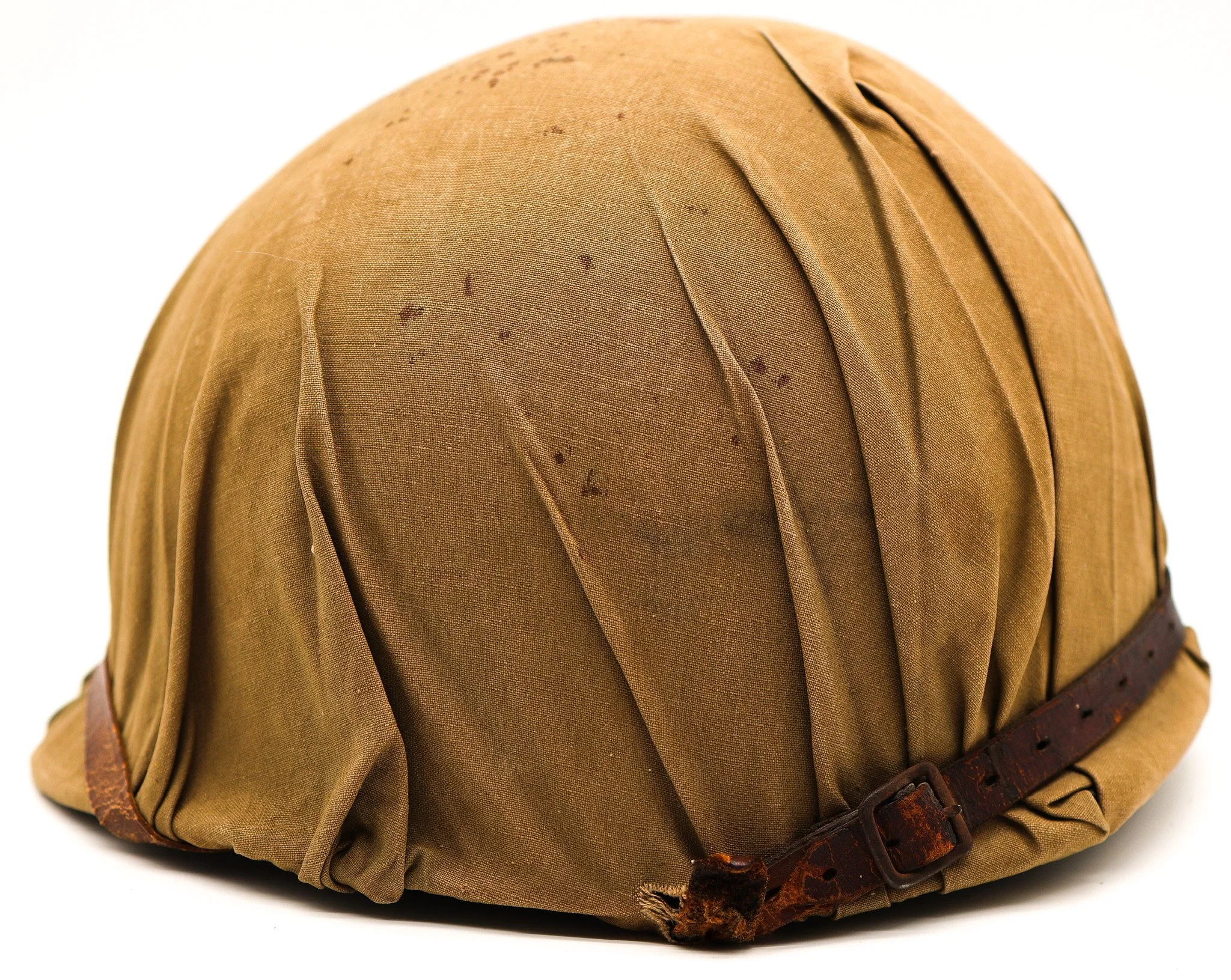
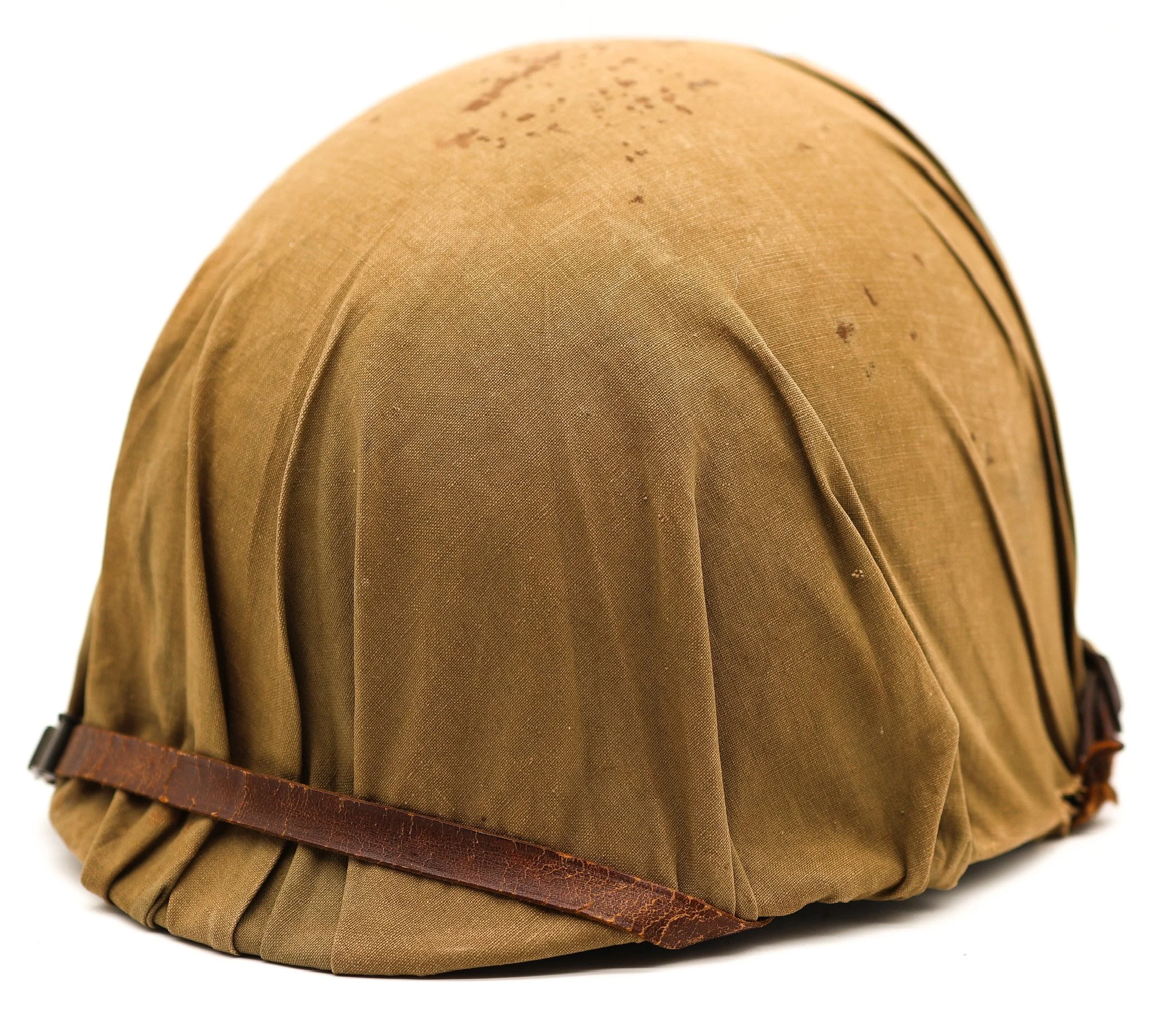
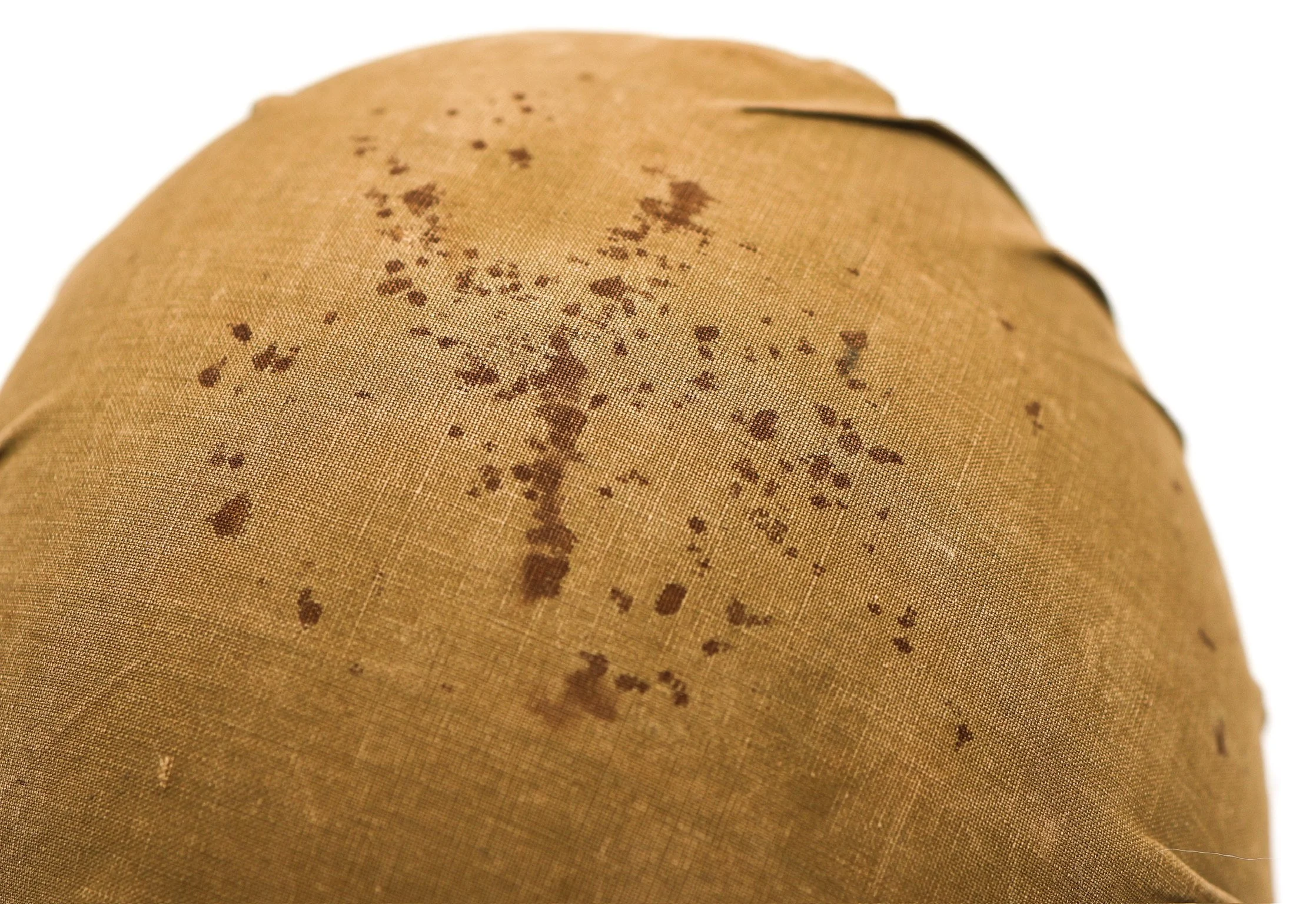
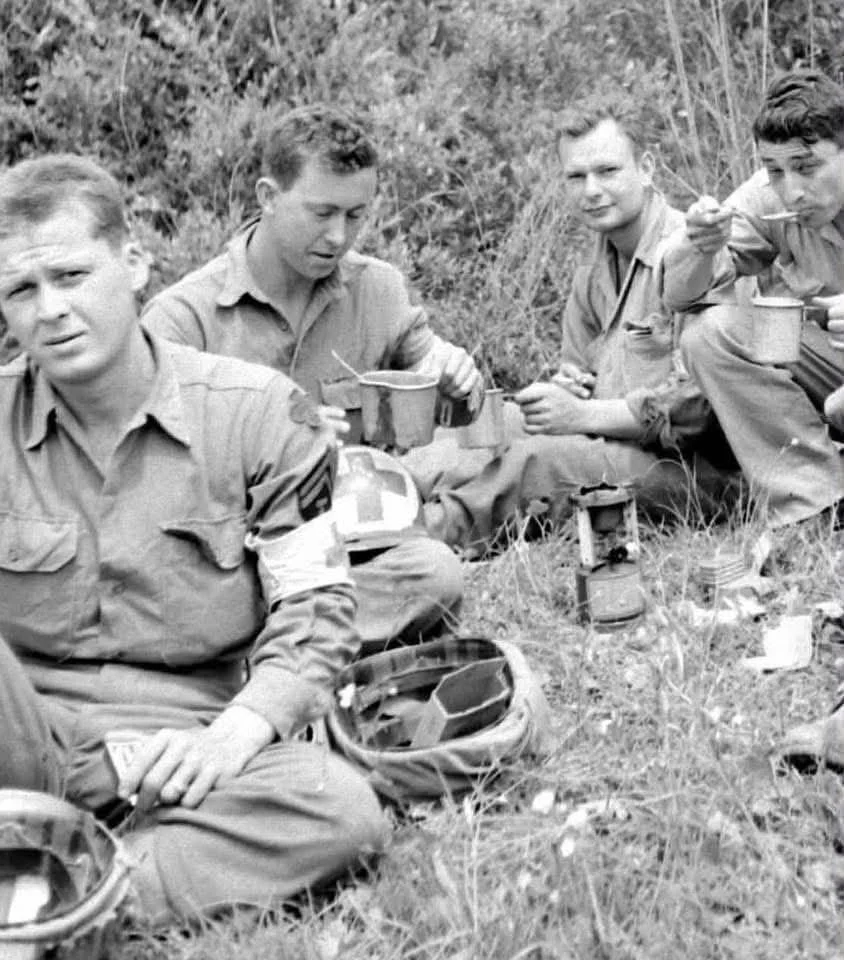
This painted U.S. M1 medic helmet and liner are identified to Marion L. Kimbrough Jr., ASN 35790855, who served with the Medical Detachment of the 351st Infantry Regiment, 88th Infantry Division during World War II. Both the steel shell and liner bear large painted medic markings, with 88th Division emblems incorporated into the liner’s medical paint scheme. The helmet also retains a field-made olive-drab canvas cover, a feature seen in period photographs of some 88th Infantry Division soldiers in Italy.
Kimbrough was born on April 30, 1924, in Cincinnati, Ohio, and entered the Army on March 3, 1943. Morning reports place him with the Medical Detachment of the 351st Infantry Regiment in the Mediterranean Theater, including records from Aversa, Italy in April 1944 and the vicinity of Casalino, Italy in October 1944. The 351st Infantry Regiment served with the 88th Infantry Division during the Italian Campaign, where the division fought through Rome-Arno, the North Apennines, and the Po Valley.
-
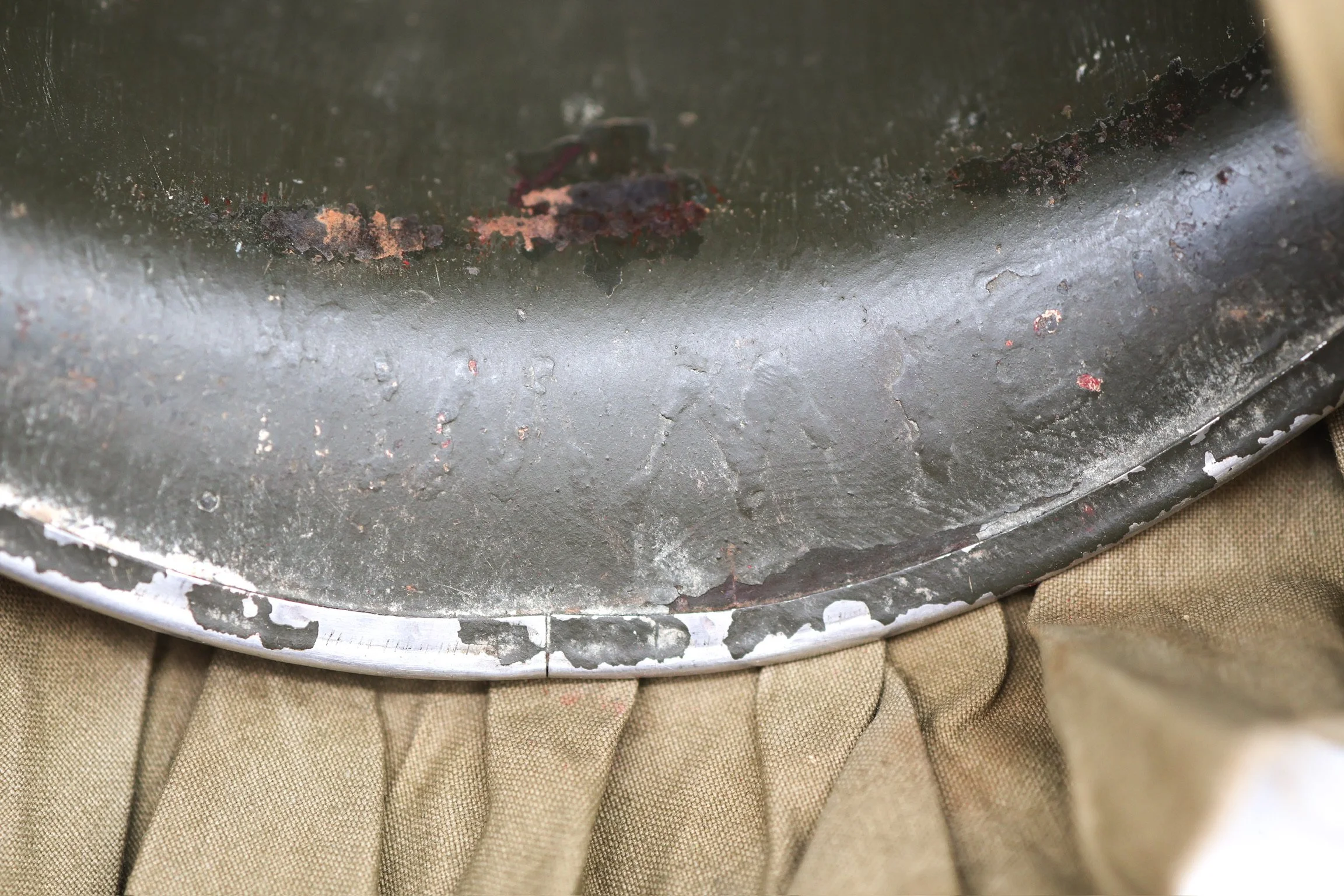
Medical records show that Kimbrough was hospitalized in late 1944 for disease, including a thigh ulceration and later infectious hepatitis. Morning reports show him being transferred through medical facilities in late 1944, which may explain how the helmet survived with him away from front-line service. The helmet remains identified by a tag inside the liner with Kimbrough’s name and service number.
This exact helmet was published in Painted Steel Volume II, where it is shown as an 88th Division marked M1 medic helmet and liner with the makeshift olive-green helmet cover folded back. At the time of publication, it was credited to the L. Clark Collection.
The helmet was originally acquired directly from Marion Kimbrough by collector L. Clark, who knew Kimbrough personally through veteran reunions. It later passed through another collector before being acquired by the Artifacts of Valor collection.
After the war, Kimbrough lived in Monterey County, California, and served for many years in law enforcement, including with the Monterey Police Department. He passed away on January 14, 1997.
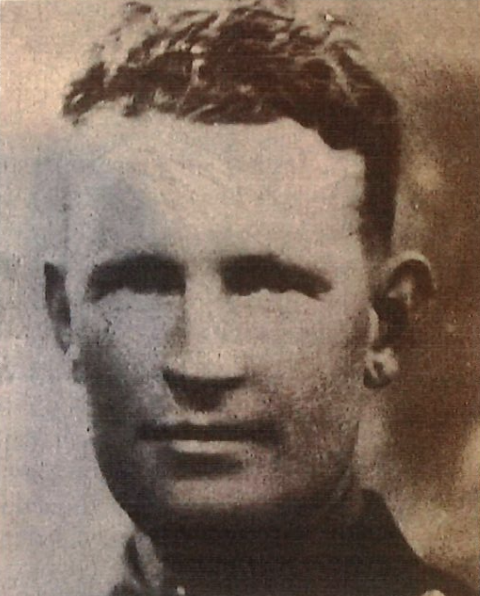
M1 Helmet Identified to T/Sgt. Parley C. Plaster, 29th Infantry Division, KIA
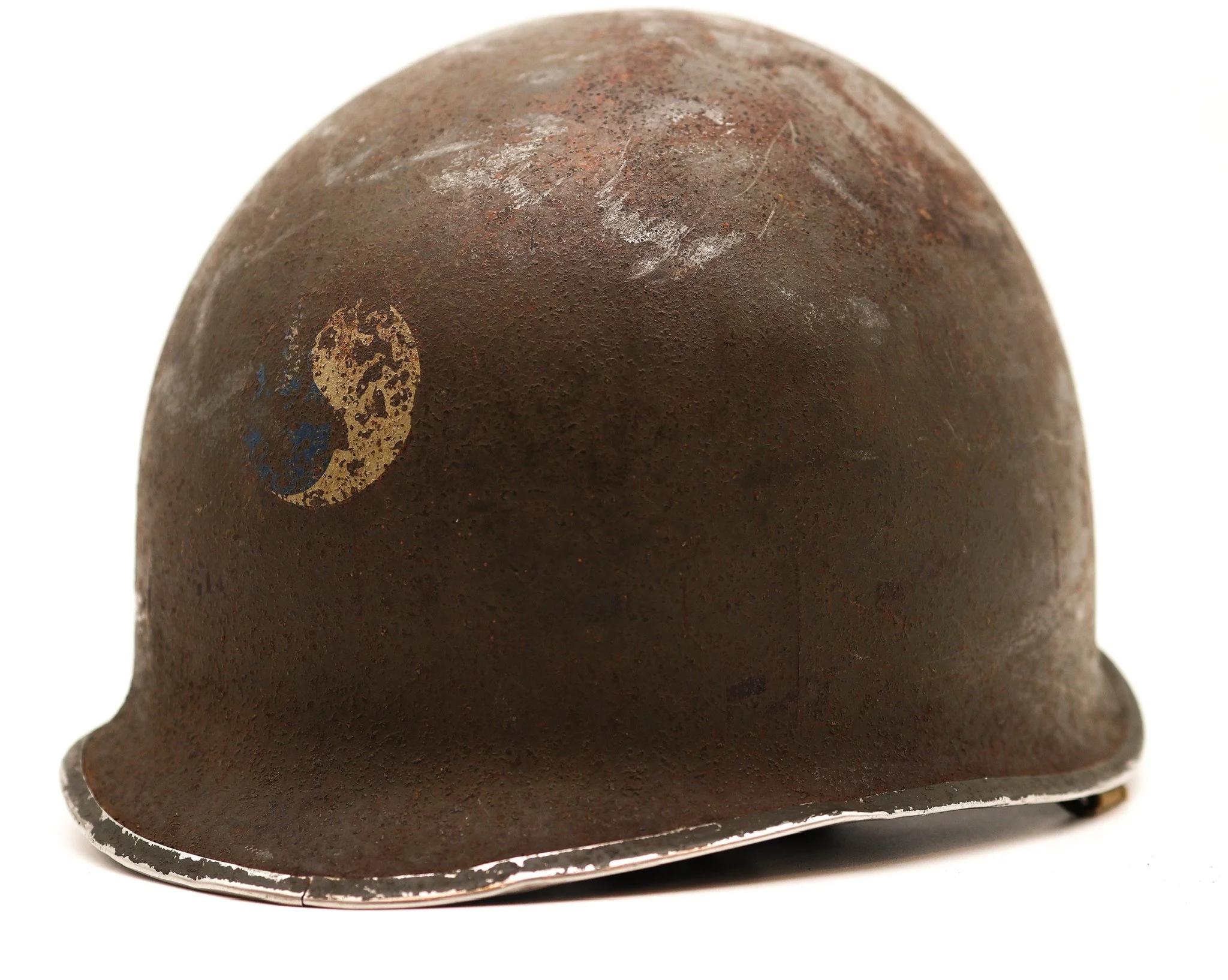
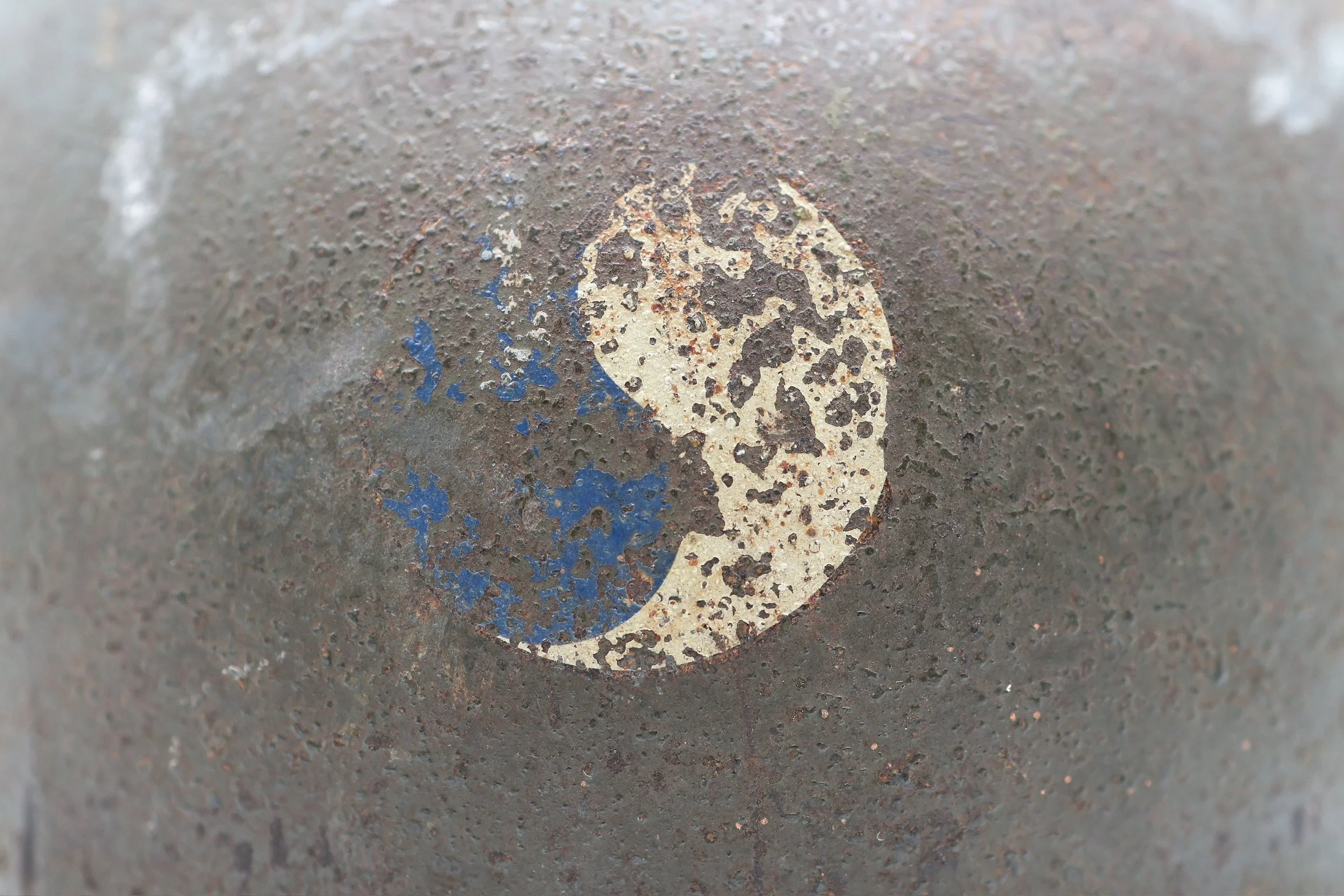
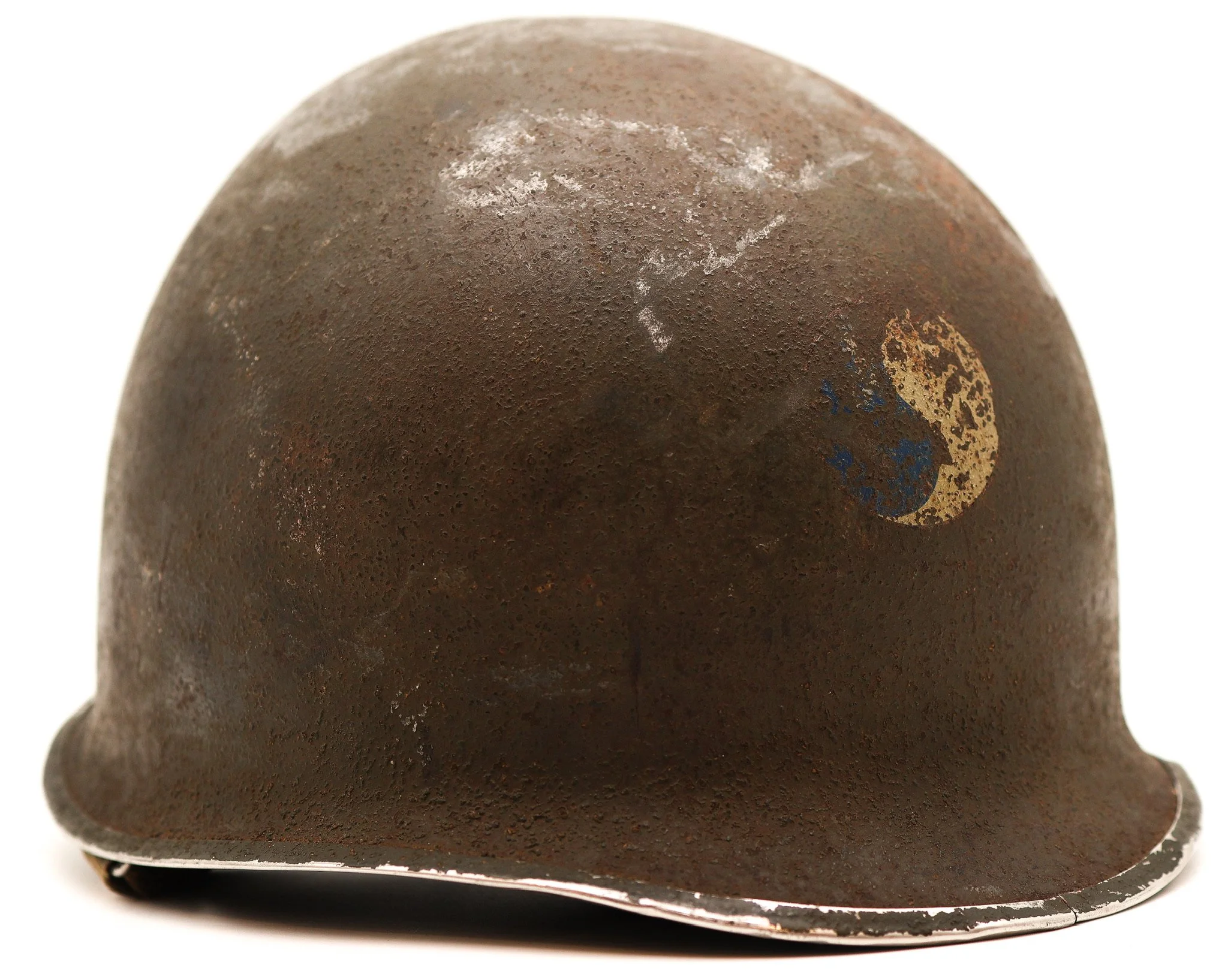
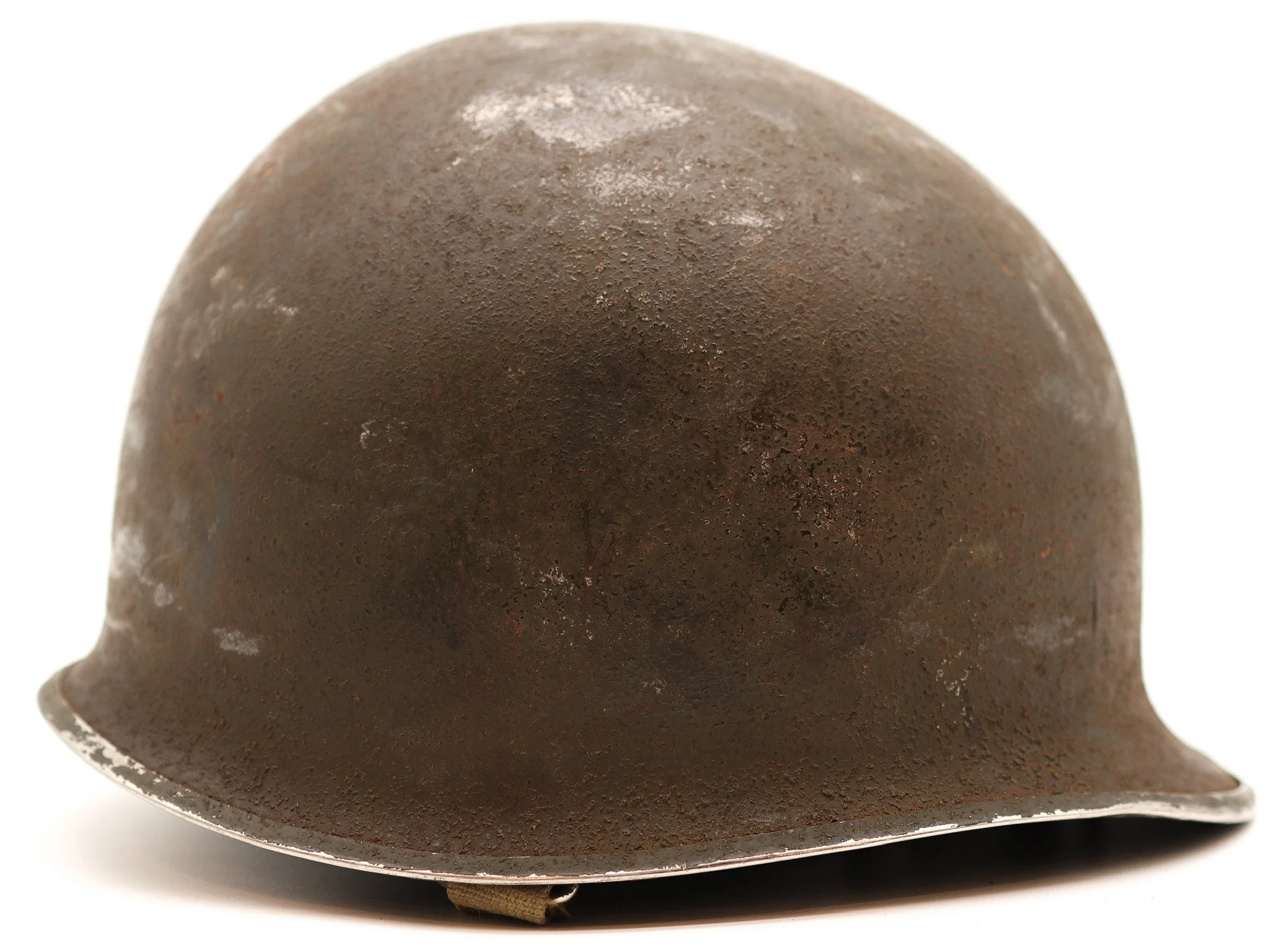
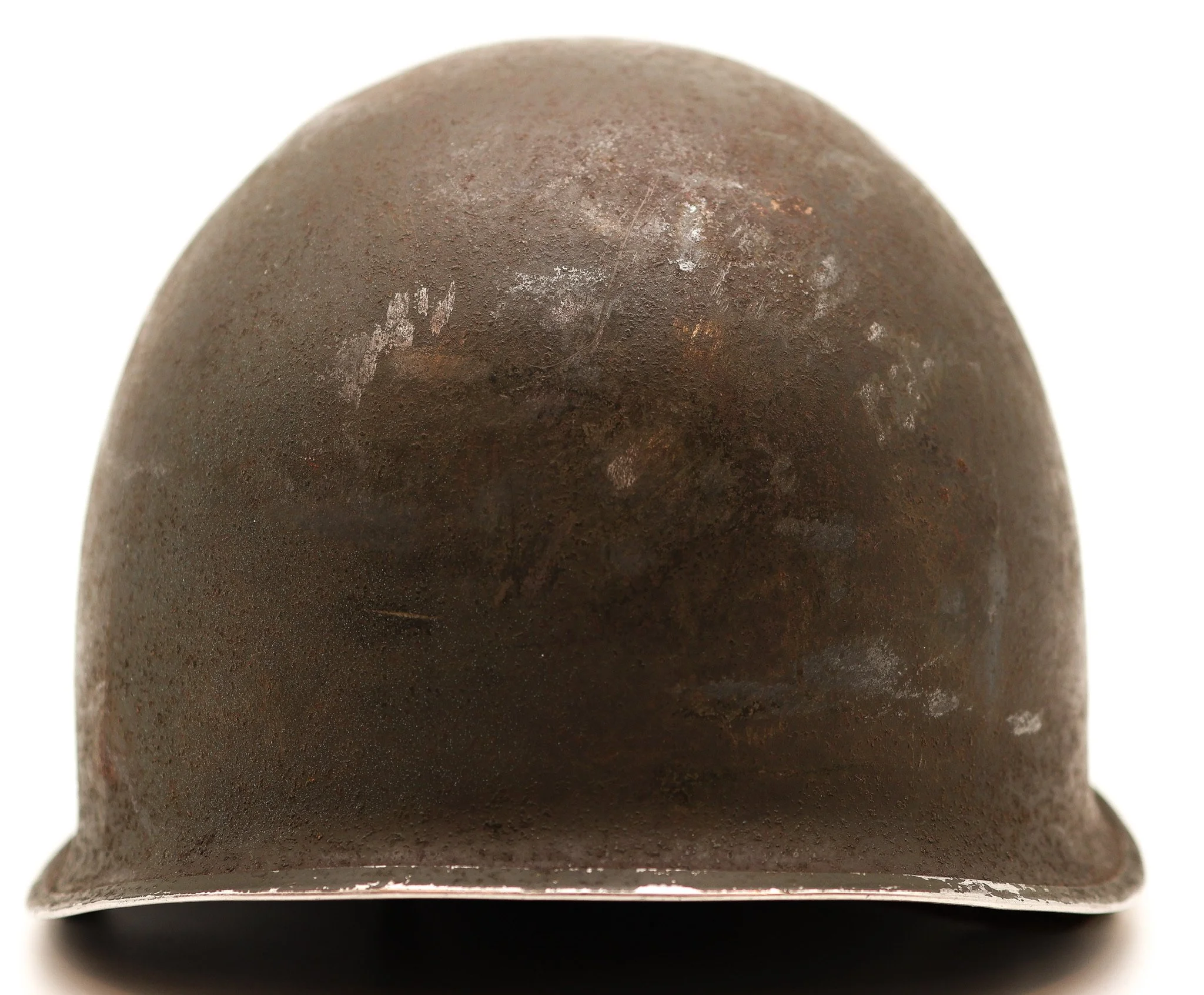
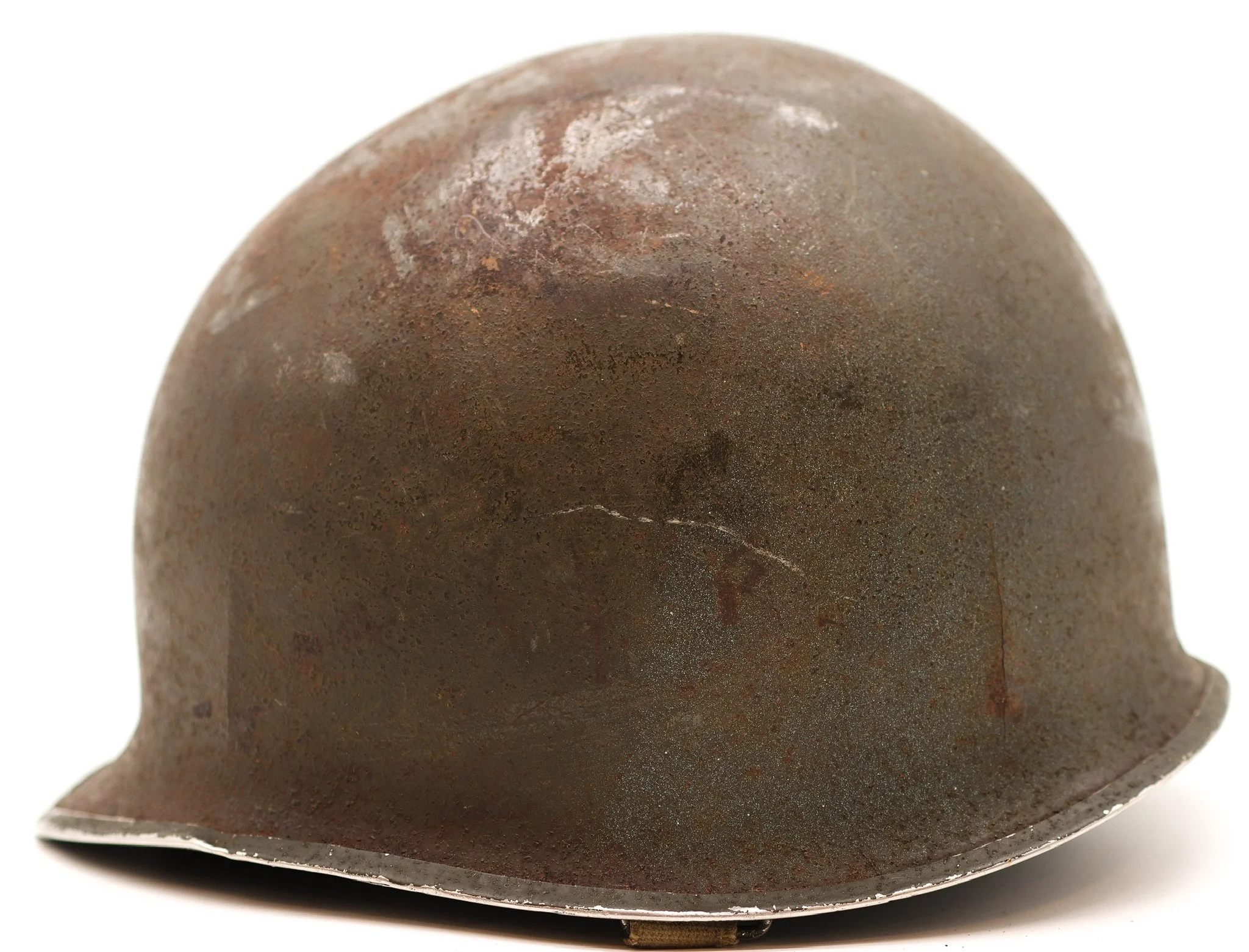
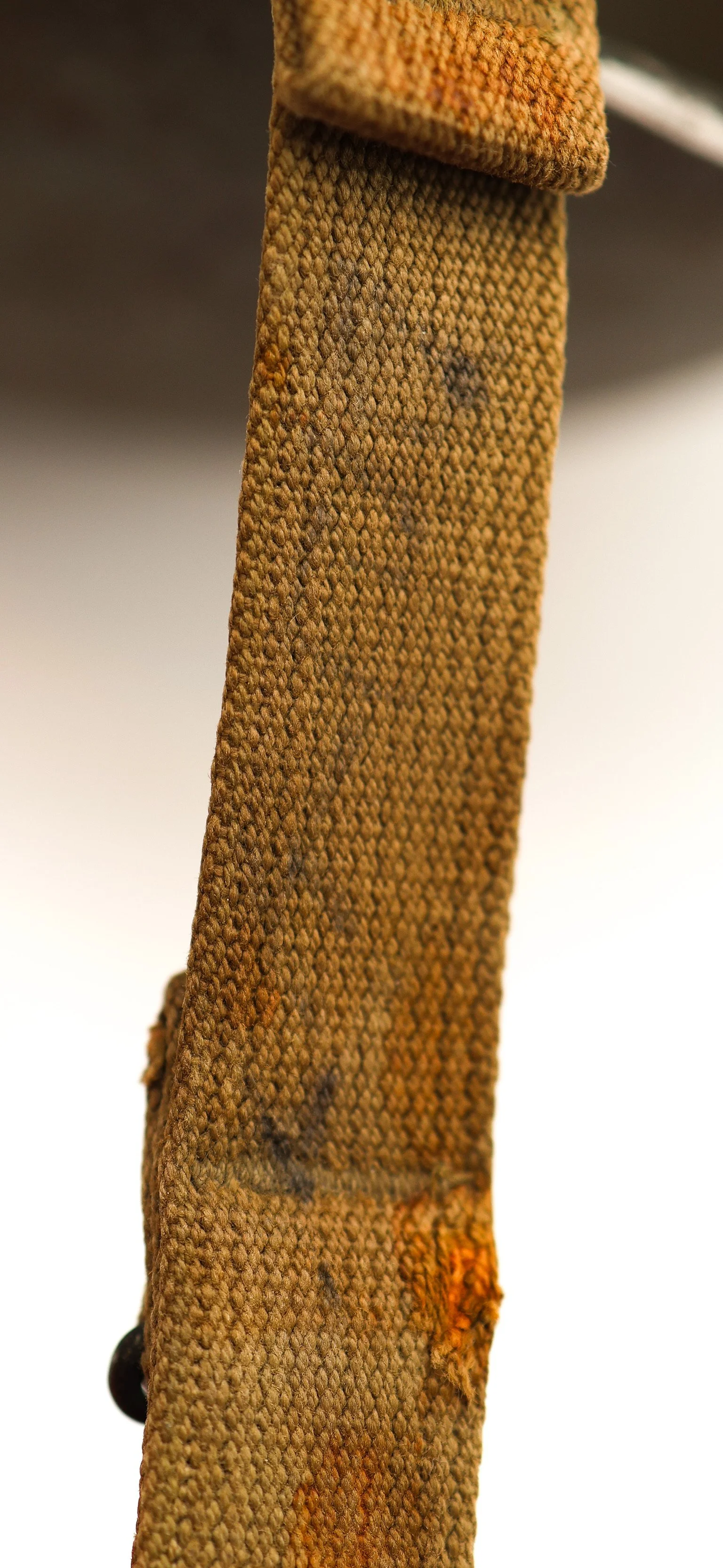
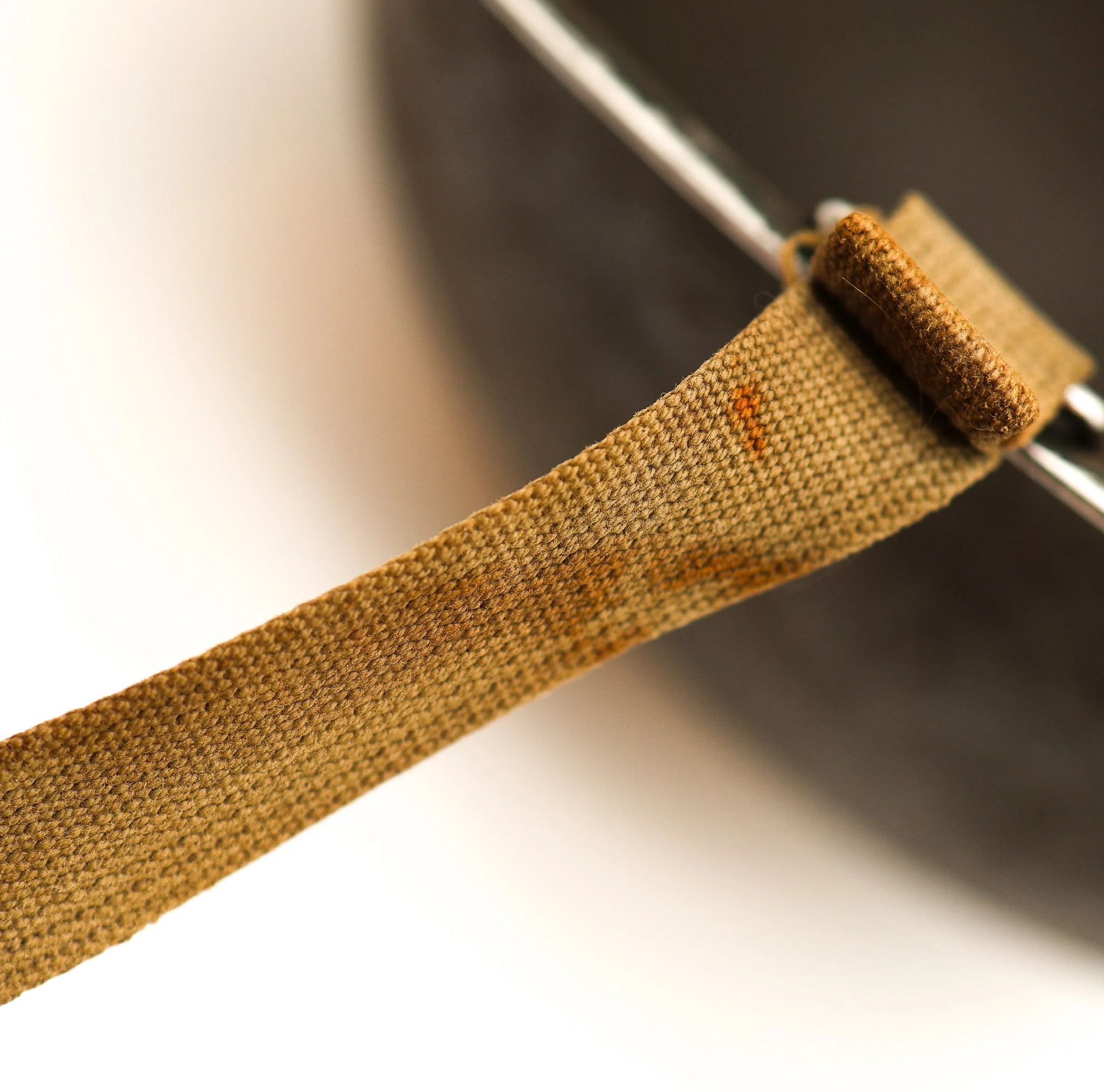
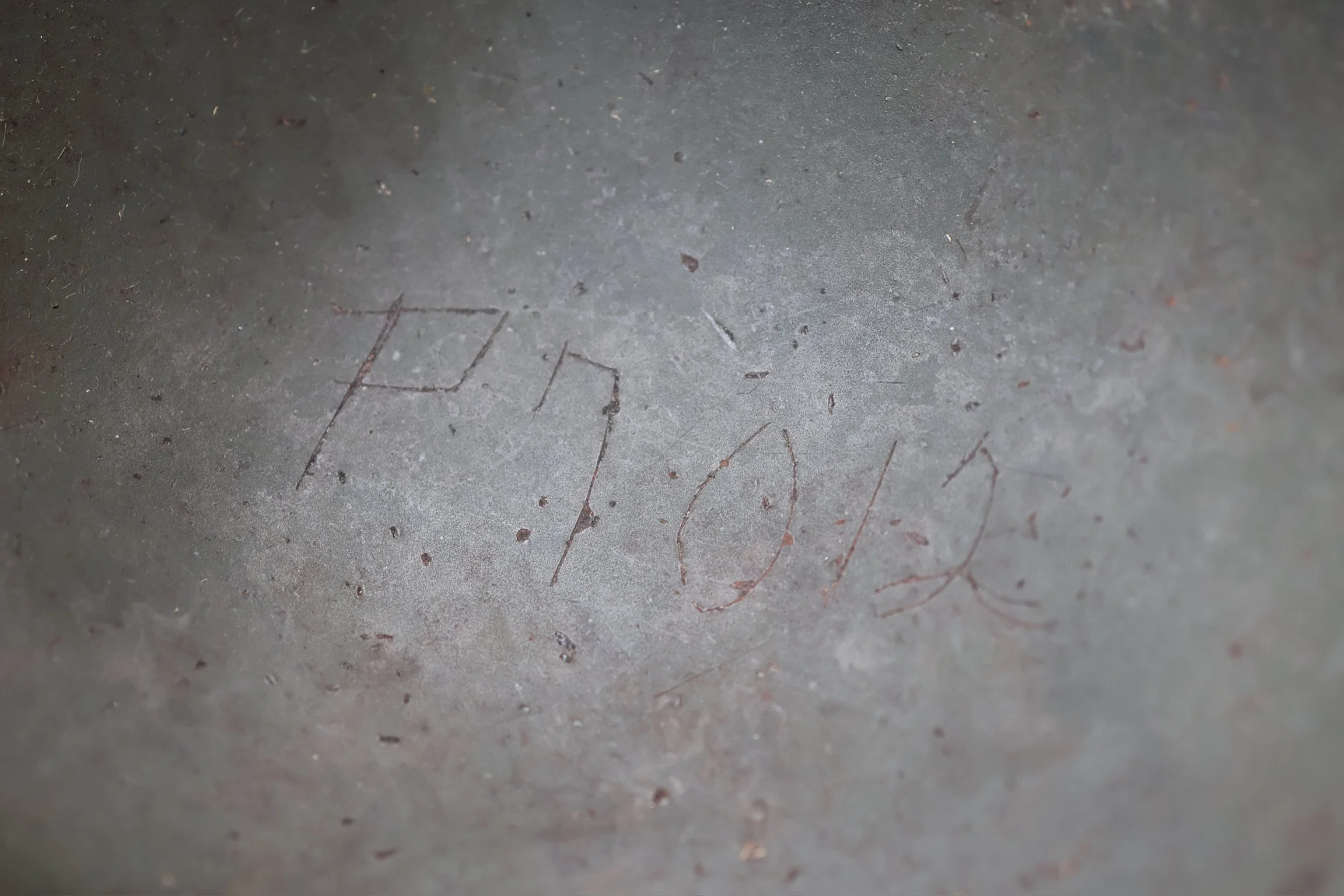
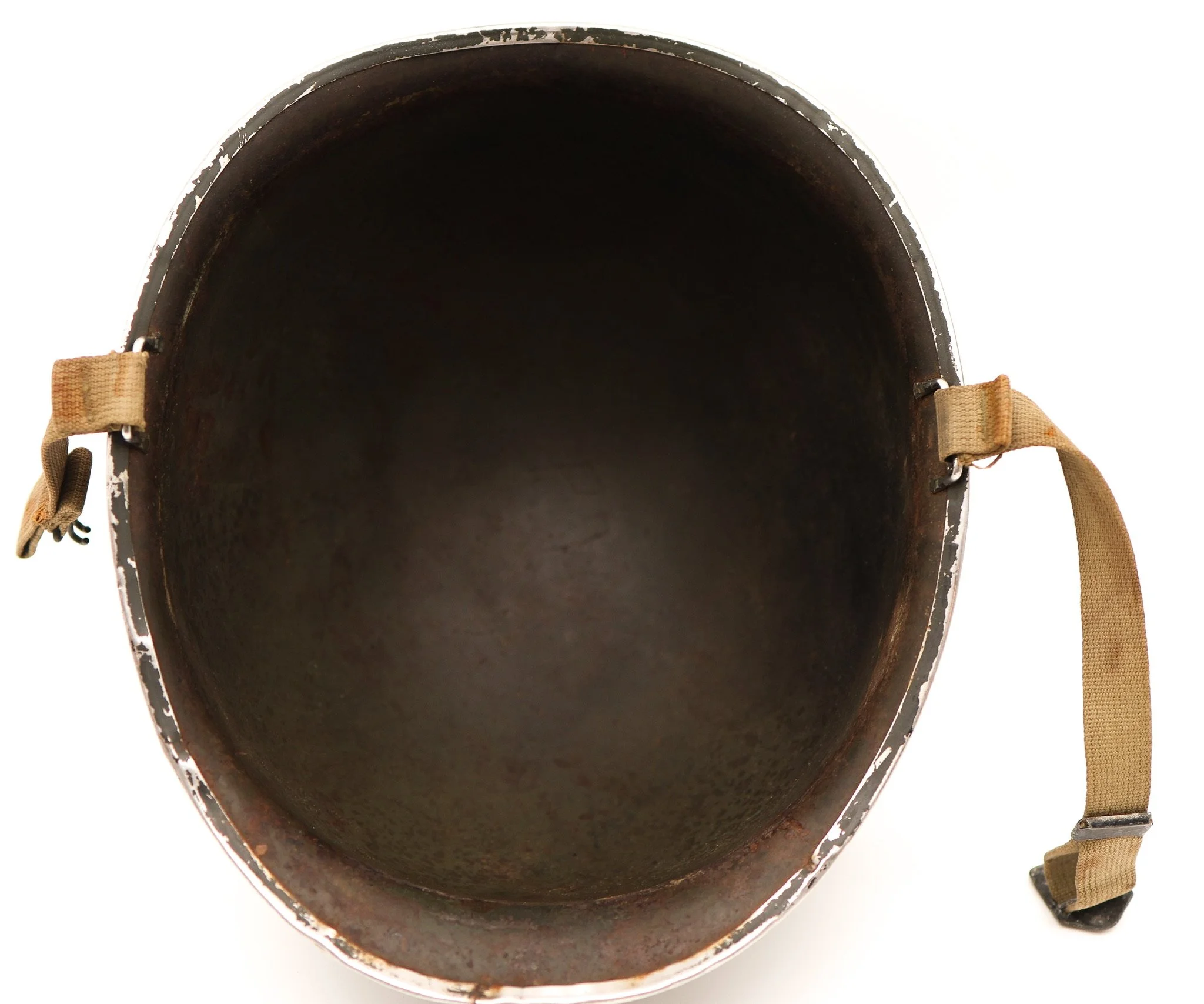
This U.S. M1 helmet shell is identified by laundry number to Technical Sergeant Parley C. Plaster of I Company, 116th Infantry Regiment, 29th Infantry Division. The helmet consists of the steel shell only; the liner is no longer present. The laundry number on the shell corresponds to Plaster and, when cross-referenced, matches him as the only soldier within the 29th Infantry Division associated with that number. The helmet was previously part of the collection of Jon Gawne, author of Spearheading D-Day.
Parley Carlos Plaster was born on March 26, 1913, in Swords Creek, Russell County, Virginia. Prior to the war, he worked as a coal miner alongside his brother Henry. Both brothers were inducted into the U.S. Army on April 18, 1941, following the federalization of National Guard units, and trained at Camp Lee before being assigned to I Company, 116th Infantry Regiment. Plaster trained extensively with the unit at Fort Meade, during the Carolina Maneuvers, and at Camp Blanding. In September 1943, he sailed with the regiment aboard the Queen Mary to England, continuing invasion training at Tidworth. By June 1944, he was serving as a squad leader…
-
Plaster landed with the first waves of I Company on Omaha Beach at 0720 on June 6, 1944. His unit came under heavy machine-gun and artillery fire during the approach and landing. After crossing the beach and breaching the seawall, the company pushed up the bluffs under fire and fought through scattered resistance before consolidating inland. By D+2, the 116th Infantry advanced west toward Pointe-du-Hoc and Grandcamp-Maisy, where Plaster took part in intense street and bunker fighting against well-entrenched German forces. During this action, he was severely wounded by artillery fragments to the thigh and evacuated. He spent nearly three months hospitalized and received the Purple Heart on June 29, 1944, followed by the Combat Infantryman Badge on July 31, 1944.
Plaster returned to I Company on September 19, 1944, resuming his leadership role. He participated in the advance through Belgium and into Germany, fighting near Aachen and along the Siegfried Line. On October 28, 1944, he was promoted to Technical Sergeant and designated a platoon sergeant. In late November, his battalion engaged in brutal urban combat at Koslar along the Roer River, where his actions later earned him the Bronze Star Medal for Gallantry.
On December 3, 1944, during an attack near Jülich, Germany, Plaster’s battalion encountered a German minefield while advancing across a sports field. A bouncing-betty mine detonated near him, killing Plaster and another soldier instantly. He was initially listed as missing in action before being confirmed killed. Plaster was buried overseas before being repatriated to the United States in 1948.
This helmet shell, likely lost during his wounding in Normandy, stands as a rare surviving artifact connected to a D-Day veteran, wounded infantry leader, and decorated platoon sergeant who was ultimately killed in action during the final months of the European campaign.
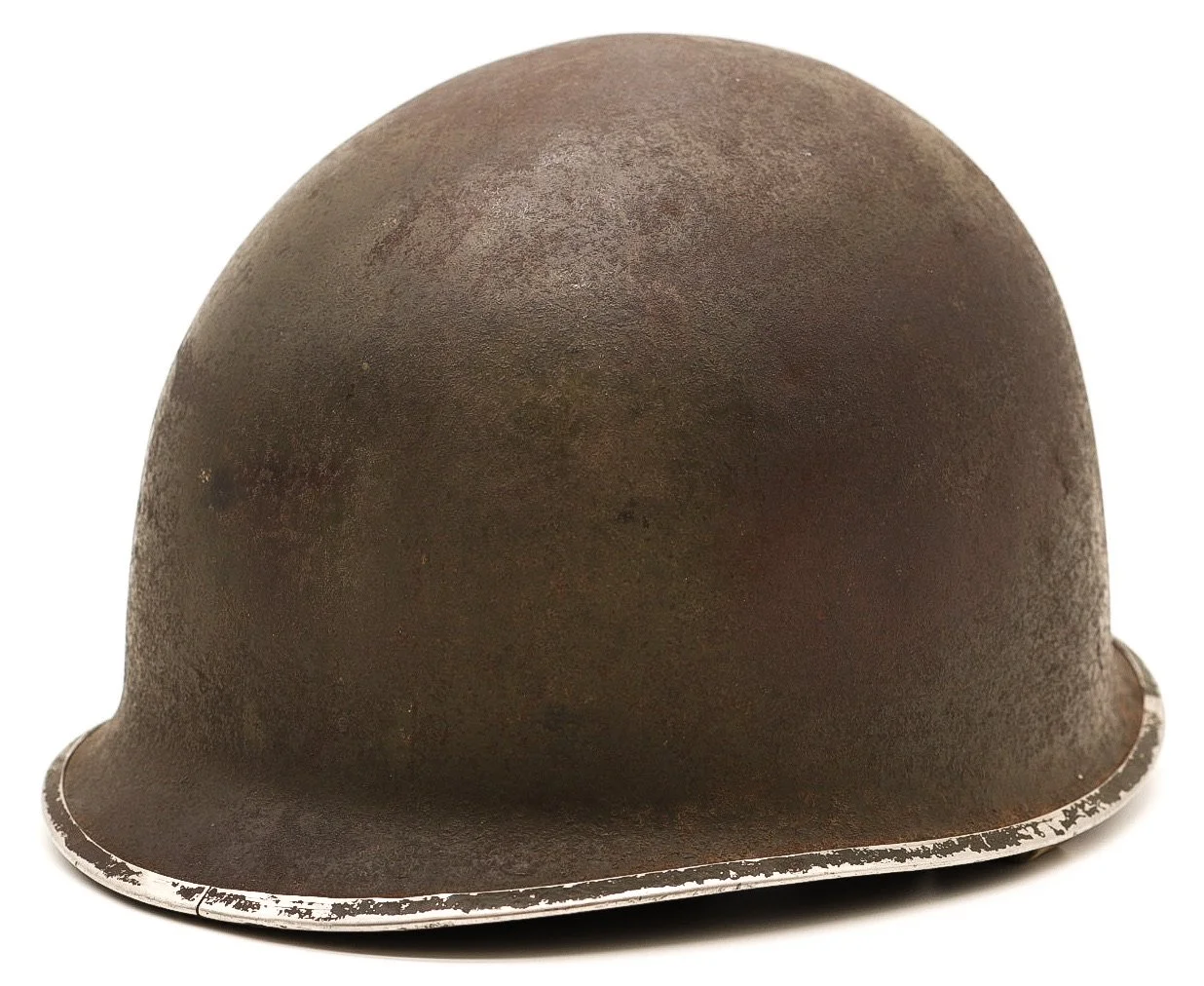
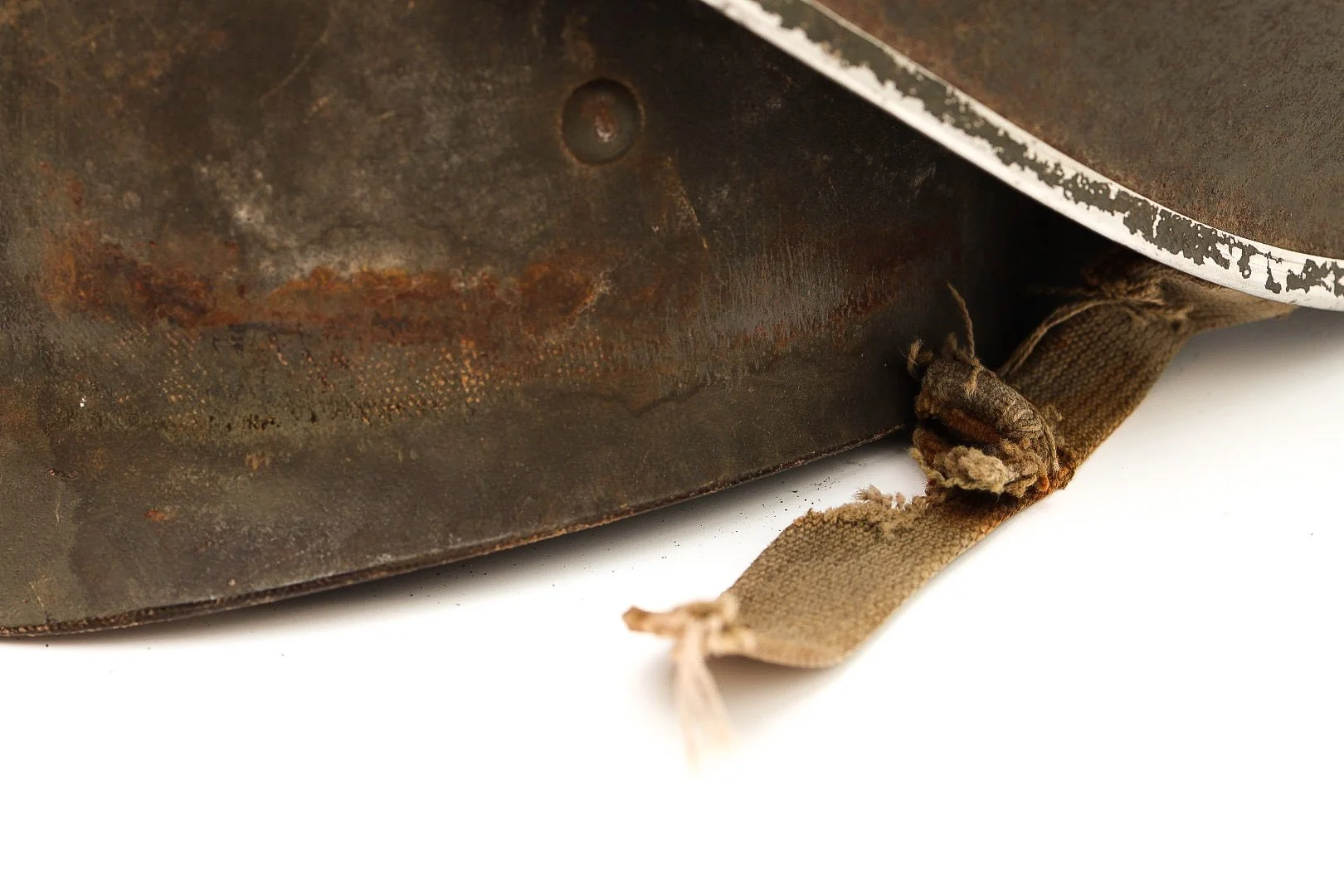
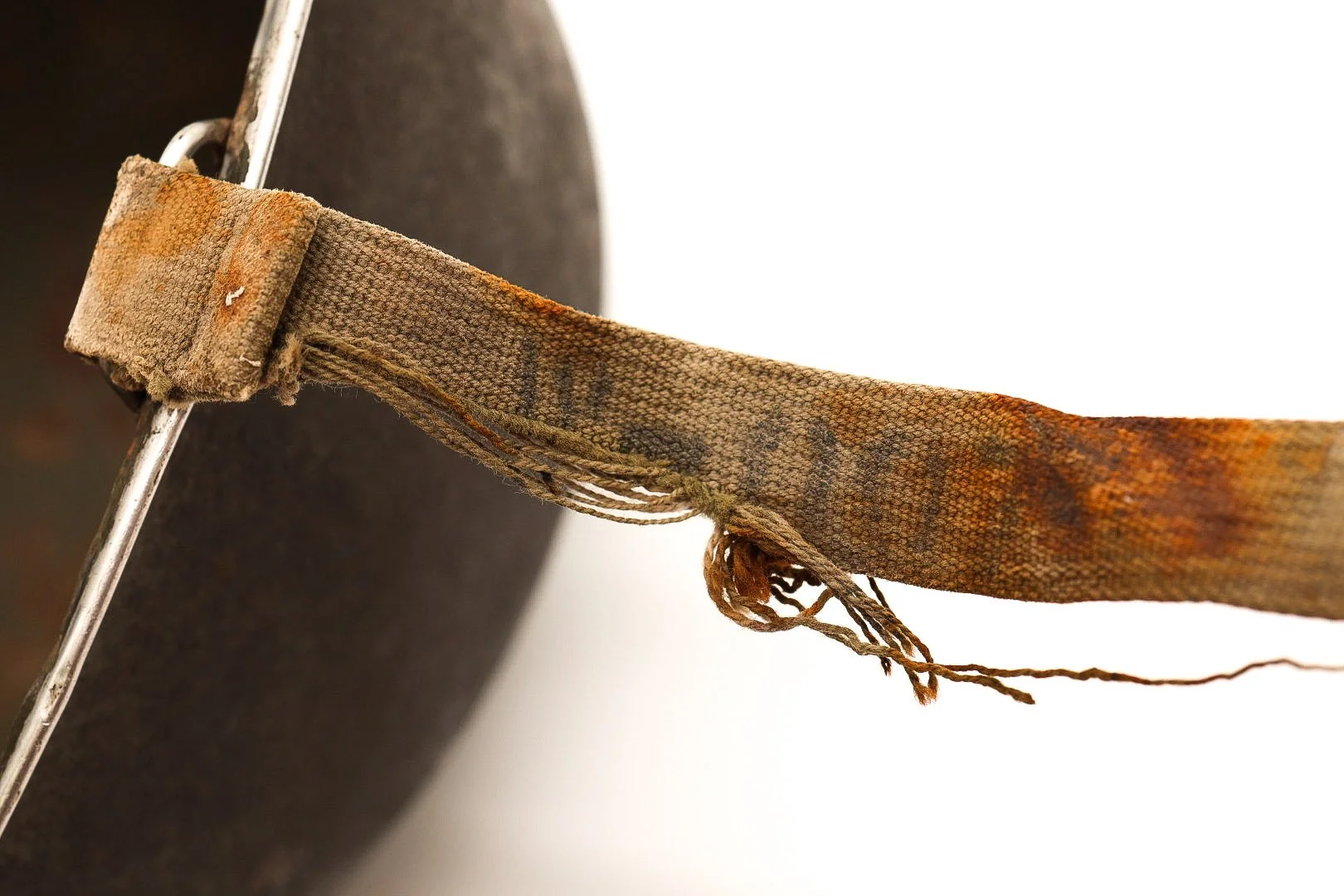
M1 Helmet with Bloodstained Chinstrap Recovered in Bastogne
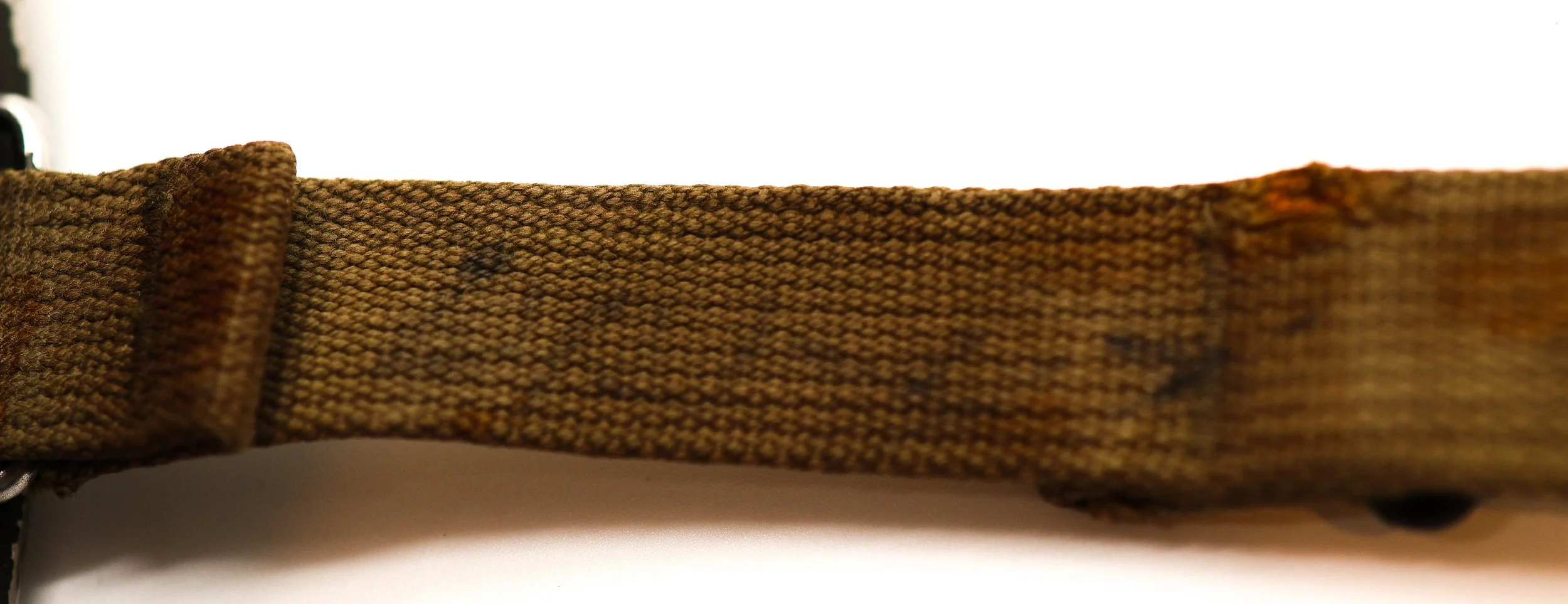
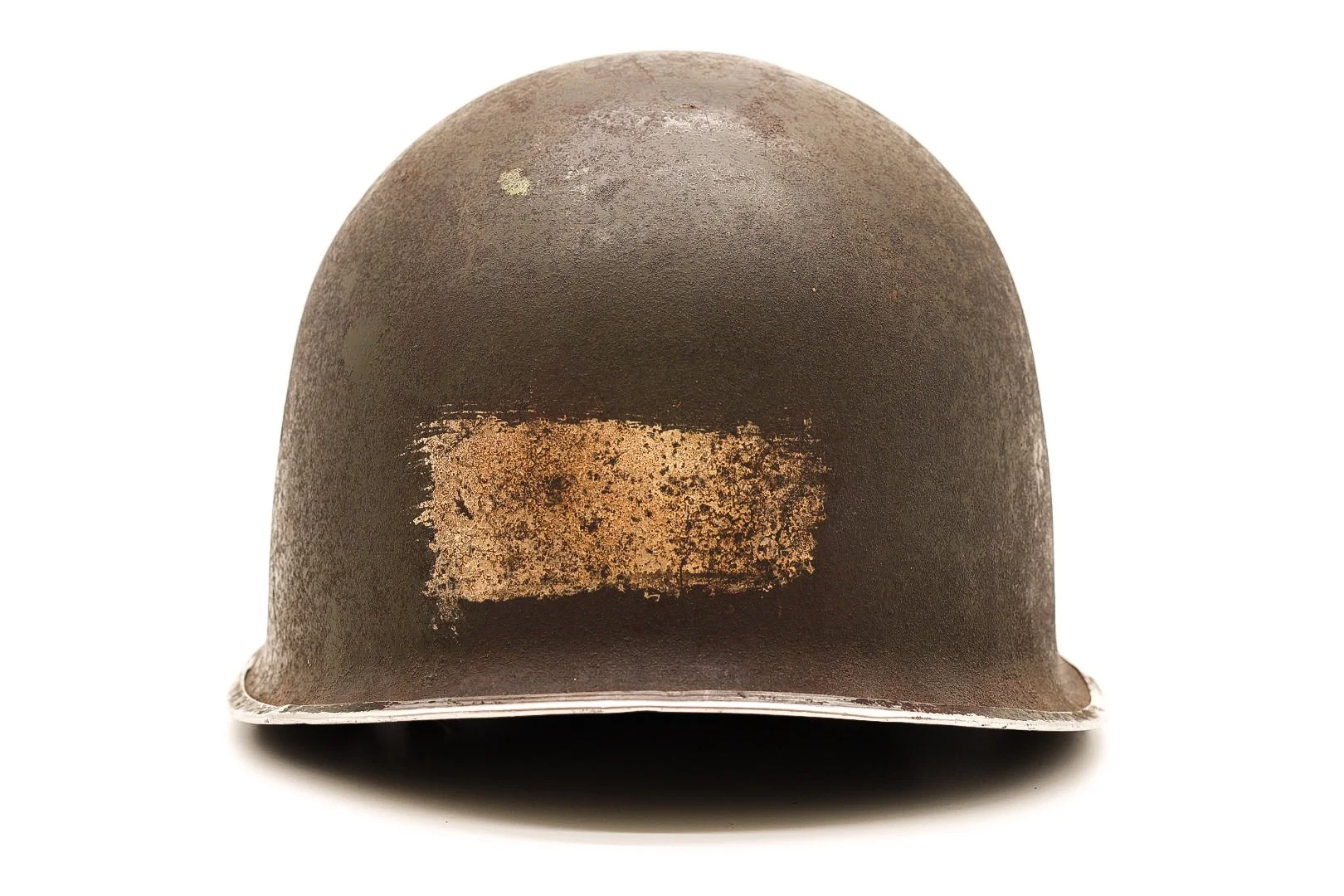
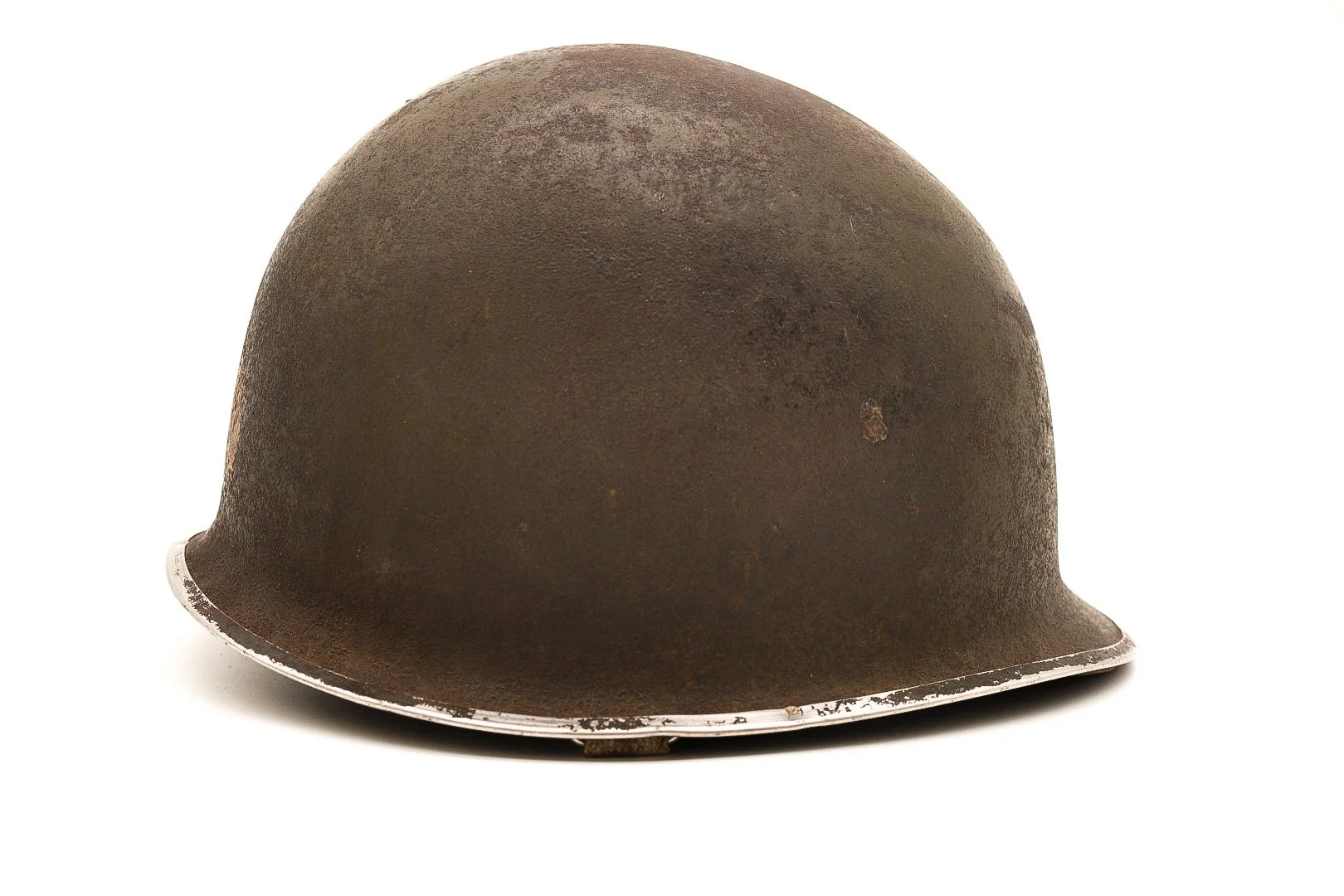
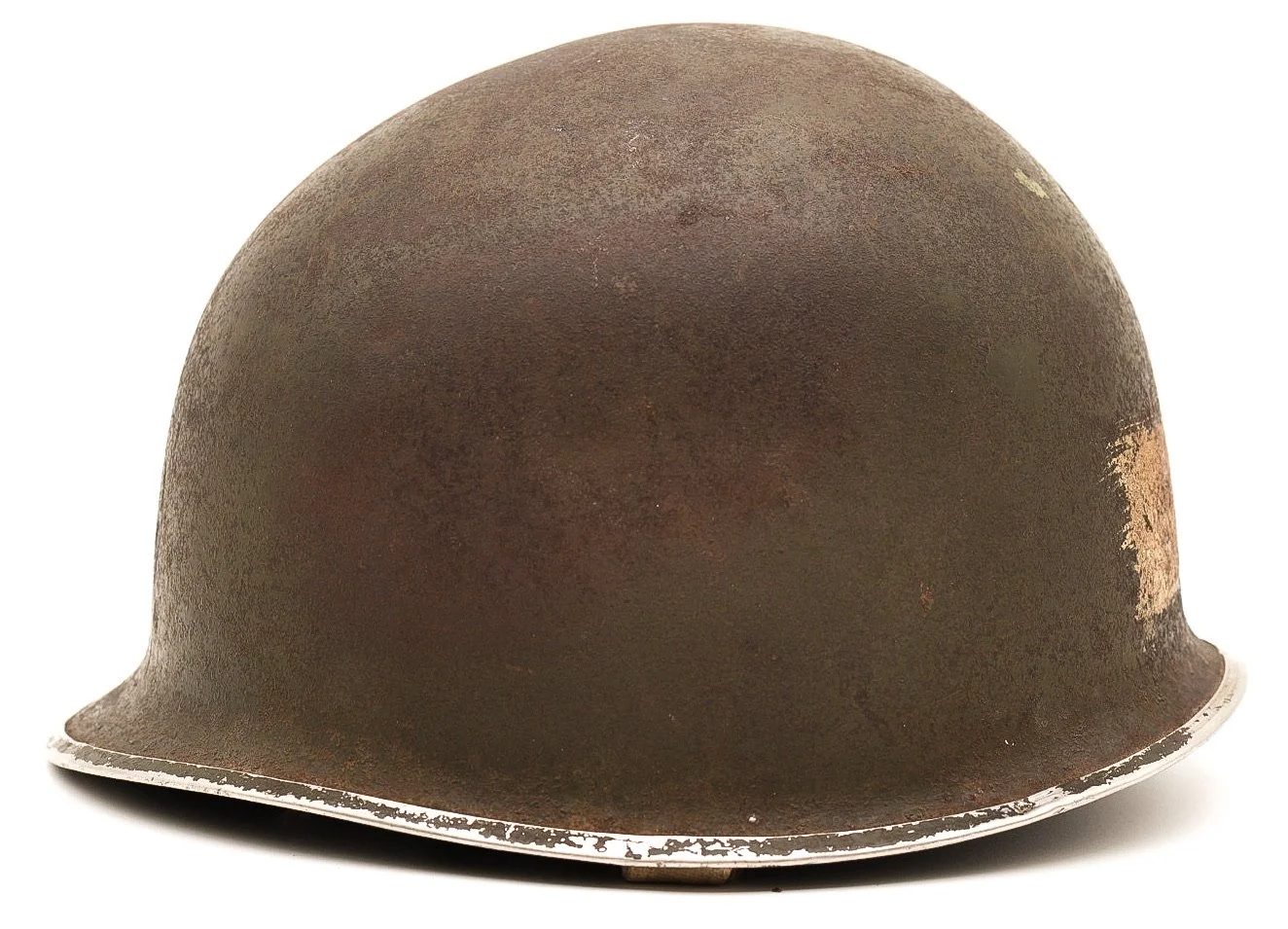
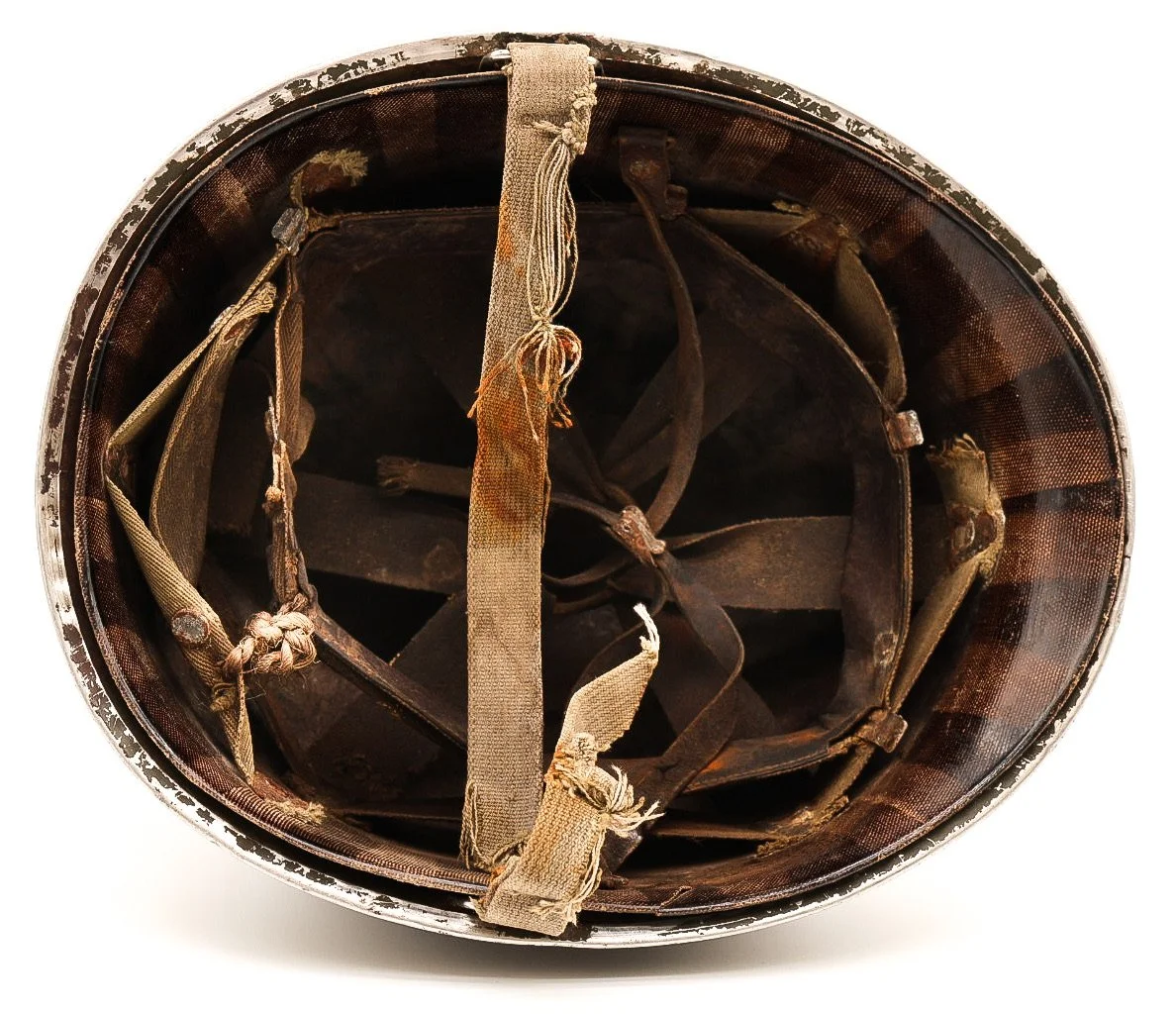
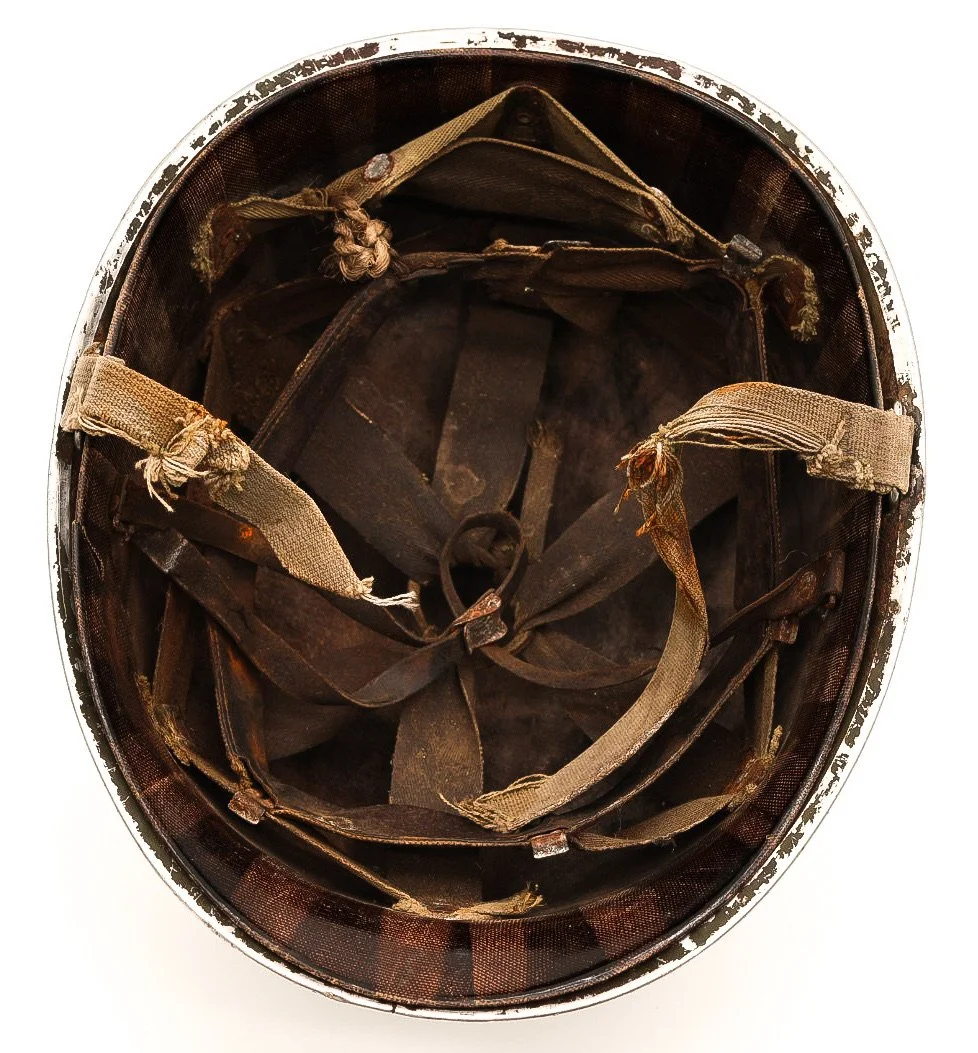
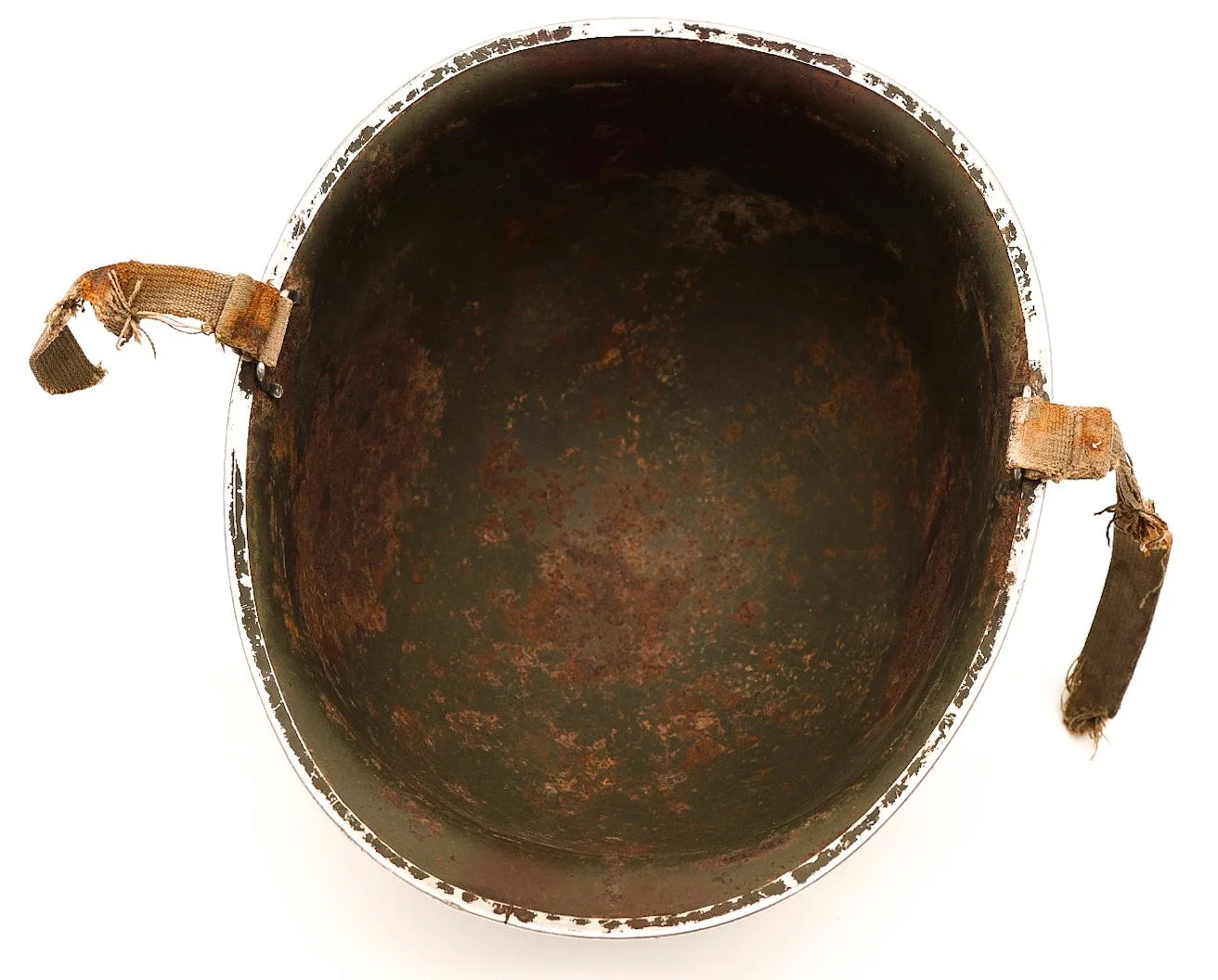
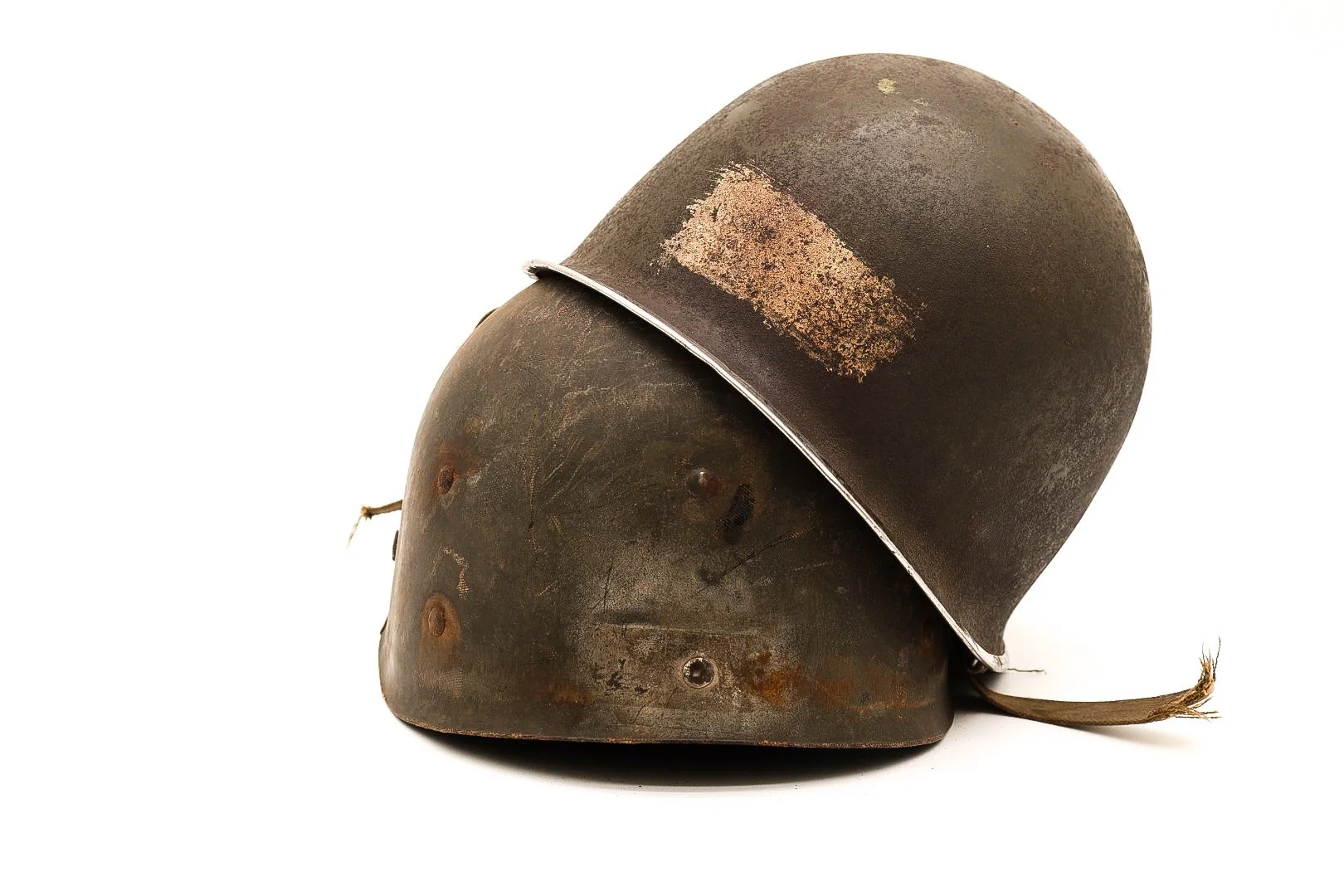
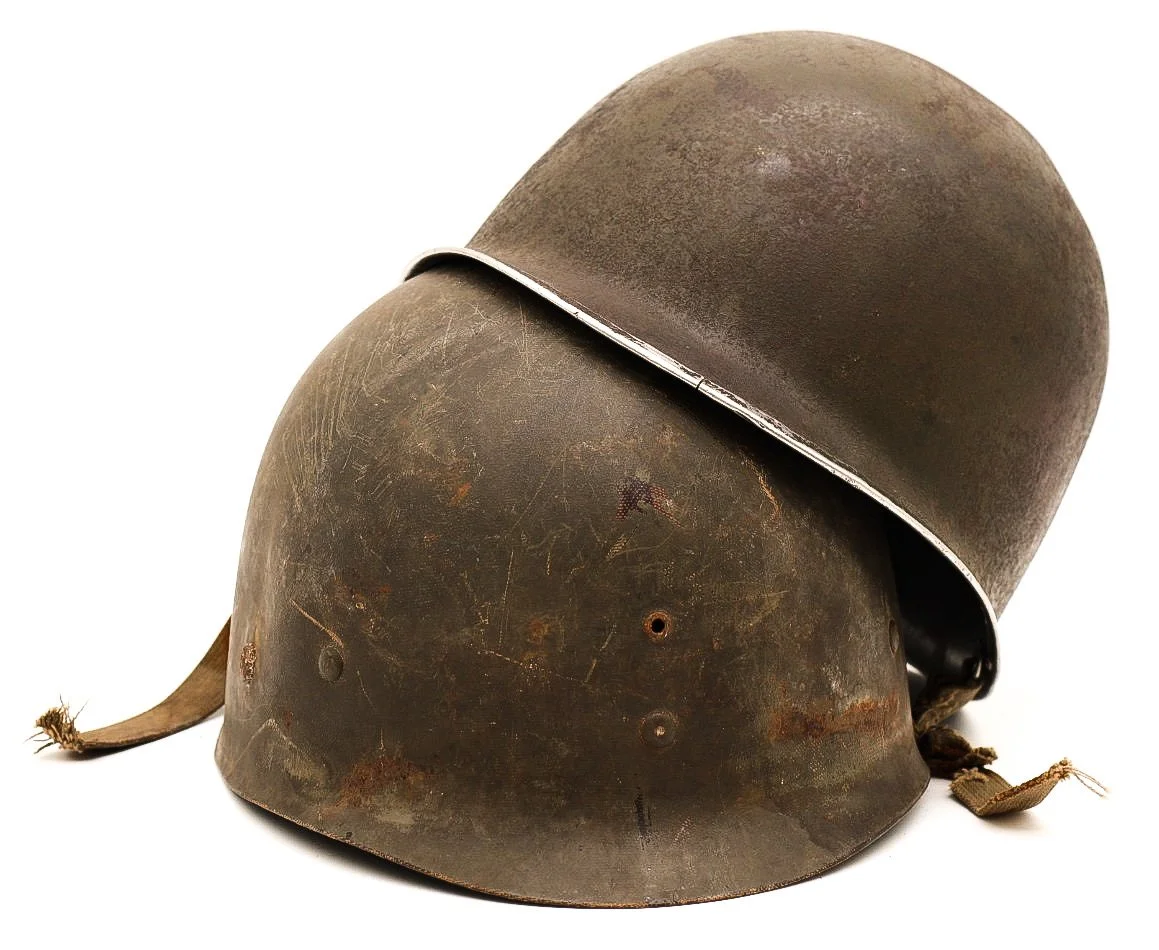
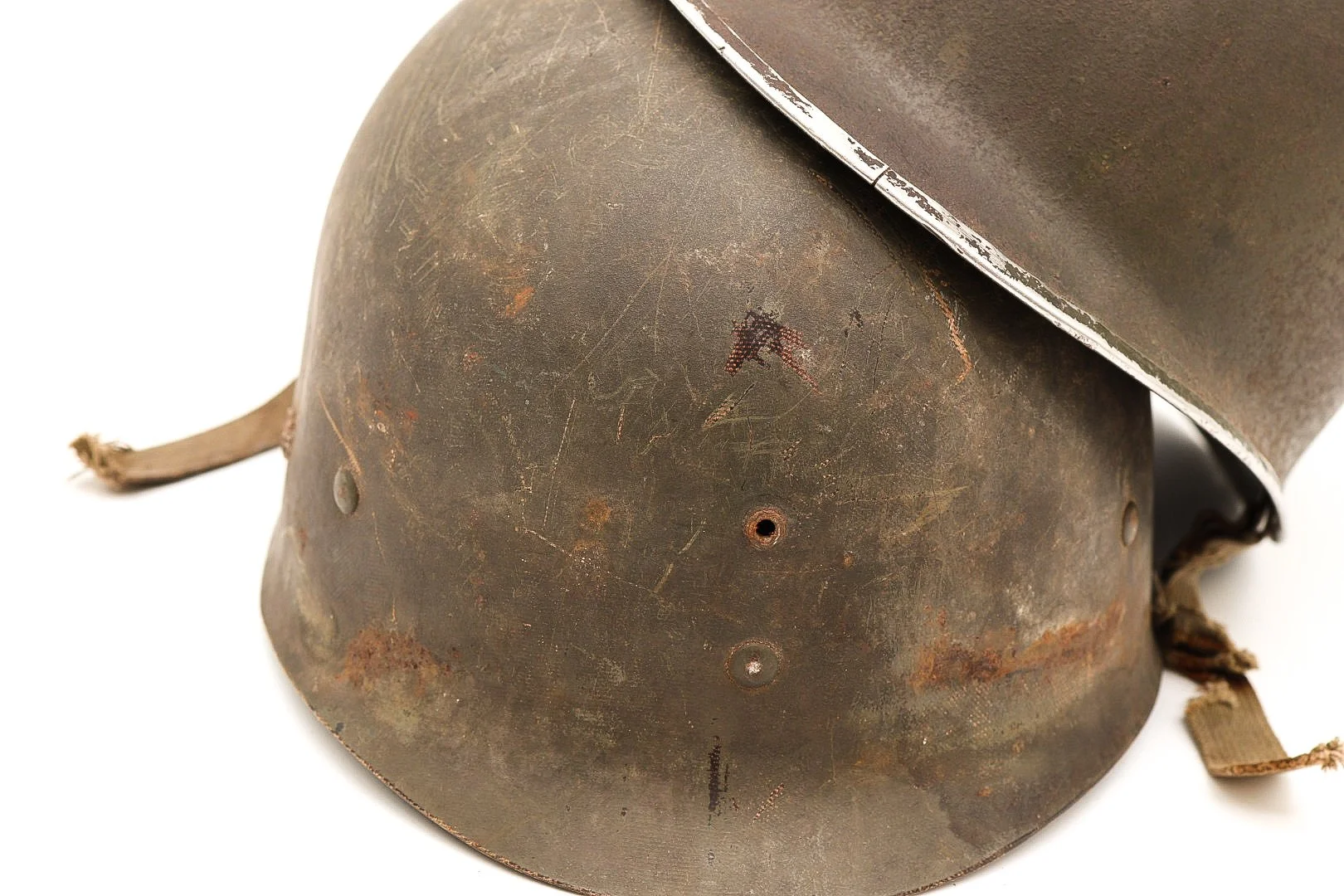
This U.S. M1 helmet was recovered from the Bastogne area following the Battle of the Bulge. While the helmet itself does not display structural battle damage, the original leather chinstrap is broken and retains visible bloodstaining. The staining is consistent with a wearer who was wounded or killed in action during the fighting around Bastogne in the winter of 1944–1945.
A laundry number is present on the chinstrap, but it has not been possible to identify the soldier associated with it. No name or unit markings are present on the helmet. A clearly applied noncommissioned officer bar is visible, indicating the wearer held NCO rank. The liner and shell exhibit heavy field wear consistent with extended use in the Ardennes under cold and wet combat conditions.
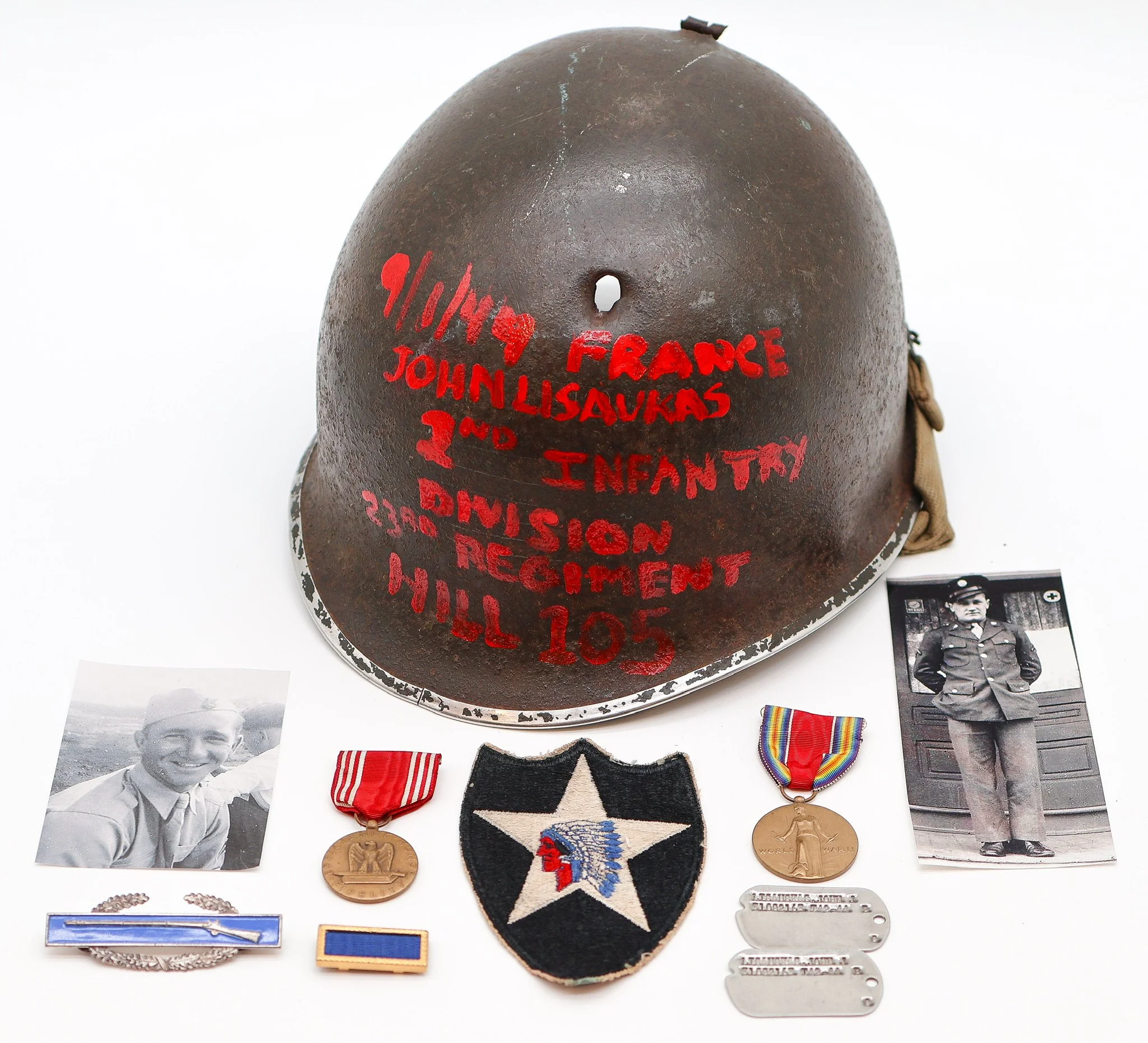
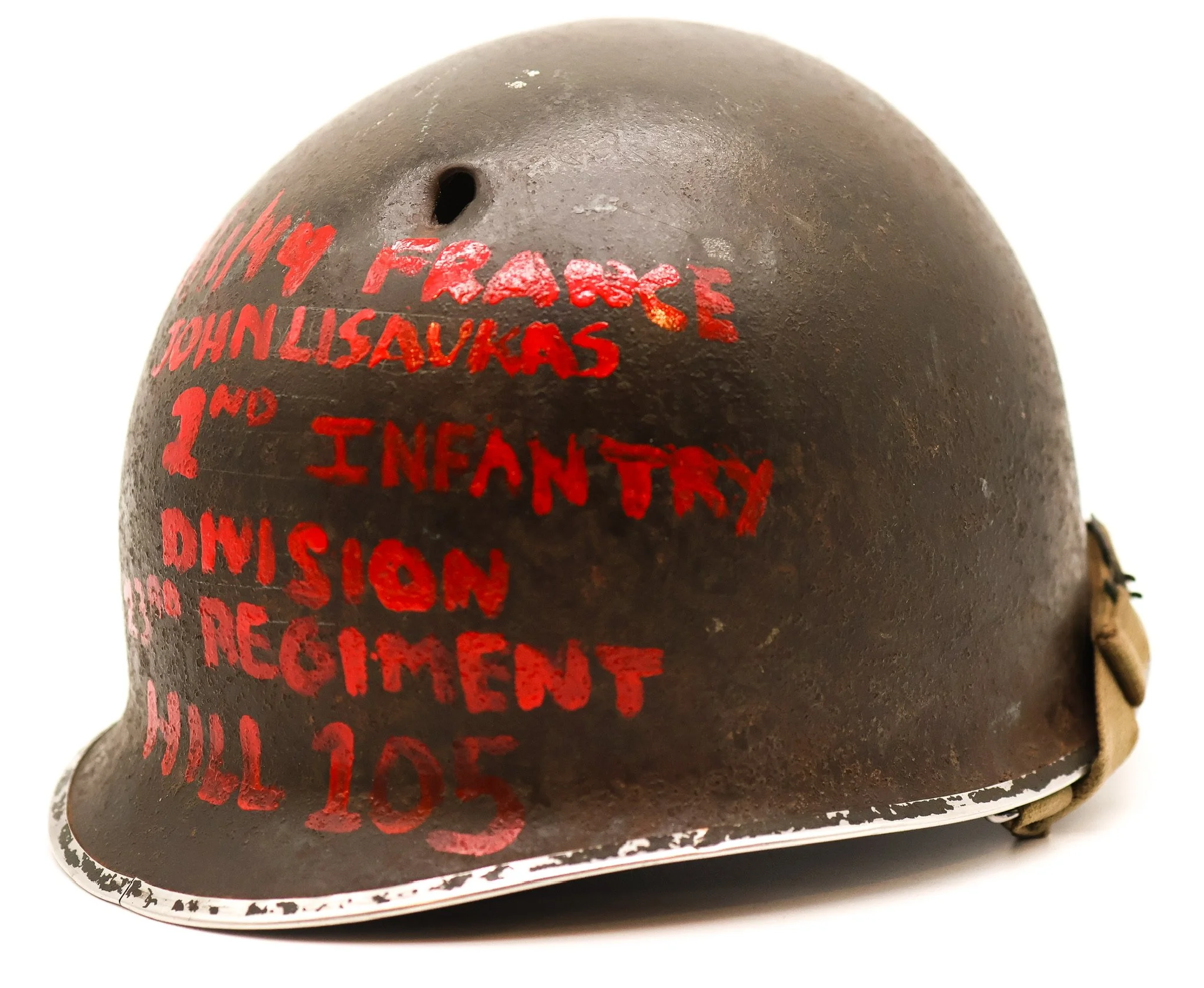
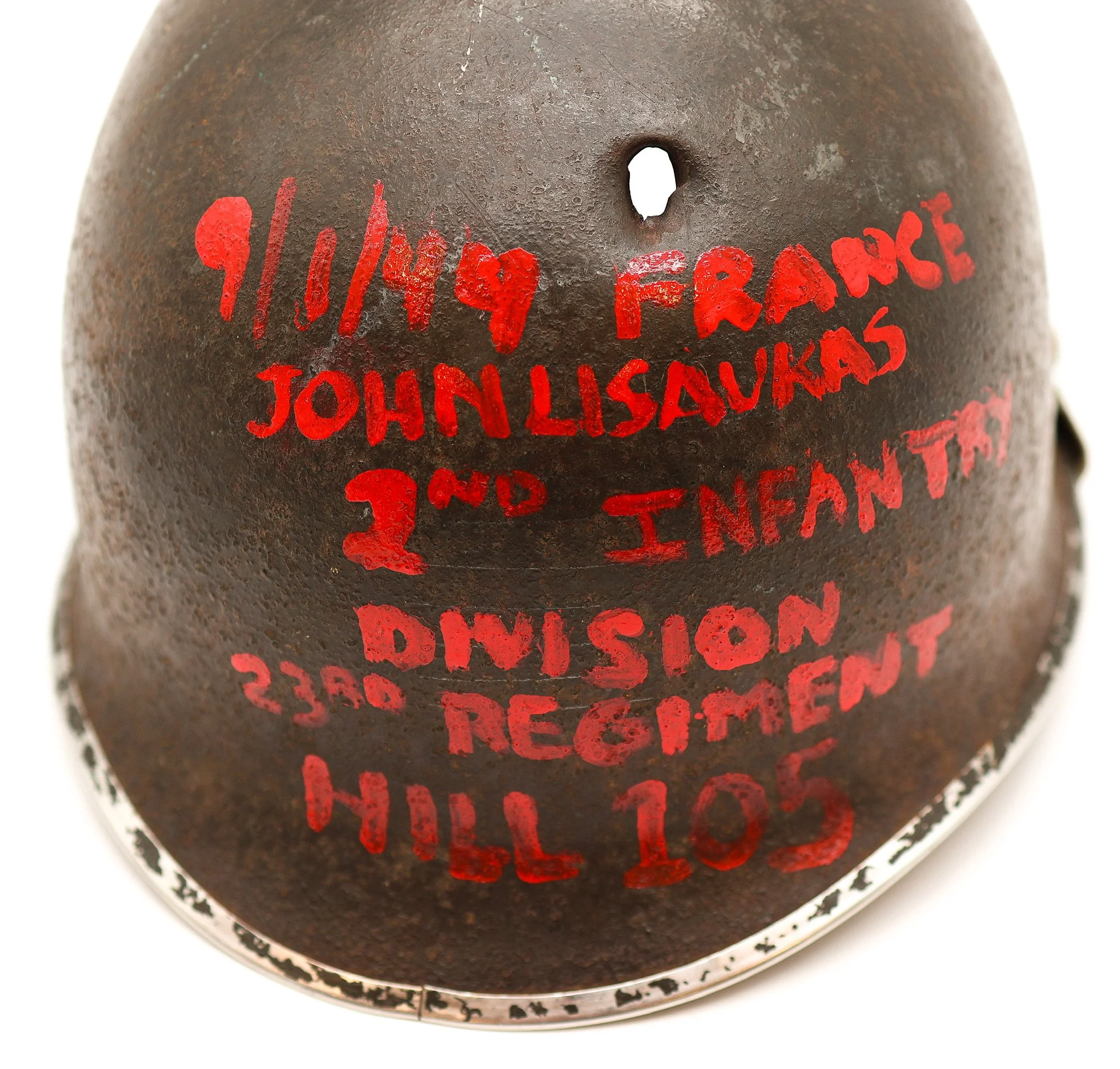
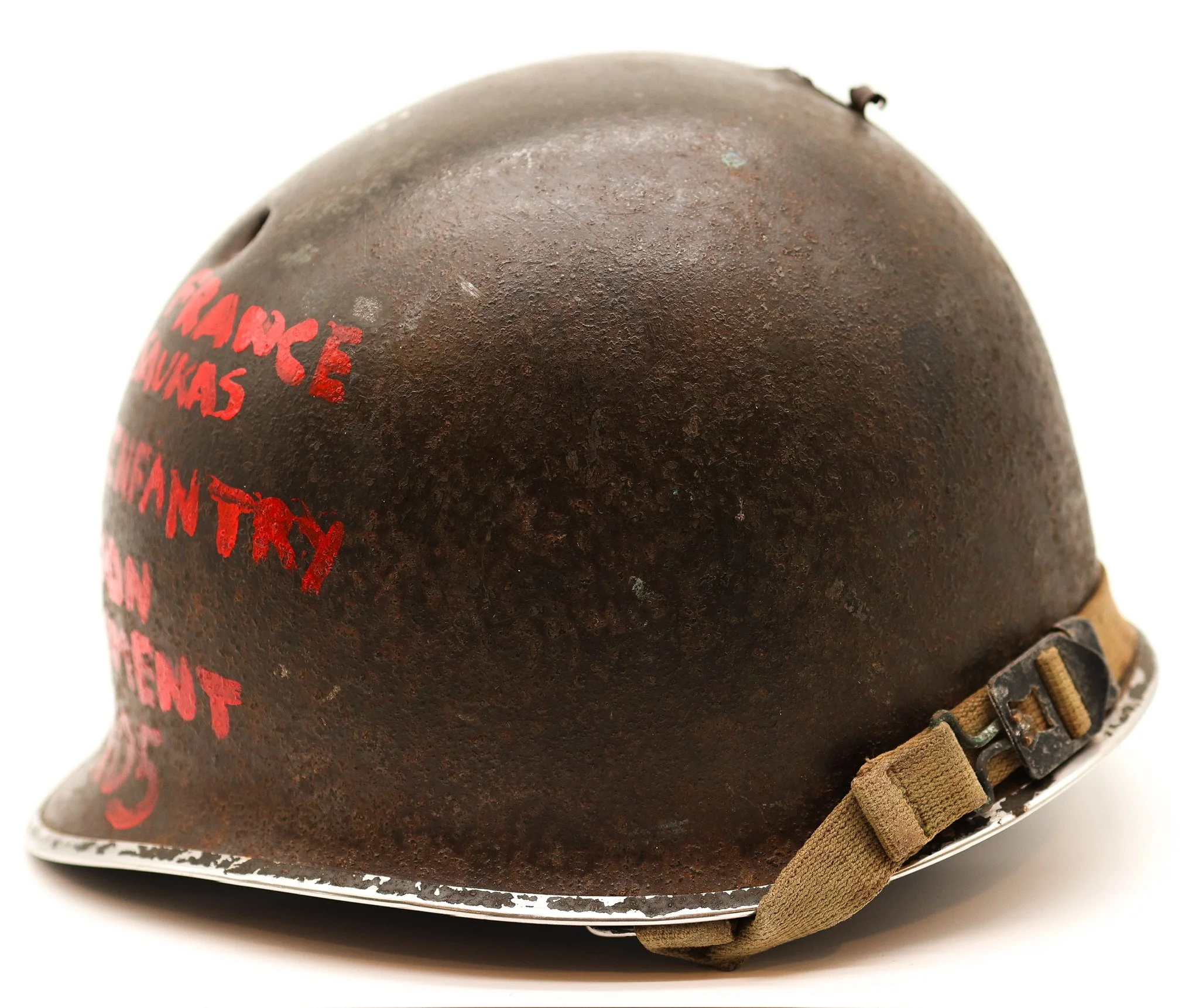
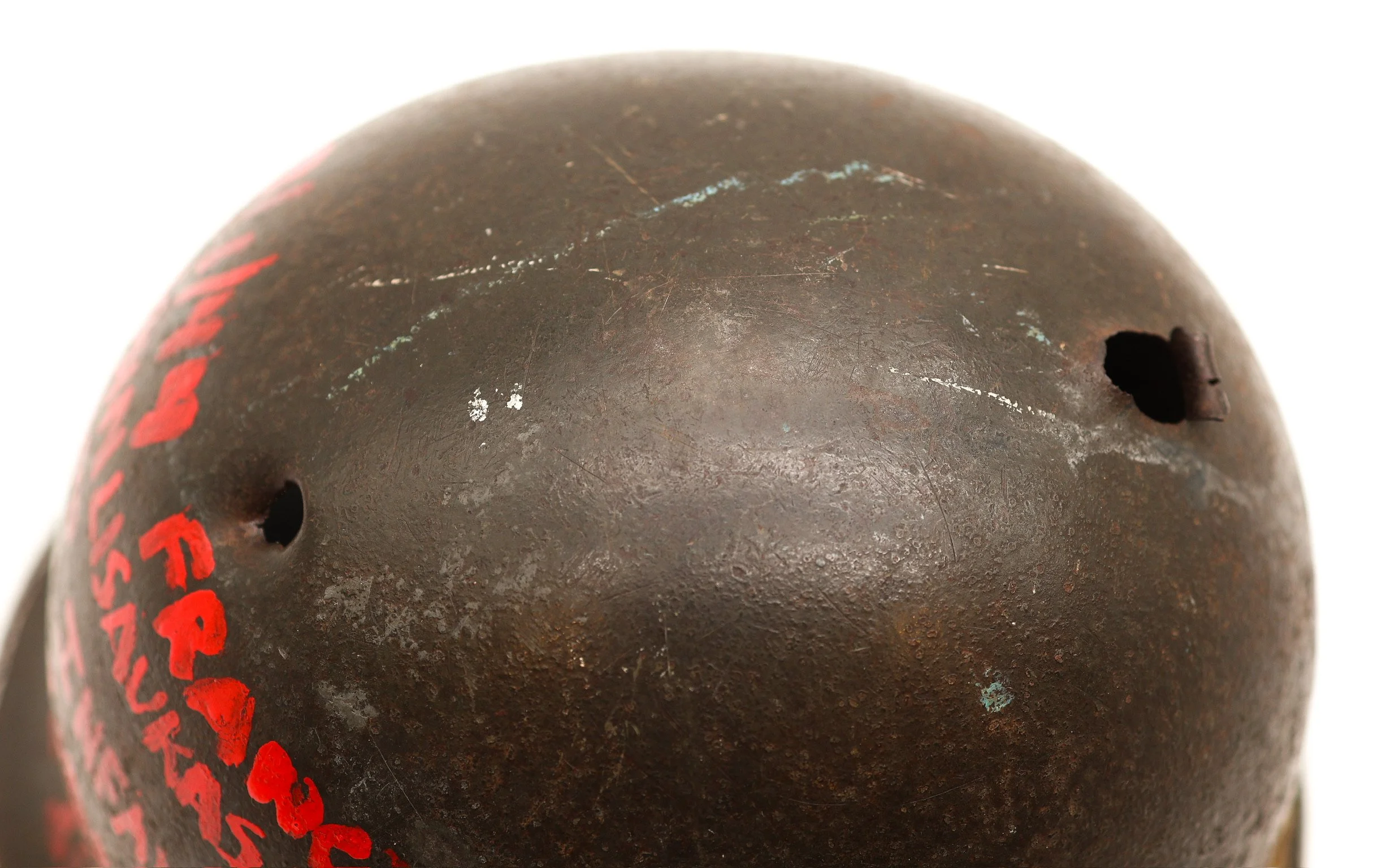
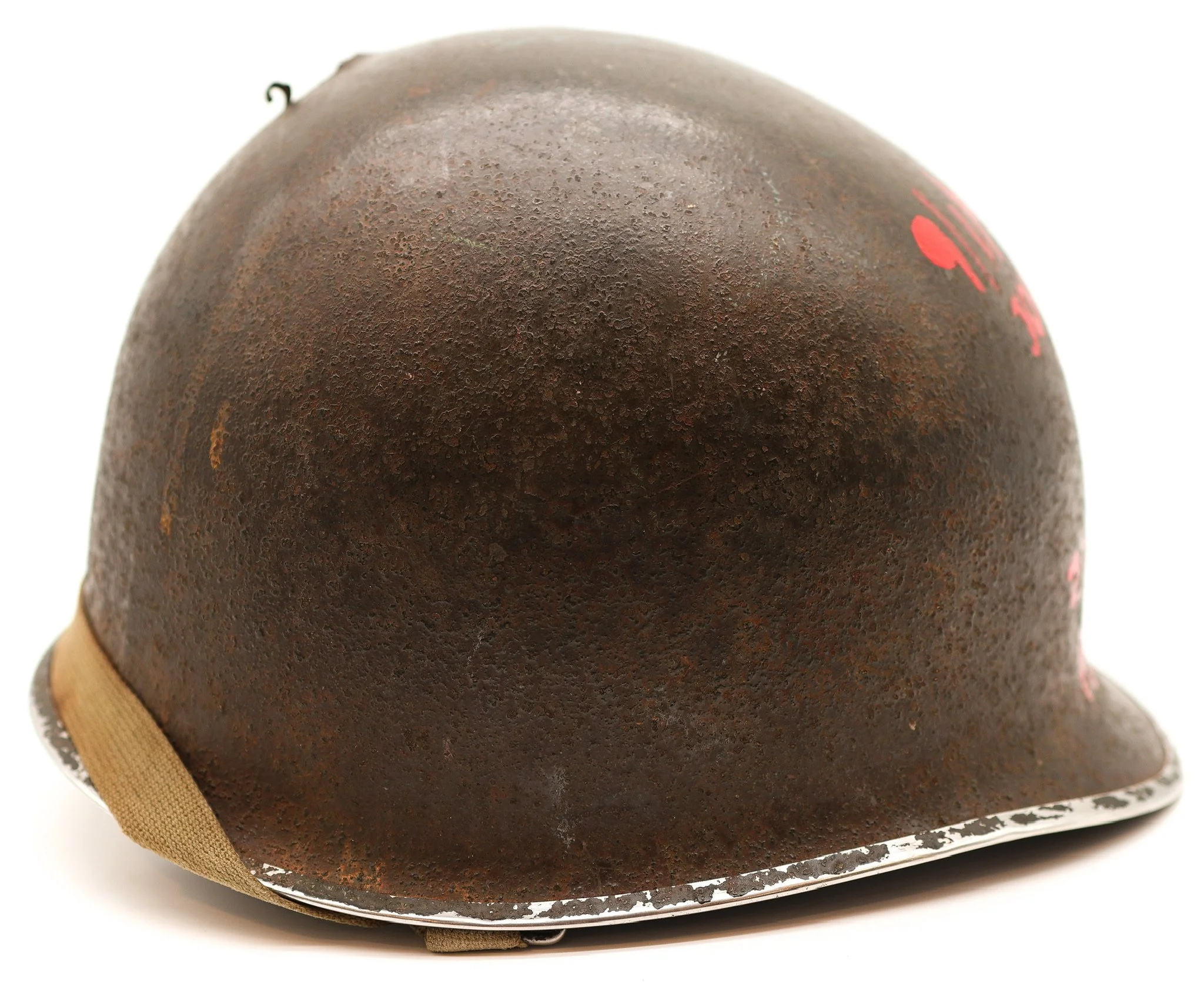
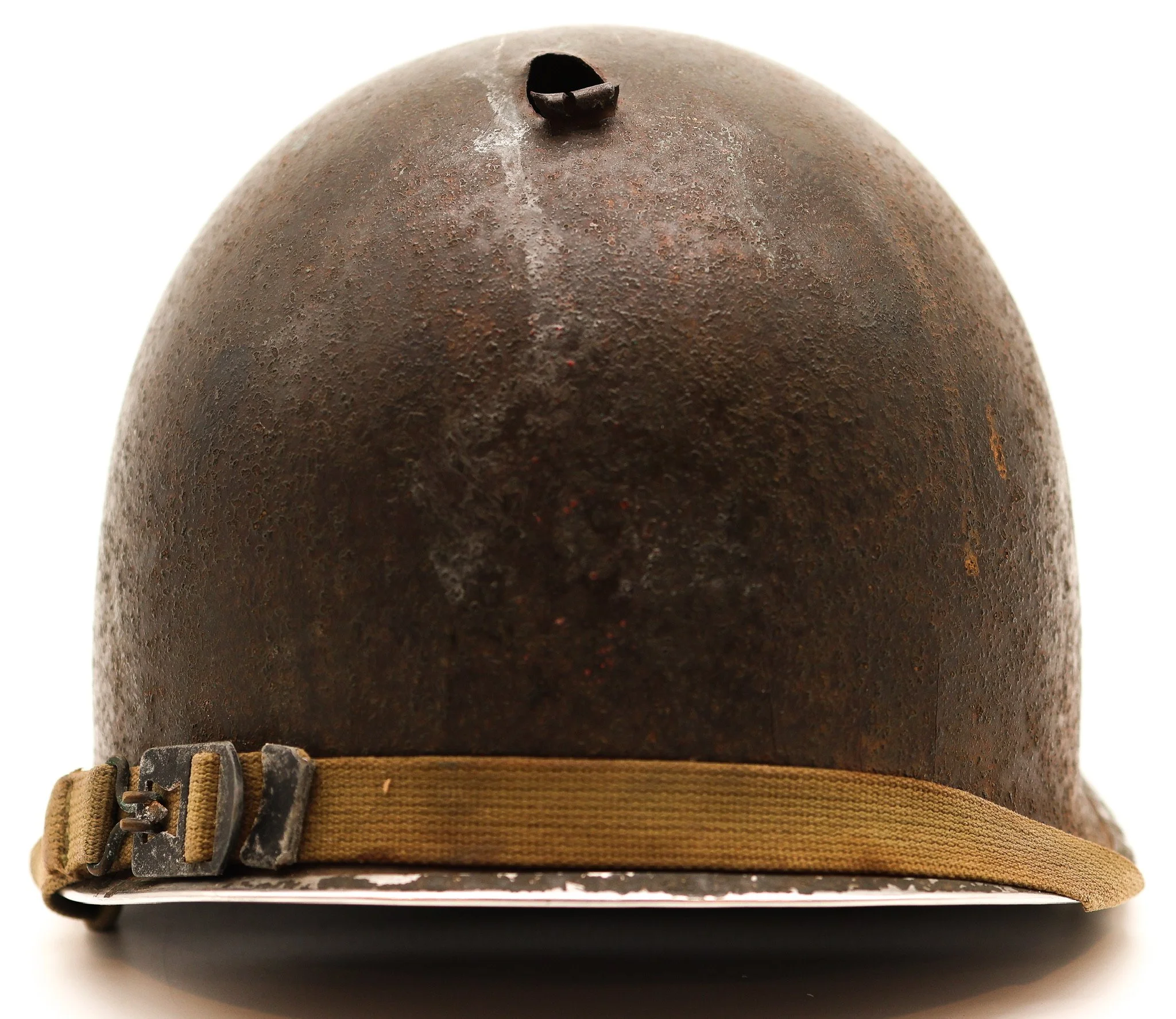
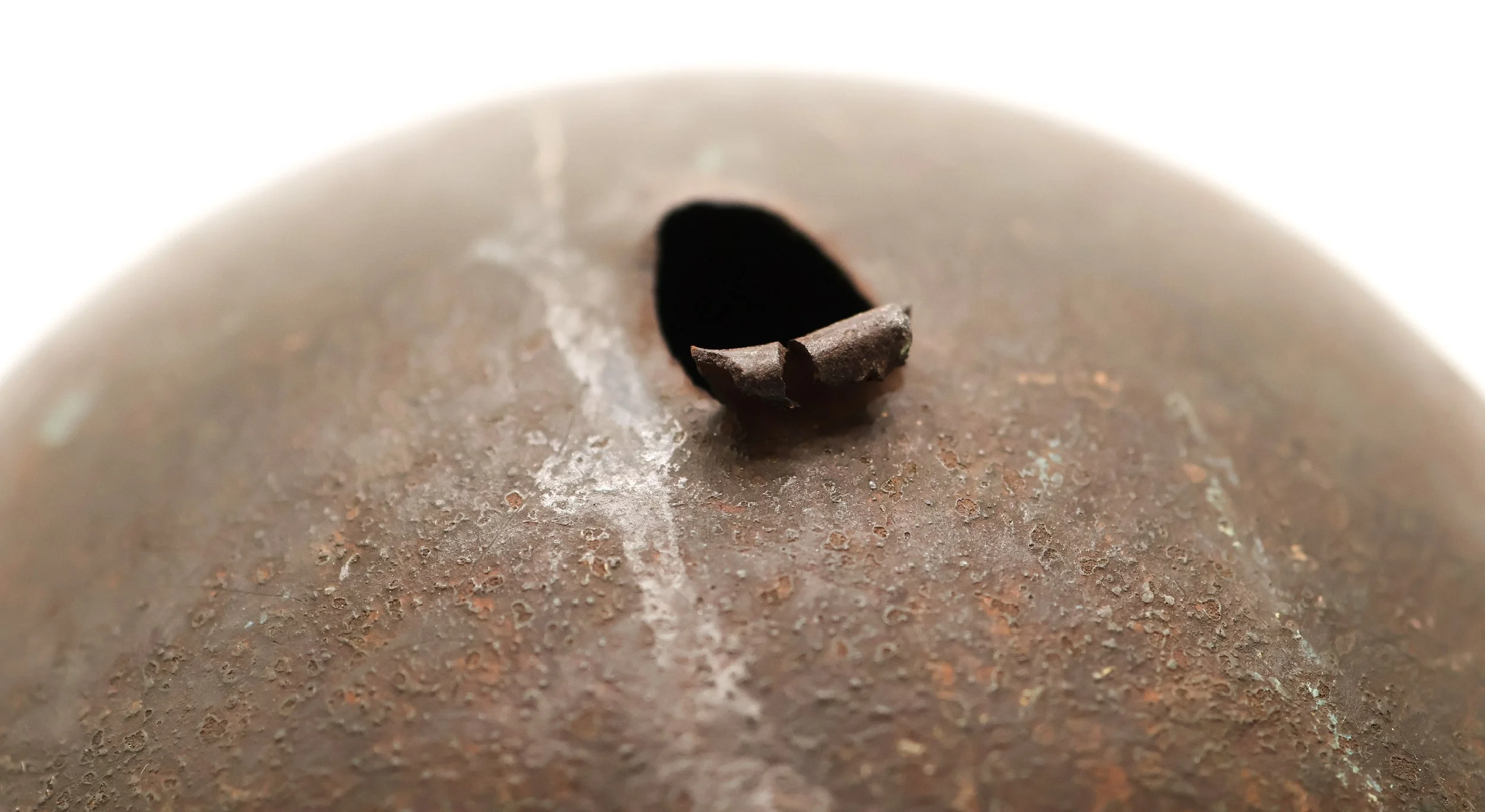
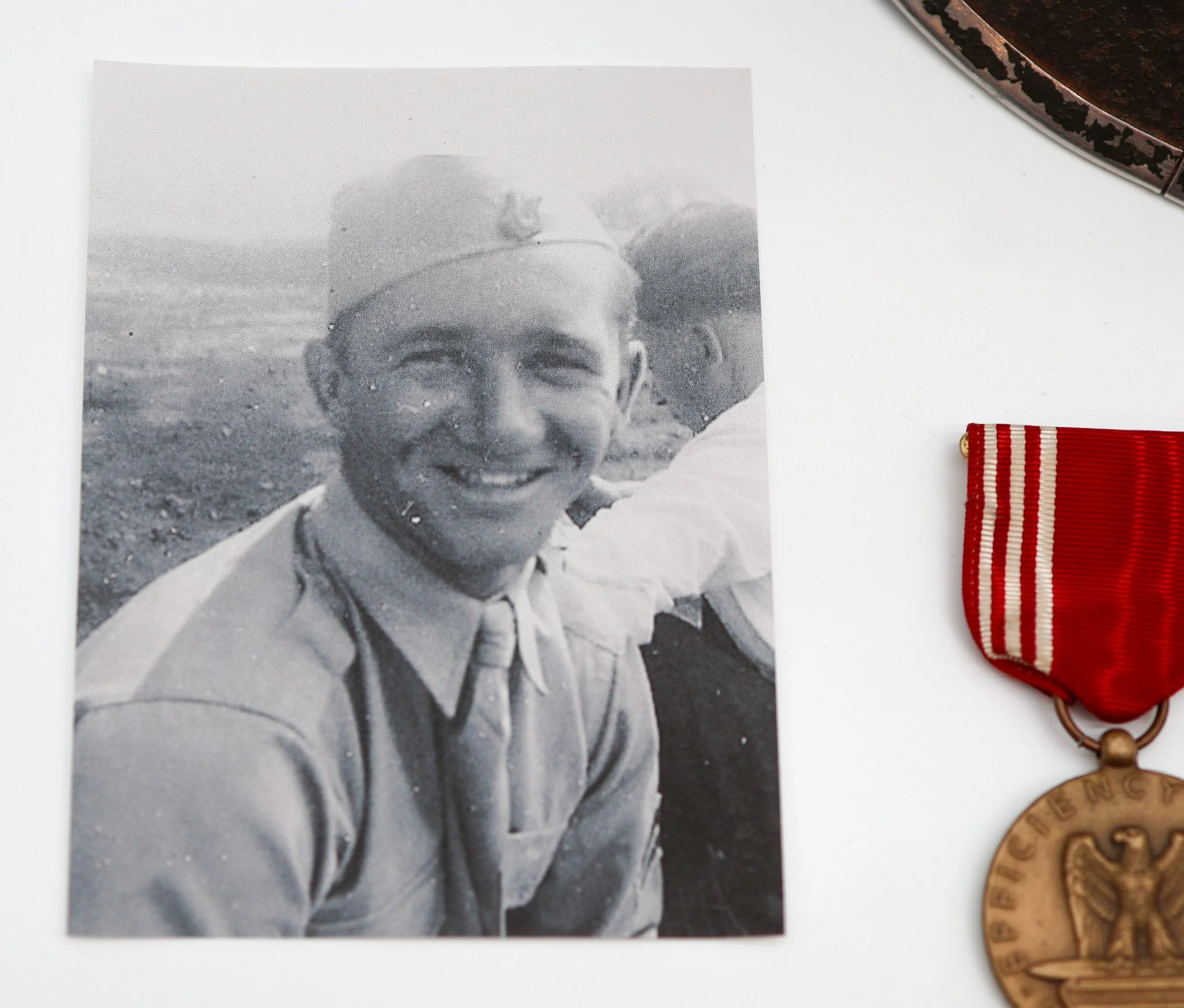
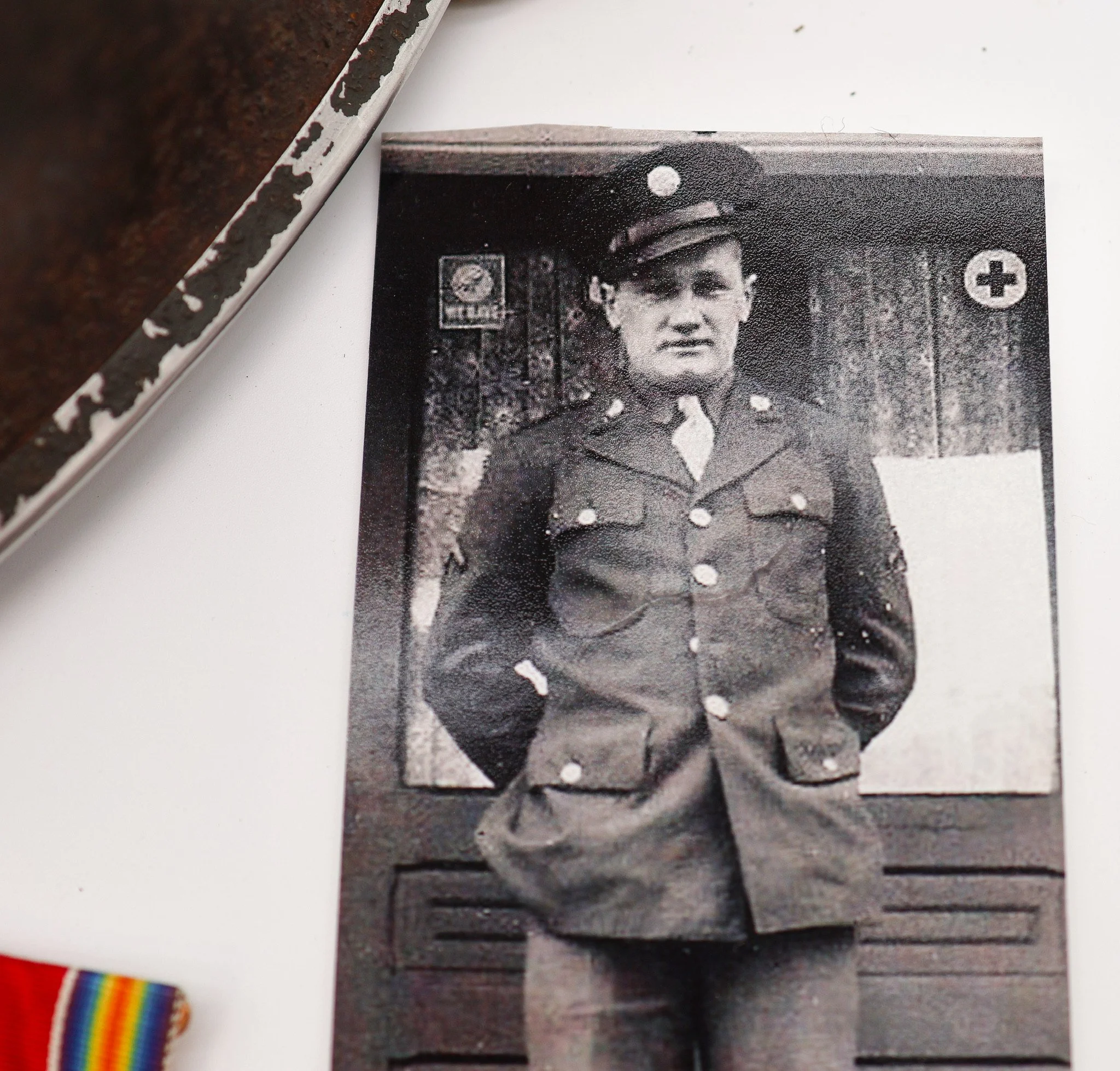
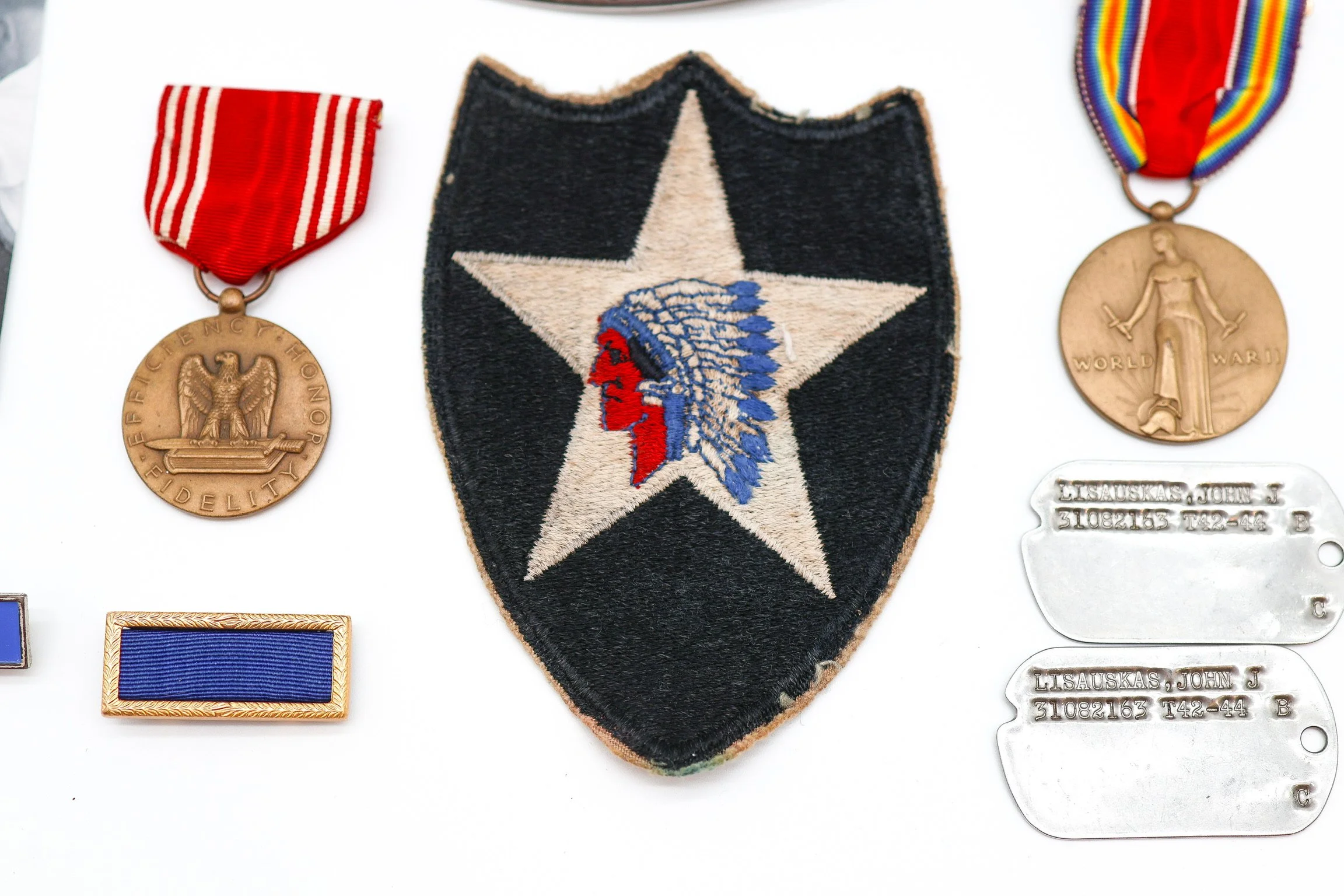
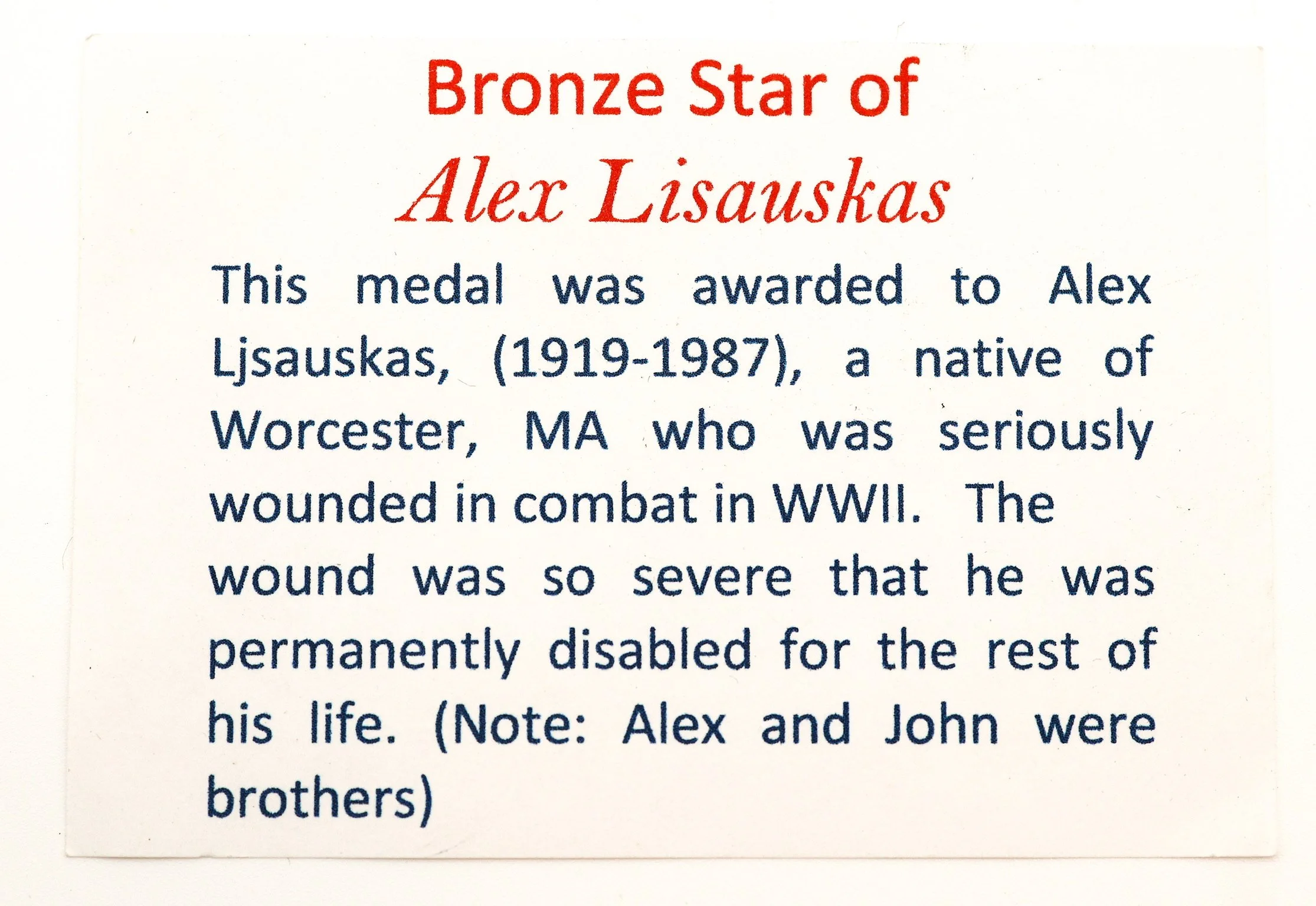
This U.S. M1 helmet was worn by PFC John Lisauskas of the 2nd Infantry Division and was struck by a bullet on September 1, 1944, during fighting at Hill 105, France. The helmet shell shows a clear bullet strike consistent with combat damage from that engagement. No liner accompanies the helmet; its whereabouts are unknown.
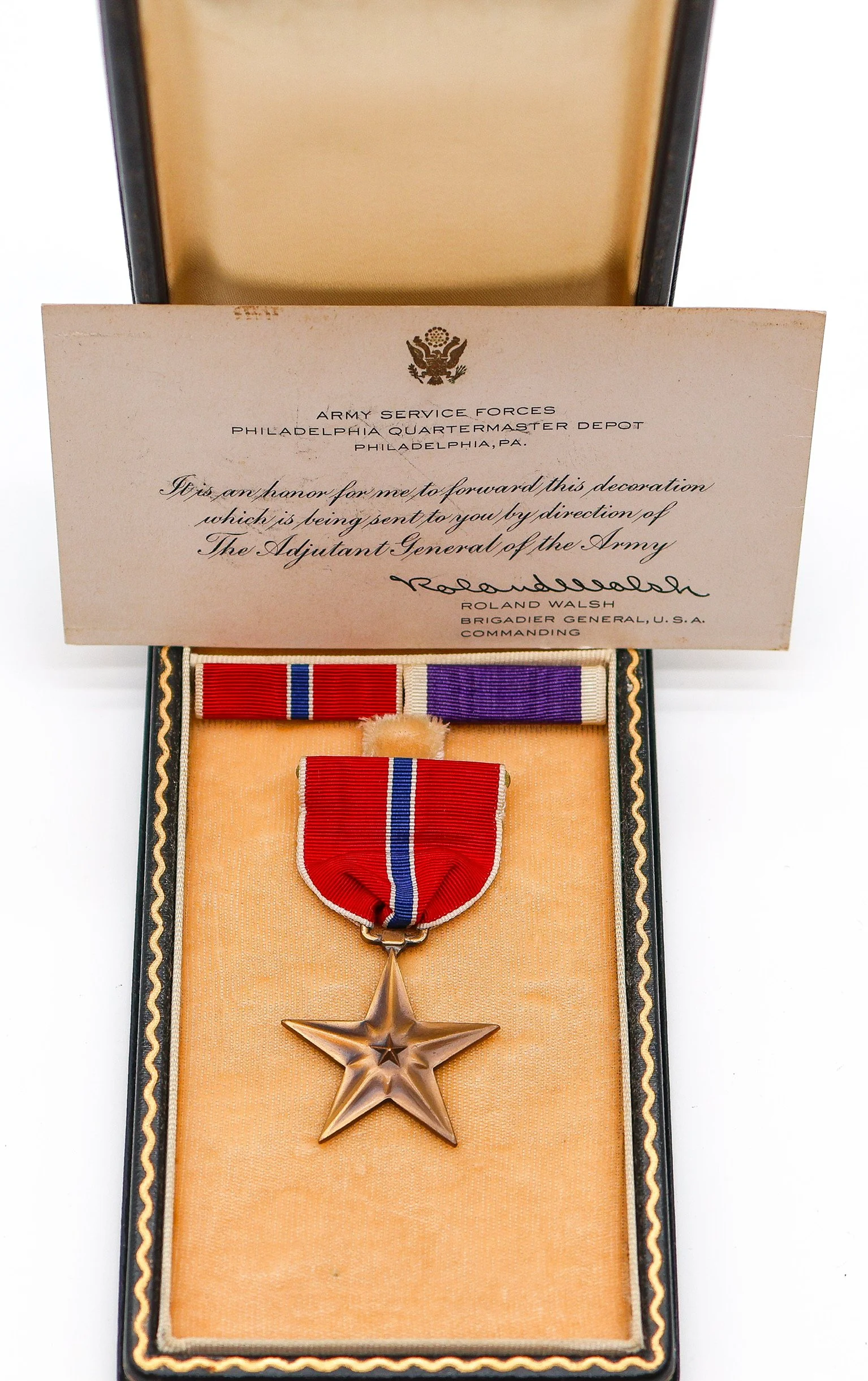
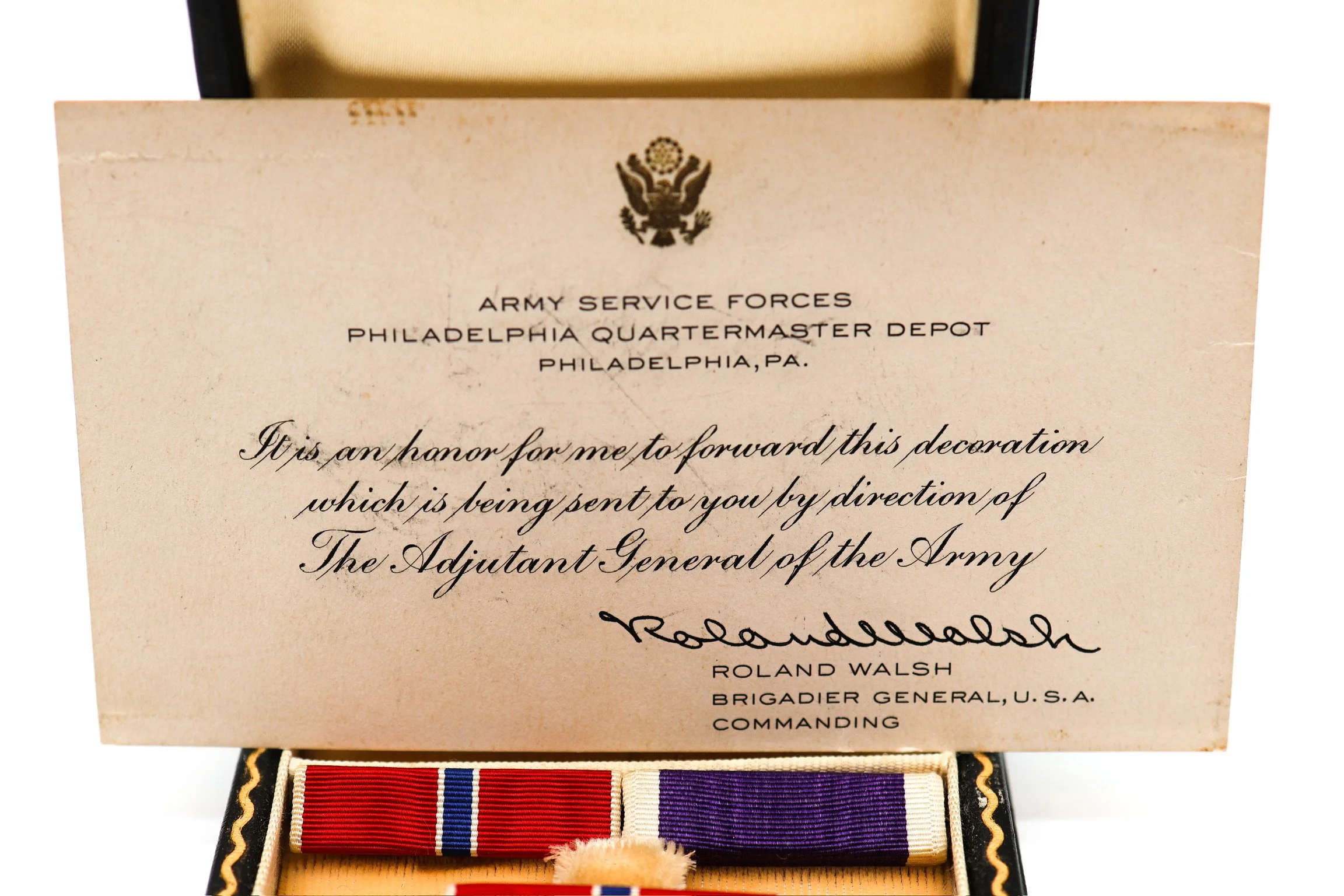
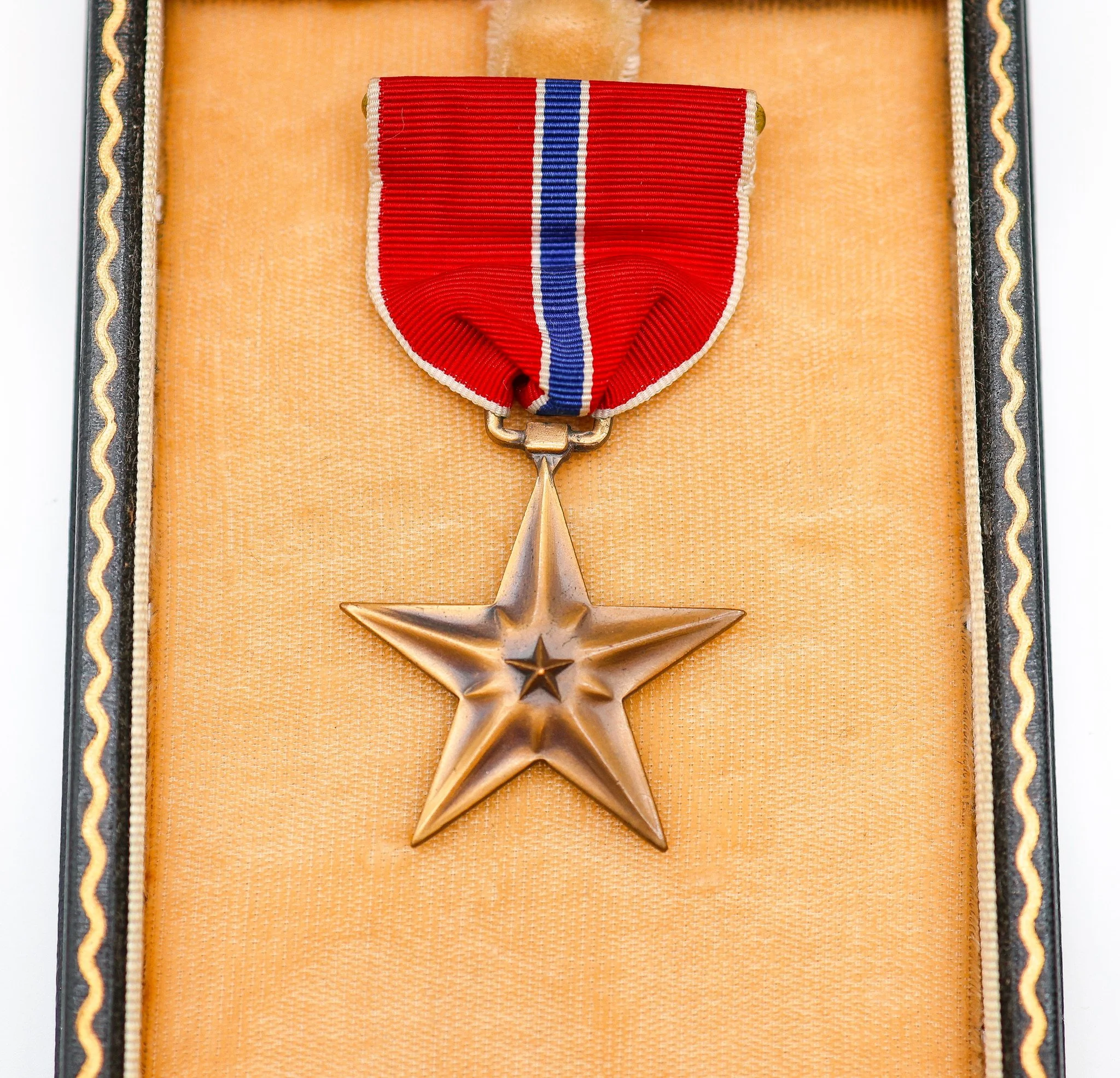
Lisauskas served through the Normandy, Rhineland, and Central Europe campaigns. Despite the bullet strike to the helmet, he was not wounded. Two weeks later, his brother Alex Lisauskas suffered a severe head wound that left him permanently disabled. John later stated that he believed God spared his life so that he could care for Alex after the war. Alex’s Bronze Star is included with this grouping…
U.S. M1 Helmet — 2nd Infantry Division, Bullet-Struck at Hill 105
-
Following the war, while a patient at the VA hospital in Worcester, Massachusetts, Lisauskas requested that his helmet be displayed in a glass case at the hospital. A nurse who cared for him hand-painted the identifying information onto the helmet shell, including his name, unit, date (9/1/44), and Hill 105. During this process, his last name was misspelled.
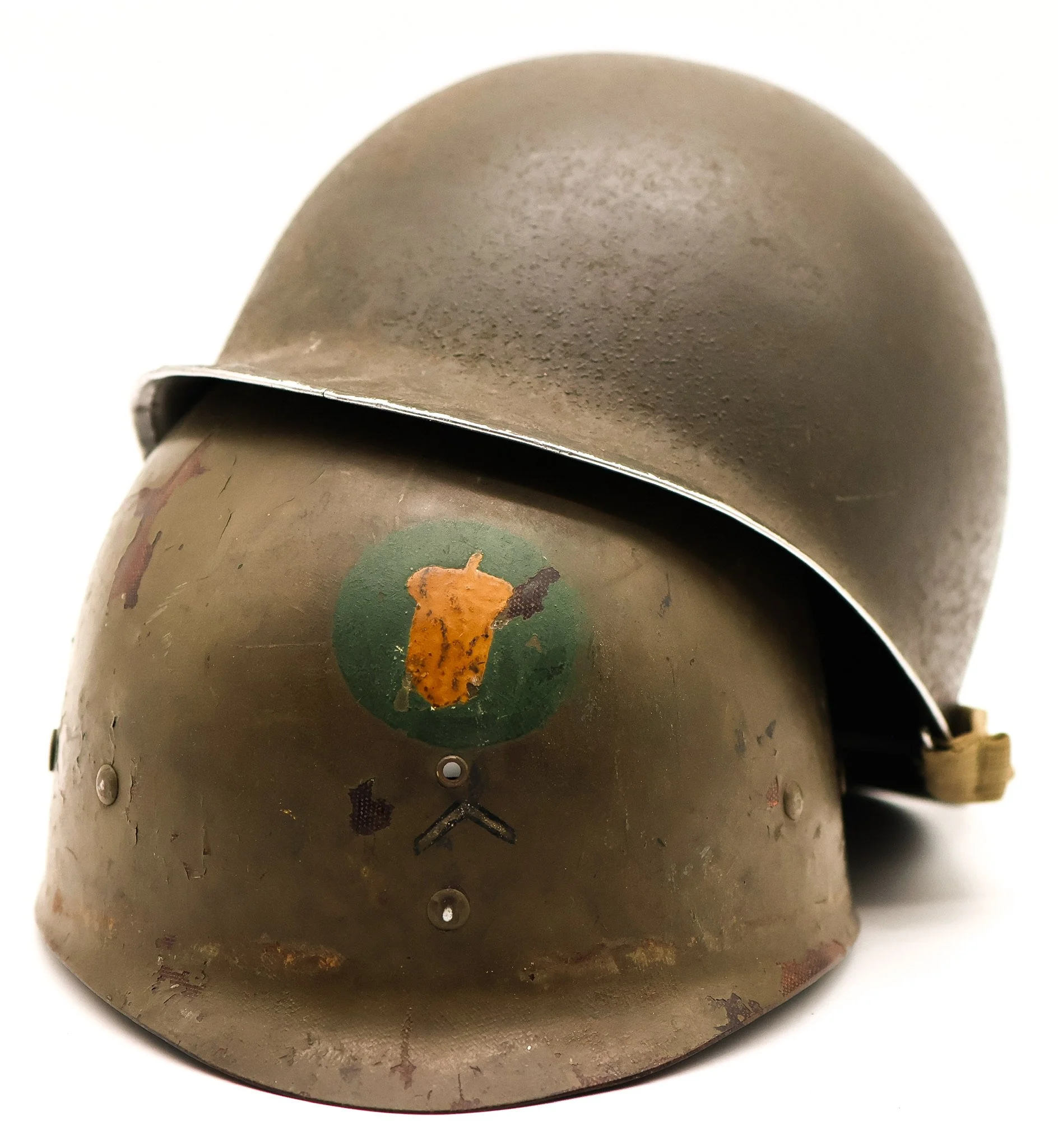
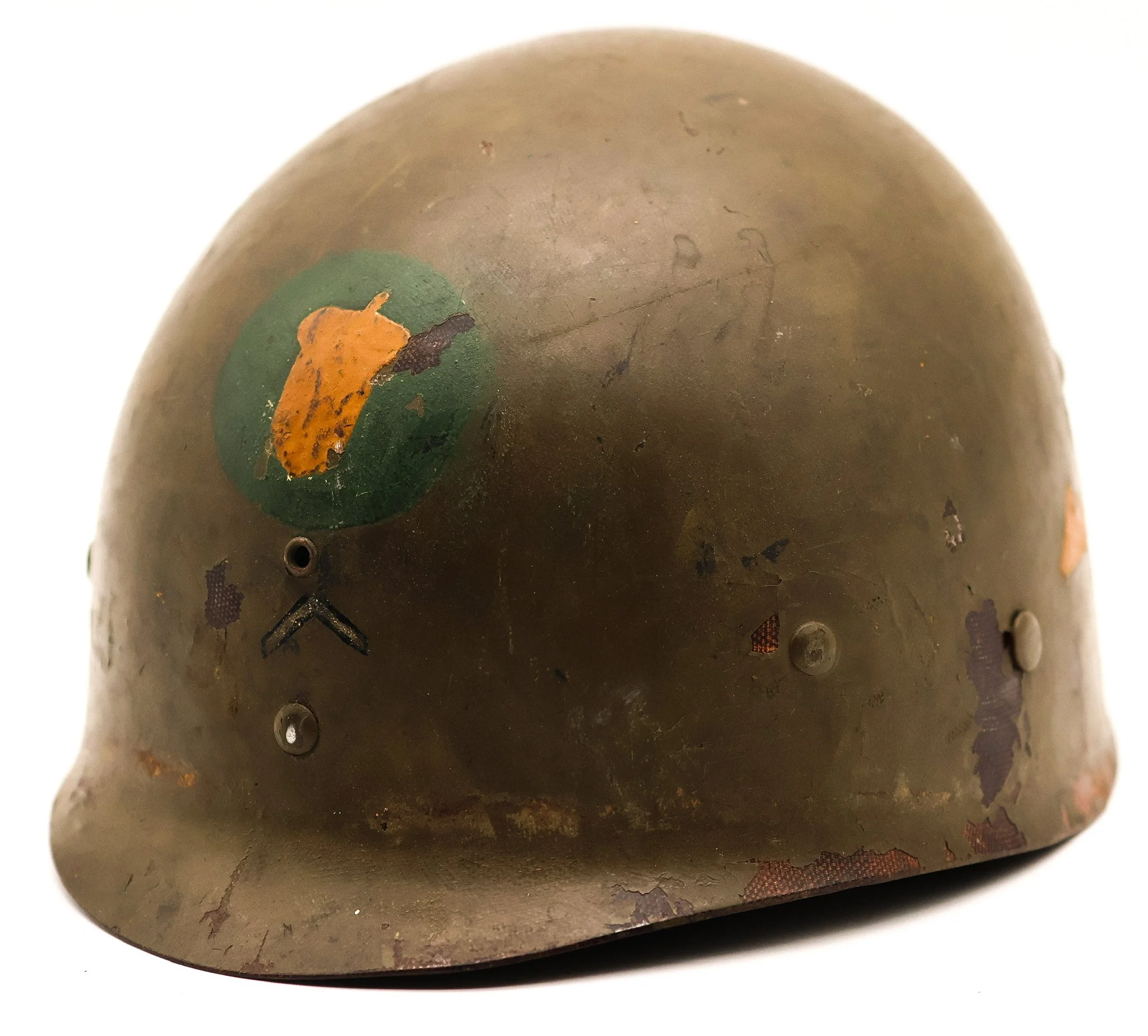
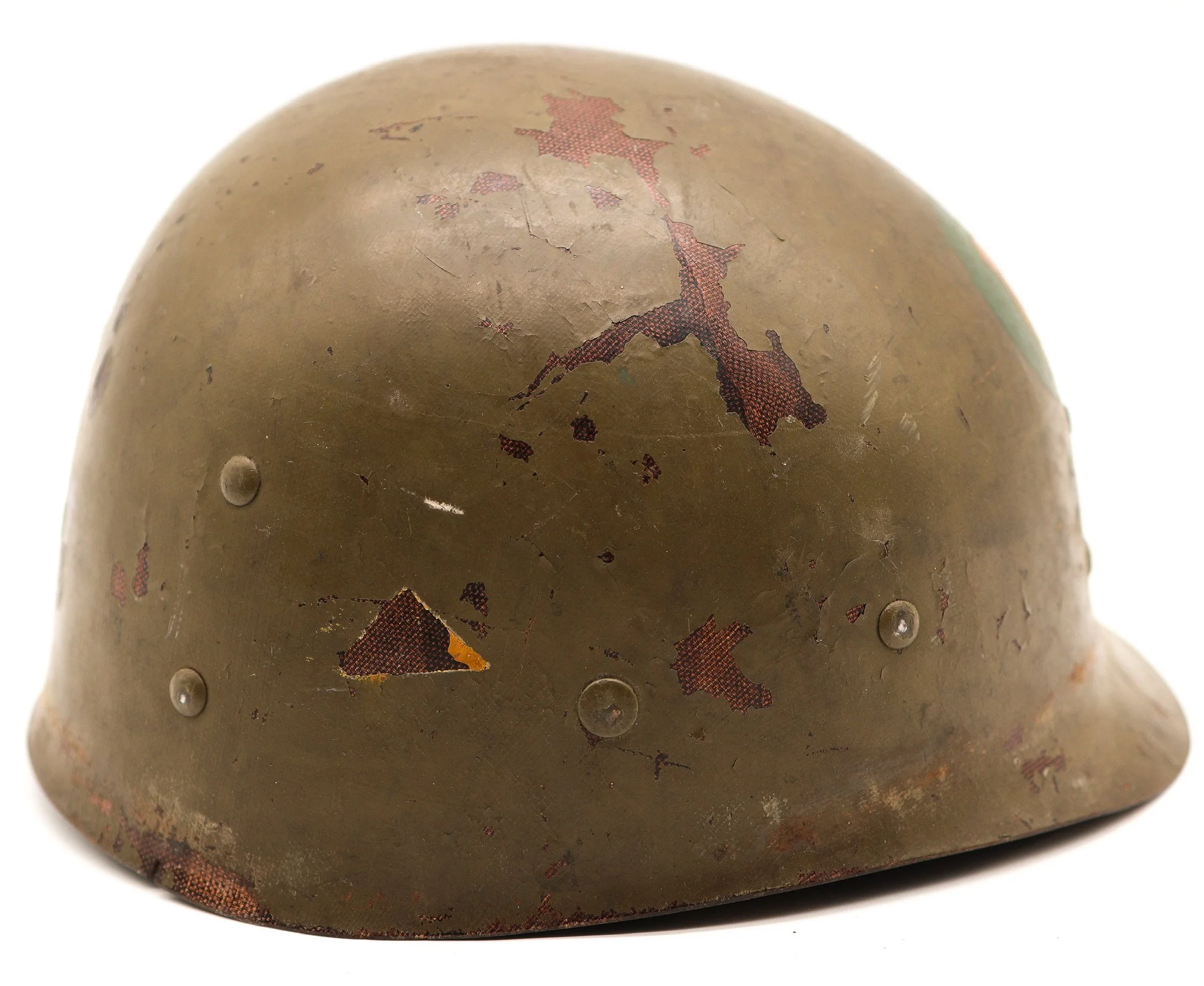
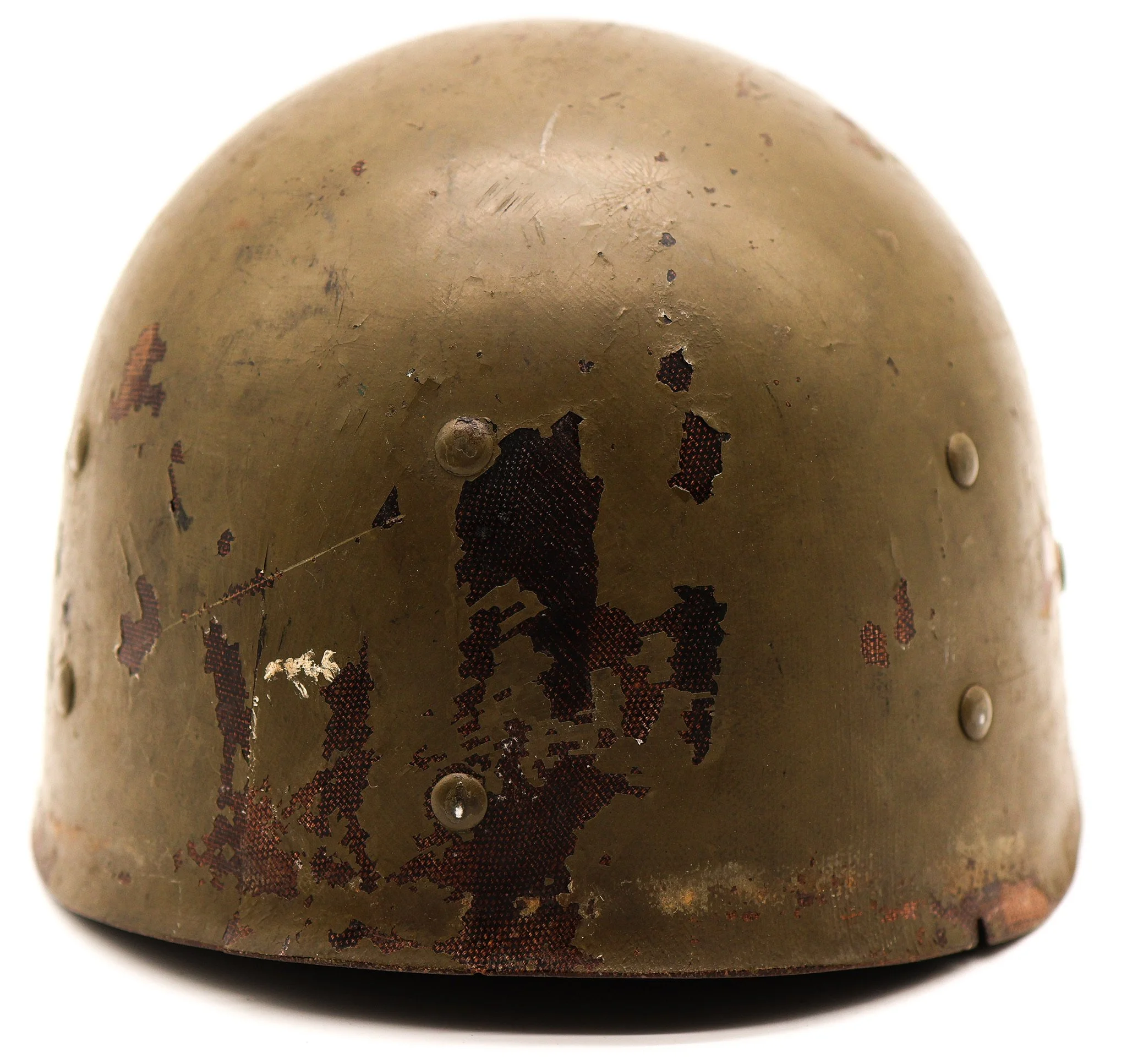
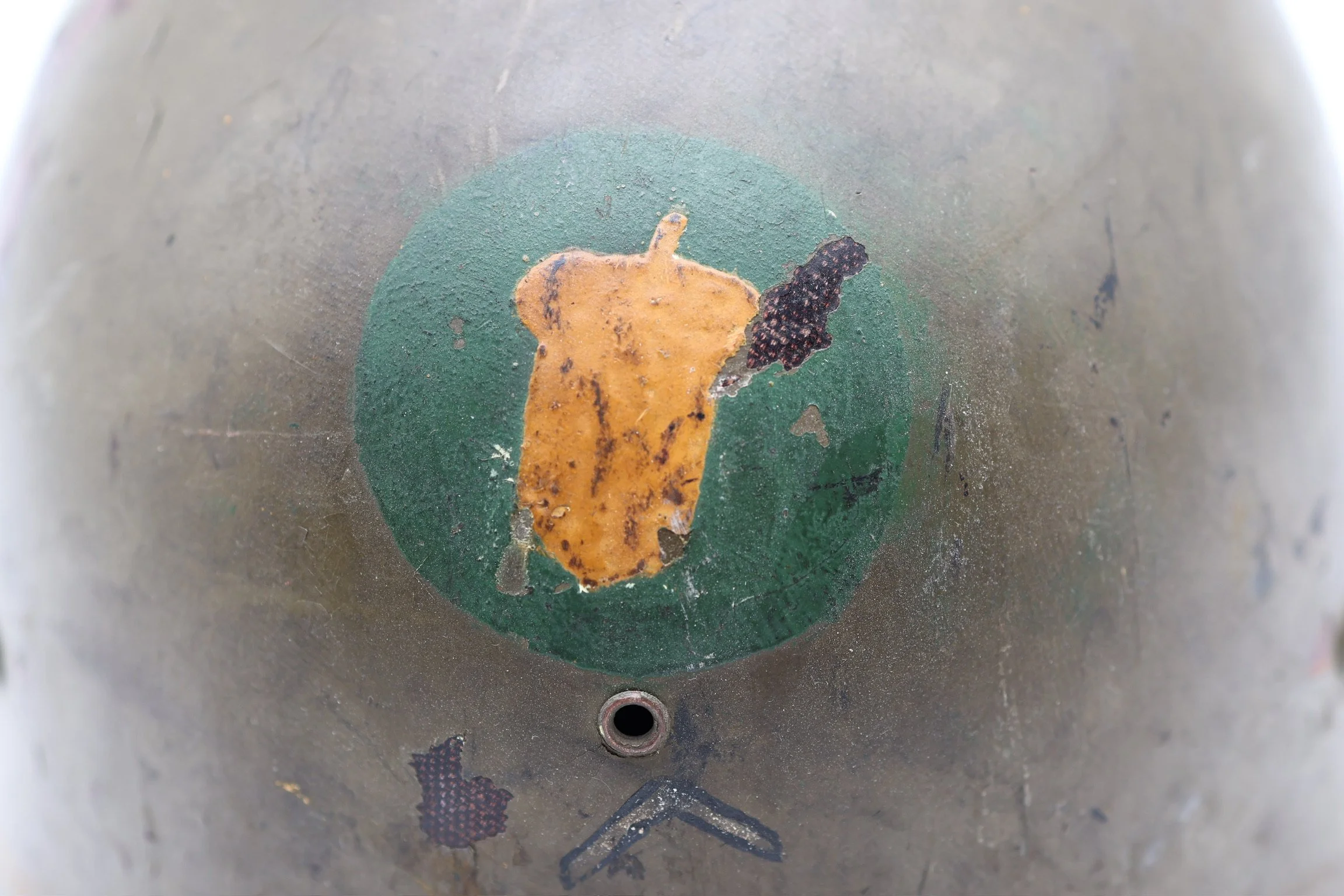
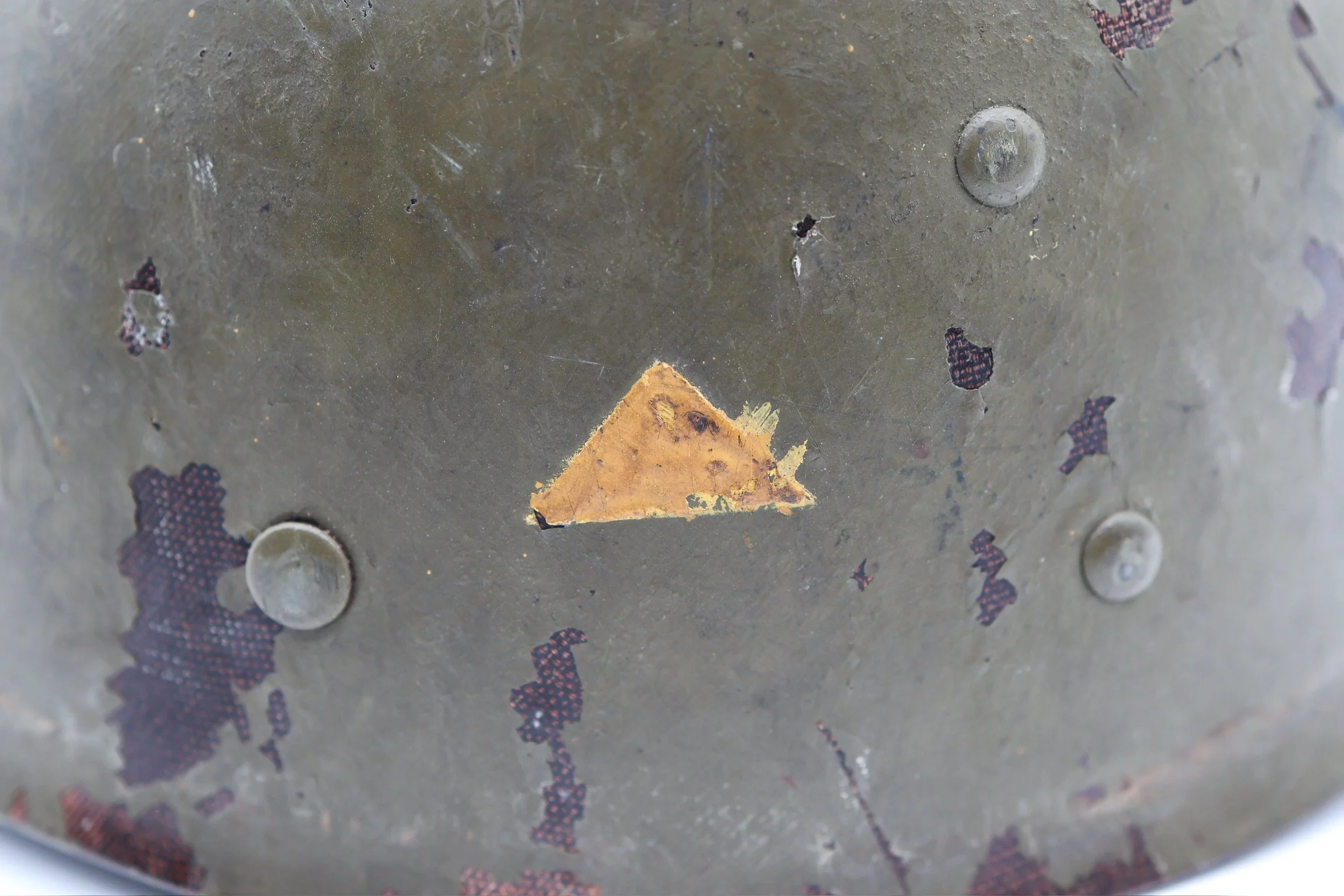
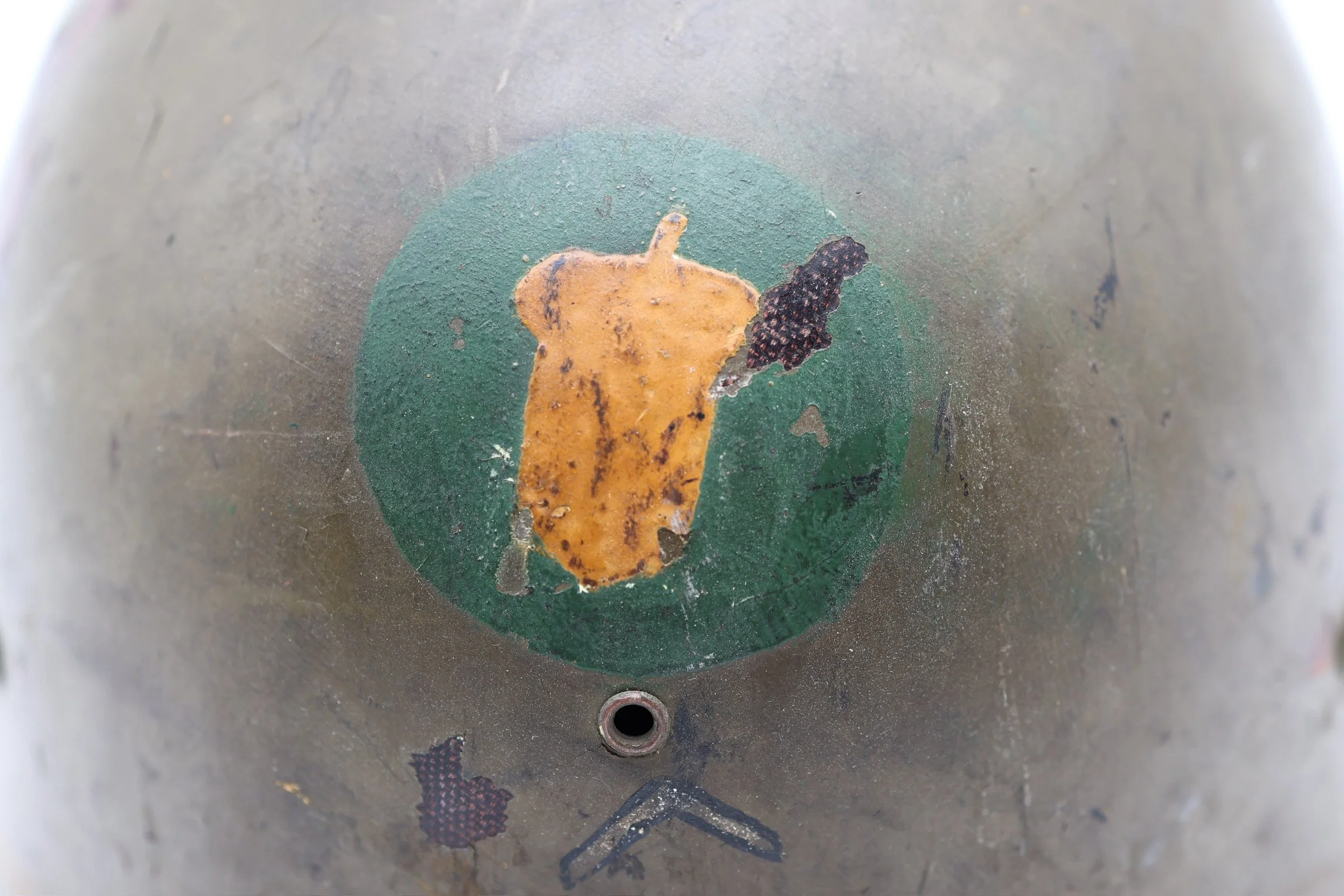
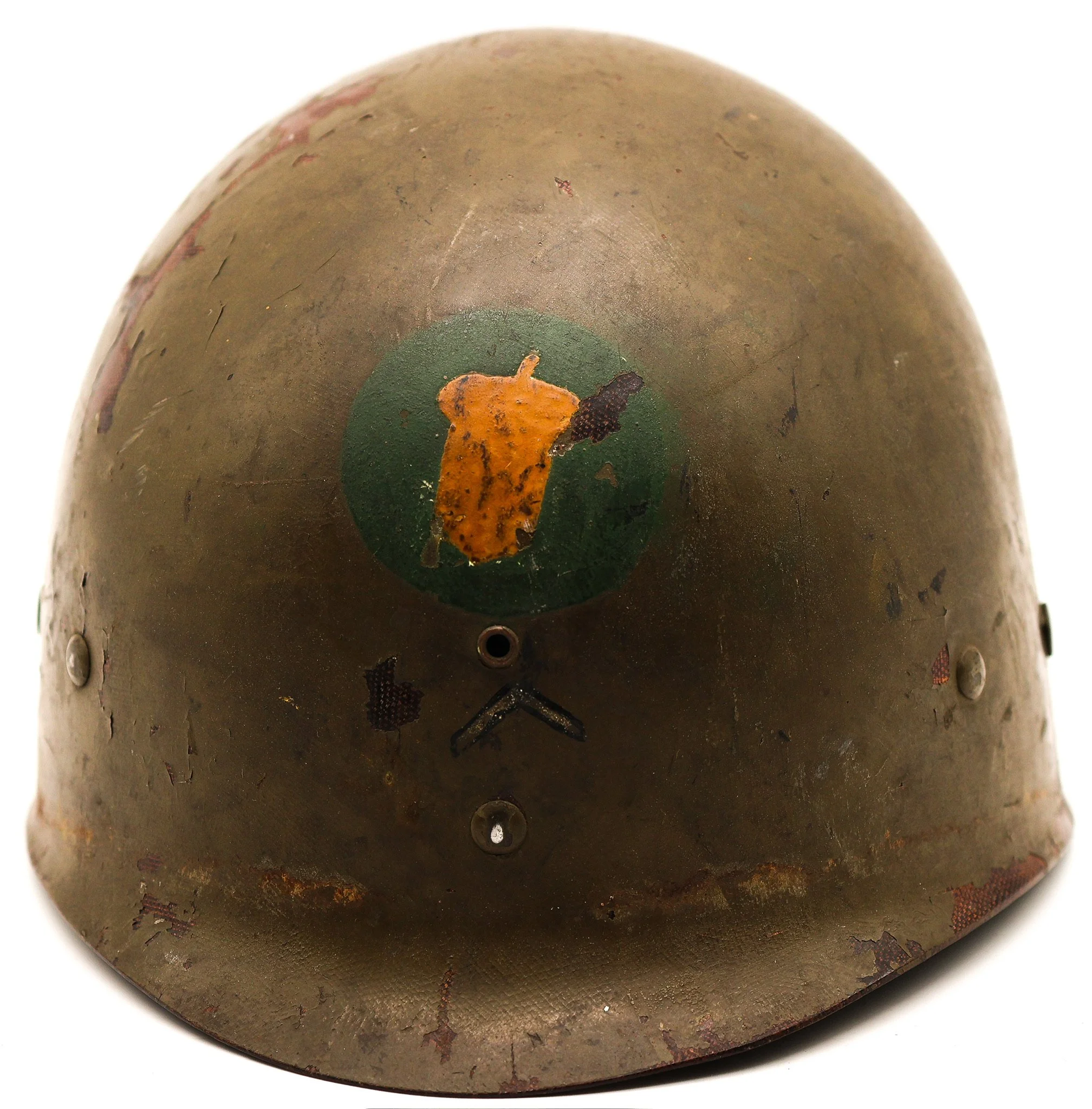
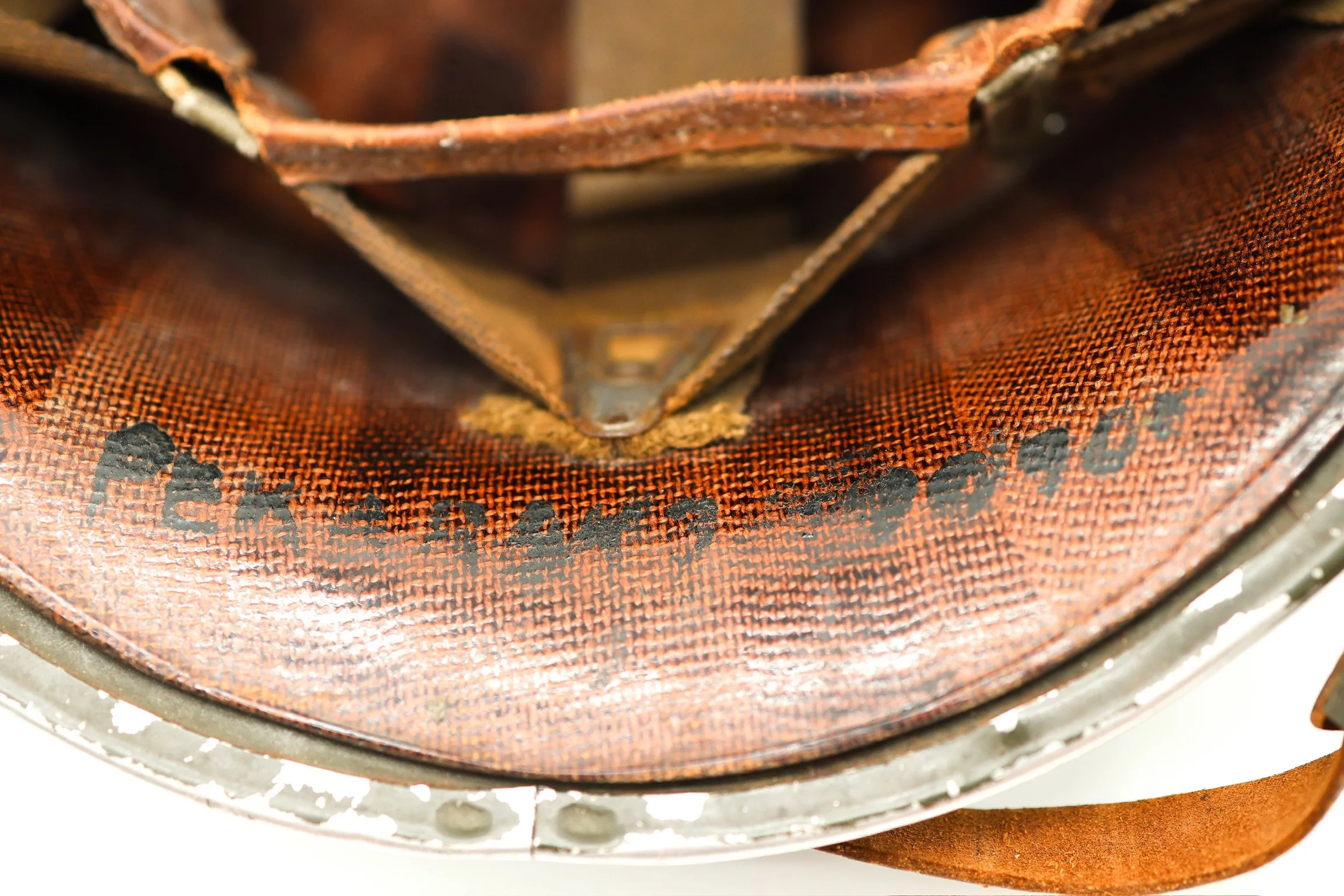
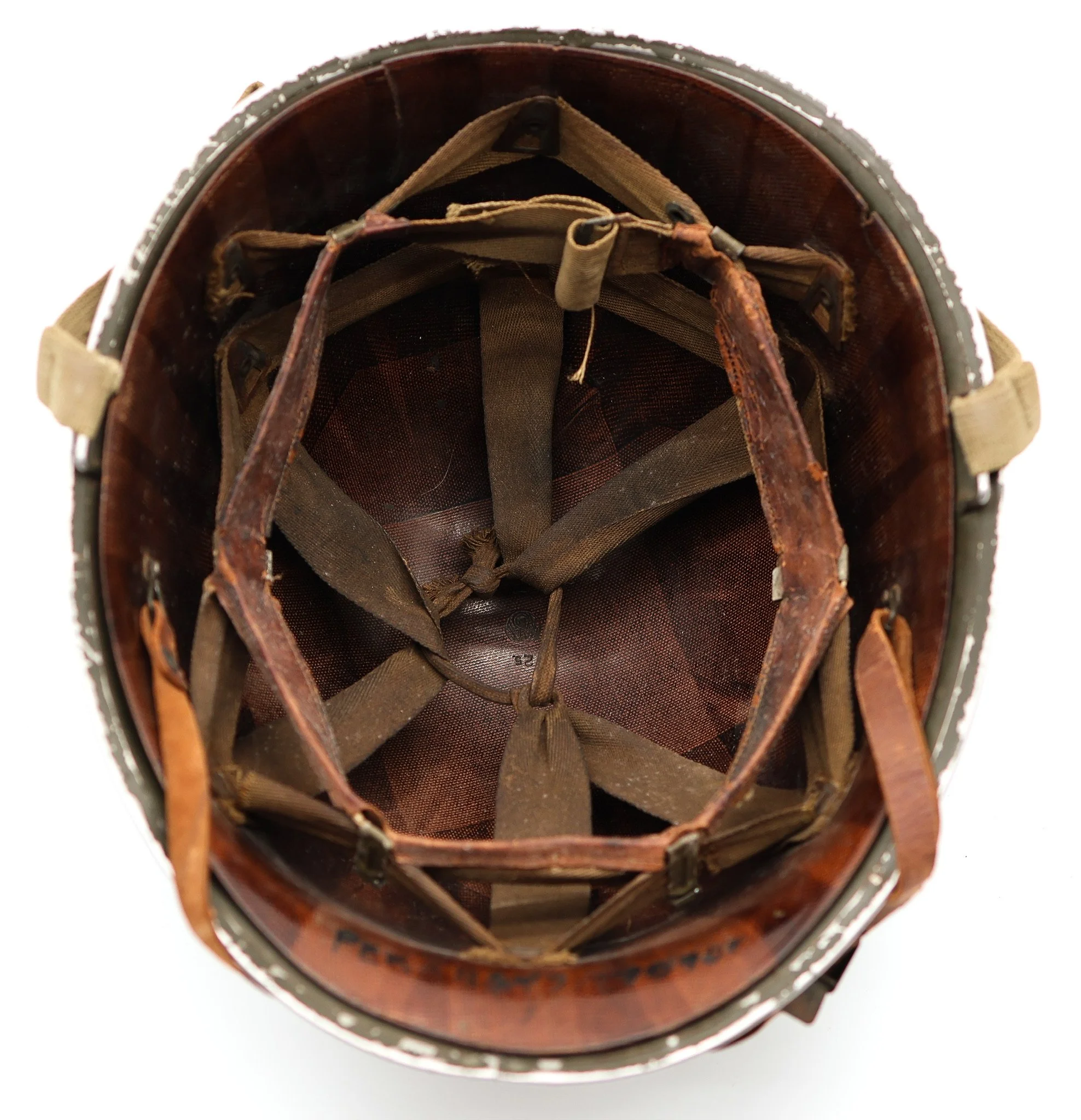
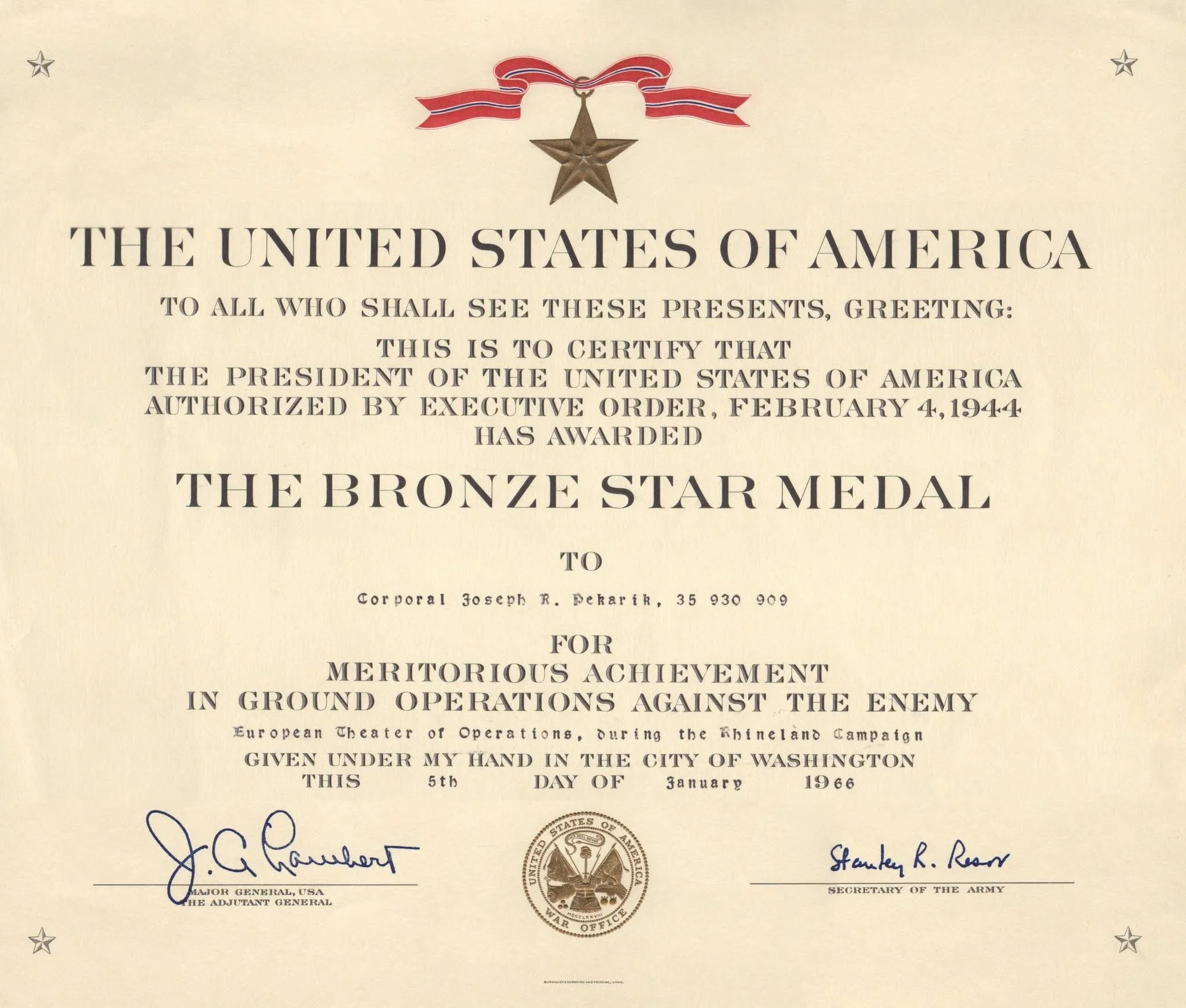
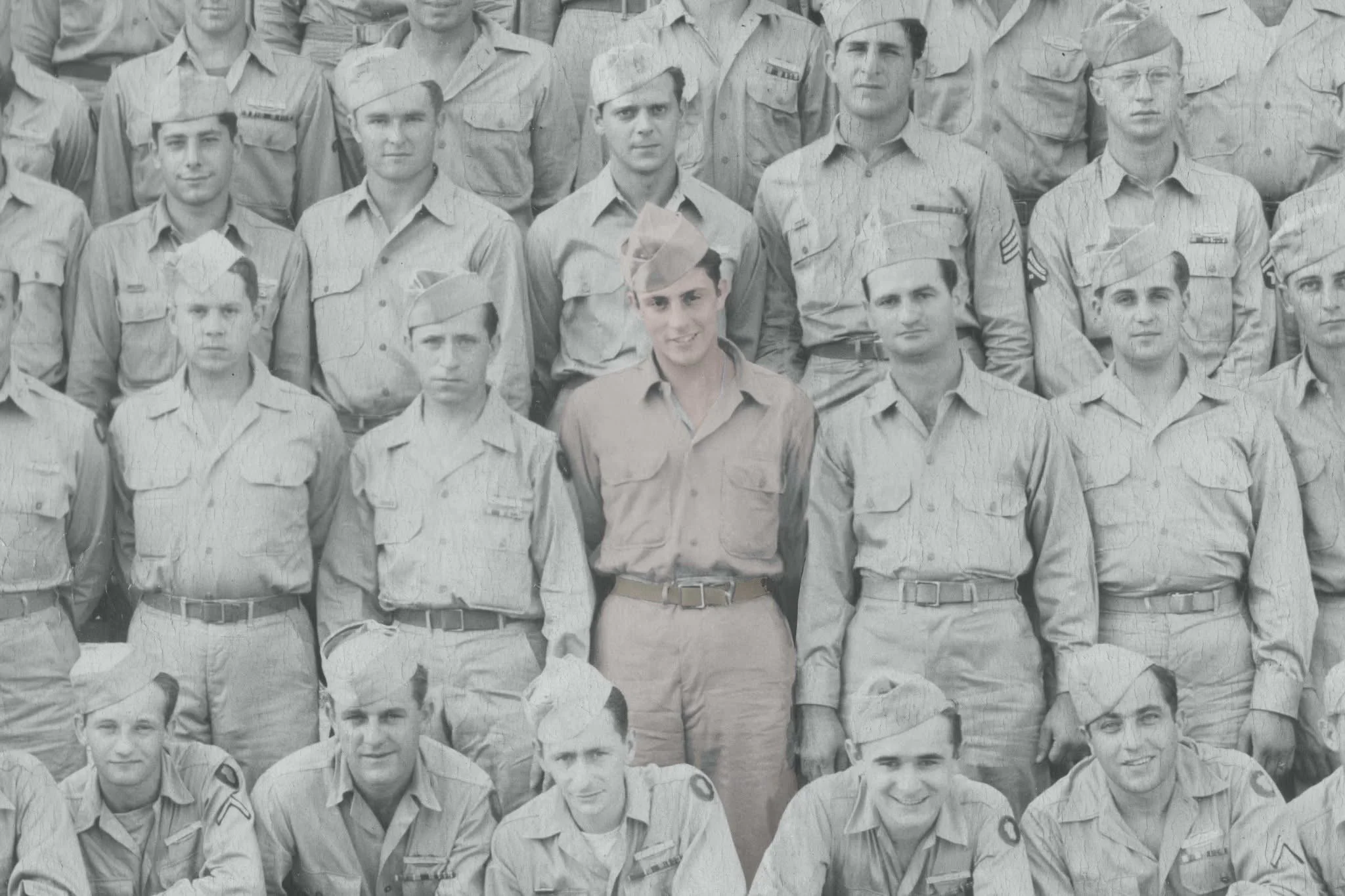
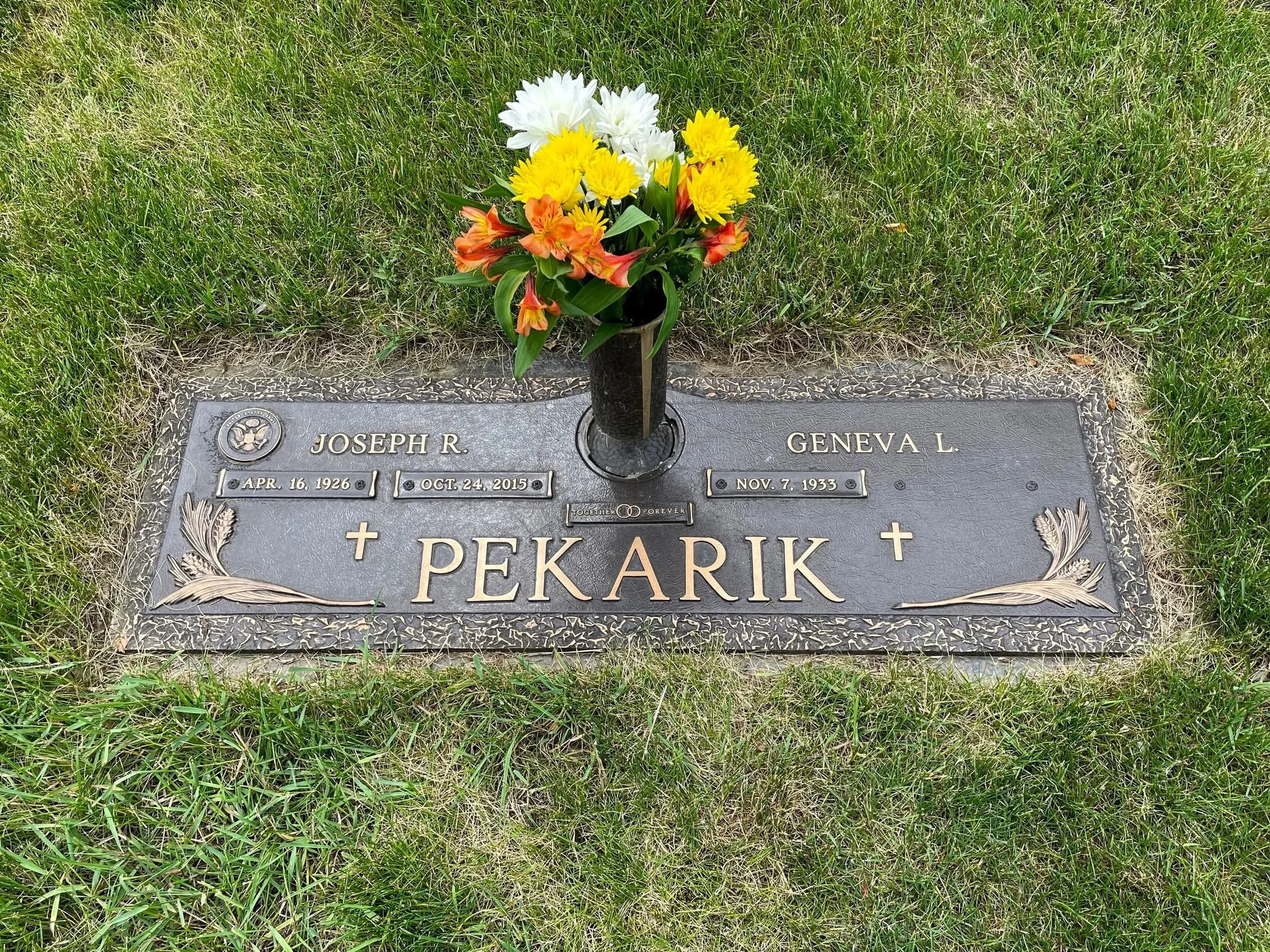
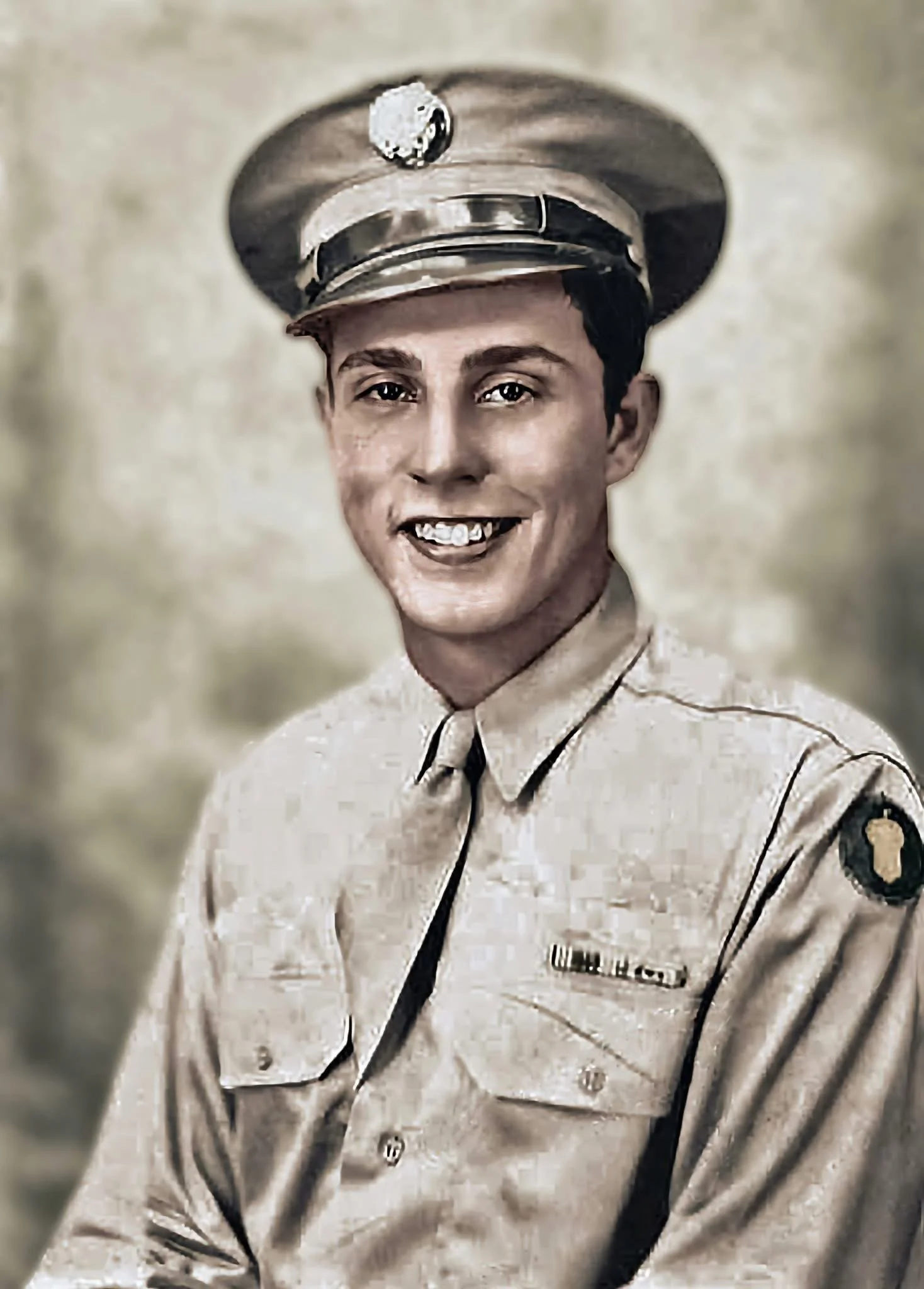
87th Infantry Division “Golden Acorn” Helmet ID’ed to Joseph R. Pekarik
M1 helmet liner identified to Joseph R. Pekarik, who enlisted in the U.S. Army on August 4, 1944, in Cleveland, Ohio. Pekarik served in the 87th Infantry Division, known as the “Golden Acorn” Division. The liner retains original period paint with the hand-applied acorn insignia of the division on the exterior. The liner is an early production “first run” example, featuring unpainted A-washers consistent with initial wartime manufacture. The steel shell is not original to the liner.
The 87th Infantry Division saw combat in the European Theater beginning in late 1944, including operations in the Ardennes during the Battle of the Bulge and subsequent offensives into Germany. Pekarik later received the Bronze Star for meritorious achievement in ground operations during the Rhineland Campaign.